





Policy Significance Statement
Indonesia’s experience yields actionable lessons for digital economy governance. The data-driven analysis suggests that policymakers should prioritize bridging regional implementation gaps by expanding digital infrastructure and local enforcement capacity in underserved areas. It is also crucial to ensure broader participation by simplifying compliance and offering support for micro, small, and medium-sized enterprises to formalize their online business activities. Additionally, strengthening institutional frameworks, such as establishing an independent data protection authority and leveraging international cooperation for best practices, will enhance regulatory effectiveness. These measures will help Indonesia harness its rapid digital transformation for inclusive growth. They can provide a blueprint for other developing nations facing similar digital divide challenges in balancing growth and governance imperatives.
1. Introduction
The challenge of regulating the digital economy while ensuring inclusive growth has emerged as a global concern. Indonesia, with its rapidly expanding digital economy projected to reach US$130 billion by 2025 (Google, Temasek, Bain & Company, 2023), exemplifies both the potential and complexities of digital transformation in an emerging economy. As Southeast Asia’s largest digital economy, Indonesia has grown from US$41 billion in 2019 to US$77 billion in 2022, with a Gross Merchandise Value four times larger than Singapore’s (Twimbit, 2023). This expansion reflects increasing internet penetration, reaching 77% in 2023 with approximately 212.9 million users nationwide (DataReportal, 2023).
Despite this impressive growth, a significant structural challenge persists. A pronounced digital divide exists between urban and rural areas, with an internet access gap of 22.5 percentage points as of 2021 (ACI Perspectives, 2023). Nearly 80% of unconnected Indonesians reside in nonmetro rural areas of Sumatra, Java, and Bali, with even higher rates of digital exclusion in eastern regions (World Bank, 2021). These disparities reflect more profound socioeconomic inequalities that digital transformation may reinforce rather than diminish.
The COVID-19 pandemic accelerated Indonesia’s digital transition, shifting consumer behaviors and forcing businesses to digitize operations rapidly. While this transition created new economic opportunities, it also exposed existing vulnerabilities. Micro, small, and medium-sized enterprises (MSMEs), the backbone of Indonesia’s economy, have struggled with digital adoption, with only 30% of 19 million MSMEs establishing an online presence (Twimbit, 2023). Regional disparities in digital infrastructure, skills, and regulatory enforcement present additional challenges to equitable participation in the digital economy.
Against this backdrop, regulation is critical in shaping Indonesia’s digital economy. Effective regulatory frameworks can promote fair competition, protect consumer rights, secure data privacy, and stabilize market conditions. However, poorly designed or inconsistently implemented regulations risk stifling innovation, creating unnecessary compliance burdens, or reinforcing existing inequalities. In Indonesia, key electronic trading systems, data governance, and digital taxation regulations aim to address these issues. However, questions remain about their effectiveness and the regional variations in their impact. Therefore, examining differences in compliance costs between MSMEs and large enterprises, comparing enforcement in urban versus rural areas, and assessing how data-governance rules affect cross-border digital services and foreign investment is essential.
Simultaneously, domestic and international cooperation has emerged as an essential catalyst for equitable digital development. The Indonesia–Japan Public–Private Track 1.5 partnership, established in 2022 (METI, 2022), exemplifies how bilateral engagements can support capacity building, technology transfer, and infrastructure development. However, collaborative action also raises questions about balancing foreign collaboration with domestic autonomy and innovation.
This study examines Indonesia’s digital economy regulations through the dual theoretical lenses of Institutional and Digital Divide Theory. Institutional Theory helps explain how regulatory structures shape market behaviors and outcomes, while Digital Divide Theory illuminates how technological access and usage patterns affect economic participation opportunities. By integrating these frameworks, we explore how regulatory design influences market dynamics and digital inclusion across Indonesia’s diverse regions.
Our research addresses three key questions. First, how do Indonesia’s current digital economy regulations influence market participation and business compliance across different regions and business sizes? Second, what impact do data governance approaches, particularly data localization requirements, have on digital service provision and economic inclusion? Third, how can international cooperation mechanisms support more effective and inclusive digital economy regulation?
This study analyzes legal documents, policy frameworks, and implementation guides to provide insights for policymakers, businesses, and international partners navigating the complex landscape of digital economy regulation. By identifying regulatory achievements and implementation challenges, we offer recommendations for enhancing regulatory effectiveness while promoting more inclusive digital development across Indonesia’s diverse regions and communities.
2. Theoretical framework and research gaps
Understanding how regulatory frameworks influence digital economy development requires examining multiple research streams, from theoretical foundations to empirical studies of market outcomes. This review synthesizes current literature on digital economy regulation, highlighting knowledge gaps and establishing foundations for our analysis.
2.1. Institutional theory
Evolving from classical notions of formal institutions, institutional theory has expanded to encompass informal norms, cultural practices, and cognitive frameworks that influence behavior across sectors. Institutional Theory (North, Reference North1990; Scott, Reference Scott2001) provides a framework for understanding how formal and informal rules shape economic activities and market responses. In digital contexts, institutional arrangements influence transaction costs, market access, and regulatory compliance. Scott (Reference Scott2001) distinguishes between regulative, normative, and cultural-cognitive pillars of institutions, each influencing organizational behavior through different mechanisms. In the digital economy, regulatory pillars establish formal rules for market participation, while normative and cultural-cognitive elements shape business practices and consumer expectations regarding data privacy, security, and fairness.
Recent applications of Institutional Theory to digital markets have examined how regulatory frameworks influence platform competition (Parker et al., Reference Parker, Van Alstyne and Choudary2016), innovation incentives (Blind, Reference Blind, Edler, Cunningham, Gök and Shapira2016), and market concentration (Khan, Reference Khan2018). However, these studies have primarily focused on advanced economies, with limited attention to the institutional challenges facing developing nations with highly diverse regional contexts. Khanna and Palepu (Reference Khanna and Palepu2010) describe these challenges as institutional voids where formal rules may exist but lack consistent enforcement mechanisms—a pattern particularly relevant to Indonesia’s geographically dispersed digital landscape.
2.2. Digital divide theory and regulatory access
Digital Divide Theory (Norris, Reference Norris2001; Van Dijk, Reference Van Dijk2005) provides analytical tools for examining how technological access disparities shape economic participation opportunities. Van Dijk’s (Reference Van Dijk2005) sequential digital access model identifies four dimensions that interact and build upon each other: motivational access (willingness to engage with technology), material access (physical connection to technology), skills access (digital literacy), and usage access (actual utilization of digital services). This model suggests that overcoming physical access barriers represents only the first step toward meaningful digital participation.
Recent research on digital divides in developing countries highlights how socioeconomic disparities shape digital access and usage patterns. As the World Bank (2021) notes for Indonesia, digital divides extend beyond infrastructure to include disparities in affordability and digital literacy. These dimensions of inequality may be reinforced rather than reduced by digital economy regulations that fail to account for regional and socioeconomic differences in implementation capacity.
2.3. The regulatory-digital divide framework
Despite recognition that institutional factors influence digital participation (Niehaves & Plattfaut, 2014), systematic integration of institutional and digital divide perspectives remains limited. Vassilakopoulou and Hustad (Reference Vassilakopoulou and Hustad2021) identified Institutional Theory as an unexplored lens for digital divide analysis. Therefore, this study addresses this gap by developing a Regulatory-Digital Divide Framework that systematically integrates Institutional Theory with Digital Divide Theory to examine how formal regulatory structures interact with technological access disparities.
The framework introduces “regulatory access” as a fifth dimension of digital inclusion, extending Van Dijk’s (Reference Van Dijk2005) sequential model. Regulatory access encompasses the capacity to navigate formal regulatory requirements for digital participation, including the ability to understand regulatory obligations, afford compliance costs, access implementation support, and operate within enforcement mechanisms that may vary significantly across regions. This dimension becomes particularly significant in contexts where compliance obligations are uniformly imposed despite varied regional capacities to fulfill them. In Indonesia’s case, businesses in eastern provinces may overcome traditional digital divide barriers through improved connectivity and skills development, only to face disproportionate burdens in regulatory compliance due to limited implementation support and higher relative compliance costs.
The Regulatory-Digital Divide Framework posits that regulatory effectiveness in digital economy governance is fundamentally shaped by the interaction between institutional structures such as regulations, enforcement mechanisms, support systems) and existing patterns of digital access. This integration enables analysis of how well-designed regulations can produce uneven outcomes when implemented across contexts with disparate digital capabilities and institutional capacities.
2.4. Integrated theoretical propositions
The integration of these theoretical perspectives yields four propositions that guide our analysis. First, regulatory effectiveness is fundamentally moderated by regional digital infrastructure development, recognizing that identical regulatory requirements generate different compliance patterns and economic impacts across regions with varied digital readiness levels. Second, uniform regulatory requirements create asymmetric market entry barriers, as standardized compliance obligations distribute the burden of implementation unevenly across regions with diverse digital capabilities. Third, data governance frameworks prioritizing sovereignty without accounting for regional implementation capacity produce uneven economic inclusion outcomes. Fourth, international cooperation mechanisms can effectively address regional regulatory implementation gaps by combining policy alignment with infrastructure and capacity development, as exemplified by the Indonesia–Japan Public–Private Track 1.5 partnership.
2.5. Digital economy conceptualization
Early conceptualizations of the digital economy focused primarily on technological infrastructure and information flows (Tapscott, Reference Tapscott1997; Mesenbourg, Reference Mesenbourg2001). While these frameworks continue to offer valuable insights, they were not designed to address emerging challenges such as digital market concentration, algorithmic bias, and the complexities of cross-border data flows. Recent research recognizes the digital economy as a complex sociotechnical system requiring policy interventions (Mardonakulovich and Bulturbayevich, Reference Mardonakulovich and Bulturbayevich2021). One notable policy innovation is the significant economic presence (SEP) framework (OECD, 2019), which aims to redefine nexus rules to reflect digital business models.
Scholars have identified diverse national approaches, from the European Union’s comprehensive rights-based model under the GDPR to China’s state-centered data sovereignty regime (Aaronson and Leblond, Reference Aaronson and Leblond2018; Sacks, Reference Sacks2021). However, implementing such frameworks remains difficult for developing countries with limited administrative capacity and fragmented regional governance structures.
2.6. Data governance and digital sovereignty
The economic implications of data governance preferences have received increasing scholarly attention. Cory (Reference Cory2017) mentioned that Data localization requirements can reduce GDP by 0.7–1.7% in implementing countries, and restrictive data policies negatively impact productivity and innovation in downstream industries (Ferracane and van der Marel, Reference Ferracane and van der Marel2021). However, these analyses may underestimate legitimate concerns about data sovereignty and national security. Chander and Lê (Reference Chander and Lê2015) argue that data localization policies arise from privacy concerns, security, economic goals, and law enforcement needs. Indonesia’s data governance strategy reflects an attempt to navigate between competing objectives: digital sovereignty, economic development, and international integration (Pangestu and Dewi, Reference Pangestu, Dewi, Kathuria and Kaushal2020). Assessment of how these policy choices affect different market participants remains limited.
2.7. Digital inequality and inclusion challenges
The World Bank (2021) documents how Indonesia’s digital divide extends beyond infrastructure to include disparities in digital literacy, affordability, and market access opportunities. These findings resonate with the challenges facing many developing nations, where rapid digital growth often coincides with widening economic disparities.
Trendov, Varas, and Zeng (Reference Trendov, Varas and Zeng2019) highlight how digital transformation can exacerbate existing inequalities when not accompanied by appropriate regulatory safeguards and capacity-building initiatives. In Indonesia, Nugroho et al. (Reference Nugroho, Pawito and Kartono2020) verify significant disparities in digital economy participation between urban and rural areas, with implications for long-term economic development and social inclusion. However, the literature has not adequately explored how specific regulatory design choices influence these inclusion outcomes, particularly across Indonesia’s diverse geographic regions.
2.8. International cooperation in digital governance
International cooperation’s role in digital development has attracted scholarly attention. Among these is Seniwati et al. (Reference Seniwati, Ranti, Guntur, Nandito and Aly2021) study of Indonesia–Japan cooperation, which examines infrastructure and industrial partnerships while raising important questions about long-term implications for technological sovereignty. Benson (Reference Benson2020) claims that international cooperation in digital governance is characterized by strategic competition rather than convergence, with implications for developing nations navigating between competing models. Moreover, Kathuria et al. (Reference Kathuria, Kedia, Varma and Bagchi2019) highlight how regional cooperation mechanisms can enhance regulatory capacity and harmonization, potentially helping developing nations implement more effective domestic policies. However, systematic analysis of how these partnerships influence domestic regulatory effectiveness and inclusion outcomes remains underexplored.
2.9. Research gaps
Several gaps remain in the literature on digital economy governance in developing countries. First, limited research addresses regulatory effectiveness in geographically dispersed nations, particularly regarding regional implementation challenges. Second, the link between digital regulations and economic inequality is underexplored in contexts with pronounced regional disparities. Third, while data localization costs are documented, their broader impact on service provision and inclusion remains unclear. Fourth, the role of international cooperation in promoting equitable digital development requires further study.
This study addresses these gaps by analyzing how Indonesia’s regulatory framework shapes digital market growth and economic inclusion across regions, offering insights into implementation challenges in decentralized settings and the role of international cooperation in balancing national and global priorities.
3. Methodology
3.1. Research design
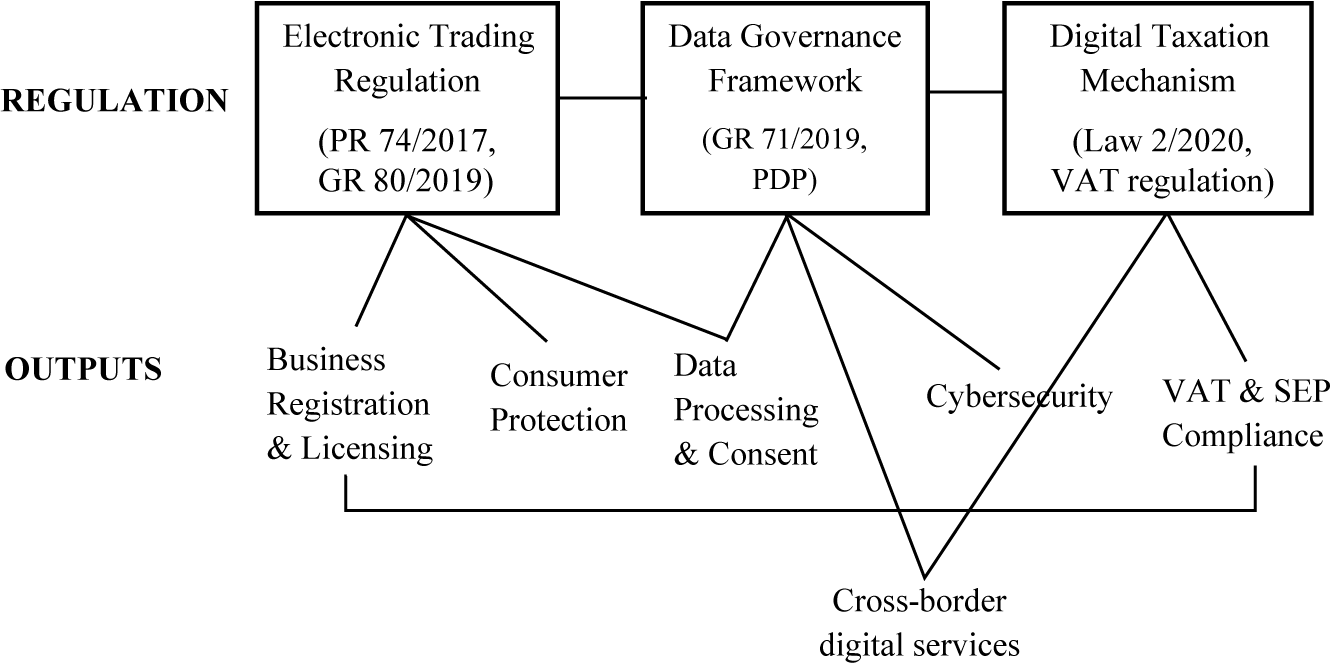
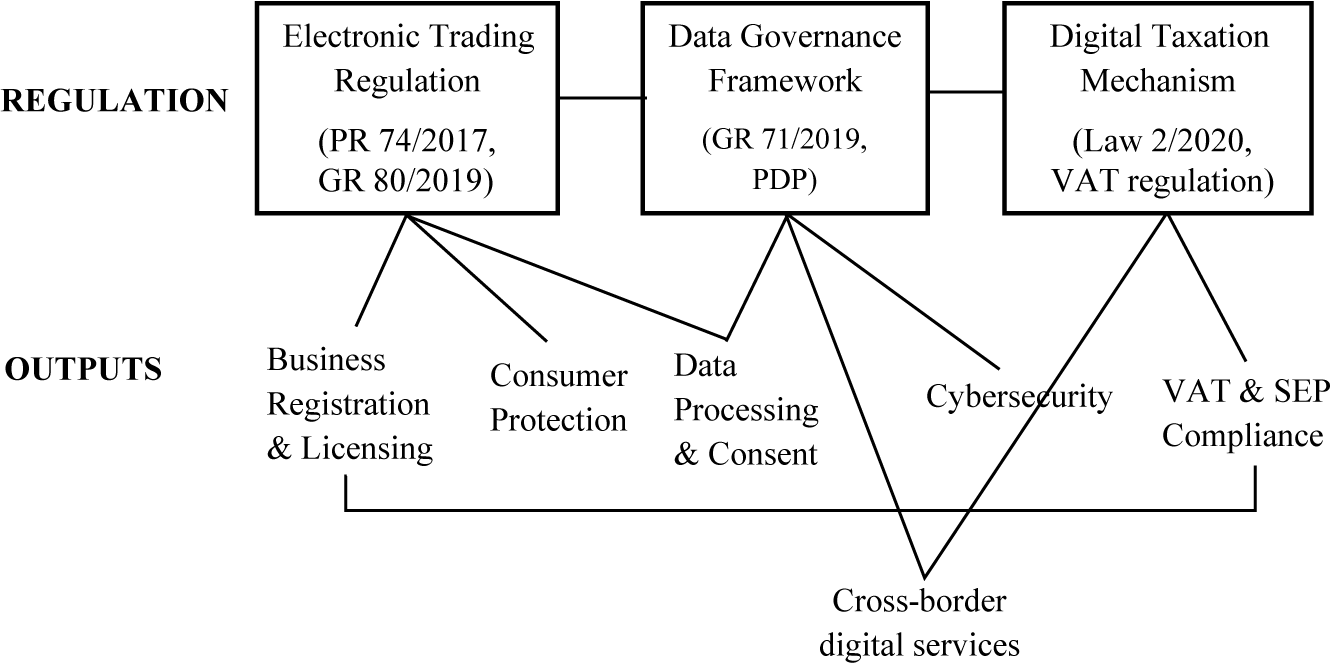
This study analyzes three key components of Indonesia’s digital economy governance: electronic trading systems (Presidential Regulation 74/2017 and Government Regulation 80/2019), data governance frameworks (Government Regulation 71/2019 and Personal Data Protection [PDP] Law of 2022), and digital taxation mechanisms (Law No. 2 of 2020 and related implementing regulations).
These regulatory instruments form an interconnected ecosystem rather than isolated frameworks. Electronic trading regulations establish foundational requirements for digital business operations, including registration, licensing, and consumer protection standards. These operations involve personal data processing, which falls under data governance frameworks that determine how information must be handled, stored, and protected. Both frameworks create taxable economic activities subject to digital taxation mechanisms, which rely on the formalization and documentation requirements established in the other regulatory domains. For example, a foreign e-commerce platform operating in Indonesia must simultaneously (1) register under GR 80/2019 if exceeding transaction thresholds, (2) comply with data protection requirements under GR 71/2019 and the PDP Law for customer information, and (3) register as a VAT collector under Law 2/2020 if meeting economic presence criteria. This interdependence creates implementation challenges and opportunities for regulatory harmonization, which is examined through comparative analysis with international models (Figure 1).
Interconnected framework of Indonesia’s digital economy governance.
3.2. Analytical lenses
The Regulatory-Digital Divide Framework is operationalized through three interrelated analytical lenses to examine the formulation, implementation, and impact of digital economy regulations in Indonesia. First, a regulatory structure analysis examines how formal rules governing electronic trading, data governance, and taxation are operationalized across diverse regional contexts, investigating how institutional arrangements interact with existing digital access patterns to produce varied compliance outcomes. Second, a market access and inclusion lens assesses how regulatory design and enforcement contribute to or mitigate disparities in digital access and economic participation, with particular attention to geographically and economically marginalized regions. Third, an international cooperation lens examines how external partnerships simultaneously influence institutional development and digital inclusion through infrastructure development and capacity building.
3.3. Comparative regulatory analysis
This study employs a comparative analysis of Indonesia’s regulatory approach with selected international models chosen for their relevance to Indonesia’s development context. The European Union was selected as the global benchmark for comprehensive data protection regulation with independent oversight and precise cross-border transfer mechanisms. The EU model represents a rights-based approach to data governance with stringent protection standards and explicit adequacy determination criteria, elements directly relevant to Indonesia’s evolving data protection framework. India, as a comparably large developing economy with significant regional diversity, provides insights into implementing SEP for digital taxation. Moreover, given similar development stages, large populations, and digital transformation challenges, India’s approach offers valuable insights. Finally, Singapore was selected as a regional leader in digital economy development with a market-oriented regulatory approach emphasizing simplicity and international harmonization. Singapore’s compact size, centralized governance, and advanced digital infrastructure provide an instructive contrast to Indonesia’s archipelagic geography and regional diversity. Its unified digital business registration system and minimal localization requirements represent alternative regulatory models within Southeast Asia.
These jurisdictions were specifically selected to provide a spectrum of regulatory approaches with differing underlying philosophies, implementation mechanisms, and outcomes. The comparison examines how different regulatory designs address common challenges in digital economy governance, with particular attention to implementation effectiveness across diverse regional contexts.
3.4. Data sources
The study draws on multisource data to support analysis and triangulate findings. Key sources include: (1) official government data from the Central Bureau of Statistics (BPS), Ministry of Communication and Informatics, and Ministry of Trade, which provide statistics on digital infrastructure, business registration, and regulatory compliance; (2) industry publications and survey data from APJII and the Google–Temasek–Bain economy SEA reports, which offer market-level insights into digital participation and regulatory burdens; (3) legal texts and policy documents encompassing GR 71/2019, GR 80/2019, Law No. 2/2020, and the 2022 PDP Law; (4) cooperation and strategy documents from the Indonesia–Japan partnership, ASEAN Digital Masterplan, and OECD digital economy initiatives; and (5) sectoral reports and case studies from multilateral institutions, including the World Bank and Bank Indonesia. This diverse evidentiary base enables the study to evaluate regulatory effectiveness and regional disparities.
3.5. Limitations
Several methodological limitations are acknowledged. First, the availability of regional implementation data remains limited, particularly outside Java-Bali; this constraint is addressed through the triangulation of national statistics with localized case evidence and industry-level reporting. Second, the recent enactment of the PDP Law precludes long-term impact assessment. Therefore, comparative benchmarking with mature systems, such as the EU GDPR, provides a foundation for analyzing potential implementation pathways and challenges even without longitudinal data.
Finally, regional implementation variability presents a considerable limitation, as detailed data on how regulations are enforced across Indonesia’s diverse provinces remains sparse. The study addresses this challenge by focusing on available regional statistics, documented case examples, and regional disparities in digital infrastructure and literacy that influence regulatory outcomes.
The analytical approach addresses these limitations, shaping the findings and recommendations for future research. While acknowledging these constraints, the methodology provides valuable insights into how regulatory design interacts with implementation contexts to produce varied outcomes across Indonesia’s diverse digital ecosystem.
4. Results and discussion
4.1. Analysis of Indonesia’s digital economy regulations
Indonesia’s regulatory framework for the digital economy has evolved to address various aspects of electronic commerce, data governance, consumer protection, and taxation. This set of regulations faces significant implementation challenges across Indonesia’s diverse archipelago.
4.1.1. E-commerce regulation and market structure
Government Regulation No. 80 of 2019 provides the core framework for e-commerce, requiring online businesses and marketplaces to establish legal entities, protect consumers, and ensure secure electronic transactions. It mandates that e-commerce providers obtain proper business licenses and comply with Indonesia’s trade and consumer protection laws. In 2020, the Ministry of Trade implemented rule No. 50/2020 with detailed requirements for online marketplaces, advertising, and seller verification.
Recent policy interventions show the government’s intent to control disruptive practices and foreign dominance in e-commerce. In September 2023, Indonesia banned direct e-commerce sales on social media through Trade Ministry Regulation No. 31/2023. This requires platform (e.g., TikTok) to secure an e-commerce license and prevents them from serving as both social media network and marketplace (Reuters, 2023). The ban requires social media companies to obtain a separate e-commerce license and disallows them from simultaneously acting as social media and marketplace operators. Officials justified the move as protecting small domestic merchants from predatory pricing and loss of market share to heavily funded foreign platforms.
GR 80/2019 and its implementing regulations stipulate that virtually any overseas platform actively doing business in Indonesia must set up a representative office or local entity. This local presence rule is explicitly designed to bring foreign e-commerce operators into the domestic legal and tax net, ensuring they are subject to Indonesian laws. The policy reflects Indonesia’s broader strategy of leveling the playing field between domestic and foreign e-commerce players while securing tax revenues and consumer protections.
Applying our institutional theory lens, we observe that these regulations represent the formal regulative pillar, but their implementation is shaped by normative and cultural-cognitive elements that vary across regions. Local regulatory offices in eastern provinces often lack the technical capacity to enforce complex digital regulations, creating institutional voids where formal rules exist but lack effective enforcement mechanisms.
4.1.2. Data governance and cybersecurity
In 2022, Indonesia enacted its first comprehensive PDP law, Law No. 27 of 2022 on PDP. This new law, often compared to the EU’s GDPR, establishes stringent requirements for how companies collect, use, store, and transfer personal data. It grants Indonesian consumers rights over their data and mandates that data controllers obtain consent for processing and implement security safeguards (Bigg et al., Reference Bigg, Magee and Serwin2023).
Prior to the PDP Law, Indonesia’s data governance was a patchwork of sectoral regulations (e.g., in finance and telecommunications) and provisions in the Electronic Information and Transactions (EIT) Law. The PDP Law consolidates these and fills gaps, for example, by defining personal and sensitive data categories and requiring breach notifications. Since its enactment, companies have invested in compliance programs, such as appointing data protection officers, revising privacy policies, and upgrading IT security to meet the new standards.
However, enforcement remains a work in progress. As of 2024, the government was still establishing an oversight agency and issuing implementing regulations for the PDP Law’s data transfers and sanctions provisions. The law’s impact is expected to be significant: it will likely raise compliance costs for businesses (especially data-heavy sectors like e-commerce and fintech) and improve consumer confidence in the digital ecosystem.
Indonesia’s policy on data localization has evolved from strict onshore requirements to a more nuanced approach. Under Government Regulation No. 71 of 2019, only Public–sector electronic systems are explicitly required to maintain local data centers, while private-sector operators are no longer generally compelled to localize data in Indonesia, provided that law enforcement and regulators are given access to the data when needed. This shift represents a more investment-friendly stance intended to encourage foreign cloud infrastructure investment while safeguarding critical government data onshore.
Our analysis through the Digital Divide Theory lens reveals that data localization requirements impose disproportionate burdens on businesses in regions with limited data infrastructure. The concentration of data centers in western Indonesia, particularly Jakarta, means that businesses in eastern provinces face higher costs and technical challenges in meeting compliance requirements. This exemplifies our third theoretical proposition about data governance frameworks producing uneven economic inclusion outcomes when prioritizing sovereignty without accounting for regional implementation capacity.
4.1.3. Digital taxation framework
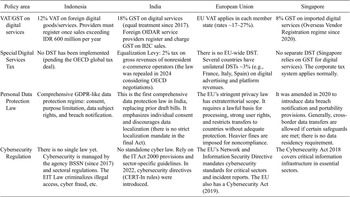
Indonesia has established taxation policies to capture revenue from the digital economy and ensure fair competition between online and offline businesses. A key pillar is the extension of Value-Added Tax (VAT) to digital services. Since July 2020, Indonesia has required foreign digital service providers to register as VAT collectors and charge 12% VAT (increased from 10% in 2025) on sales to Indonesian consumers.
This policy, implemented under MOF Regulation No. 48/2020, has brought about dozens of foreign companies, including global tech giants, registering and remitting VAT. The result has significantly boosted tax revenues; for example, digital VAT collections in 2021 were reported at over IDR 3 trillion (approximately US$210 million). The VAT mechanism also helps level the playing field so that overseas e-commerce sellers and content providers do not enjoy an indirect tax advantage over domestic businesses.
In addition to VAT, Indonesia explored measures to tax big digital corporations’ income. The government introduced the concept of SEP for foreign companies with no local entity. This was part of the Omnibus Law on Job Creation and subsequent implementing regulations, allowing Indonesia to impose an income tax on digital companies’ local revenue even absent a permanent establishment. However, Indonesia has so far deferred full implementation, aligning with international negotiations under the OECD/G20 Inclusive Framework for a global digital tax solution.
Comparatively, Indonesia’s approach aligns with many jurisdictions combining indirect taxes on digital services with cautious moves on direct taxes. Unlike some countries, Indonesia has not implemented a separate Digital Services Tax (DST) on the gross revenues of tech companies. Indonesia opted for the VAT route and the anticipated global profit reallocation rather than a unilateral DST. This avoids trade tensions that DSTs have caused elsewhere, but it also means Indonesia’s corporate tax collection from digital giants remains limited under the current rules.
Our institutional analysis reveals that tax administration capacity varies significantly across regions, creating challenges for consistent enforcement. While large businesses operating nationally are generally subject to centralized tax oversight, smaller regional businesses face varied enforcement environments, with some regions lacking the capacity to monitor digital transactions or enforce compliance requirements effectively (Table 1).
Comparative overview of digital tax and data regulation
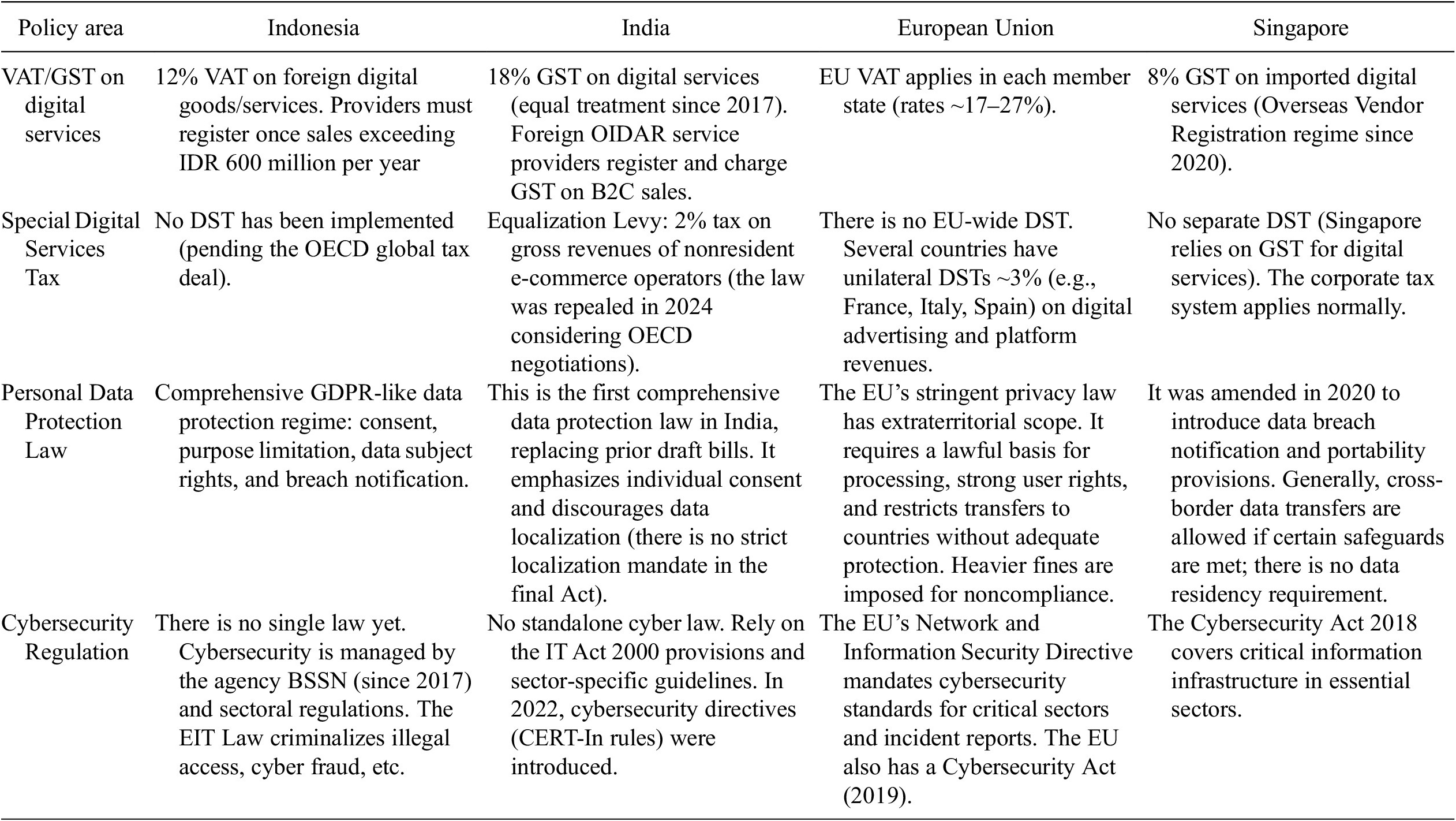
Source: Author, based on countries’ legislation and policies.
4.2. Regional digital disparities and inclusion
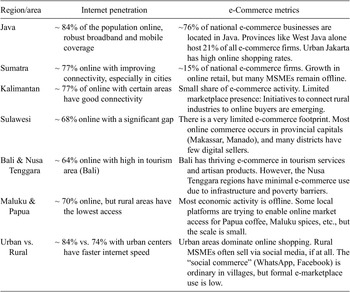
Indonesia faces significant digital divides across its archipelago. Internet access and e-commerce adoption are highly uneven between regions, urban and rural areas, and socioeconomic socioeconomic groups. Java enjoys the highest connectivity (84%) compared to less-developed regions like Maluku and Papua (70%).
Most digital economic activity is concentrated in Java, which hosts 76% of all e-commerce businesses. Just three provinces: West Java, East Java, and Central Java, account for nearly 60% of e-commerce enterprises nationally, whereas entire regions like Sumatra or Eastern Indonesia account for only a small fraction. This imbalance means that consumers and sellers outside Java have fewer online marketplace participants, leading to a digital divide in economic opportunity.
Several factors drive these disparities: infrastructure gaps (broadband connectivity, 4G coverage, electricity supply), digital literacy and affordability issues, and language and local content barriers. The government’s inclusion efforts recognize these challenges, with policies emphasizing infrastructure expansion and onboarding more regions and MSMEs.
Applying our integrated theoretical framework reveals how these regional disparities interact with regulatory structures. The uniform application of e-commerce regulations across regions with vastly different digital readiness levels creates asymmetric compliance burdens. As proposed in our second theoretical proposition, businesses in less-connected regions face disproportionately higher costs to achieve the same regulatory compliance as their counterparts in digital-rich environments, exemplifying how “regulatory access” functions as a dimension of digital inclusion.
This analysis supports our “regulatory access” concept as a fifth dimension of digital inclusion, extending Van Dijk’s sequential model. Even when basic connectivity and skills barriers are overcome, the ability to navigate regulatory requirements represents a distinct barrier to digital market participation, particularly for smaller businesses and those in less connected regions (Table 2).
Internet penetration and e-commerce adoption by region in Indonesia
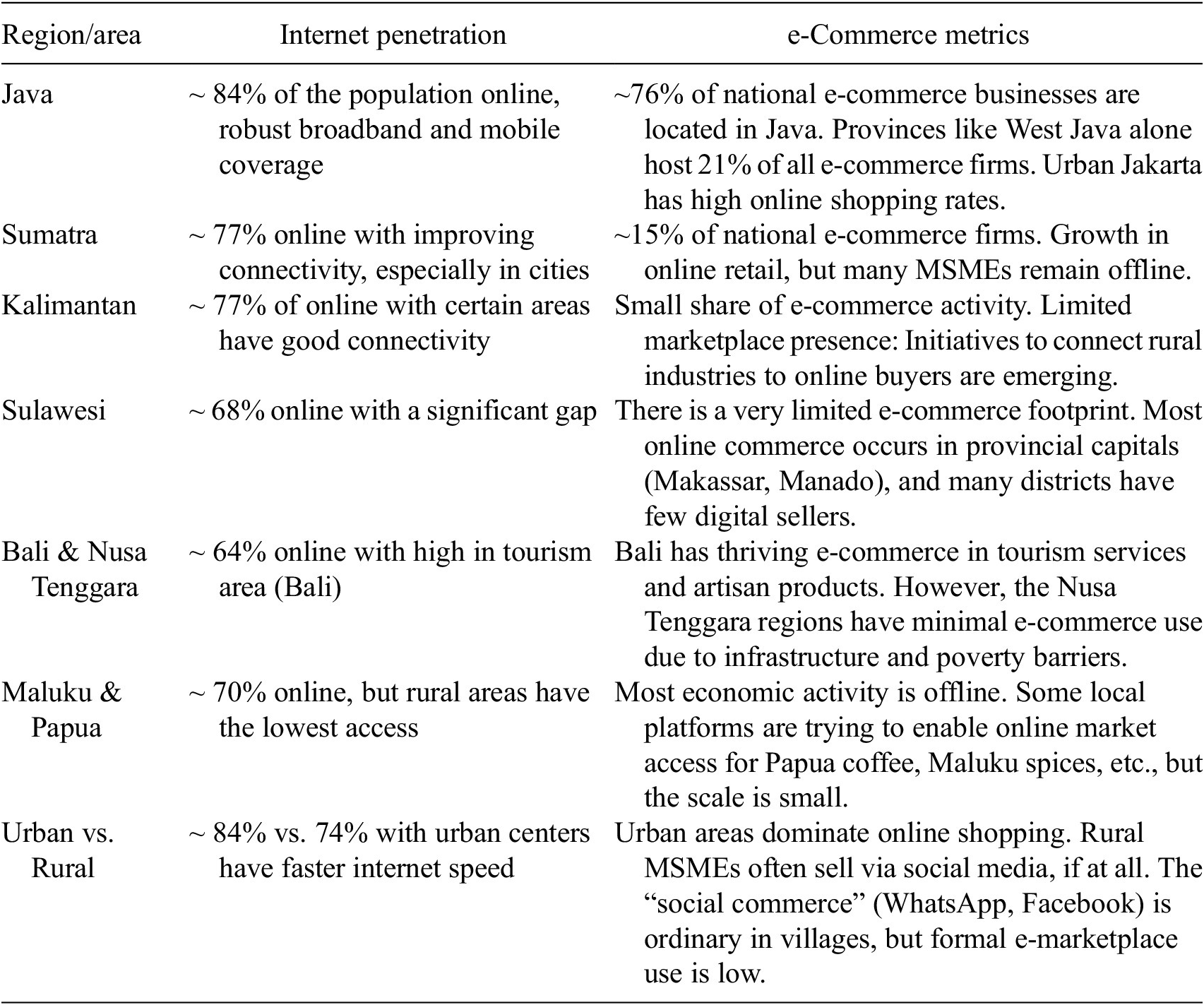
Source: Author, based on BPS, 2022 survey.
4.3. Economic impact and employment
The digital economy has become a driver of Indonesia’s overall economic growth, with broad implications for employment, productivity, and innovation. Estimates suggest that Indonesia’s internet and digital economy contributed about 4% of GDP in 2020, and this share has been rising rapidly (IMF, Reference Kinda and Yan2018; Interesse, Reference Interesse2022). Indonesia’s digital economy value is projected to exceed US$130 billion by 2025, roughly doubling from 2020.
In terms of employment, the digital economy has created hundreds of thousands of new jobs while transforming existing ones. The on-demand platform sector on ride-hailing and food delivery is a major employer. GoTo (Gojek-Tokopedia) and Grab are collectively engaging millions of driver-partners and delivery couriers across Indonesia’s cities. According to the Ministry of Cooperatives, in 2022, e-commerce marketplaces will enable over 19 million microentrepreneurs and stallholders to come online as sellers.
However, the net impact on employment must also consider job displacement. Traditional retail has faced stiff competition from e-commerce, potentially affecting jobs in small brick-and-mortar shops. Automation and online self-service in banking or travel booking can reduce the need for some clerical roles. A McKinsey report noted that while millions of new tech jobs will emerge, many lower-skill jobs could be lost to automation by 2030, requiring workforce upskilling on a massive scale (IMF, Reference Kinda and Yan2018).
The quality of jobs in the digital economy is another consideration. Many platform-based jobs are informal or freelance, with low earnings and no benefits. This raises policy concerns about job precarity and social protection. The government has begun to extend some labor protections to gig workers, for instance, mandating ride-hailing companies to provide accident insurance to drivers and setting floor prices for rides to ensure minimum income.
Beyond direct jobs, the digital economy has spillover effects on the broader economy. It has improved market efficiencies with lower transaction costs and enabled informal businesses to formalize and scale up. By selling online, a microentrepreneur in a village can access national demand, potentially increasing sales and eventually registering as a formal business.
4.4. International cooperation mechanisms
Indonesia’s digital regulatory framework increasingly relies on international cooperation to address the digital economy’s cross-border dimensions. Through multilateral, regional, and bilateral engagements, Indonesia aligns its policies with global norms while asserting its national interests.
At the regional level, Indonesia actively participates in ASEAN initiatives such as the ASEAN Agreement on Electronic Commerce (in force since 2021) and the ASEAN Digital Masterplan 2025. These frameworks promote regulatory harmonization on data protection, electronic signatures, and cybersecurity and support infrastructure projects like cross-border broadband and federated digital ID systems.
Additionally, Indonesia is a member of the Regional Comprehensive Economic Partnership (RCEP), a mega trade agreement among 15 Asia-Pacific countries that has been in effect since January 2022 (for Indonesia, since 2023). RCEP contains a dedicated chapter on electronic commerce that reinforces commitments to keeping cross-border data flows open, prohibits data localization requirements for financial services, and imposes no customs duties on electronic transmissions (Interesse, Reference Interesse2022).
Indonesia’s multilateral engagements include leadership in the G20 Digital Economy Working Group, advocacy for equitable digital access in WTO e-commerce negotiations, and alignment with the OECD/G20 Inclusive Framework on BEPS. Notably, Indonesia joined the global agreement on a 15% minimum corporate tax and Pillar One profit reallocation, postponing unilateral taxation on digital services in favor of coordinated implementation.
Bilateral partnerships are equally important. The Indonesia–Japan Public–Private Track 1.5 partnership supports digital infrastructure development, governance capacity building, and digital innovation. Over 200 Indonesian officials have received data governance and cybersecurity training, while Japanese investment has accelerated data center development and rural connectivity.
Our fourth theoretical proposition—that international cooperation can address regional regulatory implementation gaps when combining policy alignment with infrastructure and capacity development—is supported by evidence from this partnership. The partnership demonstrates how external engagement can help bridge domestic implementation disparities by including high-level policy dialogue and concrete infrastructure investments across multiple provinces.
4.5. Compliance costs and formalization of MSMEs
Indonesia’s regulatory reforms have significant implications for the MSMEs, which statistically form the backbone of the economy (64–66 million businesses, 99% of all enterprises). The government’s challenge is to design inclusive and not overly burdensome regulations for smaller firms while still achieving policy goals like consumer protection, tax compliance, and data security.
One major issue is that most MSMEs operate informally and outside the tax and legal system. According to estimates, roughly 60–70% of MSMEs lack formal business registration or complete licenses (Simatupang and Firtica, Reference Simatupang and Firtica2022). Digital platforms have lowered some barriers by allowing informal sellers to reach customers. However, as regulations tighten, these informal digital entrepreneurs face pressure to formalize.
Compliance costs can be disproportionately high for MSMEs in terms of time, money, and administrative effort. Before recent reforms, starting a business in Indonesia involved 11 procedures and nearly 3–4 weeks of processing on average (as of 2019). Although introducing the Online Single Submission system in 2018 has streamlined business licensing, many small entrepreneurs still find the process deterring.
This dynamic exemplifies our second theoretical proposition regarding asymmetric market entry barriers. Uniform regulatory requirements impose disproportionate compliance burdens on smaller businesses and those in less connected regions, potentially deterring formalization and reinforcing existing inequalities. The concept of “institutional voids” from our theoretical framework helps explain why formal compliance mechanisms that function effectively in institutional-rich environments like Jakarta may fail to achieve similar outcomes in regions with limited implementation support.
5. Policy recommendations
Drawing on the Regulatory-Digital Divide Framework developed in this study, we propose four integrated recommendations that address the regional dimensions of regulatory implementation and digital inclusion. Our analysis reveals that Indonesia’s digital economy regulations, while well-designed at the national level, face significant implementation challenges across diverse geographic and socioeconomic contexts. These recommendations are designed to work synergistically, recognizing that infrastructure, regulatory clarity, institutional capacity, and international cooperation are mutually reinforcing elements of inclusive digital economy governance.
5.1. Bridge regional implementation and infrastructure gaps
Indonesia should prioritize equalizing both regulatory enforcement capacity and digital infrastructure across regions. The government should establish regional digital economy support centers in eastern Indonesia and underserved areas to provide localized technical assistance, compliance guidance, and training in local languages. A tiered compliance framework should be adopted, offering simplified obligations and extended timelines for regions with less than 50% internet penetration. Mobile regulatory outreach teams should be deployed to remote areas, while infrastructure fund allocation should be increased with performance-linked metrics, prioritizing the 43% connectivity gap between urban Java and eastern Indonesia. Public–private partnerships should establish digital community hubs in provinces where MSME e-commerce adoption is below 10%, and regulatory sandboxes for innovative connectivity solutions should be launched in underserved provinces.
5.2. Enhance regulatory accessibility and MSME support
Indonesia should streamline regulatory requirements while providing targeted support for businesses, particularly SMEs. The government should adopt measurable thresholds for regulatory compliance in digital taxation and platform obligations, drawing from India’s SEP model, and develop a unified digital compliance portal centralizing registration and reporting processes. The “equivalent protection” standard for cross-border data transfers under GR 71/2019 should be clarified with comprehensive guidance aligned with international frameworks. A dedicated grant program should assist SMEs in covering digital compliance costs, with higher grant ratios for underserved regions. Digital literacy training should be integrated into existing SME development programs, complemented by sector-specific digital compliance toolkits and advisory services for formalization processes.
5.3. Strengthen data governance institutions
Following the EU’s GDPR model, Indonesia should accelerate the establishment of an independent Data Protection Authority with regional implementation capacity. Sector-specific data governance frameworks should be developed to balance protection standards with innovation needs, adapting the two-tier approach with clearer implementation guidance. Specific guidelines for cross-border data transfers should be created with assessment criteria comparable to the EU’s adequacy decisions but reflecting Indonesia’s development priorities. Institutional capacity should be built through training programs for regional data protection officials and industry compliance officers, complemented by regular consultation mechanisms with industry stakeholders.
5.4. Expand strategic international cooperation
Indonesia should leverage international partnerships to strengthen regulatory capacity while maintaining sovereignty over digital governance directions. The Indonesia–Japan Public–Private Track 1.5 partnership model should be extended to additional countries, emphasizing technical assistance for digital taxation and data protection enforcement in remote areas. Indonesia should pursue engagement in frameworks such as Data Free Flow with Trust, implement interoperability mechanisms aligned with APEC Cross-Border Privacy Rules or DEPA principles, and develop knowledge-sharing arrangements with countries facing similar challenges. In multilateral forums, Indonesia should advocate for inclusive digital rules that recognize developing countries’ capacity constraints, while developing a national strategy harmonizing global participation with local development needs. Partnerships should prioritize technology transfer and domestic capability development, ensuring cooperation agreements include provisions for local innovation ecosystem development and mechanisms for evaluating partnership effectiveness in building sustainable domestic capacity.
6. Conclusion
Drawing on Institutional Theory and Digital Divide Theory, this study examines the interaction between regulatory structures and digital inclusion in Indonesia’s digital economy. The analysis demonstrates that effective digital economy governance requires not just well-designed regulatory institutions, but careful attention to how these institutions interact with existing digital divides to produce varied outcomes across different regions and socioeconomic groups. Indonesia’s legal frameworks in electronic commerce, data governance, and digital taxation are broadly aligned with global best practices, yet implementation disparities driven by geographic, infrastructural, and institutional asymmetries continue to constrain inclusive digital participation. Empirical evidence reveals that businesses in eastern Indonesia and rural areas face compliance costs two to three times higher than those in Java, resulting in reduced formalization and market exclusion. The comparative analysis with India, the European Union, and Singapore illustrates that adaptive, transparent, and regionally sensitive policies are critical to bridging digital divides.
Beyond its immediate regulatory implications, Indonesia’s digital economy governance intersects critically with the broader twin transition agenda of simultaneous digitalization and decarbonization. The regulatory frameworks examined create conditions for both digital inclusion and environmental sustainability: formalized e-commerce can reduce carbon-intensive physical retail infrastructure, data localization policies influence the energy footprint of data centers, and digital payment systems decrease reliance on resource-intensive cash handling. International cooperation frameworks increasingly recognize this dual imperative, incorporating green digital infrastructure development to align digital governance with climate objectives. Indonesia’s experience demonstrates that regulatory frameworks must simultaneously address digital divides, economic inclusion, and environmental sustainability. This integrated perspective becomes particularly essential as developing nations seek to harness digital transformation without replicating the resource-intensive development pathways of earlier industrializers, shaping capacity for inclusive, sustainable development in an increasingly digital and climate-constrained world.
The findings serve as broader relevance for countries with pronounced regional diversity. Nations such as the Philippines, Brazil, and Nigeria can apply this framework to assess how regulatory design affects inclusive digital growth across diverse geographic and socioeconomic contexts. As digital economies expand globally, the challenge for regulators extends beyond legal drafting to encompass institutional capacity building, infrastructure equity, and context-sensitive governance. Future research should build on this study’s findings by conducting longitudinal analysis of how regulatory implementation disparities affect economic development trajectories over time, developing more precise quantitative measures of regulatory implementation effectiveness across regions, and identifying transferable best practices for addressing regional implementation challenges. Comparative studies applying this analytical framework across multiple developing economies would be particularly valuable in building a stronger evidence base for inclusive digital economy governance.
In conclusion, Indonesia’s experience demonstrates that digital economy regulations must be implemented with cautious attention to regional disparities, business diversity, and implementation capacity constraints to achieve their intended objectives. By addressing the implementation gaps identified in this study and adopting integrated policy interventions that strengthen both institutional capacity and digital infrastructure, Indonesia can create a more inclusive digital economy that extends opportunities across all regions and business types. The framework offers both analytical tools for understanding implementation challenges and practical guidance for policymakers worldwide seeking to harness digital transformation for inclusive economic development while ensuring appropriate oversight and consumer protection.
Data availability statement
The primary sources analyzed in this study consist of publicly available legal documents and regulations accessible through Indonesia’s official government portals. All secondary data sources are fully cited in the references section. The dataset can be accessed in Baroto, W. A. (2026). Regulating Indonesia’s Digital Economy: Balancing Growth, Inclusion, and Governance. Zenodo. https://doi.org/10.5281/zenodo.18931023.
Acknowledgments
This research was made possible through the support of the Indonesia Endowment Fund for Education (LPDP) of the Republic of Indonesia. The author is conducting research under Associate Professor Kaneko Hironao’s supervision at the Institute of Science Tokyo, Japan.
Author contribution
Conceptualization, Data curation, Formal analysis, Investigation, Methodology, Resources, Visualization, Writing – original draft: W.A.B.
Funding statement
The author of this research receives a scholarship from the Indonesia Endowment Fund for Education (LPDP) of the Republic of Indonesia.
Competing interests
The authors declare no competing interests that could have influenced the work reported in this manuscript.

 Open access


Comments
No Comments have been published for this article.