

1. Introduction
Late antique medical authors have not received much attention from medical historians and specialists working on social and cultural history, and reception studies.Footnote 1 Scholars have considered the preservation of classical texts as the principal contribution made by late antique authors; the ‘refrigerators of antiquity’, as they have been called.Footnote 2 It is only to be expected that, as they used the same language as the classical authors, they had privileged access to this tradition. Any in-depth study of late antique medicine should move beyond the, admittedly true, fact that it preserved the classical medical heritage, and look for important observations linked to medical practice.
Recent studies on the works of Oribasios (AD ca. 325–after 395/6), Aetios of Amida (first half of the sixth century AD), Alexander of Tralles (AD ca. 525–ca. 605) and Paul of Aegina (late sixth century–died after AD 642) on the Greek side or of Caelius Aurelianus (fl. around AD 400), Theodore Priscianus (fourth/fifth century AD), Cassius Felix (fifth century AD) and the author (ca. fourth century AD) of the Medicina Plinii on the Latin side, have emphasised the crucial role of these authors in the shaping of a medical tradition and transfer of medical knowledge.Footnote 3 Their medical expertise reinforced their literary skills in selecting the most essential parts of earlier texts and re-arranging an otherwise vast and sometimes chaotic material into a more systematic form. In particular, Alexander of Tralles amalgamates his abilities as a compiler with his own extensive clinical experience,Footnote 4 producing works which are marked by a strong authorial presence. Even though he was much influenced by the theories and practices of Galen and followed a Hippocratic understanding of humoural pathology and physiology, he kept on striving to find new ways of treating disease and researching the effectiveness of his therapies.Footnote 5 He conscientiously cited earlier authorities and did not hesitate to disagree even with Galen when common sense demanded.Footnote 6
Alexander practised in the reign of Justinian I (AD 527–65) and, according to the contemporary historian Agathias, writing in AD 557, came from a well-known provincial family from the city of Tralles, in the region of Lydia in Asia Minor.Footnote 7 His father, Stephen,Footnote 8 was a physician and the most prominent of his brothers was Anthemios,Footnote 9 a distinguished mathematician and best known as the architect of the great church of Hagia Sophia in Constantinople. Agathias states that ‘Alexander settled in Rome, having been called there due to his great prestige’.Footnote 10 So, if Agathias is to be trusted, Alexander became a highly successful and respected physician, who enjoyed recognition among his contemporaries. Thus, Alexander should not be seen as a marginal provincial figure, but as a well-connected member of the sixth-century establishment.
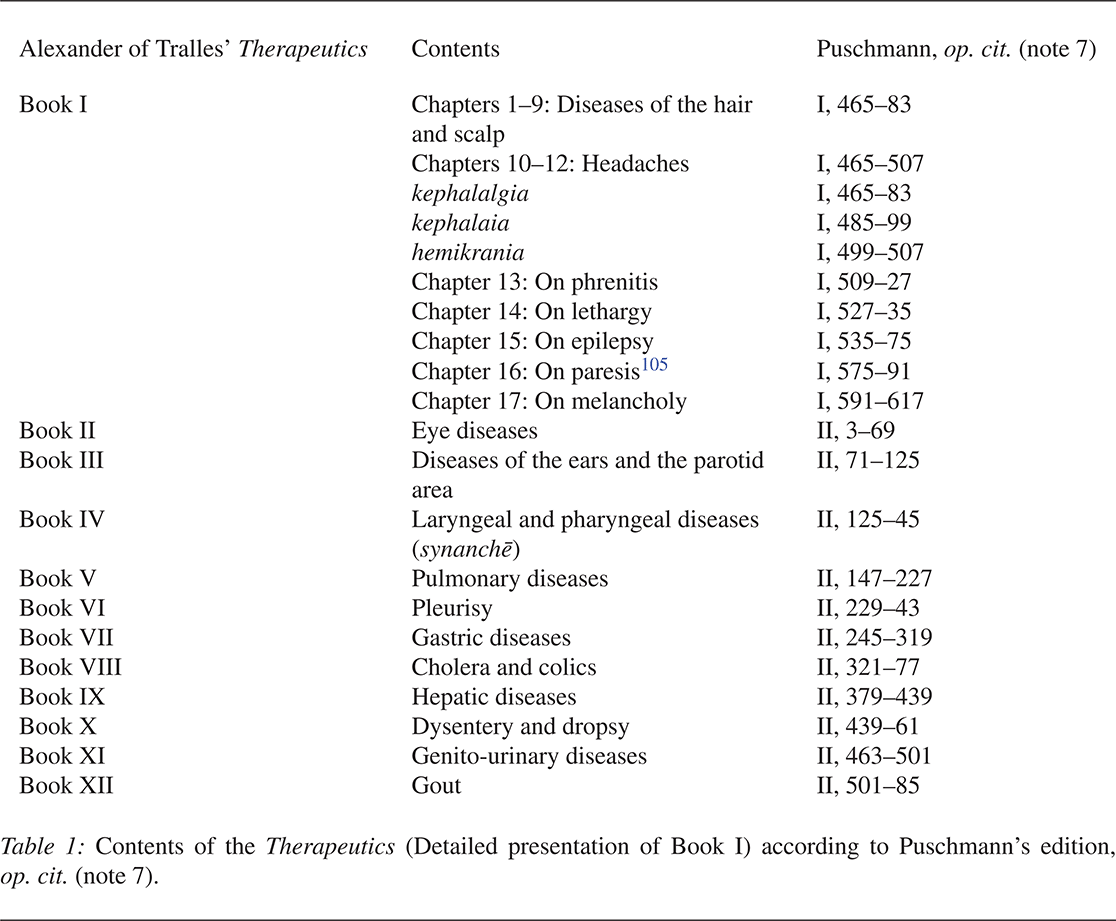
Alexander’s main work, the Therapeutics, follows the well-established medical tradition of writing a capite ad calcem (from head to toe) and has details on diagnosis and treatment of diseases divided into twelve books (see Table 1).Footnote 11 In addition to Therapeutics, two other genuine works survive. These are a treatise On Fevers dedicated to his friend Kosmas and a letter On Intestinal Worms, which was composed for his friend Theodore.Footnote 12 The works circulated widely and were well received as early as the early seventh century, when they are already being cited by Paul of Aegina. A first translation of Alexander’s works into Latin is estimated to date to around AD 700; translations into Arabic and Hebrew followed.Footnote 13 Alexander must also have written other works that have not survived, such as a book on fractures and wounds, to which there is a reference in his Therapeutics.Footnote 14 A work On Eye-diseases, found in some manuscripts of the Therapeutics, is now considered spurious.Footnote 15 The same applies to a text entitled On Pulses and Urine.Footnote 16
Contents of the Therapeutics (Detailed presentation of Book I) according to Puschmann’s edition,op. cit. (note 7).

The state of research into Alexander’s works remains at quite a basic level and various aspects are as yet unexplored. As John Scarborough aptly stated: ‘it is quite surprising that a full-fledged study of this magnificent physician has not yet been produced by modern medical historians’.Footnote 17 In this paper, I would like to examine how Alexander attempts to communicate his specialised knowledge to his reader by focusing on the physician’s practical experience. My purpose is not to evaluate the efficacy of his therapeutic methods; instead, I aim to explore Alexander’s experiential claims and highlight certain features of his methods and the presentation of his material. My study focuses on the chapter ‘on epilepsy’ in the Therapeutics for two main reasons. First, it is one of the most diverse as regards material, containing a large number of so-called ‘natural remedies’,Footnote 18 and one of the longest chapters in the entire work, occupying twenty of the eighty-nine printed pages that make up the first book of the Therapeutics.Footnote 19 Furthermore, since epilepsy was one of the most well-researched diseases in antiquity, there is a plethora of classical and late antique material available that will provide useful data for comparison with Alexander’s approach.Footnote 20 My study delves into two main areas of Alexander’s therapeutic advice. First, I examine the field of pharmacology; next comes the group of natural remedies.
2. Peira and Self-promotion Strategy in Alexander’s Works
Proems are traditionally ideal places from which to collect information about the author’s aims and motivations. To provide a convenient starting point, I will refer to the short preface that preceded his work On Fevers, which circulated in the manuscripts as part of the last book of the Therapeutics together with the treatise On Fevers. Alexander states:
‘My beloved Kosmas, I readily obeyed your demand to set out for you what I have assembled from my [ἡμῖν, lit. “our”] rich experience [πείρας] of treatments of various diseases (…) although I am now an old man and no longer able to exert myself greatly, I obeyed and wrote this book, after having collected my experiences [πείρας] from my many contacts with human diseases. And I know that this will please many people, who are not envious to look at the good reasoning [τό τε εὐμέθοδον] of my medical theories [τῶν θεωρημάτων] and at the same time the brevity and clarity of the exposition.’Footnote 21
The author is at an advanced age and gives the impression of a practising physician who has decided to share the fruits of his long, erudite career with future generations. In his introductory declaration, he gives an emphatic pointer using the word peira to refer to a central aspect of the way in which he composed his text. Peira seems to include all of the accumulated knowledge acquired through contact with his patients.Footnote 22 It also appears to be part of his attempt to claim authority, by presenting himself as a medical practitioner, and not merely as a compiler of medical writings in contrast, for example, to Aetios of Amida, who often simply copies first-person verbs and pronouns from the original source.Footnote 23
Thus, Alexander acknowledges the special nature of the statements related to his clinical activity and takes them to be distinct parts of discourse in his works. These passages may be short, eg. just a few words, or sometimes quite long, covering a couple of lines. For example, he may simply refer to the effectiveness of a certain remedy by the use of a short phrase such as ‘this works wonderfully’.Footnote 24 Nonetheless, in the vast majority of cases his use of the first-person singular is clearly connected with a statement emphasising the role of experience. Alexander is usually presented as transmitting an observation or reporting his thoughts and medical actions. For example, he may use a past form of the verb theaomai (to behold) or heuriskō (to discover) or even horaō (to see/to know).Footnote 25 The narration usually shifts from the first-person indicative to the second- or third-person imperative advising the reader accordingly, eg. ‘give [δίδου] six grammata Footnote 26 (of the aforementioned medicament)’.Footnote 27
The first-person singular was used in the classical period by philosophical, scientific and medical authors in their attempts to engage a reader’s attention when referring to some innovative approach.Footnote 28 In Alexander’s case, it seems to reveal the author’s attempts to promote the quality of his recommendations by providing his own perspective. It is a way of giving his words added force as the direct outcome of an experience, revealing the author’s expectation that his audience will take note of and remember his contribution, when faced with similar situation themselves. In addition to the first-person singular, as we have already seen in relation to Alexander’s proem, he chooses to use the first-person plural, ‘we’, in setting out his experiences.Footnote 29 The use of the first-person plural is common in ancient Greek and Latin scientific texts and Galen himself makes use of it in referring to his clinical activity and in particular in his case histories.Footnote 30 It seems that, in Alexander’s case, the ‘we’ refers to the author and his reader, in turn implying a notion of ‘communality’.Footnote 31 There may be no direct response from the reader, but as has already been noted, Alexander is addressing his friends and seems aware of a contemporary circle of individuals, who had an intense interest in medical matters. Hence, there is an audience, which he attempts to involve in his own world of medical knowledge, which is based on his own records and observations.
3. Epilepsy
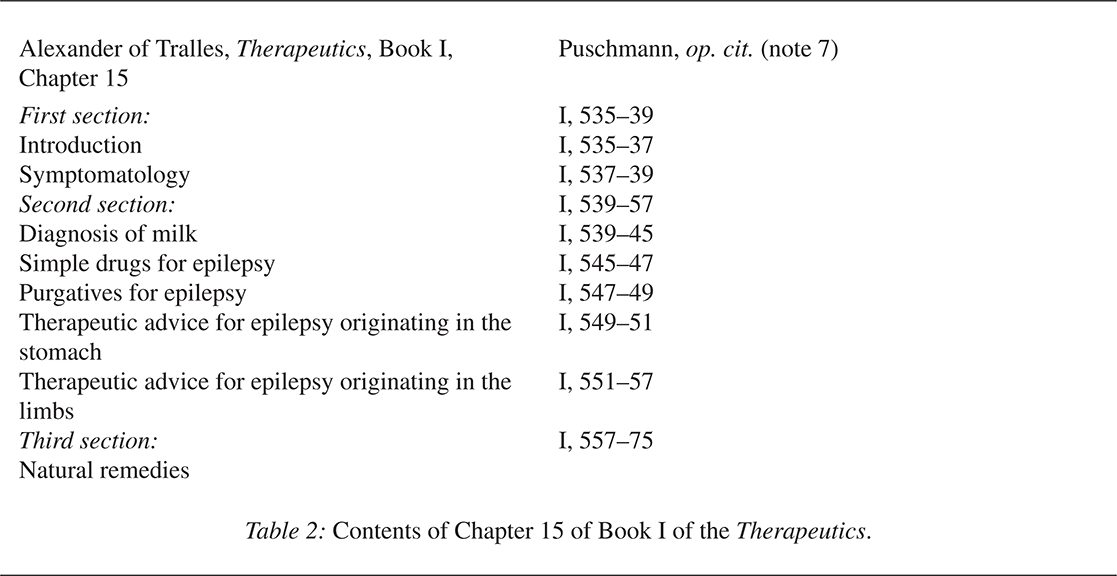
Having provided an overview of Alexander’s ways in referring to his practical experience, I now turn to discuss his experiential statements in more detail by focusing on a particular chapter of his Therapeutics, that is on epilepsy (see Table 2). According to Puschmann’s edition, the chapter ‘on epilepsy’ is divided into thirty-one paragraphs.Footnote 32 Each one has a separate title, which is related to the contents of the paragraph and may be quite long, such as ‘treatment of patients suffering from epilepsy originating from the limbs’ or just a single word such as ‘another (remedy)’.Footnote 33 We can identify three distinct thematic sections. The first and shortest section deals with the pathology of the disease, the next with therapeutics and the last with natural remedies.Footnote 34
Contents of Chapter 15 of Book I of the Therapeutics.
In the initial section of the chapter, Alexander, following Galen, distinguishes three forms of epilepsy: (a) epilepsy originating in the brain; (b) epilepsy originating in the stomach; and (c) epilepsy originating in the limbs.Footnote 35 He characterises epilepsy as a ‘moist’ and ‘cold’ disease and in his remedies attempts to avoid any concentration of ‘wetness’ in the cerebral ventricles, following the well-established principles of humoural pathology.Footnote 36 A ‘thick’ humour is considered responsible for the accumulation of ‘wetness’, and as in the Galenic approach, this humour may consist of phlegm or black bile.Footnote 37 Furthermore, in the case of those suffering from epilepsy originating in the stomach, it is probable that an additional high concentration of yellow bile could reach the brain and exacerbates the disease.Footnote 38
Alexander is clearly not interested in presenting a detailed symptomatology or arguing about the various stages and types of diseases in his works. His main focus is on therapeutics. When theory is introduced it is only to provide the essential background, which one might require when dealing with the disease. All of the passages which are connected with Alexander’s references to his practice are found in the last two sections of his chapter. Thus, it is certainly not random that there is only one example of the use of the first-person in the first section of the chapter, while in the next two sections we find twelve and eleven examples, respectively.Footnote 39
4. Pharmacology
Alexander’s therapeutic approach pays particular attention to pharmacology, which for him constitutes the most dynamic branch of therapeutics.Footnote 40 For example, in his Therapeutics, he may sometimes provide dietetic advice and rarely mentions natural remedies, but he makes clear that he is not enthusiastic for the use of surgery: ‘arteriotomy, trephinisation, cauterisation, and all the other remedies (…) become a punishment to many rather than a cure’.Footnote 41 His therapeutic advice on epilepsy starts by concentrating on epilepsy in infancy and the special dietary requirements a wet nurse should follow.Footnote 42 The concept of good quality milk as fundamental measure of successful treatment in cases of infantile epilepsy was not a new one.Footnote 43 Furthermore, the consequences of various foodstuffs as regards the accumulation of a ‘thick’ humour had already been elaborated in detail by Galen.Footnote 44 Alexander does not seem particularly interested in involving any cases from his clinical experience and proceeds to pharmacology.
We know that the field had already provided a great number of available agents for epilepsy. For example, Temkin lists forty-five pharmacological substances mentioned by Dioscorides (fl. middle of the first century AD) in relation to the disease.Footnote 45 Alexander shows that he too has something to add. The part following the dietary advice concentrates on the use of simple drugs for epileptic children. Thus, his account reads as follows:
‘(…) during the winter, the decoction of hyssopFootnote 46 can be very useful. And so many (patients) having used only this (decoction of hyssop) were cured, and they no longer fell ill for a second or third time with the same disease.’Footnote 47
Hyssop had been suggested for the therapy of epilepsy by Greek authors such as Aretaeus (ca. first century AD) and, one of the chief representatives of the Methodic school, Soranus (second half of the first century–early second century AD) in the past.Footnote 48 In his turn, Alexander believes that hyssop is a very efficient drug, which can cure the disease for a long period of time, suggesting an acute therapy with a long-term outcome, which confirms his focus on youth. This is not a simple reference to a pharmacological use, but it probably implies his persistent attempts to check past remedies with real patients. However, it is not representative of Alexander’s particular authorial manner of expressing the outcome of his clinical activity.
The first remarkable instance is found in the next part dealing with purgatives. Alexander starts his account by focusing again on those suffering from the disease from an early age. Purgation, which led to the subsequent evacuation of harmful humours from the patient’s body was an extremely common therapeutic procedure for the majority of human diseases in antiquity.Footnote 49 Alexander refers to various kinds of purgatives, which were used a great deal to draw off noxious humours. His first mention comes in a statement on the effectiveness of an antidote. The use of the first-person singular for the first time in this chapter alerts the reader: ‘I know [οἶδα] many (patients) who were cured by the aforementioned purgative (a composite called theodōrētos)’.Footnote 50 By suggesting the use of theodōrētos, he is referring to an already known medicament, which he had found to work well when applied to his patients. Here the contact with the disease is reported as a means of testing, and thus adopting an existing pharmacological therapy as with hyssop. However, in the next couple of phrases, we can see Alexander quite openly illustrating his active involvement in making treatment decisions:
‘If, however, the harmful humoural mixture continues to cause problems and the disease persists, then let the pills prepared by myself, from which I have not found [εὗρον] anything stronger, be swallowed. The preparation of the pills is as follows:’ $\def \xmlpi #1{}\def \mathsfbi #1{\boldsymbol {\mathsf {#1}}}\let \le =\leqslant \let \leq =\leqslant \let \ge =\geqslant \let \geq =\geqslant \def \Pr {\mathit {Pr}}\def \Fr {\mathit {Fr}}\def \Rey {\mathit {Re}}\frac{1}{2}$ ounceFootnote 51 aloeFootnote 52 $\frac{1}{2}$ ounce scammonyFootnote 53 $\frac{1}{2}$ ounce gumFootnote 54 $\frac{1}{2}$ ounce of colocynthFootnote 55 $\frac{1}{2}$ ounce bdelliumFootnote 56, Footnote 57.
Alexander himself appears to prepare a pharmaceutical dosage form, in this case a number of pills, which constitutes the ultimate measure against the on-going humoural imbalance. He goes a step further by suggesting a recipe and providing the quantities of the ingredients in detail. According to his text, he has tested the aforementioned composite drug by comparing its effectiveness with other drugs. His assessment did not depend on certain criteria, diorismoi, as laid down by members of the Empirical sect or later even Galen himself in his concept of ‘qualified experience’.Footnote 58 The approach he follows is as eclectic as it needs to be to help his patients effectively.
At a first stage experience is used as a testing device, as in the case of the theodōrētos remedy. The next stage is a research process. Alexander’s use of the verb heuriskō implies an on-going testing, in which the physician has to try to discover a new recipe by changing the quantities of certain ingredients or adding new ones. This is even more obvious in the next example where Alexander suggests using purgatives on patients who suffer from epilepsy originating in the limbs. Here Alexander chooses to give his advice on a certain purgative by introducing a real scene from his professional career:
‘I beheld [ἐθεασάμην] one of those readers falling down; then, he said, whenever it was about to happen, he felt an aura of cold rising from the tarsus up to the brain. And so I purged him by giving him pills with which to remove the phlegm and the black humour (…) and I [ἡμῶν, lit. ‘we’] have practised in this way, the young man became healthy. The medicament, which I applied in his case to help this treatment was the herb called pepperwortFootnote 59; for although there are other herbs producing the same effect, none is as well suited as that herb.’Footnote 60
Galen reports a similar case in his On Affected Parts.Footnote 61 In both cases the patient is young and suffers from epilepsy originating from the lower limbs. In the Galenic example the focus is clearly on symptomatology and there is very little on therapy; Galen succinctly suggests that the patient’s body should be purged with the use of deadly carrotFootnote 62 or mustardFootnote 63 without providing any further details. Although it seems that Alexander follows Galen’s case history at the beginning,Footnote 64 he clearly shows a greater emphasis on therapy, which differentiates his approach from that of his predecessor.
Alexander’s authorial voice is certainly stronger here than in any other part of his text so far. He is the only physician present in the particular event, who manages effectively to save his patient. The reader is transferred to the locus of medical activity and is able to get a closer look at Alexander’s methods. Experience in the form of the first-person singular is used as a device of communication in order to highlight the author’s ability to deal with a demanding situation by suggesting new drugs. But, let us concentrate on the suggested remedy. Its therapeutic approach is expressed through an instant response with the use of pepperwort alone. Although previous medical writings about the therapy of epileptics had not made use of this ingredient, it is reported as a drug with an intensely ‘warm’ quality,Footnote 65 which may alleviate the ‘moist’ and ‘cold’ quality in a patient’s brain. This is indicative of Alexander’s heuristic approach in dealing with disease, which is a process of both testing and discovery.Footnote 66 Alexander appears aware of various purgatives, which may produce a similar effect and thus could have been used to test the efficacy of something previously untried. He finally comes to a logical outcome through a repeatable process, which highlights the special use of a certain pharmacological agent, in this case, pepperwort. However, there is not enough evidence in Alexander’s text as to why or how one drug is more effective than another.
Later on, he gives an account of a proposed purgation, in this instance for those suffering from chronic epileptic seizures. He starts once again by giving a detailed recipe, here of a purgative based on white helleboreFootnote 67 and followed by certain steps on the process of purgation. Alexander clearly alludes to the ‘cyclical’ therapy of Methodism.Footnote 68 The first phase, the so-called recuperative cycle, aimed to rebuild the patient’s condition through dietetics. The next one, the re-corporative cycle, was dominated by the application of either drastic local drugs or surgery. In the case of epilepsy, Caelius Aurelianus refers to the administration of hellebore during the latter cycle.Footnote 69 However, Alexander has a personal view, providing us with the following sequence of observations:
‘I purged well by using the hiera Footnote 70 and I also gave three grammata of Armenian stoneFootnote 71 and I helped (the patients). However, I have not found [εὗρον] any other (treatment) so effective in patients with chronic epilepsy, as this purgative (white hellebore) and I know [οἶδα] many who, having been given up by other doctors, were cured by using only this purgative (white hellebore).’Footnote 72
Alexander introduces here a new recipe, which has been compared to two other similar purgatives many times before. He names the drugs, in this case the hiera and the Armenian stone, and provides a tangible description of the main components of his ongoing testing process. His own recipe with the white hellebore, however, is presented as the most effective drug for this disease above numerous other purgatives provided by other physicians. The comparison with the latter’s approach highlights competition among contemporary practitioners and is connected with Alexander’s attempts to establish contact with and persuade his reader of the efficacy of his advice. Although his reader cannot easily judge the truth of what he says, this is an element which certainly makes Alexander’s advice seem more authoritative.
Alexander’s eclecticism allows a variety of remedies from a great range of earlier authors to be tried and tested. His procedure follows a similar pattern in all cases; having tested existing remedies devised by various earlier authorities, he attempts to provide a more efficient cure by trying out a closely related or similar drug. To some extent, Alexander’s approach might recall one of the three main epistemological tenets of ancient Empiricism, that is, ‘the transition from like to like’.Footnote 73 Although Alexander seems to have borrowed elements from Empiricists, he does not appropriate their main notions in his approach. The hypothesis deriving from Alexander’s sayings could be expressed as follows: ‘If A does not work on patient X, let us try a similar drug (B). Does B work on patient X?’. The answer can only be ‘yes’ or ‘no’. In the case of composite drugs, the hypothesis could take the following form: ‘If C does not work on patient Y, let us try a variety of C by introducing an ingredient with similar effect or by changing the amounts of the ingredients’. He may sometimes introduce either a new simple or composite drug or devise a new variety of an already known composite drug. This does not, however, amount to the formulation of a wholly new theory on drug activity substantiated by causal explanation. Alexander certainly comes up with significant contributions in purging his patients effectively, but this is not based on scientific experimentation. It contains a simple practical notion, which is enough to show Alexander’s audience his original way of dealing with a disease that has already been much discussed in pharmacological terms.
5. Natural remedies (Physika)
Alexander’s individual attitude is even more obvious when he decides to include a number of natural remedies, physika, in his discussion of epilepsy.Footnote 74 These may refer either to diagnostics or therapeutics and are characterised by their impact in folk medicine. Although Greek authors such as Galen or Soranus and Latin authors such as Celsus (first century AD) or Scribonius Largus (ca. first half of the first century AD) might include references to popular healing practices, they clearly stated that these therapies fell outside professional medicine and rejected their use on most occasions.Footnote 75 On the other hand, it seems that other contemporary medical authors such as Archigenes,Footnote 76 as confirmed by Alexander’s references, or later ones such as Aetios of AmidaFootnote 77 and MarcellusFootnote 78 (ca. late fourth century/early fifth century AD) included a considerable number of these remedies in their therapeutics.Footnote 79 However, this is not the place to speculate on Alexander’s testimony as regards Archigenes’ lost work and the validity of his references; rather it is a chance to explore the way Alexander exploited his own experience in using them.
Alexander makes a clear distinction with regard to his natural remedies, using special subheadings. Sometimes, the sections referring to them are quite long as for example in the chapter under examination, but most of the time they constitute only a minor part of his therapeutic approach.Footnote 80 Among the different types of ingredients, which he uses for his natural remedies, we can identify four main categories: plants, animals, minerals and human humours, such as human blood. In the case of epilepsy, his text contains about twenty examples of such remedies. In the cases where Alexander provides a named sources, apart from Archigenes, he refers to a great number of earlier authors as the sources of some of his remedies, including well-known authors such as Asklepiades Pharmakion (ca. second half of the first century AD),Footnote 81 Servilius Damokrates (first century AD),Footnote 82 Xenokrates of Aphrodisias (second half of the first century AD),Footnote 83 Theodore Priscianus,Footnote 84 and little-known authors such as Straton of Beirut (ca. first century AD),Footnote 85 Moschion (ca. first/second century AD),Footnote 86 or even hitherto unknown such as Marsinos of Thrace,Footnote 87 and obscure authors such as Osthanes (ca. first century BC),Footnote 88 and Zalachthes.Footnote 89 Furthermore, he indicates various places across the Mediterranean, where he had discovered remedies, such as Tuscia (a historical region of Italy consisting of modern Tuscany, a large part of Umbria and the Northern Lazio),Footnote 90 Corfu,Footnote 91 GaulFootnote 92 and Spain.Footnote 93 Therefore, we can see that he drew his information from a wide range of sources, which confirms once more Alexander’s eagerness to evaluate and adopt every possible remedy.
The relevant section in the chapter ‘on epilepsy’ starts with Alexander’s attempt to explain why he mentions such a large number of these remedies:
‘And so these things are said about epileptics, (it is) all we [ἡμεῖς] know and the long experience [πεῖρα] has taught (us). However, since some people rejoice in natural remedies and amulets and they seek to use them, and according to what they say, they succeed in their aim, I thought that it was fitting to give an account regarding these topics for those who are eager to learn, so that the physician will be well provided from all the available sources in order to be able to help patients.’Footnote 94
First he refers to the earlier sections of his chapter mentioning once more the testing of past remedies in order to confirm their efficacy. However, in the next couple of phrases, he seems quite apologetic. His intentions have changed and he makes clear once more that the most important element in his approach is to find effective remedies regardless of their origin. In a similar vein, in his chapter ‘on hiccups’, he is very frank, saying that he will resort to a certain natural remedy only when ‘no therapy of the (medical) art (…) has power’.Footnote 95 Epilepsy was perceived as the demonic disease par excellence, probably as a result of the various effects of epileptic seizures.Footnote 96 Therefore, using popular methods of healing to drive a demon out of a person was quite popular at the period.
Alexander does not hesitate to comment on a number of remedies, showing that he has clearly tested them in his professional life. Here he mostly provides advice in the form of short phrases such as ‘this is most marvellous’ as regards a remedy based on a burned ass skull or ‘this is of great value’ referring to an amulet made of jasper, and thus confirming that he had most probably examined them himself.Footnote 97 In arranging his material, however, he seems to give precedence to some of them on the account of their clinical effectiveness. Thus, these favourable comments are expected to influence his readers and lead selecting which natural remedies might be applied to patients.
However, there are two cases, in which Alexander shows a greater engagement in proving their effectiveness. In the first case, he suggests the use of a gladiator’s rag imbued with blood, which has been burnt and mixed with wine. Aretaeus and Celsus refer to the remedy without commenting on it.Footnote 98 Although he also refers to it, Scribonius Largus in his turn accepts such a therapy falls outside professional medicine.Footnote 99 Alexander prefers to use an unknown author named Marsinos of Thrace as his source and supplements the passage with an observation: ‘this has proved many times to be successful through experience [πεῖραν]’.Footnote 100 In Alexander’s text, there is no attempt to compare this remedy with other similar ones. His usual heuristic approach, as displayed in pharmacology, is absent here. In this case experience is clearly used in an attempt to maintain the effectiveness of his undoubtedly curious therapeutic recommendations.
There is one other remarkable example, in which Alexander abandons any hint of an apology in his words and, by employing his usual strong first-person singular, he makes his presence more obvious than in any other case in his section on natural remedies:
‘I received [ἔλαβον] this in Tuscia from a peasant who claimed to have cured someone of the disease by chance; for he happened to be cutting a wild rueFootnote 101 (….) He came full of the effluvia of the rue, he held his nose, and then he rose up and was no longer seized by the disease. And I have treated [ἐθεράπευσα] (patients) many times (with this remedy). And so you must admire it and consider it excellent and let it not be shared any further’.Footnote 102
First, we are informed about the origin of the remedy, which confirms Alexander’s practical method in getting new material. But before we comment on his method, let us see how Alexander considers he must end his passage. He actually discourages his reader from circulating his remedy. Although the great competition between different kinds of healers at the time must have played an important role in his decision to include natural remedies,Footnote 103 he shows that his initiative in testing the effectiveness of these remedies on his patient proved valuable in a couple of times. This is clearly not an attempt to give a cryptic air to his words, but instead it should be seen as part of Alexander’s attempt to involve his audience more actively by revealing the outcome of his clinical practice. This could function as a further ‘hook’ for the reader, who may still have concerns as regards the nature and efficacy of some remedies.
As regards Alexander’s personal involvement with the remedy, at this point we can see him collecting and testing even material derived from oral sources. This shows his awareness of the need to obtain information from different perspectives, some of which cannot be found in written material. This may be seen as the first step towards the rationalisation of a certain remedy. It is true that a certain natural drug such as the root of a plant may have been used for many centuries in popular healing practices. Thus, although Alexander’s natural remedies are clearly separated from his ‘mainstream’ approach, his anxiety to test them may correspond to a wider concept, in which the accumulated experience of using a certain plant for a long period of time offers a rational explanation leading to the plant perhaps finally being included in the ‘official’ materia medica.
6. Conclusion
‘I like to use every possible means (in treating my patients)’Footnote 104
This article has brought out two significant aspects in which Alexander’s clinical experience deserves consideration and careful interpretation. In contrast to other late antique medical authors, Alexander shows a remarkable effort to involve in his writing the long contact with the sufferer by presenting critically all that he knows. Alexander is not simply a mediator or a compiler of the most famous remedies and theories of his time. He is an active physician, who having already travelled a great deal and with an awareness of the ancient literature on the subject, tries to evaluate, adjust and adopt earlier therapeutic agents from a broad variety of sources. A strict scientific reasoning might not follow his inquiring attitude, but it shows his concern not just to test but even to furnish a contemporary medical cabinet, notably in the field of pharmacology. Furthermore, clinical testing proves to be the appropriate tool for including the use of popular healing practices, excluded by earlier authors, but presented separately here as natural remedies. Far from being the remnants of old-fashioned Roman medicine, these remedies reflect a lively image of the sixth-century medical milieu. On a textual level, Alexander is the narrator of a medical account, in which his recommendations are presented as the outcome of his rich experience of diseases. As has been demonstrated, Alexander is aware of the novel nature of these parts of his work, which lead him to impose his strong authorial presence and lend legitimacy to his text.






 Open access

