

1 Introduction
When searching for design ideas before a concrete communicative idea is formed, designers go through a pre-logical stage of abstract thinking where aesthetic sensibility, intuition and impression play an important role. Root-Bernstein (Reference Root-Bernstein2002) defines such aesthetic cognition as a ‘pre-logical, emotion-laden, and intuition-based feeling of understanding’ (p. 62) that is related to ‘sense images’ (p. 70) rather than a certain logic. In design, aesthetic cognition starts in various ways especially in the early stage of ideation, the process that typically comes after precedent studies. The problem of pictorial images gathered through precedent studies of other design examples is the static, invariable attributes that reside in the photos: this could fall into a stereotypical imprint in designers’ cognitive process. What would be a better way to initiate designers’ aesthetic cognition? One idea could be that instead of showing a specific existing project as an example (such as Bekkering Adams Architecten installation, Fundamentals: Form/ContraForm, displayed at the Venice Architecture Biennale 2014), a certain principle (in this case, a three-dimensional (3D) grid that would fill a volume of space) could function as a pre-existent seed that would have the full potential for the manifestation of the proposition. How can technology help designers to create ‘sense images’ as a morphological basis in their cognitive process and cause them to make a significant contribution in the ideation process? What could function as initiators of the aesthetic cognitive process? As Quatremère de Quincy’s (1755–1849) conceptualization of type explains, type can be viewed as ‘something that can act as a basis for the conception of works’ (Güney Reference Güney2007, p. 6). This study explores the possibility of implementing a computational approach by using multiple archetypes as generative abstract concepts, which do not appear as one single stereotypical image but as a transformative one with supposedly unlimited variables that foster the initial aesthetic search process.
The shift of philosophical understandings and attitudes toward computational design as being active, experiential and process-oriented serves as an important step for further expansion of the intrinsic implications of computational design (Knight & Stiny Reference Knight and Stiny2015). Since its introduction, computational design has developed as an innovative form-shaping mechanism that fosters unconventional revolutionary design search. Most of the researches have focused on the creative formal exploration of a single object or prototype design that is useful after a selection of a schematic idea. Less attention has been made on a more collective and broader application of the computational approach to the initial phase of the ideation process. Moreover, despite the potential benefits of using archetypes, there is a lack of evidence for how design archetypes can actually be used within the beginning stage of the ideation process. In this study, I aim to incorporate a biology-inspired computational concept with the supposition of multiple archetypes as a collective set of conceptual schemas for initial ideation. This study is significant in that it demonstrates how the evolutionary algorithms can be employed for the optimal use of design archetypes in the early stage of the ideation process. The result of this research will help reframe the concept of ideation by allowing designers to observe the hidden transformative quality embedded in a collective set of multiple archetypes.
In this study, I first review the theory of archetypes to investigate the essential attributes embedded in their structure: the transformative quality and the experiential property. Second, I evaluate the benefit of implementing interactive genetic algorithms (IGAs) with the structure of archetypes to visualize the transformative quality of archetypes. Third, I discuss the advantage of integrating virtual environment (VE) technology with archetypes to maximize their inborn experiential quality. Fourth, I present the Interactive Generative Abstraction system designed for archeTYpe-based ideation (IGATY) and describe the procedure and methodological framework used in developing the system. Fifth, I present the test results from the IGATY experiment focusing on (1) the system’s generative quality; (2) the synthesis $+$
evolution function and (3) VE integration. Sixth, I discuss a few relevant points revealed from the participants’ testimonials from the ideation workshop designed for this study. Finally, I discuss the implications of using the IGATY system that employs multiple archetypes as a set of collective raw conceptual schemas in the initial stage of the ideation process.
$+$
evolution function and (3) VE integration. Sixth, I discuss a few relevant points revealed from the participants’ testimonials from the ideation workshop designed for this study. Finally, I discuss the implications of using the IGATY system that employs multiple archetypes as a set of collective raw conceptual schemas in the initial stage of the ideation process.
2 Conceptual framework
2.1 Archetypes and creative ideation
In the field of design, the terms types and archetypes are used interchangeably when they refer to a certain basis for the conception of works (Güney Reference Güney2007, p. 6). The key aspect of types and archetypes is the commonality, and the study of types and archetypes concerns ‘aspects of human production that can be grouped because of some inherent characteristics that make them similar’ (Jennings Reference Jennings2007, p. 48). However, according to Brill (Reference Brill1994), differences exist in them, in that archetypes emphasize emotive and experiential quality (p. 76). Brill claims that archetypes are more ‘spirit driven’ (p. 76) and experience oriented. Brill’s argument about the distinction between types and archetypes suggests that an archetype contains an inherent layer that carries a unique temperament, which is visible through its manifestation and experience in reality. In describing archetypes in Archetypes in Architecture, Thiis-Evensen (Reference Thiis-Evensen1987) emphasizes the intended expression and specific experience that an archetype creates (p. 15). Thiis-Evensen’s understanding of archetypes is that an archetype contains the same quality as types; however, when the term archetype is used, it focuses more on the emotive quality embedded in each archetype and the spatial experience it creates. In describing archetypes, Schön (Reference Schön1988) also argues that archetypes are images of experienced objects or settings in the built environment and have ‘emotive power’ (p. 187). For this study I use the term archetype because I focus on the experiential quality of archetypes along with their universality and their generative aspects.
Understanding and recognizing archetypes is fundamental to the field of design. With archetypes, a researcher can study and analyse design based on categories and deconstruct what is visible in a complex world into multiple, manageable and comprehensible forms. Type study in design, however, has also been a target of criticism (Bohigas Reference Bohigas1985; De Carlo Reference De Carlo1985; Gregotti Reference Gregotti1985) as a result of a misunderstanding of its structure. Some critics believe that type has a restricted structure that implies designers can only follow strict principles, resulting in misconceptions of standardization, imitation and reproduction. The misunderstanding of types obscures the benefit of understanding and using types and archetypes in the field of design. Recent interest in archetypes study brings our attention to the intrinsic value of archetypes. For instance, Cornell’s Intypes project initiated by Jennings (Reference Jennings2007) advocates the significant value of using archetypes in understanding the complex nature of contemporary interior design.
Types and archetypes are efficient tools not only for effective recognition of the world but also for its reconstruction into the meaningful new. A number of theorists and scholars have emphasized the benefits of understanding types in terms of their transformative quality: for instance, Schön (Reference Schön1988) states that types are ‘sources of leading ideas’ (p. 188). It is also worth noting the original Greek meaning of the word archetype that Portoghesi (Reference Portoghesi1968) defines: first form, or original model as it exists as a basis for all later variations and combinations (Thiis-Evensen Reference Thiis-Evensen1987, p. 17). Schön claims that archetypes serve as ‘generative images’ that are capable of providing the ‘major premises for chains of design reasoning’ (p. 187). Schön’s notion of archetypes as major premises plays an important role in understanding the conceptual framework of archetypes in this research. Archetypes as premises have considerable potential to be further developed, morphed, transformed and mutated into something new.
The existing literature on type study strongly suggests the dual quality of archetypes: (a) a universal, consistent and fundamental principle that is unique and has experiential quality; (b) a morphological and transformative quality that evolves and changes reflecting multiple variables in context. For this study, I focus on this dual structure of archetype that suggests these two different attributes coexist: in the evolution of archetypes, the core signal retains the principles that make each archetype unique throughout time in a continuum, but because its peripheral as a set of parameters reacts to changing factors, dynamic transformation is possible. The core signal inherently conveys expression and experiential quality that can be understood regardless of culture. On these grounds, it can be argued that archetypes can be perceived as promising prospects in the search for creative ideas because of the experiential quality as well as the dynamic transformative quality embedded in archetypes.
2.2 Biological analogy and interactive genetic algorithms
A number of theorists and scholars claim that a compelling relationship exists between the malleable structure of archetypes and biology, including Kubler (Reference Kubler1962) in The Shape of Time and neo-rationalist theorists in their space syntax approach (late 1970s and 1980s). Kubler used the term signal to refer to certain ‘kinetic energies impounded in… the categories of substantial event’ (p. 18). Hillier & Leaman (Reference Hillier and Leaman1974) used the biological terms genotype and phenotype, describing genotype in relation to the transmission of abstract prestructure, and phenotype as the actual realization of genotype in a physical context (p. 8). Although each scholar defines and explains the core element and mutants slightly differently, the underlying concept suggests that archetypes have two different innate attributes, one of which evolves and transforms. The primary goal of the study is to demonstrate how various transformations of multiple archetypes are made through evolutionary computation processes while core principles can remain constant: this would ultimately help designers understand the malleable structure of archetypes and enable them to observe how designers can use archetypes to manipulate and transform them during the initial phase of the ideation process.
In this research I explore the potential use of IGAs to make the relationship of core signal and peripheral structure within an archetype comprehensible to designers. A genetic algorithm (GA) is a heuristic computation method, its development inspired by processes found in natural evolution (Ramsden Reference Ramsden2009). Since Holland (Reference Holland1975) introduced GAs in Adaptation in Natural and Artificial Systems in 1975, they have also been used in a number of nonbiological domains such as art, music and design. Gero’s (Reference Gero and Dartnall1994) research about the integration of GAs with the prototype organization of function, behaviour and structure has been very influential to a number of researchers in regards to computational models of product design. Recently, a GA-based optimization has also been used in engineering applications, such as optimizing building envelope features – the design and control of HVAC systems (Tuhus-Dubrow & Krarti Reference Tuhus-Dubrow and Krarti2010). Although the original function of GAs is the optimization of solutions, the GA has the potential to be beneficial in this study in that it can be used in the visualization of the dynamic malleable structure of archetypes. In this study acquiring one single best solution is not the primary goal. Instead, the main focus is to make a set of multiple archetypes as conceptual schema serve as raw sources for the initial ideation process.
A GA starts by generating initial populations of individuals, whose production is based on defined rules. Multiple individual examples that share the same principles are produced through the mutation and crossover functions and evaluated based on a fitness score that the user defines. The survivals are used to produce next generations. Typically in a GA, a fitness evaluation is processed by the algorithm. In the field of art and design, however, where subjective aesthetic judgment is significant, the best outputs, which may include visual images, objects, or music must be evaluated by humans from the user’s aesthetic judgment and design intentions (Sims Reference Sims1993; Takagi Reference Takagi2001). The fitness criteria of IGAs are therefore based on a human subjective evaluation. The interactive feature has often been implemented in evolutionary computation, especially in graphic art and computer graphics animation, music, industrial design, editorial design and face image generation (Takagi Reference Takagi2001). For example, Sims’ art installation called Genetic Images (1993) allows museum visitors to evaluate and select images to produce the next generation. Sixteen monitors display images generated by a GA, and visitors are encouraged to participate in the process. Visitors can select images by standing on sensors in front of the images, leading the evolution toward the participants’ aesthetic intention. In IGAs, user interaction takes over some or all of the roles of the fitness function (Bentley & Corne Reference Bentley and Corne2002). An interactive module provides ‘control and choices for the designer to guide the selection of desired solutions’ (Oxman Reference Oxman2006, p. 254). IGAs have also been applied to generate various alternative melodies or rhythms of percussion (Biles Reference Biles1994; Horowitz Reference Horowitz1994; Unemi & Nakada Reference Unemi and Nakada2001). Most of the IGA-based music composition systems allow a user to interact with the system to either select alternative melodies generated by the GAs or to change the parameters of the fitness function in real time. For instance, for Vox Populi, an IGA-based digital sound composition system, the researchers included graphical controls that allow the user to manipulate fitness and sound attributes (Gudwin et al. Reference Gudwin, Moroni, von Zuben and Manzolli2000). In this study I aim to implement the mechanisms of GA with the structure of archetypes to emphasize the transformative quality in them: the core signal serves as a set of principles to define each archetype and the peripheral functions as a set of parameters to initiate the manifestation of archetypes as well as to cause dynamic transformations. Depending on the properties of each archetype, physical or nonphysical elements that are contained within each archetype variation (chromosome in biological terms) can be treated as genes to be used for the genetic operators of mutation and crossover. A designer’s subjective aesthetic judgment may work as fitness criteria for the production of next generations of archetype variations.
It is also worth noting the criticisms of the current use of GAs that illustrate what IGA developers should consider. As acknowledged by Horváth (Reference Horváth2005), a strong theoretical support and conceptual foundation must be an essential addition to the IGA application to design. Therefore, a well-defined set of represented schemas is necessary as the basis for an IGA operation. To be useful in the field of art and design, the level of complexity an IGA can generate must be taken into consideration (Bentley & Corne Reference Bentley and Corne2002; Galanter Reference Galanter2010). As noted by Galanter, the problems of ‘sameness and lack of innovation’ (p. 324) is one of the most important issues of the current use of IGAs in evolutionary art. In order to overcome the issues related to sameness among variations and lack of innovation, complexification by synthesis, which encourages the emergence of multiple layers of other chromosomes in one individual, might be useful to consider. For instance, in one individual, various archetypes can be combined, which increases complexity and the chance for innovation. If this synthesis process is applied to the IGA mechanisms, the system would foster synergy by allowing the integration of two or more archetypes to produce a combined effect that is greater than the sum of their separate effects. A user will be able to evaluate the multiple archetypes as a collective set and manipulate variables for the evolution of future generations. Galanter defines four types of genetic representations based on the complexification capacity order: (1) a fixed parametric representation, which provides only limited parameters; (2) an extensible parameter which allows more extensive parameters; (3) a direct mechanical representation that utilizes the mutation function and finally (4) a reproductive mechanical representation that allows users to create another machine within a single individual (p. 326). Using multiple archetypes will allow several archetype examples (chromosomes) to coexist in one design scene (an individual) while going through the evolutionary process of each archetype.
2.3 Phenomenological understanding of archetypes and virtual environment
Brill (Reference Brill1994) emphasizes the integration of all senses in experiencing archetypes, arguing that all senses, including ‘smell, humidity of places, acoustic quality, or the feel of the air’ (p. 76), play an important role in experiencing archetypes. The French phenomenological philosopher Merleau-Ponty (1908–1961) emphasizes the importance of visual as well as mobile aspects in the ‘fabric of the world’ (p. 295): the form, size, light, shadows, colour, texture, reflection as well as body position and movement are all correlated to create perceptual characteristics. This emphasizes the importance of experiencing archetypes using all sensory faculties. The division and the boundary between the designer’s world and the design space where one is exploring design solutions must be blurred to enhance the understanding of the experiential quality of archetypes.
The visualization of design alternatives must be thoughtfully considered. The typical method of viewing and manipulating 3D objects displayed on a two-dimensional (2D) screen has some inherent problems. Comprehending a complex 3D space on a limited 2D screen is difficult (Das et al. Reference Das, Franguidakis, Papka, DeFanti and Sandin1994). One of the issues with viewing 3D objects on a 2D screen is occlusion, which occurs when objects are hidden by other nearby objects. Especially when a display contains complex geometries or when the overall density level is high, occlusion is exacerbated (Carpendale et al. Reference Carpendale, Cowperthwaite and Fracchia1997).
VE technology is a useful design tool in manufacturing, process engineering, construction and aerospace industries (Zorriassatine et al. Reference Zorriassatine, Wykes, Parkin and Gindy2003). In architecture and interior design, however, VE technologies are believed to be useful in the presentation of final design: designers tend to focus on using VE as a means of visualizing a final design to show what it would look like and what kinds of spatial experience the designed space would create (Drettakis et al. Reference Drettakis, Roussou, Reche and Tsingos2007) as some sort of a foretaste. Kefi et al. (Reference Kefi, Richard, Barichard and Skala2011) criticize the current use of VE technology, arguing that it is used as a pure visualization tool for assessing the final design. The concept of using VE technology for showcasing the final design must change to something directly associated with the ideation process and experiencing the spatial attributes of ideas in the VE must be regarded as part of the initial ideation stage of the making process.
3 Methodological framework: IGATY
3.1 Overview of the experiment
The main goal of this research is to examine if a biology-inspired computational approach can help archetypes to be used as generative abstractions, thereby allowing for the generation of variations, combinations and further transformation of archetypes. For this, I examine the inherent attributes of archetypes and their potential use as generative abstract concepts in the initial stage of the ideation process (Figure 1). To limit the study, I focused on six potential archetypes found in museum exhibition design practice and display aesthetics. I explore the possibility of implementing IGAs into the dual structure of museum interior archetypes. In order to discover potential archetypes and define core signals and peripherals in each archetype, a qualitative content analysis of precedent examples was used. The set of core signals and peripherals found in the six museum interior archetypes were used to implement the GA mechanisms with the dual structure of archetypes. The study presents the IGATY-beta system, which provides a visualization of the dynamic transformative quality of archetypes and can also be viewed in a VE via a head-mounted display. The proposed system operates as an interactive partner and allows user interaction in the selection and evaluation process. Emphasis was placed on the use of IGAs in the ‘pre-logical’ (Root-Bernstein Reference Root-Bernstein2002) stages of the ideation process, which includes a generation process by divergent thinking (Okudan & Tauhid Reference Okudan and Tauhid2008), idea recombination (Thoring & Müller Reference Thoring and Müller2011) and idea transformation (Boden Reference Boden1998).
Procedure for IGATY system development.
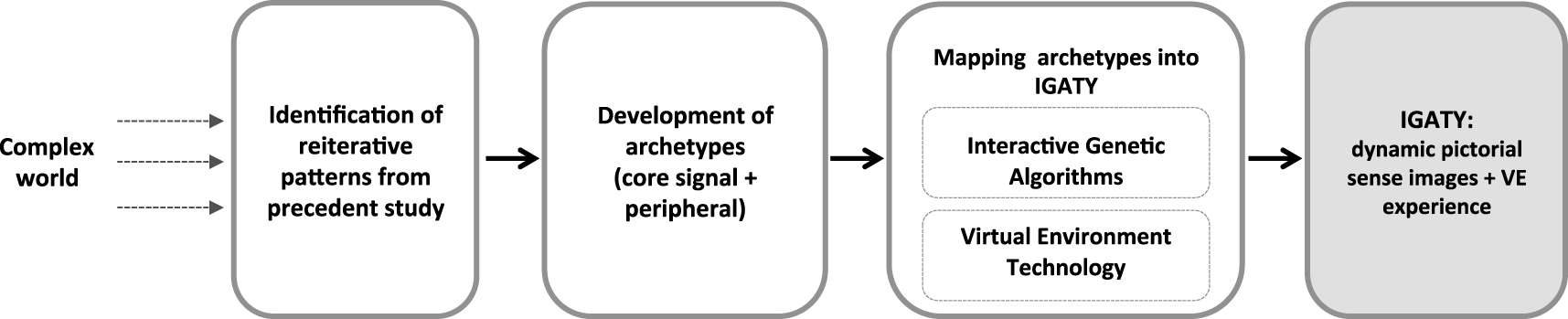
For this research the IGATY system was developed and tested based on the following hypothesis and development foci:
Hypothesis: If IGA, a biology-inspired computational approach, is implemented, a set of multiple archetypes will demonstrate the potential as dynamic generative abstract concepts useful for the initial ideation of aesthetic search.
In order for archetypes to function as dynamic generative abstract concepts, the system must display the transformative quality embedded in each archetype as well as the capability of synthesis among multiple archetypes for further development of abstract concepts. Therefore, the potential of archetypes to be dynamic generative abstract concepts is measured by the system’s generative quality and the capacity of the synthesis $+$
evolution function.
$+$
evolution function.
Development Focus 1 – Generative quality: (1) The system must generate multiple heterogeneous examples of each archetype by going through the mutation and crossover mechanisms of the IGA; (2) to be useful as an aesthetic search tool, the system must also demonstrate the designer’s control, and chromosomes must evolve toward a user’s intent.
Development Focus 2 – Synthesis $+$
evolution function: the system must demonstrate the capability of the combination function so that multiple archetypes can be combined and evolve while coexisting in one individual. This will also enable a user to modify variables of archetypes for the next generations according to a user’s subjective aesthetic judgment of the combined individual.
$+$
evolution function: the system must demonstrate the capability of the combination function so that multiple archetypes can be combined and evolve while coexisting in one individual. This will also enable a user to modify variables of archetypes for the next generations according to a user’s subjective aesthetic judgment of the combined individual.
Development Focus 3 – Virtual Environment integration. To emphasize the experiential quality of archetypes, VE technology is implemented so that users can view the overall spatial properties of their exploration in a VE during their IGATY exploration.
The proposed system was used for an ideation workshop designed for this study, and the testimonials from the participants were collected.
3.2 Construction of potential museum interior archetypes
The first step of the research, identification of patterns from precedent studies, takes the form of qualitative content analysis. This study includes a content analysis of two nationally disseminated professional design magazines as well as secondary sources to identify museum interior archetypes and core principles/peripherals used in each archetype. I focused on precedent examples of artistic displays of objects and abstract installation art exhibitions in galleries, museums and memorials. Architectural Record (issued 1907–2014) and Interior Design (issued 1940–2014) were used as primary sources for building and developing the components of each archetype. They offered detailed information about design practices in museums and exhibition spaces over time as well as significant evidence of recurring patterns of museum archetypes. I concentrated my analysis on issues from 1980 to 2014, a significant time period when designers of museum interiors broke away from the dominant design concept, the White Cube. I expanded the survey to an earlier period to trace early examples or precursors. Secondary sources, such as interpretive books and critical articles about museum design, were also consulted to shape reflections regarding the driving factors that cause transformations of archetypes. These references centre on sources from museum history, philosophical museum theory, contemporary exhibition design, and display and installation theory as well as general design theories. Following Potter’s (1996) suggestions, the analysis for constructing archetypes was conducted by (1) identifying and describing basic structural similarities such as themes, settings or character among a group of examples and (b) looking at the evolutions of groups in terms of historical, technological, ideological and aesthetic factors (p. 141).
Six selected archetypes: definition (redefined based on Suh (Reference Suh2004)), core signals, and peripherals
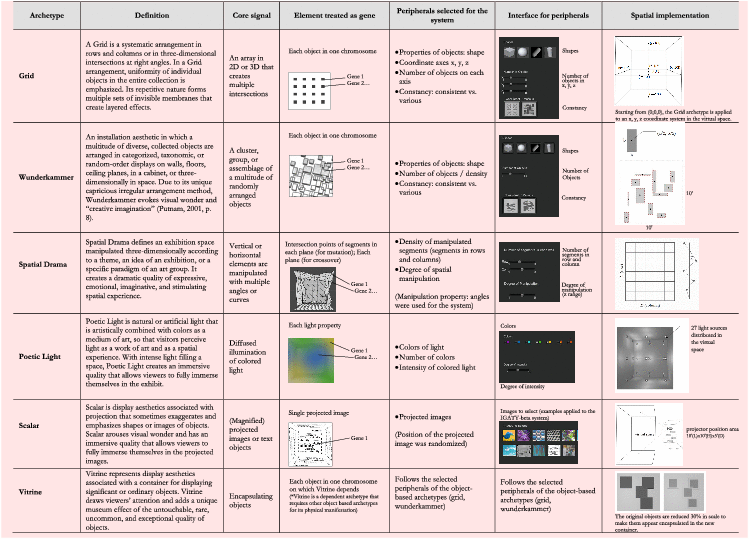
For this research six museum interior archetypes were selected as a test set: Grid, Wunderkammer, Spatial Drama, Poetic Light, Scalar and Vitrine (Table 1). From the qualitative content analysis, extensive parameters, which serve as peripherals in the dual structure, were identified: these peripherals are the causes of dynamic expressions that respond to contextual settings, such as cultural, social, political or philosophical specifics or personal aesthetic preferences. Depending on the characteristics of each archetype, the results show that peripherals vary in their aspects. In some cases, peripherals are modalities related to the fundamental elements that define an object’s physical properties such as geometric shapes, colours, textures, and so forth. In other cases a peripheral could represent physical qualities such as angles, speed, movement, size, density or intensity. A peripheral also could represent modalities related to spatial position and quantity in three-dimension. The unique ways designers or artists apply these peripherals cause their examples to be distinct from others and to be perceived as prime objects.
3.3 The system
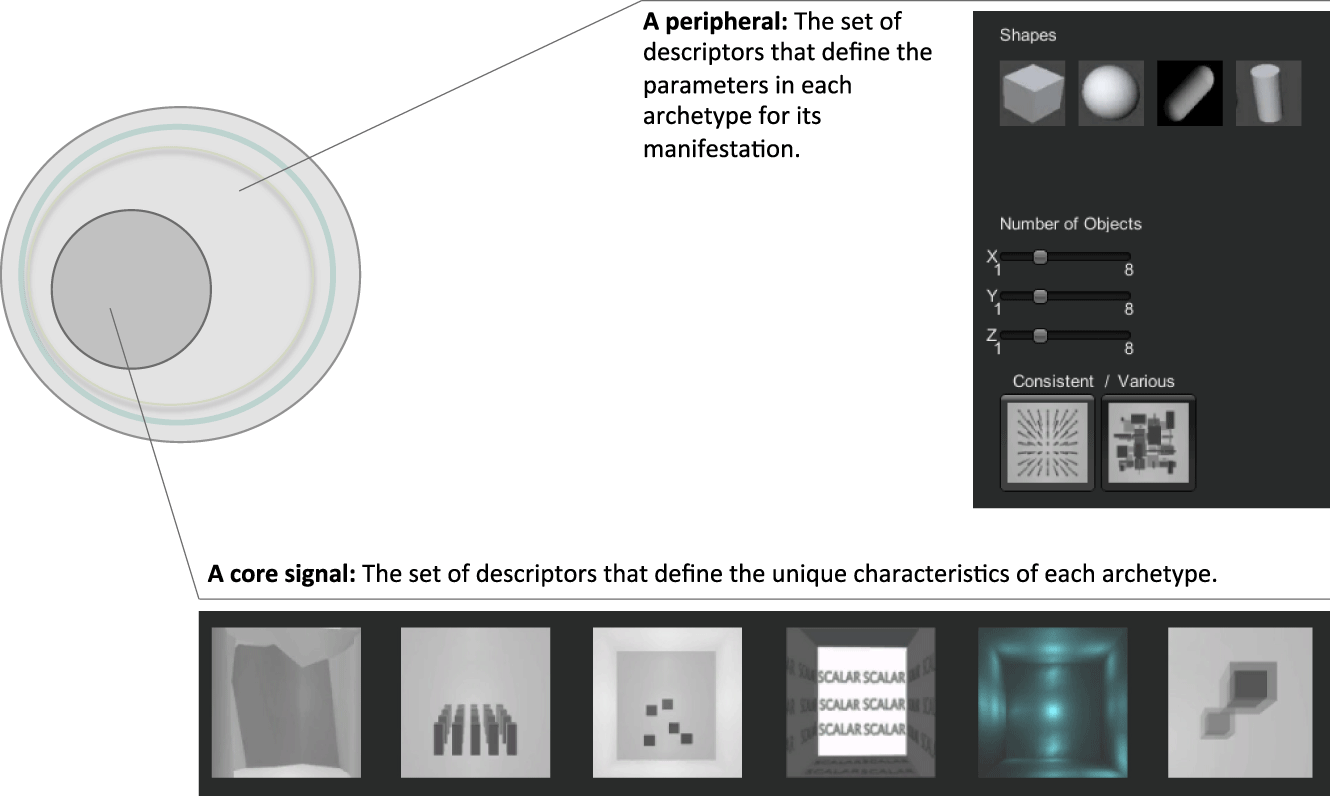
For the experiment of the generative abstraction system, six museum interior archetypes were used. In the proposed system each museum interior archetype was used as a conceptual schema for the user to initiate the idea exploration. A core signal found in each archetype was interpreted as a descriptor that defines the principles and properties of specific display aesthetics methods pertaining to the core characteristics of the archetype. The core signal serves as a principle and requires a peripheral to physically manifest its existence (Figure 2). To limit the study, not all the properties of peripherals were used as variables to set parameters, but some of the major properties of peripherals (Table 1) were applied to the proposed IGATY-beta system.
The dual structure of archetypes and its conceptual framework in the IGATY-beta system.
The proposed software was developed using the game engine Unity version 4.5.5 with the implementation written in C#. In C# coding, the core signal in each archetype was coded as a public class that defines the principles and behaviours of each archetype. The peripheral properties were coded for users to see the transformative quality and to set the parameters to generate variations of each archetype. The properties of the IGA operator for the mutation, crossover and synthesis $+$
evolution functions are inherited in each class of archetypes (Figure 3).
$+$
evolution functions are inherited in each class of archetypes (Figure 3).
A mapping diagram: the IGA operator (mutation, crossover and synthesis $+$
evolution) is inherited in each class. The dual structure of archetypes is coded into each public class in the IGATY system. The core signal defines the principle of each archetype, and a peripheral defines the parameters for variations of each archetype.
$+$
evolution) is inherited in each class. The dual structure of archetypes is coded into each public class in the IGATY system. The core signal defines the principle of each archetype, and a peripheral defines the parameters for variations of each archetype.
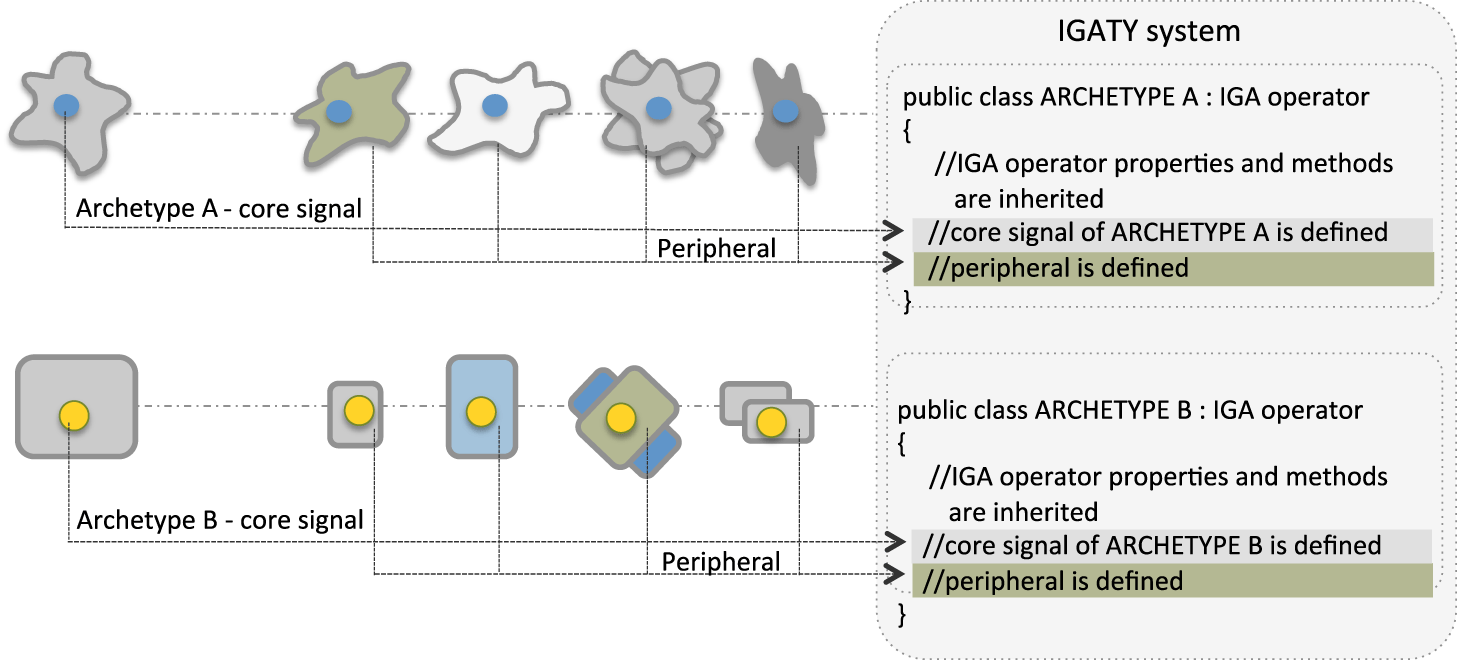
Figure 4 demonstrates the overall functional flow of the proposed IGATY system. The proposed IGATY-beta system requires a user to dynamically interact with the system by reviewing and evaluating initial populations and by selecting individuals for future generation of offspring. As design intentions or directions evolve, the IGATY system produces different variations of individuals through the process of mutation, crossover and synthesis $+$
evolution. The archetypes selection screen displays the six archetypes with the name and a short definition of each archetype (Figure 5). Once a user selects one of the archetypes, the next screen displays an interactive feature that allows a user to set peripherals such as shapes, colour, images, sizes and the like. The beta version system was coded to generate 20 offspring for each generation at a time. The user can select 2–20 chromosomes based on the user’s aesthetic judgment and design intention to send them to the mutation and crossover operators. The user’s selections inform the IGATY system of the design direction, and the operator produces next generations based on the selected chromosomes. This function enables the scheme to evolve as a user develops his or her idea. A user can add more than one archetype for the synthesis
$+$
evolution. The archetypes selection screen displays the six archetypes with the name and a short definition of each archetype (Figure 5). Once a user selects one of the archetypes, the next screen displays an interactive feature that allows a user to set peripherals such as shapes, colour, images, sizes and the like. The beta version system was coded to generate 20 offspring for each generation at a time. The user can select 2–20 chromosomes based on the user’s aesthetic judgment and design intention to send them to the mutation and crossover operators. The user’s selections inform the IGATY system of the design direction, and the operator produces next generations based on the selected chromosomes. This function enables the scheme to evolve as a user develops his or her idea. A user can add more than one archetype for the synthesis $+$
evolution process. The selected scenes are saved in the history window to help the user remember the evolution of design and to save images after final exploration.
$+$
evolution process. The selected scenes are saved in the history window to help the user remember the evolution of design and to save images after final exploration.
User interaction flow diagram of the IGATY-beta system.

User interaction flow diagram of the IGATY-beta system.

For this study, two versions of the IGATY-beta system were created: (a) The advanced-designer version allows a designer to explore design in greater detail using the Unity software. A designer can modify a chromosome by changing locations, colours or shapes of objects or add other custom items while the IGATY system operates. Modified objects are saved as part of 20 individuals of mutants and can be selected for the production of future generations. (b) The beginning-designer version is an independent software program that operates without the Unity software. This version only operates based on the coded system and does not allow detailed modification of individual chromosomes.
3.4 The virtual space for IGATY
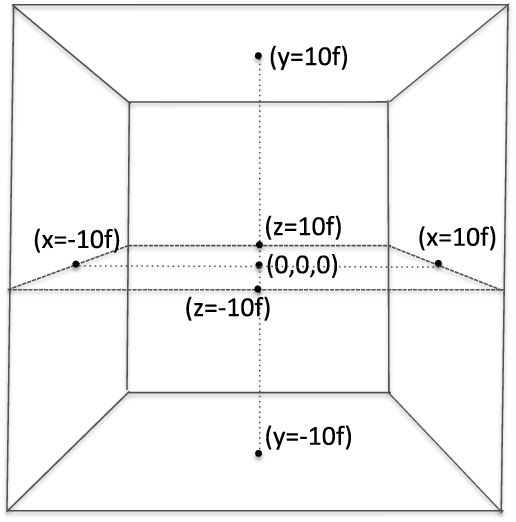
The VE for the IGATY-beta system was designed to provide the user with a holistic experience, including the kinesthetic feeling of body movement with visual stimuli. For the output device, a head-mounted display (HMD), the Oculus Rift Development Kit 2 (DK2), was selected because of its ready availability and overall performance. Oculus Rift DK2 provides a low-persistence OLED display, ‘a 100-degree field of view, stereoscopic 3D viewing, and low-latency six-degree-of-freedom head tracking’ (Avila & Bailey Reference Avila and Bailey2014, p. 103). While the user is wearing the HMD, he or she can see different perspectives of an individual in the virtual space by moving his or her head and can navigate the virtual space by using up/down/left/right keys on the keyboard to move body positions forward/backward/left/right. Users can view 3D elements displayed in the virtual museum space with the sense of presence, and the HMD allows the user to experience the spatial quality created by the 3D objects. In a VE the user perceives multidimensional spaces where different perceptual structures are embedded. Design exploration in IGATY starts off from a default setting of a $20^{\prime }\times 20^{\prime }\times 20^{\prime }$
(
$20^{\prime }\times 20^{\prime }\times 20^{\prime }$
( $6.1~\text{m}\times 6.1~\text{m}\times 6.1~\text{m}$
) white cube as a raw space to initiate 3D exploration (Figure 6). The setting creates a virtual white space comprising of one even floor, three walls (left, right and back) and a ceiling.
$6.1~\text{m}\times 6.1~\text{m}\times 6.1~\text{m}$
) white cube as a raw space to initiate 3D exploration (Figure 6). The setting creates a virtual white space comprising of one even floor, three walls (left, right and back) and a ceiling.
Initial setting of virtual space for IGATY exploration. Left: virtual space (f $=$
1 foot (30.48 cm),
$=$
1 foot (30.48 cm), $20^{\prime }\times 20^{\prime }\times 20^{\prime }$ $(6.1~\text{m}\times 6.1~\text{m}\times 6.1~\text{m})$
).
$(6.1~\text{m}\times 6.1~\text{m}\times 6.1~\text{m})$
).
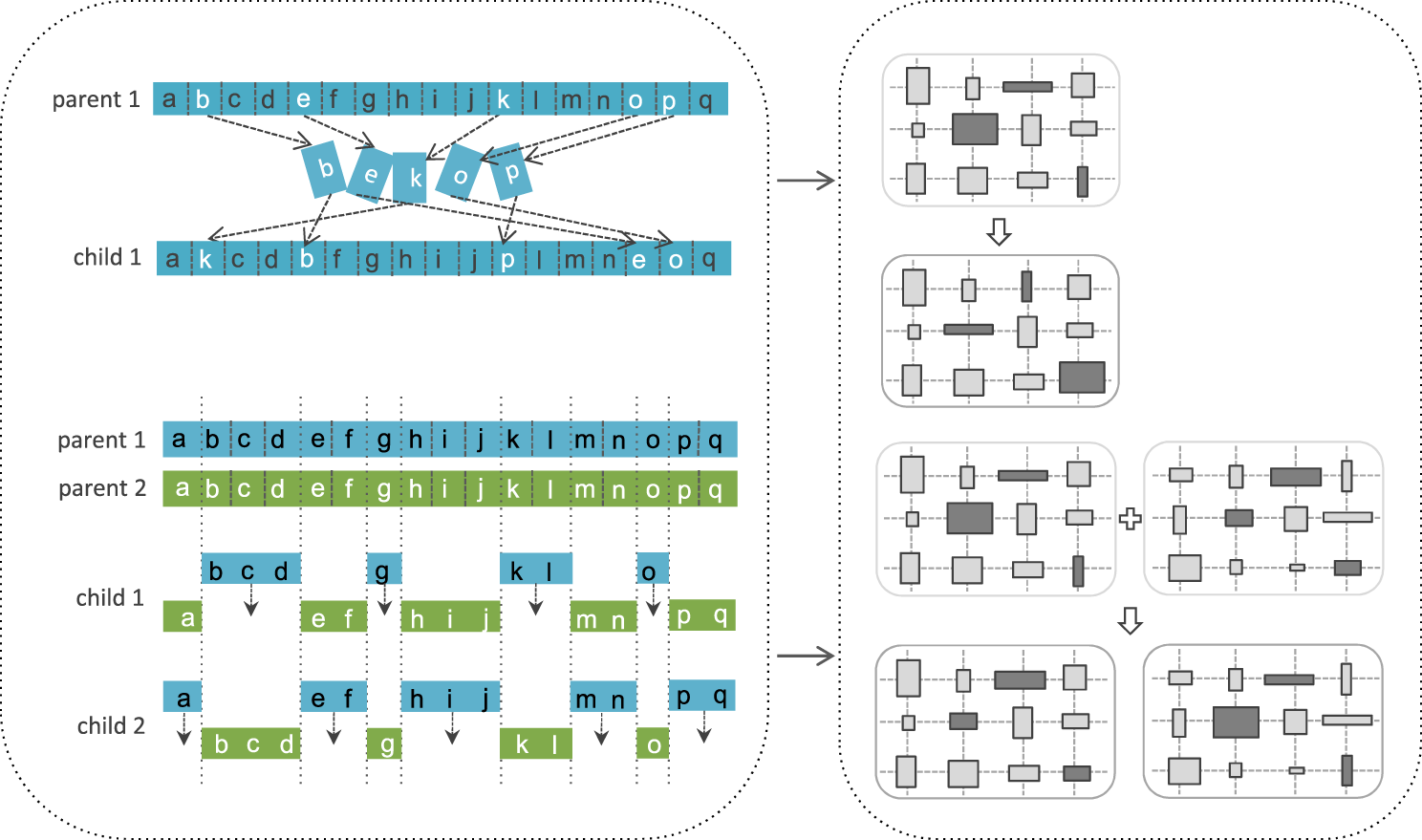
Examples of genetic operators used in this study (left) and possible application to genes in the Grid archetypes (right): chromosomal translocation mutation (or permutation encoding) – the gene order is changed by translocation (top left); Uniform crossover – depending on a mixing ratio, the operator exchanges some genes between two parent chromosomes (bottom left). (Diagrams of genetic operators based on Bäck, Fogel and Michalewicz’s (Reference Bäck, Fogel and Michalewicz2000) definitions).
3.5 Mutation, crossover and synthesis + evolution
Chromosomes are encoded based on the permutation encoding style to give orders to each gene in each chromosome (Figure 7). The order is used for mutation and crossover operations. The IGATY starts with a set of 20 randomly generated initial populations, and the first set of selected individuals is used for the operation to produce children in the next generations. In the mutation process, each parent gives birth to one slightly different offspring by switching the locations of 30% of the randomly chosen genes from the parent; therefore, the offspring shares the same genes, but the position of each gene changes. This principle is applied to the mutation process of most of the archetypes: however, the variables that the operator causes to change differ. In the Grid and the Wunderkammer archetype, the position of each gene will change through the process; in Spatial Drama the positional information in the 3D coordinate system applied to each gene will be switched within a single chromosome; and in Poetic Light the colours applied to each source position will be used to switch within each chromosome. The IGATY operation of the crossover process in the evolutionary cycle involves two parent chromosomes that mate to produce offspring. The uniform crossover method (Figure 7) was employed for the crossover operation instead of a single-point crossover. This enables the parent chromosomes to contribute their formal properties of the gene level rather than the segment level to next generations (Mens et al. Reference Mens, Serebrenik and Cleve2014, p. 110), keeping a stochastic quality throughout the operation process. With the crossover operation, the children inherit genes from both parent chromosomes by swapping the randomly selected genes in each chromosome. The mixing ratio 0.3 was applied for the proposed IGATY system: with the crossover operation, children have 70% of the genes from one parent chromosome and 30% of genes from the second parent (Table 2).
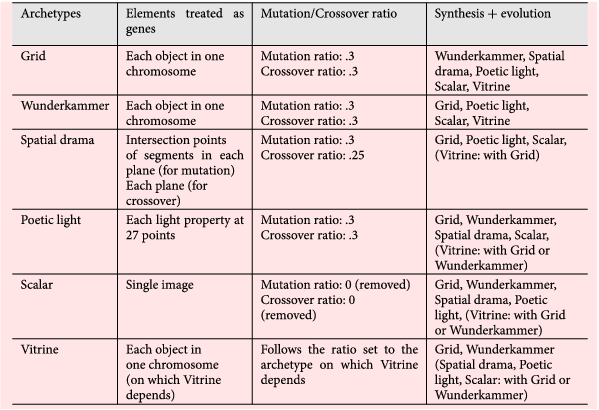
The six selected archetypes in the IGATY-beta system: Gene, mutation ratio, crossover ratio, and synthesis $+$
evolution
$+$
evolution
In an attempt to foster innovation and creativity, I focused on complexification by synthesis, employing the idea of the malleable structure of archetypes and the concept of synthesis $+$
evolution. In this system, two sets of populations are synthesized in one chromosome and evolve using an independent GA in each archetype. A user interacts with the system and modifies variables of archetypes according to the user’s aesthetic judgment based on the synthesized chromosome. This leads to an adjusted evolution of archetypes. This mechanism can be viewed as coevolution (Yip et al.
Reference Yip, Patel, Kim, Engelman, Mcdermott and Gerstein2008) where two separate organisms evolve complementary to one another but with a user’s interaction and manipulation in this system. The user also has the option to set the current archetype populations to the freeze mode to maintain the selection and have the GA in the added archetype evolve for the next generations. The GA cycle is repeated only in the added archetype while keeping the previous archetype fixed. If the freeze mode is not selected, two or more archetypes’ populations evolve independently using the GA in each archetype.
$+$
evolution. In this system, two sets of populations are synthesized in one chromosome and evolve using an independent GA in each archetype. A user interacts with the system and modifies variables of archetypes according to the user’s aesthetic judgment based on the synthesized chromosome. This leads to an adjusted evolution of archetypes. This mechanism can be viewed as coevolution (Yip et al.
Reference Yip, Patel, Kim, Engelman, Mcdermott and Gerstein2008) where two separate organisms evolve complementary to one another but with a user’s interaction and manipulation in this system. The user also has the option to set the current archetype populations to the freeze mode to maintain the selection and have the GA in the added archetype evolve for the next generations. The GA cycle is repeated only in the added archetype while keeping the previous archetype fixed. If the freeze mode is not selected, two or more archetypes’ populations evolve independently using the GA in each archetype.
3.6 IGATY settings for each archetype
3.6.1 Archetype example 1: Grid
I defined the core signal of a grid as a 2D or 3D array that creates multiple intersections. The core signal of a grid was mapped into the IGATY-beta system as an x, y, and z coordinate system that requires the user to select the number of columns, rows, and vertical modules (Table 1). The following items were selected to map them into the proposed IGATY-beta system: (a) properties of objects (shapes - box, sphere, capsule, and cylinder); (b) number of objects in coordinate axes $x$
,
$x$
, $y$
,
$y$
, $z$
; (c) constancy (whether the size of objects in a chromosome are consistent versus various) (Table 1). The option consistent enables objects in each chromosome in the initial population to be homogeneous; the option various generates heterogeneous objects in size. Each object works as a gene and changes locations for mutation and crossover.
$z$
; (c) constancy (whether the size of objects in a chromosome are consistent versus various) (Table 1). The option consistent enables objects in each chromosome in the initial population to be homogeneous; the option various generates heterogeneous objects in size. Each object works as a gene and changes locations for mutation and crossover.
3.6.2 Archetype example 2: Wunderkammer
The core signal in the Wunderkammer archetype is defined as a cluster, group, or assemblage of a multitude of randomly arranged objects. The following items were applied to the proposed IGATY-beta system: (a) properties of objects (shapes - box, sphere, capsule, cylinder); (b) number of objects; (c) constancy (whether the object size in a chromosome is consistent vs. various) (Table 1). The Wunderkammer archetype in the IGATY-beta system first asks the user to select the shape and the total number of objects. The user can also choose from the two options of constancy, consistent and various: the function is the same as the one applied to the Grid archetype. Going through the crossover function, the offspring loses its consistency gradually and starts showing the combinations of a few different objects, but because mutation and crossover work based only on the selected chromosomes, the overall characteristics of their consistent appearance remains to some extent (Table 4). In the virtual space, the Wunderkammer archetype uses a $10^{\prime }\times 10^{\prime }$
space of the back wall that is
$10^{\prime }\times 10^{\prime }$
space of the back wall that is $2^{\prime }$
–
$2^{\prime }$
– $6^{\prime \prime }$
above the floor so that a user can directly see from the front view (Table 1). Within this
$6^{\prime \prime }$
above the floor so that a user can directly see from the front view (Table 1). Within this $10^{\prime }\times 10^{\prime }$
area, the IGATY-beta system finds random points to place the selected objects. The initial population is created by a parameter set by the user, and the default algorithm with random values is applied to the objects’
$10^{\prime }\times 10^{\prime }$
area, the IGATY-beta system finds random points to place the selected objects. The initial population is created by a parameter set by the user, and the default algorithm with random values is applied to the objects’ $x$
and
$x$
and $y$
dimensions and positions. Each object works as a gene for mutation and crossover.
$y$
dimensions and positions. Each object works as a gene for mutation and crossover.
3.6.3 Archetype example 3: Spatial Drama
The core signal in the Spatial Drama archetype was defined as vertical or horizontal elements manipulated with multiple angles. The following items were selected to map them into the proposed IGATY-beta system: (a) the number of segments in row and in column; and (b) the degree of manipulation (Table 1). The number in row scale refers to the horizontal segments applied to create horizontal irregular walls; the number in column refers to vertical segments applied to create vertical irregular walls. When the number in both rows and columns are added, the walls are segmented as an x and y matrix system to move the intersection points up or down perpendicular to the plane in order to create irregular surfaces with indented or projected parts (Table 1). For mutation each intersection point is treated as a gene, and the z value in each interaction point is used to exchange positions in each plane. For crossover each wall and ceiling is treated as a gene to exchange between parent chromosomes. The degree of manipulation determines the extent the space is dynamically modified. The higher the number of segments and the degree of manipulation the user selects, the more rugged and uneven the dynamic surfaces will be.
3.6.4 Archetype example 4: Poetic Light
The core signal in the Poetic Light archetype was defined as diffused illumination of coloured light. The following items were selected to map them into the proposed IGATY-beta system: (a) colours of light; and (b) intensity of colour (Table 1). When the user selects colours from the seven options (purple, blue, light blue, green, yellow, orange, and red), the selected colours are used to position coloured light in the virtual space. A total of 27 positions ( $x=3$
,
$x=3$
, $y=3$
,
$y=3$
, $z=3$
) were used (Table 1). If four colours are selected, the four colours are put in a pool that the IGATY-beta system selects colours from to assign them into 27 positions. The IGATY-beta system first randomly selects one colour from the pool of colours to assign the selected colour in the first position, then applies intensity variations based on the value that the user selects. Therefore, in some chromosomes, all four colours may appear and in others three, two, or one colour can also appear. Randomization in the selection was used to reduce probability and maximize the chances of unexpected aesthetics. The intensity of light varies at each point because the algorithm uses a random range of the intensity based on the value the user selects. Depending on the degree of the intensity the user sets, the overall random value range becomes less intense (value
$z=3$
) were used (Table 1). If four colours are selected, the four colours are put in a pool that the IGATY-beta system selects colours from to assign them into 27 positions. The IGATY-beta system first randomly selects one colour from the pool of colours to assign the selected colour in the first position, then applies intensity variations based on the value that the user selects. Therefore, in some chromosomes, all four colours may appear and in others three, two, or one colour can also appear. Randomization in the selection was used to reduce probability and maximize the chances of unexpected aesthetics. The intensity of light varies at each point because the algorithm uses a random range of the intensity based on the value the user selects. Depending on the degree of the intensity the user sets, the overall random value range becomes less intense (value $=$
1) or more intense (value
$=$
1) or more intense (value $=$
10). Once the 20 individuals of the initial population are generated, the mutation and crossover function operates the same way as the Grid archetype. The property of light at each point is treated as a gene in one chromosome. In the mutation function the property of lights at 30% of a total of 27 points is translocated within a chromosome. In the crossover function, the information of light at 30% of a total of 27 points is exchanged between two parent chromosomes.
$=$
10). Once the 20 individuals of the initial population are generated, the mutation and crossover function operates the same way as the Grid archetype. The property of light at each point is treated as a gene in one chromosome. In the mutation function the property of lights at 30% of a total of 27 points is translocated within a chromosome. In the crossover function, the information of light at 30% of a total of 27 points is exchanged between two parent chromosomes.
3.6.5 Archetype example 5: Scalar
The core signal in the Scalar archetype was defined as magnified projected images or texts as objects. The following item was selected to map them into the proposed IGATY-beta system: (a) images for projection (Table 1). The Scalar archetype parameter asks the user to select one image for projection. The algorithms randomly choose a projector position within a $10^{\prime }\times 10^{\prime }\times 5^{\prime }$
projector area and apply a random rotation angle of the projector (Random.Range (
$10^{\prime }\times 10^{\prime }\times 5^{\prime }$
projector area and apply a random rotation angle of the projector (Random.Range ( $-20f$
,
$-20f$
, $20f$
), Random. Range (
$20f$
), Random. Range ( $-20f$
,
$-20f$
, $20f$
), Random.Range (
$20f$
), Random.Range ( $-20f$
,
$-20f$
, $20f$
)) to cast the image into virtual space. In the IGATY-beta system, ten different images are provided in the Scalar archetype exploration including a text image, a black and white image, and full colour images (Table 1). When the user evaluates and chooses to use the projected scene, the user can use the ‘freeze’ button to send a message to the system to stop searching for other projected scenes.
$20f$
)) to cast the image into virtual space. In the IGATY-beta system, ten different images are provided in the Scalar archetype exploration including a text image, a black and white image, and full colour images (Table 1). When the user evaluates and chooses to use the projected scene, the user can use the ‘freeze’ button to send a message to the system to stop searching for other projected scenes.
3.6.6 Archetype example 6: Vitrine
For this study, the core signal in the Vitrine archetype was defined as encapsulation (Table 1). The Vitrine archetype in the IGATY-beta system was designed as a dependent archetype that requires other object-based archetypes such as the Grid or Wunderkammer archetypes for its physical manifestation. In the IGATY-beta system, no parameter setting is provided. The condition that the user can incorporate into the Vitrine archetype is (1) when the chromosome contains physical objects and (2) when the Vitrine archetype option button is on. Once these two conditions are met, the algorithm first copies each object in a chromosome and then makes it a translucent container; the original objects are reduced 30% in scale to make them appear encapsulated in the new container (Table 1).
4 Results and discussion: IGATY exploration
In this section, I explain how the experiment results of IGATY software support the initial research hypothesis of visualizing the potentials embedded in archetypes that allow them to be dynamic generative abstract concepts focusing on the malleable structure of archetypes and the synthesis $+$
evolution mechanism.
$+$
evolution mechanism.
4.1 Malleable structure of archetypes
The hypothesis regarding the potential of museum archetypes as dynamic generative abstract concepts was tested in two categories: the system’s generative capability in producing heterogeneous multiple archetypes and the user’s control over leading the evolution toward a designer’s intent. This will provide a visualization of the malleable structure of archetypes and highlight their transformative quality.
4.1.1 Generative capability
The system shows its generative capability mainly in two ways: first, a set of parameters provided as a peripheral in each archetype provides the opportunities to generate a considerable number of variations of each archetype. The exploration examples in Table 3 demonstrate that because of the core signal that defines the fundamental principles of realization of each archetype, the basic attribute shared among the individual examples of each archetype is consistent; however, because of the peripherals that a user can control, examples exhibit a great degree of heterogeneity in their appearance. When the user changes the peripherals of an archetype, the system visualizes different features in the active window simultaneously. Allowing the user to see how the archetype can appear different by changing the peripheral is beneficial because it exhibits the dynamic malleable structure of archetypes. The active window helps the peripheral to display the transformative quality of museum interior archetypes.
IGATY Exploration of the selected six archetypes
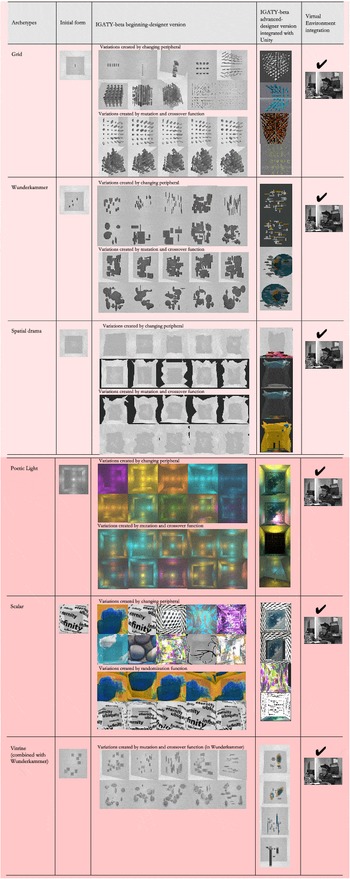
Second, the system generates various chromosomes through the mutation and crossover operation. Visualizing various options generated by the mutation and crossover operation expands the generative quality of archetypes. Based on the specific parameters controlled by a user, the system was coded to generate twenty initial populations of variations. A user interacts with the system to evaluate and select these variations. The system generates twenty chromosomes based on the user’s selection in each generation. The generation–evaluation–selection process is repeated giving an impression that an archetype is not a static single image but a transformative one with supposedly unlimited variables. This generative capability works well for the Grid, Wunderkammer, Poetic Light, and Spatial Drama archetypes. In the Vitrine archetype, once an object-based archetype coexists, heterogeneous options are created in the Grid or Wunderkammer archetype, and the system applies the principles defined in the Vitrine archetype. The Scalar archetype in the IGATY-beta system uses only one image at a time: one single image works as a single gene for the mutation and crossover operation, making the parent images the same as the offspring. This minimizes the solution space and is not ideal for aesthetic search. For this reason, in the IGATY-beta system, only the random function for the projector positions and angles was used in the Scalar archetype to enable the viewer to see more options in the solution space.
4.1.2 Designer’s control
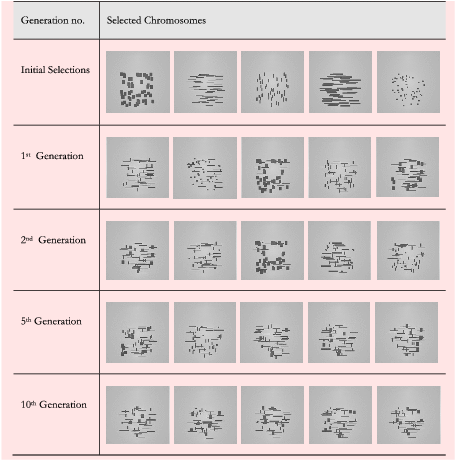
Designer’s control over the generation process was observed in three aspects: first, providing peripherals gives a user the initial opportunity to choose the overall properties of the initial starting point of an archetype for further exploration. Second, the selection of chromosomes for the next round of exploration allows the archetypes to evolve toward the user’s intention. In the IGATY-beta system, among the six selected archetypes, Spatial Drama, Grid, Wunderkammer, Scalar, and Poetic Light have the ability to evolve toward a designer’s intention. Table 4 demonstrates an example based on Wunderkammer exploration. In this case, the user selected chromosomes that contain small objects or thin horizontal objects. In the next generation the IGA produces 10 chromosomes using the mutation function and 10 chromosomes using the crossover function. The overall appearance changes generation after generation toward the user’s intention, and the system displays smaller or more horizontal objects in each chromosome. Third, the freeze and thaw options also allow the user to stop the evolution process of one or more archetypes while letting other archetypes evolve. For instance, while the Grid, Wunderkammer, and Poetic Light archetypes coexist throughout the mutation and crossover process, the user can stop the evolution of the Grid and Poetic Light archetype and continue the process of evolution only for the Wunderkammer archetype. Such results suggest that the IGATY-beta system may have the potential to be used as a tool for an aesthetic search in the ideation process, reflecting the designer’s aesthetic intention.
Wunderkammer exploration: five selected chromosomes at 1st, 3rd, 5th, and 10th generations demonstrating the user intention of searching for a combination of small and horizontal objects (images based on number of objects $=55$
, and option ‘consistent’ selected)
$=55$
, and option ‘consistent’ selected)
4.2 Synthesis $+$
evolution
$+$
evolution

To examine the second development focus related to the synthesis $+$
evolution mechanism, the combination function of the system was tested. Because the IGATY system provides multiple archetypes, it makes archetypes available for combinations. The system allows the user to make each archetype selectively activated by using the freeze on/off button, and the user can try many combinations in a relatively short amount of time to find the most fitting combinations. The synthesis
$+$
evolution mechanism, the combination function of the system was tested. Because the IGATY system provides multiple archetypes, it makes archetypes available for combinations. The system allows the user to make each archetype selectively activated by using the freeze on/off button, and the user can try many combinations in a relatively short amount of time to find the most fitting combinations. The synthesis $+$
evolution function allows a user to make aesthetic judgment of changing variables of certain archetypes based on the combined scene and make each archetype evolve while coexisting in one individual. This process fosters the synergetic effect to produce combined aesthetics greater than the sum of their separate product. The Grid archetype is the most inclusive among the six archetypes and can be combined with any of the other five archetypes. Wunderkammer can also be extensively combined with other types except Spatial Drama in the current version. The process of synthesis
$+$
evolution function allows a user to make aesthetic judgment of changing variables of certain archetypes based on the combined scene and make each archetype evolve while coexisting in one individual. This process fosters the synergetic effect to produce combined aesthetics greater than the sum of their separate product. The Grid archetype is the most inclusive among the six archetypes and can be combined with any of the other five archetypes. Wunderkammer can also be extensively combined with other types except Spatial Drama in the current version. The process of synthesis $+$
evolution in the system enhances the complexity by combining different archetypes and adding them into a single individual (Table 5).
$+$
evolution in the system enhances the complexity by combining different archetypes and adding them into a single individual (Table 5).
Synthesis $+$
evolution exploration
$+$
evolution exploration
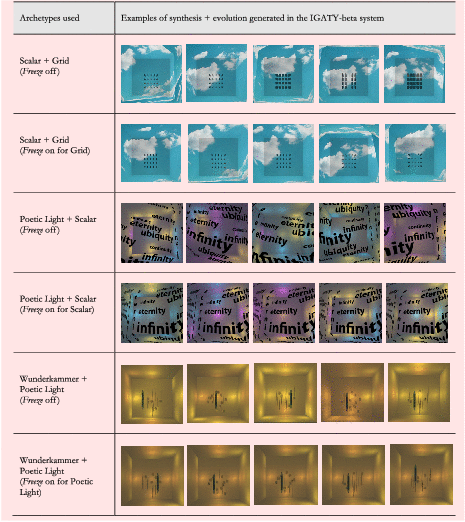
If multiple archetypes are combined in one individual, the user can experience a higher level of visual complexity (Figure 8). With a dynamic manipulation and an interaction in Unity, the design solution space becomes larger, and the design grows into something more complex and unconventional.
Examples of synthesis $+$
evolution (Left: Scalar
$+$
evolution (Left: Scalar $+$
Grid
$+$
Grid $+$
Poetic light
$+$
Poetic light $+$
Spatial drama
$+$
Spatial drama $+$
Vitrine; Right: Scalar
$+$
Vitrine; Right: Scalar $+$
Grid
$+$
Grid $+$
Poetic light
$+$
Poetic light $+$
Spatial drama).
$+$
Spatial drama).

Due to an archetype’s unique characteristics, not all archetypes can be combined with all other archetypes. For instance, two projection-based archetypes, Poetic Light and Scalar, cannot be combined with Vitrine, which always requires physical objects. However, Vitrine can appear with Poetic Light and Scalar if annexed to archetypes with physical objects such as Grid or Wunderkammer. The IGATY-beta version is not capable of incorporating the manipulated multiple angles of segmented walls in Spatial Drama with Wunderkammer. The system must be developed further to make currently restricted combinations possible.
4.3 Virtual environment integration
The third development focus tested with the system was about the VE technology integration. If the VE technology is implemented, the user will be able to view the overall spatial properties of their exploration in virtual reality. The system allows the user to view the design scheme in a virtual museum space during aesthetic search. While the user is wearing the HMD, the user can see different perspectives of a chromosome in the virtual space by moving his or her head and can navigate the virtual space by using up/down/left/right keys on the keyboard to move body positions. Although the system allows a user to view the scheme in all separate or combined archetypes (Table 3), the process must be refined to make interaction more convenient: in order to view the exploration in virtual reality, the user needs to go to Unity window and change the camera setting from the main one in Unity to OVR camera for Oculus Rift DK2. Once the camera is changed, the evolution stops until the user goes back to the main IGATY screen. Although integrating virtual reality technology with the IGATY-beta version system requires further development, the system shows the potential of using VE technology in the aesthetic search during the initial ideation process.
5 Testimonials from participants
The proposed system was used for an ideation workshop and the testimonials from the participants were collected. Eight beginning level design students (seven sophomore architecture students; one sophomore interior design student) participated in the mini workshop. On day one, the participants were asked to design an exhibition based on an artist’s six artworks (Ideation A). On day two, the archetype-based exercise was given to participants before the participants started Ideation B. The archetype-based exercise included a brief introduction of archetypes and a 30-minute activity that asked participants to generate variations and combinations of archetypes using the proposed system. Four participants (IGATY-S group) used the IGATY system. The other four participants (IGATY-VE group) used the IGATY system and had an opportunity to view their exploration via the HMD for 7 minutes during the 30-minute exercise. After the exercise, the participants worked on another exhibition design based on another set of six artworks under the same theme by the same artist (Ideation B).
The focus group discussion was conducted after the workshop and revealed a few significant points relevant to consider for further development of the system. First, the system generally proved to be helpful in the initial ideation process in expanding ideas; however, the system must be more flexible and user-friendly to be more useful for designers.
It allows us to expand our ideas. Going from what I was looking for in the last workshop yesterday, there were obviously more things $\ldots$
I was thinking more about different archetypes and how it can make the space work. (From focus group interview with IGATY-S group)
$\ldots$
I was thinking more about different archetypes and how it can make the space work. (From focus group interview with IGATY-S group)
I think it is good for someone like me $\ldots$
it gives me a lot of thinking [in the design] process
$\ldots$
it gives me a lot of thinking [in the design] process $\ldots$
oh I can do this, try to generate or which one is better and this one is more
$\ldots$
oh I can do this, try to generate or which one is better and this one is more $\ldots$
I want to choose and to make it in my design. It helped my design thinking process. It was interesting. (From focus group interview with IGATY-S group)
$\ldots$
I want to choose and to make it in my design. It helped my design thinking process. It was interesting. (From focus group interview with IGATY-S group)
I found myself deeply amazed by the different types of archetypes and their properties. I then found myself eager to apply archetypes into my designs. (From focus group interview with IGATY-VE group)
Playing with the software was enjoyable even though it could feel limited sometimes. (From focus group interview with IGATY-VE group)
Very neat. Very cool. I had more ideas this time. (From focus group interview with IGATY-VE group)
There were a variety of them [archetypes], and some have distinct uniqueness. I think they are helpful in generating ideas if you do not really know how to start, you can just look at one of the archetypes and see what you can do with this. It is easier to get ideas. (From focus group interview with IGATY-VE group)
It should be more flexible to view things like when you are making objects, if you can go up and down [in VE] it will actually be more obvious to make a turn $\ldots$
(From focus group interview with IGATY-VE group)
$\ldots$
(From focus group interview with IGATY-VE group)
It [IGATY-beta system] was easy to use $\ldots$
I understand it was the beta version so it would not be perfect
$\ldots$
I understand it was the beta version so it would not be perfect $\ldots$
but it needs some modifications. There was no way to use all six: when you have some things on the wall and when you want to have a dramatic space [referring to spatial drama], I thought it would have been cool. Dramatic space and something on the wall somehow! (From focus group interview with IGATY-VE group)
$\ldots$
but it needs some modifications. There was no way to use all six: when you have some things on the wall and when you want to have a dramatic space [referring to spatial drama], I thought it would have been cool. Dramatic space and something on the wall somehow! (From focus group interview with IGATY-VE group)
Second, the focus group interview revealed the positive effects of the system’s synthesis $+$
evolution function in that it encourages diverse combinations of archetypes thereby creating more interesting ideas. This implies the potential of employing multiple archetypes in a collective way in the system.
$+$
evolution function in that it encourages diverse combinations of archetypes thereby creating more interesting ideas. This implies the potential of employing multiple archetypes in a collective way in the system.
I think it is very impressive. Especially when I interact with the computer, I can combine different things to make it more interesting. I was able to generate more ideas. (From focus group interview with IGATY-S group)
It [The system] was helpful to me when I want to come up with more combinations. (From focus group interview with IGATY-VE group)
It makes it easier to combine to form ideas. (From focus group interview with IGATY-VE group)
I think it would be very interesting to see like if you have a certain number of objects in the premise stage, if you could take out $\ldots$
just think of architecture and interior design standpoint, it you could manage to put furniture and switch out the furniture obviously you need a chair, and figure it out it could be very interesting to see if you can just switch it around in the placement
$\ldots$
just think of architecture and interior design standpoint, it you could manage to put furniture and switch out the furniture obviously you need a chair, and figure it out it could be very interesting to see if you can just switch it around in the placement $\ldots$
it would be interesting to see
$\ldots$
it would be interesting to see $\ldots$
in a 3D way instead of looking at maybe a CAD plan
$\ldots$
in a 3D way instead of looking at maybe a CAD plan $\ldots$
you can see the 3D view in CAD but
you have to go back [to plan view]
$\ldots$
you can see the 3D view in CAD but
you have to go back [to plan view] $\ldots$
. (From focus group interview with IGATY-S group)
$\ldots$
. (From focus group interview with IGATY-S group)
Third, allowing the participants to control the view of the objects in space from various angles played an important role in using the archetypes as generative abstractions in the system. The main intention of using a HMD is to experience the presence in virtual reality from a human eye level perspective: the viewing height was set to a typical eye level, 5’ 10’ above the floor. From a designer’s perspective on the other hand, it is also important to see the objects and the space itself from far above or below the eye level.
It (IGATY-VE system) draws out, visualize it, so you can actually see it from different perspectives and different angles $\ldots$
it generates more ideas. (From focus group interview with IGATY-VE group)
$\ldots$
it generates more ideas. (From focus group interview with IGATY-VE group)
When you look at something one way and when you look at it from different ways you get completely different ideas just by using it [the IGATY system]. (From focus group interview with IGATY-VE group)
I think it really helped. Just by looking at different colours, the way it changes the space, and the shape of the outside [perimeter wall] and how it appears inside. (From focus group interview with IGATY-S group)
6 Conclusions, implications, and suggestions
This research aims to re-establish the value of implementing multiple archetypes as a set of collective raw conceptual schemas in the initial stage of the computational making process. The study focuses on how evolutionary computation can create a visualization of the transformative quality embedded in archetypes and how the VE technology can maximize the experiential quality of archetypes. Based on the results from the experiment, I draw the following conclusions.
-
(1) Malleable structure of archetypes: the mutation and crossover function in the IGATY system successfully demonstrated its potential of providing a visualization of the transformative quality embedded in archetypes. Although IGAs were not able to be applied to all archetypes in the current version, the results from the experiment support the idea that the dual structure of archetypes was extended with the application of IGAs in a way that promotes many previous researchers’ original concepts of archetype as a generative abstraction for further transformation and invention. Mapping the dual structure of archetypes into the IGA descriptors turned into an efficient logic that transcends the theoretical basis of archetypes into more of a transformative one. Once a core signal and a peripheral are defined in an archetype, this suggested mechanism could be applied as an operational channel for numerous already defined or unidentified archetypes to be used in the generative abstraction system as a collective tool.
-
(2) Balance between designer’s control and being unpredictable: the results from the experiment showed that the system enables a user to interact closely with the system by selecting the archetypes, setting the peripherals, evaluating and selecting options based on a user’s aesthetic judgment, adding other archetypes, and making evolution function of one or more archetypes frozen during explorations. The results also showed how chromosomes evolved toward a user’s intention. Furthermore, manipulating objects in the Unity software integrated with the system while the GAs were in operation not only enhanced user’s control over the aesthetic exploration but also increased the chance of unconventional aesthetics: when objects are manipulated or new objects are added to the chromosome in Unity, further exploration and transformation of chromosomes increase the chance of the emergence of unconventional aesthetics. This implies that the balance and synergy between designer’s control and the evolutionary mechanism is one of the most important considerations a developer must make in designing an aesthetic search tool.
-
(3) Synthesis among multiple archetypes: in order to overcome the issues related to sameness among variations and lack of innovation, I applied the idea of complexification by synthesis, which encourages the emergence of multiple layers of other chromosomes in one individual. The synthesis
$+$
evolution function among multiple archetypes shows the potential of using a set of multiple archetypes throughout the initial aesthetic exploration in that it gives a user the opportunity to generate complex forms through the dynamic evolution of diverse archetypes. -
(4) VE integration with generative abstraction: the IGATY-beta system was designed to reflect Brill’s (1994) notion of the importance of integrating all senses in experiencing archetypes. The VE technology integration allows users to view the overall spatial properties in virtual reality during the exploration. Providing a VE that allows the viewer to experience the form, size, light, shadows, materials, colour, reflection, transparencies, along with body position and movement may have relevant benefits for designers, especially in aesthetic search, because all of these are correlated to create perceptual characteristics.

Although the current IGATY-beta version uses only six archetypes and is limited in many ways, overall this research is meaningful in that it successfully demonstrates the potential benefit of using evolutionary computation and VE technology in the pre-logical ideation stage based on a set of multiple archetypes.
The system should be developed in the following areas: (1) the parameters set in each archetype’s peripheral should be diversified to prevent prescriptive solution space. The parameters in the GA system are critical in the performance of a GA (Van Kemenade, Kok & Eiben Reference Van Kemenade, Kok and Eiben1995). To expand the research deeper, developing an exchange operation in the crossover function that switches the characteristics of each chromosome (Fasoulaki Reference Fasoulaki2007), not genes, would be of great value. (2) The system also should include multiple archetypes to make them available for more dynamic aesthetic synthesis. (3) IGA interaction in the VE should be refined to make interaction more convenient. (4) Moreover, once a number of archetypes are mapped into the system, implementing a prediction model, such as a hidden Markov model (HMM), would reveal ways to design the system to predict a designer’s preference or tendency and to suggest more customized sets of archetypes or peripherals. Implementing a prediction model would be beneficial in that it could both expedite ideation by recommending preferred sets and lead the designer to avoid idea fixation by suggesting particular sets of archetypes or variables rarely used by the designer.
Acknowledgments
This paper is a partial excerpt from the author’s doctoral dissertation. The six selected archetypes were based on the author’s master thesis and were re-evaluated and redefined for this research. The author would like to thank professors Mickael Muecke, Judy Vance, Sunghyun R. Kang, Jonathan Kelly, Larysa Nadolny and Jan Jennings for their guidance and insightful feedback for the study. The author also wants to thank Jaekyung Song for his computer programming support in the development of the proposed system.


 Open access

