


Introduction
Sea turtles have been accorded protection by national and intergovernmental legislation since the 1970s (NOAA, 2014), but illegal and unsustainable take of sea turtles continues, mainly for food (Frazier et al., Reference Frazier, Arauz, Chevalier, Formia, Fretey, Godfrey and Plotkin2007). Over 80% of sea turtle nesting sites occur in developing nations, and only 25% of these sites are in protected areas (Mazaris et al., Reference Mazaris, Almpanidou, Wallace, Pantis and Schofield2014), with sea turtles a valuable yet vulnerable source of food in coastal communities. For example, indigenous natives of Torres Strait, Australia, hunt legally for sea turtle meat (Watkin Lui et al., Reference Watkin Lui, Stoeckl, Delisle, Kiatkoski Kim and Marsh2016), reducing their expenditure on meat by > 70% (Delisle, Reference Delisle, Belskis, Frick, Panagopoulou, Rees and Williams2012). Few places in the world allow the use of any sea turtle product, however, and, where legal, consumption and trade is restricted to rural communities adjoining nesting beaches (Supplementary Table 1).
Sea turtle conservation is often effected by protective measures and sometimes by sustainable use, but both approaches have their advantages and disadvantages. Communities are dissuaded from sea turtle consumption through alternative livelihoods, such as Brazil's Projeto TAMAR-IBAMA (Marcovaldi et al., Reference Marcovaldi, Patiri and Thome2005), Costa Rica's Tortuguero National Park (Meletis & Harrison, Reference Meletis and Harrison2010), and Colombia's Proyecto Help Colombia (Monterrosa & Palomino, Reference Monterrosa, Palomino, Jones and Wallace2012). Performance payment programmes incentivize reporting sea turtle nests in Kenya, Malaysia (Ferraro & Gjertsen, Reference Ferraro and Gjertsen2009), Tanzania, Indonesia (Gjertsen & Niesten, Reference Gjertsen and Niesten2010), El Salvador (Liles et al., Reference Liles, Peterson, Lincoln, Seminoff, Gaos and Peterson2015) and Nicaragua (Madrigal-Ballestero & Jurado, Reference Madrigal-Ballestero and Jurado2017). Numerous community-based sea turtle conservation projects operate at nesting sites around the world, fostering responsibility towards the environment, and strengthening local economies (Marcovaldi et al., Reference Marcovaldi, Patiri and Thome2005). However, many face problems encompassing incompatible alternative livelihoods, indiscriminate tourism (Honey, Reference Honey2008), inequitable benefit distribution, and socio-cultural or political conflict (Campbell, Reference Campbell and Plotkin2007; Meletis & Campbell, Reference Meletis and Campbell2009; Panda & Sridhar, Reference Panda, Sridhar, Blumenthal, Panagopoulou and Rees2012; Aguilar-González et al., Reference Aguilar-González, Luna-González, Aguirre, Zavala-Norzagaray, Mundo-Ocampo and González-Ocampo2014). Conversely, in parts of Central America, although use is permitted for local sustenance only, sea turtle products may be illegally traded nationally (Humber et al., Reference Humber, Godley and Broderick2014) and internationally (Rice & Moore, Reference Rice and Moore2008). Communities harvesting eggs often cannot recover the costs of the labour of extraction and beach management through local informal trade (Hope, Reference Hope2002), and thus institutional failure to regulate markets results in overexploitation and illegal trade.
In general, the conflict of interest between conservation and development agendas results in inevitable compromises in the effectiveness of integrated interventions (Chan et al., Reference Chan, Pringle, Ranganathan, Boggs, Chan and Ehrlich2007). Projects such as CAMPFIRE (Zimbabwe) and ADMADE (Zambia) have had limited success in achieving their multiple goals of wildlife conservation, stakeholder engagement, revenue generation, and development, as a result of high dependence on external funding, poor local participation, non-devolved management rights, and elite capture of project revenues and benefits (Marks, Reference Marks and Tesi2000; Taylor, Reference Taylor2009; Lyons, Reference Lyons2013). Community-based conservation, however, explicitly integrates development goals, aiming to optimize resource exploitation towards sustainable outcomes (Roe et al., Reference Roe, Nelson and Sandbrook2009), and has been shown to influence normative behaviour, apply local values and knowledge to achieve conservation goals, and reduce management and enforcement costs, while building capacity to adapt to global change through networks of trust and collaboration (Andrade & Rhodes, Reference Andrade and Rhodes2012; Challender & MacMillan, Reference Challender and MacMillan2014; Frey & Berkes, Reference Frey and Berkes2014; Salerno et al., Reference Salerno, Borgerhoff Mulder, Grote, Ghiselli and Packer2015). There is a dearth of rigorous monitoring and reporting on the outcomes of community-based conservation, and many attribute project failures to this gap in knowledge (DeGeorges & Reilly, Reference DeGeorges and Reilly2009; Margoluis et al., Reference Margoluis, Stem, Salafsky, Brown, Birnbaum and Mickwitz2009; Brooks et al., Reference Brooks, Waylen and Mulder2013; Gardner et al., Reference Gardner, Nicoll, Mbohoahy, Oleson, Ratsifandrihamanana and Ratsirarson2013; Rees et al., Reference Rees, Alfaro-Shigueto, Barata, Bjorndal, Bolten and Bourjea2016).
At Ostional on the Pacific coast of Costa Rica there are monthly mass nestings (arribadas) of olive ridley Lepidochelys olivacea sea turtles, which the local community exploits by extracting eggs for consumption and sale. In contrast to restricted non-commercial use of sea turtle eggs, the egg harvesting project at Ostional is the only source for a legal nationwide supply chain of sea turtle eggs. Given the general emphasis on protectionist conservation (Child, Reference Child and Child2013), this consumption-based model makes Ostional a unique and controversial conservation project (Pritchard, Reference Pritchard and Plotkin2007). Based on the community-based conservation model, the project began in 1987, and contributes to both sea turtle conservation (Ballestero et al., Reference Ballestero, Arauz, Rojas, Abreu-Grobois, Briseño-Dueñas, Márquez and Sarti2000; Valverde et al., Reference Valverde, Orrego, Blanco, Albavera, Harfush, Tripathy, Shanker, Belskis, Frick, Panagopoulou, Rees and Williams2012) and rural development (Campbell, Reference Campbell1998; Hope, Reference Hope2002; Campbell et al., Reference Campbell, Haalboom and Trow2007). Hope (Reference Hope2002) expressed concerns over the compatibility of harvesting and ecotourism, and Campbell et al. (Reference Campbell, Haalboom and Trow2007) found that the community perceived increasing tourism and reduced egg demand as challenges to the project.
In this study we hypothesize that there has been no significant change in levels of dependence on the egg harvesting project, other livelihood activities, awareness levels, and community perceptions during 1998–2016. Where this hypothesis is rejected, we use the most significant change method (Wilder & Walpole, Reference Wilder and Walpole2008) to explain differences in the context of social change, using qualitative evidence from the community and key informants. Parameters for evaluation include the current economic significance of the egg harvesting project, community perspectives, awareness of and involvement in conservation, and economic valuation of the nesting beach. Some of the data collected are consistent with previous studies at this site (Campbell, Reference Campbell1998; Hope, Reference Hope2002; Campbell et al., Reference Campbell, Haalboom and Trow2007), to facilitate temporal comparisons. Changes thus identified through qualitative and quantitative analyses are mapped as outcomes of community-based conservation (Smutylo, Reference Smutylo2005). Rather than describe outcomes as positive, negative or circumstantial (Levine, Reference Levine2014), we identify interactions between community-based conservation and livelihoods with respect to the Sustainable Livelihoods Framework (DFID, 1999). We also quantify the value of sea turtles to the community through participatory economic valuation (Schreckenberg et al., Reference Schreckenberg, Camargo, Withnall, Corrigan, Franks and Roe2010), using a willingness to accept exercise.
Study area
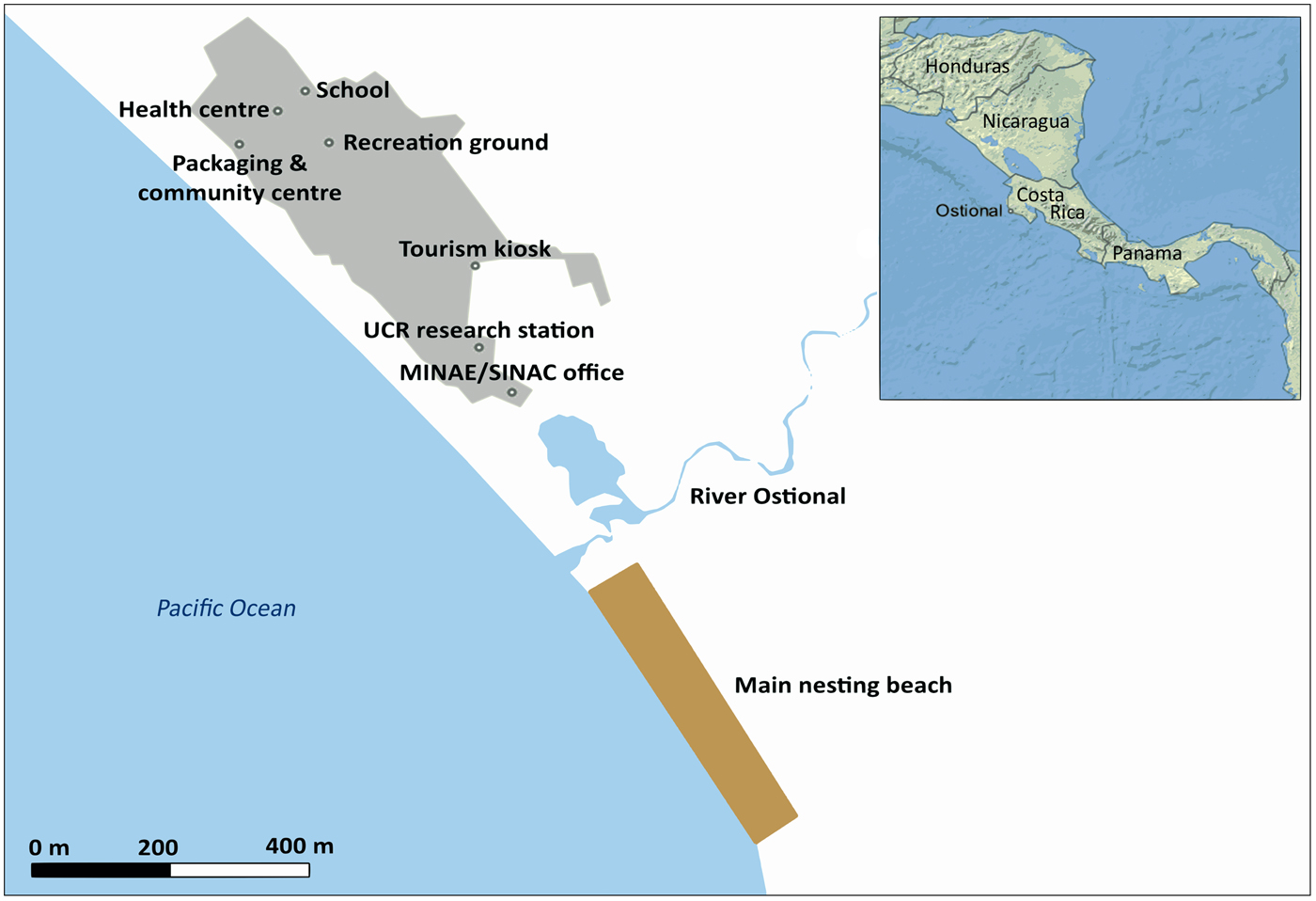
Founded in 1902, the community of Ostional (Fig. 1) depended primarily on agriculture and animal husbandry in its early years. Livestock were allowed to feed on sea turtle eggs, and humans would take them for consumption and trade. The egg harvesting project was conceived as a means to promote rational egg use, Ostional Wildlife Refuge was established in 1983, and the first legal harvest was in 1987 (Campbell, Reference Campbell1998). The Refuge is a Combined Property Refuge, jointly owned by the state and the community. The egg harvest is authorized by the Ministerio di Ambiente y Energia (MINAE; Ministry of Environment and Energy) through the Sistema Nacional de Areas de Conservacion (SINAC; National System of Conservation Areas), hereafter MINAE/SINAC, and the egg trade by the Instituto Costarricense de Pesca y Acuicultura (Costa Rican Institute for Fisheries and Aquaculture). Extraction of eggs is justified by the observation that nests laid at the beginning of an arribada are often destroyed by the females arriving to nest later (but see Pritchard, Reference Pritchard and Plotkin2007; Valverde et al., Reference Valverde, Orrego, Blanco, Albavera, Harfush, Tripathy, Shanker, Belskis, Frick, Panagopoulou, Rees and Williams2012). The distribution system comprises registered distributors and resellers, government-issued permits and licenses, and specific packaging to trade eggs throughout the country (Almengor et al., Reference Almengor, Mo and Vargas2001). There are c. 60 direct buyers, and two appointed distributors from the community transport eggs for sale to six national locations. Selling prices of eggs can be twice or thrice the original price (ADIO, pers. comm.).
Ostional, Costa Rica, showing the location of the main nesting beach and the community.
The local community (including the egg harvesting project) is governed by a democratic body, the Asociación de Desarrollo Integral de Ostional (ADIO; Association for Integrated Development of Ostional), formed in 1984. Funds from the project have helped the Association build a health and nutrition centre, high school, multipurpose community centre and tourism kiosk, and secure an electricity supply (Campbell, Reference Campbell1998). The human population at Ostional has increased, and entire families depend on the egg harvesting project for food and income. Economic dependence on the egg harvesting project ranged from 30% of households in 1980 to 70% in 1995 (Campbell, Reference Campbell1998), and 32% in 2000 (Hope, Reference Hope2002). Although many members of the community are now engaged in lucrative service-based employment in neighbouring areas, voluntary participation in activities and decision-making motivates individuals to comply with and contribute to the egg harvesting project (Madrigal-Ballestero et al., Reference Madrigal-Ballestero, Schlüter and Lopez2013). The population of sea turtles at Ostional has remained relatively stable (Ballestero et al., Reference Ballestero, Arauz, Rojas, Abreu-Grobois, Briseño-Dueñas, Márquez and Sarti2000; Valverde et al., Reference Valverde, Orrego, Blanco, Albavera, Harfush, Tripathy, Shanker, Belskis, Frick, Panagopoulou, Rees and Williams2012), with a mean of c. 11 arribadas annually, a nesting population of 200,000–500,000 females, a harvest rate of nearly 4% of all clutches laid, and destruction of 48% of eggs by subsequent nesting females and of 8% of clutches by dogs (Orrego, Reference Orrego2014).
Methods
A household survey was conducted in June 2016 using questionnaires. Responses collected in person by MS were recorded using the Open Data Kit (KoBo Toolbox, 2016). Paper questionnaires were used where respondents chose to complete the survey themselves. Closed questions determined respondents’ demographics, and multiple choice questions assessed awareness about the egg harvesting project and trade in sea turtle eggs. Likert scale questions examined residents’ perceptions of the cultural, economic, and ecological status of sea turtles, the egg harvesting project, and the community of Ostional.
Open-ended questions were used to elicit (1) perceptions on the advantages and disadvantages of the egg harvesting project, (2) awareness of reasons for and measures by which sea turtles are protected, and (3) perceptions on the positive and negative aspects of, and changes in, life in Ostional during 1998–2016. Of these questions, (1) and (2) were similar to those of Campbell (Reference Campbell1998) and Campbell et al. (Reference Campbell, Haalboom and Trow2007) in that respondents were asked to list three or more answers, not necessarily in order. The most significant change method solicits anecdotal evidence from stakeholders that may not be directly linked to research-specific questions, but could potentially explain drivers of change: open-ended questions on respondent perceptions of changes in the community (3) sought to link statistical differences to social transformation. Anecdotal information from the survey was triangulated through interviews with authoritative key informants, and compared with existing literature.
A willingness to accept exercise was used for participatory economic valuation of the main nesting beach at Ostional. The questionnaire proposed a scenario in which access to the beach was denied and any kind of use of sea turtles was prohibited. Respondents were asked to gauge potential effects of this scenario on ADIO (which depends on funds from the eggs), the beach, employment and recreation, food security, sea turtles and tourism, as positive, negative or neither. They were then asked whether their household would be affected by these changes, whether they would accept compensatory payment for negative impacts and, if so, the magnitude of compensation they would expect. We acknowledge that open-ended valuation questions risk protest and strategic answers (Desbureaux & Brimont, Reference Desbureaux and Brimont2015).
For the survey we opportunistically selected one adult respondent per household; i.e. any one consenting adult member of a household (regardless of age, gender, status) present at the time. In addition to the survey, 14 key informants were interviewed, from amongst ADIO (5), MINAE/SINAC (1), researchers (5), and tourist guides (3). Key informant categories were identified initially from the literature, and subsequently from observations, but the number of informants per category was determined by availability. The survey questionnaire and interview guide are provided in Supplementary Material 1–2. Qualitative data were coded and classified by emergent themes. Statistics were calculated with R v. 3.2.3 (R Core Team, 2015).
Where compatible, the data collected were compared to data from previous studies at Ostional (Campbell, Reference Campbell1998; Hope, Reference Hope2002; Campbell et al., Reference Campbell, Haalboom and Trow2007) using χ2 tests (when ≥ 80% of expected frequencies were ≥ 5). Our use of χ2 tests violates the assumption that the populations surveyed are independent. However, although there is a significant difference between our sample and those of previous studies in the proportions of members and non-members of the project surveyed, demographic attributes are similar across study samples. Thus, differences are more likely a reflection of the samples rather than of the population.
Significant differences and changes were mapped onto a matrix, following the Sustainable Livelihoods Framework. The first axis maps changes in (1) the vulnerability context, (2) the five capitals (financial, human, natural, physical, social), (3) institutional linkages and policy processes, and (4) livelihood outcomes, and the second axis maps achievements and challenges. Areas for improvement could thus be identified and future options suggested.
Results
A total of 63 households were surveyed, 42% of all 150 households in Ostional. A majority (62%) of respondents were educated to primary school level, with fewer having completed high school (22%), having no educational qualification (10%) or diplomas (6%). About half (48%) of the respondents had lived in Ostional all their lives, and 76% had previously participated in a survey. Females (51%) and males (49%) were almost equally represented, and mean respondent age was 43 years. Of the 243 individuals recorded, 50% were working members (mean 2 per household). Although the egg harvesting project was the largest contributor to livelihoods overall, only five households (8%) were entirely dependent on it, 14 (22%) combined the project with other activities to maintain household income, and 70% received no income from the project (Table 1). Mean monthly household income was CRC 323,275 (USD 599 at 2016 rates). Household income of members and non-members of the project was not significantly different (t = −1.0461, P = 0.3023).
Distribution of livelihood activities at Ostional (Fig. 1) across the 63 surveyed households.
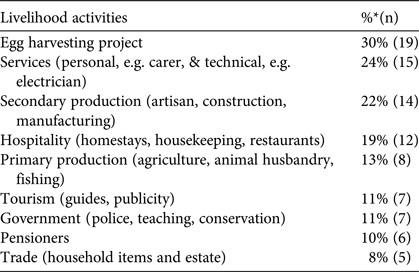
* Percentages do not sum to 100 as households engaged in more than one livelihood activity.
Awareness and perceptions
The majority (90%) of respondents were aware of the egg harvesting project, although fewer (78%) were familiar with ADIO. Although 34% of the respondents believed the population of sea turtles at Ostional had remained stable, opinion was divided over the population having decreased (27%) or increased (26%), and 13% responded ‘can't say’. Involvement with the egg harvesting project or lack thereof did not manifest in a significant difference in opinions on the sea turtle population (χ2 = 2.6439, P = 0.2666) or on the local community, and its administration/governance (χ2 = 1.6613, P = 0.9958; Fig. 2). The tranquillity, community and environment emerged as the best things about Ostional, and problems of accessibility, coordination and government aid were identified as the worst things (Table 2). On why turtles are protected (Fig. 3), an example response was ‘We care for the turtles. They are the people's pets.’
Perceptions of 63 respondents in Ostional towards the egg harvesting project and related matters, measured using the Likert scale.

Reasons cited by 63 respondents for protection of sea turtles. Percentages do not sum to 100 as some respondents cited more than one reason.

Frequently cited advantages and disadvantages of, and changes in, Ostional (Fig. 1) across the 63 surveyed households. Words in brackets are examples of each category; figures in brackets denote percentage of respondents citing these.
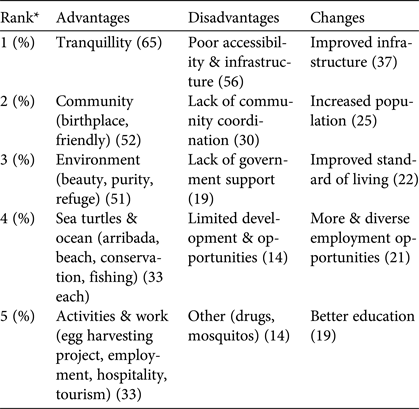
* Percentages do not sum to 100 as respondents gave 0–3 answers in no order of priority.
Egg use and trade
Of the 89% of household respondents who were aware of the uses of sea turtle eggs, 26% only knew about uses, whereas 63% actually used them. Respondents mentioned medicinal properties such as revitalization, and curing headaches, weakness, dengue, dementia and anaemia, and also high protein and vitamin content. Respondents reported cultural significance in the practice of gifting eggs between families, and the annual egg festival during which traditional delicacies are made using turtle eggs (Fig. 4). Approximately 66% of the respondents stated they were aware of the overall working of the sea turtle egg trade but only 10% of household respondents reported their households legally trading eggs. Although the majority of respondents (52) stated that only olive ridley eggs from Ostional are used and traded legally in Costa Rica, a few mentioned the use of green sea turtle (n = 2), hawksbill (n = 4), leatherback (n = 4) and loggerhead (n = 1) eggs in other parts of Costa Rica. About 65% of the respondents were aware of one or more means of identifying eggs harvested legally from Ostional (by packaging, permits or receipts).
Uses of sea turtle eggs reported by 60 respondents. Percentages do not sum to 100 as some respondents said they did not know about some uses.

Trade-offs
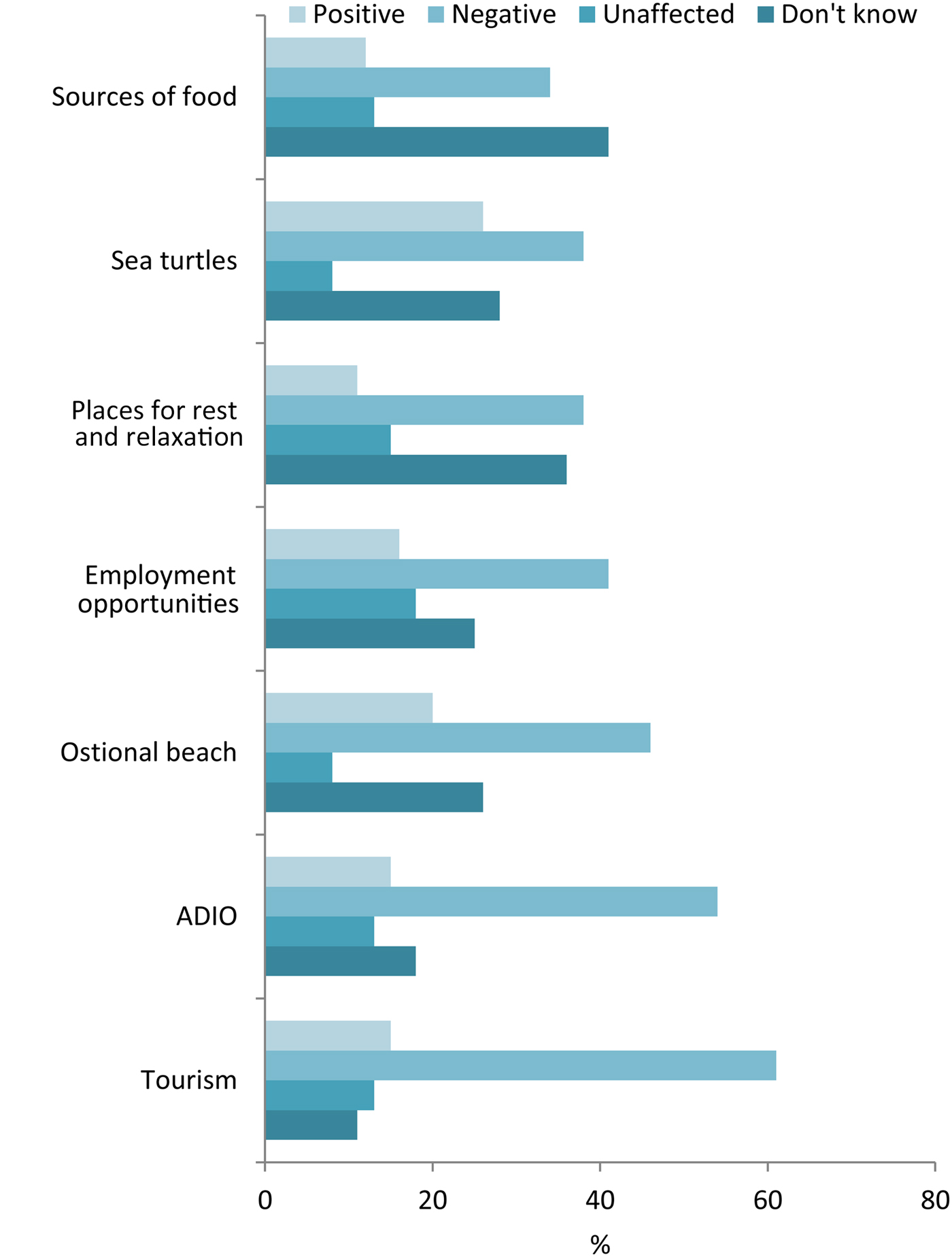
In the willingness to accept exercise (Fig. 5), the perceived impact of a ban on access to the turtles and the beach was negative. There was no significant difference between egg harvesting project members and non-members in assessment of impacts (χ2 = 3.9092, P = 0.689). In the event of such a ban, 43% (n = 27) of those surveyed said their households would be affected. Of these, 10% (n = 6) said they would accept payment as compensation, and only three respondents declared the magnitude of compensation they would expect, ranging from USD 400 per month to a one-off payment of USD 1 million. Respondents whose households would be affected but refused to accept compensation (n = 21) cited strong reasons for rejecting the scenario. It is widely believed that the egg harvesting project has helped enhance the nesting habitat by oxygenating the sand and clearing excessive organic matter, and many respondents stated they cherished their turtle-related activities and would not give them up for money.
Perceived potential impacts, from 61 respondents, of a hypothetical ban on the use of sea turtles and the beach at Ostional.
The egg harvesting project
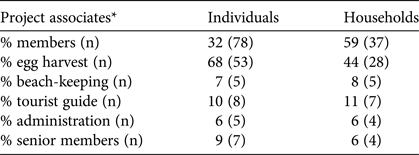
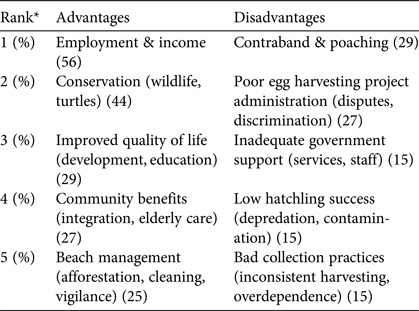
The survey reported a total of 78 members in 37 (59%) households (Table 3); ADIO has c. 200 members, 25% of which are senior citizens who receive an income from the project, through ADIO, but are not required to work (ADIO, pers. comm.). Improved conservation and living outcomes were seen as benefits of the egg harvesting project, and egg smuggling and social and ecological malpractice were cited as drawbacks (Table 4).
Activities of the egg harvesting project and members engaged. Percentages are calculated from a total member sample size of 78 individuals in 37 households.
* Percentages do not sum to 100 as members engaged in more than one activity in the egg harvesting project.
Frequently cited advantages and disadvantages of the egg harvesting project (from 52 respondents). Words in brackets are examples of each category; figures in brackets denote percentage of respondents citing these.
* Percentages do not sum to 100 as respondents gave 0–3 answers in no order of priority.
Temporal changes
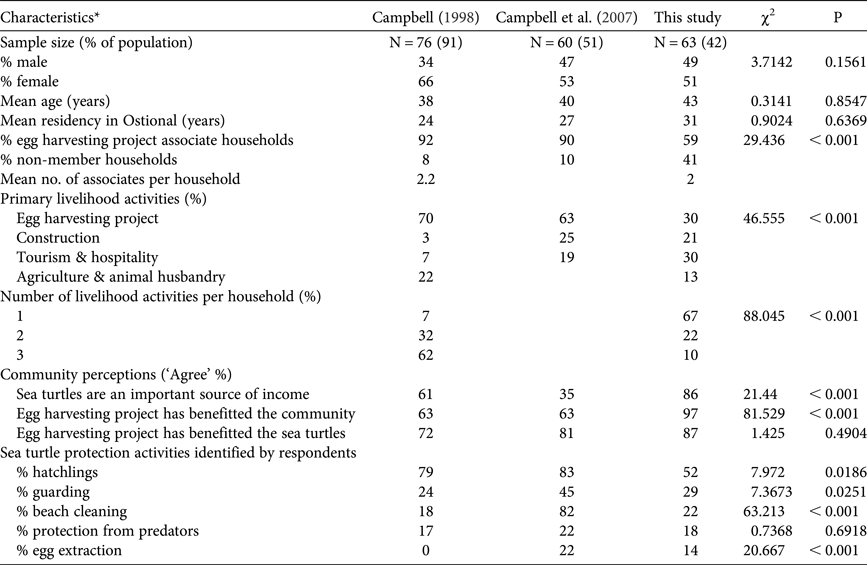
The degrees of household dependence on the egg harvesting project found in this study are different (χ2 = 70.245, P < 0.001) from the previously reported distribution of 32% direct dependency on egg commerce, 56% mixed income, and 12% from other activities (Hope, Reference Hope2002). The project generates CRC 2,025 million (USD 3,750,000) annually. Of this, 70% is distributed to members as salaries, and 30% is used to cover costs and invest in community infrastructure (ADIO, pers. comm.). The government no longer shares profits from the trade. This is a change from the previously reported distribution of 40% of the profits going to the government, 30% to the workers, and 30% for community projects (Cornelius, Reference Cornelius1985; Campbell, Reference Campbell1998). A bag of 200 eggs is priced at CRC 13,000 (USD 24), and smaller bags of 10 eggs are priced at CRC 700 (USD 1.4). The price has not changed significantly since 1998 (t = 2.7452, P = 0.07103). Anyone residing in Ostional for longer than 6 months is eligible to become a member of ADIO (ADIO, pers. comm.). The residency requirement was previously 5 years, to limit dependency on the egg harvesting project (Campbell, Reference Campbell1998). Other differences with previous studies include a greater proportion of project non-member respondents in our study, a shift towards a service economy, and changed perceptions of and awareness about the project (Table 5).
Comparisons between this and two previous studies. Certain questions were consistent with or similar across studies, and the results from answers to these questions were compared using χ2 tests, to examine changes in community/sample composition and perceptions.
* Percentages are calculated based on sample size (N) of respective study.
Stakeholder engagement
Interviews with key informants revealed previously undocumented information on the roles of stakeholders in the functioning of the Ostional Wildlife Refuge. An inter-institutional committee meets every month at Ostional to discuss the management of the Refuge (F. Bolaños, pers. comm.). Representatives of the Universidad de Costa Rica, MINAE/SINAC and ADIO are integral to the committee, and tourist guides, fishers, civic associations, and NGOs from neighbouring villages and towns participate regularly. There are two groups of tourist guides, one within ADIO and a private local association, each comprising 15 guides (J. Rosales, pers. comm.). The guides are trained by the biologist at ADIO or Universidad de Costa Rica, and they conduct 30–45 minute tours around sea turtles and the egg harvesting project. Direct tourism in Ostional is limited to arribadas, mostly during the dry season (November–March). MINAE/SINAC runs an international volunteer programme that contributes substantial funds towards management of the Refuge (J. Pablo, pers. comm.). Volunteers spend 14 days at the field station, assisting with beach cleaning and collecting data. They are hosted by 17 designated families within the community, thus contributing to the community economy. ADIO also uses domestic volunteers to patrol and clean the beach (ADIO, pers. comm.).
Discussion
The Ostional community has been managing the sea turtle egg harvest with technical support (Pritchard, Reference Pritchard1984; Cornelius, Reference Cornelius1985), and this commnity-based conservation project is an example of successfully integrated conservation and development. We found no significant difference between the incomes or perceptions of associates and non-members of the egg harvesting project, awareness of sea turtle ecology, legislation and conservation is widespread, and the project's outcomes are viewed favourably regardless of respondent involvement (Table 5), indicating not only equitable distribution of benefits but also shared responsibilities. The importance of devolved management rights and equity has been emphasized in the literature on natural resource governance (Ostrom, Reference Ostrom2010; Twinamatsiko et al., Reference Twinamatsiko, Baker, Harrison, Shirkhorshidi, Bitariho and Wieland2014; Büscher et al., Reference Büscher, Fletcher, Brockington, Sandbrook, Adams and Campbell2016; Oldekop et al., Reference Oldekop, Holmes, Harris and Evans2016), and our case study in Ostional corroborates this.
We propose that the stakeholders develop research and monitoring capacity, which will augment food security, curb poaching, and generate alternative livelihoods, in turn addressing challenges of vulnerability and natural, social and financial capital. Similarly, developing responsible, value-added tourism will build capacity and infrastructure in addition to creating jobs and controlled clientele for eggs, ultimately contributing to financial, physical and human capital and linkages and policy (Fig. 6).
Outcomes of the egg harvesting project mapped on the Sustainable Livelihoods Framework (DFID, 1999).

One of the main criticisms of the egg harvesting project is that it facilitates a nationwide market for eggs illegally extracted outside Ostional (Table 4). The project's distribution system aims to supply the entire country, but it targets commercial hubs, overlooking rural communities where a strong demand for eggs exists (R. Arauz, pers. comm.). These rural communities then illegally collect eggs from solitary nesting beaches for their own use and trade. Thus, although the egg harvesting project fulfils all criteria of the theory of change framework for community response to illegal wildlife trade (Biggs et al. Reference Biggs, Cooney, Roe, Dublin, Allan, Challender and Skinner2017), the supply chain has loopholes that allow illegal wildlife trade to thrive. This reinforces the suggestion that poverty alleviation and law enforcement are not necessarily sufficient to curb illegal wildlife trade, which operates in complex networks on multiple scales (Duffy et al., Reference Duffy, St. John, Buscher and Brockington2016). Illegal sale of eggs purporting to be from the egg harvesting project is currently being investigated using genetics and tracking devices (H. Pheasey, pers. comm.). Addressing demand (Mason et al., Reference Mason, Bulte and Horan2012; Challender & MacMillan, Reference Challender and MacMillan2014) and understanding the motives of perpetrators are also crucial for controlling illegal wildlife trade (von Essen et al., Reference von Essen, Hansen, Nordström Källström, Peterson and Peterson2014; Harrison et al., Reference Harrison, Baker, Twinamatsiko and Milner-Gulland2015).
Interviewees and survey respondents expressed concerns over the lack of interest in the egg harvesting project among Ostional's youth. Madrigal-Ballestero et al. (Reference Madrigal-Ballestero, Schlüter and Lopez2013) also found that younger respondents were less likely to comply with the community code of conduct (ADIO, 2017) and activities of the project. This highlights the need to engage more local youths in community-based conservation in Ostional. Beach patrolling and law enforcement, research, monitoring, and tourism management are potential avenues to recruit youths, and to teach skills that could be used beyond the project (Fig. 6). Although the Universidad de Costa Rica, MINAE/SINAC and ADIO are all involved in research and monitoring of the beach and the sea turtle population, differences in their approaches hinder research collaboration. The previous lack of data has led to questioning of the project's sustainability and credibility (Valverde, Reference Valverde1999; R. Arauz, pers. comm.). Currently, only five individuals from the community are involved in facilitating research and monitoring, with visiting researchers and volunteers occasionally contributing (J. Quiros-Rosales, pers. comm.). Claims that the egg harvest benefits turtle nests by cleaning and oxygenating the sand have been validated (Bézy et al., Reference Bézy, Valverde and Plante2015). However, there is a need to estimate sustainable harvest rates (R. Valverde, pers. comm.). Skill-building in research techniques and improved monitoring could help secure the turtle population and the food supply for those who depend on turtle eggs (Fig. 6), while also providing an opportunity for the community to host formal training programmes.
Despite tourism and hospitality contributing considerably to Ostional's economy, most of these livelihoods are linked to general beach tourism in neighbouring communities. The community honours a strict protocol (ADIO, 2017) regulating access to the beach during arribadas, but there are no gates, guards or checkpoints to ensure compliance. This facilitates violations of the protocol by tourists, and is a concern in light of plans for ecotourism development at Ostional (ADIO, pers. comm.; J. Rosales, pers. comm.). Although locally adopted codes demonstrate moral commitment to sustainability (Walker & Hawkins, Reference Walker, Hawkins, Ballantyne and Packer2013), these need to tie into wider regulatory frameworks and best practices to promote visitor compliance. Costa Rica is a reputable tourist destination with certification for sustainable and biodiversity-linked ecotourism (Honey, Reference Honey2008; UNEP, 2013), and, with careful consideration for the local context, this could be implemented at Ostional. Existing tourism could be improved by training guides to communicate values of conservation and sustainability to tourists (Walker & Weiler, Reference Walker and Weiler2016). We propose that increases in tourist volumes and pressure can be met by a diversified portfolio of natural and cultural recreational activities such as hiking trails and food tasting. Investing in tourism (Fig. 6) would generate employment, improve existing facilities and road connectivity (Table 2), and enhance capacity and involvement of youths.
Although consumption of wildlife has low acceptability in industrial societies (Schally, Reference Schally, Abensperg-Traun, Roe and O'Criodain2011), examples such as the egg harvesting project demonstrate that controlled and legalized use of wildlife resources can incentivize and fulfil conservation priorities. Socioeconomic benefits from resource use have yielded positive conservation outcomes globally (Oldekop et al., Reference Oldekop, Holmes, Harris and Evans2016). Respondents in this study considered sea turtles and the arribada phenomenon a unique aspect of their community identity and heritage. Their unwillingness to accept a fortress conservation scenario resonates with global evidence on the merits of inclusive conservation (Twinamatsiko et al., Reference Twinamatsiko, Baker, Harrison, Shirkhorshidi, Bitariho and Wieland2014; Büscher et al., Reference Büscher, Fletcher, Brockington, Sandbrook, Adams and Campbell2016; Biggs et al., Reference Biggs, Cooney, Roe, Dublin, Allan, Challender and Skinner2017). As economic and dietary dependence on the egg harvesting project dwindles, this intrinsic value of the turtles for the community will be key for perpetuating this community-based conservation project, either through consumption or other activities.
Acknowledgements
MS thanks the people of Ostional, in particular the Camareno Cabalcetas, Jairo Quiros Rosales, Vanessa and ADIO, Durrell Institute of Conservation and Ecology, Kartik Shanker for inspiration and guidance, Astrid, Marimar and Florence, Yeudy for logistics and her family for support, the Tata Trusts for sponsorship, Roldán Valverde, Randall Arauz, Lisa Campbell, Federico Bolaños and Gerardo Chaves for valuable input, and two anonymous reviewers for their critiques.
Author contributions
Execution of the study and writing of the article: MS; guidance on design and presentation: DM.
Conflicts of interest
None.
Ethical standards
This study adhered to the code of ethics endorsed by the Economic and Social Research Council and the American Anthropological Association.



