


Highlights
-
In GBS, 22%–82% of patients had mental health disorders within 3 months and were at elevated risk for 2 years.
-
In CIDP, patients with active disease and neuropathic pain had worse mental health outcomes.
-
Studies reported significant burden of mental health symptoms without diagnostic evaluation, suggesting undertreatment of these disorders.
Introduction
Guillain–Barré syndrome (GBS) and chronic inflammatory demyelinating polyneuropathy (CIDP) are immune-mediated disorders that affect the peripheral nerves, causing sensorimotor deficits that impair a patient’s ability to function. While GBS and CIDP may differ in acuity and severity, the two immune-mediated neuropathies share similar pathophysiological targets in the peripheral nervous system and may have comparable residual deficits in the long term, including sensory disturbances, weakness and impaired mobility. In both disorders, residual disability is often further complicated by fatigue and neuropathic pain. Reference Merkies and Kieseier1 Altogether, these physical symptoms in GBS and CIDP negatively impact a patient’s quality of life and mental health.
In general, adults with disability report more mental distress than those without disability, suggesting that adults following GBS or with CIDP are more vulnerable to mental distress than the general population. Reference Cree2 Although the physical manifestations of these diseases are closely monitored, mental health assessments in GBS and CIDP are rarely prioritized in routine clinical care. This can lead to underdiagnosis of treatable mental health disorders in these patients.
There is emerging evidence to support an association between these immune-mediated neuropathies and mental health disorders, as patients with GBS or CIDP may be at increased risk compared to the general population. Reference Levison, Thomsen and Andersen3 Currently, there is limited research on the frequency of and risk factors for mental health disorders in these patients.
Previous research has shown that individuals with GBS or CIDP may be at an increased risk for mental disorders. Reference Merkies and Kieseier1 However, there is currently limited research on the frequency of mental disorders in this patient population. To address this research gap, a systematic review was conducted to examine the frequency of mental disorders in GBS and CIDP.
Methods
This systematic review was registered on PROSPERO and adhered to the Preferred Reporting Items for Systematic Reviews and Meta-Analyses (PRISMA) 2020 guidelines. Reference Page, McKenzie, Bossuyt, Boutron, Hoffmann and Mulrow4
Search strategy and inclusion criteria
We conducted a literature search for primary studies using a pre-determined search strategy (Appendix 1 ) in MEDLINE, EMBASE and PsycINFO on August 15, 2023. Primary studies included randomized controlled trials (RCTs), clinical trials without randomization, prospective and retrospective cohort studies and case series that report mental health outcomes in patients diagnosed with GBS or CIDP. The mental health outcomes could be primary or secondary. There was no limit set on the date of publication. A manual search was conducted on Google Scholar and references of included texts to ensure that all relevant articles were included. An updated search was completed on November 1, 2023, to identify any articles that were published after the original search to ensure the latest studies were included.
Studies were included if they met the following criteria: (1) primary study design (RCTs, clinical trials without randomization, prospective and retrospective cohort studies and case studies); (2) adults (age 18 or older) with a diagnosis of GBS, CIDP or its variants based on International Classification of Diseases (ICD); (3) reported on mental health outcomes using a validated scale or have a diagnosis of a mental health disorder as per Diagnostic and Statistical Manual of Mental Disorders (DSM) or ICD; and (4) full-text studies published in English. Raw subscores for the validated scales must be reported. Studies with duplicate patient populations were excluded. Studies that only report fatigue and/or sleep abnormalities were excluded. Case reports were excluded.
Screening
Studies from the search were imported into COVIDENCE, a systematic review software, where subsequent screening was completed. 5 Title and full-text screening was conducted independently and in duplicate by two authors, with discrepancies resolved by a third independent reviewer. The references of included studies were also screened using the aforementioned approach to ensure all relevant studies were included.
Extraction
Two authors independently extracted and recorded relevant data in a Microsoft Excel spreadsheet that was designed a priori. Discrepancies from extracted data were resolved through discussion and consensus between the extractors. Article information such as PMID or DOI, first author name, year of publication and country of study location was extracted. Study information such as study design, study period, study setting, number of participants, duration of follow-up and criteria used for mental disorder diagnosis was also extracted. Study demographic information such as mean/median age, gender, race, neurological diagnosis, status of neurological disease, relevant investigations for neurological diagnosis, degree of disability at nadir (if applicable), psychiatric diagnoses, comorbid health or psychiatric diagnoses and long-term patient outcomes was also extracted. The primary outcomes of new psychiatric diagnoses and symptoms of mental health disorders as measured by a validated scale were extracted. Sleep abnormalities and fatigue measures were not assessed.
Quality assessment
Two authors independently assessed the quality of all included studies, classifying each study as “high quality”, “fair quality” or “poor quality” using the National Institute of Health Study Quality Assessment Tool. 6
Statistical analysis
Given the wide variability between studies (including reported mental health outcomes, scales used and values reported), a meta-analysis could not be performed. The results were summarized in a descriptive manner. Descriptive statistics and measures of variance were presented when applicable.
Results
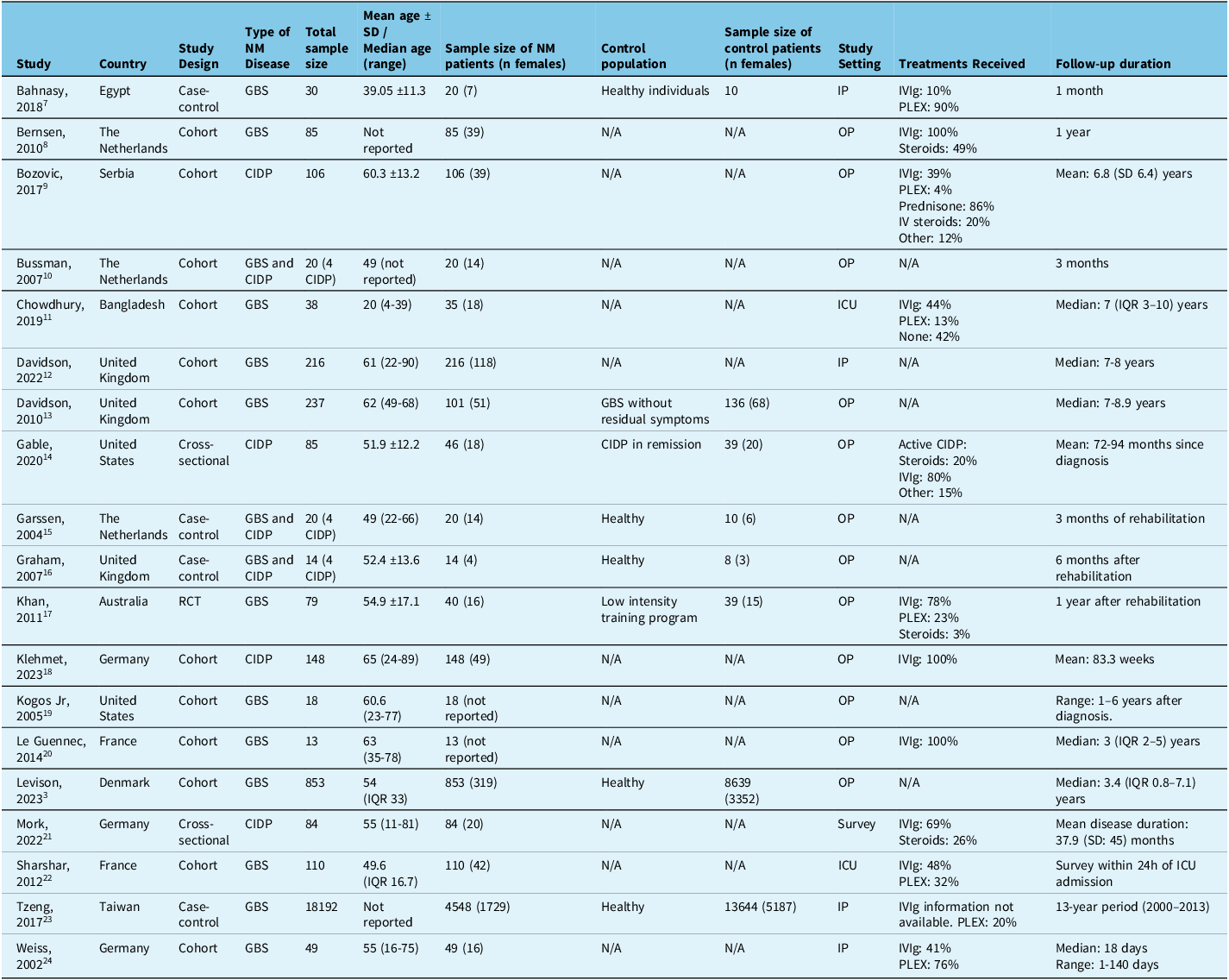
Among 2,077 screened abstracts, 100 full-text articles were reviewed, and 19 studies were included for extraction (Figure 1). Reference Levison, Thomsen and Andersen3,Reference Bahnasy, El-Heneedy, El-Shamy, Badr, Amer and Ibrahim7–Reference Weiss, Rastan, Müllges, Wagner and Toyka24 These 19 studies included a total sample size of 20,397 patients, of whom 6526 patients were diagnosed with either GBS or CIDP, while the remainder served as control comparators. Of the 19 included studies, there were 12 studies focused on patients with GBS, 4 studies on patients with CIDP and 3 studies that included both patients with GBS or CIDP. Study characteristics are summarized in Table 1.
PRISMA diagram of included studies. After removing 448 duplicates, the authors screened 2077 studies and included 19 studies in the systematic review.

Figure 1 Long description
The flowchart begins with the identification phase, where studies from databases or registers are collected, totaling 2525 studies, with 1727 from Embase and 798 from MEDLINE. In the screening phase, 448 references are removed due to duplicates identified manually and by Covidence. The remaining 2077 studies are screened, and 1977 studies are excluded. 100 studies are sought for retrieval, and none are not retrieved. These 100 studies are assessed for eligibility, and 81 studies are excluded for various reasons such as being case reports, having wrong outcomes or interventions, wrong study design, not being primary studies, not being in English, no frequency reported, full-text not available, duplicate patient population, and no formal psychiatric diagnoses. Finally, 19 studies are included in the review.
Study characteristics. There were 19 included studies: 12 studies focused on patients with GBS, 4 studies on patients with CIDP, and 3 studies included both patients with GBS or CIDP. Among the 19 studies, there were 12 cohort studies (prospective and retrospective), 4 case-control studies, 2 cross-sectional studies and 1 randomized controlled trial (RCT)

Table 1 Long description
The table presents characteristics of 19 studies involving patients with GBS and CIDP. It includes columns for Study, Country, Study Design, Type of NM Disease, Total sample size, Mean age ± SD / Median age (range), Sample size of NM patients (n females), Control population, Sample size of control patients (n females), Study Setting, Treatments Received, and Follow-up duration. Each row provides specific details for each study, such as the study design, the type of neuromuscular disease, the total sample size, the mean or median age of participants, the number of female patients, the control population, the sample size of control patients, the study setting, the treatments received, and the follow-up duration.
Abbreviations: NM = Neuromuscular, GBS = Guillain Barre Syndrome, CIDP = chronic inflammatory demyelinating polyneuropathy, IQR = interquartile range, N/A = not applicable, ICU = intensive care unit, RCT = randomized controlled trial, IVIg = intravenous immunoglobulins, PLEX = plasma exchange, IV = intravenous
Among the 19 studies, there were 12 cohort studies (prospective and retrospective), 4 case-control studies, 2 cross-sectional studies and 1 RCT. There were studies from the Netherlands, Reference Levison, Thomsen and Andersen3 the United Kingdom, Reference Levison, Thomsen and Andersen3 Germany, Reference Levison, Thomsen and Andersen3 France, Reference Cree2 the United States, Reference Cree2 Egypt, Reference Merkies and Kieseier1 Australia, Reference Merkies and Kieseier1 Bangladesh, Reference Merkies and Kieseier1 Denmark, Reference Merkies and Kieseier1 Taiwan Reference Merkies and Kieseier1 and India. Reference Merkies and Kieseier1 There were five studies published in the 2020s, nine studies in the 2010s, five studies in the 2000s and none prior to 2000. Two studies were in the intensive care unit (ICU) setting, 4 in the inpatient hospital setting, 12 in the outpatient setting and 1 through an online survey. In patients with GBS, the follow-up duration ranged from within 24 hours of ICU admission to 13 years after disease onset. On the other hand, studies that only included patients with CIDP had 1.5–7.8 years of follow-up (Table 1).
In terms of quality assessment, 8 studies were considered high quality, 10 were fair quality and 1 was poor quality. Of the eight high-quality studies, six studies were on patients with GBS, one study was on patients with CIDP and another high-quality study included both patients with GBS and CIDP (Appendix 2 ).
Mental health findings
Anxiety
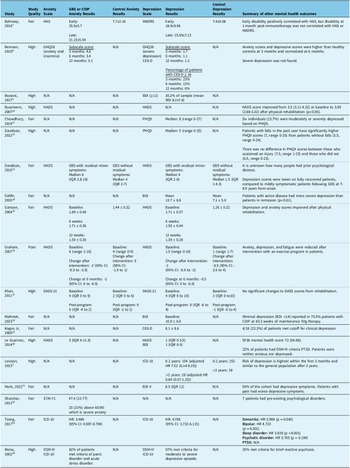
Eleven studies reported anxiety as a mental health outcome in GBS or CIDP patients (Table 2). Two studies used the diagnostic criteria to assess an anxiety disorder. Symptoms of anxiety were measured using five different validated scales; the most common scale used to measure anxiety was the Hospital Anxiety and Depression Scale (HADS).
Summary of mental health outcomes in included studies. Eight studies met the quality standards for “high”, ten were “fair”, and one was “poor”. Results of validated scales were recorded as mean ± SD or Median (IQR). Eleven studies measured anxiety and eighteen studies measured depression, using a validated scale or diagnostic criteria

Table 2 Long description
The table presents a summary of mental health outcomes from multiple studies. It includes columns for Study, Study Quality, Anxiety Scale, GBS or CIDP Anxiety Results, Control Anxiety Results, Depression Scale, Depression Results, Control Depression Results, and Summary of other mental health outcomes. The table has 19 rows and 9 columns. Each row corresponds to a different study, detailing the anxiety and depression scales used, the results for GBS or CIDP patients, control results, and a summary of other mental health outcomes. Notable studies include Bahrny 2018, Bensens 2010, Bosovic 2017, Bussmann 2007, and Choudhury 2019, among others. The table captures various anxiety and depression scales such as HADS, GHQ28, MADRS, PHQ9, and others, along with their respective results and control results.
Abbreviations: DSM-IV = Diagnostic and statistical manual of mental disorders, ICD = International classification of diseases, HAS = Hamilton Anxiety Score, MADRS = Montgomery-Asberg depression scale, HADS = Hospital anxiety and depression scale, PTSD = Post-traumatic stress disorder, N/A = Not applicable, STAI-Y1 = State trait anxiety inventory, DASS = Depression anxiety stress scale, BDI = Beck depression inventory, CES-D = Centre of epidemiological studies – Depression, SF-36 = short form survey health survey, PHQ-9 = Personal health questionnaire 9, IVIg = intravenous immunoglobulins, HR = hazard ratio, IQR = interquartile range, CI = confidence interval
Two high-quality studies used the diagnostic criteria (1 used ICD, and 1 used both ICD and DSM) to diagnose an anxiety disorder. In Weiss (2002), there was a high prevalence of anxiety disorders that met diagnostic criteria in patients with GBS admitted to the ICU (82%) with loss of communication cited as a significant source of stress. Reference Weiss, Rastan, Müllges, Wagner and Toyka24 During 13 years of follow-up, Tzeng (2017) found that patients with GBS were not at increased risk of developing anxiety disorders. Reference Tzeng, Chang, Chung, Lin, Yeh and Huang23 No studies reported on the prevalence or increased risk of anxiety disorders in patients with CIDP.
Three studies (two high and one fair quality) measured the change in anxiety scores with time in patients with GBS. Reference Bahnasy, El-Heneedy, El-Shamy, Badr, Amer and Ibrahim7,Reference Bernsen, De Jager, Kuijer, Van Der MechÉ and Suurmeijer8,Reference Le Guennec, Brisset, Viala, Essardy, Maisonobe and Rohaut20 The two high-quality studies reported that patients with GBS, including those who required mechanical ventilation, had normal anxiety scores at 6–12 months and 3 years. Reference Bernsen, De Jager, Kuijer, Van Der MechÉ and Suurmeijer8,Reference Le Guennec, Brisset, Viala, Essardy, Maisonobe and Rohaut20 The third study found that anxiety scores were higher than healthy controls at 1 month; although initial disability correlated with anxiety scores, patients reported improvement in anxiety scores by 1 month, and this correlation was lost. Reference Bahnasy, El-Heneedy, El-Shamy, Badr, Amer and Ibrahim7 No studies reported on the change in anxiety score with time in patients with CIDP.
Four studies (two high, one fair and one poor quality) assessed the effects of physical rehabilitation programs on anxiety. Reference Bussmann, Garssen, Van Doorn and Stam10,Reference Garssen, Bussmann, Schmitz, Zandbergen, Welter and Merkies15–Reference Khan, Pallant, Amatya, Ng, Gorelik and Brand17 Bussman (2007) reported a significant improvement in HADS scores in patients with GBS and CIDP after physical rehabilitation. Reference Bussmann, Garssen, Van Doorn and Stam10 The study also noted a significant correlation between perceived mental functioning and actual mobility. Reference Bussmann, Garssen, Van Doorn and Stam10 While this study was deemed as high quality, it did not have separate HADS scores for patients with GBS and CIDP. Subscores for anxiety and depression were also not available. Khan (2011) is another high-quality study that described a decrease in anxiety scores in patients with GBS after a rehabilitation program, but this was not statistically significant. Reference Khan, Pallant, Amatya, Ng, Gorelik and Brand17 Garssen (2004) and Graham (2007) found that patients with GBS and CIDP had lower anxiety scores after participating in physical rehabilitation and/or community-based exercise. Reference Garssen, Bussmann, Schmitz, Zandbergen, Welter and Merkies15,Reference Graham, Hughes and White16 Garrsen (2004) and Graham (2007) were rated as fair and poor quality studies, respectively, and neither reported separate anxiety scores for patients with GBS and CIDP. There was no reported difference between low- and high-intensity physical exercise. Reference Khan, Pallant, Amatya, Ng, Gorelik and Brand17
Two studies (two fair quality) investigated the impact of disability on anxiety levels. Reference Davidson, Wilson, Walton, Brissenden, Campbell and McGowan13,Reference Sharshar, Polito, Porcher, Merhbene, Blanc and Antona22 Sharshar (2012) found that 21% of patients with GBS reported severe anxiety within 24 hours of hospital admission; in this study, the degree of weakness and presence of bulbar dysfunction significantly correlated with anxiety. Reference Sharshar, Polito, Porcher, Merhbene, Blanc and Antona22 Davidson (2010) noted no significant difference in anxiety scores between fully recovered and mildly symptomatic patients at 7–8.9 years from GBS onset. Reference Davidson, Wilson, Walton, Brissenden, Campbell and McGowan13
Depression
Depression was investigated in 18 studies (Table 2). Seven different validated scales were used to measure depressive symptoms; the most common scales used to measure depression were the Beck Depression Inventory (BDI) and HADS.
Three high-quality studies used the diagnostic criteria (two studies used ICD, and one study used both ICD and DSM) to evaluate for depressive disorders in patients with GBS. The three studies reported the prevalence of depressive disorders in 18%–67% of patients with GBS, based on DSM or ICD criteria. Reference Levison, Thomsen and Andersen3,Reference Tzeng, Chang, Chung, Lin, Yeh and Huang23,Reference Weiss, Rastan, Müllges, Wagner and Toyka24 Two of the studies reported that patients with GBS were at increased risk of developing a depressive disorder: Levison (2023) reported a higher risk of depressive disorders only in the first 2 years following GBS (HR 7.52, 95% CI: 6.14–9.19), and Tzeng (2017) reported a higher risk during the 13 years of follow-up (HR 4.77, 95% CI: 3.73–6.12), although the mean onset of depressive disorders was not reported. Reference Levison, Thomsen and Andersen3,Reference Tzeng, Chang, Chung, Lin, Yeh and Huang23 Weiss (2002) found that depression was most common during maximum disability and after remission. Reference Weiss, Rastan, Müllges, Wagner and Toyka24 No studies investigated the prevalence in patients with CIDP.
Other studies (one high and three fair quality) used validated scales to assess for frequency of depressive symptoms in patients following GBS. Davidson (2022) was a high-quality study that reported higher depression scores in patients following GBS who had suffered a fall in the last year; however, injuries were not associated with higher depression scores. Reference Davidson and Parker12 Davidson (2010) also noted more depressive symptoms in patients who have minor residual symptoms following GBS, compared to those without residual symptoms. Reference Davidson, Wilson, Walton, Brissenden, Campbell and McGowan13 Chowdhury (2019) found that 15.7% of patients with GBS were considered moderately to severely depressed (PHQ9 score of 10 or more) at 10 years of follow-up. Reference Chowdhury, Basher, Habibullah, Asfia, Pathan and Kamal11 Kogos Jr. (2005) reported that 22.2% of patients with GBS met the criteria for clinical depression using the Center for Epidemiological Studies Depression (CES-D) scale. Reference Kogos, Richards, Baños, Schmitt, Brunner and Meythaler19
Four studies (three high and one fair quality) showed that depressive symptoms decreased with time in patients with GBS. Reference Levison, Thomsen and Andersen3,Reference Bahnasy, El-Heneedy, El-Shamy, Badr, Amer and Ibrahim7,Reference Bernsen, De Jager, Kuijer, Van Der MechÉ and Suurmeijer8,Reference Le Guennec, Brisset, Viala, Essardy, Maisonobe and Rohaut20 Bernsen (2010), Le Guennec (2014) and Levison (2023) were high-quality studies. Bernsen (2010) reported a higher percentage of patients with depressive symptoms at 3 months following GBS, compared to healthy controls; this normalized by 6 months. Reference Bernsen, De Jager, Kuijer, Van Der MechÉ and Suurmeijer8 Levison (2023) noted the risk of depressive disorders normalized after 2 years. Reference Levison, Thomsen and Andersen3 Le Guennec (2014) also reported normal scores for depressive symptoms at 3 years follow-up. Reference Le Guennec, Brisset, Viala, Essardy, Maisonobe and Rohaut20 The fourth study found that patients with GBS endorsed more depressive symptoms on validated scales at 1 month from GBS onset than healthy controls. Reference Bahnasy, El-Heneedy, El-Shamy, Badr, Amer and Ibrahim7 No studies reported on the change in depressive symptoms with time in patients with CIDP.
Four studies (one high and three fair quality) reported the frequency of depressive symptoms, which ranged from 30% to 50% of patients with CIDP with average BDI scores of 8.2–13.7 in four studies. Reference Bozovic, Kacar, Peric, Nikolic, Bjelica and Cobeljic9,Reference Gable, Attarian and Allen14,Reference Klehmet, Tackenberg, Haas and Kieseier18,Reference Mork, Motte, Fisse, Grüter, Brünger and Stoykova21 Bozovic (2017), Klehmet (2023), Mork (2022) and Gable (2020) included a total of 423 patients with CIDP, and BDI cutoffs for depressive symptoms varied from 9 to 14. Reference Bozovic, Kacar, Peric, Nikolic, Bjelica and Cobeljic9,Reference Gable, Attarian and Allen14,Reference Klehmet, Tackenberg, Haas and Kieseier18,Reference Mork, Motte, Fisse, Grüter, Brünger and Stoykova21 Mork (2022) found a significant association between the presence of pain and depression symptoms in patients with CIDP; this association was more profound with neuropathic pain compared to non-neuropathic pain. Gable (2020) found that disease activity in patients with CIDP was associated with depressive symptoms; patients with active disease scored lower on BDI than patients in remission (BDI 13.7 vs. 7.1, p < 0.01). Reference Gable, Attarian and Allen14
Four studies (two high, one fair and one poor quality) assessed the effect of physical rehabilitation on depressive symptoms. Reference Bussmann, Garssen, Van Doorn and Stam10,Reference Garssen, Bussmann, Schmitz, Zandbergen, Welter and Merkies15–Reference Khan, Pallant, Amatya, Ng, Gorelik and Brand17 Khan (2011) reported a decrease in depression in patients with GBS, but this was not statistically significant. Reference Khan, Pallant, Amatya, Ng, Gorelik and Brand17 Bussmann (2007), Garssen (2004) and Graham (2007) found that patients with GBS and CIDP had fewer depressive symptoms after physical rehabilitation and/or community-based exercise. Reference Bussmann, Garssen, Van Doorn and Stam10,Reference Garssen, Bussmann, Schmitz, Zandbergen, Welter and Merkies15,Reference Graham, Hughes and White16 There was no difference between low- and high-intensity physical exercise. Reference Khan, Pallant, Amatya, Ng, Gorelik and Brand17
Others
Le Guennec (2014) found that 22% of patients with GBS had met DSM-IV criteria for post-traumatic stress disorder (PTSD) at 3 years. Reference Le Guennec, Brisset, Viala, Essardy, Maisonobe and Rohaut20 In a larger study with 4548 patients with GBS, Tzeng (2017) reported that 2.6% had a sleep disorder, 0.6% had a psychotic disorder and 0.2% had bipolar disorder, and no one had PTSD based on ICD codes. Reference Tzeng, Chang, Chung, Lin, Yeh and Huang23
Weiss (2002) reported that 25% of patients with GBS in the ICU experienced psychotic symptoms consistent with brief reactive psychosis. Reference Le Guennec, Brisset, Viala, Essardy, Maisonobe and Rohaut20 Psychotic symptoms were associated with severe limb weakness, bulbar dysfunction and mechanical ventilation. Reference Le Guennec, Brisset, Viala, Essardy, Maisonobe and Rohaut20
Discussion
Our systematic review highlights the discrepancy between the lack of literature on mental health disorders using established diagnostic criteria and the significant burden of psychiatric symptoms reported in patients with GBS and CIDP. Only three studies used the diagnostic criteria for mental health disorders in patients following GBS, quoting up to 82% with an anxiety disorder, 67% with a depressive disorder, 25% with brief reactive psychosis and 22% with PTSD. Reference Levison, Thomsen and Andersen3,Reference Le Guennec, Brisset, Viala, Essardy, Maisonobe and Rohaut20,Reference Tzeng, Chang, Chung, Lin, Yeh and Huang23 Compared to patients with other acute illnesses of similar severity (e.g., cardiogenic shock, respiratory failure or sepsis requiring ICU), the frequency of these mental health disorders was much higher in patients with GBS. Reference Jackson, Pandharipande, Girard, Brummel, Thompson and Hughes25,Reference Mossberg, Ahlström and Lipcsey26 The frequency of depressive symptoms in patients with CIDP (30%–50%) exceeds that of the general population and is comparable to rates seen in other chronic immune-mediated neuromuscular disorders, such as myasthenia gravis. Reference Marbin, Piper, Lehnerer, Harms and Meisel27 There were insufficient data to determine the frequency of anxiety or other psychiatric symptoms, and no studies evaluated patients with CIDP for new mental health disorders using diagnostic criteria. The paucity of literature on mental health disorders in patients with GBS and CIDP, despite the abundance of reported symptoms, suggests that mental health disorders are likely underdiagnosed and undertreated in these patients.
In a previous systematic review, Rajabally et al. (2016) reported acute neuropsychiatric symptoms in 16% and anxiety in 20%–80% of patients with GBS with an elevated risk of anxiety and cognitive comorbidities for over 1 year. Reference Rajabally, Seri and Cavanna28 Although Rajabally et al. (2016) included all inflammatory neuropathies, there were limited data in patients with CIDP. Since then, there have been four new studies in patients with CIDP (one high quality) and five new studies in patients with GBS (two high quality). In patients with CIDP, Bozovic (2017), Gable (2020), Mork (2022) and Klehmet (2023) reported the burden of depressive symptoms and further described factors associated with depressive symptoms, such as active disease, fatigue and pain. Reference Bozovic, Kacar, Peric, Nikolic, Bjelica and Cobeljic9,Reference Gable, Attarian and Allen14,Reference Klehmet, Tackenberg, Haas and Kieseier18,Reference Mork, Motte, Fisse, Grüter, Brünger and Stoykova21 Among the five new studies in patients following GBS, Tzeng (2017) and Levison (2023) both used the diagnostic criteria for formal mental health evaluation and established a higher risk of depressive disorder within the first 2 years following GBS. Reference Levison, Thomsen and Andersen3,Reference Tzeng, Chang, Chung, Lin, Yeh and Huang23 Falls and residual symptoms were risk factors for depressive symptoms in patients following GBS. Reference Davidson and Parker12
The temporal distribution of the mental health symptoms differed between patients with GBS and CIDP, reflecting the inherent differences in the acuity of symptoms between these two disorders. In patients with GBS, there is a high incidence of anxiety and depressive and psychotic disorders in the acute period, which was attributed to situational factors, such as severe tetraplegia, bulbar dysfunction, loss of communication and use of mechanical ventilation. Reference Sharshar, Polito, Porcher, Merhbene, Blanc and Antona22,Reference Weiss, Rastan, Müllges, Wagner and Toyka24 The risk of anxiety disorders following GBS normalized after 3 months, but the risk of depressive disorders remained elevated for 2 years. Reference Levison, Thomsen and Andersen3 Improvement in anxiety after the acute period is suggestive of an adjustment disorder, defined as an excessive or abnormal reaction to a life stressor, which is common in patients with acute medical issues. Depending on its severity, adjustment disorders can fully resolve, evolve into other psychiatric disorders or leave residual symptoms after the acute period. Reference Casey and Bailey29 Clinicians should aim to address these mental health concerns in the acute period with the goal of potentially reducing long-lasting psychiatric sequelae in these patients. On the other hand, patients with CIDP do not typically require ICU admissions for neurological decline. These patients have a relapsing-remitting course, where active disease and neuropathic pain were associated with more severe depressive symptoms. Reference Gable, Attarian and Allen14,Reference Mork, Motte, Fisse, Grüter, Brünger and Stoykova21 Moving forward, clinicians should aim to optimize these disease-specific risk factors for mental health disorders in patients with CIDP. These findings highlight the need for nuanced mental health care and follow-up psychiatric assessments in patients following GBS (particularly in the first 3 months) and with active CIDP.
Studies reported improvement in anxiety and depressive symptoms on validated psychiatric scales in patients with GBS and CIDP after rehabilitation, similar to patients with other chronic neurological disorders, such as stroke, multiple sclerosis and Parkinson’s disease. Reference Park and Lee30–Reference Lo Buono, Palmeri, De Salvo, Berenati, Greco and Ciurleo32 This is further supported by Sulli et al. (2021) in their systematic review that showed evidence toward improved well-being in patients with GBS after physical rehabilitation. Reference Sulli, Scala, Berardi, Conte, Baione and Belvisi33 Although participation in physical rehabilitation improved mental health symptoms, there was no significant difference in patients who participated in high-intensity versus lower-intensity rehabilitation programs. Reference Khan, Pallant, Amatya, Ng, Gorelik and Brand17
Limitations
This systematic review provides a comprehensive and up-to-date review of the current literature on the prevalence and association between mental disorders and GBS and CIDP. Its strengths include a comprehensive inclusion of various study designs, an a priori protocol and a screening and extraction process completed in duplicate with conflicts resolved by a third-party reviewer. However, this review also has several limitations. First, there were very limited data on mental health outcomes in patients with CIDP; there was only one high-quality study in these patients, but no studies reported the frequency of mental health diagnoses. This is an underrepresented area of research. In the three studies that included both patients with GBS and CIDP, separate data were not reported for the two neuromuscular diseases, and this limited the interpretation of the data. Second, the measured outcomes in the studies were heterogeneous; among the 19 included studies, there were 12 different validated scales and diagnostic criteria used. Moreover, the cut-offs for each scale also differed between studies. Third, there was significant variability in the study setting, treatment regimens and duration of follow-up. The heterogeneity of the studies as described above precluded any further analysis, including a meta-analysis.
This review also raises an ethical dilemma: it is not known to the authors whether studies were treating patients with clinically significant mental health symptoms. In all 19 studies, despite recommendations for psychiatric support, there was no mention of psychiatric or mental health support offered to their patients with clinically significant mental health symptoms. Although not always feasible, patients should be ideally treated for any mental health disorders diagnosed during a study.
Conclusion
This systematic review demonstrated that a large proportion of patients with GBS and CIDP experienced negative mental health symptoms that may fulfill the criteria for mental health diagnoses. Patients following GBS acutely experience a greater burden of mental health disorders than those with other acute illnesses that require an ICU stay (e.g., cardiogenic shock, sepsis, respiratory failure, etc.) and remain at elevated risk of mental health disorders for 2 years. Although data on mental health outcomes in patients with CIDP are even more limited, studies suggest that the frequency of depressive symptoms in CIDP is comparable to that in other immune-mediated neuromuscular disorders, such as myasthenia gravis. The paucity of research on patients with GBS and CIDP suggests that mental health disorders are often overlooked and may be undertreated in these patient populations. Care should be taken to optimize the treatment of risk factors for mental health symptoms in patients with GBS and CIDP and to implement timely mental health care in these vulnerable populations. Therefore, future studies should investigate the impact of early mental health interventions in the acute period for patients with GBS and seek to better characterize the spectrum of psychiatric disorders in patients with CIDP.
Supplementary material
The supplementary material for this article can be found at https://doi.org/10.1017/cjn.2025.10107.
Author contributions
C.M.F.L. was responsible for project conception, data collection, data and quality analysis, manuscript preparation and editing. S.W. was responsible for project conception, data collection, data and quality analysis, manuscript preparation and editing. N.F. was responsible for data collection, data and quality analysis and review of the manuscript. C.L. was responsible for data collection, data and quality analysis and review of the manuscript. M.M was responsible for data collection and data analysis. M.W.N. was responsible for project conception, data collection, data and quality analysis and review of the manuscript.
Funding statement
This research received no external funding.
Competing interests
None.



 Open access


Target article
Systematic Review: Mental Health Outcomes in Guillain–Barré Syndrome and Chronic Inflammatory Demyelinating Polyneuropathy
Related commentaries (1)
Reviewer Comment on Li et al. “Systematic Review: Mental Health Outcomes in Guillain–Barre Syndrome and Chronic Inflammatory Demyelinating Polyneuropathy”