





In the past two decades, several epidemiological studies have examined the relationship between the availability of green space near a person's home and that person's health. Studies conducted in western Europe have mostly found positive relationships between green space availability (GSA) and health.Reference De Vries, Verheij, Groenewegen and Spreeuwenberg 1 – Reference Van Dillen, De Vries, Groenewegen and Spreeuwenberg 7 Exceptions are a study by Richardson & Mitchell, which found such a relationship for men only, and a study by Dunstan et al, which found no relationship.Reference Richardson and Mitchell 8 , Reference Dunstan, Fone, Glickman and Palmer 9 Research on blue space (water) availability (BSA) is more scarce, but some studies suggest similar associations.Reference Wheeler, White, Stahl-Timmins and Depledge 10 – Reference Amoly, Dadvand, Forns, López-Vicente, Basagaña and Julvez 12 However, there are also exceptions.Reference De Vries, Verheij, Groenewegen and Spreeuwenberg 1 , Reference Triguero-Mas, Dadvand, Cirach, Martínez, Medina and Mompart 13 Recent reviews have pointed out that studies differ greatly in the availability measures and health indicators used, making it difficult to compare outcomes and effect sizes.Reference Hartig, Mitchell, De Vries and Frumkin 14 , Reference Gascon, Triguero-Mas, Martínez, Dadvand, Forns and Plasència 15 For example, some studies focused on mortality, others on morbidity or self-reported health and well-being.Reference Mitchell and Popham 3 – Reference Stigsdotter, Ekholm, Schipperijn, Toftager, Kamper-Jørgensen and Randrup 5 More insight into which health problems are most clearly related to a lack of nearby green and/or blue space may lead to better use of the possible preventative or salutogenic qualities of contact with nature.
Mental health
Epidemiological studies suggest that GSA is especially associated with mental health.Reference Maas, Verheij, De Vries, Spreeuwenberg, Schellevis and Groenewegen 4 , Reference Triguero-Mas, Dadvand, Cirach, Martínez, Medina and Mompart 13 , Reference Sugiyama, Leslie, Giles-Corti and Owen 16 – Reference Dadvand, Bartoll, Basagaña, Dalmau-Bueno, Martinez and Ambros 20 As for possible aetiological pathways, there is a substantial body of experimental research showing that environments that are more natural reduce stress and/or facilitate restoration from attentional fatigue and improve mood more than built-up environments.Reference Hartig, Mitchell, De Vries and Frumkin 14 Repeated contact with natural environments, either intentional or unintentional, may therefore help to prevent chronically high stress levels and/or negative mood states. Recent experimental work also suggests that people with major depression benefit from walking in nature.Reference Berman, Kross, Krpan, Askren, Burson and Deldin 21 Contact with blue space is theoretically assumed to have similar stress-reducing effects as that with green space.Reference Völker and Kistemann 22
In addition to such experimental studies, several cross-sectional studies have demonstrated an inverse relationship between GSA and stress.Reference Stigsdotter, Ekholm, Schipperijn, Toftager, Kamper-Jørgensen and Randrup 5 , Reference Grahn and Stigsdotter 23 , Reference Ward Thompson, Roe, Aspinall, Mitchell, Clow and Miller 24 Other studies link time spent in green space with either stress or mental health.Reference Stigsdotter, Ekholm, Schipperijn, Toftager, Kamper-Jørgensen and Randrup 5 , Reference Van den Berg, van Poppel, van Kamp, Andrusaityte, Balseviciene and Cirach 25 Nearby green space has also been positively associated with social cohesion and neighbourhood satisfaction.Reference Hartig, Mitchell, De Vries and Frumkin 14 , Reference De Vries, Van Dillen, Groenewegen and Spreeuwenberg 18 , Reference Dadvand, Bartoll, Basagaña, Dalmau-Bueno, Martinez and Ambros 20 , Reference Maas, Van Dillen, Verheij and Groenewegen 26 , Reference Leslie and Cerin 27 Like stress, both of these have been shown to be associated with mental health.Reference Leslie and Cerin 27 , Reference Nieminen, Martelin, Koskinen, Aro, Alanen and Hyyppä 28 This makes it plausible that the associations between GSA and mental health observed in epidemiological studies are at least partially causal in nature.
Mood and anxiety disorders
Some mental disorders may be more likely to be prevented or ameliorated by contact with nature than others. For example, both depression and anxiety disorders are considered to be stress-related mental disorders, which makes the stress-reducing effect of contact with nature relevant.Reference De Kloet, Joëls and Holsboer 29 However, studies on GSA and specific mental disorders are rare. In a review, Gascon et al Reference Gascon, Triguero-Mas, Martínez, Dadvand, Forns and Plasència 15 identified 28 studies on GSA and mental health. Of these 28 studies, 7 looked at one or more specific mental disorders, of which 2 were conducted in western Europe. Weich et al Reference Weich, Blanchard, Prince, Burton, Erens and Sproston 30 used the Centre for Epidemiologic Studies-Depression Scale (CES-D) in two wards in London and observed a relationship with the presence of private gardens in the neighbourhood. The second study was conducted in the Netherlands by Maas et al,Reference Maas, Verheij, De Vries, Spreeuwenberg, Schellevis and Groenewegen 4 which used data from patient records on health complaints as coded by family physicians (GPs) according to the International Classification of Primary Care (ICPC). Maas et al measured GSA as the amount of green space (nature, forest and agricultural areas, as well as urban parks) within 1 km of the patient's residence and found negative associations of GSA with the prevalence of 15 out of 24 distinguished disease clusters. The associations were strongest for anxiety and depression, with ORs up to 0.95 for a 10%-point increase.Reference Maas, Verheij, De Vries, Spreeuwenberg, Schellevis and Groenewegen 4 Recently, another western European study involving specific mental disorders was published, using data on admission rates to a hospital in a rural area in Germany.Reference Losert, Schmauss, Becker and Kilian 31 In line with Maas et al, that study found a negative relationship between the percentage of green space (excluding agricultural areas) within the municipality and admission rates for persons diagnosed with a mood disorder.Reference Maas, Verheij, De Vries, Spreeuwenberg, Schellevis and Groenewegen 4 , Reference Losert, Schmauss, Becker and Kilian 31 Replication of these latter findings using a different data set, gathered in a different way, would strengthen the evidence base considerably. As for blue space, the review by Gascon et al Reference Gascon, Triguero-Mas, Martínez, Dadvand, Forns and Plasència 15 identified three studies investigating the association between BSA and mental health, none of which looked at specific mental disorders.
Present study
In this study, we focus on the relationship between the availability of green and blue space in the residential environment and two categories of common mental disorders (CMDs): mood and anxiety disorders. We hypothesise that GSA and BSA will be negatively related to the prevalence of anxiety and mood disorders. We also hypothesise that two less-specific health indicators, self-reported mental and general health, will be positively associated with GSA as well as with BSA. Maas et al observed that in general, the association between GSA and prevalence was strongest at an intermediate level of urbanicity and weak or even non-existent at the highest level. Likewise, they also observed the associations between GSA and prevalences to be stronger for the less educated. Therefore, we will look at urbanicity and level of education, and their possible interaction with GSA, in our analyses.
Method
Health data and socio-economic characteristics originate from the baseline wave of NEMESIS-2, the first wave of a prospective study among Dutch-speaking people aged 18–64 years recruited from the general Dutch population by a multistage, stratified random sampling procedure. The baseline wave was conducted between November 2007 and July 2009 and included 6646 participants. Face-to-face interviews were administered, including the Composite International Diagnostic Interview (CIDI), version 3.0. The response rate was 65.1%. The sample was nationally representative of a range of sociodemographic variables, although younger people were somewhat underrepresented. The study was approved by a medical ethics committee and respondents provided written informed consent. For more information on the design, method, and representativeness of this study, see De Graaf et al.Reference De Graaf, Ten Have and Van Dorsselaer 32
Health indicators
Mental disorders
Several disorders as defined in the fourth edition of the Diagnostic and Statistical Manual of Mental Disorders (DSM-IV) were assessed using the CIDI 3.0, which was developed for the WHO World Mental Health Surveys (WMHS).Reference De Graaf, Ormel, Ten Have, Kessler and Üstün 33 The CIDI used in NEMESIS-2 is an improvement of the Dutch version used in the WMHS. In our analyses, we will focus on whether the following disorders occurred in the preceding 12 months: any mood disorder (major depression, dysthymia, bipolar disorder), any anxiety disorder (panic disorder, agoraphobia – without panic disorder, social phobia, generalised anxiety disorder) and any substance use disorder (alcohol/drug abuse and dependence). We included any substance use for exploratory purposes. Based on combining these three diagnostic groupings, we also looked at the diagnosis of ‘any common mental disorder’ (any CMD), defined as having any of these three disorders. Clinical calibration studies conducted in various countries have found that CIDI 3.0 assessments of anxiety, mood and substance use disorders are generally as good as those obtained by blinded clinical reappraisal interviews.Reference Haro, Arbabzadeh-Bouchez, Brugha, De Girolamo, Guyer and Jin 34
Self-reported health
To assess overall mental health, we used the Mental Health Inventory-5 (MHI-5), a subscale of the Short Form Health Survey (SF-36), consisting of five items (alpha=0.79). To assess general health, physical as well as mental, the subscale for general health of the SF-36 was used (five items; alpha=0.75). Both scales have values that may range from 0 to 100, with higher scores indicating better health in the past 4 weeks.
Green and blue space availability
In line with Maas et al, we define GSA as the amount of green space within 1 km of the participant's home.Reference Maas, Verheij, De Vries, Spreeuwenberg, Schellevis and Groenewegen 4 The green space data originate from the Dutch Land Use database, LGN6, which describes the situation in 2007–2008.Reference Hazeu, Schuiling, Dorland, Oldengarm and Gijsbertse 35 We aggregated the land use categories that relate to green space: agricultural land use (with the exception of greenhouses), forests and nature areas, as well as those relating to urban nature (LGN-codes: 1–6, 9–12, 20–24, 28–62). Subsequently, the GSA indicator value was calculated: the amount of green-space land use within 1 km radius of the centroid of the 6-digit postcode area of the respondent as a percentage of the area (within the Netherlands) of this circle (0–100). The BSA indicator was calculated in a similar fashion and included fresh and salt water (LGN-codes: 16 & 17). The environmental data were linked to the health data by means of the 6-digit postcode of one's home address.
Demographic characteristics
Seven demographic characteristics were used as confounders in the analyses: gender, age (three categories: 18–34, 35–54, 55–64), having a partner (yes/no), having a child within the household (yes/no), educational level (three categories: primary only/basic vocational/lower secondary – 1, higher secondary – 2, higher professional/university – 3), having a paid job (yes/no), household income (four categories: unknown, low, medium, high). An additional confounder was the urbanicity of the respondent's neighbourhood (two categories: (very) strongly urban – 1, less than strongly urban – 0). Urbanicity was measured at the level of the neighbourhood, using data from the 2008 neighbourhood register of Statistics Netherlands. Statistics Netherlands defines urbanicity in terms of address density within 1 km. To avoid multicollinearity issues, we distinguish only two levels: strongly urban and less than strongly urban. The cut point is an average neighbourhood address density of 1500/km2. Finally, in additional analyses we checked the influence of the socio-economic status of the neighbourhood by way of average residential property value, the so-called WOZ-value. The average WOZ-value was provided by Statistics Netherlands.
Statistical analyses
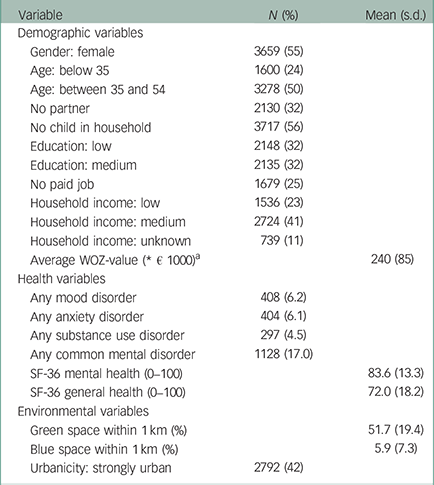
In the main analyses, only respondents with complete data for all of the reported analyses were included. Of the 6646 participants within NEMESIS-2, 25 participants were lost, mainly because of non-matching postcodes. In the additional analyses involving the average WOZ-value, the number of participants drops from 6621 to 6540. These 81 additionally lost cases are mostly participants living in neighbourhoods with few inhabitants, of whom because of privacy protection regulations no WOZ-values are available. The CIDI-based diagnoses resulted in dichotomous variables (yes/no). Their relationship with GSA was analysed by means of multilevel logistic regression, with neighbourhood as second level. Self-reported mental and general health had skewed distributions, but these were not extreme (absolute skewness values <1.6). Because of this and the large sample size, multilevel linear regression analysis was considered appropriate for these variables, again with neighbourhood as second level. The analyses were performed with MLwiN (version 2.32). Four models were run. The first one was with both GSA and BSA (since theoretically they may be considered substitutes for each other), the second one with urbanicity, and the third one with all three environmental characteristics. In additional analyses, the third model was run again, with the inclusion of the average WOZ-value. The fourth one also included interaction terms for urbanicity by GSA and by BSA (both centred beforehand). We also tested for interactions of GSA and BSA with level of education. All analyses included the seven demographic variables as categorical covariates (Table 1). We used unweighted data, because weights would have been based on the same socio-economic characteristics that later on will be used as predictors in the regression analyses. Winship & Radbill pointed out that in such cases, unweighted regression analysis is to be preferred.Reference Winship and Radbill 36
| Variable | N (%) | Mean (s.d.) |
|---|---|---|
| Demographic variables | ||
| Gender: female | 3659 (55) | |
| Age: below 35 | 1600 (24) | |
| Age: between 35 and 54 | 3278 (50) | |
| No partner | 2130 (32) | |
| No child in household | 3717 (56) | |
| Education: low | 2148 (32) | |
| Education: medium | 2135 (32) | |
| No paid job | 1679 (25) | |
| Household income: low | 1536 (23) | |
| Household income: medium | 2724 (41) | |
| Household income: unknown | 739 (11) | |
| Average WOZ-value (* € 1000) a | 240 (85) | |
| Health variables | ||
| Any mood disorder | 408 (6.2) | |
| Any anxiety disorder | 404 (6.1) | |
| Any substance use disorder | 297 (4.5) | |
| Any CMD | 1128 (17.0) | |
| SF-36 mental health (0–100) | 83.6 (13.3) | |
| SF-36 general health (0–100) | 72.0 (18.2) | |
| Environmental variables | ||
| Green space within 1 km (%) | 51.7 (19.4) | |
| Blue space within 1 km (%) | 5.9 (7.3) | |
| Urbanicity: strongly urban | 2792 (42) | |
NB: reference levels for categorical variables not included in table. SF-36 scales: higher scores indicate better health.
a WOZ-value = residential property value (n=6540).
Results
Description of sample population
Table 1 shows the scores of the sample on all variables involved, demographic and otherwise. Prevalence for any substance use disorder is lower than for the other two types of disorder. The average amount of available blue space is much lower than that of available green space. We also looked at the bivariate correlations for the environmental characteristics. No serious multicollinearity issues were detected. GSA correlates r=−0.68 with urbanicity and r=−0.33 with BSA. Urbanicity and BSA are positively correlated: r=0.13 (all P<0.001). Finally, WOZ-value correlates with GSA (r=0.28; P<0.001), but not with BSA.
Bivariate results for green and blue space availability
GSA is weakly but significantly correlated with all health variables (all P<0.001), with the exception of any mood disorder (P=0.06) (not in table). Correlations are in the expected direction and range from r=−0.04 for any CMD to r=0.09 for mental health. The bivariate results for BSA show significant correlations (P<0.05) with four of the health variables, but not with any substance use disorder and any anxiety disorder (not in table). The strongest relationship is with any mood disorder: r=−0.04 (P<0.01). Urbanicity is significantly correlated with all six health variables, most strongly with mental health: r=−0.09 (P<0.001) (not in table).
Regression analyses with GSA and BSA (without urbanicity)
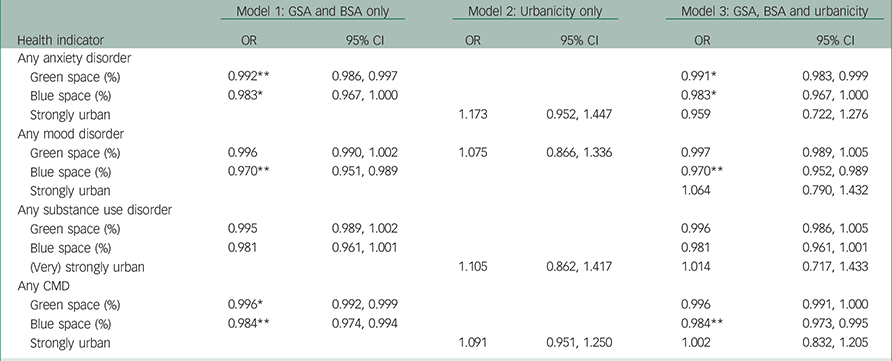
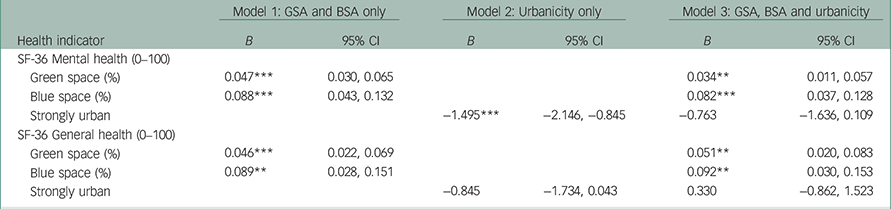
When correcting for the seven demographic variables, GSA is negatively associated with any anxiety disorder, but not with any mood disorder. BSA is negatively associated with both any anxiety disorder and any mood disorder (Table 2, model 1). Both GSA and BSA are positively associated with mental as well as general health (Table 3, model 1). Finally, both GSA and BSA are negatively associated with any CMD disorder, but not with any substance use disorder. Effects are stronger for BSA than for GSA: 1% point increase in blue space makes a larger difference than one percent point increase in green space.
| Health indicator | Model 1: GSA and BSA only | Model 2: Urbanicity only | Model 3: GSA, BSA and urbanicity | |||
|---|---|---|---|---|---|---|
| OR | 95% CI | OR | 95% CI | OR | 95% CI | |
| Any anxiety disorder | ||||||
| Green space (%) | 0.992** | 0.986, 0.997 | 0.991* | 0.983, 0.999 | ||
| Blue space (%) | 0.983* | 0.967, 1.000 | 0.983* | 0.967, 1.000 | ||
| Strongly urban | 1.173 | 0.952, 1.447 | 0.959 | 0.722, 1.276 | ||
| Any mood disorder | ||||||
| Green space (%) | 0.996 | 0.990, 1.002 | 1.075 | 0.866, 1.336 | 0.997 | 0.989, 1.005 |
| Blue space (%) | 0.970** | 0.951, 0.989 | 0.970** | 0.952, 0.989 | ||
| Strongly urban | 1.064 | 0.790, 1.432 | ||||
| Any substance use disorder | ||||||
| Green space (%) | 0.995 | 0.989, 1.002 | 0.996 | 0.986, 1.005 | ||
| Blue space (%) | 0.981 | 0.961, 1.001 | 0.981 | 0.961, 1.001 | ||
| (Very) strongly urban | 1.105 | 0.862, 1.417 | 1.014 | 0.717, 1.433 | ||
| Any CMD | ||||||
| Green space (%) | 0.996* | 0.992, 0.999 | 0.996 | 0.991, 1.000 | ||
| Blue space (%) | 0.984** | 0.974, 0.994 | 0.984** | 0.973, 0.995 | ||
| Strongly urban | 1.091 | 0.951, 1.250 | 1.002 | 0.832, 1.205 | ||
GSA, green space availability; BSA, blue space (water) availability.
NB: All models include gender, age, having a partner, having child within the household, educational level, having a paid job and household income as confounders.
*, ** significant at P<0.05, P<0.01, respectively.
| Health indicator | Model 1: GSA and BSA only | Model 2: Urbanicity only | Model 3: GSA, BSA and urbanicity | |||
|---|---|---|---|---|---|---|
| B | 95% CI | B | 95% CI | B | 95% CI | |
| SF-36 Mental health (0–100) | ||||||
| Green space (%) | 0.047*** | 0.030, 0.065 | 0.034** | 0.011, 0.057 | ||
| Blue space (%) | 0.088*** | 0.043, 0.132 | 0.082*** | 0.037, 0.128 | ||
| Strongly urban | −1.495*** | −2.146, −0.845 | −0.763 | −1.636, 0.109 | ||
| SF-36 General health (0–100) | ||||||
| Green space (%) | 0.046*** | 0.022, 0.069 | 0.051** | 0.020, 0.083 | ||
| Blue space (%) | 0.089** | 0.028, 0.151 | 0.092** | 0.030, 0.153 | ||
| Strongly urban | −0.845 | −1.734, 0.043 | 0.330 | −0.862, 1.523 | ||
GSA, green space availability; BSA, blue space (water) availability.
NB: All models include gender, age, having a partner, having child within the household, educational level, having a paid job and household income as confounders.
**, *** significant at P<0.01, P<0.001, respectively.
Regression analyses including urbanicity
If urbanicity is the only environmental characteristic in the analysis, then it contributes only in the case of mental health (Tables 2 and 3, model 2). As a third environmental characteristic, besides GSA and BSA, it lowers the predictive contribution of GSA, in one case to the extent that it is no longer significant (any CMD; Tables 2 and 3, model 3). It does not significantly lower the predictive contribution of BSA (which is less strongly correlated with urbanicity).
Only for multilevel linear regressions, it is possible to statistically compare models as a whole by means of a chi-square test on the difference in deviances. For both mental and general health, adding urbanicity to a model already including GSA and BSA does not lead to a significant improvement (Table 4). The other way round, adding GSA and BSA to a model already including urbanicity does lead to a significantly improved model. For all six health variables, the parameters for the interaction of urbanicity by GSA and that by BSA are not significant (not in table).

| Health indicator | Model improvement | Chi-square (df) | Significance |
|---|---|---|---|
| Mental health | Urbanicity added after GSA and BSA | 3.39 (1) | 0.07 |
| GSA and BSA added after urbanicity | 15.73 (2) | 0.001 | |
| General health | Urbanicity added after GSA and BSA | 0.19 (1) | 0.66 |
| GSA and BSA added after urbanicity | 13.85 (2) | 0.001 |
GSA, green space availability; BSA, blue space (water) availability.
NB: All models include gender, age, having a partner, having child within the household, educational level, having a paid job and household income as confounders.
This third model was rerun for all six health indicators with the neighbourhood's average WOZ-value as additional covariate. In case of the CIDI-based diagnoses, the WOZ-value itself contributes negatively for any mood disorder (OR=0.998; 95% CI 0.997–1.000) and positively for any substance use disorder (OR=1.002; 95% CI 1.000–1.003). However, parameter values for GSA and BSA that were significant before remain significant and their size remains the same as well. In case of the two self-reported health measures, WOZ-value contributes positively to both, with B=0.008 (95% CI 0.004–0.012) for mental health and B=0.010 (95% CI 0.005–0.015) for general health. Also here parameter values for GSA and BSA that were significant before remain significant, but values are attenuated, more so for GSA than for BSA.
Interactions of GSA and BSA with level of education
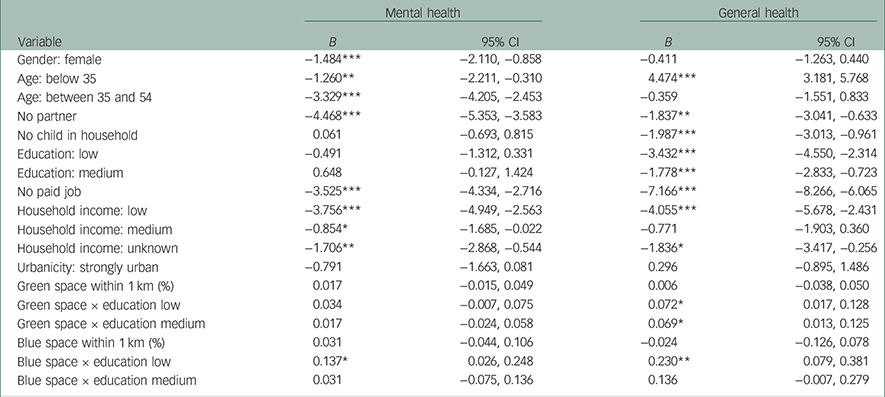
For none of the three specific mental disorders, was an interaction of level of education with either GSA or BSA observed, nor for any CMD. For mental health also, no interaction between the level of education and GSA was observed, but such an interaction did show up for BSA: the positive association with BSA was stronger for the lowest than for the highest educated. The overall parameter for BSA was no longer significant (Table 5). For general health, level of education interacted with both GSA and BSA. The positive association with GSA was stronger for the lowest and moderately educated, compared to the highest educated. For BSA, this was only the case for the lowest educated. Furthermore, the overall parameters for both GSA and BSA were no longer significant (Table 5).
| Variable | Mental health | General health | ||
|---|---|---|---|---|
| B | 95% CI | B | 95% CI | |
| Gender: female | −1.484*** | −2.110, −0.858 | −0.411 | −1.263, 0.440 |
| Age: below 35 | −1.260** | −2.211, −0.310 | 4.474*** | 3.181, 5.768 |
| Age: between 35 and 54 | −3.329*** | −4.205, −2.453 | −0.359 | −1.551, 0.833 |
| No partner | −4.468*** | −5.353, −3.583 | −1.837** | −3.041, −0.633 |
| No child in household | 0.061 | −0.693, 0.815 | −1.987*** | −3.013, −0.961 |
| Education: low | −0.491 | −1.312, 0.331 | −3.432*** | −4.550, −2.314 |
| Education: medium | 0.648 | −0.127, 1.424 | −1.778*** | −2.833, −0.723 |
| No paid job | −3.525*** | −4.334, −2.716 | −7.166*** | −8.266, −6.065 |
| Household income: low | −3.756*** | −4.949, −2.563 | −4.055*** | −5.678, −2.431 |
| Household income: medium | −0.854* | −1.685, −0.022 | −0.771 | −1.903, 0.360 |
| Household income: unknown | −1.706** | −2.868, −0.544 | −1.836* | −3.417, −0.256 |
| Urbanicity: strongly urban | −0.791 | −1.663, 0.081 | 0.296 | −0.895, 1.486 |
| Green space within 1 km (%) | 0.017 | −0.015, 0.049 | 0.006 | −0.038, 0.050 |
| Green space × education low | 0.034 | −0.007, 0.075 | 0.072* | 0.017, 0.128 |
| Green space × education medium | 0.017 | −0.024, 0.058 | 0.069* | 0.013, 0.125 |
| Blue space within 1 km (%) | 0.031 | −0.044, 0.106 | −0.024 | −0.126, 0.078 |
| Blue space × education low | 0.137* | 0.026, 0.248 | 0.230** | 0.079, 0.381 |
| Blue space × education medium | 0.031 | −0.075, 0.136 | 0.136 | −0.007, 0.279 |
NB: reference levels for categorical variables not included in table.
*, **, *** significant at P<0.05, P<0.01, P<0.001, respectively.
Discussion
Mood and anxiety disorders and green space
The main hypotheses were that availability of green space nearby is negatively associated with any anxiety disorder and with any mood disorder, in line with the results reported by Maas et al.Reference Maas, Verheij, De Vries, Spreeuwenberg, Schellevis and Groenewegen 4 Our analyses do indeed show a relationship between GSA and any anxiety disorder, with prevalence being lower when more green space is available. The effect size is quite similar to that observed by Maas et al: 10% points more green space is associated with an OR of (0.991^10 =) 0.91 versus 0.95. This effect may seem small, but the variation in GSA is considerable. A difference in GSA of about two standard deviations, 70% versus 30%, is associated with an odds that is a factor 0.73 lower. We did not find a similar relationship for any mood disorder. So, by using the same GSA indicator but a different measure for mental disorders, we partially replicated the results of this earlier study. When we examined the relationship between GSA and any substance use disorder, which, to our knowledge, has not been done previously, we did not find a relationship. However, GSA was related to any CMD, presumably so, because any anxiety disorder is one of the contributors to any CMD. It may also be noted that, although not significant, the GSA parameters for any mood and any substance use disorder are in the same, negative direction.
Given that depression is by far the most common disorder within the category of any mood disorder, why are our results for any mood disorder not similar to those reported by Maas et al Reference Maas, Verheij, De Vries, Spreeuwenberg, Schellevis and Groenewegen 4 for depression?Reference De Graaf, Ten Have, Van Gool and Van Dorsselaer 37 Three reasons come to mind. First, the studies differ in how the disorders were assessed: in the Maas et al study, the diagnosis was made by a GP during a consultation based on the ICPC classification, whereas in our study the diagnoses were based on a population survey that used the CIDI 3.0. The 12-month prevalence of depression in NEMESIS-2 is much higher than in the patient registration database used by Maas et al (5.2% v. 2.6%).Reference Maas, Verheij, De Vries, Spreeuwenberg, Schellevis and Groenewegen 4 Obviously, the prevalence of the broader category of any mood disorder is even higher in NEMESIS-2 (6.1%).Reference De Graaf, Ten Have, Van Gool and Van Dorsselaer 37 According to Verhaak et al, it is common for people with a mental disorder not to seek medical help. Those that do are often not recognised as having such a disorder by their general practitioner, especially if their complaints or symptoms are relatively mild.Reference Verhaak, Schellevis, Nuijen and Volkers 38 This implies that in the database Maas et al used, people diagnosed with depression had rather severe symptoms.Reference Maas, Verheij, De Vries, Spreeuwenberg, Schellevis and Groenewegen 4 Interestingly, if this is the reason for the different outcomes, then it suggests that green space helps to prevent mood disorders from becoming more severe.
The second possible reason is that the sample in the Maas et al study was much larger than the one in our study (N=345 143 v. N=6621).Reference Maas, Verheij, De Vries, Spreeuwenberg, Schellevis and Groenewegen 4 Even if the magnitude of the association is the same, the power of our study may have been too low to detect the contribution of GSA. Finally, the third reason is that in the NEMESIS-2 sample, age limits are applied: people below the age of 18 and those above the age of 64 are not included. These limits exclude about a third of the Dutch population. Maas et al was based on patient records and had no such age limits. Moreover, they concluded that the relationship between GSA and depression is especially strong for children, a category that was not included in our study.Reference Maas, Verheij, De Vries, Spreeuwenberg, Schellevis and Groenewegen 4
Self-reported health and green space
We did find positive linear relationships between GSA and self-reported mental health and general health. Such relationships have been reported previously for both these self-reported measures, sometimes using the same GSA indicator, sometimes the same mental health indicator, but never for both the same GSA and the same health indicator.Reference De Vries, Verheij, Groenewegen and Spreeuwenberg 1 , Reference Maas, Verheij, Groenewegen, De Vries and Spreeuwenberg 2 , Reference De Vries, Van Dillen, Groenewegen and Spreeuwenberg 18 , Reference Dadvand, Bartoll, Basagaña, Dalmau-Bueno, Martinez and Ambros 20 , Reference Guite, Clark and Ackrill 39 The findings for self-reported health indicators appear to be more robust than those for specific CMDs. Despite differences in either the precise GSA indicator or the health indicator (or both), similar positive relationships are observed. And like in previous studies, relationships remained significant after urbanicity was controlled for, although we did so at the neighbourhood level, in contrast to the municipal level in the other studies.Reference De Vries, Verheij, Groenewegen and Spreeuwenberg 1 , Reference Maas, Verheij, Groenewegen, De Vries and Spreeuwenberg 2 , Reference Maas, Verheij, De Vries, Spreeuwenberg, Schellevis and Groenewegen 4 Moreover, amounts of green and blue space appear to more important than the level of urbanicity: adding the first to a model already including urbanicity improved the model as a whole, whereas in the reversed order this was not the case. Introducing the average residential property or WOZ-value as a neighbourhood level indicator of socio-economic status slightly attenuated the results for green space, but associations remained significant. Furthermore, we observed that GSA was more strongly positively associated with general health among the less educated, a pattern that also has been observed previously.Reference De Vries, Verheij, Groenewegen and Spreeuwenberg 1 , Reference Maas, Verheij, Groenewegen, De Vries and Spreeuwenberg 2 , Reference Mitchell and Popham 3 , Reference Maas, Verheij, De Vries, Spreeuwenberg, Schellevis and Groenewegen 4
Health variables and blue space
In the present study, BSA was related to all health variables, with the exception of any substance use. Moreover, its associations with these health variables were stronger than those of GSA. Previous studies on blue space in the residential environment and (mental) health did not show consistent results.Reference Gascon, Triguero-Mas, Martínez, Dadvand, Forns and Plasència 15 For example, although De Vries et al Reference De Vries, Verheij, Groenewegen and Spreeuwenberg 1 measured BSA in a similar way, they did not find an association with mental health. It is worthwhile noting that in both these studies BSA and GSA are negatively related. We think that it is important to introduce them simultaneously in statistical analyses. To the extent that green space and blue space are substitutes for each other, studying them in isolation, without correcting for the other, may result in weaker and/or insignificant associations, to the extent that they are negatively interrelated.
Strengths, limitations and future research
Strengths of this study are that the data set is based on a population survey and that diagnoses are based on a validated clinical instrument. This method is less prone to selection biases that may play a role in registry data such as those used by Maas et al (e.g. self-selection, selective reporting of mental health complaints, and diagnostic tendencies of physicians). A limitation of our study is its relatively small number of participants for this type of analysis. This precluded separate analyses for each level of urbanicity. A more general limitation is that our study is cross-sectional: associations can be established, but no firm conclusions can be drawn about causality. For more definite answers on causality, it is necessary to conduct long-term prospective studies or population-level experimental studies. An empirically supported theoretically conceived pathway between GSA and mental health could also make a causal interpretation more plausible. It would be helpful to have data not only on the availability of green space but also on people's actual exposure to contact with and/or use of green space. Actual exposure, in whatever form, is assumed to mediate the association between GSA and mental health. Ideally, such data would allow distinctions to be made between different types of green space: the individual's garden, natural elements visible from the individual's living room, streetscape greenery, urban green areas and the countryside. The same holds for data on other possible mediators within the proposed pathway, for example, stress levels – physiological as well as psychological.
We wish to point out that besides the availability of green space in terms of the total area within a certain distance from home, the quality of the green space is also important. Studies such as ours that use objective GSA indicators tend to focus solely on the amount of green space within a certain distance or the distance to the nearest green area. The quality of the green space is more often included in studies that use residents’ perceptions of green space as an environmental characteristic (e.g. Leslie & Cerin, Guite et al).Reference Leslie and Cerin 27 , Reference Guite, Clark and Ackrill 39 Two studies have measured both the quantity and quality of green space more objectively.Reference Van Dillen, De Vries, Groenewegen and Spreeuwenberg 7 , Reference Francis, Wood, Knuiman and Giles-Corti 40 Both suggest that the quality of the green space is related to health more strongly than the quantity of green space, although in the Van Dillen et al Reference Van Dillen, De Vries, Groenewegen and Spreeuwenberg 7 study this was true for streetscape greenery only. As was the case with other key concepts, the definition and measurement of quality also differed widely between the studies. A promising avenue for future research would be to focus on the qualities of a green space or other natural element that make it especially well-suited to reduce stress. The present results also strongly suggest that with regard to mental health, blue space should not be overlooked and deserves more systematic attention in future research. Finally, although more research is needed and it will be difficult to increase amounts of nearby green or blue space in the short run, making more use of existing such spaces to combat CMDs might be a promising strategy with a low risk of negative side-effects.Reference Berman, Kross, Krpan, Askren, Burson and Deldin 21
Funding
NEMESIS-2 is conducted by the Netherlands Institute of Mental Health and Addiction (Trimbos Institute) in Utrecht, which receives financial support from the Ministry of Health, Welfare and Sport, with supplementary support from the Netherlands Organisation for Health Research and Development (ZonMw) and the Genetic Risk and Outcome of Psychosis (GROUP) investigators. This study was financed by the Ministry of Economic Affairs of the Netherlands, project BO-11-013-007).


 Open access


eLetters
No eLetters have been published for this article.