


Vitamin D is a fat-soluble substance that after activation becomes a hormone with several effects, both on gene transcription and non-genomic effects(Reference Holick1, Reference Holick, Shils, Shike, Ross, Caballero and Cousins2). The classical outcomes of severe vitamin D deficiency are rickets and osteomalacia(Reference Heaney3). Low vitamin D status has also been related to low bone density and osteoporotic fractures(Reference Lips4). During the last few decades new actions of vitamin D have been described, and vitamin D deficiency has been proposed as a contributing factor in the development of a variety of other conditions such as tuberculosis, osteoarthritis, multiple sclerosis, diabetes mellitus and some types of cancer(Reference Chan5–Reference Holick9). Vitamin D is synthesised in the skin upon exposure to sunlight (during the summer half of the year in temperate climates) and may also be obtained from a limited number of dietary sources such as fatty fish (mackerel, salmon, trout and herring) and fortified food. Margarine and butter in Norway are fortified with 8 μg vitamin D/100 g and semi-skimmed milk is fortified with 0·4 μg vitamin D/100 g. 25-Hydroxyvitamin D is the main circulating metabolite of vitamin D, and its concentration in serum (s-25(OH)D) reflects the vitamin D stores in humans(Reference Holick9).
In recent years, many immigrants from developing countries have taken up residence in Europe, including Norway. About 6 % of the total Norwegian population of 4·6 million currently consist of non-Western immigrants, and a large proportion of the non-Western immigrant population live in the capital city (Oslo) and surrounding areas. In 2004, 26 286 immigrants with Pakistani background and 12 971 and 15 586 with Turkish and Somali background, respectively, were living in Norway according to Statistics Norway(10), and the proportion among newborns is higher because these groups tend to have more children than do ethnic Norwegians. When individuals migrate from developing countries with prevalent vitamin D deficiency(Reference Atiq, Suria, Nizami and Ahmed11, Reference Andiran, Yordam and Ozon12) to countries at northern latitude such as Norway where UVB radiation is diminished for many months of the year, their vitamin D status will probably worsen unless vitamin D intake is improved. Recent studies have reported a high prevalence of serious vitamin D deficiency (s-25(OH)D below 12·5 nmol/l) among immigrant adults in Norway(Reference Holvik, Meyer, Haug and Brunvand13–Reference Henriksen, Brunvand, Stoltenberg, Trygg, Haug and Pedersen15). In one study, a quarter of Pakistani immigrant women aged 30 years had severe vitamin D deficiency defined as secondary hyperparathyroidism(Reference Meyer, Falch, Sogaard and Haug14). The infants of these mothers are at risk of vitamin D deficiency(Reference Ziegler, Hollis, Nelson and Jeter16). Recent data on rickets collected from paediatric hospitals around Norway shows that nutritional rickets has re-emerged in Norway, particularly in children of Pakistani and Turkish descent(17), but data on vitamin D status among infants with immigrant background in Norway are to our knowledge currently not available.
The aim of the present study was to describe the distribution of s-25(OH)D among infants aged 6 weeks and their mothers with Pakistani, Turkish and Somali background in Norway, and to investigate the factors associated with vitamin D status among these groups, including the relationship between s-25(OH)D in mother and child.
Material and methods
Study design and participants
Participants were recruited at eight child health clinics in Oslo and one in Drammen, a city nearby Oslo, between March 2004 and February 2006. These were selected because they had the highest proportion of immigrants from non-Western countries. The public health nurses at the child health clinics were requested to ask all mothers with Pakistani, Turkish or Somali background who came for the routine 6-week check-up for their infants if they were willing to participate in the study, involving a blood sample from the mother and child and collection of questionnaire information. Infants were included in the study unless they had a serious disease or condition such as a congenital malformation, which precluded participation in the study, as judged by the public health nurses. Mothers were informed that the study involved an intervention with free vitamin D drops to the infants and information to the mother aimed at improving the vitamin D status, or usual care, with randomisation at the level of child health clinic. The present paper reports the baseline data for the study, while the results of the intervention are presented elsewhere(Reference Madar, Klepp and Meyer18). Those who were willing to participate signed a consent letter and were included in the study. Of the twenty-five child health clinics in Oslo we selected twelve of the child health clinics, where over 85 % of the individuals with immigrant origins live, and eight clinics agreed to participant in recruitment of participants. We have also included one child health clinic in Drammen, just outside of Oslo where more than 80 % of the attending mothers are non-Western immigrants. A total of 119 mothers and their infants affiliated to these eight child health clinics in Oslo and twenty-one mothers in Drammen were asked to participate in the study and a total of eighty-six mothers (sixty-five from Oslo) gave their consent of participation.
Ethical issues
The study was recommended by the Regional Committees for Medical Research Ethics (reference number S-03 196) and approved by the Norwegian Board of Health and Data Inspectorate.
Blood sampling
Casual blood samples were collected by public health nurses in the period March 2004 to February 2006. Blood samples were drawn either capillary or venous (optional) from the mothers and capillary from the infants. The amount of capillary blood taken was about 400–600 μl. The public health nurses were trained in blood sampling from infants by the project coordinator, including the use of a standard instruction manual. The blood samples were centrifuged (10 min; 2000 g at 10 °C) within 30 min after blood collection and were immediately frozen at − 70°C until analysed. s-25(OH)D2 and D3 were determined by HPLC-UV-MS (HPLC atmospheric pressure chemical ionisation MS) at a commercial laboratory in Oslo(19). s-25(OH)D was expressed as the sum of D2 and D3. A calibration curve was made from analysis of albumin solution enriched with known vitamin D concentrations. Recovery was>95 %, the method is linear from 5–400 nmol/l at least, and the limit of detection was 1–4 nmol/l. The inter-assay CV for vitamin D3 was 7·6 % at a concentration of 47·8 nmol/l and 6·92 % at a concentration of 83·0 nmol/l. The intra-assay CV was 7·2 % at a concentration of 47·8 nmol/l and 6·45 % at a concentration of 83·0 nmol/l. The laboratory is part of the Vitamin D Quality Assessment Scheme.
Serum concentration of intact parathyroid hormone (s-iPTH) was analysed at the Hormone Laboratory, Aker University Hospital, using a non-competitive immunoluminometric assay (Immulite 2500 Diagnostic Products Corporation, Los Angeles, CA, USA). The intra- and inter-assay CV for iPTH were 4 and 9 %, respectively. iPTH was only analysed in venous blood samples as there was not sufficient serum from capillary blood samples as this analysis requires 0·5 ml serum. A common universal normal range for s-25(OH)D does not exist; however, we have chosen to use the commonly used cut-off points where vitamin D deficiency is defined as s-25(OH)D below 25 nmol/l and severe vitamin D deficiency as s-25(OH)D less than 12·5 nmol/l(Reference Greer20, Reference Lips21). Hyperparathyroidism was defined as s-iPTH concentration above 5·7 pmol/l, which is the reference limit for the assay in the Hormone Laboratory, Aker University Hospital.
Collection of additional information
Background information about the infants and their mothers including anthropometry, infant feeding practices and the use of cod liver oil (5 ml cod liver oil contains 10 μg vitamin D) and other vitamin/mineral supplements (one multivitamin tablet typically contains 5 μg vitamin D), years of education and number of years living in Norway, sun exposure and use of food containing vitamin D was collected by the public health nurses using a structured questionnaire. Food-frequency questions included have previously been validated and used in the Norwegian Infant Feeding Survey(Reference Lande, Andersen, Baerug, Trygg, Lund-Larsen and Veierod22). The questionnaire was also piloted among Turkish and Pakistani mothers. Generally, the public health nurses knew the mothers and were confident to undertake the interview without using interpreters.
Statistical methods
Statistical analysis of the data was performed using the SPSS statistical software (version 11.0; SPSS Inc., Chicago, IL, USA). The relationships between s-25(OH)D and potentially associated variables were tested primarily using linear regression models, both for continuous and categorical explanatory variables. Assumptions of the regression analysis (linearity and similar variance over different levels of the dependent variable) were checked by inspecting plots of residuals against predicted values. Influential points in the regression models were assessed by plotting Δ-β (for each β-estimate) v. observation number to look for data points with strong influence(Reference Kleinbaum, Kupper, Muller and Nizam23). Following simple linear regression analyses, we fitted multiple linear regression models for each variable while simultaneously including the explanatory variables that were significant in the simple regression models. Categorisations and measurement scales for the explanatory variables are specified in the Results section (Tables 2, 4). Wherever we found evidence of violation of the assumptions of the linear regression analysis, we used non-parametric tests (Kruskal–Wallis and Mann–Whitney tests and Spearman correlation) as specified together with the results. P values below 0·05 were considered statistically significant.
(Numbers and percentages or mean values and standard deviations)

s-25(OH)D, serum hydroxyvitamin D; iPTH, intact parathyroid hormone.
* P = 0·49. Because of unequal variances we used a non-parametric test (Kruskal–Wallis; P = 0·28).
† Cover head, hands and legs with clothes.
‡ Pakistani (n 25), Turkish (n 15), Somali (n 7).
(B estimates and 95 % confidence intervals)

* The Δ-β plots to assess influential points showed one subject with high influence in the regression and this subject was excluded from the analysis. With this subject included, the unadjusted B estimates for vitamin D supplements and education were 7·7 (95 % CI 0·13, 15·3) and 7·3 (95 % CI 0·7, 13·9), respectively, and the adjusted B estimates for vitamin D supplements and education were 5·8 (95 % CI − 1·9, 13·6) and 5·8 (95 % CI − 1·0, 12·7), respectively.
† Adjusted for variables that are significant in simple linear regression (vitamin D supplements and education).
‡ Use of vitamin D supplements (coded as 0 = no, 1 = yes).
§ Education level (coded as 1, ≤ 10 years; 2,>10 years).
∥ Time spent outside (coded as 1, ≤ 0·5 h; 2, above 0·5 h).
¶ Cover head, hands and legs (coded as 0 = no, 1 = yes).
** Fatty fish intake (coded as 1, < two times/week; 2, ≥ two times/week).
†† Use of butter or margarine for spreads or cooking daily (0 = no, 1 = yes).
‡‡ 1 = April–September; 2 = October–March.
(Mean values and standard deviations)
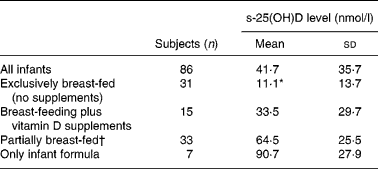
* Mean value was significantly different from that of the breast-fed infants with vitamin D supplements (P < 0·0001; linear regression analysis).
† Breast milk plus infant formula.
(B estimates and 95 % confidence intervals)

s-iPTH, serum intact parathyroid hormone.
* Linear regression analysis.
† Hyperparathyroidism was defined as s-iPTH concentration above 5·7 pmol/l.
‡ Education level (coded as 1, ≤ 10 years; 2,>10 years).
§ There were evidence for unequal variances between the groups, so the assumption of linear regression was violated. The P value is based on the non-parametric Mann–Whitney test. The s-25(OH)D concentration of exclusively breast-fed infants with mothers of lower education was 16·5 (sd 10·4) nmol/l and for those whose mothers had higher education it was 6·1 (sd 3·6) nmol/l.
∥ Use of vitamin D supplements daily (coded as 0 = no, 1 = yes).
Results
A total of eighty-six mothers and their infants were included, but serum was not available from six of these mothers because they declined to give the blood sample. Characteristics of the study population are shown in Table 1. The mothers had been living in Norway for an average of more than 10 years. One in three mothers reported eating fatty fish at least twice per week whereas one in four stated that they took vitamin D supplements daily (mean vitamin D intake from supplements was 7·6 (sd 3·8) μg/d). Most of the mothers reported that they still used traditional dress while outdoors and about half of all mothers covered their whole body including legs, hands and face while outside their houses.
Mothers
The mean concentration of s-25(OH)D was 25·8 (sd15·2) nmol/l for mothers (Table 1); 57 % had s-25(OH)D < 25 nmol/l, while 15 % had s-25(OH)D < 12·5 nmol/l. Seven mothers (9 %) had s-25(OH)D concentrations over 50 nmol/l. The mean concentrations of s-25(OH)D were 26·1 (sd16·4) nmol/l for mothers sampled in April–September (n 40) and 25·7 (sd14·3) nmol/l for mothers sampled in October–March (n 46) (P = 0·91). There was no significant ethnic variation in maternal s-25(OH)D levels.
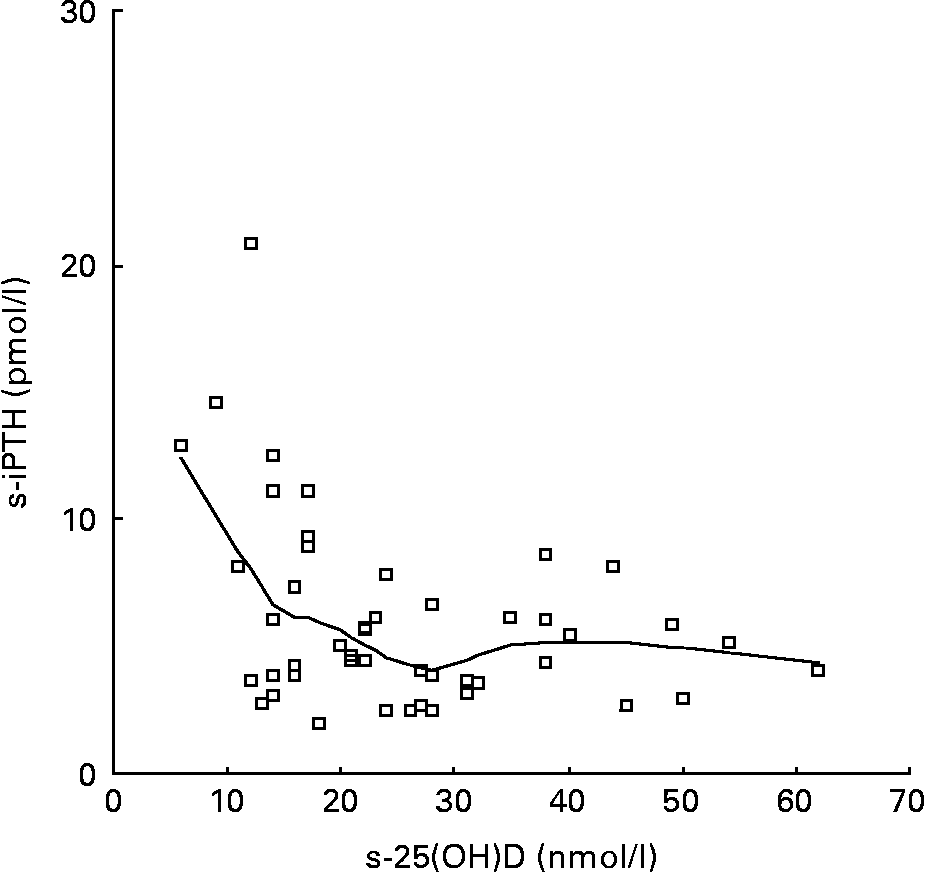
s-iPTH concentrations were available for forty-seven of the mothers (those with venous blood samples). The mean concentration of s-iPTH was 6·1 (sd3·7) pmol/l; 45 % of the mothers had elevated s-iPTH (>5·7 pmol/l). There was a significant negative correlation between s-25(OH)D and s-iPTH for the mothers (Spearman correlation, r − 0·30, P = 0·04; Fig. 1). Although we had limited power to study the precise shape of this association, a clear upturn in s-iPTH was suggested to start at s-25(OH)D levels of about 20–30 nmol/l. There was no seasonal variation in s-iPTH levels.
Association (Spearman correlation; r − 0·30, P = 0·04) between serum 25-hydroxyvitamin D (s-25(OH)D) and serum intact parathyroid hormone (s-iPTH) concentrations in mothers of immigrant origin residing in Norway (n 47). The line was fitted using LOWESS smoother in SPSS version 11.0 (SPSS Inc., Chicago, IL, USA).
Mothers who used vitamin D-containing supplements daily and those with longer education had significantly higher s-25(OH)D than other mothers, while other variables such as intake of fatty fish, use of fortified foods, sun exposure, clothing habits and season were not associated with s-25(OH)D (Table 2). Among the supplemented group, 76 % of the mothers with more than 10 years of education and 24 % of those with lower education level were taking vitamin D supplements daily.
Infants
The mean concentrations of s-25(OH)D were 43·3 (sd 30·5) and 40·9 (sd 39·9) nmol/l for infants sampled in April–September and October–March, respectively, and did not significantly vary with the season of the year the blood sample was collected (P = 0·70).
The mean concentration of s-25(OH)D was 41·7 nmol/l for all infants (Table 1). Half of the Turkish and one-third of the Pakistani infants had s-25(OH)D < 12·5 nmol/l whereas all of the Somali infants had levels above 25 nmol/l. Around 60 % of all infants had s-25(OH)D concentrations below 50 nmol/l. The s-25(OH)D concentrations were not significantly different between the three ethnic groups.
s-25(OH)D was significantly associated with infant feeding practices (Table 3). Of all the infants, about 55 % were fully breast-fed; among these about 67 % were exclusively breast-fed and the remaining 33 % were reported to take vitamin D supplements daily (as cod liver oil). The s-25(OH)D concentrations were higher among fully breast-fed infants with vitamin D supplements compared with the exclusively breast-fed infants (P = 0·001).
Among the thirty-one exclusively breast-fed infants, the mean s-25(OH)D was 11·1 nmol/l and 71 % (n 22) of them had s-25(OH)D < 12·5 nmol/l. Infants receiving infant formula had the highest s-25(OH)D and about 85 % of those infants who received infant formula (100 ml infant formula contains 1 μg vitamin D3) started under the age of 4 weeks.
There was no significant relationship between mother's and infant's s-25(OH)D (Table 4). This was also the case when restricting the analysis to exclusively breast-fed infants. Neither was s-25(OH)D concentrations of the infants related to other potentially relevant maternal factors.
Discussion
In the present study we found that immigrant mothers of Pakistani, Turkish and Somali origin and their infants born in Norway had poor vitamin D status, particularly the exclusively breast-fed infants, which is consistent with other studies(Reference Holvik, Meyer, Haug and Brunvand13–Reference Henriksen, Brunvand, Stoltenberg, Trygg, Haug and Pedersen15, Reference Andersen, Molgaard, Skovgaard, Brot, Cashman and Jakobsen24–Reference Erkal, Wilde, Bilgin, Akinci, Demir and Bodeker26). Elevated s-iPTH was also common among mothers, and there was an inverse association between s-25(OH)D and s-iPTH, which is also in line with a similar study among Pakistani immigrants in Denmark(Reference Andersen, Molgaard, Skovgaard, Brot, Cashman and Jakobsen24).
Factors associated with maternal vitamin D status
Daily use of vitamin D supplements was positively associated with vitamin D status of the mothers. In Norway only margarine, butter and one type of milk (extra semi-skimmed milk) are fortified with vitamin D and although 74 % of the mothers reported a daily use of fortified butter and margarine for cooking and bread spreads we were not able to detect any association between intake of these foods and vitamin D status. Fatty fish is an important source of vitamin D in the Norwegian diet. However, the one-third of the mothers reported eating such fish at least twice per week did not have higher levels of s-25(OH)D than the rest. This is in contrast to the positive effect of fish consumption on s-25(OH)D which has previously been observed in immigrants in Norway and the Netherlands(Reference Holvik, Meyer, Haug and Brunvand13, Reference Van der Meer, Boeke, Lips, Grootjans-Geerts, Wuister and Deville27). The lack of associations between the factors such as consumption of fatty fish and fortified food and vitamin D status shows that even if we used carefully selected questions, these questions did not provide reliable information on vitamin intake in these immigrant mothers as they were not related to s-25(OH)D levels which is a valid indicator of vitamin D status.
We found that the education level of the mothers influenced s-25(OH)D, partly because the mothers with higher education reported taking vitamin D supplements to a higher degree than the least educated mothers. Educational level may be a marker of the acquirement of a Western lifestyle. This trend has also been seen in another study among immigrants in Norway(Reference Holvik, Meyer, Haug and Brunvand13). Other factors such as BMI, clothes wearing habits and time spent outdoors during summer did not influence the s-25(OH)D concentrations of the mothers. Although the majority of the women reported that they spent time outdoors during summer, seasonal variation in s-25(OH)D was not observed. This may be because a substantial proportion of the mothers maintained their wearing habits (hijab), which means that they covered their head, arms and legs, limiting direct sun exposure to the skin. Similar results were observed in veiled women in the Middle East and Turkey(Reference Dawodu, Agarwal, Hossain, Kochiyil and Zayed28–Reference Mishal30).
Infant vitamin D status
In Norway exclusive breast-feeding for at least 6 months and vitamin D supplementation from the age of 4 weeks is recommended, but the present results indicate that these official recommendations are not followed by all mothers. While over 87 % of ethnic Norwegian infants are exclusively breast-fed at the age of 6–8 weeks(Reference Lande, Andersen, Baerug, Trygg, Lund-Larsen and Veierod22), only 36 % of the infants of Pakistani, Turkish and Somali immigrant mothers in the present study were exclusively breast-fed at the age of 6 weeks. It is well documented that breast-fed infants without vitamin D supplements or sun exposure are at great risk for vitamin D deficiency, because human milk is a poor source of vitamin D(Reference Hollis, Roos, Draper and Lambert31). During the first weeks of life, the vitamin D status of infants is dependent on their vitamin D stores at birth unless they are given vitamin D supplements or exposed to sunlight. Some studies have found that exclusively breast-fed infants' vitamin D status correlate with those of their mothers within the first weeks of life(Reference Atiq, Suria, Nizami and Ahmed11, Reference Andiran, Yordam and Ozon12). We found that at about 6 weeks after birth there was no relationship between the mothers' and infants' vitamin D status, suggesting that the relationship between mothers' and infants' vitamin D status vanishes during the first 6–7 weeks after birth. The number of exclusively breast-fed infants was small which might limit the study's power to detect any correlation between infant and maternal vitamin D status. However, a longitudinal measurement of s-25(OH)D of exclusively breast-fed infants born to mothers with normal vitamin D status found that a depletion of vitamin D stores of infants occurs within 8 weeks after delivery(Reference Hoogenboezem, Degenhart, Keizerschrama, Bouillon, Grose and Hackeng32). There was a 36 % of the infants who received vitamin D supplements, and these infants had significantly higher s-25(OH)D than exclusively breast-fed infants. We have recently also shown that providing vitamin D drops to immigrant infants has a significantly positive effect on their vitamin D status(Reference Madar, Klepp and Meyer18).
Limitations
The recruitment of study subjects was undertaken by local public health nurses, who did this in addition to their daily routine assignments. It is possible that the public health nurses did not register all the mothers who were eligible for the study but declined to participate, and most probably some were not asked to participate, which both might lead to selection bias. However, comparison of the education levels of included mothers to data from Statistics Norway(10) suggests that the mothers included in the present study are representative of mothers with Pakistani, Turkish and Somali background living in Norway. Five of the six mothers who rejected to take blood tests were Pakistanis and had the same characteristics as the study population. Another limitation could be the questionnaire. The public health nurses filled in the questionnaires while asking questions to mothers, and poor Norwegian knowledge of mothers and limited time of the public health nurses might have influenced the communications. For instance, those with limited Norwegian knowledge may have not understood all the questions, especially questions on sun exposure, duration of sun exposure, fatty fish and consumption of fortified food. The other issue of concern is the relationship between public health nurses and the mothers which might have influenced the responses of the mothers. s-iPTH values could not be determined in all mothers because of insufficient serum volume in the thirty-three mothers with capillary blood samples, but we found no difference in s-25(OH)D concentrations between the mothers whose s-iPTH was measured and other mothers (data not shown).
Conclusions
We report that, regardless of season, exclusively breast-fed infants who did not receive vitamin D supplements had severe vitamin D deficiency. On average the mothers also had very low vitamin D status. In addition, there was no relationship between vitamin D status in the infants and their mothers. We found that the most important factor for vitamin D status in the mothers was vitamin D supplements. The health impact of these low s-25(OH)D concentrations on different ethnic groups should be further investigated.
Acknowledgements
We thank all mothers, public health nurses and members of the study advisory group Leif Brunvand, Aud Haugen, Else-Karin Grøholt and Kirsten Berge, our child health clinics coordinator, for their help with the study. H. E. M. and A. A. M. planned the study. A. A. M. carried out the data collection, performed data analysis and prepared the manuscript. H. E. M. and L. C. S. commented on the draft, contributed to the interpretation of the findings and approved the final version of the manuscript. The study was funded by the Directorate for Health and Social Affairs. The authors declare no conflict of interest with regard to this paper.



