


This paper contains supplementary material that can be found online at http://journals.cambridge.org
Introduction
Humans have affected island ecosystems through habitat modification, hunting and the introduction of domesticated and feral animal species (Kirch, Reference Kirch1997; Didham et al., Reference Didham, Ewers and Gemmell2005a,Reference Didham, Tylianakis, Hutchinson and Ewersb). Rabbits, goats, pigs and cattle have commonly been introduced to islands but wild mammals have also been deliberately released in some cases (Glenn & Cords, Reference Glenn and Cords2002). Human-introduced animals such as rats, mice, cats and dogs have caused the extinction of many endemic species on oceanic islands (Duncan et al., Reference Duncan, Blackburn and Worthy2002; Steadman, Reference Steadman2006).
Oceanic islands in the Gulf of Guinea, off the west coast of Africa, have been subject to centuries of habitat alteration and the effects of introduced species (Hodges & Newitt, Reference Hodges and Newitt1988). Collar and Stuart (Reference Collar and Stuart1988) ranked the forests in south-west and central São Tomé second in a list of 75 of the most important forests for the conservation of threatened birds in Africa, based on the number of restricted-range bird species that occur there (Bibby et al., Reference Bibby, Collar, Crosby, Heath, Imbonden and Johnson1992; Jones, Reference Jones1994; Stattersfield et al., Reference Stattersfield, Crosby, Long and Wege1998; Buchanan et al., Reference Buchanan, Donald and Butchart2011). The island has 17 endemic bird species, including two endemic monospecific genera, and endemic subspecies; most are forest-dwellers (BirdLife International, 2012).
Habitat modification is considered the most significant threat to the island's endemic birds but most taxa are also potentially threatened by non-native mammal species and by uncontrolled hunting. Bird hunting has been mentioned in the literature since the first naturalists’ expeditions took place (Snow, Reference Snow1950; de Naurois, Reference de Naurois1983; Jones & Tye, Reference Jones and Tye1988; Atkinson et al., Reference Atkinson, Peet and Alexander1991; Peet & Atkinson, Reference Peet and Atkinson1994) but its effect is still poorly understood (Dallimer et al., Reference Dallimer, King and Atkinson2009; de Lima et al., Reference de Lima, Dallimer, Atkinson and Barlow2013). The species most at risk from any increase in hunting pressure are the endemic pigeons, such as the maroon pigeon Columba thomensis, the São Tomé bronze-naped pigeon Columba malherbii and the São Tomé green pigeon Treron sanctithomae, and the Critically Endangered dwarf olive ibis Bostrychia bocagei (IUCN, 2012).
Mammals such as African civets Civettictis civetta, mona monkeys Cercopithecus mona and feral pigs Sus scrofa were introduced to São Tomé in the 17th century and are common throughout the island's forested habitats (Dutton, Reference Dutton1994; Glenn & Bensen, Reference Glenn and Bensen1996; Oliveira, Reference Oliveira2002). Feral pigs are known to modify habitats by reducing the abundance of native plant species, increasing the establishment of invasive non-indigenous plants and indirectly affecting bird species in native forests (Nogueira-Filho et al., Reference Nogueira-filho, Nogueira and Fragoso2009). Pigs also cause watershed degradation by increasing soil erosion through foraging and travelling. Monkeys introduced to islands may not affect habitats directly but can become significant predators of endemic birds, particularly of their nests (Nowak, Reference Nowak1991; Furuichi, Reference Furuichi2006). They also compete with frugivorous birds for food resources (Walker, Reference Walker2007). Pigs and monkeys are recognized worldwide as destructive invasive species (Gurevitch & Padilla, Reference Gurevitch and Padilla2004; Cruz et al., Reference Cruz, Donlan, Campbell and Carrion2005; Nogueira et al., Reference Nogueira, Nogueira-Filho, Bassford, Silvius and Fragoso2007) and are known as a potential threat to endemic birds in São Tomé (Dutton, Reference Dutton1994).
Introduced mammals are among the most hunted quarry on São Tomé. Hunting of these exotic species can, in some circumstances, deflect attention from native species (Desbiez et al., Reference Desbiez, Keuroghlian, Piovezan and Bodmer2011). However, the hunting of endemic birds, either opportunistically or for commercial purposes, can threaten their survival because tropical island forest birds generally have reduced fecundity, longer developmental periods and increased investments in young than their mainland counterparts (Covas, Reference Covas2012). Such reproductive traits are likely to render island birds more sensitive to increased adult mortality as a result of hunting, as shown for Holocene bird extinctions in New Zealand (Duncan et al., Reference Duncan, Blackburn and Worthy2002).
Hunting of wildlife for food or financial gain is often an essential activity that supports the livelihoods of the poor in many parts of the world (Bowen-Jones et al., Reference Bowen-Jones, Brown and Robinson2003; Bennett et al., Reference Bennett, Blencowe, Brandon, Brown, Burn and Cowlishaw2007). However, overexploitation of wild species is a main driver of defaunation of tropical forest ecosystems. Thus, understanding what motivates people to hunt wild animals is a critical first step to identifying reasons for unsustainable practices, threats and opportunities in conservation, and intervention options (Pailler et al., Reference Pailler, Wagner, McPeak and Floyd2009). We investigated (1) the relative importance of native and introduced prey species to hunters on the island, (2) the motivation, preference and practice of hunters dedicated to hunting endemic birds and introduced mammals, and (3) hunters’ perceptions of population trends of hunted prey and barriers to sustainability. Here we juxtapose two hunting systems that have contrasting effects on native wildlife. Based on our results we recommend measures to encourage hunting of introduced mammals and reduce hunting pressure on endemic birds.
Study area
São Tomé (857 km2) is the larger of the two oceanic islands that constitute the Democratic Republic of São Tomé and Príncipe (Fig. 1) and is located c. 200 km from the African coast. Annual rainfall ranges from < 1,000 mm in the north-east to > 7,000 mm in the south-west. Mean annual temperatures vary between 18–21 °C and 30–33 °C, with little seasonal variation and high humidity all year (Carvalho et al., Reference Carvalho, de Oliveira and Vaz2004). The island is characterized by rough relief, with numerous steep mountains and a maximum altitude of 2,024 m.
Distribution of forest cover on the island of São Tomé. The rectangle on the inset shows the location of the island off the west coast of Africa.

There was no permanent human settlement on the island before the Portuguese arrived in 1470 and the native vegetation comprised old-growth forest in the lowland areas (< 800 m) and montane and mist forests on the higher and wetter side of the island (Jones & Tye, Reference Jones and Tye2006). Mist forest is still found at the highest altitudes but only a few patches of old-growth forest remain on the steeper and inaccessible slopes. Although lowland forests were modified to plant cocoa and coffee, the collapse in the economic value of these crops since the 1930s has resulted in significant regeneration of secondary forest (Oliveira, Reference Oliveira2002; Carvalho et al., Reference Carvalho, de Oliveira and Vaz2004). The drier forest type on the north-east of the island (as a result of a rain shadow) has been cleared for farmland and estates and replaced by savannah and agroforestry (Carvalho et al., Reference Carvalho, de Oliveira and Vaz2004).
Almost one-third of the island's land area has been designated a protected area, the Parque Natural do Obô (Albuquerque & Cesarini, Reference Albuquerque and Cesarini2009), which includes most of the remaining old-growth forest and large areas of secondary forest, but there is little enforcement. Legislation on hunting has been in preparation since 1995. It was reviewed in 2012 but has yet to be promulgated. According to the proposal hunting of endemic bird species should be density-regulated, as is the case for the São Tomé green pigeon and the bronze-naped pigeon (and hunting should be totally restricted during known breeding periods). It is also proposed that hunting of internationally recognized threatened species, namely the maroon pigeon and the dwarf olive ibis, should be forbidden.
The human population is estimated at c. 187,000 (c. 212 inhabitants per km2; INESTP, 2012) and the growth rate is 2% (CIA, 2012). Approximately 60% of the inhabitants of the island live in or adjacent to the capital, São Tomé (INESTP, 2012). Poverty levels are high (34.5%; Alkire et al., Reference Alkire, Roche, Santos and Seth2011) and infrastructure is generally poor.
Methods
Interviews
We used 12 key informants (former or current hunters, restaurant owners or managers and members of local civil associations) and a snowball approach to identify hunters operating on the island (Bernard, Reference Bernard2006). We checked the list regularly with these informants, generally during interviews with hunters, until no new names were mentioned. We identified 196 resident and active hunters on the island, of which we were able to interview 119 (61%). The remaining hunters (n = 77) were removed from the sample because of the difficulty in meeting them or their reluctance to be interviewed. Of the excluded group, 20 were sport hunters; these were medium- to high-income earners (13 São Tomean and seven long-term expatriate residents). All sport hunters lived in the main city of São Tomé or in surrounding areas and hunted occasionally, in groups, for enjoyment.
We conducted all interviews during June 2008–December 2010 in the homes of the selected hunters. We administered a questionnaire of 17 questions, mostly open-ended, taking care not to influence the responses (Supplementary Material 1). To verify the truthfulness of answers provided by respondents we included several questions that could be used to triangulate with other data sources and observations. Participation was voluntary: all hunters agreed to be interviewed beforehand and no incentives were offered. The length of the interview was such that sufficient time was available for interviewees to answer all questions asked, without attention drop-off.
The aim of the applied questionnaire was to gauge the socio-economic situation and current livelihood activities of the respondents as a means of determining whether socio-economic status affected hunting motivation. We first asked interviewees which wildlife group (mammal, birds or no preference) or species they preferred hunting. We asked about the methods they used most commonly (e.g. shotguns, air guns, spears, dogs, snares or traps) and their main reason for hunting. We asked if the animals they hunted were for their own consumption, for sale, or both. If they hunted to sell we asked to whom they sold their quarry. To gauge whether hunting was full-time or subsidiary work we enquired about each hunter's main source of livelihood. We also asked the question ‘Why do you hunt?’ to allow interviewees to express their own views. Finally, we asked the hunters for their opinions about general trends in prey abundance in the previous decade and which species they considered to be less abundant at present.
Data analyses
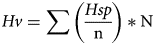
All statistical analyses were performed using SPSS v. 20 (IBM, 2011). To understand the relative significance of the different prey species to São Tomé hunters we estimated a hunting importance value (Hv) for each of the species mentioned in their responses (adapted from Fernandes-Ferreira et al., Reference Fernandes-Ferreira, Mendonça, Albano, Ferreira and Alves2012 and Phillips et al., Reference Phillips, Gentry, Reynel, Wilkin and Galvez-Durand1994). For the question ‘What animals do you hunt?’ we did not define a minimum or maximum number of answers; the number varied between respondents from one to eight species (each species could only be mentioned once). The resulting value was based on the number of times each species was named relative to the total number of citations of prey species for all interviewed hunters.
 $$Hv = \sum {\left( {\displaystyle{{Hsp} \over {\rm n}}} \right)} *{\rm N}$$
where Hsp is the number of times a species is mentioned as a targeted animal, n is the total number of citations for all species (400) and N is the number of interviewees (119).
We also estimated a preference value (Pv) based on hunters’ preferred species (excluding zero values; i.e. no preference). Hunters cited 1–3 preferred species.
 $$Pv = \sum {\left( {\displaystyle{{Psp} \over {\rm n}}} \right)} *{\rm N}$$
where Psp is the frequency that each species is cited as a preferred species, n is the total number of citations for all prey species (158) and N is the number of interviewees (119).
Subsequently we described the interviewed hunters (three were excluded because of missing data) according to a set of numerical (age, literacy, number of years dedicated to hunting) and categorical variables (urban or rural origin, hunting as the main activity, other professional activities, methods and gear used to hunt, transport used, reasons for hunting). We used a cluster analysis to group hunters, based on factors with the highest inertia (Punj & Stewart, Reference Punj and Stewart1983; Ketchen & Shook, Reference Ketchen and Shook1996; Bernard, Reference Bernard2006). As a first approach to the classification we recorded the categorical variables as dichotomous, assigning equal weights to all components. We then conducted a hierarchical cluster analysis, using Ward's linkage method with Euclidean distances to identify relatedness among hunters (Ward, Reference Ward1963), from which we produced a dendrogram as our preliminary cluster solution.
Following the recommendation of Punj & Stewart (Reference Punj and Stewart1983) on combined analysis we used an iterative partitioning algorithm, using the centroids of the preliminary analysis as starting points. We employed a two-step cluster analysis with no cluster limits, using Schwartz Bayesian criteria to assess the importance of each variable to explain the characteristics of hunter groups, as defined by the hierarchical cluster analysis (Ketchen & Shook, Reference Ketchen and Shook1996). We then tested the variance between the resulting groups, using a one-way ANOVA for continuous variables and a Pearson χ 2 test for categorical dichotomous variables.
Results
Prey species
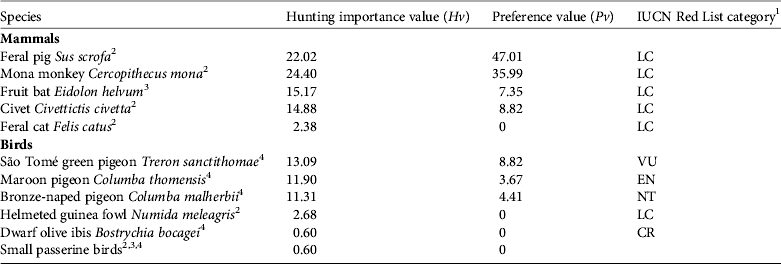
The mean duration of interviews was 26 minutes (range 18–39 minutes). A total of six mammals and five bird species were specifically mentioned by the interviewees (Table 1). Fruit bats Eidolon helvum were the only native mammals mentioned. All bird species mentioned except the helmeted guinea fowl Numida meleagris are endemic and categorized on the IUCN Red List of Threatened Species (Table 1). Reported hunting values and prey preference (as shown by preference values) were highest for mona monkeys and feral pigs and lowest for guinea fowl, feral cats Felis catus, ibis and small passerine birds. Hunting and preference values for endemic pigeons were similar to those for fruit bats and civets but lower than for pigs and monkeys.
The prey species on the island of São Tomé (Fig. 1) that were mentioned by hunters in interviews, with hunting importance and preference values (see text for details of calculations) and IUCN Red List category (IUCN, 2012).
1 LC, Least Concern; VU, Vulnerable; EN, Endangered; NT, Near Threatened; CR, Critically Endangered
2 Introduced
3 Native
4 Endemic
Hunter groups
We identified three homogeneous groups through cluster analysis: group A (11.2% of all hunters) and groups B and C (88.8% of all hunters). Results of the two-step cluster analysis indicated significant differences in the characteristics of the three groups (Table 2).
Profiles of hunters’ groups (derived from cluster analysis; see text for details) on the island of São Tomé (Fig. 1). A two-step cluster predictor value between 0 (less important) and 1 (maximum input for clustering) is provided for each variable. For continuous variables the mean value for each group and the ANOVA results for the variance between the three groups are presented. For categorical variables the percentage of hunters in each group and the Pearson χ 2 for the frequency distribution amongst the three groups are presented.

Group A primarily hunted birds, mostly targeting pigeons (92.3%), although some also hunted fruit bats (53.8%) and mona monkeys (30.8%). No feral pigs were hunted by this group. Groups B and C, comprising 50 and 38.8% of all interviewed hunters, respectively, were characterized by a clear preference for hunting mammals rather than birds. Most group B hunters stated that they hunted monkeys (98.3%), whereas Group C hunters focused on feral pigs (95.6%). A lower proportion of Group B hunters (12.1%) had no prey preference but 1.7% mentioned at least one bird species as preferred prey.
All bird hunters used air guns, with 61.5% also using shotguns. Pig hunters never used air guns and only 64.4% had shotguns; a large proportion commonly hunted with spears (68.9%), dogs (84.4%) and/or snares (22.8%). Monkey hunters predominantly used shotguns (96.6%), although some also used air guns (20.7%) and/or dogs (25.0%).
Bird hunters were all residents of urban or peri-urban areas, in and adjacent to São Tomé. Most (76.9%) hunted frequently (2–5 times per week), with 46.2% declaring hunting as their main source of livelihood. Monkey hunters lived in rural as well as urban settings, practising hunting as a secondary activity 1–4 times per month (48.3%), using public transport (37.6%) or rented motorbikes (12.2%) to get to an appropriate access point in the forest from which they continued on foot. Most pig hunters (86.7%) were farmers or palm wine producers (75%). This group hunted 2–5 times per week (62.2%), often during breaks from agricultural activities; most walked to the forest (97.8%).
Bird hunters had significantly higher literacy levels than the other two groups (53.8% had completed at least the 9th school grade). The standard of literacy was generally low among pig hunters but higher amongst monkey hunters (most had completed the 7th grade). The latter also worked at other activities besides hunting (46.2% were employed in the service industry). Pig hunters were the youngest (mean age 29.5 years) and monkey hunters the oldest (mean age 35.7 years) amongst the three groups.
Hunting drivers and motivations
Bird hunters predominantly hunted to sell their quarry (84.6%, of which 76.9% sold their game to restaurants or traders), with < 25% claiming to hunt exclusively for food (Table 2). Most monkey hunters also hunted for commercial gain (82.8%), with 60.3% selling their quarry to restaurants or traders. Pig hunters hunted primarily for food, either for their own consumption or for sale (48.9%) to neighbours or local residents (Table 2). A large proportion of hunters in the three groups stated that they hunted because they enjoyed it (Fig. 2). Only amongst bird hunters was survival mentioned as a major reason for hunting, paired with enjoyment. Few respondents stated that hunting was necessary to feed their families or to supplement their income. This suggests that the commercial demand for birds plays an important role in the household economy of bird hunters. Hunting of mammals, for food or for commercial reasons, is largely motivated by enjoyment, suggesting that hunters are less dependent on mammals as a source of protein or income.
Distribution of responses given by the hunters of São Tomé Island in relation to their reasons for hunting.

Hunters’ perceptions
Most hunters interviewed (81.5%) claimed that there were fewer animals than a decade ago, 1.7% suggested that there were more and 16.8% did not know. The main reason given by 68.1% of interviewees was the rise in the number of hunters. A smaller percentage attributed the decline to habitat degradation (7.5%). Of the bird hunters 42.8% mentioned that all prey species had declined but in particular maroon and green pigeons (Fig. 3). Circa 30% of pig hunters stated there had been a fall in numbers of feral pigs and civets. A lower proportion of monkey hunters (15.5%) indicated that monkeys had declined. Monkey hunters (27.6%) also confirmed a drop in pig numbers.
Distribution of responses given by the hunters of São Tomé Island in relation to perceived changes in populations of prey species during the previous decade.

Discussion
Hunting of introduced species can have a positive outcome for wildlife conservation, as described for feral pigs in the Brazilian Pantanal (Desbiez et al., Reference Desbiez, Keuroghlian, Piovezan and Bodmer2011). However, situations in which hunting of introduced biota and native wildlife co-occurs are little known. We have shown that on São Tomé there are three groups of hunters, each targeting a distinct assemblage of prey species, although there is some overlap. The groups differ in age, educational background and socio-economic status. In particular, the mean age of each group reflects the physical requirements of each type of hunting, e.g. pig hunting demands more active pursuit of prey by the hunter and therefore it is often carried out by younger men. In contrast, hunting of monkeys and birds is less demanding and this is reflected in the older mean ages of these two hunter groups.
Hunting of endemic birds, specifically pigeons, is of concern for the conservation of the island's unique biodiversity. Bird hunters are known to be effective in taking large numbers of birds during a hunting session as they are able to predict where birds are likely to congregate (e.g. around fruiting trees). The island's birds are relatively tame and therefore easy to shoot at close range. The amount of time spent hunting birds is much shorter compared to hunting of other wildlife. Bird hunting is also more lucrative than hunting pigs or monkeys because the return on investment is higher. The cost of air guns and pellets is lower than that of shotguns and cartridges and the price offered per bird is high per weight basis.
Although it is difficult to assess the numbers of birds traded domestically and locally because most do not pass through markets, there is likely to be a high demand for birds in city restaurants. According to our informants hunted birds are bought almost immediately and are often pre-ordered from hunters by restaurants and local traders. Although direct evidence of the effect of hunting on bird populations is not yet available, hunters claim that a decade earlier they shot hundreds of birds at a time, particularly pigeons, whereas now only dozens are taken. Historical accounts suggest that large numbers of pigeons were hunted in the 1950s and that these species were widely distributed (Snow, Reference Snow1950; Amadon, Reference Amadon1953; de Naurois, Reference de Naurois1983, Reference de Naurois1988). Most hunters in our study acknowledged a negative trend in the abundance of all exploited species, especially pigeons, which most linked to a higher number of hunters. Although declines in introduced mammals were reported, endemic pigeons are probably the taxa most threatened by overhunting (Collar & Stuart, Reference Collar and Stuart1988; Christy & Clarke, Reference Christy and Clarke1998; Dallimer et al., Reference Dallimer, King and Atkinson2009; Olmos & Turshak, Reference Olmos and Turshak2010; de Lima et al., Reference de Lima, Dallimer, Atkinson and Barlow2013).
In contrast, the hunting of pigs and monkeys not only reduces the effect of these introduced mammals on the native species but also provides a reliable, culturally acceptable and free source of meat and income for a substantial number of families. Our study is a first step towards understanding the significance of hunting practices and their long-term effects on the biota and ecosystems on São Tomé. Elucidating the dynamics and long-term ecological effects of pigs and monkeys is a crucial step towards increasing our understanding of, and more effectively managing, biotic interactions on this island and thus preserving its valuable habitats and endemic species. Although our study is a useful step in characterizing the hunters, their motivations and target species, data on the actual and potential effects of hunting on prey populations are also essential.
Exploitation of wildlife is unhindered throughout São Tomé because there are few legal or other types of restrictions. As in most other west-central African countries hunting legislation on the island is poor and there is limited capacity for law enforcement (Bowen-Jones et al., Reference Bowen-Jones, Brown and Robinson2002; Rowcliffe et al., Reference Rowcliffe, De Merode and Cowlishaw2004). Furthermore, hunters and game consumers on the island are unaware of the legislation and most do not know the difference between endemic, native and exotic species, or the conservation problems resulting from overhunting. Controlling bird hunting and regulating the trade to restaurants will require a combination of enforcement of legislation and raising awareness among stakeholder groups (including restaurants). Hunting regulations for endemic birds must be evidence-based. If hunting quotas for endemic pigeons, and perhaps other species, are to be implemented, knowledge of densities, association with the various habitat types and breeding seasonality is fundamental. Capturing the knowledge of hunters and developing a common base from which to regulate hunting needs to be done urgently. Farming of native species such as the São Tomé harlequin quail Coturnix delegorguei histrionica, which is already widely bred in aviaries, could fulfil the demand for birds in restaurants and could create incentives for bird hunters to shift to mammal hunting.
Acknowledgements
We thank all the São Tomé hunters and informants who collaborated in the study. For local support we thank the General Director for the Environment Eng. Arlindo Carvalho and Dr Vitor Bonfim and Eng. Salvador Pontes from the Directorship for Conservation. Technical support and advice were provided by the Associação Monte Pico, particularly Luis Mário Almeida and Gabriel. MC was supported by a Rufford Small Grant for Conservation of Nature and funded by the Portuguese Government (Foundation for Science and Technology—FCT/MCTES), project PTDC/BIA-BIC/115223/2009 and grant SFRH/BD/30171/2006.
Biographical sketches
Mariana Carvalho's research is focused the ecology of Columbidae birds and the effect of hunting, with field work in Portugal, Guinea Bissau and São Tomé e Principe. Jorge Palmeirim investigates the ecology of bats and birds, particularly in tropical areas. Francisco Rego has considerable experience in forest research and management. Nelson Sole and Aristides Santana are involved in conservation work on São Tomé Island. Julia Fa's research focuses on the interface between social and ecological systems in the context of the conservation of harvested species in Africa.



