





Early career researchers (ECRs) face a range of challenges when embarking on a career in academia. They face pressure to produce and publish relevant research, and early stages of research are often fraught with self-doubt. Reference Doran1 Furthermore, such challenges can be experienced at multiple levels, not only specific to research itself, but also concerning broader interpersonal, societal and structural issues. Reference McAlpine and Amundsen2 Often driven by a passion for research and a desire to meaningfully contribute to the field, Reference Doran1 previous research has also sought to highlight the unique opportunities that can support ECRs in their journey, including the importance of networking and mentorship, Reference Ansmann, Flickinger, Barello, Kunneman, Mantwill and Quilligan3 engaging in interdisciplinary research Reference Spence, Markauskaite and McEwen4 and the development of key skills (e.g. time management, critical skills Reference Smithers and Gibbs5 ).
ECRs in the eating disorder field
Although there are common challenges and opportunities across fields, ECRs working in eating disorder research may face unique obstacles and require tailored support strategies. Relative to research on other mental health conditions, the field of eating disorders faces significant disparities in both research visibility Reference Solmi, Bould, Lloyd and Lewis6,Reference Haynos, Egbert, Fitzsimmons-Craft, Levinson and Schleider7 and available funding, 8 which might introduce increased competition among eating disorder researchers because there are fewer ECR opportunities available in this field. Furthermore, although eating disorders affect approximately 5% of the population at a given time Reference Mairs and Nicholls9 and account for 9% of all mental health conditions in the UK, 8 only 0.2% of all studies focused on eating disorders are published in prominent psychiatry journals, often relegated to isolated publications in specialist journals. Reference Solmi, Bould, Lloyd and Lewis6 Thus, researchers in the field of eating disorders, including ECRs, might struggle to submit research manuscripts to high-impact journals, as well as facing barriers communicating their research to wider audiences. Compounding a lack of eating disorder research visibility, research has historically experienced significant underfunding relative to disorder prevalence, with an annual average of £1.4 million relative to other mental health conditions such as depression (£22.8 million), psychosis (£17.6 million) and schizophrenia (£12.2 million). 8 Several leading funding bodies have only recently launched eating disorder-specific funding calls (e.g. the Medical Research Foundation Launchpad Grant, 2025 10 ), and the majority of funding for mental health research is allocated to other fields, such as depression or psychosis, by leading government-funded (e.g. UK Research and Innovation (UKRI)) and charity-funded (The Wellcome Trust) organisations, who have been responsible for driving meaningful and rapid advances in research knowledge in these areas. This lack of eating disorder research funding could exacerbate additional concerns in the eating disorder field around a lack of means to facilitate support, training and retention of upcoming ECRs, despite this support being reported as an area that many in the field would like to see prioritised. Reference Schmidt, Adan, Böhm, Campbell, Dingemans and Ehrlich11 For instance, in the UK, there are very few eating disorder-specific training structures in place that reflect the transdisciplinary needs of the field. Reference Schmidt, Adan, Böhm, Campbell, Dingemans and Ehrlich11 Without appropriate training and support, eating disorder ECRs might not only be affected in their career progression, but also decide to leave the field of eating disorder research. These eating disorder-specific concerns are likely amplified by universal cross-disciplinary concerns related to job security and professional identity that are increasing challenges for all ECRs. Reference Castelló, Kobayashi, McGinn, Pechar, Vekkaila and Wisker12,Reference Mula, Rodríguez, Domingo Segovia and Cruz-González13
Current study
To our knowledge, there has been no study to date exploring the perspectives, concerns and views of ECRs in the eating disorder field. This lack of understanding may limit means to effectively support and retain ECRs, which in turn affect the future generation of eating disorder research. By collecting perspectives from eating disorder ECRs, a Delphi study approach allows for the exploration of consensus and disagreement on key areas relevant to the ECR experience, providing insight into concerns and opportunities and allowing for the translation of such insights into supporting eating disorder ECRs in their career progression. Reference Kent, Holman, Amoako, Antonietti, Azam and Ballhausen14 Delphi method approaches focusing on ECR cohorts have previously been used to facilitate group communications around the implementation of patient-oriented research, Reference Rouleau, Bélisle-Pipon, Birko, Karazivan, Fernandez and Bilodeau15 integrating and extending knowledge across multiple disciplines in specific research domains, Reference Strand, Ortega-Cisneros, Niner, Wahome, Bell and Currie16 and the investigation of barriers to interdisciplinary research. Reference Andrews, Harper, Cashion, Palacios-Abrantes, Blythe and Daly17 Thus, by facilitating anonymous, asynchronous interactions, Delphi surveys are well-suited to explore group opinions and knowledge of barriers and opportunities related to eating disorder research careers, which are similarly characterised by multi- and interdisciplinary approaches. Specifically, the use of iterative ‘controlled feedback’ (i.e. measures of central tendency, free-text responses and the ability to reflect and adapt responses) across multiple rounds of data collection allows for an evaluation of consensus in response to panel members’ feedback. Reference Nasa, Jain and Juneja18 Therefore, the aim of the present study was to adopt a Delphi study approach to explore consensus on career concerns and opportunities for ECRs working in the eating disorder field.
Method
The authors assert that all procedures contributing to this work comply with the ethical standards of the relevant national and institutional committees on human experimentation and with the Helsinki Declaration of 1975, as revised in 2013. All procedures involving human patients were approved by University of Edinburgh Health in Social Science Research Ethics Committee (approval number 22-23CLPS180).
Participants
UK-based eating disorder ECRs were recruited through study adverts on social media platforms (X, Blue Sky) and through mailings lists associated with the research team, who are all working within the eating disorder field; specifically, any ECR who was conducting or collaborating on research that focused on the clinical phenomena of eating disorders, including eating disorder development, risk factors and aspects of care. Furthermore, a snowballing technique was used to increase the reach of study adverts. Relevant ethical approval was obtained from the University of Edinburgh School of Health in Social Science Research Ethics Committee (22-23CLPS-180). All ECRs working within the field of eating disorder research were eligible to participate. The definition of an ECR was formulated in line with UKRI (www.ukri.org) guidance and participants were required to meet one of the following to be included in the study:
-
(a) those in the last year of their doctorate (postdoctoral and clinical doctorate);
-
(b) those within 8 years of completing their doctorate;
-
(c) those within 6 years of their first academic post.
No exclusions were made based on age or discipline, as eating disorder research is conducted across a variety of disciplines, including, but not limited to, psychology, medicine, arts, literature, public health, policy, sports and exercise, and education. Participants were required to be based in the UK because of potential discrepancies between countries and higher education systems.
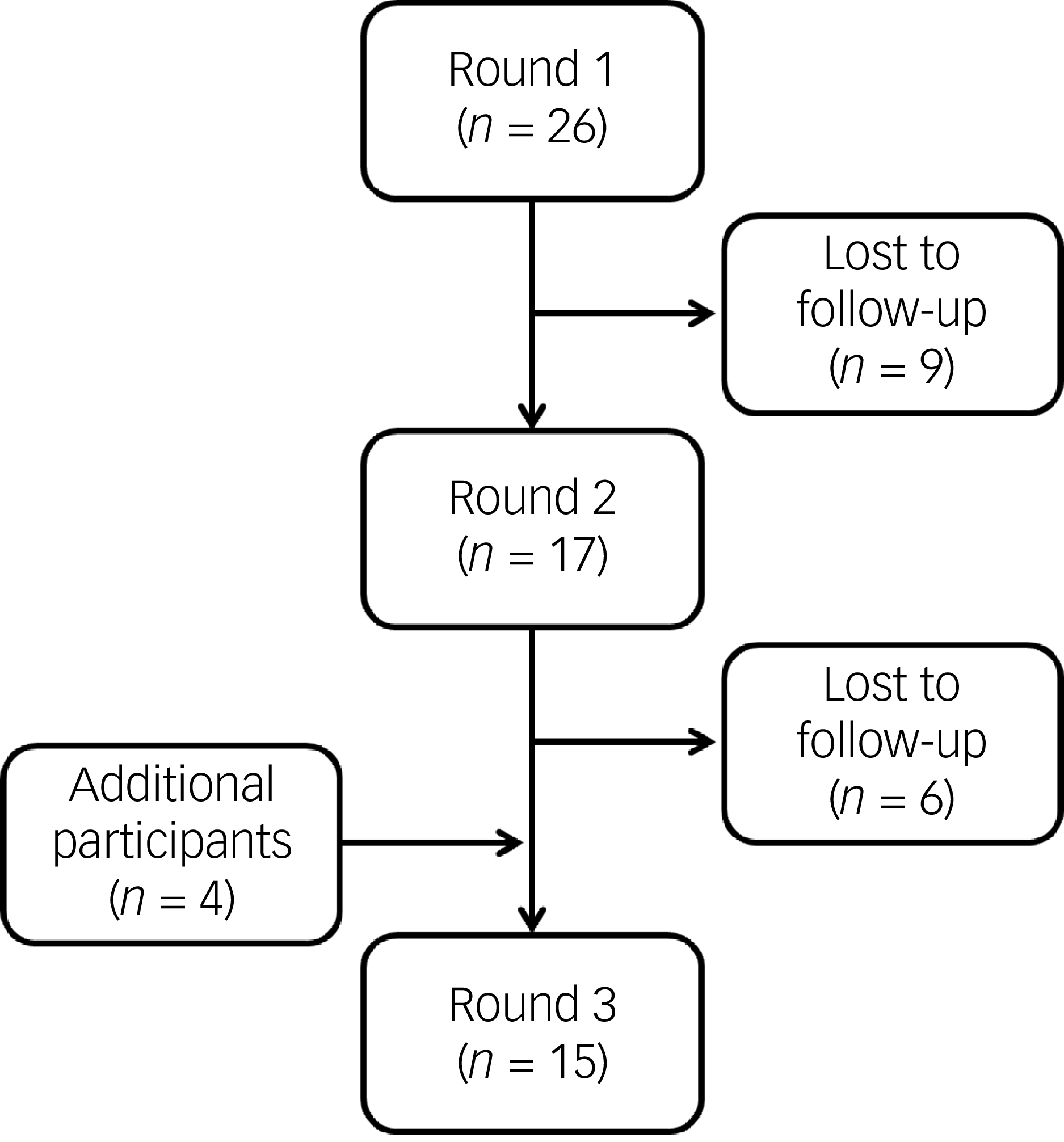
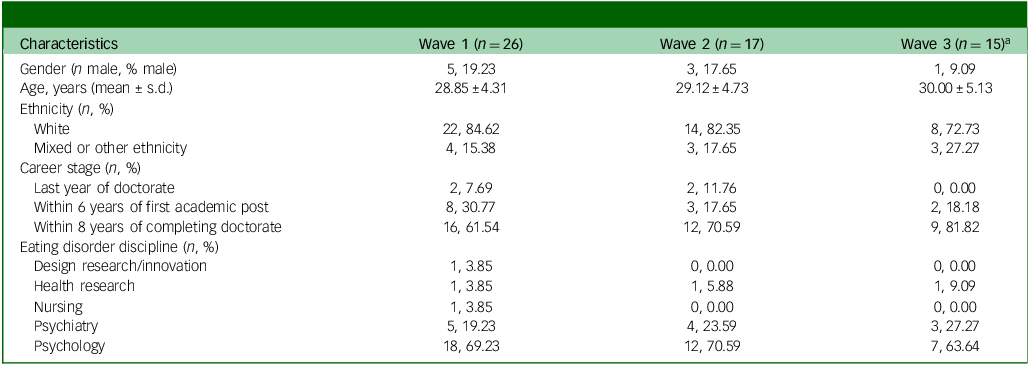
In total, 26 participants took part in at least one round of the study, with 15 participants completing round 3 and 11 participants completing all three rounds (see Fig. 1). This is in line with published recommendations on Delphi studies in health and social science research, and with similar Delphi studies that focus on a unique, smaller population of perspectives. Reference Shariff19,Reference Trevelyan and Robinson20 Additionally, sample retention rates in this study (73.3%) reflect those seen in extant Delphi studies, typically reporting retention rates ranging from 70 to 100%. Reference Gargon, Crew, Burnside and Williamson21,Reference Vogel, Zwolinsky, Griffiths, Hobbs, Henderson and Wilkins22 See Table 1 for participant demographics.
Flow diagram of participant attrition.

Sociodemographic characteristics across wave 1 (n = 26), wave 2 (n = 17) and wave 3 (n = 15)

a. Incomplete values for wave 3 because sociodemographic characteristics were not obtained for four external participants.
Procedure
Eligible participants completed each round of the Delphi study, which was designed using a secure online survey platform (Qualtrics XM for Windows 11; Qualtrics, Seattle Washington, USA, and Provo, Utah, USA; https://www.qualtrics.com/en-gb/) where they were shown an information sheet. Once they had read this, the next page of the survey recorded written consent by the participant. Demographic information was then collected, including gender, age and ethnicity. Participants were also asked to indicate which discipline they were working in and which of the specified ECR criteria they met. Participants who indicated they did not meet ECR criteria were not eligible to take part and were directed to the end of the survey.
The current study used a three-stage Delphi model, based on approaches outlined in previous Delphi research in healthcare and eating disorder populations. Reference Trevelyan and Robinson20,Reference Hsu and Sandford23–Reference Tierney and Fox25 Round 1 was completed between December 2023 and April 2024, round 2 between May 2024 and July 2024, and round 3 between July 2024 and December 2024. Because of attrition between rounds, additional participants were recruited in round 3, in line with previous studies combining ratings across samples and stages when calculating consensus. Reference Tierney and Fox25,Reference Field, Fox, Jones and Williams26
Round 1
In the first round of the survey, participants were presented with 12 career concerns and ten career opportunities (see Supplementary Material S1). Career concerns and opportunities initially presented were developed based on previous literature, professional and personal experience, and guided, informal discussions with other eating disorder ECRs and eating disorder academics (for example, at networking events within an established eating disorder ECR network and with middle- and late-career academics). Participants were asked to rate how much of a concern the item was, using a sliding scale from 0 (no concern at all) to 10 (a high level of concern). Participants were then asked to pick their top three priorities out of this list, before being given the option to provide an open-text response to elaborate. This was then repeated for a list of similarly pre-determined career opportunities. Within the first round, open-text responses were used to generate further items or to clarify concerns and opportunities.
Round 2
The modified series of statements regarding career concerns (n = 18) and opportunities (n = 9) (based on first round responses) were sent to participants, who were asked to rate their agreement with each statement by using a six-point Likert scale (1, strongly agree; 2, agree; 3, somewhat agree; 4, somewhat disagree; 5, disagree; 6, strongly disagree). A six-point scale was opted for over a five- or seven-point scale as researchers wanted to avoid neutral responses. Reference Taylor27 Each item also had an open-text response option for more information about why they agreed or disagreed with the statement.
Round 3
In the third round, participants were sent a survey that showed them the median response for each item across participants in round 2 (see Supplementary Material S2), as well as a reminder of their own response. They were then shown the same statements and asked again to indicate their level of agreement, with an open-text response to provide further information on their response and/or why they changed their answer (if relevant). Where applicable, participants were also provided with examples of feedback from individuals whose answers deviated from the median response. Additional participants were recruited at this stage and shown median group responses and asked to indicate their level of agreement, with an open-text response to provide more information about why they agreed or disagreed with the statements.
Data analysis
Content analysis – a qualitative research method for textual data analysis Reference Cho and Lee28,Reference Bengtsson29 – was conducted on responses from round 1. Three researchers (M.-C.O., M.S., E. Nimbley) systematically familiarised themselves with the open comments, before coding and identifying categories or patterns emerging from the content of participant responses. Reference Hsieh and Shannon30 These patterns were then used to generate career concerns and opportunity statements that were sent to participants in round 2. For round 2, median responses and interquartile ranges were calculated for participants’ agreement with each of the included statements. In the final round, median responses and interquartile ranges were again calculated, along with percentage agreements for each of the statements. Statements were deemed to reach consensus if there was over 85% agreement (percentage of those indicating somewhat agree/agree/strongly agree). A gold standard for identifying consensus is lacking from previous literature, with 80% and over typically indicating level of agreement. Reference Hohmann, Beaufils, Beiderbeck, Chahla, Geeslin and Hasan31,Reference Diamond, Grant, Feldman, Pencharz, Ling and Moore32 A threshold of 85% and over was selected for the current study in line with previous eating disorder research Reference Harris, Aouad, Noetel, Hay and Touyz33 and to establish a high-level consensus, reduce ambiguity and support the robustness of subsequent recommendations. Supporting quotations were included in the narrative synthesis of results, particularly in instances of lower consensus between statements, to contextualise findings.
Results
Career concerns
Consensus
Eating disorder ECRs generally agreed (>90%) that there was a mismatch between research timelines (e.g. publication/project timelines) and the length of contracts, that it was necessary for ECRs to make personal sacrifices for their careers (e.g. relocation, less time for family/friends, pay cuts, etc.) and that ECRs struggle with pressures to publish research. Additionally, >90% of participants agreed that job insecurity (e.g. a lack of job opportunities or reliance on short-/fixed-term contracts), as well as a lack of funding in research roles and projects, are leading concerns for eating disorder ECRs.
Concerns around research timelines, personal sacrifices, job insecurity and pressures to publish were partly seen as relevant to ECR positions generally. However, fewer funding opportunities in the eating disorder field compared with other mental health research fields was perceived as impacting and possibly amplifying other perceived concerns:
‘I do still feel that eating disorder post-graduate opportunities are limited in terms of location.’
‘I think it can be hard to find high impact journals that will be interested in eating disorder research.’
Agreement (>85%) was also established for concerns about unclear career trajectories and the opacity of opportunities (e.g. it is not clear how to progress as an ECR and which opportunities are available), as well as struggling with the feeling of being pushed out of eating disorder research because of a lack of funding, opportunities, etc. Again, the lack of funding in the eating disorder field was mentioned by multiple participants as impacting the career trajectories for eating disorder ECRs in particular.
‘There are so few opportunities for ECRs in eating disorder research and the ones that are available may not be a good match for you.’
Some participants even indicated ‘being tempted’ or potentially being forced to focus on research fields covering other mental health conditions that are currently receiving more funding attention.
‘I have been tempted to focus more on depression or anxiety research to have more funding options.’
Approaching consensus
Keeping a good work/life balance (e.g. working overtime to build one’s research profile), struggling to juggle the different roles and responsibilities associated with positions (e.g. grant writing, knowledge exchange, supervision, research), feeling isolated (e.g. not having an eating disorder research community at an academic institution/place of work), struggling with social (e.g. visa requirements, part-time work) and/or cultural (e.g. gender, socioeconomic) inequalities, and mental health and well-being affecting ECR roles and responsibilities all approached our criterion for consensus (>70%, <85%).
Open comments indicated that these concerns were either not perceived as specific to eating disorder ECRs, taken as a job requirement or associated with individual situations, predispositions or choices owing to the flexibility of research work. Furthermore, some of these concerns were seen as particularly relevant to clinician academics (e.g. multiple roles), as they were dependent on the academic environment of specific universities (e.g. isolation) or difficult to assess without representation of voices that might be particularly affected by inequalities:
‘I think that this is generally true but I also think that a larger issue is that many people are actually just missing from the equation due to these inequalities. We don’t see many eating disorder researchers who are non-binary, trans*, in larger bodies, people of colour, lower SES [socioeconomic status], etc. So I do think that the composition of eating disorder researchers is skewed towards more privileged identities and it would be worth looking into why that is and what could be done to help retain a more diverse talent pool. But also what can be done to help improve conditions for ECRs from marginalised groups.’
The role of incorporating lived experiences in mental health research was additionally highlighted in the context of mental health concerns.
‘We are involved in researching really sensitive topics every day and that often involves speaking with people with histories of eating disorders talking about challenging experiences. Often researchers have their own experiences too that motivated them to work in the area but it can make the work triggering or emotionally challenging.’
No consensus
The lowest consensus (<30%) was achieved for participants’ perspectives on the eating disorder field not being clearly associated with a specific discipline (e.g. medicine, psychology, etc.). Those participants, upon providing further comments on their rating, generally did not see the classification of eating disorder research as a concern:
‘For me this feels like a benefit rather than a drawback – the opportunity to work closely with people from other specialities.’
Moreover, moderately low consensus (50–70%) was established for ECRs’ experiences of roles and expectations within their positions not being sufficiently defined, struggles with power imbalances, concerns of overspecialisation in their research topic, the policing of research and struggles with having to explain the seriousness of eating disorders (i.e. prevalent misinformation on eating disorders). For these concerns, open comments highlighted individual differences in work environments, whereas experiencing a lack of issues was described as ‘being lucky’ (specifically in terms of power balances):
‘I think I am lucky to work with some great senior staff, but I have seen that generally people in my position have a power imbalance and managing this relationship is difficult.’
With regards to overspecialisation, participants further elaborated that it might be more difficult to work on a project that ECRs feel particularly passionate about (rather than being overspecialised), whereas research skills were generally described as being transferable. In terms of the policing of research, some participants specifically referred to differences in how relevant research topics are discussed across disciplines (medicine, policy context), mainly to investigate the overlap between eating disorders and weight status:
‘I think most people tend to stick to mainstream arguments/ideas so they might never be confronted with this reality. However, were they to make an argument that conflicted with any dominant line of thinking I think they would face backlash/policing.’
Regarding misinformation, participants mentioned difficulties with communicating the complexity of eating disorders to funding bodies, a lack of awareness of comorbidities and the ‘sensationalisation’ of eating disorders as particular challenges in the eating disorder field. Some of the mixed responses on this item could be explained through comments suggesting that this difficulty was felt to be more relevant for those engaging with collaborators or funders outside of the field, as opposed to a problem inherently within the eating disorder field.
Career opportunities
Consensus
High agreement (>90%) was reached for all except one item when evaluating career opportunities. Most participants agreed that eating disorder ECRs should be supported to network with researchers and peers; should be offered mentoring by those working in the eating disorder field; and should be supported to engage with lived/living experience perspectives, communities and researchers.
‘It’s so important to share knowledge, and make friendships in this area as it’s very niche!’
‘This [supporting engagement with lived/living experiences] is very important to ensure that all future research meets the needs of the eating disorder community and involves them in the co-development and co-delivery of the research.’
Interestingly, although most participants strongly agreed that mentoring is important for ECRs, multiple participants also acknowledged the high workload of senior academics as an important concern.
‘I feel that this would be hugely beneficial, however, I am aware of the huge workloads that senior researchers have that may make this a challenge.’
Participants further agreed that eating disorder ECRs should be supported to engage with eating disorder policy makers (specifically in terms of impact generation and influencing future policies and funding allocation), practitioners and/or clinical services, as well as the community (e.g. charities, third-sector organisations). Moreover, participants agreed that eating disorder ECRs should be supported to engage with interdisciplinary research, and to coordinate and engage with knowledge exchange events.
‘I believe that it is vitally important to work with everyone involved in eating disorders to ensure a well-rounded understanding of all of the inter-related components within eating disorders research.’
Of note, participants highlighted in open comments that ECR support should not lead to further pressures and workload, even if this was beneficial for their career progression:
‘Many ECRs won’t have the time or capacity to worry about running an event.’
‘I agree that eating disorder ECRs don’t need to be an expert on everything.’
A lack of consensus (77%) was achieved for supporting eating disorder ECRs in eating disorder-specific training and/or education. Open comments highlighted that some participants saw eating disorder ECRs as already highly knowledgeable in eating disorders and would like to see more training in other fields to complement their knowledge, whereas other participants pointed out the importance of training and further education to fully understand eating disorders, partly to support successful co-production approaches. See Table 2 for an overview of ratings and consensus for concerns and opportunities.
Round 3 responses and level of consensus for career concerns (n = 18) and opportunities (n = 9)
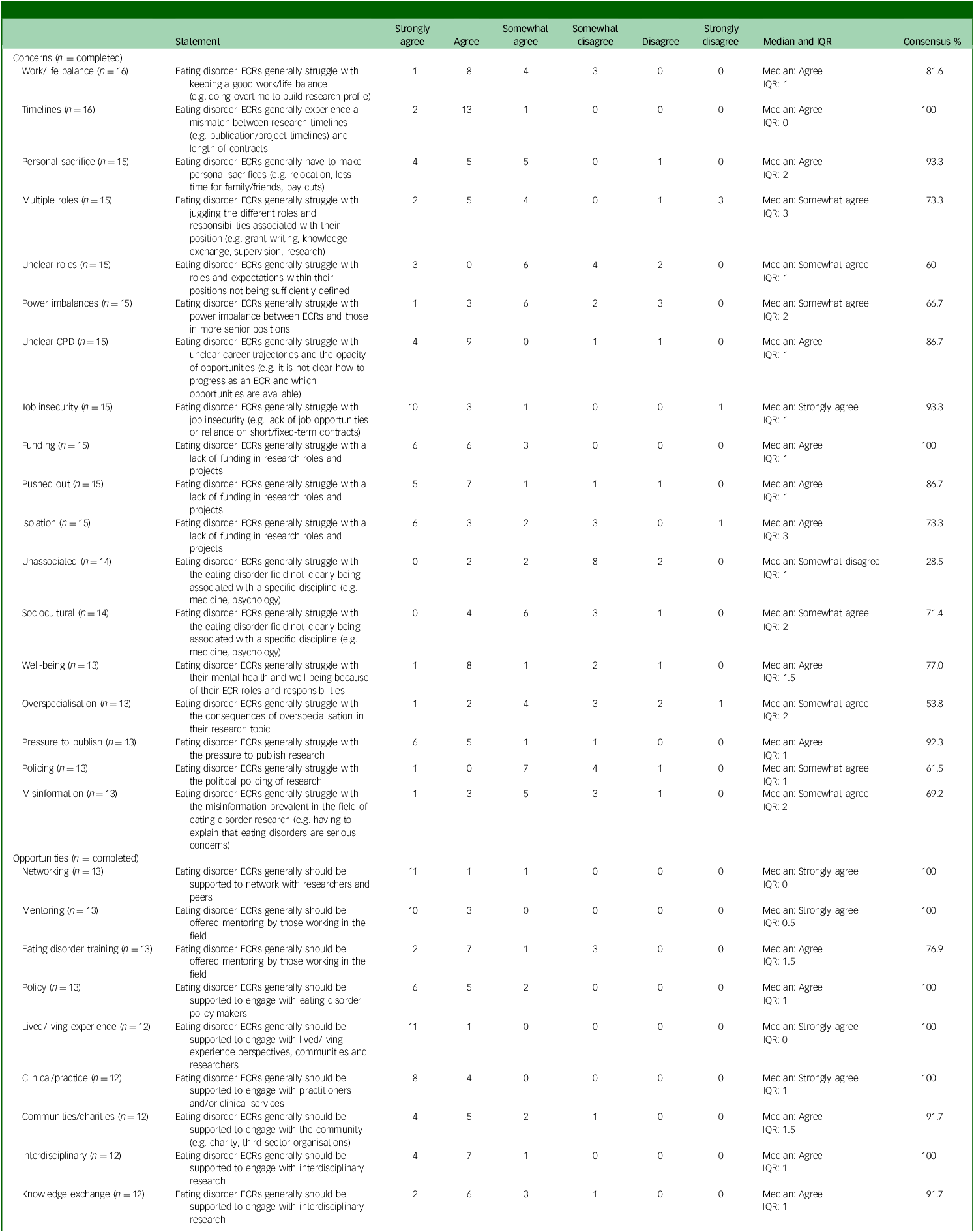
IQR, interquartile range; ECR, early career researcher; CPD, continuing professional development.
Discussion
Key findings
This exploratory Delphi study incorporated views from 26 eating disorder ECRs to highlight common concerns and opportunities for ECR support in the eating disorder field. Consensus was reached on seven out of 18 career concerns and eight out of nine desirable career opportunities. Full consensus (100%) was reached on career concerns over timelines and funding, and on the importance of career opportunities for networking, mentoring and interdisciplinary approaches, as well as the importance of working closely with policy makers, clinicians and those with lived or living experience. Lowest agreement across ECRs was reported for concerns of overspecialisation or feeling a lack of association with a specific discipline, as well as on the need for eating disorder training opportunities. Findings are discussed in light of previous research and ECR initiatives, and the implications for supporting eating disorder ECRs are discussed.
Eating disorder ECR concerns
Common concerns across participants comprised of a lack of clear career progression, job insecurity, a lack of funding, personal sacrifice to remain in the role and a pressure to publish research, reflective of concerns held by the general ECR environment. Reference Christian, Johnstone, Larkins, Wright and Doran34,Reference Herman, Nicholas, Watkinson, Rodríguez-Bravo, Abrizah and Boukacem-Zeghmouri35 Eating disorder ECRs in this study also highlighted a pressure to publish manuscripts to retain their role, which serves an additional major concern held by ECRs across research disciplines. Reference Christian, Johnstone, Larkins, Wright and Doran34 Importantly, eating disorder ECRs’ concerns reflected generalised concerns in regard to the personal toll of maintaining their role, such as relocating to remain in the field, sacrificing long-term planning or family building, and overlooking mental and emotional well-being for the sake of career progression. Reference Christian, Johnstone, Larkins, Wright and Doran34 Such findings are therefore in line with ECR experiences in other research disciplines and extend these to eating disorder cohorts, calling for increased clarity around career trajectories and improved financial and well-being support. Additionally, although funding concerns are unfortunately common for many ECRs, there may be a unique pressure in the eating disorder field because of the historical underfunding of the eating disorder research field as a whole. 8 As participants in the current study indicated, the lack of funding in the eating disorder field appears to have a spill-over effect on to other concerns, and could therefore be seen as one of the most central concerns for ECRs and eating disorder professionals beyond the early career stage. Future research needs to further explore the causal role of funding insecurity on researchers’ careers and well-being.
There were differing opinions on isolation across participants, with some feeling notably isolated from their peers and agreeing that this was a leading concern, whereas others did not experience this to be so. Concerns surrounding professional isolation have been on the rise since the COVID-19 pandemic; Reference Jackman, Sanderson, Haughey, Brett, White and Zile36 however, several benefits, such as improved work-life balance and flexibility, have been reported. Reference Williams and Shaw37 The impact of hybrid or remote working is likely to be very individualised, based on a range of factors and circumstances, and it could be that this is reflected in the differing opinions of the current sample. An important consideration that was felt to be more relevant to the eating disorder discipline in the current study was a lack of individuals working in the eating disorder field and limited support from institutions or departments where eating disorder research may not be a focus. If an institution does not have academic staff working on eating disorder research or is not affiliated with an eating disorder research group, it is likely to contribute to difficulties with feelings of isolation, lack of support and difficulty progressing.
Interestingly, consensus was not reached regarding work/life balance concerns, unlike those reported in previous studies reporting ECR perspectives. Reference Christian, Johnstone, Larkins, Wright and Doran34 ECRs in this study generally agreed that work/life balance was a concern in their role, but the level of consensus was lower than for other areas such as funding, job insecurity and pressures to publish. This would suggest that concerns surrounding work/life balance, as well as concerns around other factors that did not reach consensus, such as power imbalances or mental health and well-being concerns, are likely to be context-dependent and influenced by a range of factors specific to the individual. For example, this could be influenced by factors at an individual level, such as stage of career or role (e.g. postdoctoral researchers or research assistants), the presence or absence of lived experiences of eating disorders and by research focus (e.g. genetic or biological methods, qualitative approaches). Differences in individual experiences could also be influenced by intersectional factors such as gender, ethnicity or cultural background. Reference Torbor, Sarpong, Maclean and Fletcher38,Reference Bourabain39 Finally, a lack of consensus could be linked to differences at an institutional or organisation level, influenced by cultures and support offered across different organisations. Future work capturing and accounting for these nuances will advance our understanding and allow for more targeted strategies to support ECRs.
Eating disorder ECR opportunities
Career opportunities for eating disorder ECRs that were unanimously considered important were networking, receiving mentoring from more senior academics and incorporating members of the lived experience community, clinicians, policy makers and third-sector organisations into their research.
Incorporating lived experience perspectives in research was considered the most important opportunity for eating disorder ECRs. Although inclusion of patient and public involvement (PPI) across research disciplines is becoming increasingly important to receive funding and conduct impactful research, 40,41 participants in this study reported that lived experience research is particularly important for the field, to ensure that future research and interventions meet the needs of those struggling with an eating disorder across diagnoses. These sentiments reflect existing eating disorder research, in which incorporation of lived experience has improved rates of self-advocacy Reference Musić, Elwyn, Fountas, Gnatt, Jenkins and Malcolm42 and patient treatment outcomes. Reference Pellizzer and Wade43 However, existing literature notes that the continued stigma associated with eating disorders may discourage lived experience community members to engage with research, and that effective PPI in eating disorder research is rare. Reference Musić, Elwyn, Fountas, Gnatt, Jenkins and Malcolm42 It is positive to see that ECRs strongly advocate for the inclusion of lived experience perspectives, and that encouraging and growing relationships with lived experience researchers is a priority at this early stage in their career. The importance of collaboration with other stakeholders was also encouragingly advocated, with ECRs agreeing on the importance of working with policy makers and clinicians, which is reflective of a field-wide push to support stakeholder engagement in eating disorder research. Reference Verma, Salom, Miskovic-Wheatley, Aouad, Sidari and Caldwell44,Reference Hart and Wade45
Eating disorder ECRs across the UK also agreed that networking is a significant career opportunity. Perspectives shared by participants suggest that taking advantage of networking opportunities pave the way for interdisciplinary collaboration, raise awareness of the political or research culture environment within the eating disorder field, or allow ECRs to learn skills not available within their respective department. Additionally, networking has potential to stave off existing concerns associated with job instability by facilitating links for future collaborations and projects. For example, lead authors (E. Nimbley, M.-C.O., M.S.) run an eating disorder ECR network in the UK, seeking to address these concerns and build a sense of community and peer support among ECRs. Mentoring was also considered an important career opportunity by eating disorder ECRs, as a way to learn new research skills and assist with the postdoctoral to ECR transition, but shared perspectives suggest it is important to account for additional workloads of senior academics to adequately provide this guidance.
Limitations
There are several limitations to consider for this study. Low sample sizes and attrition across rounds limit generalisability. Furthermore, across all three survey waves, participants were predominantly White women within the field of psychology. In addition, we did not inquire about previous research experiences, whether participants worked exclusively within research or had other assignments outside research (e.g. clinical work, teaching). This extends to enquiring about individuals’ history of personal experience with an eating disorder, which may introduce additional nuance to respondents’ shared perspectives. Considering the open-text comments of some of our participants, future research could look into specific subcategories of eating disorder ECRs (e.g. those with and without other research/work experiences) to explore differences in experiences more explicitly. Because of the anonymisation of survey responses, some of the participants of the Delphi study might have also attended our networking event in September 2023, where attendee discussions contributed to the generation of our initial list of challenges and opportunities included in our study. This event was attended by 22 individuals who were predominantly from the field of psychology, as well as psychiatry, public health, medicine, nursing and English literature. Thus, some voices might have contributed to the presented findings more than others, and consensus calculations might have been affected by the inclusion of the same participants in the consultation and Delphi study. Future research with larger sample sizes should prioritise those with intersecting roles, underrepresented ethnic groups and career fields, as ECR concerns and opportunities are likely to differ as a result of existing barriers posed by sexism and racism in academia. Reference Bourabain39 This includes implementing more diverse recruitment strategies to reach diverse demographics (e.g. collaborations with professional associations that focus on underrepresented groups). Future research would benefit from examining the role of intersectionality in eating disorder ECRs, as well as examining the psychological impact associated with career concerns that affect ECRs, such as isolation, job instability and lack of funding. There was a notably lower percentage of participants who reported they were in their last year of their postdoctorate, compared with those who had been in postdoctorate positions within a span of 8 years. Although this definition is in line with UKRI definitions, there may be subtle nuances in perspectives on career concerns between those in the last year of their doctorate when compared with those who have been working in academia for 5 or 6 years. Future research could seek to explore these nuances, extending our understanding of ECR experiences and perhaps informing a more scaffolded approach to strategies supporting emerging researchers. Finally, future research could explore eating disorder ECR experiences across different countries, to explore similarities and differences, and to learn from what factors or strategies may be working elsewhere.
Implications
This study highlighted a range of career concerns, such as the need for personal sacrifices to continue research and persisting job insecurity, that are likely to have a significant impact on the ECR working in the field of eating disorders. Strategies to mitigate this can be implemented at an individual, institutional and systems level, in line with previous recommendations that suggest the importance of involving multiple interest holders in efforts to empower and support ECRs. Reference Kent, Holman, Amoako, Antonietti, Azam and Ballhausen14 For example, the individual may consider engaging with existing or creating new peer support systems with other eating disorder ECRs or take advantage of workshops on professional development, which may address concerns surrounding isolation and unclear career development and trajectories. Reference Khodabakhsh, Hoffmann, Sauchelli, Shi and Mitchell46 At an institutional level, universities or research departments should consider creating mentorship schemes or allocating more funding for eating disorder ECRs to attend conferences or other networking events. Equally, to expand opportunities for the distribution of high-quality research and to satisfy previously identified readership interests in eating disorders, editorial boards of (high impact) journals could provide more opportunities for research dissemination and citation through eating disorder-focused special editions or explicitly welcoming papers in this field. Reference Marzola, Panero, Longo, Martini, Fernandez-Aranda and Kaye47
Finally, at a broader systems level, considering the high prevalence and considerable impact of eating disorders on the individual and society, governing bodies should invest more into eating disorder research, particularly interdisciplinary research and research that includes working with lived experience, policy and clinical practice, as well as across different stages to ensure a clear trajectory of support along the career path. Encouragingly, the UK Government and leading funding bodies, such as UKRI and the Medical Research Foundation, have heeded calls for urgent research funding, the latter of which has recently funded a range of ECRs specifically in the field of eating disorders. 10 Such funding calls should also seek to diversify eating disorder research across the UK, moving away from the current high concentration of funding allocated to London universities toward a wider geographical representation. This would also serve to ameliorate concerns articulated in the current study around relocating to remain in the field and broader funding concerns. Highlighting the importance of ECR support in funding applications would further provide incentives to create a supportive and sustainable environment for (eating disorder) research.
Retrospective reflection on this collaborative study
Both ECRs and established academics worked together to conceptualise this study, and ECRs led on data collection, analysis and write-up. As co-founders of an eating disorder ECR network, E. Nimbley, M.-C.O. and M.S. felt very passionate about gaining more structured insights into the concerns of ECRs in the field of eating disorders, as well as more insights into the opportunities that could facilitate the development of ECRs in such a growing field of research. Being on fixed-term contracts themselves, eating disorder ECRs on the study team particularly resonated with respondents reporting challenges securing funding and job security. In fact, during the completion of this study, E. Nimbley and M.-C.O. both transitioned into new positions and had to balance study tasks with the demands of new roles and responsibilities. M.S. is affiliated with an institution showcasing a history of world-class nutrition-based research; however, this field does not extend to eating disorder-based research. M.S. reflects that there is a scarcity of local research peers in the field of eating disorders, and particularly resonates with other ECRs’ concerns regarding geographical disparity.
As one of the senior academics involved in this study, F.D. was particularly struck by how little has changed over the past 20 years, with many ECR concerns resonating with her own historical experiences where, as a clinical academic external to the major UK-based eating disorder research centres, she remembers being overwhelmed with what felt like a lack transparency in academic career trajectories. It was a matter of chance that she found herself in a department where she was supported and grew alongside other eating disorder academics in a similar position, reinforcing the need for supportive peer structures and mentoring. H.S. had a different experience, having conducted her postdoctorate within one of the large, established eating disorder research centres in the UK, and only after leaving for other posts did she recognise the level of geographical disparity in resource and expertise in this field. E. Newman perceived that pressure to publish and obtain funding has increased since being an ECR herself, but agreed that networking and forming collaborative teams is a key area for training, especially in a field where there are fewer individuals across a wider geographical area. However, she also reflected that greater opportunities for online meeting is potentially a positive development. K.G.-S. was particularly moved by ECRs who mentioned the need to connect with groups that include senior academics, so that mentorship opportunities can be provided to all eating disorder ECRs regardless of location (i.e. not only for those based in the universities with eating disorder research groups). This indicates a need for more senior academics to offer mentorship to eating disorder ECRs outside of their own institutions to enable widespread connections and facilitate growth in this research field. Both H.S. and F.D. highlighted that as senior academics, the findings of the study reflect the ongoing pressure they feel to make successful funding applications to nurture and provide career stability to eating disorder ECRs, but also reinforce their passion to be an advocate for supporting sustainable research infrastructure in the field. In contrast, one area that all of the senior academic team found incredibly heartening were key differences in this new generation of ECRs in the eating disorder field who are far more aware of the necessity of individuals with lived experience co-producing research and consideration of cultural inequalities within the field.
In conclusion, this Delphi study aimed to explore consensus on career concerns and opportunities for ECRs working in the field of eating disorders. Consensus was reached on a number of career concerns, including timeline pressures, increased personal sacrifices, unclear career trajectories, funding concerns and job insecurity. ECRs also agreed on the importance of engaging with lived experience, policy makers and clinical practice in their research. Other concerns (e.g. isolation, difficulties juggling multiple roles) and opportunities (e.g. eating disorder-specific training) did not reach consensus, perhaps reflective of variations in settings and circumstances. Thus, eating disorder ECRs share several common concerns and opportunities, whereas others are likely to be context-dependent. Study findings suggest eating disorder ECRs face significant barriers to remaining and progressing in the eating disorder field, alongside highlighting several important directions for strategies to retain and support eating disorder ECRs, including increased ECR peer support systems, mentorship schemes within institutions and increased funding from governing bodies.
Supplementary material
The supplementary material is available online at https://doi.org/10.1192/bjo.2026.11003
Data availability
The data that support the findings of this study are available on request from the corresponding author and subject to future ethical approval. The data are not publicly available due to privacy or ethical restrictions.
Author contributions
E. Nimbley, M.-C.O. and M.S. are all co-first authors, equally responsible for the conception, design, analysis and interpretation of data, as well as the write up of study findings. E. Newman, H.S., K.G.-S. and F.D. contributed to the conception and design of the study, as well as reviewing the manuscript. All authors approved the version submitted for publication.
Funding
E. Nimbley, M.S., K.G.-S., H.S. and F.D. are funded through the Eating Disorder and Autism Collaborative (EDAC), a jointly funded project by UK Research and Innovation (Medical Research Council, Arts and Humanities Research Council, Economic and Social Research Council), the National Institute for Health and Care Research (NIHR) and the Medical Research Foundation (MRF) as part of the New Collaborations to Support Eating Disorders Research programme (grant number: MR/X03058X/1). H.S. and M.-C.O. are also supported by the Medical Research Council/Arts and Humanities Research Council/Economic and Social Research Council Adolescence, Mental Health and the Developing Mind initiative as part of the EDIFY programme (grant number: MR/W002418/1).
Declaration of interest
None.


 Open access


eLetters
No eLetters have been published for this article.