


In the USA, the prevalence of overweight and obesity is high in low-income women at childbearing age (50%)( 1 ). About 65–85% of women with overweight or obesity, especially those with low income, experience excessive gestational weight gain( Reference Gould Rothberg, Magriples and Kershaw 2 , Reference Ferrari and Siega-Riz 3 ), defined as greater than the Institute of Medicine recommendations for pregnancy weight gain( 4 ). Excessive gestational weight gain increases the risk of numerous adverse maternal (e.g. gestational hypertension and gestational diabetes)( Reference Koebnick, Smith and Huang 5 ) and birth outcomes (e.g. large for gestational age)( Reference Kabali and Werler 6 ). Excessive gestational weight gain is also associated with less healthy eating( Reference Olson, Strawderman and Hinton 7 – Reference Stuebe, Oken and Gillman 9 ), which has been linked to high levels of perceived psychosocial stress (high stress) in non-pregnant women( Reference Obel, Hedegaard and Henriksen 10 , Reference Epel, McEwen and Seeman 11 ).
High prenatal maternal stress (‘high stress’ hereafter) is highly prevalent in low-income pregnant women( Reference Silveira, Pekow and Dole 12 , Reference Glasheen, Colpe and Hoffman 13 ) and has detrimental effects on health outcomes. High stress is strongly associated with reduced birth weight( Reference Su, Zhang and Zhang 14 – Reference Nkansah-Amankra, Luchok and Hussey 16 ), small for gestational age( Reference Khashan, Everard and McCowan 17 ), preterm birth( Reference Nkansah-Amankra, Luchok and Hussey 16 , Reference McDonald, Kingston and Bayrampour 18 , Reference Ghosh, Wilhelm and Dunkel-Schetter 19 ) and a variety of negative effects on fetal and early childhood development( Reference Dunkel Schetter 20 , Reference Anhalt, Telzrow and Brown 21 ). Fortunately, high stress is a potentially modifiable risk factor for adverse birth and child health outcomes and may be reduced through stress management. Therefore, it is critically important to identify demographic risk factors related to high stress so that stress management interventions can focus on those at risk. To our knowledge, four studies of pregnant women with all body sizes and income levels have examined the relationships between stress and demographics (e.g. age, race, education). Results of these studies have been inconsistent( Reference Silveira, Pekow and Dole 12 , Reference Glasheen, Colpe and Hoffman 13 , Reference Hurley, Caulfield and Sacco 22 – Reference Woods, Melville and Guo 24 ). Such relationships also remain a gap of knowledge in low-income pregnant women with overweight or obesity.
As with stress, dietary intake during pregnancy plays an important role in maternal health outcomes. Compared with pregnant women who did not follow a prudent diet (e.g. diet low in fat and high in fruits and vegetables), pregnant women who followed such a diet had a lower risk of gestational diabetes, especially for those with overweight or obesity before pregnancy( Reference Zhang, Schulze and Solomon 25 , Reference Tryggvadottir, Medek and Birgisdottir 26 ). Similarly, following a Dietary Approaches to Stop Hypertension (DASH) diet (diet low in fat and high in fruits, vegetables and whole grains) improved pregnant women’s blood glucose tolerance and lipid profile( Reference Asemi, Tabassi and Samimi 27 ). When examining a specific food group in relation to maternal health outcomes, researchers found that higher fat intake was associated with increased risk of impaired glucose tolerance and gestational diabetes( Reference Saldana, Siega-Riz and Adair 28 ). Also, increased vegetable intake was associated with reduced risk of gestational diabetes( Reference He, Yuan and Chen 29 ) and pre-eclampsia( Reference Brantsaeter, Haugen and Samuelsen 30 ).
Prenatal maternal dietary intake affects birth and offspring’s health outcomes. While some studies found that a Western diet (diet high in saturated fat and red meats but low in fruits and vegetables) increased the risk of small for gestational age, low birth weight( Reference Knudsen, Orozova-Bekkevold and Mikkelsen 31 ) and preterm birth( Reference Rasmussen, Maslova and Halldorsson 32 ), other studies found that a Mediterranean diet (diet low in saturated fat and high in olive oil, fruits and vegetables) decreased risk of small for gestational age( Reference Okubo, Miyake and Sasaki 33 ) and preterm birth, especially for women with overweight or obesity prior to pregnancy( Reference Mikkelsen, Osterdal and Knudsen 34 – Reference Englund-Ogge, Brantsaeter and Sengpiel 36 ). Instead of investigating a dietary pattern, many studies examined the relationships between specific food groups (fat, fruit and vegetable intakes) and birth outcomes. Studies found that high fat intake during pregnancy was associated with increased neonatal gut microbiome, which is associated with obesity( Reference Chu, Antony and Ma 37 ) and increased BMI and waist circumferences in offspring( Reference Maslova, Rytter and Bech 38 ). Other studies reported that lower fruit and vegetable intake increased risk of small for gestational age( Reference Ramon, Ballester and Iniguez 39 ) and having a child with sporadic retinoblastoma( Reference Orjuela, Titievsky and Liu 40 ). Increased fruit and vegetable intake, however, may reduce the risk of small for gestational age( Reference Murphy, Stettler and Smith 41 ).
Our review of the literature has shown that stress( Reference Su, Zhang and Zhang 14 – Reference Anhalt, Telzrow and Brown 21 ) and maternal dietary intake during pregnancy( Reference Zhang, Schulze and Solomon 25 – Reference Brantsaeter, Haugen and Samuelsen 30 ) affect maternal, birth and subsequent child health outcomes( Reference Maslova, Rytter and Bech 38 , Reference Orjuela, Titievsky and Liu 40 ). A recent systematic review on the relationship between stress and nutrition during pregnancy concluded that high stress was associated with a less healthy dietary intake (e.g. eating foods high in fat and sugar), especially for those with overweight or obesity before pregnancy. The review also suggested that more research is needed to examine the relationship between stress and dietary intake in pregnant women, because of the paucity of research conducted( Reference Lindsay, Buss and Wadhwa 42 ). Similarly, the relationships between demographics and dietary intake in pregnant women remain under investigation. To promote maternal, birth and child health outcomes, it is critically important to identify the relationships between stress, demographics and dietary intake behaviours so that clinicians and researchers can tailor stress and/or nutrition counselling to specific subgroups of women. We therefore conducted a secondary analysis to identify demographic risk factors associated with high stress. We also examined the relationships between level of stress, demographics and dietary fat, fruit and vegetable intakes in low-income pregnant women with overweight or obesity.
Methods
Setting and participants
Participants were low-income pregnant women with pre-pregnancy BMI≥25·0 kg/m2 calculated using self-reported height and weight. Also, participants were non-Hispanic Black (‘black’ hereafter) or non-Hispanic White (‘white’ hereafter), aged 18years or older, and English speakers. Women were recruited via in-person invitation from four local Special Supplemental Nutrition Program for Women, Infants, and Children (WIC) agencies in Michigan, USA. A detailed description of study participants and settings has been published elsewhere( Reference Chang, Brown and Nitzke 43 ). This study was conducted according to the guidelines laid down in the Declaration of Helsinki, and all procedures involving human subjects were approved by Michigan State University’s Institutional Review Board. Written informed consent was obtained from all participants.
Measures
Demographics
Participants completed a pencil-and-paper survey while waiting for their WIC appointments. Demographic information included age, previous pregnancies (gravidity), race/ethnicity, education, employment and smoking status. Participants were also asked about their gestational age calculated using self-reported last menstrual period and due date.
Stress
The Perceived Stress Scale (nine items) with established validity and reliability was used to measure stress( Reference Cohen, Kamarck and Mermelstein 44 ). Participants were asked about their perception of stressful life situations in the past month. Responses to each item were rated on a 4-point scale (1=‘rarely or never’, 2=‘sometimes’, 3=‘often’ and 4=‘usually or always’). Responses to the nine items were averaged to create a stress score with a higher score indicating perceived higher stress. We used a mean value of 3 as a cut-off value for high v. low stress.
Fat, fruit and vegetable intakes
A Rapid Food Screener was used to measure frequency of fat (seventeen items), fruit (two items) and vegetable intake (five items)( Reference Block, Gillespie and Rosenbaum 45 ). This survey has established predictive validity assessed by comparison to a full FFQ (Spearman correlation coefficient (r)=0·69 for total fat intake, r=0·72 for saturated fat, r=0·71 for fruit and vegetable servings, r=0·62 for dietary fibre). Participants were asked about frequency of fat intake (e.g. hamburgers, fried chicken, hot dogs, pizza, French fries, ice cream) and frequency of fruit (e.g. fruit juice) and vegetable (e.g. vegetable soup, salad) intake in the past month. Responses to each fat intake item were rated on a 5-point scale that ranged from 0 (‘one time per month or less’) to 4 (‘five or more times per week’). We summed seventeen items to create a fat intake score that ranged from 0 to 68 with a higher score indicating higher frequency of fat intake. Responses to each fruit and vegetable intake item were rated on a 6-point scale that ranged from 0 (‘less than one time per week’) to 5 (‘two or more times a day’). Responses to fruit intake items were summed to create a score that ranged from 0 to 10 with a higher score indicating higher frequency of fruit intake. Responses to vegetable intake items were summed to create a score that ranged from 0 to 25 with a higher score indicating higher frequency of vegetable intake. For brevity, in the remainder of the paper we refer to frequency of fat intake as ‘fat intake’ and frequency of fruit and vegetable intake as ‘fruit and vegetable intake’.
Statistical analysis
Descriptive statistics were performed to summarize the sample characteristics as well as the proportion of women reporting high stress and the distribution (mean and sd) of measures on fat, fruit and vegetable intakes, stratified by sample characteristics. The χ 2 test was used to examine the bivariate associations of sample characteristics with prevalence of high stress. ANOVA was used to examine the bivariate associations of sample characteristics with fat, fruit and vegetable intakes. In addition to statistical significance, we reported effect sizes of post hoc between-group comparisons from the bivariate tests using OR for the binary outcome (stress, high v. low) and Cohen’s d for continuous outcomes (fat, fruit and vegetable intakes). We used multiple linear regression models to examine the adjusted relationships between levels of stress and demographics with dietary fat, fruit and vegetable intakes. The adjusted covariates in the multiple linear regression models were variables significantly associated with either stress or dietary intake in the bivariate tests, including trimester, gravidity, age, race, education, employment and smoking status. The statistical software package SAS version 9.4 was used for all analyses.
Results
The sample consisted of 353 pregnant women with overweight or obesity (Table 1). The mean age of the study sample was 25·7 (sd 5·5) years. The mean pre-pregnancy BMI was 32·4 (sd 6·1) kg/m2. Participants were evenly divided among three trimesters. Most women were multigravida, under 35 years old, white, educated beyond high school, employed full- or part-time, non-smokers and obese.
Characteristics of the sample of low-income pregnant women with overweight or obesity (n 353) recruited from four local Special Supplemental Nutrition Program for Women, Infants, and Children agencies in Michigan, USA, May–August 2010
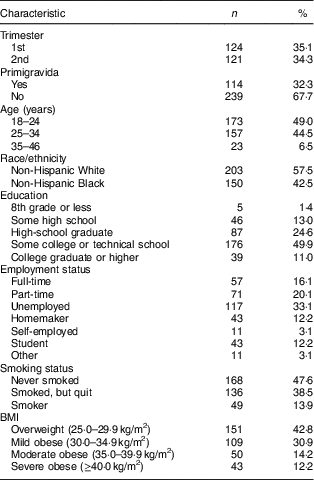
Descriptive analysis was performed.
Table 2 shows demographic risk factors associated with high stress. Of the sample, 45% reported high stress. Women who were at least 35 years old (OR=4·09; 95% CI 1·45, 11·51), had high school or less education (OR=1·88; 95% CI 1·22, 2·89) or were unemployed (OR=1·89, 95% CI 1·15, 3·12) were significantly more likely to report high stress than women who were younger, had at least some college education or were employed/homemakers. No significant relationships were found between race, smoking status and stress.
Subgroups of low-income pregnant women with overweight or obesity and with high stress (n 353) recruited from four local Special Supplemental Nutrition Program for Women, Infants, and Children agencies in Michigan, USA, May–August 2010
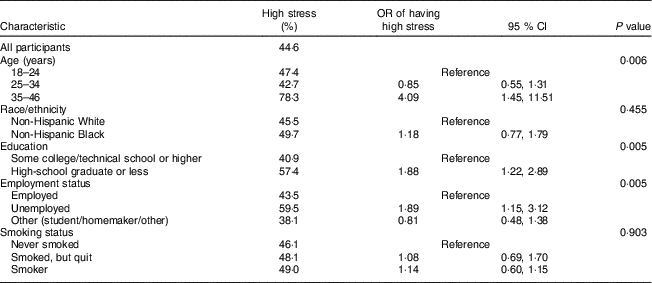
Descriptive analysis and χ 2 tests were performed. The cut-offs are OR of 1·68, 3·47 and 6·71 for small, medium and large effect size, respectively( Reference Chen, Cohen and Chen 81 ).
Table 3 summarizes mean fat, fruit and vegetable intakes by level of stress and sample characteristics and their bivariate associations. Table 4 presents the adjusted relationships of level of stress and demographics with dietary intakes of fat, fruits and vegetables.
Mean dietary intakes of fat, fruits and vegetables by level of stress and sample characteristics of the low-income pregnant women with overweight or obesity (n 353) recruited from four local Special Supplemental Nutrition Program for Women, Infants, and Children agencies in Michigan, USA, May–August 2010
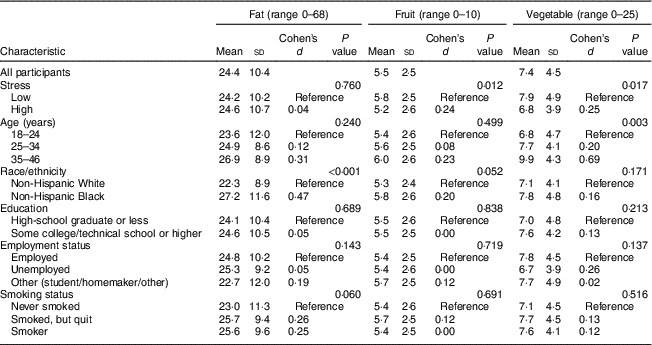
Descriptive analysis, t tests and ANOVA were performed. The P value indicates the overall significance of the bivariate association between dietary intake and sample characteristics (e.g. age and fat intake) using the t test for dichotomous characteristics (stress, race/ethnicity and education) and ANOVA (age, employment status and smoking status). The cut-offs are Cohen’s d of 0·2, 0·5 and 0·8 for small, medium and large effect size, respectively( Reference Cohen 82 ).
Relationships of level of stress and demographics with dietary intakes of fat, fruits and vegetables, adjusting for covariates using multiple linear regression models, among the low-income pregnant women with overweight or obesity (n 353) recruited from four local Special Supplemental Nutrition Program for Women, Infants, and Children agencies in Michigan, USA, May–August 2010

Multiple linear regression modelling was performed. Covariates included in the model were trimester, gravidity, age, race, education, employment and smoking status.
*P<0·05, **P<0·01, ***P<0·001.
Levels of stress
There was no relationship between level of stress and fat intake. However, women with high stress consumed significantly less fruits (P=0·01) and vegetables (P=0·02) than women with low stress, with effect sizes of d=0·24 and 0·25, respectively, for the between-group differences (Table 3). The significant relationships were sustained after adjusting for covariates (trimester, gravidity, age, race, education, employment and smoking status) using multiple linear regression models (Table 4).
Age
While no statistically significant relationship was found between age and fat and fruit intakes, women aged 35 years or older reported a significant higher vegetable intake (P=0·003) than women aged 24 years or younger, with an effect size of d=0·69 for the between-group difference (Table 3). The significant relationship between age and vegetable intake was sustained after adjusting for covariates (Table 4).
Race/ethnicity
Black women were more likely to report higher fat (P<0·001) but not fruit or vegetable intake than white women in unadjusted analyses, with d=0·47 for the between-group difference in fat intake (Table 3). The significant relationship between race and fat intake was sustained in the adjusted analyses (Table 4).
Discussion
Our first objective was to identify demographic risk factors associated with high stress in low-income pregnant women with overweight or obesity. Our results showed that nearly half of these pregnant women reported high stress. This finding is of concern because high stress impairs executive function (a mental process that enables individuals to coordinate thought, action and emotion to achieve positive health outcomes)( Reference Diamond 46 ). Executive function deficits are associated with increased high fat intake( Reference Hall 47 ), snacking( Reference Powell, McMinn and Allan 48 ), unhealthy eating( Reference Lavagnino, Arnone and Cao 49 , Reference Ziauddeen, Alonso-Alonso and Hill 50 ), overeating( Reference Hege, Stingl and Kullmann 51 – Reference Schiff, Amodio and Testa 54 ), weight gain( Reference Ziauddeen, Alonso-Alonso and Hill 50 , Reference Nederkoorn, Houben and Hofmann 55 ) and obesity( Reference Lavagnino, Arnone and Cao 49 , Reference Emery and Levine 56 – Reference Yang, Shields and Guo 58 ). Our results also showed that older age, lower education and unemployment were associated with higher risk of stress. Although the associations were of small to medium effect sizes (OR=1·88–4·09), they translated to the clinical meaningful difference that a 15–30% higher proportion of these women reported high stress. There are multiple possible explanations for the three identified demographic risk factors. First, pregnant women aged 35 years or older may experience stress due to their awareness of risks related to their age, namely miscarriage, gestational disorders and labour complications( Reference Bewley, Davies and Braude 59 , Reference Boivin, Rice and Hay 60 ). Women with lower education may have fewer positive coping skills, which is associated with less resilience to stress( Reference Southwick, Vythilingam and Charney 61 , Reference Bonanno, Galea and Bucciarelli 62 ). Becoming unemployed decreases income, which is associated with less resilience to stress( Reference Bonanno, Galea and Bucciarelli 62 ). The lack of racial differences in the study may be explained by the fact that, regardless of race, our study participants were already under stress due to their status of having low income and being pregnant( Reference Williams, Yan and Jackson 63 , Reference Turner and Avison 64 ).
The findings of our first objective are consistent with findings of some studies( Reference Hurley, Caulfield and Sacco 22 – Reference Woods, Melville and Guo 24 ), yet disagree with the findings of others( Reference Silveira, Pekow and Dole 12 , Reference Glasheen, Colpe and Hoffman 13 , Reference Stancil, Hertz-Picciotto and Schramm 23 , Reference Woods, Melville and Guo 24 ). The discrepancies between our findings and others may be explained by differences in study populations and methodology. While we studied only black or white low-income pregnant women with overweight or obesity, other studies focused on pregnant women with racially diverse backgrounds( Reference Glasheen, Colpe and Hoffman 13 , Reference Woods, Melville and Guo 24 ), highly educated white women (85%)( Reference Hurley, Caulfield and Sacco 22 ), only Latinas( Reference Silveira, Pekow and Dole 12 ) or African Americans( Reference Stancil, Hertz-Picciotto and Schramm 23 ). The methodology differences include the instrument used to measure stress and the cut-off value to dichotomize high v. low stress. While other researchers have used the Prenatal Psychosocial Profile Stress Scale( Reference Woods, Melville and Guo 24 ) or the Kessler Distress Scale( Reference Glasheen, Colpe and Hoffman 13 ) to measure stress, our study and two other studies utilized the Perceived Stress Scale( Reference Silveira, Pekow and Dole 12 , Reference Stancil, Hertz-Picciotto and Schramm 23 ). While we used 3·0 as a cut-off value to quantify high v. low stress, other studies either used a cut-off value of 2·1( Reference Silveira, Pekow and Dole 12 ) or did not report the cut-off value used( Reference Stancil, Hertz-Picciotto and Schramm 23 ).
The American College of Obstetricians and Gynecologists recognizes that psychosocial factors (e.g. stress, depression, intimate partner violence) increase the risk of perinatal depression and screening for those factors may improve maternal health outcomes( 65 ). We have identified subgroups of women at high risk of stress. Therefore, obstetricians and midwives (or clinicians) may consider screening stress in pregnant women with low income and overweight or obesity, especially those who are least 35 years old, have a high school or less education or are unemployed, by asking a single question: ‘How do you rate your current stress level – low or high?’( Reference Lapp 66 ) Then, they may consider further screening for depression in those who self-report high stress, for two reasons. First, high stress is strongly associated with depression( Reference Falconnier and Elkin 67 ). To our knowledge, currently there are limited or no services available for those who solely report high stress; however, there are mental health services available for those who report more depressive symptoms. Intimate partner violence is associated with high stress( Reference Basile, Arias and Desai 68 ). Clinicians may consider screening for intimate partner violence by asking two questions privately: ‘Do you feel unsafe where you live?’ and ‘In the past year, has anyone hit you or tried to hurt you?’( Reference Lapp 66 ), then providing appropriate resources. Other approaches that clinicians may take for women identified as having high stress would be to encourage them to attend their scheduled referral appointments, provide lists of community resources (e.g. food pantry, food bank) and refer them to free clinics for other health issues as needed. Also, clinicians may consider suggesting women with high stress to practise or engage in mindfulness exercise (e.g. meditation, mindfulness breathing and yoga), a potential effective approach to reduce stress in pregnant women( Reference Satyapriya, Nagendra and Nagarathna 69 – Reference Krusche, Dymond and Murphy 72 ).
Our second objective was to examine the relationships between level of stress, demographics and dietary fat, fruit and vegetable intakes. Our results revealed that high stress was not associated with fat intake, but women with high stress reported lower fruit (d=0·24) and vegetable intakes (d=0·25) than women with low stress even after adjusting for covariates. It is possible that our study participants tried to reduce high-fat food intake (e.g. fried chicken, lunch meats and hamburgers that were measured in our survey) for the good health of their fetus regardless of their stress level( Reference Chang, Nitzke and Buist 73 ). However, increasing fruit and vegetable intakes might be difficult when under high stress( Reference Chang, Nitzke and Guilford 74 ). Our finding on the relationship between stress and dietary intake supported findings of a prior study( Reference Chang, Brown and Nitzke 75 ) but contradicted another study showing a positive relationship between stress and fat intake but no relationship between stress and fruit and vegetable intake( Reference Hurley, Caulfield and Sacco 22 ). The inconsistent findings may be due to a difference in target populations. While the prior study included well-educated, middle-class women with all body sizes(22), we studied low-income women with overweight or obesity.
In terms of examining the relationships between demographic characteristics and dietary intakes of fat, fruits and vegetables, we found that women with older age were likely to report higher vegetable intake (d=0·69). Also, black women reported higher fat intake (d=0·47) than white women even after adjusting for covariates, which may relate to the availability of high-fat foods in their environments. Previous studies have shown that more fast-food restaurants( Reference Block, Scribner and DeSalvo 76 ) but fewer chain supermarkets( Reference Powell, Slater and Mirtcheva 77 ) are located in black neighbourhoods than white neighbourhoods. The significant associations were of medium effect size (d=0·47–0·69). The dietary intakes of fat, fruits and vegetables were measured by items each scored 0 (‘less than one time per week’) to 5 (‘two or more times a day’). Therefore, the effect sizes are not translatable to clinically meaningful measures in actual amount of intake. Future studies using more precise dietary intake measures (e.g. 24h dietary recall or FFQ) are needed to further quantify the associations and related clinical meanings. The lack of differences based on education, employment and smoking status might be explained by the low income of our cohort. Prior studies have shown that being low income has a negative impact on individuals’ dietary choices, which may have prevented low-income adults from following nutritional recommendations for a healthy diet( Reference Cavaliere, De Marchi and Banterle 78 – Reference Bowman 80 ). Comparing results of our study regarding the relationships between demographics and intakes of fat, fruits and vegetables is challenging, because this is one of few studies investigating the relationship. Nevertheless, our findings may provide potentially useful information to clinicians working with low-income pregnant women with a higher BMI. Since age and race are typically reported during a prenatal visit, clinicians may consider providing targeted nutrition education that focuses on increasing vegetable intake in younger women and reducing fat intake in black women to potentially improve maternal and birth outcomes.
There are several limitations to the current study. First, the cross-sectional design precludes declarations of causal relationships. Our data, including the assessment of stress and dietary intake, were based on self-reported values and may therefore be subject to recall bias. Also, the Rapid Food Screener that we used can only assess frequency of fat, fruit and vegetable intake; we were limited in our ability to evaluate whether our participants met dietary guidelines. However, the Rapid Food Screener has been widely used because of its practicality to assess nutrition status in community settings. Moreover, the study included only black and white English-speaking pregnant women with overweight or obesity who were recruited from Michigan. Thus, our sample may not represent the full diversity of low-income pregnant women with overweight or obesity in all geographic locations.
Conclusion
We have demonstrated that stress is likely to be higher in women who are older, less educated and unemployed. Stress was negatively associated with fruit and vegetable intake and age was positively associated with vegetable intake. Finally, black race was associated with higher fat intake. Clinicians may consider targeted nutrition counselling on reducing fat intake for women who are black and increasing fruit and vegetable intake for women who are younger or report high stress. Finally, future longitudinal studies of low-income pregnant women with overweight or obesity are needed to confirm our study findings.
Acknowledgements
Financial support: This research received no specific grant from any funding agency in the public, commercial or not-for-profit sectors. Conflict of interest: None of the authors has a conflict of interest. Authorship: M.-W.C. designed and carried out the study. A.T. conducted the analysis; M.-W.C., A.T. and J.S. participated in formulating the research questions and interpreting findings. M.-W.C. and A.T. drafted and critically revised the manuscript. J.S. contributed to critical revision of the manuscript. All the authors have read and approved the final manuscript. Ethics of human subject participation: This study was conducted according to the guidelines laid down in the Declaration of Helsinki and all procedures involving human subjects were approved by Michigan State University’s Institutional Review Board. Written informed consent was obtained from all subjects.



