


INTRODUCTION
Benthic soft-bottom communities have been historically surveyed for a long time thanks to their relative accessibility for sampling using trawls, dredges and grabs. These traditional and destructive methods provided an extensive and useful amount of presence data, but only weak information about many sessile species' density, large and small-scale distribution or main habitat features. This is also true for pennatulaceans: colonial octocorals characterized by a distinct feather-like appearance and adapted to living on varying substrata where they may occasionally form dense aggregations, also known as fields or facies (Pérès & Picard, Reference Pérès and Picard1964; Williams, Reference Williams1995, Reference Williams2011), forming so-called animal forests (Rossi, Reference Rossi2013; Rossi et al., Reference Rossi, Bramanti, Gori, Orejas and Rossi2017).
In the Mediterranean Sea, most of the pennatulaceans usually live between the mesophotic (~50–150 m depth) and the aphotic zones (>150–200 m depth), and their direct observation has only been possible in the last few decades thanks to the use of deep-diving equipment (up to ~80 m depth) or remotely operated vehicles (ROVs). However, at least in the Mediterranean Sea, ROV surveys have been generally focused on hard-bottom communities, mainly keeping the use of destructive (but cheaper) practices, such as trawling, for the study of soft-bottom communities. This is particularly true for mesophotic communities, usually neglected in visual surveys, being considered too deep for traditional scuba diving (up to 40 m depth) but too shallow for deep-sea explorations (below 200 m depth) (e.g. Angeletti et al., Reference Angeletti, Ceregato, Ghirelli, Gualandi, Lipparini, Malatesta, Sperotti and Taviani2010; Gori et al., Reference Gori, Bavestrello, Grinyó, Dominguez-Carrió, Ambroso, Bo and Rossi2017; Chimienti et al., Reference Chimienti, Bo and Mastrototaro2018b).
The present study is focused on a facies of the red sea pen Pennatula rubra (Ellis, 1761). Although P. rubra is considered widespread on the Mediterranean muddy and sandy-mud bottoms (Kükenthal & Broch, Reference Kükenthal and Broch1911; Pérès & Picard, Reference Pérès and Picard1964; López-González et al., Reference López-González, Gili and Williams2001), information about its distribution is still very scarce. The only recorded occurrences of a facies of P. rubra are in the Messina Strait (Porporato et al., Reference Porporato, Mangano, De Domenico, Giacobbe and Spanò2008) and the Italian coasts off Calabria, in the Northern Ionian Sea (Chimienti et al., Reference Chimienti, Maiorano and Mastrototaro2015, Reference Chimienti, Angeletti and Mastrototaro2018a). Density data obtained with ROV visual surveys in this latter area of the Ionian Sea are here presented and compared with those obtained during the experimental bottom trawl surveys, mainly targeting the assessment of demersal resources (Bertrand et al., Reference Bertrand, Gil De Sola, Papaconstantinou, Relini and Souplet2002; Chimienti et al., Reference Chimienti, Maiorano and Mastrototaro2015), in order to understand the efficiency of such a net in the removal of the sea pens and its reliability for quantitative studies. Fishing gear efficiency and selectivity on sea pens had been previously studied by Troffe et al. (Reference Troffe, Levings, Piercey and Keong2005) who found that shrimp beam trawl and prawn traps had a 0–5% efficiency on the sea whip Halipteris willemoesi Kölliker, 1870 at two bays on Clio Channel, south-central coast of British Columbia, Canada. In addition, beam trawl efficiency on a field of the slender sea pen Virgularia mirabilis (Müller, 1776) in the Celtic Sea was found to be 0% (Doyle et al., Reference Doyle, Lordan, Fitzgerald, O'Connor, Fee, Nolan and Hayes2011), because of the ability of this species to rapidly and fully retract into the sediment (Ambroso et al., Reference Ambroso, Gori, Dominguez-Carrió, Gili, Berganzo, Teixidó, Greenacre and Rossi2014). Moreover, Kenchington et al. (Reference Kenchington, Murillo, Cogswell and Lirette2011) report a gear efficiency of 3.7–8.2% of trawl fishing on a mixed community of sea pens belonging to the genera Anthoptilum, Halipteris, Kophobelemnon and Pennatula in the Laurentian Channel, Canada. Furthermore, although gear efficiency for sea pens is low, incidental mortality can be very high, ranging from 40–50% more over up to one year post trawl (Kenchington et al., Reference Kenchington, Murillo, Cogswell and Lirette2011). As a consequence, the higher sea pen concentrations are generally located in areas characterized by low or null fishing activity (Heifetz et al., Reference Heifetz, Stone and Shotwell2009; Murillo et al., Reference Murillo, Kenchington, Gonzalez and Sacau2010, Reference Murillo, MacDonald, Kenchington, Campana, Sainte-Marie and Sacau2018). In fact, comparative studies have found significantly lower sea pen density in areas of high trawling intensity (Engel & Kvitek, Reference Engel and Kvitek1998; Hixon & Tissot, Reference Hixon and Tissot2007), indicating an inability to recover after frequent fishing pressure (low resilience).
Sea pen fields have been listed as Vulnerable Marine Ecosystems worldwide due to the fact that, similarly to other aggregating anthozoans, they are able to enhance spatial heterogeneity on flat soft bottoms (Troffe et al., Reference Troffe, Levings, Piercey and Keong2005; Kenchington et al., Reference Kenchington, Murillo, Cogswell and Lirette2011, Reference Kenchington, Murillo, Lirette, Sacau, Koen-Alonso, Kenny, Ollerhead, Wareham and Beazley2014) and attract vagile fauna (Baillon et al., Reference Baillon, Hamel, Wareham and Mercier2012; Mastrototaro et al., Reference Mastrototaro, Maiorano, Vertino, Battista, Indennidate, Savini, Tursi and D'Onghia2013), also providing shelter for small-size species, both in shallow and deep-sea environments (Bastari et al., Reference Bastari, Pica, Ferretti, Micheli and Cerrano2018; Chimienti et al., Reference Chimienti, Angeletti and Mastrototaro2018a, Reference Chimienti, Bo, Taviani, Mastrototaro, Orejas and Jiménez2018c). From a functional point of view, these suspension feeders contribute to a significant flow of matter and energy from the pelagic to the benthic system (Gili & Coma, Reference Gili and Coma1998). The Northwest Atlantic Fisheries Organization (NAFO), following the guidelines of the Food and Agriculture Organization (FAO, 2009), have identified pennatulaceans as key structural components of soft bottom ecosystems (Fuller et al., Reference Fuller, Murillo Perez, Wareham and Kenchington2008; NAFO, 2008; Murillo et al., Reference Murillo, Kenchington, Gonzalez and Sacau2010, Reference Murillo, Kenchington, Beazley, Lirette, Knudby, Guijarro, Benoît, Bourdages and Sainte-Marie2016) and has closed areas for their protection. Sea pens are also listed in the IUCN Red List of Mediterranean Anthozoa (Otero et al., Reference Otero, Numa, Bo, Orejas, Garrabou, Cerrano, Kružić, Antoniadou, Aguilar, Kipson, Linares, Terrón-Sigler, Brossard, Kersting, Casado-Amezúa, García, Goffredo, Ocaña, Caroselli, Maldonado, Bavestrello, Cattaneo-Vietti and Özalp2017), where P. rubra has been reported as vulnerable. Consequently, accurate estimates of their abundance and population structure are required for establishing and monitoring closed areas for their protection.
The aims of the present study were (1) to compare ROV and trawling efficiency in the quantitative study of the red sea pen P. rubra, and (2) to assess distribution, density and biomass of a field of this species in the Ionian Sea, at several spatial scales.
MATERIALS AND METHODS
The study area is located north-west Punta Alice (southern Italy) in the Ionian Sea (Figure 1). In this area, a facies of P. rubra is present between 60 and 70 m depth on an almost flat sandy mud seabed (Chimienti et al., Reference Chimienti, Maiorano and Mastrototaro2015, Reference Chimienti, Angeletti and Mastrototaro2018a). The area has been surveyed with both experimental trawl (between 2012 and 2014) and ROV (during 2015) (Table 1). Spatial overlapping within ROV transects, within trawl lines, as well as between transects and lines, was avoided (Figure 1). Only part of transect ROV1 crossed the trawl line 39_12, and the corresponding portion of the video survey has not been considered in the analysis.
Study area: (A, B) north-west Punta Alice, southern Italy, Ionian Sea; (C) ROV transects and trawl fishing transects on the field of Pennatula rubra (Ellis, 1761). Measurements: (D) number of polyp leaves and total length.

Metadata of the transects carried out using experimental trawl net and ROV on a Pennatula rubra (Ellis, 1761) field

Trawling was carried out within the MEDITS (MEDiterranean International bottom Trawl Survey) project, using an experimental trawl net with a stretched mesh of 20 mm in the codend (Bertrand et al., Reference Bertrand, Gil De Sola, Papaconstantinou, Relini and Souplet2002). A SCANMAR acoustic system (i.e. a sonar system for monitoring fishing gears) was used to measure the horizontal and vertical openings of the net in order to estimate the swept area of each haul (Fiorentini et al., Reference Fiorentini, Dremière, Leonori, Sala and Palombo1999). The colonies of P. rubra sampled were counted and preserved on board at −20 °C. The catches from the haul 39, replicated yearly from 2012 to 2014 (Table 1), are considered here. The density of P. rubra was estimated as the number of colonies sampled standardized to the swept area of each haul (colonies m−2), and the mean density was then calculated for the three years of study.
Three visual transects were performed in the same area using the ROV ‘Pollux III’, in 2015, within the cruise MARINE STRATEGY 2015 on board the RV ‘Minerva Uno’. The ROV was equipped with a low definition CCD video camera for navigation, and a high-definition (2304 × 1296 pixels) video camera (SonyHDR-HC7) for detailed observation. The ROV also hosted a depth sensor, a compass, a grabber arm and three parallel laser beams providing a 20-cm scale to define the width of the transects for subsequent video analysis. The ROV transects were performed between 64–65 m depth (Table 1), and georeferenced with a transponder and a differential GPS with an accuracy of 0.1 m.
The density of P. rubra for each ROV transect was calculated considering the number of colonies observed and the covered area. The mean density was then calculated for the three ROV transects, and a Student's t-test was applied to compare the mean density values obtained with both the trawl net and the ROV. Trawl net efficiency was calculated considering the density observed with ROV with respect to that sampled by trawling. Coefficient of variation was calculated as the mean/standard deviation ratio.
Video analysis was performed using Adobe Premiere Pro software. Sampling units of 2.5 ± 0.2 m2 were defined along each transect, according to the minimal area proposed by Weinberg (Reference Weinberg1978) and recently used for ROV imaging by Ambroso et al. (Reference Ambroso, Gori, Dominguez-Carrió, Gili, Berganzo, Teixidó, Greenacre and Rossi2014). Sequences with bad visibility, due to water turbidity or distance from the seabed, were discarded. A total of 288 useful sampling units were obtained: 97 from ROV1, 96 from ROV2 and 95 from ROV3. The presence of P. rubra was quantified both by occupancy (frequency of occurrence in the set of sampling units) and by abundance (number of colonies per sampling unit), and the density (colonies m−2) was calculated for each sampling unit. The pattern of distribution of colonies was highlighted plotting the sampling units on a table and indicating those featuring the presence of P. rubra.
Biomass and size structure analysis
Colonies of P. rubra sampled using trawl net during 2013 (N = 168) were measured for the size structure analysis of the population. Total length (TL; mm) was measured for each colony considering both rachis and peduncle (Figure 1D). Measurements were carried out after thawing, considering that the freezing process implies the complete contraction of the colonies. Living colonies can contain a considerable quantity of seawater driving their contraction, and relaxed colonies can be as much as three times longer than contracted ones (Chimienti et al., Reference Chimienti, Angeletti and Mastrototaro2018a), thus any in vivo biometric measurement results are not reliable. Size–frequency distribution within the population was assessed using TL, with intervals of 5 mm (19 classes; minimum: 30 mm, maximum: 125 mm). Wet weight (g) of contracted colonies was measured. Dry weight (DW; g) was also measured for each colony after drying in an oven (96 h at 40 °C) and the dry biomass was calculated. Moreover, both right and left polyp leaves of each sampled colony were counted and the mean value (PL) was calculated when the number was different from the two sides of the same colony (Figure 1D). A correlation between TL and PL was assessed in order to use this latter measure as a proxy for colony size in ROV imaging. Furthermore, the relationship between biometric parameters (TL and PL) and biomass (DW) was determined in all the colonies analysed covering a wide size spectrum, in order to identify the best biometric parameter to estimate P. rubra biomass from ROV footage.
Polyp leaves were counted for all the colonies of P. rubra whose position, contraction and ROV framing allowed it (N = 207 colonies). Thanks to the TL/PL correlation, TL was estimated from the PL of the population observed with ROV. Also in this case, direct biometric measurements of the rachis length from the video footage (peduncle is bored into the sediment) have been considered not reliable due to the different level of contraction that colonies can show underwater (Chimienti et al., Reference Chimienti, Angeletti and Mastrototaro2018a). The smallest colonies observed (20–50 mm in height) were considered young colonies. The size structure was analysed using distribution parameters such as kurtosis and skewness.
Biomass of P. rubra as DW from ROV footage was estimated using the best correlation with biometric parameters.
Statistical analyses
In order to compare the density of P. rubra with both trawling and ROV approaches, permutational analysis of variance (PERMANOVA; Anderson, Reference Anderson2001) following a one-factor design (Approach (A), as fixed factor with 2 levels) was performed. Differences of TL from both direct (from colonies sampled with trawling) and indirect (from colonies observed with ROV) measurements were assessed with PERMANOVA using an experimental design with two factors (Approach (A), as fixed factor with 2 levels and Transect (T(A)), as nested random factor with 3 levels).
Spatial autocorrelation was assessed by using Moran's index (Chen, Reference Chen2013). To evaluate the differences in the colonies’ density and TL at several spatial scales, three sub-transects (separated by tens of metres) were selected within each ROV transect. PERMANOVA analysis of variance was performed using the following hierarchical sampling design: Transect (T, as random factor with 3 levels, covering hundreds of m2), Sub-transect (S(T), as nested random factor with 3 levels, covering tens of m2). Statistical analyses were based on Euclidean distances on untransformed data, using 9999 random permutations of the appropriate units (Anderson & ter Braak, Reference Anderson and ter Braak2003). Mean squares calculated by PERMANOVA were used to estimate multivariate variance components associated at each spatial scale (Anderson et al., Reference Anderson, Diebel, Blom and Landers2005). Because of the restricted number of unique permutations in the pairwise tests, P values were obtained from Monte Carlo samplings. The analyses were performed using the software PRIMER v. 6 (Clarke & Gorley, Reference Clarke and Gorley2001).
RESULTS
Colonies of P. rubra were sampled during the three years of trawl surveys, as 403 colonies in 2012, 168 in 2013 and 89 in 2014, with estimated densities of 0.009, 0.004 and 0.002 colonies m−2, respectively. Mean density value for the three years was 0.005 ± 0.004 colonies m−2.
On the other hand, ROV transects on the same population revealed a density of 0.617, 0.636 and 0.789 colonies m−2 for ROV1, ROV2 and ROV3, respectively. The mean density of 0.681 ± 0.094 colonies m−2 was significantly higher than that estimated with the trawl net (α = 0.01; P < 0.0001). Based on the inverse power function, Moran's values are near zero in each transect (I T1 ≈ 0.063243813 > 0; I T2 ≈ 3.97218×10⁻⁵ > 0; I T3 ≈ −0.0213 < 0), and the global value of Moran's index is I ≈ 0.01506 > 0, indicating a weak positive autocorrelation. Furthermore, PERMANOVA analysis showed significant differences in density of P. rubra between ROV and trawling approaches (Table 2). The trawl net efficiency on P. rubra removal was ~1%. The coefficient of variation was 0.72 for trawling and 0.14 for ROV.
Results from PERMANOVA showing differences in density of Pennatula rubra (Ellis, 1761) between approaches tested (ROV and trawling gear)
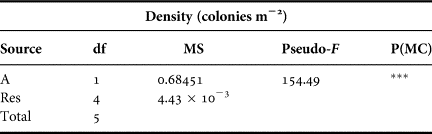
df, degree of freedom; MS, mean sum of squares; Pseudo-F, F value by permutation; P(MC), probability level after Monte Carlo simulations. ***P < 0.001.
ROV imaging allowed the observation of a total of 517 colonies of P. rubra along all transects, with 83% of occupancy (Table 3). Abundance ranged from 1 to 12 colonies per sampling unit, with a minimum density of 0.4 colonies m−2 and a maximum density of 4.8 colonies m−2. PERMANOVA analysis underlined no significant differences in density of P. rubra at all the considered scales (Table S1), confirming the consistency in P. rubra distribution (Table 3).
Metadata of ROV imaging for the three transects carried out on the field of Pennatula rubra (Ellis, 1761)

A spatial plot is provided for each ROV transect. Sampling units where one or more colonies of P. rubra have been observed are in grey, with the number of colonies inside, while those without colonies are in white.
Many of the sampled colonies showed mechanical damage such as assail fractures and tissue abrasions caused by the net, proving a consistent impact of trawling on these soft-bottom octocorals (Figure 2A–C). Moreover, ROV footage showed some trawl marks in the area, indicating a certain commercial fishing pressure not quantified in this study.
Pennatula rubra (Ellis, 1761) colonies: (A) haul from trawl fishing net; (B) fracture of axial rod and (C) tissue abrasion of colonies in the net; (D) different sizes of colonies sampled with the net; (E) adult and juvenile (white circle) observed with ROV; (F) facies observed by ROV; (G) detail of a juvenile colony. Scale bars: A–F, 3 cm; G, 1 cm.

Biomass and size structure analysis
Colonies of P. rubra sampled by trawling ranged from 34–125 mm of TL, while the most represented size classes were between 81–100 mm. Size–frequency distribution was mesokurtic (0.89 of kurtosis), with a moderately negative skewness (Figure 2D; Figure 3A).
Size–frequency distribution of the same population of Pennatula rubra (Ellis, 1761) assessed with: (A) samples from trawl fishing; (B) ROV imaging.

The biometric relationships between DW and TL, and between DW and PL showed, respectively, the following exponential relationships: y = 4 × 10−7x 3.4661 with R 2 = 0.78 (Figure 4A) and y = 4 × 10−5x 3.4948 with R 2 = 0.82 (Figure 4B). PL and TL were related as: y = 0.3722x 0.9078 with R 2 = 0.77 (Figure 4C).
Biometric relationships of the sampled colonies of Pennatula rubra (Ellis, 1761), between: (A) dry weight and total length; (B) dry weight and number of polyp leaves; (C) number of polyp leaves and total length.

Considering the PL/TL correlation obtained with trawling, size–frequency distribution of the subpopulation observed with the ROV was assessed (Figure 3B). Colonies' estimated TL ranged between 25.3–128 mm, and the most represented size classes resulted again between 81–100 mm. The population displayed positive kurtosis of 2.45 (mesokurtic), data being slightly more peaked than trawling ones. Skewness was highly negative, underlying the presence of a left tail represented by young colonies (Figure 3B). Statistical analyses showed significant differences in TL among sub-transects, at spatial scales of tens of m2, whereas estimates of multivariate variation showed the largest variation at the scale of residual variation, indicating heterogeneity among sampling units, at the scale of several m2 (Table 4). TL measured from trawling samples and through ROV in each transect revealed differences among transects, beyond differences between the two approaches tested (Table 5).
Results from the multivariate permutational analysis (PERMANOVA) testing differences in total length of Pennatula rubra (Ellis, 1761) at several spatial scales

df, degree of freedom; MS, mean sum of squares; Pseudo-F, F value by permutation; P, probability level; ns, not significant; CV, Estimates of components of variation (square root). *P < 0.01.
PERMANOVA analysis underlining differences in total length of Pennatula rubra (Ellis, 1761) among approaches tested (ROV and trawling gear)

df, degree of freedom; MS, mean sum of squares; Pseudo-F, F value by permutation; P, probability level. *P < 0.01; **P < 0.01.
Young, small-sized colonies were observed with the ROV (Figure 2E, G) and sampled with the experimental trawl net (Figure 2D; Figure 3A), proving the recruitment of this species in the study area, but also the impact of trawling on them.
Wet weight of trawled samples was 401.5 g, with a relative biomass of 0.0098 g m−2, while DW was 141.39 g and dry biomass 0.0034 g m−2. PL was selected as proxy to estimate DW from ROV footage, considering that DW was better correlated with PL than with TL (Figure 4A, B). DW calculated with ROV was 281.85 g, with an estimated biomass of 0.37 g m−2 for the three ROV transects (1.0533 g m−2 of wet weight).
DISCUSSION
The present study emphasizes the results obtained by surveying the same population of P. rubra with two different approaches. The extremely higher density of P. rubra observed by ROV with respect to the one estimated with experimental trawl net provides important insights into the efficiency of trawl gears in the study of sea pen communities, also supported by the lower coefficient of variation obtained with ROV (14%) with respect to that of trawling (72%). It represents the first observation of the trawl net selectivity on sea pens in the Mediterranean Sea and one of the few carried out worldwide (Kenchington et al., Reference Kenchington, Murillo, Cogswell and Lirette2011). The low gear efficiency on pennatulid species found by Kenchington et al. (Reference Kenchington, Murillo, Cogswell and Lirette2011) in the North-west Atlantic (Laurentian Channel, Canada) is confirmed here, with a lowest percentage value for P. rubra. Besides being considerably less invasive, ROV surveys proved to be much more accurate for the quantitative study of octocoral communities compared to trawl fishing nets. Sea pen density assessed with trawling is largely underestimated due to the scarce catch efficiency of the net, and to the patchy distribution that pennatulaceans could have over the wide swept area. Although the trawl net is not the elective gear for fully quantitative sampling of benthic communities, it can represent a useful way to collect valuable information about the presence and distribution of benthic species, including the identification of sea pen fields over large spatial scales (Kenchington et al., Reference Kenchington, Murillo, Lirette, Sacau, Koen-Alonso, Kenny, Ollerhead, Wareham and Beazley2014; Chimienti et al., Reference Chimienti, Maiorano and Mastrototaro2015; Murillo et al., Reference Murillo, Kenchington, Beazley, Lirette, Knudby, Guijarro, Benoît, Bourdages and Sainte-Marie2016, Reference Murillo, MacDonald, Kenchington, Campana, Sainte-Marie and Sacau2018; Terribile et al., Reference Terribile, Evans, Knittweis and Schembri2016). Moreover, the collection of samples with the trawl net allowed the identification of specific correlations between morphometric parameters, that can be used in future studies to estimate P. rubra colony size and biomass using visual techniques. The finding of biometric relationships has been recently carried out for congeneric and other sea pen species in eastern Canada (Murillo et al., Reference Murillo, MacDonald, Kenchington, Campana, Sainte-Marie and Sacau2018), for other octocorals (e.g. Ambroso et al., Reference Ambroso, Gori, Dominguez-Carrió, Gili, Berganzo, Teixidó, Greenacre and Rossi2014), as well as for other marine invertebrates (e.g. Mastrototaro et al., Reference Mastrototaro, Chimienti, Matarrese, Gambi and Giangrande2015a). Exponential length-weight relationship for P. rubra are in accordance with those found by Murillo et al. (Reference Murillo, MacDonald, Kenchington, Campana, Sainte-Marie and Sacau2018) for the congeneric P. aculeata Danielssen, 1860 and P. grandis Ehrenberg, 1834. Using such correlations, non-invasive visual techniques proved to be effective also for discerning population structure, as highlighted by the comparable size–frequency distribution obtained with the two approaches (Figure 3A, B). Both methods can have pros and cons: trawling allows the direct measurement of total length, it is usually cheaper than using ROV imaging and it covers a wider area, but it is destructive and less efficient; ROV imaging allows investigation of density and population structure at smaller spatial scales, but more efficiently. Trawling is still essential to find sea pen fields, while ROV imaging can be used to monitor these fields, once identified, in a non-destructive manner that would be consistent with protection measures.
The variability at different scales is crucial to understanding local patterns of distribution. Moran's values near zero suggested that the spatial processes promoting the observed pattern is random chance. Although P. rubra is expected to have a patchy and clumped distribution on large scales (e.g. few kilometres), as with other sea pens (Langton et al., Reference Langton, Langton, Theroux and Uzmann1990), it was randomly distributed within the patch, at the scales explored with the ROV (Table S1). Total length varied more at the smaller scales (Table 4), indicating certain heterogeneity of size classes among sub-transects (tens of m2). The overall low abundance of young colonies could indicate low levels of population recruitment, and/or high mortality of young colonies (e.g. Gori et al., Reference Gori, Rossi, Linares, Berganzo, Orejas, Dale and Gili2011, Reference Gori, Bavestrello, Grinyó, Dominguez-Carrió, Ambroso, Bo and Rossi2017) (Figure 3A, B).
Species able to rapidly withdraw into the sediments, such as V. mirabilis, are considered sensitive to the sediment vibration caused by bottom contact gear approaches (Greathead et al., Reference Greathead, Donnan, Mair and Saunders2007), thus being less impacted by trawling. Pennatula rubra is also able to do so, but not as quickly (Chimienti et al., Reference Chimienti, Angeletti and Mastrototaro2018a). The slow time of withdrawal and the high surface exposed by erected colonies (Figure 2E, F) makes P. rubra particularly vulnerable to trawl gear impact. As a consequence, despite trawl efficiency being low, incidental mortality in this species can be very high due to trawl damage including dislodgement, fracture of the axial rod and soft tissue abrasion (Malecha & Stone, Reference Malecha and Stone2009; Kenchington et al., Reference Kenchington, Murillo, Cogswell and Lirette2011) (Figure 2B–D).
The importance of sea pen fields is increasingly recognized and more incisive effort should be made in the mapping of these habitats. A good starting point could be represented by the analysis of trawl catch of both experimental and commercial fisheries to assess sea pen presence on a large scale. Once possible sea pen fields are identified, targeted ROV surveys would help to study pennatulacean population structure in a non-invasive way. The trawl data can also be used to produce species distribution models and to further identify areas of likely occurrence (Murillo et al., Reference Murillo, Kenchington, Beazley, Lirette, Knudby, Guijarro, Benoît, Bourdages and Sainte-Marie2016). Sea pen distribution is mainly influenced by depth, typology of sediment and latitude (Ruiz-Pico et al., Reference Ruiz-Pico, Serrano, Punzón, Altuna, Fernández-Zapico and Velasco2017; Murillo et al., Reference Murillo, MacDonald, Kenchington, Campana, Sainte-Marie and Sacau2018), while their aggregation could be driven by the local current regime and by the particle load in the overlying water masses. Other causes of the field-forming behaviour may be related to reproduction, which depends on a sufficient density of individuals and synchrony of spawning (broadcast spawning species), or to particular hydrodynamic regimes that are involved in larvae dispersion and food provision, as for other octocorals (Langton et al., Reference Langton, Langton, Theroux and Uzmann1990; Gori et al., Reference Gori, Bavestrello, Grinyó, Dominguez-Carrió, Ambroso, Bo and Rossi2017; Chimienti et al., Reference Chimienti, Bo, Taviani, Mastrototaro, Orejas and Jiménez2018c). Soft-bottom corals presence and distribution is also affected by fishing impacts, and a few coral aggregations can still remain in areas not accessible to trawling such as those characterized by the presence of large CWC frameworks that can damage the nets, or by the presence of human artifacts, such as submarine cables, that rule out any fishing activity (Mastrototaro et al., Reference Mastrototaro, Maiorano, Vertino, Battista, Indennidate, Savini, Tursi and D'Onghia2013, Reference Mastrototaro, Chimienti, Acosta, Blanco, Garcia, Rivera and Aguilar2017). This accidental protection can drive the conservation of sea pens in some areas, such as for the rare whip-like sea pen Protoptilum carpenteri Kölliker, 1872, found only in two areas of the Mediterranean Sea: in the Ionian Sea thanks to their proximity to CWC frameworks (Mastrototaro et al., Reference Mastrototaro, Chimienti, Capezzuto, Carlucci and Williams2015b), and in the protected area of the Balearic Sea (Mastrototaro et al., Reference Mastrototaro, Chimienti, Acosta, Blanco, Garcia, Rivera and Aguilar2017). Proper protection strategies should support the conservation of sea pen fields and other soft-bottom coral aggregations with an ecosystem-based fishery management and targeted fishing restrictions, as recently carried out in the Santa Maria di Leuca CWC Province, Ionian Sea, where a Deep-Sea Fisheries Restricted Area has been established (GFCM, 2006), as well as in the protected and restricted fishing areas of Gulf of Lions CWC Province (Fabri et al., Reference Fabri, Pedel, Beuck, Galgani, Hebbeln and Freiwald2014).
Despite trawling often being used in soft-bottom benthic community studies, non-destructive monitoring with visual techniques (e.g. ROV) is extensively recommended for the proper study of sea pen fields and their consequent management (Hughes, Reference Hughes1998; Greathead et al., Reference Greathead, Donnan, Mair and Saunders2007; Ruiz-Pico et al., Reference Ruiz-Pico, Serrano, Punzón, Altuna, Fernández-Zapico and Velasco2017). In order to limit impacts by fishing practices, Kenchington et al. (Reference Kenchington, Murillo, Cogswell and Lirette2011) provided a scientific basis for recommending commercial encounter protocols for sea pen fields and other benthic vulnerable marine ecosystems in the NAFO Regulatory Area by determining the maximum distance that a vessel should have to move after an encounter (either shallower or deeper). These area-specific move-on distances from sea pen fields range from 4–20 km (2.4–10.7 nm) depending on the areas (Kenchington et al., Reference Kenchington, Murillo, Cogswell and Lirette2011).
A small number of direct observations, a scarce knowledge of the ecology and biology of these species, as well as the considerable influence of anthropic pressures represent the main issues in sea pen conservation. The P. rubra field examined in this study, despite showing a high density of colonies, cannot be considered to be in pristine condition due to the trawling activity occurring in the area. The development of an encounter protocol for fishery vessels when they come across a sea pen field in the Mediterranean Sea is an urgent starting point for the protection of these coral aggregations, coupled with further efforts in the mapping of these fields and with the identification of particular areas worthy of protection, such as the P. rubra field found in the Ionian Sea.
SUPPLEMENTARY MATERIAL
The supplementary material for this article can be found at https://doi.org/10.1017/S0025315418000851
ACKNOWLEDGEMENTS
Captains, crews and scientific staff of the Marine Strategy and MEDITS cruises and the two ROV pilots Alessio Cesari and Ciro Di Criscienzo are warmly thanked for their efficient and skilful cooperation at sea. Positive comments provided by Ellen Kenchington and anonymous reviewers are gratefully acknowledged. This paper is Ismar-Bologna scientific contribution no. 1949.
FINANCIAL SUPPORT
This study was performed under the Data Collection Framework, co-founded by the EU and the Italian Ministry of Agriculture, Food and Forestry Policies (MIPAAF). Partial funding was provided by CNR and the Italian Marine Strategy Framework Directive Programme.



