





Introduction
Globally, millions of children and adolescents are placed in foster or residential out-of-home care (OHC) due to maltreatment such as neglect or abuse (Desmond et al., Reference Desmond, Watt, Saha, Huang and Lu2020; Vinnerljung & Hjern, Reference Vinnerljung and Hjern2018). A considerable number of young people are involved in both the child protection system and the juvenile justice system (Lee & Villagrana, Reference Lee and Villagrana2015), leading to substantial annual costs across countries (Goldhaber-Fiebert et al., Reference Goldhaber-Fiebert, Snowden, Wulczyn, Landsverk and Horwitz2011). In adulthood, individuals with experience of OHC face disproportionally high rates of criminal offenses and psychiatric disorders compared to non-placed peers (Côté et al., Reference Côté, Orri, Marttila and Ristikari2018; Seker et al., Reference Seker, Boonmann, d’Huart, Bürgin, Schmeck, Jenkel, Steppan, Grob, Forsman, Fegert and Schmid2022). In Sweden, the setting of this study, children and adolescents are placed in OHC if they are at risk of maltreatment or where the physical or psychological development of the child is endangered due to other reasons. Unlike the United States, as well as the United Kingdom and other European countries with separate juvenile justice systems, Swedish juvenile delinquents are handled within the child protection system and measures are aimed primarily at rehabilitation of the offender (Sundell et al., Reference Sundell, Vinnerljung, Löfholm and Humlesjö2007). However, there is only a limited understanding of how trajectories of offending and psychiatric disorders are intertwined up to late adulthood and how these co-occurring trajectories are related to OHC placement. Addressing this gap in knowledge is important since offending and psychiatric disorders, particularly for placed individuals with high psychosocial burdens, are a major public health concern.
According to life-course theories, the adverse childhood circumstances that can result in OHC placement may act as an initiating exposure, setting off a chain of adverse events that accumulate and can lead to adverse psychosocial outcomes in adulthood (Dannefer, Reference Dannefer2003; Kuh et al., Reference Kuh, Ben-Shlomo, Lynch, Hallqvist and Power2003). Familial accumulation of delinquency and early placement in OHC have both been linked to increased risk of an individual offending (Forsman & Brännström, Reference Forsman and Brännström2024; Walters, Reference Walters2022). In the United States, nearly 70% of former OHC-placed individuals have been arrested at least once by age 26 (Courtney et al., Reference Courtney, Dworsky, Brown, Cary, Love and Vorhies2011). Children born in Sweden who spend time in OHC are between 3 and 10 times more likely to receive a conviction between the ages of 20 and 25 compared to peers who were not placed in OHC (Lindquist, Reference Lindquist2023). Additionally, approximately half of the children in OHC placements show any mental disorder due to high psychosocial burdens – rates far higher than peers in the general population (Bronsard et al., Reference Bronsard, Alessandrini, Fond, Loundou, Auquier, Tordjman and Boyer2016). OHC placement in early childhood was associated with a higher risk of psychiatric diagnoses and criminal convictions in young adulthood, even after accounting for background circumstances (Côté et al., Reference Côté, Orri, Marttila and Ristikari2018). Longitudinal studies in the general population have shown that young people in detention and imprisonment in particular often face psychiatric disorders with persistence and high rates in adulthood (Abram et al., Reference Abram, Zwecker, Welty, Hershfield, Dulcan and Teplin2015; Emilian et al., Reference Emilian, Al-Juffali and Fazel2025), and that early personality or externalizing disorders can increase the risk of adult violence (Johnson et al., Reference Johnson, Cohen, Smailes, Kasen, Oldham, Skodol and Brook2000; Mordre et al., Reference Mordre, Groholt, Kjelsberg, Sandstad and Myhre2011; Persson & Ivert, Reference Persson and Ivert2025). This line of work suggests that there is a longitudinal association between criminality and psychopathology, particularly for individuals with experience of OHC. It is crucial to examine how offending and psychiatric outcomes codevelop over time in order to identify individuals with high-risk trajectories across the lifespan, rather than relying solely on possible reciprocal relationships identified in previous studies.
From a developmental perspective, criminal behavior has been viewed as a dynamic behavioral process that typically begins in late childhood or early adolescence, peaks in young adulthood, and decreases in middle age (Farrington, Reference Farrington1986; Farrington et al., Reference Farrington, Kazemian and Piquero2018). Initially, two distinct – adolescence-limited and life-course persistent – developmental trajectories of antisocial behaviors were described in the literature (Moffitt, Reference Moffitt1993). Subsequently, key findings from group-based trajectory studies identified three to four subgroups, including chronic offenders, escalators or desisters, and non-offenders (Jennings & Reingle, Reference Jennings and Reingle2012). Studies based on samples in the general population and OHC populations consistently report that women have lower conviction rates, steeper age-related declines, and less distinct offending trajectories than men (Block et al., Reference Block, Blokland, van der Werff, van Os and Nieuwbeerta2010; Brännström et al., Reference Brännström, Andershed, Vinnerljung, Hjern and Almquist2023). Maltreatment predicted chronic offending up to the age of at least 56 years (Widom et al., Reference Widom, Fisher, Nagin and Piquero2018), and individuals with experience of OHC usually follow more deviant and chronic offending trajectories up to late adulthood than the general population (Hossein, Reference Hossein2025; Kessler et al., Reference Kessler, Berglund, Demler, Jin, Merikangas and Walters2005). Additionally, a recent meta-analysis found that life-course persistent offenders have the highest mental health burden, followed by late-onset and adolescent-limited offenders (Reising et al., Reference Reising, Ttofi, Farrington and Piquero2019). These findings highlight the fact that offenders are a heterogeneous group sharing adverse background, environmental, and neuropsychological factors (Piquero, Reference Piquero2008).
Although group-based trajectory modeling was initially mainly incorporated by criminologists (Nagin & Land, Reference Nagin and Land1993), it has also increasingly been used in developmental psychopathology to examine the dynamic process of mental disorders across the lifespan and an individual’s life-course vulnerability to psychopathology (Cicchetti & Toth, Reference Cicchetti and Toth2009; Paksarian et al., Reference Paksarian, Cui, Angst, Ajdacic-Gross, Rossler and Merikangas2016). Childhood disorders, particularly in the context of more disadvantaged socioeconomic conditions, often persist into adulthood and affect long-term functioning (Copeland et al., 2009, 2015; Kim-Cohen et al., Reference Kim-Cohen, Caspi, Moffitt, Harrington, Milne and Poulton2003). Psychiatric disorders typically follow nonlinear patterns, with early chronic onset in adolescence and an additional risk of late-onset disorders around late adulthood (Kessler et al., Reference Kessler, Berglund, Demler, Jin, Merikangas and Walters2005; Lee, Reference Lee2020; Paksarian et al., Reference Paksarian, Cui, Angst, Ajdacic-Gross, Rossler and Merikangas2016). Externalizing disorders in adolescence are particularly persistent and predictive of poor adult adjustment, both in the general population and among high-risk groups (Agnew-Blais et al., Reference Agnew-Blais, Polanczyk, Danese, Wertz, Moffitt and Arseneault2016; Kretschmer et al., Reference Kretschmer, Hickman, Doerner, Emond, Lewis, Macleod, Maughan, Munafò and Heron2014). Findings from the Dunedin population-based cohort study concluded that across four decades in life, most participants show one mental disorder but cases with enduring mental disorders are relatively rare (Caspi et al., Reference Caspi, Houts, Ambler, Danese, Elliott, Hariri, Harrington, Hogan, Poulton, Ramrakha, Rasmussen, Reuben, Richmond-Rakerd, Sugden, Wertz, Williams and Moffitt2020). It is acknowledged that young adulthood, in particular, is a vulnerable period for the emergence or persistence of mental disorder (Arnett, Reference Arnett2000; Caspi et al., Reference Caspi, Houts, Ambler, Danese, Elliott, Hariri, Harrington, Hogan, Poulton, Ramrakha, Rasmussen, Reuben, Richmond-Rakerd, Sugden, Wertz, Williams and Moffitt2020; Paksarian et al., Reference Paksarian, Cui, Angst, Ajdacic-Gross, Rossler and Merikangas2016), especially among OHC-placed young people (Seker et al., Reference Seker, Boonmann, Gerger, Jaggi, d’Huart, Schmeck and Schmid2022). These prior findings encourage further research studying the dynamics of mental health life histories, assessing an individual’s life-course vulnerability to psychopathology, and identifying causes of this vulnerability (Caspi et al., Reference Caspi, Houts, Ambler, Danese, Elliott, Hariri, Harrington, Hogan, Poulton, Ramrakha, Rasmussen, Reuben, Richmond-Rakerd, Sugden, Wertz, Williams and Moffitt2020) – such as OHC and offending.
Few studies to date have examined the codevelopment of offending and psychiatric trajectories over time. One dual-trajectory study in the general population showed that offending and physical and mental health are dynamically intertwined from age 11 to 32, with class membership being shaped by common psychosocial characteristics (Testa & Semenza, Reference Testa and Semenza2020). Other studies have also reported overlapping trajectories of delinquency and mental disorders in young people, with shared predictive factors (Huang et al., Reference Huang, Lanza and Anglin2013; Wiesner & Kim, Reference Wiesner and Kim2006). These studies align with the suggestion that there is a negative feedback loop between crime and mental health (Semenza et al., Reference Semenza, Isom-Scott, Grosholz and Jackson2020). Both offending and psychiatric outcomes have been described as part of a broader latent structure of psychopathology, the p factor, associated with a wide range of higher levels of impairments (Caspi et al., Reference Caspi, Houts, Belsky, Goldman-Mellor, Harrington, Israel, Meier, Ramrakha, Shalev, Poulton and Moffitt2014). While studies have shown that genetic factors predispose individuals to higher levels and ongoing persistence of general psychopathology, environmental factors can also drive changes over time (Allegrini et al., Reference Allegrini, Cheesman, Rimfeld, Selzam, Pingault, Eley and Plomin2020; Caspi & Moffitt, Reference Caspi and Moffitt2018). Due to the similar underlying factors associated with risks of poor mental health and crime trajectories, it is challenging to examine which observed adverse outcomes for OHC-placed children can be attributed to placement and/or background characteristics.
In the last few decades, there have been increasing efforts to research the effects of OHC on children’s development. Observational studies using propensity score matching (Maclean et al., Reference Maclean, Sims, O’Donnell and Gilbert2016) and sibling comparisons (Brännström et al., Reference Brännström, Vinnerljung and Hjern2020; Vinnerljung, Reference Vinnerljung1996) have produced mixed results regarding the impact of OHC on health and well-being. Quasi-experimental studies have reported inconsistent short-term effectiveness of residential OHC (Eriksson et al., Reference Eriksson, Aaltio and Laajasalo2024), whereas reviews have shown that general behavioral problems remain mostly stable during foster care (Goemans et al., Reference Goemans, van Geel and Vedder2015; Tarren-Sweeney & Goemans, Reference Tarren-Sweeney and Goemans2019). However, integrating evidence-based treatments in residential OHC and foster care can be beneficial for health and well-being (Humphreys et al., Reference Humphreys, Gleason, Drury, Miron, Nelson, Fox and Zeanah2015; James, Reference James2011, Reference James2017; Kessler et al., Reference Kessler, Pecora, Williams, Hiripi, O’Brien, English, White, Zerbe, Downs, Plotnick, Hwang and Sampson2008). In contexts where OHC placement follows severe child maltreatment, younger age at entry into care (Tarren-Sweeney, Reference Tarren-Sweeney2008) and placement stability (Aarons et al., Reference Aarons, James, Monn, Raghavan, Wells and Leslie2010) can protect against poor outcomes. In particular, institutional residential OHC placement has been strongly linked to adult psychiatric disorders and crime, even after accounting for unmeasured familial confounding (Sariaslan et al., Reference Sariaslan, Kääriälä, Pitkänen, Remes, Aaltonen, Hiilamo, Martikainen and Fazel2021). Thus, research suggests that systemic, inter-, and intrapersonal characteristics of individuals in OHC may promote or harm children’s behavioral and mental health development, meaning that some children benefit from OHC whereas some do not (Tarren-Sweeney & Goemans, Reference Tarren-Sweeney and Goemans2019). Given the ethical concerns and constraints of experimental studies where OHC is involved, observational case-control studies are the norm for comparisons between individuals with experience of OHC and those who have not been in such placements but have similar familial and sociodemographic characteristics. One of the main objectives in the field of developmental psychopathology and criminology has been to better understand how biological, psychological, and social factors influence adaptive and maladaptive outcomes over time. Here, person-centered modeling such as group-based trajectory modeling provides a robust methodological approach for longitudinal studies, capturing complex and dynamic individual trajectories across the lifespan (Cicchetti & Rogosch, Reference Cicchetti and Rogosch1996; Cicchetti & Toth, Reference Cicchetti and Toth2009).
In summary, previous studies have consistently shown higher rates for both offending and psychiatric disorder outcomes over time among individuals with experience of OHC compared to the general population. Also, similar factors influencing long-term trajectories are involved for both outcomes. However, existing studies are often limited by short follow-up periods, or retrospective or cross-sectional designs, which make long-term investigations challenging due to the extensive recruitment challenges in this vulnerable population. To our knowledge, no study has used longitudinal data up to late adulthood to describe how offending and psychiatric disorder trajectories are intertwined and associated with OHC, identifying individuals who are at a risk for a cumulative and adverse development with regard to these outcomes. The aim of the group-based multi-trajectory cohort study presented in this article was to describe the co-occurrent patterns of offending and psychiatric outcomes from age 20 to 63 and their association with OHC placement in Sweden. The study extends prior research by using large-scale Swedish longitudinal register data and applying a person-centered trajectory modeling approach to capture the dynamics nature of psychiatric and offending developmental pathways. Also, its design includes not only individuals placed in OHC but also those investigated by the child protection system but never placed in OHC, who provided a control group with similar levels of observable background characteristics. Lastly, the Swedish OHC system focuses on providing care for individuals with behavior problems and delinquency within the social welfare system (Lindquist, Reference Lindquist2023), and thus provides a unique setting in which to examine the life-course trajectories of offending and psychiatric disorders in an OHC population.
Method
Study design and participants
The present study, which is part of the wider Criminal Careers From Adolescence to Retirement Age in Individuals With Experience of Out-of-Home Care: Prevalence, Patterns, and Intergenerational Associations (CRIMCAR) project, aimed to examine the patterns of criminal and health development from birth to retirement among individuals in OHC. CRIMCAR uses longitudinal cohort register data from the Stockholm Birth Cohort Multigenerational study (SBC Multigen; Almquist et al., Reference Almquist, Grotta, Vagero, Stenberg and Modin2020). The SBC Multigen data set was created in 2018/2019, by matching two earlier anonymized register-based studies, to examine how social, economic, and health inequalities are produced and reproduced across four generations of Swedes.
The initial cohort originated from the Stockholm Metropolitan Study (SMS) and included individuals born in 1953 who lived in the Stockholm metropolitan area in 1963 (n = 15,117), with data being collected up to 1986 and de-identified in that year. The roots of the project lie in the late 1950s, when the sociologist Kaare Svalastoga began to advocate for a longitudinal Nordic prospective study using administrative registers (Stenberg et al., Reference Stenberg, Vågerö, Österman, Arvidsson, Von Otter and Janson2007). The Stockholm cohort contains comprehensive information on individual characteristics, such as health conditions, and social circumstances, such as family situation and neighborhood characteristics, during childhood. The Stockholm metropolitan area was defined as Stockholm City and its surrounding municipalities according to the following criteria in 1960: more than 50% agglomerated population, less than one third of the population in agriculture, and more than 15% of the economically active population commuting to the city (Stenberg et al., Reference Stenberg, Vågerö, Österman, Arvidsson, Von Otter and Janson2007). The population of this area thus offers a rich variety of socioeconomic backgrounds, educational opportunities, and social environments, making it ideal for studying different factors influencing individual development across the lifespan.
Register data which stem from a new research program called Reproduction of Inequality Through Linked Lives (RELINK) extended the original SMS cohort data with a follow-up as well as the addition of multigenerational linkages (Stenberg, Reference Stenberg2018). Thus, an updated register data set called the RELINK53 cohort was created in 2017/2018, containing administrative data for individuals and their relatives who were born in 1953 and living in Sweden in 1960, 1965, and/or 1968.
In the final SBC data set, a total of 14,608 SMS cohort members (51% men, 49% women) were matched with those from the RELINK53 cohort using an algorithm based on variables identical to both data sets, and followed up annually as far as 2016 (Almquist et al., Reference Almquist, Grotta, Vagero, Stenberg and Modin2020). Of these individuals, approximately 9% had experienced OHC during childhood or adolescence (total n = 1,319; n = 719 men and n = 600 women). For the purposes of the present study, administrative register data for offending and psychiatric disorder outcomes, as well as various background variables (sociodemographic characteristics) and OHC characteristics, were accessed from the SBC Multigen study. This was covered by the ethical approval for the aims and design of CRIMCAR already obtained from the Swedish Ethical Review Authority (reference number: 2023-00077-01). The final analytical sample comprised 14,593 individuals, a slightly lower number than the source sample due to the exclusion of cases where information on variables required for the analyses was incomplete.
The child welfare system in Sweden
The 1980 Child Care Act of Sweden requires that the child protection authorities investigate and provide care to children and adolescents who have experienced or are at risk of experiencing maltreatment or where the physical or psychological development of the child is endangered due to other reasons (Sundell et al., Reference Sundell, Vinnerljung, Löfholm and Humlesjö2007). The Swedish child protection system has been classified as having a family-oriented approach that emphasizes therapeutic interventions (i.e., counseling, parenting education, family-based services, respite care, and OHC), but with mandatory reporting of abuse and neglect for professionals who work with children (e.g., teachers). Legal definitions of neglect and abuse are vague and subject to local interpretation by social workers (Brunnberg, Reference Brunnberg1993). Swedish child protection cases typically include children under the age of 18 (the legal age of majority in Sweden) who have experienced or are experiencing abuse and/or neglect, often in combination with parental substance abuse or behavioral problems (e.g., delinquency or offending). A court order for child removal is usually a measure of last resort, after preventive interventions within the family of origin have failed or a placement is deemed necessary to protect the child’s health and development.
Criminal policy in Sweden focuses on diverting youths toward the social welfare system; thus, Sweden has no juvenile justice system. Juvenile delinquency is addressed within a child welfare treatment model insofar as it is usually conceived in terms of individual psychosocial problems and, consequently, as a matter of child protection (Levin, Reference Levin1998). In contrast to other Western countries’ more strongly legalistic approach, which focuses on placement as a response to child maltreatment, Swedish OHC has a primary focus on providing care for the problems and antisocial behavior issues of children and adolescents, rather than solely protecting them from parental abuse and neglect. Children with ongoing services before age 18 can continue to receive services until age 20.
The birth cohort used for the SBC Multigen study grew up during the 1950s and 1960s, a period of Swedish welfare state expansion and child welfare reforms. Child welfare systems were subject to local governance, with varied policies across the municipalities and a focus on preventing intergenerational transmission of psychosocial adversities. Child welfare authorities, concerned about children born to young, single mothers during a time of economic growth, rising birth rates (the baby boom), housing shortages, and limited access to contraception for young people (Lundström, Reference Lundström1993) relied heavily on social workers to identify at-risk children (Vinnerljung, Reference Vinnerljung1996). As a result, the 1953 birth cohort grew up in an era when OHC was seen as a preventive measure against future delinquency and other social problems, resulting in significant child welfare investigation and expanding child protection in family lives (Ohrlander, Reference Ohrlander1992). This era thus saw a high prevalence of OHC, supported by residential care facilities and a robust foster care system in Swedish cities like Stockholm (Larsson & Ekenstein, Reference Larsson and Ekenstein1983).
Measures
Outcomes
Using a life-course approach, the two variables in this study were offending and psychiatric disorders, chosen in order to describe the dynamic codevelopment of these outcomes up to late adulthood. Both outcomes were measured by year within a longitudinal observation period from age 20 to 63 (1973 – 2016).
The first outcome assessed in this study was the prevalence of offending, irrespective of type of crime, which was derived from the Conviction Register. Offending was measured with a binary indicator (1 = presence, 0 = absence) assigned for each year from age 20 up to 63. Although conviction data are often considered a back-end measure of offending (Andersen & Skardhamar, Reference Andersen and Skardhamar2015), Swedish conviction records cover a wide range of offences, including court sentences, prosecutor-ordered fines, and prosecution waivers implying guilt. The legality principle requires authorities to act on suspected offenses, so Swedish conviction data provide high coverage of committed crimes. In the case of minor infractions like speeding, however, the Swedish police are only able to impose fines, so there is no formal conviction; such offenses are consequently not reflected in the conviction data (Nilsson et al., Reference Nilsson, Estrada and Bäckman2017).
The second outcome in this study comprised the annual occurrence of psychiatric disorders, derived from hospital discharge records (i.e., inpatient care) in the National Patient Register. Diagnoses of psychiatric disorders there used the 8th, 9th, and 10th revisions of the International Classification of Diseases (ICD) codes. For ICD-8, codes 290 – 302 (covering psychoses, neurotic, and personality disorders) and 306 – 307 (psychophysiological and special symptom syndromes) were included. For ICD-9, the same codes 290 – 302 were used, along with 306 – 311 (stress reactions, adjustment disorders, and depressive disorders). For ICD-10, codes F00 – F09 (dementias, amnesic syndromes, and organic mental disorders), F20 – F29 (schizophrenia, schizotypal, and delusional disorders), F30 – F39 (affective disorders), F40 – F48 (neurotic, stress-related and somatoform disorders), F50 – F59 (behavioral syndromes associated with physiological disturbances and physical factors), F60 – F69 (disorders of adult personality and behavior), F70 – F79 (mild intellectual disability), and F99 (unspecified mental disorders) were applied. A binary variable indicating the presence of any psychiatric disorder based on these inpatient care records (1 = presence, 0 = absence) was created and followed up annually from age 20 to 63.
The coverage of inpatient care register data in the Stockholm region is more or less complete from 1973 onward, whereas most other regions – particularly in rural areas – did not achieve full coverage in this register until much later. Although access to inpatient care was and is better in urban and suburban areas like the Stockholm capital region compared to sparsely populated rural areas, the prevalence of mental health problems has been found to be similarly distributed across urban and rural areas of Sweden (Dahlberg et al., Reference Dahlberg, Forsell, Damstrom-Thakker and Runeson2007).
Exposure
To test the association of OHC placement with offending and psychiatric trajectory groups, OHC – determined using the Child Welfare Register, kept by the National Board of Health and Welfare – was used as the exposure variable in this study. OHC was defined as having at least one record of out-of-home placement between birth and age 19 (1953 – 1972). The data also allowed for the identification of individuals who were investigated by child welfare services (CWS) but not placed in OHC, as well as those who were neither investigated by CWS nor placed in OHC. As a result, the placement variable included three categories: “Placed in OHC,” “Investigated but not placed,” and “Neither investigated nor placed.”
Three types of placement characteristic were explored: type of placement, timing of placement, and reason for placement. Type of placement was divided into three categories: “Foster-family care,” “Residential care,” and “Both.” Timing of placement referred to the child’s age at the first instance of OHC placement and was grouped into “Early childhood (age 0–6),” “Middle childhood (age 7 – 12),” and “Adolescence (age 13 – 19).” The reason for placement was categorized as “Family circumstances” (placement due to parental factors and/or family situation), “Individual behavior” (placement due to harmful actions by a child toward others or themselves), or “Both.” All these variables for placement characteristics included two additional reference categories, “Investigated but not placed” and “Neither investigated nor placed.” Due to data limitations, it was not possible to estimate the total time spent in care. However, it was possible to infer that the majority of those with experience of OHC were placed for less than two years.
Confounders
Given the strong social selection into placement (Simkiss et al., Reference Simkiss, Stallard and Thorogood2013), the analysis accounted for various background characteristics related to the biological parents of the cohort members. The inclusion of confounders enabled us to control for socioeconomic characteristics of an individual’s birth family when testing the association between OHC exposure and trajectories of co-occurring offending and psychiatric disorders. Guided by prior literature but constrained by the data available in SBC Multigen (Almquist et al., Reference Almquist, Grotta, Vagero, Stenberg and Modin2020), the following confounding variables were chosen:
Maternal age at the cohort member’s birth was excerpted from delivery records in hospital archives and was represented by a binary variable (coded as 1 if the mother was 19 or younger). Parental demographic characteristics and socioeconomic conditions were retrieved from the Population Register kept by Statistics Sweden. Parental marital status was coded as 1 for those who were unmarried in 1963 (age 10). Parental social class was assessed using dummy variables based on the head of household’s occupational status in the cohort participants’ birth year (1953). When paternal data were missing, the mother’s occupational status was used; for married parents, the higher occupational status of the two was selected.
Using data from the Social Register, household poverty during early childhood (age 0 – 6) was measured by a dummy variable indicating whether the birth family received means-tested social assistance. Confounders related to parental psychopathological traits during the cohort member’s early childhood (age 0 – 6) were included as two dummy variables, indicating alcohol abuse and psychiatric disorders respectively. A dummy variable for paternal criminality, defined as any recorded sentences in the National Swedish Police Board register before the cohort participants’ birth year (1953), was also included.
Statistical analyses
All analyses were conducted using the statistical software Stata 18/SE (StataCorp, 2023). First, descriptive statistics were presented using absolute and relative frequencies for the offending and psychiatric trajectory groups and sociodemographic background characteristics for men and women.
Second, two types of statistical analysis for simultaneous trajectories of offending and psychiatric disorders were performed, stratified by sex. Group-based multi-trajectory modeling (GBMTM) was applied to categorize individuals with at least one instance of offending or psychiatric disorders into distinct trajectories using the traj plug-in in Stata (Jones & Nagin, Reference Jones and Nagin2013). GBMTM is a person-centered modeling approach that classifies individuals into subgroups on the basis of longitudinal data, where each subgroup is characterized by similar properties across a set of indicator variables, assuming that a latent variable with multiple classes accounts for heterogeneity in individual trajectories over time (Herle et al., Reference Herle, Micali, Abdulkadir, Loos, Bryant-Waugh, Hübel, Bulik and De Stavola2020). In the present study, two variables – offending and psychiatric records – were used as indicators of class membership. Individuals who had no record of offending or psychiatric disorders were categorized a priori into the no offending/psychiatric disorder group and were, therefore, not considered in this analysis.
The best-fitting model was selected based on graphical analyses and the following criteria: a Bayesian Information Criterion closest to 0 (van der Nest et al., Reference van der Nest, Passos, Candel and van Breukelen2020); a mean posterior probability of group assignment (entropy) greater than .7 (Nagin, Reference Nagin2005); an adequate number of observations in each group; meaningful interpretability of the trajectories; and a preference for a parsimonious model over a complex one (if a more complex model identified a subgroup within a previous group that exhibited essentially the same pattern, the more parsimonious model was preferred).
Lastly, after identifying the best model, multinomial logistic regression analysis using the Karlson/Holm/Breen (KHB) method was conducted to assess the associations (odds ratios [OR]), along with their 95% confidence intervals (CIs), between OHC experience and specific trajectories (Kohler et al., Reference Kohler, Karlson and Holm2011). The KHB method enabled comparisons between uncontrolled (crude) and controlled (adjusted) ORs, since it accounted for problems related to rescaling bias—i.e., changes in coefficient size that occur not due to true confounding, but because logistic models fix the error variance, leading to scale distortions when control variables are added (Karlson et al., Reference Karlson, Holm and Breen2012; Williams & Jorgensen, Reference Williams and Jorgensen2023). Due to the high Pearson’s r correlations of the variables for placement characteristics (i.e., type of placement, timing of placement, reasons for placement; see Supplement Table 1), separate multinomial regression analyses were conducted for each of these variables. Multicollinearity of variables in logistic regression analyses causes unstable estimates and CIs, and thus, omitting a correlated predictor from the model has been indicated as a standard approach (Midi et al., Reference Midi, Sarkar and Rana2010).
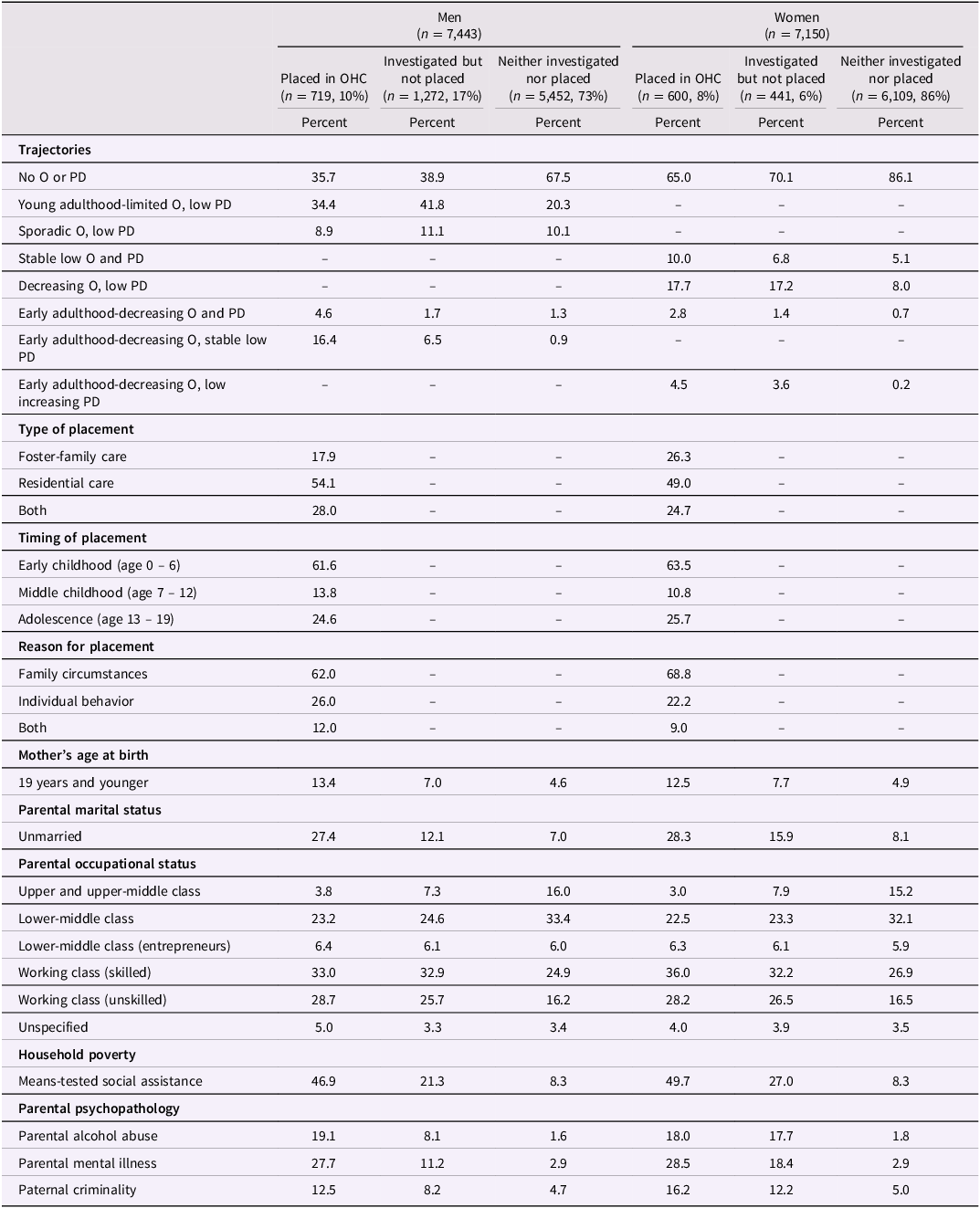
Sample Characteristics by Childhood OHC Experience, Stratified by Sex
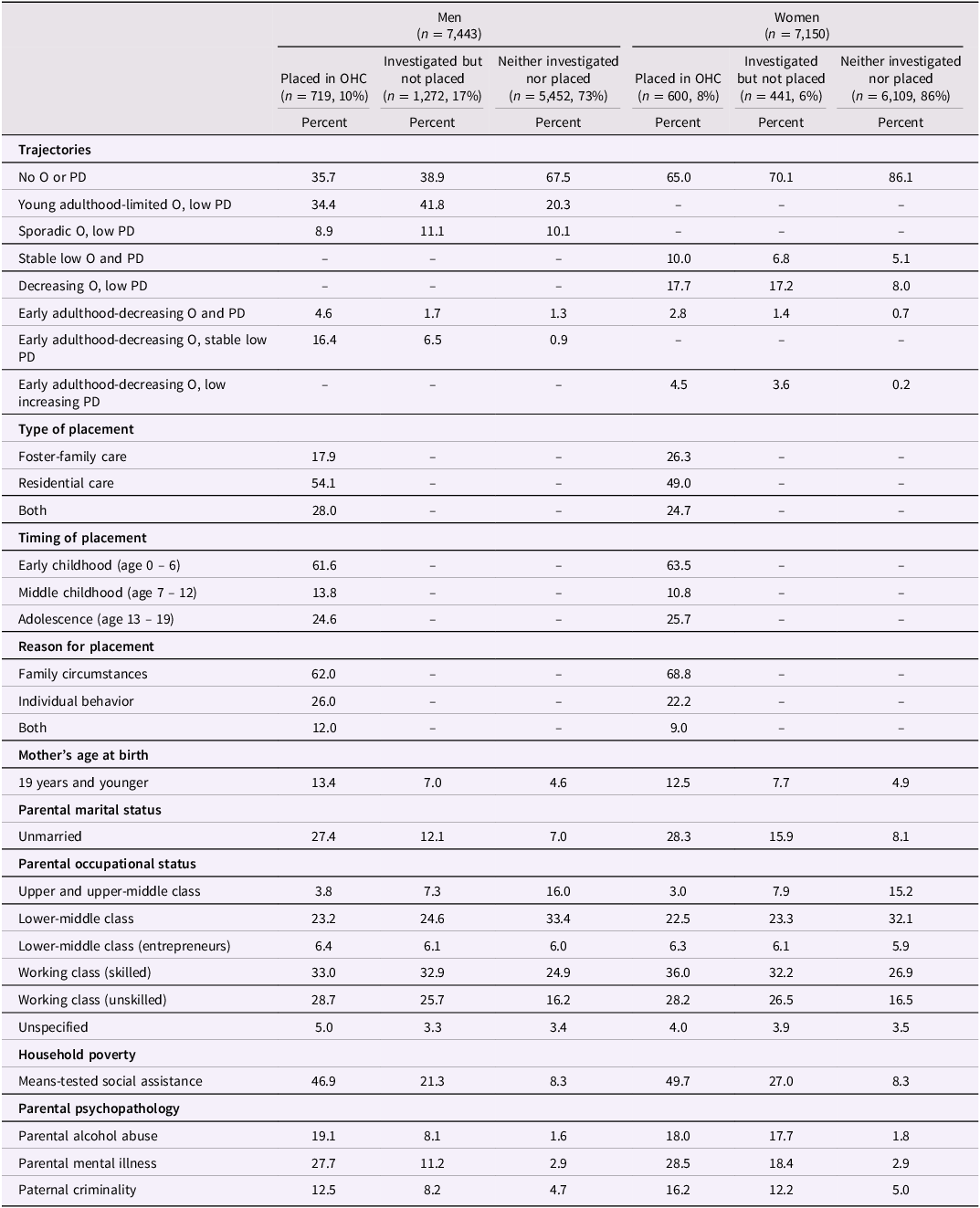
Note. OHC = out-of-home care, O = offending, PD = psychiatric disorders.
Results
Individuals without any offending or psychiatric records in the observation period – 59.5% of the men and 83.4% of the women in the cohort – were placed in the base outcome group. After they were excluded, the GBMTM class enumeration process revealed that a model with four trajectories and a quadratic function was best for the remaining individuals, both men and women (see Figure 1). The labels for these trajectory groups were determined by reviewing existing literature and visually examining the shape, peak age, and duration of the trajectories.
Multi-trajectories of offending (O) and psychiatric disorders (PD) across ages 20 – 63 in individuals with at least one instance of offending or psychiatric disorders, by sex. 59.5% of men and 83.4% of women had no record of offending or psychiatric disorders; they were excluded from the models and are thus not plotted in these figures.
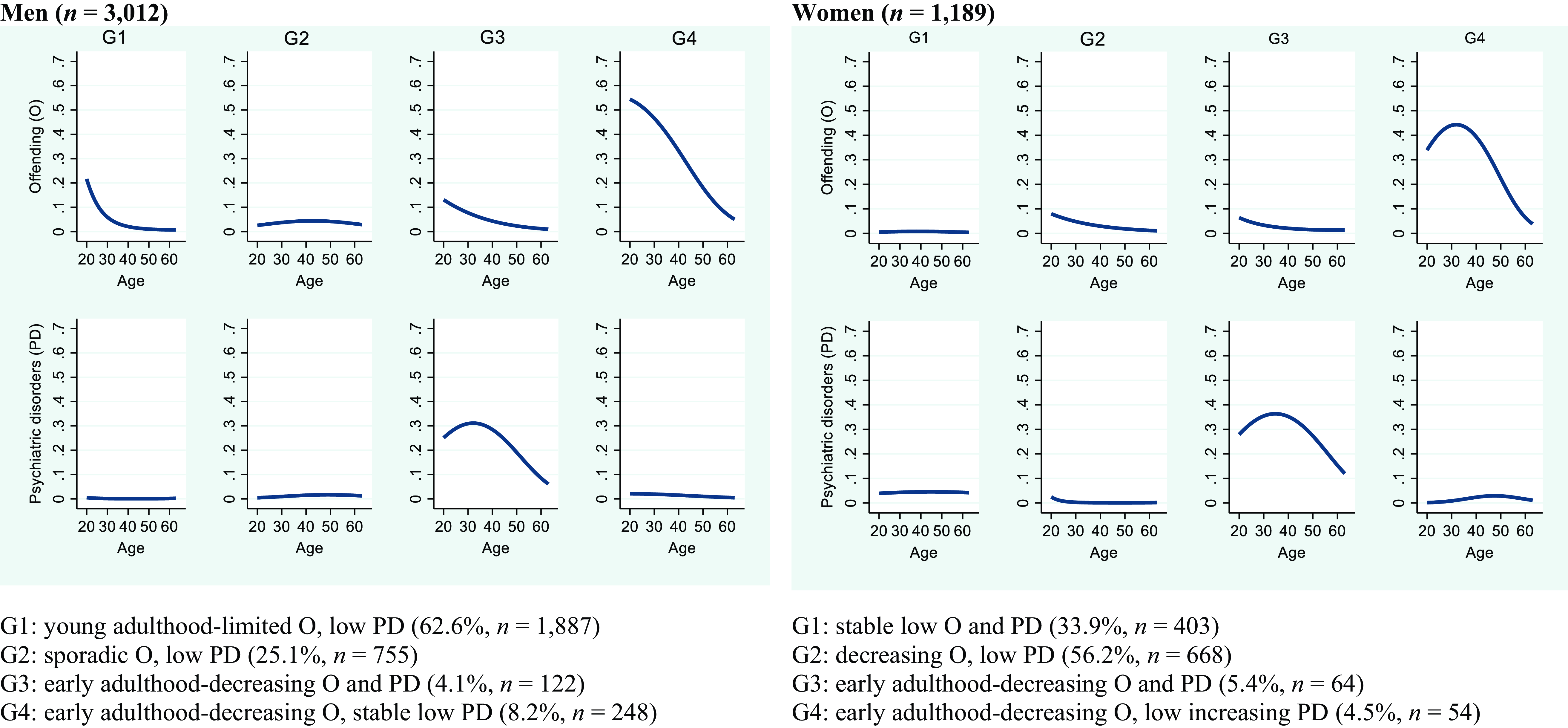
Among men, the largest group (G1: 62.6%) followed a trajectory of offending limited to young adulthood and low, stable psychiatric disorders. The next most common trajectory showed low and sporadic offending alongside low, stable psychiatric disorders (G2: 25.1%). Another group exhibited high offending probabilities steadily declining throughout the observation period while maintaining low, stable psychiatric disorders (G4: 8.2%). The least frequent trajectory combined low, decreasing offending with psychiatric disorders peaking in early adulthood and declining afterward (G3: 4.1%).
For women, the most common trajectory (G2: 56.2%) involved low, declining offending and low, stable psychiatric disorders. The next most common group exhibited low, stable probabilities for both outcomes (G1: 33.9%). A smaller trajectory group showed low, decreasing offending, and psychiatric disorders peaking in early adulthood (G3: 5.4%). The least common group displayed offending peaking in early adulthood and then declining, paired with low, slightly increasing psychiatric disorders (G4: 4.5%).
Table 1 provides sex-stratified descriptive statistics for the study sample by OHC experience. In total, 1,319 (9%) participants of the sample (n = 719 men, n = 600 women) were placed in OHC during childhood, and 1,713 (11.7%) participants (n = 1,272 men, n = 441 women) were investigated by CWS but not placed in OHC. Offending and/or psychiatric disorders were more prevalent in the OHC group (men and women affected: 64 and 35% respectively) and the CWS-investigated but not placed group (61 and 30%) compared to non-placed counterparts (32 and 14%). Except for G2 (i.e., trajectories with low and mostly stable probabilities of offending and psychiatric disorders), men with experience of OHC and those who were investigated by CWS but not placed were overrepresented across trajectories. Women with experience of OHC and women who had been investigated by CWS but not placed were similarly overrepresented across trajectories.
For both men and women, the most common type of placement for individuals with an OHC background was residential care. This was followed by combined residential/foster-family care for men and foster-family care for women; the least common placement type was foster-family care for men and combined residential/foster-family care for women. First placements most commonly occurred in early childhood, followed by adolescence and middle childhood for both men and women. The primary reason for placement was family circumstances, followed by individual behavior, with slight sex differences. Biological parents in the OHC group were more likely to be younger, unmarried mothers with lower occupational status. Parental psychiatric disorders and paternal criminality were also notably more common in the OHC group. A similar, though less pronounced, pattern was observed in the CWS-investigated but not placed group.
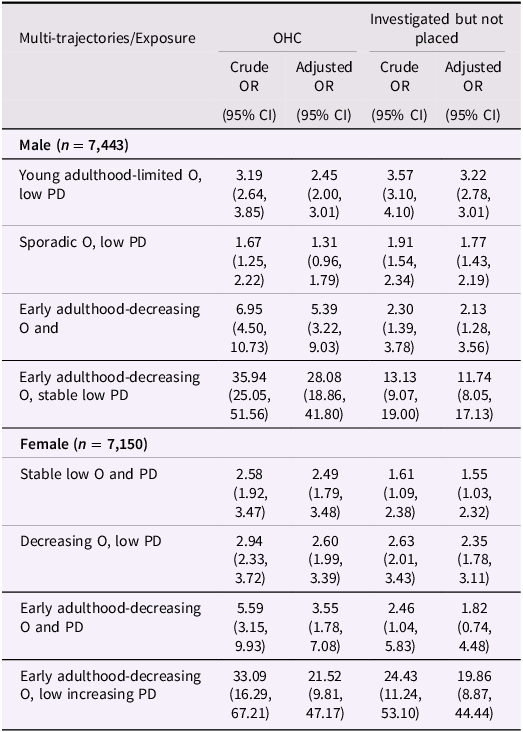
Tables 2–5 present the results of the multinomial regression analysis with crude and adjusted associations between OHC placement characteristics as the exposure and the corresponding trajectory-group outcomes for men and women. For men, the smallest differences in the odds for the OHC group were found for the most common offending and psychiatric trajectories (see Table 2): offending limited to young adulthood with low, stable psychiatric disorders (adjusted OR = 2.45) and low, sporadic offending with low, stable psychiatric disorders (adjusted OR = 1.31, with wide CI). In contrast, the odds were much higher for less common trajectories. Men with experience of OHC were approximately five times more likely to follow the trajectory of low, decreasing offending and psychiatric disorders peaking in early adulthood (adjusted OR = 5.39) and had about 28 times the odds for the trajectory with high, declining offending and low, stable psychiatric disorders (adjusted OR = 28.08) compared to their non-placed counterparts. Similar patterns were observed in the group investigated by CWS but not placed, though associations were weaker (adjusted ORs = 1.77 – 11.73). Compared to those investigated by CWS but not placed, men with experience of OHC had higher odds of following the trajectory of high, declining offending and low, stable psychiatric disorders.
Crude and Adjusted Associations Between Placement in OHC and Multi-Trajectories of Offending and Psychiatric Disorders, Age 20 – 63, by Sex
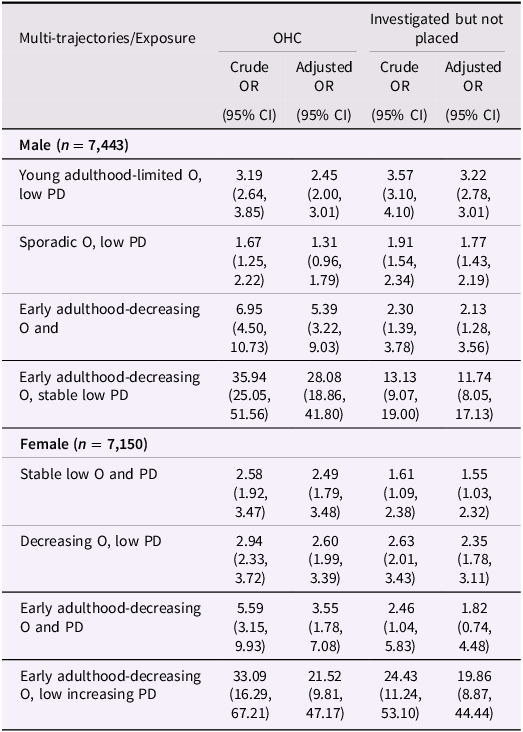
Note. Results are from multinominal logistic regression analyses based on the Karlson/Holm/Breen method. Adjusted models control for mother’s age at birth, parental marital status, parental occupational status, household poverty, parental mental illness, parental alcohol abuse, and paternal criminality. O = offending, PD = psychiatric disorders, OHC = out-of-home care, OR = odds ratio, CI = confidence interval. Base outcome: no O or PD. Reference category: neither placed nor investigated.
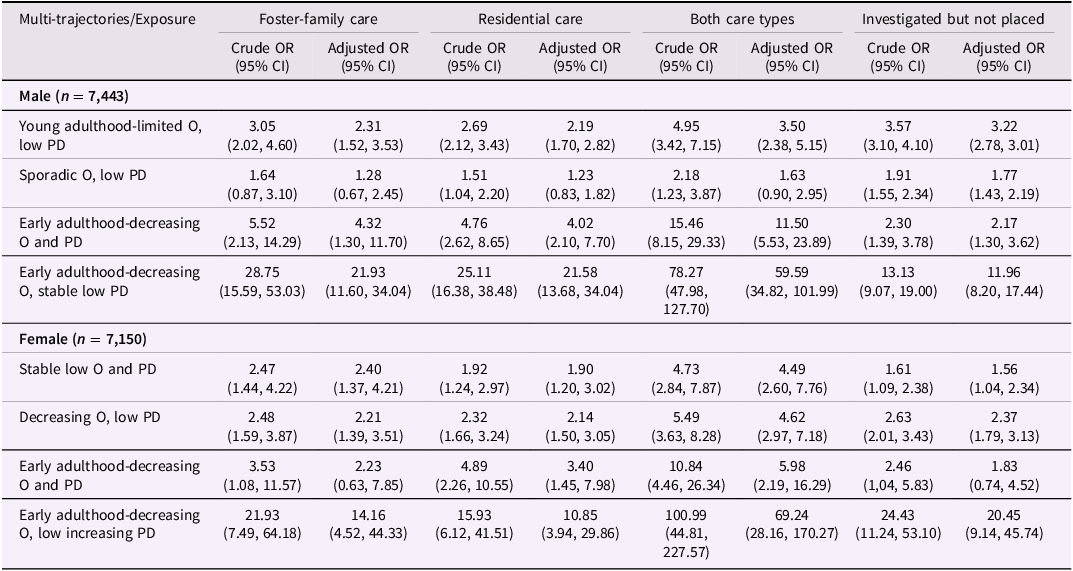
Crude and Adjusted Associations Between Type of Placement and Multi-Trajectories of Offending and Psychiatric Disorders, Age 20 – 63, by Sex
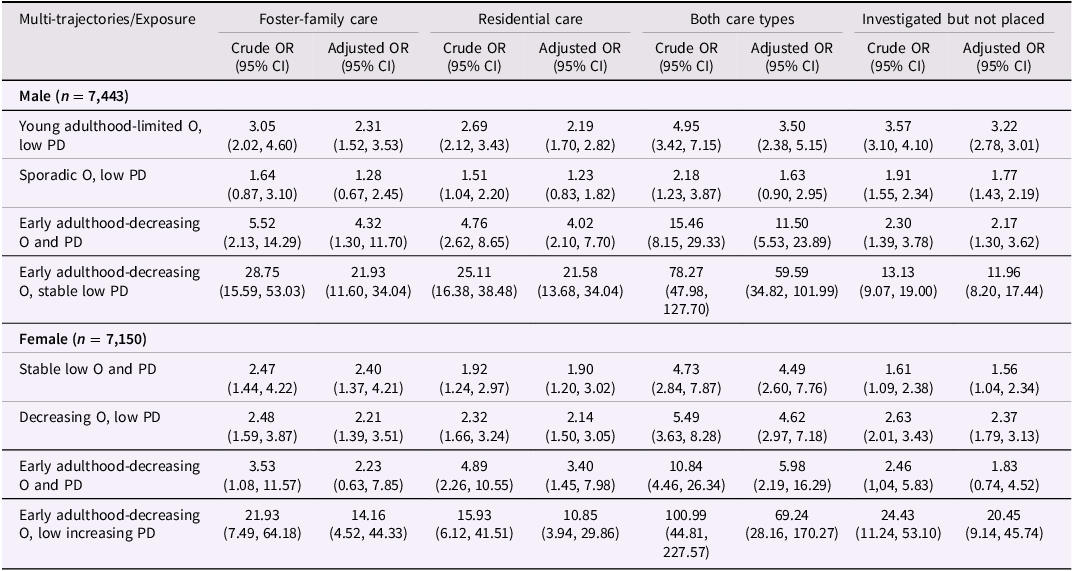
Note. Results are from multinominal logistic regression analyses based on the Karlson/Holm/Breen method. Adjusted models control for mother’s age at birth, parental marital status, parental occupational status, household poverty, parental mental illness, parental alcohol abuse, and paternal criminality. O = offending, PD = psychiatric disorders, OHC = out-of-home care, OR = odds ratio, CI = confidence interval. Base outcome: no O or PD. Reference category: neither placed nor investigated.
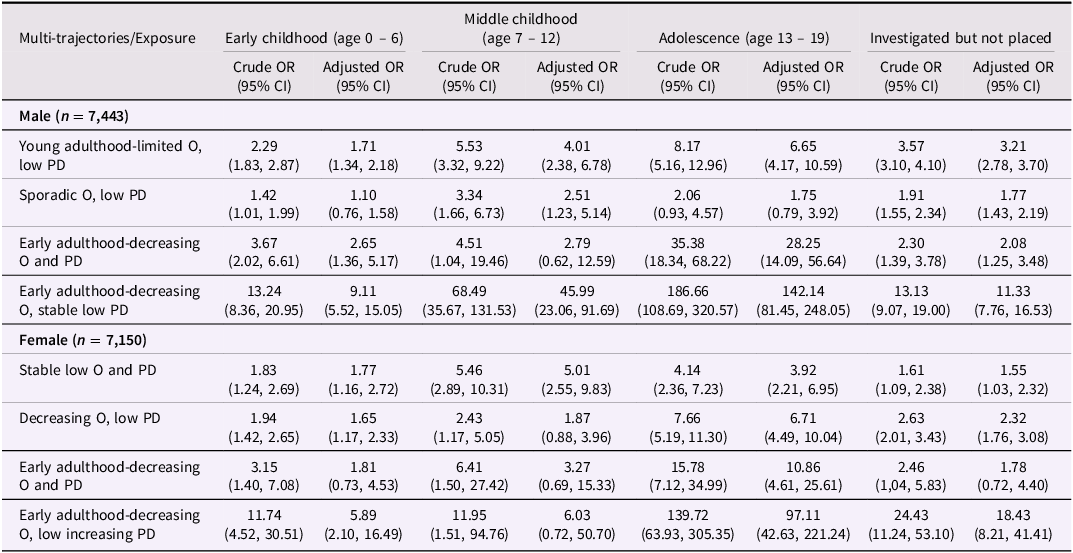
Crude and Adjusted Associations Between Timing of Placement and Multi-Trajectories of Offending and Psychiatric Disorders, Age 20 – 63, by Sex
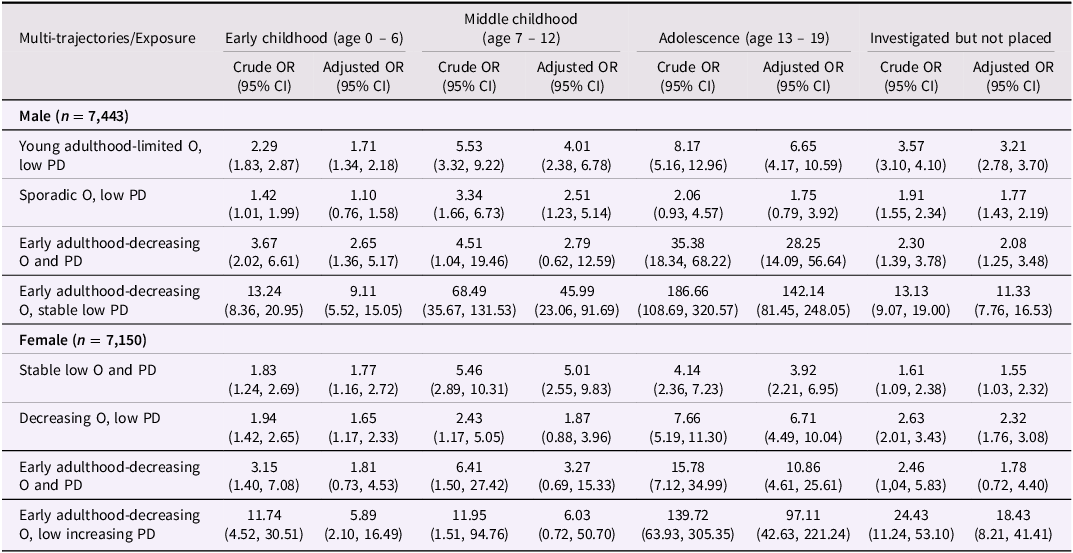
Note. Results are from multinominal logistic regression analyses based on the Karlson/Holm/Breen method. Adjusted models control for mother’s age at birth, parental marital status, parental occupational status, household poverty, parental mental illness, parental alcohol abuse, and paternal criminality. O = offending, PD = psychiatric disorders, OHC = out-of-home care, OR = odds ratio, CI = confidence interval. Base outcome: no O or PD. Reference category: neither placed nor investigated.
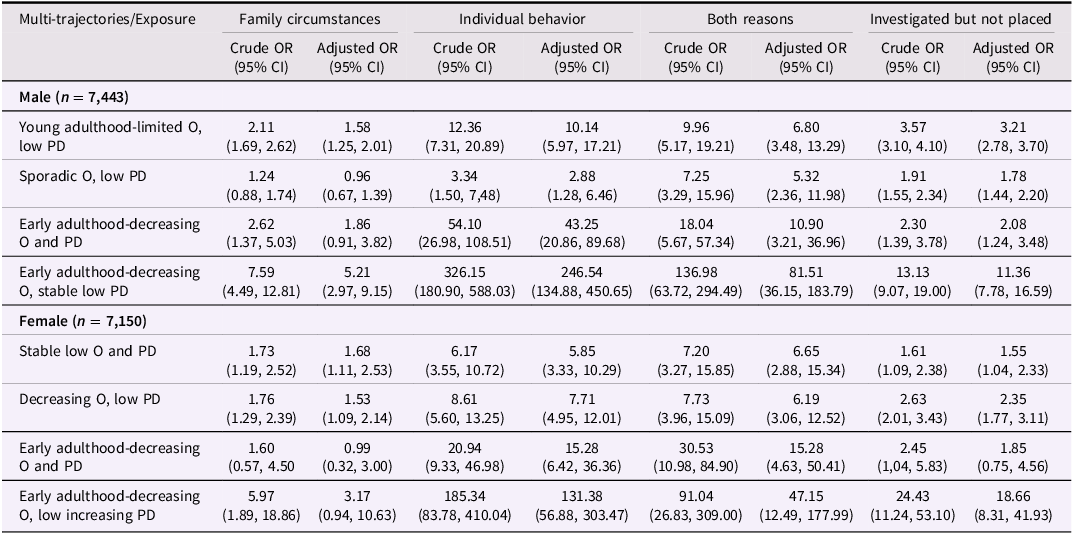
Crude and Adjusted Associations Between Reasons of Placement and Multi-Trajectories of Offending and Psychiatric Disorders, Age 20 – 63, by Sex
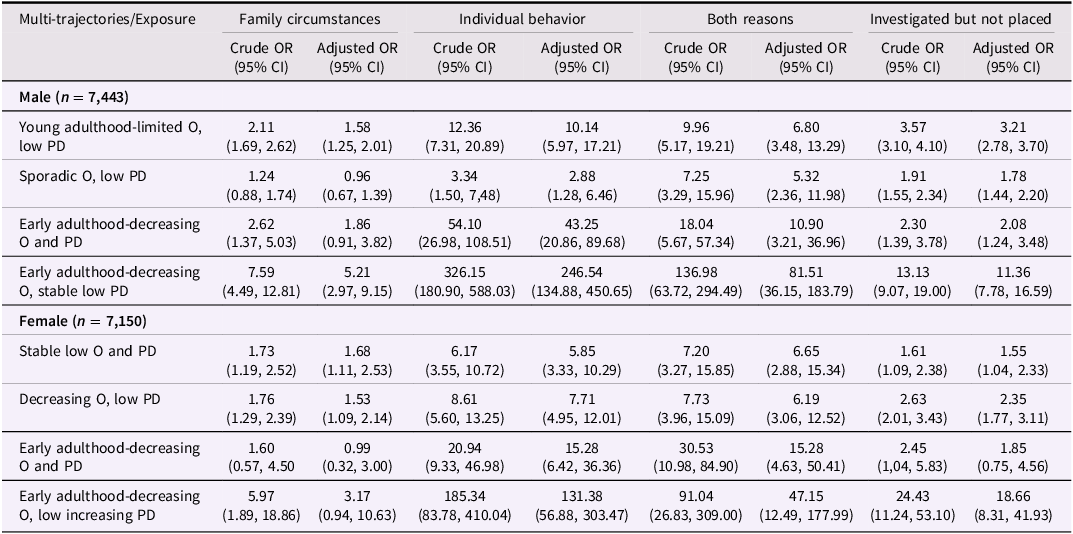
Note. Results are from multinominal logistic regression analyses based on the Karlson/Holm/Breen method. Adjusted models control for mother’s age at birth, parental marital status, parental occupational status, household poverty, parental mental illness, parental alcohol abuse, and paternal criminality. O = offending, PD = psychiatric disorders, OHC = out-of-home care, OR = odds ratio, CI = confidence interval. Base outcome: no O or PD. Reference category: neither placed nor investigated.
For women, like the patterns observed among men, the smallest differences in odds were observed in the most common trajectories, describing low, stable offending and psychiatric disorders (adjusted OR = 1.55 – 2.49) or low, decreasing offending and low, stable psychiatric disorders (adjusted OR = 2.35 – 2.60). Similar patterns emerged for trajectories involving low, decreasing offending with psychiatric disorders peaking in early adulthood (adjusted OR = 1.82 – 3.55), although wide CIs for the group investigated by CWS but not placed indicated lower precision. The largest differences were seen in the least common trajectory, where women with experience of OHC and women investigated by CWS but not placed had 20 – 22 times the odds of following the trajectory of offending peaking in early adulthood and slightly increasing psychiatric disorders (adjusted OR = 19.86 – 21.52) compared to their non-placed counterparts. No clear differences were observed between women with experience of OHC and women investigated by CWS but not placed.
Table 3 presents the associations between placement type, investigation by CWS, and the trajectory groups. Among men, elevated odds were observed for all trajectories among those who experienced foster-family care, residential care, or both, with the highest odds typically seen for those placed in both settings compared to those without an OHC placement. Smaller differences in odds were found for the most common trajectories (adjusted OR = 1.28 – 3.50), while the largest differences appeared in the least prevalent trajectories (adjusted OR = 4.02 – 59.59). For most trajectory groups, men in the CWS-investigated but not placed group showed similarly elevated odds to those with other placement types.
The pattern among women was similar, with the highest odds compared to non-placed women observed for the trajectory where offending peaked in early adulthood and gradually declined, accompanied by slightly increasing psychiatric disorders (adjusted OR = 69.24). Notably, women in the group investigated by CWS but not placed had higher odds of following this trajectory than those placed in foster-family care or residential care (adjusted OR = 20.45).
Table 4 shows the associations between placement timing, investigation by CWS, and trajectory groups. For both men and women, the highest odds for following the trajectories were found for those first placed as adolescents. Men placed as teenagers had markedly elevated odds of following the trajectory of high, decreasing offending and low, stable psychiatric disorders (adjusted OR = 142.14) compared to non-placed men. In contrast to other placement-timing groups, women placed in adolescence had the highest odds of following the trajectory where offending peaked in early adulthood and gradually decreased, alongside slightly increasing psychiatric disorders (adjusted OR = 97.11), with a 95% CI [42.63, 221.24].
Compared to men investigated by CWS but not placed, those men placed as adolescents generally exhibited the highest odds across most trajectories, except for that of low, sporadic offending with low, stable psychiatric disorders. Men who were first placed in middle childhood also had elevated odds for the trajectory of high, declining offending with low, stable psychiatric disorders (adjusted OR = 45.99). Men placed in early childhood consistently showed the lowest odds for all trajectory groups (adjusted ORs ranging from 1.42 to 13.24) compared to the other placement-timing groups. Similarly, women placed as adolescents showed the highest odds for most trajectory groups but exhibited greater odds for low, stable offending and psychiatric disorders if first placed in middle childhood compared to the other placement-timing groups or those investigated by CWS but not placed.
Table 5 shows the associations between reasons for placement, investigation by CWS but no placement, and trajectory groups. Overall, individuals placed due to family circumstances consistently had the lowest odds compared to non-placed peers and all other groups. Among men, those placed due to individual behavior had the highest elevated odds, particularly for the trajectory where offending and psychiatric disorders decreased in early adulthood (adjusted OR = 43.35) and the trajectory of high but decreasing offending with low, stable psychiatric disorders (adjusted OR = 246.54). For women, placement due to individual behavior showed the highest odds for the trajectory where offending peaked in early adulthood and gradually decreased, alongside low but slightly increasing psychiatric disorders (adjusted OR = 131.80), followed by placement due to both family circumstances and individual behavior (adjusted OR = 47.15). Other trajectories showed similarly elevated odds for women placed due to individual behavior or other placement reasons. Compared to those investigated by CWS, both men and women placed due to individual behavior, or due to both family circumstances and individual behavior, had generally higher odds of following all identified trajectory groups.
Discussion
Based on life-course and person-centered approaches, this is the first prospective cohort study to examine the simultaneous trajectories of offending and psychiatric disorders from age 20 to 63 in a high-risk group of out-of-home placed individuals, including rigorous controls for background characteristics. Investigating these dual trajectories has considerable relevance for public health, for it has the potential to inform understandings of developmental pathways and life-course risks among individuals with experience of OHC, thereby impacting decision-making policies for child protection measures. In the following, we discuss three notable findings of our study.
First, our trajectory analysis revealed four types of co-occurring offending and psychiatric trajectories for both men and women, with different distribution of class memberships across sexes, which aligns with findings from prior group-based trajectory studies of offending or psychiatric disorder trajectory groups in the general population (Jennings & Reingle, Reference Jennings and Reingle2012; Paksarian et al., Reference Paksarian, Cui, Angst, Ajdacic-Gross, Rossler and Merikangas2016). Specifically, approximately two thirds of the men in our study followed the trajectory of young adulthood-limited offending and low, stable psychiatric disorders. Almost half of the women showed low, decreasing offending with low, stable psychiatric disorders. The prominence of young adulthood-limited offending among men is consistent with developmental criminological studies showing that criminal behaviors among men typically peak in late adolescence and young adulthood and decline thereafter (Farrington, Reference Farrington1986; Moffitt, Reference Moffitt1993). Similarly, among women, the predominance of a low offending trajectory corroborates the findings of prior studies showing that women generally display lower and steeper declines in conviction rates (Block et al., Reference Block, Blokland, van der Werff, van Os and Nieuwbeerta2010). However, in contrast to our findings, previous studies have reported that individuals who followed a trajectory of decreasing offending after adolescence usually had a high probability of following a trajectory of decreasing mental health issues, which suggests that individuals may desist from offending alongside improvements in mental health symptoms (Testa & Semenza, Reference Testa and Semenza2020). The lack of this connection in our study might be due, first of all, to methodological differences from prior studies that use self-reporting measures to assess mental health and offending. In addition, previous studies have used samples from other settings and countries (e.g., the United States) with different legislation and social welfare systems. In our study, it might be argued that the records of offending in register data do not capture broader antisocial behavior that did not result in serious convictions in the latter part of the life course. It might also be that antisocial behavior resulted in other forms of interpersonal violence or undetected child maltreatment. The intensive inpatient mental health care received by individuals in our sample may have further impacted the trajectories of psychiatric disorders examined in the present study. Previous research suggests that sustained access to mental health services can reduce the general severity of psychiatric symptoms over time (Colins et al., Reference Colins, Vermeiren, Vreugdenhil, van den Brink, Doreleijers and Broekaert2010). Finally, the overall decline in offending and psychiatric disorders for the large proportion in our sample aligns with findings from previous research among the general population, according to which offending and mental disorders typically decline into late adulthood (Kessler et al., Reference Kessler, Berglund, Demler, Jin, Merikangas and Walters2005; Lee, Reference Lee2020). Thus, the decline in convictions and psychiatric disorders up to retirement age in our sample could reflect developmentally normative pathways for these outcomes for the majority of individuals in our sample.
Second, smaller subgroups among both men and women in our study experienced higher levels of offending or psychiatric disorders during early adulthood, which decreased progressively through to late adulthood. This finding not only reflects the heterogeneity and dynamic pathways of offending and psychiatric disorders (Moffitt, Reference Moffitt1993; Piquero, Reference Piquero2008), but also aligns with research suggesting that trajectories of offending and psychopathology can be intertwined (Semenza et al., Reference Semenza, Isom-Scott, Grosholz and Jackson2020; Testa & Semenza, Reference Testa and Semenza2020). Both antisocial behavior and psychiatric disorders can be described as part of the broader latent structure of general psychopathology, the p factor (Caspi et al., Reference Caspi, Houts, Belsky, Goldman-Mellor, Harrington, Israel, Meier, Ramrakha, Shalev, Poulton and Moffitt2014), which is thus a potential underlying factor behind both outcomes for some individuals. Besides genetic predisposition to higher levels of psychopathology (Allegrini et al., Reference Allegrini, Cheesman, Rimfeld, Selzam, Pingault, Eley and Plomin2020; Caspi & Moffitt, Reference Caspi and Moffitt2018), similar background characteristics as key risk factors (e.g., low self-control, low educational achievements) can affect adverse trajectories of offending and psychiatric disorders (Testa & Semenza, Reference Testa and Semenza2020). Research has reported that among women, high-offending trajectories often coincide with greater psychosocial adversity, including early maltreatment or unstable placements, suggesting that cumulative risk factors may underpin these patterns (Odgers et al., Reference Odgers, Moffitt, Broadbent, Dickson, Hancox, Harrington, Poulton, Sears, Thomson and Caspi2008). For men, high-level offenders typically exhibit a combination of early externalizing behaviors, family dysfunction, and exposure to delinquent peer networks (Moffitt, Reference Moffitt2018). While both offending and psychiatric outcomes can be influenced by common risk factors, such as early adversity, genetic predispositions, and environmental stressors, the pathways leading to persistent offending and chronic psychiatric disorders are not necessarily identical (Moffitt, Reference Moffitt1993). This is reflected in our findings, for example, in the fourth group, which shows decreasing offending throughout early adulthood, accompanied by low levels of psychiatric disorders. For women, there is even a slight increase in psychiatric disorders in late adulthood, while offending decreases, indicating divergent trajectories. In research in developmental psychopathology, psychiatric disorders have been shown to increase for some individuals as age increases (Paksarian et al., Reference Paksarian, Cui, Angst, Ajdacic-Gross, Rossler and Merikangas2016), which might reflect the vulnerability of mental health to life circumstances and possible challenges associated with later adulthood. In particular, these trajectories reflect the fact that a small but still considerable proportion of individuals are at risk for high rates of offending alongside psychiatric disorders throughout adulthood, reflecting the dynamic life-course chain of events, possibly accumulating in risks over time (Dannefer, Reference Dannefer2003; Kuh et al., Reference Kuh, Ben-Shlomo, Lynch, Hallqvist and Power2003). Our findings align with prior research confirming that offending and mental health outcomes may dynamically shift over time and be intertwined with one another (Testa & Semenza, Reference Testa and Semenza2020).
Third, and finally, individuals with experience of OHC and those who had been investigated by CWS but never placed in OHC were overrepresented in the high-risk groups for offending and psychiatric trajectories compared to their non-placed counterparts, even after controlling for a set of background characteristics. This finding is in line with prior research showing that individuals with experience of OHC are at higher risk of having a criminal record or psychiatric disorder in young adulthood compared to non-placed peers (Côté et al., Reference Côté, Orri, Marttila and Ristikari2018; Seker et al., Reference Seker, Boonmann, Gerger, Jaggi, d’Huart, Schmeck and Schmid2022). In particular, men in the foster and institutional care placement group and with individual behavior problems were at higher risk of more severe offending and psychiatric trajectories. Later age at placement (i.e., adolescence) was a significant risk factor – even after controlling for a rigorous set of background characteristics. In addition, adolescents with behavioral problems can experience placement instability more often, increasing the risk of more internalizing and externalizing behavioral problems (Aarons et al., Reference Aarons, James, Monn, Raghavan, Wells and Leslie2010). Although previous studies reported that mental health problems remain mostly stable in OHC placements (Goemans et al., Reference Goemans, van Geel and Vedder2015; Tarren-Sweeney & Goemans, Reference Tarren-Sweeney and Goemans2019), combining care with evidence-based treatments has been associated with better developmental outcomes (Humphreys et al., Reference Humphreys, Gleason, Drury, Miron, Nelson, Fox and Zeanah2015; James, Reference James2011, Reference James2017; Kessler et al., Reference Kessler, Pecora, Williams, Hiripi, O’Brien, English, White, Zerbe, Downs, Plotnick, Hwang and Sampson2008). While cases of severe maltreatment necessitate OHC placements for some children and adolescents, their peers who have been investigated by CWS but not placed seem to face similar risks of deviant offending and psychiatric trajectories. However, the highest risk of deviant trajectories has been found in those placed in OHC; this finding reflects the fact that these individuals are particularly at risk of deviant behaviors and mental health issues. The Swedish child protection system has been classified as having an emphasis on various therapeutic interventions, including a range of family services, to address cases of child maltreatment but also other reasons such as behavioral problems (Sundell et al., Reference Sundell, Vinnerljung, Löfholm and Humlesjö2007). As children and adolescents within child protection typically experience heterogeneous and dynamic placement histories and developmental trajectories, it is important to gain a nuanced understanding of what bio-psycho-social characteristics and care-related factors are associated with offending and psychiatric pathways among these at-risk individuals.
Strengths and limitations
The strengths of our study included the use of Swedish national register data that allowed us to study two objectively measured outcomes (i.e., offending and psychiatric disorders) among more than 14,000 individuals, of whom approximately 9% (> 1,300) had been placed in OHC. To our knowledge, this is the first study of dual trajectories of offending and psychiatric disorders in individuals with experience of OHC. The length of the observation period, with yearly records extending from early adulthood to retirement age (i.e., age 20 – 63), is also unrivaled. Importantly, our data allow for distinguishing between heterogeneity in placement (i.e., placement types, timing of first placement, and placement reasons). Second, while we examined associations between OHC characteristics and trajectories of offending and psychiatric disorders, we were also able to include rigorous controls for measured confounding factors related to birth parents. Lastly, by including a comparison group of individuals who were investigated by CWS but never placed in OHC, our study addresses and controls for potentially similar unobserved confounding factors (e.g., child maltreatment) that may affect both placement selection and offending and psychiatric outcomes.
Our findings should nevertheless be considered with various limitations in mind. The first limitation is related to the design features of the study. Although we included individuals investigated by CWS but not placed in OHC to quantify the effects of OHC exposure by creating comparable case-control groups, our observational cohort study does not cover causal links between experience of OHC and offending and psychiatric trajectories. Our findings do not allow any conclusions to be drawn about the effects of OHC, especially in the absence of a randomized-controlled study design and detailed information regarding quality of care.
Second, some limitations regarding the assessment methods for this study will have become apparent. The administrative inpatient care records documented only the most severe psychiatric disorders. Although the prevalence of psychiatric disorders in our sample is lower than that in other studies of adults formerly in OHC, it remains within the range reported in one meta-analytic study (Seker et al., Reference Seker, Boonmann, d’Huart, Bürgin, Schmeck, Jenkel, Steppan, Grob, Forsman, Fegert and Schmid2022). The low prevalence in our sample (captured by inpatient care data) may underestimate the true prevalence of psychiatric problems (i.e., by including less severe psychopathological conditions that may be captured by outpatient care data) and could explain the limited co-occurrence of offending and psychiatric disorder trajectories in the majority of the sample in our study. Furthermore, official conviction records capture only the most serious offenses and, thus, are not optimal for the purposes of differentiating between convictions and less severe offending, including antisocial behavior problems. Consequently, less severe cases of mental health problems or antisocial behavior may not be covered, which would mean that chronic, comorbid trajectories of these outcome types are not accounted for. Where the power in our statistical analysis is concerned, the rarity of offending and psychiatric trajectories in the majority population contributed to the sizeable ORs observed in groups with experience of OHC. Register-based studies, finally, often offer an “aerial view” of complex developmental and life-course processes, but other relevant data – such as genetic factors and personality traits – that could enhance our understanding of the mental health and criminal trajectories of individuals with OHC experience are typically beyond the scope of such studies. It is therefore possible that other factors, such as child maltreatment and unmeasured confounding factors related to birth family (e.g., genetic influence), might also be related to offending and psychiatric outcomes. Due to the limited access to data in our study, we were also unable to examine what socioeconomic and systemic factors (e.g., employment status or social assistance in adulthood, marital status, education) might be associated with and have shaped the trajectories we identify throughout adulthood.
Third and finally, sample-related limitations affecting the generalizability of our findings warrant careful consideration. The rate of OHC placement is higher in our sample (9%) compared to foster care placement in the United States (5.9%; Wildeman & Emanuel, Reference Wildeman and Emanuel2014) and institutional care placements in other high-income countries (average prevalence 0.30% – 0.51%; Desmond et al., Reference Desmond, Watt, Saha, Huang and Lu2020). The rate of children placed in OHC may, therefore, seem high (the corresponding national prevalence rates for those born in the 1970s, 1980s, and 1990s are around 4% – 5%; see Berlin, Reference Berlin2020), but it is strikingly similar to findings from a Stockholm-based study of child welfare interventions among children born between 1968 and 1975 (Sundell et al., Reference Sundell, Vinnerljung, Löfholm and Humlesjö2007). Since the OHC placements of the cohort analyzed in our study, Sweden and other Western countries have shifted further toward professionalized care (Kirton, Reference Kirton2007). However, it remains unclear whether this professionalization has improved children’s offending and health outcomes, which is an ongoing key goal of Swedish child welfare policy (Hessle & Vinnerljung, Reference Hessle and Vinnerljung1999). Furthermore, the birth cohort analyzed does not reflect the present demographic composition of children entering OHC. In the 1950s, the foreign-born population was minimal, but today, Sweden is a multi-ethnic nation, with roughly 20% of the population born abroad (Statistics Sweden, 2022). Foreign-born individuals have historically been overrepresented in social services, and the number of children with a migration background has grown in Sweden (Socialstyrelsen, 2010). However, since it will take 50 – 60 years to analyze the offending and psychiatric disorder trajectories to retirement age of OHC populations born in the 2010s and 2020s, these shifting demographics may affect the generalizability of our findings in ways that are not yet known. Finally, around 9% of individuals died within the observation period in our study. However, a previous recent Swedish register study using the same SBC Multigen cohort data showed that similar life-course offending trajectories were observed both in the total sample and after excluding those who died within the observation period (Hossein, Reference Hossein2025), suggesting that a potential attrition bias regarding death within the observation period can be ruled out.
Implications
The findings of this study carry important implications for policy and practice. First, the elevated risks associated with institutional and late-adolescent placements are an important reminder that Swedish child welfare policies should identify early risks and provide prevention measures for families and individuals at risk. Placement settings should be carefully reviewed and matched to individual needs and risk profiles, particularly for older adolescents, so as to mitigate the risks for higher offending and psychiatric trajectories in early adulthood. Also, almost two thirds of all out-of-home placements in Sweden were made during adolescence (Socialstyrelsen, 2006), and adolescence and young adulthood are vulnerable periods for the development of mental disorders and offending (Caspi et al., Reference Caspi, Houts, Ambler, Danese, Elliott, Hariri, Harrington, Hogan, Poulton, Ramrakha, Rasmussen, Reuben, Richmond-Rakerd, Sugden, Wertz, Williams and Moffitt2020; Moffitt, Reference Moffitt1993). Early identification of delinquent behaviors and mental health problems and tailored interventions should therefore be an integral part of child welfare policies and placement admissions. Not only must effective and long-term care interventions include sustained access to mental health and rehabilitative services for mentally burdened individuals with child protection experience; possible preventive measures aimed at reducing offending among these individuals should also be explored. As Sweden’s criminal policy protects delinquent youths in response to their own deviant behavior rather than just parental child maltreatment (Lindquist, Reference Lindquist2023), the high rates of offending trajectories – despite lower levels of psychopathology – found in our study highlight the importance of regular, risk-based assessments among these young people.
From a scientific perspective, more studies with case-control designs and OHC sample definitions are needed to examine the etiological processes underlying offending and psychiatric trajectories. Standardized assessments using self-reporting, and assessing factors such as OHC-related aspects, peer influences, staff turnover, and caregiver-to-child ratios, have the potential to enhance our knowledge of relevant protective and risk factors for offending and psychiatric trajectories. Additionally, future studies should explore adult psychosocial adjustments between the different offending–psychiatric trajectory groups, including income, housing status, employment, family structure, and social assistance. Such research has the potential to enhance our understanding of how the trajectory groups differ from each other and are associated with individuals’ adult psychosocial outcomes. The generalizability of the present findings regarding individuals in Swedish OHC to settings in other countries is limited because child welfare policies vary between countries, so more comparative studies across countries and jurisdictions examining the risk factors related to offending and psychopathology in OHC-placed samples are needed. Finally, research, including experimental designs, to test the efficacy of evidence-based services in affecting these outcomes among individuals with experience of OHC is warranted.
Conclusions
In this Swedish cohort study, men in particular showed high offending, typically peaking in early adulthood. Smaller groups showed psychiatric disorders and offending decreasing throughout early adulthood and on to retirement (for both men and women), and offending decreasing throughout adulthood (with low psychiatric disorders for men and increasing psychiatric disorders for women). Individuals placed in adolescence and in institutional facilities constitute a high-risk population for the cumulative co-occurrence of offending and psychiatric disorders during early adulthood. Our findings underscore the importance of early assessment of needs and risks among individuals in child protection services and during placement admission to prevent and mitigate the risk of criminality and psychopathology in early adulthood. Future research should explore the specific systemic and interpersonal characteristics related to care that impact on these trajectories in different countries and various child welfare legislative frameworks. Our findings emphasize the importance not just of long-term liaison between child protection services and criminal justice authorities, but also of collaboration with community psychiatric care services, beyond the age of majority (i.e., 18 years) for individuals who have experienced severe difficulties during childhood and adolescence.
Supplementary material
The supplementary material for this article can be found at https://doi.org/10.1017/S095457942510062X.
Data availability statement
The data used in this study are drawn from Swedish national registers and cannot be made publicly available due to legal restrictions. Access to these data can be requested from Statistics Sweden, the Swedish National Council for Crime Prevention, and the National Board of Health and Welfare, subject to ethical approval and data protection regulations.
Acknowledgments
Data were obtained from official Swedish government records. The authors would like to thank Dr Alastair Matthews for language editing.
Funding statement
This work was supported by the Swedish Research Council (grant number 2022-01702). Dr Seker received funding for this study from the Swiss National Science Foundation (fellowship number: P500PS_217785).
Competing interests
The authors have none to declare.



 Open access

