




1. Introduction
Research into Middle Low German (MLG) grammar has long been a subject of scholarly interest (Schröder Reference Schröder, Ágel and Gardt2014:150). This is particularly evident in studies on syntax, as demonstrated by numerous contributions over the years (see Macha Reference Macha2003, Bieberstedt Reference Bieberstedt2005, Reference Bieberstedt and Brandt2006, Mähl Reference Mähl2014, Barteld et al. Reference Barteld, Dreessen, Ihden, Schröder, Szczepaniak, Hartmann and Dücker2019, Ihden Reference Ihden2023). The MLG existential verbs wērden ‘to become’, wēsen ‘to be’, and blîven ‘to remain’ have been partially explored in constructions with present participles. Previous studies have primarily focused on wērden and wēsen in such constructions (see Lübben Reference Lübben1882, Lasch Reference Lasch1914/1974, Sarauw Reference Sarauw1924, Ihden Reference Ihden2023). However, combinations of blîven with present participles – and later, from the fifteenth century, with infinitives – have received less attention.
The studies by Rosenthal (Reference Rosenthal1984) and Woźnicka (Reference Woźnicka2024) are the only works that have provided a detailed analysis of the semantics and syntactic status of the MLG verb blîven in combination with various complements. Rosenthal identifies two possible meanings of the blîven + present participle construction: (i) ‘to remain in a certain state/position’ and (ii) ‘to enter a new state/position and stay in it’. While the first meaning is well attested in MLG, Rosenthal found direct evidence for the second meaning only in Middle Dutch and considered it a theoretical possibility in MLG material. However, the latest research (Woźnicka Reference Woźnicka2024), based on MLG texts up to the end of the fifteenth century, has demonstrated that both meanings are indeed attested. Additionally, it confirmed the occurrence of blîven in combination with the infinitive, which had not been thoroughly analyzed before.
This study focuses exclusively on the combinations of blîven with the present participle and the infinitive. In contrast to previous analyses (Rosenthal Reference Rosenthal1984, Woźnicka Reference Woźnicka2024), it covers the entire period of Middle Low German (thirteenth–seventeenth century), extending beyond earlier works that, due to their research focus, either relied on the analysis of a single text – Sächsische Weltchronik (Rosenthal Reference Rosenthal1984)Footnote 1 – or limited the linguistic material to texts up to the end of the fifteenth century (Woźnicka Reference Woźnicka2024).Footnote 2 The aim of this study is to identify the dominant meaning in these constructions throughout the entire Middle Low German period, examine the factors shaping their overall semantics – whether they stem primarily from blîven, the present participle/infinitive, or their interaction – and determine whether the blîven + present participle and blîven + infinitive constructions consistently exhibit semantic equivalence. If this is the case, the hypothesis that the blîven + infinitive construction may have evolved through phonological reduction of the present participle in the blîven + present participle structure seems plausible.
The analysis is based on data from ReN (Reference Corpus Middle Low German/Low Rhenish, 1200–1650), allowing for a broad selection of texts from various linguistic regions and domains of writing. As a result, this study provides a comprehensive semantic characterization of blîven in combination with the present participle and the infinitive in Middle Low German, offering insights into their distribution and possible semantic interpretations.
This study also adopts a comparative perspective by juxtaposing the meanings of blîven + present participle or infinitive, as established here, with those of wērden/wēsen + present participle, as identified by Ihden (Reference Ihden2023). As Kotin (Reference Kotin2003:33–34) observes, existential verbs such as blîven, wērden, and wēsen exhibit actional duality, which in certain contexts may lead to semantic convergence. Similarly, Rosenthal (Reference Rosenthal1984:130–131) highlights overlaps in their meanings as existential verbs, further justifying the comparison.
The study is structured as follows. Section 2 explores the etymology and meanings of blîven in older and modern Germanic languages. Section 3 reviews previous research on combinations of existential verbs with the present participle and the infinitive, with a primary focus on MLG. Section 4 presents the results of the corpus analysis of blîven in these constructions. Section 5 provides a broader discussion, analyzing the key findings in relation to previous studies and comparing these constructions with similar ones in Middle Low German. Finally, section 6 situates the study within the broader context of Germanic languages and explores potential avenues for future research.
2. The etymology of the verb blîven and its meanings in older and modern languages of the Germanic group
The etymology of blîven is disputed. In the first edition of the Grimm dictionary (DWB1), blîven (from Germanic bi-leib-a) is assumed to be related to Greek leípô (‘I leave’).Footnote 3 In the second edition of the dictionary (DWB2), as well as in Pokorny (Reference Pokorny1959:670), Pfeifer (Reference Pfeifer1993:148), and Kluge (Reference Kluge1995:118), however, the Indo-European root leip-, meaning ‘to stick, to smear with grease’, is proposed instead.Footnote 4 In both cases, the primary stem can be interpreted both statically and dynamically (‘I leave’ vs. ‘I have left (I am gone)’ and ‘to be stuck’ vs. ‘to be stuck to something (by sticking)’) (cf. Kotin Reference Kotin2003:36).Footnote 5
Whether the form bilaif in the Gothic calendar entryFootnote 6 is indeed a verb derived from bileiban ‘to remain’ remains a matter of debate in the specialist literature (see, e.g., Ebbinghaus Reference Ebbinghaus1978, Schmeja Reference Schmeja1998). The verb is occasionally attested in Old High German and Old English texts, but in general, it is rarely used in the south and north of Germania (see Rosenthal Reference Rosenthal1984:148). This rare occurrence contrasts with the relatively frequent use of the verb in Old Saxon Heliand poetry and in MLG and Middle Dutch sources from the twelfth century onwards.
In the later developmental stages of German, specifically Middle High German and Middle Low German, the dominant semantic variants of blîven include ‘to remain in the same state/position, in the same place’ and ‘to remain as a rest’. In MLG, blîven develops an additional function: It can also serve as a copula ‘to be’ and acquire context-dependent mutative interpretations, such as ‘to become something and then remain so’ or ‘to enter a changed state and remain in it’ (Rosenthal Reference Rosenthal1984:85–126). The polysemy of blîven in MLG is also noted by Lasch (Reference Lasch1914: §425, footnote 1), Magnusson (Reference Magnusson1939:24–25), Markey (Reference Markey1969:66), and Woźnicka (Reference Woźnicka2024), who has identified a broader range of meanings for this verb than previous researchers.
In contrast, in Early Modern High German and in older dictionaries of Modern German, mutative interpretations of bleiben are generally no longer attested. Only the first edition of the Grimm dictionary (DWB1) suggests that its meaning approaches that of werden ‘to become’. In contemporary German, bleiben is primarily interpreted similarly to its Middle High German usage. For instance, in Er blieb lange stehen ‘He remained standing for a long time’, the verb conveys a nonmutative, durative meaning, indicating that the subject was already in a standing position and continued to be so. However, under specific conditions – such as particular lexical and pragmatic contexts – it can still acquire a mutative reading (see Rosenthal Reference Rosenthal1984:21–50, 73–76). An example of this is Er blieb plötzlich stehen ‘He suddenly stopped’, where bleiben expresses a transition from movement to a stationary state, which lasts. Krämer (Reference Krämer2004:273) agrees with Rosenthal that the meaning ‘to become’ is always dependent on the context and is not an inherent feature of the verb itself. Schlücker (Reference Schlücker, Geist and Rothstein2007:22–23), who assumes the homonymy of the verb, disagrees. Steinitz (Reference Steinitz1999) also considers the verb ambiguous, with the meaning ‘to become’ explained as a reinterpretation mechanism triggered by context. This reinterpretation is very limited, that is, it is only possible in combination with positional verbs and depends on extralinguistic conditions regarding the type of movement (Steinitz Reference Steinitz1999:215). Furthermore, Rosenthal (Reference Rosenthal1984:60–64, 70–71) shows that in many German dialects (High and Low German), the meaning ‘to become’ is still primarily present in the expression tot bleiben ‘to become dead, to die’.
In Middle Dutch, the verb has the same meaning as in MLG. In modern Dutch, blijven is used as a full verb or copula. In traditional grammar, the meaning of blijven is sometimes equated with the semantics of zijn ‘to be’, although blijven contains the semantic element ‘durative’ (Kraak & Klooster Reference Kraak and Klooster1968:130). As a full verb, blijven means ‘to be somewhere, to stay somewhere, not to go to another place’ or ‘to insist on one’s opinion’.Footnote 7
Around 1300, the verb was borrowed from MLG into the Scandinavian languages (Markey Reference Markey1969:94–96, Elmevik Reference Elmevik1981:40–41, Rosenthal Reference Rosenthal1984:133, Skrzypek Reference Skrzypek2020:302). There is no consensus on the initial semantics of the borrowed verb: Either blîva was a polysemous loanword that already appeared in Old Danish and Old Swedish texts, albeit with different frequencies but in both meanings (see Markey Reference Markey1969:85), or it first appeared in Nordic sources in the sense of ‘to remain’ (Rosenthal Reference Rosenthal1984:66), with its polysemy only becoming apparent between 1450 and 1550 (Skrzypek Reference Skrzypek2020:314). Today, in the Nordic languages, Danish blive, Norwegian and Swedish bli mean both ‘to become’ and ‘to remain’ (given a proper context) and are used as auxiliary verbs in the passive voice (Rosenthal Reference Rosenthal1984:66, Steinitz Reference Steinitz1999:217, Skrzypek Reference Skrzypek2020:301).
As for English, it seems doubtful that Old English belifan or Middle English belēven ever had the meaning ‘to become’. The meaning ‘to remain’, on the other hand, disappeared completely from the verbs beleave and leave, which underwent semantic shifts, and is now expressed by stay and remain, borrowed from Old French (Rosenthal Reference Rosenthal1984:67).
Given this, the become meaning should not be considered merely derivative of the remain meaning (cf. Steinitz Reference Steinitz1999:216). This has already been confirmed by Rosenthal (Reference Rosenthal1984:144–147, 151), who identifies numerous parallels in the extension of the remain meaning to the become meaning across various Indo-European and unrelated languages. This shift follows a general crosslinguistic trend, in which verbs originally expressing remain gradually expand their meaning to include become. Its underlying cause lies in the inherent semantic flexibility of verbs like blîven and their proximity to verbs of being. At the same time, the way this semantic shift manifests varies across languages, as it is shaped by specific lexical structures and norm systems. Moreover, this observation aligns with Stettberger’s (Reference Stettberger1993:84) claim that, from an ontological perspective, existential semantics encompasses not only a static but also a fully dynamic interpretation (Kotin Reference Kotin, Kotin and Whitt2015:27).
The discussion above serves as a foundation for the subsequent analysis of blîven in combination with the present participle and the infinitive, highlighting the verb’s semantic flexibility. The shift from a predominantly stative meaning to one that, under specific conditions, takes on a dynamic reading reflects broader patterns of semantic change observed not only in Germanic languages but also across other Indo-European languages and even beyond the Indo-European language family. This development is supported by the verb’s etymological background, which, within Indo-European languages, allows for both static and dynamic interpretations.
3. The present participle and infinitive with existential verbs
3.1. The present participle and its combinations with existential verbs
In Germanic languages, the participle of the present tense expresses an active action or process that is initiated by the subject (cf. Kotin Reference Kotin2003:98). Furthermore, in contrast to the past participle, the present participle forces a nonmutative, atelic reading of all verbs, including telic verbs, as seen, for example, in modern German, present participles of telic verbs like sterbend ‘dying’, kommend ‘incoming’, einschlafend ‘falling asleep’ (cf. Kotin Reference Kotin2003:103–104).
In modern German, there are no constructions that combine verbs meaning ‘to be’, ‘to become’, and ‘to remain’ (sein, werden, bleiben) with a present participle (e.g. *Sie ist/wird/bleibt tanzend ‘She is/becomes/remains dancing’). In earlier stages of the development of German (cf. Winkler Reference Winkler1913, Kotin Reference Kotin2003:98–105), including Low German (cf. Lasch Reference Lasch1914/1974:222, paragraph 412, note 3, Lübben Reference Lübben1882:92–93, Sarauw Reference Sarauw1924:226–227, Ihden Reference Ihden2023) and other Germanic languages (cf. Mosse Reference Mosse1938), the combinations of this type are predicative constructions where the inflected verbs have the status of a copula, and the participle is a predicative adjective. The predicative use of present participles is, however, probably not a Proto-Germanic phenomenon (cf. Rosenthal Reference Rosenthal1984:104, Frotscher Reference Frotscher2014:3). As Kotin (Reference Kotin2003:101–103) points out, these constructions show traits of partial grammaticalization, where the inflected verb gradually shifts toward a copular function while the participle assumes a more fixed predicative role.
Several studies suggest that Latin influenced the predicative use of present participles in German dialects (see, among others, Glück Reference Glück, Thielemann and Welke2001:82, Fleischer Reference Fleischer2007:334–337, Ihden Reference Ihden2023:415–416). Additionally, as Clark (Reference Clark1914:16) has shown, the influence of the source language must be taken into account when analyzing translations of periphrastic constructions between Germanic dialects. Among other things, this applies to structures involving the present participle, as the source language plays a significant role in shaping their form and interpretation. Moreover, beyond external factors, internal linguistic factors also played a crucial role, such as the type of verb used in the present participle, which in turn determined the choice of the copula (cf. Winkler Reference Winkler1913:58, Betten Reference Betten1987:111).
The combinations of existential verbs with present participles in MLG have been partially described in the literature, with varying interpretations regarding their aspectual properties.Footnote 8 Lasch (Reference Lasch1914/1974:222, paragraph 412, note 3) states that wēsen ‘to be’ + present participle can express both an inchoative action and a durative action. In contrast, Sarauw (Reference Sarauw1924:226–227) and Lübben (Reference Lübben1882:92–93) interpret wēsen + present participle as clearly durative, and wērden ‘to become’ + present participle as inchoative. Lübben (Reference Lübben1882:92–93) also points out the special meaning of the combination of wērden in the past tense with the present participle. This combination is meant to express the beginning and the duration of an action at the same time. Sarauw (Reference Sarauw1924:226–227), on the other hand, notes that the use of wērden in the present tense with a present participle can be used to express the future. Ihden (Reference Ihden2023:421, 428), in turn, ascribes a purely futurative character to most combinations of wērden + present participle and, like Lübben and Sarauw, interprets combinations of wēsen + present participle as constructions of predominantly durative character.Footnote 9
No interpretations of the combinations of the verb blîven with the present participle are found in the grammars of MLG (cf. Lübben Reference Lübben1882, Lasch Reference Lasch1914, Sarauw Reference Sarauw1924). Rosenthal (Reference Rosenthal1984:103–105), in his study of the semantics and syntax of blîven, identifies a dual interpretation of these constructions: They can have either a durative meaning, indicating ‘to remain in some state/position’, or a context-dependent ingressive meaning, referring to ‘entering and remaining in a changed state/position’. However, Rosenthal does not find direct evidence for the latter meaning in Middle Low German (Sächsische Weltchronik), attesting it only in Middle Dutch (Eneide).
More recent research (Woźnicka Reference Woźnicka2024: 570–571, 573) confirms that both meanings of blîven + present participle are attested in Middle Low German. However, that study focused on the general semantics of blîven and the syntactic status of the verb, particularly in the context of its potential auxiliary function, and was restricted to texts up to the end of the fifteenth century. It did not examine which of the two meanings is predominant nor what determines the overall interpretation of the construction.
3.2. The infinitive and its combinations with existential verbs
Although the infinitive is commonly regarded as the base form of the verb, it is neither a primitive nor a neutral form from a diachronic perspective (Haspelmath Reference Haspelmath1989). One possible origin of infinitival forms is the phonological reduction of the present participle in constructions with existential verbs (Holmberg Reference Holmberg1916:32, Limmer Reference Limmer1944:17). A similar phenomenon has also been observed in Middle Low German, as noted by Lasch (Reference Lasch1914/1974:222, paragraph 412, footnote 3). As Saltveit (Reference Saltveit1957:213–214) points out with regard to werden constructions, the coexistence of two structurally similar constructions with different functions – werden + infinitive and werden + present participle – led to a gradual reduction of the participial endings. As a result, participial forms increasingly came to resemble infinitives and ultimately became formally indistinguishable from them. Saltveit (Reference Saltveit1957:226) further suggests that the destructive influence of the werden + infinitive construction may have affected not only its participial counterpart but also other predicative structures involving the present participle.
Another potential source of infinitives is proposed by Haspelmath (Reference Haspelmath1989), who suggests that they derive from nominal purposive forms. This perspective aligns with the broader grammaticalization pathways observed crosslinguistically, where purposive constructions develop into nonfinite verb forms over time.
Furthermore, recent research on the infinitive in werden constructions in modern German (Jäger Reference Jäger2024) suggests that the infinitive may have originated from a past participle that formally coincided with the infinitive. From this hypothesis, it follows that the infinitive did not develop solely through the phonological reduction of the participle or the transformation of purposive constructions but also as a result of the interplay between morphological syncretism and syntactic reanalysis.
Constructions involving existential verbs combined with infinitives are attested in both older High and Low German dialects and remain well documented in contemporary German. In the case of MLG, however, their description is limited.Footnote 10
Grammars of Middle Low German (Lübben Reference Lübben1882, Lasch Reference Lasch1914, Sarauw Reference Sarauw1924) do not provide information on blîven or wēsen + infinitive constructions. However, Lasch (Reference Lasch1914/1974:222, paragraph 412, footnote 6) notes that in wērden + present participle constructions, the participle gradually converged with the infinitive, which eventually became the dominant form. Elsewhere (Reference Lasch1914/Reference Lasch1974:222, paragraph 412, footnote 3), referring to Nissen (Reference Nissen1884: paragraph 92), Lasch provides examples of wēsen + present participle constructions, suggesting that a similar shift towards the infinitive occurred in this case as well. In contrast, no information is available on blîven, either in combination with a participle or an infinitive.
Regarding the semantic interpretation of infinitival constructions, Lasch (Reference Lasch1914/1974:222, paragraph 412, footnote 6) refers exclusively to the verbs wērden, willen ‘to want’, and schöllen ‘shall’. These constructions, like their counterparts with the present participle, function as periphrastic futurum. In contrast, recent research (Woźnicka Reference Woźnicka2024:569, 573) demonstrates that blîven in combination with the infinitive exhibits the same meanings as in constructions with the present participle. Both meanings – ‘to remain in a certain state/position’ and ‘to enter and remain in a changed state/position’ – are attested in blîven + infinitive constructions, further confirming the semantic parallels between blîven + present participle and blîven + infinitive. However, this confirmation is based on a small number of individual examples, as the analysis did not include texts from the sixteenth and seventeenth centuries.
Compared to MLG, infinitival constructions with existential verbs are significantly better documented in High German dialects and modern German. The werden + infinitive construction is one of the most extensively studied structures in German and functions as a periphrastic futurum, though in modern German it also serves a modal function. The discussions concern both its interpretation (Fritz Reference Fritz2000, Diewald Reference Diewald2005, Krämer Reference Krämer2005) and its origins. Developmental hypotheses suggest that the werden + infinitive construction derives from werden + present participle through phonological reduction (Bech Reference Bech1901, challenged by many and ultimately refuted by Concu Reference Concu2022), by analogy with other periphrastic constructions (Wilmanns Reference Wilmanns1906, Diewald & Habermann Reference Diewald, Habermann, Leuschner, Mortelmans and De Groodt2005), or through evolution from werden + past participle (Jäger Reference Jäger2024).
The first attestations of sein + infinitive appear as early as the eleventh century, becoming more frequent from the fifteenth century onwards (Vogel Reference Vogel, Geist and Rothstein2007:273). This construction, originally progressive in nature, emerged through the loss of endings in the older sein + present participle structure, which it fully replaced in the fifteenth–sixteenth century (Holmberg Reference Holmberg1916:32, Limmer Reference Limmer1944:17). The sein + infinitive form itself disappeared after the seventeenth century (Limmer Reference Limmer1944:17), with its decline often linked to the expansion of werden + infinitive as a future periphrasis (Ebert et al. Reference Ebert, Reichmann, Solms and Wegera1993:392). In modern German, sein + infinitive occurs as the so-called absentive construction (Peter ist einkaufen ‘Peter is out shopping’), with no direct connection drawn to its earlier uses (Vogel Reference Vogel, Geist and Rothstein2007:274). Its origin has been variously explained, including as the result of ellipsis of the past participle gegangen ‘gone’ (e.g. ist einkaufen gegangen ‘has gone to buy’ → ist einkaufen ‘is out buying’; Grimm Reference Grimm1898:101, Wilmanns Reference Wilmanns1906:176–177, Holmberg Reference Holmberg1916:33, Limmer Reference Limmer1944:18, 95, 109f., 112, Krause Reference Krause2002, Abraham Reference Abraham2007), replacement of gehen ‘to go’ by the verb sein ‘to be’ in the infinitival construction (e.g. geht einkaufen ‘goes to buy’ → ist einkaufen ‘is out buying’; Vogel Reference Vogel, Geist and Rothstein2007), or a reduced purposive um … zu construction (e.g. ist (irgendwo) um einzukaufen ‘is (somewhere) to buy’ → ist (irgendwo) einkaufen ‘is (somewhere) out buying’; Wöllstein Reference Wöllstein and Härtl2013).
There are no detailed studies on the diachrony of bleiben + infinitive. In modern German, bleiben combined with positional verbs has two meanings: It either denotes remaining in a state (Peter blieb lange stehen ‘Peter remained standing for a long time’) or entering a state and staying in it (Peter blieb plötzlich stehen ‘Peter suddenly stopped’). The discussion centers on whether the concept of mutativity is inherently encoded in the verb itself or emerges solely from contextual factors (Steinitz Reference Steinitz1999, Krämer Reference Krämer2004, Schlücker Reference Schlücker, Geist and Rothstein2007, and section 2).
4. Corpus study of blîven + present participle or infinitive
4.1. Data and methodology
The analysis of the MLG verb blîven in combination with the present participle and the infinitive is based on data from the Reference Corpus Middle Low German/Low Rhenish (1200–1650) (ReN), which is part of the Corpus of Historical German Texts. The language data provided in the corpus – whether transcribed or further annotated – allow for a linguistic analysis of Middle Low German/Low Rhenish that goes far beyond what was previously possible. The ReN is structured according to the parameters of space, time, and field of writing (Barteld et al. Reference Barteld, Becker, Hausmann, Ihden, Langknecht, Philipowski, Pickl, Peters, Peters, Schröder, Wich-Reif, Becker and Hausmann2017, Peters Reference Peters2017) and contains around 2.3 million tokens, of which approximately 1.5 million are grammatically annotated in terms of part of speech, inflectional morphology, and lemma.
This study uses a subcorpus of the ReN corpus containing all MLG texts with grammatical annotations (ren-anno), while Low Rhenish texts were excluded. The annotations allow for precise lemma-based searches and systematic identification of relevant verb constructions. Additionally, they provide essential morphological and syntactic information necessary for linguistic analysis. Conversely, the ren-trans subcorpus, which consists of transcribed but unannotated texts, was excluded from the analysis. While this inevitably limits the range of textual material considered and may affect the representation of linguistic diversity within MLG as documented in ReN, the lack of annotation would have made it significantly more challenging to systematically and reliably identify the constructions under investigation. Without morphological and syntactic tagging, ensuring consistency in data selection and interpretation would have been considerably more difficult, increasing the risk of misclassification and reducing the overall methodological rigor of the study. Despite this limitation, the selected subcorpus encompasses a broader range of material than Rosenthal’s (Reference Rosenthal1984) analysis, allowing for a more comprehensive examination of Middle Low German. It also includes texts from the sixteenth and seventeenth centuries, which have been excluded from the study by Woźnicka (Reference Woźnicka2024) due to its specific research focus. The restriction to ren-anno is therefore justified by the need for a structured and reliable approach to data extraction and interpretation.
The study examines blîven constructions with the present participle and the infinitive. In the absence of other clear criteria, a morphological approach was adopted to distinguish between these forms: verbs ending in -end(e) and -en(n)e are classified as present participles, while those ending in -(e)n are treated as infinitives. Consequently, forms that retain morphological features of the participle – such as those ending in -en(n)e – were also included in the category of present participles. In this context, a form-based approach appears to be the most transparent and consistent solution.
The origin of this formal ambiguity is historical in nature (see section 3.2). Saltveit (Reference Saltveit1957:213–214) notes that the coexistence of werden + infinitive and werden + present participle constructions in earlier stages of the language contributed to the phonological erosion of the participial ending. As a result, constructions with different meanings gradually converged in form, eventually becoming difficult to distinguish. Saltveit (Reference Saltveit1957:226) further suggests that the destructive influence of the werden + infinitive construction may have extended beyond werden itself, affecting other predicative structures involving the present participle – including blîven + present participle. In light of this formal convergence, the consistent application of a morphological criterion appears justified. The adopted approach provides a necessary foundation for the subsequent semantic analysis. Sections 4.2 and 4.3 explore the meanings of both constructions throughout the entire Middle Low German period, their potential consistency, the dominant interpretations, and whether the overall meaning of the construction is shaped primarily by the verb blîven, by the nonfinite verb form, or by the interaction between the two.
Using a lemma-based query (lemma_simple=/.*bliven.*/), all occurrences of the verb blîven were retrieved from the ren-anno corpus. The corpus significantly facilitated the analysis by enabling structured access to annotated forms and allowing for systematic lemma-based searches. The resulting data were then manually reviewed to identify all instances in which blîven appeared in combination with a present participle or an infinitive. Each hit was examined individually, and relevant constructions were extracted based on formal morphological criteria. During this verification process, inconsistencies in annotation were observed – either relative to the classification criteria applied in this study or due to annotation errors in the corpus itself. Ambiguous or incorrectly annotated forms were reassessed and either excluded or reclassified as needed.
Consider example (1) below.Footnote
11
(1)
vnde
he
bleeff
dar
liggene
vp
den
zande
and
he
remain-3sg.pst.ind
there
lie-prs.ptcp
on
the
sand
‘And he remained lying there on the sand.’
(Lud._Sudh._Hs._Ms, 8r,22–23)Footnote
12
In example (1), the form liggene ‘lying’ was annotated as an infinitive in the corpus. Since forms following the development -end(e) > -en(n)e > -(e)n represent an intermediate stage in the morphological transition, their interpretation as infinitives was not entirely unjustified. However, as mentioned above, this study applies a clear operational distinction between present participles and infinitives. According to these criteria, forms ending in -end(e) and -en(n)e are classified as present participles, and therefore liggene is categorized as a present participle.
Additionally, cases of false annotation and instances of form overlap between the infinitive and past participle were identified and reassessed. Consider the following examples.
(2)
Wo
lange
dyt
vorswegen
blyft
how
long
that
hide-pst.ptcp
remain-3sg.prs.ind
‘How long will it stay hidden.’
(Lüb._Brant_NarrenS_1497, 28v,05)
(3)
dar
inne
du
vnde
de
dinen
moghen
beholden
blyuen
there
in
you
and
the
yours
can-2pl.prs.ind
retain-pst.ptcp
remain-inf
‘You and yours can remain/be retained in there.’
(Lüb._Bibel_1494, 10ra,30–31)
In example (2), the form vorswegen was annotated as an infinitive (‘hide’), yet its morphological structure aligns more closely with the past participle formation (‘hidden’) rather than with the infinitive, which is vorswīgen (Lübben & Walther Reference Lübben and Walther1888:949). Similarly, in example (3), the form beholden was annotated as an infinitive (‘retain’), yet it exhibits morphological ambiguity, as it can function as both an infinitive and a past participle. Unlike in example (2), where the incorrect annotation could be clearly determined based on the expected infinitive form, here the distinction is less straightforward. However, in the given sentence context, beholden is more plausibly interpreted as a past participle (‘retained’) rather than an infinitive. Given that both examples involve constructions where blîven combines with a past participle rather than a true infinitive, such instances were excluded from the analysis, as they do not represent genuine cases of blîven in combination with an infinitive, which is the focus of this study.
While the previous examples required reassessment due to inconsistencies in annotation, the following case (example (4)) aligns with the annotation in the ReN corpus. The annotation suggests that this is a single sentence in which blîven and the present participle form a cohesive construction.
(4)
Also
bleiff
dair
de
helige
Sent
Luͦdgher
so
remain-3sg.pst.ind
there
the
holy
Saint
Luͦdgher
by
Alchuino
vierdehalff
year
lanc
stuͦderende
yn
with
Alchuino
four and a half
years
long
study-prs.ptcp
in
den
heligen
schriften
the
holy
scriptures
‘So St. Ludgher stayed there with Alchuino for four and a half years studying
the holy scriptures […].’
(Cincinnius_Liudger_1512, 76v,11–13)
However, an alternative interpretation is also possible, in which the passage consists of two separate syntactic units. In the first sentence, blîven would function as a full verb, while the second sentence would constitute an independent clause, with the participle interpreted as ‘and studied’.Footnote 13
Despite the possibility of an alternative interpretation, several factors support treating this example as a blîven + present participle construction.
First, blîven occurs not only with positional verbs but also with present participles of verbs with different semantics (see examples (12)–(15) in section 4.3), demonstrating the productivity of this construction. This suggests that the present participle stuͦderende can also form a predicative construction with blîven, rather than being limited to a specific verb class.
Second, the relative distance between blîven and the participle does not alter their structural relationship. While in many instances the participle does indeed follow blîven directly, corpus data indicate that these two elements can also be separated by sentence components such as temporal adverbials, complements, or prepositional phrases, without affecting their status as a unified construction (see examples (8), (15) in section 4.3). Thus, the distance between blîven and the participle in the analyzed example does not provide sufficient grounds for reinterpreting the sentence as a coordinate structure.
Third, the presence of a locative adverbial (dair ‘there’) does not necessarily imply that blîven functions only as a full lexical verb. In other corpus examples where blîven combines with a participle derived from a positional verb (see examples (6), (8), (10)–(13) in section 4.3), locative adverbials appear without affecting the classification of the construction. Therefore, their presence in the analyzed sentence does not constitute sufficient evidence for treating blîven exclusively as a full lexical verb, as the combination of a locative adverbial and a present participle suggests that blîven may simultaneously function both as a lexical verb and as a copula in a predicative construction. This dual function may indicate a transitional stage in the development of blîven from a full lexical verb to a copula or suggest that the boundary between lexical verbs and copulas is inherently fluid.
Fourth, although it is theoretically possible to paraphrase blîven + present participle constructions as coordinate structures, such reinterpretations could in principle be applied to almost all comparable cases (see example (1) above: vnde he bleeff dar liggene vp den zande ‘and he remained lying there on the sand’ ≈ vnde he bleeff dar, vnde he lach vp den zande ‘and he remained there and lay on the sand’). As a result, this would blur the boundary between periphrastic constructions with present participles and full lexical verb structures. From a methodological point of view, treating every such paraphrase as an equivalent analysis carries the risk of erasing the distinction between clause coordination and genuine predicative constructions involving nonfinite verb forms.
Given these considerations, this study classifies such cases as instances where blîven combines with a present participle, maintaining the integrity of the construction as a whole.
Out of a total of 1,397 occurrences of the verb blîven in the corpus, 68 cases were selected for analysis (48 in combination with a present participle and 20 with an infinitive). This represents a relatively small dataset compared to the corpus compiled by Ihden (Reference Ihden2023:416–418) for studying the combinations of wērden and wēsen with the present participle in MLG, which is nearly ten times larger. Nevertheless, the dataset used in this study is sufficiently representative to achieve the stated research objectives.
Despite its limited size, the dataset allows for a qualitative assessment of the dominant meanings in blîven constructions, the factors influencing their interpretation, and the potential semantic identity of blîven + present participle and blîven + infinitive constructions. Furthermore, the extracted examples come from a variety of sources and text types, ensuring that the conclusions are not restricted to a single linguistic register or text genre.
Therefore, although the number of analyzed cases is relatively small, it enables a detailed examination of blîven in its relevant syntactic and semantic contexts, contributing to a more comprehensive understanding of its function and meaning in MLG.
4.2. Overview of blîven constructions
Table 1 compiles the absolute number of occurrences of the verb blîven according to tense and mode. The table also takes into account the occurrences of the verb in infinitive form in combination with the modal verbs and the verb sên ‘to see’, as well as in past participle form in combination with wēsen ‘to be’, while still forming constructions with a present participle or an infinitive. The verb occurs most frequently in the present and past indicative (see values highlighted in table).
The tense and mode of the verb blîven

Table 2 lists all verbs (separately as present participles and infinitives) that appeared in combination with blîven. The difference between the number of occurrences of the verb blîven (see table 1) and the number of present participles/infinitives (68 vs. 70 occurrences) is due to the fact that in these two cases the participles/infinitives occurred as coordinated (see example (25), section 4.4).
Semantics of present participles and infinitives
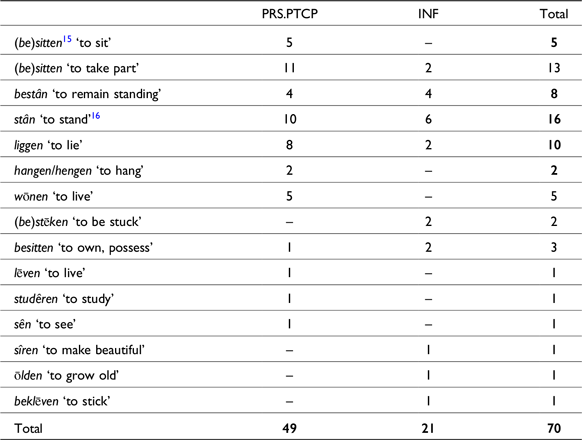
The dataset includes 15 distinct lexemes, which appear a total of 70 times, taking various grammatical forms. Eleven lexemes occur in the present participle form, accounting for 49 instances, while 9 lexemes appear as infinitives, making up 21 instances. Notably, 5 lexemes occur in both forms.
These verbs exhibit a broad semantic range, covering different conceptual domains. The largest group consists of positional verbs, such as (be)sitten ‘to sit’, bestân ‘to remain standing’, stân ‘to stand’, liggen ‘to lie’, and hengen/hangen ‘to hang’. These verbs describe spatial configurations and occur in both the present participle and the infinitive form. Their high frequency of occurrence (41 instances, 58.57%, highlighted in table 2) suggests that blîven frequently co-occurs with verbs denoting postural static states.
The second most frequently occurring lexeme is (be)sitten in the sense of ‘to take part’, which appears 13 times (18.57%), in both present participle and infinitive forms.
The verbs lēven ‘to live’ and wōnen ‘to reside’ can be considered a common group of lexemes referring to long-term states related to existence in a particular space or conditions. In constructions with blîven, they appear exclusively in the present participle form, accounting for 10.00 percent of all occurrences.
The lexemes (be)stēken ‘to be stuck’ and besitten ‘to own, possess’ occur twice each – the first exclusively in the infinitive form, the second in both the present participle and infinitive forms.
The remaining lexemes appear only once: studēren ‘to study’ and sên ‘to see’ occur only in the present participle form, while sîren ‘to make beautiful’, ōlden ‘to grow old’, and beklēven ‘to stick, adhere’ appear only as infinitives.
4.3. Blîven + present participle
The combinations of the verb blîven with the present participle are attested from the second half of the thirteenth century to the first half of the sixteenth century. Of the 48 instances, the verb blîven occurs most often in the past indicative (20 occurrences), as in (5). The verb occurs in the present indicative 11 times (see example (6)). Several examples (4 occurrences) indicate the subjunctive of the verb (see example (7)), and in one example blîven is used in the imperative (see example (8)). In addition, blîven appears as a past participle in constructions with the finite form of the verb wēsen ‘to be’ (5 occurrences), as in (9). Likewise, blîven occurs as an infinitive in constructions with the finite modal verbs schȫlen ‘shall’, mȫgen ‘may, can’, mö̂ten ‘must’, or willen ‘will, want’ (7 occurrences), as in (10). Despite the differences in syntactic structure, both the past participle and infinitive usages of blîven consistently appear in contexts where they interact with a present participle.
(5)
Phila
blef
lygghende
alzo
eyn
der
Phila
remain-3sg.pst.ind
lie-prs.ptcp
like
an
animal
‘Phila stayed lying like an animal.’
(Val._u._Nam._Stockh._Hs., 04v,25)
(6)
blyuet
dar
broder
syttende
remain-3pl.prs.ind
there
brothers
sit-prs.ptcp
dat
en
moth
nycht
syn
that
neg
must-3sg.pres.ind.
not
be-inf
‘If the brothers remain/are still sitting there, that must not happen.’
(Bilderhs._Hamb._StR, 57ra,07–08)
(7)
Were
ok
dat
dat
slot
bleue
stande
be-3sg.pst.subj
also
that
the
castle
remain-3sg.pst.subj
stand-prs.ptcp
‘If that were the case, the castle would remain standing.’
(Brem._Uk._1351–1400, 7,31)
(8)
bliuet
vaste
by
ome
bestande
remain-2pl.prs.imp
firmly
with
him
remain standing-prs.ptcp
‘Remain/Stay firmly with him.’
(Rostocker_Liederbuch, 4r,11–12)
(9)
yd
en
sy
dat
yd
myt
leue
it
neg
be-3sg.prs.subj
that
es
with
love
sy
bestande
bleuen
be-3sg.prs.subj
remain standing-prs.ptcp
remain-pst.ptcp
‘Unless it has willingly remained standing.’
(Bilderhs._Hamb._StR, 181ra,03–04)
(10)
End
ich
mach
wonende
blyuen
and
I
can-1sg.prs.ind
live-prs.ptcp
remain-inf
in
den
huͦs
dar
ich
inne
woͤne
in
the
house
there
I
in
live-1sg.prs.ind
‘And I can continue to live in the house where I live.’
(Mst._Uk._1351–1400, 1r,09)
Most of the present participles are positional verbs like stân ‘to stand’ (10 occurrences) as in (7), liggen ‘to lie’ (8 occurrences) as in (5), (be)sitten ‘to sit’ (5 occurrences) as in (6), bestân ‘to remain standing’ (4 occurrences) as in (8)–(9), and hangen/hengen ‘to hang’ (2 occurrences) as in (11).
(11)
Wo
dan
Absalon
dede
auerst
entlick
derhaulen
when
then
Absalon
do-3sg.pst.ind
but
himself
because of it
an
eynem
bome
hangende
bleff
[…]
from
a
tree
hang-prs.ptcp
become-3sg.pst.ind
‘As Absalon then did, but was ultimately hanged from a tree because of it, […].’
(Reinke_de_Vos_1539, 19v,18–19)
A relatively frequent usage of the verb (be)sitten appears 11 times in the sense of ‘to take part’, as exemplified in (12).
(12)
mer
ein
broder
scal
dair
bliuen
moreover
one
brother
shall-3sg.prs.ind
there
remain-inf
sittende
an
dheme
ordele
participate-prs.ptcp
in
the
judgment
‘Moreover, a brother is to continue to participate in the judgment there.’
(Hamb.St, 20va,10–12)
A total of six participles were formed from the verbs wōnen ‘to live, reside’, as in example (10), and lēven ‘to live’, as in example (13), with both verbs being part of a common group of lexemes describing long-term states related to existence in a particular space or conditions.
(13)
vnde
dhe
andere
dhe
dhar
leuende
bleue
and
the
other
who
there
live-prs.ptcp
remain-3sg.pst.subj
‘And the other one who would stay alive there.’
(Stader_StR, 31r,17, 31v,01–02)
The remaining participles are single occurrences from the infinitives studêren ‘to study’, as in example (4), besitten ‘to own’, and sên ‘to see’, as in examples (14)–(15) below.
(14)
vnde
schal
bliuen
byzittene
also
he
nuͦ
bezit
and
shall-3sg.prs.ind
remain-inf
own-prs.ptcp
like
he
now
own-3sg.prs.ind
‘He should continue to own as he does now.’
(Brem._Uk._1351–1400, 8,24)
(15)
Also
bleiff
deseluͦe
Bernleff
yn
verluͦchtinge
so
remain-3sg.pst.ind
the same
Bernleff
in
illumination
syner
ouͦgen
siende
bis
yn
syn
his
eyes
see-prs.ptcp
until
in
his
oueralder
vnd
yn
synen
doit
tho
old age
and
until
his
death
to
‘Thus, until old age and death, Bernleff’s eyesight remained clear/bright.’
(Cincinnius_Liudger_1512, 86v,18–20)
All verbs that form present participles in this study are durative, as they describe states or ongoing processes. This durativity is either inherent to the verb’s meaning – such as in bestân ‘to remain standing’, (be)sitten ‘to sit’, (be)sitten ‘to take part’, besitten ‘to own, possess’, hangen/hengen ‘to hang’, liggen ‘to lie’, lēven ‘to live’, stân ‘to stand’, studêren ‘to study’, and wōnen ‘to live, reside’ – or contextually established, as in the case of sên ‘to see’ (see example (15)). While sên allows both durative and nondurative interpretations, the presence of the temporal adverbial bis yn syn oueralder und yn synen doit tho ‘until old age and death’ strongly favors a durative reading, indicating a sustained act of perception rather than an instantaneous recognition. Furthermore, these verbs are nonmutative, as the use of the present participle inherently reinforces a nonmutative, atelic interpretation, even in cases where the base verb may otherwise exhibit telicity (see Kotin Reference Kotin2003:103–104 and section 3.1).
As evidenced by its etymological meanings – ‘to be stuck’ and ‘to be stuck to something (by sticking)’ (see section 2) – blîven is inherently durative and exhibits a dual nature in terms of mutativity. This duality allows blîven to denote either a transition into a new state that persists ([+mutative, +durative]) or the sustained maintenance of an existing state ([−mutative, +durative]).
The interpretations of the blîven + present participle construction as a whole follow two possible patterns:
-
1. [−mutative, +durative] – indicating the continuation of a state, process, or action,
-
2. [+mutative, +durative] – denoting a transition into a new state that persists.
The first type of construction, in which blîven [−mutative, +durative] combines with a present participle [−mutative, +durative], results in a fully [−mutative, +durative] reading. This is the most common pattern (41 out of 49 occurrences), as seen in examples (4)–(10) and (12)–(15). In these examples, blîven and the verb in the present participle form both express a durative, nonmutative state, leading to the continuation of an existing condition rather than the initiation of a new one.
The second type of construction, in which blîven ([+mutative, +durative]) combines with a present participle ([−mutative, +durative]), results in a fully [+mutative, +durative] interpretation. The durativity of the construction is reinforced by both blîven and the present participle, while its mutativity is determined solely by blîven. This pattern is less frequent (8 out of 49 occurrences) and is attested only in combinations of blîven with positional verbs, such as hangen/hengen ‘to hang’ (see example (11)) and stân ‘to stand’ (see example (16)).
(16)
Do
bleff
he
stande
vnde
sprak
then
become-3sg.pst.ind
he
stand-prs.ptcp
and
say-3sg.pst.ind
‘Then he stopped and said […].’
(Buschm._Mirakel_Wolf., 1v,26)
These combinations are mutative, meaning that the subject undergoes a state change from A to B. In example (11), the subject was not hanging, and in example (16), the subject was not standing but moving (A). The transition occurs when the subject enters the new state (B) and remains in it for some time.
4.4. Blîven + infinitive
Combinations of blîven with an infinitive appear from the second half of the fifteenth century and occur alongside constructions with a present participle until the first half of the sixteenth century, while in the seventeenth century, they are the only attested form. Of the 20 attestations, the verb blîven occurs most often in the present indicative (9 occurrences), as in (17). In five cases the verb is inflected in the past indicative, as in (18). There are also occurrences of its use in the imperative (2 occurrences), as in (19). The verb occurs twice as an infinitive in combination with the finite modal verbs schȫlen ‘shall’ and mö̂ten ‘must’ (see example (20)). Besides, blîven occurs once as an infinitive with the finite form of the verb sēn ‘to see’ (see example (21)), and once as a past participle with the finite form of the verb wēsen ‘to be’ (see example (22)). These cases, although featuring blîven in the form of an infinitive or a past participle, should also be considered part of the pattern in which blîven occurs in combination with an infinitive.
(17)
bliffst
u
liggen
du
bist
dode
remain-2sg.prs.ind
you
lie-inf
you
be-2sg.prs.ind
dead
‘If you stay down, you’re dead.’
(Kortw._Hist._Sigenot, 19v,33)
(18)
Dar
vorbrande
Closter
vnd
Dohm
Gantz
there
burn down-3sg.pst.ind
monastery
and
cathedral
completely
vnd
gar
aff
blef
nichtes
stahn
and
entirely
off
remain-3sg.pst.ind
nothing
stand-inf
‘There, the monastery and cathedral completely burned down – nothing
remained standing.’
(Brem._Chr._1583, 10r,15–16)
(19)
Bliff
vor
der
Doere
bestahn
become-2sg.prs.imp
in front of
the
door
remain standing-inf
‘Stop in front of the door.’
(Tew._Hocht._1640, 8v,05)
(20)
Eyn
hoch
rad
kan
me
a
high
wheel
can-3sg.prs.ind
one
dorch
depe
grunde
dryuen
dar
eyn
through
deep
ground
drive-inf
where
ein
syd
rad
moet
inne
besteken
blyuen
low
wheel
must-3sg.prs.ind
inside
be stuck-inf
remain-inf
‘A high wheel can be driven through deep ground, where a low wheel
would get stuck.’
(H._Bote_Boek_rade_1493, 18r,14–15)
(21)
wi
segen
steken
bliven
de
leven
Tüffelkens
we
see-1pl.pst.ind
be stuck-inf
remain-inf
the
sweet
slippers
‘We saw the sweet little slippers (still) stuck.’
(Mark._Hochzeitsgedicht, 2,12)
(22)
vnde
vort
is
eme
syn
hoefft
also
and
from then on
be-3sg.prs.ind
him
his
home place
so
onboeghlich
staen
gebleuͮen
altijt
bis
tem
ende
unchanged
stand-inf
remain-pst.ptcp
always
until
the
end
synes
leuͦens
his
life
‘And from then on, his house remained unchanged for the rest of his life.’
(Cincinnius_Liudger_1512, 89v,32–33)
The verb blîven most frequently occurs with positional verbs, which account for 66.7 percent of its infinitival combinations. It is particularly common with stân ‘to stand’ (6 occurrences), as in (18) and (22), and bestân ‘to remain standing’ (4 occurrences), as in (19). It also appears twice with liggen ‘to lie’, as in (17). In addition, blîven also occurs twice with sitten in the sense of ‘taking part’, as in (23). The verb is also found in two instances with (be)stēken ‘to be stuck’, as in (20) and (21), and besitten ‘to own, possess’, as in (24). Less frequent combinations, each occurring only once, include sîren ‘to make beautiful’, ōlden ‘to grow old’ (25), and beklēven ‘to stick’ (26).
(23)
Mer
eyn
broder
schal
dar
moreover
one
brother
shall-3sg.prs.ind
there
bliuen
sytten
an
deme
ordel
remain-inf
sit-inf
in
the
judgment
‘Moreover, one brother is to continue to participate in the judgment.’
(Bilderhs._Hamb._StR, 57ra,09–11)
(24)
Dat
se
de
binnen
Luneborch
woneden
that
they
the
inside
Luneburg
live-3pl.pst.ind
vnde
Jegenwordigen
des
houtuilter
amptes
gebrukenden-3pl.pst.ind
and
representatives
the
mayor
office
used
jn
orer
neringe
soFootnote
17
mochten
besitten
in
their
trade
so
might-3pl.pst.ind
own-inf
blyuen
remain-inf
‘Because they lived in Luneburg and, as representatives of the mayor’s office,
used their position in their dealings, they were allowed to remain in possession.’
(Lüneb. Lib. Mem., 136r,15–16)
(25)
bliue
to
allen
tiden
den
louen
myt
remain-2sg.prs.imp
at
all
times
the
belief
with
guden
werken
tziren
vnde
dar
inne
olden
good
deeds
make beautiful-inf
and
there
in
grow old-inf
‘At all times, embellish your faith with good deeds, and grow old in it.’
(Lüb._Dod._Dantz_1489, 32r,27–28)
(26)
Schold
hoͤger
syn
geacht
/
und
shall-3sg.pst.ind/subj
higher
be-inf
respect-pst.ptcp
and
beter
Roͤke
geven
/
als
wat
better
attention
give-inf
than
what
der
schoͤnen
Fruw
im
Hembde
the
beautiful
woman
in the
chemise
blifft
bekleven
remain-3sg.prs.ind
stick
‘He should be held in higher regard and pay more attention to important
matters rather than fussing over trivialities, like a beautiful woman who has
something stuck to her chemise.’
(Lauremberg_1652, 18v,18–19)
Most of the infinitives that occur with blîven are durative and nonmutative. This group includes several positional verbs, such as bestân ‘to remain standing’, liggen ‘to lie’, stân ‘to stand’, and beklēven ‘to stick’, as well as other durative verbs like besitten ‘to own, possess’, (be)sitten ‘to take part’, and (be)stēken ‘to be stuck’. Only two verbs, ōlden ‘to grow old’ and sîren ‘to make beautiful’, display a mutative character while remaining durative.
Like the blîven + present participle construction, the blîven + infinitive construction derives its durativity from both blîven and the infinitive, while its mutativity is determined solely by blîven. Two possible readings arise, identical to those found in the blîven + present participle construction:
-
1. [−mutative, +durative], indicating the continuation of a state, process, or action, and
-
2. [+mutative, +durative], denoting a transition into a new state that persists.
The first pattern is the most frequent, occurring in 17 out of 21 attestations, as seen in (17)–(18) and (20)–(25). In these cases, blîven is nonmutative, resulting in a reading of continuous state or process, regardless of the infinitive’s inherent properties. Notably, this holds even in cases like (25), where the infinitives ōlden ‘to grow old’ and sîren ‘to make beautiful’ are inherently mutative, yet their combination with blîven yields a durative reading without a clear transition into a new state.
Conversely, when blîven is mutative, it determines the mutativity of the entire construction, even if the infinitive itself is nonmutative. This pattern is much less frequent, with only four attestations, and appears exclusively with stân ‘to stand’ and bestân ‘to remain standing’, as in (19), where blîven introduces the notion of entering a new state that persists. In (19), the subject is instructed to Blif vor der doere bestahn ‘stop in front of the door’, marking a transition from movement (A) to standing (B), which endures over time.
4.5. Summary
The quantitative distribution of the two meanings of blîven in combination with the present participle and the infinitive is summarized in table 3.
Meanings of blîven + present participle/infinitive

Throughout the MLG period, the constructions blîven + present participle (attested until the first half of the sixteenth century) and blîven + infinitive (present from the second half of the fifteenth century) remain semantically equivalent, allowing for both the interpretation of ‘continuation of a state, process, or action’ ([−mutative, +durative]) and ‘entering a new state that lasts’ ([+mutative, +durative]).
The interpretation of the construction is shaped by both blîven and the present participle or infinitive. While durativity is reinforced by both elements, mutativity is determined solely by blîven. The analysis of blîven in combination with present participles and infinitives has shown that when blîven carries the [+mutative] value, the whole construction is interpreted as mutative, even if the nonfinite verb itself is nonmutative. Conversely, when blîven is nonmutative, the construction maintains a nonmutative reading, regardless of the inherent properties of the present participle or infinitive.
The dominant interpretation is durative and nonmutative, accounting for 83.7 percent of cases in constructions with the present participle (41 out of 49) and 81 percent in constructions with the infinitive (17 out of 21). The [+mutative, +durative] meaning occurs significantly less frequently – only in 16.3 percent of cases with the present participle (8 out of 49) and 19 percent of cases with the infinitive (4 out of 21). This meaning is restricted to combinations of blîven with positional verbs such as hangen/hengen ‘to hang’, stân ‘to stand’, and bestân ‘to remain standing’.
5. Discussion
The findings of this study confirm and expand upon previous research on blîven in Middle Low German, addressing gaps in earlier analyses. Unlike prior studies that were limited in textual scope (Rosenthal Reference Rosenthal1984) or restricted to data up to the late fifteenth century (Woźnicka Reference Woźnicka2024), this study spans the entire MLG period (thirteenth–seventeenth century), enabling a more comprehensive investigation of the constructions blîven + present participle and blîven + infinitive. While previous research has examined blîven in various syntactic contexts, no detailed study has systematically analyzed these two specific constructions. Earlier works have primarily approached blîven within broader syntactic and semantic frameworks without explicitly addressing the relationship between these structures. By focusing exclusively on these combinations, this study provides a more precise and in-depth analysis of their semantic properties, distribution, and diachronic development, thereby filling an existing gap in the research.
The results demonstrate that blîven + present participle and blîven + infinitive remain semantically equivalent throughout the attested period. Moreover, the study confirms that while both blîven and the present participle or infinitive contribute to the durative interpretation of these constructions, it is blîven that determines their mutativity. The predominance of the [−mutative, +durative] reading indicates that the primary function of blîven in these combinations is to express the continuation of a state or action. The [+mutative, +durative] interpretation, by contrast, arises only in restricted contexts, particularly with positional verbs, where blîven introduces the notion of a transition into a new state that persists.
The fact that blîven + infinitive and blîven + present participle exhibit identical meanings supports the hypothesis that the infinitival construction emerged through phonological reduction of the participial form. This aligns with the well-documented process in which participial morphology erodes over time, resulting in convergence with infinitival forms.
Given that, like blîven, other existential verbs such as wērden ‘to become’ and wēsen ‘to be’ exhibit actional duality (Kotin Reference Kotin2003:33–34), it can be expected that their combinations with present participles also allow for two possible interpretations: mutative and nonmutative. Indeed, the corpus-based study by Ihden (Reference Ihden2023) on wērden and wēsen in combination with present participles in Middle Low German confirms this hypothesis.
Ihden (Reference Ihden2023:418–433) interprets the constructions wērden + present participle and wēsen + present participle in both temporal and aspectual terms. The temporal classification includes present, past, and future interpretations, whereas in terms of aspect, the constructions can have either an inchoative or a durative reading.
In the wērden + present participle construction, futural and inchoative interpretations are predominant. The futural reading occurs most frequently when wērden appears in the present tense, indicating its grammaticalization as a future marker. The second dominant reading is the inchoative interpretation, which arises when wērden is used in the past tense and signifies the initiation of a new state. The construction is much less frequently interpreted as referring explicitly to the present or past, and even more rarely does it receive a durative interpretation, which would indicate the continuation of an ongoing state or action.
In the case of the wēsen + present participle construction, the durative interpretation is predominant, attested across different tenses and moods. This construction almost always indicates the continuation of a state or action, and inchoative readings do not occur, marking a significant contrast with the wērden construction. As for temporal interpretations, references to the present, past, and future appear only sporadically.
The inchoative interpretations of the wērden + present participle construction align with the dynamic nature of wērden, which inherently encodes a change of state and a transition to a new phase. It can also be assumed that the futural readings of this construction originally stem from its mutative meaning – since a change of state in the present often implies its continuation into the future. However, as Ihden’s (Reference Ihden2023) analysis shows, in MLG, the futural interpretation eventually began to function independently, gradually replacing the original aspectual readings. As a result, the wērden + present participle construction gradually lost its aspectual character and became primarily a temporal construction. Nevertheless, the presence of durative readings, though rare, suggests that wērden was not exclusively mutative – it retained a certain degree of stative potential, reflecting its more complex semantic profile.
In contrast, the dominance of the durative interpretation in the wēsen + present participle construction confirms its stative nature. However, the limited number of futural readings suggests that wēsen was not entirely devoid of dynamic features, although its ability to encode state change was significantly weaker than that of wērden.
The dual aspectual and temporal readings of both constructions confirm the actional duality of both wērden and wēsen. Wērden, despite the dominance of dynamic interpretations, retains some stative features to a limited extent, while wēsen, although primarily stative, exhibits a certain degree of dynamic potential.
The analyses of existential verb constructions in MLG, as presented by Ihden (Reference Ihden2023) and examined in this study, demonstrate that blîven, wērden, and wēsen exhibit a complex actional profile. The findings of Ihden’s (Reference Ihden2023) study on wērden + present participle and wēsen + present participle can be related to the results of the analysis of blîven + present participle/infinitive conducted in this study, revealing certain parallels in their aspectual and temporal interpretation.
The blîven + present participle/infinitive constructions are interpreted exclusively in aspectual terms, with two possible readings: nonmutative durative ([−mutative, +durative]) and mutative durative ([+mutative, +durative]). The first, indicating the continuation of a state or action, is clearly dominant, accounting for approximately 80 percent of cases. This result is comparable to the dominant reading of the wēsen + present participle construction, which also receives a durative interpretation in about 75 percent of cases (Ihden Reference Ihden2023:425–433).
The less frequent mutative-durative reading of the blîven + present participle/infinitive construction (approximately 20 percent) corresponds to the dominant interpretation of the wērden + present participle construction, which is interpreted as futural or inchoative in about 90 percent of cases (Ihden Reference Ihden2023:418–425). However, while wērden in combination with a present participle undergoes grammaticalization toward a futural meaning, the blîven construction in the present tense with a present participle or infinitive retains its aspectual nature, indicating an entry into a state in the present that continues into the future.
The distribution of readings among the analyzed existential verbs exhibits clear aspectual-temporal preferences, though it is not highly divergent. The wērden + present participle construction is predominantly interpreted as futural or inchoative (approximately 90 percent), with only marginal alternative readings. The wēsen + present participle construction is primarily durative (around 75 percent), while other interpretations, including futural ones, occur only sporadically. Meanwhile, the blîven + present participle/infinitive construction shows a predominance of the durative reading (approximately 80 percent), yet, unlike wēsen, it retains a significant, though less frequent (around 20 percent), potential for a mutative-durative interpretation. Notably, this mutative-durative reading is restricted to combinations of blîven with nonfinite forms of positional verbs, indicating specific semantic conditions required for its realization. Thus, while blîven is aspectually closer to wēsen, it still preserves certain dynamic properties characteristic of wērden, albeit within a much more constrained lexical context.
In summary, the comparison of Ihden’s (Reference Ihden2023) findings with those of the present study confirms that while existential verbs in MLG share common actional features, their semantic development followed different paths.
6. Conclusions
The analysis of the blîven + present participle/infinitive construction in MLG fits into the broader context of research on aspectuality and temporality in constructions with existential verbs in Germanic languages. The findings of this study align with Kotin’s (Reference Kotin2003:104–105, 154–157) analyses of the uuerdan/werden and uuesan/sîn + present participle constructions in Old and Middle High German dialects. Kotin demonstrated that the uuerdan/werden + present participle construction encoded a change of state that subsequently persisted. In the case of a copula in the present tense, these constructions naturally indicated a state that would continue into the future. In contrast, uuesan/sîn + present participle denoted the continuation of a pre-existing state or action. Similarly, in MLG, blîven + present participle/infinitive functions in two aspectual readings: the mutative-durative interpretation, corresponding to uuerdan/werden + present participle, and the nonmutative-durative interpretation, aligning with uuesan/sîn + present participle.
Although the uuerdan/werden + present participle constructions in High German dialects had the potential to develop into a future periphrasis – a stage that, according to Ihden (Reference Ihden2023), had already been reached in MLG werden + present participle – the hypothesis that this development resulted from phonological reduction has been rejected in contemporary German (see Concu Reference Concu2022). Instead, alternative developmental scenarios have been proposed (see Diewald & Habermann Reference Diewald, Habermann, Leuschner, Mortelmans and De Groodt2005, Kotin Reference Kotin2003, Jäger Reference Jäger2024, and section 3.2). Similarly, the origin of the sein + infinitive construction in modern German is not linked to uuesan/sîn + present participle/infinitive in earlier stages of the language’s development (see Vogel Reference Vogel, Geist and Rothstein2007). Alternative pathways of development have been suggested instead (see Krause Reference Krause2002, Abraham Reference Abraham2007, Vogel Reference Vogel, Geist and Rothstein2007, Wöllstein Reference Wöllstein and Härtl2013, and section 3.2).
The contemporary interpretations of bleiben + infinitive in German, which correspond to the meanings of the Middle Low German blîven + present participle/infinitive, suggest that both constructions may have undergone the same developmental trajectory, although their diachrony remains an open question. Furthermore, as in Middle Low German, the mutative interpretation in German remains restricted to specific positional verbs (see Steinitz Reference Steinitz1999; Krämer Reference Krämer2004, Schlücker Reference Schlücker, Geist and Rothstein2007, and sections 2 and 3.2), indicating the continuity of certain lexical constraints.
Research on the origins of the werden + infinitive and sein + infinitive constructions indicates that their development followed different mechanisms and was not uniform. In light of these findings, the varied interpretations regarding the origins of infinitival constructions with existential verbs in German suggest that they did not follow a single evolutionary trajectory but were shaped by distinct structural and functional factors.
Future diachronic studies on the bleiben + infinitive construction will determine whether its development mirrors that of blîven + present participle/infinitive in Middle Low German. If so, its developmental trajectory would differ from that of sein + infinitive and werden + infinitive, suggesting a distinct evolutionary mechanism for this construction compared to other periphrases with existential verbs.
In addition to examining the origins of this construction in German, future research should explore its development in other Germanic languages, where similar structures are attested. Notably, in Dutch and Swedish, cognate verbs (blijven and bli, respectively) also combine with infinitives (Dutch) or present participles (Swedish). Investigating how the contemporary interpretations of these constructions have evolved across different languages could provide valuable insights into the mechanisms shaping the development of aspect and its relationship to temporality in Germanic languages.
Appendix
The following list provides bibliographic details for the texts in which the construction bliven + present participle/infinitive has been identified in the course of this study. The sources are arranged alphabetically by abbreviation, which is presented in bold. Each entry includes the abbreviation, followed by the full title of the work. Next, the linguistic classification and, where applicable, the place of publication are provided. The year of publication or estimated time of creation is indicated, followed by the name of the author or printer, if known. Finally, the original location specifies the archive or library where the manuscript or printed work is preserved. If further metadata is unavailable, it is indicated as ‘No metadata available’.
Bamberg 1510: Bamberger Halsgerichtsordnung von 1507 (East Elbian/Rostock, 1510), Hermann Barckhausen. Original location: Hamburg, Library of the Hamburg Chamber of Commerce: Hanseatic Economic Archive Foundation/Special Collection of the Library.
Bilderhs. Hamb. StR: Bilderhandschrift des Hamburger Stadtrechts (North Low Saxon/Hamburg, 1497), Hermann Langenbeck. State Archive of the Free and Hanseatic City of Hamburg.
Blankenb._Urk._1290: Blankenburger Urkunden 1290 (2 documents) (Eastphalian/Blankenburg, 1290), unknown author. Goslar, City Archive.
Brem. Chr. 1583: Chronica der Stadt Bremen (North Low Saxon/Bremen, 1583), Johann Renner. State Archive of Bremen.
Brem. Uk. 1351–1400: 10 digitized Bremen documents from the ASnA (North Low Saxon/Bremen, 1351-1400), unknown author. State Archive of Bremen.
Brem._StR_1303,04: Bremer Stadtrecht (North Low Saxon/Bremen, 1303/04), unknown author. State Archive of Bremen.
Buschm. Mirakel Wolf.: Mirakel, Wolfenbütteler Hs. (Eastphalian/unknown, 1476), Arnt Buschmann. Wolfenbüttel, Herzog August Library.
Cincinnius Liudger 1512: Johannes Cincinnius, Liudger-Vita (Westphalian/unknown, 1512), Johannes Cincinnius. Münster, State Archive of North Rhine-Westphalia, Westphalia Department (formerly: State Archive of Münster).
Cron. Sassen 1492: Cronecken der Sassen (Eastphalian/Mainz, 1492), Peter Schoeffer. Munich, Bavarian State Library.
Engelh. Chr. 1435: Dietrich Engelhus: Chronica nova (Weltchronik) (Eastphalian/unknown, 1435), unknown author. Wolfenbüttel, Herzog August Library.
H. Bote Boek rade 1493: Hermen Bote: Boek van veleme rade (Lübeck, 1493), Steffen Arndes. New York, Metropolitan Museum of Art, Department of Prints (formerly in: Wernigerode, Princely Library).
Hamb.St: Hamburger Stadtrecht, Rotes Buch (North Low Saxon/Hamburg, 1301), unknown author. Hamburg: State Archive of the Free and Hanseatic City of Hamburg.
Kortw. Hist. Sigenot: De Rese Sigenot, Dre kortwilige Historien (North Low Saxon/Hamburg, 1560), Joachim Loew. Berlin State Library – Prussian Cultural Heritage.
Lauremberg 1652: Collection of humorous poems (East Elbian/unknown, 1652), Johann Lauremberg. Wolfenbüttel, Herzog August Library.
Lüb. Bibel 1494: Biblia (Lübeck, 1494), Steffen Arndes. No metadata available.
Lüb. Brant NarrenS 1497: Dat narren schyp (Lübeck, 1497), Mohnkopf. No metadata available.
Lüb. Dod. Dantz 1489: Des dodes dantz (Lübeck, 1489), Mohnkopf. No metadata available.
Lud. Sudh. Hs. Ms: Reisebericht (Westphalian/unknown, first half of the fifteenth century), Ludolf von Sudheim. Münster, University and State Library.
Lüneb. Lib. mem.: Liber memorialis (Selected entries from the Chancellery Regulations of 1501–1519) (North Low Saxon/Lüneburg, 1501–1519), unknown author. No metadata available.
Märk. Hochzeitsgedicht: Märkisches Hochzeitsgedicht (South Markish/no metadata, 1654), unknown author. No metadata available.
Mst. Uk. 1351–1400: 10 digitized Münster deeds (Westphalian/Münster, 1351–1400), unknown author. ASnA.
Nowg. Schra Rig.: Nowgoroder Schra II (Baltic Low German/Riga, at the latest in 1297), unknown author. State Archive of Riga.
Reinke de Vos 1539: Reynke de Vosz de olde (East Elbian/Rostock, 1539), Ludwig Dietz. Göttingen: Lower Saxony State and University Library.
Reval Schragen 1401–1450: Revaler Handwerkerschragen (14 in total) (Baltic Low German/Tallinn, 1401–1450), unknown author. Tallinn City Archives.
Rig. Uk. 1401–1450: 2 digitized Riga deeds from the ASoR (Baltic Low German/Riga, 1401–1450), unknown author. State Archive of Riga.
Rostocker Liederbuch: Rostocker Liederbuch (East Elbian/unknown, fifteenth century).
Identified authors: Song No. 5 (V. 81): Hinrick Sticker, Song No. 11 (V. 31): Peter von Strazeborgh, Song No. 9: The Monk of Salzburg, Song No. 19: Oswald von Wolkenstein, Song No. 60: Philippe de Vitry, the rest: unknown. University Library of Rostock.
Soest Schrae 1367: Soester Schrae im Statutenbuch (Westphalian/Soest, 1367), unknown author. City Archive of Soest.
Stader_StR: Stader Stadtrecht (North Low Saxon/Stade, 1279), unknown author. State Archive of Stade.
Tew. Hocht. 1640: Teweschen Hochtiedt (North Low Saxon/Hamburg, 1640), Heinrich Werner. Wolfenbüttel: Herzog August Library.
Val. u. Nam. Stockh. Hs.: Valentin vnde Namelos (East Elbian/unknown, around 1420), unknown author. Stockholm: Royal Library.
Verl. Sohn 1527: De Parabell vam vorlorn Szohn gespelet tho Ryga (Baltic Low German/Magdeburg, listed in Riga, 1527), Heinrich Öttinger. Wolfenbüttel: Herzog August Library.
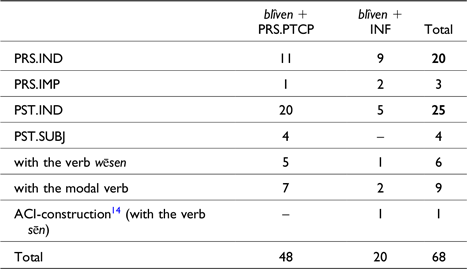
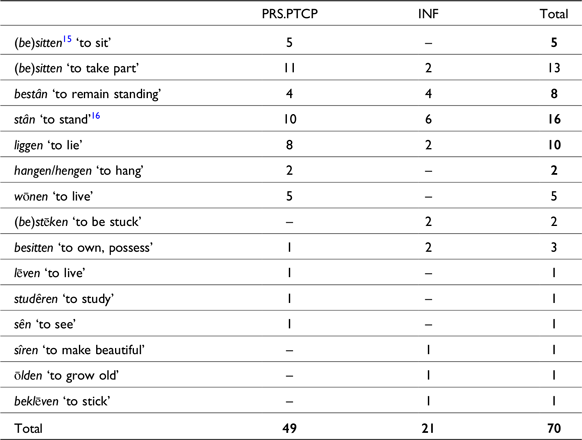
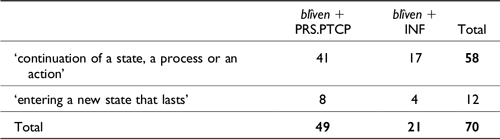

 Open access

