

INTRODUCTION AND RESEARCH BACKGROUND
Location and history of research
Lesbos, the third largest Greek island, occupies a strategic location on sea routes connecting the Aegean with the Black Sea and is situated only a few kilometres away from the Anatolian coast (Fig. 1a). The island has been inhabited since the Lower Palaeolithic at Rodafnidia-Lisvori (Galanidou et al. Reference Galanidou, Athanassas, Cole, Iliopoulos, Katerinopoulos, Magganas, McNabb, Harvati and Roksandic2016), and hosts numerous prehistoric sites (Fig. 1b; see Spencer Reference Spencer1995a; Lambrianides and Spencer Reference Lambrianides and Spencer1997a, fig. 2). Nevertheless, Thermi, located on the east coast of Lesbos, comprises the only site to have been so far systematically investigated and thoroughly published (Lamb Reference Lamb1936; Lamb and Hutchinson Reference Lamb and Hutchinson1928).
(a) Geographical map with the location of Lesbos with selected sites mentioned in the text. (b) Map of Lesbos with the location of the main prehistoric sites (after Spencer Reference Spencer1995a, figs 2–3) (modified after Google Earth, © S. Menelaou).

In the hope to ‘throw light on [Lesbos’] early culture and provide a link between Greece and Anatolia’, Winifred Lamb (see Gill Reference Gill2018), on behalf of the British School at Athens, had identified the settlement of Thermi through remains on a low mound with pottery sherds scattered on the surface ‘like plums in a cake’ (Lamb Reference Lamb1936, 1). Lamb and her team then conducted systematic excavations from 1929 to 1933, revealing five successive construction phases, and two subphases, designated as Towns I to V, dating to the Early Bronze Age (EBA). Additionally, evidence of Middle and Late Bronze Age (MBA and LBA) occupation was uncovered (Lamb Reference Lamb1936, 65–72, 136–48, 211–13). While only remains of the latest EBA phases (mainly Town V) are visible today due to backfilling and erosion by the sea, recent excavations led by Olga Philaniotou (Reference Philaniotou, Marthari, Renfrew and Boyd2019, 142) on behalf of the 20th Ephorate of Prehistoric and Classical Antiquities (2005–11) for presentation of the site revealed previously unexplored areas (Fig. 2). These areas brought to light new evidence of third- and second-millennium BC occupation, including a later EBA phase and MBA–LBA imports from Crete (Philaniotou Reference Philaniotou2014), as well as new architectural evidence that include second-millennium BC pottery kilns (Philaniotou Reference Philaniotou2011, 13; Constantinidou Reference Constantinidou2019, 50–4).
Views of the latest EBA architectural levels after presentation of the site between 2005 and 2011 (© Ephorate of Antiquities of Lesbos; after Philaniotou Reference Philaniotou2011).

Similarly to Poliochni on Lemnos, Thermi has been discussed against major themes in Aegean prehistory, and it exemplifies one of the earliest instances of urbanisation in the Mediterranean (Doumas Reference Doumas and Sinclair1996; Naiboğlu Reference Naiboğlu2019). Such indications of urbanisation include centralised planning and communal organisation (architectural plan and re-planning, stone-paved roads, open squares, wells, complex fortification system), craft specialisation (metalworking), social stratification and differentiation (monumental architecture and special-functioned buildings, central storage facilities, sealing practices, bronze treasures, metal jewellery), and long-distance exchanges (imported goods and exotica, metrology) from the beginning of the third millennium BC (cf. Fidan Reference Fidan, Harrison, Bilgen and Kapuci2021). The significance of Thermi’s development as one of the earliest urban centres in the Aegean owes much to the geographical position of the island, as noted by Lamb in her seminal publication (Lamb Reference Lamb1936, 1). Moreover, Thermi has been characterised as a site with strong links to the prevailing EBA culture at Mainland Anatolian sites (Spencer Reference Spencer1995b, 273).
This review paper presents the results from an analytical study of the legacy ceramic assemblage from Thermi. The primary objectives of this work are to re-assess the chronological phasing of the site, based on new ceramic identifications, and to shed new light on the local potting traditions, as well as the circulation and exchange at different levels.
Distribution of prehistoric sites on Lesbos
This is not an exhaustive account of prior research on prehistoric Lesbos, but rather a broader framework of the work discussed in this paper. To date, Lambrianides and Spencer (Reference Lambrianides and Spencer1997a, table 1, n. 5 with earlier references; Reference Lambrianides, Spencer, Erkanal, Hauptmann, Şahoğlu and Tuncel2008), who contextualised all known evidence through bibliographical accounts and surveys, as well as from the study of sherd collections at the British School at Athens and the German Archaeological Institute at Athens, achieved the most comprehensive account of prehistoric presence on Lesbos. According to their seminal work, two main settlement nuclei existed, both coastal, namely Thermi and the east coast around the Gulf of Yera, and the Gulf of Kalloni in the centre of the island (see Spencer Reference Spencer1995a for a detailed account; Lambrianides and Spencer Reference Lambrianides, Spencer, Doumas and La Rosa1997b). Athough coastal sites (promontory) are prevalent, inland sites (hilltop) are also found (Fig. 1b).
Potentially pre-Bronze Age evidence is found at approximately five sites, according to Spencer (Reference Spencer1995a, index 1, fig. 2), of which the most important seem to be Chalakies-Polichnitos, Kourtir-Lisvori, and the Agios Vartholomaios Cave. During the EBA there is an increase of sites, amounting to 37 (some questionable) according to Spencer’s (Reference Spencer1995a, index 1, fig. 3) thorough account, as well as fieldwork carried out by Axiotis (Reference Axiotis1992; Reference Axiotis1996). Beyond Thermi, several pieces of evidence point to prehistoric habitation on the island, with some showing mixed traces of pre-Bronze Age finds or continuity into later periods (Gerontakou and Avgerinou Reference Gerontakou, Avgerinou, Doumas and La Rosa1997, fig. 1). These possibly include pottery sherds from Antissa (probably EBA II), Kastro and Kara Tepe in Mytilene town (EBA), Saliakas-Moria, Agios Vartholomaios Cave (Neolithic–EBA; Archontidou and Acheilara Reference Archontidou and Acheilara1999, 13), Tis Grias to Pidima Cave (Neolithic; Gerontakou and Avgerinou Reference Gerontakou, Avgerinou, Doumas and La Rosa1997, 453), Plati-Nees Kydonies (EBA), and Angouleria Sarakinas (EBA) on the east coast (Lambrianides and Spencer Reference Lambrianides and Spencer1997a, 82, n. 28, 85–90, figs 4–6).
Among those identified in the centre of Lesbos and the Gulf of Kalloni, Chalakies, Kourtir, and Profitis Ilias are reported to have uncovered pottery dated mainly to the EBA, but also pre-Bronze Age and MBA–LBA, while smaller sites such as Makara-Agra, Palaiokastro-Arisbi, Agios Fokas, Mitoilia, Damandri, and Klopedi have mainly EBA traces (Lambrianides and Spencer Reference Lambrianides and Spencer1997a, 82, n. 28, 85–103, figs 7–18). Other prehistoric sites on the island include Profitis Ilias/Eresos (EBA), Methymna (EBA–LBA?), and several others in the western part of Lesbos awaiting investigation (Davis Reference Davis1992, 724; Spencer Reference Spencer1995b; Lambrianides and Spencer Reference Lambrianides and Spencer1997a, 104, fig. 2).
Chronology, architectural phases and archaeological context
Lamb’s (Reference Lamb1936, 11–54) comprehensive documentation meticulously outlines all architectural phases and relevant structures with their stratigraphic organisation. However, only a concise overview of the phases relevant to the analysed pottery is provided in this section. Although Lamb designated these phases as Towns I to V, corresponding to the EBA (Table 1), the identification of a pattern-burnished bowl sherd among the ceramic material at the Archaeological Museum of Mytilene has raised the question of an earlier chronological horizon at Thermi (Lambrianides and Spencer Reference Lambrianides and Spencer1997a, 83, fig. 4, n. 38). This single sherd was originally dated by Felsch (Reference Felsch1988, 105, n. 413, pl. 89:1) to the Neolithic/Chalcolithic in the Kastro-Tigani (Samos) publication, and then futher supported by Davis (Reference Davis1992, 724, n. 103), who suggested its provenance in the site of Chalakies on the Gulf of Kalloni. Lambrianides and Spencer (Reference Lambrianides and Spencer1997a, 83–4, n. 38, fig. 4) have questioned this suggestion, stating that there is ‘no positive evidence to justify this proposal, and, in any case, pattern-burnishing is a technique widespread both in time and space’. Similarly, a single, potentially pattern-burnished rim sherd reported from Yeldeğirmentepe, situated in the Madra River Delta opposite Lesbos, further complicates the chronological interpretation (Röcklinger et al. Reference Röcklinger, Horejs, Lambrianides and Spencer2021, 13, fig. 9). However, pattern-burnishing, characteristic of the Middle Chalcolithic (cf. Menelaou and Kouka Reference Menelaou and Kouka2022, 12), is believed to be rare in the ceramic zone of Lesbos-Altınova and the Bakırçay valley (Lambrianides and Spencer Reference Lambrianides and Spencer1997a, n. 40).
The chronological sequence at prehistoric Thermi (based on Begemann, Schmitt-Strecker and Pernicka Reference Begemann, Schmitt-Strecker and Pernicka1992, 221; Şahoğlu Reference Şahoğlu2005, fig. 3; Kouka Reference Kouka, Manning and Bruce2009, tables 7–8; Manning Reference Manning1995, 77, n. 46; Menelaou et al. Reference Menelaou, Kouka, Müller and Kiriatzi2024, table 1).

A reassessment of the ceramic material at Thermi’s depot within the current project framework identified a handful of sherds classified as pattern-burnished, previously misattributed to the EBA period, along with fragments of cheesepots (Fig. 3ab). Lamb (Reference Lamb1936, 78, 82, 85, pl. XXX) had already noted the rarity of painted sherds (Class A: three sherds in Town I; three sherds in Town II; higher frequency in Class B; Class C: few sherds considered as survivals). Whether these indicate local products of an earlier chronological horizon at Thermi or imports from sites in the Gulf of Kalloni that yielded pre-EBA material (Chalakies-Polichnitos, Kourtir-Lisvori, and Profitis Ilias-Ayia Paraskevi) necessitates further investigation. Notably, at the latter site, a handle sherd with painted decoration that was attributed to the Early Chalcolithic period was suggested to be an import from Chios based on close morpho-stylistic similarities (Lambrianides and Spencer Reference Lambrianides and Spencer1997a, 96–9). Matt white-painted pottery is a widespread ceramic phenomenon already from the fifth millennium BC, with sites located mainly in the Upper Meander valley and further south in the Elmalı plain, showing a general increase of sites producing/consuming this pottery class towards the end of the fourth millennium BC (Thater Reference Thater, Pernicka, Ünlüsoy and Blum2016). During EBA I and II, white-painted pottery has been commonly yielded at Yortan cemetery (Class A; Kamîl Reference Kamîl1982, 16–17). Ceramic comparisons (cheesepots, white-painted pottery) with sites in western Anatolia and the eastern Aegean (e.g. Troy I, Kumtepe IA–IB, Aphrodisias-Pekmez Late Chalcolithic 1–4, Beycesultan Levels I–XIII, Karataş IV–VI.1, Çukuriçi Höyük, Demircihüyük, Liman Tepe, Bakla Tepe, Poliochni Black–Blue on Lemnos, Emporio IX–IV and upper levels of Upper Cave of Aghio Gala on Chios, Kastro-Tigani I–IV and the Heraion 6 on Samos), revealing continuing shapes and styles in the transition between the Late Chalcolithic and EBA I (Çilingiroğlu et al. Reference Çilingiroğlu, Schwall, Sezgin and Çakırlar2023, 11), may suggest a transitional period at Thermi.
Selection of samples representing a Late Chalcolithic/EBA I transitional phase. (a) Pattern burnished bowls (THE62, 65, and 66). (b) Cheesepot (THE64). (c) Short-necked cup (THE67). (d) Cut-away spouted jug (THE68). © S. Menelaou.

Discussing Thermi’s spatial development generally revolves around three architectural systems that reflect socioeconomic changes in the settlement’s stability and organisation (Lambrianides Reference Lambrianides and Spencer1995, 73–86, figs 5:4–5:9; Reference Lambrianides, Lambrianides and Spencer2007). These systems are known as radiocentric, rectangular and linear (Kouka Reference Kouka and Molloy2016), and are elaborated upon in the subsequent paragraphs for each phase. The description and classification of the different town plans and settlement architectural types have intrigued various scholars, though they all agree that the main feature of the early third millennium BC is the long-room house organised into units (Kouka Reference Kouka2002; Reference Kouka and Molloy2016; Aslan Reference Aslan, Robertson, Seibert, Fernandez and Zender2006; Ivanova Reference Ivanova2013; Gündoğan Reference Gündoğan2020). Architectural changes then reflect significant socio-political transformations that led to further shifts in the built environment of the later third millennium BC.
Town I
Founded at the beginning of the third millennium BC on the soft natural rock along two shallow streams, Thermi I emerged as a small town featuring an organised pericentric layout with a radiating system (Fig. 4a) and lacking a fortification wall (Georgaki Reference Georgaki, Vlachopoulos and Birtacha2003, 127). Characterised by a basic house type – a long, narrow rectangular building with an entrance on one narrow side and a porch preceding the main room – this architectural pattern persisted throughout the settlement’s existence (Kouka Reference Kouka, Doumas and La Rosa1997, 468). Despite its lack of fortifications, Thermi I displayed an organised layout, with houses joining walls to form blocks along the main street (Kouka Reference Kouka, Doumas and La Rosa1997, 470). This circular/radiocentric settlement plan (Thermi I–IIIB: Kouka Reference Kouka2002, 154, 170–1, pls 12, 15, 18, 21; Reference Kouka and Molloy2016, 206), known as the ‘Aegean Settlement Pattern’, was prevalent across the north-eastern Aegean and western Anatolia (e.g. Troy, Beşiktepe, Liman Tepe, Bakla Tepe, Demircihüyük, Poliochni-Lemnos, Emporio-Chios, Heraion-Samos; see Kouka Reference Kouka2002; Reference Kouka2013 with earlier bibliography), contrasting with the ‘Anatolian Settlement Plan’ found mainly in central and inland western Anatolia (Gündoğan Reference Gündoğan2020, fig. 7, with references). Ivanova (Reference Ivanova2013, 29) introduced the term ‘Bronze Age row-housing’ type to describe this settlement layout. Hearth locations inside and outside buildings, as well as stone platforms and ground pits for storage and cooking, were common throughout the settlement. Radiocarbon dates from charcoal place Town I around 3022–2700 and 2910–2780 calibrated BC, though an earlier date (3943–3195 BC) was dismissed for being too early (Lambrianides and Spencer Reference Lambrianides and Spencer1997a, 83; Begemann, Schmitt-Strecker and Pernicka Reference Begemann, Schmitt-Strecker and Pernicka1992, 221). Radiocarbon dates from Çukuriçi Höyük IV–III (2950/2900–2750 calibrated BC) support a comparable chronological span between the two sites (Grasböck et al. Reference Grasböck, Bratschi, Horejs and Schwall2023, 236).
Plans of the architectural phases at Thermi (after Philaniotou Reference Philaniotou2011). (a) Town I; (b) Town II; (c) Town III; (d) Town IVB; (e) Town V.

Town II
During the second construction phase (Fig. 4b), a fortified enclosure formed by the outer walls of houses was introduced, with subsequent phases exhibiting a more systematic protection of the central part of the settlement. The pericentric system remained intact, and the relationship between covered and uncovered spaces persisted. Notably, a single gate protected by two trapezoidal towers marked the entrance. Building A1, distinguished by its size and position, remained the core of the settlement until phase IIIB, and may have represented a special-functioned complex. Town II saw the emergence of single-room buildings in sections A and B, along with new constructions such as circular platforms and ovens.
Town III
The transition from Town II to IIIA maintained the radiating urban planning system (Fig. 4c), but phase III introduced a stone-built fortification wall for enhanced protection of the central settlement area. The wall was reinforced, and four trapezoidal towers were added (Lamb Reference Lamb1936, 24–5, fig. 9). The settlement expanded in size during this phase (Kouka Reference Kouka, Doumas and La Rosa1997, 478), accompanied by changes in house arrangement and socioeconomic activities, including the introduction of plastered pits. Thermi IIIB documented the first clay figurines, human skeletons and metal finds.
Town IV
This phase, divided into IVA and IVB, marked significant changes, including the adoption of a new settlement layout and building orientation, along with the establishment of a defensive wall. During this phase, the so-called rectangular system (Fig. 4d) replaced the radiocentric planning, with large building blocks separated by parallel roads 2–5 metres wide. These road arteries guided the new urban-planning development of Town IV (Georgaki Reference Georgaki, Vlachopoulos and Birtacha2003, 149, figs 4–5). Pits became common, assumed to serve several purposes (Kouka Reference Kouka, Doumas and La Rosa1997, 478). The overall changes of this phase reflect the population growth and extensive socio-political organisation, similarly to other contemporary settlements in the region. Phases III and IV broadly correspond to later Troy I or early Troy II, according to Manning (Reference Manning1995, 77, n. 46), although there is no scholarly consensus on their absolute dating (Table 1). Additional evidence for the chronological placement of Thermi IV includes a dark-burnished jug with incised and encrusted decoration, which closely resembles the Kastri phase jugs of Troy II (Manning Reference Manning1995, 86; Lamb Reference Lamb1936, 124, pl. IX:422).
Town V
The most extensively investigated and best-preserved phase of Thermi, Town V, exhibited a refined settlement organisation and a more elaborate defensive system, with evidence for gates, bastions, and a central road artery with a north-west to south-east direction (Georgaki Reference Georgaki, Vlachopoulos and Birtacha2003, 134–5, fig. 6). This is the so-called linear settlement planning (Fig. 4e), similarly to Poliochni-Lemnos, with communal works clustered around a main artery. Noteworthy public works include the central square (N2), two megaroid buildings (Λ2, Λ3), and the largest and most impressive structure, known as Θ1, that may have held a special function (Kouka Reference Kouka, Doumas and La Rosa1997, 490). Similar communal buildings with economic-political character are known at Troy II (Megaron IIA), Poliochni Blue–Yellow (Building 317), Heraion III (Zyklopischer Bau), Liman Tepe V, Seyitömer, and Kanlıgeçit (Megaron L) (Kouka Reference Kouka2002, 48–50; Reference Kouka2013, 571–2, 576; Reference Kouka and Molloy2016, 206–10; Lamb Reference Lamb1936, 15; Naiboğlu Reference Naiboğlu2019, 162 with references, fig. 5). The presence of a sauceboat (Lamb Reference Lamb1936, 90, fig. 35:521) in Thermi V complicates the chronology of this phase; however, Manning (Reference Manning1995, n. 46), has suggested that it may have been an older item reused at a later time. Thermi shows no signs of destruction, but it is suggested to have been abandoned at the end of this phase, only to be repopulated during the MBA before its final abandonment around 1300 BC.
EVIDENCE OF CONNECTIVITY AND CONSUMPTION OF EXOTICA AT THERMI
Off-island contacts were first noted by Lamb (Reference Lamb1936, 208–9), who proposed a connection between the early phases of Thermi and the Anatolia/Troad region, with presumed connections of the later phases expanding towards Macedonia. This section provides a summary of the main evidence of off-island connectivity and presents the most representative recognised imports and exotica or valued artefacts.
Such finds include a pithos/jar lug-handle attachment in the form of a ring-shaped figurine from Town II–III (Lamb Reference Lamb1936, pl. XVIIa), comparable to those found in Kastro-Tigani (Phase II–III) on Samos (cf. Menelaou and Kouka Reference Menelaou and Kouka2022, 15, fig. 7c), Yeşilova-Yassıtepe Höyüğü IIB (EBA I) in the Izmir region, and Emporio (Phase V–IV) on Chios (Hood Reference Hood1981, 411, pl. 76:1294). Additionally, links with the Cyclades and Mainland Greece have been suggested, evident in ceramic imports such as Cycladic type lids of the Kampos Group (Sotirakopoulou Reference Sotirakopoulou, Doumas and La Rosa1997, fig. 2:2ab) found in Towns I–III, bottle-shaped or biconical pyxides with incised decoration (Lamb Reference Lamb1936, pls VIII:249, Town III, XIII:565, XIV:2, second row last, third row a–b, Town III–IV, pl. XXXVII:499, Town V), as well as various diagnostic wares (Scored, Urfirnis, Early Aegean, Painted) and vessel types (sauceboat: Lamb Reference Lamb1936, 91, fig. 32:521, Town V; pyxis; transport jar) (Fig. 5).
Examples of pottery forms typologically/macroscopically identified as imports. (a) Incised pyxis with lid (Lamb Reference Lamb1936, pl. VIII:196, Town II–III). (b) Bottle-shaped (Cycladic?) and biconical pyxis fragments (Lamb Reference Lamb1936, pl. XV:1, first row second). (c) Incised pyxis (Lamb Reference Lamb1936, pl. XXXVII:387, Town IV). (d) Pyxis neck fragments (THE19, left). (e) Vertical incised handle (Lamb Reference Lamb1936, pl. XVI:2, fifth row fourth). (f) Body of globular jug with horizontal incisions. (g) Body of biconical jug with vertical grooves. (h) Jug neck and body with vertical incisions (THE35). (i) Pyxis/bowl with pierced lugs and herringbone incised decoration (Lamb Reference Lamb1936, pl. XIII:565, Town III–IV). (j) Pyxis body with vertical lug and incisions (Lamb Reference Lamb1936, pl. XIV:1, second row second, THE72). (k) Pithos/jar lug-handle attachment (Lamb Reference Lamb1936, pl. XVIIa, Town II–III). © S. Menelaou.

Beyond pottery influences, several other finds attest to the connectivity of Thermi during the third millennium BC, as previously highlighted by other scholars (Sotirakopoulou Reference Sotirakopoulou, Doumas and La Rosa1997, 522–9; Kouka Reference Kouka2002, 164–7, plans 13–4, tables 32–6, diagrams 8–12; Philaniotou Reference Philaniotou, Marthari, Renfrew and Boyd2019). Stone artefacts from Towns I–III constitute a significant category of exotica finds at Thermi. These include fragments of Cycladic marble bowls (Lamb Reference Lamb1936, 177–8, 208, fig. 51; Philaniotou Reference Philaniotou, Marthari, Renfrew and Boyd2019, 148–9, figs 17:12–17:15) and stone figurines made of marble and volcanic rocks, exhibiting stylistic similarities with the western Anatolian seaboard, as well as representing Cycladic imports (Philaniotou Reference Philaniotou, Marthari, Renfrew and Boyd2019, 143–7, 150, figs 17:1–17:10). Other finds include bird-headed pins (Lamb Reference Lamb1936, 166, 175, pl. XXV:31.18–31.19, Town I), bone tubes (Lamb Reference Lamb1936, 200–2, pl. XXXVII:30,41–3,45; Sotirakopoulou Reference Sotirakopoulou, Doumas and La Rosa1997, fig. 2:22), and emery axes (Lamb Reference Lamb1936, 187, 196, pls XXVI:31.64, Town III, L.29.3, Town III–IV).
The predominant evidence for connectivity lies in the metal finds. Significant metallurgical activities at Thermi were diachronically concentrated in Area E, which was identified as the zone where the metal workshops and craftspeople’s houses were located (Kouka Reference Kouka, Doumas and La Rosa1997, 484–7). Noteworthy finds include a stone spool weight from Phase IV (Lamb Reference Lamb1936, 195, pl. XXIII:30.56), indicating standardised systems of value, likely for the exchange of precious metals such as gold and silver. Similar concentrations of spools and metal artefacts associated with metallurgical activities are evident in other coastal settlements such as Poliochni, Troy, Çukuriçi Höyük, and Liman Tepe (Mehofer Reference Mehofer, Horejs and Mehofer2014; Rahmstorf Reference Rahmstorf and Molloy2016, 250), which have also yielded other exotica, highlighting the significance of these sites as metalworking centres and dynamic participants in exchange networks. These workshops often occupied specific areas and buildings within settlements (Poliochni Megaron 832 and 605, Thermi E, Liman Tepe Houses 2 and 3: Keskin Reference Keskin, Şahoğlu and Sotirakopoulou2011; Kouka Reference Kouka2002, 234, 297) and displayed continuity across different phases, suggesting the transfer of technological knowledge across generations.
Metal artefacts and related finds from Thermi (Lamb Reference Lamb1936, 165–73, fig. 48, pl. XXV; Potter’s Pool hoard, Phase IVB) encompass tools (copper pins, chisels, needles, discs), weapons (spearheads, daggers, axes), jewellery (tin bracelet: Lamb Reference Lamb1936, 171, fig. 50:30.24, pl. XXV, Phase IV), and objects associated with their production (crucibles, moulds, and tuyeres) from various areas spanning all site phases (Lamb Reference Lamb1936, 157–9, fig. 44:30.23,31.48,31.14,32.21,31.67, pl. XXIV:30.43,31.71,31.72,31.66,30.37; Kouka Reference Kouka2002, 169, 179–81, 193, 202, 210–11, 223–4). Chemical and isotopic analysis of copper-based artefacts (unalloyed and arsenic bronze) revealed that in the earlier phases, Thermi utilised regionally available deposits, as well as raw materials potentially from as far as north-west Anatolia and the eastern Black Sea (Begemann, Schmitt-Strecker and Pernicka Reference Begemann, Schmitt-Strecker and Pernicka1992; Begemann, Pernicka and Schmitt-Strecker Reference Begemann, Pernicka and Schmitt-Strecker1995; Stos-Gale Reference Stos-Gale1992). The isotopic signatures of these copper artefacts suggest a common provenance with those from the Troad, Yortan, Beşiktepe, and Poliochni-Lemnos (Begemann, Schmitt-Strecker and Pernicka Reference Begemann, Schmitt-Strecker, Pernicka, Wagner, Pernicka and Uerpmann2003, 199–200); however, a few objects have isotopic signatures that do not match the known deposits (Stos-Gale Reference Stos-Gale1992, 170). Similarly to the copper objects, lead and silver artefacts of Thermi IV appear to have ‘local’ sources, with occasional exceptions from the Cyclades suggesting long-distance trade networks. The 33 analysed objects of Phases III–V show an expansion in the range of copper sources and an increase in non-local metal imports, especially tin bronzes (Pernicka et al. Reference Pernicka, Begemann, Schmitt-Strecker and Grimanis1990, fig. 7). These phases also witness the emergence of independent small-scale metallurgical workshops managed by specialised groups.
PREVIOUS ANALYTICAL STUDIES ON POTTERY FROM LESBOS
Previous analyses on pottery from Lesbos have focused on historical periods and mainly on Lesbian pottery identified as imports at several sites. Attention has primarily been directed towards mineralogical and compositional characterisation of Lesbian transport amphorae dating to the Archaic period. Such investigations have predominantly employed techniques like thin-section petrography and elemental analysis (cf. Clinkenbeard Reference Clinkenbeard1982; Whitbread Reference Whitbread1995, 154–64; de Domingo and Johnston Reference de Domingo and Johnston2003, 35–6; Dupont Reference Dupont1983, 30; Kotsonas et al. Reference Kotsonas, Kiriatzi, Charalambidou, Roumpou, Müller, Bessios, Clay, Malkin and Tzifopoulos2017, 13–14). Lesbian amphorae found as far as Israel have also been analysed (Fantalkin and Tal Reference Fantalkin and Tal2010, 7–8, figs 10–11).
Clinkenbeard’s (Reference Clinkenbeard1982) analysis of Classical and Hellenistic sherds from the Athenian Agora, Mytilene town, and Methymna, together with modern material from the pottery workshop at Ayiasos, showed a volcanic origin for the ancient samples and a distinction from modern pottery. Whitbread’s (Reference Whitbread1995) seminal study examined Archaic and Classical Lesbian amphorae found in the Athenian Agora and Corinth, revealing the existence of two distinct fabric groups. The metamorphic group, primarily linked to production in south-east Lesbos (specifically, the ancient city of Mytilene), emerged as the predominant occurrence. Further examination of chemical data by Jones (Reference Jones1986, 740) highlighted the mineralogical variability of Lesbian amphorae, hinting at potentially diverse provenance across different regions on the island.
Subsequent analysis of samples with a Lesbian origin was carried out by de Domingo and Johnston (Reference de Domingo and Johnston2003, pls 2a–2b), who analysed six samples of Archaic Lesbian amphorae from Kommos (Crete). Their analysis distinguished two fabric groups associated with two distinct workshops situated in the western/central part of the island, predominantly characterised by volcanic geology. Additional Classical Lesbian amphorae were analysed from Kolonna on Aegina (Pentedeka et al. Reference Pentedeka, Georgakopoulou, Kiriatzi and Klebinder-Gauss2012, 151–3), revealing fabrics indicative of a volcanic/pyroclastic environment distinct from those idenfitied by other researchers in terms of texture and mineralogy.
A more recent study of Archaic amphorae from Methone has identified a broad compositional fabric group, likely related with two distinct production units, that is associated with the ignimbrite zone (Kotsonas et al. Reference Kotsonas, Kiriatzi, Charalambidou, Roumpou, Müller, Bessios, Clay, Malkin and Tzifopoulos2017, 14). It is noteworthy that the fabrics identified at Methone do not match the three or more fabrics identified by the aforementioned analytical projects, which attributed provenance on production locations on eastern and western Lesbos.
More recent studies of Lesbian pottery include petrographic and SEM-EDS analysis of Hellenistic and Roman samples from Mytilene (Liard, Versluys and Ben Amara Reference Liard, Versluys and Ben Amara2024, 461–4, fig. 6a), as well as petrographic analysis of 11 medieval and post-medieval samples from Kastro-Mytilene. The latter has identified fabrics (mixed volcanic and metamorphic) linked to the south-eastern part of Lesbos, perhaps originating from clay sources close to Mytilene or further north towards Moria or Thermi (Panagopoulou Reference Panagopoulou2023, 204–8, 210–11, figs 127–9). Late Byzantine to Ottoman and Venetian samples from Mytilene-Kastro were further analysed by XRF and SEM-EDS (Panagopoulou et al. Reference Panagopoulou, Vroom, Hein and Kilikoglou2024). Finally, an ongoing multi-analytical project aims to analyse the composition of raw materials collected from several areas on the island and compare them with ancient pottery (Pollatou et al. Reference Pollatou, Hein, Kiriatzi, Iliopoulos and Facorellis2023).
It is noteworthy that all different analytical studies, irrespective of the chronological span of analysed pottery, have uncovered the existence of several clay recipes that occasionally overlap. As Whitbread (Reference Whitbread1995, 161) previously observed, many production centres/workshops operated on Lesbos, especially during historical periods. This observation is corroborated by the variety of fabric recipes identified in the aforementioned studies, and is further explored in the present study, and likely extending back to prehistoric times given the number of known sites across the island.
GEOMORPHOLOGICAL AND GEOLOGICAL SETTING
The island is divided into five geomorphological zones (cf. Whitbread Reference Whitbread1995, 155–6; Gerontakou and Avgerinou Reference Gerontakou, Avgerinou, Doumas and La Rosa1997, 455–7), which accommodate certain key prehistoric sites, as indicated here in brackets. These zones are: (a) south-eastern Lesbos, characterised by a higher relief, fertile plains, and hilly areas (Thermi); (b) the ignimbrite plateaus (Chalakies-Polichnitos, Agios Fokas); (c) Kalloni Bay, forming the largest agriculturally exploitable plain on the island (Kourtir-Lisvori, Arisvi); (d) the highlands of the main volcanic zone, marked by extensive river valleys between mountains (Methymna, Makara); (e) western Lesbos, distinguished by pyroclastic formations with local basement inliers, characterised by barren high relief areas (Lapsarna, Antissa).
Lesbos island is part of the Late Oligocene–Middle Miocene volcanic arc, comprising Early to Middle Miocene volcanic rocks with shoshonitic to calk-alkaline affinity, overlaying the Paleozoic–Mesozoic metamorphic basement, which belongs to the Sakarya Zone of the Rhodope-Pontide Fragment (see Voudouris et al. Reference Voudouris, Mavrogonatos, Melfos, Spry, Magganas, Alfieris, Soukis, Tarantola, Periferakis, Kołodziejczykf, Scheffer, Repstock and Zeug2019 for older bibliography). Its geological background can be categorised into four major units (Fig. 6a; Koglin, Kostopoulos and Reischmann Reference Koglin, Kostopoulos and Reischmann2009, 245–6, fig. 2). (a) First there is the basement schist-marble unit, composed of Carboniferous to Triassic clastic, low-grade metasedimentary rocks (shales, phyllites, mica schists, metapsammites, conglomerates) intercalated with marbles and crystalline limestones. (b) Second is the tectonic or sub-ophiolitic mélange (Volcanosedimentary unit), of a Permian to Middle Triassic age, consisting of metabasalts/metabasites, metagabbros, schists, and crystalline limestones. This unit is situated to the east of the major ultramafic formation on the island, within the area north of Plomari village. Additionally, there is one small outcrop located to the west of Vatera village. (c) Third is the ultramafic unit, consisting of peridotites, exposed in two areas of the eastern part of Lesbos, namely the area stretching north-east to south-west, between the villages of Ambeliko and Komi. Additionally, a small outcrop is located in the area south-east of Loutra village. (d) And fourth is the Cenozoic cover unit, encompassing almost two-thirds of the island, primarily comprising Miocene to Pliocene high potassium andesitic volcanic rocks with minor clastic sediments and marls.
Geological maps of Lesbos. (a) Geological structure with the main lithological units. (b) Detailed map of the geological formations (prepared by C. Kolb, simplified after Voudouris et al. Reference Voudouris, Mavrogonatos, Melfos, Spry, Magganas, Alfieris, Soukis, Tarantola, Periferakis, Kołodziejczykf, Scheffer, Repstock and Zeug2019, fig. 1; Hecht Reference Hecht1974).

The volcanic stratigraphy extents south-west to north-east across the centre of the island, encompassing the following formations (Fig. 6b; Pe-Piper et al. Reference Pe-Piper, Piper, Zouros and Anastasakis2019, 1181, fig. 2a; Voudouris et al. Reference Voudouris, Mavrogonatos, Melfos, Spry, Magganas, Alfieris, Soukis, Tarantola, Periferakis, Kołodziejczykf, Scheffer, Repstock and Zeug2019, fig. 1; Hecht Reference Hecht1974): (a) western Lesbos comprises the Lower Lava and the Eressos Formation (porphyritic andesites with intercalations of volcaniclastic rocks and rhyodacite); (b) Sigri Pyroclastic Formation (coarse volcanic ash, tuff, volcanic breccias); (c) Skoutaros Formation (basalt and andesite flows, with some younger andesites and dacites containing hornblende and biotite); (d) Polychnitos and Skopelos Formations comprise ignimbrites in the north/south-central part of Lesbos; (e) Kapi Formation in northern Lesbos comprises mainly rhyolites-dacites; (e) Sikaminea and Skalochorion Formations consist of younger andesite and dacite lava with hornblende and biotite, along with minor pyroclastics, and are found in the north-west part of the island; (f) Mytilene Formation consists of basalts, andesites, and minor felsic pyroclastics. The eastern part of Lesbos comprises mainly Pre-Miocene ophiolite/sub-ophiolite rocks, metamorphic rocks, Neogene-Quaternary sediments and alluvial deposits encountered in the lowlands and the coastline (Fig. 7).
Geological background of eastern Lesbos with the location of raw material samples collected (prepared by C. Kolb, simplified after Hecht Reference Hecht1974).

MATERIALS AND METHODOLOGY
The ceramic assemblage: morpho-stylistic classification
Previous work on ceramic affinities of Thermi has identified its cultural connections with the area extending from Troy to the Lydian ceramic zone of Balıkesir, Akhisar-Manisa, and the lower Gediz valley including the Madra river delta (Lambrianides and Spencer Reference Lambrianides and Spencer1997a, 73, fig. 1; Röcklinger et al. Reference Röcklinger, Horejs, Lambrianides and Spencer2021). Strong similarities with the western Anatolian sites of Altınova (Kaymaktepe/Yeni Yeldeğirmentepe, Hüyücektepe, Kazan Tepe, and Pandir Tepe) further support these connections (Lambrianides and Spencer Reference Lambrianides and Spencer1997a, 79, fig. 3; Reference Lambrianides, Spencer, Doumas and La Rosa1997b; Reference Lambrianides and Spencer2007; Lambrianides Reference Lambrianides and Spencer1995). Moreover, sites in the Gulf of Kalloni show more similarities with Chios and Samos islands. Ceramic production at Thermi exhibits remarkable transformations across different phases. During the EBA, pottery was primarily handmade, with limited use of wheel-fashioning in the final phase, and was organised by Lamb into three main categories or classes.
Class A
This ceramic class corresponds to Towns I and II and consists largely of black polished wares (10YR 3/1 to 4/2) and rarely red-brown and greyish brown wares (7.5YR 3/3 to 5/3) distinguished in medium-coarse burnished and coarse smoothed (Lamb and Hutchinson Reference Lamb and Hutchinson1928, 18; Lamb Reference Lamb1936, 73–8, figs 26–7). This ceramic class is used for the manufacture of the following vessel shapes (Fig. 8). (a) First are bowls of various types (Lamb Reference Lamb1936, pl. XI:4,8,56,64,67,93), distinguished by rim size and shape (mainly carinated or inturned) and the arrangement and form of horizontal lugs (mainly tubular and horizontally pierced). Many examples have groups of diagonal incisions on the rim or the pedestal. (b) Second are cups of large and medium sizes in black and red polished wares, with a single handle attached at rim level, flaring rim and a globular body, and occasionally with circular knobs around the upper body (Lamb Reference Lamb1936, fig. 26, pls VIII:58,73 and XXXV:58,73, Town I). These forms, particularly the red coarser version, are reminiscent of cooking pots. (c) Third are jugs of varying sizes and forms (Lamb Reference Lamb1936, pl. XII:12,99,115,116, fig. 26, forms 1–3), exhibiting diverse spouts (beaked, cut-away, flanged), body shapes (oval, circular, occasionally biconical), and base (flat or short tripod). Some exhibit linear incised decoration, with certain examples having knobs (Fig. 9a). (d) Fourth are pyxides characterised by a globular body, flat base or short tripod, and four vertically pierced lugs positioned on the upper part (Lamb Reference Lamb1936, pl. VIII:114,116, fig. 26, forms 1 and 2). The surface is typically covered with a ribbed decoration (Fig. 9bc). (e) Fifth are lids of various sizes with a flat or flaring shape and more rarely with multiple knobs, four string holes, and a central knob/lug. These occasionally bear incised decoration and appear in black or red polished wares (Lamb and Hutchinson Reference Lamb and Hutchinson1928, fig. 5:176/1,295/1,183/1,271/1; Lamb Reference Lamb1936, pls XXXVIII:type Ih–m, XL:types IX, XIII, XIV) (Fig. 9d).
Main pottery types of Class A (black wares). (a) Bowl with carinated rim and pierced lug (Lamb Reference Lamb1936, pl. XXXV:2). (b) Pedestal bowl, incised (Lamb Reference Lamb1936, pl. X:306). (c) Bowl with inturned rim and pierced lug-handle. (d) Bowl with two unperforated lugs. (e) One-handled cups with a carinated rim and circular knobs. (f) Two-handled kantharoid cup (Lamb Reference Lamb1936, pl. XXXV:551). © S. Menelaou.

Main pottery types of Class A (black wares continued a–d, red and coarse wares e–g). (a) Left: flanged jug with vertical incisions (Lamb Reference Lamb1936, pl. XII:12); right: beaked tripod jug with ribbed decoration (Lamb Reference Lamb1936, pl. XII:115). (b) Pyxis body fragment, incised, no scale (THE15). (c) Left: pyxis with grooved decoration (Lamb Reference Lamb1936, pl. VIII:10); right: tripod pyxis (Lamb Reference Lamb1936, pl. XXXV:114). (d) Lids with incised decoration (top: THE06). (e) One-handled cup (Lamb Reference Lamb1936, pl. VIII:165). (f) Left: juglet with pointed knobs on shoulder (Lamb Reference Lamb1936, pl. XII:71); right: juglet (Lamb Reference Lamb1936, pl. VIII:70). (g) Left: tripod cooking pot (Lamb Reference Lamb1936, pl. XXXV:167); centre: one-handled large cooking cup (Lamb Reference Lamb1936, pl. VIII:73); right: tripod cooking pot (Lamb Reference Lamb1936, pl. IX:210). © S. Menelaou.

The red version of this class appears in a fine burnished and a coarser variant (Fig. 9e–g). While the former includes vessels identified in the black polished version, the latter encompasses most commonly jugs with a cylindrical neck (forms 8 and 9), small amphorae, and tripod cooking pots (Lamb and Hutchinson Reference Lamb and Hutchinson1928, fig. 5:98/1,91/1,312/1,258/1,357/2; Lamb Reference Lamb1936, 78, fig. 26, pls IX:26, XXXV:101,129).
Ceramic synchronisations indicate a chronological correlation with late Troy I, Yortan (Class A pottery: mainly bowls, lids, pyxides, jugs with ribbed decoration; Kamîl Reference Kamîl1982, pls III, VI–IX, figs 23, 24, 32–4, 36–9, 45), Çukuriçi Höyük IV–III, Beycesultan Early Bronze (EB) 2 (XIX–XVII), Demircihüyük EB 2 (phases L–N), Aphrodisias-Pekmez Late Chalcolithic (LC) 4–EB 1/2, Emporio V–VI, and Poliochni Blue (Lambrianides and Spencer Reference Lambrianides and Spencer1997a, 83).
Class B
This ceramic class corresponds to Towns III to IVA and is described as transitional, as it exhibits characteristics shared with both Class A and Class C pottery (Lamb and Hutchinson Reference Lamb and Hutchinson1928, 22; Lamb Reference Lamb1936, 78–82, fig. 28). Within Class B, several changes are noted, mainly concerning the surface treatments and emergence of new vessel shapes. The black ware of Class A is now less dark and less hard-fired, and the most common surface treatments are brown to reddish brown/yellowish red burnishing (7.5YR 4/2–5/3, 5YR 5/4–4/3 to 5/6) and black-red mottled ware. Other ceramic novelties encompass new forms and shapes. (a) First there are various bowl types, e.g. carinated with a horizontally perforated trumpet/tubular lug set on the rim (Fig. 10a; Lamb Reference Lamb1936, fig. 28: forms 3 and 4, pls XI:322, XXXI:1–2), internally carinated with thickened rim and incised-encrusted decoration (Fig. 10b; cf. Lamb Reference Lamb1936, pls XIV–XV), and deep bowls with inverted rim (Fig. 10c; cf. Lamb Reference Lamb1936, pl. XI:493). The characteristic bowl type with a thickened rim, decorated with incised motifs, has been central to discussions in EBA Malta. Similar bowls were already identified in the 1960s in Malta and were called the ‘Thermi Ware’ with strong links with the early phases of Troy (Cazzella and Recchia Reference Cazzella, Recchia, Tanasi and Vella2015 with older bibliography). Although it is now widely accepted that this term is misleading, since no direct connections between Thermi and Malta can be established, and the morpho-stylistic similarities are weaker than initially believed, it remains intriguing that a broader phenomenon of influence and connectivity appears to have spread during the mid–late third millennium BC. This network seems to have linked western Greece and the Adriatic region, including Sicily and the so-called Cetina phenomenon. (b) Second, there are one-handled cups of various body shapes (Fig. 10d; Lamb Reference Lamb1936, fig. 28, pl. VIII:165,255,256). (c) Third, there are jugs with a coarse red fabric and incised decoration: either wide-mouthed/beaked and decorated on the whole body (Fig. 10e; Lamb Reference Lamb1936, pl. VIII:207,253) or cut-away spouted and decorated at the neck-body joint and occasionally on the handles (Fig. 10f; Lamb Reference Lamb1936, fig. 28: form 1, pls XII:164,234,252, XIV:5). (d) Fourth, there are collar-necked amphorae with a mottled surface (Fig. 10g; Lamb Reference Lamb1936, fig. 28, pl. VIII:285). (e) Fifth, there are collar-necked jars with various lug-types and ‘fishtail’ lids (Fig. 10h; Lamb Reference Lamb1936, fig. 28: forms 2 and 3, pl. VIII:284,295). (f) Sixth, there are amphoroid cooking pots with or without lugs (Fig. 10i; Lamb Reference Lamb1936, fig. 28, pl. XXXVI:311). (g) Seventh, there are tripod cooking pots of different body and handle form (Fig. 10j).
Main pottery types of Class B. (a) Carinated bowls with tubular perforated lugs (Lamb Reference Lamb1936, pls XI:322, XXXVI:293, THE07). (b) Internally carinated bowl with thickened rim and incised decoration. (c) Bowl with inverted rim (Lamb Reference Lamb1936, pl. XXXVI:354). (d) Left: tumbler (Lamb Reference Lamb1936, pl. XXXVI:248); right: one-handled cup. (e) Wide-mouthed incised jugs (Lamb Reference Lamb1936, pl. VIII:207,253). (f) Beaked jugs (Lamb Reference Lamb1936, pl. XII:233,234). (g) Collar-necked amphora (Lamb Reference Lamb1936, pl. VIII:285). (h) Left: ‘fishtail’ lids (Lamb Reference Lamb1936, pl. X:340,341); right: tripod collar-necked jar (Lamb Reference Lamb1936, pl. VIII:284). (i) Top: amphoroid cooking jar (Lamb Reference Lamb1936, fig. 28); bottom: one-handled cooking jar. (j) One-handled tripod cooking pots. © S. Menelaou.

Class B pottery exhibits a higher amount of decorative patterns, mainly incised and encrusted, while ribbed decoration commonly used in Class A jugs and pyxides cease to be prevalent. Stylistic affinities continue to be with the Troy I–Yortan A Class.
Class C
This ware corresponds to Towns IVB and V and is characterised by surfaces ranging from brown/reddish brown to greyish brown (7.5YR 5/4–5/6, 10YR 5/2–5/3) and generally with a lower quality burnishing, perhaps related to an increase in firing temperatures. Changes are introduced in vessel shapes and forms, which now seem to be heavier and include the following. (a) First, there are large-sized bowls with a curved or deep carinated rim, and occasionally with horned tubular lugs positioned below the rim (Fig. 11a; Lamb Reference Lamb1936, fig. 29, pl. XI:403,406,493). Some examples bear incisions of short vertical lines on the rim (Lamb Reference Lamb1936, pl. XI:492), which find typological parallels in late Troy I (Blegen et al. Reference Blegen, Caskey, Rawson and Sperling1950, fig. 249:22,23). The tripod type (Lamb Reference Lamb1936, pl. XI:408) is closely matched with that from Poliochni Red (Bernabò Brea Reference Bernabò Brea1964, pl. CXLII). Small- and medium-sized shallow bowls (Fig. 11b; Lamb Reference Lamb1936, pl. XXXVIII:496) have parallels with Poliochni Yellow (Bernabò Brea Reference Bernabò Brea1976, pl. CCIV). (b) Second, there are cups of varying sizes and forms (Fig. 11c–d), such as one-handled with a carinated neck (Lamb Reference Lamb1936, fig. 29: form 5), which resembles tankards known from Poliochni Red (Bernabò Brea Reference Bernabò Brea1964, pl. CXLIIIk–i), or one example with grooved decoration (Lamb Reference Lamb1936, pl. VIII:486). The two-handled version resembles the bell-shaped form widely known from other Aegean and Anatolian sites (Lamb Reference Lamb1936, pls X:516, XXXV:551; cf. Poliochni Red: Bernabò Brea Reference Bernabò Brea1964, pl. CXLVIIb). (c) Third, there are several jug/juglet types of varying sizes but generally larger than those from earlier phases (Fig. 11e), such as those with wide-mouthed necks, slightly beaked (Lamb Reference Lamb1936, fig. 29, pl. XXXVII:390,413,415,418), or with the newly introduced twisted handle (Lamb and Hutchinson Reference Lamb and Hutchinson1928, fig. 9:80/2; Lamb Reference Lamb1936, pl. CCIXm; cf. Heraion-Samos IV–V: Milojčić Reference Milojčić1961, pl. 48:23–5). A novel shape comprises the narrow-necked globular or flask-shaped jug with vertical incisions on the body (Fig. 11f; Lamb and Hutchinson Reference Lamb and Hutchinson1928, fig. 9:145/2; Lamb Reference Lamb1936, pls IX:505, XXXVII:424), which exhibits similarities with Poliochni Yellow (Bernabò Brea Reference Bernabò Brea1976, pl. CCXa–b), Heraion IV (Milojčić Reference Milojčić1961, pl. 15:7), and perhaps also Troy II (Blegen et al. Reference Blegen, Caskey, Rawson and Sperling1950, fig. 370a:B8). A less common type comprises a juglet decorated with horizontal grooves around the neck (Fig. 11g; Lamb Reference Lamb1936, pl. XXXVII:508). (d) Fourth, there are large collared jars with trefoiled (Fig. 11h) or cylindrical mouth (Fig. 11i). (e) Fifth, there are lids that have now an overlapping/crown form (Fig. 11j) and can be paralleled with examples from Troy, Poliochni Yellow, and Heraion IV (Lamb and Hutchinson Reference Lamb and Hutchinson1928, fig. 9:2/3; Lamb Reference Lamb1936, pl. IX:398; cf. Bernabò Brea Reference Bernabò Brea1976, pl. CXCVIc–g; Milojčić Reference Milojčić1961, pls 17, 43:3,10,12,13; Isler Reference Isler2021, pls 39–40, beilage 25:5–7, 26). (f) Sixth, winged jars are not common in Thermi (Fig. 11k; Lamb and Hutchinson Reference Lamb and Hutchinson1928, fig. 9:119/3; Lamb Reference Lamb1936, fig. 29a, pl. XXXVII:442, Town V), but correlate well with equivalent forms at Troy II, Poliochni Yellow (Bernabò Brea Reference Bernabò Brea1976, pl. CXCIV), Heraion (Milojčić Reference Milojčić1961, pl. 30), and others. (g) Seventh, there are small collar-necked jars with double wings and a double-eared lid, comprising an uncommon shape in Thermi and elsewhere (Fig. 11l; Lamb Reference Lamb1936, pl. X:336,340,341,481, Town IV–V). (h) Eighth, coarse ware vessels encompass various types of cooking pots, such as the tripod cooking jar showing differences in the body form and handle position compared to Classes A and B (Fig. 12a; Lamb Reference Lamb1936, fig. 29: form 2, pl. IX:440), the small one-handled cooking jar (Fig. 12b; Lamb Reference Lamb1936, pl. XXXVII:513), the small one-handled pedestal jar/cup (Fig. 12d; Lamb and Hutchinson Reference Lamb and Hutchinson1928, fig. 9:136/2; Lamb Reference Lamb1936, pls IX:300,438, XXXVII:580), which in other sites appears also as a ‘strainer’ (cf. Poliochni Red: Bernabò Brea Reference Bernabò Brea1964, pl. CXLIVh; Heraion IV–V: Milojčić Reference Milojčić1961, pls 36:15, 41:21; Isler Reference Isler2021, pl. 33:1, beilage 22:3–4), the amphoroid cooking pot of medium and large sizes with or without a crescent-shaped lug (Fig. 12ce; Lamb and Hutchinson Reference Lamb and Hutchinson1928, fig. 9:9/3,335/4; Lamb Reference Lamb1936, fig. 29a, pl. XXXVII:519,582, Town V), similarly to those from Heraion IV–V (Milojčić Reference Milojčić1961, pl. 40:31; Isler Reference Isler2021, pls 34:2 and 35, beilage 23), and the dipper (Fig. 12f; Lamb and Hutchinson Reference Lamb and Hutchinson1928, fig. 9:129/1; Lamb Reference Lamb1936, fig. 29, pl XXXVII:429,430; cf. Poliochni Red: Bernabò Brea Reference Bernabò Brea1964, pl. CXLVIg–i; Heraion IV–V: Milojčić Reference Milojčić1961, pl. 47:15).
Main pottery types of Class C. (a) Bowls of various types (Lamb Reference Lamb1936, fig. 29: form 1, left; pl. XI:406, centre; XI:282, right). (b) Shallow bowl (Lamb Reference Lamb1936, pl. XI:496). (c) Left: one-handled cup (Lamb Reference Lamb1936, pl. IX:435); right: cup with assumetrical handles (Lamb Reference Lamb1936, pl. X:516). (d) One-handled cup with carinated neck (Lamb Reference Lamb1936, pl. IX:431). (e) Small jugs (Lamb Reference Lamb1936, pl. XXXVII:415,418). (f) Wide-mouthed jug with horizontal grooves (Lamb Reference Lamb1936, pl. XXXVII:508, THE38). (g) Incised flask (Lamb Reference Lamb1936, pl. XXXVII:424). (h) Collared jars (THE47–49). (i) Collared amphora (Lamb Reference Lamb1936, pl. XIII:487). (j) Crown lid. (k) Winged jar (cf. Lamb Reference Lamb1936, pl. XXXVII:443). (l) Collar-necked jar with double wings and ‘fishtail’ lid (Lamb Reference Lamb1936, pl. X:481). © S. Menelaou.

Main pottery types of Class C (continued). (a) Tripod cooking pots (left: Lamb Reference Lamb1936, pl. IX:440). (b) One-handled cooking jars (left: Lamb Reference Lamb1936, pl. XXXVII:514; right: Lamb Reference Lamb1936, pl. XXXVII:578). (c) Crescent-shaped lug, amphoroid cooking pot (THE63). (d) One-handled pedestal cooking pots (centre: Lamb Reference Lamb1936, pl. IX:438). (e) Amphoroid cooking pot (Lamb Reference Lamb1936, pl. XXXVII:582). (f) Dippers (Lamb Reference Lamb1936, pl. XXXVII:429,430). © S. Menelaou.

Apart from the shape repertoire, the overall incised and dotted decorative motifs of local forms (Lamb and Hutchinson Reference Lamb and Hutchinson1928, fig. 8; Lamb Reference Lamb1936, pls XVI–XVII, XXXII, Towns III–V) exhibit close parallels with Emporio-Chios Period II (Hood Reference Hood1982, pls 85–7, 98:2309) and unpublished material from the Heraion-Samos (Menelaou and Kouka, work in progress).
Beyond the classification of locally made pottery into three main classes, comprising several wares and surface treatment modes, numerous finds testify to the interregional interaction and exchange of Thermi with sites beyond Lesbos itself. These finds have been briefly described above and comprise predominantly vessels with incised decoration motifs and shapes encompassing pyxides, jugs and transport jars (Fig. 5).
Macroscopic examination
In order to establish a better understanding of ceramic developments at Thermi and gain insights into production and consumption patterns, the available pottery assemblage was thoroughly examined. This included both the investigation of published data and physical study at a macroscopic level. The latter involved examination of fresh sherd breaks and surfaces with a Dino-Lite handheld digital microscope, which allowed the recording of variation in colour, texture, and recognisable fabric parameters that were subsequently tested analytically. The macroscopic fabric group classification is based on a combination of the abundance of the same type of inclusions, similar density and distribution of inclusions, as well as similarities in fabric colour and texture.
At least four main macrofabric categories (MG) could be distinguished. MG I (Fig. 13a) includes vessels mainly attributed to Class A, with a few examples from Class B, and from Towns I–III. It comprises a series of coarse to medium-coarse, reddish to greyish brown clay pastes, characterised predominantly by distinctive black glassy, mainly angular inclusions that were identified macroscopically as lava rock fragments. Most vessels in this macrofabric have a dark-fired core and a heterogeneous clay body, suggesting low-firing temperatures and mixed conditions. Interestingly, Lamb (Reference Lamb1936, 76) has already noted that Class A fabrics contain mica, which had not been part of clays exploited by modern potters close to the site. MG II (Fig. 13b) encompasses several vessel shapes deriving from all chronological phases. This fabric series is characterised by coarse, brown–yellowish brown to buff clay pastes. Its mineralogical features recognised macroscopically include a combination of mainly angular and sub-angular transparent-grey crystalline minerals and fewer black (volcanic-related) fragments. MG III (Fig. 13c) combines elements from both previous categories (black mafic, transparent crystalline) and is noticeably varied. Some vessels include also red and light brown inclusions with a chalky feel and a porous texture, while the clay paste is largely heterogeneous in colour and mineralogy. A visibly different fabric series, namely MG IV (Fig. 13d), exhibits variability in the range of colours (dark greyish brown to red/reddish brown) and texture, but it mainly corresponds to Class B and C vessels with coarse smoothed or red-brown burnished wares. While the former correlates with jars and cooking vessels, the latter is consistent with jugs and large bowls. This fabric series is characterised by a range of coarse to very coarse, mainly elongated and angular silver/grey to blue/green fibrous (perhaps serpentinite) inclusions, as well as brown silty ones that were identified macroscopically as metamorphic, and perhaps also fine-grained sedimentary rocks. These are found in association with transparent felsic inclusions and rarely with black mafic minerals observed in MGs I and II. Surprisingly, the presence of vegetal matter was rare to absent, and sparingly visible in the early-dated vessels, perhaps predating Town I, as well as in cooking pots. A number of potentially non-local fabrics could also be recognised, representing rare macroscopic clay pastes with metamorphic-sedimentary related inclusions (Fig. 13e).
Photomacrographs of the main fabrics distinguished macroscopically, taken with a Dino-Lite handheld digital microscope. (a) MG I; (b) MG II; (c) MG III; (d) MG IV; (e) rarely present MGs most likely representing non-local fabrics (© S. Menelaou).

Analytical strategy
The systematic macroscopic examination of the ceramic assemblage from Thermi led to the selection of 72 samples for thin-section petrography, based on the observed variation in contextual, chronological, morpho-stylistic, and fabric criteria (Table 2). The sampling was also guided by the availability of whole-preserved pots and sherds stored and exhibited at the Archaeological Museum of Mytilene and the archaeological site of Thermi. Standard petrographic thin sections were prepared at the Fitch Laboratory, British School at Athens, and analysed with a Zeiss Axioscope A1 polarising microscope. The fabric groups and loner fabrics were formed based on compositional and textural criteria, and their description follows a system adapted from Whitbread (Reference Whitbread1995, 379–88). All samples were subjected to refiring tests at the same temperature and under the same conditions for one hour (1000°C, one hour soaking time, oxidising atmosphere) in order to eliminate any variation in clay colour caused by the ancient firing conditions and generate an optical distinction between different clay compositions (Whitbread Reference Whitbread1995, 390–1). The colours for both the clay paste and slip were recorded with the Munsell Soil Color Charts.
Catalogue of the pottery samples analysed from Thermi-Lesbos (THE).

Additionally, the geology of Lesbos and lithological variation in the vicinity of Thermi was studied through maps and literature, which led to the collection of six raw material samples (Table 3). These derived from various locations across the island in order to explore the intra-island lithological variability and potentially the availability of suitable raw materials for pottery manufacture. However, a more detailed and targeted raw materials prospection is needed and will be undertaken in the next phase of this project, particularly in the area of the Gulf of Kalloni where many other prehistoric sites are located. Additionally, the modern ceramic traditions of Lesbos, dating back to the mid nineteenth and twentieth centuries mainly in the specialised villages of Ayiasos and Mantamados (Ayios Stephanos), should be taken into account when considering the exploitation of raw material resources and ceramic landscapes of the island (Jones Reference Jones1986, 856–7; Psaropoulou Reference Psaropoulou1984, 165–220).
Catalogue of the geological samples (GS) collected from eastern Lesbos.

THIN-SECTION PETROGRAPHY RESULTS
Raw material samples
The thin-section compositional analysis of raw materials collected from the vicinity of Thermi allowed for comparisons with the ceramic fabrics discussed below. GS01 (Fig. 14ab) and GS02 (Fig. 14cd) comprise clays from colluvial deposits that are lithologically linked with the peridotite and metabasite formations. They both exhibit coarse fabrics with the characteristic epidote group minerals, in combination with a range of metamorphic and volcanosedimentary inclusions. GS03 (Fig. 14e) relates with the small volcanic deposits of intermediate composition that crop out in the vicinity of Thermi, and are lithologically linked with the Mytilene Formation. GS04 (Fig. 14f) consists of ignimbrite rock fragments, as well as volcanic and other pyroclastic rocks, and is linked with the Polychnitos-Skopelos Formation. Two sand samples, comprising GS05 and GS06 (Fig. 14gh), were collected form the Thermi beach and are characterised by a suite of inclusions that is mainly of metamorphic/metasedimentary origin. These samples are geologically related with the Neogene-Quaternary formations. The raw materials and their petrographic analysis are only selectively discussed in this paper in order to highlight certain resemblances with the pottery.
Thin-section photomicrographs of geological samples collected from eastern Lesbos, all images taken under crossed polars (XP). (a) GS01 (700 °C); (b) GS01 (900 °C); (c) –(d) GS02 (700 °C); (e) GS03 (700 °C); (f) GS04 (700 °C); (g) GS05; (h) GS06 (© S. Menelaou).

Pottery samples
Fabric 1: metabasite, peridotite, and volcanosedimentary
This fabric comprises a heterogeneous group with a coarse, low-calcareous groundmass and is characterised by a bimodal to weakly unimodal grain size distribution. The inclusions consist of a range of ultramafic rocks, such as epidote-rich rocks, peridotites, metabasites with epidotes, hornblende, pyroxenes, olivines, and feldspars (albite), as well as quartz grains and plagioclase crystals, occasional low-grade metamorphic (phyllite) and sedimentary quartz-rich rocks (Fig. 15). Additionally, some samples contain fine- to medium-grained volcanic rocks (altered basalts or andesites) that preserve minerals of the parent rock (THE36), as well as rare ignimbrite/volcanic glass fragments (THE21 and THE40). Other secondary inclusions comprise dark red-brown, iron-rich textural features that potentially represent weathered/altered volcanic rocks (Fig. 15b). Samples THE10 and THE49 also contain amphibolite rock fragments. Samples THE26, THE43, and THE70 have a more packed texture and are richer in quartz-mica schist rocks and quartzites. Sample THE59 contains rare serpentinite fragments.
Thin-section photomicrographs of Fabric 1, all images taken under crossed polars (XP). (a)–(b) THE07; (c) THE10; (d) THE21; (e) THE42; (f) THE47; (g) THE59; (h) THE62 (© S. Menelaou).

A degree of heterogeneity can be observed across the samples regarding the size, frequency, and sorting of the main non-plastic inclusions making up the coarse fraction. This might relate to the inherent mixed lithology of the ultramafic geological complex and the sub-ophiolitic mélange outcropping in the vicinity of Thermi.
The diagnostic mineralogy of Fabric 1 suggests a provenance in the south-east part of Lesbos (Figs 6–7). This corresponds to the Ultramafic Unit exposed in two areas on the island, notably between the Ambeliko and Komi villages, and in a smaller outcrop south-east of the Loutra village (Koglin, Kostopoulos and Reischmann Reference Koglin, Kostopoulos and Reischmann2009, 246, fig. 2). The proximity of the site to the Ultramafic Unit (peridotites, amphibolites), the Schist-marble Unit (clastic metasedimentary rocks: mainly shales and phyllites), and the Tectonic mélange/Sub-ophiolites (Volcanosedimentary Unit: metabasalts and metagabbros, schists) could account for the diverse array of rocks and minerals present (Voudouris et al. Reference Voudouris, Mavrogonatos, Melfos, Spry, Magganas, Alfieris, Soukis, Tarantola, Periferakis, Kołodziejczykf, Scheffer, Repstock and Zeug2019, fig. 1). Alternatively, Fabric 1 may be associated with peridotite outcrops situated west of Thermi, exposed between schist and marble deposits. Its mineralogical compatibility with GS02 (Fig. 14cd) could further suggest a broadly local geological provenance in the Volcanosedimentary Unit.
The samples represented in Fabric 1 show a good chronological and typological consistency. During Phase III (possibly few earlier examples), this clay recipe was utilised for the manufacture of bowls, while during Phases IV–V there was a preference for jars/jugs. In terms of surface treatment and finishing techniques, all samples of Fabric 1 correspond to Classes B and C and exhibit colours ranging from greyish to reddish brown hues that are occasionally slightly darker. Sample THE21 preserves traces of a dark thin slip layer. A good correlation was also observed in the macroscopic fabric image of samples, corresponding to MGs I and II.
The only known parallel of this fabric can be found in a single vessel identified at the contemporaneous site of Poliochni on Lemnos and is considered as an import from Lesbos (Menelaou et al. Reference Menelaou, Kouka, Müller and Kiriatzi2024, Fabric 10, fig. 14d).
Sub-fabric 1A: metabasite, metamorphic, and volcanic/pyroclastic
Its mineralogy is largely compatible with Fabric 1 and the same range of inclusions is present, including metabasites and their breakdown minerals, as well as medium- and high-grade metamorphic rocks. Contrary to the main fabric, these samples contain a higher amount of coarser felsic minerals (quartz and feldspars), but also felsic to intermediate volcanic rocks like basalts and pyroclastic rocks (ignimbrite). The presence of the latter indicates a provenance in a different deposit than Fabric 1, perhaps within the volcanic formations cropping out in proximity to Thermi and as part of the Mytilene Formation. Notably, three of the samples belonging in this subgroup are pattern-burnished and their chronology remains unclear.
Fabric 2: pyroclastic and intermediate volcanic rocks
This is a homogeneous group in terms of composition and firing colour (dark brown), despite some variation in coarseness of inclusions and presence/absence of secondary ingredients in the clay paste. Its main mineralogical characteristics include a range of fine-grained felsic–intermediate volcanic rocks ranging from andesitic/dacitic to basaltic compositions (with minor felsic pyroclastic rocks) (Fig. 16). In addition to these rocks, occasionally displaying textural and compositional variation, dissociated minerals are present like feldspars (plagioclase and anorthoclase), quartz, amphibole, biotite and muscovite mica laths of varying sizes, and rare to absent epidote group minerals, clinopyroxene (THE23, THE32, and THE37), as well as rare quartz-rich rocks (THE02, THE04, THE29, THE67) and quartz-mica schists (THE27). Inclusions are generally well-distributed within the groundmass, exhibiting a unimodal to weakly bimodal grain-size distribution indicative of primary raw material sources.
Thin-section photomicrographs of Fabric 2, all images taken under crossed polars (XP) unless otherwise stated. (a) THE01; (b) THE04; (c) THE22; (d) THE25; (e) THE32; (f) THE67; (g) THE64; (h) THE64, taken under plane polarised light (PPL) (© S. Menelaou).

Other variants include the following samples: THE25, originally thought to be an import, which contains a higher amount of intermediate volcanic rocks and might represent a different production location. THE34 contains the same type of pyroclastic rocks, though the groundmass is richer in mica and felsic minerals, with few quartz-mica schists and other high-grade metamorphic rocks. Interestingly, there is a partly preserved thin surface layer with pronounced mineralogical and textural characteristics, perhaps comprising a slip that is rich in epidote and sphene minerals. THE14 has a higher proportion of dacitic rocks than ignimbrite. THE60 differentiates by the presence of rare serpentinised mafic-rich rocks and dacite rocks. THE64, comprising a cheesepot, has a coarser packed groundmass and contains vegetal temper in the form of elongated voids (Fig. 16gh). This sample is mineralogically compatible with the rest of the samples in Fabric 2, but differs in its form, surface treatment, and possibly firing.
The overall homogeneity of the samples in this group was also shown through the refiring. The dark grey/black colour homogeneously turned red (2.5YR 5/6–5/8), which is suggestive of the use of the same or a similar suite of raw materials. Fabric 2 is characterised by well-distributed pyroclastic rocks like ignimbrites and welded or non-welded tuffs together with felsic minerals, pointing to a pyroclastic environment. Lesbos is part of the Late Oligocene–Middle Miocene volcanic arc and comprises Early to Middle Miocene volcanic rocks of shoshonitic to calc-alkaline affinity. Neogene volcanic formations, likely associated with the geological provenance of this fabric, are identifiable in both the Mytilene Formation to the south of Thermi and the Polychnitos-Skopelos ignimbrites to the north (Voudouris et al. Reference Voudouris, Mavrogonatos, Melfos, Spry, Magganas, Alfieris, Soukis, Tarantola, Periferakis, Kołodziejczykf, Scheffer, Repstock and Zeug2019, fig. 1). GS03 collected from volcanic deposits to the west of Thermi, as well as GS04 from the Mantamados, show close mineralogical similarities with the pottery samples (Fig. 14ef). However, a small outcrop of basalts and intermediate volcanic rocks, as well as non-welded pyroclastic formations, to the south of the site and along the western Lesbos coast, presents a potential source for pottery production (cf. Whitbread Reference Whitbread1995, 156, fig. 4:15).
Fabric 2 comprises the largest clay recipe identified, which shows a chronological consistency with the manufacture of tableware vessels, particularly black-burnished bowls of various types, jugs and juglets, pyxides and cups of Phases I–II and rarely of Phase III. Notably, vessels from Phases II–III tend to contain more mica laths, hinting at a possible shift in raw material sources. In terms of surface treatment and finishing techniques, the vast majority of samples corresponds to Class A and exhibits colours ranging from black to dark greyish brown. The dark, evenly distributed colour of the reducing firing was produced through deliberate carbonisation, and it implies a good control by the potters. Some samples exhibit decoration with incised or ribbed motifs. A good macroscopic fabric correlation was observed, in particular with MG I. Sample THE01 potentially preserves evidence for coil building in the form of concentric orientation of inclusions.
The only known parallel of this fabric can be found in a single vessel, dating to EBA I, identified at the contemporaneous site of Poliochni on Lemnos where it is considered as an import from Lesbos (Menelaou et al. Reference Menelaou, Kouka, Müller and Kiriatzi2024, Fabric 13, fig. 14g).
Fabric 3: calcareous ignimbrite and volcanic rocks
This is a heterogeneous fabric group, and the groundmass of samples is brown to dark brown with variation in the optical activity indicating relatively low firing temperatures with mixed atmospheres, as is also supported by the macroscopic section colours (half brown–orange and half dark brown–grey). This group is also distinguished from Fabric 2 by a more calcareous groundmass. Samples in this group are characterised by fragments of ignimbrite and lavas of different types (Fig. 17), similarly to Fabric 2. This fabric is diagnostic for its high presence of ignimbrite fragments of different sizes with a characteristic flow/welded texture and a red masked colour that is better visible in plane polarised light (PPL). This feature is less commonly present in pyroclastic rocks of Fabric 2. The volcanic rocks comprise intermediate to acidic fragments with phenocryst minerals and lava fragments in a fine to glassy groundmass, as well as associated minerals like feldspars (commonly twinned and zoned plagioclase), biotite, amphibole and pyroxene. This composition suggests a clay source distinct from Fabric 2, and more specifically from ignimbrite outcrops that extend as far south as the EBA site of Plati-Nees Kydonies. GS04, collected from ignimbrite formations in north-west Lesbos, shows close similarities in the presence of welded pyroclastic rocks and chalcedony, which occurs in a few samples. Previous analytical studies of Archaic to Roman Lesbian amphorae by Whitbread (Reference Whitbread1995, 158–64) correlate with this suggestion.
Thin-section photomicrographs of Fabric 3, all images taken under crossed polars (XP). (a) THE39; (b) THE46; (c) THE50; (d) THE57; (e) THE69; (f) THE63 (© S. Menelaou).

There also exist some variants: sample THE13, which has a higher amount of rounded ignimbrite fragments and comprises the closest match to GS04; THE39, represented by a winged jar, additionally contains carbonate nodules and chalcedony within the volcanic/pyroclastic rocks (Fig. 17a), indicating soil formation and possibly hydrothermal processes related to the use of surface soil deposits. Sample THE50, morpho-stylistically thought to be a Kampos Group Cycladic bottle-shaped pyxis, contains a higher proportion of volcanic rocks (Fig. 17c), some of which are degraded into chalcedony. THE63 varies due to the presence of more dacitic/latitic lava (Fig. 17f).
It is noteworthy that this fabric was mainly in use during Phases IV–V for the manufacture of Class C and occasionally B brown ware storage vessels, including different jar types, amphorae, one cooking pot, and one bowl. Two scenarios could explain this functional/chronological/mineralogical consistency among samples and in comparison to Fabric 2: either potters in the later phases exploited Neogene sediments beyond the vicinity of the site, or we can document the consumption of vessels at Thermi produced at a different site.
Fabric 4: sand-tempered with predominant marble and schist
This fabric group substantially differs from the previous ones in its mineralogy. It is fairly heterogeneous and is characterised by a sandy texture, with inclusions varying from elongate to equant and angular to rounded, set in a fine groundmass. This probably indicates the practice of sand tempering. All three samples in this group share the same textural features, with well-sorted non-plastic inclusions and voids that show a preferred orientation along the thin section axes, but they differ in the presence and proportion of the main inclusions. The strong alignment of voids and inclusions, particularly in THE24 and THE56, could be due to coiling and the result of cutting the sample vertically. The main inclusions of THE24 comprise quartz-muscovite schists and phyllites with a characteristic oxidised texture (graphite), quartz-rich aggregates, fresh calcite and marble fragments, rare feldspars, few red and black opaques, and textural concentration features (TCFs) (Fig. 18a). A similar fabric has been identified at the Heraion-Samos and was thought to represent imported vessels (Menelaou and Kouka Reference Menelaou and Kouka2022, 32, fig. 11h). It has a packed appearance and a unimodal grain size distribution. THE56 has a finer groundmass that is moderately optically active, implying a higher firing temperature. It contains more frequent rounded to subrounded marble fragments varying in altered micritic, angular feldspars, very few stretched mica schists, few sedimentary rocks (sandstone to siltstone), quartz-feldspar aggregates, volcanic rocks with a rhyolitic to andesitic composition, and very rare altered/serpentinised rocks (Fig. 18b). This sample shows evidence for coiling according to continuous areas of concentric orientation of inclusions. Finally, THE68 is more similar to the aforementioned sample but has a more packed texture and a higher proportion of subangular to subrounded inclusions, less marble fragments, more volcanic rocks as in THE58, and few elongated phyllite and shale fragments. Its groundmass shows high optical activity.
Thin-section photomicrographs of Fabrics 4–6, all images taken under crossed polars (XP). (a) THE24, Fabric 4; (b) THE56, Fabric 4; (c) THE12, Fabric 5; (d) THE17, Fabric 5; (e) THE30, Fabric 5; (f) THE72, Fabric 5; (g) THE16, Fabric 6; (h) THE33, Fabric 6 (© S. Menelaou).

In terms of provenance, Fabric 4 relates geologically with the Carboniferous/Late Paleozoic to Triassic Schist-marble Unit (marbles, schists of the greenschist facies, clastic metasedimentary rocks: shales, phyllites, etc.) and the Neogene-Quaternary sedimentary deposits of marine and lacustrine origin exposed along the coastline in the vicinity of Thermi. Sand samples (GS05 and GS06) collected from the Thermi beach are compositionally compatible with the pottery samples, mainly with THE56 and THE68 (Fig. 14gh). The south-eastern part of Lesbos consists of flysch-like formations with sandstones and phyllites, accompanied by basaltic lavas and tuffs, which could explain the presence of some volcanic rocks in THE56 and THE68 (Whitbread Reference Whitbread1995, 155).
The mineralogical differences identified between the samples could have been due to the inherent mixed lithology of sand temper or alluvial clays or might represent two different, nearby raw material sources. More particularly, the presence of volcanic and pyroclastic rocks in two samples relates to a clay source close to volcanic-rich deposits, intercalated within the marble-schist series.
No strong typological correlation exists among the samples, though they all date to Phases I–II and fall into MG IV. Interestingly, all three samples are decorated with incisions and herringbone motifs.
Fabric 5: foliated phyllite and quartz-mica schist
Although texturally heterogeneous, this fabric is compositionally consistent among the samples. Its metamorphic content has close links with Fabric 4. In particular, the presence of common elongated phyllite and quartz-mica schist rock fragments (sericite) with a pronounced foliation, as well as metasedimentary (shale), is very characteristic and might suggest a shared provenance amongst them (Fig. 18c). Some samples (THE12 and THE17) have a more packed texture and are richer in epidote minerals and textural concentration features similarly to Fabric 1, as well as a few pyroxenes and perhaps zircon. THE44 contains more polycrystalline quartz and quartz-feldspar aggregates. THE17 contains serpentinite fragments (Fig. 18d), while THE30 has an altered basic volcanic rock that is serpentinised. Serpentinite outcrops occur on the eastern peninsula of Lesbos. Additionally, some of these samples contain rare, small volcanic/pyroclastic rock fragments of rhyolitic composition. THE72 has a darker groundmass with low optical activity, suggestive of a higher firing temperature (Fig. 18f). It comprises common coarse elongated inclusions, mainly stretched quartzite and quartz-muscovite schist, in a rather fine groundmass, which could indicate sand-tempering.
The compositional variation is also reflected in the chronological range of represented vessels, which have no consistency in typological and macroscopic/stylistic features. Nevertheless, there is a tendency in using this fabric for the manufacture of closed vessels, like jugs and pyxides. THE72, originally thought to be a loner import, stands out stylistically and typologically and is reminiscent to a Cycladic pyxis.
Fabric 6: metamorphic and volcaniclastic
This fabric is compositionally heterogeneous and is mineralogically linked with Fabric 4 and 5 in its metamorphic content. The dominant composition of the samples comprises mono- and polycrystalline quartz, mainly strained, quartz-mica (mainly muscovite) schist fragments, and occasionally strongly foliated, metasedimentary rocks with a pelitic composition, very few to rare epidote group minerals, amphibole, plagioclase, limestone, and other secondary inclusions (Fig. 18gh). THE71 appears with a higher amount of epidote group minerals, while THE16 and THE61 are more packed and micaceous. All samples contain a varying amount of volcaniclastic and pyroclastic (tuff) rocks, which are predominantly absent from Fabric 5. The presence of such volcanic inclusions indicates association of the metamorphic basement with volcanic outcrops, perhaps linked with a different raw material source in the vicinity of Thermi. Fabric 6 is compatible with a provenance in the sand deposits of south-east Lesbos, as shown by the texture and rounded grains of metamorphic, volcaniclastic and epidote group minerals, similar to the sand samples collected from the site.
The intra-group variation is also visible in the range of shapes/types represented (bowls, jugs, cooking pots) and chronological range (I–III, mostly III). However, in terms of stylistic and macroscopic features, they are all consistent with Classes A and B and MG IV.
Fabric 7: quartz-mica schist
The coarse nature of this fabric reflects the use of relatively immature, non-calcareous primary clay derived from metamorphic facies. It is characterised by the dominant presence of elongated quartz-muscovite schist fragments that can be foliated and in places strongly schistosed, and exhibit a high degree of alignment with the vessel margins, as well as phyllites and possibly also sillimanite schist fragments (Fig. 19a). Angular to subangular monocrystalline quartz grains are present in both fractions, together with few feldspars, quartz-feldspar aggregates, and opaque minerals. The provenance of this fabric remains undiagnostic, but its general mineralogy that is related to greenschist outcrops points to an off-island origin, most likely in the western Cyclades (Kea, Kythnos, Serifos). Similar metamorphic geologies are found in southern Attica and Euboea, which further complicates the assignment of provenance. The variability of metamorphic geologies is a well-known issue that even geological prospection programmes may not be able to tackle, without taking into consideration other aspects of the ceramic assemblage. However, petrographic parallels are aligned better with Kea Island (cf. Davis and Williams Reference Davis and Williams1981; Hale Reference Hale2023, 5, fig. 2ef).
Thin section photomicrographs of Fabrics 7–12, all images taken under crossed polars (XP). (a) THE35; (b) THE15; (c) THE05; (d) THE19; (e) THE58; (f) THE38 (© S. Menelaou).

Fabric 8: muscovite-rich and felsic
This loner fabric is characterised by a well-packed texture, comprised predominantly of white mica laths of varying sizes, frequent monocrystalline and polycrystalline quartz, feldspar crystals that are occasionally weathered, possibly rare epidote minerals, and very rare lava fragments (Fig. 19b). This loner belongs to a dark incised pyxis, most likely of the Kampos Group type, and can be ascribed with a provenance in the Cyclades. Potential sources are the western Cycladic islands, perhaps Sifnos or Serifos.
Fabric 9: high-grade metamorphic
This fabric reflects a metamorphic geology, and its coarse nature suggests the use of a non-weathered, non-calcareous primary sediment. It is characterised by the dominant presence of elongated high-grade metamorphic rock fragments rich in sillimanite and talc schists (Fig. 19c). Other inclusions comprise very few polycrystalline quartz, fine–medium quartz grains, iron-rich opaque minerals, and phyllites set in a yellowish red optically active groundmass (XP). This fabric is not compatible with the geology of Lesbos. Its lithological features are suggestive of a provenance in the western Cyclades (e.g. Kythnos, Kea or Sifnos). A close petrographic match of a chronologically compatible import has been identified at Poliochni on Lemnos (Menelaou et al. Reference Menelaou, Kouka, Müller and Kiriatzi2024, Fabric 8, fig. 14ab), as well as other sites in the Cyclades (cf. Kordatzaki et al. Reference Kordatzaki, Sbonias, Farinetti and Tzachili2018, 11, fig. 7jk with older bibliography). This loner is represented by a biconical pyxis with vertical pierced lugs, a typical EBA Cycladic shape.
Fabric 10: rhyolite
This fabric is characterised by the predominant presence of volcanic rocks with a rhyolitic composition, and possibly a smaller number of andesite fragments, set in a brown–orange fine groundmass. The inclusions are well distributed and vary in shape (subangular to subrounded) and in size (Fig. 19d). The rock inclusions comprise of sanidine phenocrysts, and minor plagioclase, quartz, biotite mica, and opaque minerals. The fabric groundmass also includes associated minerals like larger biotite laths, feldspar crystals, and rare calcite. The weakly unimodal grain size distribution reflects a primary sediment. Its mineralogy is not compatible with the geology of Lesbos, and close fabric parallels identified in the contemporaneous pottery from Emporio on ChiosFootnote 1 suggest a provenance in the south-eastern part of this island. Southern Chios has Lower Miocene to Lower Pliocene volcanic deposits, found within the Neogene fluviolacustrine sediments (Pe-Piper et al. Reference Pe-Piper, Piper, Kotopouli, Panagos and Smellie1995; Whitbread Reference Whitbread1995, 138, fig. 4:11). The vessel represented is a closed shape, most probably a pyxis, with incised decoration.
Fabric 11: metagranitic
This non-calcareous fabric is characterised by a range of weathered metamorphic granite-derived rocks and their dissociated minerals, such as feldspars with occasionally granophyric and myrmekitic texture, quartz grains, rare biotite mica, amphibole, and epidote of fine size set in the groundmass. Other inclusions comprise rare quartz-mica schist fragments, quartz-feldspar aggregates, altered rhyolite or chert, siltstone, and very rare opaque minerals (Fig. 19e). This fabric is not compatible with the geology of Lesbos, nor the opposite Anatolian Mainland, and can be positively assigned to Naxos Island on the basis of close petrographic parallels. Such parallels are known from several EBA and MBA Cycladic sites on Naxos and are also found as imports on the other Cycladic islands and beyond (e.g. Akrotiri-Thera: Hilditch Reference Hilditch and Nikolakopoulou2019, 419–22; Panaghia Koimisis-Therasia: Kordatzaki et al. Reference Kordatzaki, Sbonias, Farinetti and Tzachili2018, 5, fig. 7ef; Ayia Irini-Kea: Abell Reference Abell2021, 282–4; Mikri Vigla-Naxos: Vaughan Reference Vaughan1989, 151–4; Dhaskalio and Kavos-Keros: Hilditch Reference Hilditch, Renfrew, Philaniotou, Brodie, Gavalas and Boyd2018, 449–52 with previous bibliography; Mitrou-East Lokris: Hale Reference Hale2023, 5, fig. 2gh).
Fabric 12: volcanic (trachyandesite)
Although not standing out macroscopically, this sample was distinctive after refiring, which produced a reddish yellow (5YR 6/8) hue and looked rather different from the rest of the samples. This loner fabric is chartacterised by a volcanic origin of intermediate composition. It consists of volcanic rock fragments rich in fine K-feldspar or sanidine laths set in a glassy matrix, as well as minor mafic minerals (amphibole, biotite, and opaque minerals) (Fig. 19f). The groundmass contains phenocrysts of zoned and twinned plagioclase, amphibole that is occasionally altered, rare clinopyroxene showing twinning, opaque minerals, rare muscovite laths and aggregates. This fabric might correlate with Fabric 14 from Poliochni on Lemnos, which represents an imported vessel at that site (Menelaou et al. Reference Menelaou, Kouka, Müller and Kiriatzi2024, fig. 14h). Though its provenance remains non-diagnostic, the lithological characteristics of this fabric might suggest a potential origin in the volcanic deposits cropping out along the western Anatolian coastline, such as the Izmir/Urla region and Gülpınar in the Troad region. This import comprises a juglet or tankard of the mid third millennium BC, and according to Philaniotou (Reference Philaniotou2014), it potentially represents a typical shape of EBA II late. Together with possible depas handles found at the site in the recent excavations by Philaniotou, this might suggest that Thermi was not abandoned as early as the end of Phase V.
DISCUSSION
Provenance determination: ceramic production and connectivity
Thin-section petrography, in combination with macroscopic and morpho-stylistic observations of the entire pottery assemblage from Thermi, has revealed important insights into the characterisation of the local ceramic production at the site in the longue durée and the determination of provenance at an intra- and extra-insular level.
Such an integrated approach seemed to be the most appropriate when re-evaluating a thoroughly published material from an old excavation, and the interlinked information obtained has illuminated the so far unknown earliest manufacture of pottery at Thermi. The determination of provenance was based on a combined analytical study of ancient pottery with a thorough bibliographical study of the geological background in south-east Lesbos, as well as the collection of raw materials from the vicinity of the site. This has allowed for the establishment of locally made recipes, as previously discussed in each fabric group. Aside from the main clay recipes used synchronically and diachronically at the site, a number of petrographic loners have also been identified at Thermi. On the one hand, the local pottery manufacture at Thermi revealed the co-existence of different clay recipes, perhaps representing different production units, but also the shift to different clay recipes in the later phases. The results of this study highlight Whitbread’s observations, pointing out the possibility that scattered workshops functioned on the island. The picture gets more complicated on eastern Lesbos, due to its extremely varied geology and availability of raw materials related to different geological formations and deposits, as ‘the range of rocks in Mytilini – marbles and phyllites, ultramafic rocks, volcanic deposits and Neogene sediments – presents the possibility of isolating several compositions for ceramics made in different part of the island’ (Whitbread Reference Whitbread1995, 161).
On the other hand, the petrographic data suggest the consumption of imported pottery comprising closed ceramic vessels (jugs and pyxides) during Phases I–III, with a single example of a juglet/tankard dated to Phase V. Although further analytical work should clarify the question of geographical provenance, preliminary indications point to connections with several Cycladic islands, as well as eastern Aegean islands (Chios) and potentially also the Troad or Urla regions (Fabric 12). This is particularly intriguing given the strong and persistent morpho-stylistic similarities with the cultural sphere of the opposite Anatolian coast and its hinterland. However, the absence of direct imports does not invalidate the fact that visual and technological influences were already taking place as early as the Neolithic period. Moreover, the identification of imports partly matching those identified at Poliochni-Lemnos might indicate that both islands – at least the sites located on their eastern coast – were part of the same seaborne communication networks. Nevertheless, the identification of only a handful of imports suggests that these connections were not systematic and did not serve exchange purposes but were rather incidental and the outcome of broader mobility dynamics.
Landscape exploitation strategies and technological choices
Raw material exploitation and procurement strategies at Thermi were focused on the use of three main lithological categories, with further varieties, distinct in the petrographic fabric variability observed. Interestingly, the analytical results can be generally correlated with the macroscopic observations, while some degree of functional/morphological and ware correlation also exists.
Regarding raw materials preparation and processing, the potters predominantly chose to use clays in their natural state, except for Fabrics 4–6. The former is implied by the heterogeneity and lack of alteration/weathering of fabrics, which is indicative of the use of largely unprocessed raw materials. Fabric 2 comprises the largest clay paste used predominantly during Phases I–II for the manufacture of tableware vessels and corresponds to vessels with black slipped and/or polished wares (Class A). According to the lack of alteration of inclusions, the clay derives from a primary source close to ignimbrite and pyroclastic rocks. Synchronically, a completely different clay recipe was utilised, namely Fabric 1. Its chronological span is mainly during Phase III for the manufacture of bowls in brown/grey wares (Class B), but it continues during Phases IV–V for the manufacture of Class C jugs and amphorae. A third recipe, namely Fabric 3, is mineralogically linked with Fabric 2 but exhibits the exploitation of calcareous-rich clays; on the one hand it shows continuity in terms of composition and on the other technological change in the use of higher calcareous clays that are geologically related with ignimbrite deposits perhaps situated further afield from Thermi. The practice of using calcareous clays reflects the technological knowledge of potters to use a clay mix, which would increase the toughness of the manufactured vessels during Phases IV–V, particularly large storage jars. The apparent compositional distinction between the peridotite-rich fabric and the volcanic-rich fabric series suggests that different workshops or groups of potters exploited different raw material resources in proximity to the site and further beyond. This becomes more apparent when considering the metamorphic/sandy fabric series, namely Fabrics 4, 5, and 6. These clay recipes are less common and seem to have been less consistent in chronological and morpho-stylistic terms. Fabric 4 is mainly in use during Thermi I and II for the manufacture of tableware vessels (Classes A and C); Fabric 5 for the manufacture of jugs and pyxides (Classes A–C, mainly C) during Thermi III–IV/V; and Fabric 6 for the manufacture of several pottery types/functional categories, mainly during Thermi II–III (Classes A and B).
In terms of forming techniques, the macroscopic observations agree with the general tradition of handbuilt ceramics during the early to mid third millennium BC. Macroscopic evidence of relic coils (observed also petrographically in the form of concentrically arranged inclusions), pinching marks and finger grooves, secondary formation of handle attachments, and indentations on the exterior surfaces suggest the combination of different techniques. These may include coiling and pinching and perhaps represent different potting traditions or different communities of practice within the settlement.
No particular relationship seems to exist between fabric and surface treatment, but some degree of chronological patterning was observed with black surfaces in Phases I–II, red/brown in Phases III–IVA, and brown in Phases IVB–V. Dark burnishing with incised patterns, pattern-burnishing, or rough (cheesepot) surfaces appear in samples that potentially date to the Chalcolithic period, corresponding to a previously undocumented phase at Thermi (THE64 and THE67). The various surface treatments were also visible petrographically to a certain degree. Finally, the assessment of the firing conditions was carried out through a combination of macroscopic and petrographic information.
The pottery was generally fired to low temperatures and varied atmospheric conditions with short oxidation, as suggested by the pronounced grey/reduced cores or core-margins colour differentiation, discolouration/mottling of surfaces, and medium to high optical activity of the groundmass. The presence of partially combusted vegetal temper in a few cases that date to Phase I (or perhaps earlier, especially in the cheesepot/THE64) attests further to low-firing temperature.
The overall picture emerging from the diachronic analysis of pottery from Thermi is that shifts taking place in ceramic production can partly correlate with transformations in the architecture and socioeconomic aspects of the site. What are described as periods of stability (I–IIIA, IVB–V) are ‘interrupted’ by the drastic changes in Phase IIIB–IVA, when a new town planning is introduced, accompanied by other changes (Lamb Reference Lamb1936, 209; Lambrianides Reference Lambrianides and Spencer1995, 73, 80, 83–5: house pits, pithos hearths, defensive organisation of the central settlement, terracotta figurines, increase in metals) and the emergence of several transformations in pottery technology that consolidate in the final phases. These included the appearance of novel shapes and an increase in storage vessels, new clay recipes that are compositionally more calcareous, and finishing treatments that produce more light-coloured surfaces, all of which point to technological changes at certain stages of the chaîne opératoire. When these changes are considered together, it becomes obvious that sociocultural and economic reasons within the community precipitated the necessity for re-organisation at Thermi, perhaps linked with the rise in power of people involved in metallurgy.
CONCLUSIONS
Almost a century after Lamb’s pioneering excavation of Thermi, and 30 years after the influential work of Spencer and Lambrianides on Lesbos – published in this very journal – this project has shed important new light on the cultural physiognomy of Thermi during the third millennium BC. By using pottery as a proxy, it has been possible to trace and reconstruct traditions and shifts in landscape exploitation strategies, production locations, patterns of intra-island movement, and broader socioeconomic developments relflected in changes to the settlement and its organisation.
Thermi forms just one among numerous prehistoric sites on Lesbos, and the EBA relative chronological system of the north-east Aegean, in association with western Anatolia and the central Aegean, has heavily relied on its pottery developments. However, as has been previously acknowledged and is further supported here, Lesbos had a much more complex urban structure in the period under discussion, and we should envisage communication and mobility of people and materials between different regions on the island. The future study of assemblages from more sites around Lesbos, mainly those lying in the Gulf of Kalloni that hosted the majority of prehistoric sites due to the geomorphology of the region (Gerontakou and Avgerinou Reference Gerontakou, Avgerinou, Doumas and La Rosa1997, 457), might drastically alter our knowledge. Nevertheless, the importance of Thermi relied massively on its location on the east coast, which provided easy access to the Anatolian Mainland and acted as a hub within communication arteries with a north–south direction and vice versa. Thermi’s strategically advantageous position along sea routes connecting the Black Sea, north-west Anatolian Mainland, and the central-western Aegean, was paramount for its transformation into a proto-urban centre. Eastern Lesbos was part of the sea-lane B, as defined by Papageorgiou (Reference Papageorgiou2008, 211, 215, fig. 4), which was a favourable route of seafaring and provided access to the opposite coastland. This, by extension, gave easy access towards inland western Anatolia via natural corridors along the Bakırçay and Gediz river valleys. Although this analytical study did not identify pottery imports from the opposite coast, apart from isolated examples, significant research by Lambrianides and Spencer (cf. Reference Lambrianides and Spencer1997a; Reference Lambrianides, Spencer, Doumas and La Rosa1997b; Reference Lambrianides, Spencer, Erkanal, Hauptmann, Şahoğlu and Tuncel2008; Spencer Reference Spencer1995a; Reference Spencer1995b) strongly suggests that eastern Lesbos formed a cultural unity with the area stretching from Troy to the Izmir region, particularly visible in morpho-stylistic links with the microregion framed by the Madra, Bakır, and Gediz rivers (Lambrianides and Spencer Reference Lambrianides, Spencer, Erkanal, Hauptmann, Şahoğlu and Tuncel2008). The overall analytical lack or rarity of Anatolian imports aligns with results from similar studies at the EBA sites of Poliochni-Lemnos (Menelaou et al. Reference Menelaou, Kouka, Müller and Kiriatzi2024) and the Heraion-Samos (Menelaou Reference Menelaou, Dierksmeier, Schön, Kouremenos, Condit and Palmowski2021). However, at these sites, recognisable imports were comparatively more numerous and appeared more frequently during the later third millennium BC, a phase currently missing at Thermi. Interestingly, imports from the Cyclades seem to have been more abundant across all three sites.
Finally, this study underscores the importance of re-evaluating archaeological material from legacy excavations and supports the views of other scholars who have emphasised the special position of Lesbos in shaping our regional understanding of the north-east Aegean. This understanding has long been biased, largely due to the limited scope of modern archaeological research on Lesbos and its isolation from developments in Anatolian (Turkish) archaeology. These gaps stem from the island’s annexation to the Greek state following the population exchanges of 1922–3, as well as its political geography and ‘marginal’ location – geographically distant from Mainland Greece and historically viewed through a Hellenocentric lens. As Spencer (Reference Spencer1995b, 270–2, n. 11) aptly describes, Lesbos has often been treated as ‘a grey area of Aegean prehistory’. This political-historical breakup of Lesbos from its peraia and the Anatolian coastline has imposed a dramatic impact in our interpretation of its colonisation, connectivity, and so on. However, it should be kept in mind that from prehistory until the twentieth century, Lesbos and coastal Anatolia were parts of an indivisible whole that goes beyond the natural separateness imposed by sea constraints (Ellis-Evans Reference Ellis-Evans2019, 2–4; Spencer Reference Spencer1995b, 272). Thus, it should come as no surprise that even in prehistory, and the third millennium BC, Lesbos (and in particular Thermi) was much in contact with the opposite mainland, and perhaps we should envisage, as Winifred Lamb did, a common lineage/kinship with at least some of the people from the nearby territories. Nevertheless, attempting to reconstruct the dynamics of a whole island based only on one site would be simplistic, as other parts of the island show links with areas located in the south of Lesbos that perhaps even predate Thermi itself (Lambrianides and Spencer Reference Lambrianides, Spencer, Doumas and La Rosa1997b, 621).
ACKNOWLEDGEMENTS
I would like to express my gratitude to the Ephorate of Antiquities of Lesbos (Dr Pavlos Triantaphyllides, Dr Kokona Roungou) and the Conservation Directorate of the Hellenic Ministry of Culture and Sports for permits to carry out the study, sampling, and analysis of the pottery from Thermi. Archaeological Officers Ms Myrsine Taktikou and Ms Myrsine Vaxevani greatly facilitated the sampling of pottery at the Archaeological Museum of Lesbos in Mytilene and the storerooms at the archaeological site of Thermi. The research presented in this paper has its origins within the framework of the BORDER postdoctoral programme (Horizon 2020-OPPORTUNITY/0916/MSCA/0022), carried out at the Archaeological Research Unit – University of Cyprus, under the supervision of Prof. Ourania Kouka. The petrographic analysis was also supported by an ARISTEAS (Advancing Research Infrastructure & Scientific Techniques in Archaeological Science) semi-annual grant from the University of the Peloponnese, Laboratory of Archaeometry (2022–3), co-financed by Greece and the European Union under the auspices of the programme ‘Competitiveness, Entrepreneurship and Innovation’ NSRF 2014–20. The analysis of samples and the preparation of the manuscript were completed at the Fitch Laboratory, British School at Athens, while the author was holding the positions of the Williams Fellow in Ceramic Petrology and the Early Career Fellow in Hellenic Studies 2024–25 (Center for Hellenic Studies, Harvard University).
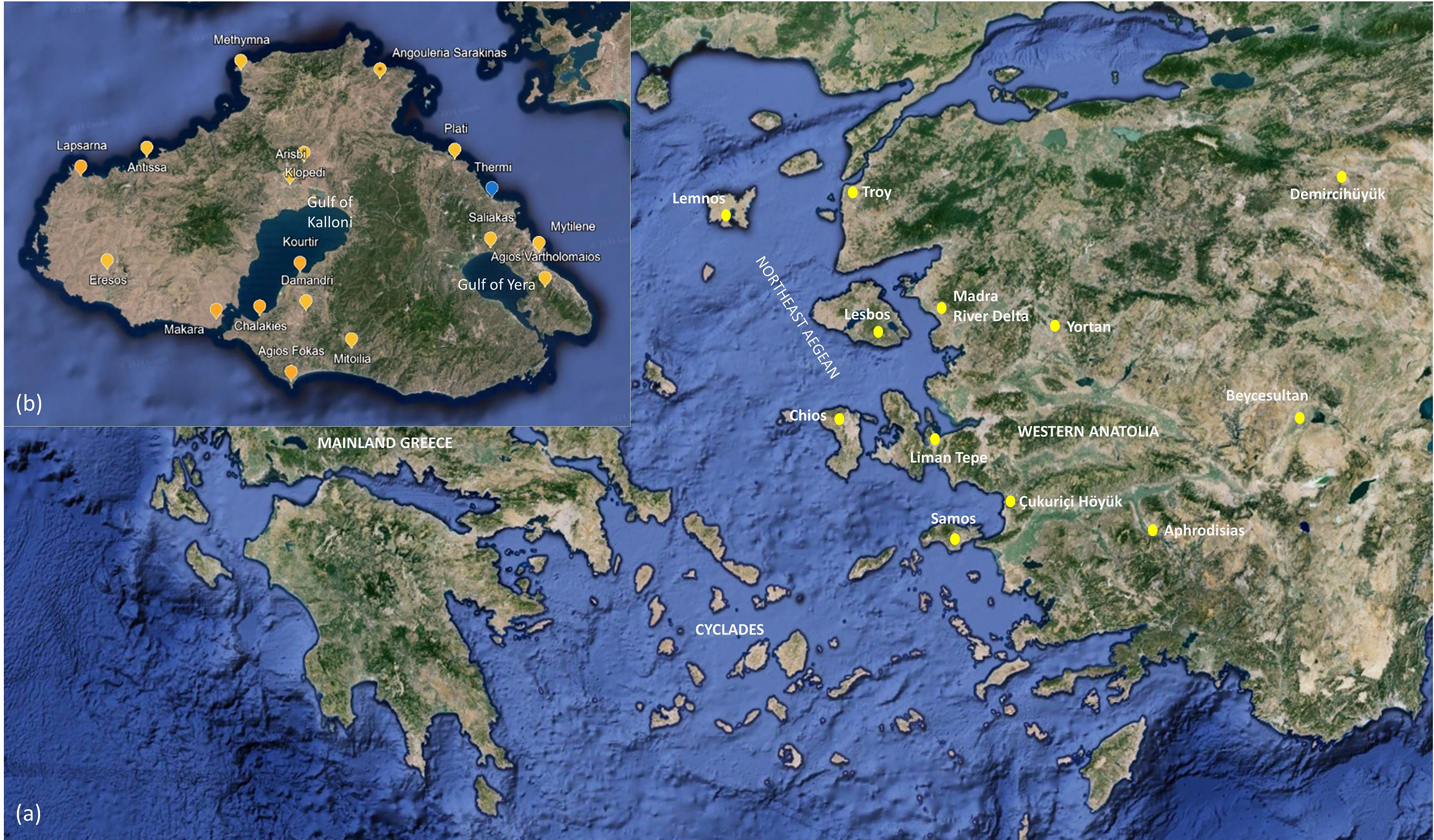
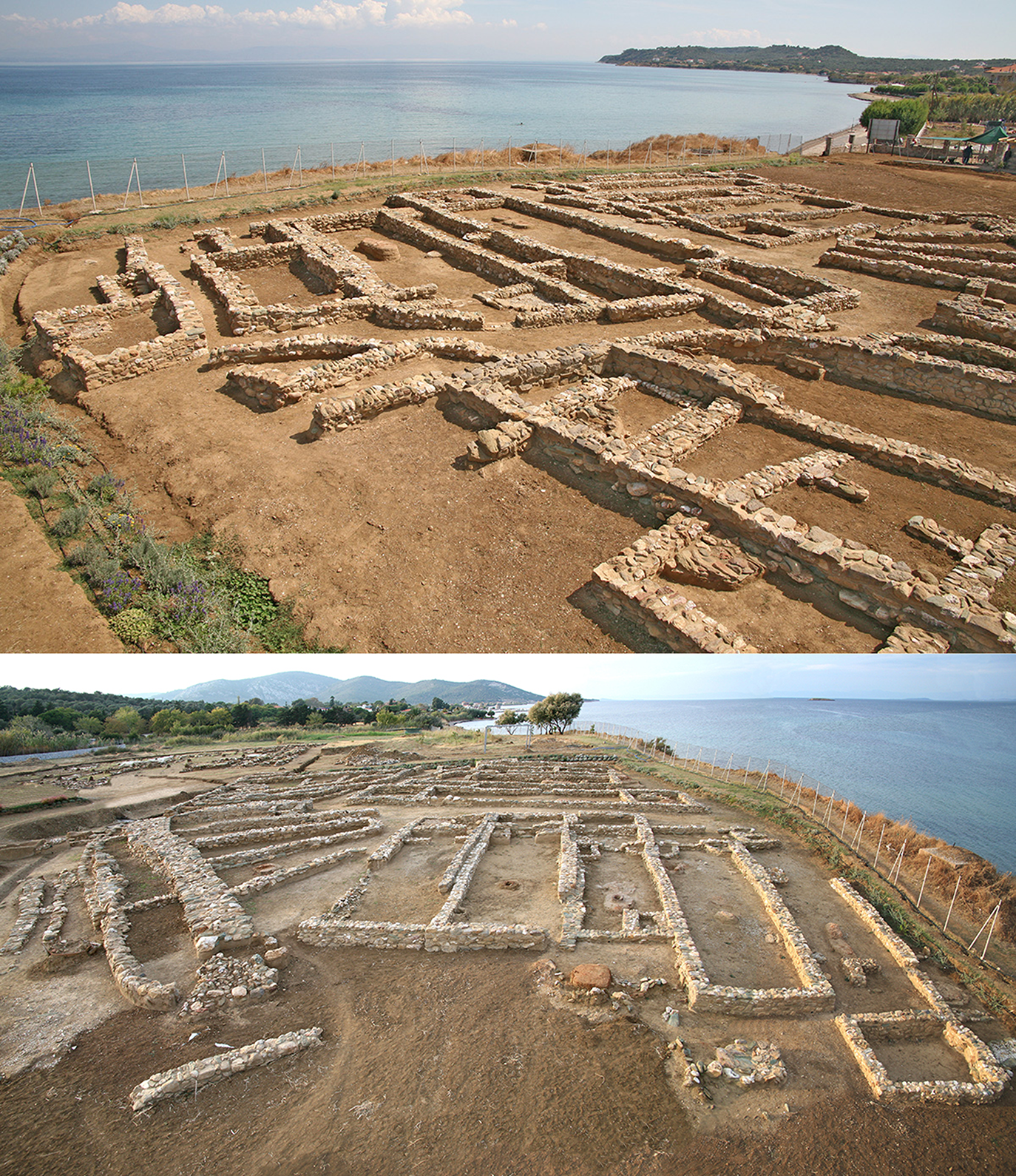
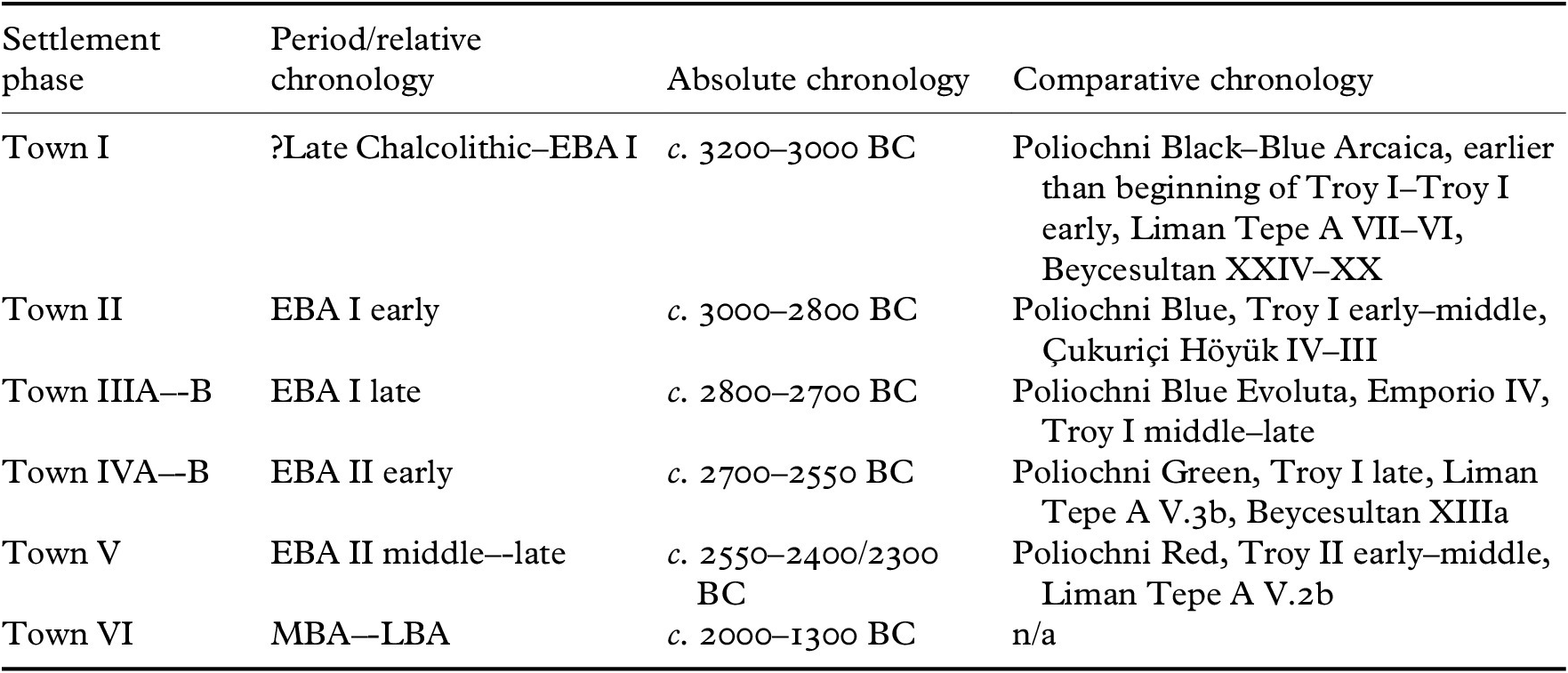
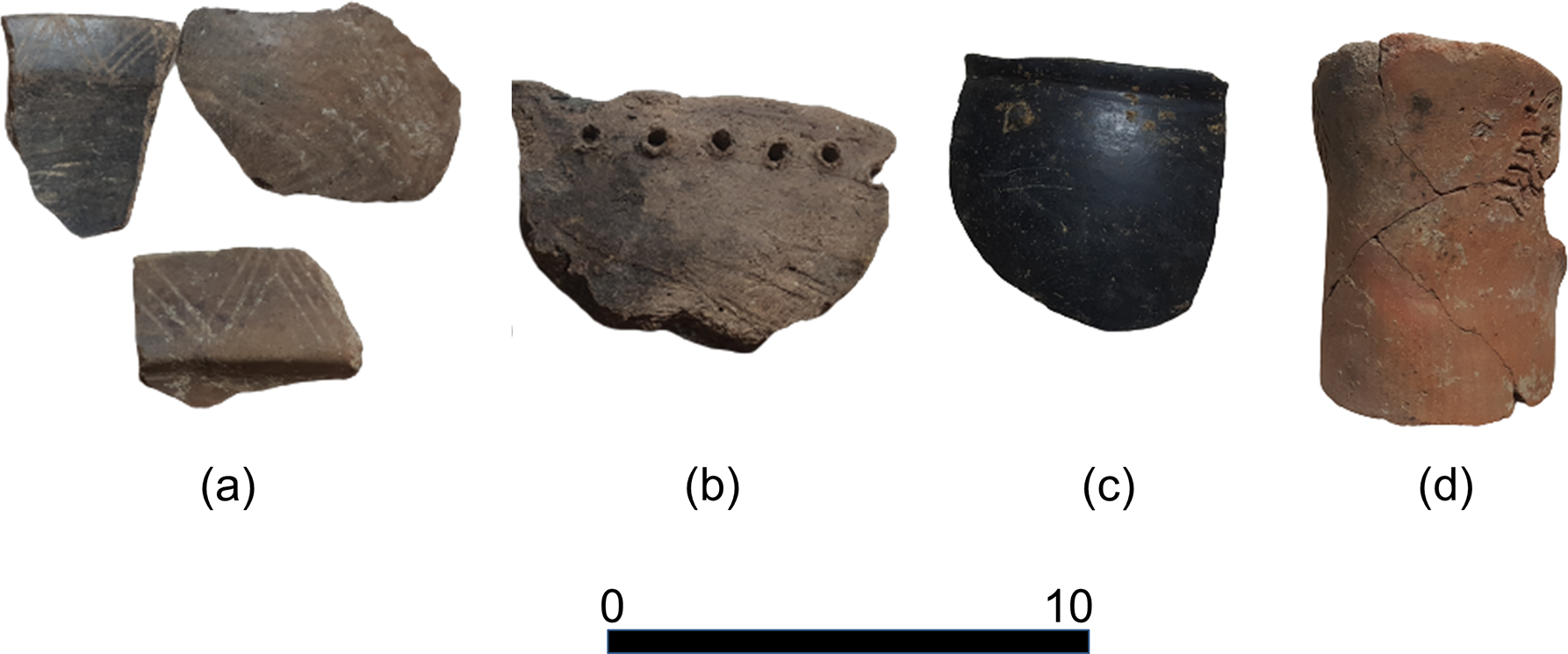
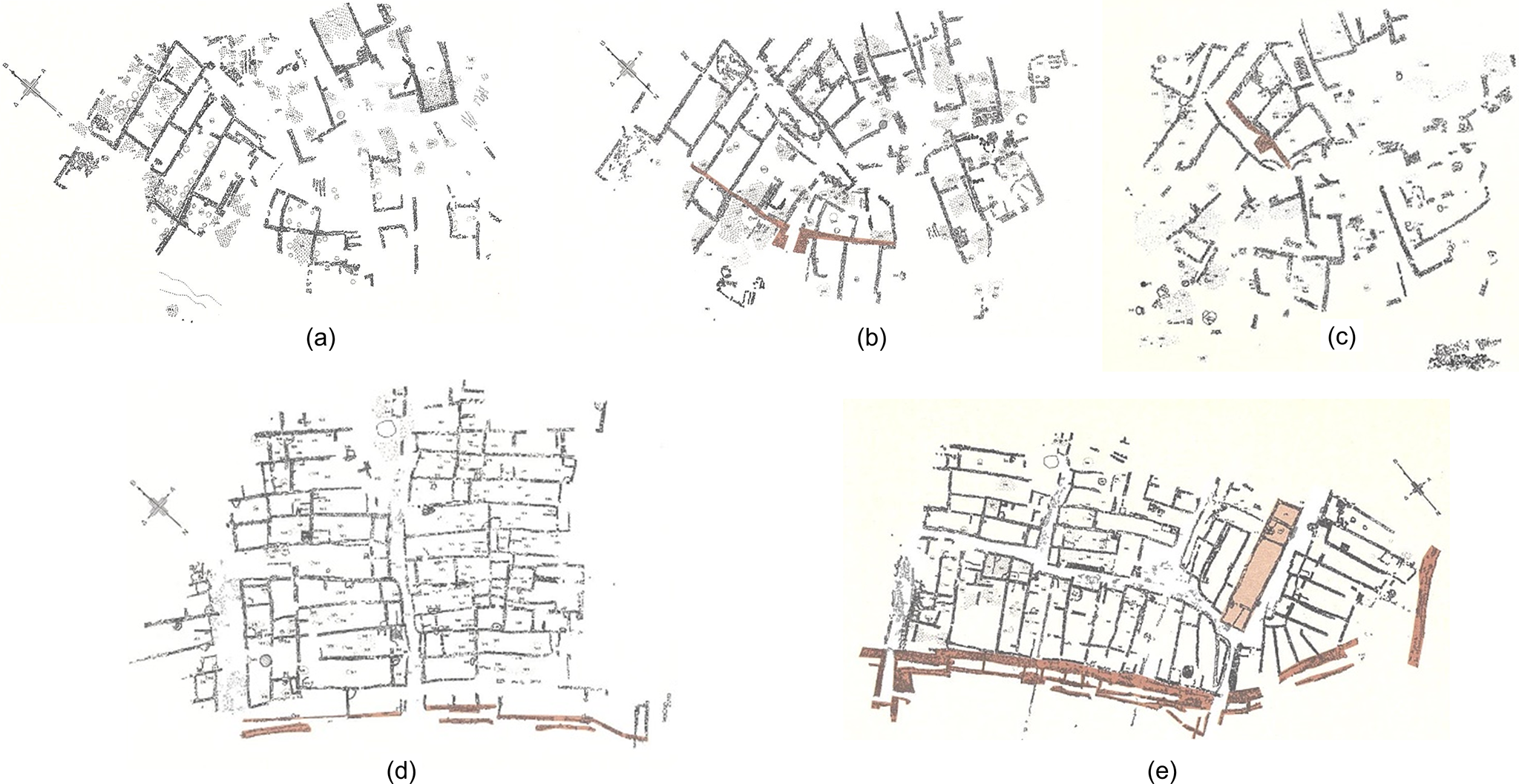
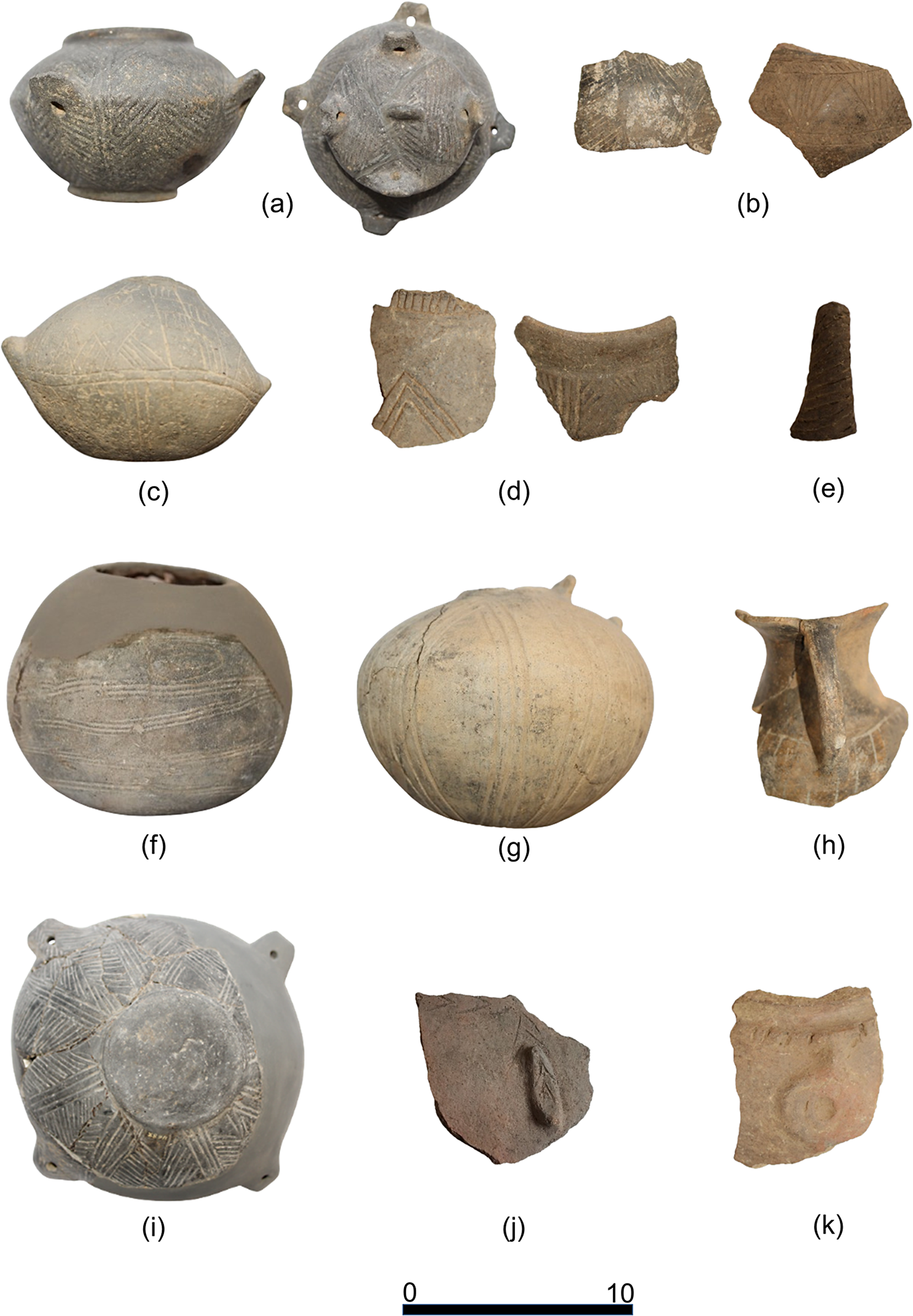
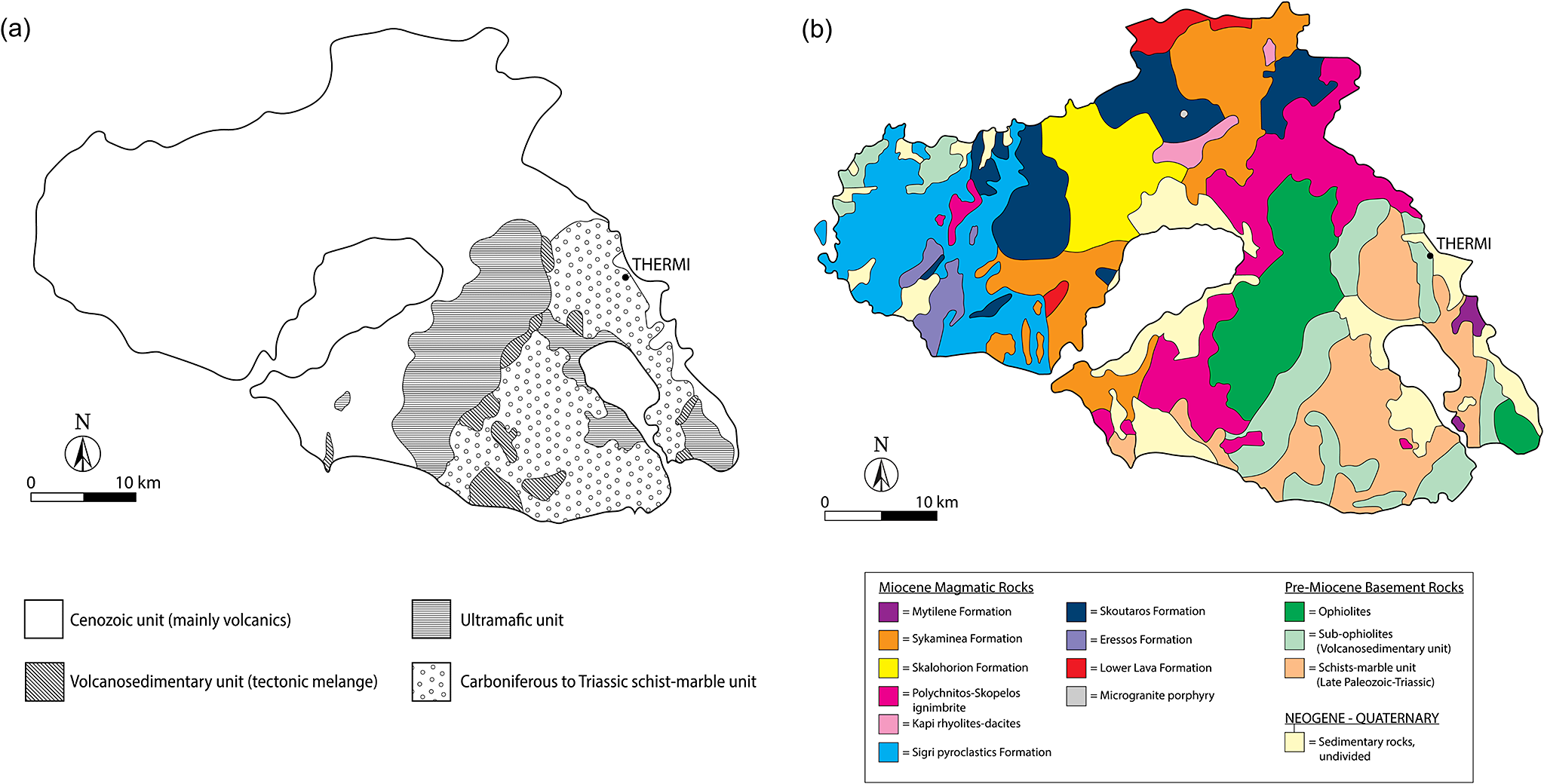
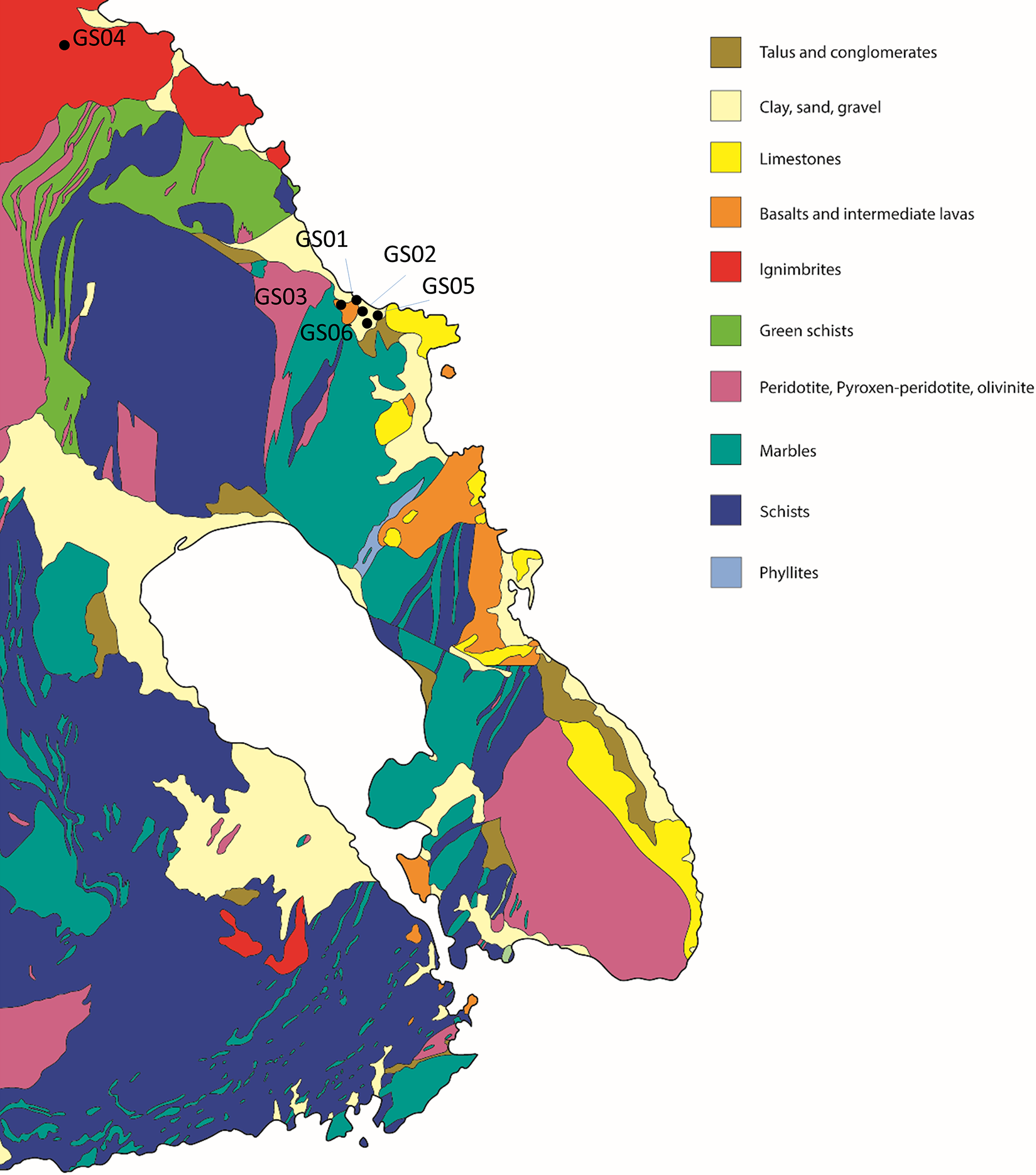
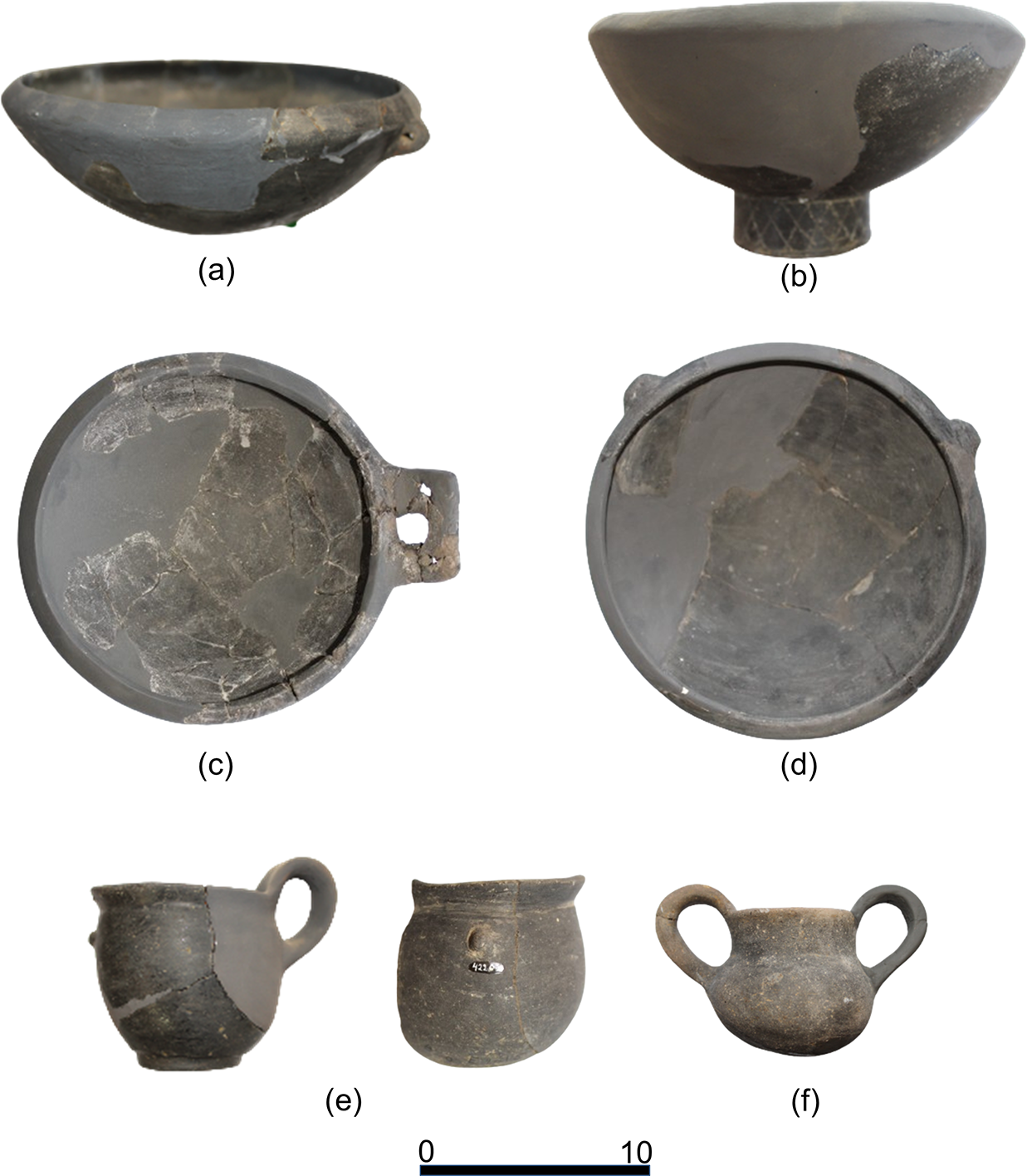
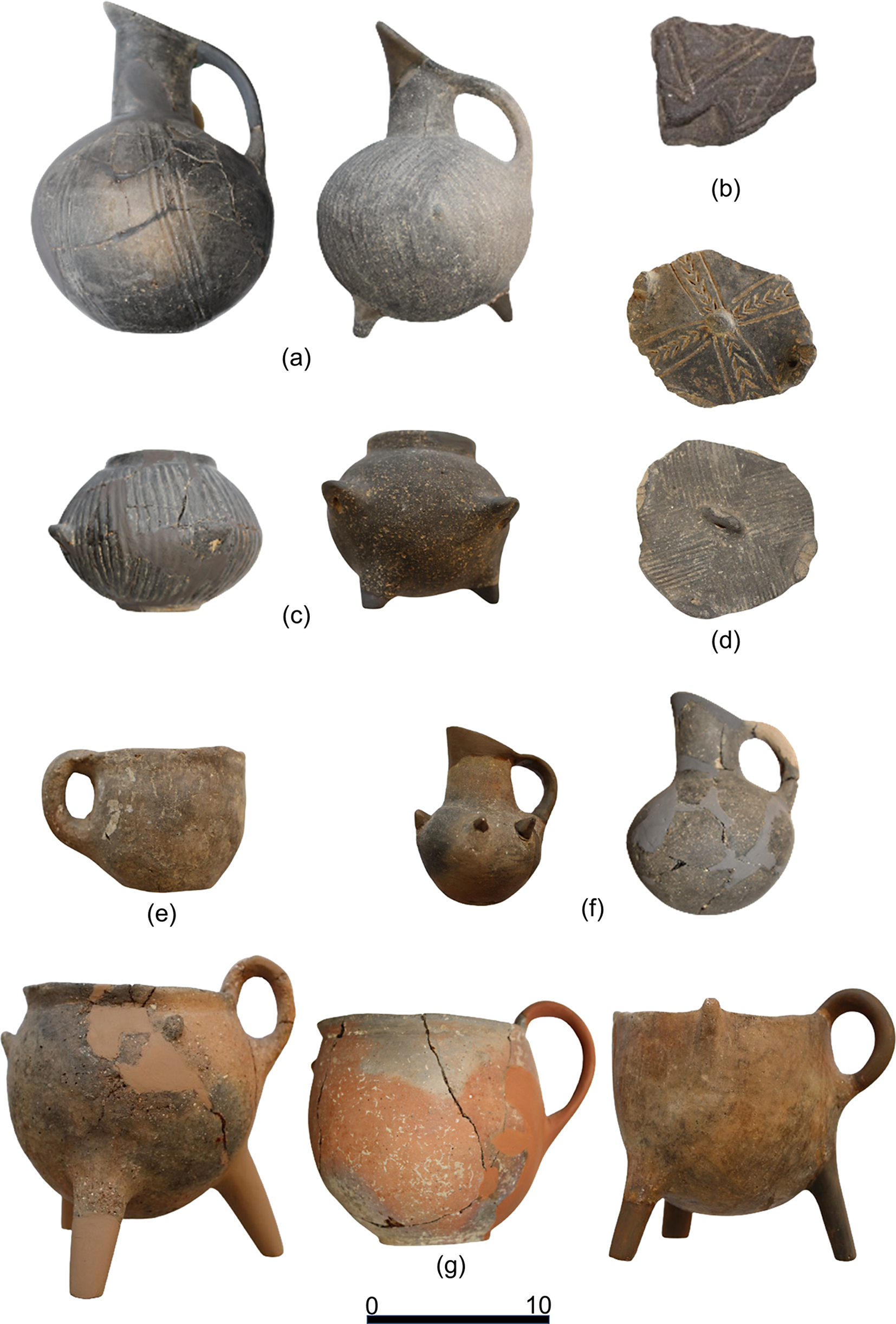
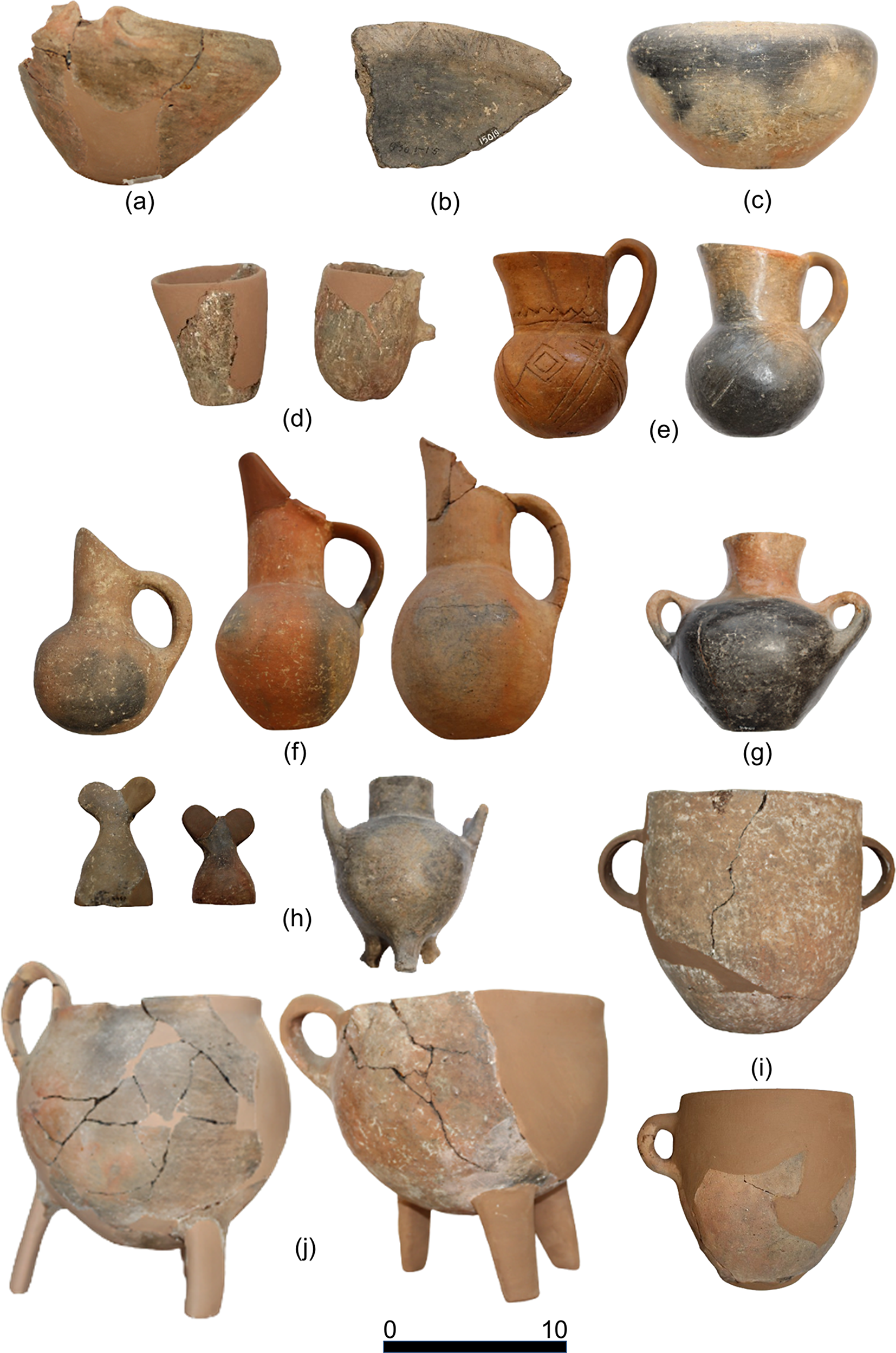
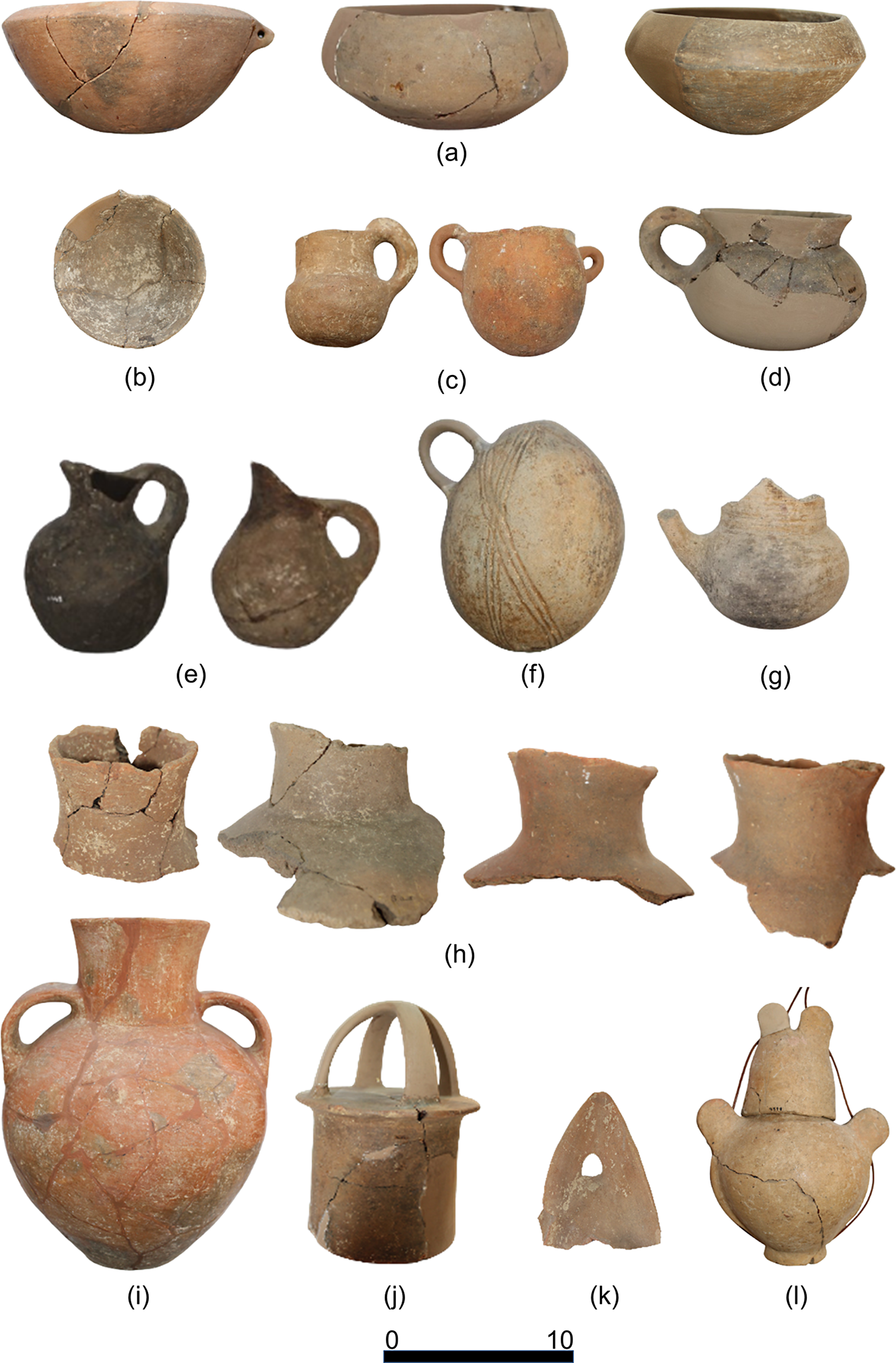
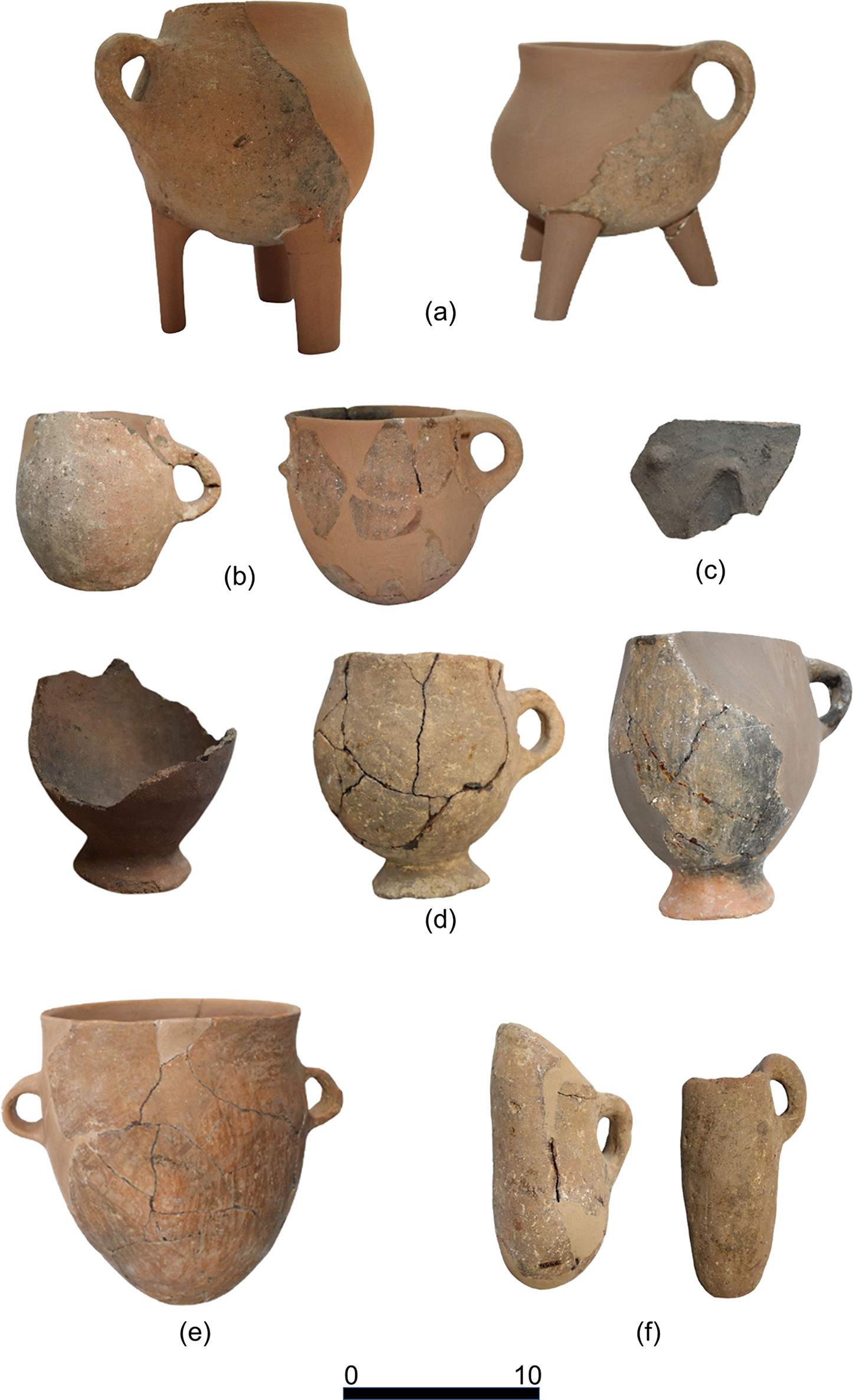
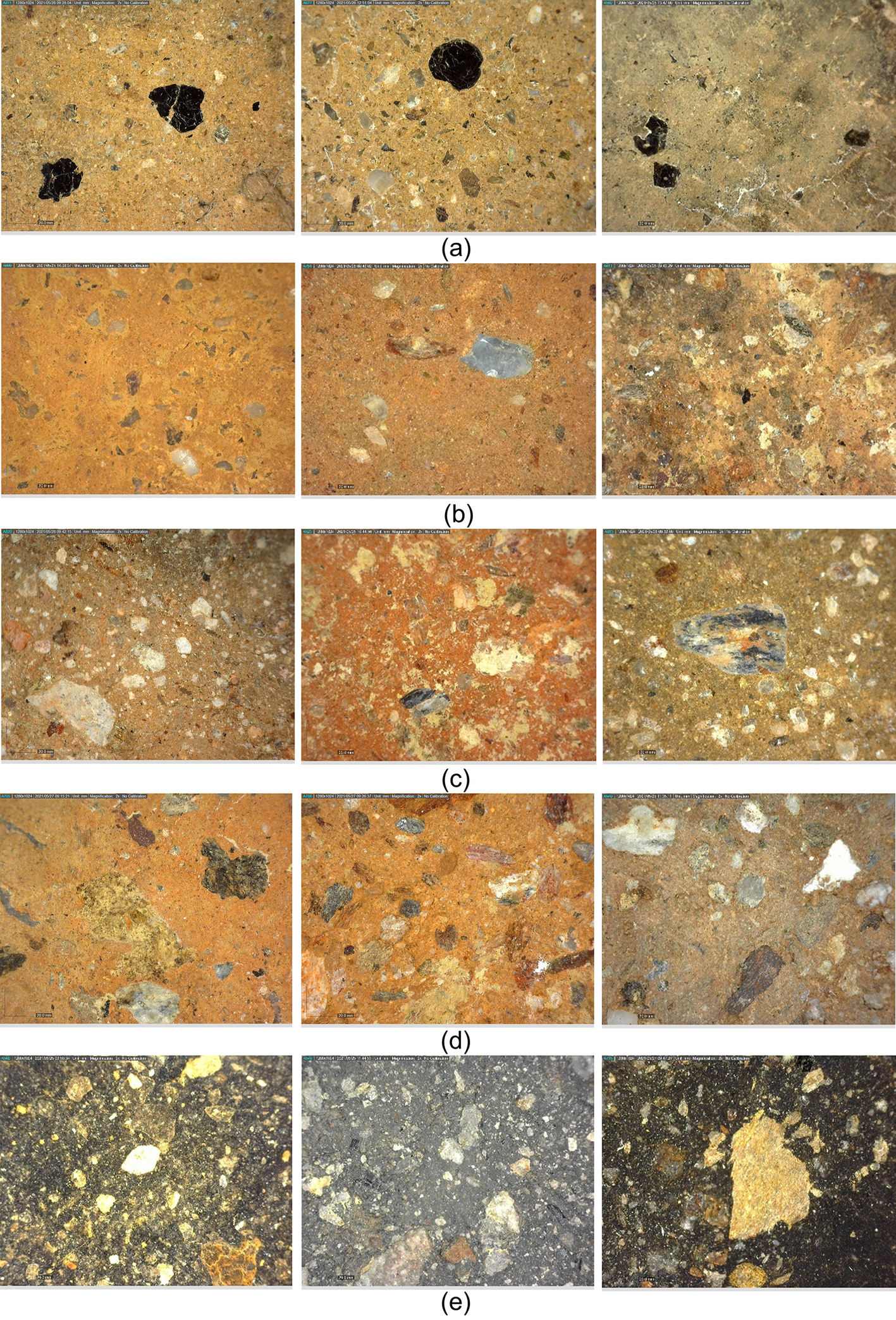
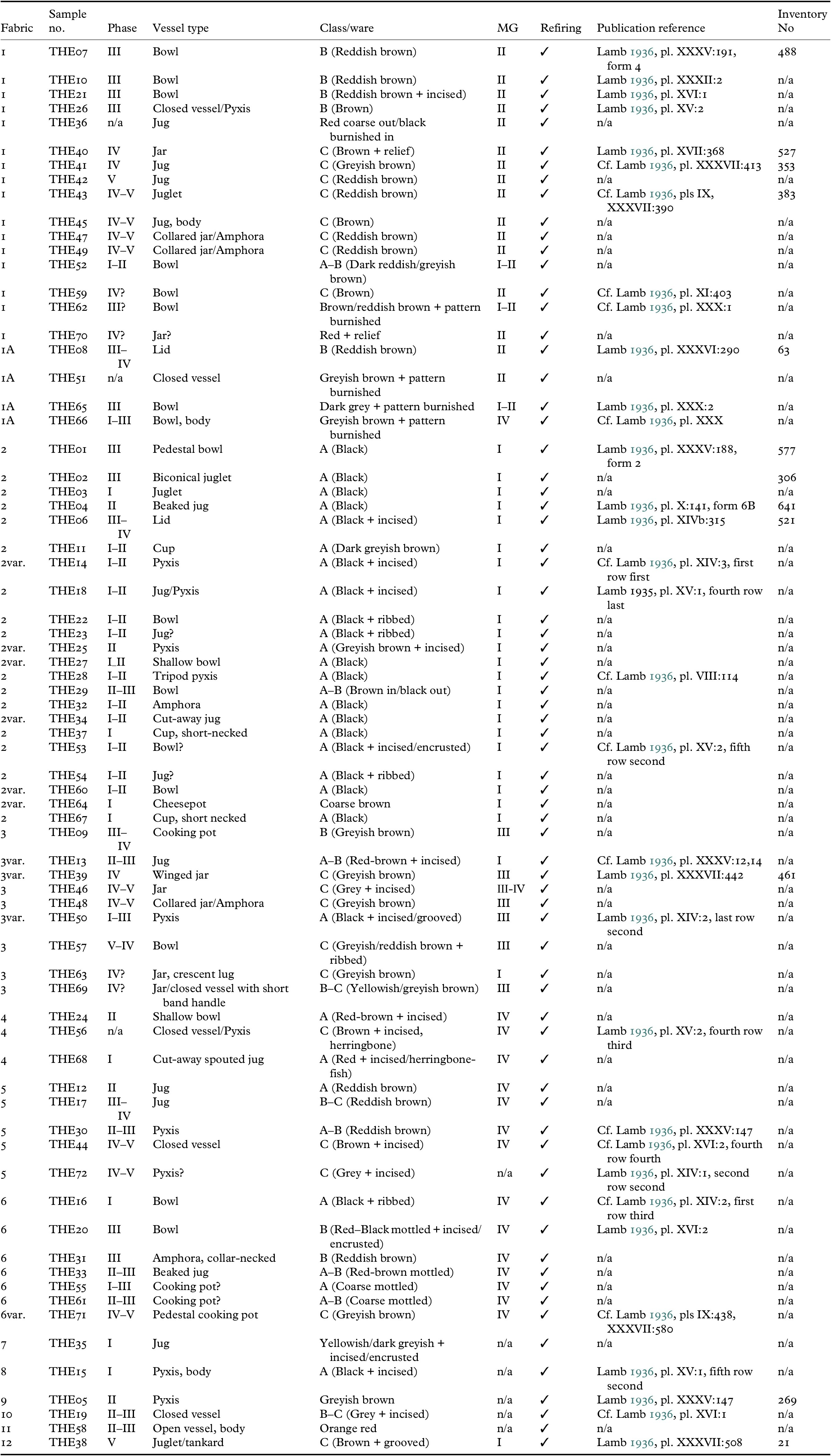
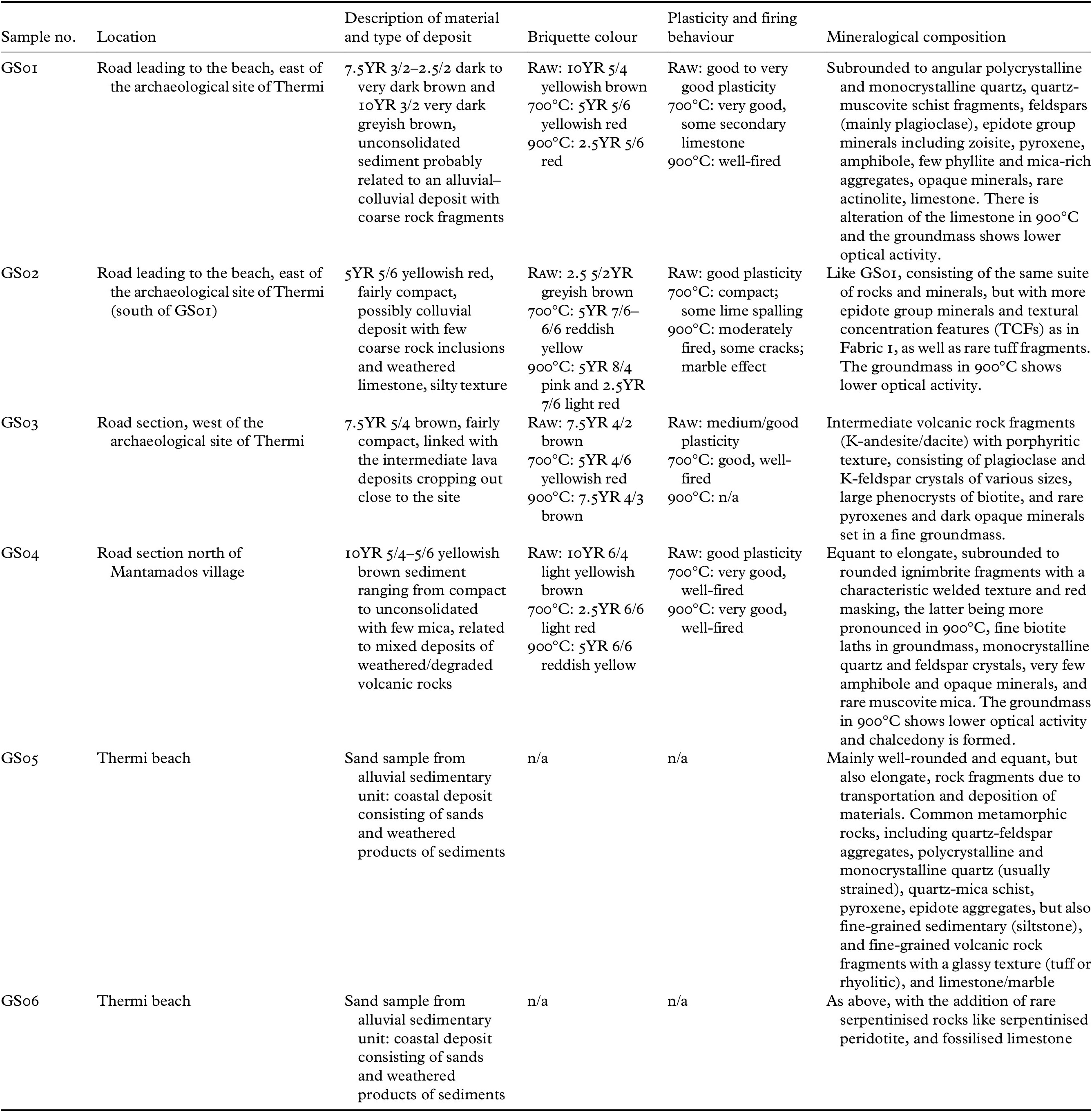
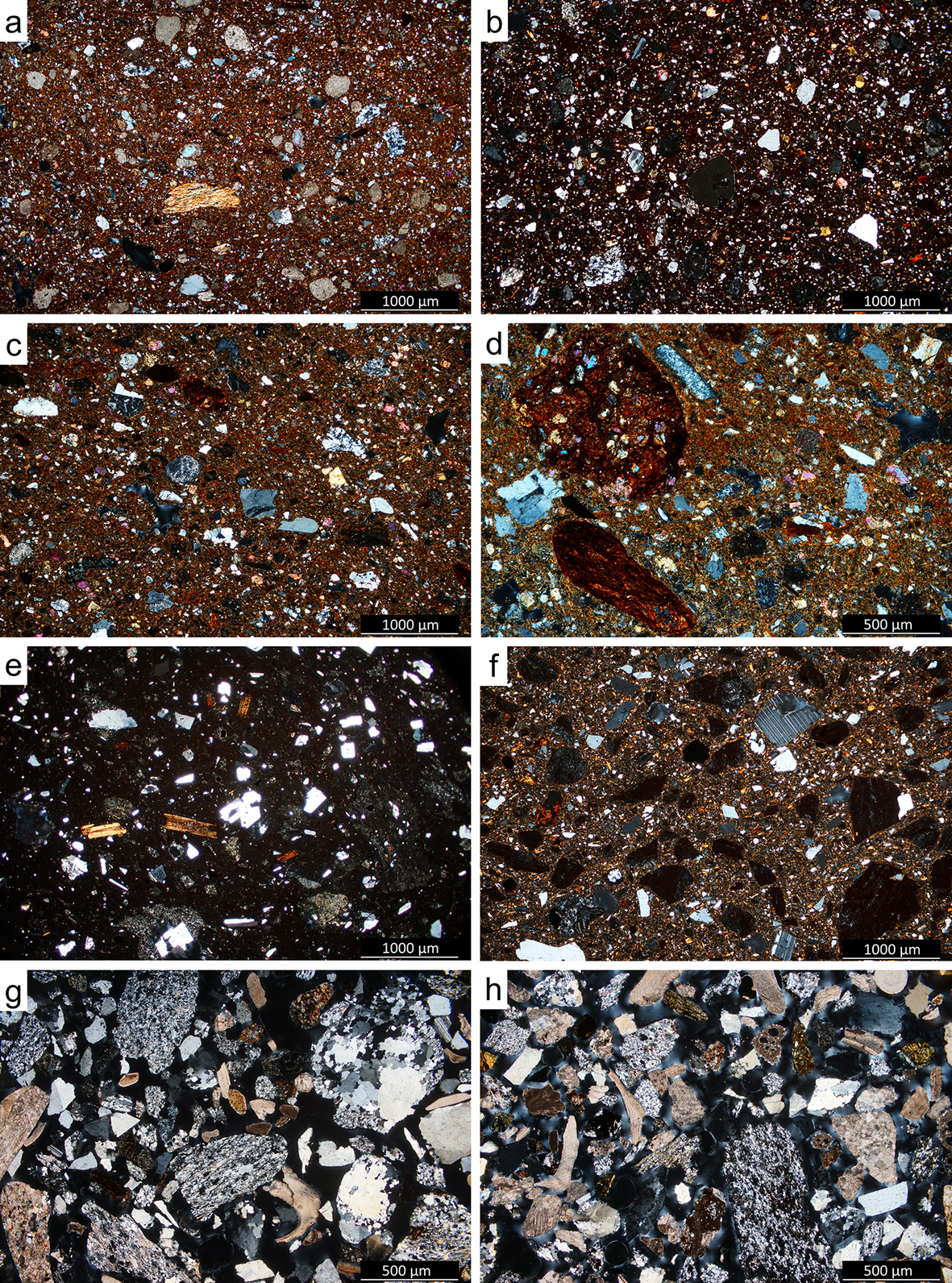
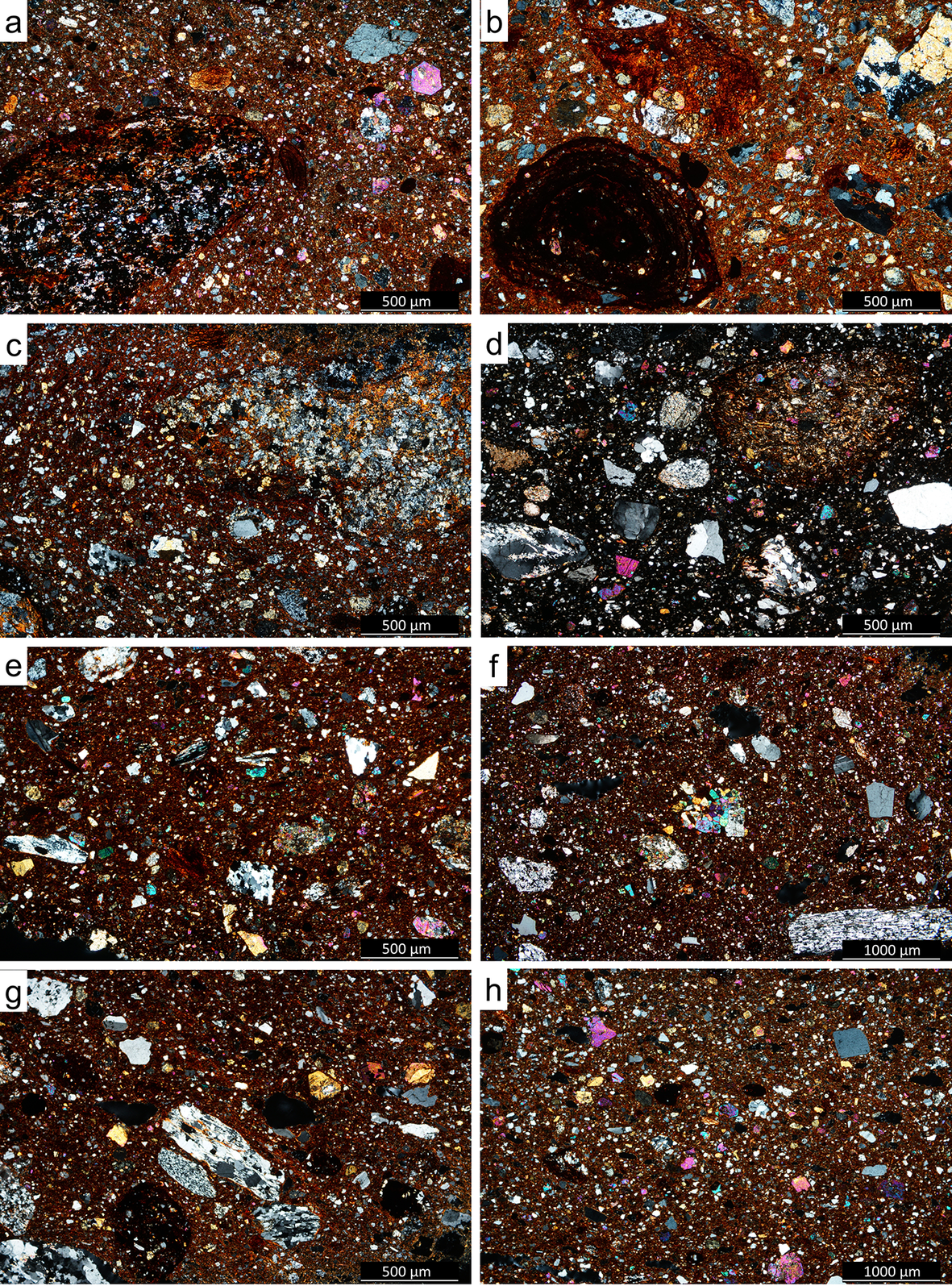
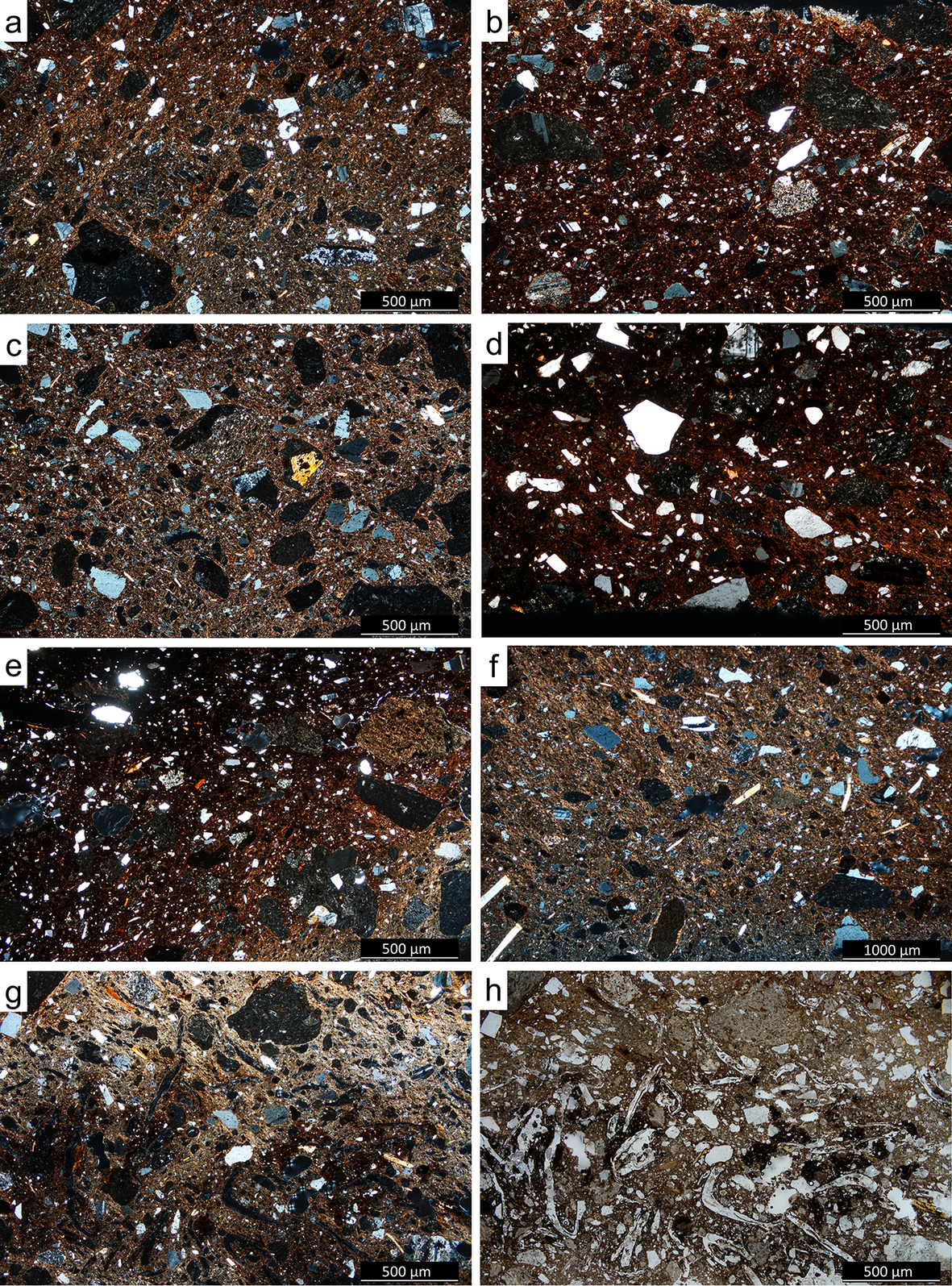
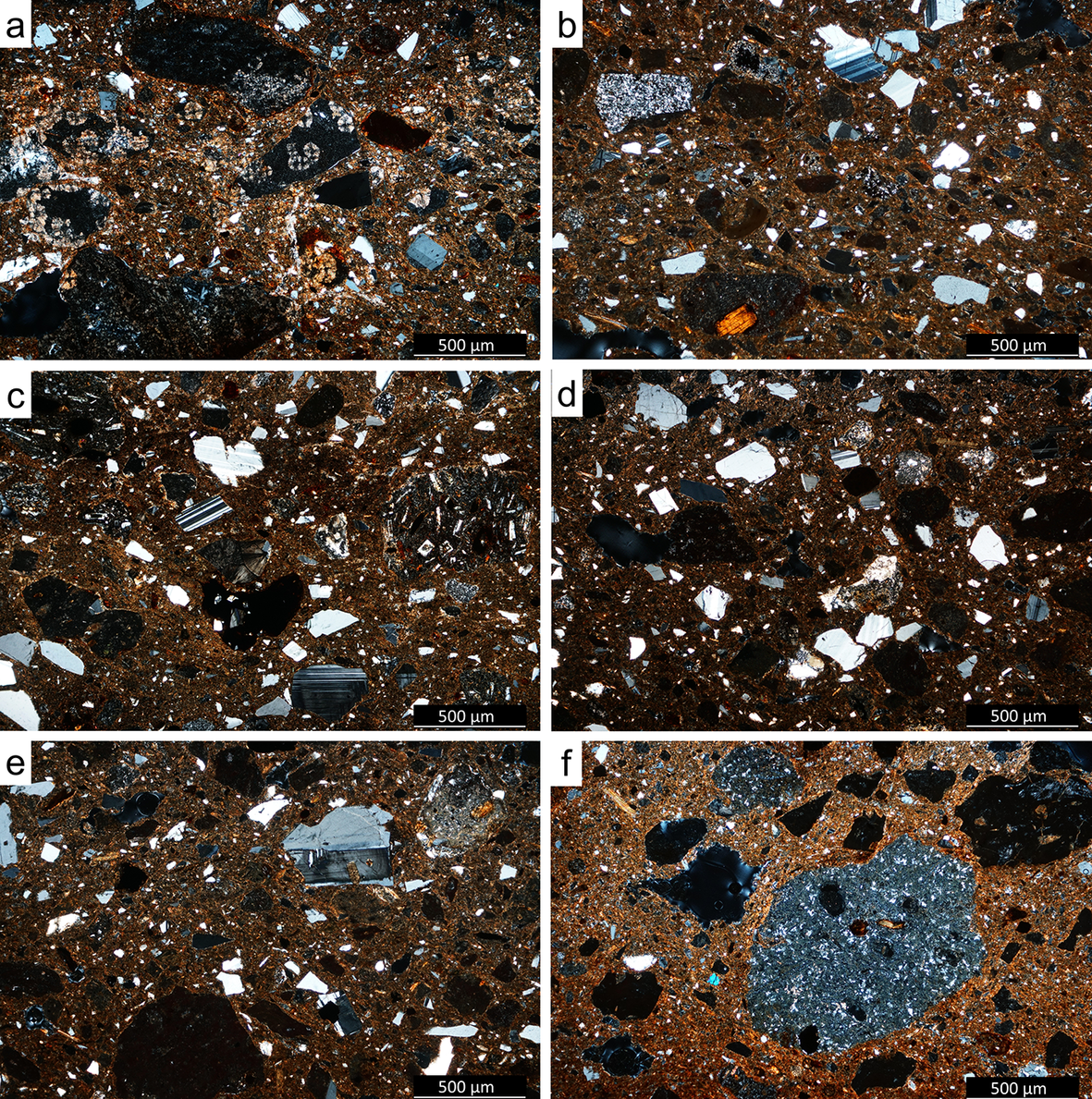
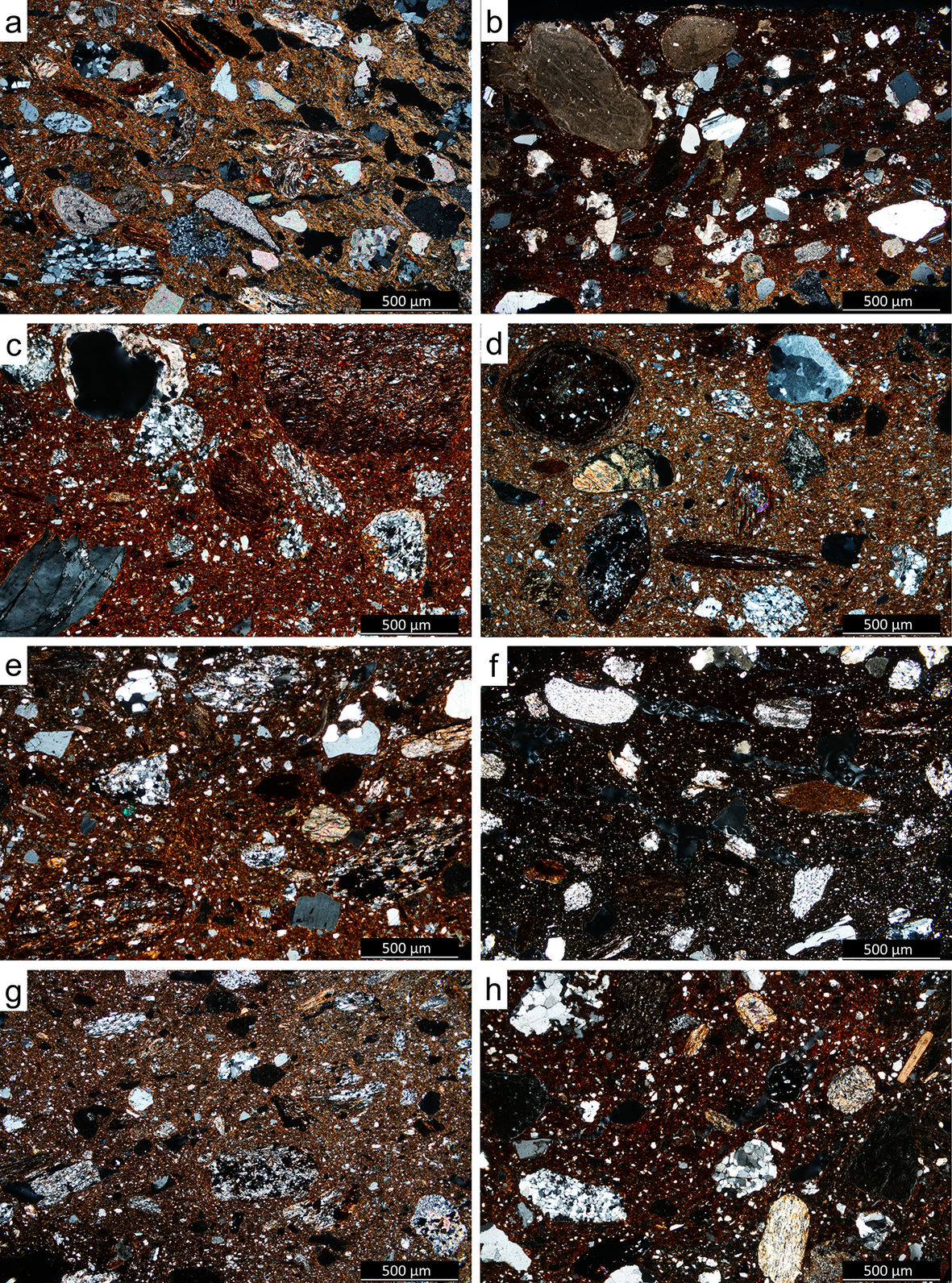
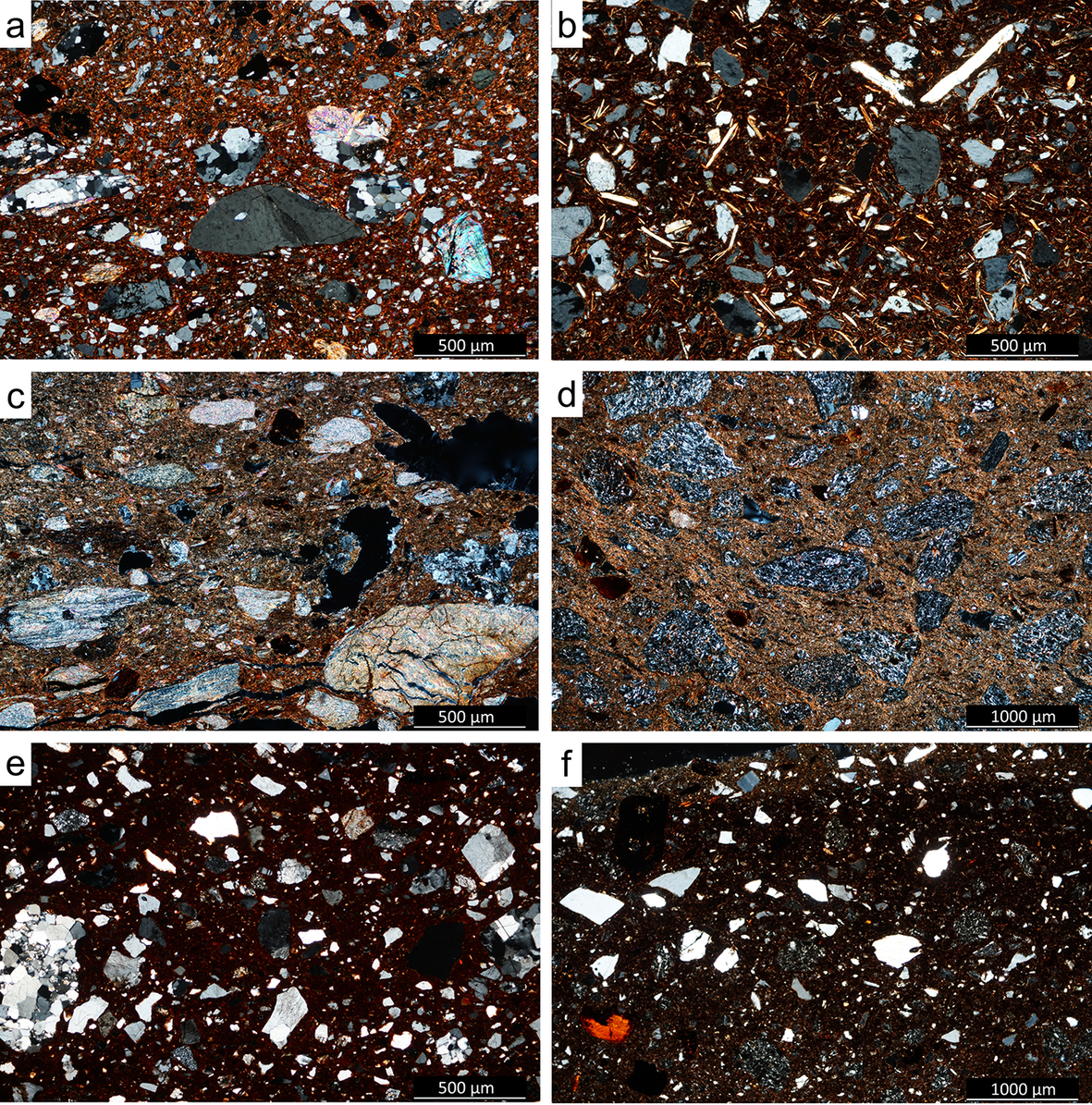

 Open access

