




1. Introduction and motivation
The World Health Organization data (2022) show that by 2030, one in six people globally will be 60 years or older, and 80% of this aging population is expected to reside in low- and middle-income countries by 2050. In addition, the pace of population aging is accelerating at an unprecedented rate. The proportion of the global population aged over 60 years is set to nearly double, increasing from 12% to 22%, while the number of individuals aged 80 years or older is projected to triple to 426 million by 2050. We are shifting from an aging society to a longevity society (Scott Reference Scott2024). Longevity introduces complex challenges that everyone must navigate, including issues of identity, choice and risk, which shape our experience of a long life (Gratton & Scott Reference Gratton and Scott2020; Frederick Reference Frederick2021). The factors influencing how we live a long life are diverse, intricate and interconnected – spanning economic and financial considerations, psychological and sociological dynamics and medical and demographic aspects (Irving Reference Irving2014).
In this new reality, the traditional three-stage life trajectory – birth, work and retirement – must evolve into a multistage model (Golden Reference Golden2022), impacting work, lifestyle, business strategies in the global market, organizational structures and cultures and social infrastructure (Lee & Sicklinger Reference Lee and Sicklinger2024). Age is no longer just a number; it represents distinct stages of life that require tailored approaches. With the rise of longevity economics (Coughlin Reference Coughlin2017), emerging technologies, artificial intelligence (AI) and service-driven industries, longevity planning (LP) products, services and experiences, such as AgeTech (Etkin Reference Etkin2021) or LP services, have gradually become essential considerations, new norms and even the industry standard for consumers preparing and planning their lives and the lives of their families to improve quality of life. However, most countries worldwide face significant complex socioeconomic and technological challenges in transforming social infrastructure to accommodate this disruptive demographic shift (Coughlin Reference Coughlin2007). Ensuring a smooth transition into a longevity society requires innovative solutions and LP products, services and experiences that address these emerging needs and challenges.
1.1. Design for longevity in financial planning, service innovation and system design
The rise of longevity economics (Coughlin & Yoquinto Reference Coughlin and Yoquinto2024) and the service-driven industry (Lee, Yang et al. Reference Lee, Yang, de Weck, Lee, Coughlin, Klopfer, Hamid and Suoheimo2023; Downe Reference Downe, Monteiro and Stickdorn2021; Pine & Gilmore Reference Pine and Gilmore2020; Sedini Reference Sedini2020) have become increasingly dominant in our society. The design for longevity (D4L) concept represents a holistic approach with systemic considerations and a transformative design paradigm (Schweitzer et al. Reference Schweitzer, Ben Mahmoud-Jouini and Fixson2023) to enhance individuals’ well-being by addressing their financial, health and social needs, while also considering dynamic organizational context, complex social infrastructure (Vink et al. Reference Vink, Koskela-Huotari, Tronvoll, Edvardsson and Wetter-Edman2021; Vink & Koskela-Huotari Reference Vink and Koskela-Huotari2021) and strategic business models (Lee, Yang et al. Reference Lee, Yang, de Weck, Lee, Coughlin, Klopfer, Hamid and Suoheimo2023). For instance, Attia and Gifford (Reference Attia and Gifford2023), a Canadian–American physician and researcher, integrates scientific and medical insights into LP that align with the D4L concept. He asserts, “Exercise is by far the most potent longevity drug,” demonstrating how mental, emotional and physical well-being work together to affect people’s quality of life.
The development of D4L is also influenced by the principles of design for circularity. In the fashion industry, designers consider the product life cycle from material procurement to usage, disposal and recycling. However, many industries remain entrenched in a linear design strategy focused on waste – manufacturing, usage and disposal. Circular economics is crucial in challenging this traditional life cycle and compelling industries to rethink their processes. In 2017, the Ellen MacArthur Foundation collaborated with IDEO, a global design innovation firm, to promote circular economics and introduce the design for circularity concept. Den Hollander et al. (Reference Den Hollander, Bakker and Hultink2017) developed a typology of approaches for Design for Product Integrity, focusing on durable consumer products that are central to circular economics.
The Circular Economy butterfly diagram (McDonough & Braungart Reference McDonough and Braungart2002) helps visualize sustainable material flows, carbon footprint and adaptable service models that can shift our linear approach toward creating more elegant, effective and creative solutions. Kenmei Nagaoka, founder of the (Housing Japan Magazine 2020), proposed a manifesto of 10 criteria for long-life design (Housing Japan Magazine 2020), stating, “Our philosophy is designed to positively contribute to the health of society by identifying good design and long-life design and… encouraging everyone to waste less.” The research approaches that underpin D4L and circular design guides enable researchers, designers and educators to explore new and meaningful ways to create sustainable, resilient and long-lasting values in both the longevity and circular economies (Coughlin Reference Coughlin2017).
However, from a design paradigm shift perspective (Cross Reference Cross1982; Buchanan Reference Buchanan1992) through the lens of the economic body, both design for the linear/waste – take – make –dispose model (McDonough & Braungart Reference McDonough and Braungart2002) – and design for circularity – circular material flow – (Ellen MacArthur Foundation 2012; Webster Reference Webster2017; Bakker & Reference Bakker, Hollander, Hinte and Zijlstra2019) have profoundly influenced the development and theoretical foundation of D4L (Table 1). In collaboration with the MIT AgeLab, the authors conducted systematic literature reviews to define D4L within the contexts of the product life cycle, financial planning (FL) and gerontology, resulting in the proposal of 12 longevity themes (Lee et al. Reference Lee, Coughlin, Hodara, Yang, de Weck, Klopfer and Ochsendorf2024) as follows: communication, trust, care, community, home, mobility, family, health, education, risk, investment and future. This helped us frame D4L as an interdisciplinary research area.
The evolution of three design paradigm shifts
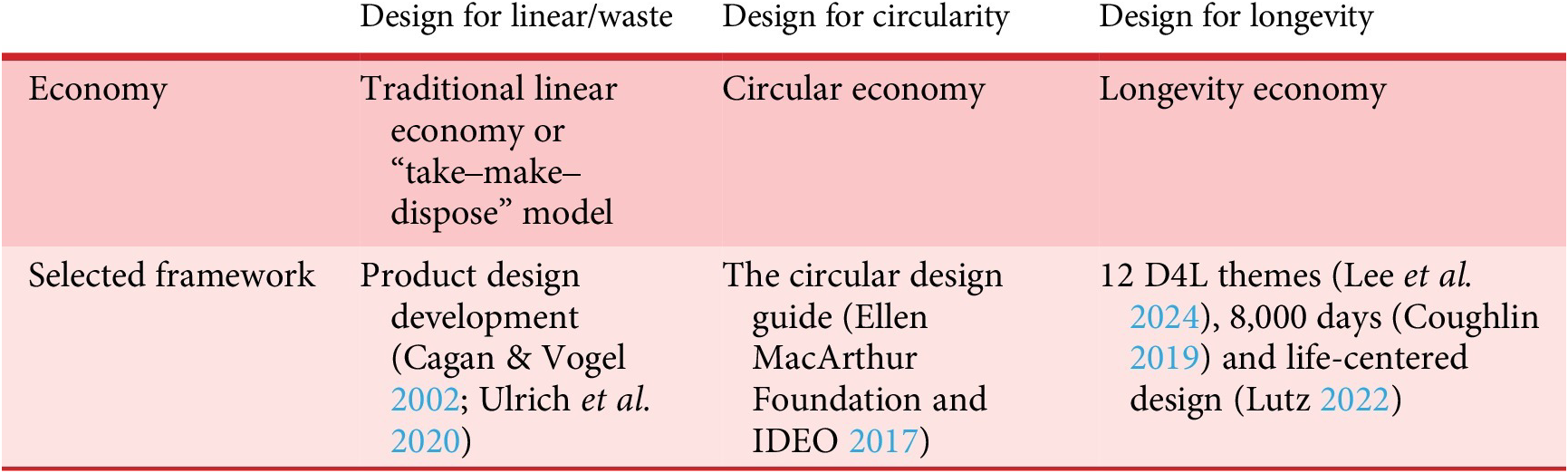
The concept of D4L draws inspiration from product design and development processes (Herbst Reference Herbst2024), including planning, concept development, system-level design, detailed design, testing and refinement and production ramp-up (Ulrich et al. Reference Ulrich, Eppinger and Yang2020). Haase & Laursen (Reference Haase and Laursen2023) defined “product longevity” as creating physically durable products, providing long-term emotional value to users, representing viable business models and offering a competitive advantage to companies. Carlsson et al. (Reference Carlsson, Mallalieu, Almefelt and Malmqvist2021) considered D4L to aim for an optimal product lifetime, where “optimal” involves balancing user needs, business objectives and resource efficiency.
Geldermans (Reference Geldermans2016) explored product life cycle from the perspectives of lifespan, monitoring, ownership and standardization. Haines-Gadd et al. (Reference Haines-Gadd, Chapman, Lloyd, Mason and Aliakseyeu2018) contributed to this field by developing themes that promote emotionally engaging product experiences and tools for longevity, focusing on relationships, narratives, identity, imagination, conversations, consciousness, integrity, materiality and evolvability. Ghim & Shin (Reference Ghim, Shin, Di Bucchianico, Shin, Shim, Fukuda, Montagna and Carvalho2020) adopted a multigenerational perspective in analyzing ageless design principles. This framework prioritizes creating age-inclusive products that maintain functionality and relevance through different life stages.
1.2. Research question and LP services
The authors framed D4L as an interdisciplinary research area integrating FL, service innovation and system design, and implemented it as a service experiment comprising five key components: a service blueprint (Shostack Reference Shostack1984, Reference Lynn Shostack1982), a service script (Grove & Fisk Reference Grove and Fisk1992), a service encounter (Dolata et al. Reference Dolata, Agotai, Schubiger and Schwabe2019), a servicescape (Bitner Reference Bitner1992) and 12 tangible artifacts (Lee Reference Lee and Rau2024a; Lee, Coughlin et al. Reference Lee, Coughlin, Balmuth and Yang2023). The service blueprint outlines the planning journey with touch points for the service provider (e.g., longevity coach) and the service recipient (e.g., participants/clients).
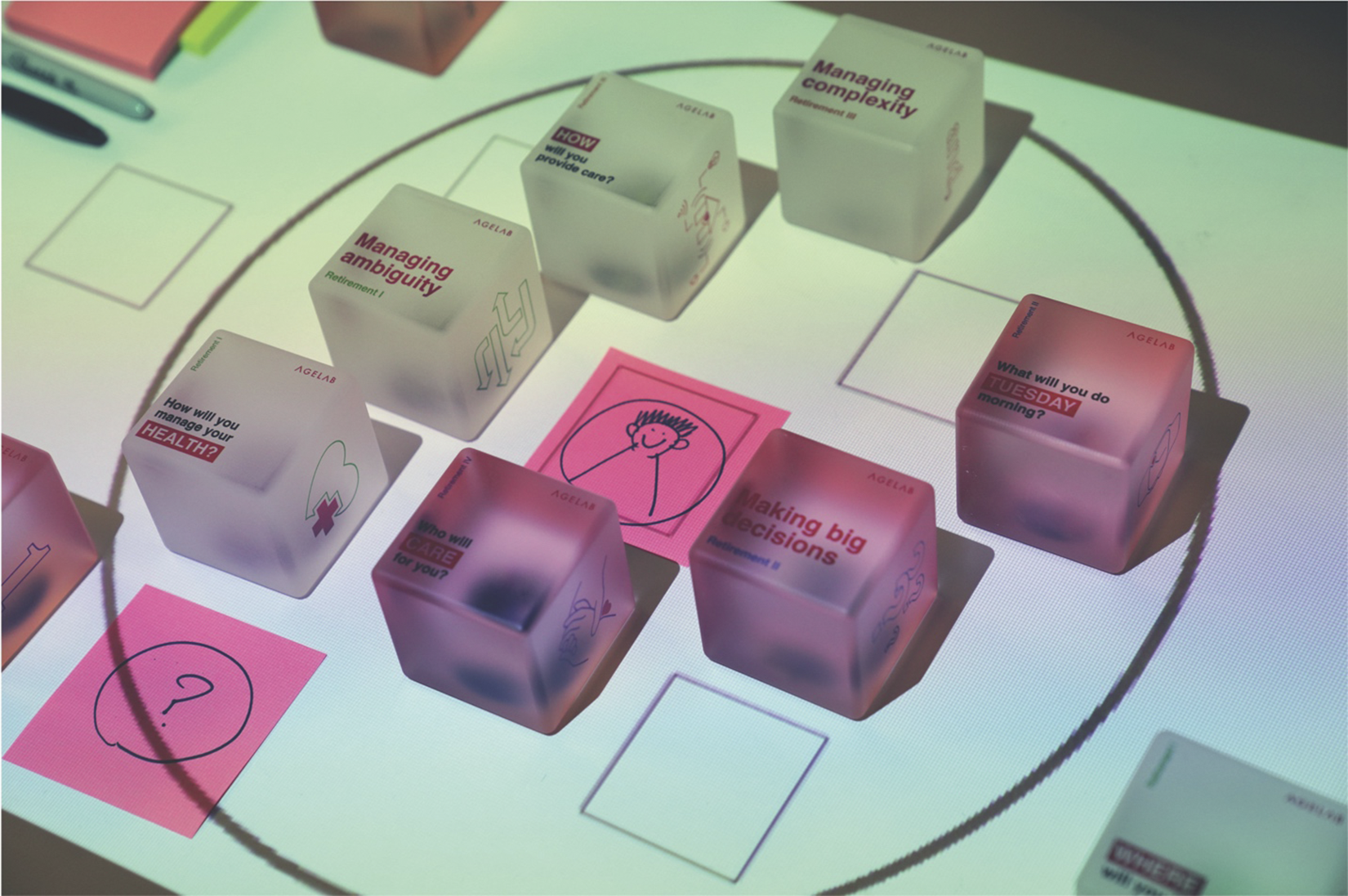
The service script is context-specific for the longevity coach to facilitate discussions by asking guided questions and documenting responses. The service encounter focuses on the interaction between the participant, the coach, tangible artifacts and the environment. The servicescape addresses the impact of the physical environment on participants’ behavior within longevity services. Finally, 12 LP blocks (LPBs) are employed as boundary objects (BOs) to enhance discussions between participants and the longevity coach (Figure 1).
LPBs utilized as BOs in the study (Photo credit: Sheng-Hung Lee).
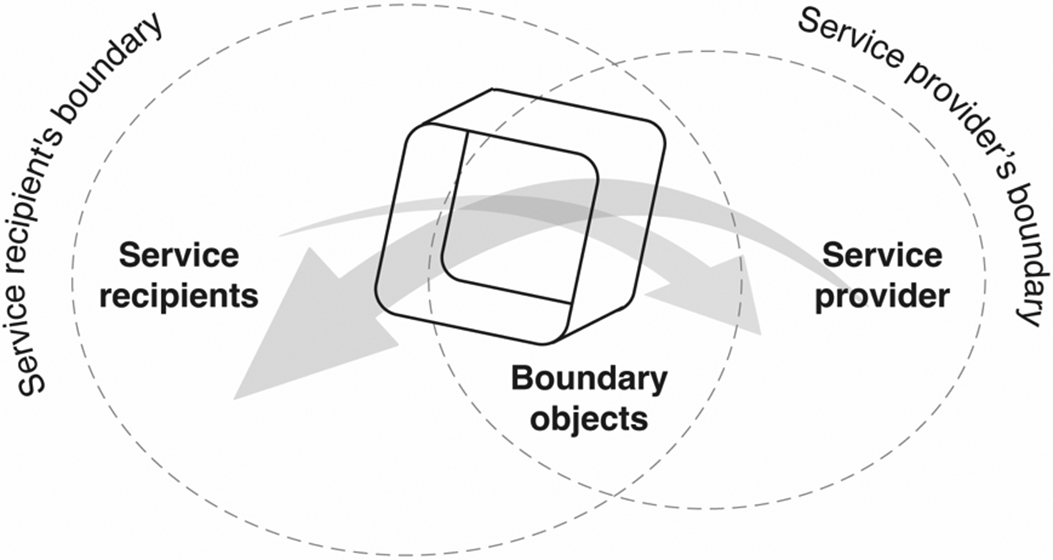
BOs (Star & Griesemer Reference Star and Griesemer1989) represent a shared framework for describing objects that hold different meanings across contexts, professions and social worlds, yet maintain a common structure recognizable by all (Johnson & Anderson Reference Johnson, Anderson, Anderson and van Dijk2020). They facilitate a collective sense-making process among various stakeholders, enhancing communication and collaboration and empowering interdisciplinary communities of practice. By serving as BOs, LPBs enable participants and coaches to collaboratively explore LP. This approach allows for evaluating the effectiveness, value and challenges of integrating tangible artifacts into these services (Figure 2). Therefore, the research question (RQ) is:
The application of LPBs as BOs in the interaction between service providers and recipients within the study.
How can tangible artifacts, specifically longevity planning blocks (LPBs), be effectively utilized as boundary objects (BOs) to facilitate discussions and accurately identify user needs within the context of longevity planning services?
In response to this RQ, the authors considered and explored two primary directions: (1) evaluating the effective utilization of the BO and (2) assessing the identification of user needs.
2. Literature review
To systematically explore and address the research question, the author examined the concept and four typologies of BOs, alongside the methodological framework used to conduct a qualitative study. Specifically, Charmaz’s (2004) constructivist grounded theory (GT) was employed to investigate the applied value and potential of using defined LPBs elements as BOs. This data analytical approach was integrated with the co-creation method involving a facilitator (Sanders & Stappers Reference Sanders and Stappers2012; Heiss & Kokshagina Reference Heiss and Kokshagina2021) to deepen the understanding of participants’ needs during the early stages of LP service design and development.
2.1. Procedural, classical and constructivist GTs
GT is an inductive research approach focused on building theory rather than following a hypothetical-deductive methodology emphasizing verification. In GT, data analysis occurs simultaneously with data collection. Its popularity in qualitative research arises from innovative concepts and a meticulously detailed methodology that has significantly transformed qualitative data analysis. GT enables researchers to engage in constant comparison, analyzing data against other data, data against concepts and concepts against each other. GT emphasizes a comprehensive research process, with coding as a tool to develop sensitivity to emerging concepts. Starting as provisional guiding ideas derived from either theory or data, these concepts may evolve until theoretical saturation is achieved when new data no longer offer meaningful insights.
In addition, GT allows researchers to test and explore deviant cases and use memos to build theory and enhance transparency. The ultimate aim of GT is to develop a theory grounded on the data. This approach has also influenced the design of computer-assisted qualitative data analysis software (CAQDAS), such as ATLAS.ti, which enables researchers to code and categorize data from video or audio transcriptions to construct emerging concepts, themes and one core theme. In the 1950s, quantitative studies were seen as “precursors” to qualitative research. However, the publication of The Discovery of Grounded Theory by Glaser and Strauss in 1967 marked the formal introduction of GT, revolutionizing qualitative research. This seminal work led to the development of three distinct versions of GT (Table 2): (1) Strauss and Corbin’s procedural GT (1990), (2) Glaser’s classical GT (1978, 1992) and (3) Charmaz’s constructivist GT (2006).
The development of the three versions of GT

Strauss & Corbin (Reference Strauss and Corbin1990) advanced their version of GT, which became known for its structured and procedural approach. They firmly believed that researchers should follow a clear set of steps, referred to by some critics as a “recipe book” approach. Glaser, in contrast, argued that their method imposed a rigid framework on the data like a “forcing theory.” In Strauss and Corbin’s model, open coding involves coding events, actions and interactions to develop various concepts, followed by four guidelines: (1) consistently ask specific questions about the data, (2) code with precision, (3) write memos or reflections during the process and (4) minimize assumptions. Axial coding, in its approach, aims to link concepts (or categories) to the data and explore four properties: conditions, context, consequences and strategies (action and interaction). Selective coding then integrates all categories into a cohesive group centered around a core category (theme). Glaser’s (Reference Glaser1992, Reference Glaser1978) approach, often referred to as classical GT, emphasized flexibility and the importance of all data. He introduced 18 coding families to allow for various methods, rejecting the standardized procedures of open coding, axial coding and selective coding that were later proposed by Strauss & Corbin (Reference Strauss and Corbin1990). Instead, Glaser focused on two methods: the constant comparison of codes and the development of theoretical sensitivity, both of which he believed were essential for evaluating the final stages of coding.
In 2004, Charmaz introduced a constructivist GT that blended elements from Glaser’s (Reference Glaser1978) and Strauss & Corbin’s (Reference Strauss and Corbin1990) approaches. Charmaz emphasized that researchers are co-constructors of meaning within the coding process and acknowledged that codes can hold multiple meanings depending on the context, complexity of the topics and dynamic nature of the data. Her approach allowed for greater reflexivity and flexibility during the initial coding, focused coding and categorizing. GT has gained widespread use in qualitative data analysis. Although its fundamental principles – such as data collection, coding, constant comparison and theoretical sampling – remain unchanged, our study adopts Charmaz’s constructivist GT as the primary methodological approach (Figure 3). The two designated authors independently conducted line-by-line coding of 69 video transcripts using ATLAS.ti (Friese Reference Friese2019; Hecker & Kalpokas Reference Hecker and Kalpokas2024), a CAQDAS. They then compared their coding results and achieved alignment through three rounds of collaborative discussions with the remaining coauthors.
Diagram adapted from Tweed & Charmaz (Reference Tweed, Charmaz, Harper and Thompson2011) illustrating the application of constructivist grounded theory in reaching theoretical saturation.
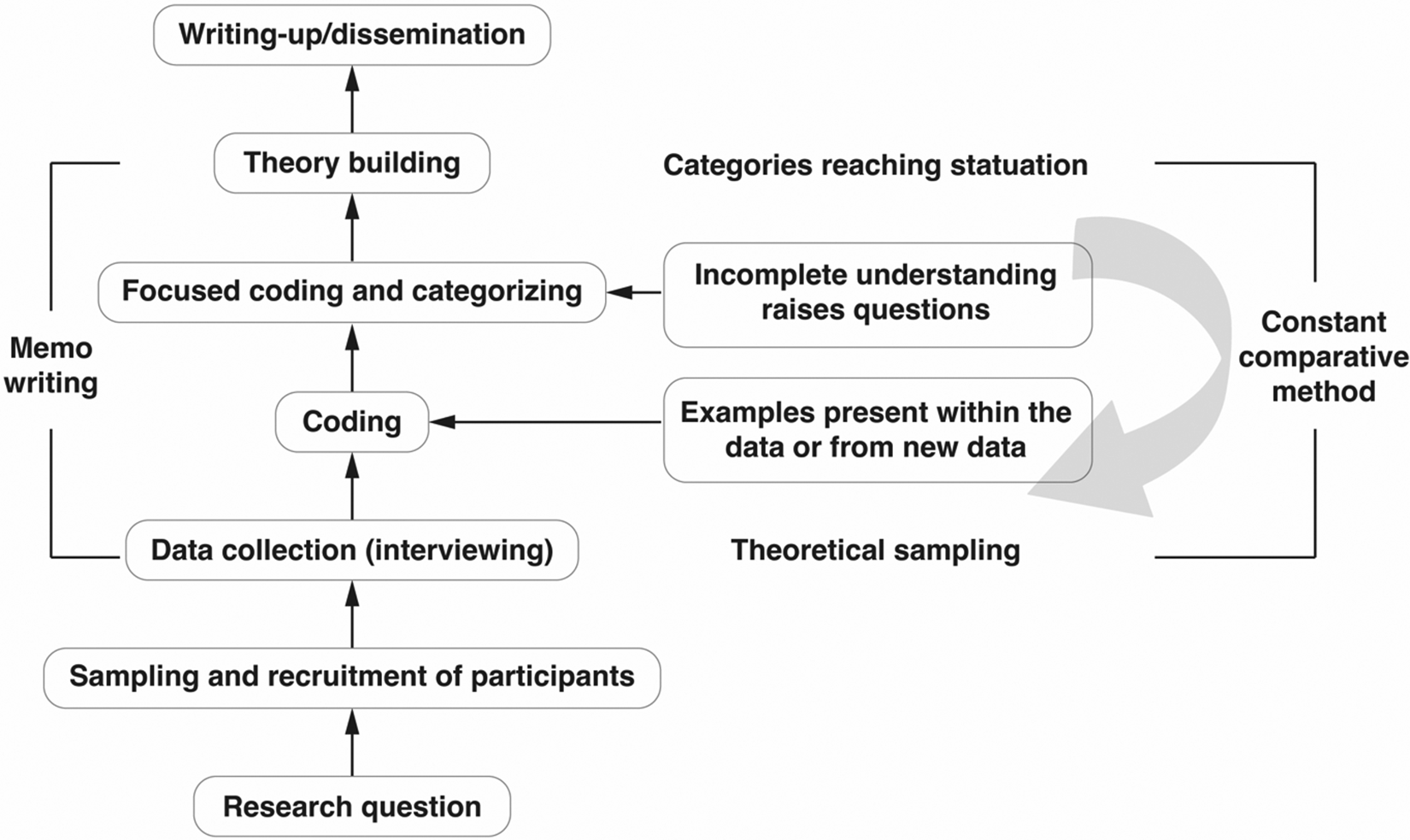
In this study, the application of constructivist GT is not intended to generate new theoretical frameworks. Rather, it serves as a methodological approach to constructively identify and interpret participants’ behavioral and verbal patterns – derived from video transcripts and in-person observations – to explore and investigate various schemas (i.e., mental models) related to LP services.
2.2. BOs and LPBs
In 1989, Star, a sociologist, and Griesemer, a biologist, first coined the term BO to explore how they enable individuals or teams from diverse backgrounds to collaborate effectively without necessarily reaching a consensus, particularly in a museum context. A BO serves as a shared space (Bowker et al. Reference Bowker, Timmermans, Clarke and Balka2015) where flexible ideas, discussions and topics can be interpreted differently by various communities, fostering collective sense-making while maintaining a common identity among stakeholders. BOs can also serve as a “means of translation” (Johnson & Anderson Reference Johnson, Anderson, Anderson and van Dijk2020), which is crucial in creating and maintaining coherence across intersecting social worlds. BOs can take multiple forms beyond physical objects, such as information, field notes, specimens, services and maps. To further explore the constituents of the object of design (Binder et al. Reference Binder, De Michelis, Ehn, Jacucci, Linde and Wagner2012), Star (Reference Star1989) identified four types of BOs for analytic distinctions (Figure 4).
The four BO types: repositories, ideal types, terrain with coincident boundaries and forms and labels. Adapted from Star’s (Reference Star1989) diagram.
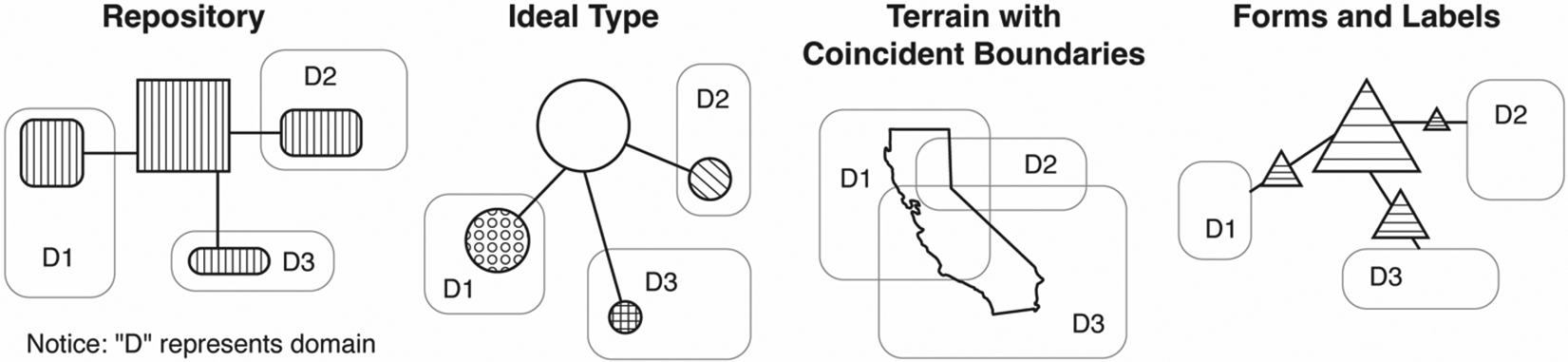
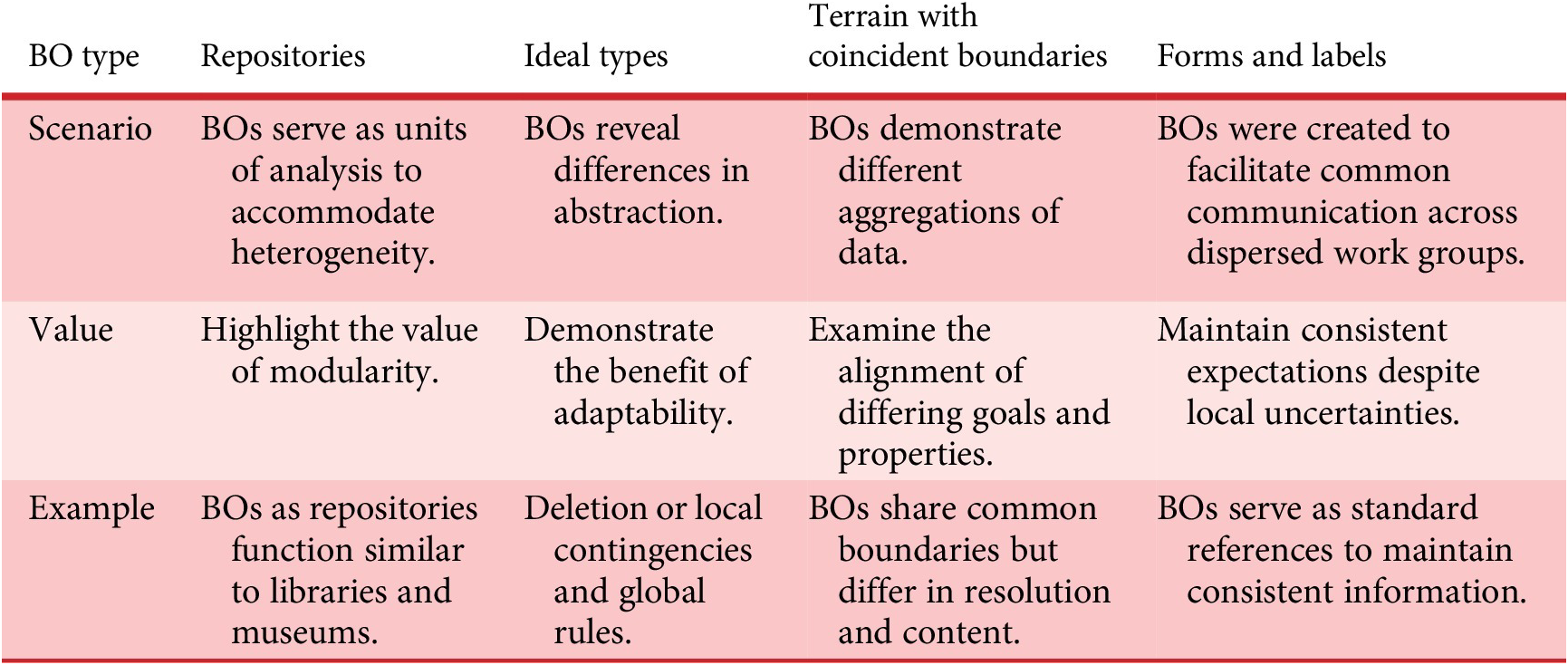
The first type, repositories, is systematically indexed collections that manage heterogeneity across analysis units, offering modularity (e.g., libraries and museums). The second type, ideal types, is abstract representations (e.g., maps and atlases) that generalize across domains, serving as symbolic communication tools. The third type, terrains with consistent boundaries, is objects with uniform boundaries but differing internal content, aiding in data aggregation and large-scale distributed work. Finally, forms and labels are transportable objects that ensure consistent communication across dispersed work groups, conveying unchanging information (Table 3).
Four BO types with conditions for usage, advantages and examples (Star Reference Star1989)
The authors designed and defined 12 LPBs as BOs in this study. This approach was used to explore the BO types and participants’ perceptions of LP. Each LPB was crafted from a 6-cm cubic acrylic block with a matte, translucent surface (Lee, Coughlin, Yang et al. Reference Lee, Coughlin, Lee, Cerino, Yang, Klopfer, de Weck and Ochsendorf2023; Lee, Coughlin, Balmuth et al. Reference Lee, Coughlin, Yang, De Weck, Lee, Klopfer and Ochsendorf2023). The design of the 12 LPBs was based on Coughlin’s 8,000-day framework (Reference Coughlin2022, Reference Coughlin2019), an experimental theory that estimates the period from the age range of 65–85 as ~8,000 days. This framework is divided into four phases: managing ambiguity, making big decisions, managing complexity and living independently. Within each phase, two thought-provoking and life-relevant questions were inscribed on the LPBs to encourage participant engagement and facilitate the sharing of their thoughts (Table 4). In addition, each LPB was enhanced with one carefully selected visual and one photo to enrich the user experience and stimulate ideas and suggestions (Lee Reference Lee2024b; Lee, Coughlin et al. Reference Lee, Coughlin, Yang, De Weck, Lee, Klopfer and Ochsendorf2023).
Four phases associated with two provocative questions on LPBs

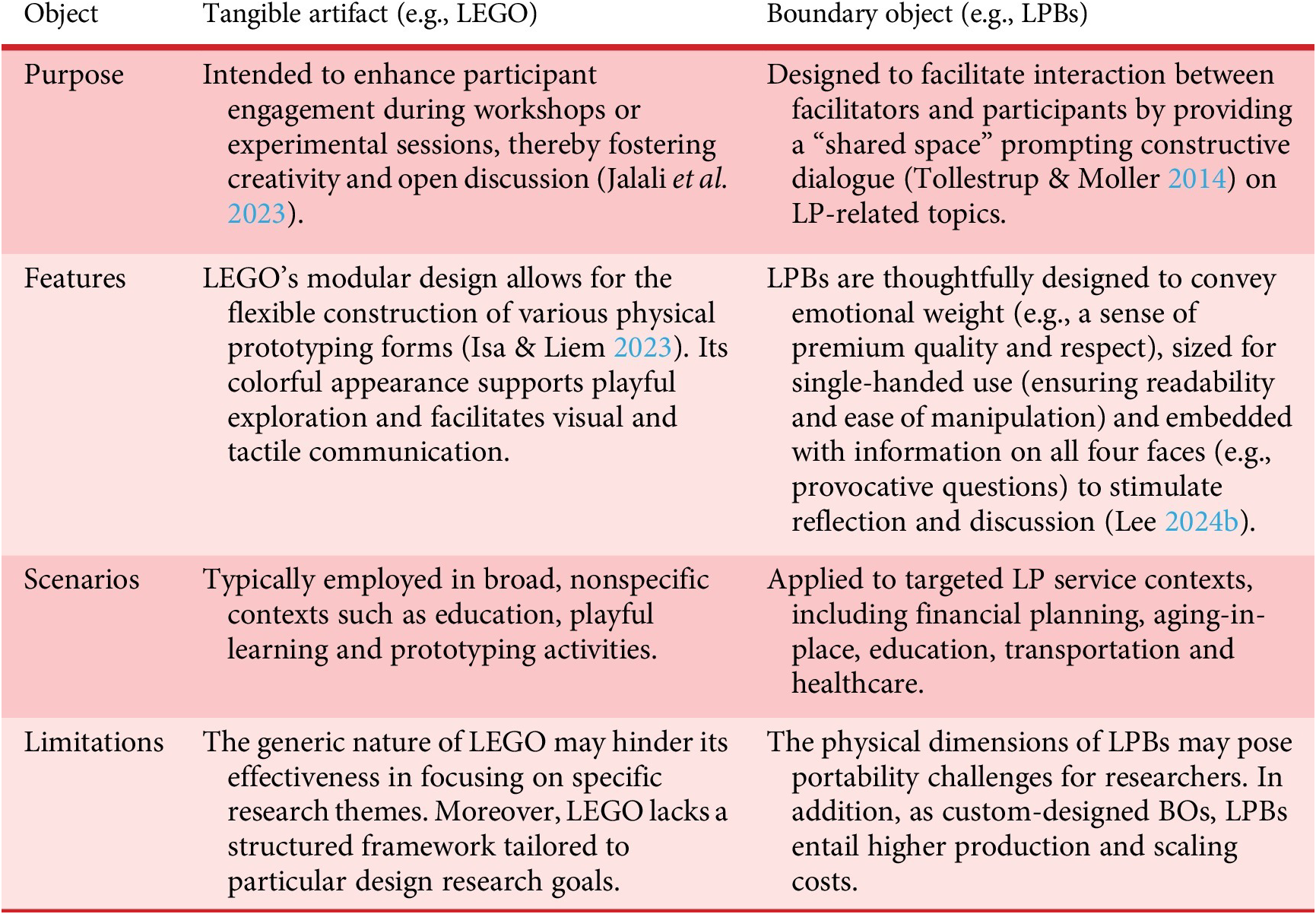
In addition to presenting the four-phase framework, the authors provided a rationale for selecting LPBs as BOs (Tollestrup & Moller Reference Tollestrup and Moller2014; Lee Reference Lee and Rau2024a) in place of conventional tangible artifacts, such as LEGO bricks (Jalali et al. Reference Jalali, Bürer, Dehler Zufferey and Petringa2023). Table 5 outlines four key dimensions – purpose, features, scenarios and limitations – to clarify and compare the considerations underlying this choice. LEGO is used as a representative example of a typical tangible artifact to contextualize the comparative analysis.
The comparison of typical tangible artifacts and LPBs
3. Research methods
3.1. Four primary research phases
This descriptive D4L experiment examines the effective use of tangible artifacts, specifically 12 LPBs, as BOs to facilitate discussions and accurately identify user needs within the context of LP services. The research process was organized into four distinct phases: pre-experiment, experiment, post-experiment and analysis, each encompassing a range of research activities. The authors employed constructivist GT to analyze qualitative data collected from in-field experiment observations, 69 semi-structured interviews and outcomes supported by pre- and post-surveys. Figure 5 provides an overview of the four phases, detailing key activities and analysis methods in Table 6.
Overview of research flow, expected time and data analysis.
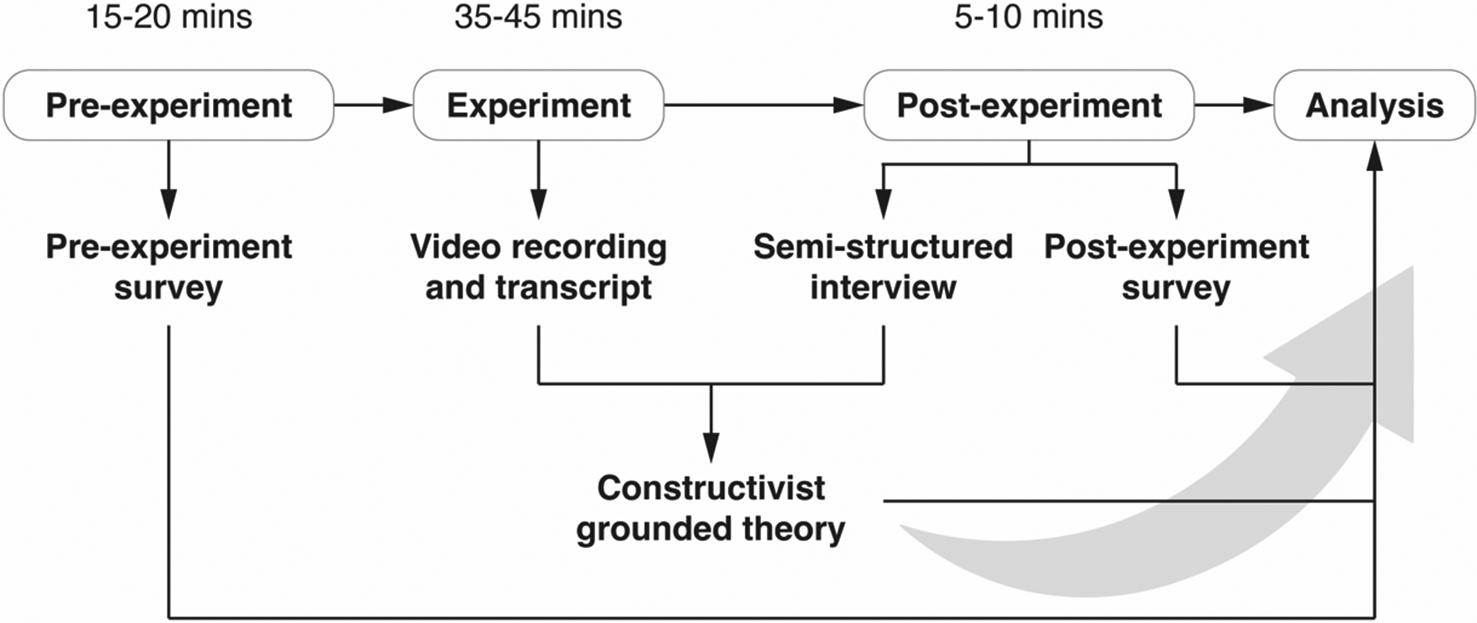
The study consists of four main research phases

1. Pre-experiment: The 69 qualified Boston-based participants, spanning three age groups, were asked to complete a 15- to 20-min pre-experiment survey about their background, current financial conditions and perceptions of FL and LP.
2. Experiment: The in-person D4L experiment, conducted at MIT AgeLab, lasted 35–45 min. It was recorded using a GoPro 360 camera, a standard camera and Zoom cloud recording to ensure comprehensive verbal and behavioral data documentation for qualitative analysis.
3. Post-experiment: Following the D4L experiment, one author conducted a 5- to 10-min semi-structured interview and asked participants to complete a 5 min post-experiment survey to evaluate their LP experience. A week later, the team distributed an additional online post-experiment survey to assess any LP-related behavioral changes.
4. Analysis: To effectively apply constructivist GT, the authors began by developing a preliminary coding structure based on on-site interview memos. This coding structure was subsequently transferred into ATLAS.ti to serve as an analytical foundation. The two designated authors independently reviewed, refined, grouped and eliminated codes through an in-depth analysis of the 69 video transcripts. This iterative process continued until reaching both theoretical and conceptual saturation, following three rounds of team discussion with the rest of the coauthors.
3.2. Recruitment across three age groups
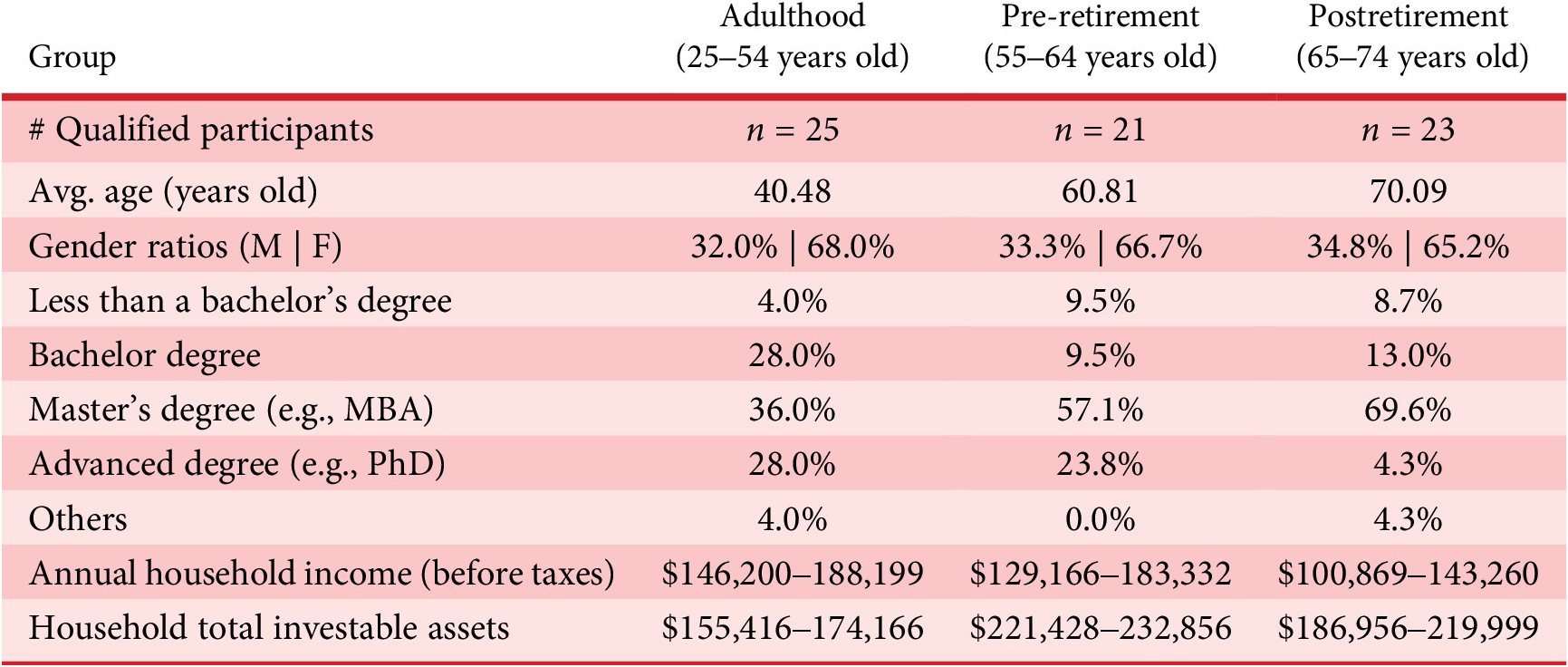
From the MIT AgeLab volunteer data pool, the study recruited 69 participants from Boston, USA, categorized into three distinct age groups: Group 1 – adulthood (aged 25–54 years); Group 2 – preretirement (aged 55–64 years) and Group 3 – postretirement (aged 65–74 years). Regarding occupational distribution, 28.0% of individuals in Group 1 were employed in arts, design, entertainment, sports and media. In comparison, 23.8% of Group 2 and 21.7% of Group 3 were engaged in management and business-related occupations.
Across the three groups, 60% of participants held a master’s degree or higher, with a gender distribution of ~30% male and 70% female. To ensure the alignment of participants’ financial status with our target demographic, the authors set specific range criteria for annual household income (before taxes) and total household investable assets (Table 7).
The demographics of the 69 participants
3.3. Theoretical sampling, synthesizing and saturation
Constructivist GT was employed in Phase 4 of the study, which was organized into three parts: theoretical sampling, synthesis and saturation. The two designated authors independently conducted the coding process in accordance with this framework and subsequently engaged in three rounds of collaborative discussions to compare and align their findings.
In cases of disagreement – whether concerning the number of coding categories, the interpretation of specific codes or the overall analytical outcomes – the two primary coders sought input from the broader author team. Discrepancies were resolved through group discussion and, when necessary, by a majority vote among all coauthors. The potential for bias remains, given the authors’ shared design and research backgrounds.
This iterative and collaborative approach was designed to enhance the accuracy, methodological rigor and replicability of the coding procedure, thereby supporting a more robust and evidence-based interpretation of the participants’ behavioral and verbal data. The overarching objective was to investigate and identify persona types grounded in participants’ diverse schemas (i.e., mental models) related to learning modes of LP services.
The first part, theoretical sampling, involved setting up the coding environment in CAQDAS and defining initial, focused, axial and theoretical coding. Before initiating the line-by-line coding of the video transcript, the authors created a flexible, editable coding environment through the following five instructions: (1) import 69 videos, audio files and transcripts from Zoom cloud recordings into ATLAS.ti. Organize and group these documents according to the participants’ interviews. (2) Begin coding the experiment observations and interview content relevant to the research topics, progressing through the stages of initial coding, focused coding, axial coding and theoretical coding. (3) Listen to the original audio recordings to verify the context and annotate the corresponding transcripts. (4) Refine the coding descriptions across all four stages to ensure coherence and connectivity. (5) Enhance the selected transcripts by highlighting keywords or key sentences. Make the critical paragraph bold, adjust the font color and restructure sentences or paragraphs as necessary.
This setup ensures consistency with the established coding protocol, which involves labeling key terms, quotes, sentences and paragraphs, incorporating authors’ memos and highlighting relevant sections and themes. The coding process is iterative, informed by interview content, authors’ expertise and contextual variations. In line with Charmaz’s constructivist GT, researchers act as co-constructors of meaning, recognizing that codes can have multiple meanings depending on context and the complexity of the topics.
In addition, a crucial aspect of theoretical sampling was defining our coding approach. The authors thoroughly detailed the coding protocol, process, frequency and memo documentation, with the results summarized in Table 8. To ensure coding accuracy and consistency, two designated authors independently applied line-by-line coding to the 69 video transcripts rather than word-by-word or incident-by-incident coding (Charmaz Reference Charmaz2006; Charmaz & Gibbs Reference Charmaz and Gibbs2013). In this study, the authors chose not to use the AI coding function, as ATLAS.ti currently lacks the precision needed for researcher-controlled coding.
Intention and action, and the number of codes from initial, focused, axial and theoretical coding
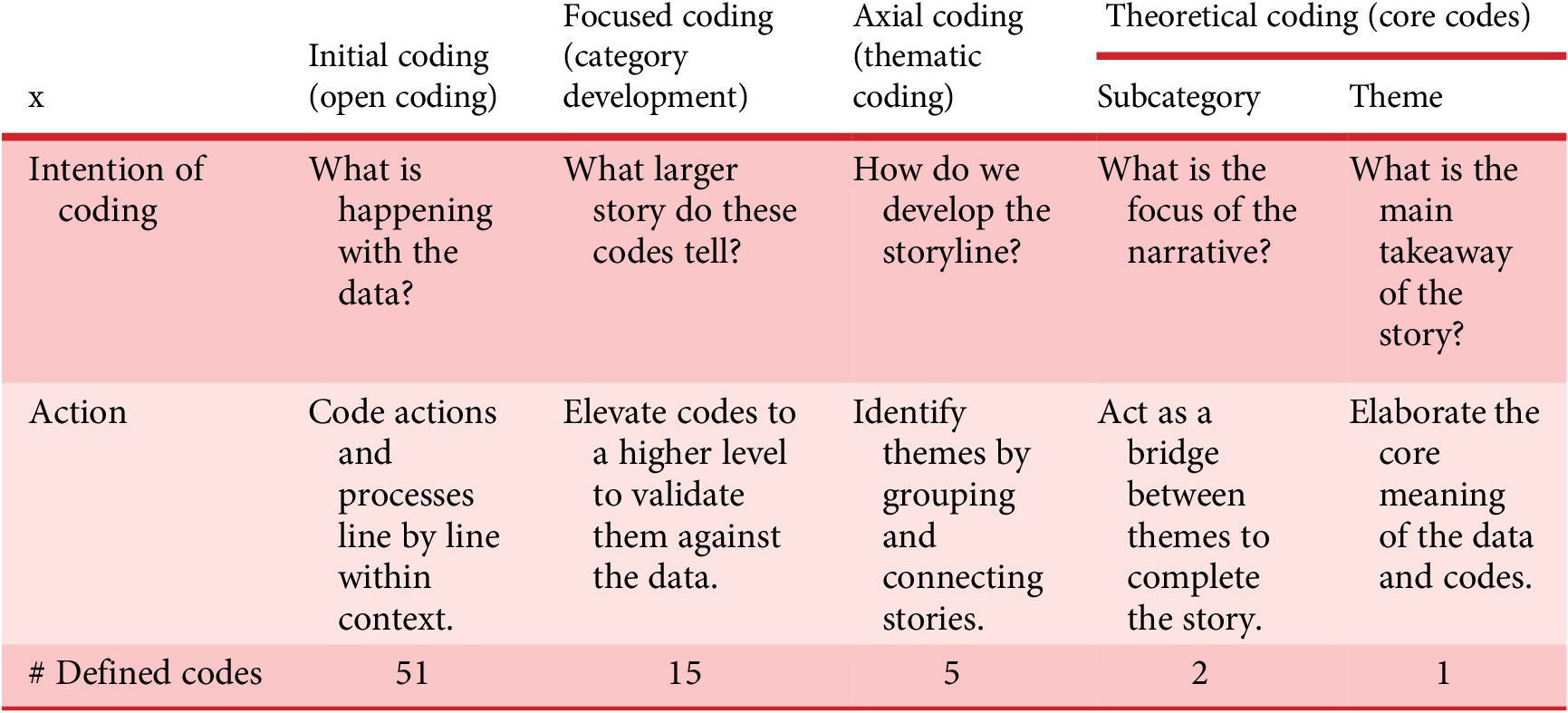
Initial coding begins by exploring new theoretical possibilities through engagement with qualitative data. The authors divided the textual data (69 video transcripts) into discrete parts, labeling these parts with “codes” focused on highly descriptive analysis to capture the interview content in detail. This process resulted in 29 initial codes, offering a comprehensive understanding of participants’ perceptions of LP. Following initial coding, the process advances to focused coding, where the authors develop categories that connect related codes, shifting from a descriptive approach to a more analytical one. Axial coding represents a more advanced data analysis, where we began identifying potential themes by drawing connections between the focused codes and grouping them into broader categories, which served as “axes” to link them. This stage is more deductive, resulting in five axial codes that reflect the interrelationships among axial, initial and focused coding.
Each coding process is iterative, involving continuous reexamination and refinement of codes and categories as new insights emerge. Before moving to theoretical coding, the authors identified two subcategories – service expression and service ecology – which are crucial in clarifying the core concept of “life stage transition and transformation.”
Theoretical synthesis and saturation are closely connected processes. We used ATLAS.ti to analyze data by reconfiguring the four types of coding and linking them with the demographic and survey results. For instance, we explored the relationship between coding, three age groups and gender. In addition, we utilized Word Cloud complemented by frequency analysis to uncover new insights across three different age groups. During the theoretical synthesizing phase, we reached a point where no new ideas, codes or themes emerged, indicating theoretical saturation. This means the concepts have been thoroughly examined, and further theoretical sampling is unlikely to provide new information or change our comprehension. In GT, achieving theoretical saturation is a critical indicator that the research process has sufficiently addressed our research questions.
4. Research result and findings
The results of the analytical coding process led to the identification of four distinct schemas (i.e., mental learning models), each representing a different approach and behavior to perceiving BOs. These schemas informed the creation of four corresponding personas and revealed six duality characteristics associated with defining LPBs as BOs.
4.1. Theoretical sampling overview
The authors analyzed 69 video transcripts obtained from in-person experiments and semi-structured interviews for qualitative data analysis. The theoretical sampling process employed an iterative approach to line-by-line coding, necessitating a deep and comprehensive understanding of the context, including participants’ backgrounds, financial conditions, behavioral changes, life and work motivations and connections with family and community. This method enabled us to progress from descriptive coding to higher levels of abstraction through constant comparison and the development of analytical questions. Consequently, we linked 51 initial codes, 15 focused codes, five axial codes, one thematic code and two subcategories (Table 9).
Codes and corresponding frequencies derived from theoretical sampling (values in parentheses indicate total frequencies from 69 video transcripts)

The core thematic code is “life stage transition and transformation,” which encompasses two primary categories: service expression and service ecology. Service expression includes two axial codes: tangible artifacts and communication. Service expression focuses on developing more effective LPBs as BOs and other product and service design features, such as the importance of tactility, strategies for making LPs more engaging and designing interactions with a longevity coach. In addition, it involves reflection and learning through the application of the 8,000-day framework with four phases of retirement.
Service ecology, on the other hand, comprises three axial codes: individuals’ perceptions of quality of life and longevity, financial literacy and confidence level of LP and the role and challenges of social infrastructure. We define service ecology as the process of constructing LP service systems that incorporate a broader range of perspectives. Social infrastructures are critical, as they encompass considerations related to policymaking, cultural diversity, ageism and gender inequality.
4.2. Persona creation and BOs
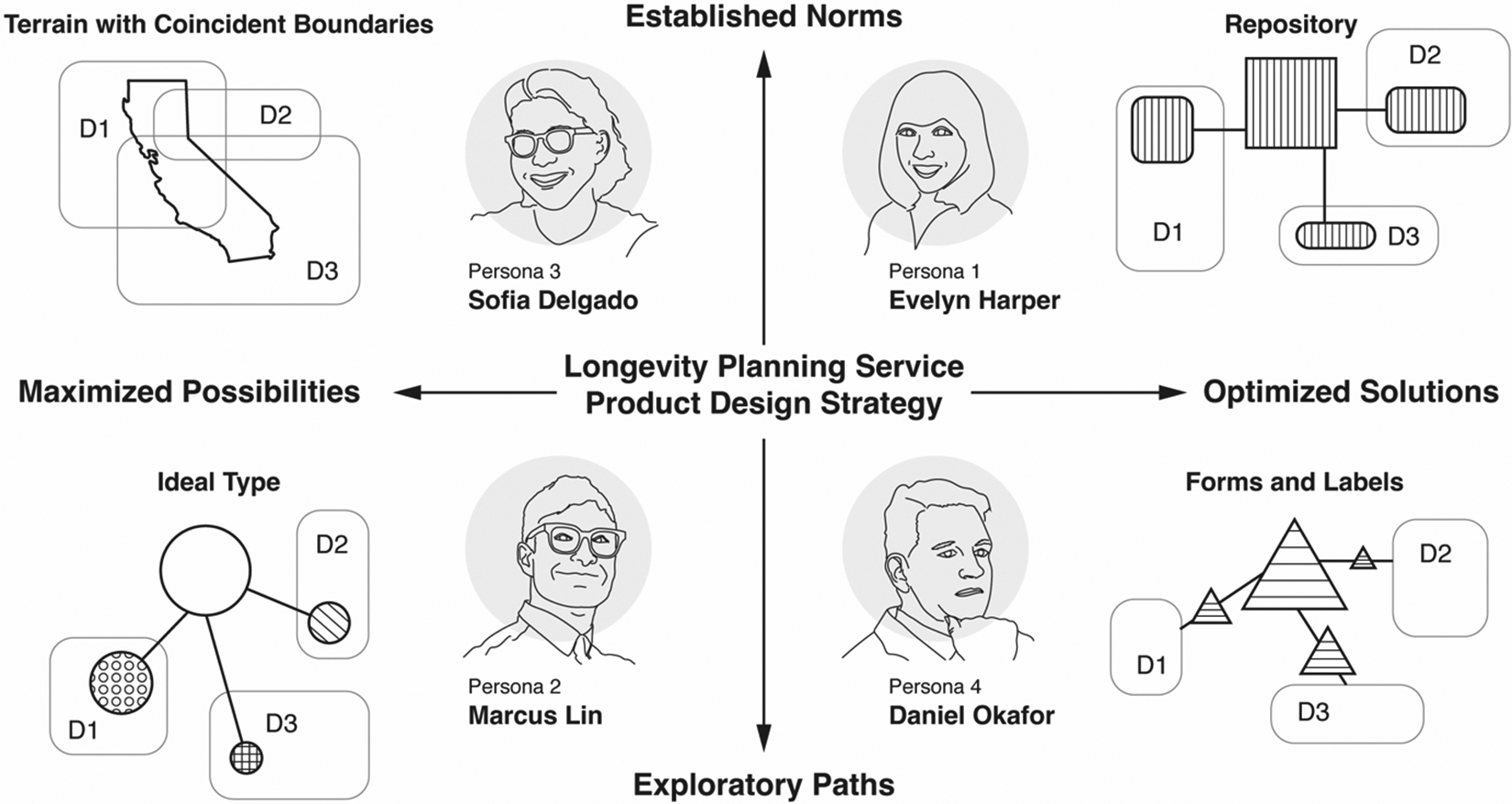
Star (Reference Star1989) proposed four types of BOs – repositories, ideal types, terrains with coincident boundaries and forms and labels – each with distinct advantages under specific conditions, as outlined in Table 3 and Figure 4. In the D4L experiment, we used LPBs as BOs. By coding participants’ quotes and synthesizing contextual data from 69 video transcripts using constructivist GT, we developed four persona types that align with these BO types.
With the rise of human-centered design in the late 1990s and early 2000s, personas became integral for capturing user diversity. By embodying varied user perspectives, they empowered designers and researchers to more effectively champion user needs throughout product development. The concept of “persona,” introduced in the mid-1990s by Alan Cooper, is a critical tool in user-centered design. Cooper (Reference Cooper1999, Reference Cooper1995) defined personas as fictional, yet data-driven, archetypes representing the desires, motivation and behaviors of target users. These personas serve to guide decision-making and maintain a focus on target users during the design research.
Using theoretical sampling and constant comparison in GT, we created four persona types based on four levels of learning mode, each with different desired actions to generate saturated concepts. We found that learning modes could be linked to each persona’s level of trust in the LP concept. Through theoretical synthesis, we identified four learning modes: staying curious and challenging LP, accepting and exploring LP, designing and developing LP and leading and believing in LP. In addition, the criteria of using desired actions can outline the expected LP outcomes for each persona, helping us better understand their personal goals, learning motivations and potential challenges.
Finally, saturated concepts emerged from the theoretical saturation stage in GT. These concepts were identified through theoretical sampling for each persona to refine the design and development of LP services and LPBs, tailored to various contexts and levels of learning modes. Although the same LPBs were used as BOs, participants had varying perceptions of the LP concept. We summarized our findings in Figure 6, linking the four BO types and personas.
The relationship between the four BO types and the four proposed personas. Images are royalty-free and sourced from Pexels.

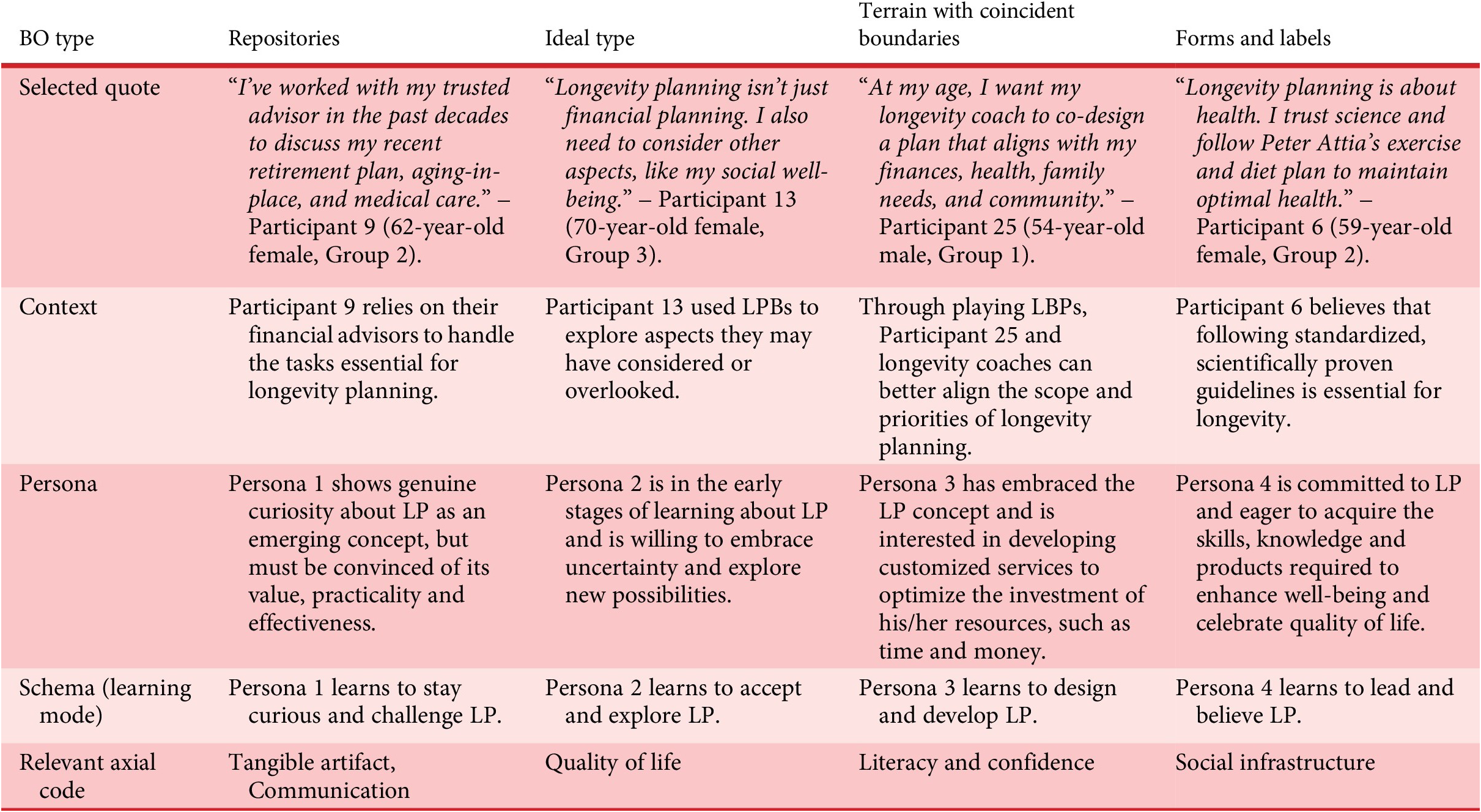
Persona 1, curious but still skeptical of LP, is represented by the traditional FL service image. The first BO type, repositories, transforms LPBs into customized checklists for financial advisors, tailored to clients’ economic conditions and life stages. These checklists function as systematically indexed items that manage heterogeneity across analysis units, providing modularity based on participants’ or clients’ financial circumstances. As Participant 9 (62-year-old female, Group 2) mentioned, “I’ve worked closely with my trusted advisor over the past decades to discuss my recent retirement plan, aging-in-place, and medical care.” This chosen image reinforces the idea that FL is a well-established industry, akin to a universal language or authority that most people recognize and trust.
Persona 2, in the early stages of learning and exploring LP, has already accepted the concept and is eager to discover multiple possibilities. The second BO type, the ideal type, transforms LPBs into abstract representations that serve as symbolic communication platforms for LP services. We used the image of a three-legged stool, inspired by Participant 13 (70-year-old female, Group 3), who said, “We often discussed financial planning as being like a three-legged stool. I believe longevity planning can be seen the same way, with financial planning as one leg, understanding and managing your health as the second, and having strong family, community, or social support systems as the third.” This metaphor encourages individuals to consider the broader aspects of LP beyond just FL.
Persona 3, focusing on designing and developing a customized LP, metaphorically represents a Monopoly game or a longevity landscape. The third BO type, terrain with coincident boundaries, transforms LPBs into a mental map that allows participants to zoom in and out on various aspects of LP. This mental map – whether physical, symbolic or cognitive – serves as a human mental model with defined boundaries but a flexible internal focus, facilitating information aggregation and broad discussion. As Participant 25 (54-year-old male, Group 1) mentioned, “At my current age, I want my longevity coach to co-design a personalized longevity plan that aligns with my financial status, health condition, family needs, and community networks.” This reflects the desire of individuals to build personalized LP services and products with the guidance of longevity coaches to meet their specific needs.
Persona 4 represents individuals who lead and believe in the concept and potential of LP. The fourth BO type, forms and labels, transforms LPBs into delivery packages containing standardized, scientifically proven diet and exercise plans. Metaphorically, these packages serve as transportable objects that provide consistent communication – such as dietary ingredients and exercise instructions – across dispersed communities, conveying reliable, unchanging information similar to scientific findings.
We use a healthy lifestyle app designed to manage food and exercise as a symbol of this persona. This metaphor reflects individuals’ eagerness to access more LP products, services or experiences that enhance their quality of life. The inspiration came from Participant 6 (59-year-old female, Group 2), who said, “Longevity planning is about health. I trust science and follow Peter Attia’s exercise and diet plan to maintain optimal health. I enjoy Peter Attia’s book, Outlive: The Science and Art of Longevity, which I know most people consider a bible for longevity.” We summarized the four personas, along with their associated BO types, quotes, context, schema (learning mode) and relevant axial codes in Table 10.
Overview of the relationship between four personas, BO types, selected quotes, context, desired actions, saturated concepts and relevant axial codes
4.3. Persona, schemas and LP service and design opportunities
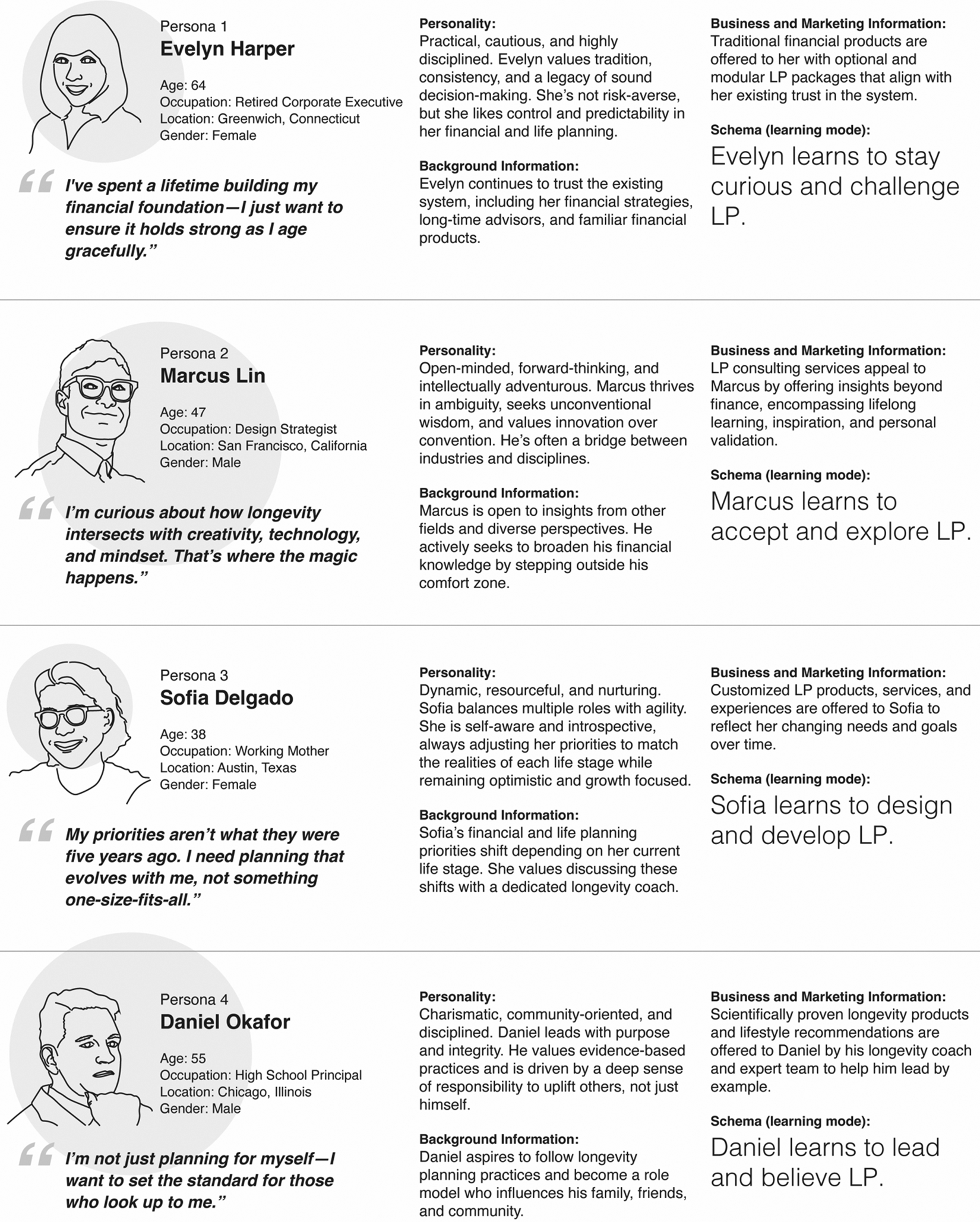
The authors adapted Nielsen et al.’s (Reference Nielsen, Hansen, Stage and Billestrup2015) five-category framework for persona description, which includes: (1) background information (e.g., demographics, personality traits, psychographics, urbanicity, lifestyle, hobbies and interests); (2) design-related information (e.g., work-related issues, use of technology and relevance to the domain); (3) business and marketing-related information (e.g., competitors, market size, brand relationships and business objectives); (4) graphical elements (e.g., color-coding to indicate user segments) and (5) miscellaneous elements (e.g., references to sources, international considerations and ethnicity). Building on this framework, the authors proposed a modified persona format emphasizing categories 1 and 3, connecting them with four distinct schemas (learning modes) in Figure 7.
The four proposed personas.
A key subjective factor in this study is the persona’s learning mode (schema). To conceptualize this, the authors developed a 2 × 2 matrix to distinguish four distinct persona types (Table 9). In Figure 11, the horizontal (x) axis represents a continuum from “optimized solutions” to “maximized possibilities,” while the vertical (y) axis spans from “established norms” to “exploratory paths.” Using this framework, the authors positioned the personas within four quadrants corresponding to distinct learning orientations: Persona 1 adopts a learning mode characterized by curiosity and a willingness to challenge conventional approaches to LP. Persona 2 engages in learning through the acceptance and exploration of LP. Persona 3 approaches LP with a focus on designing and developing personalized strategies. Persona 4 embodies a learning mode centered on leading and believing in LP as a transformative practice. This typology reflects the diverse cognitive and behavioral approaches that individuals may adopt when engaging in LP services (Figure 8).
The proposed four personas link to types of BOs for LP.
4.4. Duality characteristics in BOs
Using constructivist GT, the authors employed theoretical sampling and synthesizing, integrated with a constant comparison approach, to develop four personas corresponding to four BO types. This process revealed a character of duality within the categories, where participants from diverse backgrounds exhibited coexisting bipolar perspectives within the same categories – ideas that were often contradictory, conflicting or contrary.
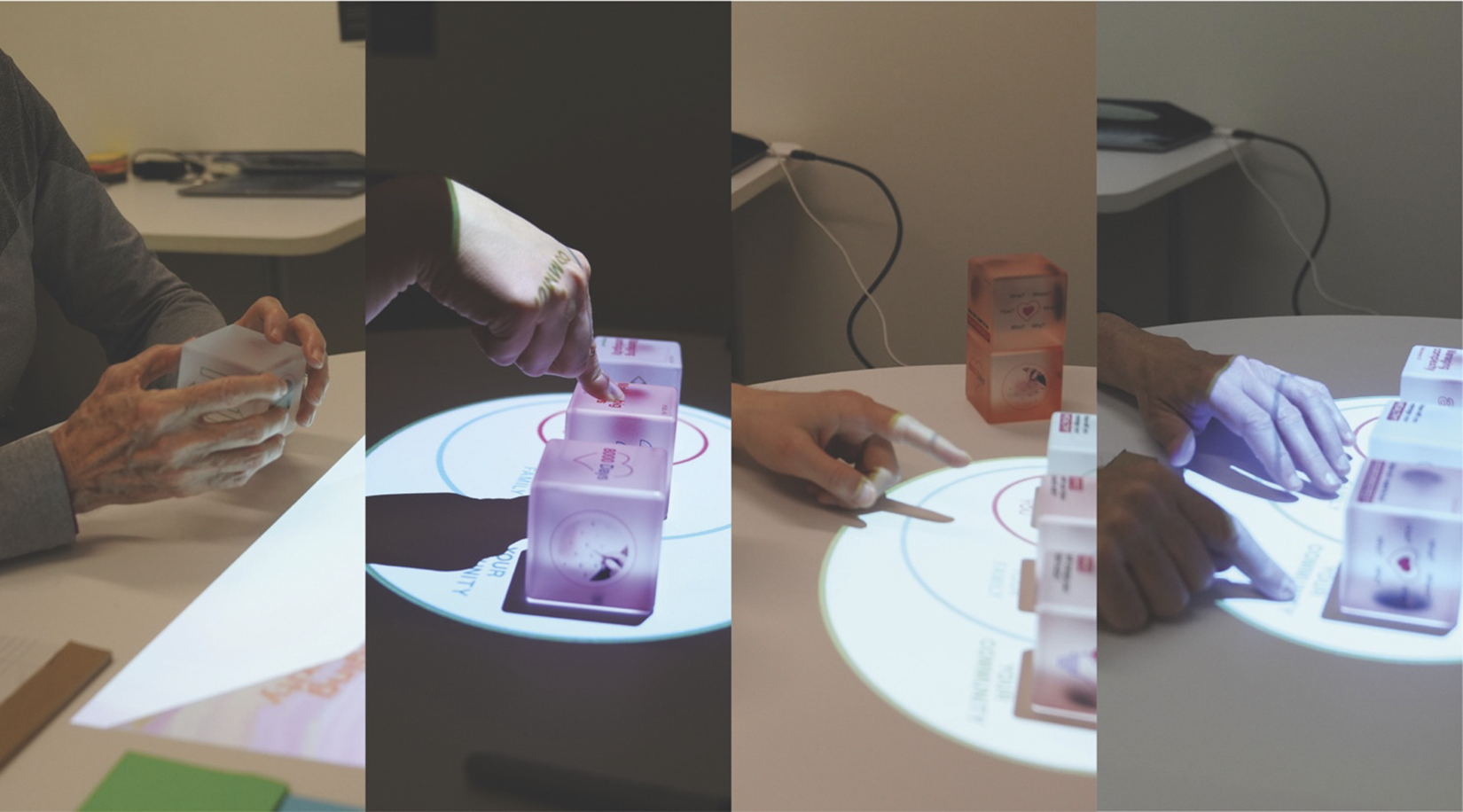
Examples include linear versus dynamic, planning versus preparation and product versus service systems. These dual characteristics lie in using BOs as shared spaces or catalysts, facilitating more authentic discussions among participants with varying perspectives, motivations and expertise, particularly with a longevity coach and facilitator (Figure 9).
Participants using the LPBs as BOs during the experiment.
In this study, duality refers to the coexistence and interaction of two distinct yet interrelated concepts or ideas within an LP context. This term often describes the dynamic between oppositional and complementary forces. The duality inherent in BOs allowed us to explore the balance between these concepts, analyzing how and why they can coexist in harmony or create tension, ultimately impacting user experience, LP and the design and development of LPBs.
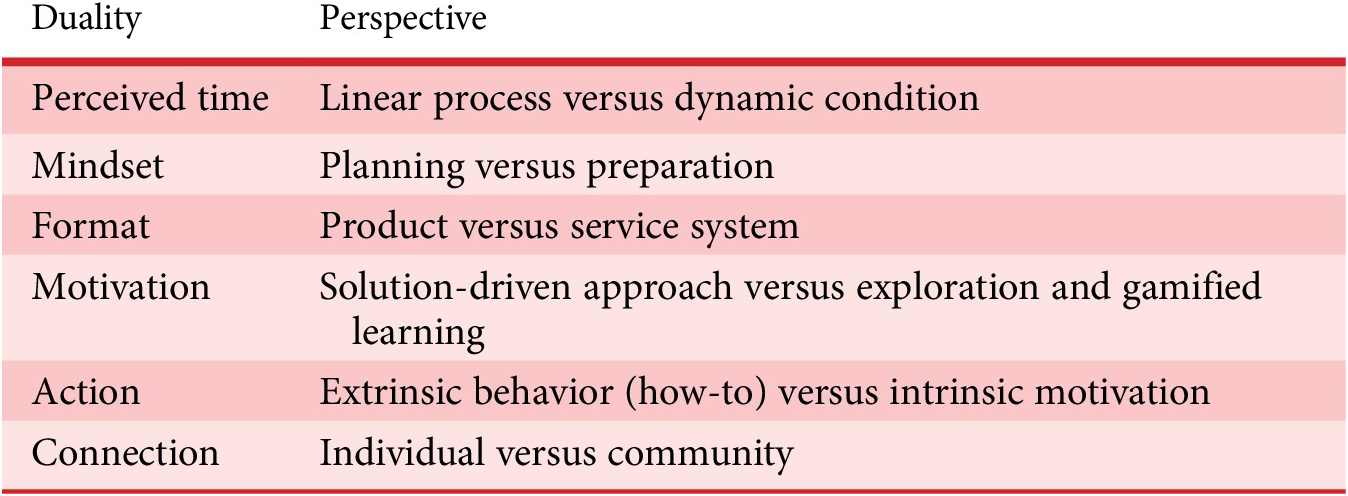
The coexisting bipolar perspectives and concepts promote a deeper understanding of how contrasting or conflicting aspects can be integrated or juxtaposed, leading to a more comprehensive and nuanced design solution. The analysis of six dualities in the study highlights key themes related to participants’ perceptions and mindsets concerning LP. Table 11 presents an overview of these dualities, which were explored using 12 LPBs as BOs in the D4L experiment.
The duality characteristic in the context of longevity planning
Duality 1. Perceived time: Participants expressed differing views on time, with some perceiving it linearly and others viewing it as dynamic. For instance, Participant 9 (69-year-old male, Group 3) exemplified linear thinking: “There is an old saying: people in their 60s ‘go,’ in their 70s ‘slow,’ and in their 80s ‘no.’” Conversely, Participant 11 (38-year-old female, Group 1) offered a dynamic perspective: “Longevity planning is not a linear process. It should be viewed as a dynamic, interconnected, and interrelated set of conditions.” It echoed what Participant 3 (66-year-old female, Group 3) noted, “I believe that the four phases of retirement of the 8,000-day framework are not linear; rather, they are more dynamic, unplanned, and nonlinear.”
Duality 2. Mindset: Participants exhibited different attitudes toward planning and preparedness. Some believed in the importance of comprehensive planning, as exemplified by Participant 16 (46-year-old female, Group 1): “Longevity planning is much more important than financial planning. It encompasses a broader range of considerations to address life’s complex challenges.” Participant 20 (73-year-old female, Group 3) also said, “Through the longevity coaching service, I think I gain insights into better planning and actionable steps for the future. The service highlighted that the period from age 65 to 85 spans another 8,000 days, encouraging me to thoughtfully plan for these years. Think ahead more and be true to myself. Plan ahead and practice consistently.”
Others, like Participant 3 (66-year-old female, Group 3), argued that life is inherently unpredictable: “I believe that the four phases of retirement of the 8,000-day framework are not linear; rather, they are more dynamic, unplanned, and nonlinear.” Participant 19 (64-year-old female, Group 2) also argued that life is inherently unpredictable: “You can’t change your destiny. If a car is going to hit you, it will happen. When it’s your time to die, there’s no avoiding it.” Similarly, Participant 10 (69-year-old female, Group 3) shared, “They don’t want to have a plan. They just want to be open to what comes provided. So I think there’s a kind of. Okay, let’s get the basics right.”
Duality 3. Format: Participants had varying expectations for the format of LP services. Participant 15 (63-year-old male, Group 2) preferred a tangible product: “These LPBs can be designed like Russian nesting dolls, allowing users to explore and understand the concept progressively.” In contrast, Participant 21 (74-year-old male, Group 3) envisioned a subscription-based service: “I suggest linking the longevity coaching service to businesses or offering each LPB as a standalone financial planning service.”
Duality 4. Motivation: Participants’ motivations ranged from solution-driven approaches to exploration-driven ones. Solution-driven individuals, like Participant 10 (37-year-old male, Group 1), focused on certainty and clarity: “Since we are aware of these significant challenges from the longevity coaching services, how can we follow up on the execution plan?” On the other hand, exploration-driven participants, such as Participant 15 (63-year-old male, Group 2), likened LP to a gamified experience: “Longevity planning is like an interactive board game where individuals assemble their own LPBs.” Another example, Participant 15 (45-year-old female, Group 1) mentioned: “The tactile nature of the LPBs makes me interact with them much like playing with LEGOs.”
Duality 5. Action: The duality of action compares extrinsic behavior versus intrinsic motivation. Extrinsically motivated participants sought explicit guidance, as Participant 19 (49-year-old female, Group 1) noted: “People might appreciate more detailed information on practical steps or ‘how-to’ guidance.” Intrinsically motivated participants, like Participant 19 (64-year-old female, Group 2), focused on personal growth: “I can’t change my mother or the environment, but I can change myself.” Or Participant 13 (63-year-old female, Group 2) shared, “I want to emphasize that finding a purpose is a crucial part of successful longevity planning.”
Duality 6. Connection: Participants discussed the LP service in relation to themselves and their communities. Participant 15 (70-year-old female, Group 3) emphasized individual quality of life: “Longevity planning aims to meet expectations and sustain individuals’ quality of life.” In contrast, Participant 7 (61-year-old female, Group 2) highlighted social well-being: “Social well-being plays a crucial role in shaping an individual’s physical and mental health.” It also resonated with Participant 12’s (70-year-old male, Group 3) story: “In July 2018, my son recommended that I apply for a job at Apple. I did and have been working as a Product Specialist at the Apple Chestnut Hill store for the past 7 years as a part-time job. I enjoy talking to young folks and helping them with product choices and solutions.”
5. Discussion and next steps
5.1. Contribution to service design
This descriptive study advances the field of service design by demonstrating how LPBs can function as BOs to foster meaningful engagement and dialogue in LP services. By applying Charmaz’s constructivist GT, the research introduces a novel method for identifying user needs and co-constructing service experiences across life stages. The development of four personas and the articulation of six duality characteristics provide deeper insights into user behavior, mindset and motivation in complex service ecosystems. These insights advance the LP services discourse, offering a human-centered, evidence-based approach to designing adaptive and inclusive services in aging societies.
5.2. Constructive GT dimension: from substantive to formal theory
The study employed Charmaz’s (Reference Charmaz2006) constructivist GT as the principal method for qualitative data analysis. GT is not designed as a validation tool; rather, it functions as a heuristic mechanism for engaging with and interpreting data. In this study, the authors implemented line-by-line coding, an approach particularly effective for resolving analytical bottlenecks and gaining fresh insights during data exploration. GT is especially well-suited for research involving intensive interviews, owing to its constant comparison technique, which reinforces its role as a “method in process” rather than a “method for process” (Charmaz & Gibbs Reference Charmaz and Gibbs2013). This attribute allows constructivist GT to be applied effectively to fragmented data and narratives, rendering it particularly apt for addressing the complex, personal and abstract dimensions of LP.
By deconstructing data and stories, constructivist GT facilitates the generation of new possibilities, thereby extending the boundaries of the FL field. However, the study’s demographic scope – encompassing participants from three age groups: adulthood (25–54 years), preretirement (55–64 years) and postretirement (65–74 years) – within the Greater Boston area and controlled for income levels, savings and investable assets, presents inherent challenges for scalability and generalizability.
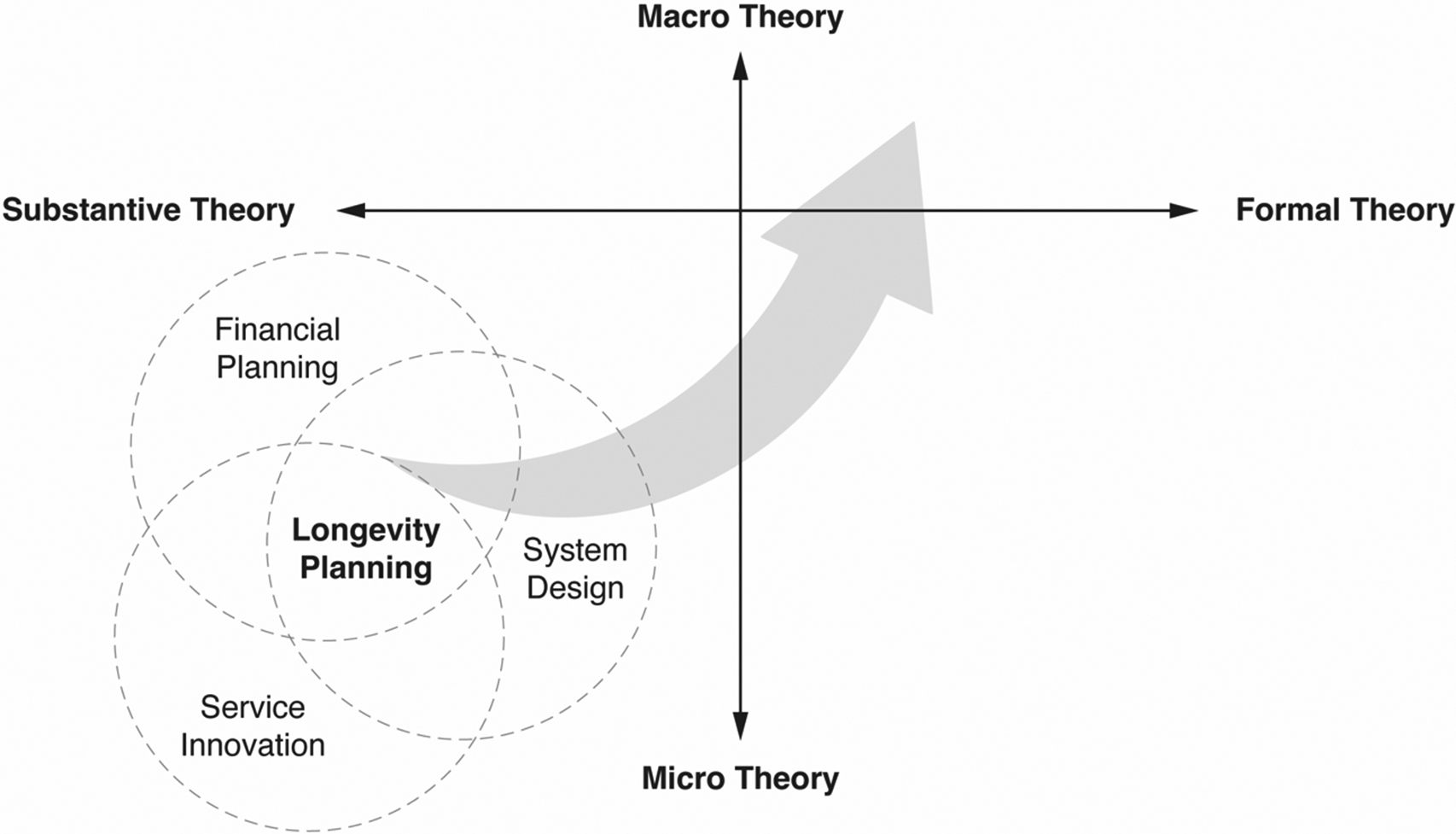
The study utilizes GT to explore the intersection of substantive and micro theories. Substantive theory (Glaser & Strauss Reference Glaser and Strauss1976; Glaser Reference Glaser1978; Charmaz Reference Charmaz2014; Corbin & Strauss Reference Corbin and Strauss2015), developed within a specific area of inquiry, is grounded in empirical data and provides context-specific explanations. In this study, the authors focus on how tangible artifacts, specifically LPBs, can be used as BOs to facilitate discussions and accurately identify user needs within LP services. This research represents an early stage in developing a substantive theory within this specific context, with the potential to contribute to broader formal theories.
Formal theories, by contrast, offer general frameworks applicable across various contexts, making them valuable for understanding a wide range of phenomena. While substantive theories often serve as building blocks for these broader frameworks, macro and micro theories provide different levels of analysis. Macro theories (Rogers Reference Rogers2003) address large-scale social processes and structures, whereas micro theories focus on individual behaviors and small-group interactions. Together, they offer a comprehensive understanding of societal dynamics. Our application of GT situates itself at the intersection of substantive theory and micro theory, as the authors aim to develop a detailed, context-specific understanding that may eventually inform more generalizable frameworks (Figure 10).
The two dimensions of GT: from substantive to formal theory and micro to macro theory.
In the subsequent phase of this study, the authors aim to further enhance the understanding and impact of LP through the application of constructivist GT. Although we chose not to employ ATLAS’s new AI coding function due to its current limitations in providing the precision required for researcher-controlled coding, there remains considerable potential for the strategic integration of AI. By alleviating labor-intensive tasks, such as certain aspects of the theoretical sampling process, AI could support researchers in systematically coding data, thereby advancing the quality, precision and efficiency of the coding process.
5.3. Persona and duality connected to BOs
In this experimental study, the authors employed 12 LPBs as BOs and conducted qualitative data analysis using constructivist GT. Through this process, we identified four distinct personas and six duality characteristics: perceived time, mindset, format, motivation, action and connection. These research findings highlight the complexity and diversity inherent in LP, which intersects with FL, service innovation and system design.
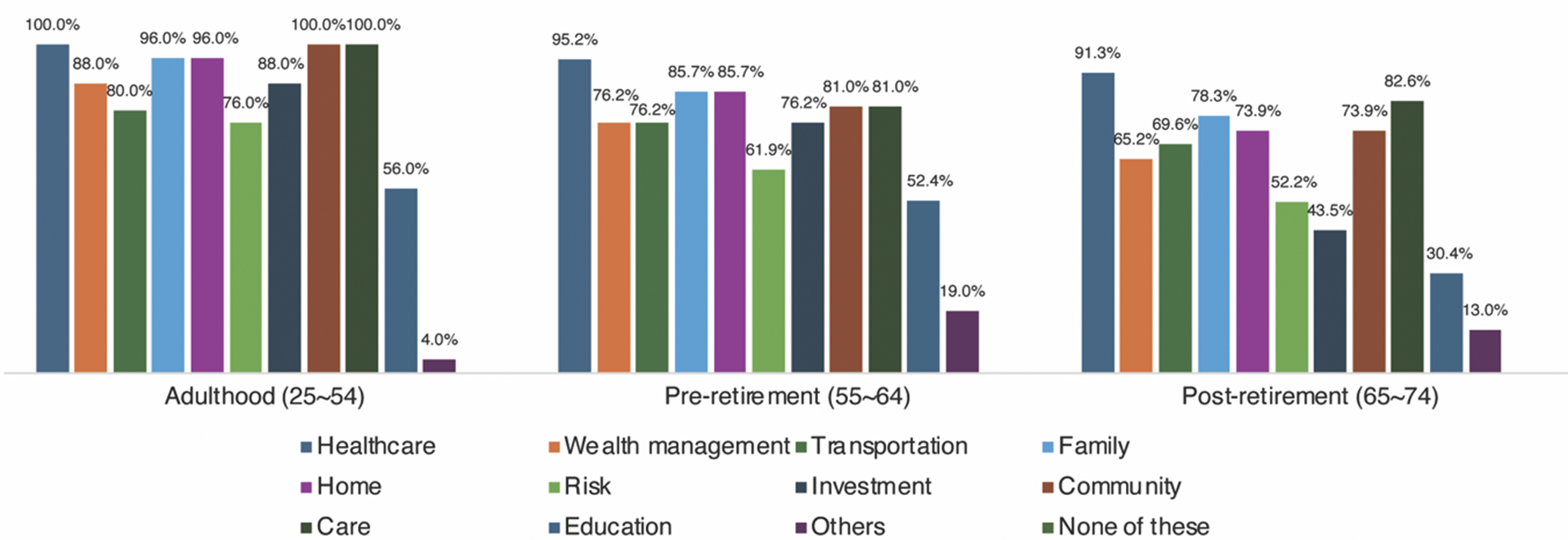
The findings are consistent with the post-experiment survey results, which illustrate participants’ perceptions of LP. Across the three age groups surveyed, the majority of the participants associated the concept of LP with the 12 proposed domains, including healthcare, housing, caregiving, risk management, education and others (Figure 11). This variability is influenced by factors such as demographics, financial circumstances, longevity literacy levels, health status and other pertinent variables.
Post-experiment survey results: areas perceived by participants as associated with longevity planning (select all that apply, n = 69).
The four proposed personas in our study were developed in accordance with four distinct schemas linking to learning modes, which were discovered and synthesized from the analysis of 69 video transcripts. The authors found that these learning modes may significantly influence the design of LPBs as BOs, thereby necessitating the consideration of additional factors. For example, could variables such as individuals’ financial experiences, life stages, national contexts and cultural backgrounds also impact the established personas? These factors may indeed shape the engagement format (e.g., interaction), communication style (e.g., tone of voice and language), approach (e.g., subscription service model) and the interpretation of LPBs and their associated services.
The six duality characteristics have provided a valuable structure for examining participants’ responses from multiple dimensions. This structure can assist researchers, designers, facilitators and longevity coaches in opening up conversations that unlock participants’ potential in areas, such as health, wealth, family and community. Moreover, the authors suggest extending this research’s implications and business value by having longevity coaches employ LPBs as early-stage diagnostic tools. This approach would help identify clients’ persona types (schemas) during consultations, enabling more targeted responses to their specific concerns and ultimately enhancing the overall efficacy of the LP process.
5.4. Persona evaluation techniques
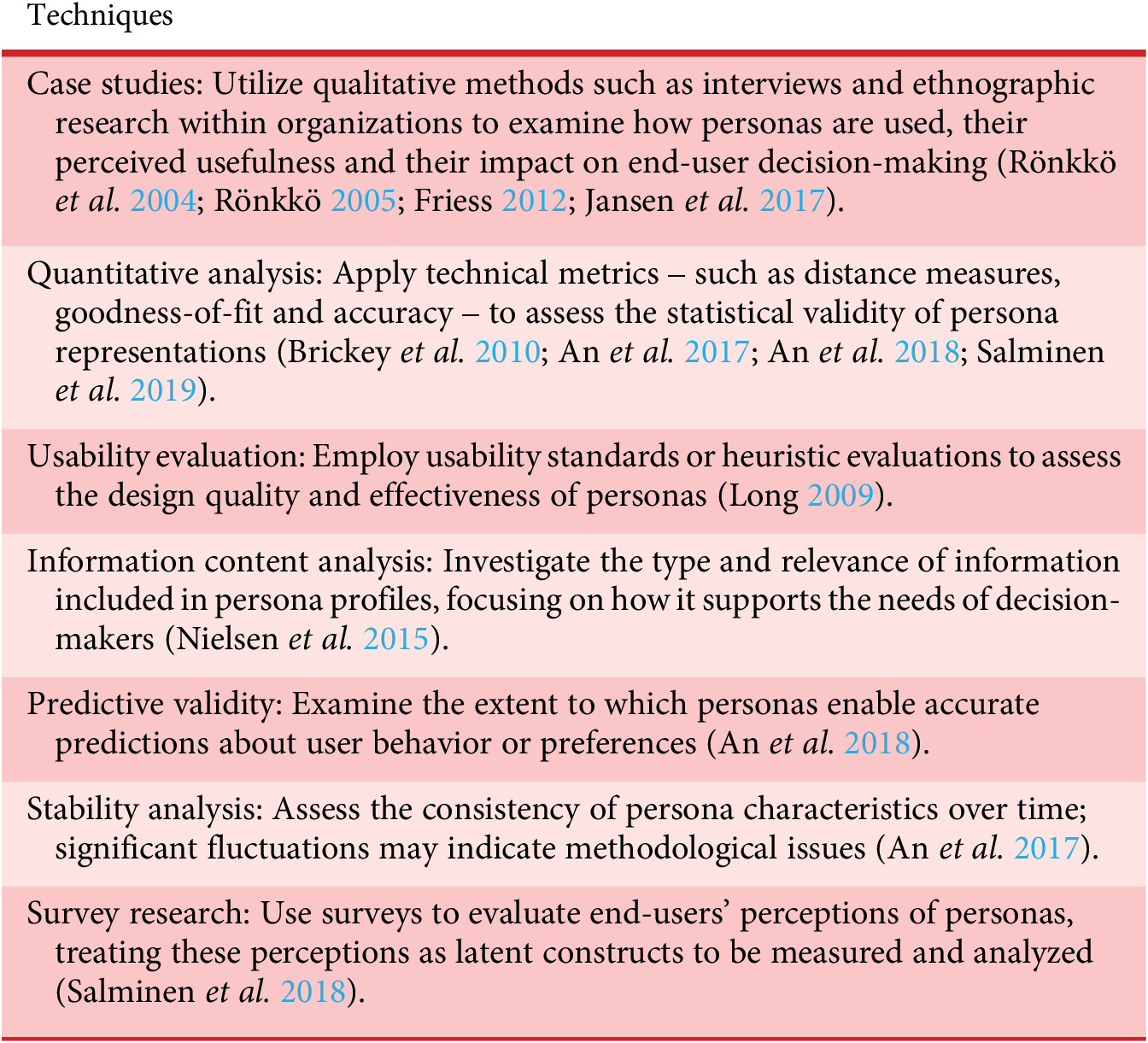
Salminen et al. (Reference Salminen, Santos, Kwak, An, Jung and Jansen2020) identified seven techniques for persona evaluation, highlighting the importance of assessing personas and providing methodological guidance for doing so effectively. Nevertheless, given the scope of their study, the authors focused primarily on the persona creation process, which was informed by four learning-mode schemas and the application of four types of BOs. Future research could build upon this work by exploring persona development and evaluation using the seven techniques (Table 12).
Seven persona evaluation techniques adapted from Salminen et al. (Reference Salminen, Santos, Kwak, An, Jung and Jansen2020)
6. Conclusion
The advent of longevity economics (Coughlin Reference Coughlin2017) has profoundly impacted individuals’ quality of life, particularly in terms of financial well-being, health outcomes and social cohesion. This paradigm shift has accelerated significant transformations across various domains, including work, lifestyle, culture, organizational structures, communities and social infrastructure. This study contributes to the field by investigating the utilization of tangible artifacts – specifically, 12 LPBs – as BOs to facilitate discourse and accurately discern user needs within the context of LP services.
BOs, as conceptualized by Star & Griesemer (Reference Star and Griesemer1989), serve as shared frameworks or spaces that encompass tangible, intangible or informational objects. These objects, while holding different meanings across diverse contexts, professions and social worlds, retain a common structure that is recognizable and comprehensible to individuals or groups with varied backgrounds and expertise. This research emphasizes the role of LPBs as BOs in fostering more constructive dialogues around LP – a topic that is inherently abstract, broad, sensitive and complex – between service providers (e.g., longevity coaches) and recipients (e.g., participants or clients). Using the constructivist GT theoretical sampling, synthesizing and analysis, preliminary experimental findings revealed four proposed personas, each associated with varying levels of LP comprehension.
Utilizing Charmaz’s (Reference Charmaz2006) constructivist GT, this study conducted qualitative data analysis based on in-person D4L experiments and semi-structured interviews, supplemented by pre- and post-experiment surveys involving 69 Boston-based participants across three life stages: adulthood (25–54 years), preretirement (55–64 years) and postretirement (65–74 years). Through the application of constructivist GT, the study identified and clustered 51 initial codes, 15 focused codes, 5 axial codes and 1 thematic code. By employing constant comparison techniques, the authors identified four proposed personas to categorize the experiment participants across different life stages.
These personas represent different levels of engagement and learning modes with LP concepts, ranging from staying curious and challenging LP, accepting and exploring LP, designing and developing LP, to leading and believing in LP. The four personas are connected to the four BO types defined by Star (Reference Star1989): repositories, ideal types, terrains with coincident boundaries and forms and labels. The academic significance of this study lies in its implications for longevity coaches, financial advisors and professionals within the financial industry, offering guidance on the use of LPBs as BOs to identify client personas and tailor LP services to meet longevity needs during the early stages of planning.
Furthermore, the study uncovered within the codes and categories, six types of duality characteristics: perceived time, mindset, format, motivation, action and connection. These findings highlight the inherent complexity, contradictions and conflicts within the LP concept. In this context, duality refers to the coexistence and interaction of two distinct yet interrelated ideas within the LP, often involving opposing or complementary forces: price versus value, planning versus preparation and product versus service. The duality inherent in BOs enabled an exploration of how these contrasting concepts coexist in harmony or create tension, ultimately influencing participants’ LP experiences and the design and development of LPBs. The coexistence of bipolar perspectives and concepts fosters a deeper understanding of how conflicting or complementary aspects can be integrated or juxtaposed, leading to more comprehensive and nuanced long-term design solutions, sustainable strategies and positive social impact.
The LPB was designed with intentional generality, using accessible questions that allow individuals to project their personal interpretations of longevity. For further investigation, if we consider each of the four types of BOs as representative of distinct communication or information challenges, the generic nature of the LPB design allows participants to project their understanding of the communication or information challenges associated with longevity as they perceive them.
This qualitative research approach is designed to bridge communication and knowledge gaps while fostering a deeper understanding and appreciation of D4L. By positioning LPBs as essential components in the creation of innovative, user-centered services for a global longevity society, the study’s key findings – four personas and duality characteristics – underscore both the value and challenges of using LPBs as BOs to enhance LP service design, ultimately contributing to innovations in D4L that intersect with FL, service innovation and system design.
Acknowledgments
The authors gratefully acknowledge the support of the MIT AgeLab and the MIT Ideation Lab.


 Open access

