


Introduction
For millennia people have preyed upon marine megafauna and benefited from their use, incorporating them into their livelihoods and cultures (Jackson et al., Reference Jackson, Kirby, Berger, Bjorndal, Botsford and Bourque2001; Witherington & Frazer, Reference Witherington, Frazer, Lutz, Musick and Wyneken2003). However, there is a modern tendency for people to overexploit such resources (Parsons, Reference Parsons1962; Nietschmann, Reference Nietschmann and Bjorndal1995; Springer et al., Reference Springer, Estes, van Vliet, Williams, Doak and Danner2003), and shifts from subsistence use to the commercial exploitation of marine wildlife stocks have led to the local or global extinction of many species, and declines of others (Baum et al., Reference Baum, Myers, Kehler, Worm, Harley and Doherty2003; Polidoro et al., Reference Polidoro, Livingstone, Carpenter, Hutchinson, Mast, Pilcher, Vié, Hilton-Taylor and Stuart2008).
Challenges in conservation implementation are diverse and are often related to the social–ecological nature of the systems in which interventions occur (Pollnac et al., Reference Pollnac, Christie, Cinner, Dalton, Daw and Forrester2010; Nuno et al., Reference Nuno, Bunnefeld and Milner-Gulland2014); for example, conservation agreements and legislation aimed at restricting resource use (e.g. harvest quotas, protected areas and harvest seasons) are commonly used to manage and protect natural resources but their successful implementation depends on the compliance of resource users (Keane et al., Reference Keane, Jones, Edwards-Jones and Milner-Gulland2008). Conservation programmes often lack a robust understanding of the socio-economic context and decision-making processes affecting resource use, which is essential for assessing the feasibility of potential management strategies and implementing effective interventions (Roe et al., Reference Roe, Mulliken, Milledge, Mremi, Mosha and Grieg-Gran2002; St. John et al., Reference St. John, Keane, Milner-Gulland, Macdonald and Willis2013; Raymond & Knight, Reference Raymond and Knight2013), such as through law enforcement (Rowcliffe et al., Reference Rowcliffe, de Merode and Cowlishaw2004). In addition, this knowledge should be coupled with regular scientific assessment and potential adjustments (Pullin et al., Reference Pullin, Knight, Stone and Charman2004; Sutherland et al., Reference Sutherland, Pullin, Dolman and Knight2004; Garnett et al., Reference Garnett, Sayer and du Toit2007) to inform policy makers about the effectiveness of ongoing interventions and aid them in identifying alternatives.
In the Cape Verde Islands, in the Atlantic Ocean, historical records and recent studies suggest heavy human predation pressure on nesting and foraging turtles on most islands (López-Jurado, Reference López-Jurado, López-Jurado and Liria2007; Loureiro & Torrão, Reference Loureiro and Torrão2008; Marco et al., Reference Marco, Abella, Liria-Loza, Martins, López and Jiménez-Bordón2012; C. Roder, Programme Director of Turtle Foundation, pers. comm., 15 July 2015). This is despite several conservation interventions, including the implementation of national legal frameworks that penalize the killing and consumption of marine turtles (Boletim Oficial da República de Cabo Verde, 2005, 2010), military enforcement of marine turtle protection on the main nesting beaches, and public awareness activities led by local and international NGOs. In December 2015 environmental authorities approved a new decree to reinforce the existing law, making marine turtle harvesting a matter for the criminal, rather than the civil, procedure code. As a result, custodial sentences can be imposed on those convicted of the intentional capture, detention or killing of marine turtles, or the purchase and sale of live or dead turtles and their by-products. The consumption of meat, eggs or any by-products is also subject to judicial convictions. However, a lack of socio-economic data and limited information on the prevalence of harvesting and consumption of turtles may undermine the robustness of policy decisions and challenge the implementation of effective regulation in the study area.
We aimed to explore the dynamics of the harvesting, consumption and trade of marine turtles and their products in Cape Verde in response to conservation efforts and the implementation of legal protection of marine turtles. Firstly, we assessed levels of harvesting and consumption of marine turtle products, and explored what socio-demographic and economic factors potentially affected their trade and consumption. Secondly, we investigated the perceived effectiveness of two broad categories of interventions that have been employed, individually or in combination, in Cape Verde to reduce the harvesting, trade and consumption of marine turtles: (1) establishment of regulations and law enforcement, and (2) campaigns to increase awareness (Supplementary Table S1). Ultimately we aimed to inform ongoing discussions about marine turtle protection in the study area, and recommend the need for a better understanding of contextual factors for the design of effective conservation regulations.
Study area
Cape Verde is a small insular country c. 500 km from the west coast of Africa, with a population of c. 491,000 inhabitants and a mean gross domestic product of USD 1,865 per capita in 2011 (The World Bank, 2012). The country is characterized by a young population, distributed unequally among the nine inhabited islands, with c. 50% of the population inhabiting the main island, Santiago. Since 1950 the population has increased by 82%, with increases particularly notable in urban centres, such as the capital city, Praia, on the island of Santiago (World Health Organization, 2010). On Boa Vista, the main tourism destination, the population has tripled since 1990 (INE, 2010).
Cape Verde is believed to be the third most important known nesting site for the loggerhead turtle Caretta caretta and it is estimated that 85–90% of turtle nesting in the country occurs on the beaches of Boa Vista (Marco et al., Reference Marco, Pérez, Monzón Argűello, Martins, Araújo and López-Jurado2011). This study focused on the islands of Boa Vista and Santiago (Fig. 1).
The Cape Verde Archipelago, where the illegal consumption and trade of marine turtles was studied on the islands of Santiago and Boa Vista.

Methods
During May–June 2011, 147 and 291 interviews were conducted with individuals in the main coastal communities of Boa Vista and Santiago, respectively. The study locations were selected based on preliminary information obtained from fishers who were formerly involved in harvesting marine turtles, which was used to identify areas of high consumption of turtles or where turtle harvesters and sellers were known to be present. The sample size of each target group (i.e. on each of the islands) was defined using a power analysis for a normal approximation to the exact binomial distribution, based on the number of registered fishers and fish sellers, as well as the adult population, on both islands (95% confidence level, with 5% confidence interval and 50% expected effect size because of a lack of baseline information). Past and current harvesters and sellers were selected through snowball sampling to assess the dynamics of the harvesting and trade. Artisanal fishers (n = 128) and fish sellers (n = 23) from both islands were interviewed at landing docks, beaches and markets, or found through lists of names provided by the local fishers’ associations. Convenience sampling was used to select members of the public for interviews on the streets of the main urban centres on each island (n = 95 in Boa Vista; n = 190 in Santiago), with the objective of obtaining information on general consumption patterns and attitudes (the characterization of the main target groups is summarized in Supplementary Table S2).
The surveys included both open and closed questions about (1) socio-economic and demographic characteristics; (2) present and past participation in harvesting, sale or consumption of marine turtles, and potential drivers of these activities; and (3) perceptions and awareness of marine turtle conservation (Supplementary Material 1). Questions were designed to assess respondents’ perceptions of how harvesting, sale and consumption had evolved. The survey also involved mapping trade dynamics, including identification of the main trade chain parameters, particularly sources and sinks of turtle meat, sale locations, species traded and product prices. A shorter version of the survey, including only the sections related to consumption patterns and perceptions, was used for the general public (Supplementary Material 1).
Data analysis and statistical tests were conducted using R v. 2.9.1 (R Development Core Team, 2009). We used χ2 tests to test for significant associations between variables, and paired t-tests to compare non-independent past and present behaviour prevalence.
This study complied with the laws of Cape Verde, and research was conducted according to the University of Exeter research ethics policy and was approved by the University Ethics Committee. Given the sensitive and illegal nature of turtle harvesting in the study area, interviewees were assured that all information would be recorded anonymously and that participation was voluntary and they could choose not to answer individual questions.
Results
Harvesting and trade of marine turtles in Cape Verde
Our results indicated that harvesting of marine turtles in Cape Verde was generally carried out by fishers, and sale of turtle products was mostly done by fish sellers (a job predominantly done by women). Fish sellers also served as the main intermediary between the harvester and the consumer, although fishers also sold turtle meat door-to-door or directly at the landing site (Fig. 2). We identified 28 fishers who were active harvesters, and five fish sellers who were actively engaged in the sale of turtle meat, representing c. 22% of each of these groups. Based on this self-reported information obtained from surveyed fishers, which potentially underestimates their involvement in these behaviours, from 2002 to 2011 the estimated percentage of our sample involved in harvesting marine turtles decreased from 61 to 17% in Boa Vista (95% CI 28.6–58.4), and from 87 to 18% in Santiago (95% CI 60.2–80.5) (Fig. 3). Meanwhile, during the same period the percentage of fish sellers involved in the sale of marine turtle products remained stable in Boa Vista (only one of the interviewed fish sellers ever engaged in sale of turtle products, but remained active) and decreased from 78 to 22% in Santiago (95% CI 39.4–90.0).
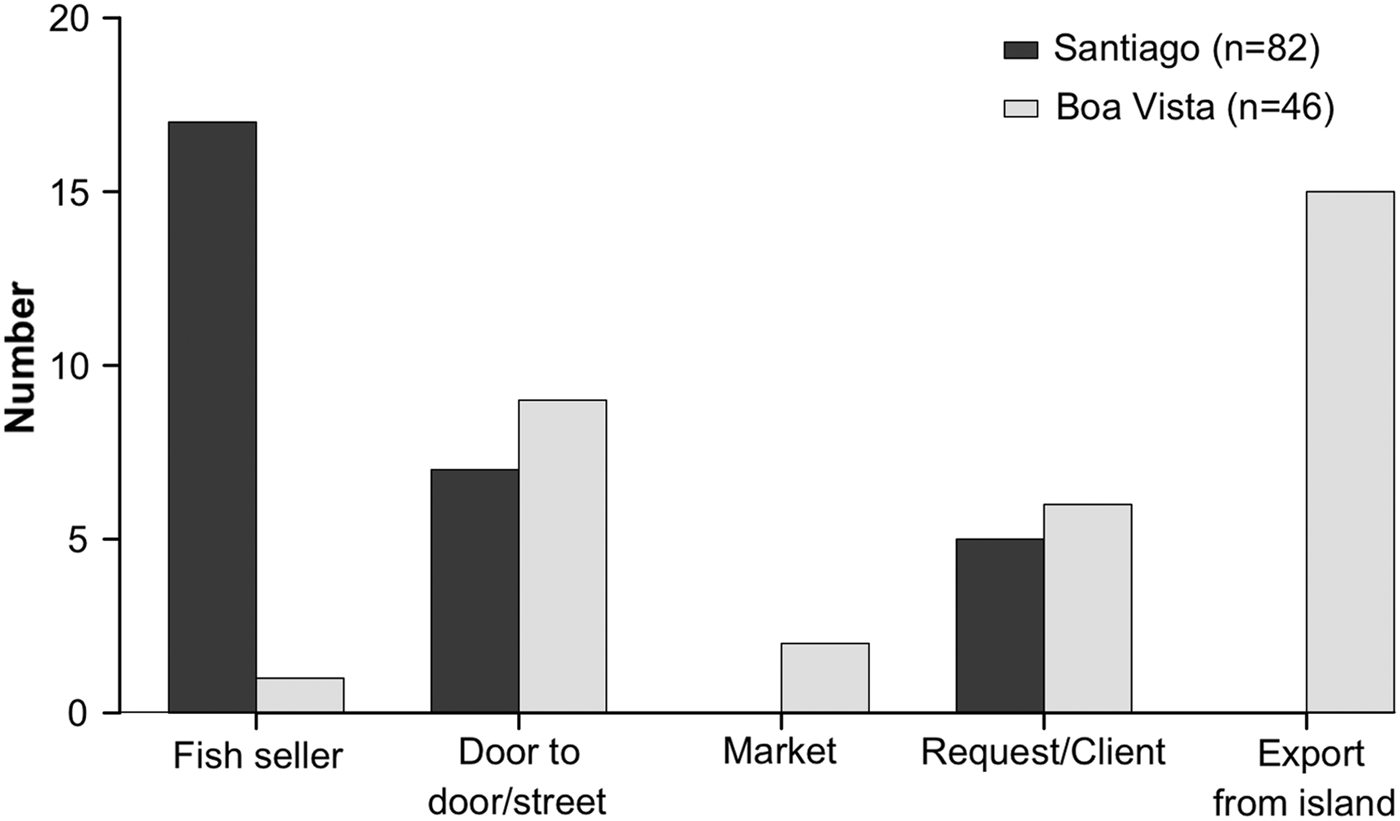
The number of active turtle fishers on Santiago and Boa Vista (Fig. 1) who reported each type of primary sink for harvested marine turtles.
Self-reported past and recent involvement in harvesting marine turtles by fishers and the general public (Others, excluding fishers and fish sellers), and sale of turtle products by fish sellers on (a) Boa Vista and (b) Santiago (Fig. 1).

Despite this apparent decrease in the number of active harvesters and sellers, typical annual capture rates at the time of the study varied, reported as low (1–3 turtles per year) by 11 fishers (48%), medium (3–10 turtles per year) by 7 fishers (30%) and high (10 turtles or more per year) by only one fisher (4%); the remaining nine active harvesters did not disclose this information. Based on the capture rates reported by the 19 fishers that provided this information, we estimate an annual harvest of at least 50–114 turtles (20–52 by fishers from Boa Vista; 30–62 by fishers from Santiago).
According to the information provided by the active harvesters the majority of the turtles were caught at sea (74% of respondents; 7 on Boa Vista and 15 on Santiago) and some were caught on the nesting beaches (29% of respondents; 1 on Boa Vista and 8 on Santiago; both options were given in the question). Marine captures by Boa Vista fishers were all in local, insular waters, whereas fishers on Santiago harvested turtles in the waters surrounding a variety of islands, mainly Boa Vista, Maio and Santiago. The beaches where captures took place were not identified but all were local to the fishers’ island of origin.
The information gathered from the interviews suggests that the typical trade chain varied between islands. On Santiago the majority of the fishers that actively harvested marine turtles chose to have fish sellers as intermediaries between them and the consumers (n = 18), thus creating a trade, although some stated that they had a well-established list of regular customers (n = 5). In Boa Vista only one of the five known fish sellers was actively involved in the sale of turtle meat (Fig. 3).
Typical products traded in Cape Verde that were recorded in this study include whole turtles, turtle meat, eggs and penises. The price of live adult turtles was significantly higher on Santiago, whereas the value of other turtle products was found to be similar on both islands (Supplementary Table S3). According to the fish sellers interviewed, prices were determined by turtle size rather than seasonal availability, species or the risk associated with the sale.
Consumption of marine turtles
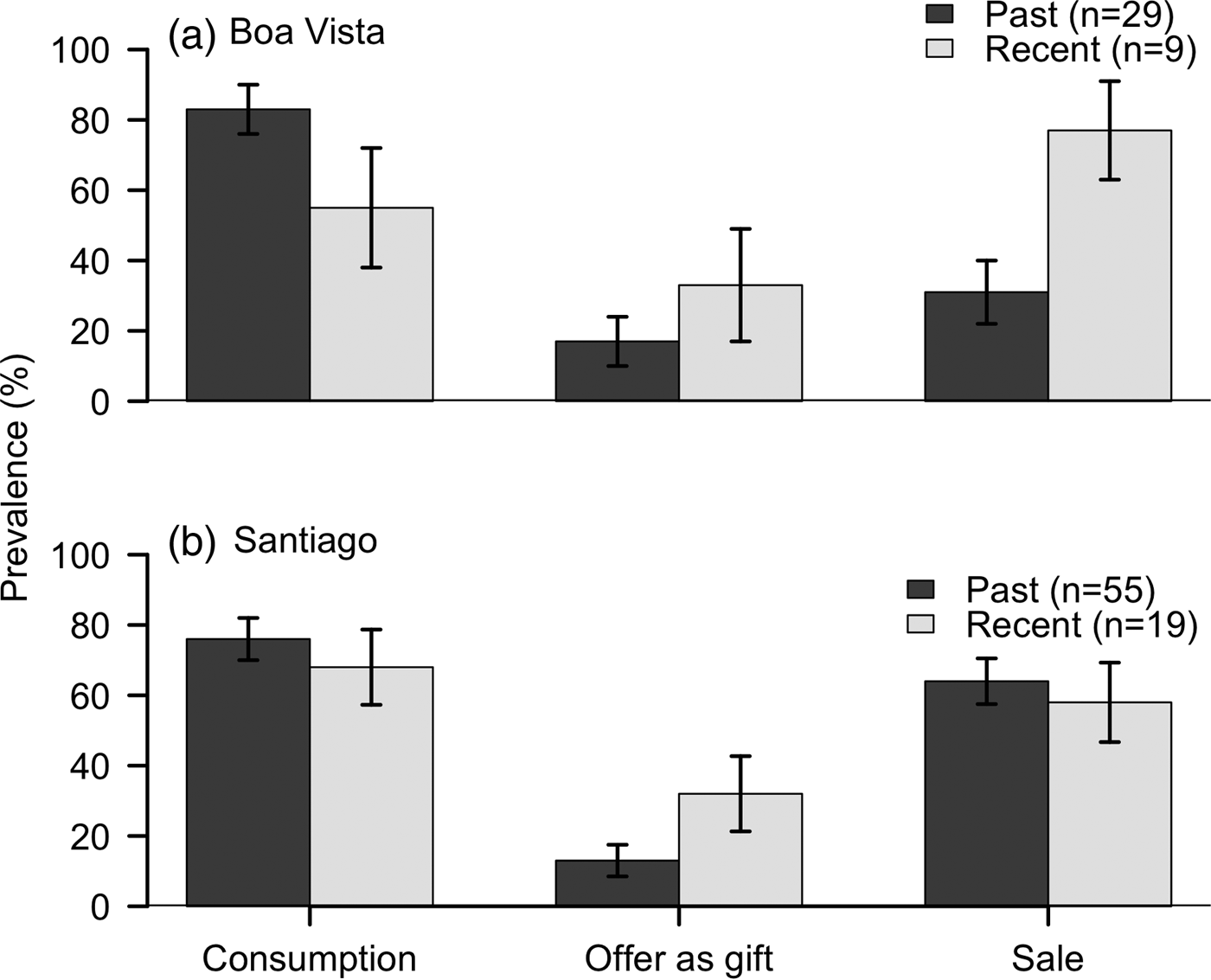
Based on all interviews (including among the general public), the consumption of marine turtle products on both islands has decreased since 2002, with a reduction of 62% on Santiago (95% CI 56.7–67.9) and 28% on Boa Vista (95% CI 20.9–35.7; Fig. 4). Consumption was found to be unrelated to age, income or occupation (P > 0.05) but those with lower educational levels were more likely to consume turtle products (χ2 = 10.74, df = 4, P = 0.03). There was a significant difference in present consumption between the islands (z = 3, P = 0.003), with a higher proportion of the population on Boa Vista consuming turtle than on Santiago.
Self-reported past and recent consumption of marine turtle products by fishers, fish sellers and the general public (Others) on (a) Boa Vista and (b) Santiago (Fig. 1).

Self-reported drivers of trade and consumption
According to survey respondents the prevalence of commercial use of multiple types of turtle meat has increased on Boa Vista since 2002 (z = −2.44, P = 0.01), suggesting that there was a shift to harvesting primarily for trade with Santiago (Fig. 5), conducted mainly by natives of Santiago (5 of the 9 active turtle fishers identified on Boa Vista).
Past and recent uses of marine turtles by fishers on (a) Boa Vista and (b) Santiago (Fig. 1), suggesting a shift to commercial use on Boa Vista.
Traditionally, turtle harvesting was not considered a primary source of income on either island (P > 0.05) but the supplementary income from the sale of turtles was considered to be more important on Santiago than on Boa Vista (χ2 = 12.98, df = 4, P = 0.01), where the mean monthly income was considerably lower (χ2 = 10.63, df = 4, P = 0.003). In general, turtles were harvested mostly opportunistically (85% of all fishers surveyed, regardless of island, P > 0.05), generally to meet extra expenses related to boat fuel or food when fish supplies or associated income were low (especially on Santiago). Fishers and fish sellers who had never been, or had ceased to be, engaged in the harvesting and sale of marine turtles indicated that the existence of legislation was the main deterrent (Fig. 6).
The perceived deterrents against (a) harvesting or selling marine turtles or their products (reported by fishers and fish sellers) and (b) consumption of marine turtle products (reported by the general public) on Boa Vista and Santiago (Fig. 1). (Each respondent could provide multiple answers.)

The main self-reported drivers for respondents to stop or avoid the consumption of marine turtle meat varied between the two islands (χ2 = 87.81, df = 4, P < 0.001), with environmental awareness playing an important role on Boa Vista, where several NGOs have been carrying out environmental education and public outreach. The low availability of turtle meat for sale on both islands and the elimination of the main points of sale by law enforcement agents in Praia have apparently driven the decrease in the level of consumption (Fig. 6). Taste was also a deterrent for some consumers.
Law enforcement and legislation
The self-reported level of awareness about conservation and the importance of marine turtles was high on both islands, suggesting that in general the population had a positive attitude towards turtles and supported their protection (Supplementary Table S4). Existing laws were perceived as being effective by more respondents on Santiago (68%) than on Boa Vista (50%). However, respondents reported a perceived lack of law enforcement (90%) and insufficient protection at the beaches and docks (92%) as the main reasons why the trade in marine turtles continues. Increased awareness about turtle conservation has not necessarily resulted in a change in consumptive behaviour, as respondents often contradicted themselves by openly admitting to supporting and participating in the consumption of turtle meat, ignoring the fact that this is also prohibited by law (only 9% of respondents knew that consuming marine turtle meat was prohibited). Nevertheless, 94% of all respondents knew that harvesting of marine turtles was prohibited.
Discussion
Illegal harvest and consumption
Despite a decade of targeted interventions our results indicate that, at the time of the study, illegal harvesting of marine turtles persisted on nesting beaches and in the waters surrounding both islands. This confirms suggestions from anecdotal evidence and previous studies in the area (Cozens et al., Reference Cozens, Renon and Gonçalves2012; Marco et al., Reference Marco, Abella, Liria-Loza, Martins, López and Jiménez-Bordón2012). However, our findings indicated there had been a reduction in the levels of harvesting and consumption over time, possibly as a result of the protective law introduced in 2002, although the magnitude of the reduction must be regarded with caution, as respondents may have been more inclined towards reporting a positive change, given the illegal nature of this activity. Our results also point to Santiago as the main sink of marine turtle meat sourced on Boa Vista; this was evidenced by the shift from subsistence to commercial harvesting on Boa Vista, possibly driven by the increasing demand for turtle meat in the expanding urban area of Sal Rei (Boa Vista) and the city of Praia (Santiago), as suggested by some respondents, reflecting a pattern reported in previous studies (Araújo, Reference Araújo2008; Merino et al., Reference Merino, Correia, Castillo, Quensiére and Vanderlinden2008). Nevertheless, to minimize potential survey biases, specialized questioning techniques developed in the social sciences for making it impossible to link incriminating data to an individual might have been better suited for our investigation (Nuno & St. John, Reference Nuno and St. John2015).
The biological impact of the trade in marine turtle products in Cape Verde was underestimated previously, as mortality data were limited to the harvesting of reproductive females on the main nesting beaches; estimates indicate a poaching rate of 5% of the 8,900 reproductive females estimated to have nested on Boa Vista in 2009 alone (Marco et al., Reference Marco, Abella, Liria-Loza, Martins, López and Jiménez-Bordón2012). We recognize the impact of the harvest on the nesting beaches but suggest that added pressure from opportunistic captures at sea needs to be considered. The potential impact on population demography is difficult to ascertain, as unknown numbers of males and juveniles are targeted at sea. Our estimated magnitude of harvest should be regarded as conservative, as some respondents may have been reluctant to share information about illegal activities, and using the snowball sampling technique we may have identified only a small and possibly non-representative number of harvesters and sellers. There is a need for further quantitative investigation of illegal harvesting and trade, in conjunction with the impact of incidental captures at sea (Martins et al., Reference Martins, Monteiro, Abella, Abu-Raia, Marco and López-Jurado2008; Melo & Melo, Reference Melo and Melo2013). Barriers to this include the lack of adequate law enforcement and surveillance at sea and on land, making trade relatively easy and generally unnoticed, and thus difficult to assess. Knowledge of the specifics of wildlife trade dynamics, such as transport mechanisms and routes within and between islands, is essential to develop practical, policy-relevant measures (TRAFFIC, 2008). These dynamics could be explored further using other types of data and specialized questioning techniques (Nuno et al., Reference Nuno, Bunnefeld, Naiman and Milner-Gulland2013). Nevertheless, we have contributed to identifying key factors and potential processes that require further exploration, for example by focusing on understanding causation between behavioural and conservation outcomes and potential predictor variables related to individual socio-economic characteristics and the implementation of multiple conservation interventions.
Exploratory assessment of conservation interventions
The Cape Verde government and NGOs have focused on two lines of action to discourage harvesting and consumption of marine turtles: (1) providing a legal framework for turtle protection in parallel with enforcing deterrents at the nesting beaches; and (2) awareness-raising campaigns to motivate consumers to change their behaviours regarding the consumption of turtle products (Araújo, Reference Araújo2008). Interventions are believed to have been at least partially successful but our results also draw attention to several limitations or gaps in some of the areas of intervention, and provide an opportunity to develop new strategies and inform discussions about potential changes in national regulations for marine turtle protection.
Laws and regulations
Our findings suggest that legal and regulatory measures exert an important influence on people's participation in harvesting and trade of marine turtles, and therefore the development of the laws and regulations on Cape Verde may be an effective mechanism for reducing illegal trade. However, the effectiveness of the enforcement of deterrents appears to be undermined by gaps and weaknesses in specific parts of the enforcement process, as experienced elsewhere (e.g. Bräutigam & Eckert, Reference Bräutigam and Eckert2006; Keane et al., Reference Keane, Jones, Edwards-Jones and Milner-Gulland2008; TRAFFIC, 2008). This is evidenced by the reported increase in harvesting of marine turtles on protected beaches after military presence was withdrawn in 2014 as a result of conflicts with the local communities on Boa Vista (Fonseca, Reference Fonseca2014), which suggests that despite the widespread knowledge that harvesting of marine turtles is illegal, people will generally not comply voluntarily, and therefore the protection of marine turtles requires effective enforcement. The problem may stem from limited means and resources, both financial and human, a lack of information about the law, and difficulties in interpreting it, and limited availability of specialized training, especially in conflict mediation (Araújo, Reference Araújo2008; Merino et al., Reference Merino, Correia, Castillo, Quensiére and Vanderlinden2008). It is thus essential that law enforcement mechanisms and resources are improved and that policies and controls are targeted at points in the trade chain where they are likely to have the greatest impact. Although some efforts have been made in Santiago to tackle the problem (Araújo, Reference Araújo2008), ongoing harvesting and the lack of government involvement in surveillance activities indicate there is a need to strengthen the institutions of the judicial sector (e.g. law enforcement agencies, ministries and environmental authorities), improve understanding among policy makers of the significance of illegal and unsustainable wildlife trade, and focus on the development of multi-agency law enforcement capacity (Akella & Cannon, Reference Akella and Cannon2004; TRAFFIC, 2008). Most law enforcement and beach protection in the study area has been provided by NGOs (to date, all led by foreigners), including community-based organizations; however, although this non-governmental investment is generally viewed as positive, there is a need to recognize the essential, fundamental role of government and the need for governments to engage politically, logistically and financially to sustain initiatives in the long term (Bräutigam & Eckert, Reference Bräutigam and Eckert2006).
Awareness
To evaluate the impact of awareness campaigns the key questions are whether such messaging reaches its target audiences, whether it affects their attitudes and ultimately whether it influences their consumptive behaviour. Our results indicate that awareness-raising efforts on both islands may have been successful in increasing people's awareness of the illegality of the trade in marine turtles; however, there was still a lack of knowledge regarding the negative impacts of the consumption of turtle products and the illegality of turtle consumption (although people were generally aware that harvesting was illegal). The majority of consumers did not fully understand the connection between their consumptive habits and the illegal trade of marine turtles. Suppliers of marine turtle meat reported that there had been a decrease in demand; however, a high percentage of the respondents admitted that their level of consumption was related to the availability of turtle meat. This suggests there is a lack of understanding of the links between raising awareness and changes in the attitudes and behaviour of participants in the wildlife trade. Thus, the biggest challenge may be to develop an awareness campaign targeted primarily at consumers. Nevertheless, some positive results have been observed on Boa Vista, where improved awareness has been one of the reported drivers for the reduction in consumption of marine turtles. For optimum results, awareness campaigns should incorporate a monitoring and evaluation component, promoting science-based management (Pullin et al., Reference Pullin, Knight, Stone and Charman2004; Sutherland et al., Reference Sutherland, Pullin, Dolman and Knight2004).
As on other islands in Cape Verde (Merino et al., Reference Merino, Correia, Castillo, Quensiére and Vanderlinden2008), harvesting and sale of marine turtles provide an alternative source of income for fishers’ families on the study islands, especially on Santiago. The effects of any further deterrence on the harvest of female turtles on these islands is a key issue for future study. The non-consumptive use of turtles, for example in tourism, may be more profitable (Tisdell & Wilson, Reference Tisdell and Wilson2001; Troëng & Drews, Reference Troëng and Drews2004), and this is an important and developing sector for Cape Verde (Merino & Berrow, Reference Merino and Berrow2006), with turtle-watching generating up to EUR 100,000 per year on Boa Vista alone, distributed among tourism agencies, nature guides, and research and conservation activities (P. Lopez, pers. comm., September 2012). However, the effectiveness and fairness of turtle-based tourism in generating income for local communities in the study area remains to be assessed. In addition, the low number of nesting turtles on Santiago and the low likelihood of observing turtles regularly at sea render this option unviable on Santiago, and may in fact promote the opportunistic harvesting of marine turtles by Santiago fishers on other islands. At the time of the study the sale of a single turtle generated up to CVE 20,000, which is the equivalent of a month's salary for at least 25% of the fishers interviewed in Santiago. The challenge on Santiago, therefore, lies in the fact that the sale of marine turtles can generate high returns, and as the meat is easy to store and transport, it is tempting for fishers to harvest turtles to gain extra income, as recorded elsewhere (Duffy et al., Reference Duffy, St John, Büscher and Brockington2016). This illegal trade is further exacerbated if no financial aid is offered to fishers in times of socio-economic decline; therefore, participatory research of alternative sources of income may be important, and efforts to improve living and working conditions should be developed, as has been done for other islands in the archipelago (Merino et al., Reference Merino, Correia, Castillo, Quensiére and Vanderlinden2008) and elsewhere (Brown, Reference Brown1998; Campbell & Vainio-Mattila, Reference Campbell and Vainio-Mattila2003).
Conclusion
Our results highlight the gaps in addressing the problem of illegal trade of marine turtles in Cape Verde and indicate future challenges that may arise. There is evidence that marine turtles are still being harvested and consumed, and therefore conservation interventions need to be refined and reassessed.
The trade and consumption of marine turtles in Cape Verde not only threatens the species in question but also the health of the ecosystems in which they occur, as well as reducing the availability of turtles for the development of alternative, non-consumptive uses such as turtle-watching. It is clear that conservation research needs to be integrated with social and economic disciplines to gain a full understanding of the spatial, temporal and social aspects of the consumption of marine turtles in Cape Verde.
Acknowledgements
This research was undertaken for Turtle Foundation in collaboration with Cape Verde's National Fisheries Development Institute (INDP), and received financial support from Turtle Foundation and the University of Exeter. JMH would like to thank her colleagues at Turtle Foundation in Sal Rei, Christian Roder and Julio Rocha; Bernardo Gonçalves for conducting a great part of the interviews, often in difficult conditions and places; Carlos Santos, Vera Gominho, Alcides Varela, Victor Tavares, Paulo Varela, Avelino Tavares, Anselmo Rocha, Osvaldinha Rosa and Melicia Cardoso of INDP for logistical support; Jelena Adeli and Indira for making life in Santiago so much easier; Christophe Eizaguirre and Gail Schofield for their help with analysis, review and editing of the manuscript; Peter Richardson and Amdeep Sanghera of the Marine Conservation Society for valuable input on the initial questionnaire, and sharing their experiences of the Turtles in the Caribbean Overseas Territories project. BJG and AN acknowledge the support of the Darwin Initiative. We thank the reviewers for their valuable comments.
Biographical sketches
Joana M. Hancock is a biologist interested in conservation research on marine turtles of West Africa. Safiro Furtado was a research assistant for loggerhead turtle conservation projects on Boa Vista and Santiago islands (deceased July 2012). Sonia Merino is the National Director of Research and Education in El Salvador and has extensive experience in fisheries management. Brendan J. Godley is a conservation scientist who specializes in marine vertebrates. Ana Nuno's research focuses on understanding social–ecological interactions to support more effective conservation interventions.



