


The overconsumption of energy-dense snacks contributes to excess energy intake in adolescents( Reference Moreno and Rodriguez 1 , Reference Sebastian, Cleveland and Goldman 2 ). Consumption of energy-dense snacks is primarily driven by hedonic processes such as food reinforcement rather than by homoeostatic motives( Reference Temple 3 , Reference Epstein, Leddy and Temple 4 ). The reinforcing value (RV) of a food, or the motivation to eat, is usually assessed as the amount of work an individual is willing to perform to gain access to that food( Reference Epstein, Leddy and Temple 4 ). A higher RV of energy-dense snacks is associated with increased energy intake and an increased risk of obesity in children, adults and adolescents( Reference Giesen, Havermans and Douven 5 – Reference Temple, Legierski and Giacomelli 8 ). Unhealthy energy-dense snacks, such as chocolate and chips, have a higher RV than healthy snacks, such as fruit and vegetables, driving individuals towards unhealthy snack choices( Reference Giesen, Havermans and Jansen 9 , Reference Goldfield and Epstein 10 ).
Behavioural choice theory suggests that the consumption of unhealthy snacks can be decreased by either decreasing the RV of unhealthy snacks or by increasing the RV of alternatives or substitutes( Reference Giesen, Havermans and Jansen 9 – Reference Smith and Epstein 12 ). To date, most research has focused on decreasing the RV of unhealthy snacks. Increasing the cost to obtain unhealthy snacks shifted choice towards healthy snacks in children and adults( Reference Giesen, Havermans and Jansen 9 , Reference Goldfield and Epstein 10 ). The effect of increasing the RV of healthy snacks has not been assessed. Following the principles of operant conditioning, one might assume that adding a reward to the choice for fruit or other healthy snacks could be one possible strategy to increase the RV of healthy snacks in adolescents( Reference Cooke, Chambers and Anez 13 – Reference Vandeweghe, Verbeken and Moens 15 ). Offering rewards or praise has already been shown to enhance children’s willingness to taste and consumption of healthy food items such as fruit( Reference Wardle, Herrera and Cooke 14 – Reference Cooke, Chambers and Anez 17 ). However, little is known about using reward-based strategies to promote healthy food consumption in adolescents. Such strategies are particularly relevant to evaluate in adolescents as they are highly susceptible to rewards and show higher activity in the reward-related brain regions compared with children and adults( Reference Hardin and Ernst 18 , Reference Galvan 19 ). Therefore the first aim of the present study was to assess whether the RV of fruit could be increased by linking fruit with a reward (RV fruit+reward v. RV fruit alone). Second, we investigated whether the RV of fruit+reward was then comparable with the RV of unhealthy snacks (RV fruit+reward v. unhealthy snacks).
Previous research has shown that the RV of food is influenced by individual characteristics such as sex( Reference Temple 3 , Reference Temple, Bulkley and Briatico 20 ), weight( Reference Epstein, Leddy and Temple 4 , Reference Giesen, Havermans and Douven 5 , Reference Temple, Legierski and Giacomelli 8 ) and hunger( Reference Temple 3 ). The RV of unhealthy snacks was found to be higher in hungry or obese participants, whereas the RV of caffeinated beverages was found to be higher in males( Reference Temple 3 – Reference Giesen, Havermans and Douven 5 , Reference Temple, Legierski and Giacomelli 8 , Reference Temple, Bulkley and Briatico 20 ). Differences in hunger, sex and weight might also be related to the difference in RV of unhealthy and healthy foods( Reference Temple 3 , Reference Goldfield and Epstein 10 , Reference Clark, Dewey and Temple 21 , Reference Vervoort, Clauwaert and Vandeweghe 22 ). Hunger might only be associated with an increased RV of energy-dense snacks, whereas the RV of low-energy snacks such as fruit remain unchanged( Reference Temple 3 ). Obese or overweight individuals and boys found energy-dense and not low-energy dense snacks more reinforcing compared with their leaner peers or girls( Reference Temple 3 , Reference Goldfield and Epstein 10 , Reference Clark, Dewey and Temple 21 , Reference Vervoort, Clauwaert and Vandeweghe 22 ). A higher sensitivity to reward (SR), a psychobiological personality trait defined as one’s ability to experience pleasure or reward on exposure to appetitive stimuli such as palatable foods( Reference Davis, Patte and Levitan 23 ), might also be associated with a higher RV of palatable foods. Consistent with this idea, SR was found to be associated with preferences for unhealthy snack intakes in children and adolescents( Reference De Cock, Van Lippevelde and Vervoort 24 , Reference De Decker, Sioen and Verbeken 25 ). Individual differences in SR were already found to influence the use of rewards. Children with a high SR were more likely to taste healthy foods when rewarded( Reference Vandeweghe, Verbeken and Moens 15 ). High SR adolescents might thus show a higher RV for fruit+reward compared with fruit alone. The third aim of the present study was to explore whether the difference in RV between fruit+reward and unhealthy snacks or fruit was influenced by sex, BMI, hunger or SR.
Methods
This study was conducted in the context of the REWARD project, which aims to improve snacking habits of adolescents using a novel framework. REWARD combines reward sensitivity theory with behaviour choice and learning theories, and focuses on the rewarding value of food and individual differences in SR to change behaviour. Guided by the results of the present study, a reward-based intervention to improve adolescents’ snack choices delivered through a game will be developed.
Participants and study design
A convenience sample of 14–16-year-old adolescents from five secondary schools in the vicinity of Ghent, Belgium participated in this study in November 2015. The school principal of each of the five schools selected one to five classes to participate in the present study. All students from fourteen classes (±15 students per class) from the five schools were invited to participate. No exclusion or inclusion criteria were used. Participants were randomly allocated using a computer-generated sequence to one of three experimental groups (1:1:1). Participants were blinded to the group allocation, while research assistants were blinded to the study hypotheses.
To detect a difference of 25 % in RV (total number of responses made) between three parallel-allocated experimental groups and possible interactions with a power of 80 % a sample size of 159 adolescents was needed (PASS software version 14; NCSS). Taking into account a possible non-participation due to absence, the anticipated sample size was increased to 210 students.
Study procedures
Participants completed the experiment together with their classmates in the school computer classroom on a weekday from 09.30 to 10.30 hours (around the morning school break), from 14.30 to 15.30 hours (around the afternoon school break) or from 15.30 to 16.30 hours (just before the end of the school day), as these are typical times during which adolescents consume snacks( Reference Gevers, Kremers and de Vries 26 ). Participants were asked to eat and drink normally, but to abstain from eating or drinking (except water) for at least 2 h before the experimental session. At the beginning of the session participants were provided with a choice of two isoenergetic preloads (sandwich with ham or cheese, ±753 kJ (±180 kcal)). The consumption of this standard preload diminishes the effects of hunger on food reinforcement and increases the ability of observing individual differences in food reinforcement( Reference Reiss and Havercamp 27 ). After eating this preload, adolescents started the experiment. Half of the participants started the experiment with the general questionnaire and the height/weight measurements; while the other half, the adjacent sitting participants, started with the computerised food reinforcement task (FRT) to measure the RV of food and the hunger questionnaire. Adolescents completed the FRT to gain points to trade for fruit (experimental group 1), unhealthy snacks (experimental group 2) or fruit+reward (experimental group 3) at the end of the task. Participants could choose the fruit or unhealthy snacks they wanted to earn points for. The five fruits options were: grapes, apple, pear, plum or tangerine and the five unhealthy snacks were: candy bar, chocolate, marshmallows, cookies or potato crisps. Adolescents in the fruit+reward group were informed that not only could they earn points to receive fruit portions at the end of the task, but also that the person with the highest number of points obtained could become the class winner. This message was displayed on a specific slide during the introduction of the FRT and was only visible to the fruit+reward group. The other two experimental groups were unaware of the competition and were only informed that their points gathered in the FRT would earn them fruit or unhealthy snack portions at the end of the task. The possibility to become the class winner through a competition was chosen as reward, as intangible rewards are thought to not disturb intrinsic motivation( Reference Cameron, Banko and Pierce 28 ) and competition and winning appeals to youngsters, especially in a game context( Reference Baranowski, Buday and Thompson 29 , Reference Dickey 30 ). Before the experiment, participants were told that the study intended to examine participant’s abilities to concentrate on a monotonous task and that this task would be different for everyone. After the experiment, adolescents were informed about the actual purpose and design of the study.
Ethics
Active written informed consent forms and study information folders for the parents were distributed a few days before the study commencement and collected during the test. Before the test, adolescent participants were also asked to compile a written informed consent form. This study was conducted according to the guidelines laid down in the Declaration of Helsinki and all procedures involving human subjects were approved by the ethics committee of the Ghent University Hospital.
Measures
Both the general and hunger questionnaires were online questionnaires and administered on a computer. The general questionnaire assessed the individual characteristics of the participants and the hunger questionnaire the hunger feeling of the participants before the FRT.
Individual characteristics
Both sex and date of birth were assessed with one-item questions. Age was then derived by subtracting the date of birth from the date the survey took place.
Consumption frequency of snacks was measured with a one-item question ‘How often do you normally consume a snack?’ according to the following four categories: 1=once a week or less, 2=more than once a week, 3=every day and 4=more than once a day.
SR was measured using the BAS drive (BAS DRV) subscale of the Dutch child version of Carver and White’s BIS/BAS scale( Reference Muris, Meesters and Kanter 31 ). This scale consists of four items, scored on a four-point scale (1=not at all true, 2=somewhat not true, 3=somewhat true, 4=all true) and summed to obtain the BAS DRV score, with a higher score indicating more SR (range 4–16). This BAS DRV subscale was chosen to measure SR as previous research in children, adolescents and adults had already shown that mainly BAS DRV was associated with food intake and eating styles( Reference Verbeken, Braet and Lammertyn 32 – Reference Voigt, Dillard and Braddock 34 ) and that it is a valid instrument to measure SR in children and adolescents( Reference Muris, Meesters and De Kanter 35 , Reference Vervoort, Wolters and Hogendoorn 36 ). Internal consistency of the BAS DRV score in the present sample was good (Cronbach’s α=0·83).
Height and weight were measured by two trained research assistants using a standardised protocol. Adolescents were measured wearing light clothing and without shoes. Body height was measured with a Leicester Portable Stadiometer (SECA) with an accuracy of 1 mm. Weight was measured with a calibrated electronic scale SECA 861 with an accuracy of 100 g. Age and sex-specific BMI z-scores (zBMI) were calculated using Flemish 2004 growth reference data( Reference Roelants, Hauspie and Hoppenbrouwers 37 ).
Hunger before the experiment was measured by a one-item question ‘How hungry do you feel at the moment?’, evaluated on a seven-point Likert scale with anchors 1=‘not hungry at all’ and 7=‘extremely hungry’( Reference Epstein, Leddy and Temple 4 , Reference Temple, Legierski and Giacomelli 8 ).
Food reinforcement task
The RV of the different snack foods was measured using a FRT with a progressive ratio (PR) schedule. At the beginning of the FRT, participants received a brief introduction on the screen informing them that they could earn points to trade for food by clicking the mouse button (response) and that increasingly more responses would be needed to obtain points. Subsequently adolescents in fruit+reward group additionally received the competition message on the screen. After this introduction and according to the allocated experimental group, the participants chose which specific unhealthy snack or fruit item they wanted to trade earned points for through the FRT. After indicating their preference, participants started the FRT. Points were earned according to a PR schedule that began at 2 (called PR2) and progressed through PR4, PR8, PR16, PR32, PR64, PR128, PR256 and PR512. In the first schedule (PR2), the participants gained 1 point for each second response, in the second level (PR4) participants gained 1 point after four responses and so on. When 20 points were obtained, the participant progressed to the next PR schedule. When participants were no longer motivated to work for food, they terminate the task by pressing the space bar. To avoid satiation and/or habituation, participants only received their food portions earned after they had decided to terminate the task. Participants were informed (during the introduction) that for each point earned, they either received 10 g of fruit or 5 g of unhealthy snacks (depending on their allocated experimental group) at the end of the task. Twice as many points were needed to obtain the same amount of unhealthy snacks compared with fruit, because a meaningful portion of fruit (e.g. a tangerine) usually weighs more than a meaningful portion of the unhealthy snacks (e.g. a handful of potato crisps). Similar to previous studies that assessed the RV of food using PR schedules( Reference Epstein, Leddy and Temple 4 , Reference Roane 38 ), the outcomes of the experiment were the total number of responses made across all PR schedules (total number of mouse button clicks) and the breakpoint or the PR schedule, where the adolescent decided to terminate the FRT (schedule of terminating the FRT).
Statistical analyses
First, the difference in the total number of responses made (dependent variable) between the experimental groups and the subsequent moderation analyses were assessed using a multilevel linear regression model with two levels (adolescents nested within classes) to account for the clustering. Our analysis strategy entailed the computation of six models. Model 1 was an intercept-only model without any level 1 or level 2 independent variables. Model 2 evaluated the effect of the experimental group, which was added as a categorical independent variable with three categories (fruit+reward=reference category, fruit and unhealthy snacks). Models 3–6 evaluated the possible moderation effects of sex, zBMI, hunger or SR in separate models by adding the moderator and the interaction moderator X experimental group as independent variables to model 2. Continuous parameters were mean centred, unstandardised coefficients and their standard errors were reported and associations with P-values <0·05 were considered statistically significant. As the total number of responses was positively skewed, square root transformations (best-fitting transformation) were applied to produce a normal distribution. The findings both for the raw and the square root transformed data were similar and hence the analyses of the raw data were presented to facilitate interpretation.
Second, the difference in the breakpoint (dependent variable) between the experimental groups and the subsequent moderation by SR, sex, zBMI or hunger were assessed using survival analysis. Cox proportional hazards models were used to model the schedule reached when terminating the FRT (breakpoint). Censoring was applied when adolescents reached the end of the FRT (PR512), however no participant actually reached this schedule. In model 1 the hazard ratios (HR) of fruit v. fruit+reward and unhealthy snacks v. fruit+reward were computed and the estimated survival curves for each experimental group were plotted. For instance, a HR of 1·2 for fruit v. fruit+reward indicates that at any given FR schedule, the risk of terminating the computer task is 1·2 times higher for fruit than fruit+reward. Models 2 until 5 assessed moderation effects of SR, sex, zBMI or hunger before the experiment. Separate models were developed by adding the moderator and the interaction term moderator X experimental group to model 1 as independent variables. Schedule of reinforcement reached was recoded to represent time until they stopped responding as follows: PR2=1, PR4=2, PR8=3, PR16=4, PR32=5, PR64=6, PR128=7, PR256=8 and PR512=9. Standard errors and CI of the coefficients were adjusted for possible dependency of participants/observations within a class by using a clustered sandwich estimator. The Breslow’s method was used to handle ties. The proportional hazards assumption that the hazard or risk remains constant over time was tested with the Grambsch and Thernay test of the Schoenfeld residuals( Reference Grambsch and Therneau 39 ).
All analyses were conducted using Stata version 13 SE (StataCorp LP).
Results
Participants
Of the 210 selected adolescents, fourteen (6·7 %) were unable to participate due to school absence, thus 196 adolescents participated in the study. Of these 196 participating adolescents, 182 were randomised and completed the FRT (see Fig. 1); fourteen participants (7·1 % of the 196), who started with the general questionnaire, did not complete this questionnaire and therefore could not start the FRT; eighteen (9·9 % of the 182 randomised participants) participants, who started with the FRT, did not finish the general questionnaire. A total of 165 adolescents thus completed both the FRT and the general questionnaire and were included in the analysis (see Fig. 1). The mean age was 15·1 (sd 1·5) years, 39·4 % were males. Of the adolescents 30·3 % ate a snack every day and 22·4 % ate two or more snacks per day. Percentages or mean scores and standard deviations for age, snack frequency, sex, SR, hunger before the experiment, zBMI and total number of responses according to experimental group are presented in Table 1.
Consort flow chart. FRT, food reinforcement task.

Participant characteristics according to experimental group (Mean values and standard deviations)
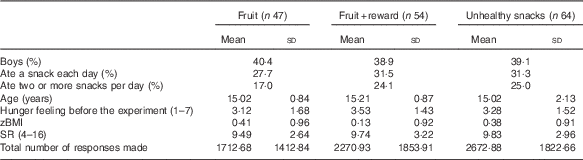
zBMI, BMI z-scores; SR, sensitivity to reward.
Total number of responses made
The intercept-only model (model 1) showed that overall, adolescents made an average of 2254 (sd 191) responses in the FRT (Table 2). Model 2, with experimental group as independent variable, indicated that there are no significant differences in total number of responses between the fruit+reward and the fruit-only (P=0·17) or the unhealthy snack (P=0·20) group. Adolescents in the fruit-only group made on average 473 (95 % CI −1152, 205) responses less than for fruit+reward and the unhealthy snacks group showed 410 (95 % CI −222, 1043) responses more compared with the fruit+reward group.
Effect of experimental group on the total number of responses made (b Values and 95 % confidence intervals)

zBMI, BMI z-scores; SR, sensitivity to reward; N/A, not applicable.
*** P<0·001.
† Compared with model 2; coefficients were obtained via multilevel modelling (adolescents nested within classes) with the total number of responses as dependent variable and experimental group as independent variable (fruit+reward=reference group).
Breakpoint
The HR was marginally significantly higher for the fruit-only group compared with the fruit+reward group (Table 3). The risk of terminating the task at any schedule was 1·34 times higher when responding for fruit than for fruit+reward (HR 1·34; 95 % CI 1·00, 1·79, P=0·050). The risk of terminating the task for participants of the unhealthy snacks group was similar to the risk in the fruit+reward group (HR 0·86; 95 % CI 0·62, 1·18, P=0·34). The estimated survival function for each of the experimental groups is shown in Fig. 2.
Estimated survival function for each of the experimental groups. PR, progressive ratio; estimated survival functions were obtained from the Cox’s proportional hazard model with schedule of terminating the task as dependent variable and experimental group as independent variable (fruit+reward=reference group).  , Fruit+reward;
  , unhealthy snacks;
  , fruit.

Effect of experimental group on the breakpoint (Hazard ratios (HR) and 95 % confidence intervals)

zBMI, BMI z-scores; SR, sensitivity to reward; N/A, not applicable.
* P<0·05, *** P<0·001, †P=0·050.
‡ Compared with model 1; coefficients were obtained via Cox’s proportional hazard modelling with schedule of terminating the task as dependent variable and experimental group as an independent variable (fruit+reward=reference group), robust se were calculated with a clustered sandwich estimator.
Moderation by sex, BMI z-scores, hunger or sensitivity to reward
For total responses made, no indication of moderation by sex, zBMI, hunger or SR was found (P>0·05 for all interaction terms, see Table 2). Model fit only significantly improved (compared with model 2) for the moderation models with zBMI (model 4) and hunger (model 5).
Similar to the breakpoint analyses, no moderation by sex, zBMI, hunger or SR was observed (P>0·05 for all interaction terms, see Table 3). The model fit only significantly improved (compared with model 1) for the moderation models with zBMI (model 3) and hunger (model 4).
Discussion
The present study investigated whether linking fruit with an intangible reward, could significantly increase the RV of fruit and if this observed increased RV was comparable with the RV of unhealthy snacks in an adolescent sample. The RV, in terms of breakpoint, of fruit+reward was found to be marginally higher by 34 % than the RV of fruit and not significantly different from that of unhealthy snacks.
To date, no studies have evaluated the RV of fruit or unhealthy snacks in terms of breakpoint analyses. This is unfortunate as Bickel et al. ( Reference Bickel, Marsch and Carroll 40 , Reference Bickel and Madden 41 ) showed that peak response measures, such as the total number of responses made, are less robust than breakpoint analyses to detect differences in RV between different reinforcers. Bickel found that the reinforcer (cigarettes v. money) that had the highest peak response varied across participants, while the reinforcer with the largest breakpoint was the same for all participants( Reference Bickel and Madden 41 ).
The breakpoint in the present study was marginally higher for fruit+reward group than for fruit-only group and not significantly different from unhealthy snacks. The HR of the fruit group was however 34 % higher than for fruit+reward group and the unhealthy snacks group had HR that was 14 % lower than the fruit+reward group. Adolescents in the fruit+reward group therefore had 34 % lower risk to stop responding at lower schedules of reinforcement. In other words, they were willing to do 34 % more effort to obtain fruit than adolescents in the fruit-only group. To our knowledge, no other studies have evaluated the breakpoint by means of survival analysis. The present analysis, however, is favourable over traditional approaches that compare the mean breakpoint, as it allows assessing the chance (the risk) of terminating the FRT at each schedule. The latter is of particular interest as chances to terminate the FRT are usually smaller for low PR schedules and higher for high PR schedules( Reference Hosmer, Lemeshow and May 42 ).
The RV, in terms of the total number of responses made, was not significantly different between the different experimental groups. The RV of fruit+reward was not significantly higher than fruit and not significantly different from unhealthy snacks. Adding a reward to fruit, the experiment diminished the difference in the total number of responses between fruit and unhealthy snacks by 38 %. Adolescents responded on average 56 % more for unhealthy snacks than for fruit and only responded 18 % more for unhealthy snacks than for fruit+reward. Although previous studies already compared the RV of fruit and unhealthy snacks in terms of total number of responses made, no other studies have investigated the possibility to increase the RV of fruit( Reference Giesen, Havermans and Jansen 9 , Reference Goldfield and Epstein 10 ). Previous experiments indicated that adults increased responses by 20( Reference Goldfield and Epstein 10 ) or 15 %( Reference Giesen, Havermans and Jansen 9 ) for unhealthy snacks compared with fruit, given equal response requirements( Reference Giesen, Havermans and Jansen 9 , Reference Goldfield and Epstein 10 ). The smaller difference in RV observed compared with our study, maybe due to the fact that the latter studies evaluated the RV of fruit and unhealthy snacks relative to another, while we measured the absolute RV( Reference Epstein, Leddy and Temple 4 ). Epstein et al. ( Reference Epstein, Leddy and Temple 4 ) states that the absolute and relative RV of foods are however, similar when the alternative presented during the experiment is not very reinforcing. The relative RV can be smaller than the absolute RV when the alternative itself is also reinforcing. Vervoort et al. ( Reference Vervoort, Clauwaert and Vandeweghe 22 ) also measured the absolute RV in adolescents, but found a larger difference in RV between fruit and unhealthy snacks compared with our study. The larger difference in the study by Vervoort et al. could be explained by the sequential design of the study as the RV of fruit and unhealthy snacks were measured in the same participants in sequential order. In the group that responded for unhealthy snacks first, adolescents responded 162 % more for unhealthy snacks than for fruit; while in the group that worked for fruit first, adolescents responded 16 % less for unhealthy snacks than for fruit( Reference Vervoort, Clauwaert and Vandeweghe 22 ).
The RV of food is considered a good predictor of food choice, food consumption and obesity( Reference Epstein, Leddy and Temple 4 ). Therefore, our study suggests that offering intangible rewards may help to promote healthy food consumption. We thereby add to the findings from previous research conducted in children that using rewards may increase liking, wanting and consumption of healthy foods when used appropriately( Reference Vandeweghe, Verbeken and Moens 15 ). However, in this study we tested the RV of fruit+reward, fruit and unhealthy snacks as absolute, we did not take into account what would happen when an individual is presented with an actual choice between snack options( Reference Salvy, Coelho and Kieffer 43 ). Both clinical (relative choice experiments) and field studies are still needed to further confirm our findings and to conclude that increasing the RV of fruit by rewarding strategies may change adolescents’ snack choices. Within this study only a small effect size (HR>1·3)( Reference Bedard, Krzyzanowska and Pintilie 44 ) was achieved for the breakpoint of fruit+reward v. fruit alone and both the breakpoint and total number of responses for unhealthy snacks were still larger than for fruit+reward. To maximise the chance that adolescents would actually favour healthy snacks over unhealthy snacks, the RV of fruit+reward should be further increased and other more potent type of rewards that could augment the RV of fruit should thus still be explored. Other studies have already showed that giving stickers increased fruit and vegetable intake on the short-term in children( Reference Lowe, Horne and Hardman 45 ) and that providing access to high-preference activities increased physical activity( Reference Goldfield, Lumb and Colapinto 46 ). Strategies other than adding an additional reward to increase the RV of fruit should also be explored. The RV of fruit could also be altered starting from the principles of classical conditioning, by influencing adolescents’ affective associations about fruit( Reference Cooke, Chambers and Anez 13 , Reference Walsh and Kiviniemi 47 ). Previous research has shown that repeatedly pairing fruit stimuli (pictures of fruit) with positive stimuli (positive words or positive images), increased the chance of choosing fruit over unhealthy snacks when offered the choice( Reference Walsh and Kiviniemi 47 ). Epstein et al., Vervoort et al. and Jacques-Tiura & Greenwald also suggested that strategies to increase the RV of healthy foods should be combined with strategies to decrease the RV of unhealthy foods. This would increase the chances that people would alter their food choice and consumption habits( Reference Epstein, Leddy and Temple 4 , Reference Vervoort, Clauwaert and Vandeweghe 22 , Reference Jacques-Tiura and Greenwald 48 ). Known methods to decrease the consumption of unhealthy snacks are to increase the costs (e.g. food taxing), to decrease the variety of unhealthy snack options and to decrease the portion size( Reference Epstein, Leddy and Temple 4 , Reference Vervoort, Clauwaert and Vandeweghe 22 , Reference Jacques-Tiura and Greenwald 48 , Reference Huyghe and Van Kerckhove 49 ). To increase the consumption of healthy snacks methods other than rewards include subsidies, increasing variety of healthy snack options and making healthy snacks the default option in restaurants and cafeterias( Reference Epstein, Leddy and Temple 4 , Reference Vervoort, Clauwaert and Vandeweghe 22 , Reference Jacques-Tiura and Greenwald 48 , Reference Huyghe and Van Kerckhove 49 ).
In addition, it also known that individual characteristics influence the difference in RV of healthy foods and unhealthy foods( Reference Temple 3 , Reference Goldfield and Epstein 10 , Reference Clark, Dewey and Temple 21 , Reference Vervoort, Clauwaert and Vandeweghe 22 ), the effect of rewarding strategies( Reference Vandeweghe, Verbeken and Moens 15 ) and in general the RV of food( Reference Temple 3 – Reference Giesen, Havermans and Douven 5 , Reference Temple, Legierski and Giacomelli 8 , Reference Temple, Bulkley and Briatico 20 ). We therefore assessed whether the individual characteristics such as sex, BMI, state of hunger or SR moderated the difference in RV of fruit+reward and unhealthy snacks or fruit in adolescents. In the present study neither sex, zBMI, hunger nor SR significantly moderated the difference in RV between the fruit+reward and fruit or unhealthy snacks. To date, most research on the role of individual characteristics explaining differences in RV was carried out in children and adults, and focused solely on the RV of unhealthy snacks and not on the differences in RV between different alternatives( Reference Temple 3 , Reference Epstein, Leddy and Temple 4 ). Only one other study researched the influence of individual characteristics (sex and SR) on the difference in RV of healthy and unhealthy snacks in adolescents( Reference Vervoort, Clauwaert and Vandeweghe 22 ). Within this study also no moderation by SR could be documented, however a significant difference between boys and girls was found( Reference Vervoort, Clauwaert and Vandeweghe 22 ). The difference in RV between fruit and unhealthy snacks was found to be larger for boys than girls( Reference Vervoort, Clauwaert and Vandeweghe 22 ). As this is the first study that attempted to increase the RV of healthy snacks such as fruit, more research should be executed to further explore and confirm our findings that neither sex, BMI, the state of hunger or the SR influenced the difference in RV between fruit+reward and unhealthy snacks or fruit. Several additional individual characteristics such as restraint and habituation are also known to influence the RV of food in children and adults( Reference Temple 3 , Reference Epstein, Lin and Carr 50 ), and are yet to be assessed in this regard.
This study is not without limitations. Adolescents completed the task together with their classmates in the same room. This set-up stimulated the desired competition feeling and made the possibility to be class winner realistic for the fruit+reward group. Nonetheless this set-up, also enabled interactions between the adolescents. The spillover effects were minimised as much as possible by the continuous presence of a researcher during the execution of the experiment. In addition, the order of completing the general questionnaire and the FRT was alternated for adjacent adolescents. Despite the fact that adolescents received a screen with snack choices according to their experimental group, it was possible that they observed differences in screens and thus realised that they were allocated to different groups. The researchers present in the room were also able to observe the different snack choice screens and were hence also not blinded to the allocation of the experimental groups. A discrepancy between the experimental setting and natural eating environments exists and generalisability to real life situations might be limited. However, experimentally measured RV has shown to have predictive validity for food intake and eating behaviour( Reference Epstein, Leddy and Temple 4 ). Several studies previously showed that the RV of foods measured in the laboratory is related to both laboratory energy intake and usual energy intake outside of the laboratory( Reference Epstein, Carr and Lin 7 , Reference Epstein, Temple and Neaderhiser 51 , Reference Epstein, Wright and Paluch 52 ). This experiment was primarily powered to detect an increase in RV from the fruit group. To ascertain equality of RV between the fruit+reward and unhealthy snacks however, an equivalence hypothesis is assumed. Post hoc power analysis in PASS 14 (NCSS) showed that equivalence could be detected in a sample of 110 adolescents (n 54 for the fruit+reward group and n 64 for the unhealthy snacks group) with a power of 80 % for a margin (Δ) of 900 responses. As this margin is more than double the actual observed difference between both groups, we are confident that adding reward to fruit increased RV to levels comparable with unhealthy snacks. The results of the present study are limited to 14–16-year-old adolescents, to a specific reward (class competition) and to a range of specific healthy and unhealthy snacks. More research is needed to extend the current findings to other age groups, rewards and types of snacks.
In conclusion, our results showed that linking an intangible reward to fruit increases the motivation to obtain fruit to an extent that it is comparable with the motivation to obtain unhealthy snacks. Offering rewards could thus be a promising strategy to increase healthy food choices, but it should still be tested in choice experiments and intervention studies whether or not combined with strategies to increase the cost of unhealthy foods. In addition future studies should also explore if other types of rewards, or other strategies to increase the RV of fruit, could reach larger effect sizes. Future research should also further explore the role of individual characteristics in light of the rewarding strategies proposed.
Acknowledgements
Data collection was assisted by several students: Annelies Malengier, Sander Vandamme, Elke Rammant, Floor De Groote, Lisa Schoenmaekers, Lisa Van Wilder en Eva Van de Velde.
This study was supported by the Agency for Innovation and Entrepreneurship of Flanders, Belgium (VLAIO). VLAIO had no role in the design, analysis or writing of this article. The first and corresponding author had access to all data at all times and had the final responsibility to submit the manuscript for publication.
The authors’ responsibilities were as follows: N. D. C. conducted research, conducted the analyses and wrote the paper; L. V., C. L. and P. K. helped analysing the results and writing the paper; W. V. L., J. V. and M. N. conducted research and helped write the manuscript; L. H., L. G., K. B., S. E., B. D., L. M., J. V. C., C. B. designed research and helped revise the manuscript. All authors read and approved the final version of the manuscript.
The authors declare that there are no conflicts of interest.



