





Introduction
Weeds are recognized as one of the most persistent challenges in modern and intensified agroecosystems. As unwanted plants that compete with crops and native vegetation for essential resources such as nutrients, water, land, and sunlight, they substantially reduce agricultural productivity and economic returns (Amini et al. Reference Amini, Hasanfard, Ahmadian and Yuzband2024). Globally, weed infestations account for up to 40% of yield losses (Oerke Reference Oerke2006), representing a significant constraint to global food security. In Australia, cotton (Gossypium spp.) and grain farmers spend approximately >4 billion (A$) annually on herbicides and nonchemical weed control strategies (Ouzman et al. Reference Ouzman, Azeem and Llewellyn2025), while in India, the timing, density, and spatial distribution of weed emergence result in annual economic losses exceeding US$11 billion (Gharde et al. Reference Gharde, Singh, Dubey and Gupta2018). Weeds cause estimated yield reductions of 36% in peanuts (Arachis hypogaea L.), 31% in soybeans [Glycine max (L.) Merr.], 25% in maize (Zea mays L.), and 19% in wheat (Triticum aestivum L.), and contribute to approximately 3 x 10⁹ kg of yield loss in rice (Oryza sativa L.) production in China (Mesterhazy et al. Reference Mesterhazy, Olah and Popp2020). Beyond agricultural systems, weeds alter ecosystem structures and functions through the formation of persistent seedbanks, high seed productivity, and the introduction of pests and pathogens, leading to landscape-level ecological disruptions (Chauhan and Johnson Reference Chauhan and Johnson2010). In addition, weeds influence key ecological processes, including nutrient cycling by modifying the uptake and redistribution of essential elements, soil microbial dynamics through root exudates and rhizosphere interactions, and biodiversity by providing habitat for associated organisms or exerting competitive pressure on other species. Consequently, their presence can have complex effects on overall ecosystem functioning.
Climate change has emerged as a major evolutionary driver influencing weed biology and ecology. Defined as long-term changes in temperature, precipitation, and atmospheric greenhouse gas concentrations (Korres et al. Reference Korres, Norsworthy, Tehranchian, Gitsopoulos, Loka, Oosterhuis, Gealy, Moss, Burgos, Miller and Palhano2016), climate change is expected to raise global mean temperatures by 1.5 to 2 C by the end of the century, with more than 60% of greenhouse gases projected to be released between 2030 and 2100 under the RCP8.5 scenario (IPCC 2023). Rising temperatures and altered carbon dioxide (CO2) levels modify physiological and morphological traits of weeds, including root-to-shoot ratios, seed production, and biomass accumulation. For instance, a 3 C increase in temperature can enhance the biomass and leaf area of itchgrass [Rottboellia cochinchinensis (Lour.) W.D. Clayton] by 68% to 88% (Kathiresan and Gualbert Reference Kathiresan and Gualbert2016), intensifying its competitive advantage over crops. Moreover, shifting climatic conditions alter weed distribution patterns, with studies reporting that 73% of 1,700 organisms in the United Kingdom have moved to higher elevations due to rising temperatures and atmospheric CO2 concentrations (Clements and DiTommaso Reference Clements and DiTommaso2011). Extreme weather events, such as heavy rainfall and windstorms, further facilitate the dispersal of weed seeds to higher latitudes (Peters et al. Reference Peters, Breitsameter and Gerowitt2014), promoting gene flow, mutation, and adaptation in new habitats.
At a broader scale, climate change is expected to manifest through region-specific changes in temperature regimes, precipitation variability, and the frequency of extreme climatic events across different parts of the world (Furtak and Wolińska Reference Furtak and Wolińska2023). These changes are likely to reshape agroecosystems by influencing soil moisture availability, growing season length, and disturbance patterns, all of which play critical roles in determining weed emergence, establishment, and competitiveness (Varanasi et al. Reference Varanasi, Vara Prasad and Jugulam2016). Consequently, contextualizing these projected climatic shifts is essential for anticipating how different weed management strategies may perform under future environmental conditions.
Given that climate change is a global phenomenon with region-specific consequences, its impacts on weed dynamics and management are expected to vary substantially across agroecological zones (Varanasi et al. Reference Varanasi, Vara Prasad and Jugulam2016). For example, in arid and semiarid regions, increased temperature and water scarcity may favor drought-tolerant weed species, whereas in temperate and humid regions, elevated precipitation and milder winters may promote the expansion of moisture-adapted and invasive weeds. Therefore, incorporating a global perspective that accounts for regional variability is essential to developing effective, transferable weed management strategies under future climate scenarios.
Understanding these interactions requires an integrative approach that connects climate science, weed biology, and agricultural technology. Climate-driven changes not only modify crop–weed competition but also influence herbicide efficacy, phenology, and dormancy behavior. Advances in predictive modeling, remote sensing, and precision agriculture technologies now provide valuable tools for monitoring weed dynamics and forecasting population shifts under future climate scenarios. At the molecular level, the emerging field of weedomics, which applies genomics, transcriptomics, proteomics, and metabolomics to weed science, offers powerful insights into the genetic and biochemical mechanisms that enable weeds to adapt rapidly to environmental stresses. By identifying key genes and pathways involved in stress tolerance, elevated CO2 response, and herbicide resistance, weedomics can inform the development of next-generation, climate-resilient weed management strategies.
Addressing the growing threat of weeds under a changing climate requires a transdisciplinary, data-driven approach that integrates ecology, molecular biology, climate modeling, and agricultural engineering (Kusmec et al. Reference Kusmec, Zheng, Archontoulis, Ganapathysubramanian, Hu, Wang and Schnable2021). Collaborative research leveraging big data analytics, artificial intelligence (AI), and field-based experiments can improve our ability to predict weed dynamics and develop adaptive management strategies. Implementing sustainable practices, such as integrated weed management (IWM), bioherbicide development, and resilient cropping systems, will be essential for maintaining both agricultural productivity and ecological stability in the face of global warming (Roy et al. Reference Roy, Ghosh, Datta, Sreekanth, Pawar, Mukherjee, Moulick and Hasanuzzaman2023).
In this context, the present review aims to address two key questions: how climate change affects the biological and ecological traits of weeds and the effectiveness of current management strategies, and which innovative approaches can be implemented to mitigate weed impacts under future climate scenarios. Specifically, the objectives are to elucidate how climate change drives shifts in weed biology, evolution, and distribution; to summarize the molecular and genetic mechanisms underlying weed adaptation; and to assess sustainable, transdisciplinary, and data-driven strategies for weed management in a warming world.
Drivers and Dynamics of Global Climate Change
Climate change represents a profound global transformation in Earth’s meteorological systems, driven by both natural variability and anthropogenic activities. It encompasses long-term alterations in temperature, precipitation regimes, and atmospheric CO2 concentrations, operating across decades or even millennia (Varanasi et al. Reference Varanasi, Vara Prasad and Jugulam2016). Key drivers include solar radiation fluctuations, volcanic activity, and extensive human-induced greenhouse gas emissions since the Industrial Revolution, which have elevated atmospheric CO2 levels beyond 410 ppm (IPCC 2023). These emissions have committed the planet to a trajectory of further warming that is likely to exceed the critical 2 C threshold, which refers to a global average temperature increase of 2 C above preindustrial levels, considered a limit beyond which climate impacts become increasingly severe (Huntingford et al. Reference Huntingford, Lowe, Gohar, Bowerman, Allen, Raper and Smith2012). Human-driven activities, particularly fossil fuel combustion, land-use changes, and intensive agriculture, accelerate the accumulation of greenhouse gases.
Agricultural systems influence global carbon and hydrological cycles through irrigation practices, fertilizer application, and soil tillage (Brady and Weil Reference Brady and Weil2019a). Urbanization exacerbates thermal imbalance by reducing vegetative cover, amplifying the urban heat island effect. Natural processes also contribute to climate dynamics. Variations in solar irradiance, shifts in oceanic circulation, and ozone depletion influence regional temperature and precipitation patterns (Singh et al. Reference Singh, Singh, Singh, Kurkani, Gautam and Singh2011). Altered trade winds and polar current systems, alongside accelerated ice sheet melting, further disrupt global energy balance and hydrological cycles. Collectively, these processes shape environmental conditions that directly affect weed ecology, physiology, and evolutionary trajectories.
Weed Seed Germination and Soil Seedbank Persistence
Climate change significantly alters the environmental conditions governing weed seed germination and soil seedbank persistence. Rising soil salinity, resulting from temperature-induced evaporation, decreased precipitation, and seawater intrusion, currently threatens 20% to 30% of global arable lands (Oishy et al. Reference Oishy, Shemonty, Fatema, Mahbub, Mim, Raisa and Anik2025; Varanasi et al. Reference Varanasi, Vara Prasad and Jugulam2016). These processes enhance salt accumulation, elevating groundwater levels and inhibiting seed germination through osmotic stress and nutrient imbalance (Brady and Weil Reference Brady, Weil, Brady and Weil2019b). Weed species, such as jute mallow (Corchorus olitorius L.) and rice flatsedge (Cyperus iria L.), exhibit differential tolerance to salinity, indicating potential shifts in weed community composition under saline stress (Chauhan and Johanson Reference Chauhan and Johnson2010). Water stress, intensifying under projected 1.5 to 2 C global temperature increases, reduces infiltration and the efficiency of evapotranspiration (i.e., the plant’s ability to transfer water from soil to atmosphere for cooling and nutrient transport), despite higher atmospheric moisture-holding capacity at elevated temperatures, because soil moisture becomes limiting, limiting moisture availability for seed germination (Betts et al. Reference Betts, Alfieri, Bradshaw, Caesar, Feyen, Friedlingstein and Wyser2018). This moisture limitation affects endosperm metabolism and delays emergence (Chauhan and Johnson Reference Chauhan and Johnson2010). Conversely, flood events (exacerbated by El Niño and glacial melt) reduce soil aeration, inhibit root respiration, and suppress germination (Mirza Reference Mirza2011). Temperature fluctuations further modulate seed dormancy and hormonal signaling, notably altering abscisic acid and gibberellin pathways (Taiz and Zeiger Reference Taiz, Zeiger, Moller and Murphy2015c). Some weed species, such as African lovegrass [Eragrostis curvula (Schrad.) Nees], demonstrate thermal adaptability, showing increased germination under elevated temperatures (Alagbo and Chauhan Reference Alagbo and Chauhan2023). Fire regimes, intensified by warming, can simultaneously destroy seedbanks and promote germination by breaking physical dormancy barriers (Roberts et al. Reference Roberts, Florentine, Van and Turville2021).
Transpiration, Water-Use Efficiency, and Drought Adaptation
Climate change–induced temperature, atmospheric CO2, and precipitation directly affect transpiration and water-use efficiency (WUE) in weeds (Kumar et al. Reference Kumar, Kumari, Price, Bana, Singh and Bamboriya2023; Naidoo and Naidoo Reference Naidoo and Naidoo2018). Rising CO2 generally reduces stomatal conductance, minimizing water loss; however, high temperatures and prolonged droughts counteract this effect by increasing vapor-pressure deficits (Kumari et al. Reference Kumari, Lakshmi, Krishna, Patni, Prakash, Bhattacharyya, Singh and Verma2022). Soil properties, particularly clay composition and organic content, determine water availability and WUE under stress (Mondal Reference Mondal, Choudhary, Mishra and Varma2021). Elevated temperatures exacerbate soil cracking, diminish capillarity, and reduce water retention, thereby impeding root water uptake (Brady and Weil Reference Brady and Weil2019a). At water potentials below −1 MPa, cell expansion and wall synthesis cease, restricting growth (Taiz and Zeiger Reference Taiz, Zeiger, Moller and Murphy2015a). Morphological and anatomical adaptations, including modified root architecture, reduced stomatal density, and altered leaf area, enhance drought resilience in some species (Farooq et al. Reference Farooq, Hussain, Ul-Allah and Siddique2019; Vicente-Serrano et al. Reference Vicente-Serrano, Miralles and McDowell2022). Such adaptive traits determine the ecological success of weeds under arid and semiarid climates.
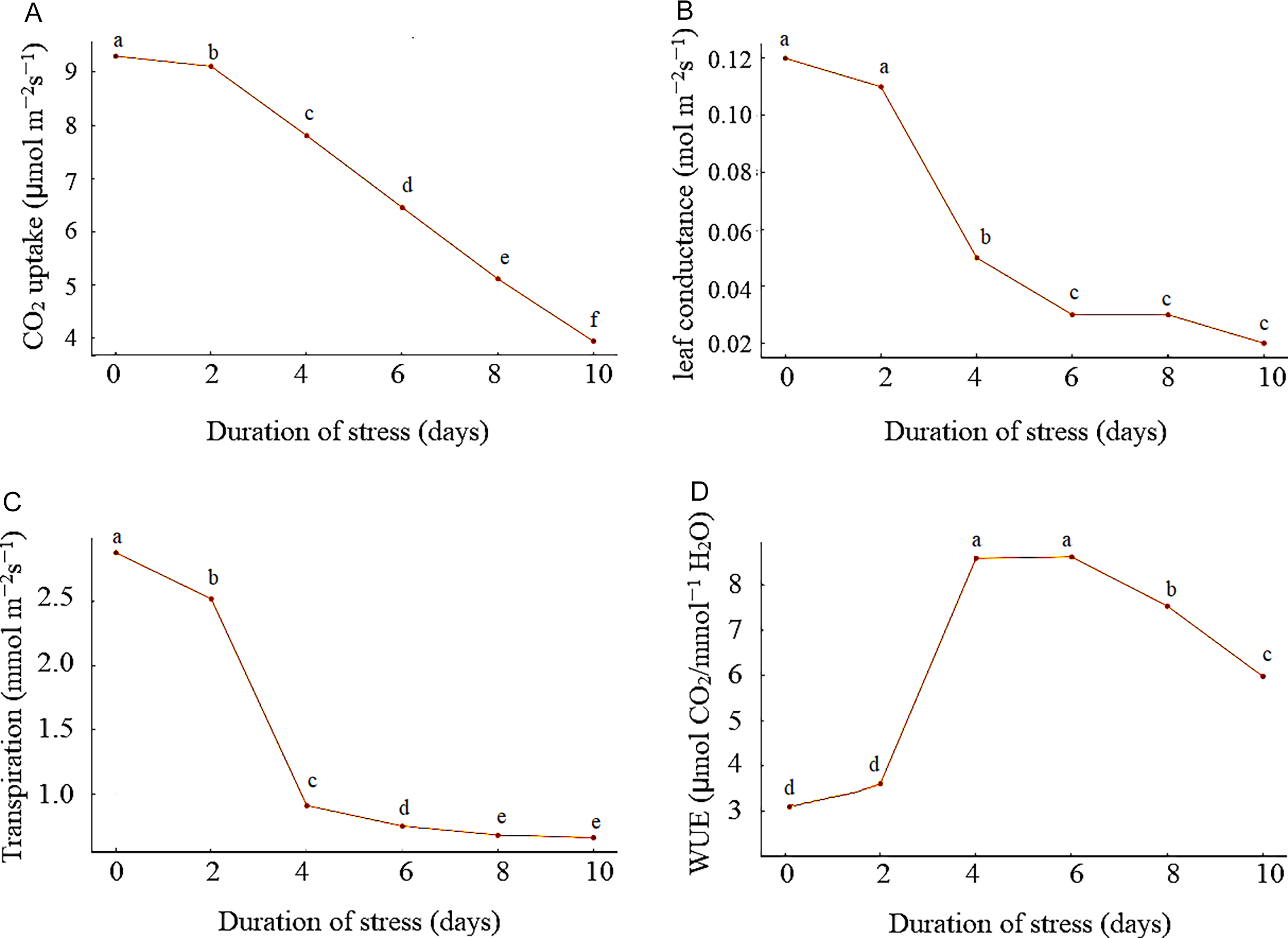
Naidoo and Naidoo (Reference Naidoo and Naidoo2018) reported that invasive weeds often exhibit pronounced physiological adjustments under water-limited conditions. In the invasive Siam weed [Chromolaena odorata (L.) R.M. King & H. Rob.], the first four physiological traits—photosynthetic rate, stomatal conductance, transpiration rate, and WUE—showed marked responses to the duration of drought stress (Figure 1). The photosynthetic rate declined substantially from 9.30 on day 0 to 3.95 on day 10, reflecting a major reduction in carbon-fixation capacity. This reduction corresponded with a sharp decline in stomatal conductance from 0.12 to 0.02 mol m− 2 s− 1, indicating progressive stomatal closure and restricted CO2 uptake under drought conditions. Likewise, the transpiration rate decreased from 2.88 to 0.66 mmol m− 2 s− 1, suggesting an effective reduction in water loss as a drought-avoidance strategy. In contrast, WUE increased from 3.23 μmol CO2 mmol−1 H2O to a peak of 8.61 μmol CO2 mmol−1 H2O on day 6, demonstrating enhanced carbon gain per unit of water lost during the early phase of stress. Collectively, these patterns indicate that despite its invasive nature, C. odorata initially adopts a water-conserving strategy characterized by elevated WUE; however, prolonged drought stress ultimately results in a pronounced decline in its photosynthetic performance.
Ecophysiological responses (A, photosynthetic rate; B, stomatal conductance; C, transpiration rate; and D, water-use efficiency) of the invasive species Chromolaena odorata to varying durations of drought stress. Values with different letters are significantly different at P ≤ 0.05 according to the Tukey-Kramer multiple-comparisons test (adapted from Naidoo and Naidoo Reference Naidoo and Naidoo2018).

Photosynthetic Efficiency and Weed Competitive Dynamics
Climate change significantly influences photosynthetic efficiency by altering light regimes, temperature profiles, and atmospheric CO2 concentrations (Hussain et al. Reference Hussain, Ulhassan, Brestic, Zivcak, Zhou, Allakhverdiev and Liu2021). C3 weed species generally exhibit enhanced rubisco activity and increased biomass production under elevated CO2 conditions (Bhatia et al. Reference Bhatia, Tripathi, Pagare and Kumar2017), whereas C4 weeds tend to gain a competitive advantage in warmer environments due to their superior CO2-concentrating mechanisms (Jinger et al. Reference Jinger, Kaur, Kaur, Rajanna, Kumari and Dass2017). Consequently, projected rises in temperature and CO2 may shift competitive dominance from C3 to C4 weeds, particularly within tropical and subtropical ecosystems (Amare Reference Amare2016). Moreover, warmer climates enhance phloem loading and carbon partitioning, accelerating carbohydrate translocation and promoting sink tissue development (Lemoine et al. Reference Lemoine, La Camera, Atanassova, Dedaldechamp, Allario, Pourtau, Bonnemain, Laloi, Thévenot, Maurousset, Faucher, Girousse, Lemonnier, Parrilla and Durand2013), ultimately affecting weed growth, productivity, and invasive potential under future climate scenarios.
Supporting this broader physiological perspective, drought experiments have shown that C. odorata experiences significant reductions in photochemical performance, including a 52% decrease in photosystem II (PSII) quantum yield, a 67% decline in electron transport rate, and a nearly 64% reduction in maximum PSII efficiency, under severe water deficit (Naidoo and Naidoo Reference Naidoo and Naidoo2018; Table 1). Nevertheless, the species maintained its survival even after 10 d of intense drought stress. This resilience, despite substantial photophysiological impairment, suggests that C. odorata possesses noteworthy adaptive capacity. Under climate change conditions marked by more persistent droughts and elevated temperatures, such tolerance may enhance its ability to recover, persist, and expand its distribution, thereby amplifying its ecological impact as an invasive weed in vulnerable ecosystems. While elevated groundwater levels, relevant primarily to regions with shallow water tables such as coastal lowlands and river deltas, may offset drought stress in some areas, other regions, particularly arid and semiarid zones, are projected to experience declining groundwater recharge, highlighting the contrasting regional impacts of climate change on water availability.
Effect of duration of drought stress on some physiological parameters in Chromolaena odorata (modified from Naidoo and Naidoo Reference Naidoo and Naidoo2018).

a Values with different letters are significantly different at P ≤ 0.05 according to the Tukey-Kramer multiple-comparisons test.
Climate-Driven Weed Expansion
Climate change intensifies ecological disturbances, such as fire, floods, and storms, thereby facilitating the dispersal and invasion of weeds. Shifts in agricultural zones and cropping patterns enable weed migration toward higher latitudes and elevations (Clements and DiTommaso, Reference Clements and DiTommaso2011). Elevated atmospheric CO2 enhances biomass production and competitiveness in species such as R. cochinchinensis and cogon grass [Imperata cylindrica (L.) P. Beauv.], which are expected to expand poleward under future climates (Korres et al. Reference Korres, Norsworthy, Tehranchian, Gitsopoulos, Loka, Oosterhuis, Gealy, Moss, Burgos, Miller and Palhano2016). Weeds benefit from high genetic diversity, phenotypic plasticity, and allelopathic potential, allowing them to dominate crop systems (Amare Reference Amare2016). Allelopathic legumes, including white leadtree [Leucaena leucocephala (Lam.) de Wit] and sensitive plant (Mimosa pudica L.), release phytotoxic compounds that suppress crop growth (Marques et al. Reference Marques, Costa, Atman and Garcia2014). Consequently, climate-driven shifts in weed community composition, combined with land-use changes, pose substantial challenges for sustainable weed management and biodiversity conservation.
Moreover, findings from a study conducted in South Korea indicate that climate change is likely to markedly expand the suitable habitats of invasive weed species (Hong et al. Reference Hong, Lee, Lee, Lee and Adhikari2021). A MaxEnt modeling framework was used to project the habitat suitability of 16 invasive weeds under scenarios of climate and land-cover change. Model predictions revealed a substantial increase in habitat suitability under future climates. Currently, moderately and highly suitable areas cover approximately 8,877 km2 and 990 km2, respectively; however, these areas are projected to increase by up to 497% by 2050 and 1,440% by 2070 under the RCP 4.5 scenario. These findings indicate that climate change, by reducing climatic barriers in southern South Korea, facilitates the northward spread of invasive weeds. Therefore, initiating control and management programs in southern regions is crucial to prevent further expansion into new areas.
Phenology and Flowering Dynamics under Variable Climates
Global warming and fluctuating precipitation patterns alter weed phenology and flowering cycles. Rising temperatures advance flowering times and extend reproductive phases, intensifying competition with crops for light, nutrients, and water. CO2 enrichment (450 to 550 ppm projected by midcentury) accelerates carbon assimilation and floral initiation (Beck Reference Beck2022). Elevated CO2 also promotes early flowering in C3 weeds, increasing reproductive success (Rolland et al. Reference Rolland, Baena-Gonzalez and Sheen2006). Meanwhile, changes in precipitation influence flowering timing through jasmonic acid and MYC transcriptional pathways that regulate FLOWERING LOCUS T (FT) gene expression (Van Moerkercke et al. Reference Van Moerkercke, Duncan, Zander, Šimura, Broda, Vanden Bossche, Lewsey, Lama, Singh, Ljung, Ecker, Goossens, Millar and Van Aken2019). Consequently, altered flowering phenology reinforces weed invasiveness and crop yield losses, necessitating adaptive management strategies.
Climate Change, Weed Evolution, and Crop Improvement
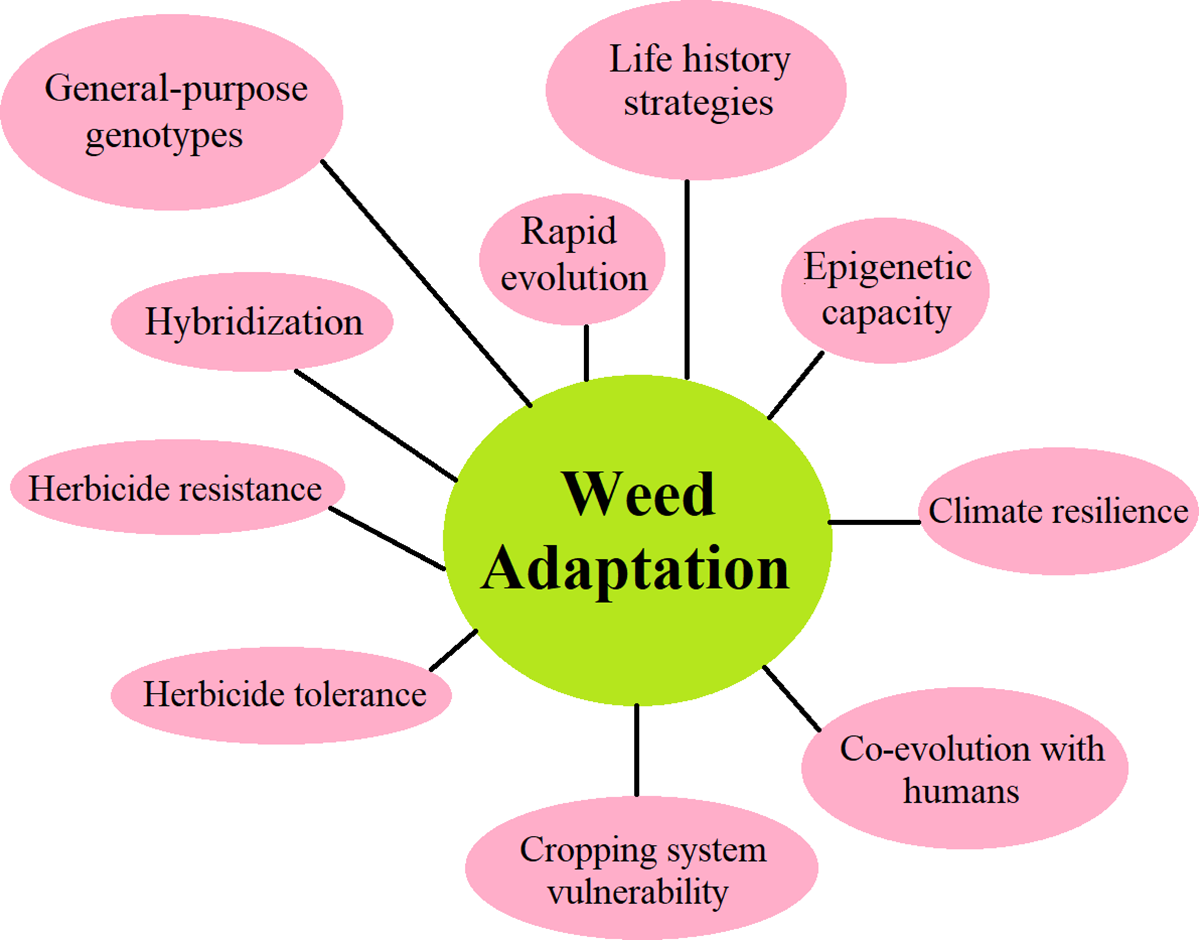
Climate change accelerates evolutionary processes across plant systems, influencing both weed adaptation and crop improvement efforts. Weeds’ success stems from their evolutionary adaptability and long-standing coevolution with humans. They respond to management practices and climate change via 10 mechanisms, including rapid evolution, hybridization, herbicide resistance, and life-history strategies, allowing them to thrive under warming, elevated CO2, drought, and extreme events (Clements and Jones Reference Clements and Jones2021; Figure 2). Beyond these mechanisms, climate change is also expected to drive range shifts, allowing weed species to expand into previously unsuitable regions, while phenological plasticity enables adjustments in germination and flowering timing in response to changing seasonal cues. Additionally, rapid evolutionary responses, such as selection for stress-tolerant genotypes and accelerated adaptation to environmental gradients, further enhance weed invasiveness under future climate scenarios. While these traits pose significant challenges for management, they also present opportunities for crop improvement and integrated agroecosystem strategies. Rising CO2 levels and temperature exert strong selective pressures on genetic traits related to stress tolerance, dormancy, and herbicide resistance, particularly in weed populations (Varanasi et al. Reference Varanasi, Vara Prasad and Jugulam2016). Enhanced mutation rates, hybridization potential, and gene flow between wild and cultivated species further increase genotypic variability (Gepts and Papa Reference Gepts and Papa2003). Additionally, warming-induced epigenetic modifications can regulate genes encoding herbicide-detoxifying enzymes, potentially giving rise to “superweeds” resistant to multiple herbicide classes (Damalas and Koutroubas Reference Damalas and Koutroubas2024).
Ten evolutionary strategies of weeds for adaptation to human management and climate change (Clements and Jones Reference Clements and Jones2021).

Parallel to these evolutionary dynamics in weeds, crop improvement programs must also adapt to the same environmental pressures. To meet the growing demand for edible oils, it is critical to increase the productivity of oilseed crops or utilize underexploited lands through abiotic stress–tolerant varieties. Meena et al. (Reference Meena, Kiran, Bindu, Pandey, Mallikarjuna, Lohithaswa, Aski and Gupta2025) reported that while traditional breeding and diverse germplasms can enhance yield potential, they are constrained by the quantitative inheritance of stress-tolerance traits and the complex genetics underlying drought and salinity resistance. Limited genetic variability in most oilseed germplasms, along with reproductive barriers, further restricts conventional breeding efforts.
Integrating molecular breeding tools, such as genome editing (CRISPR/Cas9), RNA interference, and gene stacking, offer promising avenues for efficiently introducing stress-tolerance traits (Kumar et al. Reference Kumar, Das, Choudhury, Kumar, Prakash, Verma and Mishra2024). Moreover, omics technologies, including genomics, transcriptomics, proteomics, and metabolomics, are essential for deciphering the complex regulatory networks governing plant responses to abiotic stress (Nabati et al. Reference Nabati, Nezami, Hasanfard, Nemati and Kahrom2023; Satrio et al. Reference Satrio, Fendiyanto, Miftahudin, Shahid and Gaur2024). Collectively, these advances in genetic and molecular research are crucial not only to developing resilient crop varieties but also for mitigating the accelerated evolution of weeds in agroecosystems impacted by climate change.
Weed Management in a Changing Climate
With climate change exerting widespread effects on plant growth patterns and agricultural ecosystems, weed management has become an increasingly complex and multidimensional challenge (Peters et al. Reference Peters, Breitsameter and Gerowitt2014; Ramesh et al. Reference Ramesh, Matloob, Aslam, Florentine and Chauhan2017). These changes not only increase the need for diverse weed management strategies but may also compromise the efficacy of each approach (Varanasi et al. Reference Varanasi, Vara Prasad and Jugulam2016). While it is recognized that climate change will impact long-term interactions between crops and weeds, the outcomes of these impacts remain far from clear. A thorough understanding of weed dominance and interactions, depending on crop and weed ecosystems and crop sequences, is likely to be a key determinant for successful weed management.
Chemical management, focusing on herbicide efficacy, plant resistance, and the influence of temperature on volatilization and dispersion, may exhibit reduced performance under warmer conditions or altered precipitation patterns (Varanasi et al. Reference Varanasi, Vara Prasad and Jugulam2016). Biological approaches, such as microbial bioherbicides and beneficial microbiome engineering, may similarly display variable responses to changes in temperature and moisture. Cultural and ecological management, emphasizing agroecological intensification and climate-resilient cropping systems, may require redesign or adaptation to maintain effectiveness under new environmental conditions. Physical and mechanical control, including robotics, automation, and precision weed removal, may also need adjustment in response to shifts in weed growth timing or accelerated growth rates.
Recent observations across various cropping systems worldwide, ostensibly linked to climate change, highlight the need for deeper examination of weed vulnerabilities before a full understanding is reached. For instance, uncontrolled weed establishment in crops leads to mixed populations of C3 and C4 photosynthetic pathways, posing substantial challenges for weed management (Ramesh et al. Reference Ramesh, Matloob, Aslam, Florentine and Chauhan2017). From a weed management perspective, C4 weeds are likely to thrive under higher temperatures and impose significant yield penalties, which is particularly concerning given that many of the most competitive weeds are C4 species. For example, feathertop Rhodes grass (Chloris virgata Sw.), a warm-season C4 species, is highly competitive with crops. Its expansion into cooler seasons has been documented, and under projected climate conditions of rising temperatures, its competitiveness and damage potential are expected to increase further, posing a significant challenge to sustainable crop production (Hasanfard and Chauhan Reference Hasanfard and Chauhan2024).
In addition to temperature, altered rainfall patterns and reduced water availability due to recurrent and unforeseen droughts may shift the competitive balance between crops and certain weed species, intensifying crop–weed competition (Ramesh et al. Reference Ramesh, Matloob, Aslam, Florentine and Chauhan2017). Although climate change–associated weed pressure represents a major threat to crop production, current knowledge of these effects remains limited.
Finally, IWM adopting a systems-based approach that considers climate variability, combined with policies addressing carbon footprint and sustainable land use, provides a flexible framework to mitigate the negative impacts of climate change on the efficacy of different management strategies. In the following sections, we examine the effectiveness of different weed management strategies under the influence of climate change.
Chemical Management
Chemical control remains the most widely adopted strategy for weed management globally, as it effectively targets a broad spectrum of weed populations in both natural and agricultural ecosystems (Mirzaei et al. Reference Mirzaei, Zand, Rastgoo and Hasanfard2022). Herbicides enable rapid suppression of herbaceous and broadleaf weeds, reduce labor costs, and simplify operational procedures (Manisankar et al. Reference Manisankar, Ghosh, Malik and Banerjee2022). However, their efficacy is strongly influenced by environmental conditions, and climate change introduces both opportunities and challenges for chemical weed management (Ziska Reference Ziska2016).
Environmental factors, such as light, temperature, soil moisture, and relative humidity, play a critical role in herbicide absorption, translocation, and metabolism (Mendes et al. Reference Mendes, Mielke, D’Antonino, Silva, Mendes and da Silva2022). Changes in light intensity and photoperiod can enhance photosynthesis and phloem translocation, potentially improving the movement and efficacy of foliar-applied herbicides (Varanasi et al. Reference Varanasi, Vara Prasad and Jugulam2016). For example, photosynthetic inhibitor herbicides like bentazone, atrazine, and metribuzin perform more effectively under higher light conditions, and increased light can promote stomatal opening, suggesting that daytime applications maximize absorption (Taiz and Zeiger Reference Taiz, Zeiger, Moller and Murphy2015b). Similarly, elevated temperatures reduce cuticular lipid viscosity, facilitating herbicide permeability and diffusion, while altering plant water potential and lipid metabolism to enhance passive uptake (Varanasi et al. Reference Varanasi, Vara Prasad and Jugulam2016). These climate-driven modifications in herbicide absorption and plant physiology have important practical implications, as they may necessitate adjustments in application timing, formulation selection, and dosage to maintain consistent weed control under changing environmental conditions.
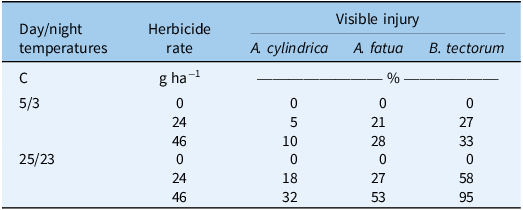
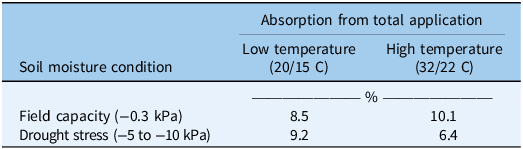
The interaction of temperature and relative humidity with herbicide efficacy is often species specific. Johnson and Young (Reference Johnson and Young2002) found that mesotrione (a 4-hydroxphenylpyruvate dioxygenase [HPPD] inhibitor) showed higher efficacy on cotton and velvetleaf (Abutilon theophrasti Medik.) at 32 C compared with 18 C, whereas common waterhemp [Amaranthus tuberculatus (Moq.) Sauer] and large crabgrass [Digitaria sanguinalis (L.) Scop.] performed better at 18 C. Likewise, the effectiveness of amino acid synthesis inhibitors depends on plant metabolism under varying temperatures; for instance, sulfonylurea herbicide injury increased with rising day/night temperatures (Olson et al. Reference Olson, Al-Khatib, Stahlman and Isakson2000; Table 2). Soil moisture also influences herbicide uptake; bentazone absorption by A. theophrasti was lowest under high temperature and low soil moisture (6.4%) and highest when high temperature coincided with adequate soil moisture (10.1%) (Hatterman-Valenti et al. Reference Hatterman-Valenti, Pitty and Owen2011; Table 3). High relative humidity further enhances absorption and translocation, as observed for mesotrione in cockscomb [Celosia argentea L. var. cristata (L.) Kuntze] and D. sanguinalis, although high temperatures can counteract this effect by increasing metabolism and reducing translocation (Godar et al. Reference Godar, Varanasi, Nakka, Prasad, Thompson and Mithila2015). Overall, understanding the interplay between environmental factors and herbicide dynamics is essential, particularly in tropical and subtropical regions where hot, humid climates can significantly influence herbicide performance (Ramesh et al. Reference Ramesh, Matloob, Aslam, Florentine and Chauhan2017). This variability in species-specific responses under different environmental conditions highlights the need for adaptive, site-specific herbicide management strategies, particularly under climate change scenarios where temperature and moisture regimes are expected to become more variable and less predictable.
Visible injury in jointed goatgrass (Aegilops cylindrica Host), wild oat (Avena fatua L.), and cheatgrass (Bromus tectorum L.) as influenced by temperature under applications of the herbicide MON 37500 (modified from Olson et al. Reference Olson, Al-Khatib, Stahlman and Isakson2000).

Effect of temperature and soil water content on [14 4C]bentazon absorption by Abutilon theophrasti (modified from Hatterman-Valenti et al. Reference Hatterman-Valenti, Pitty and Owen2011).

Conversely, low temperatures and frost can limit herbicide uptake and translocation, reducing efficacy and necessitating higher doses for adequate control (Hasanfard et al. Reference Hasanfard, Rastgoo, Darbandi, Nezami and Chauhan2022). Extreme weather events, including storms, prolonged rainfall, wind, and heat waves, may also dilute herbicide concentrations, induce leaching, or cause volatilization, leading to environmental contamination (Ziska Reference Ziska2016). Elevated CO2 levels can reduce stomatal conductance, limiting root uptake of soil-applied herbicides such as metolachlor and pendimethalin (Varanasi et al. Reference Varanasi, Vara Prasad and Jugulam2016), highlighting the multifaceted effects of climate change on herbicide performance and weed dynamics. From a management perspective, these effects suggest an increased risk of inconsistent herbicide performance, indicating that reliance on single-mode chemical control strategies may become less effective under future climate conditions.
Given these climate-induced constraints on herbicide performance, it becomes essential to adopt adaptive strategies that enhance the resilience and effectiveness of chemical weed control under variable environmental conditions (Varanasi et al. Reference Varanasi, Vara Prasad and Jugulam2016). To address these challenges, several strategies can enhance herbicide efficacy. Tank mixing herbicides with complementary modes of action improves control of diverse weed types, such as oxadiazon and oxyfluorfen against buffalo bur (Solanum rostratum Dunal) or combinations like mesosulfuron + iodosulfuron and imazamox + imazethapyr for broadleaf, herbaceous, and woody weeds in maize and soybean systems (Manisankar et al. Reference Manisankar, Ghosh, Malik and Banerjee2022; Restuccia and Scavo Reference Restuccia and Scavo2023). Nanotechnology provides another avenue: nanoherbicides (1 to 100 nm) improve solubility, environmental stability, and root absorption while mitigating runoff and leaching, although cost remains a limiting factor (Manisankar et al. Reference Manisankar, Ghosh, Malik and Banerjee2022). Proper timing of herbicide application, particularly preemergence treatments during early spring or drought periods, is also crucial for maximizing efficacy and aligning with phenological shifts induced by climate change.
Climate change not only influences herbicide performance but can also accelerate the evolution of herbicide-resistant weeds. Elevated temperatures, increased CO2, and altered precipitation affect weed physiology, growth rate, phenology, and stress responses, which in turn modulate herbicide absorption, translocation, and metabolism. Stress-induced physiological changes, such as thicker cuticles or altered enzyme activity, can decrease herbicide efficacy and favor resistant individuals, thereby accelerating resistance evolution. Mechanistic studies, such as those by Matzrafi et al. (Reference Matzrafi, Seiwert, Reemtsma, Rubin and Peleg2016), demonstrate that high temperatures enhance detoxification pathways, increasing the prevalence of non–target site resistance. Therefore, integrating chemical control with diversified weed management approaches, including cultural, mechanical, and biological methods, is essential to maintain sustainable weed management.
Biological Management
Biological management of weeds involves the introduction and enhancement of natural agents, such as herbivores and pathogens, to suppress weed populations (Quimby et al. Reference Quimby, Bruckart, DeLoach, Knutson, Ralphs, James, Evans, Ralphs and Child1991). This approach not only contributes to sustainable agricultural production but also supports ecosystem health. Studies indicate that approximately 25% of biological management projects achieve complete weed control, while 50% to 70% maintain sustainable production by suppressing nearly 47% of weed population dynamics (Hinz et al. Reference Hinz, Winston and Schwarzwälder2020). The success of biological weed control depends on selecting agents that are both climatically adapted and specialized in targeting specific weeds. For instance, in Australia, the monacantha cochineal (Dactylopius ceylonicus) was introduced to control the invasive prickly pear [Opuntia monacantha (Willd.) Haw.], successfully suppressing its spread across both spatial and temporal scales (Cullen et al. Reference Cullen, Palmer and Sheppard2023). Similarly, the introduction of the true weevil (Rhinocyllus conicus) in 1968 reduced populations of 20 native Cirsium species by 32% (Hinz et al. Reference Hinz, Winston and Schwarzwälder2020). These examples demonstrate that effective biological control agents must be ecologically compatible with the target environment and capable of specialized weed suppression.
Herbivores are also widely utilized to manage weed density in agricultural systems. Grazing by goats or sheep, when properly confined, can effectively reduce weed populations (Monteiro and Santos Reference Monteiro and Santos2022). Integrated farming practices, such as rice–duck systems, offer additional benefits: ducks feed on weed seeds, reducing labor costs and suppressing pest populations, including leaf rollers, stem borers, and planthoppers, by 39%, 18%, and 57%, respectively (Nayak et al. Reference Nayak, Panda, Das and Kumar2020; Teng et al. Reference Teng, Hu, Chang, Luo, Fan, Jiang, Mu, Liu and Yang2016). Likewise, vineyards and orchards frequently employ targeted grazing to manage both annual and perennial weeds.
The role of microbial bioherbicides and beneficial microbiome engineering is becoming increasingly significant. Engineered microbiomes and microbial pathogens can selectively inhibit weed growth while supporting crop health, providing a sustainable alternative to chemical herbicides. These strategies enhance plant–microbe interactions, improve soil health, and increase resilience to environmental stressors.
However, climate change exerts complex effects on biological weed control. Elevated temperatures may expand the distribution of biological agents, potentially enhancing weed suppression efficiency (Anwar et al. Reference Anwar, Islam, Mominul, Sabina, Rashid, Shukor, Sharif and Anil2021). Conversely, some agents may attack non-target native plants, threatening biodiversity. Reduced precipitation and extreme weather events can also negatively affect biological agents. Unlike weeds, which may enter dormancy under harsh conditions, herbivores and microbial agents are sensitive to changes in moisture and temperature, experiencing osmotic stress, protein degradation, reduced reproduction, and overall diminished effectiveness (Harms et al. Reference Harms, Cronin, Rodrigo and Winston2020).
Therefore, biological management of weeds, through herbivores, pathogens, and microbial bioherbicides, offers a promising approach for sustainable agriculture. Its success depends on careful selection of agents, integration with farming practices, and adaptation to changing climatic conditions. Beneficial microbiome engineering further strengthens these strategies by providing targeted, resilient, and environmentally friendly weed control.
Cultural Management
Cultural management plays an important role in sustainably suppressing and eradicating weed species in the field. First, soil solarization is suitable for weed control under climate change. Soil solarization uses black plastic and polymer materials to kill weed seeds by gradually increasing temperature (Monteiro and Santos Reference Monteiro and Santos2022). Climate change can elevate temperatures and prolong heating days, allowing more heat to be absorbed by dark-colored materials, effectively killing weed seeds in the soil. This method is environmentally friendly, causing no contamination (Monteiro and Santos Reference Monteiro and Santos2022). Furthermore, in recent years, biodegradable mulch films have emerged as a sustainable and environmentally friendly alternative to conventional plastic mulches. This innovation not only retains the well-documented benefits of mulching, such as weed suppression, soil moisture conservation, and root zone temperature modulation, but also addresses the critical end-of-life disposal challenge associated with traditional mulch materials.
Additionally, retaining crop residues is an essential cultural practice for suppressing weed populations. Residue covering reduces weed competition by occupying their ecological niche and suppressing physiological development. Crop residues on topsoil inhibit weeds through physical and allelopathic interactions (Monteiro and Santos Reference Monteiro and Santos2022). Major global crops used for residue or cover, such as cereals and legumes, play a key role in this context. Under altered climate conditions, residue-based weed suppression may be influenced by changes in biomass production, decomposition rates, and allelopathic potential. For instance, elevated CO2 and temperature may increase aboveground biomass of some cover crops, potentially enhancing residue availability, while accelerated decomposition under warmer and wetter conditions could reduce residue persistence and weaken physical suppression. Similarly, shifts in the chemical composition of residues, such as lignin and nitrogen content, may alter their allelopathic properties, affecting their efficacy against weeds. These climate-driven changes highlight the need for adaptive residue management strategies that account for regional climatic projections. Improving the competitiveness of crop species can suppress weeds under climate change. Climate change may enhance plant root systems, allowing higher adaptive crop cultivars to relieve weed competition (Amare Reference Amare2016). Cultivating more competitive crops by improving nutrient uptake, breeding for improved traits, and amending the soil reformation can help adapt to climate change and compete with most weeds.
Improving crop rotation and intercropping are crucial cultural management practices. Crop rotation involves cultivating different crops or fruit trees sequentially on the same land, thereby providing spatial and temporal field variability (Sharma et al. Reference Sharma, Shrestha, Kunwar and Te-Ming2021). This practice restrains weed competition and reduces herbicide contamination. Increased temperatures and elevated CO2 concentrations offer growers many options among C3, C4, and CAM plants, allowing growers to select varied crops to suppress weed dynamics in response to changing climatic conditions. Intercropping, an IWM approach, involves planting two or more species or genotypes together for extended periods (Sharma et al. Reference Sharma, Shrestha, Kunwar and Te-Ming2021). Intercropping cultivates multiple crop species to improve competition against weeds. When climate change alters environmental conditions, multiple high-resistance crops can compete with weeds. Climate change may alter the relative growth rates or stress tolerance of crops and weeds, potentially affecting which species dominate in intercropping systems. Nevertheless, by combining multiple high-resistance or climate-adapted crops, intercropping can help maintain effective weed suppression under variable or extreme environmental conditions.
Physical and Mechanical Management
Physical management plays an important role in IWM programs and is a standard approach to suppressing weed populations. Physical management generally includes mechanical and thermal weed eradication. Mechanical weed removal is the easiest method, including hand-pulling and tractor-mounted equipment, for rapidly controlling field weeds (Bajwa et al. Reference Bajwa, Mahajan and Chauhan2015). Mechanical removal eradicates adult weeds and delays weed emergence by disrupting root systems. However, climate change can challenge mechanical control. For example, extremely heavy rain can cause prolonged soil waterlogging, reducing the mechanical equipment’s operational efficiency (Amare Reference Amare2016). Consequently, remaining weed seeds on the soil surface may have more time to germinate. Mechanical weed removal can potentially break down soil carbon storage, aggravating atmospheric CO2 concentration (Malarkodi et al. Reference Malarkodi, Manikandan and Ramaraj2017). Increased CO2 concentration can enhance the asexual propagation of weed roots.
Thermal management is more effective than mechanical weed control. Soil steaming, a traditional physical management method, rapidly kills all weed seeds in sandy and clay soil within 3 to 5 min at temperatures ranging from 80 C or higher (Melander and Kristensen Reference Melander and Kristensen2011). This method is widely used in greenhouse agricultural production. Advanced thermal methods, such as laser radiation, microwave eradication, and direct flaming, are recommended for eradicating herbicide-resistant weeds. More research and practices are required if these techniques are to be applied to field crops (Chauhan Reference Chauhan2020). However, the higher cost of advanced equipment is a disadvantage for promoting it in developing countries.
Considerations for Other Management
Improving climate forecasting is crucial for effective weed dynamic monitoring and long-term management strategies. Robotic modeling has emerged as a valuable tool for enhancing climate forecasting and weed control. Many robotic systems store extensive climatic datasets and experimental records to deliver site-specific forecasts, reduce management costs, and support sustainable weed management practices (Chauhan Reference Chauhan2020). These technologies can further strengthen weed management policy by generating more precise climate predictions and offering evidence-based recommendations aligned with low-carbon, environmentally responsible agricultural systems.
Developing integrated climate–crop modeling also represents a sustainable and forward-looking approach for future management. Integrated climate–crop models are user-friendly and incorporate comprehensive agronomic information, including climatic data, technical guidelines, financial services, and production inputs (Hansen Reference Hansen2005). By providing growers with insights into climate change trends, such as temperature fluctuations, CO2 variations, and altered rainfall patterns, these systems facilitate informed decisions for IWM across seasons. Incorporating carbon footprint assessment within such models can also guide farmers toward practices that minimize emissions and promote sustainable land-use transitions, especially in regions vulnerable to climate-driven ecosystem shifts.
Improving biosecurity management through legislation and policy remains essential for future weed control, particularly because climate change accelerates the range expansion of exotic weeds. International organizations have endorsed and strengthened cooperative frameworks for global biosecurity governance (Dahlstrom et al. Reference Dahlstrom, Hewitt and Campbell2011). International legislation and policy contribute to early identification of exotic weed threats, providing platforms to consolidate scientific knowledge and mobilize social–organizational capacities to confront both climate change and biological invasions. However, effective biosecurity requires coordination between national frameworks and regional or local authorities. Local governments, individuals, and organizations must help prevent the movement of exotic weeds and intensify surveillance efforts. Once an invasion is detected, it should be promptly reported up to the national level to ensure a rapid and effective response.
AI, Modeling, and Emerging Technologies
Advances in AI, data-driven modeling, and remote sensing are reshaping the future of weed science (Huang et al. Reference Huang, Sun, Rai, Yao, Reddy and Jenkins2025). Machine learning algorithms can now predict global weed distribution and population dynamics by integrating climatic variables, soil attributes, and cropping system data (Aderele et al. Reference Aderele, Srivastava, Butterbach-Bahl and Rahimi2025). For example, random forest and gradient-boosting models (Yoon Reference Yoon2021) can estimate the potential spread of Palmer amaranth (Amaranthus palmeri S. Watson) under warming scenarios, while neural networks can forecast germination windows for major weed species. These predictive tools enable more accurate risk assessments and support proactive management decisions at local, regional, and global scales (Yoon Reference Yoon2021).
In parallel, AI-based early warning systems, powered by high-resolution satellite imagery, drone sensors, and hyperspectral data (Divine et al. Reference Divine, Aguma and Olagunju2024), allow real-time detection of herbicide-resistant or invasive weeds before they establish stable populations. This capability is particularly important under climate change, which drives species shifts and increases environmental pressures. For instance, such systems can map glyphosate-resistant rigid ryegrass (Lolium rigidum Gaudin) patches in Australian grain systems weeks earlier than traditional scouting. Aziz et al. (Reference Aziz, Rafiq, Saini, Ahad, Gonal, Rehman and Nabila Iliya2025) highlighted that integrating AI and remote sensing enhances agricultural resilience against climate change, declining arable land, and pest outbreaks. These technologies support targeted, cost-effective pest management, reduce reliance on broad-spectrum pesticides, and minimize environmental impacts. Despite challenges in data quality and accessibility, the combination of AI and remote sensing offers a transformative approach to sustainable weed and pest management.
Emerging digital technologies, including digital twins, the Internet of Things, and AI-enabled decision support systems, further enhance weed management efficiency. Digital twins (virtual models of fields or ecosystems) integrate these technologies by continuously collecting data from soil moisture sensors, autonomous robots, and smart sprayers to simulate plant–weed interactions (Awais et al. Reference Awais, Wang, Hussain, Aziz and Mahmood2025; Kim et al. Reference Kim, Evans and Iversen2008). This enables timely, targeted weed control; reduced herbicide use; and optimized planting schedules. As noted earlier, climate change, with higher temperatures and elevated CO2 levels, can accelerate weed growth and reduce herbicide effectiveness. By integrating climate scenario modeling with these digital tools, farmers and researchers can anticipate weed responses to changing conditions and adjust management strategies accordingly. Additionally, deep learning and remote sensing support early weed detection and accurate forecasting of their spread, enabling precise interventions even under challenging environmental conditions (Kim et al. Reference Kim, Evans and Iversen2008). For example, AI-powered chatbots can provide farmers with timely crop management recommendations (Ahirwar et al. Reference Ahirwar, Swarnkar, Bhukya and Namwade2019; Mogili and Deepak Reference Mogili and Deepak2018), while GPS-equipped drones can remotely monitor crop health, apply herbicides, and identify weeds and pests, reducing the need for manual labor (Ahirwar et al. Reference Ahirwar, Swarnkar, Bhukya and Namwade2019; Mogili et al. 2018).
The integration of AI, remote sensing, and digital technologies enables more accurate prediction, early detection, and targeted management of weeds and pests, providing a sustainable strategy to address agricultural challenges, especially under conditions of climate change.
In conclusion, climate change, driven by solar activity, geological variations, and anthropogenic factors, significantly affects the biological traits and ecological processes of weeds. Key aspects influenced include seedbank persistence, photosynthesis, sugar translocation, WUE, flowering periods, and niche competition, while different weed species exhibit variable adaptive responses. Such changes can reduce the effectiveness of conventional management practices, including herbicide application and physical, cultural, and biological control, and may enhance herbicide resistance. IWM, combining chemical, physical, cultural, and biological strategies, remains essential for controlling weeds, preserving ecosystem integrity, and mitigating weed threats. Furthermore, advanced technologies, particularly AI and smart agriculture approaches, enable precise weed identification, monitoring of distribution, and prediction of weed dynamics, thereby optimizing management strategies and improving control efficiency. Integrating future research with advanced technologies and IWM strategies is critical to ensure sustainable agriculture and ecosystem protection under changing climatic conditions.
Acknowledgments
The authors acknowledge the use of ChatGPT to improve the language of this review.
Funding statement
The authors did not receive funding for this research.
Competing interests
The authors declare no conflicts of interest.


 Open access

