


Chronic diseases are the leading causes of premature death and disability and cause the greatest burden of disease in the USA(1). These diseases are largely attributable to poor diet, with overnutrition a major cause of diet-related ill health(1). CVD represents 30 % of all global deaths(2). High blood pressure is a major cause of CVD, and high dietary salt intake a key contributor(Reference Mozaffarian, Singh and Powles3). Despite ongoing debate in the literature as to the optimal target for population reductions in salt intake(Reference Batuman4), all racial/ethnic and socio-economic groups in the USA are consuming levels well in excess of dietary guidelines(Reference Fulgoni, Agarwal and Spence5).
In the USA, most food eaten is processed by the food industry(Reference van Raaij, Hendriksen and Verhagen6,Reference Poti, Mendez and Ng7) , resulting in the population being exposed to foods that are high in energy, saturated fat, sugar and salt(8). Even small changes in levels of these adverse nutrients in the food supply have the potential to produce large health gains at low cost, and these changes are being promoted by public health experts as priority actions to address the chronic disease crisis(Reference Beaglehole, Bonita and Horton9). The WHO has recommended Na reduction as a ‘best buy’ and as one of the most cost-effective approaches to prevent chronic diseases(2). Nutrition researchers have based their understanding of diet on foods reported in the National Health and Nutrition Examination Survey (NHANES), which is linked with nutrient information from US Department of Agriculture food tables containing ~7500 foods. These tables are useful but not updated annually. US consumers purchase >400 000 different packaged foods annually that are changing rapidly due to product introduction and reformulation(Reference Ng and Popkin10). Most studies to date that have examined trends in Na intake have been limited by lack of up-to-date, product-specific food composition data needed to monitor the huge number and variety of products in the US food supply and continual product reformulations. Further, many US food manufacturers and retailers have pledged to reduce the Na content of their packaged food products, yet there is no objective method to monitor whether these pledges are being followed. Although research exists that identifies priority food categories contributing to dietary Na intake in the US population(Reference Quader, Gillespie and Sliwa11,Reference Quader, Zhao and Gillespie12) , there have been few studies that have examined what effect Na reductions in these key food categories would have on population intake. Surprisingly little is also understood about whether differences exist among and within critical sub-populations for whom health inequality has risen over the past half century in the USA(Reference Deaton13).
The objective of the present study was therefore to simulate the impact that Na reductions in food categories that are the largest contributors to Na intake would have on population Na intake from packaged foods in US adults and children, both overall and by race/ethnicity, education, income and weight status.
Methods
The present study used 24 h dietary recall data for a nationally representative US sample of 2948 children aged 2–18 years and 4878 adults aged >18 years from the 2011–2012 NHANES. NHANES is based on a multistage, stratified, area-probability sample of non-institutionalized US households. Detailed information about the survey and its sampling design has been published previously(Reference Perloff, Rizek and Haytowitz14), but in brief dietary intake data were obtained through standardized interviewer-administered 24 h dietary recalls collected using the automated multiple-pass method initially in-person with a second 24 h diet recall collected by telephone 3–10 d later. We only used the initial in-person 24 h dietary recall rather than both diet recalls, which is recommended by NHANES for undertaking analyses examining mean intake levels. Intake for any child under the age of 12 years was reported by proxy, typically the adult most knowledgeable about the survey participant’s intake. By utilizing secondary NHANES data, we were exempt from institutional review board concerns for this paper.
In previous work, we enhanced standard food composition data (Food and Nutrient Database for Dietary Studies (FNDDS)) with time-varying product-specific nutritional information for packaged food products, by linking Nutrition Facts Panel data from 193 195 barcoded foods and beverages to codes for packaged foods consumed from stores and vending machines (hereafter referred to as ‘stores’) by NHANES participants(Reference Poti, Yoon and Hollingsworth15). This enabled us to more closely estimate the Na contribution of packaged food sources to dietary intake as the data were linked to foods that were actually purchased by US consumers. Using our Crosswalk-enhanced FNDDS food composition database, we generated sales-weighted mean Na content (mg/100 g) at various percentiles for each food code reported in NHANES corresponding to store-bought packaged foods, with weighting derived from purchases by households in the nationwide Nielsen Homescan Consumer Panel in the corresponding period. The Nielsen Homescan data contain Universal Product Code-level information about household food purchases among a nationally representative sample of 60 000 households each year(Reference Einav, Leibtag and Nevo16–Reference Muth, Siegel and Zhen18). These households report all Universal Product Code transactions from all outlet channels, including grocery, drug, mass-merchandise and convenience stores. Data captured on each shopping occasion include purchase date, retailer, every Universal Product Code purchased, number of units purchased, and item description and attributes.
The Crosswalk-enhanced database contains data from 2011–2012, and so NHANES 2011–2012 was selected to use in the analysis to ensure the time- and brand-specific nature of the Crosswalk database was fully utilized.
Top food group sources of sodium
To identify those food items contributing most to Na intake, the food grouping system developed by the University of North Carolina at Chapel Hill was used. All the foods reported in NHANES were assigned to one of the University of North Carolina at Chapel Hill’s food groups. The University of North Carolina at Chapel Hill food grouping system has been previously used and described(Reference Poti, Yoon and Hollingsworth15). The sales-weighted mean Na content (mg/100 g) generated in the previous step using the Crosswalk-enhanced FNDDS food composition database for each packaged food code reported in NHANES from stores was used to identify the top-ten packaged food group sources of dietary Na for both adults (>18 years) and children (2–18 years).
Simulation of sodium reduction
The Crosswalk-enhanced FNDDS food composition database was again used to simulate the impact that Na reductions within the top-ten packaged food groups would have on population Na intake, both overall and by sociodemographic subgroup for adults and children. This was done by replacing the weighted median Na content with the Na content at the 25th percentile for food codes (representing packaged foods) within the top-ten food groups contributing to dietary Na intake (Table 2) and retaining the weighted median Na content for all remaining food groups. We then simulated Na intake if participants consumed foods with Na content reduced to that the 25th percentile level. This process was repeated by replacing the weighted median Na content with the adjusted Na content at the 25th percentile for all food codes.
Statistical analyses
Data are presented as means with se. Results are presented separately for children (2–18 years) and adults (>18 years). Adults and children were then examined by three racial/ethnic groups (Non-Hispanic White, Non-Hispanic Black and Hispanic), three income groups (<185 %, 185–350 % and >350 % of the federal poverty level), four BMI categories (underweight, normal weight, overweight, obese), three education groups (less than high school, high school, more than high school) and gender (male or female); see Table 1. In additional analyses, results were also examined by racial/ethnic group and gender (e.g. Hispanic females, Hispanic males). BMI classification used the Centers for Disease Control criteria(19) and cut-offs for children and the National Heart, Lung, and Blood Institute criteria(20) for adults. Although results for ‘Other’ race were included in analyses, results were not reported separately due to small numbers within this racial/ethnic group.
Sociodemographic characteristics of participants from the 2011–2012 National Health and Nutrition Examination Survey

Sample includes only individuals aged ≥2 years with reliable diet data who consumed at least one food from stores or vending sources. BMI in children was defined using the Centers for Disease Control charts and cut-offs. All results are weighted an account for complex survey design. All values include all race/ethnicities, but race/ethnicity ‘Other’ is not reported in its own row.
The top-ten food groups contributing the most to Na intake from packaged foods are reported overall for adults and children, and by sociodemographic subgroup. For each sociodemographic subgroup, the proportion of Na intake that the top-ten overall food group sources of Na represented was examined by dividing the sum of each top food group’s contribution by the total Na intake from packaged foods for each subgroup. Top food group sources were examined overall for adults and children, and in each sociodemographic subgroup, to identify whether Na reduction efforts would have a different impact across these sub-populations. The statistical software package Stata version 14.1 was used for all analyses. Survey methods were used within Stata to account for the clustering and weighting that is inherent in the NHANES sampling methodology(Reference Popkin, Haines and Siega-Riz21), so as to allow for statistically significant differences across the various sociodemographic subgroups to be identified using Student’s t test. A P value of <0·05 was considered significant.
Results
Top-ten sources of sodium from stores
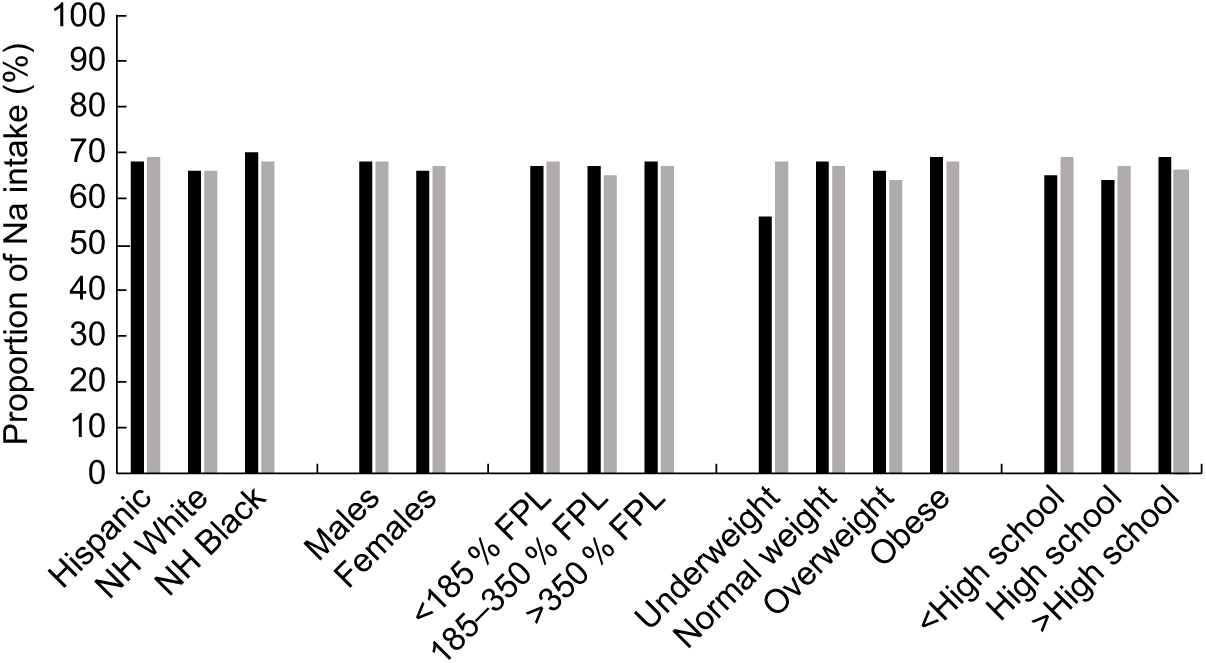
The total Na intake purchased from stores identified using the Crosswalk-enhanced database was 1258 (se 21) mg for adults and 1215 (se 35) mg for children (Table 2). The top-ten sources of Na intake from stores were similar for adults and children (Table 2), with ‘Breads, rolls and tortillas’ the largest contributor in adults and ‘Salty snacks’ in children. The top-ten food group sources contributed 53 % of Na intake from packaged foods for adults and 58 % for children. The proportion of intake from the top-ten sources differed slightly when examined by sociodemographic subgroup. In adults, the top-ten sources of Na overall contributed a lower proportion of intake from packaged foods in Non-Hispanic Whites compared with Hispanics and Non-Hispanic Blacks (Fig. 1). Adults and children in the lowest income group (<185 % of the federal poverty level) and those in the lowest household education group (less than high school) had a higher proportion of Na intake deriving from the top-ten food group sources. Supplemental Figs S1 and S2 (see online supplementary material) show the contribution of each top-ten food group source to Na intake from packaged foods by sociodemographic subgroup in children and adults, respectively.
Top-ten food group contributors to dietary sodium intake from packaged foods for 4878 US adults aged >18 years and 2948 children aged 2–18 years from the 2011–2012 National Health and Nutrition Examination Survey
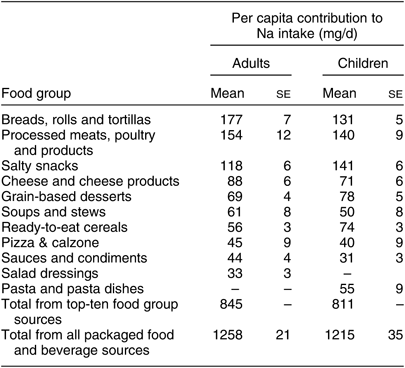
Authors’ analyses and calculations based in part on data reported by Nielsen through its Homescan Services for all food categories, including beverages and alcohol, for the 2011–2012 period for the US market (licensed from The Nielsen Company, 2014). No combination codes from FNDDS were used in analysis.
Proportion of sodium intake from packaged foods contributed by the top-ten food group sources, by sociodemographic subgroup, for 4878 US adults aged >18 years ( ) and 2948 children aged 2–18 years (
 ) from the 2011–2012 National Health and Nutrition Examination Survey (NH, non-Hispanic; FPL, federal poverty level). Authors’ analyses and calculations based in part on data reported by Nielsen through its Homescan Services for all food categories, including beverages and alcohol, for the 2011–2012 period for the US market (licensed from The Nielsen Company, 2014)
Simulated reduction in sodium intake from packaged foods if sodium content of top-ten food groups was reduced
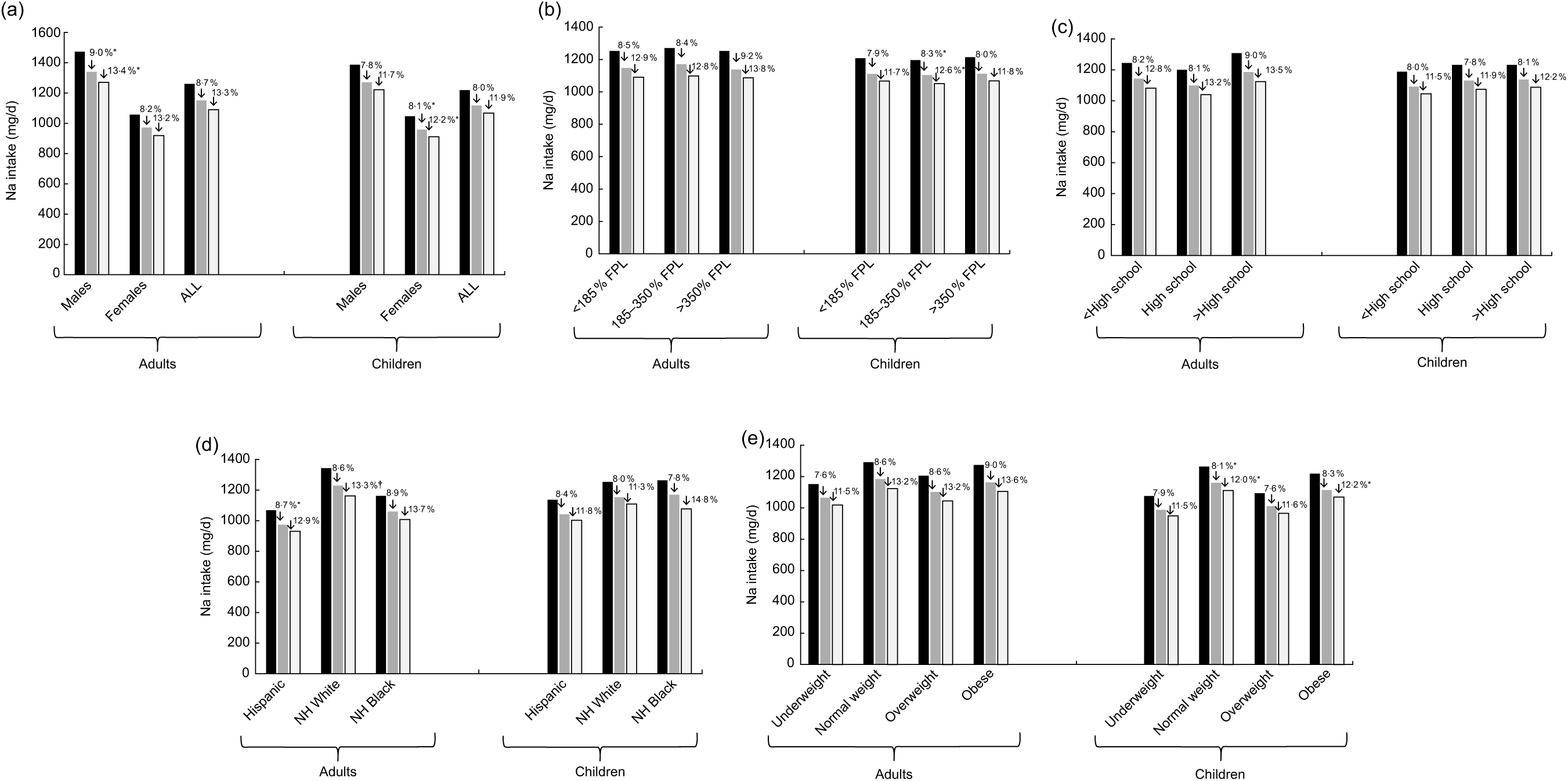
Figure 2 shows the reduction in intake that would be achieved by US adults and children, overall and by sociodemographic group, if packaged food products from the top-ten food group sources had Na content reduced from the median to the 25th percentile. For adults and children overall, there was a decrease of 8·7 % (109 mg) and 8·0 % (97 mg), respectively, in Na intake if store-bought packaged foods from the top-ten food group sources had Na content reduced from the median to the 25th percentile. Results varied slightly when examined by sociodemographic subgroup. For example, adults in the highest income group had the largest reduction in Na intake (9·2 %, 120 mg) out of all income groups (Fig. 2(b)), although these reductions were not significantly different between all groups. Significant differences were observed only between children in the middle income group compared with those in the lowest income group (Fig. 2(b); P < 0·05). Adult males had a larger simulated reduction in Na intake than females (9·0 % /133 mg v. 8·2 % /87 mg; P < 0·05; Fig. 2(a)), whereas male children had a smaller simulated percentage reduction compared with female children (7·8 % /108 mg v. 8·1 % /85 mg; P < 0·05; Fig. 2(a)). Adults and children in the highest education group had the largest reduction (9·0 % /113 mg and 8·1 % /99 mg; Fig. 2(c)) although differences were not significant between education groups. Results were very similar between adult racial/ethnic groups, with small but significant differences observed between Hispanics and Non-Hispanic White adults (8·7 % /93 mg v. 8·6 % /116 mg; P < 0·05; Fig. 2(d)).
Mean daily sodium intake from packaged foods ( ) and simulated reductions in mean daily sodium intake from packaged foods if sodium levels were reduced from the median to the 25th percentile sodium content of purchased products for the top-ten food groups (
 ) and for all packaged foods (
 ), by sociodemographic subgroup, for 4878 US adults aged >18 years and 2948 children aged 2–18 years from the 2011–2012 National Health and Nutrition Examination Survey. (a) Gender (*significantly greater percentage reduction than the other gender, P < 0·05); (b) income (FPL, federal poverty level; *significantly greater percentage reduction compared with <185 % FPL, P < 0·05); (c) education; (d) race/ethnicity (NH, non-Hispanic; *significantly greater percentage reduction than NH White, P < 0·05; †significantly greater percentage reduction than Hispanic, P < 0·05); (e) weight status (*significantly greater percentage reduction than overweight, P < 0·05). Authors’ analyses and calculations based in part on data reported by Nielsen through its Homescan Services for all food categories, including beverages and alcohol, for the 2011–2012 period for the US market (licensed from The Nielsen Company, 2014)
Simulated reduction in sodium intake from packaged foods if sodium content of all packaged foods was reduced
For adults and children overall, there was a decrease of 13·3 % (167 mg) and 11·9 % (145 mg), respectively, in Na intake from store-bought packaged foods when all products were reduced in Na content (Fig. 2(a)). When all store-bought packaged foods had Na levels reduced to the 25th percentile, Na intake from store-bought foods alone was 1149 mg for adults and 1118 mg for children. Results varied slightly when examined by sociodemographic subgroup. For income, a significant difference was observed only between children in the middle income group compared with those in the lowest income group (Fig. 2(b); P < 0·05). A significant difference was observed between males and females in both adults and children (Fig. 2(a); P < 0·05), with adult males having a larger reduction in intake than adult females and male children having a smaller reduction than female children. Adults in the highest v. lowest education level had the largest reduction (13·5 v. 12·8 %; Fig. 2(c)), although differences were non-significant. Non-Hispanic Black children had a larger simulated reduction than other race groups (14·8 %, 187 mg), although significant differences were observed only between Hispanic and non-Hispanic White adults (Fig. 2(d); P < 0·05), with non-Hispanic White adults having a significantly larger reduction. Results were very similar between racial/ethnic groups in children.
Discussion
The present study demonstrated that if Na reduction shifted purchased packaged foods in the top-ten food group sources of dietary Na intake from Na levels at the median to the 25th percentile, population Na intake from packaged foods would be reduced by 9 % in US adults and children. If these Na reductions were implemented across all store-bought packaged foods, population Na intake from packaged foods could potentially be reduced further, by a total of just over 13 %. Based on our analysis, current Na intake from store-bought packaged foods was estimated to be 1258 mg for adults and 1215 mg for children. Hence, even if all store-bought packaged foods had Na levels reduced to current concentrations at the 25th percentile, Na intake from store-bought foods alone would still remain high at 1149 mg for adults and 1118 mg for children. The most recent NHANES showed that 61 % of Na intake was derived from store-bought foods, which is slightly higher than what we observed in our current analysis that contains up-to-date, brand-specific information describing the food supply(Reference Quader, Zhao and Gillespie12).
These results have important implications for policy. Currently in the USA, two sets of Na reduction targets have been initiated. In 2009 the National Salt Reduction Initiative released a set of sixty-two Na reduction targets for manufacturers to reach by 2014(22). Similar to the approach used with the current analysis, the National Salt Reduction Initiative targets were developed by calculating a 25 % reduction from the sales-weighted mean in each food category(23). However, by 2014 only 3 % of the food categories met the 2014 targets(Reference Curtis, Clapp and Niederman24). One modelling study also suggested that for the National Salt Reduction Initiative targets to be successful at ensuring statistically significant population-level reductions in heart attack and stroke incidence and mortality, at least 65 % of foods in each food category would need to meet the targets(Reference Choi, Brandeau and Basu25). More recently, the Food and Drug Administration released a draft set of 150 Na reduction targets, however these have yet to be finalized(26). Both sets of targets focus on key contributors to dietary Na intake in the USA. However, as our analysis shows, even if Na content of all packaged foods was reduced from mean levels to levels currently met by the 25 % of products with lowest Na content, population intake would still remain too high. Another point to consider is the feasibility of reducing Na content across the whole food supply. It is extremely unlikely this could be done, and it is more sensible to assume that larger reductions in some of the key contributors to Na intake would be a more feasible approach to reduce population Na intake.
The UK has, to date, the world’s most successful salt reduction programme, primarily due to its strong government leadership and collaborations between government, industry, the media and consumers. Research has estimated that the current UK salt reduction strategy has potentially prevented or postponed ~57 000 new cases and 12 000 deaths from CVD in England(Reference Kypridemos, Guzman-Castillo and Hyseni27). Furthermore, a 15 % reduction in population salt intake between 2003 and 2011 resulted in average blood pressure in the adult population falling by 3·0/1·4 mmHg over the same period(Reference He, Pombo-Rodrigues and MacGregor28). However, studies have also shown that when equity is considered, the impact of the UK strategy does not look as positive, and that the current UK policies either have a neutral impact or may even worsen inequalities in the population(Reference Kypridemos, Guzman-Castillo and Hyseni27). This is important to consider in light of the current analysis. We observed that reductions in the Na content of the top-ten food group sources would have varying effects on population subgroups. For example, we found that adults in the highest income group and those in the highest education group would have the largest reduction in Na intake. This could potentially indicate that implementation of a Na reduction strategy in the US population targeting packaged food sources may not result in equal reductions in Na intake among disadvantaged groups. Modelling studies have also shown that if the National Salt Reduction Initiative targets were to be met by all food companies, non-Hispanic Whites would have the largest reduction in stroke incidence and mortality(Reference Choi, Brandeau and Basu25). The most recent US-based modelling study found that if the 2014 National Salt Reduction Initiative targets were met, the US population aged >1 year could reduce Na intake by 20 %(Reference Cogswell, Patel and Yuan29), which is a much larger reduction predicted than our current findings that indicate that even with across-the-board reductions in the Na content of packaged foods, Na intake would not be reduced by more than 13 %. However, our analysis simulates the reductions that could be achieved if packaged store-bought foods alone had levels reduced, and does not take account of the impact that would be seen if Na levels in foods consumed from restaurants or takeaway foods were also reduced.
Although our results indicate that Na reduction strategies focusing only on the top-ten food group sources will not result in population Na intake being reduced substantially, even a small reduction in salt intake at the population level can have substantial health and economic benefits. A recent meta-analysis of short-term salt reduction trials showed a dose–response relationship with a 1 g/d reduction in salt intake relating to an approximately 1 mmHg fall in systolic blood pressure(Reference He, Li and Macgregor30). On a global level, a 10 % reduction in Na consumption over 10 years is projected to avert approximately 5·8 million disability-adjusted life-years related to CVD per year(Reference Webb, Fahimi and Singh31).
Our analysis had some limitations. Collected dietary data have limitations in under-reporting, particularly of foods and beverages perceived as being less healthy, and these limitations can vary by age, race/ethnicity and body weight status(Reference Livingstone, Robson and Wallace32–Reference Heitmann, Lissner and Osler34). The analysis for the current research used nutritional values reported on product labels and so may not accurately represent what is in the foods. However, prior studies suggest that nutrition label data are generally accurate and within the Food and Drug Administration limits(35). Our study focused on packaged food products only, and it will be important for policy makers to consider our results within the broader food environment. Consumers obtain dietary Na from sources such as restaurant foods, salt added at the table and during cooking that were not considered in the present study. For example, a recent modelling study from New Zealand estimated that a 36 % reduction in the Na content of all foods as well as a 40 % reduction in discretionary salt use and foods eaten away from home would be required to reduce population salt intake levels to below the WHO recommendation of 5 g/d(Reference Eyles, Shields and Webster36).
A major strength of the present study is our use of a comprehensive database of packaged food products with time-matched barcode-specific Na data. Conversion of Na content from ‘as purchased’ to ‘as consumed’ is an important advantage of our database that is essential for assessment of how product-level changes impact Na intake. Further, our study used data from two nationally representative samples of the US population, first to generate sales-weighted mean Na content of products purchased by households and also to translate these levels into impact on Americans’ Na intake. Data from the Homescan Consumer Panel uniquely enabled us to identify the distribution of Na content of products purchased by households, a key step for our simulation approach that allowed us to examine the simulated impact of changing Na content to levels that are currently achieved by one-quarter of existing products. Thus, our results reflect achievable Na reduction based on Na content of currently purchased products, rather than hypothetical reductions that may not be technologically feasible from a food processing perspective.
Conclusion
The present study demonstrated that if Na reduction shifted purchased packaged foods in the top-ten food group sources of dietary Na intake from Na levels at the median to the 25th percentile, population Na intake from packaged foods would be reduced by no more than 9 % in US adults and children, and by no more than 14 % if all food groups had reduced levels of Na. The evidence generated herein will be essential in informing the US government’s Na reduction targets, as well as policy makers’ understanding of differences in nutritional intake of critical sub-populations in the USA. With emerging disparities in both the contribution of the food supply to dietary Na intake(Reference Dunford, Poti and Popkin37) and hypertension levels in the USA(Reference Keenan and Rosendorf38), ensuring that national Na reduction strategies reach important sub-populations is critical if Na intake is to be reduced to below recommended levels.
Acknowledgements
Acknowledgements: The authors would like to thank Donna Miles for data analysis support. Financial support: This work was supported by the Robert Wood Johnson Foundation (grant numbers 67506, 68793, 70017 and 71837), the National Institutes of Health (grant numbers R01DK098072 and DK56350) and the Carolina Population Center (grant number P2C HD050924). The funders had no additional role in this study. Conflict of interest: E.K.D. and J.M.P. have no conflicts of interest. Authorship: E.K.D. and J.M.P. contributed to development of the research question and project design, as well as interpretation of the findings. J.M.P. oversaw the analysis. E.K.D. conducted the data analysis and led the data interpretation. Both authors contributed to drafting the manuscript and have reviewed and approved the contents of the final version. Ethics of human subject participation: This study did not involve the participation of human subjects.
Supplementary material
To view supplementary material for this article, please visit https://doi.org/10.1017/S1368980019002696



