




Introduction
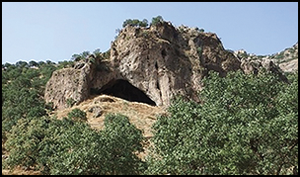
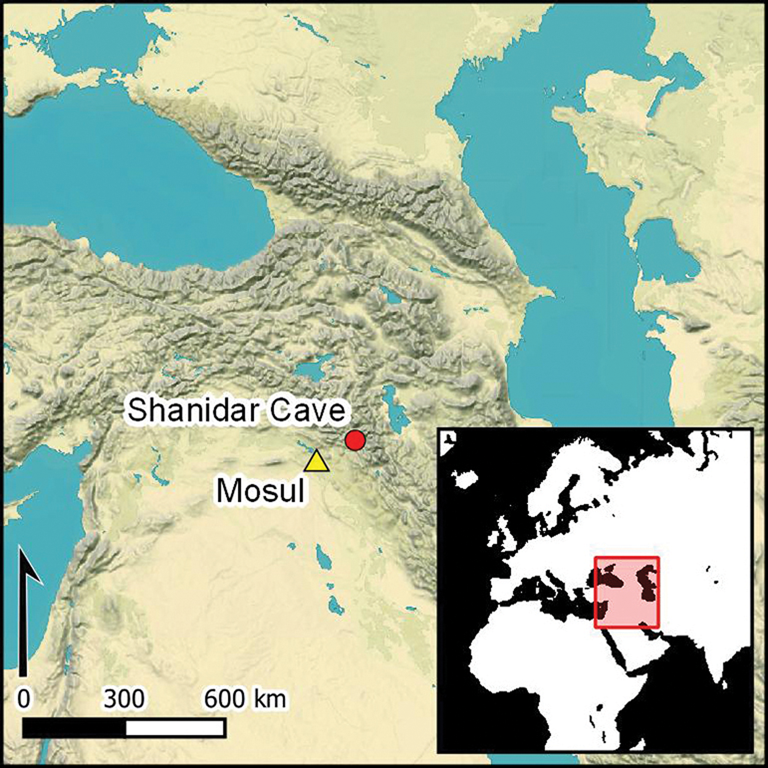
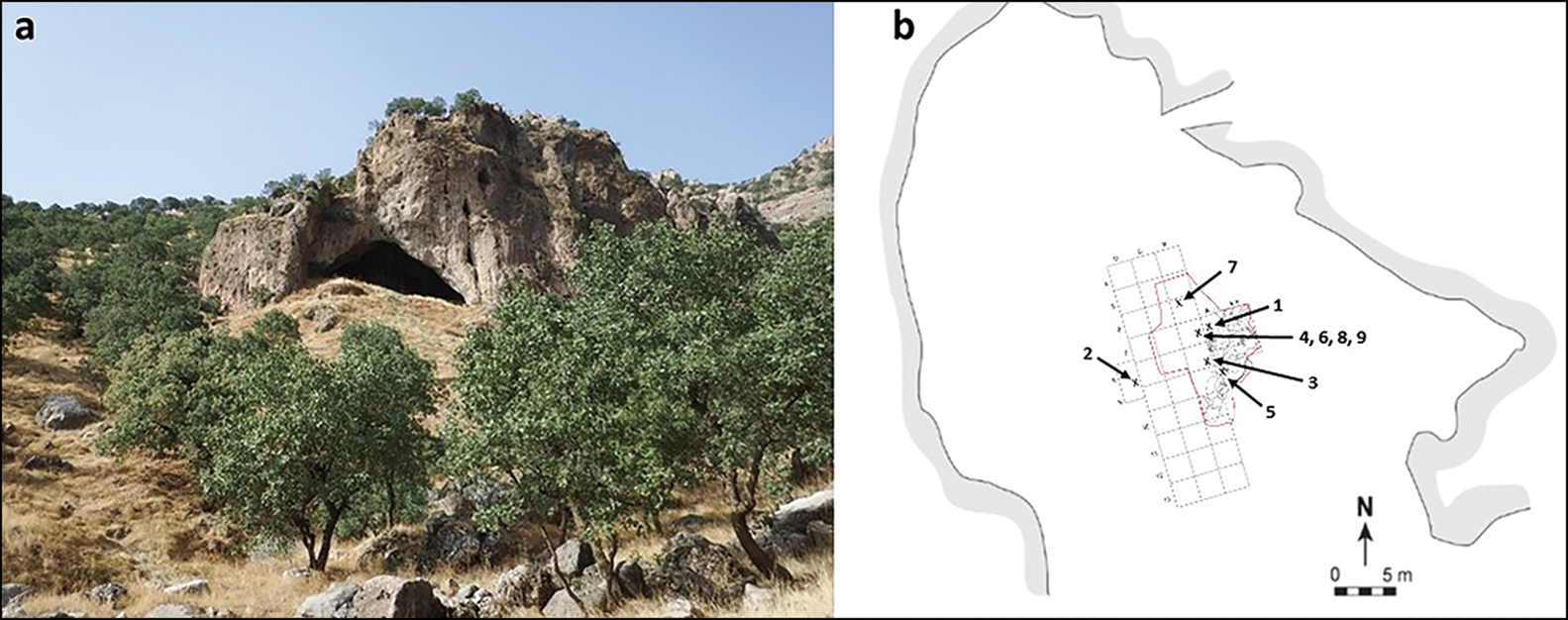
Shanidar Cave is a large, south-facing, karstic cave located at around 750m asl in the foothills of the Baradost Mountains of north-east Iraqi Kurdistan (Figure 1a). Between 1951 and 1960, Ralph Solecki dug an approximately 20 × 6m trench, oriented roughly north–south, in the centre of the cave floor. At its deepest point, the trench reached 14m below the ground surface (Figure 1b). Below the Epipalaeolithic and Upper Palaeolithic (‘Baradostian’) occupation levels, Solecki discovered, at a depth of 4–7m, the skeletal remains of 10 Neanderthal men, women and children (Trinkaus Reference Trinkaus1983; Cowgill et al. Reference Cowgill, Trinkaus and Zeder2007)—a unique assemblage that justifies the site's iconic status in Neanderthal archaeology (Solecki Reference Solecki1955, Reference Solecki1960, Reference Solecki1961, Reference Solecki1963, Reference Solecki1971). Solecki argued that while some of the individuals had been killed by rocks falling from the cave roof, others had been buried with formal burial rites. The latter group includes Shanidar 4, the famous ‘flower burial’, so-called because clumps of pollen grains from adjacent sediments were interpreted as evidence for the intentional placement of flowers with the corpse (Leroi-Gourhan Reference Leroi-Gourhan1975; Solecki Reference Solecki1975).
a) Shanidar Cave as viewed from the south; b) plan of Ralph Solecki's excavations at Shanidar Cave showing Solecki's trench (black grid), the locations of the Neanderthal skeletons he discovered (numbered) and the area of the new excavations undertaken since 2015 (red outline) (photograph by G. Barker, illustration by R. Solecki & R. Lane).
Although the ‘flower burial’ hypothesis was subsequently questioned (Gargett Reference Gargett1999; Sommer Reference Sommer1999), the Shanidar individuals play a central role in shaping our understanding of Neanderthal biology and behaviour. The disabling injuries exhibited by Shanidar 1, for example, suggest care for group members, while the puncture wound to Shanidar 3's ribs suggests interpersonal violence (Stewart Reference Stewart1969, Reference Stewart1977; Trinkaus Reference Trinkaus1983; Churchill et al. Reference Churchill, Franciscus, McKean-Peraza, Daniel and Warren2009; Trinkaus & Villotte Reference Trinkaus and Villotte2017). The assemblage continues to feature heavily in debates over Neanderthal mortuary practice and the evolutionary origins of intentional burial, as well as Pleistocene hominin behaviour, diet and morphology (e.g. Gargett Reference Gargett1989, Reference Gargett1999; Smirnov Reference Smirnov1989; Riel-Salvatore & Clark Reference Riel-Salvatore and Clark2001; Pettitt Reference Pettitt2002, Reference Pettitt2011; Vandermeersch et al. Reference Vandermeersch, Cleyet-Merle, Jaubert, Maureille and Turq2008; Henry et al. Reference Henry, Brooks and Piperno2011; Saers et al. Reference Saers, Shaw, Pomeroy, Ryan and Stock2017; García-Martínez et al. Reference García-Martínez, Radovčić, Radovčić, Cofran, Rosas and Bastir2018; Power et al. Reference Power, Salazar-García, Rubini, Darlas, Harvati, Walker, Hublin and Henry2018). Recent evidence for interbreeding between Neanderthals and modern humans (Green et al. Reference Green2010; Fu et al. Reference Fu2015; Prüfer et al. Reference Prüfer2017), and the likelihood that this occurred in South-west Asia (Kuhlwilm et al. Reference Kuhlwilm2016), bring new relevance to the archaeology of Shanidar Cave.
When the remains of Shanidar 4 were discovered in 1960, the decision was taken to remove them in a sediment block measuring approximately 1m2 and 0.5m deep, encased in wood and plaster. This block was then transported to the Baghdad Museum for excavation (Solecki Reference Solecki1971; Stewart Reference Stewart1977), during which it became evident that at least three adults were represented (Shanidar 4, 6 and 8), along with the vertebrae of an infant—Shanidar 9 (Stewart Reference Stewart1977; Trinkaus Reference Trinkaus1983). Due to disturbance of the block during transport from Shanidar to Baghdad (on a taxi roof! (Stewart Reference Stewart1977: 155)), the precise stratigraphic relationships between the individuals are unknown. It is clear, however, that Shanidar 4 was the uppermost in a cluster of individuals, suggesting either that multiple individuals died and/or were buried in the same place, or that Neanderthals returned to almost exactly the same spot to deposit multiple individuals (Solecki Reference Solecki1971, Reference Solecki1972; Stewart Reference Stewart1977). Either scenario would offer important, indeed unique, evidence for the complexity of Neanderthal mortuary activity. The detailed relationships between the individuals, and evidence for whether or not they were intentionally buried, however, have been unclear. Over the past five years, a research project has conducted new excavations at Shanidar Cave in order to address some of the questions left unanswered by the previous excavations, including the dates of the Neanderthals, their stratigraphic contexts and the nature of the mortuary activity associated with their deposition.
The new excavations
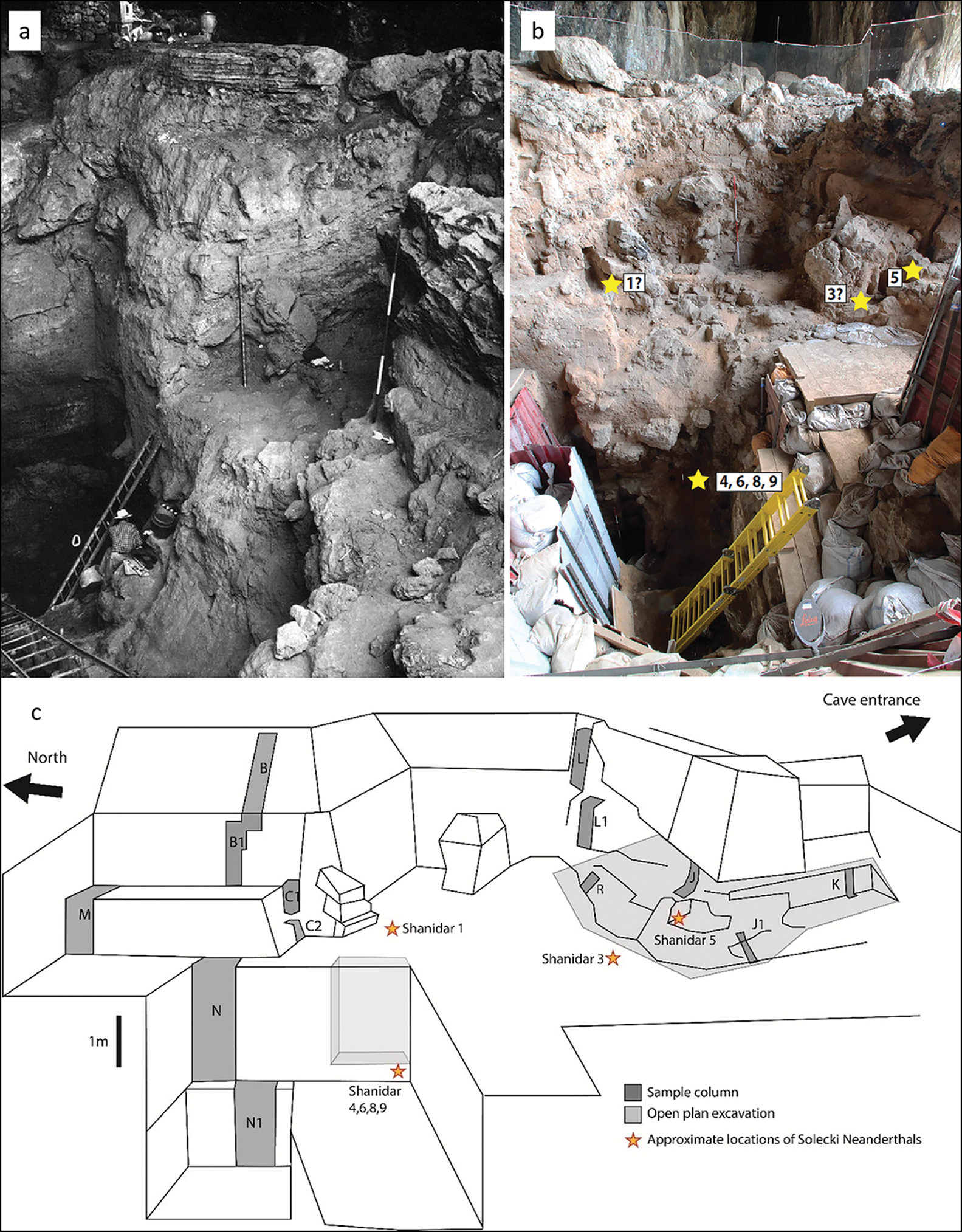
In 2014, at the invitation of the Kurdish Regional Government in Iraq, a project was initiated to conduct the first excavations at Shanidar Cave since 1960. The ISIS threat to Kurdistan, however, delayed the fieldwork, and excavations began in 2015. The eastern side of the Solecki trench where he had found most of the Neanderthal remains (Figures 1b & 2) was re-opened during the excavation. The project's objective was to conduct detailed work at the original trench margins in order to place Solecki's findings into a robust chronological, palaeoclimatic, palaeoecological and cultural framework, using the full range of modern archaeological science techniques that were unavailable at that time. Although we did not expect to find further remains belonging to the Solecki Neanderthals, we needed to establish their probable locations in order to date the sediments in which they were originally found. Solecki was unable to establish their date beyond a terminus ante quem for the upper remains (Shanidar 1, 3 and 5) of around 50 000–45 000 years ago, the then maximum age range of the radiocarbon method. Unexpectedly, in 2015 and 2016, we found several Neanderthal bones, including part of an articulated leg at approximately 5m below the cave floor. Archive photographs and morphological comparisons attribute these articulated remains to Shanidar 5, a male estimated to be 40–50 years old (Reynolds et al. Reference Reynolds, Boismier, Farr, Hunt, Abdulmultalb and Barker2015; Pomeroy et al. Reference Pomeroy, Mirazón Lahr, Crivellaro, Farr, Reynolds, Hunt and Barker2017). Initial radiocarbon and OSL dates by the University of Oxford (the calculation of some of the OSL dates against background radiation is still in progress) indicate that this individual, along with the other upper Neanderthal remains (Shanidar 1 and 3), date to c. 55 000–45 000 years ago.
a) The Shanidar Cave excavations in 1960, looking north-west. T. Dale Stewart sits excavating Shanidar 4, the central scale marks the location of Shanidar 1 and the white arrow indicates the location of Shanidar 5 (photograph by R. Solecki; Reynolds et al. Reference Reynolds, Boismier, Farr, Hunt, Abdulmultalb and Barker2015); b) photograph of the new excavations showing the location of Solecki's Neanderthal finds (photograph by G. Barker); c) schematic diagram of the new excavations viewed from the west, showing: the estimated locations of the Neanderthal skeletal remains discovered by Solecki; the locations of the sample columns excavated in the new work; and the locations of the two main areas of open plan excavation (illustration by E. Hill).
The new Neanderthal skeletal remains
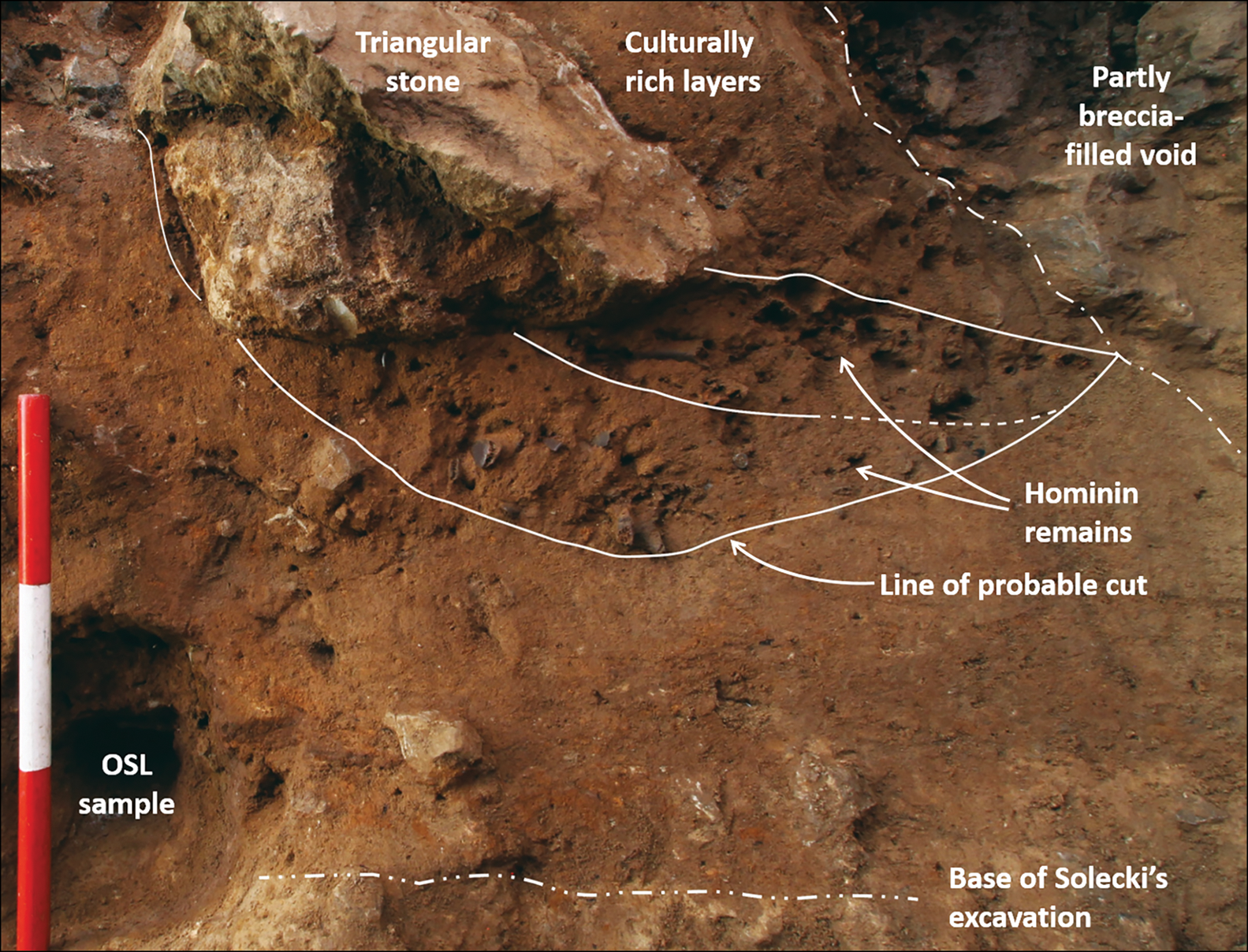
In 2017, we exposed and cleaned the upper part of the eastern face of Solecki's (Reference Solecki1953) deep sounding. At a depth of approximately 7m below the cave floor, we uncovered truncated ribs separated by a thin layer of sediment, the neural arch of a lumbar vertebra and the distal ends of metacarpals associated with several intermediate and distal phalanges belonging to a single, clenched right hand. These remains initially appeared to represent two separate individuals, all within a stratigraphically distinct curved-base scoop or depression, and overlain by two large rocks (Figure 3 & 4a–b). Except for the lumbar vertebra, the skeletal remains showed anatomical congruence, indicating that these were in situ articulated hominin remains. These bones were positioned on an almost identical level to, and just to the east of, the Shanidar 4 remains (Figure 4c). Small pockets of a white powdery deposit in the adjacent backfill are probably the remains of the plaster used to encase the Shanidar 4 sediment block (e.g. Constable Reference Constable1973). In cutting around the block, T. Dale Stewart, the palaeoanthropologist on Solecki's project, recalled that additional hominin remains were dislodged that clearly did not belong to Shanidar 4 (Stewart Reference Stewart1977). Moreover, Solecki (Reference Solecki1971: 243–44) recalled that some bones were visible in the east section after the removal of the block, although he expressed doubt as to whether they were hominin and, if so, part of, the Shanidar 4/6/8/9 group. Given their proximity to the Shanidar 4 block, and their truncation by its removal, the newly discovered in situ remains are presumably part of the same individual(s). Compact, unexcavated sediments approximately 0.25m below the new hominin remains and extending westwards from the section are consistent with the bottom of the ledge left by the removal of the Shanidar 4 block in 1960 (see Figure 4). At the end of the 2017 season, the newly exposed remains were protected with sandbags. Given evidence of disturbance to the section above them, however, the decision was taken in 2018 to cut the section back and to excavate the remains in plan.
Detail of the new hominin remains in section, looking east; scale 0.3m (photograph by G. Barker).
Drawing (a) and photograph (b) of section 70.1 showing the main features discussed in the text, viewed from the west; ‘M’ refers to the micromorphology sample location (illustration by P. Bennett and E. Pomeroy; photograph by G. Barker. Note that the drawing is prior to excavation; the photograph was taken during excavation); c) photograph of Shanidar 4 in situ in 1960, with Ralph Solecki on the left in the foreground, T. Dale Stewart behind him and Jacques Bordaz on the back right (photograph courtesy of the Smithsonian Institution: Series 1.7 Photographs and Slides 1950–2017, Box 59, Folder ‘Shanidar 4 Flower Burial’, Ralph S. and Rose L. Solecki papers, National Anthropological Archives). Note the vertical slab (1), rockfall (2), partly breccia-filled void (3) and triangular stone (4) referred to in the text.
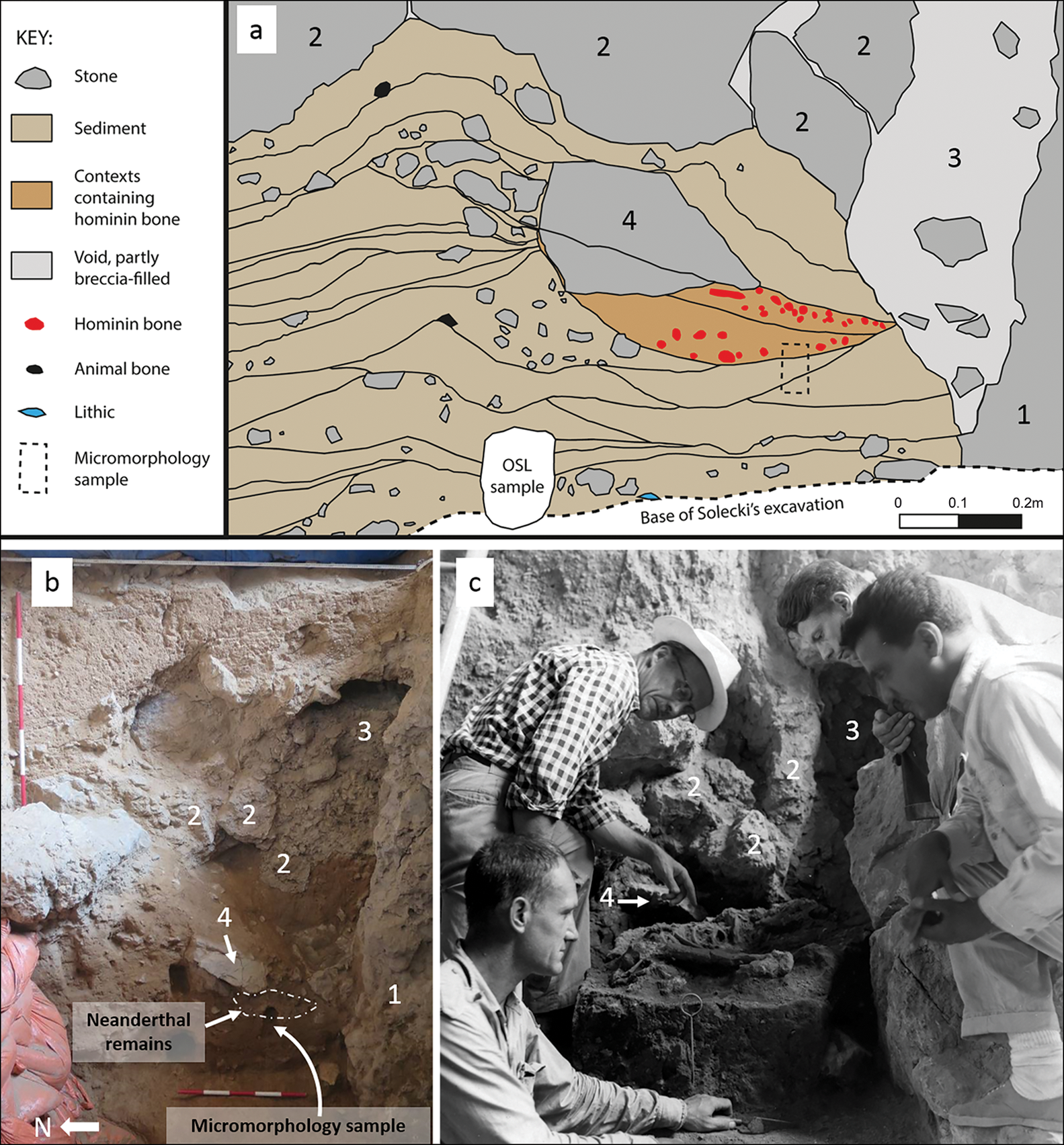
Removal of the disturbed sediment exposed a series of fine, silty brown sediment layers (Figures 3 & 4a) deposited by low-energy wash processes. Some of these layers were also anthropologically mediated as occupation floors, as indicated by the presence of charcoal, occasional lithics and splintered animal bone. These deposits abutted a large vertical slab of roof collapse to the south (labelled ‘1’ in Figure 4) that was in situ prior to their accumulation. They were overlain by major rockfall from the cave ceiling (labelled ‘2’ in Figure 4) that was separated from the vertical slab by a partly breccia-filled void (labelled ‘3’ in Figure 4). While the sediments containing the hominin remains were paler than the culturally rich layers above and below, they also contained charcoal, lithics and animal bone splinters. They were capped on their northern side by two stones—one on top of the other—that were horizontally oriented, in contrast with the predominantly vertical orientation of the rocks present higher up the stratigraphy that were interpreted as rockfall from roof collapse. These stones were partially covered by the uppermost of the culturally rich layers, which were, in turn, covered by the uppermost brown silty layer. This sequence demonstrates that the stones and the hominin remains below them were stratigraphically distinct from the later rockfall. The upper stone can be identified as the same distinctively shaped triangular stone visible in a 1960 photograph behind T. Dale Stewart's hand (labelled ‘4’ in Figure 4), confirming the close proximity of the new hominin remains to those of Shanidar 4.
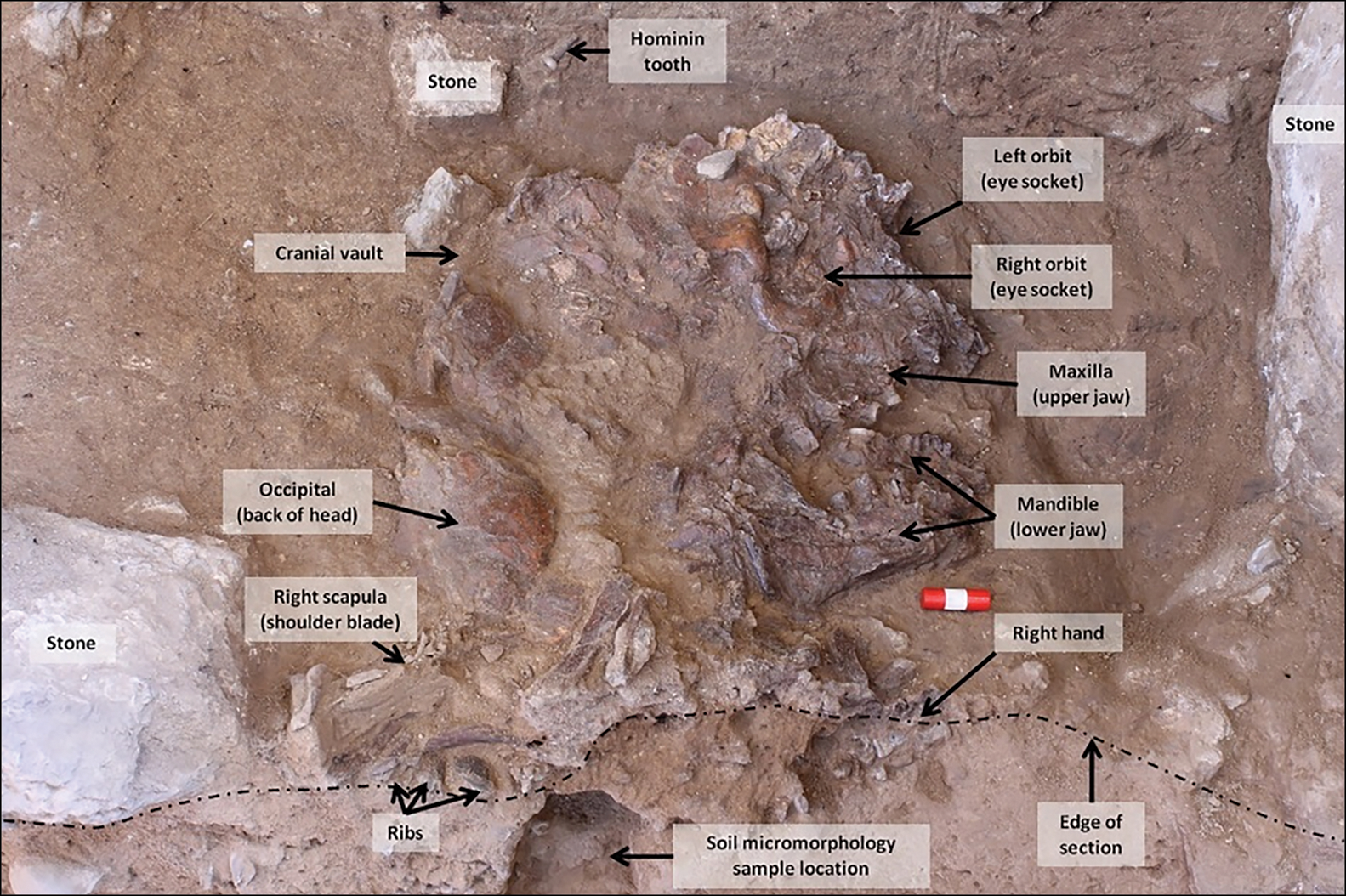
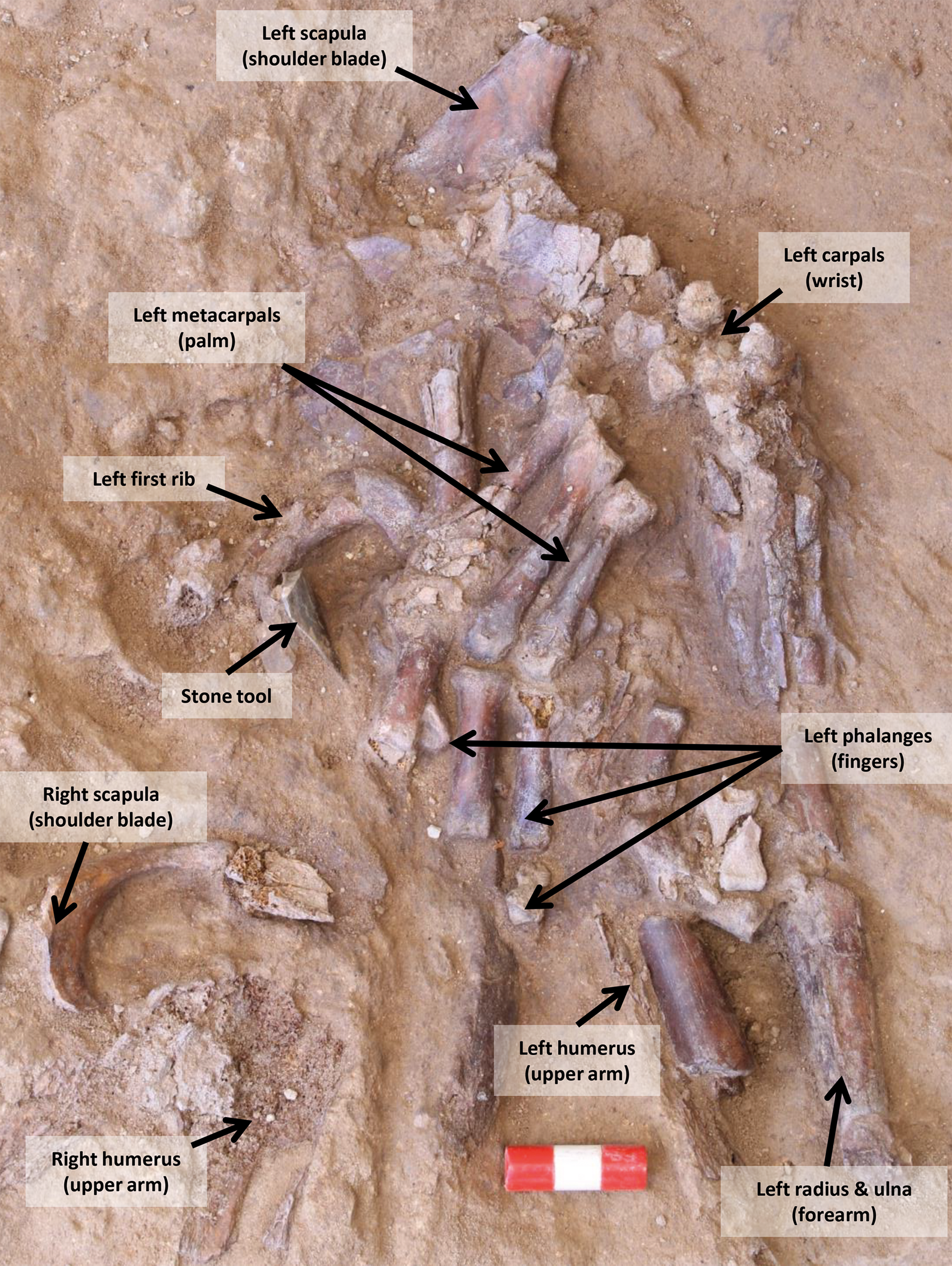
The uppermost remains comprised a relatively complete but extremely fragmented skull, crushed until almost flat (Figure 5). The triangular stone was located to the north of the skull, overlapping the cranial remains by only a few millimetres; it was, however, positioned directly above some of the ribs, suggesting that it was originally located behind the head. The skull itself lay on its left side, facing to the south. The thickness of the orbital margin and receding chin are consistent with its identification as a Neanderthal (Tattersall & Schwartz Reference Tattersall and Schwartz1998). The heavy dental attrition suggests a middle- to older aged adult, based on comparison with the other Shanidar Neanderthals (Trinkaus Reference Trinkaus1983), although more detailed analyses are currently underway. The left hand was directly below the skull: the wrist was tightly flexed and the forearm lay horizontally in an east–west orientation (Figure 6). The left fingers were flexed, but less tightly than the right, with the metacarpo-phalangeal joints extended. The right shoulder (acromion process of the scapula and shadow of a very poorly preserved proximal humerus) was almost adjacent to the triangular stone, while the left shoulder was at the same level as the right, lying to the east and slightly to the south. While the right humerus was truncated by Solecki's excavation, preserving only the proximal one-quarter to one-third of the bone, the position and orientation of the remaining portion of the bone and relative position of the right hand are consistent with a horizontal orientation of the right arm, which must have been tightly flexed at the elbow. The right hand was visible in the section to the south-west of the skull, and excavation confirmed that the fingers were tightly flexed. The left first and second ribs and left clavicle were identified between the shoulders and close to the left metacarpals.
Excavated skull in situ; north is to the left of the image; scale is 30mm (photograph by G. Barker).
The upper body and left arm remains that lay beneath the skull; north is to the left of the image; scale is 30mm (photograph by G. Barker).
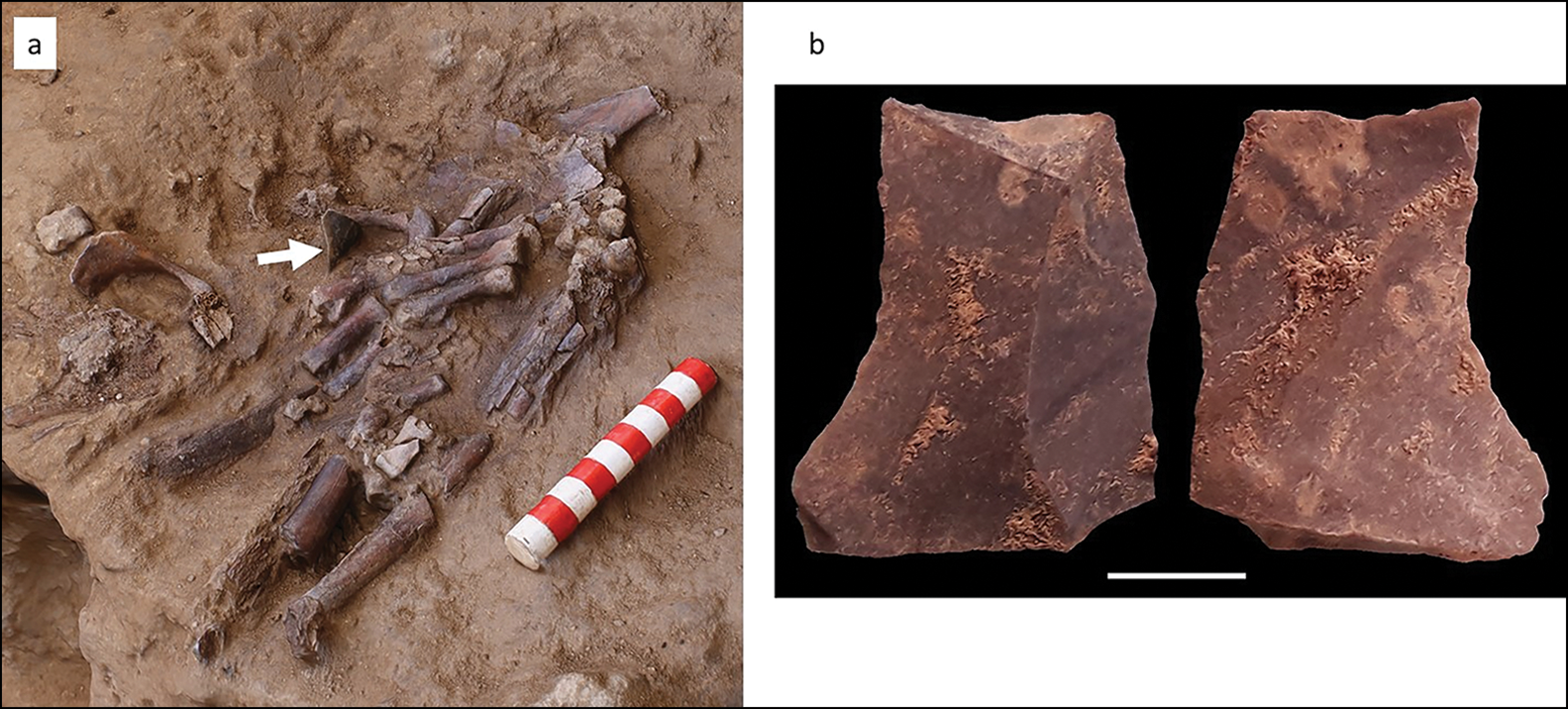
A single lithic artefact was located within the curvature of the first left rib, near to the rib neck but not in contact with the rib surface (Figure 7). This piece is a distal chert blade-flake fragment that had been transversely snapped, and displays some evidence of edge damage/use. Even within the overlying occupational layer, lithics of this size are very infrequent finds; within the deposits containing the hominin bones, this is one of only two such lithic tools found to date. Its rarity may support an interpretation of this lithic as having some significance beyond a chance inclusion in the surrounding sediments. Clearly, though, additional evidence is needed to make any firm inferences.
a) The lithic (indicated by white arrow) sitting inside the curvature of the first left rib and near the left hand of the new Neanderthal remains; looking north-east; scale = 0.10m (photograph by R. Lane, from photogrammetry model of the excavations); b) detail of the lithic, scale = 10mm (photograph by T. Reynolds).
All bones were in an anatomical position, with only slight displacement of some elements, for example at the carpo-metacarpal joints of the left wrist. The bone itself was poorly mineralised, highly fragile and often friable. Multiple (3–4) coats of a ~20 per cent solution of Paraloid B72 in acetone were applied to consolidate the bone, which was then lifted in small blocks (typically 50–100mm diameter, 10–20mm thickness) with the surrounding sediment. Due to time constraints, the first and second left ribs and all remains below that level, including the possible second individual observed in section in 2016 and 2017 (Figure 4), have been left in situ for future excavation.
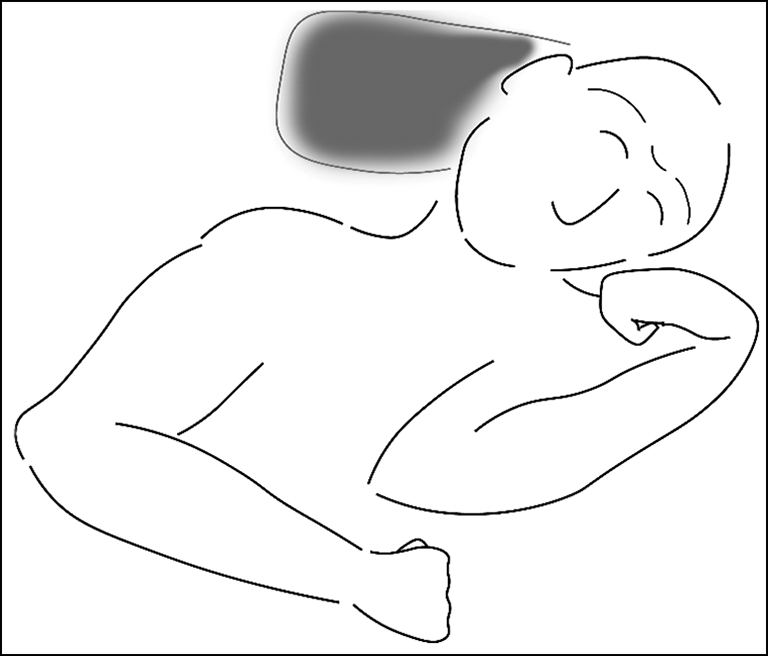
Although the skeleton is only partially excavated, we can offer initial interpretations of body position. The individual was probably placed on their back, with the shoulders and head raised, and the head resting on its left side on top of the left hand (Figure 8). The triangular stone would have been behind the head and right shoulder. The shoulders lay approximately level with one another, and both arms were flexed at the elbow, with the left arm crossing the body and the right projecting laterally. The left wrist was tightly flexed, while the right was probably not, given the position of the right proximal humerus and hand. We do not know the position of the lower limbs, which may have been truncated or may, as yet, remain unexcavated, but, considering the close proximity of the vertical slab to the south, they were probably flexed. The right elbow and potentially other parts extended underneath, or extremely close to, the body of Shanidar 4. The bodily position of the newly discovered remains contrasts with that of Shanidar 4, which was placed in a foetal position on its left side.
Reconstruction of the possible burial position of the new Neanderthal remains from Shanidar Cave; the stone behind the head is shown in grey (illustration by E. Pomeroy).
The limited extent of the excavation and tight space within which it took place did not allow us to delimit in plan the sides or base of the depression (or scoop) in which the remains are located. Nor could we gain a view of the depression or scoop in section from another angle, which might have helped to clarify the natural or anthropogenic origin of the feature containing the bones. The feature's anthropogenic origin, however, is strongly suggested both by the stratigraphic observations in 2016 and 2017 (Figure 4), and the micromorphology of a sediment block cut across the feature's boundary (Figures 4a & 9). This shows, in cross section, two hominin rib fragments lying on a very abrupt truncation contact marked by an irregular planar void between two main sediment types. According to the macro-stratigraphy, the lower sediment relates to the natural, geomorphological cave deposits underlying the scoop feature, and the upper sediment containing the ribs is the deposit in-filling the scoop feature. The fill deposits probably relate to the same event as the body placement, as there is no evidence for the accumulation of the fluvial or colluvial material that may be expected in a natural channel. The deposits underlying the cut feature predominantly comprise well-sorted silts and clays that appear to be compacted just below the base of the cut, which is again consistent with an anthropogenic cut rather than a natural channel. The deposits also exhibit discontinuous fine bedding suggestive of localised, low-energy erosive inputs.
Micromorphology thin section through the cut feature containing the new hominin remains (image by L. Farr).
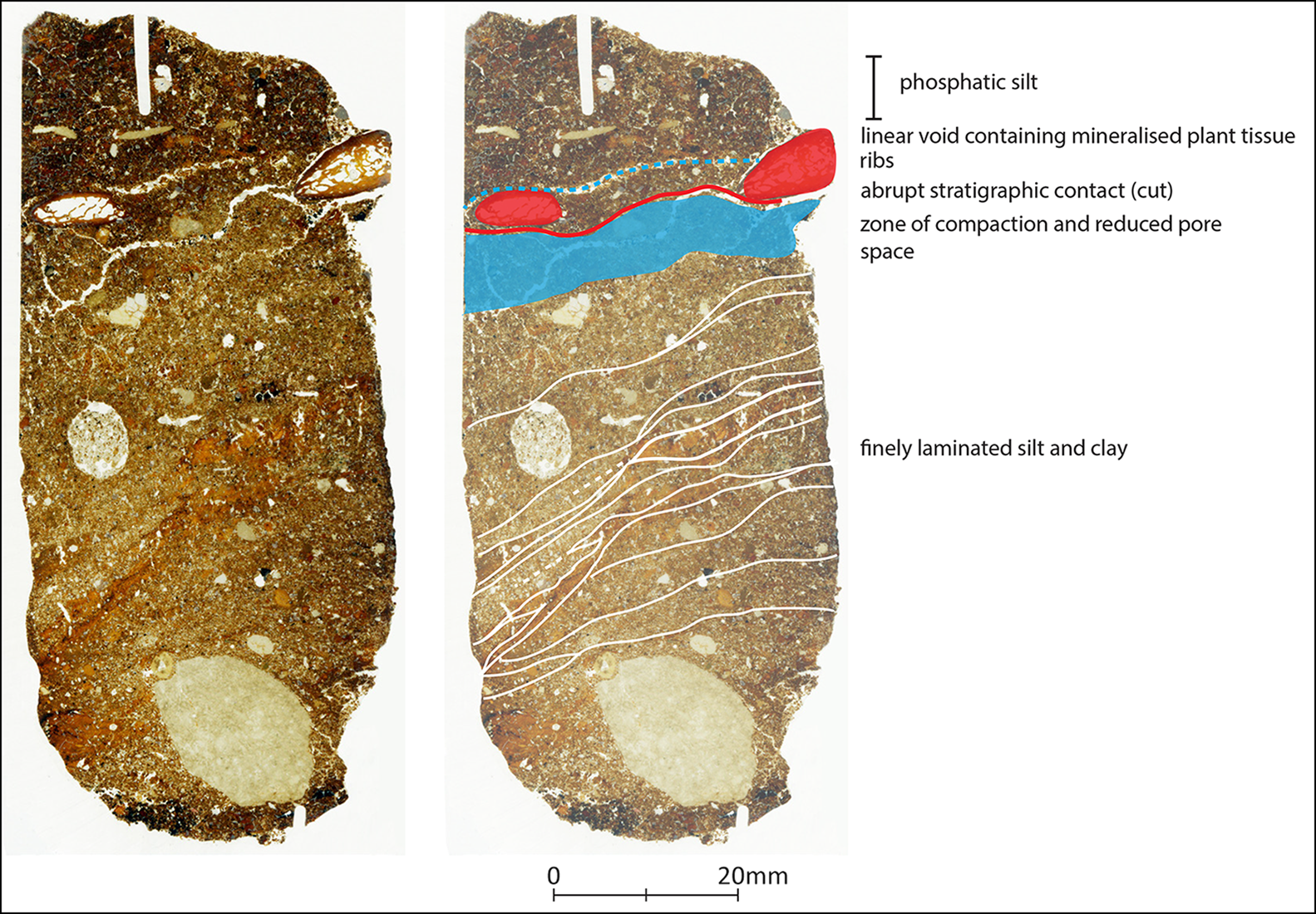
The sediment overlying the rib fragments is a homogeneous dark brown silt containing amorphous sesquioxide-replaced (by the secondary formation of iron oxides) plant tissue fragments and phosphatic (red-brown) material in-filling the pore spaces. The plant tissue fragments are potentially of great significance, given previous discussions of plant matter associated with Shanidar 4 (Solecki Reference Solecki1971, Reference Solecki1975; Leroi-Gourhan Reference Leroi-Gourhan1975). In-depth analyses to identify the plant material, including any pollen that may be present, are therefore underway. The cementing phosphatic material may relate, in part, to the in situ diagenesis of human bone and soft tissue, although some probably derives from exogenous sources, such as guano and animal bone, both of which are significant components of this part of the cave fill. The absence of bedforms and structures characteristic of mass flow, aeolian and fluvial sedimentary processes (e.g. grain-size sorting, fabric and bedding structures), which could be ascribed to natural processes, implies a singular, rapid-deposition event.
This evidence, in conjunction with the macroscopic stratigraphic observations, the articulated nature of the remains and the presence of multiple individuals within a small horizontally and vertically confined space combine to make a strong case for deliberate burial in a cut feature. Furthermore, the sedimentary association of the triangular rock with the bones, and the rock's morphological and locational distinctiveness compared with other rocks resulting from rockfall in adjacent parts of the stratigraphy, could suggest its deliberate placement at the time of the burial.
It is unlikely that the cluster represents a group of individuals who died from exposure or from rocks falling from the cave roof. Solecki (Reference Solecki1971, Reference Solecki1972) argued that several Shanidar Neanderthals were killed by rockfall, although, notably, not the Shanidar 4/6/8/9 group, which he considered to represent intentional burials. Palynological and sedimentological evidence suggests that the 4/6/8/9 cluster and the newly discovered remains were deposited in a climatically warm period, making deaths from exposure unlikely. Rockfall events are generally associated with colder periods (Inglis et al. Reference Inglis, French, Farr, Hunt, Jones, Reynolds and Barker2018), and are absent in these layers. Finally, the completeness and articulated nature of the remains would argue against natural deaths that left the bodies exposed and susceptible to scavengers, for any period of time.
The ages of samples taken for OSL dating from immediately below the depression, and from stratigraphically equivalent layers 1.5m to the north, are still being assessed in the light of extensive background radiation measurements taken in 2018. The preliminary indications are that the new skeletal remains—and probably the burial group with which they are associated—date to between 70 000 and 60 000 years ago.
The relationship between the new remains and the Shanidar Neanderthals
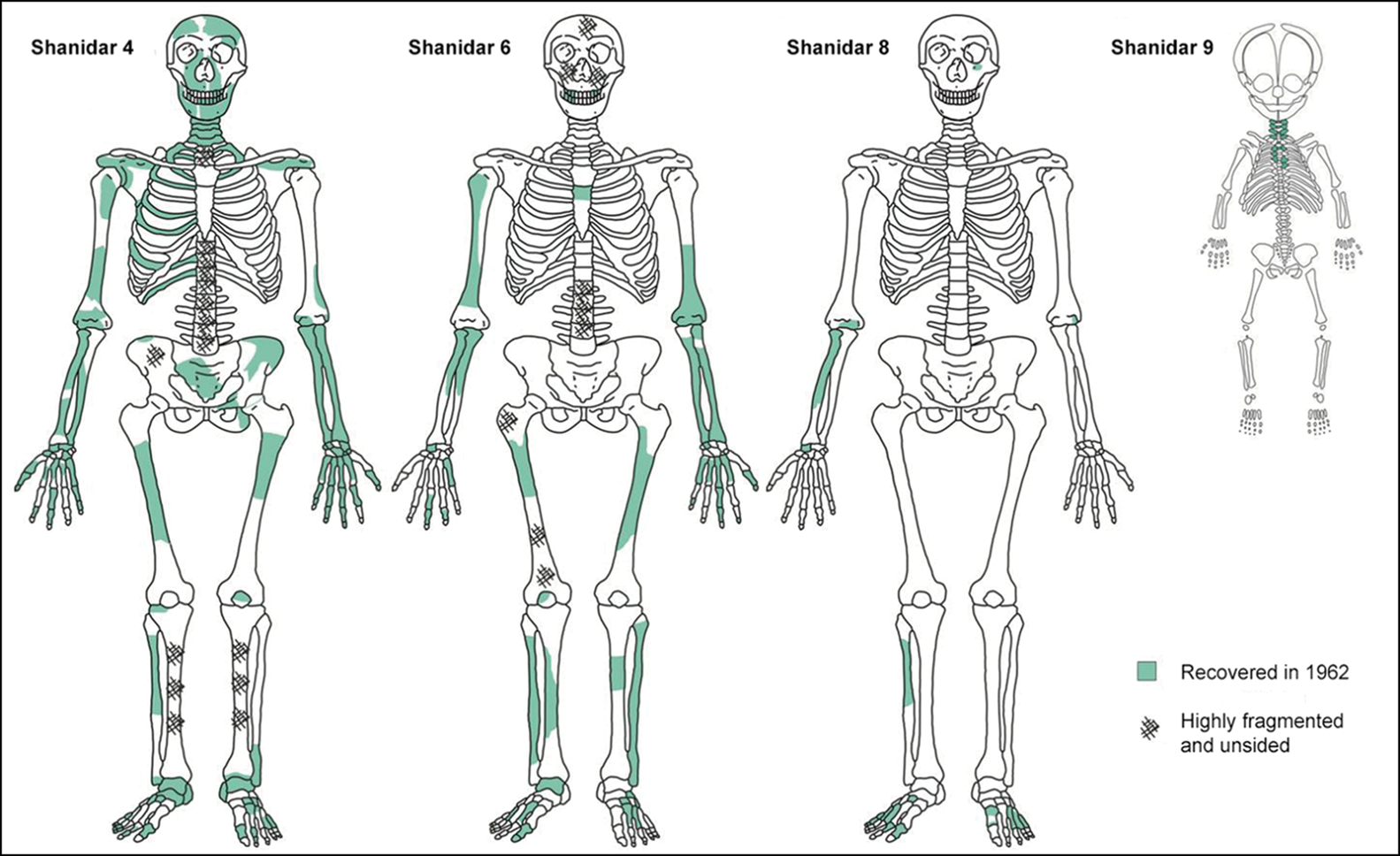
Following their excavation from the sediment block in the Baghdad Museum in 1962, Shanidar 4 was assessed as a male, and the two smaller adult individuals were designated as female (Stewart Reference Stewart1977; Trinkaus Reference Trinkaus1983). Bones that could not belong to Shanidar 4, either because they duplicated existing elements or were incompatible in size, were attributed to Shanidar 6, and any further duplicated adult skeletal elements were assigned to Shanidar 8 (Figure 10). Clearly, the new remains cannot belong to Shanidar 9 based on age at death. Rather, they probably belong to one of the other two adults found with Shanidar 4, given the close proximity between the new and old remains, and the fact that the new individual must have been truncated by the removal of the sediment block. Although the new finds duplicate some of the Shanidar 6 elements, Shanidar 6 and 8 are essentially collections of additional adult skeletal elements that could not have belonged to Shanidar 4 (Trinkaus Reference Trinkaus1983), rather than representing discrete individuals. These finds need to be re-assessed alongside the new remains in order to distinguish correctly the two (or potentially more) individuals that they collectively represent. The only elements of Shanidar 6 observed in situ by T. Dale Stewart in 1962 were the right fourth and fifth metatarsals, which were near the centre of the sediment block (as viewed in plan), the distal part of the left fibula and part of the right fibula, which were positioned to the south (Stewart Reference Stewart1977). It is therefore plausible that the lower legs and feet, along with other elements currently attributed to Shanidar 6, actually belong to the new individual.
Preserved skeletal elements of Shanidar 4, 6, 8 and 9, compiled based on Trinkaus (Reference Trinkaus1983); note that skeleton outlines are not scaled relative to one another (illustration by E. Pomeroy).
Conclusion
The discovery of new, articulated Neanderthal remains directly adjacent to the Shanidar 4 ‘flower burial’ offers a rare opportunity to investigate Neanderthal mortuary activity with a full range of modern archaeological techniques. Debates continue around whether Neanderthals intentionally buried their dead and, if they did, how their mortuary activity varied spatially and geographically. These ongoing debates necessarily rely heavily on the re-evaluation of older excavations conducted at a time when standards of excavation, sedimentary analysis and documentation differed from those of today (e.g. Sandgathe et al. Reference Sandgathe, Dibble, Goldberg and McPherron2011; Rendu et al. Reference Rendu2014; Dibble et al. Reference Dibble, Aldeias, Goldberg, McPherron, Sandgathe and Steele2015; Goldberg et al. Reference Goldberg, Aldeias, Dibble, McPherron, Sandgathe and Turq2017; Gómez-Olivencia et al. Reference Gómez-Olivencia, Quam, Sala, Bardey, Ohman and Balzeau2018). The new in situ articulated Neanderthal remains from Shanidar Cave reported here, in combination with their stratigraphic contexts, provide strong evidence for the deliberate burial of this individual. They also offer an unparalleled opportunity to reassess the relationships between the individuals represented by the Shanidar 4, 6, 8 and 9 remains, and to consider whether this unique assemblage represents evidence of simultaneous (or near simultaneous) burial activity or of Neanderthals returning to the same place over time to deposit their dead. An array of analyses of the new Neanderthal remains and of the sediments in which they are located is underway in order to investigate further the morphology, diet, health and genetic relationships of this unique collection of Neanderthal remains. Finally, in the light of such additional work and excavations, conducted during September 2019, it has been determined that all of the hominin remains in the section wall described herein belong to a single individual.
Acknowledgements
We wish to thank the Kurdistan Regional Government for the original invitation to G.B. to plan new excavations at Shanidar Cave, and the Kurdistan General Directorate of Antiquities for permission to conduct these excavations and to study the finds, as well as for invaluable logistical support. In particular, we thank the General Director Mala Awat and his successor Kaifi Mustafa Ali, the Director for the Soran District Abdulwahab Suleiman, and the on-site inspectors from the Soran District Directorate of Antiquities, Dlshad Abdulmutalb and Jeghir Khalil. We gratefully acknowledge financial support from the Leverhulme Trust (Research Grant RPG-2013-105), the Rust Family Foundation, the British Academy, the Wenner-Gren Foundation, the Society of Antiquaries, the McDonald Institute of Archaeological Research at the University of Cambridge and the Natural Environment Research Council's Oxford Radiocarbon Dating Facility (grant NF/2016/2/14). The ongoing dating programme is also supported by the European Research Council under the European Union's Seventh Framework Programme (FP7/2007–2013)/ERC grant agreement number 324139 ‘PalaeoChron’ awarded to Tom Higham, University of Oxford.
A tribute to Ralph S. Solecki, 1917–2019
This article is dedicated to the memory of Ralph S. Solecki, who died in March 2019 aged 101, and who was always a strong supporter of our new work. His work at Shanidar Cave, supported by his wife Rose (who concurrently excavated the nearby Neolithic site of Zawi Chemi Shanidar), had a profound impact on our understanding of Neanderthal biology and behaviour. Not only did he and his team uncover remarkable evidence of 10 Neanderthal men, women and children at Shanidar Cave that provides key data on Neanderthals in South-west Asia, but Solecki's subsequent discussion of how they lived and died did much to change perceptions of Neanderthals in general.
Perhaps most famously, he argued that Shanidar 4 had been buried with flowers, based on palynological work by Arlette Leroi-Gourhan. He also argued that the Shanidar 1 skeleton provides evidence of compassion and care for the sick and infirm, and for intentional burial with accompanying ritual activities for several of the Shanidar individuals. While the ‘flower burial’ and some of his other arguments remain controversial, Solecki did much in his writings to ‘humanise’ Neanderthals and emphasise the similarities to our own species in their thinking and actions, in contrast with widespread conceptions of Neanderthals as brutish cavemen.
Solecki was best known for his pioneering work at Shanidar Cave, although his research also included the archaeology of his local region near New York, as well as Alaska, Sudan, Syria and Lebanon. He completed his PhD at Columbia University in New York, and briefly served as an Associated Curator of Archaeology at the Smithsonian Institution, before taking a faculty position at Columbia University, where he worked from 1958 until his retirement in 1988. Between 1990 and 2000, he was Adjunct Professor at Texas A&M University.
The Shanidar Cave evidence continues to feature strongly in debates concerning Neanderthal capacities for compassion and mortuary behaviour. It also continues to provide samples for novel methods, such as the analyses of dental calculus, which are making significant contributions to our knowledge of this species. Several members of the current Shanidar Cave team had the great privilege of meeting Ralph and Rose, who were both extremely supportive of the new work. Their son John told them of the new Neanderthal remains found at Shanidar Cave in 2018, and they were both very excited to hear about these discoveries. We hope that our work at this exceptional site will continue the legacy of Ralph and Rose, and bring further insights into Neanderthal behaviour and mortuary activity.


 Open access

