


Highlights
-
• Younger participants and those living in Canada vs. USA were more likely to have attended ER for migraine in the previous 12 months.
-
• Smartphone app users recorded attacks within hours of onset.
-
• Variability in timing between migraine attack onset and arrival at ER presents challenges for assessing causal links to environmental exposures.
Introduction
Migraine is the second leading cause of years lived with disability worldwide.Reference James, Abate and Hassen Abate1 This brain disease is the sixth most prevalent disease worldwide in both men and women.Reference Hyeraci, Gini and Bezin2 Migraine resulted in over 45 million years of life lived with disability in 2016Reference Wijeratne, Crewther and Crewther3 and causes greater workplace productivity loss than arthritis and diabetes combined.Reference Zhang, McLeod and Koehoorn4 Despite an estimated 11% of Americans and Canadians living with migraine,Reference Hazard, Munakata, Bigal, Rupnow and Lipton5,6 this condition remains underdiagnosed and undertreated.Reference Hazard, Munakata, Bigal, Rupnow and Lipton5,Reference Cooke and Becker7
There is increasing interest in group-level or environmental factors related to migraine.Reference Elser, Kruse, Schwartz and Casey8 These include green space, extreme weather and pollution.Reference Elser, Kruse, Schwartz and Casey8 For example, recent animal and observational studies have suggested that exposure to high levels of air pollution (e.g., nitrogen dioxide or NO2) may trigger migraine attacks. Exposure to NO2 induced migraine-like behavior and physiology in rats via calcitonin gene-related peptide (CGRP).Reference Ye, Li and Ma9,Reference Ye, Wei and Jiang10 CGRP is part of an established migraine-related pain pathway and the target of anti-CGRP migraine medications. The findings from these animal studies are supported by findings in our recent systematic review that the majority of observational studies of air pollution and migraine outcomes detected positive associations.Reference Portt, Orchard, Chen, Ge, Lay and Smith11
ER visits for migraine have been the dominant outcome used in migraine and air pollution studies to date.Reference Portt, Orchard, Chen, Ge, Lay and Smith11,Reference Sabour, Harzand-Jadidi, Jafari-Khounigh, Zarea Gavgani, Sedaghat and Alavi12 Findings from these studies are mixed, which motivated this study. Specifically, while emergency room (ER) data provide access to a larger sample of migraine events with lower costs than studies using surveys or migraine diaries, it is unknown what proportion of migraine events are represented in ER data or whether community-level characteristics moderate the relationship between migraine events and ER visits.
Additionally, if there are differences between migraine events and ER visits across population subgroups, then this poses challenges for the use of ER visits to answer causal research questions. Previous studies have demonstrated that people with migraine delay going to the ER. For example, a prospective multinational study of 1,101 ER visits for migraine across 10 countries found that 26% of patients waited three or more days to attend the ER.Reference Wijeratne, Kuan and Kelly13 Another study found 9% of migraine ER patients had ongoing headaches for at least one week prior to attending the ER.Reference Minen, Loder and Friedman14 These variations in delay accessing ER services add uncertainty to the measurement of time of onset, undermining efforts to determine causal relationships to environmental exposures. Since defining the timing of the exposure and outcome is critical for determining causal relationshipsReference Rothman15, ER visits may not be an optimal measure of migraine outcomes for community-level research.
Smartphone app data may present a way forward for more accurate migraine event timing. With an estimated 4.7 billion smartphone users in 2022,Reference Tenzer16 smartphones and health apps are increasing in popularity.Reference Fischer and Kleen17 Health apps allow individuals to monitor their health and can also allow researchers to collect clinical or observational data.Reference Fischer and Kleen17 For example, the Migraine Buddy app allows users to track their potential migraine triggers, attack timing and treatments. The app produces analyses of triggers and treatment effects, as well as creating reports of events and migraine disability to share with the user’s clinician. Users may consent to share their data for research, creating a rich individual-level dataset that can be linked to environmental exposure data.
To date, app-based data has still not been used in many epidemiological studies.Reference Fischer and Kleen17 Potential advantages include real-time recording and data transfer and daily longitudinal tracking over long time periods.Reference Fischer and Kleen17 These advantages must be weighed against data quality and security concerns.Reference Fischer and Kleen17
Our primary objective was to examine if demographic or geographic groups (by sex, age or country) were more or less likely to be present in ER data following a migraine event. Our secondary objective was to assess the ER visits and attack recording habits of Migraine Buddy smartphone app users. Our results lend insight into the use of smartphone datasets for understanding the relationship between community-level exposures and migraine.
Methods
Sample and recruitment: We recruited a non-random sample of volunteer participants with migraine living in Canada or the USA. From August to October 2023, participants were invited to participate by Migraine Quebec and Migraine Canada via their social media platforms including Facebook, X (formerly Twitter) and Instagram. Participants were also invited through monthly e-newsletters at Migraine Quebec and Migraine Canada and through the Migraine Buddy app in Canada and the USA. Therefore, the sample frame included individuals who followed Migraine Quebec or Migraine Canada on social media, who received newsletters from these organizations, and Migraine Buddy users, who lived in Canada or the USA and opened the research tab during recruitment or anyone who had information forwarded from those sources. No monetary incentives were provided. See supplementary data for further details.
Eligible participants were residing in Canada or the USA and had experienced a migraine attack in the 12 months preceding the survey.
Participants who were Migraine Buddy users had the option to provide their email address to link their Migraine Buddy record diaries to their survey responses. Migraine Buddy diaries were collected separately, via the Migraine Buddy app. The app diaries included date and time of attack onset and attack resolution and type of attack. We analyzed diaries for the 12 months leading up to survey closure on October 31, 2023.
Survey: We designed a survey of ER use related to migraine among people who experience migraines in Canada and the USA. The survey consisted of 19 questions about ER use, reasons for visits, challenges in getting to the ER or at the ER and participants’ attack-related recordkeeping. Questions were a combination of multiple-choice and open text. We restricted demographic survey questions to country, age and sex to reduce the length of time required to complete the survey and because of predicted small cell sizes. The survey was hosted online by the Migraine Buddy team at Aptar Digital Health, then known as Healint, Inc.
Ethics approval: This study was approved by the University of Toronto Health Sciences Research Ethics Board (protocol #38331).
Eligibility: Our analysis included participants who reported either having been diagnosed by a doctor or symptoms meeting the International Classification of Headache Disorders 3 (ICHD-3) migraine criteria. The ICHD-3 criteria include headaches that last 4 hours or more, with at least two of unilateral location, pulsating quality, aggravation by physical activity and moderate to severe pain, as well as one of nausea, vomiting, photophobia or phonophobia.
Statistical analyses: We stratified our main analyses based on country of origin to gain insights into similarities and differences in Canada and the USA. Continuous variables included age and number of reported ER visits and were presented as mean (range) and binned in figures to protect privacy due to small cells. Categorical variables included sex, country of origin, reasons for attending or avoiding ER and attack-recording behaviors and were presented as numbers (%) with chi-square significance tests with alpha-value of 0.05.Reference McHugh18 Narrative comments were summarized by one reviewer.
We used logistic regression analysis to identify predictors of attending ER. We investigated the linearity of the relationship between age and attending ER by including an age-squared term in our model. As this term was not statistically significant, we assumed a linear relationship between age and the likelihood of ER attendance. To aid in the interpretation of the estimate, we included age in 10-year categories so that the estimate is the decreased likelihood per 10-year age grouping. Models were assessed by Akaike’s information criteria, where a lower AIC represents better model fit.Reference Dohoo, Martin and Stryhm19
 $$ \log\left({p \over 1-p}\right)=\beta _{1}X^{{\rm sex}}+\beta _{2}X^{{\rm age}}+\beta _{3}X^{{\rm country}} $$
p = probability of visiting ER in the previous 12 months
β = coefficient to the corresponding variable
Analyses were undertaken and described in QuartoReference Scheidegger, Woodhull, Dervieux, Teague, Allaire and Xie20 using R version 2024.04.0 + 735.21 Analytic code is available at https://github.com/aportt/ER-migraine.git.
Results
Eligibility
In total, 414 people started the survey (see Figure 1). Of these, 25 either declined consent or did not report migraine symptoms meeting ICHD-3 migraine criteria or having been diagnosed by a doctor. This left 389 consenting participants who met ICHD-3 criteria and/or had been diagnosed by a doctor.
Inclusion of participants who consented to participation and had either been diagnosed with migraine in the past or reported symptoms matching the ICHD-3 criteria for migraine in the past year. A subgroup of participants were Migraine Buddy users who agreed to share their headache diaries from the app.

Figure 1 Long description
The flowchart begins with 414 initial responses. From these, 22 participants declined participation, leaving 392 consenting participants. Of these, 3 participants were excluded because they were not diagnosed with migraine or their symptoms did not meet the ICHD-3 criteria for migraine. This resulted in 389 consenting participants with confirmed migraine. Among these, 51 participants shared their Migraine Buddy headache diaries and had recorded diary events from November 2022 to October 2023.
Among the 87 participants who reported using Migraine Buddy, 51 (58.6%) agreed to link their migraine diary data and had recorded any events (migraine or other) in their diary in the 12 months leading to survey closure. This subgroup of participants also had an even distribution in ages from 15 to 70 years and were mainly female (data not shown).
Demographics and migraine diagnoses
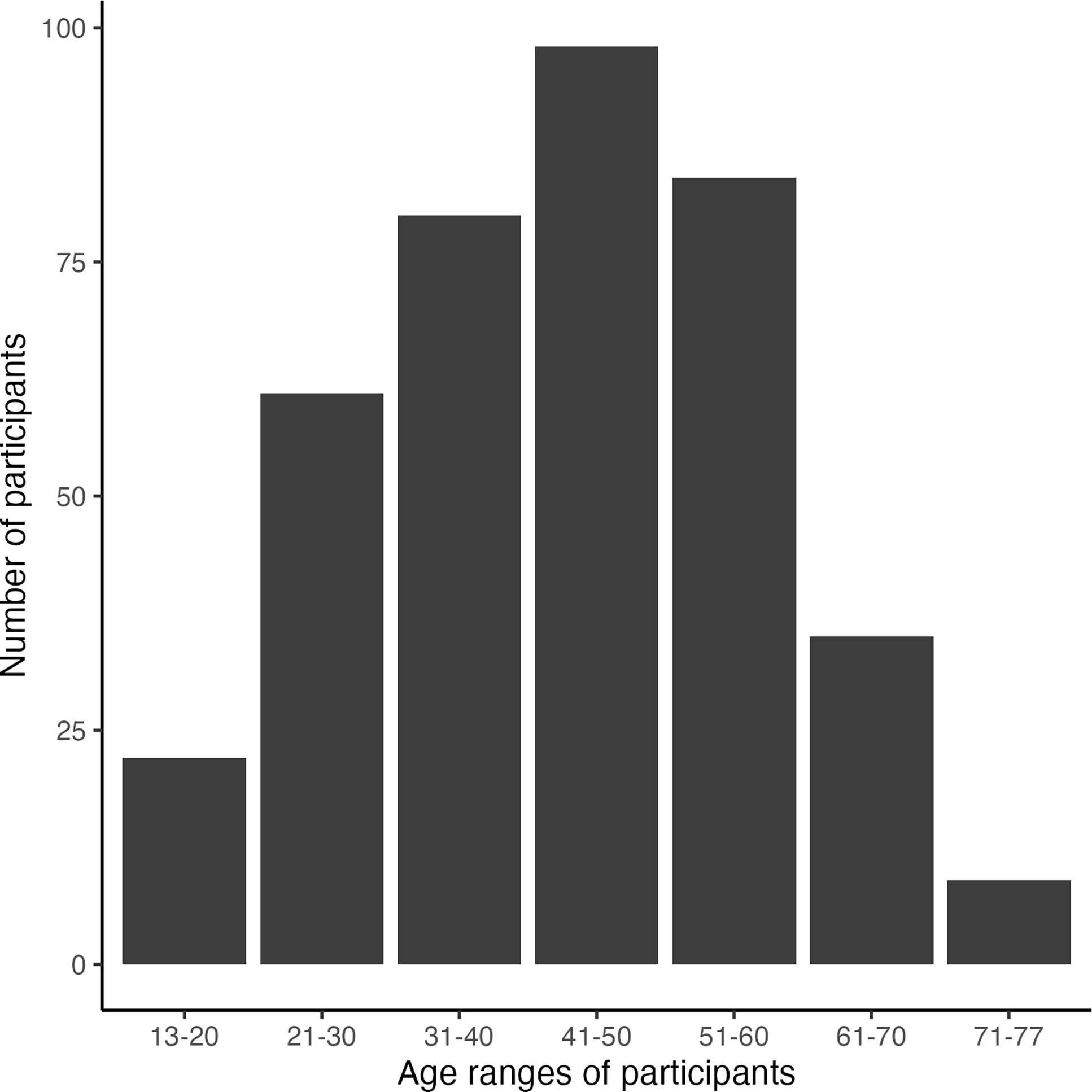
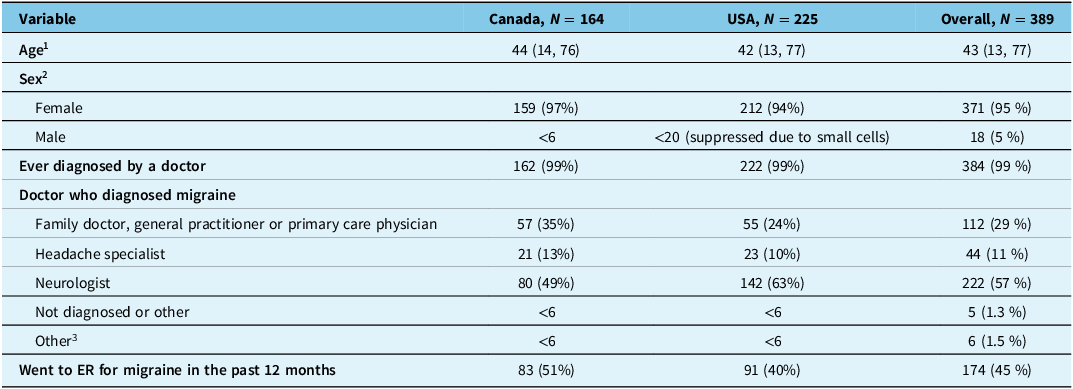
As shown in Table 1, 164 participants were from Canada, with 225 (57.8%) participants from the USA. Ages ranged from 13 to 77 years. Different age categories were well represented within the range (Figure 2). A doctor had diagnosed 99% of participants, with most diagnoses by neurologists, followed by primary care physicians and headache specialists.
Age ranges of 389 participants who completed the survey and reported either a diagnosis by a doctor or symptoms that met the ICHD-3 criteria for migraine.

Figure 2 Long description
The bar graph displays the number of participants in various age ranges who completed a survey on migraine. The x-axis represents age ranges of participants, divided into seven categories: 13-20, 21-30, 31-40, 41-50, 51-60, 61-70, and 71-77. The y-axis indicates the number of participants, ranging from 0 to 100. The bars are vertical and show the following approximate values: 25 participants in the 13-20 age range, 60 participants in the 21-30 age range, 80 participants in the 31-40 age range, 100 participants in the 41-50 age range, 90 participants in the 51-60 age range, 50 participants in the 61-70 age range, and 10 participants in the 71-77 age range. The highest number of participants is in the 41-50 age range, while the lowest is in the 71-77 age range. All values are approximated.
Demographic and migraine diagnosis information from eligible participants who completed the online survey and reported diagnosis by a doctor and/or symptoms matching the ICHD-3 criteria for migraine

Table 1 Long description
The table presents demographic and migraine diagnosis information from participants in Canada and the USA. It includes data on age, sex, diagnosis by a doctor, the type of doctor who diagnosed migraine, and whether participants went to the emergency room for migraine in the past twelve months. The table has four columns: Variable, Canada with 164 participants, USA with 225 participants, and Overall with 389 participants. Key variables include age, sex, diagnosis by a doctor, the type of doctor who diagnosed migraine, and emergency room visits. Notable trends include a high percentage of participants diagnosed by neurologists and a significant number of participants visiting the emergency room for migraine in the past twelve months.
1Mean (range); 2n (%). 3Other: all of the above, ER doctor, ophthalmologist or psychiatrist.
All consenting participants reported at least one migraine attack in the 12 months preceding their completion of the survey. Nearly half (44.7%) of participants had visited the ER for migraine in the past 12 months.
Number of annual ER visits and smartphone app records
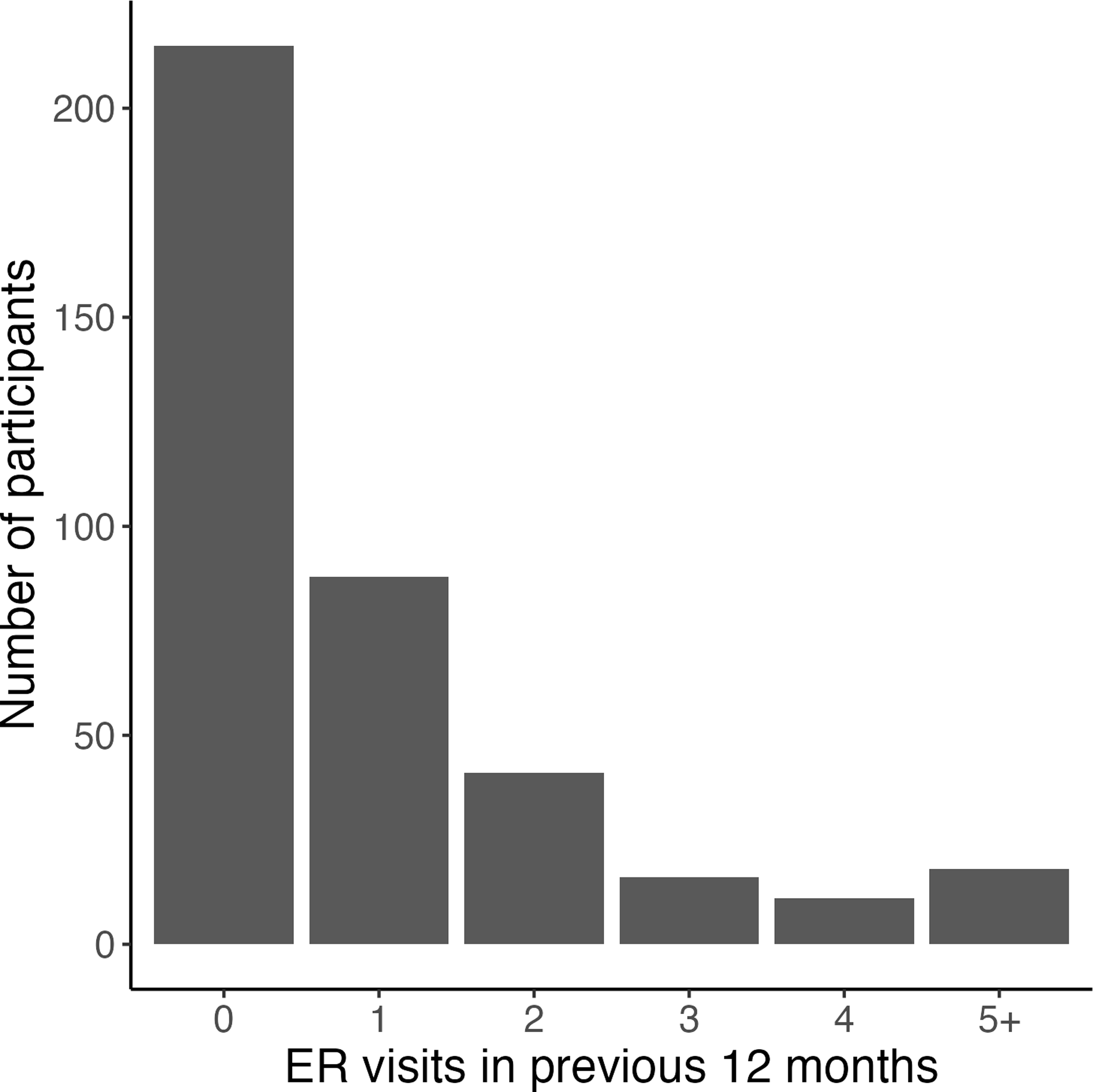
As shown in Figure 3, 174 (44.7%) of participants had visited the ER in the past year. Among those, 88 (22.6% of the total sample) had been once, 41 (10.5%) had visited twice and 27 (6.9%) had visited 3 or 4 times in the past year, with an additional 18 (4.6%) visiting more than 4 times.
Distribution of number of emergency room (ER) visits among participants who had visited the ER in the previous 12 months.

Figure 3 Long description
The bar graph displays the number of participants on the y-axis and the number of ER visits on the x-axis. The x-axis ranges from 0 to 5 or more visits. The y-axis ranges from 0 to over 200 participants. The tallest bar represents participants with 0 ER visits, followed by a shorter bar for 1 visit, and even shorter bars for 2, 3, 4, and 5 or more visits. The data shows a significant decrease in the number of participants as the number of ER visits increases. All values are approximated.
Among survey participants who agreed to share their smartphone data, a small number (<6) had not recorded any migraine attacks in Migraine Buddy diaries during the 12-month period before the survey closed (data suppressed due to small cells). This disagrees with the survey data, wherein all participants reported at least one migraine in the past 12 months.
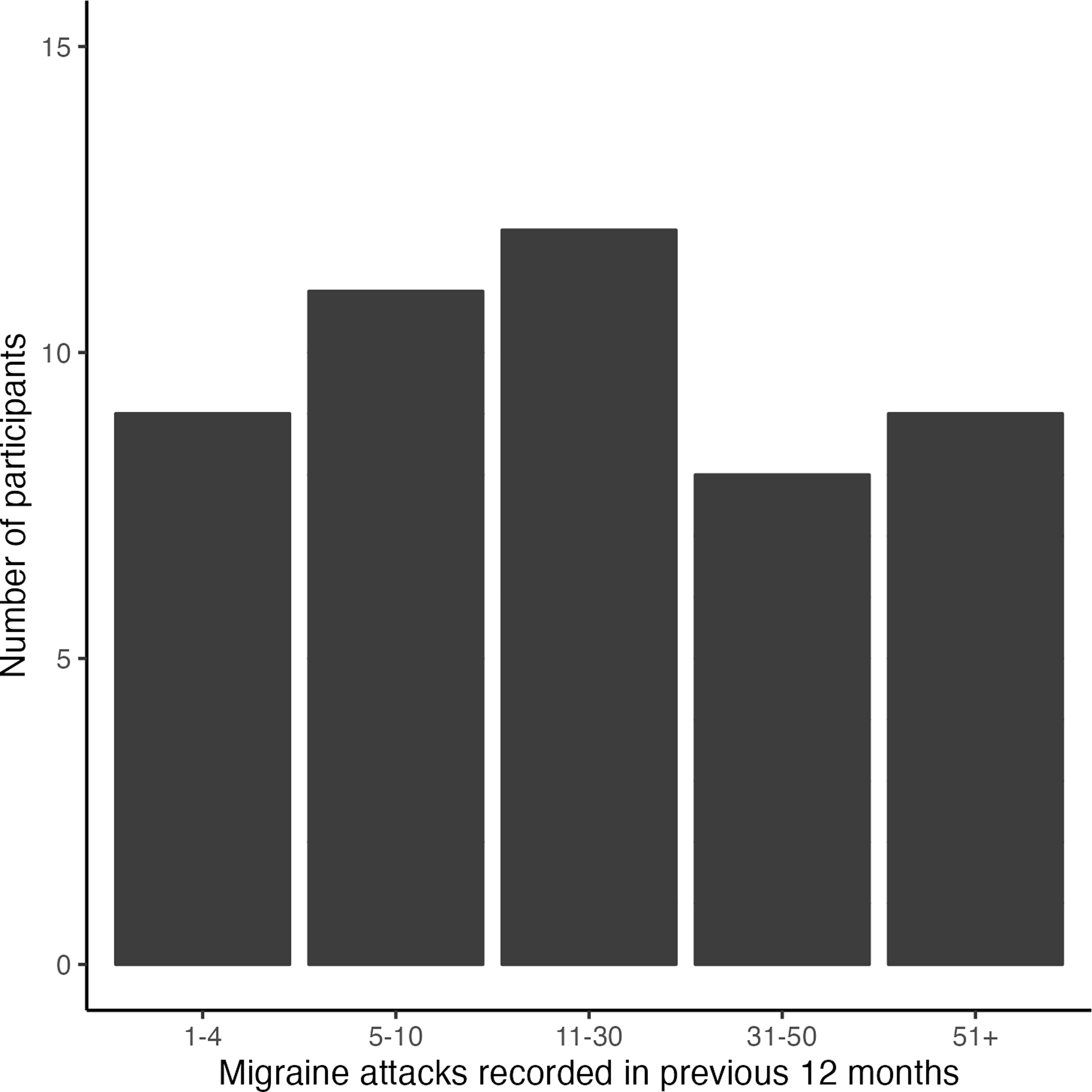
Migraine Buddy users recorded more migraine events in the app than ER visits. Compared to ER visits, Migraine Buddy users were more likely to include two or more attacks within a 12-month period (see Figure 4). There was a wide distribution of attack record numbers, with many participants reporting more than 10 migraine attacks. In contrast, the mean number of ER visits for this subgroup was 1.1, with a range of 0–15.
Distribution of the number of recorded migraine attacks by survey participants who were Migraine Buddy users during a 12-month period.

Figure 4 Long description
The bar graph illustrates the distribution of recorded migraine attacks by survey participants who were Migraine Buddy users during a 12-month period. The x-axis represents the number of migraine attacks recorded in the previous 12 months, divided into five categories: 1-4, 5-10, 11-30, 31-50, and 51+. The y-axis indicates the number of participants, ranging from 0 to 15. The bars are vertical and show the following data: 8 participants recorded 1-4 migraine attacks, 12 participants recorded 5-10 attacks, 14 participants recorded 11-30 attacks, 8 participants recorded 31-50 attacks, and 9 participants recorded 51 or more attacks. The highest number of participants falls within the 11-30 attacks category. All values are approximated.
Reasons for visiting ER
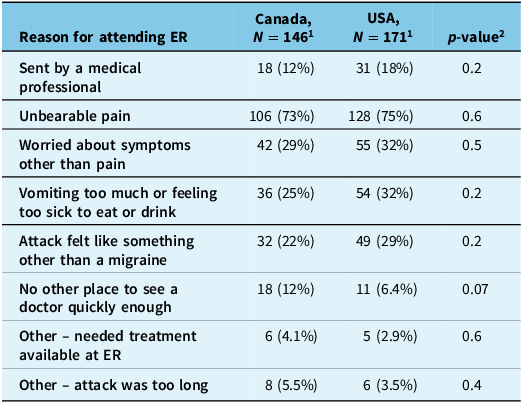
We asked the 143 participants who thought about going to the ER and the 174 participants who went to the ER about their reasons for considering ER treatment (see Table 2). The proportions reporting reasons for the ER visits were very similar in the two countries. Over 10% in both countries were sent by a medical professional, two-thirds cited unbearable pain and approximately one-third were worried about symptoms other than pain. Approximately one-quarter to one-third had concerns about vomiting or not being able to eat or drink or were worried that the attack may be something other than a migraine. Participants in both countries also listed the need for medication that was only available at the ER as a reason to visit or think about visiting the ER. In narrative comments, 14 (4%) of participants wrote that the length of their ongoing attack was a factor in considering an ER visit. These participants reported problematic lengths of attack ranging from 2 to 38 days. None of these factors were statistically significantly different between Canada and the USA.
Self-reported reasons for considering or attending the ER

Table 2 Long description
The table compares reasons for attending the emergency room (ER) between Canada and the USA, with data for 146 participants in Canada and 171 participants in the USA. The table has six rows and five columns, including headers for the reason for attending the ER, the number and percentage of participants in Canada, the number and percentage of participants in the USA, and the p-value. The reasons listed include being sent by a medical professional, experiencing unbearable pain, worrying about symptoms other than pain, vomiting too much or feeling too sick to eat or drink, feeling like the attack was something other than a migraine, having no other place to see a doctor quickly enough, needing treatment available only at the ER, and the attack being too long. Notable trends include a high percentage of participants in both countries citing unbearable pain as a reason for attending the ER, with 73 percent in Canada and 75 percent in the USA. Other common reasons include worrying about symptoms other than pain and concerns about vomiting or not being able to eat or drink. The p-values indicate that there are no statistically significant differences between the two countries for any of the reasons listed.
1n (%)
2Pearson’s chi-squared test
These similarities suggest that migraine attacks severe enough for participants to consider or actually visit the ER had similar clinical features in the USA and Canada. However, participants in Canada were twice as likely as participants in the USA to have no other place to see a doctor quickly enough (Canada = 12%, USA = 6.4%), although this difference was not statistically significant at the 0.05 level (p = 0.070).
Notably, a small number of participants (<6) wrote that they went to the ER because they needed a safe place due to a risk of self-harm during the attack.
Time lags in app records
As described above, many survey participants noted in narrative comments that attacks that continued for days or weeks led them to attend the ER. To gain insight into whether smartphone app record creation was subject to similar delays, we analyzed the time between reported attack onset and event recording in the Migraine Buddy diaries.
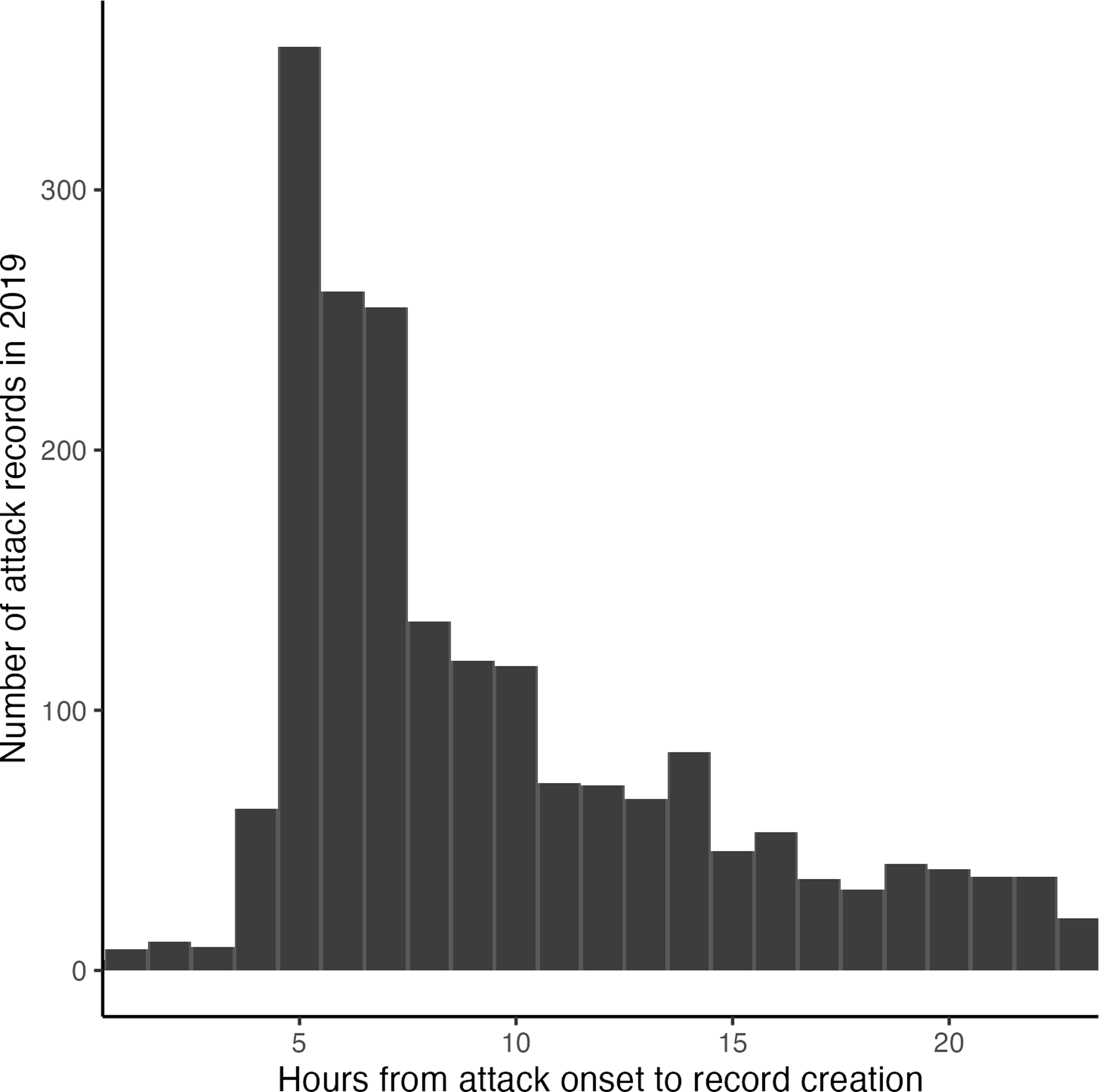
As seen in Figure 5, most lag times between the record creation and the reported time of migraine attack onset were 10 hours or less in diaries. Notably, these short lag times were consistent across reported pain severity (data not shown).
Time between reported attack onset and creation of the attack records in a Migraine Buddy dataset.

Figure 5 Long description
A histogram showing the number of attack records in 2019 based on the hours from attack onset to record creation. The x-axis represents the hours from attack onset to record creation, ranging from 0 to 25 hours. The y-axis represents the number of attack records, with values ranging from 0 to over 300. The histogram consists of vertical bars, each representing a specific time interval. The highest bar, indicating the most frequent time interval, is around 5 hours from attack onset to record creation, with over 300 records. The frequency of records decreases as the time interval increases, with notable peaks around 10 and 15 hours. The distribution shows a right-skewed pattern, indicating that most records are created within the first 10 hours after the attack onset. The data is discrete, and all values are approximated.
Predictors of ER attendance
We analyzed sex, age and country as predictors of ER attendance among survey participants. In analyses to assess the linearity of the association between age and attending ER for migraine, age squared was not statistically significant, and setting age as a nominal variable did not change the results. Neither of these models improved (reduced) the AIC. Hence, we kept age, in 10-year increments, as a linear variable in our model for parsimony and ease of interpretation. A sensitivity analysis showed that including the kind of doctor who diagnosed was not associated with the likelihood of attending the ER.
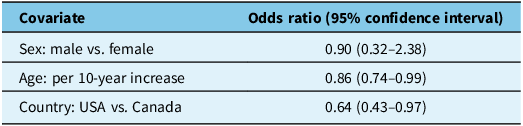
As seen in Table 3, the point estimate for males attending ER was below one, with a wide confidence interval including the null value of 1.00 (OR: 0.90, 95 % CI 0.32–2.38). Increasing age was statistically significantly associated with lower odds of attending ER (OR per 10-year increase in age: 0.86, 95 % CI 0.74–0.99). Living in the USA was also statistically significantly associated with lower odds of attending the ER compared to living in Canada (OR: 0.64, 95 % CI 0.43–0.97).
Estimated odds ratios of survey participants attending emergency room based on sex, age and country of residence

Table 3 Long description
The table presents estimated odds ratios of survey participants attending the emergency room based on three covariates: sex, age, and country of residence. It consists of three rows and three columns. The columns are labeled 'Covariate', 'Odds ratio', and '95 percentage confidence interval'. The first row compares males versus females, with an odds ratio of 0.90 and a confidence interval of 0.32 to 2.38. The second row shows the odds ratio per 10-year increase in age, which is 0.86 with a confidence interval of 0.74 to 0.99. The third row compares the odds ratio for living in the USA versus Canada, which is 0.64 with a confidence interval of 0.43 to 0.97. The table indicates that increasing age and living in the USA are statistically significantly associated with lower odds of attending the emergency room.
Reasons to avoid the ER and challenges to visiting the ER
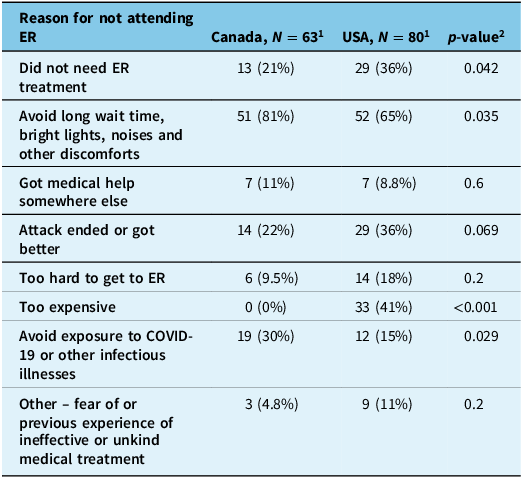
For participants who had thought about going to the ER but did not go (n = 143), not needing ER treatment (21% Canada and 36% USA) and avoiding long wait times and discomfort at ER (81% Canada and 65% USA) were important considerations (see Table 4).
Self-reported reasons for not attending the emergency room (ER) during a migraine attack (n = 143)

Table 4 Long description
The table compares reasons for not attending the emergency room during a migraine attack between Canada and the USA. It includes data for 63 participants in Canada and 80 participants in the USA. The table has six columns: Reason for not attending ER, Canada N = 63, USA N = 80, and p-value. The reasons listed include not needing ER treatment, avoiding long wait times and discomfort, getting medical help elsewhere, the attack ending or getting better, difficulty getting to the ER, expense, avoiding exposure to COVID-19 or other infectious illnesses, and other reasons such as fear or previous negative experiences. Notable trends include a higher percentage of participants in the USA citing not needing ER treatment (36%) compared to Canada (21%), and a significant difference in the expense category, with 41% of USA participants finding it too expensive compared to 0% in Canada. Avoiding long wait times and discomfort is a major reason in both countries, with 81% in Canada and 65% in the USA.
1n (%)
2Pearson’s chi-squared test
A small proportion of participants (22% Canada and 36% USA) did not go to the ER because their attack ended or improved. Some participants were able to get medical help elsewhere (11% Canada and 8.8% USA). Other participants did not go to the ER because of difficulties getting to the hospital (9.5% Canada and 18% USA).
Canadians were statistically significantly more likely to avoid ER out of concern for long wait times or exposure to COVID-19 or other infectious illnesses (81% Canada and 65% USA, p = 0.029); only American participants cited avoiding the ER due to cost (0% Canada and 41% USA, p < 0.001).
In free-text notes, participants in both countries cited fear of, or previous experience with, ineffective or unkind treatment (4.8% Canada and 11% USA) as a deterrent to going to the ER. Lack of childcare was also reported as a reason to not consider or to avoid going to the ER.
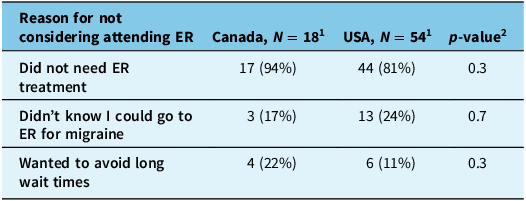
There were 72 participants who had not thought about going to the ER for any migraine attack in the past 12 months. We asked them why they had not considered going to the ER, with multiple reasons allowed (Table 5).
Self-reported reasons to not consider attending the emergency room (ER)

Table 5 Long description
A table with three rows and four columns compares reasons for not considering attending the emergency room for migraine in Canada and the USA. The columns are labeled 'Reason for not considering attending ER', 'Canada, N = 18', 'USA, N = 54', and 'p-value'. The rows list reasons: 'Did not need ER treatment', 'Didn't know I could go to ER for migraine', and 'Wanted to avoid long wait times'. For 'Did not need ER treatment', 17 participants in Canada (94 percent) and 44 in the USA (81 percent) cited this reason, with a p-value of 0.3. For 'Didn't know I could go to ER for migraine', 3 in Canada (17 percent) and 13 in the USA (24 percent) cited this reason, with a p-value of 0.7. For 'Wanted to avoid long wait times', 4 in Canada (22 percent) and 6 in the USA (11 percent) cited this reason, with a p-value of 0.3.
1n (%)
2Fisher’s exact test
As expected, the most common reason for not thinking about visiting the ER for migraine was not needing ER treatment (94% Canada and 81% USA, respectively, p = 0.3). Canadians were twice as likely as Americans to not think about going to the ER because of long wait times (22% Canada and 11% USA, p = 0.3), although this difference was not statistically significant.
Other reasons participants reported in comments included cost, fear of unkind treatment or being treated as drug-seeking, consulting directly with a doctor instead and being unable to make treatment decisions due to the attack.
In contrast, a small number of participants (<6) wrote of positive or partially positive (<6) experiences during ER visits. Positive experiences at the ER included being taken seriously and feeling empathy from medical staff, the dimming of lights during care and effective treatment leading to mitigation or resolution of symptoms.
Creation of smartphone attack records by participants
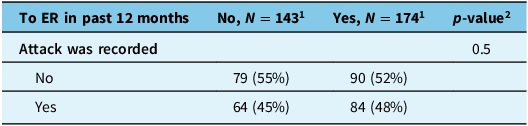
Of 317 participants who thought about going or did go to the ER, 148 (46.7%) recorded the associated migraine attack (Table 6). There was no clear relationship between ER attendance and recording the migraine event electronically, with similar proportions of non-ER and ER visitors (45% and 48%) recording the event electronically (see Table 6). Most (70.9%) of the participants who recorded the attack used electronic methods. These included smartphone apps, spreadsheet apps and electronic medical records.
Relationship between having recorded migraine events in smartphone diaries or other diaries and visiting the emergency room (ER) in the previous 12 months among survey participants (n = 317)

1n (%)
2Pearson’s chi-squared test
In the survey, all Migraine Buddy users (n = 57, including Migraine Buddy users who did not link their data) reported recording the attack that made them consider going to or actually going to the ER. Over the same period, linked Migraine Buddy users reported migraine attacks on 1356 additional days. Possibly due to recall bias or different times of completion of the survey, a small number (<6) of linked Migraine Buddy diaries did not include any migraine attacks in the 12 months before the survey closed, despite all users reporting having recorded the events leading to ER visits.
Discussion
Our primary objective was to assess whether differences in sex, age and location were associated with the likelihood of visiting the ER during a migraine attack. In this non-probability online survey, we found that younger respondents and those living in Canada (compared to the USA) were more likely to have attended the ER for migraine over the past year. Important barriers to visiting ER included wait times, discomforts and potential infectious disease exposure in the ER, cost, and difficulties getting to the ER.
Our secondary objective was to assess the ER visits and attack recording habits of Migraine Buddy smartphone app users. We found that almost all Migraine Buddy users recorded ER-related and other migraine attacks in their diaries, generally within 10 hours of onset.
Taken together, our results suggest that ER records for migraine are not a random sample of severe migraine events. Smartphone diaries lack information from non-users but appear to include more chronologically accurate event data among users compared to time to ER presentation.
The symptoms that brought participants to the ER were similar in both countries. “Unbearable pain” was cited by two-thirds of participants. These results agree with a previous study by Wijeratne et al., Reference Wijeratne, Kuan and Kelly13 in which 41% of patients admitted to the ER for migraine reported moderate (3–7/10 pain), and 36% reported severe (8+) pain. Given that some participants endorsed ongoing pain for days or weeks, “unbearable” in our survey may reflect a combination of length of time with ongoing pain as well as pain intensity.
In addition to being more likely to report ER visits overall, participants in Canada were more likely to endorse having no place other than the ER to see a doctor. While the 2023 Commonwealth survey described 13.8% of Canadians and 13.1% of Americans as having no regular place to see a doctor, only 22.2% of Canadians could book a same-day or next-day appointment, compared to 33.9% of Americans.22 Therefore, Canadians who need urgent care may be more likely to report to the ER due to a lack of timely access to primary care.
The most commonly cited barriers to visiting the ER in both countries were wait times and experiencing discomfort at the ER. It is difficult to compare actual ER wait times due to different measurements in the two nations. However, the Canadian Institute for Health Information’s National Ambulatory Care Reporting System 2021–202223 reported that 50% of patients waited less than 3.6 hours, whereas the US National Hospital Ambulatory Medical Care Survey: 2021 Emergency Department Summary Tables24 reported 60% of patients in the USA waited less than 3 hours. In Canada, 90% of patients waited 12.4 hours or less, compared to 11.2 hours in the USA.23,24 Potential ER patients in the USA were also concerned about the cost of treatment. Mean patient costs of ER visits for migraine in the 2019 US Nationwide Emergency Department Sample were $4,802 (median $3,080; range $0–$218,341).Reference Rhudy, Schadler, Huffmyer and Porter25 Canadian patients’ emergency care is fully covered provincially, although provincial coverage for outpatient migraine-specific medications that may be prescribed during an ER visit is limited. Together, these data suggest that perceptions of wait times differ more greatly than the actual length of ER visits between countries or perhaps that expenses outweighed wait time concerns in the USA. Given the high average cost of ER visits for migraine in the USA,Reference Rhudy, Schadler, Huffmyer and Porter25 financial concerns are a likely reason that fewer participants in the USA had visited the ER for migraine. This is supported by several participants (<6) in our sample who were living in the USA, who mentioned cost or lack of insurance in their free-text responses.
Our results of younger participants being more likely to visit the ER agree with previous studies of migraine and headache.26,Reference Friedman, Serrano, Reed, Diamond and Lipton27 Younger participants may have been more likely to experience new or concerning symptoms for the first time, compared to older participants who may have experienced symptoms previously and had them resolve. This finding could also be due to cohort effects, where people born in particular time periods are more or less likely to visit the ER in general. Future work could address whether older participants have had ER visits in their younger years or whether younger patients were more likely to have new or more severe symptoms to better understand the differences across age groups observed in this paper.
As noted in the Methods section, we did not collect sociodemographic information beyond age and sex. Factors such as education level, income and insurance have been associated with visiting the ER for migraine,Reference Minen, Loder and Friedman14,26 and future work should further investigate how these variables impact ER attendance. Our results may also vary province to province or state to state, which could be explored in more detail with a larger sample.
Strengths of the study
A strength of this study was the relatively large number of participants with experience in ER for migraine who responded to the survey. Previous work involved either a smaller number of participantsReference Minen, Loder and Friedman14 or an unreported combination of ER and urgent care visits.26 A larger portion of participants (44.7%) had visited the ER in the previous 12 months than would be expected in a more general migraine population (6%).26 This is likely due to the targeted recruitment materials indicating that the study was focused on the experience of migraine in the ER, intentionally leading to people who had visited the ER being more likely to respond to the survey. We learned about ER visits and barriers from 389 participants in Canada and the USA. Survey respondents included 174 who had visited the ER. Our study also included 51 participants who provided links to their Migraine Buddy headache diaries.
The age distribution in our sample was similar to that of Canadians with migraine in the Canadian Community Health Survey, with migraine affecting a broad age range, and somewhat higher numbers between the teens and senior years.6
Weaknesses of the study
Weaknesses of the study are the non-random sampling, which likely differed across population subgroups. For example, only 4.6% of survey participants were male. Both the 2011 Statistical Abstract of the USA and the 2015 Canadian Community Health Survey found ∼ 30% of people reporting migraine diagnosis were male.6,Reference Phelan, Thompson and Ahmed28 Therefore, even as a group with lower migraine prevalence, males are underrepresented in our survey. This may be due to the fact that, in addition to males being less likely to have migraine, consistent gender effects in survey response show that men are also less likely to participate in surveys than women.Reference Becker29 The combination of these two factors likely contributed to the underrepresentation of males in our survey.
Given that previous work has found males with migraine are less likely than females with migraine to report to ER,26 our female-dominated sample may be biased toward a higher likelihood of ER visits.
Although participants’ ages were broadly distributed from teens to 70s, participants in this online survey may have been more comfortable with technology than the general public. Therefore, our results may suggest higher levels of technology use than would be found in a random sample of people with migraine. We also did not collect participants’ socioeconomic or racial information, which further limits our knowledge of how generalizable these results may be. Given that socioeconomic factors including low income, lacking health insurance and rurality are known to influence ER use for migraine,Reference Rhudy, Schadler, Huffmyer and Porter25,26 future studies should include these variables to further elucidate barriers to ER use for migraine.
There is disagreement between the fact that all survey participants reported at least one migraine in the previous 12 months; however, some (<6) participants who were Migraine Buddy users had not recorded any events in the app in the past 12 months. This suggests that some of the Migraine Buddy users who agreed to link their smartphone app data were either inactive users or had recorded events outside of the study window. It is also possible this discrepancy may be due to severity of migraine, although not recording the migraine could be due to a less severe migraine (where the Migraine Buddy user does not feel the requirement to record it in the app), or a very severe migraine (where the Migraine Buddy user is unable to record it in the app and does not remember to do so later).
We did not systematically collect information on the time between attack onset and arrival at the ER. Therefore, the arrival delay data available here are limited to those participants who reported delays in their comments. However, the presence of delays from 2 to 38 days agrees with findings by Wijeratne et al. and Minen et al. Reference Wijeratne, Kuan and Kelly13,Reference Minen, Loder and Friedman14 Moreover, our analysis of smartphone data suggests that users record their attacks in a timely fashion.
Meaning of the study: possible mechanisms and implications for clinicians or policymakers
Nontraumatic headache accounts for 1–3% of ER visits internationally, with migraine being the most common single cause.Reference Vo, Gao and Zichlin30 Therefore, from a clinical perspective, ER planning would benefit from a better understanding of community-level exposures and migraine. For individuals, prevention and planning may reduce their burden of migraine if ecological factors become known triggers.
For researchers, differential presentation to ER and unpredictable timing of presentation after attack onset present a challenge to the ascertainment of events. These factors introduce bias that may impact causal research of community-level triggers.
Unanswered questions and future research
The use of smartphone app data in research comes with new concerns. In addition to being necessarily limited to participants who own smartphones, mobile health apps can be used by individuals without a confirmed clinical diagnosis. As with other forms of data collection, follow-up can be inconsistent, and protection of privacy is essential.Reference Fischer and Kleen17 Mobile app users may employ the app in unpredictable ways compared to a standard paper survey or to data input for ER records. A Cochrane review suggested that data equivalence between paper surveys and online apps was strong, but information on data accuracy was lacking.Reference Marcano Belisario, Jamsek, Huckvale, O.’Donoghue, Morrison and Car31,Reference Friedman, Serrano, Reed, Diamond and Lipton27 Scientists will need to carefully assess generalizability, clinical features of reported conditions, and user engagement in order to apply this novel data source to community-level research.
Conclusion
This study is the first to link a survey of ER use for migraine to smartphone app data use and diaries. We found that older survey respondents and those living in the USA were less likely to visit the ER for migraine. Participants also reported variable waits before going to the ER. Measurement error in outcome timing weakens researchers’ capacity to assess the temporal relationships that are critical to understanding causal associations. Therefore, ER records are currently a suboptimal measure of migraine attack onset. Work to date has employed ER records to gain initial insights into associations between air pollution and migraine. In contrast, the self-reported, longitudinal datasets shared by research-consenting Migraine Buddy users appear to be recorded with less delay and miss fewer migraine events. Therefore, smartphone app datasets may present a richer, more temporally accurate method of event measurement for migraine and other transient neurologic health outcomes.
Supplementary material
The supplementary material for this article can be found at https://doi.org/10.1017/cjn.2025.10140.
Acknowledgments
We would like to thank Migraine Canada, Migraine Quebec and Migraine Buddy for distributing the online survey.
This project was carried out in collaboration with the Migraine Buddy team, who also hosted and administered the survey. The Migraine Buddy team did not review the manuscript.
Thank you to Ioana Nicolau at the Univeristy of Calgary for editorial feedback and Nadia Muhe at the University of Toronto Map and Data Library for help with smartphone app data cleaning and preparation.
Author contributions
Survey design: A.P. and P.S. Supervision: P.S. Analysis: A.P. Interpretation of data: All authors. Original draft preparation: A.P. Critical revision: H.C., E.G., C.L. and P.S. All authors have approved the final version and agree to be accountable for all aspects of the work.
Funding statement
A.P. is supported by the University of Toronto Open Fellowship. This work is supported by the Dalla Lana School of Public Health Interdisciplinary Research Cluster’s Data Science to Improve Population Health and Health Systems Seed Grant.
Competing interests
Dr Christine Lay received the University of Toronto Slamen Fast Grant 2023 for research and the Women’s College Hospital practice grant 2023 for research. She has received consulting fees from AbbVie, Pfizer, Teva and Lundbeck and payment or honoraria from Pfizer, Lundbeck and AbbVie. She has been a board member of the American Headache Society and the Canadian Headache Society since 2022.
Ms. Andrea Portt, Dr Hong Chen, Dr Erjia Ge and Dr Peter Smith have no conflicts of interest to declare.



 Open access

