The 20th century witnessed many high-income countries adopting meat as the basis around which meals are prepared( Reference Keats and Wiggins 1 ). These cultural norms have been sustained and reinforced by the increased production efficiency of the animal-food supply chain; meat has become both more widely available and financially accessible. In more recent years this has also had the effect in low-income countries of increasing intakes of foods of animal origin, in particular meat, contributing to rising levels of obesity in these countries( Reference Keats and Wiggins 1 ). The complexity of the issues surrounding meat consumption in a modern era is extensive; consumers should arguably consider personal and family health, their diet-related environmental footprint, animal welfare and fiscal issues( Reference Schifferstein and Oude Ophuis 2 – Reference Schröder and McEachern 5 ), which are influenced by a range of factors including sociodemographic and gender aspects. Collectively these factors influence attitudes towards food consumption, which are both important in predicting consumer behaviour and potentially modifiable to enhance health or environmental patterns of consumption in a population( Reference Vermeir and Verbeke 6 ). Hence, understanding the relationship between attitudes towards meat consumption and effective consumer communication strategies to jointly enhance population health and sustainability of food consumption is an important area of research enquiry.
There is a long-standing assumption that meat and dairy products are good for human health( Reference Fiddes 7 ) and UK dietary guidelines currently state: ‘Meat is a good source of protein in your diet, as well as vitamins and minerals’( 8 ). Protein is an essential nutrient providing amino acids required for normal human growth and development; current UK recommendations for protein consumption stipulate that an average woman and man require approximately 45 g and 55 g protein/d, respectively( 9 ). Protein from red meat sources tends to provide a broader range of amino acids, which are easier for the body to digest than protein from plant-based sources; but also red meat sources tend to be micronutrient-rich foods, in particular Fe, which plays a role in a number of essential functions in the body( Reference Millward and Garnett 10 , 11 ). It is unlikely that a large proportion of the UK population is protein deficient, as average daily intakes are about 66 g (women) and 88 g (men), almost double requirements( 12 ). In the USA protein intakes are also substantially above recommendations at 70 g/d (102 g/d) for women (men)( 13 ), while across a range of European countries, Halkjær et al.( Reference Halkjaer, Olsen and Bjerregaard 14 ) found overall average protein consumption ranging from 60 to 94 g/d (72 to 144 g/d) for women (men), highlighting the extent of overconsumption of protein across high-income countries. However, recent evidence points to a clear link between higher meat consumption and risk of certain cancers, as well as CVD( Reference Sinha, Cross and Graubard 15 , 16 ). The World Cancer Research Fund advocates reducing red meat consumption to no more than 70 g/d( 16 ) and the UK Department of Health has incorporated this recommendation into dietary advice for the public: ‘If you currently eat more than 90 g (cooked weight) of red and processed meat a day, the Department of Health advises that you cut down to 70 g’( 8 ). A recent study demonstrates that a sustained reduction in red and processed meat consumption in the UK population would reduce the incidence of CHD, diabetes mellitus and colorectal cancer by 3–12 %( Reference Aston, Smith and Powles 17 ). Hence, while playing an important dietary role, there is also robust evidence that excess meat consumption is linked to major health problems. At the individual or micro level, there is a strong health argument for reducing meat consumption. Yet meat consumption plays an important role in meal formation( Reference Lupton 18 ) and self-identity (including non-meat eating)( Reference Povey, Wellens and Conner 19 ), further complicating the (micro-level) choices consumers face. The consumption of meat is also confounded when considering macro or environmental perspectives. Levels of meat consumption currently observed in the UK are unsustainable because of their contribution to greenhouse gas emissions; meat has a poor input–output resource use when compared with plant-based foods( 20 , Reference de Boer and Aiking 21 ). Livestock production represents a poor use of arable land in terms of producing human consumable protein per hectare. Current estimates suggest that 66–75 % of European arable land is used to produce animal feed, with 75 % of protein-rich feed derived from South American agricultural production( Reference Westhoek, Rood and van den Berg 22 ), leading to calls for reduced livestock production to lower global greenhouse gas emissions( Reference de Boer and Aiking 21 , Reference Audsley, Chatterton and Graves 23 , Reference Friel, Dangour and Garnett 24 ). However, differences in both the type of meat (e.g. beef, pork) and the production method (e.g. intensive, grass-based) also influence the environmental impacts of meat consumption, further complicating consumer choice. While beef and lamb emit more greenhouse gas per kilogram of meat product than pork and chicken( Reference Msangi and Mark 25 ), grass-fed animals require fewer inputs (e.g. concentrated animal feed, bedding, housing and energy), contribute to carbon sequestration and, with grass-fed beef, provide a more favourable nutritional profile( Reference Langlois, Campbell and Prieur-Richard 26 ). The complexity of meat-based food choice, conceptualised by both macro and micro perspectives, has been previously examined( Reference de Boer and Aiking 21 ). At the macro level, recent literature cites the need to produce and consume within planetary boundaries( Reference Pelletier and Tyedmers 27 ): the utilisation of resources and the production of negative environmental outputs which are within global environmentally sustainable limits. Moreover, others have noted that biodiversity loss, nitrogen cycle disruption and climate change represent planetary boundaries that have been already transgressed, with land-use change, freshwater use and non-renewable fertiliser demand approaching their respective planetary boundaries( Reference Rockström, Steffen and Noone 28 ).
Higher-quality animal welfare production systems have been associated with perceived higher product quality( Reference Frewer, Kole and van der Kroon 29 , Reference Phan-Huy and Fawaz 30 ) for which some consumers are willing to pay a higher product price( Reference Bennett, Anderson and Blaney 31 ), albeit that free range and organic meat constitutes a small proportion of the total market even in high-income countries( Reference Hoogland, de Boer and Boersema 32 ). However, the environmental-resource use impacts of meat production are further complicated by the trade-off between animal welfare and feed-resource use efficiency( Reference Westhoek, Rood and van den Berg 22 ). Free-range, or less densely populated animal production rearing systems, can also lead to a higher feed requirement to (meat) output ratio, whereby animals expend greater energy in keeping warm and foraging for food, hence reducing feed conversion efficiency( Reference Westhoek, Rood and van den Berg 22 ), and are therefore environmentally more damaging than intensively reared systems. While these competing demands are arguably counterintuitive to individuals considering meat consumption, they serve at best to highlight the complexity of issues with respect to ‘sustainable’ meat choice and at worst a lack of understanding of the impact of individual food choice on the environment. Indeed, the disconnection between food production and consumption in high-income countries( Reference Marsden and Smith 33 ) has arguably led consumers to implicitly take a lower degree of ownership over the source of their food. Others have identified that consumers associate animal welfare with animal health and living environment (e.g. free range) and do not consider welfare in more detailed contexts( Reference Frewer, Kole and van der Kroon 29 ); for example, as highlighted by the environmental impacts of higher-quality animal welfare systems.
Consumers with meat-eating environmental concerns may choose to reduce meat consumption as part of a coherent individual action that aligns with their environmental beliefs. However, while such approaches offer potential for reducing meat consumption among consumers who care for nature, proposing meat-free meals may be counterproductive as consumers with lower environment concerns may react to these messages in counter-opposing ways( Reference de Boer, Schösler and Boersema 34 ). Simplistic analyses of ‘meat-eating’ v. ‘non meat-eating’ also fail to acknowledge the important aspects of portion size, frequency of meat-based meals and the need for transition pathways as meat reduction strategies in the diet( Reference Schösler, de Boer and Boersema 35 ). In the case of the Netherlands, smaller meat portions are also correlated with eating meat on fewer occasions and younger consumers place a lower importance on meat as the prominent meal component( Reference Schösler, de Boer and Boersema 35 ).
Aspects of gender difference with respect to meat consumption have also received considerable attention( Reference Burton, Dorsett and Young 36 ), with particular studies analysing gender-related attitudes towards animal welfare foods( Reference Verbeke and Viaene 37 , Reference Beardsworth, Bryman and Keil 38 ), organic and environmentally friendly foods( Reference Lockie, Lyons and Lawrence 39 ) and frequency of meat-based meal occasions( Reference Grunert 40 ); studies have confirmed a priori hypotheses that female meat consumption and female-led family meal construction both lead to lower meat consumption patterns than observed for males. Similarly, other research has examined the role of socio-economic drivers towards meat consumption( Reference Schröder and McEachern 5 , Reference Frewer, Kole and van der Kroon 29 ). Other findings have explored these drivers, for example noting that consumer desire for greater product information, and greater emphasis on product quality, are associated with higher socio-economic groups( Reference Bernués, Olaizola and Corcoran 41 ).
Hence, it is clear from the literature that consumers are faced with a barrage of options and conflicting messages with respect to meat consumption. The purpose of the present study was to investigate consumer’s self-reported red and processed meat consumption (from intake and purchasing data) against/towards animal welfare, human health and environmental sustainability.
Materials and methods
The complexity of micro and macro factors involved in meat consumption raise empirical and methodological issues. Previous empirical analysis has tended to draw upon the use of population survey or focus group approaches. Within population surveys, the use of attitudinal, preference, action or intention statements provides an appropriate data capture technique, as evidenced by studies examining animal husbandry( Reference Frewer, Kole and van der Kroon 29 ), plant-based protein diets( Reference de Boer and Aiking 21 ), meat portion size( Reference de Boer, Boersema and Aiking 42 ), animal welfare( Reference Phan-Huy and Fawaz 30 , Reference de Boer, Boersema and Aiking 42 ) and impacts of meat consumption on the environment( Reference de Boer, Schösler and Boersema 34 ). The current paper draws upon this accepted approach within the context of UK-based meat consumption considerations, exploring consumption behaviour with reference to impacts for human health, animal welfare and the environment.
Design and sample
Self-administered questionnaires were posted to 2500 Nottinghamshire residents in the East Midlands area of England, UK, accompanied by an invitation letter, an information sheet and a freepost return envelope. The demographics of the East Midlands area are in line with the UK overall on a number of indicators (life expectancy, age profile, employment rate, gross weekly earnings)( 43 ) and provides a geographical area that captures both urban and rural areas which has been previously identified as an important driver of meat and fish consumption( Reference Gracia and Albisu 44 ). Participants were randomly selected from five electoral registers encompassing both urban (Nottingham City, Broxtowe, Gedling and Erewash) and rural (Rushcliffe) areas and covering approximately 350 000 electors. A random number generation technique was undertaken to select the database from which to sample. Estimates from previous studies( Reference Woodward 45 ) identified that females present a higher response rate than males and to account for the potential issues of gender bias in response, a minimal sample size of 996 returns was calculated. A recent population study in the region achieved a response rate of 42·3 %( Reference Pettinger, Holdsworth and Gerber 46 ), from which an initial minimum sample size of 2371 questionnaires to be distributed was calculated; for pragmatic reasons this sample size was increased to 2500. National statistics indicate that in 2008, red and processed meat consumption in the East Midlands was slightly below the mean consumption for England as a whole (83·5 g/person per d compared with 88 g/person per d, respectively)( 47 ). Although this is in line with a number of other English regions, it contrasts with regions of high red and processed meat consumption (North East, South East and South West)( 47 ). All non-responders were followed up with reminders after two weeks. All responses were anonymous and no incentives were offered. Data were collected in January 2009.
Measures used
Attitudinal scales development
A pool of attitudinal items was created from thematic categories that were derived from qualitative interviews conducted by the authors with eleven Nottinghamshire adults( Reference Clonan 48 ). The interview schedule used in the qualitative interviews was structured around the consumer guidance for sustainable food provided by Sustain( 49 ) as it provided the best possible working definition for consumers available in the UK at that time. Items were designed using the guiding principles outlined by Oppenheim( Reference Oppenheim 50 ); for example, some items were worded positively and some negatively to avoid acquiescence response bias.
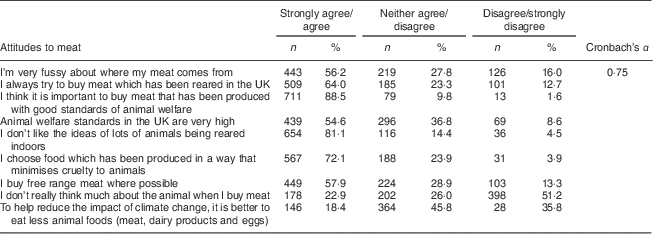
The questionnaire was piloted with a sample of forty-two females and thirty-eight males, recruited using opportunistic sampling. Frequency analysis was conducted on the pilot data and several statements were either removed or replaced due to their poor discriminative properties. The resultant scale was also assessed for readability using the Flesch–Kincaid Reading Grade Level and achieved a score of 3·8, indicating it was suitable reading material for 10–11-year-olds and therefore acceptable for use with the general UK population( Reference Oppenheim 51 ). A five-point Likert scale was used for attitudinal statements with the scale ranging from ‘strongly agree’ through to ‘strongly disagree’; participants were also able to state that the item was ‘not applicable’ to account for non-meat eaters and to reduce false reporting. To simplify analysis, responses to the attitudinal variables were collapsed into ‘agree’ (combined responses for ‘strongly agree’ and ‘agree’), ‘neither agree nor disagree’ and ‘disagree’ (combined responses for ‘strongly disagree’ and ‘disagree’). Nine items related to meat purchase, animal welfare and meat consumption were used in the current study (Table 1) which, when taken together, produced a Cronbach’s α coefficient of 0·75 indicating that the construct was internally consistent and therefore reliable( Reference Bowling 52 ). In addition, the nine items produced a good spread of responses (Table 1), establishing their face validity( Reference Oppenheim 50 ).
Consumer attitudes to buying and consuming meat and animal welfare adults (n 842) aged 18–91 years from urban and rural districts of Nottinghamshire, East Midlands, UK, January 2009

Red and processed meat purchasing behaviour
Participants were asked to indicate the frequency that they purchased a range of categories of sustainable food on a regular basis to capture typical behaviour rather than requesting data for a particular time frame (e.g. a week). For red meat, participants were asked to choose whether they purchased ‘local’, ‘organic’, ‘free range’ or ‘RSPCA (Royal Society for the Prevention of Cruelty to Animals) Freedom Food’ labelled red and processed meat using a four-point frequency scale of ‘always’, ‘often’, ‘sometimes’ or ‘never’. Data were re-coded to create a score for ‘sustainable’ meat purchases. The ‘always’ or ‘often’ categories were re-coded together, and the ‘sometimes’ and ‘never’ categories remained separate. This produced a ‘sustainable meat purchasing’ variable, from which two groups of respondents were identified: those reporting a high frequency of sustainable meat purchasing and those reporting low or no sustainable meat purchasing.
Red and processed meat dietary intake
A semi-quantitative FFQ to assess dietary intake was developed based on the five food groups defined in the UK’s food-based dietary guidelines, the eatwell plate( 53 ). Participants were asked to choose how frequently they ate a portion of red meat and processed meat on a usual basis, using a scale of ‘never’, ‘less than once per week’, ‘once per week’, ‘two to three times per week’, ‘four to six times per week’, ‘once per day’ and ‘twice a day or more’. Standard food portion sizes were included based on national food portion sizes, which for both red meat and processed meat were 75–100 g, together with an image depicting one portion size. Using this information, daily intakes were calculated.
Sociodemographic characteristics
Socio-economic and demographic data were collected at both individual (gender, age, educational level, profession) and household levels (urban/rural, household income). Age groups were created by dividing participants into four categories: 18–30 years, 31–45 years, 46–60 years and 61–91 years. Using multiple correspondence analyses, a socio-economic score was created that ranked participants using four demographic variables: educational level, occupation, household income and individual food spend (calculated using household food spend/number of people in household). The socio-economic score produced a Cronbach’s α coefficient of 0·7 indicating internal consistency( Reference Oppenheim 51 ). Participants were then ranked and divided into three groups: higher, medium and lower socio-economic status, each tertile representing one-third of the sample.
Statistical analysis
Data were entered into the SPSS statistical software package version 16·0 using EpiData software version 3·1. An intra-rater reliability check was conducted on a random 10 % sample of questionnaires which revealed an error rate of <1 %( Reference Day, Fayers and Harvey 54 ). Categorical data were analysed using χ 2 tests, followed by adjusted χ 2 tests to ensure that observed differences were not confounded by gender, age group and socio-economic group. Significance was taken as P<0·05.
Ethical considerations
The study was conducted according to the guidelines laid down in the Declaration of Helsinki and all procedures involving human subjects were approved by the University of Nottingham Medical School Ethics Committee. Informed consent of participants was obtained by voluntary completion and return of the questionnaire.
Results
Response rate
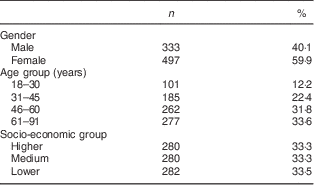
Of the 2500 individuals invited to participate in the study, 842 usable responses were received. Following adjustment for people who had moved/died, a response rate of 35·6 % was achieved which is lower than recent similar studies (42·3 %)( Reference Pettinger, Holdsworth and Gerber 46 ) despite similar protocols being adopted that included reminder letters and questionnaires to non-respondents. One explanation for the lower response rate may be the length of the questionnaire employed in the current study. Within the final sample participants ranged from 18 to 91 years of age, the majority of whom were in the two oldest age groups (31·8 % aged 46–60 years; 33·6 % aged ≥61 years; Table 2). Over half of the sample was female (n 497, 59·9 %).
Sociodemographic characteristics of participants: adults (n 842) aged 18–91 years from urban and rural districts of Nottinghamshire, East Midlands, UK, January 2009

Red and processed meat intake
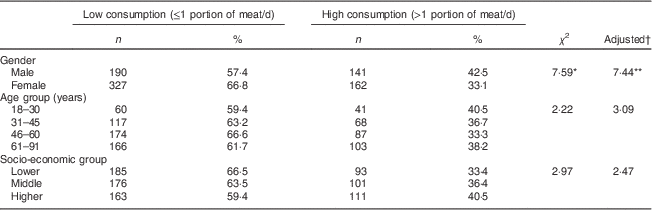
Over one-quarter of respondents (26·2 %) consumed red meat daily or almost every day, whereas processed meat was consumed less regularly (3 % consumed it once daily or more), with over three-quarters (78·6 %) of respondents reporting eating it once weekly or less.
Women were more likely (χ 2=7·44; P<0·01) to consume red meat less often compared with men (Table 3). No significant relationship was observed between meat consumption and age or socio-economic group.
Relationship between red and processed meat consumption and sociodemographic profile among adults (n 842) aged 18–91 years from urban and rural districts of Nottinghamshire, East Midlands, UK, January 2009

*P<0·05, **P<0·01.
† Adjusted for gender, age and socio-economic group.
Attitudes towards meat consumption
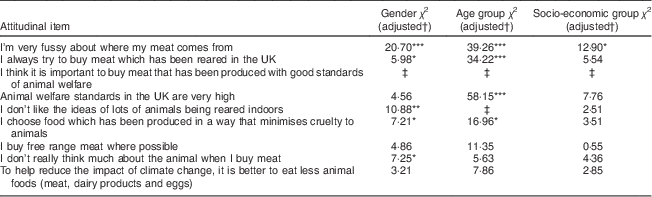
The oldest age group of respondents (≥61 years) was significantly more likely than younger people to agree that they are very fussy about where their meat comes from (χ 2=39·26; P<0·001), that they always try to buy meat reared in the UK (χ 2=34·22; P<0·001), that animal welfare standards in the UK are very high (χ 2=58·15; P<0·001) and that they choose food which has been produced in a way that minimises cruelty to animals (χ 2=16·96; P<0·05; Table 4). Arguably the higher response rate from older residents has implications for the representativeness of the findings, which represents a potential caveat to our findings.
Relationship between attitudes and sociodemographic profile among adults (n 842) aged 18–91 years from urban and rural districts of Nottinghamshire, East Midlands, UK, January 2009

*P<0·05, **P<0·01, ***P<0·001.
† Adjusted for gender, age and socio-economic group.
‡ Insufficient cell count to conduct χ 2 testing as <5 responses in a cell.
Attitudinal differences to meat consumption (Table 4) were also observed for gender, as women were more likely than men to agree that they are very fussy about where their meat comes from (χ 2=20·70; P<0·001) and always try to buy meat which has been reared in the UK (χ 2=5·98; P<0·05). Female respondents were also more likely to agree that they do not like the idea of indoor animal rearing (χ 2=10·88; P<0·01) and to agree that they choose food which has been produced in a way that minimises cruelty to animals (χ 2=7·21; P<0·05). Finally, women were more likely to disagree that they did not really think much about the animal when they purchased meat (χ 2=7·25; P<0·05).
The only relationship observed between attitudes to meat and socio-economic group was for the statement ‘I’m very fussy about where my meat comes from’, whereby respondents from the highest socio-economic group were more likely to agree (χ 2=12·90; P<0·05; Table 4).
Relationship between red and processed meat consumption and purchasing behaviour and attitudes
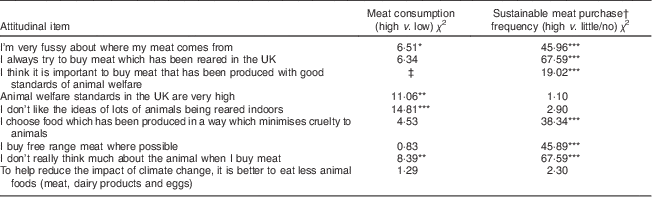
Low meat eaters, i.e. consuming ≤1 portion of meat/d, were more likely to agree that they were fussy about where their meat came from (χ 2=6·51; P<0·05) and to agree that they did not like the idea of animals being reared indoors (χ 2=14·81; P<0·001; Table 5). Low meat eaters were more likely to disagree that they did not think much about the animal when buying meat than other respondents (χ 2=8·39; P<0·01). Low meat eaters were also less likely to believe that ‘animal welfare standards in the UK are very high’ compared with those consuming >1 portion of meat/d (χ 2=11·06; P<0·01).
Relationship between attitudes to meat and meat consumption and sustainable meat purchases among adults (n 842) aged 18–91 years from urban and rural districts of Nottinghamshire, East Midlands, UK, January 2009

*P<0·05, **P<0·01, ***P<0·001.
† Local, organic, free range and RSPCA (Royal Society for the Prevention of Cruelty to Animals) Freedom Food.
‡ Insufficient cell count to conduct χ 2 testing as <5 responses in a cell.
Respondents in the group that purchased sustainable meat (local, organic, free range and RSPCA Freedom Food) more frequently were more likely to have positive attitudes towards sustainable meat consumption (Table 5). This group also tended to disagree with the statement ‘I don’t really think about the animal when I buy meat’ (χ 2=67·59; P<0·001).
There were no associations between sustainable meat purchasing and gender or socio-economic group; however, age group almost reached significance (χ 2=7·60; P=0·055), with respondents from the two oldest age groups (≥46 years old) more likely to report frequently purchasing sustainable meat.
Discussion
The purpose of the present study was to investigate consumer’s self-reported red and processed meat consumption (from intake and purchasing data) against their stated attitudes towards animal welfare, human health and environmental sustainability.
Animal welfare
Animal welfare appears to be particularly important to respondents, as 88·5 % of respondents believed it was important that the meat they buy has been produced with good animal welfare standards. This sentiment is consistent with other research findings for UK consumers( 55 , Reference Eastwood 56 ). Our findings demonstrate that over half of respondents try to buy meat reared in the UK and believe UK standards are very high, buy free range meat where possible and agree that they are fussy about where their meat comes from. These findings accord with previous research that animal welfare is associated with higher product quality perceptions( Reference Frewer, Kole and van der Kroon 29 , Reference Phan-Huy and Fawaz 30 ). Some of the concern identified in the present study may have arisen from the media coverage of animal rearing (e.g. Channel 4’s The F Word and Big Food Fight, which explored poultry, pig and lamb production( 57 , Reference Jackson 58 ), aired prior to and during data collection) and correlates with evidence on the impact of media coverage in the USA( Reference Delormier, Frohlich and Potvin 59 ). The impact of gender on attitudes towards animal welfare in the present study also reinforced findings from previous studies, with female consumers being more conscious of country of origin and welfare production method( Reference Verbeke and Viaene 37 ). Other findings have highlighted that UK consumers associate higher animal welfare with good health and additionally view it as an indicator of food safety( Reference Harper and Makatouni 60 ).
Environmental sustainability and meat consumption
In contrast to the interest in animal welfare shown among the sample, awareness of climate change reduction strategies in terms of consuming animal foods (meat, dairy products and eggs) appears to be low. Under a fifth of the sample agreed that ‘To help reduce the impact of climate change, it is better to eat less animal foods’, reinforcing findings from Australia reporting public perception of a low environmental impact of meat consumption( Reference Lea and Worsley 61 ). Similar studies conducted in Switzerland and the Netherlands proposed that low levels of awareness could be linked to denial, due to perceived difficulties in reducing meat consumption( Reference Tobler, Visschers and Siegrist 62 , Reference Hoek, Luning and Stafleu 63 ). It found that respondents holding health and environmental concerns reported the lowest meat intakes. However, building upon other evidence( Reference Westhoek, Rood and van den Berg 22 ), it could be argued that while consumers eating low amounts of meat stated greater concern for animal welfare, their consumption choices of higher welfare foods may counterintuitively negate some of the environmental benefit derived from their relatively lower meat consumption with respect to minimising climate change impacts. Previous research identified that consumers perceive animal welfare to relate to animal health and production environment( Reference Frewer, Kole and van der Kroon 29 ). Given the sustainability conflict between welfare and environment( Reference Westhoek, Rood and van den Berg 22 ), further incentivising animal-welfare-conscious consumers towards a lower meat-based diet, or one with reduced meat portion size( Reference Schösler, de Boer and Boersema 35 ), may be the most effective environmental strategy for this subset of consumers. However, attempting to achieve reductions in meat consumption among consumers unconvinced by climate change considerations may result in unexpected outcomes( Reference de Boer, Schösler and Boersema 34 ).
Drivers of meat consumption
Those consuming meat more often in the present study were typically young males from higher socio-economic groups; in contrast, women aged 46–60 years from lower socio-economic groups consumed the lowest quantities of meat. Overall, women reported consuming less meat than men, supporting gender differences in meat consumption previously identified( Reference Tobler, Visschers and Siegrist 62 , Reference De Silva and Webster 64 ) and reinforcing the suggested link between ‘virulent masculinity’ and meat consumption( Reference Tobler, Visschers and Siegrist 62 ). Associations observed between gender and attitudes towards animal welfare and source of meat purchases were also in concordance with previous international findings from the UK( Reference Pettinger, Holdsworth and Gerber 65 ) and other high-income countries( Reference Taylor 66 ), whereby women were significantly more likely to show concern over the source of their meat, and for animal welfare, than men.
Older adults (61–91 years) in the present sample displayed more concern towards the source of their meat and animal welfare, potentially influenced by memories of a food system in which meat was in short supply prior to, during and after World War II; pre- and post-war consumption data illustrate that UK meat intakes were lower than current levels, at 58·5 kg/person per annum in the period 1934–1938 and 44·8 kg/person per annum in 1942( Reference Lorinez 67 ), set against the recent data for average meat consumption of 84·2 kg( 47 ). Although the war ended in 1945, meat continued to be rationed until 1954 and following the removal of rationing restrictions, meat prices soared( 68 ). Therefore older respondents may hold a greater appreciation of meat as a food source than younger consumers, with these attitudes flowing from their experience of contrasting food availability. Respondents in the highest socio-economic group were more likely to agree that they are very fussy about where their meat comes from and this arguably highlights the issue of cost as a barrier to lower socio-economic groups in making more selective purchases( Reference Morven and Joyce 69 ). Moreover, level of education may play a role in respondents being conscious of the production source of their meat purchase( Reference Morven and Claire 70 ), arguably also concurring with previous research linking higher educational levels with increased likelihood of choosing a vegetarian diet( Reference Hoek, Luning and Stafleu 63 ).
It is unsurprising that those consuming less meat were more likely to think about both the provenance of the meat they ate and also animal welfare when buying meat. However, what is more revealing is that higher meat consumers were more likely to agree that animal welfare standards in the UK are very high, perhaps implying that more frequent meat consumers either assume that meat of UK origin has been reared to high animal welfare standards or simply that they do not think critically about the issue. One suggestion is that there is a certain level of ‘cultural invisibility’ surrounding the slaughter of animals for food, in order to normalise the process, and this provides the separation required so that meat can be consumed without really considering the welfare of the animal involved( Reference Taylor 66 ). This arguably extends to modern society’s categorisation as ‘animals for food’ and ‘companion animals’, with childhood experiences embedding these distinctions at an early age( Reference Stewart and Cole 71 ). Transparency at every stage of the meat chain may lead to more mindful consumption of animal-based products, as previous studies have confirmed that Dutch consumers who are sensitive to animal origin and animal welfare are more likely to favour free range or organic meat( Reference Hoogland, de Boer and Boersema 32 ).
Implications for policy and practice
Low awareness of the link between the consumption of animal products and their environmental impact was observed among respondents in the present study, suggesting the need for public health interventions to raise the profile of this issue. Seeking to raise awareness of animal-rearing methods could prove an effective approach, as animal welfare was particularly important to respondents in this and other UK studies; albeit that to ensure both welfare and environmental sustainability outcomes, such approaches need to align with portion size, or frequency of meat-based meal, reduction strategies( Reference Schösler, de Boer and Boersema 35 ). Examples of success in promoting dietary change include Korea( Reference Keats and Wiggins 1 ), where a campaign focused on increasing the consumption of low-fat high-vegetable meals; this approach could prove successful if adopted in other countries, particularly if pricing mechanisms are supported by policy measures that promote plant-based agriculture to produce fruit, vegetables, beans and pulses for human consumption instead of subsidising animal-source foods (as has been the case historically alongside non-vegetable arable crops). This could incentivise consumers to lower their intakes of meat while having the added advantage of reducing saturated fat intakes and increasing fibre intakes( Reference de Boer, Schösler and Boersema 34 ).
Taxing red and processed meat could be considered with the recognition that information sources alone do not lead to direct immediate diet change, but can play a role in longer-term social acceptance of consumption behaviour. However, it is important to consider how fiscal measures on red meat may affect certain groups of the population, for example pregnant women and younger children who may be at risk of developing micronutrient deficiencies and for whom cost may already be a barrier to accessing quality sources of protein( Reference Millward and Garnett 10 ). Public education campaigns seeking to achieve a reduction in meat consumption may, therefore, wish to target those groups identified as higher meat consumers, in particular the male population. There is a need for dietitians, nutritionists and other health professionals to be adequately informed on this issue and understand how best this message can be communicated to patients, clients and the wider public.
Policy makers need to ensure that dietary guidelines go beyond consideration for current consumers and encompass the nutritional, environmental and resource needs of future generations. In view of the environmental damage caused by livestock farming, the evidence base should consider how best to meet not just protein, but also Fe and Se requirements from other, less environmentally costly dietary sources. Although UK dietary guidelines do advise a reduction in red and processed meat consumption, meat has become deeply entrenched in the UK diet and consideration needs to be given to social and cultural norms that need to undergo a massive shift to obtain the necessary reductions in consumption to facilitate environmental sustainability. The influence of the built and retail environment on meat purchasing decisions needs further research, to explore how retailers can edit choice at a food supply level, to simplify the situation for consumers wishing to purchase meat that is healthy and has been reared to high standards of animal welfare and environmental sustainability.
Limitations
Caveats to the present study include the regional sample frame within which the research was conducted and the need to define at the outset descriptors of attitudes that respondents could understand; these considerations are often encountered when exploring consumer attitudes in population surveys. Moreover, despite embedding a protocol that included distribution of a reminder letter and questionnaire to non-respondents, a lower than anticipated response rate was achieved together with a lower response rate from younger residents. Another issue may have been the lack of incentive offered. These issues represent potential response bias in our results, albeit that achieving high response rates with unbiased sociodemographic responses is generally recognised as increasingly challenging within population surveys. However, our analyses were adjusted for the sociodemographic factors, which ensured that any observed differences were not confounded by gender, age or socio-economic group. The study was cross-sectional so we are unable to say whether attitudes influence actual behaviour in relation to consumption of red or processed meat or purchasing of sustainable meat. The gap between attitudes and intention and actual behaviour is well established in work involving social cognitive models( Reference Saba and Di Natale 72 , Reference Sparks, Guthrie and Shepherd 73 ). Hence we are only able to conclude on associations and not causation of attitudes on behaviour. However, accepting these caveats, the present study has both reinforced findings from previous research that has investigated attitudes towards meat consumption and placed these within the context of environmental sustainability, raising important considerations for both policy makers and consumers.
Conclusion
In the present study, low red and processed meat consumption is associated with concerns regarding animal welfare while self-reported purchasing of sustainable meat is associated with positive attitudes to sustainable meat consumption. This suggests that attitudes towards animal welfare and sustainability might therefore be important motivators of behaviour and represent components of future campaigns to reduce meat consumption and promote health. Achieving environmental and nutritional sustainability will require coordinated action from a range of stakeholders; understanding public attitudes towards meat consumption is a necessary condition for successfully adopting a more sustainable food supply.
Acknowledgements
Acknowledgements: The authors wish to thank two anonymous reviewers and the Associate Editor for their constructive comments on the original submission. Financial support: This work was supported by the University of Nottingham. With the exception of the authors, the University of Nottingham had no role in the design, analysis or writing of this article. Conflict of interest: None. Authorship: A.C. devised the questionnaire, undertook data analysis, reviewed literature and contributed to writing the manuscript. P.W. advised on questionnaire design, reviewed literature and contributed to writing the manuscript. J.A.S. devised the questionnaire, reviewed literature and contributed to writing the manuscript. D.G.L. advised on questionnaire design, undertook data analysis and reviewed the manuscript. M.H. devised the questionnaire, undertook data analysis, reviewed literature and contributed to writing the manuscript. Ethics of human subject participation: This study was conducted according to the guidelines laid down in the Declaration of Helsinki and all procedures involving human subjects were approved by the University of Nottingham Medical School Ethics Committee. Informed consent of participants was obtained by voluntary completion and return of the questionnaire.