


Access to the Internet and Internet-accessing devices such as smartphones and tablets has become increasingly available; it is inevitable more education opportunities will be offered online. Online learning or ‘eLearning’ is not a novel concept in academic or workplace settings among moderate-income and affluent populations. However, eLearning tailored for low-income individuals who access the Internet primarily through mobile devices (smartphones) is a relatively new practice. The ‘digital divide’ refers to the disparity between those who have consistent access to the Internet and those who do not, and this divide is decreasing even among low-income communities( Reference Smith and Page 1 ). This decrease is largely a result of commonplace free WiFi access in many public spaces and Internet-accessing devices becoming more affordable( Reference Perrin and Duggan 2 ). Therefore, it is important to consider eLearning nutrition education programmes to expand reach and decrease barriers( Reference Neuenschwander, Abbott and Mobley 3 , Reference Swindle, Ward and Whiteside-Mansell 4 ).
Several researchers have been exploring eLearning and nutrition education with low-income audiences with promising results( Reference Lohse, Rifkin and Arnold 5 – Reference Winett, Anderson and Wojcik 8 ). Neuenschwander et al. ( Reference Neuenschwander, Abbott and Mobley 9 ) compared web-based v. in-person nutrition education among low-income adults and showed that both methods of nutrition education led to comparable changes in self-reported dietary behaviour in terms of increased fruit, vegetable and whole grain intakes. Lohse et al. ( Reference Lohse, Belue and Smith 10 ) evaluated an online nutrition education programme for low-income adult women with a focus on food-resource management skills and found use of the online programme promoted positive changes in meal planning and adherence to a food budget. Au et al. ( Reference Au, Whaley and Gurzo 11 , Reference Au, Whaley and Rosen 12 ) conducted a randomized controlled trial with users of the Special Supplemental Nutrition Program for Women, Infants, and Children (WIC) which revealed statistically significant improvements in consumption of breakfast and dietary sodium reduction after completion of online nutrition education lessons. They also found satisfaction of online learning was high among English-speaking WIC beneficiaries( Reference Au, Whaley and Gurzo 13 ). This body of literature suggests the strong potential of eLearning nutrition education programmes developed for low-income populations. Further, the literature suggests that access to the Internet and digital literacy would likely not be formidable barriers to online nutrition education programme success( Reference Neuenschwander, Abbott and Mobley 3 ). However, relatively little literature is available to understand in-depth perceptions from members of the priority audience regarding a smartphone-based eLearning nutrition education programme within the context of the voluntary nature of Supplemental Nutrition Assistance Program–Education (SNAP-Ed) programmes.
The US Department of Agriculture’s SNAP-Ed programme aims to support evidence-based nutrition education and obesity prevention interventions for individuals who live at or below 185 % of the federal poverty level or who are eligible for SNAP and other means-tested federal assistance programmes such as WIC( 14 ). Since 2012, the US Department of Agriculture’s SNAP-Ed grant programme has increased emphasis on innovative, cost-effective, evidence-based nutrition education interventions and rigorous programme evaluation( 15 ). The purpose of the present study was to serve as formative evaluation and assess SNAP-Ed eligible adults’ expectations and experience of a new eLearning nutrition education programme, entitled Food eTalk.
Methods
Study design
Formative evaluation includes the assessment of a new education programme, as it is being designed, developed and initially implemented( Reference Baker, Auld and MacKinnon 16 ). A mixed-methods, single case study design was employed for this formative evaluation( Reference Stake 17 ) and the case study unit of analysis was the eLearning nutrition education programme, Food eTalk. Case study methodology is well suited for formative evaluation of a new education programme as it allows researchers to gain multiple perspectives( Reference Yin 18 ) and use a mixed-methods approach to provide detailed understanding of the programme( Reference Harris, Gleason and Sheean 19 ). Qualitative (individual and focus group interviews) and quantitative methods (self-administered survey and tracking of eLearning programme usage) were used. Qualitative data provided a richer, deeper level of data regarding participants’ experiences and perceptions of the programme. Individual interviews aimed to understand individualized experiences over time and focus group interviews provided opportunities for inter-participant dialogue and to understand shared experiences from synergistic conversation within the group( Reference Roulston 20 ). Qualitative interview questions explored expectations of the programme (pre) and experiences with the programme (post). Quantitative data provided objective measurements of pre/post knowledge and behaviour, self-reported demographics, baseline Internet habits and learning management system (LMS) user-tracking data.
Study sample
Food eTalk participants (n 64) were recruited from five rural and seven urban Georgian counties, USA, with the assistance of University of Georgia (UGA) Cooperative Extension and collaborating agencies. Agencies who helped recruit included: Head Start programmes, public libraries, parenting support groups, General Education Diploma (GED) programmes, safety-net clinics and faith-based organizations. Inclusion criteria of study participants were: eligible for SNAP-Ed as determined by household income, participant zip code or participation in other qualifying programmes such as WIC or Head Start, and ≥18 years of age. Purposive maximum variation sampling( Reference Patton 21 ) was used to recruit participants from diverse backgrounds and the sample was demographically comparable to that of all UGA SNAP-Ed participants.
Data collection
Two qualitative methods were utilized: (i) a series of two focus groups (pre and post Food eTalk use) and (ii) a series of three individual interviews (pre, during and post Food eTalk use). Each participant used a study-provided loaned smartphone to access the web-based Food eTalk lessons for the duration of the project. Focus groups pre and post were separated by a 3-week period (while participants used Food eTalk) and interviews pre, during and post were separated by 3weeks respectively (total of 6weeks) while the participants used Food eTalk (Fig. 1). The first forty-five participants enrolled were in the focus group interview series, and subsequent nineteen participants enrolled were in the individual interview series. Focus group participants were recruited and completed their 3-week test period first, because the researchers only had enough smartphones to loan to twenty individuals at a time.
(colour online) Study design

A total of sixteen focus groups were conducted with SNAP-Ed eligible Georgians (n 45) with a mean size of 5·6 participants (range: 5–9 participants). At the pre focus group, participants completed self-administered questionnaires assessing sociodemographic and Internet habits, and then discussed their expectations of Food eTalk. At the end of each pre focus group, each participant was given his/her loaned smartphone, provided basic directions for accessing Food eTalk and instructed to engage in Food eTalk lessons over the following ~3weeks. After this time, the participants returned for a post focus group to discuss their experience with Food eTalk and to return the loaned smartphone.
Additionally, a total of fifty-one individual interviews were conducted with nineteen new participants. Seventy-eight per cent of individual interview participants completed an interview at all three time points (pre, during, post). Two participants missed the both the during and post interviews and another two participants missed the post interviews. Participants who withdrew cited not enough time to attend interviews. The protocol for the pre individual interview mimicked the pre focus group interview as described above. After the pre individual interview, participants were encouraged to use Food eTalk for ~3weeks on their loaned smartphone. Each participant then attended another ~1 h individual interview with the researcher after this 3-week period, during his/her trial 6-week trial period. In this during interview, participants were asked to discuss their experiences using Food eTalk. The post semi-structured interview in the series occurred 3weeks after the during interview (6weeks after the pre interview) to discuss participants’ extended experience using Food eTalk.
An LMS was used to collect user-tracking data as a means to quantify user engagement. The LMS provided individual usage pattern information such as duration each user was logged in and how many lessons each user initiated and completed.
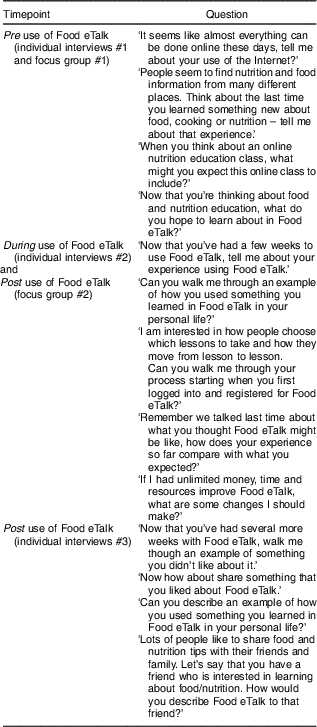
Interviews were facilitated with a semi-structured moderator guide designed to enable discussion about the participants’ expectations of and experiences using Food eTalk. Before using Food eTalk, pre interview questions included ‘Tell me about your use of the Internet’ and ‘What do you hope to learn about in Food eTalk?’ After using Food eTalk, during and post interview questions included ‘Tell me about your experience with Food eTalk over the last 3weeks’ and ‘How do you think Food eTalk could be improved?’ All moderator guide questions can be found in Table 1. During the interviews, probing questions were used to clarify statements made by participants( Reference Roulston 20 ) and the researcher facilitated, digitally recorded and transcribed each session verbatim. The UGA Institutional Review Board approved the study protocol and all participants provided written informed consent.
Moderator guide questions used in focus group and individual interview series
Food eTalk: the case
The case is the nutrition education eLearning programme, entitled Food eTalk. Food eTalk is an original smartphone-based eLearning nutrition education programme developed for SNAP-Ed eligible Georgian adults. The development of Food eTalk was based on findings from a qualitative needs assessment with key informant interviews and SNAP-Ed eligible Georgian adults( Reference Stotz, Lee and Rong 22 ). The needs assessment suggested eLearning is a feasible and cost-efficient model for nutrition education for low-income Georgians and provided key recommendations on the design, content and format of Food eTalk( Reference Stotz, Lee and Rong 22 ).
The content of Food eTalk was adapted from a validated nutrition education curriculum in Georgia, entitled Food Talk, which consists of six 60-min lessons taught by trained paraprofessionals in a classroom setting( Reference Hanula 23 ). Each Food Talk class includes a didactic lesson, interactive activities, a cooking demonstration and recipe taste-testing. Guided by the Health Belief Model (HBM)( Reference Janz and Becker 24 ) and the Dietary Approaches to Stop Hypertension (DASH) diet principles( 25 ), these classes are tailored to help improve the nutrition of low-income Georgian families( Reference Hanula 23 ). Details of the development of Food eTalk are published elsewhere( Reference Stotz and Lee 26 ). In brief, the content and format of Food eTalk mimicked the Food Talk curriculum. Food eTalk consists of six online eLearning lessons based on DASH diet principles (promotion of fruit, vegetable and low-fat dairy consumption and limiting dietary sodium), family-based physical activity, food safety in the home and food-resource management principles. Like its parent programme, Food eTalk is grounded in the HBM, a psychological health behaviour change model which suggests that people’s beliefs, perceived benefits of and barriers to action, and self-efficacy influence their health-related behaviours( Reference Janz and Becker 24 ). Food eTalk is also grounded in theoretical constructs from eLearning design theory such as contextual learning opportunities, which are inherently innate to the mobile nature of smartphone-based eLearning( Reference Driscoll 27 ). Each Food eTalk lesson includes a didactic component (e.g. ~2 min lesson on a topic such as reading sodium on a food label), interactive eLearning games and two cooking videos. The two cooking videos demonstrate identical recipes, one in a full-length (8–10 min) ‘Meals on Minutes’ version and one in a truncated (2–3 min) ‘Hands On’ version to assess preferred length. It takes approximately 25 min to complete any given lesson including both accompanying cooking videos. If an individual completed all six lessons at 25 min/lesson, this would approximate 2·5 h. Food eTalk is narrated with a Southern USA-accented voiceover, includes closed captioning and is augmented by four ‘just-in-time’ (JIT) learning videos, each focusing on a very short and specific nutrition education topic such as reading a food label to purchase healthy bread. Food eTalk is available at www.foodtalk.org.
Data analysis
Qualitative interview data were analysed by codes, categories and themes constructed based on analysis of the researcher’s memo-based research journal and verbatim transcription from the digital recordings. A professional transcription company was hired to transcribe, and the first author reviewed and time-stamped all transcriptions prior to the first round of coding to proof all transcriptions. All interview (individual and focus group) transcriptions were coded using the constant comparison method with categorical thinking which served to identify common expectations and experiences across the interviews( Reference Charmaz 28 ). Constant comparison approach to analysis includes the iterative process of transcribing the interviews, coding the data, categorizing the codes, and reorganization of the categories into thematic representation through a series of assertions and interpretations( Reference Roulston 20 , Reference Charmaz 28 ). The data were coded in various quotation increments depending on context of the quotation( Reference Saldaña 29 ). The first pass of coding involved inductive free coding, which was narrowed by collapsing and integrating codes for redundancy during the second pass which involved describing and defining each code. Several codes, such as ‘barrier’, evolved into a hierarchical code system, as there were several prominent types of barriers including preference for ‘unhealthy’ food, limited budget and feeding ‘picky’ children. Alternative explanations of themes were sought using negative case analysis( Reference Patton 21 ).
Qualitative data analysis was facilitated by Atlas.ti (Mac version 1.0) to organize, sort, code and store data, and to facilitate a transparent analytical process( Reference Paulus, Lester and Deptster 30 ). Quantitative self-administered survey data were used to describe the participants. Descriptive statistics were calculated to describe participants’ demographics, baseline Internet habits and LMS user-tracking information.
Results
Participant characteristics
A total of sixty-four individuals participated, and self-reported demographics are presented in Table 2.
Demographics and typical Internet habits of Food eTalk participants: low-income Georgian adults aged ≥18 years (n 64), USA, September 2015–May 2016

SNAP, Supplemental Nutrition Assistance Program.
Internet accessibility
Participants discussed their use of the Internet as ‘constant’, ‘daily’, ‘obsessive’, and primarily used a smartphone with WiFi or a data plan to access the Internet. They discussed use of the Internet to get information, communicate with friends, use social media and for entertainment (e.g. videos, movies, music, games). Other than for entertainment purposes (watching movies), participants suggested that the length of time on their device, during any given usage period, was ‘short’ and ‘real quick’:
‘I just, want the information in the shortest amount of time, that’s best. That’s the bottom line.’ (Focus group, pre)
‘I think the general attention span like for anybody, I think is like a minute.’ (Participant #8, pre)
‘People don’t sit on their smartphone for an hour doing something. They do it for three minutes here – and two minutes there.’ (Focus group, post)
These quotations exemplify how participants describe their typical smartphone use and how a nutrition education eLearning programme may be most utilized via a smartphone. Table 2 shows the key findings of the quantitative survey on participants’ Internet habits.
Participants’ usage patterns
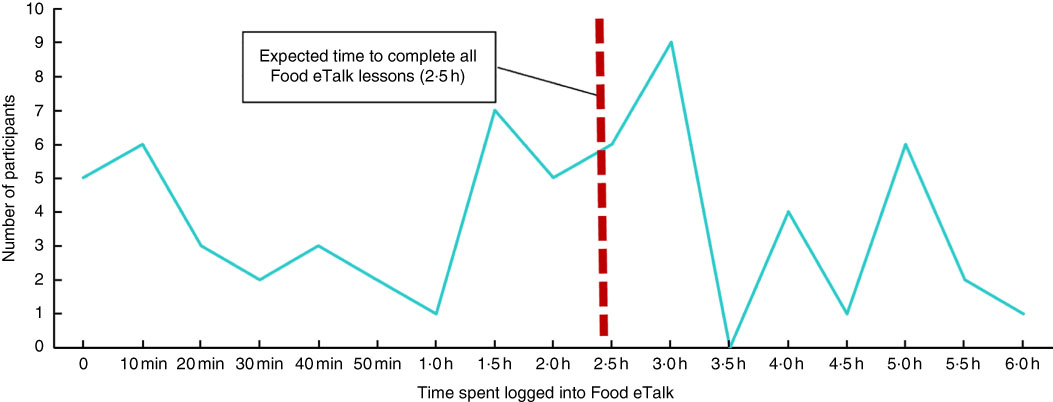
The LMS provided tracking data for each participant’s Food eTalk usage pattern including duration of each login session (Table 3). Eleven participants accrued 0 h logged in for their entire period with Food eTalk; these participants cited they ‘didn’t have time’ or ‘forgot’ as the rationale for their lack of engagement. Interview findings from these eleven participants are included because the rationale for lack of engagement is a noteworthy finding. Additionally, any login session that exceeded a reasonable amount of time (i.e. over 2 h) was not included in the analysis as it is likely a participant logged in and forgot to log out. The median use of Food eTalk among those who logged in with reasonable usage time range was 2·20 h (interquartile range 1·11–3·02 h; Fig. 2).
(colour online) Time spent logged into the Food eTalk eLearning nutrition education programme by participants: low-income Georgian adults aged ≥18 years (n 64), USA, September 2015–May 2016
Food eTalk usage patterns based on learning management system user-tracking data: low-income Georgian adults aged ≥18 years (n 53)Footnote *, USA, September 2015–May 2016
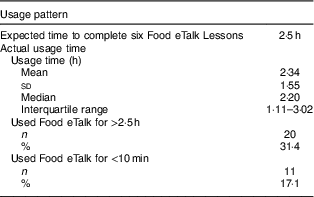
* There were sixty-four adults recruited for the study but eleven did not login to complete any of the six lessons; as such, the analytic sample for this analysis includes only those who logged in and with reasonable access time (i.e. <2 h) for any given login session (n 53).
Findings from focus groups and individual interviews
Findings from focus groups and individual interviews are organized by themes including deductive themes guided by the original research questions and inductive emergent themes constructed from the data. The following themes discuss participants’ perceptions of barriers to engaging in Food eTalk, recommendations to mitigate these barriers and challenges to applying knowledge to make nutrition-related behaviour changes.
Low motivation to use Food eTalk is a concern, but improved programme content, format and external incentives could mitigate this barrier
Motivation to engage in Food eTalk was discussed as a formidable barrier to the programme’s success. Because SNAP-Ed is a voluntary nutrition education programme, it is important to understand how best to encourage participants to use and engage in Food eTalk. One participant suggested motivation to engage in Food eTalk would increase by fostering a connection between the programme’s content and issues of that are of importance to the priority audience:
‘People are looking for something to be connected to, and you just have to find what connects them, what’s most important to them, and I think that’s how you draw people to the resources, but if they don’t feel like it’s important, guess what? It doesn’t mean anything.’ (Focus group, post)
Content: a review of ‘common sense’ skills
Findings from the pre Food eTalk interviews v. the post Food eTalk interviews revealed the actual Food eTalk content differed from participants’ hopes and recommendations for their preferred content. Prior to Food eTalk use, participants shared their expectations of such a programme and after using Food eTalk, participants shared what they would like to see in future eLearning programmes and their ‘highlights’ of Food eTalk content. Prior to engagement in Food eTalk, participants suggested they hoped to learn about how to feed ‘picky’ children, new recipes, nutrition related to diabetes, ‘chemicals/pesticides/hormones’ in food and how to cook Southern USA dishes healthfully.
Both before and after engaging in Food eTalk, participants suggested recipes and cooking videos were their most desired content item, although the actual recipes featured in Food eTalk cooking videos did not meet their expectations. Participants were not enthusiastic about the recipes (content) featured in Food eTalk, and only two participants said they might try one of the recipes included in Food eTalk. Regarding dislike for the recipes, one participant shared:
‘It’s all cheap stuff kind of thrown together in a pot.’ (Participant #9, post)
While participants recognized the intention of the featured recipes was quick budget-friendly meals, they suggested the high use of canned products and lack of fresh produce in the recipes was not what they wanted to incorporate in their family meals. Participants appreciated quick, budget-friendly ideas, but wanted recipes including ‘makeover’ of traditional Southern USA dishes, ‘diabetes-friendly meals’ and an emphasis on meals ‘my children would eat’.
After spending 3–6weeks with Food eTalk, many participants suggested the content was primarily a review of what they already knew. They suggested Food eTalk was very basic and perhaps more suited to young mothers. Participants shared:
‘Basically, you know, buying fresh – fresh fruit and stuff like that is better than canned or processed food, I already knew that. Yeah and like the temperature of meat, I already know all about that. (Participant #3, post)
Food eTalk lessons had a considerable focus on food resource management, a topic generally not well received by these participants. They suggested that menu planning and making a grocery-shopping list is something they already do to save money, and Food eTalk included only a review of ‘common sense’ skills to stretch food dollars. Participants explained elaborate systems by which they already manage their limited food resource budget, and suggested tips to ‘buy food in bulk, use coupons, and shop for sales’ were somewhat patronizing. The content item participants enjoyed and found most informative was on reducing dietary sodium. Food eTalk is based on DASH diet principles, so several lessons have a low-sodium focus. Participants shared:
‘Yes, I didn’t realize there was that much sodium in ramen noodles, and just sodium in general was informative, because I – I don’t think about the salt we eat, you know. Like we don’t use margarine; we use like butter, like salted butter, and things like that. You don’t realize how much salt is in stuff. Like canned vegetables, there’s lots of salt as a preservative. So, I mean, it’s informative that way, because it’s just not stuff I think about.’ (Participant #7, during)
Format: enjoyable ‘anytime, anyplace’ games and videos
In addition to improving the content in Food eTalk, participants shared their experience with the format and recommendations to improve format to increase engagement. Prior to using Food eTalk, some participants had relatively pessimistic expectations of the format. Participants who had previous experience with eLearning for general educational development (GED), job training and WIC had associations with eLearning as ‘long and boring’. The most popular Food eTalk features were interactive games and videos. Interactive activities in Food eTalk include multiple-choice, matching, and a final ‘jeopardy’-style game where points are awarded for correct answers. Participants especially noted that they liked the ‘competition’ parts of this game:
‘It keeps my attention more. I like the more interaction, because when you’re just looking at slides over and over again, you just get tired of looking at them and you stop paying attention. And so the games definitely kept my attention more.’ (Participant #17, during)
In addition to the eLearning games, participants were generally positive about the video components in Food eTalk, which included cooking videos and several JIT learning videos. Participants had the option to choose between the ‘longer’ and ‘shorter’ version of the cooking videos. They liked this option, suggesting people who don’t know how to cook may need the full-length video, but for most participants who reported high self-efficacy cooking and had limited time to engage in Food eTalk, the shorter version was preferred. The intention of the JIT learning videos was to enhance opportunities for point-of-decision-making contextual learning such as purchasing bread and milk in the supermarket. These videos (2–4 min) were offered to augment the six Food eTalk lessons. After watching the JIT video on how to read the food label to choose healthy bread, one participant shared:
‘It was good. It was really short … it was telling you how to select the bread. I never knew salt was in bread. That was helpful too. I liked that they showed the label and then they had it circles so you knew exactly what you were looking for … But yeah, the salt thing just blew me away. I never knew that so that was cool.’ (Participant #18, post)
One shortcoming of the cooking video format was the frame size to which videos were restricted. Participants suggested they would like the video to ‘fill the screen’ of their device (as was the case with the JIT videos), but the cooking video frame size was limited because of the specifications of the eLearning lesson template in which they were embedded. Since the JIT videos were not built within any given eLearning lesson, these videos were responsive to screen size, and participants much preferred this format. Prior to using Food eTalk, participants reported watching videos and playing games as two of their most frequent online habits, and this preference was reflected with their positive feedback regarding Food eTalk games and videos. Participants liked the idea of smartphone-based eLearning because of its mobile, asynchronous, ‘anytime, anyplace’ nature:
‘Also I can clean my kitchen while I’m doing them. Prop your phone up and playing while you’re doing stuff. You can have it playing and the kids can be there. You can listen and stop to do the activity when you have to – it’s handy to do it when I can.’ (Participant #2, post)
Participants noted that, as busy mothers, they were constantly multitasking and being interrupted throughout their day. They found the ‘resume’ feature of Food eTalk allowed them to easily stop and start a lesson multiple times. Participants elaborated on how they fit time for Food eTalk into their day and where they typically accessed it. One participant shared that she would like the lessons to be shorter:
‘One suggestion I would have is – is there any way you can make them shorter? If you could cut them up into more bite-sized sections, 10 min. I think that it’d just be easier to do them – Right, because I mean, I – quite frankly, if I’ve got 30 min to sit down and do something, am I going to choose Food eTalk? And I’m just speaking as any busy mom. If I have 10 min, though, that could be like a little break or, oh, let me see what this one is about. (Participant #6, during).
This participant had voiced concerns that the ~25 min lessons were too long. Regarding location and how participants fit Food eTalk into their days, participants shared they typically completed lessons at home, when they had ‘down time’ or when they were waiting for something (e.g. transportation or an appointment).
Financial incentives: coupons as a ‘motivating dollar’ value
Participants also discussed ways to extrinsically motivate people to engage in Food eTalk lessons. Financial incentives were unquestionably the most frequently mentioned way to incentivize. For example, one participant shared what a motivating ‘dollar value’ would be to incentivize use of Food eTalk:
Participant: ‘Coupons. Totally. And that would be a huge incentive because it’s saying I’m getting something after I’m watching all of this but not only that, I’m getting something towards what you’re showing me – like if you buy three boxes of cereal you get $1·50 off type-of-thing. That’s the most that I’ve ever seen.’
Interviewer: ‘So you think $1·50 would motivate people to go through all these lessons?’
Participant: ‘Oh yeah. That’s a lot. That’s a lot off of a meal. Especially if you’re doing it specifically for a meal. So I want to go to the store and get it.’ (Participant #17, post)
These themes suggest it is important that eLearning nutrition education programme content and format are responsive to the needs of the learners and that external incentives are available, as this is likely what will motivate users to engage in the eLearning programme.
Applying knowledge to change nutrition-related behaviour is challenging
In addition to the concern of low motivation as a barrier to engage in Food eTalk, participants discussed general barriers to healthful eating. Although the moderator guides did not include specific questions about barriers to healthful eating, participants were eager to discuss this participant-led topic. These barriers included a myriad of concerns such as: limitations on time to grocery shop and cook, limited food budget, ‘picky’ children, lack of motivation to engage in healthy nutrition behaviour, and preference for ‘unhealthy’ Southern food. Participants generally knew what ‘healthy eating’ entails and easily stated what they ‘should’ do: increase fruits and vegetables, decrease fried food and soda/sweet-tea, and decrease portion sizes. Participants were aware that cooking at home is typically healthier than eating at fast-food restaurants, especially regarding children’s healthy eating habits. However, conversations about cooking at home focused on the aforementioned barriers that make it difficult to do so and indicated general lack of motivation to make healthy changes because of these barriers. Regarding feeding ‘picky’ children, one mother of three shared:
‘Well, they don’t like vegetables. Like I really messed up when they were younger and fed them a lot of fast food. I mean, seriously, it’s been really hard trying to get them to eat homemade meals because they just want to eat out, processed everything, and I’m trying to get that out of our picture because really, they’re gaining a lot of weight with all the fast food and stuff, and that’s not healthy for them, so. But that’s really what I use the Internet for, is to find the best deals of where to go shopping and save money because we’re on a very limited budget, and I want them to eat healthy as we can, but sometimes it’s just really hard.’ (Participant #5, pre)
This participant indicated two of the most commonly discussed barriers: feeding ‘picky’ children and limited finances. Although barriers to engaging in behaviour change are not specific to eLearning, the contextual ‘anytime, anyplace’ learning opportunities available via eLearning may provide unique opportunities to address these issues.
Discussion
Findings provide direction and insight to users’ experience with Food eTalk and guidance for the development of future SNAP-Ed eLearning nutrition education programmes. Lack of motivation to engage in Food eTalk and barriers to make subsequent healthy behaviour change were discussed as formidable challenges to the programme’s success. Since Food eTalk is a voluntary SNAP-Ed nutrition education programme, the most effective way to increase programme engagement is to ensure the content features information deemed relevant and necessary by members of the priority audience and the format design facilitates quick access to learning their desired content. Therefore, eLearning nutrition education programme developers need to prioritize audience-driven nutrition education topics, even if these topics are not aligned with traditional nutrition education messages provided through standard basic nutrition messages and federal guidance.
Dietary sodium was the most well received content item in Food eTalk. This may be because Food eTalk is based on the DASH diet, which means low sodium and increased fruits/vegetables diet principles are included in almost every lesson. It might also be because the sections on sodium included very specific ‘how to’ information to decrease dietary sodium, such as rinsing canned food items with water before cooking (didactic section), reading the food label to determine a low-sodium food (video) and identification of commonly consumed high-sodium foods (interactive game). Sodium and its link with hypertension sparked participants’ interest as it aligned with their concerns that many members of their family already have chronic diseases, so ‘prevention-based’ education programmes may alienate these families. One limitation on providing content related to disease-specific prevention and management, such as diabetes and hypertension, is the restriction in disease-specific nutrition topics as stated by SNAP-Ed guidance( 15 ).
Participants engaged in animated discussion when sharing their perspectives of challenges and barriers to healthful eating. As supported by the HBM( Reference Janz and Becker 24 ), careful attention to recognize these barriers, such as ‘picky’ eater children, lack of time to prepare meals, habituated preference to ‘unhealthy’ foods and limited food budget resources, should be included in any nutrition education programme for this audience as a means to increase nutrition-related behaviour change. Additionally, Food eTalk includes intentional messages to strengthen the HBM concept ‘self-efficacy’ (self-confidence) of making healthful nutrition choices, such as positive feedback in interactive learning games, step-by-step guidance to practice food-resource management principles, and opportunities for the user to decide which techniques to eating more vegetables may work best for their family. Fortunately, healthy weight management education is supported by SNAP-Ed guidance and would likely best benefit this priority audience if problem solving to mitigate common barriers to weight-healthy diet practices were emphasized.
The original design elements of Food eTalk aimed to emulate the classroom-based nutrition education programme, Food Talk, to facilitate comparison of the two methods of nutrition education. However, as determined from these findings, an eLearning nutrition education programme that mimics a traditional classroom-delivered curriculum is not likely to be well utilized by an audience who primarily accesses the Internet via a smartphone, given the traditional short bouts of time smartphones are used at any given time. The literature( Reference Perrin and Duggan 2 ) and these findings support that the majority of the priority audience primarily accesses the Internet via smartphone, which is logical given these devices are significantly less expensive than laptop or desktop computers( Reference Madden 31 ). Participant comments and low completion rate of the lessons, as observed through the LMS data tracking, indicate the lessons are too long to fully engage users to completion. Additionally, because of the ‘classroom’-style lessons, the format of Food eTalk likely fails to fully capitalize on the ‘contextual learning’ opportunities smartphone-based education can facilitate( Reference Dillard 32 ).
Because of the ‘lesson’ format of Food eTalk, participants did not usually use the programme at the point of nutrition-related decision making such as at the supermarket or at a restaurant. To better capitalize on common practices of using smartphones, future eLearning programmes need to include much quicker lessons with even shorter bits of information, as supported by the literature( Reference Brusk and Bensley 33 ). Participants in the present study who had experience with eLearning nutrition education through WIC were not impressed with WIC eLearning format. However, WIC nutrition education programmes are mandatory for beneficiaries, so this inherent incentive likely makes the need for an engaging format significantly less relevant for WIC nutrition education programme developers. Unless SNAP-Ed were to become a mandatory prerequisite to receiving SNAP benefits, eLearning programmes for SNAP-Ed eligible adults may benefit from external incentives such as food coupons, as suggested by participants. SNAP-Ed guidance( 15 ) does not allow for coupons or food-based incentives in its programming; however, pilot projects including ‘produce bags’ and farmers’ market incentives are investigating the feasibility of incorporating financial incentives into nutrition education( Reference Weinstein, Galindo and Fried 34 ).
The primary limitation in the current project involved the LMS data tracking output, where extensive challenges integrating the LMS with the Food Talk website were incurred. The implications of this are that each participant had to manually start a new lesson, rather than being prompted to continue to the next lesson after completion of the previous. Lesson ‘completion’ was often not accurately recorded, as the ‘trigger’ to alert researchers as to the completion of a lesson was not functioning properly at the time of this research. Finally, if a participant lost Internet connection while logged into a lesson, the LMS often failed to record minutes spent within that lesson as the participant was ‘logged out’ when s/he lost Internet connection. This limitation impacted the ability to accurately quantify how much time each participant was logged into each lesson and how often s/he logged into Food eTalk.
These findings have guided improvements in Food eTalk. For example, the length of each lesson has been shortened significantly as cooking videos were removed from the lesson and are now offered in a separate section of the www.foodtalk.org website. Additionally, four very short (2–3 min) eLearning lessons have been developed that include an emphasis on portion control, physical activity, reduction in added sugar, and problem-solving strategies to mitigate barriers to healthful eating and regular physical activity. The extensive exploration of users’ experiences and perceptions of Food eTalk was a crucial step in improving this innovative eLearning nutrition education resource for this priority audience.
Acknowledgements
Acknowledgements: The authors thank the following individuals for their important contributions: Hui Rong, Michael Orey, Ikeson Choi, Seungki Shin, Yukon Learning (eLearning development and design); Ron Braxley, Betsy Charron, Caree Cotwright, Shawanda Johnson, Jennine Delane, Geof Gilland, Bill Evelyn (video development); Austin Childers, Jimmy Hanson (technical support); Judy Hibbs, Alice White, Lauren Delmerico, Lisa Jordan, Susan Moore, Sylvia Davis, Dana Lynch, Terri Black, Christa Campbell (study sample recruitment and data collection); Deborah Murray, Latresh Davenport, Veronica Bryant (administrative supervision); Ashley McCullough (general administrative support). Financial support: This work was supported by the US Department of Agriculture SNAP-Ed programme; RNECE-South Innovation Sub Award; and Georgia Nutrition Council Outreach Grant. The funders had no role in the design, analysis or writing of this article. Conflict of interest: None of the three listed authors has any known conflict of interest to disclose. Authorship: S.S. was responsible for the study design, conducted all data collection and analysis, and drafted the article. J.S.L. was responsible for the study design, oversaw the project, revised the article for important intellectual content and secured the grant. J.H. provided expertise in qualitative data collection and analysis, revised the article for important intellectual content and secured the grant. Ethics of human subject participation: This study was conducted according to the guidelines laid down in the Declaration of Helsinki and all procedures involving human participants were approved by the UGA Institutional Review Board. Written consent was obtained from all participants.




