

The precedent shattering Supreme Court of the United States (SCOTUS) decision in Dobbs v. Jackson Women’s Health Organization, No. 19-1392, 597 U.S. 215 (2022) removed the federal right to an abortion, thereby entrusting the states to decide the fate of women’s reproductive health care policies. At the institutional level, the ruling had a sizable negative impact on support for the court (Gibson Reference Gibson2023). At the mass level, the decision ignited interest groups seeking popular and legal support for women’s reproductive freedom (Hightower Reference Hightower2024).
Since the decision, states have adopted divergent approaches to decide the issue. Some states have passed laws that reflect the shared desired policy on abortion between politicians and the electorate, consistent with their ideological makeup. A few states have circumvented direct citizen involvement in the creation of laws related to reproductive policy by resorting to trigger laws, passing abortion bans through gerrymandered legislatures, or relying on courts to uphold pre-Civil War era anti-abortion statutes. In comparison, some states where ballot initiatives are permitted have decided to allow their residents to determine the extent of government intervention in reproductive health care policies.
Where states had put the issue of abortion up for a vote to be decided by popular will, abortion bans have been decisively defeated, and the right to an abortion has been strongly affirmed — typically up to fetal viability, with no significant efforts to expand access beyond that point. However, the 2024 election outcomes demonstrate that such results are not guaranteed going forward. In Florida, a majority of voters (57.2%) supported a constitutional amendment protecting the right to abortion; nevertheless, the measure failed to pass due to the state’s 60% threshold for constitutional amendments. Overall, in 2024, seven states passed constitutional amendments to protect abortion rights. Nebraska was the sole example where a more restrictive abortion measure prevailed, winning out over a competing, more permissive initiative.
Despite an overwhelming majority of recent ballot outcomes favoring the protection of abortion rights, pro-life lawmakers continue to employ a strategy of influencing voters by carefully crafting the wording of ballot measures to frame the issue in a way that garners support for their position. A study by Roberti (Reference Roberti2021) found that pro-woman frames were found in a majority of anti-abortion state legislative bills for the purpose of garnering greater support. In another example of wording manipulation, Ohio’s 2023 “Issue 1” amendment witnessed a fight over whether the text should include the word “fetus” or the phrase “unborn child” (Szilagy Reference Szilagy2023). Polling conducted before the passage of the amendment revealed significant percentage differences in support for the amendment depending on the word or phrase employed. A similar dispute arose in Arizona’s 2024 election over Proposition 139, where the official voter pamphlet used “fetal viability,” while the ballot analysis, drafted by the Republican-majority legislature, used “unborn human being” (Govindarao Reference Govindarao2024). This fight over official language, rooted in expectations of differing public responses, underscores how officials attempt to strategically use wording to influence public opinion.
The aim of this study is to explore how divergent word and phrase choices in surveys can impact support for various policies related to women’s reproductive health care. Studies have explored how support differs based on the type of abortion (Biggs et al. Reference Biggs, Ralph, Raifman, Foster and Grossman2019; Biggs et al. Reference Biggs, Becker, Schroeder, Kaller, Scott, Grossman, Raifman and Ralph2024), the week of abortion bans (Crawford et al. Reference Crawford, Jozkowski, Mena-Meléndez, Turner and Lo2024), and the general frame of the question — that is, pro-life versus pro-women (Roberti Reference Roberti2021). In addition, one study by Singer and Couper (Reference Singer and Couper2014) investigated how use of the word “fetus” versus “baby” might elicit different responses in support for women’s reproductive health. However, there remains a gap in the literature in our understanding on how framing impacts support for women’s reproductive health care in our current political climate. The gap is particularly notable, as generalizable pro-choice concepts like “reproductive freedom” and more particularized pro-life terms such as “pre-born” are relatively recent additions to American discourse. Further, considering the significant recent mobilization of both pro-choice and pro-life interest groups, along with their strategic refinement of language to amass support, there is a need for a research agenda that delves further into the impact of question phrasing and attitudes on abortion.
This study employs a survey experiment to investigate how framing impacts support for various policies concerning women’s reproductive health care policies. In addition, this research agenda explores how factors influencing support for these policies may vary depending on the wording of the statements. Two overarching findings emerge from this research. First, statement framing significantly influences support for women’s reproductive policies. For example, a statement referring to “…physician prescribed medication to terminate a pregnancy” received statistically greater support when compared to a statement mentioning “…chemical abortions to terminate a pregnancy.” In this instance, use of the term “physician” appears to have had a legitimizing effect on the activity in question, which led to greater support. Second, predictor variables did not exhibit a static relationship with support across all statements. For instance, while persistent gender gaps showed women more supportive of general statements and pro-choice-leaning statements, such gaps were absent for statements framed using specific examples or pro-life-leaning rhetoric. In sum, this study uncovers several unique findings that have implications for debates on the role of the government in regulating women’s reproductive policies, as well as potential outcomes for referenda.
Framing and Support for Abortion
Beyond the actions of politicians mentioned earlier, interest groups play a crucial role in advocating for public policy change in American politics. These groups exert significant influence by lobbying politicians at both state and federal levels, campaigning on behalf of candidates, educating the public on key issues, and framing debates to shape public opinion (Berry and Wilcox Reference Berry and Wilcox2018). Following the Dobbs decision, interest groups focused on abortion have relied on existing frames and developed new ones to influence debates on women’s reproductive health care policy and garner support for their positions. However, these attempts to shape public opinion come at considerable costs. For example, it is estimated that pro-choice and pro-life groups collectively spent around $106 million campaigning for and against Ohio’s constitutional amendment affirming abortion rights (Haner Reference Haner2024). Given the significant financial investments and the salience of the issue, exploring the effectiveness of competing frames presents an important area for further investigation.
Numerous studies have explored how the content and wording of questions shape public attitudes toward women’s reproductive health care policies. Regarding content, Biggs et al. (Reference Biggs, Becker, Schroeder, Kaller, Scott, Grossman, Raifman and Ralph2024) examined how the type of medical abortion mentioned in the question affects levels of support. The study found that respondents were less inclined to support the illegality of abortion pills compared to more invasive procedures. Additionally, research has explored how the stage of pregnancy could impact perceptions of abortion support. Norrander and Wilcox (Reference Norrander and Wilcox2023) discovered that support tends to be highest during the first trimester. Similarly, Crawford et al. (Reference Crawford, Jozkowski, Mena-Meléndez, Turner and Lo2024) revealed that attitudes toward abortion are influenced by factors such as pregnancy milestones and beliefs about fetal pain. However, the authors observed that the influence of knowledge about pregnancy milestones on abortion support is contingent upon individuals’ self-identification as pro-choice or pro-life.
An experimental study by Kalla, Levine, and Broockman (Reference Kalla, Levine and Broockman2022) found that individuals are more likely to be inspired to political action on topics like abortion when presented with information tailored to their personal moral framework. Interest groups can mobilize people to political action by framing abortion in alignment with preexisting beliefs, such as beliefs about privacy or personhood. Similarly, Koralewska and Zielińska (Reference Koralewska and Zielińska2022) revealed how anti-abortion groups in Poland attempt to appeal to nonpartisans by reframing the issue using phrases such as “defending the unborn,” “protecting women,” and “preserving culture and nation.”
Singer and Couper (Reference Singer and Couper2014) conducted a study to investigate whether word choice influences levels of support for abortion. Specifically, they examined whether using the terms “baby” versus “fetus” would lead to changes in overall support for abortion. While the findings showed that word choice did affect aggregate levels of support for prenatal testing, it did not have a statistically significant impact on support for abortion itself. Nevertheless, this study serves as a valuable starting point for understanding the significance of word choice in shaping public opinion on women’s reproductive health care policies. Given the increased attention to the abortion issue following the Dobbs decision, there is a growing need for further research on the impact of question/statement wording.
While both pro-choice and pro-life groups use the terms “abortion” and “birth control,” there are significant subtle differences in how they frame their positions. The goals of influence pursued by these groups can be discerned from the specific words and phrases they use when discussing the same policies and procedures. Generally, pro-choice groups emphasize “women’s reproductive freedom” or “rights” (Reproductive Freedom for All 2024), while some pro-life groups refrain from mentioning women and instead focus on the potential for life by emphasizing that “every human life matters” (Americans United for Life 2024). Among pro-life groups that do address women, some highlight the risks to their health, and a subset of these adopt a “love them both” approach (American Heritage Girls 2021). This difference in framing extends beyond their discussion of women. For instance, while organizations such as Planned Parenthood (2024) emphasize the safety of emergency contraception, often referred to as “the morning-after pill,” pro-life groups use more critical language. For example, Students for Life of America (2024) claim that “Plan B is capable of causing the unnatural demise of a conceived child.” Similarly, other pro-life groups argue in various ways that emergency contraception can lead to abortions (Pro-Life Wisconsin 2024; USCCB 2024).
The contrasting frames extend to discussions of different types of abortions. For instance, while the National Abortion Federation (2024) uses the term “medication abortion” to describe the use of prescribed abortion medication, The Heritage Foundation (2022) refers to the same practice as “chemical abortion.” Descriptions of the subject of abortion also vary significantly between groups. Pro-choice groups often use the terms “embryo” or “fetus” when discussing emergency contraception or abortion procedures (National Abortion Federation 2024). In contrast, pro-life groups prefer phrases like “unborn child” (Alliance Defending Freedom 2024; National Right to Life 2024), “pre-born infant” (Americans United for Life 2024), and “pre-born baby” (Focus on the Family 2024).
Attitudes Toward Abortion
Recent research shows that the prevailing sentiment in studies asking about reproductive policy is support for abortion across various surveys (Jozkowski et al. Reference Jozkowski, Bueno, Turner, Crawford and Lo2023a, Reference Jozkowski, Mena-Meléndez, Crawford and Turner2023b; Norrander and Wilcox Reference Norrander and Wilcox2023). Moreover, polling in the aftermath of the Dobbs decision finds that a record number of Americans (69%) support access to abortion in the first three months of a pregnancy (Saad Reference Saad2023). Apart from broad policy endorsements, attitudes toward abortion can significantly influence voter behavior. Smith (Reference Smith1994) found that attitudes toward abortion were predictive of vote choice in both the 1984 and 1988 presidential elections. In addition, Abramowitz (Reference Abramowitz1995) affirmed that attitudes toward abortion were predictive of presidential voice choice in 1992. Although the salience of abortion attitudes on vote choice might have diminished over time, the issue’s salience in the current political climate after the Dobbs ruling is unmistakable. Given the strong support for women’s reproductive freedom and abortion rights, the expectation is that:
H1: On average, respondents will express greater support for pro-choice-leaning statements affirming a woman’s right to an abortion when compared to statements using pro-life-leaning words and phrases.
Despite widespread support for legal abortion up to fetal viability among the electorate, recent research by Buyuker et al. (Reference Buyuker, LaRoche, Bueno, Jozkowski, Crawford, Turner and Lo2023) illustrates the complexity of attitudes toward abortion. Thus, a discussion of prior research on predictors of abortion attitudes is beneficial. First, research reveals that several demographic variables correlate with support for abortion (Cook, Jelen, and Wilcox Reference Cook, Jelen and Wilcox1993b). Older studies have generally found that age is negatively correlated with support, presumably due to generational differences in the acceptability of abortion (Baker, Epstein, and Forth Reference Baker, Epstein and Forth1981; Cook, Jelen, and Wilcox Reference Cook, Jelen and Wilcox1993a). Conversely, studies have indicated that higher levels of education and income, reflective of high socioeconomic status, are positively associated with support due to greater awareness of the safety of procedures (Baker, Epstein, and Forth Reference Baker, Epstein and Forth1981; Jozkowski, Crawford, and Hunt Reference Jozkowski, Crawford and Hunt2018). Women have in only some instances shown more support for abortion, perhaps due to the issue’s greater salience for them when compared to men (Barkan Reference Barkan2014; Kreitzer Reference Kreitzer2015; Lizotte Reference Lizotte2015). However, Osborne et al. (Reference Osborne, Huang, Overall, Sutton, Petterson, Douglas, Davies and Sibley2022) demonstrate that, more often than not, gender gaps do not exist. In terms of the impact of race on abortion attitudes, research suggests that marginalized groups are more likely to seek out abortion services, and therefore tend to be more supportive of abortion (Hout, Perrett, and Cowan Reference Hout, Perrett and Cowan2022; White et al. Reference White, Potter, Stevenson, Fuentes, Hopkins and Grossman2016). A recent study also found a negative relationship between parenthood and support for abortion (Clarke, Sibley, and Osborne Reference Clarke, Sibley and Osborne2023). Presumably, parents may be more inclined to consider the positive aspects of choosing to have a child. Finally, research indicates that experiences related to abortion, such as hearing personal accounts (Cockrill and Biggs Reference Cockrill and Biggs2017), watching narratives in sitcoms (Swigger Reference Swigger2017), or personally knowing someone who has had an abortion (Kim and Steinberg Reference Kim and Steinberg2023), are positively associated with support for abortion.
Second, there are a handful of attitudinal predictors that have been found to predict abortion attitudes. Studies confirm that abortion is a salient issue on the unidimensional ideological scale, with a liberal ideology correlating with greater support (Baker, Epstein, and Forth Reference Baker, Epstein and Forth1981; White et al. Reference White, Potter, Stevenson, Fuentes, Hopkins and Grossman2016). Related, research shows that the importance of partisanship in predicting abortion attitudes has grown notably from the mid 1980s to 2000 (Carmines and Woods Reference Carmines and Woods2002). However, the relationship between partisanship and abortion attitudes is nuanced. Barnes and Cassese (Reference Barnes and Cassese2017) revealed a gender gap within partisan groups, particularly within the Republican Party. Additionally, Deckman et al. (Reference Deckman, Elder, Greene and Lizotte2023a) highlighted the increasing importance of partisanship as a predictor in recent years, driven largely by a rise in Republican women opposing abortion. This finding of cross-pressures between gender and party has emerged as a prominent area of inquiry across various gendered topics (Hansen, Clemens, and Dolan Reference Hansen, Clemens and Dolan2022; Hansen and Dolan Reference Hansen and Dolan2020, Reference Hansen and Dolan2023, Reference Hansen and Dolan2025). Finally, Doherty (Reference Doherty2022) showed that partisan disparities in support for abortion are dynamic, narrowing when considering extreme circumstances, such as rape or incest.
Studies have also indicated that attitudes toward gender inequality and the reinforcement of traditional gender roles influence perceptions of reproductive health care policies. These attitudes often manifest in two distinct forms of sexism: hostile and benevolent. Hostile sexism involves overtly negative attitudes and hostility toward women, whereas benevolent sexism entails seemingly positive but ultimately patronizing attitudes that reinforce traditional gender roles and stereotypes. A recent study by Cizmar and Kalkan (Reference Cizmar and Kalkan2023) found that hostile sexism was a statistically significant predictor of pro-life attitudes from 2012–20. In contrast, Huang et al. (Reference Huang, Davies, Sibley and Osborne2016) demonstrated that, when examining the impact of both hostile and benevolent sexism on attitudes toward women’s reproductive rights, benevolent sexism emerges as a stronger predictor. Specifically, higher levels of benevolent sexism were associated with decreased support for women’s reproductive rights. The finding was corroborated by Osborne et al. (Reference Osborne, Huang, Overall, Sutton, Petterson, Douglas, Davies and Sibley2022), who also confirmed that benevolent sexism significantly influences attitudes toward women’s reproductive health care policies.
Religiosity is one of the most robust predictors of attitudes toward abortion. Scholars have extensively noted its influential role in shaping these attitudes (Barkan Reference Barkan2014; Jelen and Wilcox Reference Jelen and Wilcox2003; Pacheco and Kreitzer Reference Pacheco and Kreitzer2016). Adamczyk, Kim, and Dillon (Reference Adamczyk, Kim and Dillon2020) determined, through a review of the literature, that measures of religion and religiosity were the most utilized predictors of attitudes toward women’s reproductive policies. Frohwirth, Coleman, and Moore (Reference Frohwirth, Coleman and Moore2018) attributed religion’s significant impact on abortion attitudes to its moral stigmatization of the practice. Further, Deckman et al. (Reference Deckman, Elder, Greene and Lizotte2023b) demonstrated that religious beliefs often override other influential predictors of attitudes toward abortion. Nevertheless, complexities arise within these relationships, mirroring those observed in previously highlighted dynamics. For example, Holman, Podrazik, and Mohamed (Reference Holman, Podrazik and Mohamed2020) discovered that, among Latinos, religiosity is a stronger predictor of abortion attitudes for men than for women.
Although the correlational analysis conducted in this study is primarily exploratory, it is reasonable to assume that the framing of reproductive issues will introduce additional complexity to the relationships highlighted prior. A study by Hildreth and Dran (Reference Hildreth and Dran1994) found that different variables predict abortion attitudes among women and men. Since that research demonstrates that predictors of abortion attitudes are also susceptible to influence from other factors, it stands to reason that the impact of frames may alter the significance of predictors. This aligns with Hansen (Reference Hansen2025), who found that knowledge of reproductive health care policies is generally low and shaped by diverse predictors, including partisanship, education, and personal experiences. Hansen’s (Reference Hansen2025) findings underscore that public knowledge about reproductive health care varies widely and is not always aligned with political salience, highlighting the complexity of attitudes on reproductive health care. Thus, given the complexity of the relationships between predictor variables and attitudes toward women’s reproductive policies, the expectation is that:
H2: The impact of predictor variables on support for the statements on women’s reproductive health care will be conditional on framing.
Data and Method
This study surveyed 793 individuals in the United States to inquire about their attitudes regarding women’s reproductive health care. The survey was conducted on April 8–9, 2024. Respondents provided informed consent and had the option to skip questions or exit the survey at any time. When accounting for item non-response across all the variables utilized in the empirical analysis, the sample was reduced to 777 respondents. There were no systematic trends when evaluating item non-response. Respondents were sampled using an online panel of adults residing in the US, 18 years of age or older. Participants were compensated an average of $1.80 per survey, which is an average of $13.76 per hour, almost double the federal minimum wage. The median amount of time it took to complete the survey was 7 minutes and 51 seconds. The study was evaluated to ensure it met Institutional Review Board (IRB) requirements, confirming that it involved no more than minimal risk.
The sampling strategy parameters for recruiting respondents to the survey — specifically, stratified sampling — were designed to ensure that the sample composition closely mirrors that of the US population on key sociodemographic variables, such as age, gender, education, and income. As a robustness check for data quality, responses to sociodemographic questions in the survey were matched to respondent data previously provided to the survey research recruitment firm. The responses matched perfectly.
There is one notable instance where the sample deviates markedly from a population parameter. The percentage of respondents identifying as Republican partisans, when coding all “leaners” as partisans, was lower than the percentage in the US population. As there may exist partisan gaps in views on attitudes toward women’s reproductive health, the issue required attention when conducting any correlational analyses. Therefore, survey weights were estimated and incorporated into all analyses conducted in the study.Footnote 1 Since all dependent variables are treated as continuous measures of support for various statements regarding women’s reproductive health, OLS multiple regression models are estimated.Footnote 2
Experimental Design
To assess how the framing of issues related to women’s reproductive health might impact support for various policies, this study implements an experimental survey design. The experiment was pre-registered through the Center for Open Science on the Open Science Framework website: https://osf.io/cukmd/?view_only=cc4dd40167dd46cbbebca1f366b0ffa8. The experiment was registered on March 18, 2024, prior to data collection. The experiment has been updated once to account for a reduction in the expected number of participants (100 less) to be surveyed due to funding limitations, survey length constraints, and considerations related to fair compensation of participants.
The survey contains four short modules with statements regarding women’s reproductive health care. Respondents were asked their level of agreement with the statements in the modules on a continuous scale from 0–10, with 0 representing “completely unsupportive,” 5 representing “neither unsupportive nor supportive,” and 10 representing “completely supportive.” There are two modules containing two questions each that compare general and specific statements on reproductive health care.
Then, there are two modules that provide specific statements about women’s reproductive health care during the first trimester of a pregnancy. These two modules contrast in that one provides pro-choice-leaning language while the other provides pro-life-leaning language. These two modules each contain four statements where the statements are comparable across the modules. The modules mention the first trimester since over 90% of all abortions occur during that period of a pregnancy (Center for Disease Control and Prevention 2023).
Participants were randomly assigned to receive either the two modules with the specific and pro-life frames or the two modules with the general and pro-choice frames. The randomization process was configured so that approximately an equal proportion of respondents would be randomly assigned to receive each of the two sets of modules. After accounting for item non-response and survey incompletions, 393 respondents received the pro-choice frames and 384 received the pro-life frames.
It is crucial to recognize that certain frames are misleading, and from an ethical standpoint, researchers must acknowledge and address this issue when conducting research. For instance, one statement uses the phrase “…abortion causing contraception…” to describe emergency contraception, while another employs the concept of “…pre-born infants…” to refer to an embryo. To account for the issue of misleading frames, after the respondents completed the modules the subsequent page of the survey displayed a disclaimer. The disclaimer stated, “Disclaimer: In the previous section, the statements were worded based on different frames from pro-life and pro-choice groups to assess how statement wording might impact response selection. Therefore, it is important to note that statement wordings might not accurately reflect the implied concepts and procedures.” The respondents’ capability to revisit earlier survey pages was deactivated upon accessing the page containing the disclaimer exposing the manipulation.
Dependent Variables and Descriptive Statistics
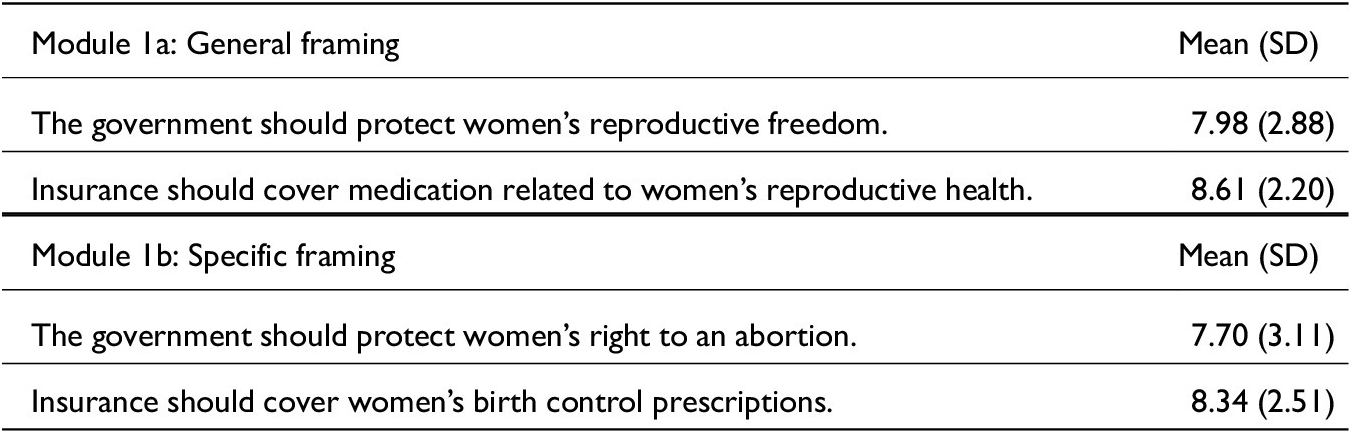
The dependent variables are the levels of support that respondents assigned to each of the statements in the randomly assigned pair of modules. In Table 1, the two modules with the general and specific statements are displayed with the mean levels of support for each. The first general statement reads, “The government should protect women’s reproductive freedom.” The statement places women as the focal point of the statement. The mean level of support was quite high at 7.98. The statement does not specifically mention abortion but is consistent with the phrasing that some pro-choice groups utilize to discuss the overarching topic. The corresponding specific statement specifically mentions abortion stating, “The government should protect women’s right to an abortion.” The statement highlights both the subject (women) and the activity (abortion). The mean level of support for this statement was slightly lower than the general statement at 7.7. However, the standard deviation was larger, which indicates a greater variance in responses when “abortion” was the term utilized to describe the action. Notable, a bivariate regression analysis using the type of framing as a predictor indicated no statistically significant differences (p > 0.05) in responses based on the language of the statements. The result might be explained by the fact that these two statements permeate discourse on a topic.
General vs. specific reproductive freedom statements

Note: SD indicates standard deviation.
The second statement included in the two modules captures views on the obligation of insurance companies to cover medication for women’s reproductive health. The general framing is vague in the type of medication insurance should cover by again placing women as the focal point of the statement. The statement reads, “Insurance should cover medication related to women’s reproductive health.” The mean level of support for the statement was 8.61. Bivariate tests indicated that the level of support was statistically higher (p < 0.05) than the statement on women’s reproductive freedom. The more specific statement reads, “Insurance should cover women’s birth control prescriptions.” Groups against this action frequently mention the type of medication and attempt to frame use of the medication as a choice that does not impact all people. The mean level of support was 8.34. While the mean level of support was lower than the statement that did not mention the type of medication, bivariate model output indicated that the difference was not statistically significant (p > 0.05). Conversely, the mean level of support was statistically significant (p < 0.05) and higher than the level of support for the statement containing the word abortion. The results indicate that, on average, support for insurance company coverage for birth control medication enjoys greater support than do general statements about women’s reproductive freedom or abortion.
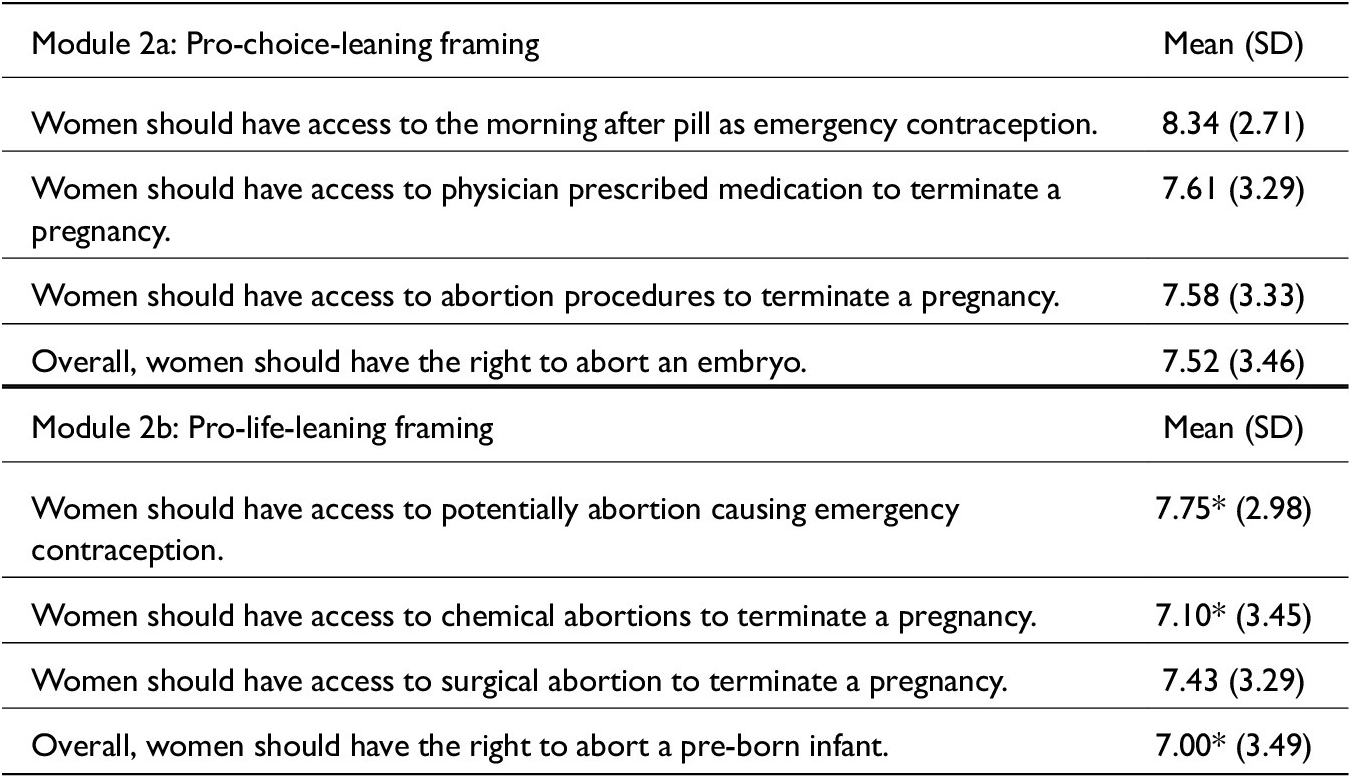
In Table 2, the two modules containing statements about women’s reproductive health care in the first trimester are presented. Table 2 displays mean levels of support, standard deviations, and whether the pro-life-leaning framings had statistically lower levels of support compared to the pro-choice-leaning framing. Each respondent received either the pro-choice-leaning or pro-life-leaning module matching the framing they received prior, and the ability to go back to the previous module was deactivated. The prompt at this top of the module stated, “Now we would like to provide some statements about access to procedures during the first trimester of a pregnancy. Using the same scale, indicate your level of support for the statements.” The items in each module were presented in the order shown in Table 2.
First trimester statements

Notes:* Indicates statistical significance bivariate levels of support at p < 0.05.
SD indicates standard deviation.
The first statement asks about whether women should have access to emergency contraception. The pro-choice-leaning statement indicates that women should have access to, “…the morning after pill as emergency contraception.” The mean level of agreement was high at 8.34, and the standard deviation was the lowest of any of the statements in the two modules. The corresponding pro-life statement included the phrase, “…abortion causing emergency contraception.” Although emergency contraception, such as the morning-after pill, does not cause an abortion, pro-life groups often use equivalent phrases (see for example, Pro-Life Wisconsin 2024; Students for Life of America 2024; USCCB 2024). The mean for the statement is statistically lower at 7.75 when conducting bivariate regression tests than it is for the pro-choice statement. In both modules, the statements regarding emergency contraception garnered the highest level of agreement.
The second statement in the modules indicates that women should have access to medication to terminate a pregnancy. The difference between the statements is that in the pro-choice framing this medication is referred to as “physician prescribed medication” and in the pro-life framing it is referred to as “chemical abortions.” The mean levels of support for these statements were statistically different - 7.61 and 7.1, respectively. Use of the words “physician” and “prescribed” in the pro-choice statement may have given the action greater credibility. On the other hand, pro-life groups will commonly utilize the phrase “chemical abortion” to illicit thoughts of danger (see for example, The Heritage Foundation 2022), which could have led to the lower level of support here.
The third statement refers to the procedure of having an abortion. The pro-choice statement refers simply to “abortion procedures” to terminate a pregnancy while the pro-life framing refers to “surgical abortion.” The mean levels of support are comparable to support for physician prescribed medication. The mean levels of support are 7.58 and 7.43, respectively. However, as Table 2 indicates, the levels of support are not statistically different when estimating bivariate models.
The previous three statements asked about access to reproductive medication and procedures in the first trimester. The last statement in the modules asks more generally about the right to abort in the first trimester. The statement begins with, “Overall, women should have the right to abort…” The pro-choice-leaning statement finishes the statement with “an embryo.” The pro-life statement concludes the statement with “a pre-born infant.” Pro-life groups have employed such language to get people to think about an embryo as a child existing outside of the womb (see for example, Focus on the Family 2024). The mean level of support for the statement containing the language “an embryo” was 7.52. In comparison, the mean level of support for the statement containing the language “a pre-born infant” was 7. Support for the statement with the pro-life framing was statistically lower when estimating bivariate regression tests. In fact, support for the statement was statistically lower compared to every other statement provided, except for the statement containing the “chemical abortion” wording where support was statistically similar. The result confirms the hypothesis that use of the pro-life-leaning wording to describe reproductive medication and abortion procedures would result in lower aggregate level support ( $ {H}_1 $
).
$ {H}_1 $
).
Independent Variables
While descriptive statistics and bivariate statistical tests convey useful information regarding the impact of framing on aggregate-level support for women’s reproductive health care, the results only convey a portion of the puzzle. To further explore the impact of framing, models were estimated accounting for important individual-level predictors of interest. Several measures are included as predictor variables in the empirical analysis that have been found to have a relationship with attitudes on abortion, or are measures that are common to control for in American attitudinal studies. First, several sociodemographic variables are included in the multiple regression analysis, including age, gender, income, education, and race. One expectation is that there will exist a gender gap, with women having greater support for statements when accounting for all other predictors. There are not strong expectations for the relationships between other sociodemographic predictors and attitudes toward abortion beyond those found in the literature when accounting for all variables included in the models.
The analysis also included four attitudinal variables. First, respondents’ self-reported political ideology on a left-right unidimensional ideological scale is included. The general expectation is that liberals will express greater support for the statements when compared to conservatives. Second, partisan identification is included as a predictor variable. Partisanship has acted as an increasingly important predictor of a range of attitudes over time in the US, including issues that could be considered gendered issues. The general expectation is that Democrats will be more supportive of the statements while Republicans will be less supportive. In this analysis, respondents that selected that they lean toward a party were coded as partisan identifiers of that party. This choice was made to not overinflate the impact of partisanship by only have strong identifiers coded as partisans. The choice was also made to limit degrees of freedom issues given the number of observations in the dataset.Footnote 3 Third, a latent variable representing a measure for hostile sexism is accounted for in the empirical analysis. The latent variable was created through the estimation of factor analysis based on levels of agreement with three statements on women and society (see Appendix A). Fourth, the respondent’s self-described religiosity was incorporated into the analysis since religious individuals commonly hold strong negative attitudes toward abortion.
The final predictor variable included in the empirical analysis asks whether the respondent knows anyone that has voluntarily terminated a pregnancy, including themselves. Since abortion is illegal in some US states, the respondents were not asked directly whether they have terminated a pregnancy. The question wording choice was made with ethical considerations. The intent was to avoid the potential direct revelation of an action that a respondent’s state government deems criminal. Although the data is anonymized and access to the data is restricted, no data collection and storage procedure can eliminate all threats to data integrity. Nevertheless, it should be acknowledged that first-hand experience with abortion would have a greater impact on attitudes when compared to secondhand knowledge about someone’s abortion. The expectation is that individuals that know people who have terminated a pregnancy, or have terminated a pregnancy themselves, will be more empathetic toward abortion. In tandem, individuals with abortion “experience” will be more supportive of the statements.
It is essential to mention that several predictor variables were eliminated from use in the final analysis due to a lack of statistically significant relationships with any of the dependent variables and/or multicollinearity issues. For example, when controlling for religiosity, inclusion of a religious affiliation variable did not result in statistically significant and/or meaningful inferences. Similarly, whether the respondent was currently a parent, has ever had a child, or has been a parent to a child was not statistically significant predictor of support for the statements. In addition, a latent variable representing benevolent sexism was not a statistically significant predictor of support for any of the statements. The measure was also partially correlated (0.42) with hostile sexism. Finally, a latent variable representing knowledge about women’s reproductive health care and laws did not have a statistically significant relationship with support for the statements. Variable coding and descriptive statistics for all variables utilized in the analysis here, as well as the variables only utilized in robustness checks, are presented in Appendices A and B.
Results — Regression Analysis
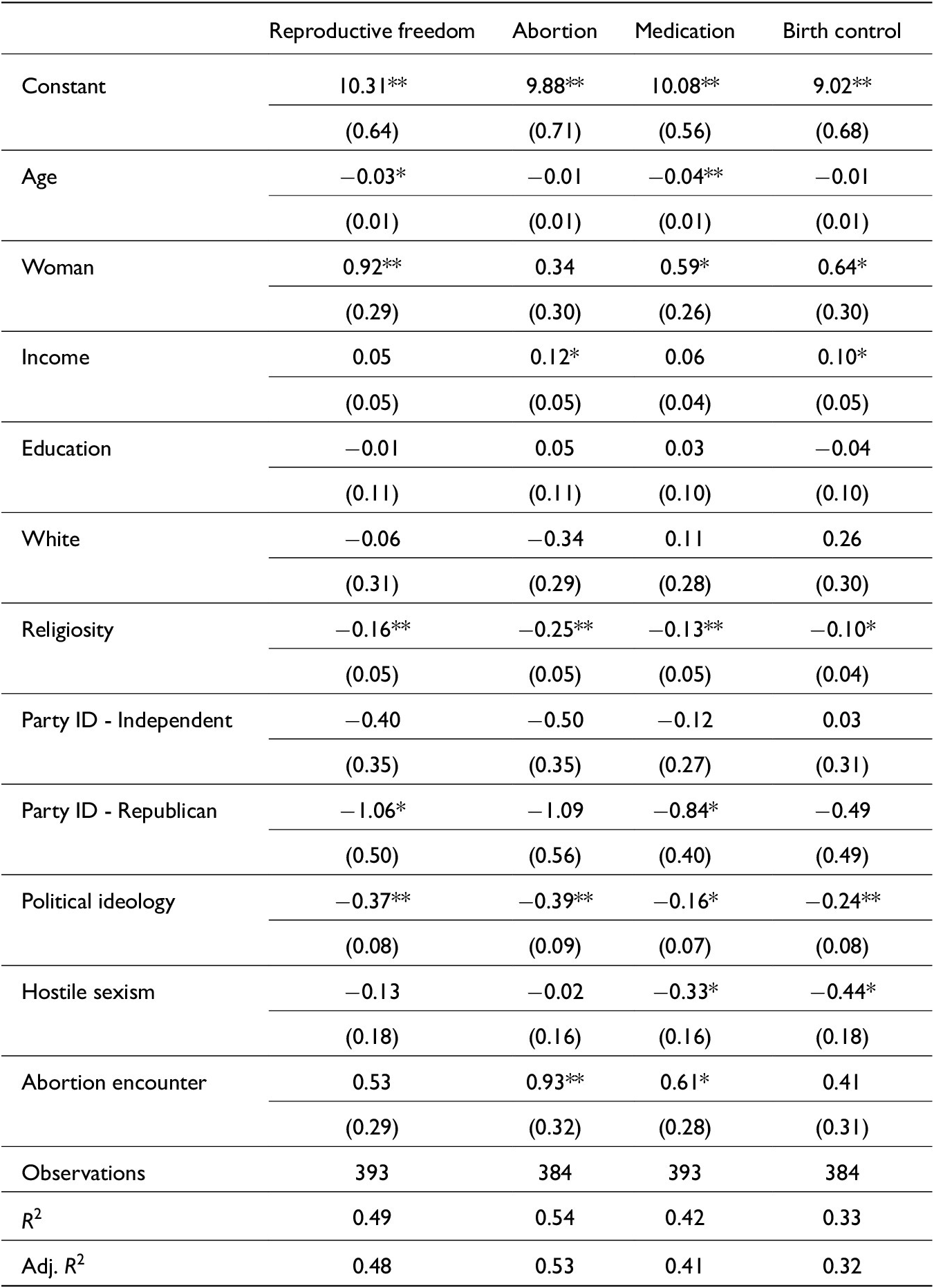
Table 3 presents regression model outputs for the four models predicting support for the more general and specific statements on views toward reproduction policy. Model fit scores ( $ 0.32\le Adj.{R}^2\ge 0.53 $
) indicate robust performance relative to similar attitudinal studies. Across all models, two variables consistently demonstrated statistical significance: religiosity and political ideology. Religiosity exhibited a negative association with support, with the greatest impact seen in the model on abortion rights, where individuals for whom religion is “very important” exhibited a 2.5-point decrease in support when comparted to a respondent that indicated “not at all” important. Similarly, conservatives exhibited significantly lower support across all models, particularly for statements addressing reproductive freedom and abortion rights.
$ 0.32\le Adj.{R}^2\ge 0.53 $
) indicate robust performance relative to similar attitudinal studies. Across all models, two variables consistently demonstrated statistical significance: religiosity and political ideology. Religiosity exhibited a negative association with support, with the greatest impact seen in the model on abortion rights, where individuals for whom religion is “very important” exhibited a 2.5-point decrease in support when comparted to a respondent that indicated “not at all” important. Similarly, conservatives exhibited significantly lower support across all models, particularly for statements addressing reproductive freedom and abortion rights.
Regression models predicting general and specific attitudes toward reproductive health

Notes: Standard errors in parentheses.
* p < 0.05; ** p < 0.01.
The results highlight the distinct roles of age and income in shaping attitudes toward reproductive health policies. Older individuals exhibited less support for statements on reproductive freedom and medication coverage, while age had no significant impact on support for abortion or birth control coverage. Conversely, income was positively associated with support for abortion and birth control coverage, indicating that higher-income individuals were more supportive of these policies, though income was not a significant predictor for reproductive freedom or medication-related statements.
Framing effects also played a role in shaping gender and partisan gaps. Women showed higher support for statements referencing reproductive freedom and medication coverage, while no significant gender differences were found for direct abortion references. Republicans exhibited lower support for the more general framed reproductive freedom and medication coverage statements, though no significant partisan differences were noted for direct mentions of abortion and birth control.
Hostile sexism only has a statistically significant relationship with the statements containing the perspective that insurance companies should cover medication related to women’s reproductive freedom. In particular, the results indicate that individuals holding greater hostile sexism views have a statistically lower level of support for insurance companies covering medication and birth control. The result indicates that people holding hostile sexism views are more likely to think that women should be responsible for the cost of this type of medication.
Results are mixed when it comes to the impact of knowing someone, including themselves, who has had an abortion. An individual that responded yes to the question held a statistically greater level of support for the right of a woman to have an abortion and insurance companies covering medication related to reproductive health. In this instance, it may be the case that due to the broadness of the statement regarding insurance covering medication, individuals with prior encounters with abortion interpreted the statement as being about prescription abortion medication or procedures and not birth control. If that is the case, it would explain the gap between individuals with and without prior encounters on that statement but not on the birth control statement.
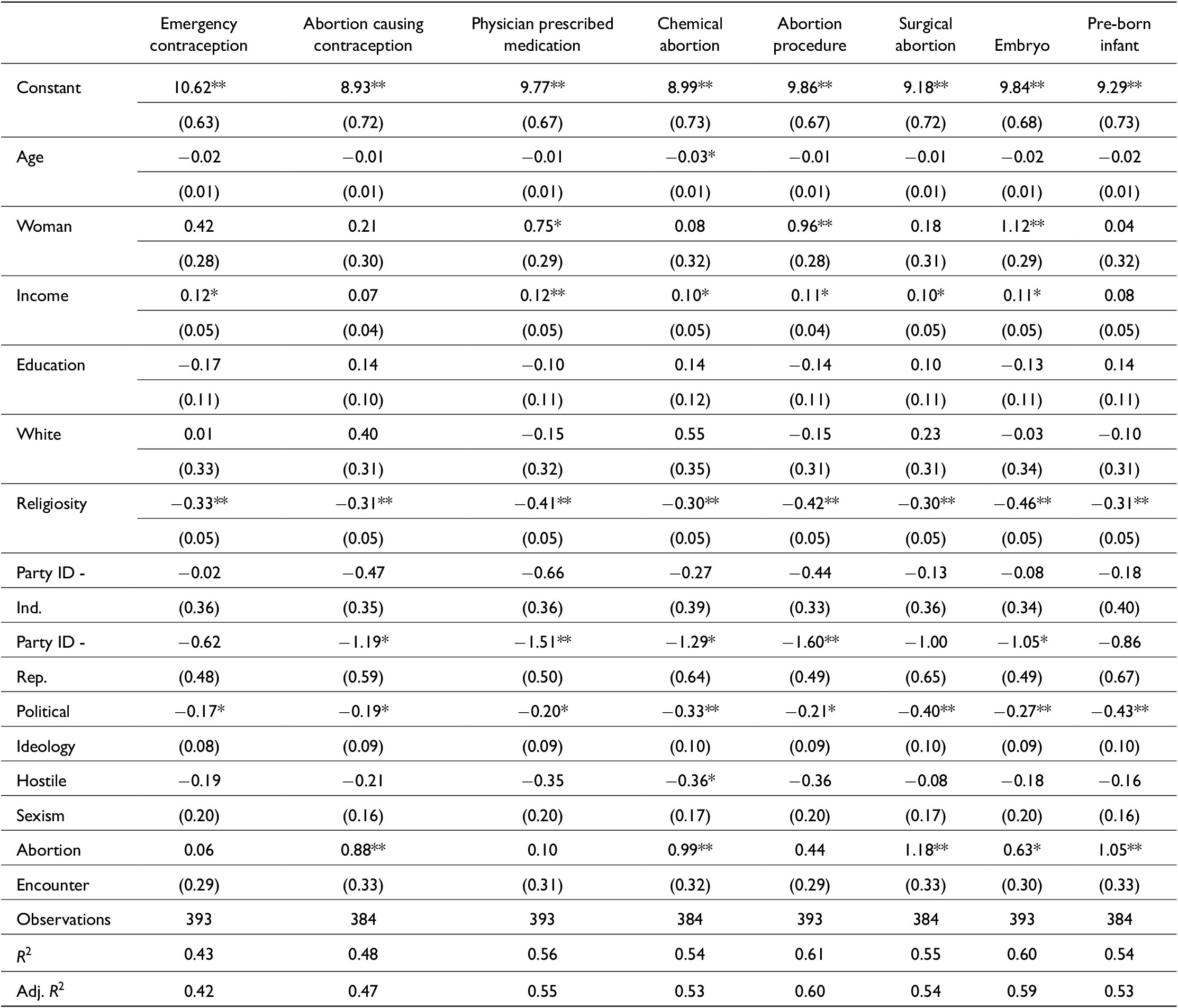
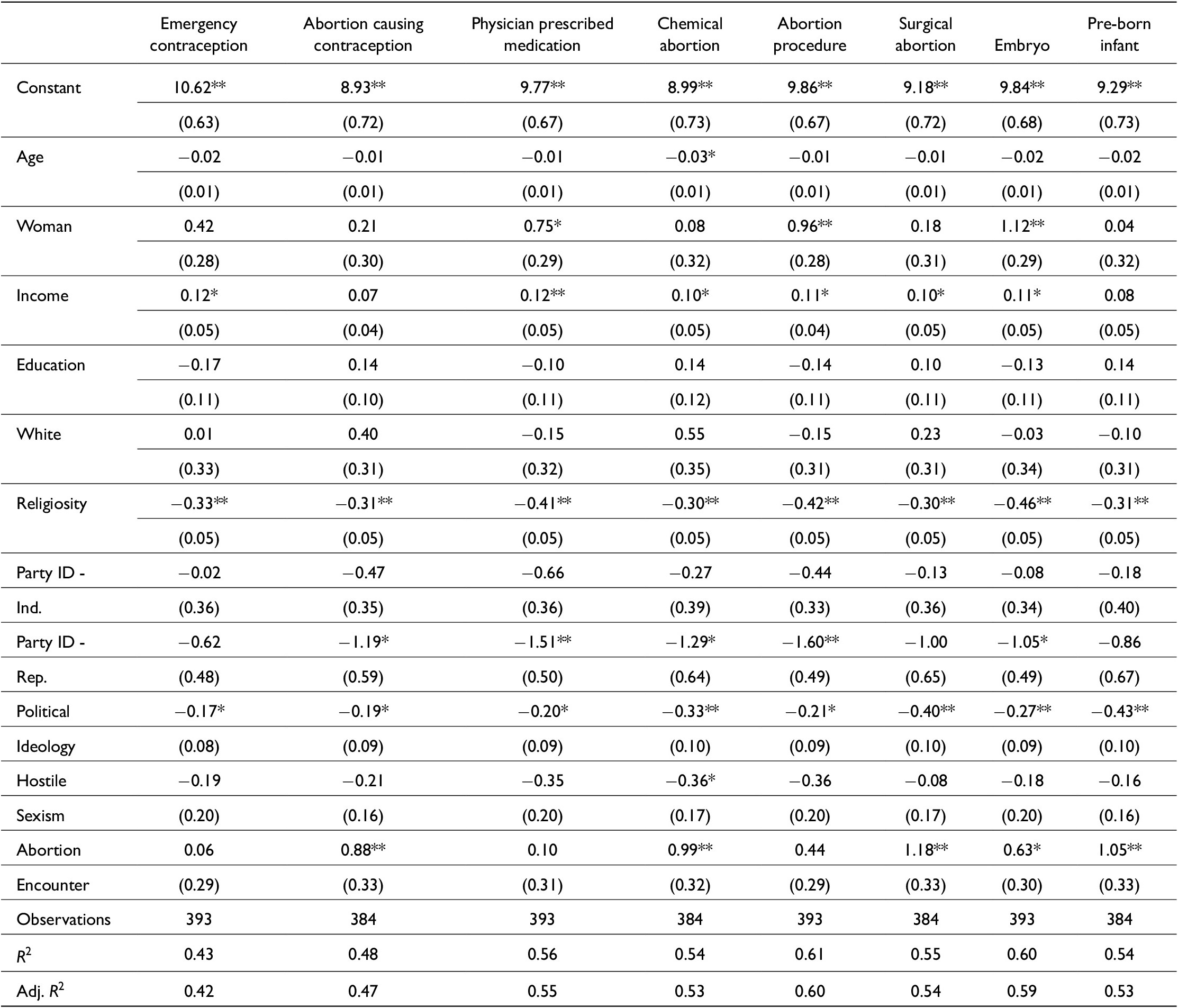
In Table 4, model outputs for the eight statements specifically asking about activities in the first trimester are presented. Again, model fit scores indicate that the models perform quite well ( $ 0.42\le Adj.{R}^2\ge 0.60 $
). Age, education, and race have either no statistically significant or substantive relationship with support for the eight statements. In comparison, income is statistically associated with a greater level of support for six out of eight statements. Income has no impact on the statements mentioning abortion causing contraception or pre-born infants. The specific reason for the relationship would be an area for inquiry for future research.
$ 0.42\le Adj.{R}^2\ge 0.60 $
). Age, education, and race have either no statistically significant or substantive relationship with support for the eight statements. In comparison, income is statistically associated with a greater level of support for six out of eight statements. Income has no impact on the statements mentioning abortion causing contraception or pre-born infants. The specific reason for the relationship would be an area for inquiry for future research.
Regression models predicting attitudes toward first trimester interventions
Notes: Standard errors in parentheses.
* p < 0.05; ** p < 0.01.
The results show that there were no gender gaps when comparing the statements that contained wording about emergency contraception. In addition, the outputs show that there were no gender gaps in support for any of the statements with the pro-life language. In contrast, women displayed statistically significant higher levels of support for the three statements with the pro-choice framing on abortion. The result might be a product of women’s greater consumption of this type of framing from women’s reproductive freedom advocacy groups. Presumably, the absence of gender gaps in support for the pro-life-leaning statements is due to women’s lower support rather than men’s greater support.
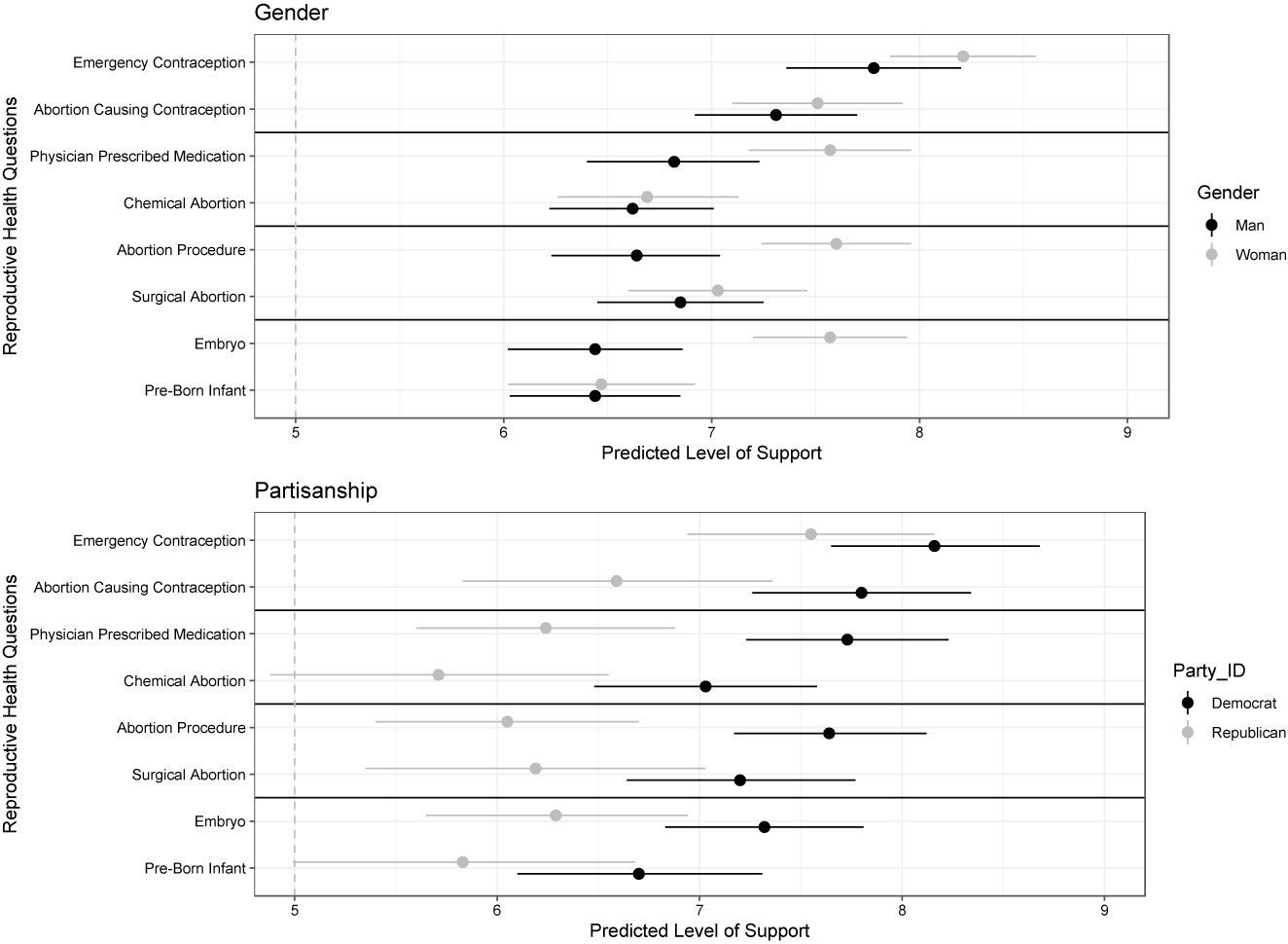
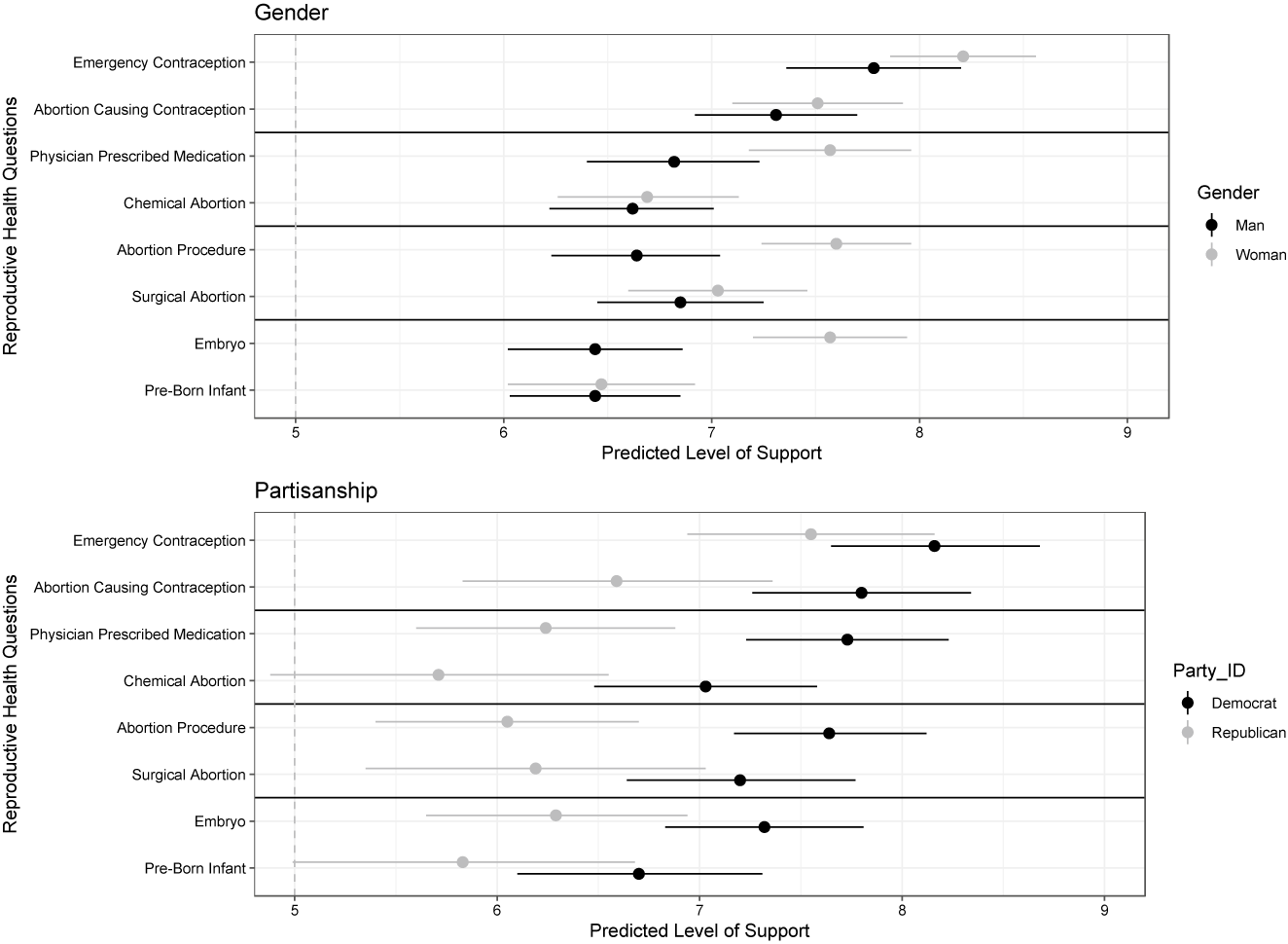
In the top panel of Figure 1, predictions are plotted for the effect of gender on support for the statements. All predictions presented here were calculated holding other independent variables at their survey weighted mean values. The plot shows that when comparing the point estimates for men and women, the point estimates are further apart for the pro-choice-leaning questions and narrow dramatically for the pro-life-leaning statements. In fact, substantive gender gaps only existed for the pro-choice statements mentioning an abortion procedure and abortion of an embryo. In both instances, the gender gap is a consequence of women’s greater support for the statements when compared to support for the corresponding pro-life framed statements. The result indicates that the pro-choice statements may resonate to a greater degree with women.
Effect of gender and partisanship on support.
Note: Predictions calculated holding independent variables at survey weighted means.
Similar non-static trends exist when exploring the impact of partisanship on support for the statements. Republican partisans were statistically less supportive of two of the pro-life-leaning statements, abortion causing contraception and chemical abortions. In addition, Republican partisans held a statistically lower level of support for all the pro-choice-leaning statements except for the statement mentioning emergency contraception. The substantive difference in support followed a similar pattern as did the gender gaps.
In the bottom panel of Figure 1, predictions of support are presented for Democratic and Republican partisans for the statements. There are only two instances where there exists a substantive partisan gap, which were the pro-choice statements mentioning physician prescribed medication and abortion procedures. The gaps appear to mainly be a product of Democrats greater support for the two statements. The greater level of partisan support for the statements among Democrats may be attributed to the statements aligning more closely with the partisan frames received by this group on the topic.
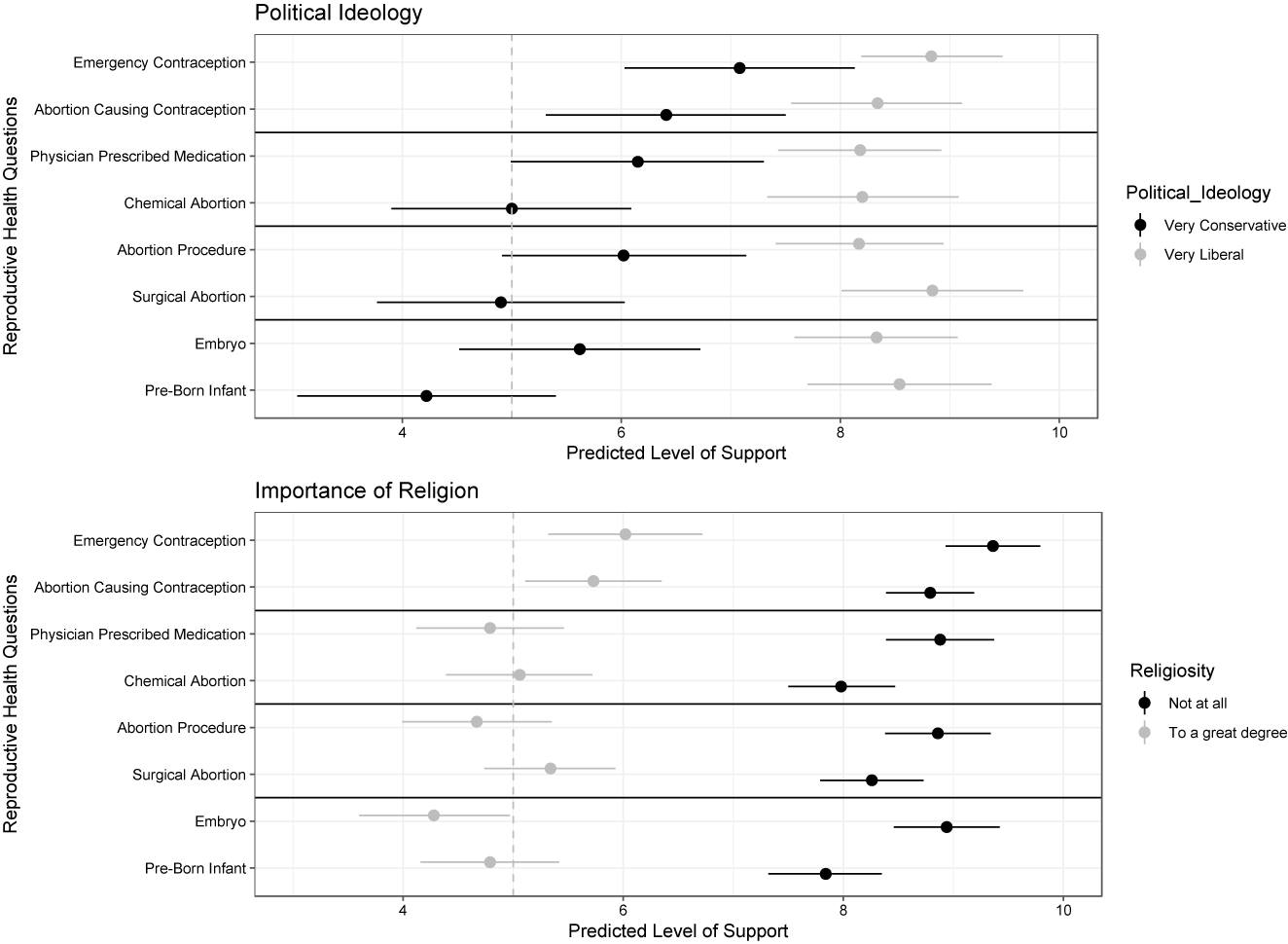
Related to, but not synonymous with, partisanship, there were consistent political ideological gaps in support for the statements. Across all eight statements, a conservative political ideology was statistically associated with a lower level of agreement with the statements. However, the size of the ideological gaps was conditional on the framing of the statement. In the top panel of Figure 2, predictions are plotted for the ideological ends (0 = very liberal and 10 = very conservative). The figure shows that respondents identifying as very liberal expressed a similar level of agreement across all eight statements. In comparison, very conservative respondents displayed a lower average level of support for the statements containing the pro-life framing. Thus, the gaps in support when comparing the two groups were statistically larger for the pro-life statements in comparison to support for the pro-choice statements in a few instances. The harsher phrasing might have activated conservatives to express a lower level of support.
Effect of political ideology and religiosity on support.
Note: Predictions calculated holding independent variables at survey weighted means.

A greater expression of religiosity was also statistically correlated with a lower level of support for the statements. In the bottom of Figure 2, predictions of support are plotted for the extreme values on the religiosity variable (0 = not at all religious and 10 = to a great degree religious). The substantive gaps in support across the eight statements are quite large based on the importance of religion. The impact of religiosity on support for the statements is also contingent on the type of framing. Respondents at the highest levels of religiosity tend to express a greater average point estimate in support for the pro-life frames when compared to the pro-choice frames. The opposite relationship exists for non-religious respondents. Respondents that indicated not being religious at all expressed less support on average for the pro-life statements when compared to the pro-choice statements. Therefore, the religiosity gaps in support were smaller for the pro-life statements. Non-religious individuals appear to be particularly impacted by the tone of the statements, which is a result worth investigating further in future research.
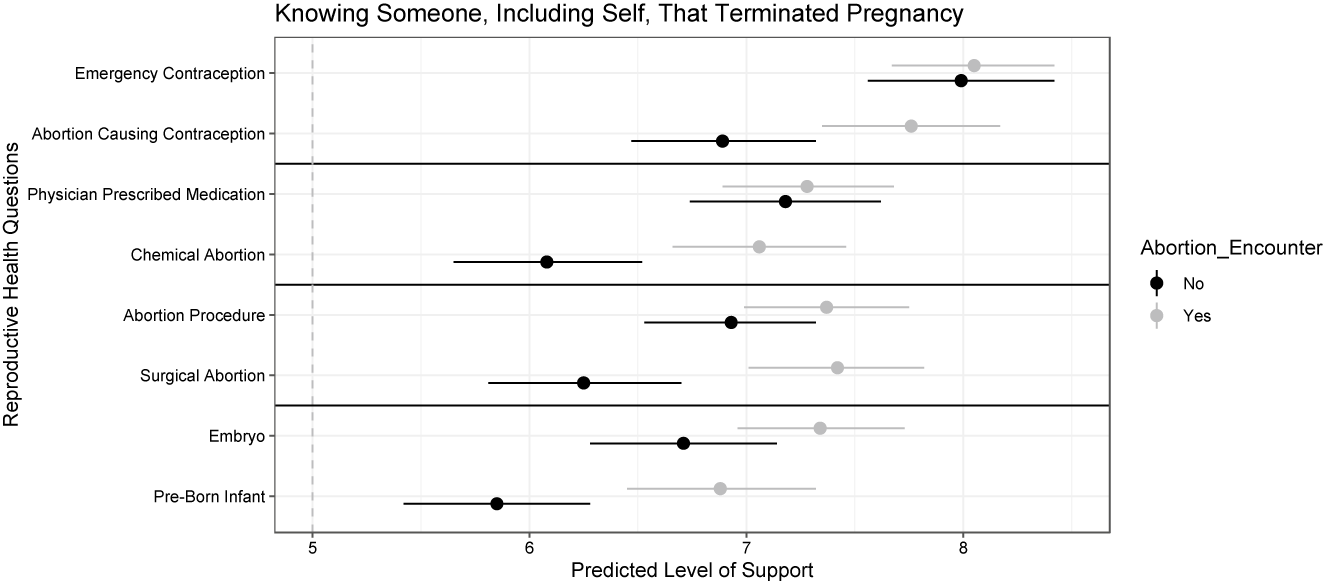
In Table 4, the results indicate that hostile sexism has no substantive impact on support for the eight statements on reproductive health during the first trimester. In comparison, an individual that knows someone that has had an abortion, including themselves, has a statistically significant greater level of support for all four pro-life framed statements, as well as the statement asking about aborting an embryo. In Figure 3, predictions are plotted for support of the eight statements based on encountering someone that had an abortion. The plot shows that there exist small gaps in support for the pro-life statements based on abortion encounters. Support for the statements based on framing are fairly consistent for individuals that know someone, including themselves, who has had an abortion. The gaps appear to be a product of people that do not know anyone that has had an abortion having a lower level of support for the pro-life statements. Therefore, the results demonstrate that the pro-life framing could have a notable impact on support for abortion procedures among individuals that lack direct contact with an individual that has terminated a pregnancy. Thus, pro-choice groups would be strategically wise to disseminate personal stories. Taken together, the results from the correlational analysis confirm $ {H}_2 $
that the relationships between predictors and support for the statements are conditional on the framing.
$ {H}_2 $
that the relationships between predictors and support for the statements are conditional on the framing.
Effect of previous encounter w/ abortion on support.
Note: Predictions calculated holding independent variables at survey weighted means.

An additional aspect of the empirical analysis to consider is whether respondents were able to identify the type of framing they were randomly assigned. After indicating their level of support for the statements in both modules and after the experiment’s nature had been revealed, respondents were asked whether they could identify which framing the statements “mostly aligned with.” Overall, 57.58% of respondents correctly identified whether they received the pro-choice or pro-life framing. Only 5.43% of respondents incorrectly selected pro-life when provided the pro-choice framing, whereas 37% of respondents incorrectly selected pro-choice when provided the pro-life framing.Footnote 4
These results are not solely attributable to inattentiveness. The survey included two attention checks — one administered before and one after the modules on reproductive health — both of which were answered correctly by around 95% of respondents. This suggests that some respondents may have been influenced by the framing without consciously associating the statements with broader movement narratives. Additionally, it is possible that respondents were predisposed to expect a pro-choice perspective, given the societal prominence of such frames.
Conclusion
The Dobbs decision has left the issue of abortion to be litigated and debated at the state level in the US, absent the codification of either abortion rights or abortion restrictions into federal law. Thus, both pro-choice and pro-life interest groups have been activated to lobby state governments, as well as campaign to acquire popular support for their positions. An important tool in these groups’ effort to win support involves providing contrasting frames to represent women’s reproductive health care policies. The ability to use framing extends beyond simplistic pro-choice and pro-life labels to uniquely describe the practice of abortion and the types of abortion procedures utilized. The topic is important because the vocabulary and expressions utilized by these groups frequently find their way into state referendums, which subsequently become enshrined in state laws or constitutions.
This study employed a survey experiment to investigate how support for various policies concerning women’s reproductive health care could be impacted by framing. In addition, this research agenda explores how factors influencing support for these policies may vary depending on the wording of the statements. There are two main findings worth highlighting here, as well as their societal implications. First, statement framing significantly influences support for women’s reproductive policy. General statements regarding women’s reproductive health or medication garnered greater support than more specific statements referencing abortion or birth control. Additionally, the specific terminology used to describe the same concept was significant. For example, a statement referring to the right to abort “…an embryo” received significantly greater support than when the right to abort referred to a “…pre-born infant.” Thus far, a majority of popular referendums on abortion rights have received overwhelming support. The results here indicate that in states where abortion rights do not enjoy overwhelming support, the language utilized in referendum could impact the outcome of elections on reproductive rights. Where popular referendum occurs with pro-life-leaning rhetoric, such as referring to an embryo as a pre-born infant, pro-choice groups will have to implement campaigns to educate voters about the misleading rhetoric.
Second, support across all statements and frames did not consistently correlate with predictor variables. For instance, Republican partisans were statistically less supportive than Democratic partisans when provided pro-choice statements. However, there were no partisan gaps when provided the pro-life statements. The result was due to Democratic partisans having a lower level of support for the pro-life statements than they did for the pro-choice statements. Although primarily exploratory, the correlational analysis exposes how varying groups and attitudes can be activated to offer differing levels of support for reproductive policies depending on the phrasing of statements. Overall, the findings underscore the complexity of these relationships.
One question the study leaves unanswered is how we determine which wording is “correct” or “valid.” While politics inherently involves competing issue frames, and the correct or valid frame is often difficult to identify, there is a standard that should be upheld during elections. Based on the findings that highlight differences between general and specific statements, it is crucial that the wording of referenda be crafted with clarity and transparency, ensuring it aligns with voters’ understanding and intent. This clarity is essential for upholding democratic principles. Ambiguously worded referenda that result in voters supporting policies they do not truly endorse presents a significant issue for democratic governance, especially given Americans’ limited knowledge about reproductive health care policies (Hansen Reference Hansen2025).
There are two limitations of the current study worth highlighting. First, the correlational analysis was primarily exploratory. Given the complexity of the relationships between statement phrasing and predictor variables, additional research is needed. Future research should investigate why some predictors yield higher or lower levels of support regardless of framing, while other predictors are activated by particular frames. Specifically, research ought to investigate whether individuals’ familiarity with the frames interacts with the frame itself, affecting the magnitude of the predictors’ influence on reproductive policy attitudes. Second, the current study was limited in the number of observations that could be acquired. Due to funding limitations for this project, a larger number of observations could not be obtained to calculate the statistical relationships more precisely. Thus, when investigating some relationships, prediction confidence bounds were of considerable size. While the number of observations is sufficient for the analysis conducted here, additional observations would enhance the precision of estimates in any future work on the topic.
Supplementary material
The supplementary material for this article can be found at http://doi.org/10.1017/S1743923X25000145.
Data availability
Code and data upon request.
Acknowledgments
The author wishes to thank the editor of Politics & Gender, Dr. Mona Lena Krook, as well as the three anonymous reviewers for their valuable feedback. Gratitude is also extended to Maija Setälä for her support.
IRB
#Tenk 4.1.2.
Informed consent
Acquired.
Funding statement
This research was financially supported by Research Council of Finland (#356858) - REPRO Project.
Competing interests
No potential conflict of interest was reported by the author(s).


 Open access

