

Over the last two decades, the Middle Rocky Mountains (MRM) have emerged as an important area in western North American archaeological research. More than a century of fire suppression, combined with major regional drought and insect infestation, has devastated western forests, making large wildland fires a common part of the summer season. Many fires occur within the vast, high-elevation wilderness areas that until recently saw little archaeological research. Archaeological surveys have identified occupations at high-elevation sites extending into the terminal Pleistocene and early Holocene, but the extensive Late Prehistoric to Historic record (ca. < 1500 cal BP; Kornfeld et al. Reference Kornfeld, Frison and Larson2010) calls into question the role of alpine environments in regional subsistence and settlement patterns. Of particular interest are “villages” at or above 3,000 m asl associated with a broad spectrum resource base that includes bighorn sheep, whitebark pine nuts, and roots. The MRM record draws parallels to a larger pattern of high-elevation occupation and resource intensification throughout the Great Basin during this time (Bettinger Reference Bettinger1991; Morgan, Fisher, and Pomerleau Reference Morgan, Fisher and Pomerleau2012; Thomas Reference Thomas, Parezo and Janetski2014).
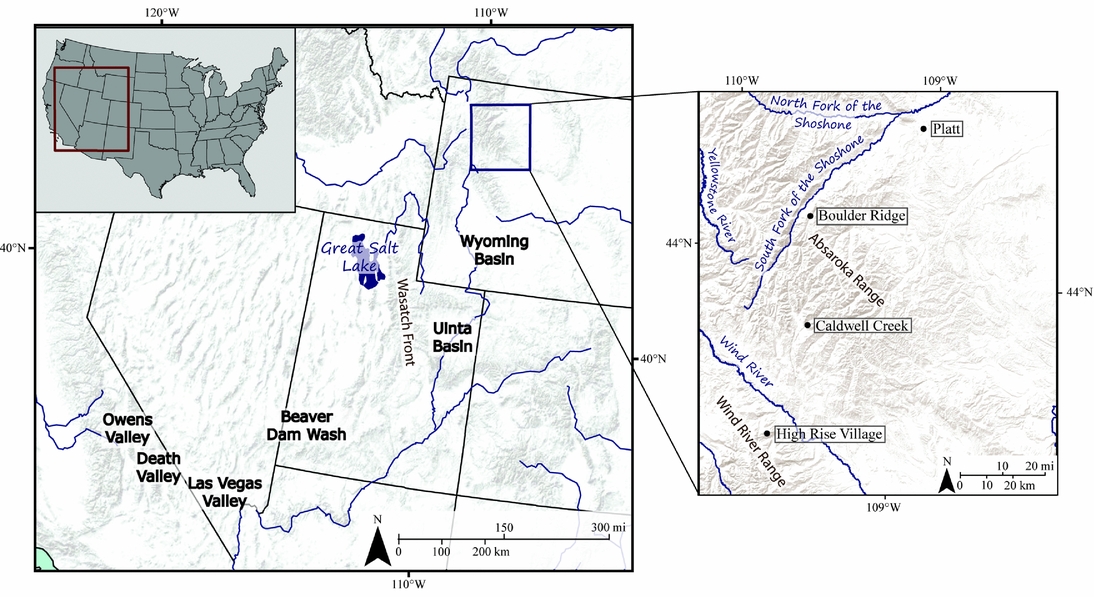
Obtaining age control from high-elevation archaeological sites with radiocarbon has proven a challenge due to an old-wood problem common near the upper treeline and the release of carbon into archaeological sites during wildfires. However, because many of these sites are associated with ancestral Numic occupations, brownware pottery is common in material assemblages and provides an opportunity for additional chronological control by directly dating the manufacturing age of pottery with single-grain optically stimulated luminescence (SG-OSL). We applied SG-OSL dating to the quartz sand temper of 10 pottery samples from four archaeological sites located in the Wind River and Absaroka Ranges (Figure 1). The detailed protocol and performance characteristics of the pottery samples using this dating technique are presented elsewhere (Ideker Reference Ideker2016; Ideker et al. Reference Ideker, Finley, Rittenour and Nelson2017); here, we summarize those methods and demonstrate the validity of the technique in archaeological contexts. We selected samples of brownware pottery sherds from sites with comparable radiocarbon ages. In addition to SG-OSL, we dated each sherd using fine-grain infrared stimulated luminescence (FG-IRSL; Feathers Reference Feathers, Rafferty and Peacock2008, Reference Feathers2009). Our results suggest that SG-OSL provides improved age control compared to both radiocarbon and FG-IRSL because uncertainties between dated and target events are reduced in the case of radiocarbon, and age distributions are more precise due to the elimination of signal fading anomalies in FG-IRSL.
Location of the study area showing the sites sampled for single-grain OSL analysis and the regions compared for direct dates on brownwares.
Because relatively little is known about regional brownware pottery, our second objective is to evaluate the spread of brownware pottery technology into the MRM, the northeastern margin of the vast Numic homeland. We place our results within a context of directly dated Formative (i.e., Ancestral Pueblo and Fremont) and brownware pottery from the southern and eastern Great Basin (EGB) (Eerkens and Lipo Reference Eerkens and Lipo2014; Feathers and Rhode Reference Feathers and Rhode1998; Reed Reference Reed, Reed, Seddon and Stettler2005; Rhode Reference Rhode, Madsen and Rhode1994). This work demonstrates that brownwares appeared earliest in the southern Great Basin (SGB) approximately 1,200 years ago, where ages overlap with Ancestral Pueblo pottery. Direct age control on pottery from the EGB and MRM show the near simultaneous appearance of brownware in both regions 800 years ago. We suggest that this process of technological diffusion occurred within a broader context of forager-farmer interactions, particularly among Fremont communities in the Great Salt Lake and Uinta Basin regions of northern Utah (Madsen and Simms Reference Madsen and Simms1998; Upham Reference Upham1994). Significantly, we argue that brownware technology quickly grafted onto a “Desert culture” population base (Upham Reference Upham1994:124) with Numic roots that extended into the MRM for centuries, if not millennia. While our sample size is small and there is still much to learn about the use of brownware pottery among regional foragers, we suggest that the adoption of pottery by the ancestral Numa of the MRM was a technological component of a trend toward resource intensification observed throughout western North America during the last 1,500 years. Here we develop a regional context for brownware studies, review luminescence dating methods applied to pottery, and summarize the results of our analysis. We conclude by discussing the implications of a brownware chronology in western North American archaeology.
Brownware Studies in Western North America
By the mid-twentieth century, archaeologists recognized three primary brownware types across interior western North America: Southern Paiute Utility Ware, Owens Valley Brown Ware, and Shoshone or Intermountain Ware (Madsen Reference Madsen, d'Azevedo and Sturtevant1986; Pippin Reference Pippin and Griset1986). As Eerkens and others (Reference Eerkens, Neff and Glascock2002:203) note, many researchers cite inconsistency in identifying key attributes for the failed development and use of brownware typologies (Dean Reference Dean1992). Eerkens and others (Reference Eerkens, Neff and Glascock2002) suggest that geochemical and mineralogical analyses provide the most reliable and replicable typologies in the western Great Basin, a technique that Finley and Scheiber (Reference Finley and Scheiber2010) verified in the Wyoming Basin and MRM. Coale (Reference Coale1963) provided the most consistent, cohesive, and regionally applicable description of brownware ceramics. Vessels were made using coiling and scraping and molding techniques. They have flat bottoms, relatively straight but thick walls with direct to slightly curved rims, and surface decoration usually limited to fingernail impressions or geometric patterns near the rim. Vessels are often coarsely tempered, although grain size varies with locally available sands. Brownware chronology is poorly developed, and the style is generally thought to be less than 600 years old throughout the majority of the Numic homelands (Butler Reference Butler and Griset1986; Eerkens Reference Eerkens2003; Pippin Reference Pippin and Griset1986; Wright Reference Wright1978). Direct thermoluminescence (TL) and optically stimulated luminescence (OSL) dating of brownwares indicate that Numic foragers experimented with ceramic technology early throughout interior western North America, and age-overlaps between both Ancestral Pueblo and Fremont traditions challenge the interpretation of a more recent Numic adoption of ceramic technology (Eerkens and Lipo Reference Eerkens and Lipo2014; Feathers and Rhode Reference Feathers and Rhode1998; Ideker et al. Reference Ideker, Finley, Rittenour and Nelson2017; Rhode Reference Rhode, Madsen and Rhode1994). We discuss regional age relationships in more detail below.
Brownware Ceramics and Social Dynamics in the Western Great Basin
The ethnography and archaeology of the western Great Basin are fertile ground for problem-oriented and theoretically informed research (Eerkens Reference Eerkens2003, Reference Eerkens2004, Reference Eerkens2005; Eerkens et al. Reference Eerkens, Neff and Glascock2002; Eerkens and Lipo Reference Eerkens and Lipo2011, Reference Eerkens and Lipo2014). Steward's (Reference Steward1933) Owens Valley Paiute ethnography poses an interesting scenario of Great Basin hunter-gatherer social and technological organization, namely those of brownware craft specialization, resource ownership, and a pseudo-market economy among Paiute women. Eerkens and others (Reference Eerkens, Neff and Glascock2002:201–203) position this problem as one of an economy of scale, noting that ceramic specialization should be rare in hunter-gatherer societies given the inherent conflict between the time demands of pottery production and mobility requirements for foraging. They propose that Paiute women solved this problem by pooling resources; certain “enterprising” women overproduced and exchanged pottery for either shell money or food. Following this logic, brownware pottery should be produced in core areas where ceramics specialists controlled access to clay and temper and traded throughout the region. Eerkens and others (Reference Eerkens, Neff and Glascock2002) tested this hypothesis with a neutron activation analysis of clay elemental composition of both archaeological sherd and geological clay sources from 380 samples. They found that, while regionally discrete source areas were evident, the sample did not support Steward's model of craft specialization and trade. Instead, environmental parameters, namely precipitation in these arid western basins, structured the movement of people and pottery.
Eerkens (Reference Eerkens2004) evaluated a second assertion of Steward's (Reference Steward1933) ethnographic research that makes western Great Basin foragers unique among similar societies, namely that of resource ownership or privatization of small, herbaceous seeds. Multiple lines of evidence support the role of brownware ceramics in the privatization of small seeds during the Marana period (600 cal BP to contact). Most important are the co-occurrence of ceramics and ground stone on archaeological sites, direct rim vessels consistent with making soups or gruels, and chemical analysis of food residues suggesting they were dominated by seeds (Eerkens Reference Eerkens2004:657–659). In addressing the question of why hunter-gatherers should adopt ceramic technology in the first place, Eerkens (Reference Eerkens2004:661–663) asserts that it increases efficiency in a context of resource intensification focused on small seeds. Unlike hunted meat (either individual kills of large game or rabbits trapped en masse), seeds are not widely shared among hunter-gatherer families. Since seeds can be simmered over small fires, they are also not like roots and tubers that require roasting in large, visible, stone-filled pits. Ceramics, then, are part of privately owned technologies that allowed women to cook food for their families, thus solving the problem of “freeloaders” reducing individual gains to families with children. In this case, archaeological analysis supports Steward's (Reference Steward1933) assertions of resource privatization among western Great Basin hunter-gatherers.
Most recently, Eerkens and Lipo (Reference Eerkens and Lipo2014) use a luminescence geochronology of brownwares to test a diffusion model of design features across four subareas of the western Great Basin. They suggest that a diffusion-based adoption of any technology takes the form of a temporally S-shaped distribution curve characterized by innovators, the “mainstream,” and laggards. A number of factors that include availability of alternative technologies, the degree to which people rely on those alternatives, and the mode of cultural transmission determine the speed of adoption. Eerkens and Lipo (Reference Eerkens and Lipo2014:25–26) predict that the adoption of brownware technology should follow the standard S-shaped curve, that adoption and diffusion should occur relatively slowly, and that experimentation will last longer in areas with the oldest exposure. Based on a sample of 167 luminescence ages coupled with changes in rim form, they suggest that direct rim forms diffused out of southern Owens Valley approximately 500 years ago after several centuries of experimentation. While there is no difference in ages between chronologies from Death Valley and China Lake, both areas have different shapes of temporal adoption curves than southern Owens Valley due to the extended period of experimentation in the latter. Finally, Eerkens and Lipo (Reference Eerkens and Lipo2014:29) conclude that curved rims represent a failed innovation that originated somewhere east of Death Valley, perhaps near the present location of the Nevada Test Site. The most significant assertion this transmission model makes for our work in the MRM lies in the third prediction, that of the duration of a period of experimentation. We suggest that rather than a focal point of innovation in the southwestern Great Basin and relatively slow transmission from there, diffusion and adoption occurred rapidly across the interior of western North America.
Brownwares in the Mountain World of the Numa
In contrast with the western Great Basin, we know much less about ceramics in the social and technological organization of MRM hunter-gatherers. Regional ethnographies are not as well developed, but the lack of knowledge is also due to the paucity of brownware ceramics in the archaeological record. In a records search of 11 western Wyoming counties and Yellowstone National Park, which form the core of the MRM, Finley and Boyle (Reference Finley and Boyle2014) found 209 sites containing ceramics totaling 6,175 sherds. On average, western Wyoming archaeological sites have fewer than 30 sherds, and more than 65% of sites have fewer than 10 sherds. Brownwares are reported from only 69 sites. Major regional ceramic sites include Eden-Farson (Frison Reference Frison1971), a multi-house campsite associated with a communal pronghorn kill dated to 150–630 cal BP, and Bugas-Holding, a winter campsite and bighorn sheep butchering area dated to approximately AD 1500 (Kornfeld et al. Reference Kornfeld, Frison and Larson2010). Haspel (Reference Haspel1984) described brownware ceramics from four Wyoming assemblages that share the same essential attributes as Great Basin brownwares: flat bottoms, straight but thick walls, direct to curved rims, and coarse temper. A poorly standardized regional typology is a major classification problem, and like western Great Basin studies, geochemical and mineralogical typologies are the most reliable and replicable approach (Finley and Scheiber Reference Finley and Scheiber2010). Recently, the AD 2011 Norton Point wildfire in the Absaroka Range north of Dubois, Wyoming, exposed a major Shoshone occupation with more than 2,000 brownware sherds (Scheiber et al. Reference Scheiber, Burtt, Riley and Woodruff2014). Because we know so little, a few new finds in the MRM can dramatically change our ability to understand how brownwares were used in mountain-oriented subsistence strategies.
The major focus of brownware research in the MRM comes from their association with archaeological sites near or above 3,000 m asl. Brownware ceramics are found in low numbers in the Wind River Range of Wyoming and are assumed to have served as vessels for stewing bighorn sheep meat along with whitebark pine nuts and biscuitroot (Adams Reference Adams2010; Morgan, Losey, and Adams Reference Morgan, Losey and Adams2012). In the Absaroka Range, archaeologists have used brownwares to explore issues of identity, continuity of craft technologies, and mobility as resistance within a context of eighteenth- and nineteenth-century culture contact (Scheiber and Finley Reference Scheiber, Finley, Scheiber and Mitchell2010, Reference Scheiber, Finley, Sassaman and Holly2011a). Finley and Scheiber (Reference Finley and Scheiber2010) conducted the only geochemical and mineralogical compositional analysis to date. Their pilot study examined sherds from four sites in the Wyoming Basin and Absaroka Range to explore social interactions between resident Kukundika (i.e., Buffalo Eaters) and Tukudika (i.e., Sheep Eaters) bands, who occupied the two areas at contact (Hoebel Reference Hoebel1938). While brownwares in these geologically distinct areas form discrete chemical and mineralogical groups, they show no evidence of pottery or people moving far beyond their source areas, a conclusion that supports recent regional syntheses of obsidian source analysis (Finley et al. Reference Finley, Boyle and Harvey2015; Scheiber and Finley Reference Scheiber and Finley2011b). As part of a brownware materials characterization study, Ideker (Reference Ideker2016) and Ideker and colleagues (Reference Ideker, Finley, Rittenour and Nelson2017) applied principles of SG-OSL to brownwares from several of these sites. Here we report the methods and results of this work, along with the implications of an expanded brownware chronology for the adoption of ceramic technology in the MRM.
Ceramics Luminescence Geochronology
Luminescence dating has been widely applied to archaeological ceramics (Aitken Reference Aitken1985, Reference Aitken, Taylor and Aitken1997; Feathers Reference Feathers2003, Reference Feathers, Rafferty and Peacock2008, Reference Feathers2009; Lipo et al. Reference Lipo, Feathers and Dunnell2005). Luminescence dating operates on the fundamental principle that emissions from common radioactive isotopes such as 40K, 238U, and 232Th interact with other elements, knocking electrons from their orbits and into positively charged defects or “traps” in the crystalline structure of quartz and feldspar minerals. Exposure to either heat or light releases those trapped electrons that emit photons as they shift energy bands; this emission is the luminescence signal (Huntley et al. Reference Huntley, Godfrey-Smith and Thewalt1985). The strength of the luminescence signal (known as the natural signal) is proportional to the length of time over which the crystal has trapped electrons (known as the sample age), and the radioactivity of the local environment (known as the dose rate or DR). In the laboratory, the natural signal is measured and replicated through exposure to radiation from a controlled source to calculate the equivalent dose or DE. Dose rate is determined by either directly measuring radioactive emissions or quantifying concentrations of radioactive minerals in the local environment plus an estimated cosmic contribution. Age is a function of equivalent dose divided by dose rate. The luminescence signal is reset or considered “bleached” upon sufficient exposure to either heat or light. Luminescence analysis is typically carried out on very fine to fine-grained quartz and feldspar sand (e.g., within the 250–63 μm range) or very fine-grained mixed mineral (polymineral) silt (11–4 μm).
Luminescence dating employs either multiple or single aliquot techniques, with each aliquot containing tens to thousands of grains or single grains of isolated quartz or feldspar. The latest generation single-aliquot regenerative-dose (SAR) technique (Murray and Wintle Reference Murray and Wintle2000) reduces error from inter-aliquot variability by monitoring and correcting for sensitivity changes induced by repeated exposure to ionizing radiation to determine the equivalent dose. In many ways, single-grain analysis is the leading edge of OSL dating, as it allows a grain-by-grain consideration of luminescence properties and individual DE estimates when calculating the final age (Duller Reference Duller2008; Rittenour et al. Reference Rittenour, Coats and Metcalfe2015).
Archaeological ceramics are unique but complicated chronometers. Measurements can be made on the coarse mineral temper component, ideally quartz or feldspar fine sand (250–63 μm) or the polymineral very fine silt (11–4 μm) paste (Aitken Reference Aitken1985; Feathers Reference Feathers2009). Dose rate contributions are both from external sources, coming from the natural environment, and internally derived from the mineral constituents of the sherd itself. Environmental contributions of alpha and beta radiation are minimized in ceramic analysis by removing the outer two millimeters of the sherd and focusing on the innermost material. The dominant remaining dose rate contributions are long-range gamma radiation from the sherd and surrounding sediments and short-range alpha and beta radiation natural to the sherd mineralogy (Feathers Reference Feathers2009:121). Thus, it is important in ceramic analysis to have accompanying sediment samples within an approximately 30 cm radius of the sherd to accurately measure the environmental dose rate (Nelson et al. Reference Nelson, Gray, Johnson, Rittenour, Feathers and Mahan2015). Heat, or thermoluminescence (TL), has been the preferred method for releasing stored charges, although OSL is becoming more common due to advances in the SAR protocol.
In the case of ceramics, analysts commonly measure the luminescence signal of the polymineral fine fraction (11–4 μm) from the ceramic paste due to the lack of coarse minerals in most ceramics (Feathers Reference Feathers2003, Reference Feathers2009; Forget Brisson et al. Reference Forget Brisson, Lamothe, Huot, Hardy and Chapdelaine2015; Lipo et al. Reference Lipo, Feathers and Dunnell2005). Polymineral fine-grain luminescence uses either infrared stimulated luminescence (FG-IRSL) to measure feldspar signals or post-IR blue OSL to measure quartz signals by bleaching feldspar grains prior to measuring the luminescence signal (Banerjee et al. Reference Banerjee, Murray, Jensen and Lang2001). With IRSL, anomalous fading, or the loss of the natural signal over time in feldspar minerals, must be determined and corrected to avoid underestimates in final age calculations. In addition to potential complications with anomalous fading, signal contributions from minerals other than quartz and feldspar increase uncertainties in polymineral fine-grain dating of ceramic paste. We applied SG-OSL dating of quartz temper and reported the performance characteristics of the results against polymineral FG-IRSL results (Ideker Reference Ideker2016; Ideker et al. Reference Ideker, Finley, Rittenour and Nelson2017). We review the results and findings here.
Single-Grain OSL of Brownware Ceramics
We selected brownware samples from four northwestern Wyoming archaeological sites to apply single-grain dating to the quartz ceramic temper (Ideker et al. Reference Ideker, Finley, Rittenour and Nelson2017): High Rise Village, Boulder Ridge, Caldwell Creek, and the Platt site (Figure 1). High Rise Village is a large, late Prehistoric campsite above 3,050 m asl in the Wind River Range with numerous habitation features and artifact assemblages indicating a diverse subsistence strategy focused on a combination of bighorn sheep hunting and harvesting of whitebark pine nuts and lomatium roots (Morgan, Losey, and Adams Reference Morgan, Losey and Adams2012). The Boulder Ridge site lies just below 3,050 m asl in the Absaroka Range and is a large campsite spanning the terminal Late Prehistoric and Historic periods (Eakin Reference Eakin, Harlow and Harlow2005; Scheiber and Finley Reference Scheiber, Finley, Scheiber and Mitchell2010, Reference Scheiber, Finley, Sassaman and Holly2011a). Occupations at Boulder Ridge centered on two bighorn sheep communal hunting traps, and while evidence for only two lodges was present, artifact and bone distributions indicate a spatially extensive campsite. The Caldwell Creek site is a relatively recent discovery (Scheiber et al. Reference Scheiber, Burtt, Riley and Woodruff2014) and is one of the largest known Late Prehistoric campsites in the Absaroka Range. Finally, the Platt site, in the foothills of the Absaroka Range near Cody, Wyoming (Platt and Hughes Reference Platt and Hughes1986), contains a long Holocene archaeological record, but a buried Late Prehistoric component is most important to this study. All sites except the Platt site have experienced extensive wildfires at some point in their recent histories (i.e., AD 2003 in the case of Boulder Ridge and AD 2011 at Caldwell Creek). Each of the sites also has brownware pottery as part of the Late Prehistoric material assemblages. The pottery comes from excavated contexts at High Rise Village, Caldwell Creek, and the Platt site. The Boulder Ridge samples are from the surface. As we show below, burial context is an important issue that potentially offsets resetting of luminescence signals during wildfires.
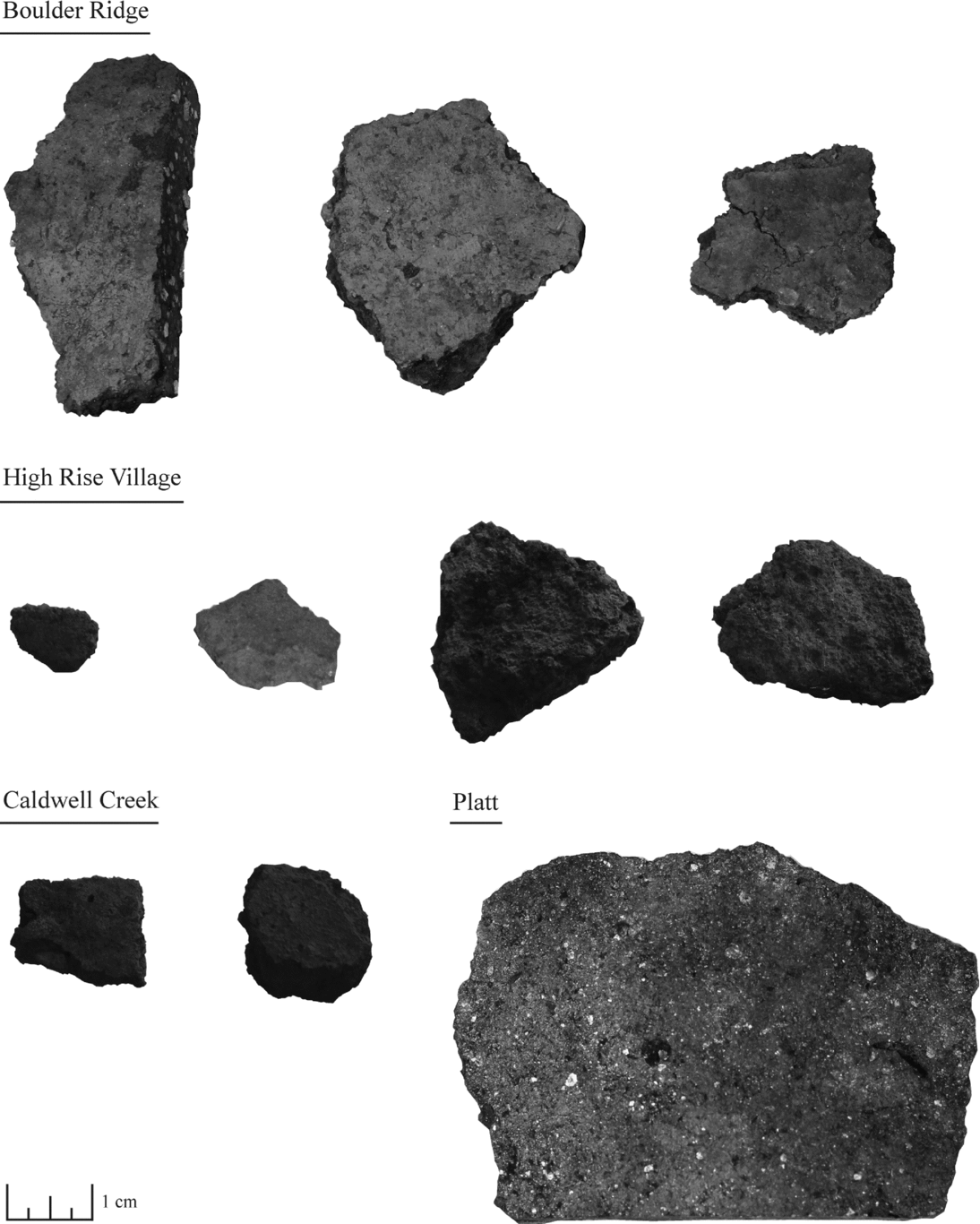
The sampled brownwares (Figure 2) are ideal because they have abundant sandy quartz temper, and the SG-OSL protocol can help interpret or resolve age control of potentially problematic radiocarbon chronologies. These problems are chiefly due to the presence and preservation of ancient trees near the sites that may have been incorporated into structural timbers and fire hearths (i.e., the “old wood problem” [Schiffer Reference Schiffer1986]) and the occurrence of recent wildfires that released modern charcoal at the sites. While our focus is on producing SG-OSL ages from the quartz temper, we also analyzed the paste of the same sherds dated with SG-OSL using a modified polymineral FG-IRSL protocol (Banerjee et al. Reference Banerjee, Murray, Jensen and Lang2001; Wallinga et al. Reference Wallinga, Murray and Wintle2000) with correction for fading (Auclair et al. Reference Auclair, Lamothe and Huot2003). Results from both methods were within error. Samples from Boulder Ridge returned near-zero ages, presumably due to exposure to an AD 2003 wildfire. In all, our results provide additional chronological control for each site and validate further application of the SG-OSL method for regional ceramic geochronology.
The 10 brownware sherds from Boulder Ridge, High Rise Village, Caldwell Creek, and the Platt site prior to analysis.
The SG-OSL Protocol
All samples were processed and analyzed at the Utah State University (USU) Luminescence Laboratory in Logan, Utah. Working under dim amber light conditions, lab personnel removed the outer 2 mm of each sherd to eliminate grains that may have been reset from exposure to heat or light and to simplify the dose rate calculation by removing grains exposed to short-wave alpha and beta radiation from the external environment. The inner core of the sherd was gently disaggregated and the 250–63 μm quartz fraction was isolated using hydrochloric acid and chlorine bleach to remove the carbonate and organic fractions, sodium polytungstate (2.7 cm/gm3) to remove heavy minerals, and hydrofluoric acid to remove feldspars and etch quartz grains (Rittenour et al. Reference Rittenour, Goble and Blum2005, Reference Rittenour, Coats and Metcalfe2015).
Because ceramics receive radiation from external and internal sources, dose rate calculations were made from associated sediment samples and a subsample of the sherd itself. Radioactive elemental concentrations were measured directly using inductively coupled plasma mass spectrometry (ICP-MS). Cosmic contributions for each sample were estimated using the latitude and elevation of each site and the sample depth (Prescott and Hutton Reference Prescott and Hutton1995). Isolated quartz grains were analyzed on a Risø TL/OSL Model DA-20 Reader with a single-grain attachment and Risø single-grain disks (300 μm hole openings, 1–3 grains per hole) following the SAR protocol with 200°C and 160°C preheat treatments following regenerative and test dose steps, each held for 10 seconds (Ideker et al. Reference Ideker, Finley, Rittenour and Nelson2017). Four hundred to 1,200 grains were analyzed from each sample, and at least 77 grains passed rejection criteria and returned equivalent dose values for age calculations. The reported ages were calculated using an unlogged central age model (CAMUL, Galbraith and Roberts Reference Galbraith and Roberts2012) and are reported with two-sigma standard errors. Ages are reported in calendar years using AD 2010 as the reference point. All radiocarbon ages were calibrated using the IntCal13 calibration curve (Reimer et al. Reference Reimer, Bard, Bayliss, Beck, Blackwell, Ramsey, Buck, Cheng, Edwards, Friedrich, Grootes, Guilderson, Haflidason, Hajdas, Hatté, Heaton, Hoffmann, Hogg, Hughen, Kaiser, Kromer, Manning, Niu, Reimer, Richards, Scott, Southon, Staff, Turney and van der Plicht2013), are reported at two-sigma error and, in addition to their conventional ages, in years before AD 2010, rather than the standard AD 1950 used in radiocarbon dating, to allow direct comparison to the OSL results.
OSL Age Results
Eight of 10 sherds submitted for analysis returned OSL ages indicating either the age of vessel manufacture or the last firing (heating) event (Table 1). Two sherds, one from High Rise Village and one from the Caldwell Creek site, were too small to yield enough material for analysis, suggesting in this case a minimum size for analysis of approximately 18 × 15 × 9 mm. Three sherds from the surface of Boulder Ridge returned SG-OSL ages of 18 ± 16 yr (USU-1571), 34 ± 27 yr (USU-1586), and 23 ± 19 yr (USU-1769) (Table 1). These near-zero ages are consistent with a recent resetting of the luminescence signal indicating that the sherds were impacted by the AD 2003 Boulder Basin II wildfire. The wildfire did not reset the luminescence signal of all grains, however, and the mean of the upper 25% of the single-grain DE data from the Boulder Ridge sherds produces apparent maximum ages of 130 ± 40 yr to 280 ± 80 yr. If these grains represent a sample of the population that was not reset during the fire, then they potentially estimate the vessel manufacture date.
Luminescence Results from Quartz Temper and Polymineral Paste.
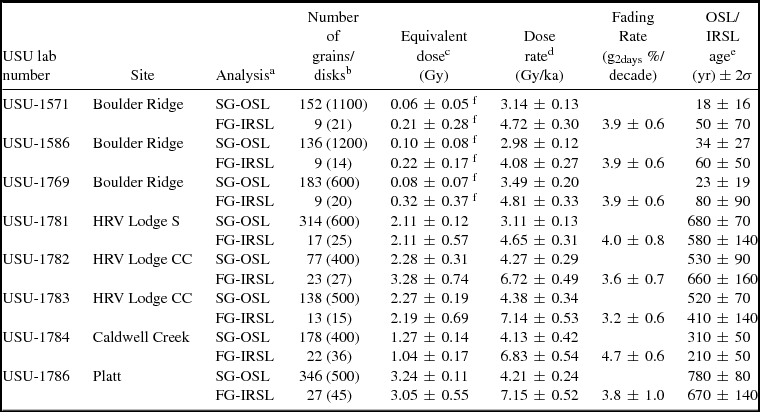
a SG-OSL: Single-grain optically stimulated luminescence of quartz sand (63-250 μm), or FG-IRSL: Fine-grain infrared stimulated luminescence of polymineral silt (4-11 μm). All FG-IRSL ages are corrected for fading following Auclair et al. (Reference Auclair, Lamothe and Huot2003) and the age correction model by Huntley and Lamothe (Reference Huntley and Lamothe2001). Average fading rate (3.9 ± 0.6, n = 48) applied to the Boulder Ridge samples.
b Number of grains/disks used in age calculation and number of grains/disks analyzed in parentheses.
c Equivalent dose (DE) calculated using an unlogged central age model (CAMUL, Galbraith and Roberts Reference Galbraith and Roberts2012). Error reported at two-sigma standard error.
d See Ideker et al. (Reference Ideker, Finley, Rittenour and Nelson2017) for data and description of dose-rate calculation.
e Datum for OSL and IRSL ages is AD 2010. Ages reported at two-sigma standard error.
f DE calculated using the mean. Error reported at two-sigma standard error.
Two samples were analyzed from Lodge CC and one sample from Lodge S at High Rise Village. The two Lodge CC samples returned SG-OSL age estimates of 530 ± 90 yr (USU-1782) and 520 ± 70 yr (USU-1783). Although the area around Lodge CC burned during a historic wildfire, as evidenced by charred standing remnant wood, the fire does not seem to have affected the luminescence signals of the buried sherds. Only one of two sherds from Lodge S (USU-1781) yielded enough material for dating, producing a SG-OSL age of 680 ± 70 yr. Based on the absence of burned timbers, Lodge S appears to have been beyond the margins of the wildfire that burned Lodge CC.
Two sherds were analyzed from the Caldwell Creek site and one from the Platt site. The one sherd large enough for analysis at the Caldwell Creek site (USU-1784) produced an age of 310 ± 50 yr. The Platt site sherd (USU-1786) was dated to 780 ± 80 yr. Although the Caldwell Creek site burned during the AD 2011 Norton Point wildfire, the analyzed sherd came from an excavated context approximately 15 cm below the ground surface and displayed no evidence for recent thermal resetting. The Platt site sample also came from an excavated context, although the exact depth is unknown.
Independent Chronological Comparisons
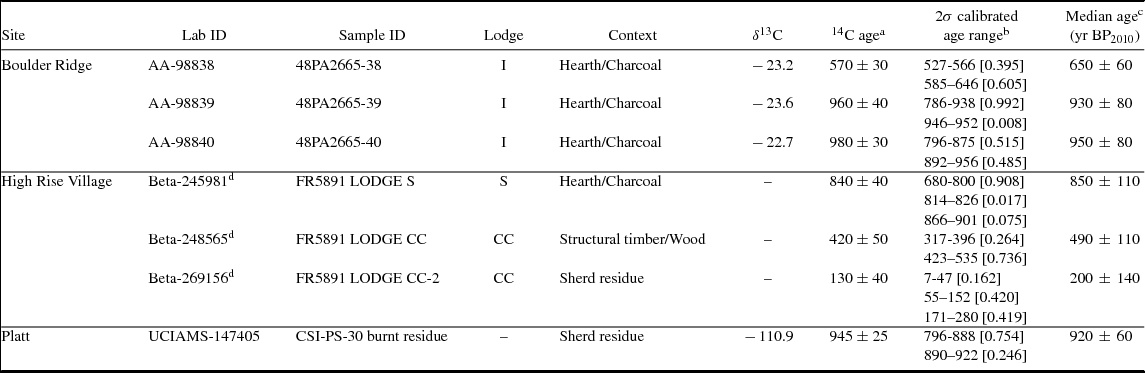
The ceramic samples were selected from contexts that had radiocarbon age chronologies (Table 2), and the SG-OSL method provided independent age control for potentially problematic contexts. Moreover, as a comparative test, we applied polymineral FG-IRSL dating to each sherd. In our samples, the SG-OSL results show improved accuracy and precision over radiocarbon dating, and while FG-IRSL ages are within error of the SG-OSL results in all cases, SG-OSL ages are more precise (Figure 3), validating its use in constructing archaeological chronologies.
Radiocarbon Age Information.
a Conventional radiocarbon age (± 1σ error) reported in radiocarbon years before AD 1950 (BP).
b Using IntCal13 calibration curve from Reimer et al. Reference Reimer, Bard, Bayliss, Beck, Blackwell, Ramsey, Buck, Cheng, Edwards, Friedrich, Grootes, Guilderson, Haflidason, Hajdas, Hatté, Heaton, Hoffmann, Hogg, Hughen, Kaiser, Kromer, Manning, Niu, Reimer, Richards, Scott, Southon, Staff, Turney and van der Plicht2013; probability in brackets.
c Calibrated ages rounded to the nearest decade and reported at two-sigma error in years before AD 2010 (BP2010) by adding 60 years to calibrated age.
d Samples originally reported in Morgan, Losey, and Adams Reference Morgan, Losey and Adams2012.
Age distributions of single-grain OSL, fine-grain IRSL, and radiocarbon ages for brownware samples from (a) Boulder Ridge, (b) High Rise Village Lodge S, (c) the Platt site, (d) High Rise Village Lodge CC, and (e) Caldwell Creek.

Three radiocarbon ages from a buried feature at Boulder Ridge returned highly variable radiocarbon ages ranging from 650–950 cal BP2010 (Figure 3, Table 1). These radiocarbon ages are from a hearth inside a house structure; the recovered sherds were from the surface adjacent to the structure, and the association between the structure and sherds is unclear, although the proximity suggests they are related. The three analyzed Boulder Ridge sherds returned near-zero SG-OSL age estimates, indicating recent signal resetting during the Boulder Basin II wildfire in AD 2003, which is supported by FG-IRSL ages of 50 ± 70 yr (USU-1571), 60 ± 50 yr (USU-1586), and 80 ± 90 yr (USU-1769). Unfortunately, these results do not help resolve the occupation age. A previous analysis of sherds presumably from the same vessel at Boulder Ridge produced luminescence results that range from 1500–2800 yr (Feathers Reference Feathers2014). These results predate known regional ceramic ages by as much as a few thousand years (Kornfeld at el. Reference Kornfeld, Frison and Larson2010). While we cannot account for the anomalously old results from the previous study, the quartz SG-OSL and polymineral FG-IRSL ages suggest our results record the most recent heating event of the quartz temper and fine-grain paste from the analyzed sherds.
Associated radiocarbon ages from Lodge CC at High Rise Village are 490 ± 110 cal BP2010 from the structural timber of the lodge and 200 ± 140 cal BP2010 on residue from a ceramic sherd collected during excavation but not dated in this study. The two Lodge CC sherds included in this study returned FG-IRSL ages of 660 ± 160 yr (USU-1782) and 410 ± 140 yr (USU-1783). The SG-OSL, polymineral FG-IRSL, and radiocarbon age on the structural timber are all within error of each other, suggesting that they all independently date the lodge occupation (Figure 3). The radiocarbon age on sherd residue is younger than the other age data, suggesting that the sherd residue in this case does not accurately date the occupation. Charcoal from a hearth in Lodge S returned a radiocarbon age of 850 ± 110 cal BP2010, which is significantly older than the SG-OSL age, suggesting a possible old-wood problem in this feature. The analyzed sherd returned an FG-IRSL age of 580 ± 140 yr (USU-1781) from the ceramic paste, and although this is not a very precise age, it is within error of the SG-OSL age. Our results suggest that the SG-OSL manufacturing age of the ceramic vessel from Lodge S most closely approximates the occupation age of that structure.
While no independent radiocarbon ages are available from the Caldwell Creek site, our FG-IRSL age from the sampled sherd (USU-1784) provides independent validation of the SG-OSL age. The FG-IRSL age of 210 ± 140 yr is within error of the single-grain age of 310 ± 50 yr (Table 1).
Age control from the Platt site includes a radiocarbon date on organic residue from the vessel interior, which returned an age estimate of 920 ± 60 cal BP2010. The two-sigma error of this age estimate adjoins the SG-OSL age of 780 ± 80 yr from the same sherd (Figure 2). The Platt site sherd is the only sample in our study with the greatest difference between the SG-OSL and FG-IRSL ages. Although within error, the younger FG-IRSL age of 670 ± 140 yr may be due to uncertainties in the fading measured during FG-IRSL analysis.
Accuracy and Precision in the SG-OSL Method
Accuracy and precision are arguably the two most important variables in any geochronological method. Radiocarbon chronologies are particularly challenging given uncertainties in the agreement between measured and target ages, sometimes producing discrepancies on the order of centuries or millennia. Differences between measured and target ages in high-elevation settings like the MRM are amplified by the persistence of old wood that may be incorporated into archaeological features at high elevations. Furthermore, as most sites are discovered during post-wildfire surveys, building radiocarbon chronologies is made even more difficult by the abundance of recent charcoal at these sites. Another challenge to radiocarbon dating is variability in the radiocarbon calibration curve over the last 1,500 years (Reimer et al. Reference Reimer, Bard, Bayliss, Beck, Blackwell, Ramsey, Buck, Cheng, Edwards, Friedrich, Grootes, Guilderson, Haflidason, Hajdas, Hatté, Heaton, Hoffmann, Hogg, Hughen, Kaiser, Kromer, Manning, Niu, Reimer, Richards, Scott, Southon, Staff, Turney and van der Plicht2013), which amplifies uncertainties in calibrated age distributions. These problems alone speak to the need for additional geochronological techniques that operate independently of the old wood and calibration problems inherent in radiocarbon dating.
We suggest that the relatively short use-life of hunter-gatherer pottery is encompassed within the error terms of an SG-OSL age, eliminating the need for extensive bridging arguments and reducing the uncertainty between the measured event (i.e., vessel manufacture) and target event (i.e., site occupation). Our results show that quartz grains in brownware sherd temper are reliable chronometers, as firing temperatures are expected to consistently reset quartz luminescence signals and will sensitize them, producing “bright” grains conducive for precise analysis. Moreover, consistently reset signals during vessel firing increase precision of the age distribution by reducing grain-to-grain age uncertainties and by producing smaller two-sigma standard error estimates (Figure 3). Two-sigma standard errors of samples not reset by wildfires in this study are well within errors of similar-aged calibrated radiocarbon ages, a process not required for OSL dating, which produces ages in calendar years. Additionally, the ability of SG-OSL to focus exclusively on the sand-sized quartz fraction rather than a polymineral silt fraction, as dated with FG-IRSL and TL methods, results in a more definitive age estimate. Our robust results validate the use of SG-OSL on ceramics and warrant further applications to archaeological studies.
Rethinking Brownware Adoption and Technological Diffusion
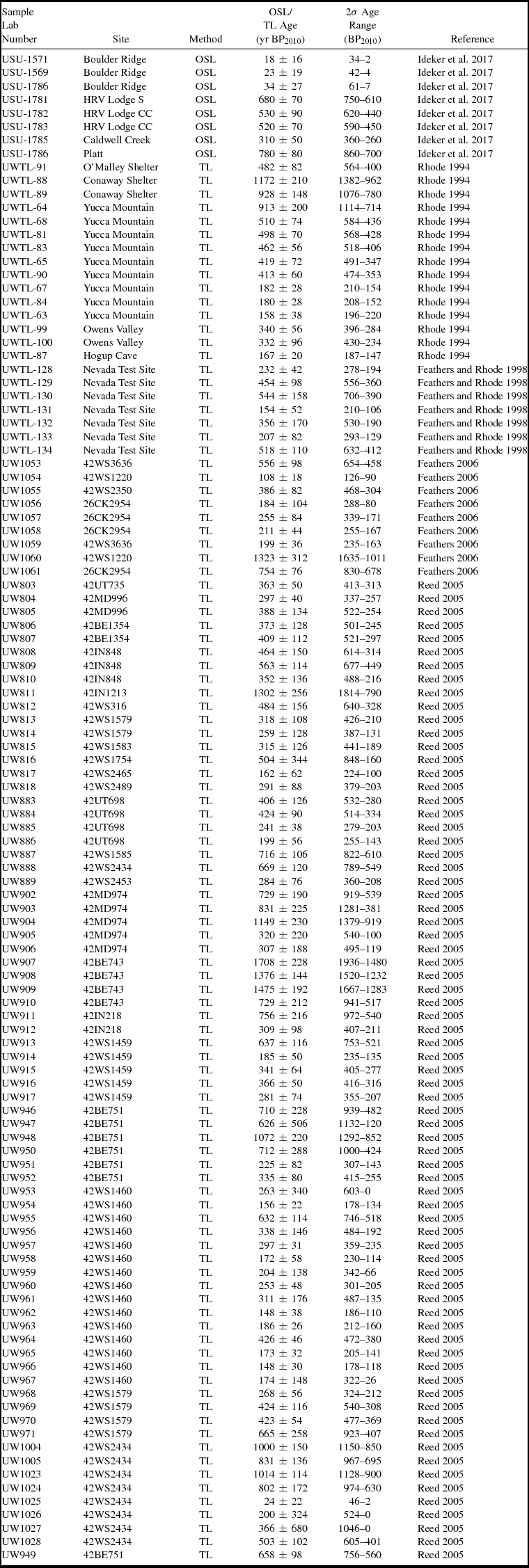
Our results provide the first direct dates on archaeological ceramics for the MRM that we know of and have important implications for the diffusion and adoption of ceramic technology from the adjacent Great Basin. In the following sections, we refer to OSL, IRSL, and TL age estimates on ceramics as a direct date of pottery manufacture age. We compare our results with a sample of directly dated brownwares from the SGB and EGB (Table 3) as a test of the hypothesis that brownware ceramics in the MRM date only to the last 500 years and reflect a recent Numic migration from a Great Basin homeland. Rhode (Reference Rhode, Madsen and Rhode1994) was among the first to directly date Great Basin brownwares to address adoption of ceramic technology from neighboring Formative Pueblo and Fremont societies in the SGB and the subsequent northern spread. Reed (Reference Reed, Reed, Seddon and Stettler2005) directly dated 73 ceramic artifacts from the SGB and EGB. Reed's goals included determining the age of Shinarump Brownware and Promontory Grayware in southern and northern Utah, respectively, determining the age range of brownwares across his study area, and to evaluate old wood problems in archaeological chronologies by comparing radiocarbon and luminescence ages from associated sites. These studies provide 102 luminescence ages on Great Basin pottery; all reported ages are TL results analyzed at the University of Washington luminescence laboratory. All ages are standardized to the year AD 2010 to account for minor differences in when samples were analyzed. The ages are reported in one standard error terms, which we doubled to produce two standard error estimates.
Direct (TL and OSL) Ages on Regional Brownware Ceramics.
To compare the relative ages of pottery across the interior of western North America, we divided the region into three general physiographic zones (Figure 1). The SGB encompasses the Mohave Desert region, ranging from Owens Valley and Death Valley on the west to the Las Vegas Valley and Beaver Dam Wash (i.e., Saint George, Utah) on the east. The EGB includes all of western Utah north of Saint George to the Great Salt Lake Desert and the western margin of the Colorado Plateau and the Uinta Basin. The MRM here includes the Wyoming Basin and the mountain ranges of western Wyoming. No directly dated brownwares are known from Idaho or Montana.
Brownwares are consistently the oldest in the SGB, appearing in the archaeological record approximately 1,200 years ago and persisting into the Historic era (Figure 4). After several centuries of experimentation in the SGB, brownwares become more regular in the archaeological record and simultaneously make their first appearance in the EGB and MRM. Although the current sample of directly dated brownwares in the EGB (n = 12) and MRM (n = 5) is small, the sample distributions are not significantly different from the SGB sample (Figure 5; F = 0.927; df = 2, p < 0.400). The oldest directly dated brownware in the EGB comes from 42BE751 (Reed Reference Reed, Reed, Seddon and Stettler2005), while the oldest MRM sample is from the Platt site. Importantly, Reed (Reference Reed, Reed, Seddon and Stettler2005:527) identified the 42BE751 sample as an unidentified brownware, and all other sampled ceramics from that site are Fremont variants. Regardless, the Platt site brownware sample is reliably and independently dated with SG-OSL, FG-IRSL, and radiocarbon on organic residue (Figure 2). Not only is this the oldest known brownware pottery in the MRM, but it is evidence that by the time pottery became common among the ancestral Numa of the SGB it was also being used by Numa as far north as the greater Yellowstone area.
Age distributions of directly dated brownware and Formative pottery from (a) the southern Great Basin, (b) eastern Great Basin, and (c) Middle Rocky Mountains. Bars represent the two-sigma standard error.

Box-and-whisker plot comparing the mean ages of brownwares from the three study areas.
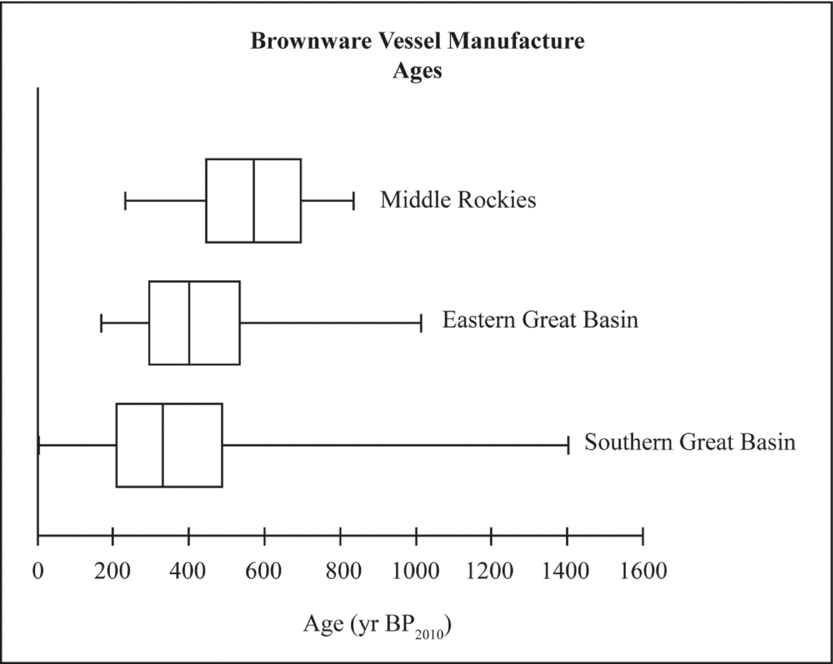
A key element in the regional adoption of ceramic technology is proximity of forager populations to sedentary and semi-sedentary Formative societies (Upham Reference Upham1994). In the SGB, brownwares emerged among foraging neighbors of the Virgin Branch Anasazi settlements, while in the EGB and MRM, interactions between foragers and semi-sedentary farmers occurred on the margins of the Fremont sphere. Fremont pottery and brownwares commonly co-occur in western Utah rockshelters (Reed Reference Reed, Reed, Seddon and Stettler2005; Rhode Reference Rhode, Madsen and Rhode1994), while Fremont pottery occurs at many sites in the Wyoming Basin (Smith Reference Smith1992). Associated radiocarbon ages place the development of Fremont ceramics between AD 400–600 in the Uinta Basin and Wasatch Front sites (Madsen Reference Madsen, d'Azevedo and Sturtevant1986) and in the Wyoming Basin (Smith Reference Smith1992). Direct dates on Formative pottery from Reed's (Reference Reed, Reed, Seddon and Stettler2005) study demonstrate a significant difference in the mean age of the Formative and brownware samples (t = -4.766; df = 103; p < 0.001), although there is considerable overlap with brownwares in the SGB and EGB (Figure 5). While Reed (Reference Reed, Reed, Seddon and Stettler2005:534) dismissed some Fremont samples on the extremes of both distributions as erroneous, the significant overlap suggests that knowledge of pottery production in Formative societies is critical in adoption of that technology among foragers (Upham Reference Upham1994).
Chronological issues aside, as Bright et al. (Reference Bright, Ugan and Hunsaker2002) suggest, foragers are likely to adopt ceramic technology under a selective context favoring increased efficiency. In the SGB, adoption of ceramic technology occurred alongside intensification of a small-seed economy and privatization of resources (Eerkens Reference Eerkens2004). A focus on tuber procurement and intensification of bighorn sheep hunting during the last approximately 1,000 years (Frison et al. Reference Frison, Reher, Walker, Davis and Reeves1990) may have resulted in the adoption of similar stone and ceramic cooking technologies in the MRM.
Conclusion
Luminescence analysis has long been a preferred technique for archaeological chronology building, and improved technologies continually provide better control for ceramic manufacturing ages. By applying the SG-OSL method to the very fine to fine sand (250–63 μm) fraction of quartz temper in brownware pottery, we show that ceramics are a reliable chronometer for the Late Prehistoric archaeological record, one that bypasses the old wood and calibration problems. Furthermore, SG-OSL yields greater precision in dating compared with the FG-IRSL technique. The main limitation of using SG-OSL lies in the abundance and mineralogy of sand temper, which is not present in all ceramic traditions.
Our study provides the first direct dates on brownwares in the MRM and shows that brownwares appeared in the regional archaeological record nearly 800 years ago. For decades, archaeologists have proposed that ceramics, as a marker of a supposed Numic expansion, should appear progressively younger with distance north from an SGB origin (Pippin Reference Pippin and Griset1986; Tuohy Reference Tuohy1973; Wright Reference Wright1978). While comparisons with directly dated brownwares from the SGB show that experimentation began there approximately 400 years earlier, brownwares appear in the EGB and MRM at nearly the same time. This coincides with Eerkens and Lipo's (Reference Eerkens and Lipo2014) period of “mainstream” use in the SGB. The regional brownware chronology does not necessarily speak to a distinct population movement and replacement, as some have proposed for the historic distribution of Numic hunter-gatherers across the interior of western North America (Bettinger and Baumhoff Reference Bettinger and Baumhoff1982; Butler Reference Butler and Griset1986; Janetski Reference Janetski and Mack1991; Wright Reference Wright1978), although a rapid and archaeologically undetectable migration cannot be dismissed. Instead, the adoption of a relatively uniform brownware ceramic tradition may reflect technological diffusion across a stable regional population with deep, ancestral Numic roots (Francis and Loendorf Reference Francis and Loendorf2002; Holmer Reference Holmer, Madsen and Rhode1994). Regardless, although the sample of directly dated brownwares in the MRM is small, the results firmly refute Wright's (Reference Wright1978) proposition that this technology dates to less than 500 years.
Perhaps more important than the timing is that the adoption of brownwares in the interior of western North America occurred on the periphery of Formative societies, particularly Virgin Branch Anasazi in the SGB and Fremont in the EGB and MRM (Upham Reference Upham1994). Knowledge of ceramic technology on the margins of semi-sedentary and sedentary horticultural societies where individual behavioral strategies cycled on a continuum between full-time farming and full-time foraging increased transmission of information across porous social boundaries (Madsen and Simms Reference Madsen and Simms1998; Upham Reference Upham1994). Within this context, the adoption of ceramics is best understood as a time management solution to resource intensification (Bright et al. Reference Bright, Ugan and Hunsaker2002). In the SGB, that process involved intensification and privatization of small seeds, while in the MRM, intensification (but perhaps not privatization) may have focused on tubers and bighorn sheep. These issues will remain central to understanding variability in human behavior and social history in the MRM as archaeological research continues.
Acknowledgments
Support for this research was provided by the Brigham Young University Charles Redd Foundation, University of Wyoming Frison Institute, and the Shoshone National Forest. Funding for Boulder Ridge radiocarbon analysis and ceramic luminescence analysis at the University of Washington came from National Science Foundation award #714926 to principal investigator Laura Scheiber (Indiana University). Laura Scheiber also provided the Caldwell Creek samples for analysis. Bryon Schroeder coordinated analysis of High Rise Village sherds and provided important information about the archaeological context of artifacts from the site. Michelle Summa Nelson provided critical assistance in the single-grain OSL analysis at Utah State University. Heidi Roberts gave useful insight into data sources. Chantel Saban provided the Spanish translation of the abstract.
Data Availability Statement
Luminescence samples prepared for this study and data for individual sample runs are archived at the Utah State University Luminescence Laboratory in Logan, Utah. Artifact collections from Boulder Ridge and High Rise Village are curated at the University of Wyoming Archaeological Repository. Materials from Caldwell Creek and the Platt site are currently curated at Indiana University and Utah State University, respectively.



