





Introduction
Children of parents with schizophrenia spectrum disorder (SZSD) and bipolar disorder (BP) have increased risks of developing mental illness and impaired functioning (Bella et al., Reference Bella, Goldstein, Axelson, Obreja, Monk, Hickey, Goldstein, Brent, Diler, Kupfer, Sakolsky and Birmaher2011; Ross & Compagnon, Reference Ross and Compagnon2001; Thorup et al., Reference Thorup, Laursen, Munk-Olsen, Ranning, Mortensen, Plessen and Nordentoft2018). While the role of genetic dispositions is widely acknowledged, intergenerational mental illness likely reflects a gene–environment interaction (Ingram & Luxton, Reference Ingram, Luxton, Hankin and Abela2005).
One area of interest seeking to explain the increased risk faced by children whose parents have SZSD or BP focuses on parent–child interactions (see Goodman & Gotlib, Reference Goodman and Gotlib1999). Research has shown that parents with mental illness in general express more criticism and less warmth toward their children, although there is substantial variation (e.g., Gregg et al., Reference Gregg, Calam, Drake and Wolfenden2021; Miklowitz et al., Reference Miklowitz, Schneck, Singh, Taylor, George, Cosgrove, Howe, Dickinson, Garber and Chang2013). At the same time, parental criticism and warmth are associated with negative outcomes in children (e.g., Pasalich et al., Reference Pasalich, Dadds, Hawes and Brennan2011; Waller et al., 2012, 2014). Hence, it is possible that parents with SZSD and BP express more criticism and less warmth toward their children, which may be associated with negative outcomes for the child and possibly explain their higher risk of mental illness and other negative outcomes. Illuminating this possible relationship is important because it may point to strategies for interventions, as research has shown that targeting criticism and warmth in parent–child interactions are associated with positive effects on child outcomes, for example, reducing externalizing symptoms (e.g., Hanisch et al., Reference Hanisch, Freund-Braier, Hautmann, Jänen, Plück, Brix, Eichelberger and Döpfner2010).
In the present study, we coded expressions of criticism and warmth from speech samples of mothers with SZSD, BP, or no known mental illness that were asked to describe their 7-year-old children using the Five Minutes Speech Sample (FMSS) procedure. We then examined if ratings of criticism and warmth were related to child outcomes, including self-esteem, externalizing and internalizing psychopathology, global functioning, and quality of life (QoL).
Warmth, criticism and the strains of mental illness
The present study focusses on mothers with the severe mental illnesses including SZSD and BP. Historically, definitions of severe mental illness have varied in their emphasis on specific diagnostic categories, level of impairment, or duration of illness (Zumstein & Riese, Reference Zumstein and Riese2020). SZSM and BP are often highlighted as examples of severe mental illness (Gonzales et al., Reference Gonzales, Kois, Chen, López-Aybar, McCullough and McLaughlin2022), probably because each has been linked to chronic course, marked functional impairment, and reduced life expectancy (Grande et al., Reference Grande, Berk, Birmaher and Vieta2016; Vancampfort et al., Reference Vancampfort, Stubbs, Mitchell, De Hert, Wampers, Ward, Rosenbaum and Correll2015; van Os & Kapur, Reference van Os and Kapur2009), although considerable heterogeneity remains. SZSD and BP have also been associated with elevated trauma exposure and PTSD rates (e.g., Mauritz et al., Reference Mauritz, Goossens, Draijer and van Achterberg2013). Living with severe mental illness is frequently accompanied by very real day-to-day strains – higher levels of unemployment, residential instability, social isolation, and the persistent burden of public stigma (Holm et al., Reference Holm, Taipale, Tanskanen, Tiihonen and Mitterdorfer-Rutz2021; Crisp et al., Reference Crisp, Gelder, Rix, Meltzer and Rowlands2000, Hajek et al., Reference Hajek, Gyasi, Pengpid, Peltzer, Kostev, Soysal, Smith, Jacob, Veronese and König2025; Nau et al., Reference Nau, Braciszewski, Rossom, Penfold, Coleman, Simon, Hong, Padilla, Butler, Chen and Waters2023). It is possible that for parents with severe mental illness, socioeconomic and relational strains can, in addition to the burden of dealing with symptoms, drain emotional reserves making it harder to sustain consistent warm and positive engagement in relationships with their children (e.g., Schechter & Willheim, Reference Schechter and Willheim2009). Consistent with this, a recent meta-analysis showed that parents with mental illness, primarily depression, expressed more criticism and less warmth toward their children (Fahrer et al., Reference Fahrer, Brill, Dobener, Asbrand and Christiansen2022).
In the present study, criticism and warmth were coded from FMSS (Magaña et al., Reference Magaña, Goldstein, Karno, Miklowitz, Jenkins and Falloon1986) using the The Family Affective Attitude Rating Scales (FAARS; Bullock et al., Reference Bullock, Schneiger and Dishion2005) where examples of ‘warmth’ and ‘criticism’ include positive comments about the child’s traits or behaviors or reports of conflicts and critical statements about the child, respectively. The FAARS was developed to address limitations of an existing approach (expressed emotions, EE) that focus on negative emotions such as criticism, hostility, and emotional overinvolvement while overlooking positive expressions of warmth (Hooley, Reference Hooley2007; Magaña et al., Reference Magaña, Goldstein, Karno, Miklowitz, Jenkins and Falloon1986). This emphasis in FAARS seems highly relevant as a developmental environment characterized by acceptance and warmth is linked to adaptive outcomes such as self-esteem (Fonagy & Target, Reference Fonagy and Target1997; Fosco & Grych, Reference Fosco and Grych2013; Gribble et al., Reference Gribble, Cowen, Wyman, Work, Wannon and Raoof1993; Moran et al., Reference Moran, Turiano and Gentzler2018).
Expressed criticism and warmth, and child outcomes
Levels of expressed parental criticism and warmth are presumed to both shape and be shaped by parent–child interactions which may over time influence the child’s evolving sense of self and well-being making him or her more or less vulnerable to negative outcomes (Bullock & Dishion, Reference Bullock and Dishion2007, Peris & Miklowitz, Reference Peris and Miklowitz2015). Indeed, a robust literature shows that parental criticism is associated with poorer child adjustment, whereas expressed warmth is protective. For example, Pasalich et al. (Reference Pasalich, Dadds, Hawes and Brennan2011) examined FAARS in parents of 150 children (Mage = 7.45 years, SD = 2.20) with externalizing disorders such as oppositional disorder and conduct disorder and found that mothers with more positive expressions about their children were also observed with more warmth and engagement in parent child-interactions. In addition, both positive and negative expressions predicted child problem behavior over and above parenting behavior scores obtained directly from observed parent–child interactions (see Waller et al., 2012, 2014). While negative parental expressions (e.g., criticism) coded from FMSS have been linked to elevated child externalizing disorders, it has also been associated with internalizing disorders such as child anxiety (Gar & Hudson, Reference Gar and Hudson2008), depression (Asarnow et al., Reference Asarnow, Goldstein, Tompson and Guthrie1993), anorexia nervosa (Duclos et al., Reference Duclos, Dorard, Berthoz, Curt, Faucher, Falissard and Godart2014), and obsessive–compulsive disorder (Przeworski et al., Reference Przeworski, Zoellner, Franklin, Garcia, Freeman, March and Foa2012). In addition, expressions of warmth have been associated with self-esteem (Pasalich et al., Reference Pasalich, Dadds, Hawes and Brennan2011; Waller et al., 2012, 2014). For these reasons, we chose to focus broadly on both externalizing and internalizing symptoms in the present study as well as measures of self-esteem, functioning, and QoL. A few studies found that associations between parent–child interactions and child outcomes were most evident in mother–child relationships (Garber & Flynn, Reference Garber and Flynn2001; Seligman et al., Reference Seligman, Kaslow, Alloy, Peterson, Tanenbaum and Abramson1984; but for nonsignificant findings see Williamson & Johnston, Reference Williamson and Johnston2015). This may also be the case for relations between mothers’ expressions of warmth and criticism and child outcomes. The present study only includes mothers.
Most of the previous studies reviewed above have examined how parental expressions of warmth and criticism are linked to child outcomes, for example, symptoms of psychopathology. Fewer studies have linked parental psychopathology to expressions of warmth and criticism and most of them focus primarily on depression (Fahrer et al., Reference Fahrer, Brill, Dobener, Asbrand and Christiansen2022). Only a few studies have considered SZSD or BP using the EE approach, and results are mixed. For instance, parents with SZSD demonstrated significantly more hostility and criticism toward their 3- to 11-year-old children than controls (Gregg et al., Reference Gregg, Calam, Drake and Wolfenden2021) whereas Miklowitz et al. (Reference Miklowitz, Schneck, Singh, Taylor, George, Cosgrove, Howe, Dickinson, Garber and Chang2013) found no EE differences between parents with and without BP when speaking about their adolescents. While there is a scarcity of studies using the FAARS procedure in SZSD and BP, both warmth and criticism have been related to parents’ psychopathological symptoms (Bullock & Dishion, Reference Bullock and Dishion2007; Pasalich et al., Reference Pasalich, Dadds, Hawes and Brennan2011; Waller et al., Reference Waller, Gardner, Dishion, Shaw and Wilson2012). This indicates that criticism and warmth captured by the FAARS could differ between mothers with SZSD and mothers with BP compared to mothers without these diagnoses, which is what the present study examined. Finding such a pattern would indicate that supporting mothers in expressing more warmth and less criticism could potentially improve child outcomes of mothers with BP or SZSD.
The present study
Grounded in this research, we examined whether mothers with SZSD and BP express more criticism and less warmth and whether this relates to their children’s self-esteem, externalizing and internalizing psychopathology, global functioning, and QoL.
Based on the literature reviewed above, our hypotheses were as follows:
-
1. We expected that mothers with SZSD and mothers with BP would express more criticism, and less warmth in FMSS compared to control mothers.
-
2. We expected that less criticism and more warmth in mothers’ FMSS would be related to more positive self-esteem, fewer symptoms of psychopathology, higher global functioning, and higher QoL in children across groups.
We also explored the influence of potential confounding factors. Mothers’ expressed warmth and criticism could be related to lower functioning or lower socioeconomic status. Such factors may co-vary with mental illness but could also be related to expressed warmth and criticism across groups (Belsky & Jaffee, Reference Belsky and Jaffee2006; Hammen, Reference Hammen, Goodman and Gotlib2002). To examine this, we included measures of IQ and functioning in mothers, and demographic variables, for example, employment status.
Methods and analyses
Preregistration
The hypotheses and analyses for the present study were preregistered at Aspredicted.org on February 24, 2021 (#59170, titled ‘Maternal MI, maternal conceptualizations and self-concept of the child’Footnote 1 ).
The Danish high risk and resilience study
The data was based on a subsample derived from the nationwide cohort study, the Danish High Risk and Resilience Study – VIA 7 (for a detailed overview see Thorup et al., Reference Thorup, Jepsen, Ellersgaard, Burton, Christiani, Hemager, Skjærbæk, Ranning, Spang, Gantriis, Greve, Zahle, Mors, Plessen and Nordentoft2015). The original study included a cohort of 522 7- to 8-year-old children differing in their familial risk profiles, that is, they had either one or two parents diagnosed with SZSD (familial high risk for SZSD; FHR-SZSD) or BP (familial high risk for BP; FHR-BP) or population-based controls (PBC). We chose to include children at age 7 because, in Denmark, most children have started school at this age, marking it a significant developmental milestone with increased demands and competencies. By age 7, children also develop self-reflective skills, describe personal experiences and develop awareness of their own and other’s mental state (e.g., Kågström et al., Reference Kågström, Juríková and Guerrero2023).
Both clinical groups were identified from Danish registries based on ICD-10 criteria (World Health Organization, 1993) of schizophrenia (F20), delusional disorder (F22), or schizoaffective disorder (F25) (SZSD) and bipolar affective disorder (F30 and F31) (BP). The PBC group was defined by population-based children of parents who were never diagnosed with SZSD or BP in the Danish registries. The PBC group was defined by population-based children of parents who were never diagnosed with SZSD or BP. The assessments were conducted at the research facilities in Copenhagen and Aarhus, Denmark. Children and parents underwent an extensive battery of tests (see Thorup et al., Reference Thorup, Jepsen, Ellersgaard, Burton, Christiani, Hemager, Skjærbæk, Ranning, Spang, Gantriis, Greve, Zahle, Mors, Plessen and Nordentoft2015) and results from the entire sample has been previously published (Ellersgaard et al., 2018, 2020). The present article includes a subsample of the original sample and focuses on mothers’ expressed warmth and criticism and possible relations with child self-esteem and child mental health outcomes.
Selection of subsample
We included 180 dyads from the total VIA 7 sample of 522 children and their primary caregiver: 60 mothers diagnosed with SZSD and their child, 60 mothers diagnosed with BP and their child, and 60 PBC mothers and their child. The parent–child dyads included in the study were selected from the entire VIA 7 cohort to include as many individuals in each group as possible. Inclusion was restricted to the following: 1) families of single risk status; 2) full participation in battery of tests; 3) mother completing the FMSS (as this was by far most often the case and to avoid confounds by parent gender), and 4) child and mother living at same address.
These criteria resulted in 60 mothers diagnosed with BP, 81 mothers with SZSD, and 98 PBC mothers. We drew a random sample from the SZSD group and the PBC group of 60 mothers, respectively. We examined potential differences between the included subsample and remaining cohort for mothers with SZSD and PBC, respectively. The samples were compared on age, employment, single caregiver status, daily functioning and intelligence using one-way ANOVAs and chi-square test as suited. Generally, differences were non-significant across measures on age, social functioning (Personal and Social Performance Scale; Morosini et al., Reference Morosini, Magliano, Brambilla, Ugolini and Pioli2000) and intelligence (Reynolds Intellectual Screening Test; Reynolds & Kamphaus, Reference Reynolds and Kamphaus2003), Fs[0.08 – 1.26], ps[.23 – .78]. There were no differences on single caregiver status in either groups, X2 [0.20 – 0.42], ps[.52 – .66]. There were no differences in current employment in the PBC group, X2 = 1.42, p = .23. For SZSD, mothers in the included subsample were more likely to be unemployed, X2 = 6.73, p > .01, than those not being included. In the event of a parent having two children enrolled in the study, we included only the first completion of FMSS to minimize biases associated with two observations from the same participant and acquaintance with the test battery. Furthermore, we excluded dyads where the child was placed out-of-home, because the primary caregiver in these cases was not the biological mother.
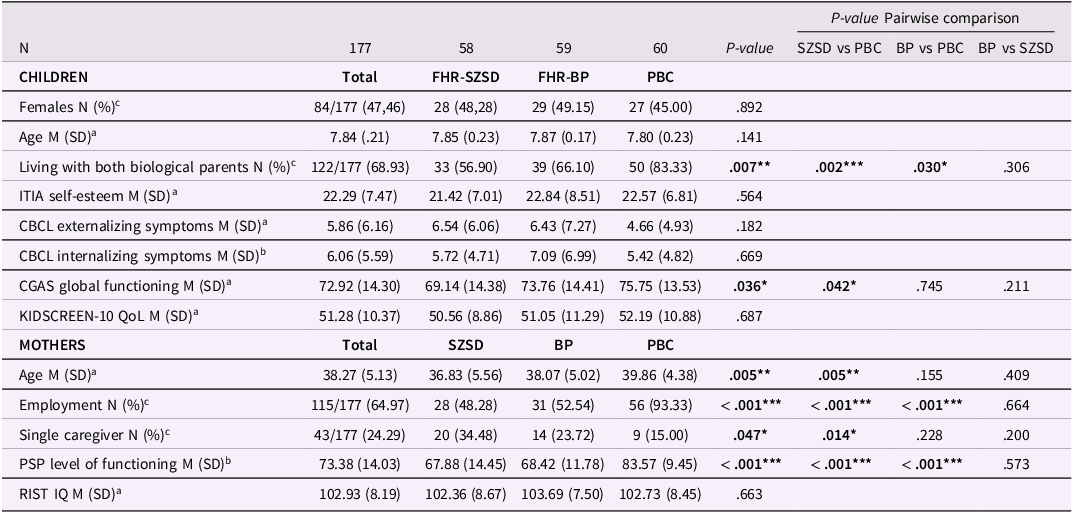
The final sample consisted of three groups of mother–child dyads: 58 children and their mothers with SZSD, 59 children and their mothers with BP, and a PBC group of 60 children and their mothers. Mothers diagnosed with SZSD (N = 58) were on average 36.8 (SD 5.6) years old, 48.3% were employed at the time of the study, and 34.48% were single caregivers. Children (females N = 28) of mothers diagnosed with SZSD were on average 7.9 (SD 0.2) years old and 56.9% were living with both biological parents. Mothers diagnosed with BP (N = 59) were on average 38.1 (SD 5.0) years old, 52.5 % were employed at the time of the study, and 23.7% were single caregivers. Children (females N = 29) of mothers diagnosed with BP were on average 7.9 (SD 0.2) years old and 66.1% were living with both biological parents. Mothers in the PBC group (N = 60) were on average 39.9 (SD 4.4) years old, 93.3 % were employed at the time of the study, and 15.0% were single caregivers. Children (females N = 27) of mothers in the PBC group were on average 7.8 (SD 0.2) years old and 83.3% were living with both biological parents.
Materials
Demographic information was obtained through a structured anamnestic interview (i.e., a comprehensive patient-history interview integrating medical and psychosocial factors) with the mother. For children, we included yes/no ratings of whether they were living with both their biological parents. For mothers, we included yes/no ratings on whether they were employed and whether they were co-habiting with a partner at the time of the data collection.
Mothers’ level of daily function and estimated IQ were measured by the Personal and Social Performance Scale (PSP; Morosini et al., Reference Morosini, Magliano, Brambilla, Ugolini and Pioli2000) (data previously published on the full VIA 7 cohort in Ellersgaard et al., Reference Ellersgaard, Jessica Plessen, Richardt Jepsen, Soeborg Spang, Hemager, Klee Burton, Jerlang Christiani, Gregersen, Søndergaard, Uddin, Poulsen, Greve, Gantriis, Mors, Nordentoft and Elgaard Thorup2018) and Reynolds Intellectual Screening Test (RIST; Reynolds & Kamphaus, Reference Reynolds and Kamphaus2003) (data previously published on the full VIA 7 cohort in Greve et al., Reference Greve, Jepsen, Mortensen, Uher, Mackenzie, Foldager, Gantriis, Burton, Ellersgaard, Christiani, Spang, Hemager, Uddin, Henriksen, Zahle, Stadsgaard, Plessen, Thorup, Nordentoft, Mors and Bliksted2022), respectively.
The PSP is rated by interview and is a highly reliable and valid measure of the person’s functioning in the previous month. The rating scale ranges from 0 to 100, where higher scores indicate better functioning (Morosini et al., Reference Morosini, Magliano, Brambilla, Ugolini and Pioli2000). PSP evaluates the severity of dysfunction within the last month on the following domains: (a) socially useful activities (including work, education and parenting), (b) personal and social relationships, (c) self-care, and (d) disturbing/aggressive behavior. Generally, questions revolve around activities and behaviors including the frequencies, for example, “Have you participated in any classes or had other regular activities (sports, courses etc.)? If yes: How often? Have you attended as expected? Do you need to be encouraged to attend?” or “How much of the day do you spend alone?”. Subsequently, the interview is evaluated at a consensus conference based on the four domains in ten-point intervals, for example, 100– 91 indicates excellent functioning within all four domains, 60 – 51 indicates marked difficulties within the domains of a–c or manifest difficulties within d, whereas 10 – 1 indicates total lack of autonomy in basic functioning and extreme behavior.
RIST consists of a verbal and a nonverbal subtest measuring the mother’s estimated level of intelligence ldquoient (referred as IQ from here). The RIST is derived from the Reynolds Intellectual Assessment Scale (RIAS; Reynolds & Kamphaus, Reference Reynolds and Kamphaus2003).
The children were assessed with measures of self-esteem and QoL and mental health outcomes, including internalizing and externalizing symptoms, and global functioning (data previously published on the full VIA 7 cohort in Ellersgaard et al., 2018, 2020). All included instruments were validated and reliable (see Thorup et al., Reference Thorup, Jepsen, Ellersgaard, Burton, Christiani, Hemager, Skjærbæk, Ranning, Spang, Gantriis, Greve, Zahle, Mors, Plessen and Nordentoft2015), and assessors were blind to familial risk status.
The ‘I Think I Am’ questionnaire (ITIA; Ouvinen-Birgerstam, Reference Ouvinen-Birgerstam2006) is a child-report measure of the child’s self-esteem across five dimensions, that is, Skills and Abilities, Physical Capabilities, Psychological Well-being, Relation to Parents and Family, and Relation to Others. Combining the dimensions derives a total score ranging between + 144 and −144, with higher scores indicating higher self-esteem.
The Child Behavior Checklist School-age version (CBCL; Achenbach & Rescorla, Reference Achenbach and Rescorla2001) was included to measure externalizing and internalizing symptoms and was completed by the mother. The questions are distributed across eight categories (anxious/depressed, somatic complaints, social problems, thought problems, attention problems, rule-breaking behavior, and aggressive behavior) and combined into two total scores where higher scores are indicative of higher levels of symptoms.
The Children’s Global Assessment Scale (CGAS; Shaffer et al., Reference Shaffer, Gould, Brasic, Ambrosini, Fisher, Bird and Aluwahlia1983) is an interview-based measure of functioning in the previous month assessing the child’s global function on a dimensional scale ranging from 1 to 100, with higher scores indicating better functioning (see Ellersgaard et al., Reference Ellersgaard, Jessica Plessen, Richardt Jepsen, Soeborg Spang, Hemager, Klee Burton, Jerlang Christiani, Gregersen, Søndergaard, Uddin, Poulsen, Greve, Gantriis, Mors, Nordentoft and Elgaard Thorup2018).
The KIDSCREEN-10 (Ravens-Sieberer et al., Reference Ravens-Sieberer, Gosh, Erhart, Rueden, Nickel and Kurth2006) is a short child-reported measure of QoL consisting of 10 items representative of well-being in the domains of Physical Well-being, Psychological Well-being, Autonomy & Parent Relation, Social Support & Peers, and School Environment. Items are scored on a five-point scale, where higher scores indicate higher QoL.
Mothers’ expressed warmth and criticism were assessed using the FMSS (Magaña et al., Reference Magaña, Goldstein, Karno, Miklowitz, Jenkins and Falloon1986). The interviewer instructed mothers to talk about their thoughts and feelings concerning their child for five minutes without interruptions and avoided giving additional prompting, verbal or non-verbal communication. The FMSSs were recorded, transcribed, and stripped of identifying information.
Mothers’ expressed warmth and criticism were coded using the Family Affective Attitude Rating Scale (FAARS; Bullock et al., Reference Bullock, Schneiger and Dishion2005). Previous studies have established high levels of construct validity in the FAARS (Bullock & Dishion, Reference Bullock and Dishion2007; Pasalich et al., Reference Pasalich, Dadds, Hawes and Brennan2011). For this study, we included two dimensions of FAARS, that is, Criticism and Warmth. Each dimension represents a set of six items coded on a 9-point Likert scale with higher scores indicating clearer evidence of Criticism and Warmth. The dimension of criticism includes ratings on critical remarks, for example, “Critical of the behavior of the child” or “Critical of traits or personality of the child”, “Negative relationship with the child”, “Negative humor/sarcasm regarding the child,” “Assumes or attributes negative intentions of the child,” and “Reports of conflict with/anger or hostility toward the child.” The dimension of warmth includes ratings on positive remarks, that is, remarks that are “Generally positive regarding the behavior of the child,” “Generally positive regarding trait or personality of the child,” “Reports positive relationship with the child,” “Assumes or attributes positive intentions of the child,” “Reports of engaging in share activities with the child,” and “Statements of love/caring toward the child”.
Each item is rated on a scale of 1 – 9, reflecting the extent of statements and examples in the FMSS consistent with this view. Ratings reflect global impressions of the speech sample according to the following guideline: 1 (no examples), 2 – 3 (some indication, but no concrete evidence), 3 – 4 (≥ 1 weak examples), 5 (one concrete example or ≥ 3 weak examples of the same attribution), 6 – 8 (≥ 1 concrete example and ≥ 1 weak, but different, examples), and 9 (≥ 2 concrete, unambiguous examples). For more detailed guidelines, see the FAARS manual (Bullock et al., Reference Bullock, Schneiger and Dishion2005).
A coding specialist at the Social Learning Center, Oregon, trained the first author and two co-raters, using material from another study until good inter-rater reliability was reached. The first author and the co-raters then proceeded to code the speech samples for the present study. Supervised by the first author, the two coders coded a subsample of the FMSS for the present study until their coding indicated a common understanding of the coding manual. One rater then proceeded to code all FMSS and a co-rater coded 20 % to assess interrater reliability. The first author checked interrater reliability at regular intervals. Both raters were blind to the diagnostic status of the participants.
Following the procedures of previous research, interrater reliability was considered satisfactory when an item score agreed (±2) in 80% of the shared material (e.g., Waller et al., Reference Waller, Gardner, Dishion, Shaw and Wilson2012), or when intraclass correlation reached widely accepted thresholds (Koo & Li, Reference Koo and Li2016). Interrater reliability between the two coders was high; for criticism percentage agreement was 93.25% and ICC = 0.76, and for warmth percentage agreement was 89.68% and ICC = 0.82. Because the interrater reliability was good, we used the coding of the primary coder in the analyses. We calculated a mean score for warmth and criticism.
Statistical analyses
To examine differences between groups on expressed warmth and criticism (hypothesis 1), we conducted one-way ANOVAs with follow-up Scheffé post hoc tests corrected for multiple comparisons. In the case of violated assumptions, we employed the nonparametric Kruskal–Wallis H test with follow-up Mann–Whitney U tests.
To examine relations between expressed warmth and criticism and the child’s self-esteem and mental health outcomes (hypothesis 2), we ran a series of Pearson’s correlations followed by multiple regressions where we examined relations between mothers expressed warmth and criticism of the child and child outcomes while controlling for other relevant variables.
For descriptive purposes, associations between study variables were tested using Pearson’s correlations. All analyses were conducted using SPSS (IBM Statistical Package for Social Sciences 28) or Stata with a 95 % confidence interval and reported p-values were two-tailed.
Ethics
The study was assessed by the Danish Data Protection Agency (RHP-2012-06). Approval from The Danish National Committee on Health Research Ethics was not necessary because the study did not include intervention.
Results
Group differences on child outcomes and demographic variables
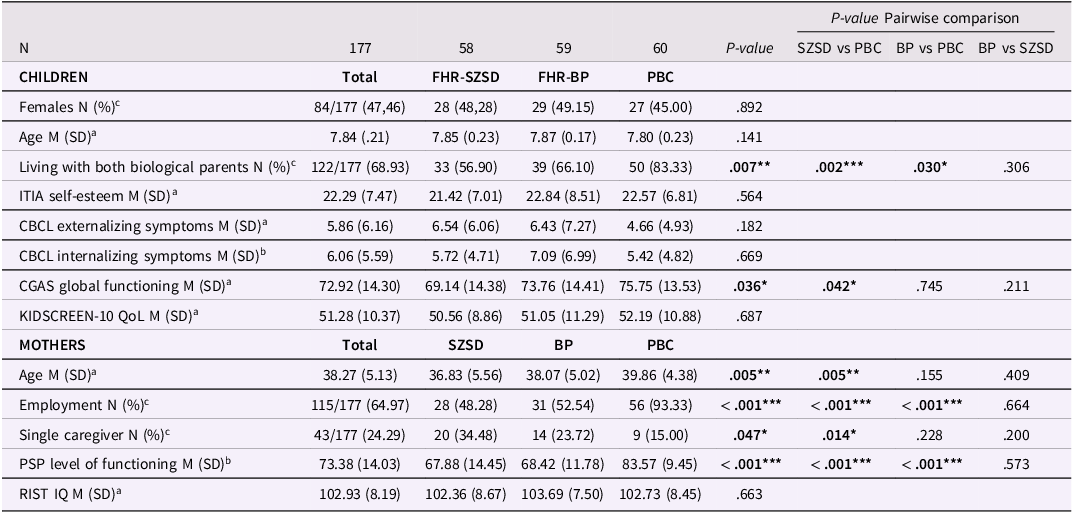
Comparisons between groups on demographic data, child outcomes and maternal functioning are summarized in Table 1. The groups did not differ significantly on child sex. However, fewer children of mothers with SZSD or BP were living with both biological parents.
Characteristics of children and mothers, total and divided by group
a One-way ANOVA with post hoc Scheffé adjusted for multiple comparisons.
b Kruskal–Wallis H test with multiple Mann–Whitney U tests for multiple comparisons.
c Chi Square test.
* significant at p < .05.
** significant at p < .01.
*** significant at p < .001.
BP = Bipolar Disorder. CBCL = Child Behavior Checklist School-age version. CGAS = Children’s Global Assessment Scale. FHR-SZSD = Familial high risk – Schizophrenia Spectrum Disorder. FHR-BP = Familial high risk – Bipolar Disorder. ITIA = ‘I Think I Am’ questionnaire. PBC = Population-based controls. PSP = Personal and Social Performance Scale. RIST = Reynolds Intellectual Screening Test. SZSD = Schizophrenia Spectrum Disorder. QoL = Quality of Life.
Generally, there were very few differences between groups on child outcomes. Children of mothers with SZSD displayed lower global functioning than those of PBC mothers and mothers with BP. However, none of the other measures of child outcomes differed significantly between groups.
With respect to characteristics of mothers, we found no significant differences on IQ. Mothers with SZSD and mothers with BP displayed lower levels of functioning, fewer were employed at the time of the study and mothers with SZSD and BP also tended to be younger and were more often single caregivers than PBC mothers (these differences only reached significance for mothers with SZSD).
Differences between groups on expressed warmth and criticism
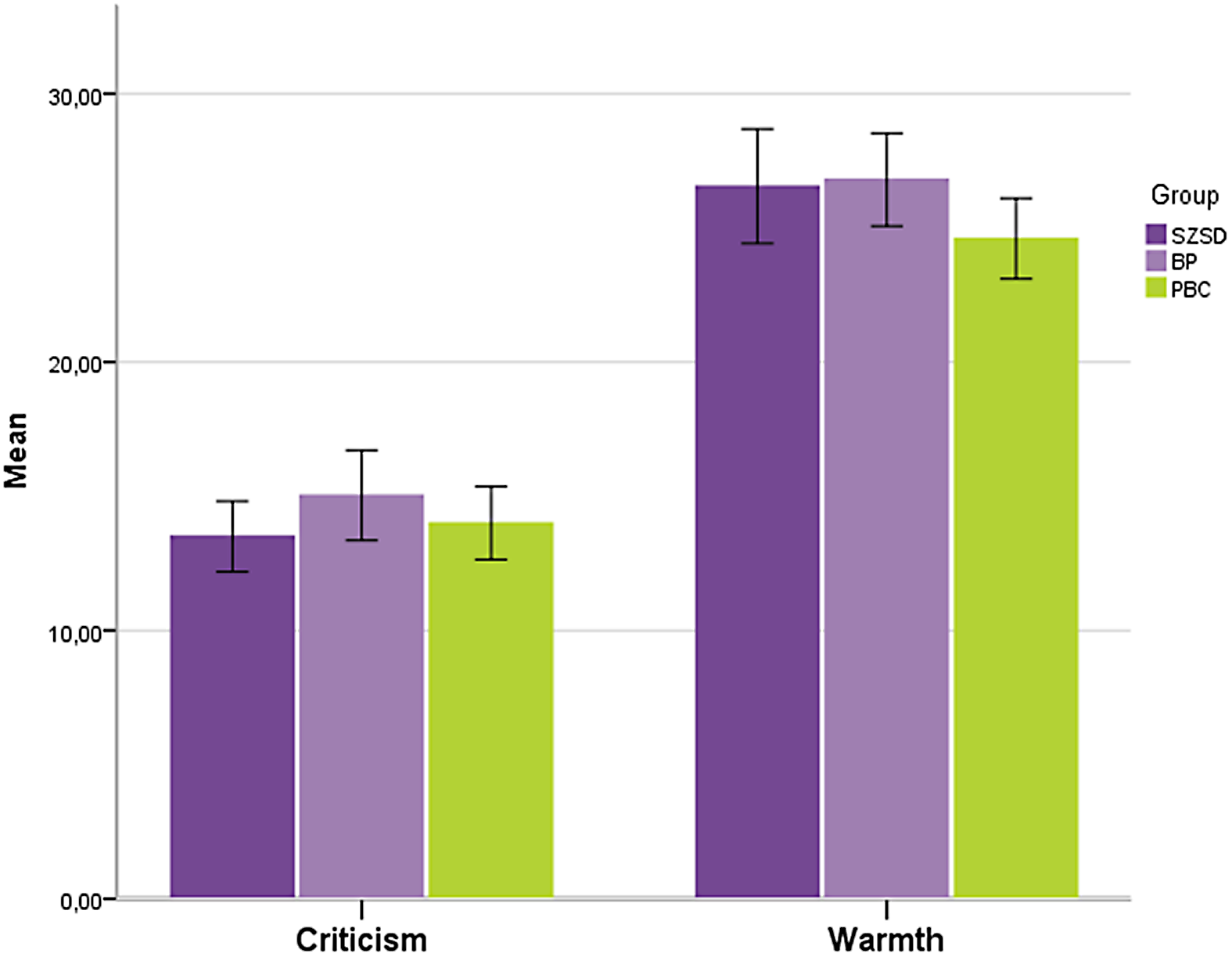
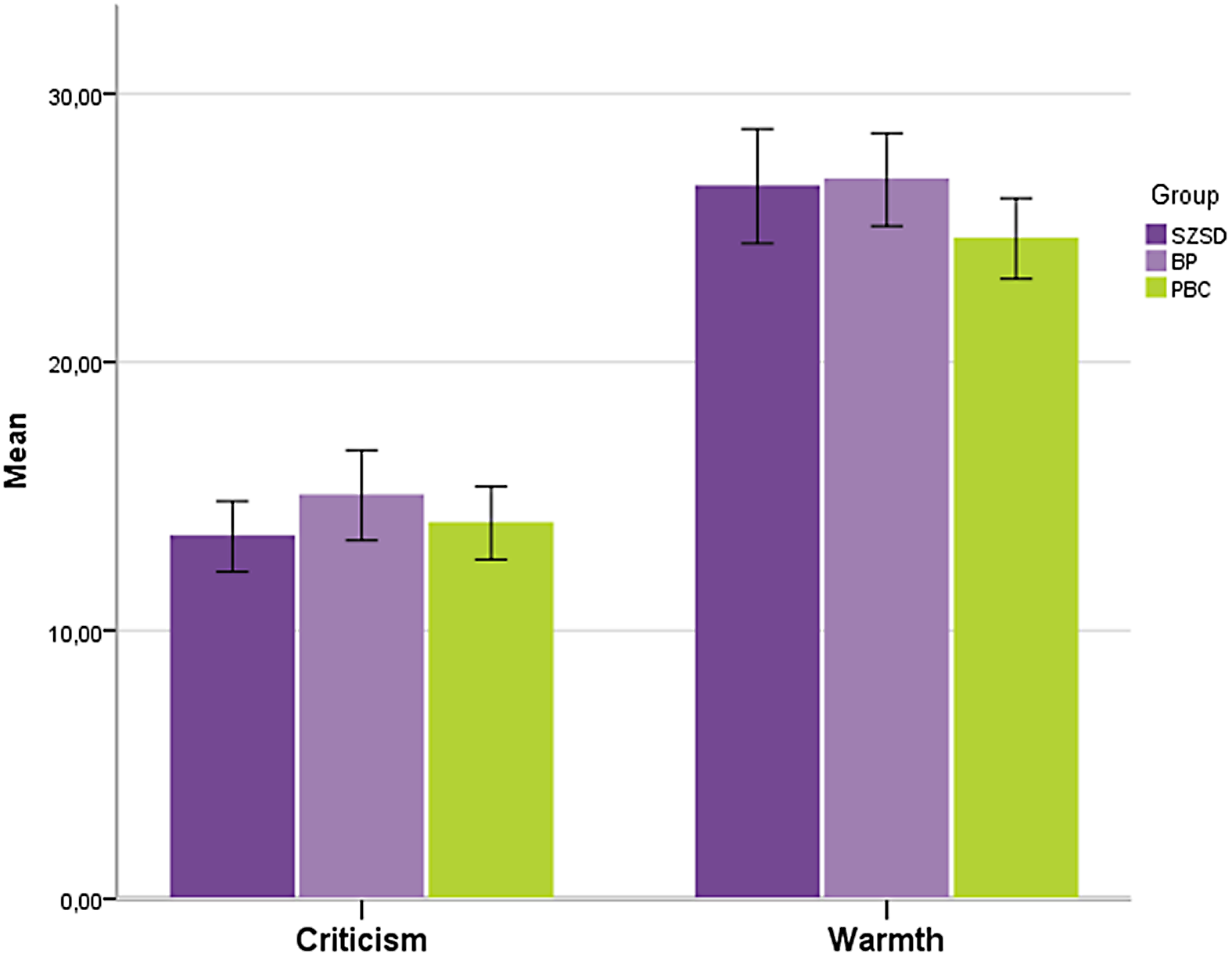
Contrary to our predictions, mothers with SZSD or mothers with BP did not differ significantly from PBC mothers on expressed warmth, H(2) = 2.918, p = .233, and expressed criticism, F(2, 174) = 1.147, p = .320. In fact, both clinical groups scored numerically higher on expressed warmth, and mothers with SZSD scored numerically lower on expressed criticism than PBC mothers. Results are illustrated in Figure 1.
Criticism and warmth by group with error bars 95% CI.
Relations between mothers expressed warmth and criticism and child outcomes
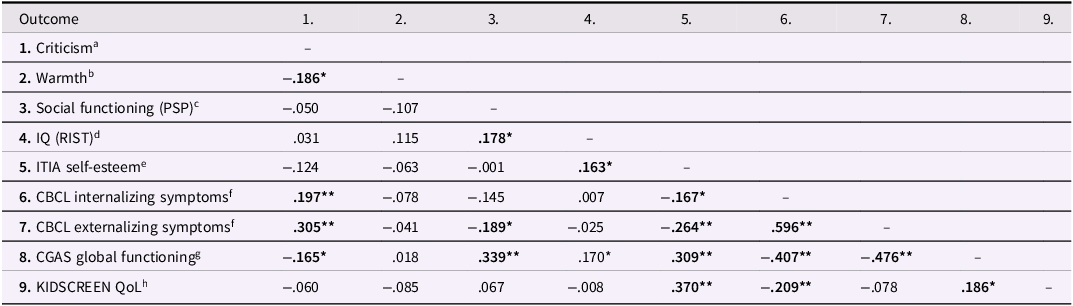
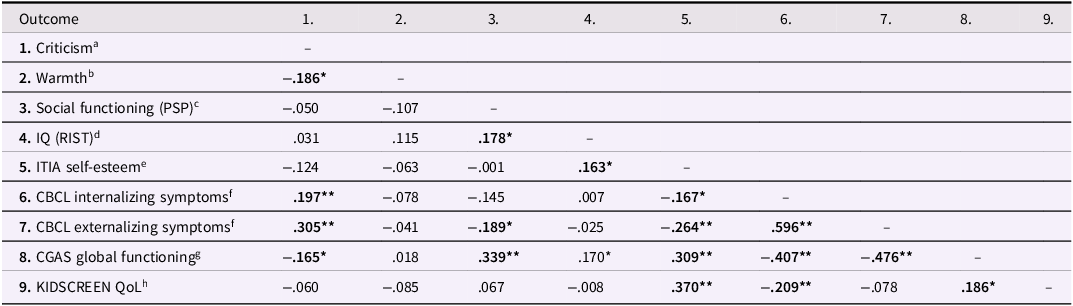
Across groups correlations between expressed warmth and criticism, maternal characteristics and child outcomes showed that more expressed criticism was significantly related to higher levels of psychopathology, and lower levels of global functioning with small effect sizes. Expressed warmth was not significantly correlated with maternal characteristics or child outcomes. Higher PSP score of the mother showed significant relations with higher IQ of the mother, less externalizing psychopathology and higher levels of global functioning of the child with small to medium effects. Additionally, higher IQ of the mother was significantly associated with higher self-esteem of the child with a small effect. In terms of relations between child outcomes, higher self-esteem was significantly related to lower levels of psychopathology, and higher global functioning and higher QoL with small to medium effects. Higher levels of internalizing psychopathology were significantly related to higher levels of externalizing psychopathology with a large effect, and to lower global functioning of the child and lower QoL with small to medium effects. Higher global functioning was related to higher QoL with a small effect. Correlations are summarized in Table 2.
Correlations between criticism and warmth, maternal characteristics, and child outcomes across groups
* p < .05.
** p < .01.
a Criticism operationalized with the Family Affective Attitudes Rating Scale (FAARS).
b Warmth operationalized with the Family Affective Attitudes Rating Scale (FAARS).
c Personal and Social Performance.
d Reynold’s Intellectual Screening Test.
e The I Think I Am Questionnaire.
f The Children’s Behavior Checklist.
g The Children’s Global Assessment Scale.
h The KIDSSCREEN-10.
Multiple regressions modeling expressed warmth and criticism as predictors of child outcomes
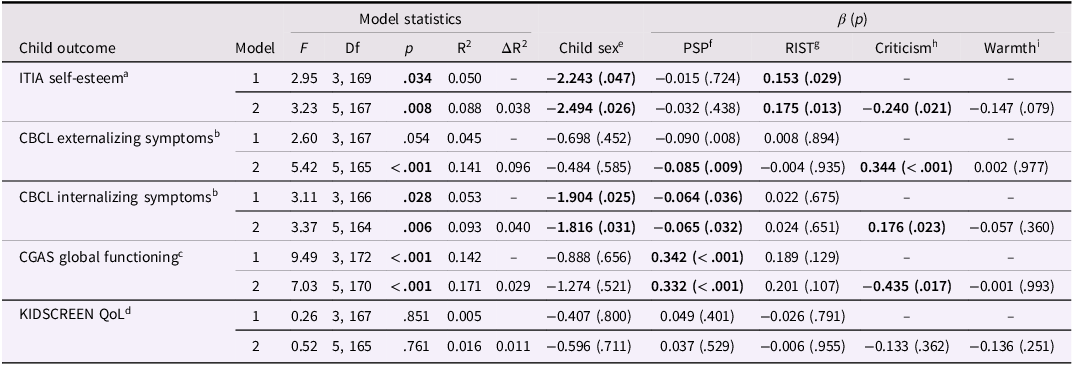
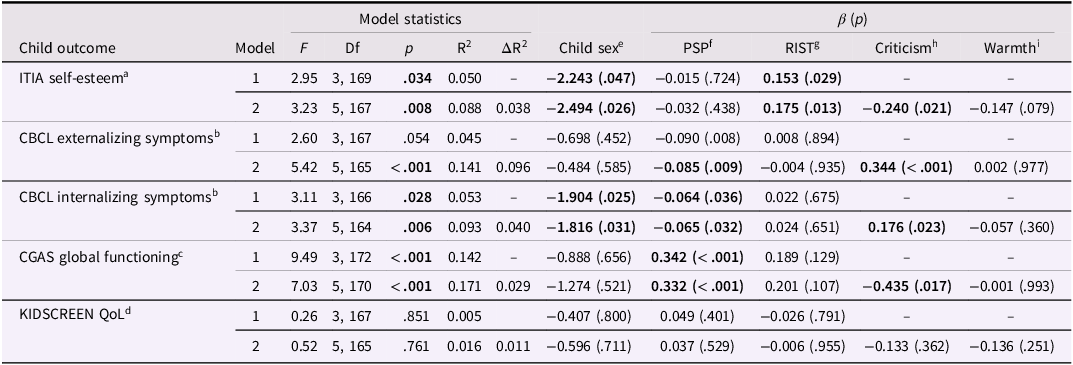
We further examined our second hypothesis with a series of multiple stepwise regression analyses predicting child outcomes while controlling for child sex and maternal characteristics that could influence child outcomes. For each multiple regression we entered a child outcome as the dependent variable, that is, self-esteem, externalizing psychopathology, internalizing psychopathology, global functioning, and QoL. The preliminary model included child sex, maternal functioning and IQ, age, relationship status, and employment status as the predictors. Only child sex, maternal functioning and IQ were significant predictors across child outcomes. Thus, in the analyses reported below we entered child sex, maternal functioning, and IQ at the first step (model 1), and expressed warmth and criticism at the second step (model 2).
Generally, variation in child outcomes were significantly explained by both model 1 and model 2. Coefficients showed that expressed criticism were significantly associated with variance in self-esteem (β(p) = −0.240 (.021)) in the direction that more expressed criticism was associated with lower self-esteem of the child. Likewise, more expressed criticism was associated with higher levels of externalizing (β(p) = 0.344 (< .001)) and internalizing (β(p) = 0.176 (.023)) psychopathology, and lower global functioning (β(p) = −0.435 (.017)). For both models, functioning in mothers explained variance in externalizing and internalizing symptoms as well as child functioning. Mothers’ IQ was associated with child self-esteem. Both models were non-significant for child QoL. The results are summarized in Table 3.
Predicting child outcomes from child sex, mothers’ social functioning, mothers’ IQ, and criticism and warmth
a The I Think I Am Questionnaire.
b The Children’s Behavior Checklist.
c The Children’s Global Assessment Scale.
d The KIDSSCREEN-10.
e 0 = girl, 1 = boy.
f Personal and Social Performance Scale.
g Reynolds Intellectual Screening Test.
h Criticism operationalized with the Family Affective Attitudes Rating Scale (FAARS).
i Warmth operationalized with the Family Affective Attitudes Rating Scale (FAARS).
Discussion
The present study examined whether maternal SZSD or BP was associated with lower expressed warmth and higher expressed criticism and whether mothers’ expressed warmth and criticism was associated with child outcomes. In contrast to our hypothesis, mothers with SZSD and mothers with BP did not differ from PBC mothers on expressed warmth and criticism. Our second hypothesis was partially supported. Correlational analyses showed that higher expressed criticism was significantly associated with poorer child mental health outcomes. Multiple regressions confirmed the associations between expressed warmth and criticism and child outcomes, even when controlling for child sex, mothers’ functioning and IQ. Importantly, several child outcomes were not rated by the mothers, but by the child (self-esteem, which were less consistently associated with mothers’ expressed warmth and criticism, and QoL which was not associated with expressed warmth and criticism). Child global functioning was interviewer rated by another interviewer than the one, who did the caregiver interview, indicating that relations are not merely due to shared source of information (the mothers).
Maternal mental illness and expressed warmth and criticism
In contrast with previous studies demonstrating an association between maternal history of affective disorder (Schwartz et al., Reference Schwartz, Dorer, Beardslee, Lavori and Keller1990; Tompson et al., Reference Tompson, Pierre, Boger, McKowen, Chan and Freed2010) and more negative child attributions, we did not find support for the hypothesis that maternal mental illness is associated with lower expressed warmth and more expressed criticism. Several factors could influence this result. For instance, resources, support systems, and a comprehensive welfare system characterizing the societal context of the present study may help mitigate the effects of mental illness. However, no consistent pattern was observed between maternal functioning and expressions of warmth and criticism in the present study. Additionally, both SZSD and BP are heterogeneous disorders with high inter-individual variability and different phases of illness (Ahmed et al., Reference Ahmed, Strauss, Buchanan, Kirkpatrick and Carpenter2018, Ba et al., Reference Ba, Chen, Lai, Liao, Fang, Lu, Zheng, Zong and Lin2022). Possibly, focusing specifically on parents in more acute illness phases could have impacted the results. It is likely though that parents in an acute illness phase would not be able to go through the comprehensive data collection. Importantly, it is also likely that diagnosis per se may simply not determine parental warmth or criticism, a finding that could help counter stigmatizing assumptions about parents with severe mental illness and suggest more nuanced models. Future studies could investigate the effects of symptom levels or focus on broader protective and risk factors (e.g., social support systems, adverse experiences, stigmatization) or psychological factors (e.g., emotional regulation capacities, mentalization skills) to shape expressions of warmth and criticism over time.
It is important to interpret the findings cautiously, as the cross-sectional design precludes any inference of causality. Thus, another potential explanation for the non-significant differences in maternal expressed warmth and criticism may be that there were few group differences in child outcomes in our study. Children of mothers with SZSD displayed lower levels of global functioning, but no other group differences between the children reached significance. It may be that the behavior, responsiveness, and temperament of the children (Kiff et al., Reference Kiff, Lengua and Zalewski2011) are important factors in the ways their mothers describe them. As such, the lack of differences in maternal expressions of warmth and criticism and child outcomes between groups could reflect that the children in this subsample did not display severe problems. This could also be specific to our subsample and should be interpreted with caution as results from the larger VIA 7 study sample found that parental mental illness was associated with more psychopathology, lower self-esteem, and lower QoL of the child (Ellersgaard et al., 2018, 2020).
Maternal warmth and criticism and child outcomes
In line with our prediction, across groups maternal expressed criticism was related to higher levels of psychopathology and impaired global functioning in children. This is consistent with and extends previous research where higher expressed criticism, as measured by FAARS, have been associated with higher levels of internalizing and externalizing symptoms in three-year-old children (Waller et al., Reference Waller, Gardner, Dishion, Shaw and Wilson2012) and adolescents (Bullock & Dishion, Reference Bullock and Dishion2007). Although from a different research tradition, our results also bear affinity to studies showing that parental expressed emotions (EE; attitudes of criticism, hostility, and emotional over-involvement) demonstrate robust associations with the occurrence and course of child and youth psychopathology (Asarnow et al., Reference Asarnow, Goldstein, Tompson and Guthrie1993, Reference Asarnow, Tompson, Hamilton, Goldstein and Guthrie1994; Hibbs et al., Reference Hibbs, Hamburger, Lenane, Rapoport, Kruesi, Keysor and Goldstein1991; Peris & Miklowitz, Reference Peris and Miklowitz2015). For example, Han & Shaffer (Reference Han and Shaffer2014) found that maternal criticism was positively associated with child psychopathology through its relationship with increased child emotional dysregulation. As the present study design is cross-sectional, it is important to acknowledge that mental health components of the child may be mirrored in maternal descriptions of their children across groups. In other words, children experiencing difficulties, which may be challenging for the parent, could lead to descriptions of shared activities leading to conflict or demands triggering frustration and anger. This effect has been observed in EE literature. Specifically, externalizing psychopathology in adolescents predicted increased parental criticism even after controlling for prior levels (e.g., Frye & Garber, Reference Frye and Garber2005; for a review, see Sher-Censor, Reference Sher-Censor2015).
Surprisingly, we did not find relationships between maternal expressed warmth and child outcomes. Since positive components of parent–child relations have generally been associated with adaptive child outcomes (e.g., Fosco & Grych, Reference Fosco and Grych2013; Gribble et al., Reference Gribble, Cowen, Wyman, Work, Wannon and Raoof1993; Moran et al., Reference Moran, Turiano and Gentzler2018), it seems unlikely that maternal warmth has no relation to child outcomes. Some studies using the FAARS have likewise failed to find associations between warmth and psychopathological symptoms in children (Bullock & Dishion, Reference Bullock and Dishion2007), but other studies have demonstrated associations between lower ratings on the positive dimension of FAARS, and higher rates of child conduct problems (Pasalich et al., Reference Pasalich, Dadds, Hawes and Brennan2011; Waller et al., Reference Waller, Gardner, Dishion, Shaw and Wilson2012). Possibly, more warmth functions as a protecting factor over time boosting children’s self-esteem through positive relation with caregiver (Tian et al., Reference Tian, Liu and Shan2018), which we could not determine from the present cross-sectional study.
The present findings may suggest that when mothers describe their children in more critical terms this may be associated with poorer mental health in children. We note that this pattern was not tied to maternal SZSD or BP as there were no group differences in expressed warmth and criticism. Rather, the findings may relate to problematic parenting patterns independent of parental mental health status. This makes it no less important as many children who develop mental health problems do not have parents who suffer from mental illness. Identifying risk factors for compromised mental health in children is important because preventive interventions may reduce the effects of early markers (Murray et al., Reference Murray, Eisner and Ribeaud2016).
Strengths and limitations
Our study displays marked strengths, including a broad test battery comprising both maternal-rated, child-rated, and interviewer-rated child outcomes, interviewer assessment of mothers’ functioning and intelligence, as well as systematic and reliable coding of open-ended descriptions of children. Further, all children were the same age, and the full cohort is established from Danish registers (Krantz et al., Reference Krantz, Hjorthøj, Ellersgaard, Hemager, Christiani, Spang, Burton, Gregersen, Søndergaard, Greve, Ohland, Mortensen, Plessen, Bliksted, Jepsen, Thorup, Mors and Nordentoft2023). However, some limitations should be noted. First, the study was cross-sectional and unable to determine causal relations. Maternal criticism may cause poorer child mental health, but the child’s problematic mental health may also lead mothers to express more criticism. Second, our sample size was relatively small and included exclusively mothers, and we did not examine the role of fathers or family dynamics. Third, internalizing and externalizing symptoms were reported by the mother. It is possible that the relation between criticism and these symptom scores are confounded because the mother served as the source of information for both measures. Fourth, the FMSS was collected by an interviewer. This may bias mothers to emphasize socially desirable aspects of their child, maximizing positive reflections of their parental qualities. Thus, the results may display a positive bias and potentially this effect could be more pronounced for clinical groups. However, we note that the complexity of the scoring system makes a marked effect of social desirability unlikely, because higher scores demand several statements and examples. On the other hand, it is possible that the coding system applied, that is, FAARS, lacks nuances in terms of positive attitudes. Notably, in the EE coding manual some positive remarks are regarded as reflections of over-involvement and are thus considered negative, that is, an over-involved parent may hinder autonomy or lead the child to assume responsibility for the emotional well-being of the parent. It is possible that expressed warmth, as operationalized in this study, do not adequately capture these subtleties. Additionally, it is possible that diminished expressivity affects the emotional environment negatively. Negative expressed emotion can have a negative impact on family environment, but diminished expression may also bear negative effects. For example, negative symptoms (emotional blunting, poverty of speech), cognitive impairment, or anxiety, could result in diminished responsivity toward the child. This effect may not be reflected in expressed warmth and criticism as operationalized with FAARS. Similarly, proneness to affective lability linked with mental illness (Høegh et al., Reference Høegh, Melle, Aminoff, Olsen, Lunding, Ueland and Lagerberg2022; Steffensen et al., Reference Steffensen, Hemager, Bundgaard, Gantriis, Burton, Ellersgaard, Carlsen, Bliksted, Plessen, Jepsen, Nordentoft, Thorup, Mors and Greve2023) may affect the emotional environment leading the child to mirror this instability. As the FAARS measures a general emotional tone, it is possible that higher affective lability is not captured. Fifth, the mothers included in this study were in various stages of illness and remission. Possibly, these findings do not extend to mothers in acute illness stages. Sixth, Denmark is a high-income country with a comprehensive social welfare system. Support and social security may have a positive influence on the parental ability of parents with mental illness and therefore our results may primarily translate to comparable societies.
Conclusion
In conclusion, the current study suggests that expressed warmth and criticism do not differ between mothers diagnosed with SZSD, mothers diagnosed with BP and mothers in the PBC group. However, across familial high and low-risk profiles, we found that mothers’ expressed criticism was related to poorer mental health in the child, even when controlling for maternal characteristics. The children included in this study were 7 years old and had just started school. Thus, follow-up data from this longitudinal investigation may shed light on the predictive capacity of expressed warmth and criticism, as measured by FAARS, on mental health outcomes across familial high-risk and low-risk groups. This will help establish whether expressed warmth and criticism play a role in the intergenerational transmission of mental health problems. Moving forward, a developmental psychopathology framework may offer greater insights – by highlighting how warmth and criticism interact with illness characteristics, parenting context, and child-specific factors to shape outcomes over time. Such an approach allows a more dynamic and context-sensitive understanding of intergenerational risk.
Acknowledgements
Thanks to Sofie Dam Christiansen and Amanda Fonnesbæk Sørensen for their help with the coding. We are also grateful to Jessica Ohland for helping with data management.
Data availability statement
Due to Danish data protection regulations (GDPR), data and materials cannot be made publicly available. Researchers may contact the corresponding author for information.
Funding statement
The first, second, and third authors are affiliated with CON AMORE, which is funded by the Danish National Research Foundation (DNRF) Grant DNRF93. The two authors listed last are funded by Lundbeckfonden R102-A9118, Trygfonden, Aarhus University, Capital Region Denmark, RHP.
Competing interests
We have no known conflicts of interest to disclose.
Pre-registration statement
The study was pre-registered at AsPredicted.com (https://aspredicted.org/cwyh-br4t.pdf.) on February 24, 2021. Data collection and primary analyses followed the pre-registered plan. Minor deviations are described in the Method section (KIDSCREEN-27 was replaced with KIDSCREEN-10; STAI-CH not included due to limited relevance to present study).

 Open access

