

Introduction
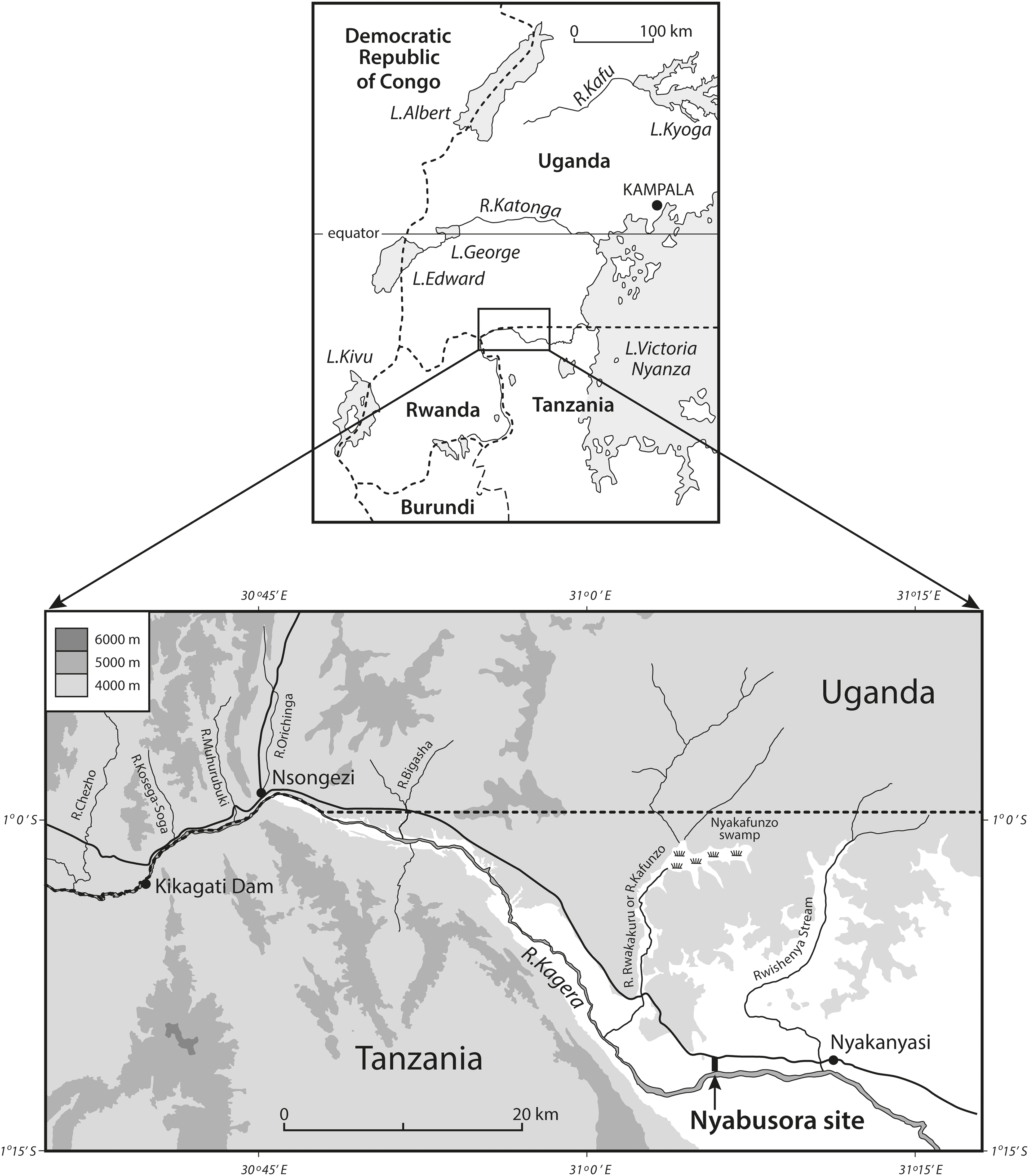
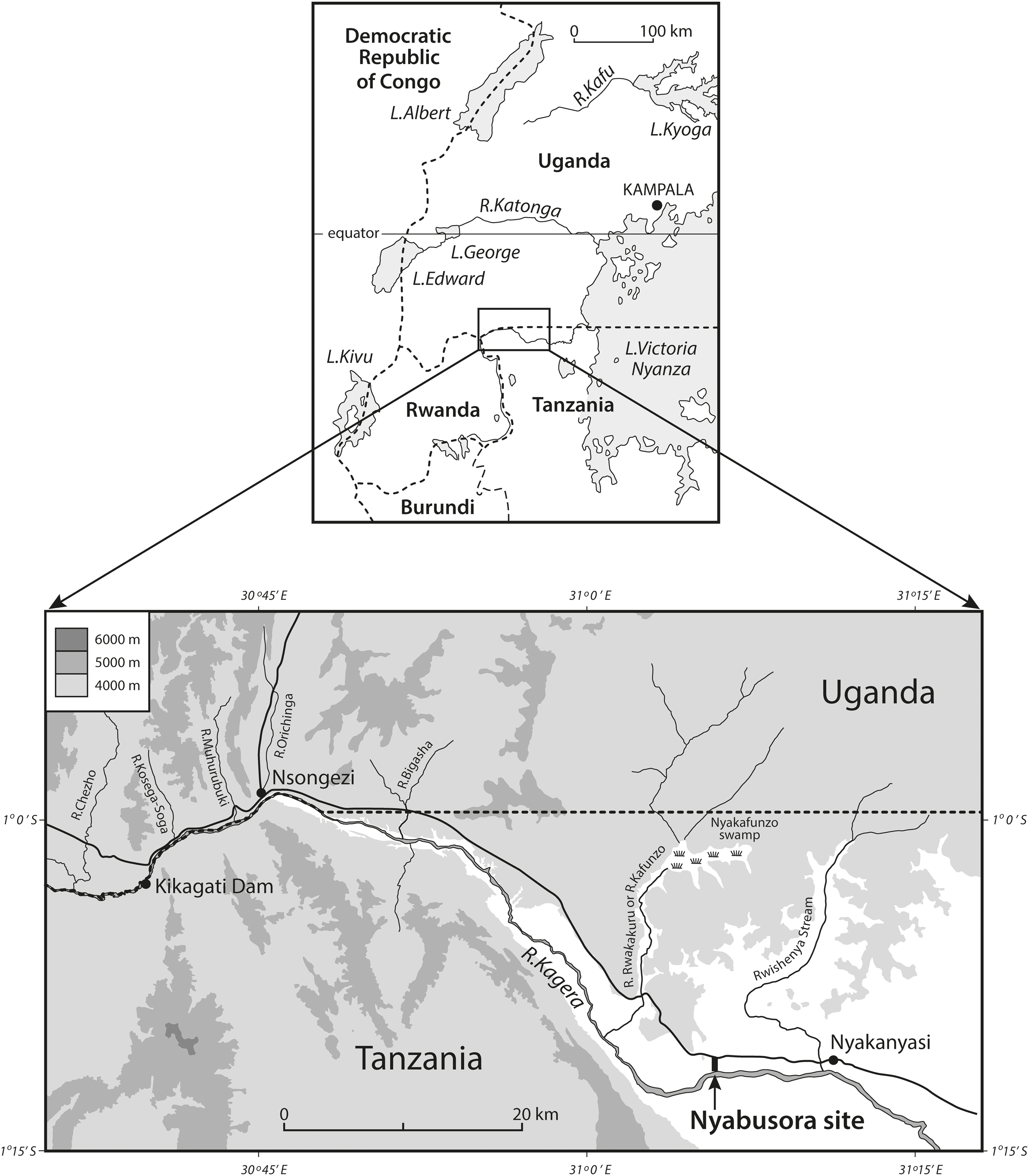
Nyabusora, a site on the Kagera river 50 km (31 miles) downstream of Nsongezi, has been excavated four times: in 1939 and 1954 by Edward Wayland (Wayland Reference Wayland1954); by William Bishop and Merrick Posnansky in 1959 (Posnansky Reference Posnansky, Mortelmans and Nenquin1962); and by Posnansky in 1961 supported by a team of students and labourers (Bishop Reference Bishop1969; see Acknowledgements). Following discussions with Posnansky in 2013, Laura Basell returned in 2014 with a small team to relocate the site. Nyabusora lies where the Kagera Valley broadens out from its gorge-like cross-section at Nsongezi at S1° 11ʹ 15.9ʺ E31° 06 ʹ 06.9ʺ or UTM 36 M 288798 9868645 (Figure 1). It is ∼12.6 km (∼8 miles) west of Nyakanyasi or Kagera Port (Figures 1–2).
General location map and detail of areas referred to in the text (drawn, redrawn, and digitised: M. Posnansky, M.A. Torgbor, K. Chew, L. Basell, L. Mulqueeny).
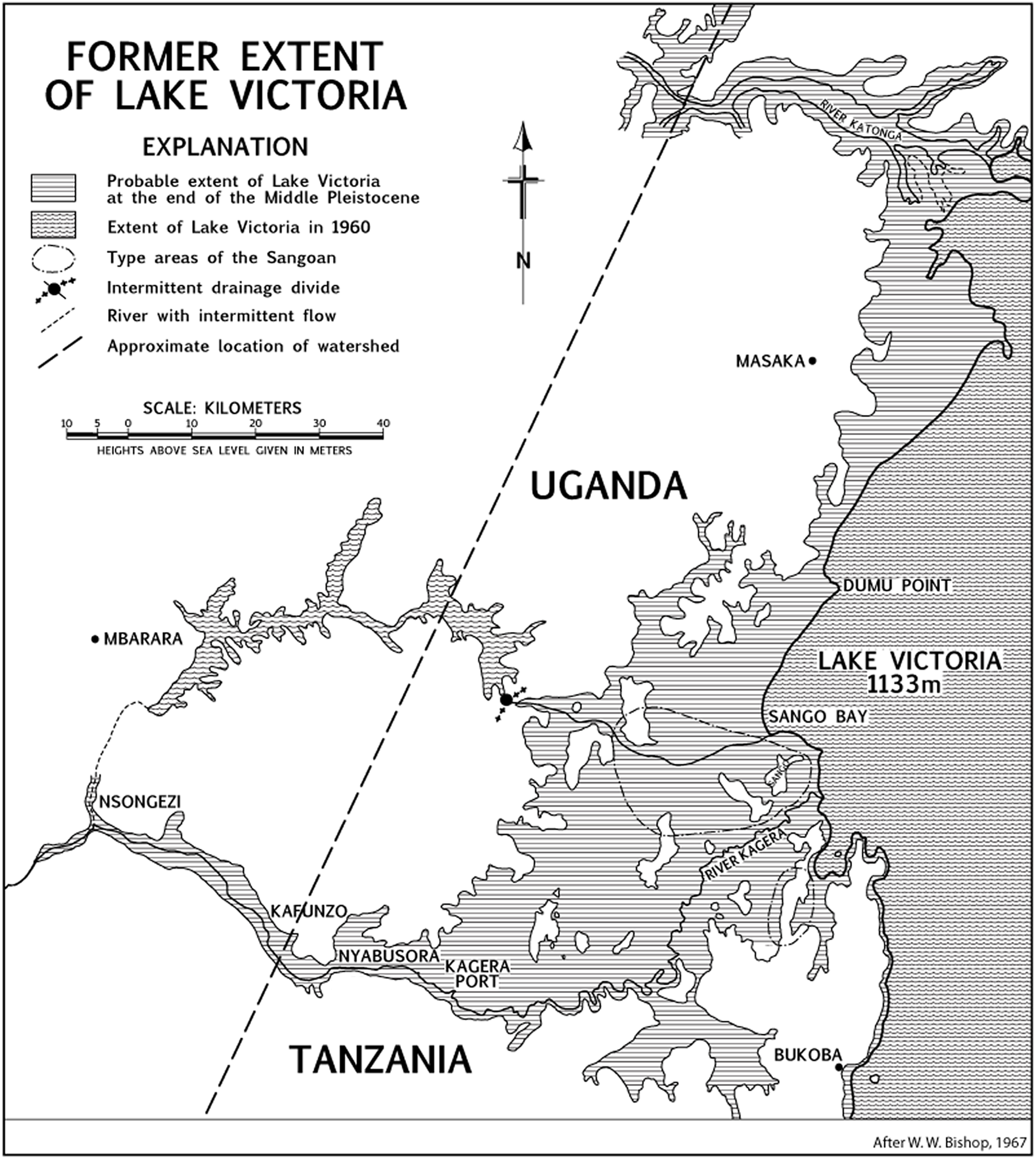
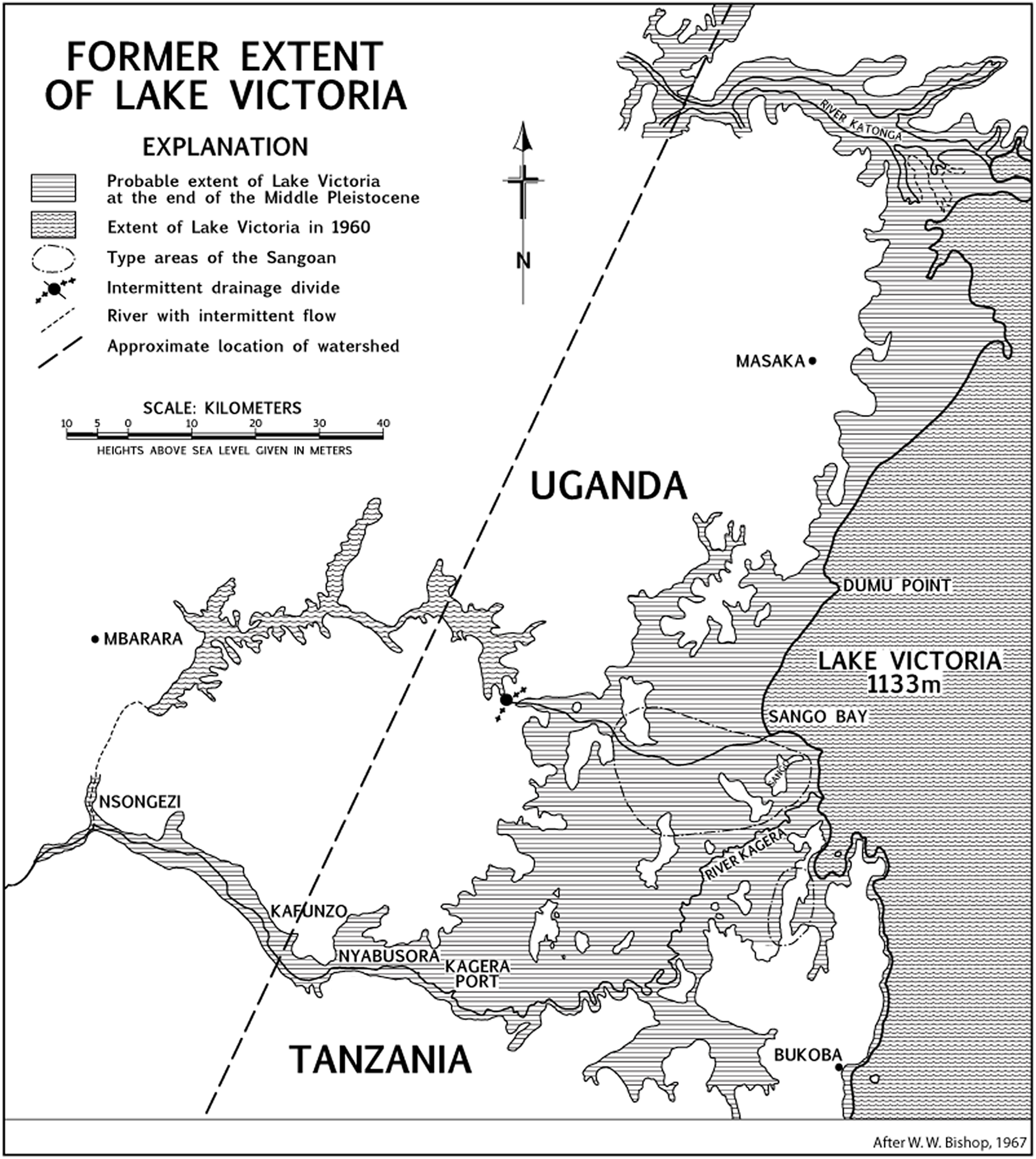
Map showing interpretation of the former levels of Lake Victoria, adapted by Posnansky from Bishop 1967. Watershed is Bishop’s ‘hinge line’ (digitised by K. Chew).
Nyabusora remains the only site on the Kagera River where both abundant ESA/MSA stone artefacts and fossil fauna have been found in direct association. The fresh condition of the lithic assemblages, in contrast to the abundant but reworked assemblages at Nsongezi, suggests they are in a proximal context. Their condition is similar to the large artefact spreads recovered during excavations in 2012 by Basell at Rubirizi, though importantly the depositional environment differs (Basell & Brown Reference Basell and Brown2012). Posnansky considered the lithic material as Acheulean and Sangoan in its affinities. This paper outlines the key geoarchaeological results of early fieldwork, before turning to ongoing research on lithic variability and the environmental history of this key region.
History of geoarchaeological research at Nyabusora
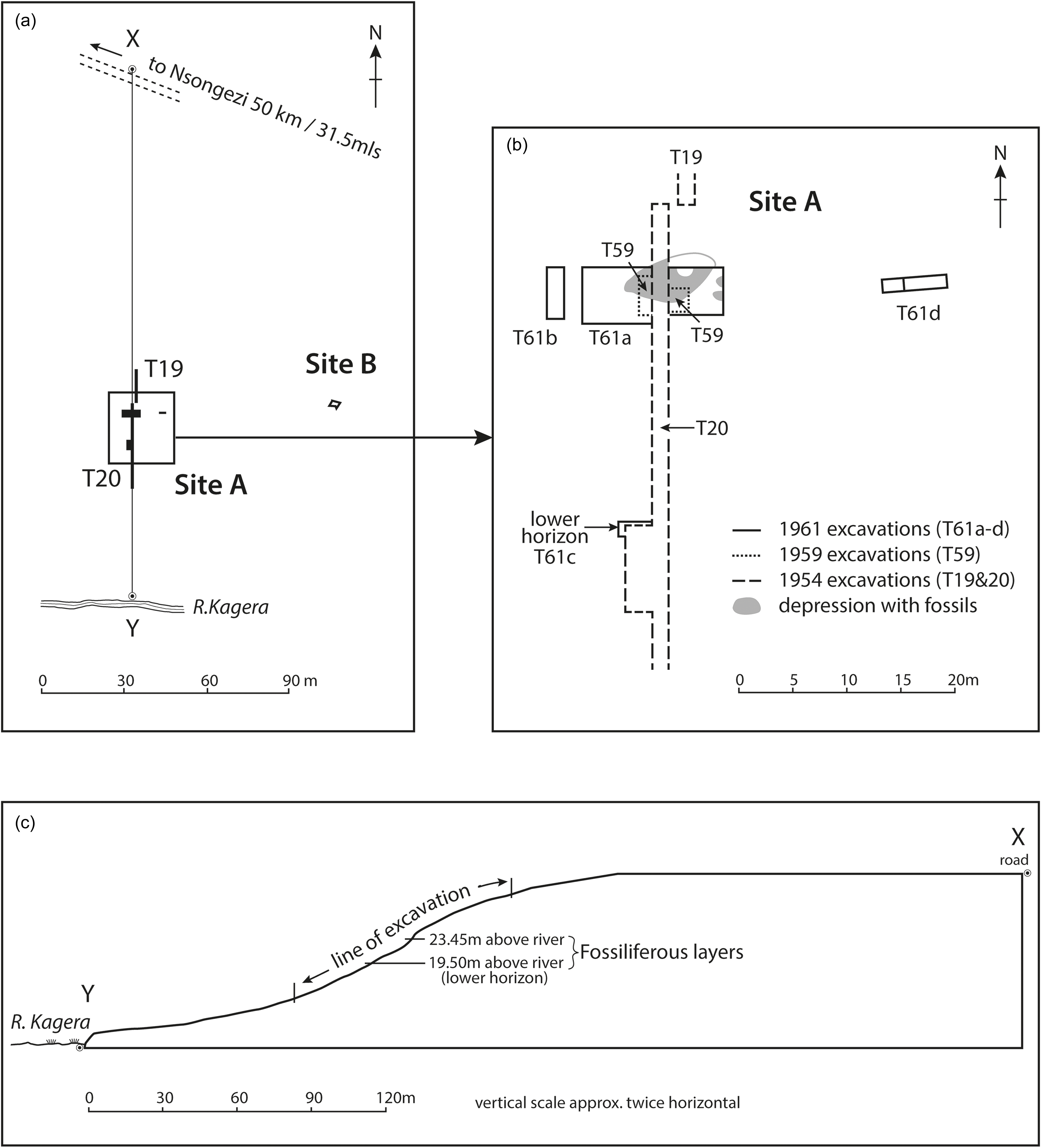
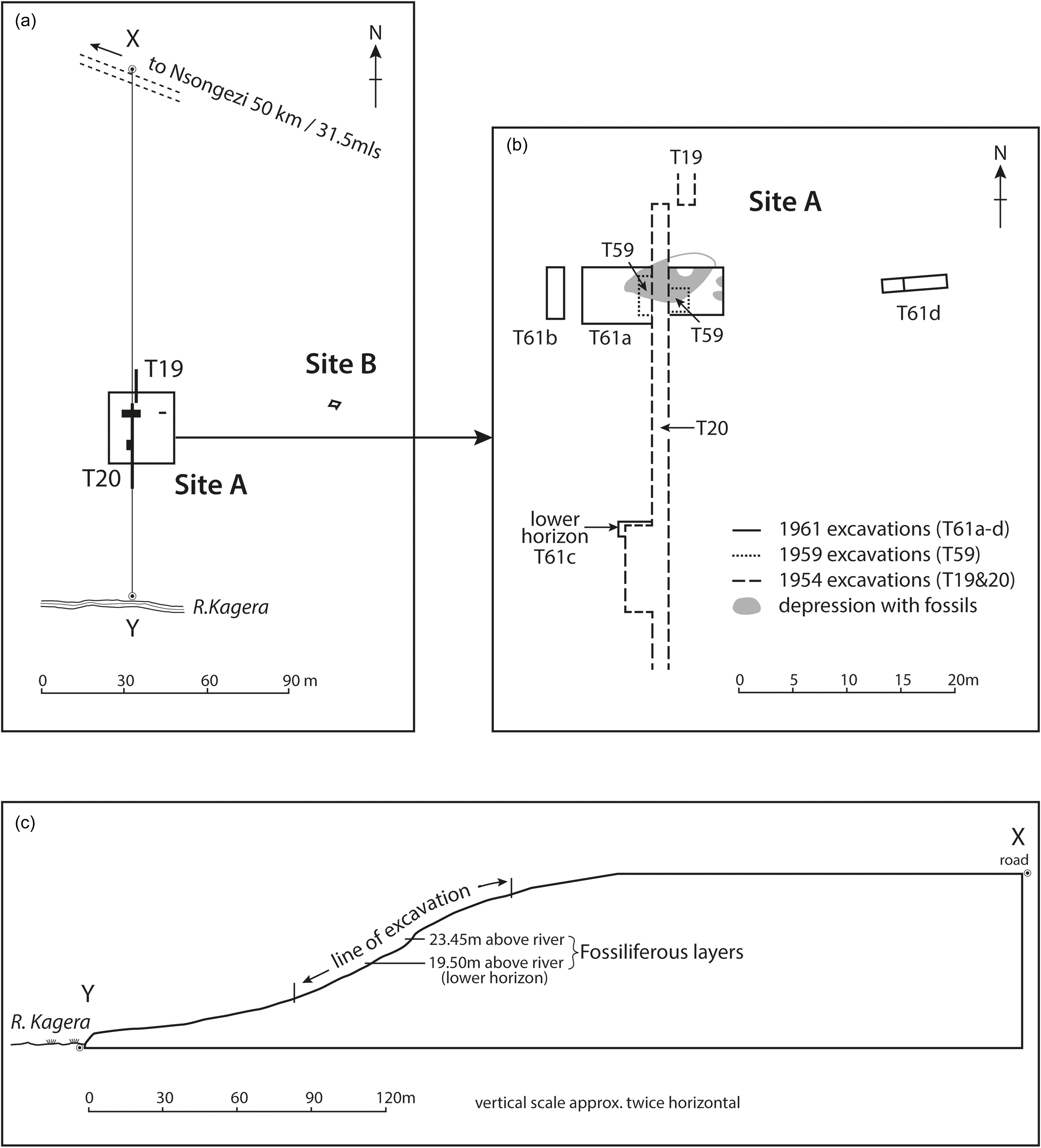
Interpretations of Nyabusora have evolved with expanding knowledge and shifting theoretical perspectives among researchers, particularly regarding the evolution of Lake Victoria-Nyanza and its connection to western inflowing rivers and the Nile outflow at Jinja. A summary of historic work by Edward Wayland, Walter Bishop, and Glen Cole follows with a detailed overview in Supplementary S1. Wayland excavated a shallow north–south trench, approximately 100 m long and 1.5 m wide, to clarify the broader stratigraphic context of the site, recovering both fossils and lithics (Wayland Reference Wayland1954) (Figure 3, T19 and T20). Wayland recognised the landscape was shaped regionally by hydrological fluctuations in the Kagera and Lake Victoria-Nyanza, and by tectonic uplift of the Western Rift. He proposed that the Kafu, Katonga, and Kagera rivers were reversed, causing their headwaters to pond, forming Lakes Victoria-Nyanza and Kyoga (Wayland Reference Wayland1934; Reference Wayland1954) (Figure 1). Earlier, the rivers were thought to flow east toward the Congo Basin, but the date of reversal was debated (Cooke Reference Cooke1957, fig. 4, 27–8).
a) Location of Sites A and B in relation to Wayland’s trenches. X–Y shows location of profile in c). b) Detail and dates of trenches excavated at Site A. c) Profile of transect indicated in a), showing cross-section of road to river and position of excavations in relation to terrace topography (drawn, redrawn, and digitised: M. Posnansky, M.A Torgbor, K. Chew, L. Basell, L. Mulqueeny).
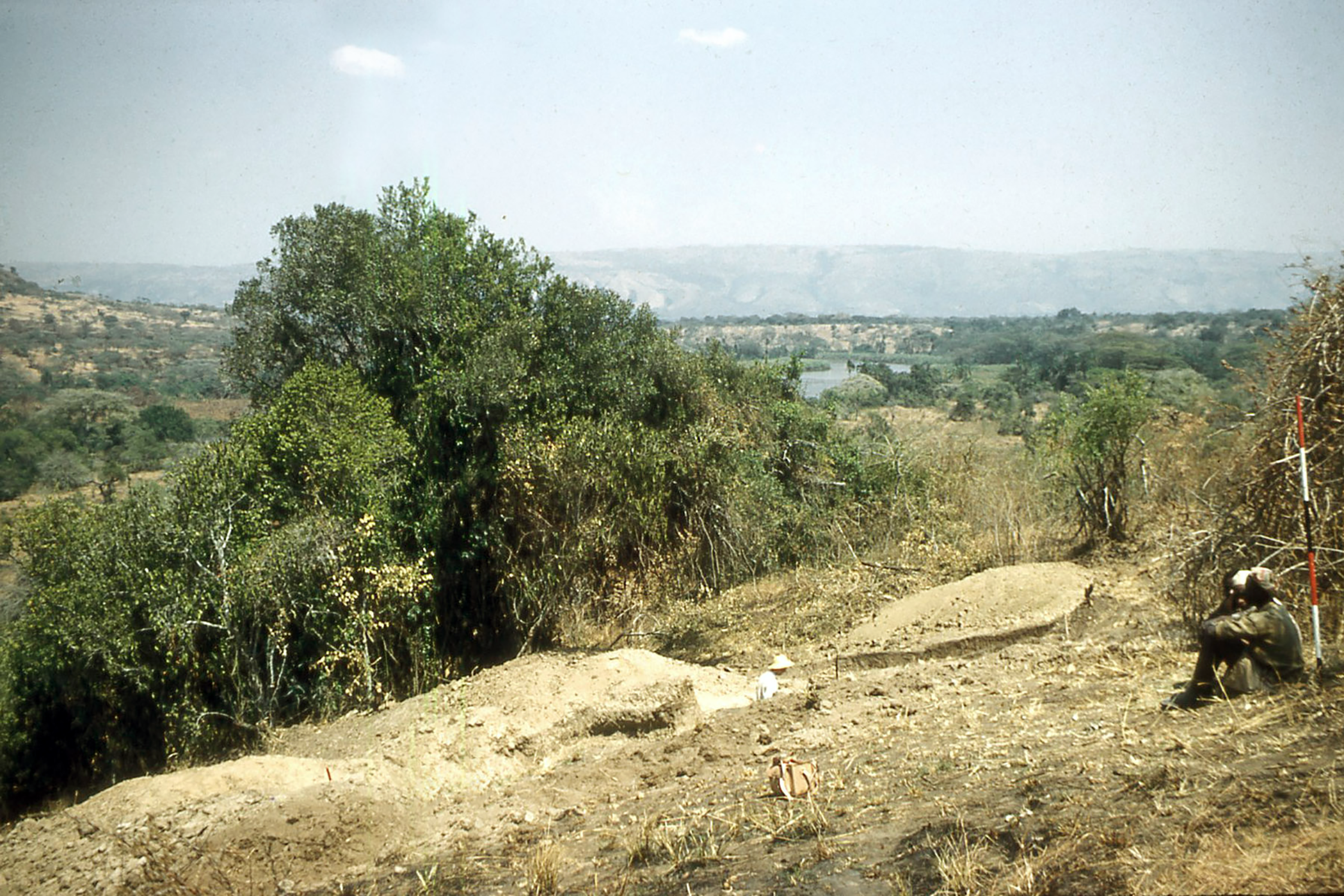
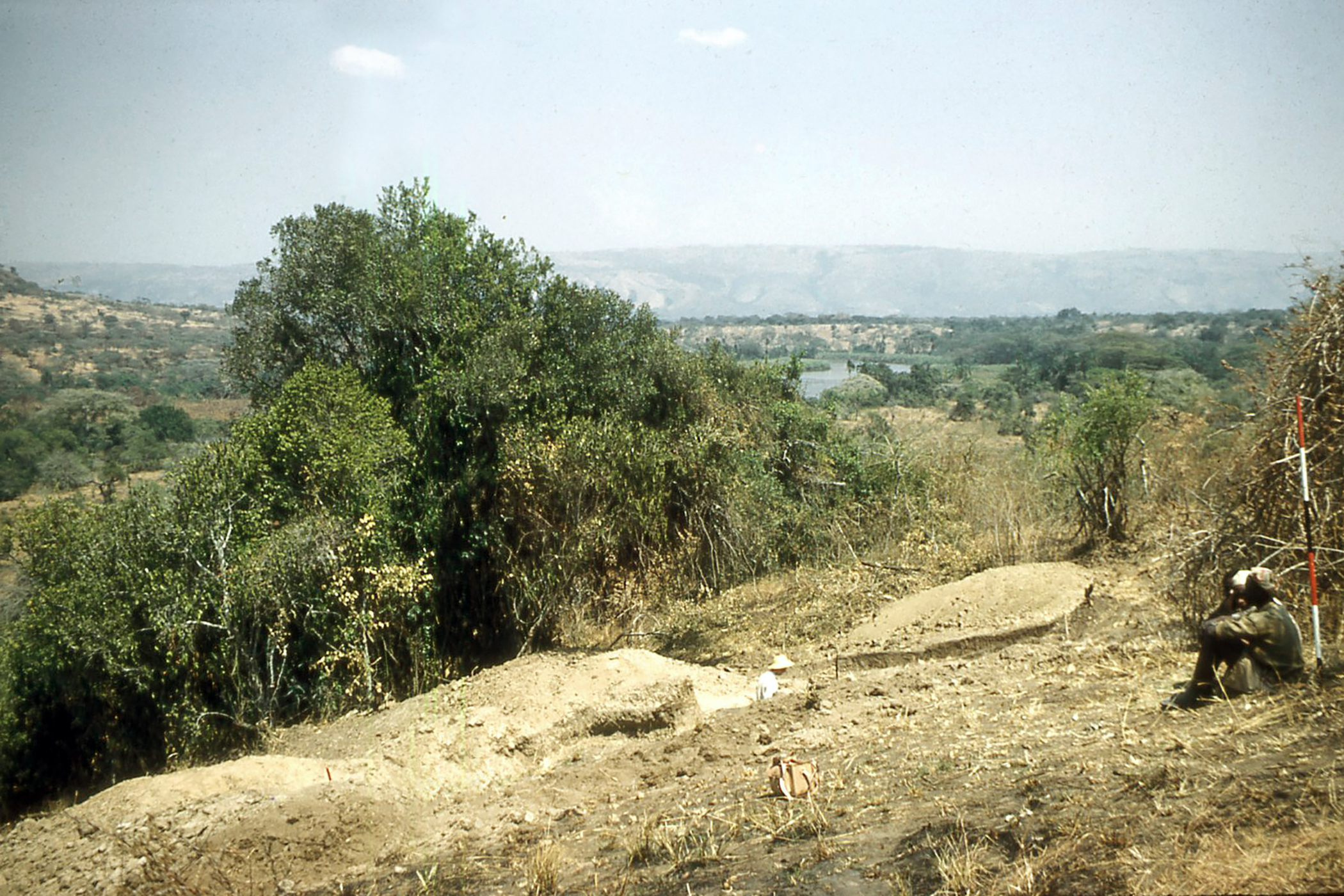
General view at Nyabusora during excavation, looking from top of slope down to the Kagera River. Scale in feet (photo: M. Posnansky).
During the 1960s Bishop developed Wayland’s work, focussing primarily on landscape change, geology, and sedimentology. He incorporated archaeological sites, and considered the 1954 fieldwork results of a geologist from the Tanzania survey, Arthur Spurr, who excavated/recorded detailed sections along a 9 mile stretch of the Kagera (Bishop Reference Bishop1969; World Soil Survey 2025). Bishop’s pioneering interpretations were thwarted by the lack of reliable dating methodologies, but he suggested the large yet shallow Lake Victoria-Nyanza was highly sensitive to climatic and tectonic changes, resulting in fluvial incision along the Kagera when the lake contracted (Supplementary S1). He posited that Western Rift tectonics produced upwarp east of the rift and downwarp in central Uganda, forming the Lake Kyoga and Lake Victoria-Nyanza Basins. His maps showed this deformation with a ‘hinge line’ of uplift and higher palaeoshorelines of the expanded lake (Bishop Reference Bishop1969, pl. VI) (Figure 2). Cole worked upstream at Nsongezi (Figure 1), a site considered to have an artefact-bearing ‘M-N horizon’ (Cole Reference Cole1965). He attempted to correlate archaeological horizons along the Kagera (Supplementary S1).
Collectively, this research revealed a complex geoarchaeological history in the mid reaches of the Kagera, with fluvial, fluvio-lacustrine, aeolian, and diatomaceous deposits. Researchers agreed aggradation and incision of the Kagera River was critical to site preservation and Pleistocene landscape change. Hydrostatic solifluction/soil creep processes were thought to have moved heavy artefacts/large stones from the steep hillsides into valley sediments, and it was recognised early that some archaeological sites in the catchment are reworked or in a secondary context (eg, Solomon Reference Solomon1939). Fluvial terraces and palaeoshorelines were considered to reflect Lake Victoria-Nyanza’s fluctuations, with tectonic activity unevenly affecting different reaches. Efforts to correlate exposures and archaeological horizons without precise geomatic or independent dating led to considerable confusion.
The 1959 and 1961 excavations
Excavations, reported here fully for the first time, occurred in April 1959 directed by the late Posnansky and Bishop, and between June 30th and July 8th 1961, directed by Posnansky. Bishop (Reference Bishop, Howell and Bourlière1963, 250; Reference Bishop1969, 88–97) described the geological side of this work and faunal remains, including a chemical analysis. Wayland left Uganda in 1958 before this later research was contemplated, and although he regretted his inability to continue research at Nyabusora after 1954, he gave Posnansky neither future research suggestions, nor more detailed information beyond some mimeographed notes (Wayland Reference Wayland1954).
The 1959 fieldwork extended research conducted earlier that year at Nsongezi (Bishop & Posnansky Reference Bishop and Posnansky1960). The main objectives were to ascertain whether Nyabusora was the downstream equivalent of the Nsongezi ‘M-N horizons’, to clean up Wayland’s trench, and to evaluate its sections. Posnanksy and Bishop planned to extend Wayland’s trench horizontally in two areas where he had found the faunal remains and in a lower horizon that had yielded stone tools.
There were two excavation areas. The largest, dug initially in 1959 and extended in 1961, was designated Site A. This focussed on the uppermost ‘gravelly horizon at a height of 77 feet [23.5 m] above the Kagera river, within a series of arenaceous to argillaceous lacustrine deposits’ (Bishop Reference Bishop1961, 28), which had yielded both fauna and artefacts, and was overlain by a further 12 m of lacustrine deposits. Site B lay ∼151 m to the east and was dug only in 1961 (Figure 3a). It focussed Wayland’s lower artefact horizon identified at 19.5 m above the river.
Site A
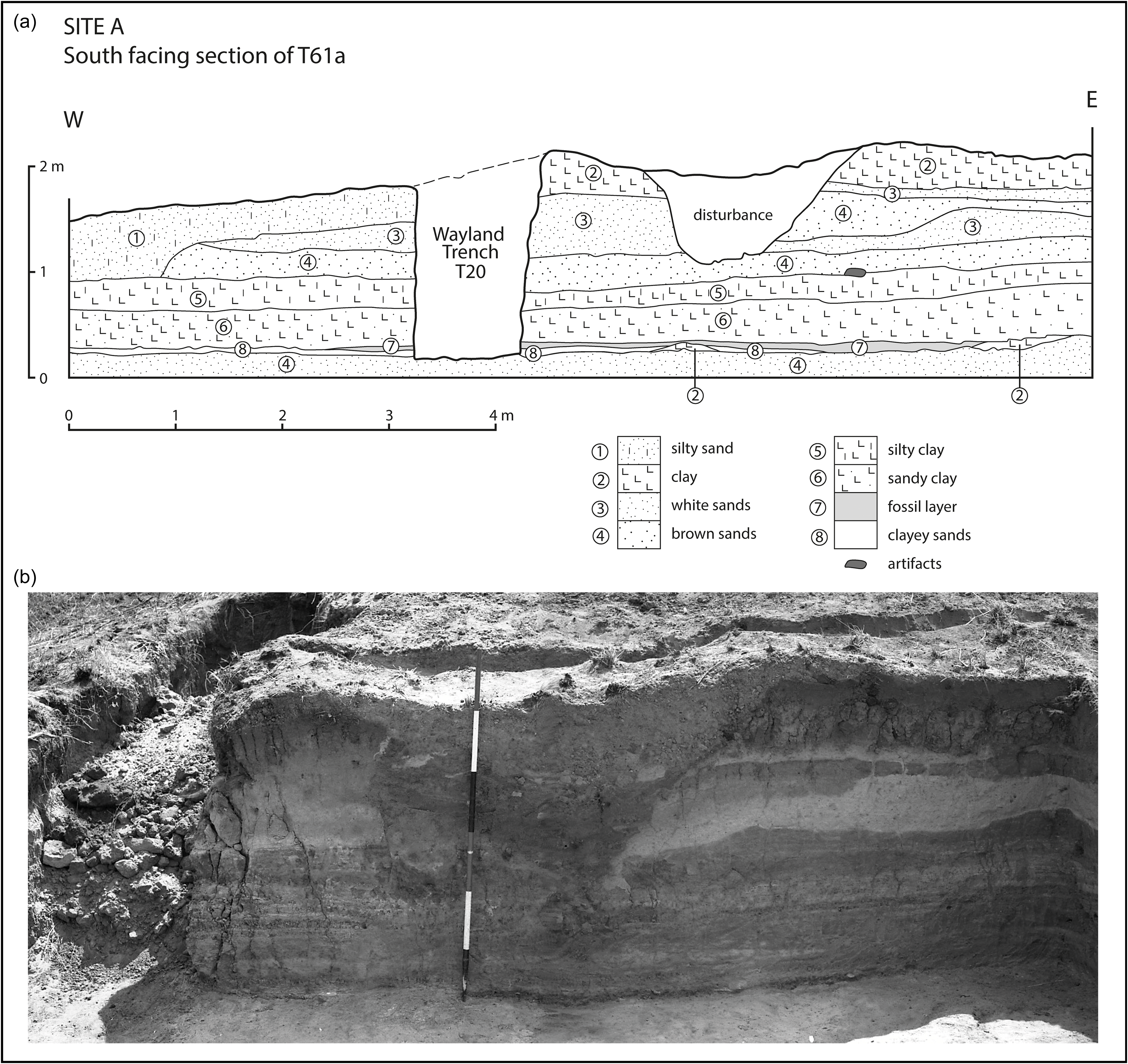
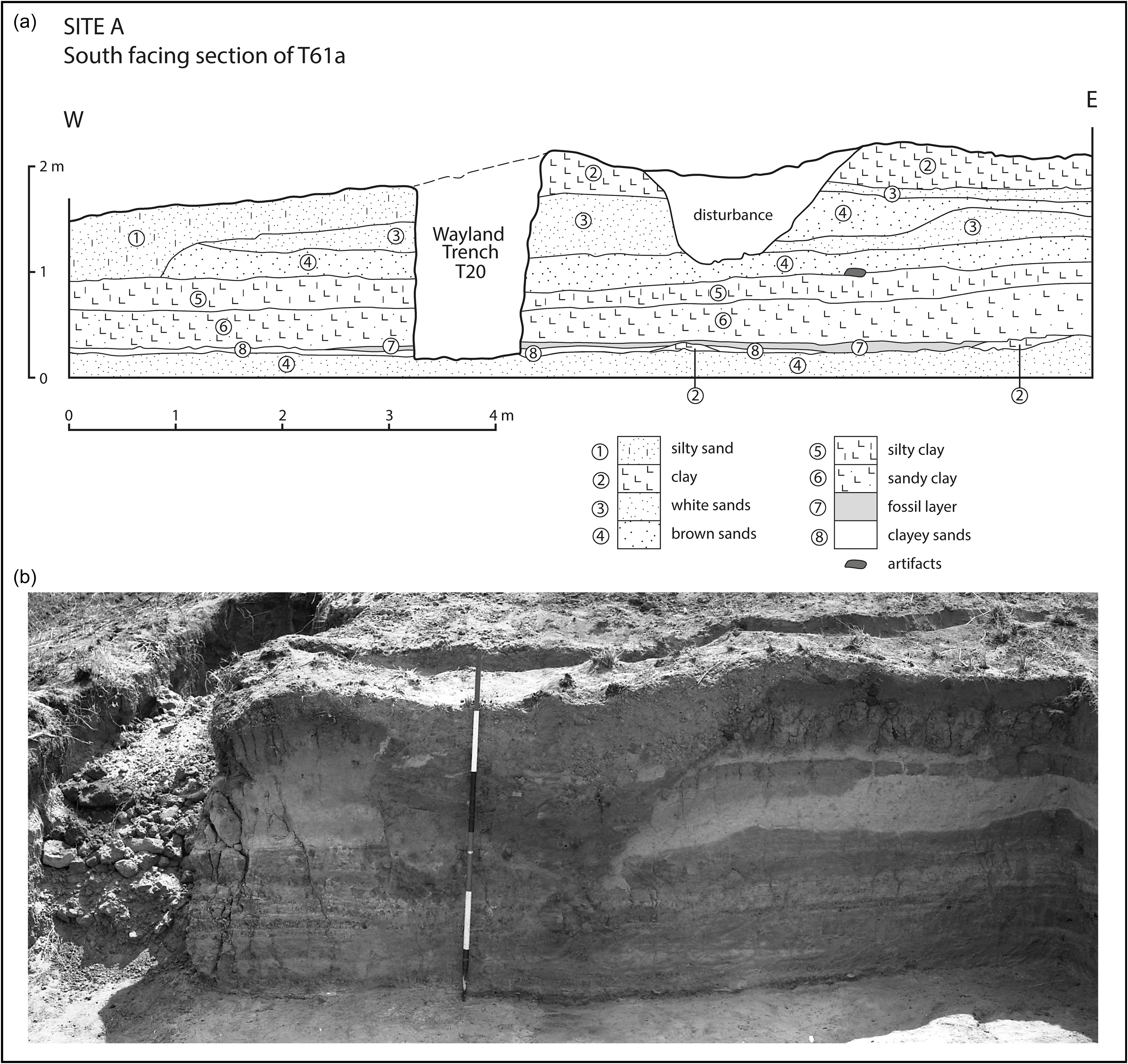
Site A was excavated in 1959 and 1961. It comprised three excavation areas, the largest and most important of which exposed an oval depression. This was gridded into 35 squares and yielded all the faunal remains and numerous stone artefacts. Eventually an area of 52 m2 was exposed to understand the nature and surroundings of the fossiliferous layer recorded by Wayland (Figures 3b, 4, 5).
a) Site A, south-facing section of T61a. Eastern margin is the trench corner (drawn, redrawn, and digitised: M. Posnansky, M.A Torgbor, K. Chew, L. Basell, L. Mulqueeny). b) Two photographs (M. Posnansky) merged to show Site A, south-facing section of T61A to the east of Wayland’s original trench. Scale in feet.
Two additional, smaller excavations occurred in 1961. The lowest one at 19.5 m above the Kagera focused primarily on cleaning and straightening the face of Wayland’s trench (Figure 3b, T61c), where he had observed stone tools. A further cutting, covering sightly over 0.75 m2, was situated ∼14 m along the contour of the slope at the same vertical height (∼23.45 m) above the river as the main site (Figure 2, T61d). The excavation objective of T61d was to discover any site similar to the 1959 oval depression, which Bishop and Posnansky had interpreted during excavation as a ‘pond’, and (according to the field notes) ‘to obtain a further section on the upper layer’. A thin orange clay band was exposed. It was less than 13 mm thick with no faunal material and only the occasional undiagnostic stone flake or stone. The sequence recorded for the ∼1.75 m deep section from top to bottom was:
-
Buff sand*
-
Silty sands: 0.51 m
-
Light buff sand: 0.23 m
-
Orange yellow sand: 0.13 m
-
Buff silty sand: 0.23 m
-
Grey clay: 0.08 m
-
Orange clayey sand parting: 0.01 m
-
Grey clay*
* no thickness was given, but no more than 0.56 m based on total exposure depth, and probably far less.
Excavation followed the stratigraphy (Bishop Reference Bishop1969, 92–3) (Figure 5). Particular care was taken in 1961 to ensure that as many small bones or teeth were recovered as possible. Both 127 mm and 64 mm screens were used in the gravel horizon of T61a and T61b to ensure no fish remains or small bones were missed. The fossiliferous layer was focussed in the 35 m oval depression about 230 mm deep. It contained a fine blackened gravel that nowhere exceeded 40–50 mm in thickness. Bishop described the gravel as being up to 3ʺ thick (Bishop Reference Bishop1969, 92). The south-facing section of T61a was ∼2 m at its deepest (Figure 5). The fossiliferous layer lay above a brown sand layer. Towards the edge of the depression the horizon became clayey and the fossils decreased in number, which is sedimentologically consistent with a shrinking pool interpretation. Several dark clay patches were interpreted as areas where the water had stayed longest in the drying-out period. The gravel contained patches of grey ashy material and charred bone interpreted as evidence of fire and sampled for radiocarbon dating (Bishop Reference Bishop1961, 28; Reference Bishop1969, 93; Posnansky Reference Posnansky, Mortelmans and Nenquin1962, 211; Posnansky unpublished archive). Sandy grey clay lay above the gravel itself, overlain by siltier clay with white sandy partings (thin seams separating thicker beds) interpreted as runoff from small channels. Above the silty clay were white and brown sands with few observable partings.
Site B
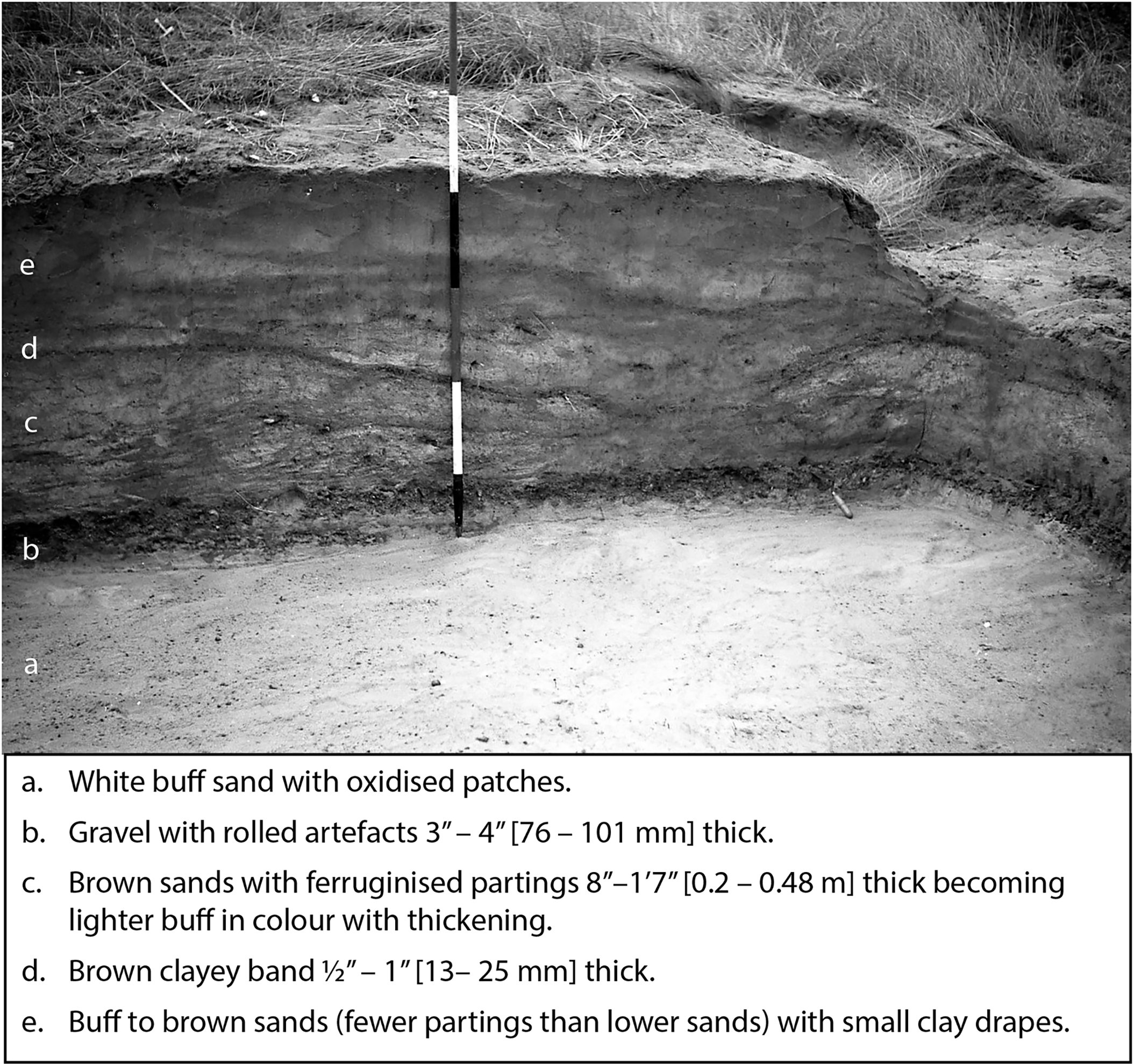
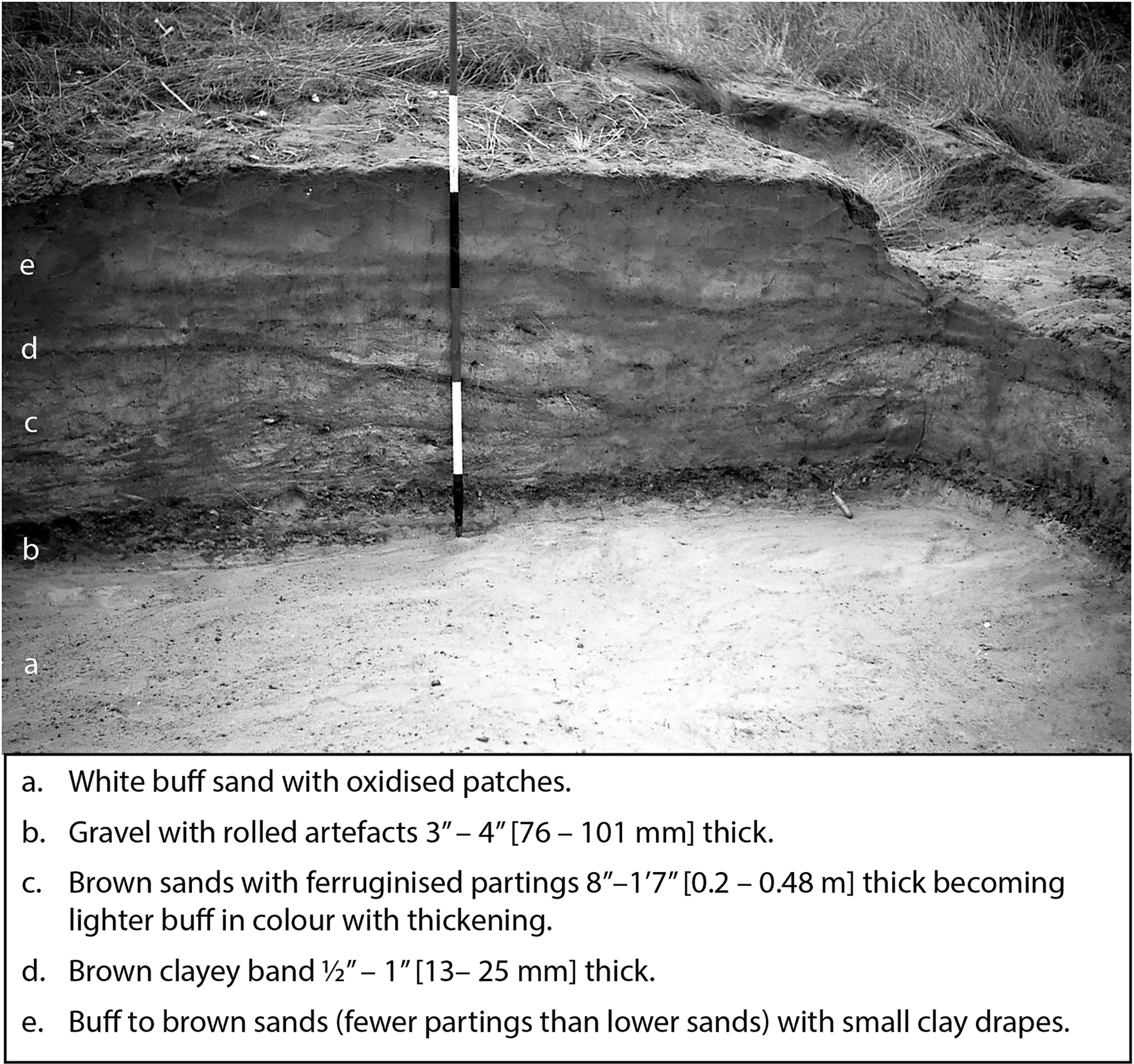
Site B was excavated in 1961 to expose the lower gravel layer reported by Wayland. Unfortunately Wayland’s height control proved inadequate, hindering comparisons with later work. An area 3.8 x 2.4 m on the west side and 3.04 m on the east side was excavated into the hillslope. This exposed a gravel layer apparently corresponding with the lower artefact horizon in the Wayland trench. Yellow ferruginous sand partings were located both between, above, and below this gravel layer (Figure 6). The implements from this level were more rolled than those on the upper occurrence. Though artefact orientation was measured, there was no consistent pattern so it was impossible to determine the flow pattern of the waters that deposited them. There were only few and small flakes, and no spalls or splinters.
Section at Site B at the time of excavation, showing gravel layer at the bottom (note trowel in right of image) and above this, cross-bedding and a shallow channel feature. Labelled and cross-referenced with the descriptions from Posnansky’s field notebook. Scale in feet (photo: M. Posnansky).
Lithics
Since 1965, inadequate conservation and poor maintenance of the extensive lithic collections from the Nyabusora 1959 and 1961 excavations at the National Museum of Uganda has resulted in the loss of artefact accession numbers due to insect damage, and artefacts have been removed from their original bags and boxes. Unfortunately re-analysis of the original assemblage is now impossible, leaving Posnanky’s personal archive as the only remaining record associating artefact types with contexts (Basell, pers. obs. 2014).
Posnansky provided Bishop with a rapid preliminary assemblage description, which Bishop published (Bishop Reference Bishop1969, 95–6). In that, Posnanksy reported that 914 artefacts had been found on two horizons. From Site A he recorded 206 lithics in 1959 and 308 in 1961 (total 514); and 400 at Site B. He calculated some assemblage composition percentages to permit comparisons with other sites, intending to publish a full analysis later. Here, we present the first methodical collation and publication of all Posnansky’s lithic counts, measurements, and descriptions from his original field notes and lithic analysis sheets. All data were entered into Excel. The data recorded also allowed more detailed analyses and comparisons of the excavated materials. All data entry was completed in Los Angeles in 2014, with Posnansky present so that any difficulties in reading writing or quantities could be clarified. All transcriptions were cross-checked.
This detailed work raised some significant discrepancies with Posnansky’s preliminary report to Bishop, although the counts and categorisations are derived from the same notebooks. We were unable to determine how the discrepancies with the data provided to Bishop had arisen. At Site A, for example, the total number of lithic artefacts following data entry were 954 rather than the originally reported 514. At Site B, 528 lithics are recorded instead of 400. One possibility is that the preliminary report only included certain categories and not for example, ‘angular waste’. We agreed it was best to be open about this discrepancy. Any archaeological site is, at best, a ‘sample’ of discarded objects affected by both hominin choice and taphonomic processes, and many excavations sample only a small proportion of any given activity area. In this case it is the broad implications for hominin behaviour we sought to elucidate and small differences in the quantities of lithics assigned to specific categories are unlikely to radically change those interpretations.
Lithics were analysed by ‘Site’ (A or B) and year. Raw materials were differentiated between quartzite and quartz. The deposits from the depression were sieved, and presumably those from Site B, although this was not noted. Posnansky’s field notes record Site A lithics condition as ‘fresh’. In the preliminary report to Bishop, Posnansky indicated no flakes from Site B, yet his analysis sheets record high numbers of flakes from both sites. Similarly, the preliminary report described the lithics from this site as ‘more rolled’. Posnansky’s field notes indicate 23 pieces were discarded from Site B lower, 18 of which were >8 cm and ‘heavily rolled’, but otherwise there is nothing to indicate that Site B artefacts were more rolled than those from Site A.
The principal categorisations made were as follows:
-
1. Cores
-
2. Flakes
-
3. Polyhedrons/pounders
-
4. Bifacial pieces
-
5. Choppers
-
6. Scrapers
-
7. Chunks
-
8. Pebbles
-
9. Angular miscellaneous
Further detail on subdivision and assignation to categories 1–6 is provided in Supplementary S2.
Results of the lithic analysis
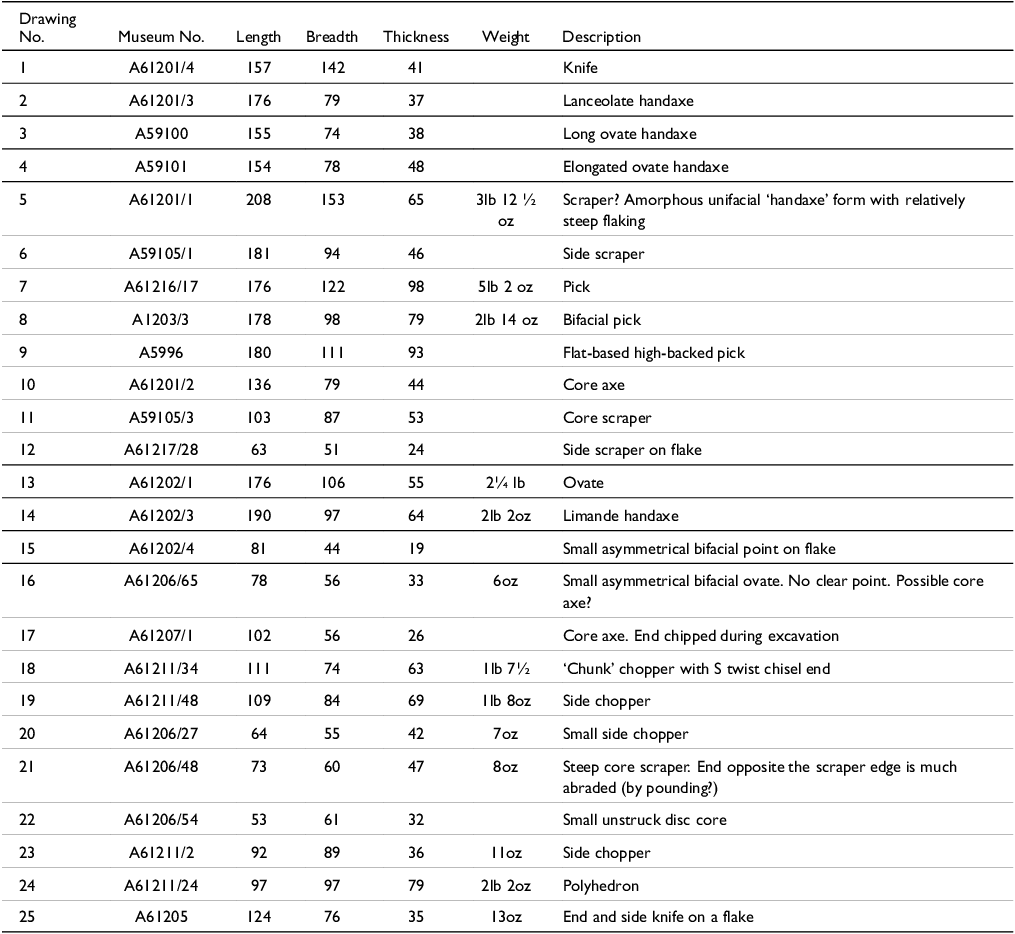
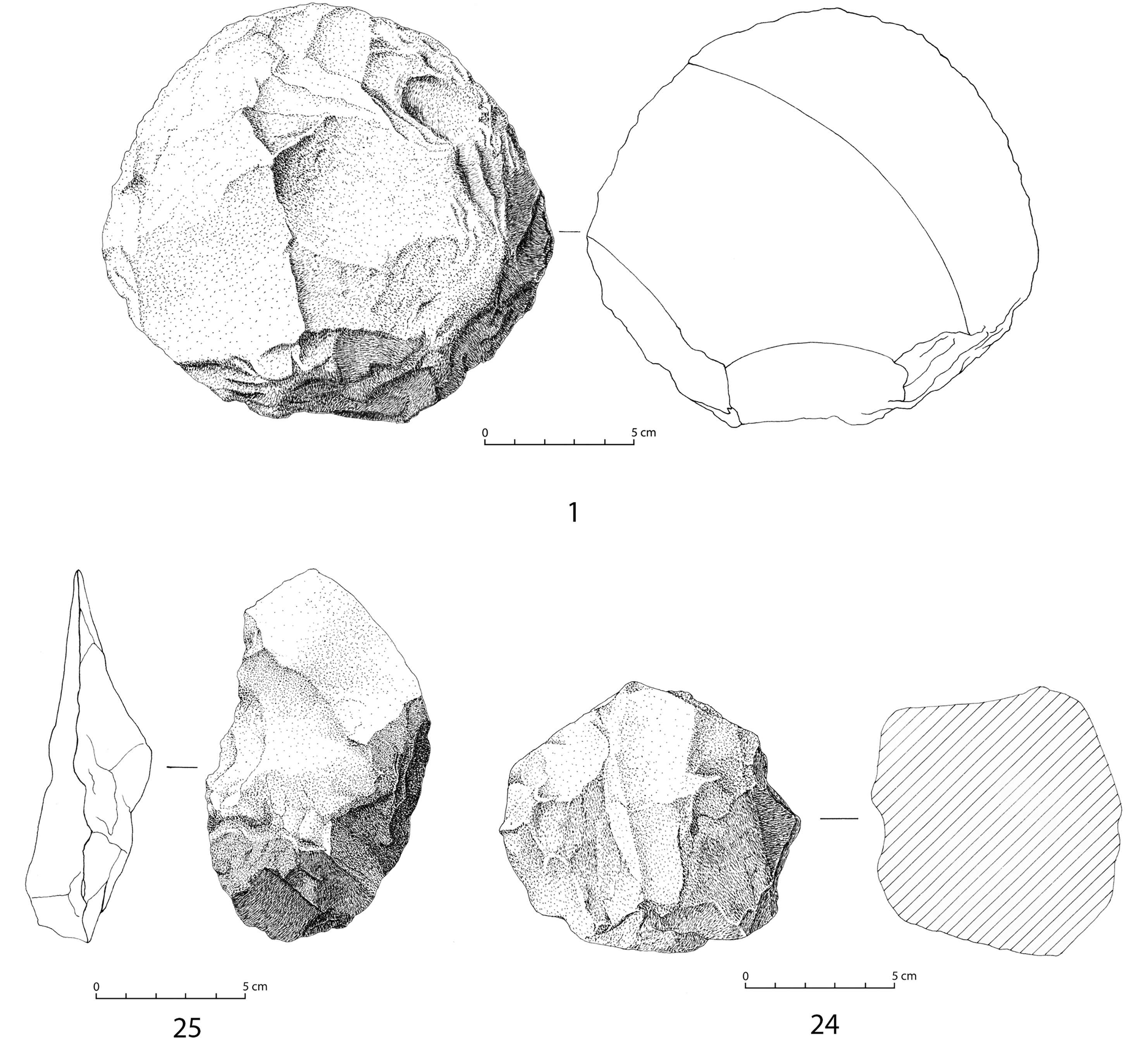
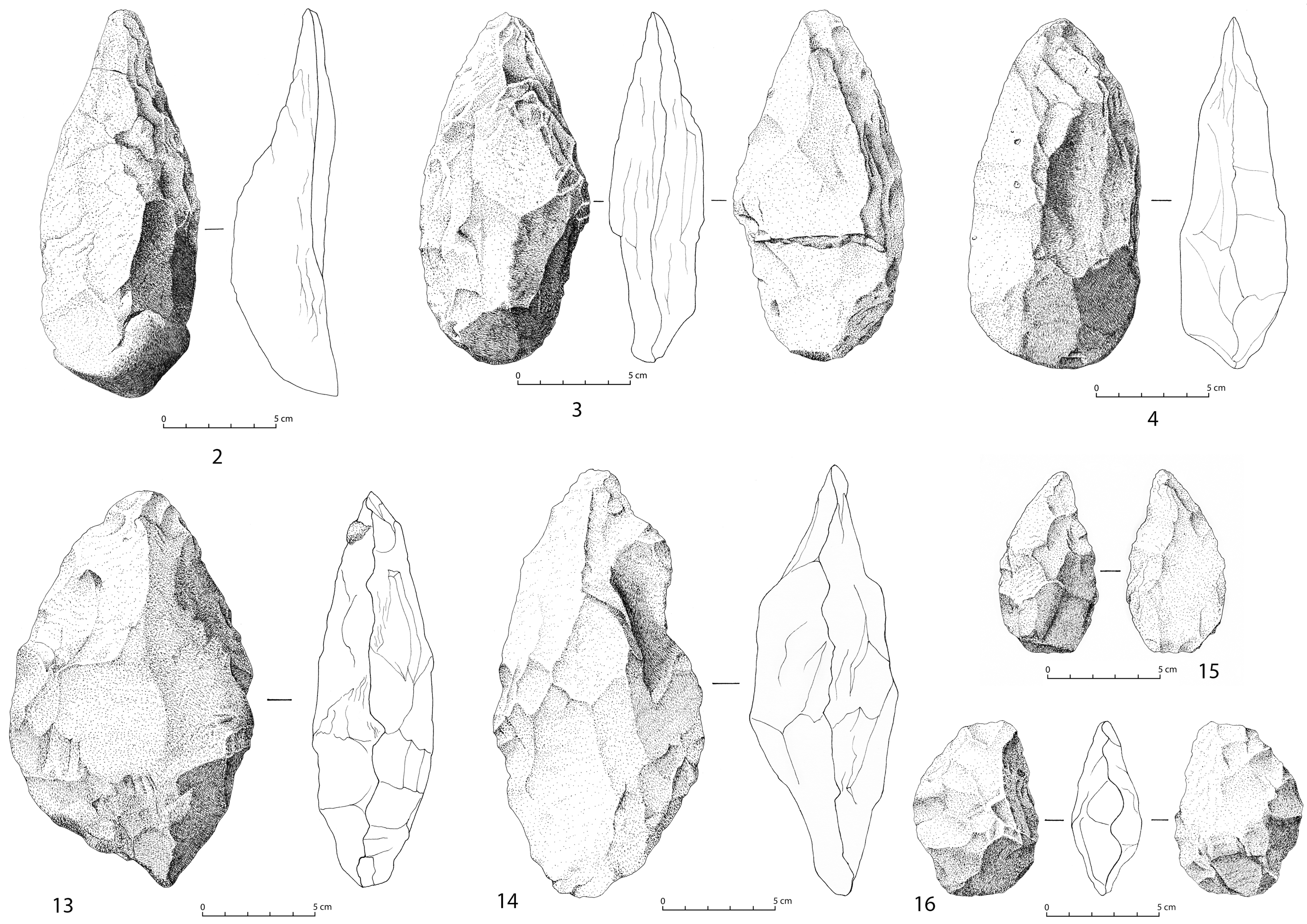
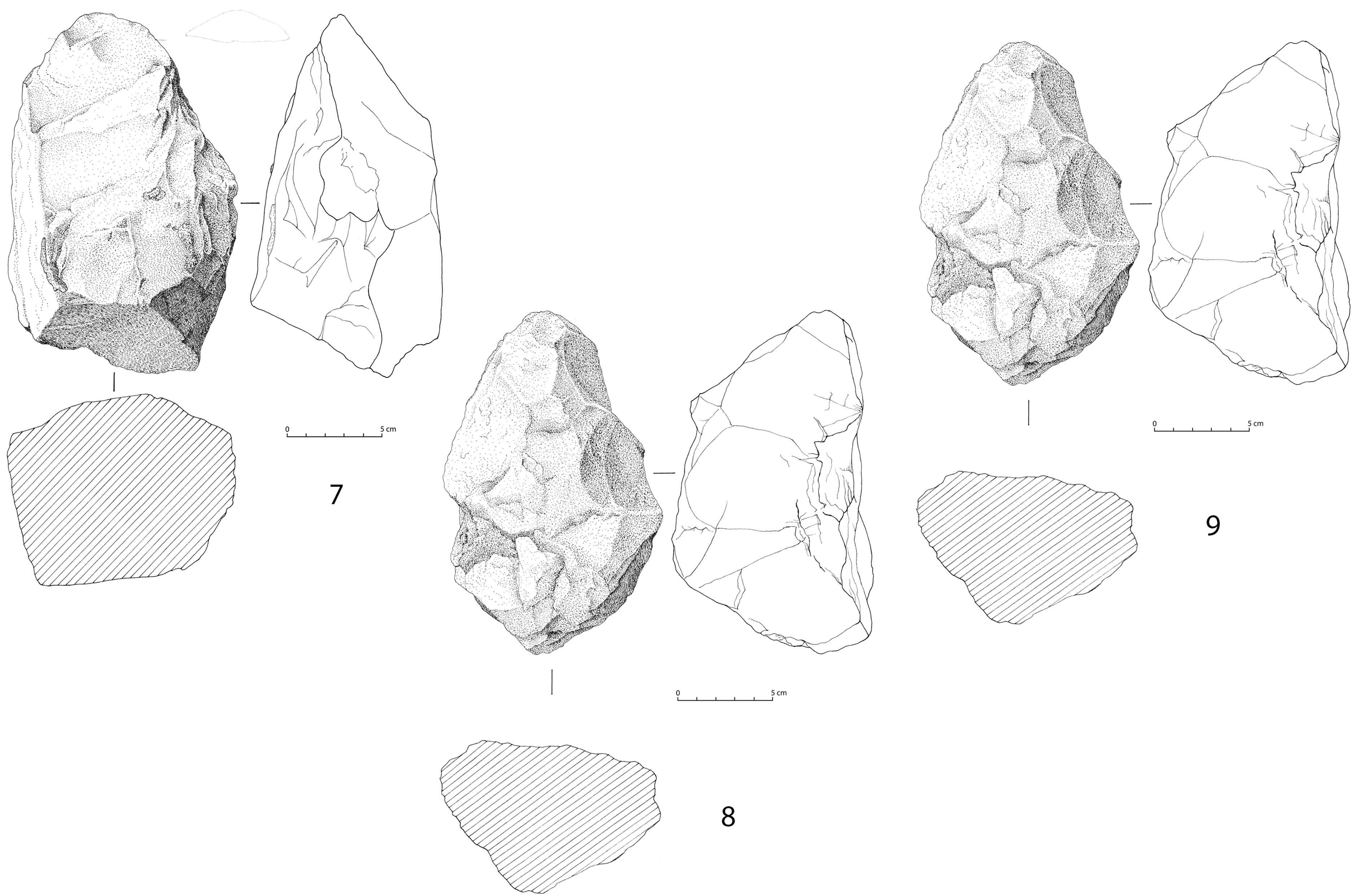
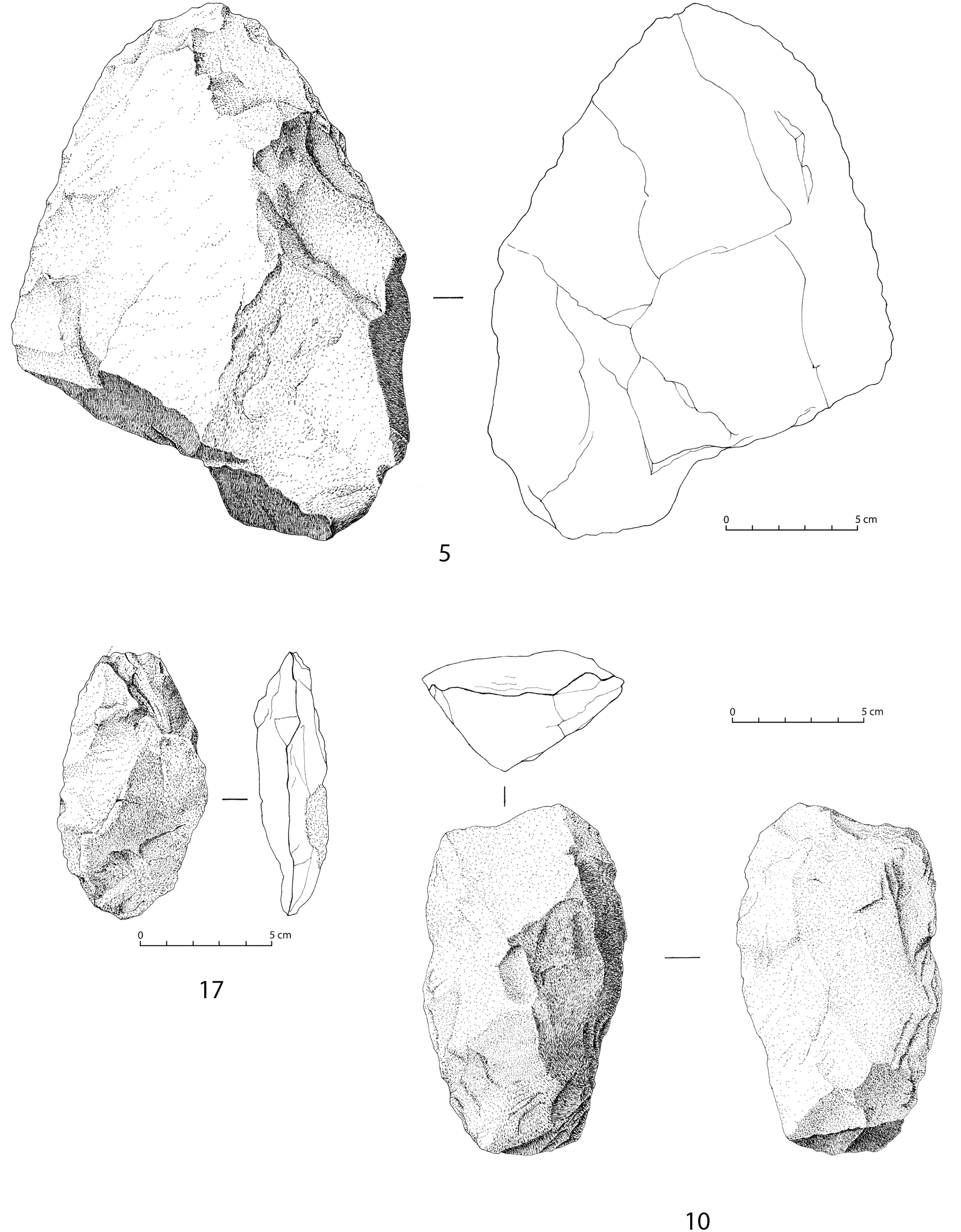
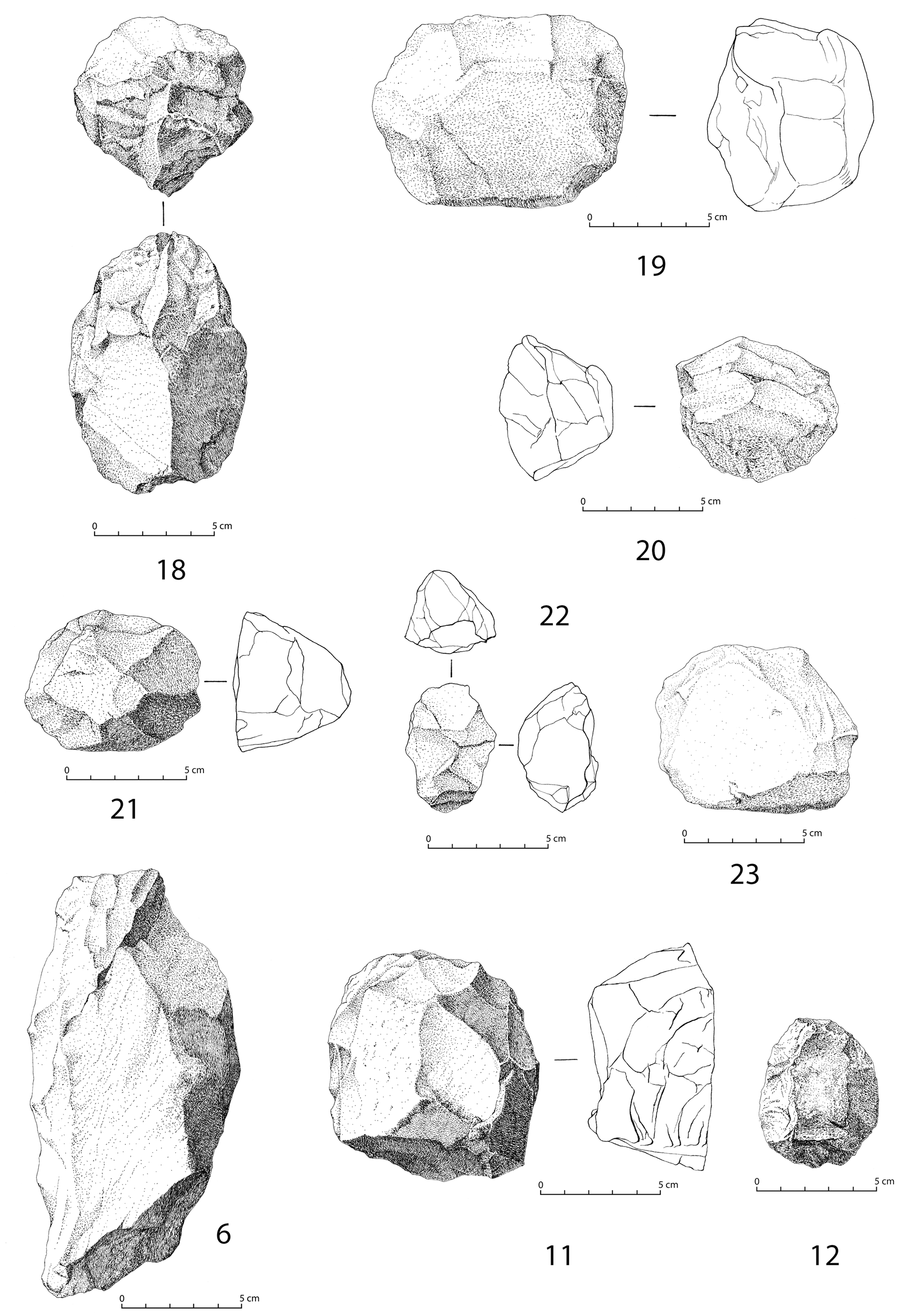
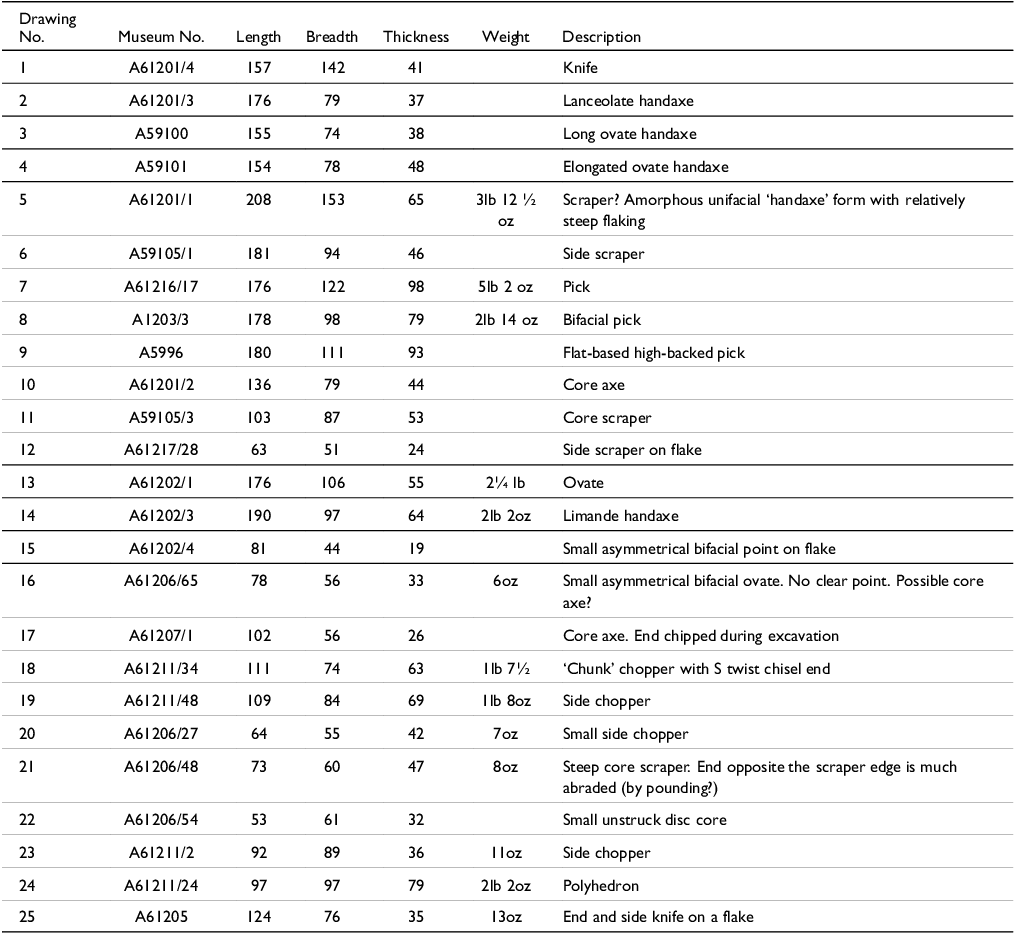
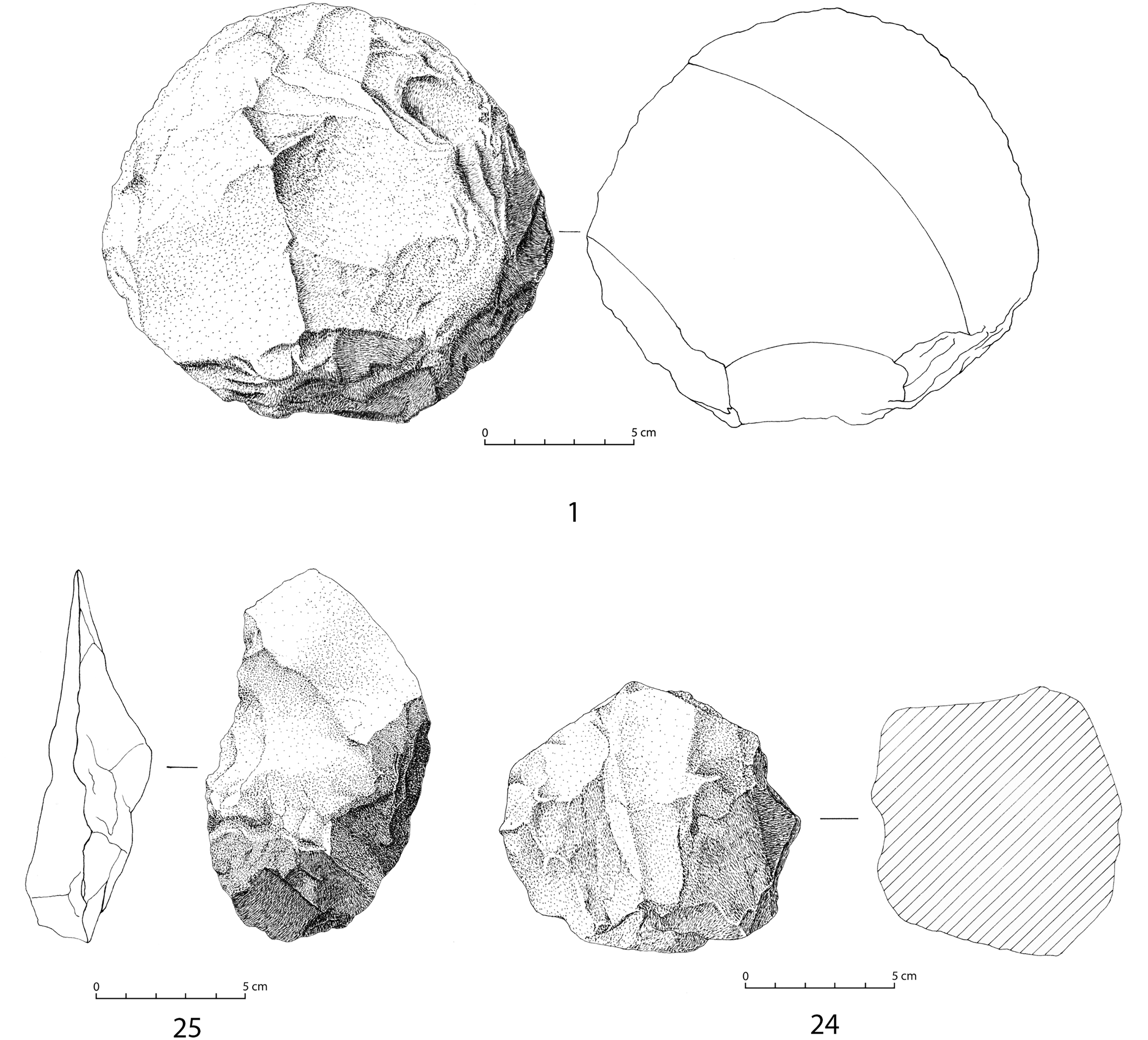
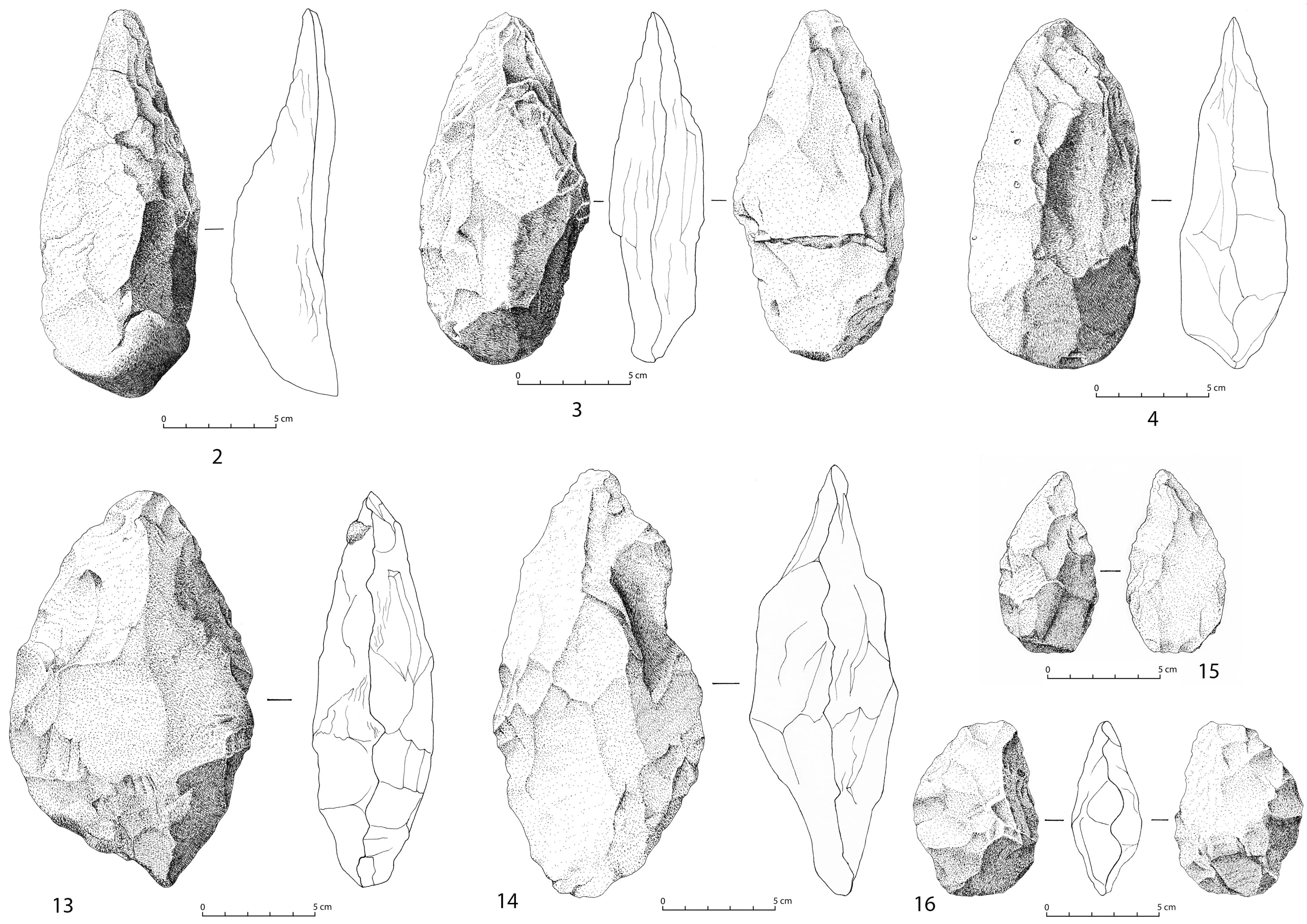
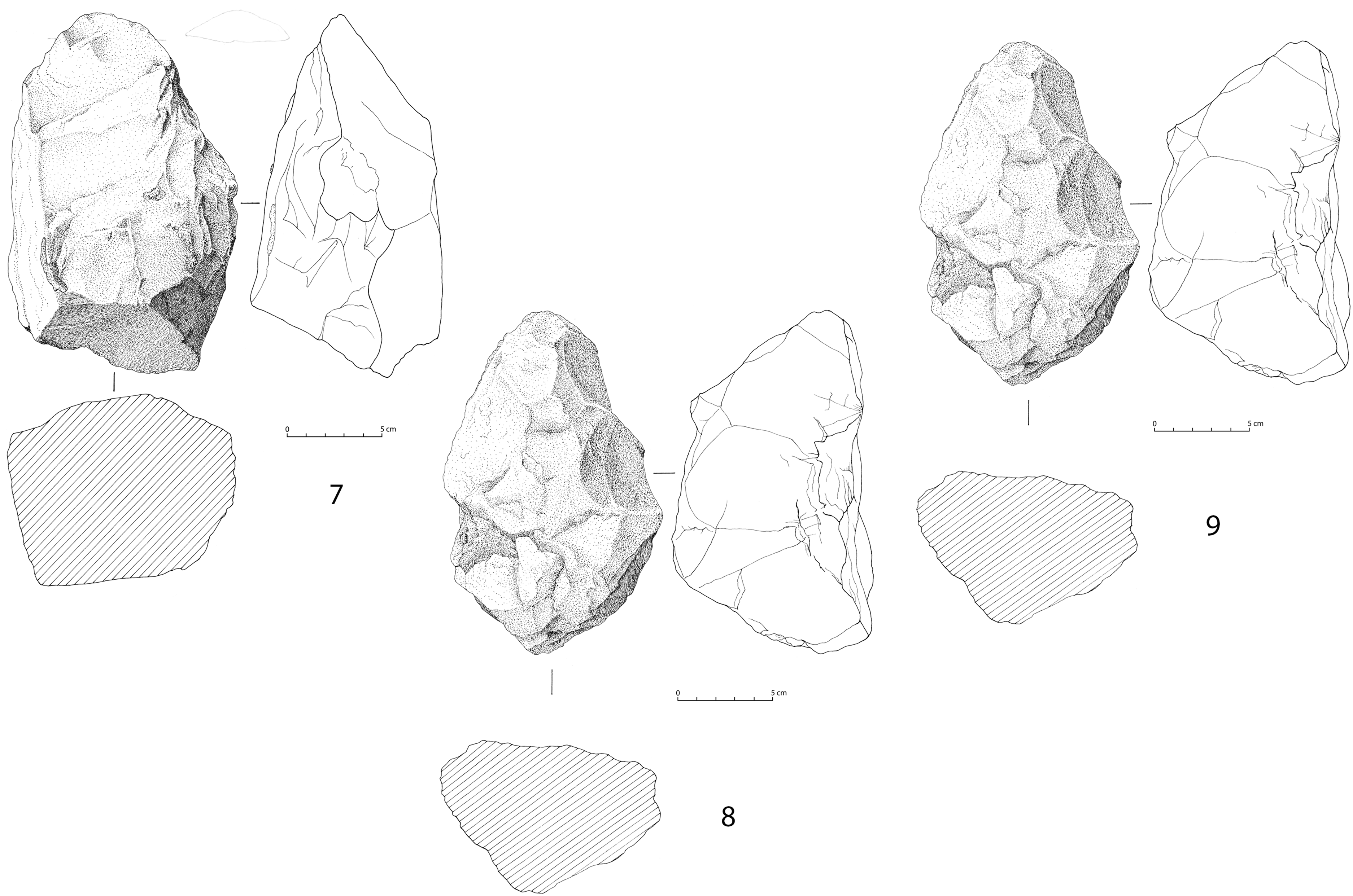
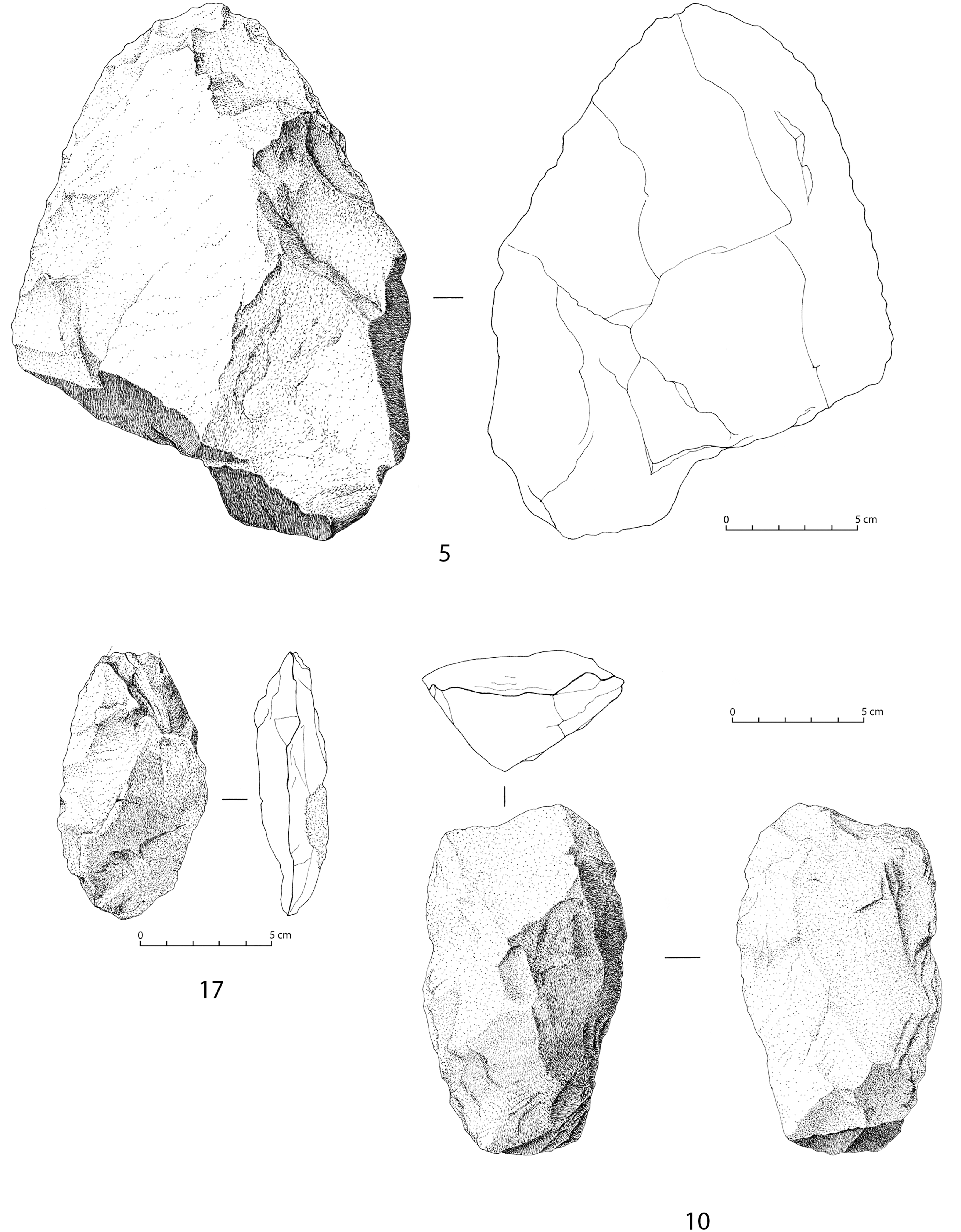
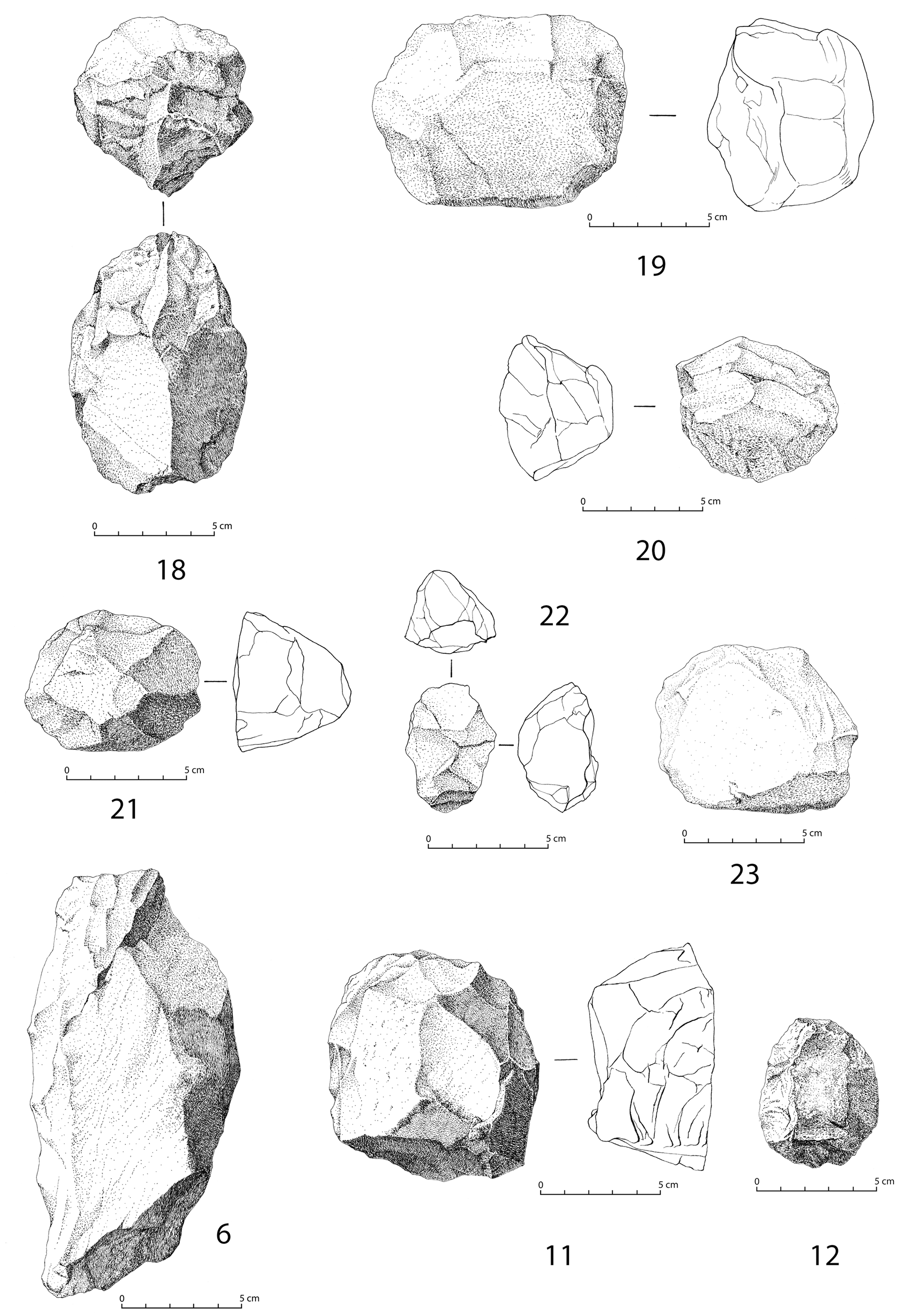
In accordance with practice at the time, the lithic analysis focussed on tools rather than debitage. However, sufficient information about the debitage was recorded to generate summary information aligned with more recent quantitative analytical methodologies (Basell & Spinapolice Reference Basell and Spinapolice2024). Posnansky selected a range of artefacts for illustration which characterise the principal lithic categories recovered from Nyabusora (Table 1; Figures 7–11). The results are presented below by site. Supporting graphs are available in Supplementary S2.
List of artefacts selected by Posnansky in 1967 for illustration as representative of the Nyabusora assemblage. 1–12 and 25 are Site A; 13–24 are Site B. Length, breadth and thickness are given in mm.
Knives and polyhedroid; see Table 1 for details (drawing: J.A. Newcomer; digitised by L. Basell, L. Mulqueeny).
Handaxes; see Table 1 for details (drawing: J.A. Newcomer; digitised by L. Basell, L. Mulqueeny).
Picks; see Table 1 for details (drawing: J.A. Newcomer; digitised by L. Basell, L. Mulqueeny).
Handaxes and core axes; see Table 1 for details (drawing: J.A. Newcomer; digitised by L. Basell, L. Mulqueeny).
Choppers and core scrapers; see Table 1 for details (drawing: J.A. Newcomer; digitised by L. Basell, L. Mulqueeny).
Site A
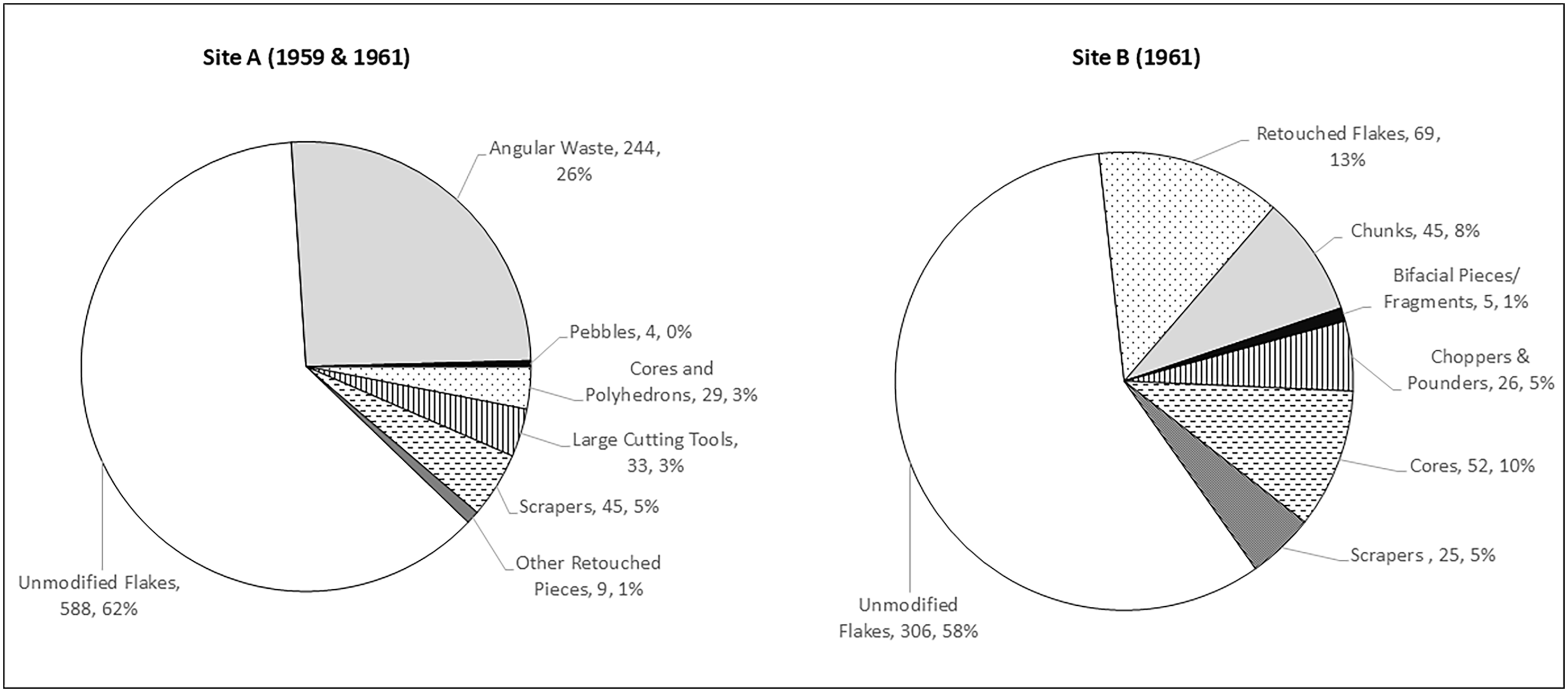
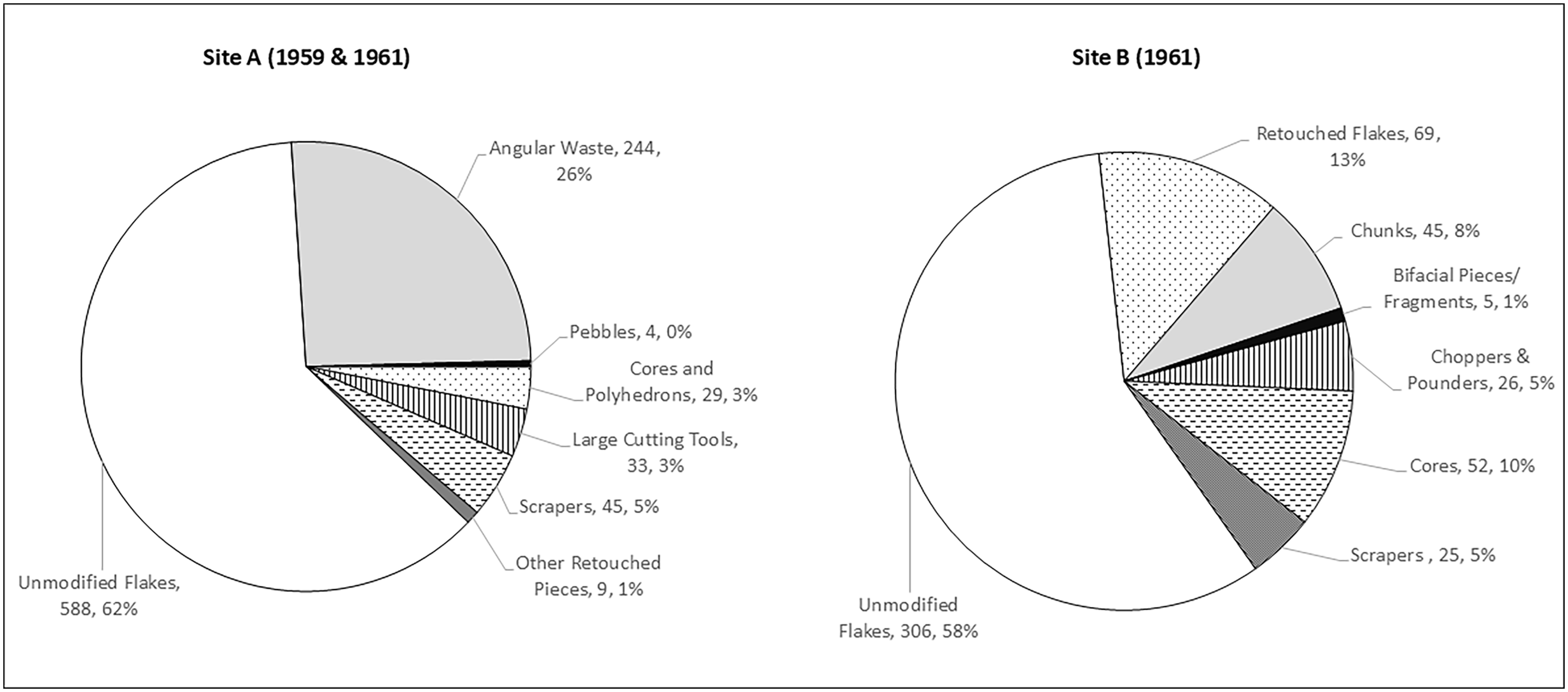
More than half the lithics recovered from Site A were unmodified flakes, approximately a quarter were angular waste/chunks, with the remainder comprising cores, polyhedrons, bifaces, various retouched pieces, and four pebbles (Figure 12).
Breakdown of the Nyabusora lithic assemblages from a) Site A and b) Site B.
Cores and polyhedrons
Twenty-seven cores were recovered, representing 2.8% of the assemblage (Figure 12). Seventeen (67%) were quartzite, nine (33%) were quartz (Figure S2.1). Despite the small sample size, quartz cores are all <10 cm, while quartzite cores are represented in all size categories up to 20 cm maximum linear dimension (MLD). Over 60% of cores are tabular or angle cores. The remainder are amorphous, residual, or disc cores. Both disc cores are described in the notes as ‘unstruck’, indicating Posnansky considered preparation had occurred, but no attempt was made to remove a final flake (Figure 11.22). Two polyhedrons were recorded from the 1959 excavations and none from 1961. One had dimensions of 85 x 76 mm, the other is illustrated (Figure 7.24). Posnansky described these as ‘pounders’ and considered they had been used both to generate flakes and as potential tools/hammerstones.
Debitage
Notes on the 1959 excavations recorded 96 flakes where raw material or size attributes were missing. It is unclear whether further attributes for these flakes were recorded elsewhere, or if this information was never gathered. For both excavation years, the consistent pattern is that most unmodified flakes are 1–5 cm, with a smaller proportion of 5–10 cm and no flakes exceeding 10 cm (Figure S2.2). Of the total unmodified flakes, 58% are quartzite, 26% were not distinguished (assumed to be quartzite), and 16% were quartz.
Despite minor differences between the analytical units used for unmodified flakes between 1959 and 1961, miscellaneous trimming flakes and chunk flakes dominate in both raw material categories, and cortical and prepared flakes are minimal. No further information was recorded for the abundant angular waste (244 pieces). Four pebbles were noted, but their size and whether they were hammerstones was not recorded.
‘Large cutting tools’ (LCTs) and other retouched pieces
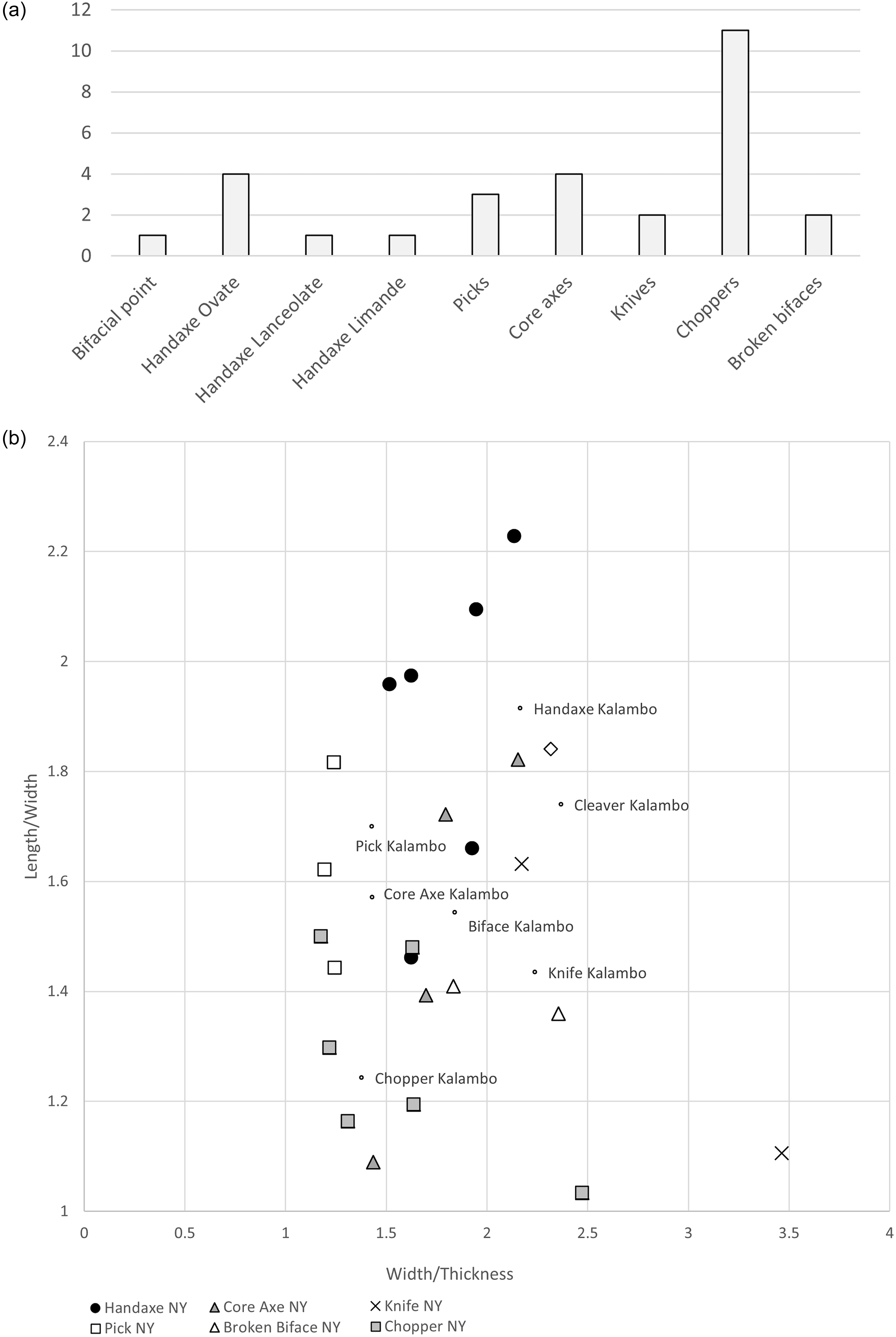
The remaining lithics are quartzite LCTs, or comparatively small flakes with peripheral modification. These comprise a small proportion of the assemblage, but were recorded in more detail. Some LCTs are on flakes, others on slabs or chunks. LCT categorisations are illustrated in Figure 12a and are similar to those made for the LCTs at Kalambo Falls (Sheppard & Kleindienst Reference Sheppard and Kleindienst1996; Gowlett et al. Reference Gowlett, Crompton and Yu2001; Clark Reference Clark2001). The bifaces are dominated by choppers, handaxes (forms include ovates, a lanceolate, and limande), and core axes. Some biface fragments were found. Picks and knives are represented in the assemblage alongside a single bifacial point (possibly Figure 8.15).
Retouched pieces occur in all size categories (0–5, 5–10, 10–15, and 15–22 cm) but are most commonly 0–5 and 5–10 cm. The majority are quartzite. All retouched pieces were on flakes with the exception of one modified chunk. Most retouched flakes are scrapers of multiple types. These have been grouped into four generic categories (‘Other’, ‘Double’, ‘Core’, and ‘Side’; Figure S2.3). Side and other scrapers are most common. Other retouch types include notches, a proto-burin, and two possible tanged pieces. Interestingly these are on quartz, but were not illustrated beyond a rapid notebook sketch of one of the tanged pieces.
Site B
The assemblage recovered from Site B in 1961 is dominated by unmodified flakes (Figure 12b). Angular waste is not noted, but 45 chunks were recorded.
Cores and polyhedrons
One pounder was found at Site B and more cores (52) than at Site A (Figure 12). Of these, 90% were quartzite and 10% were quartz. The majority of the quartzite cores are in the smaller size classes (0–5 and 5–10 cm), while the quartz cores range between 5–15 cm. As for Site A, angle and amorphous cores dominate. There are six disc cores and five ad hoc cores with just a few flake removals (Figure S2.4).
Debitage
Quartzite dominates the raw material. Of the unmodified flakes, 73% are 0–5 cm with nearly all remaining flakes being 5–10 cm (Figure S2.5). Of these the majority are miscellaneous trimming flakes and chunk flakes. However, 25 cortical flakes and a few prepared flakes are present. There were also 45 ‘chunks’, comparable to Site A’s ‘angular waste’ category (Figure S2.5).
‘Large cutting tools’ and other retouched pieces
Three broken bifacial tool-tips (one quartz and two quartzite) were found at Site B, with two bifacially worked quartzite pieces. One was 60 x 41 x 17 cm and the other 57 x 50 x 33 cm. The latter is described as a very chunky point with two crushed edges. Otherwise choppers dominate this category, further subdivided into types (Figure S2.6). Posnansky thought several had been used as cores first, and noted the side chopper and pounder as having very heavily worn ends. These could have been used as hammerstones. Most choppers are categorised as ‘chunk’ choppers on quartzite. Otherwise there are 89 flakes and chunks exhibiting marginal retouch (Figure S2.7a). Overall, retouched chunks on quartzite are the most common. Of the flakes, notches on quartzite dominate. As at Site A, the only formal category (beyond LCTs) are scrapers made on flakes, chunks, and cores (Figure S2.7b).
Fauna
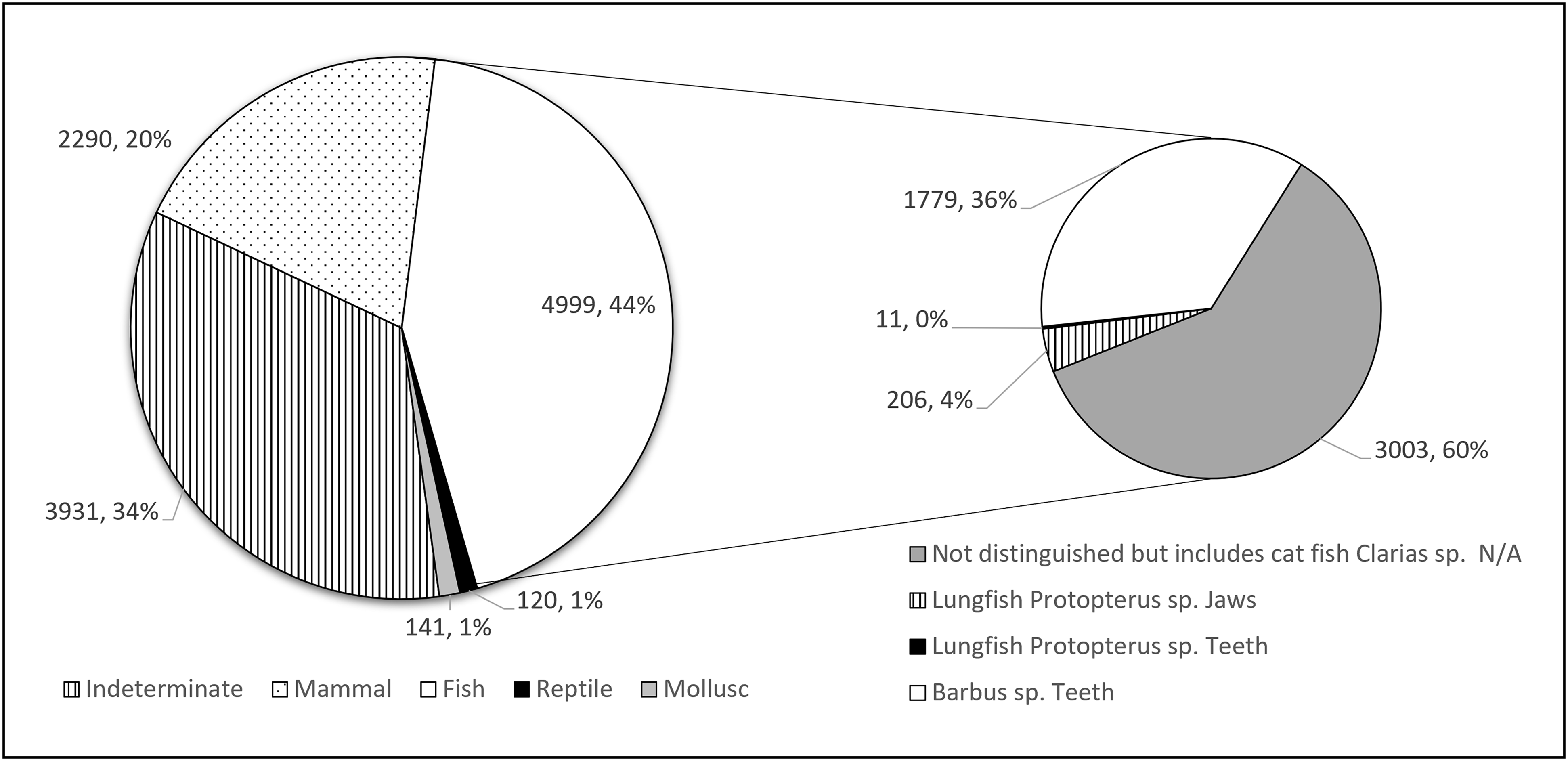
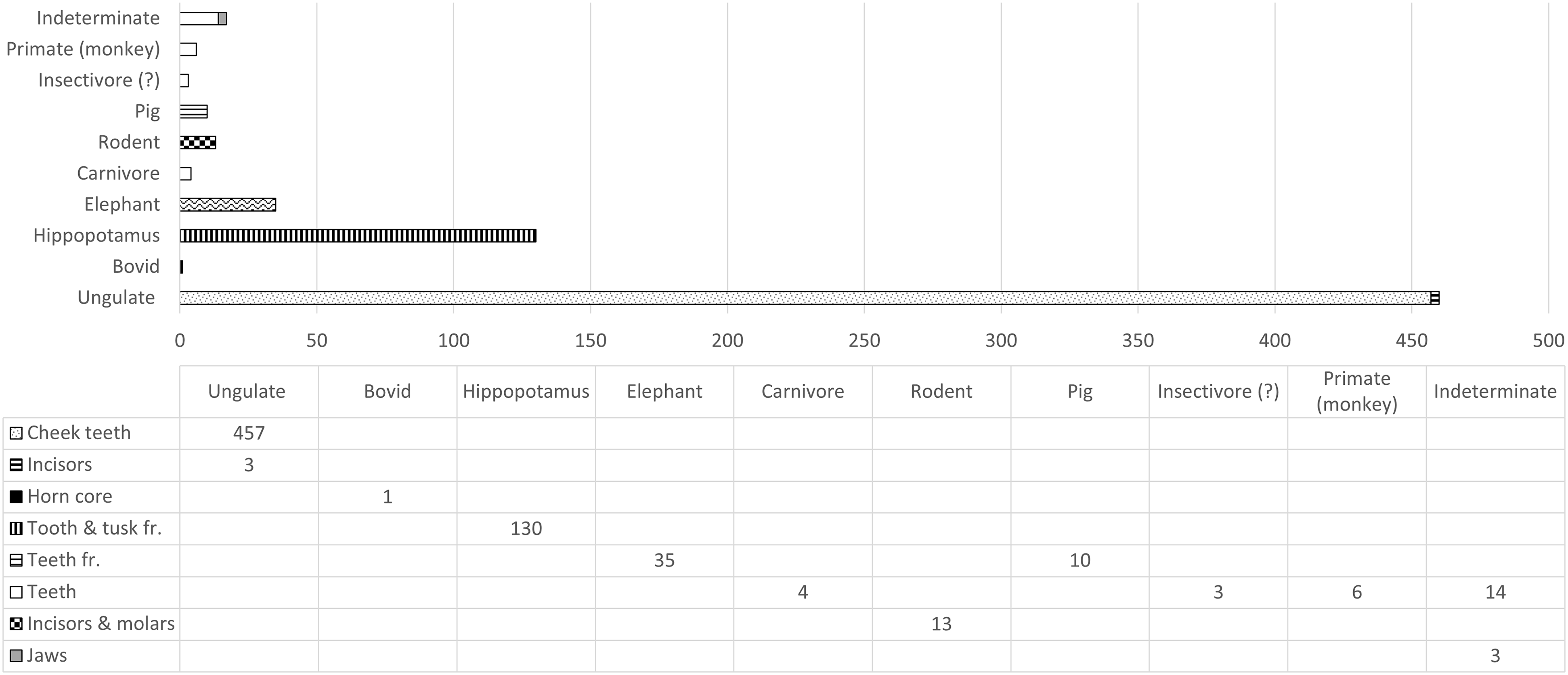
Nyabusora is unusual in that faunal remains were preserved in direct association with lithics in the oval depression at Site A (Figure 3b). The horizon is a discrete gravel about ∼23.47 m above the river (Bishop Reference Bishop1969; Supplementary S3). Bishop (Reference Bishop1969, 91–7) completed a basic faunal analysis of material from the 1954, 1959, and 1961 excavations, which all came from this restricted location, and published lists. Figures 13 and 14 summarise these data.
Composite proportions of faunal remains collected by Wayland (356), Spurr (169), and Bishop and Posnansky (11,481) (after Bishop Reference Bishop1969, 93; graph: L. Basell).
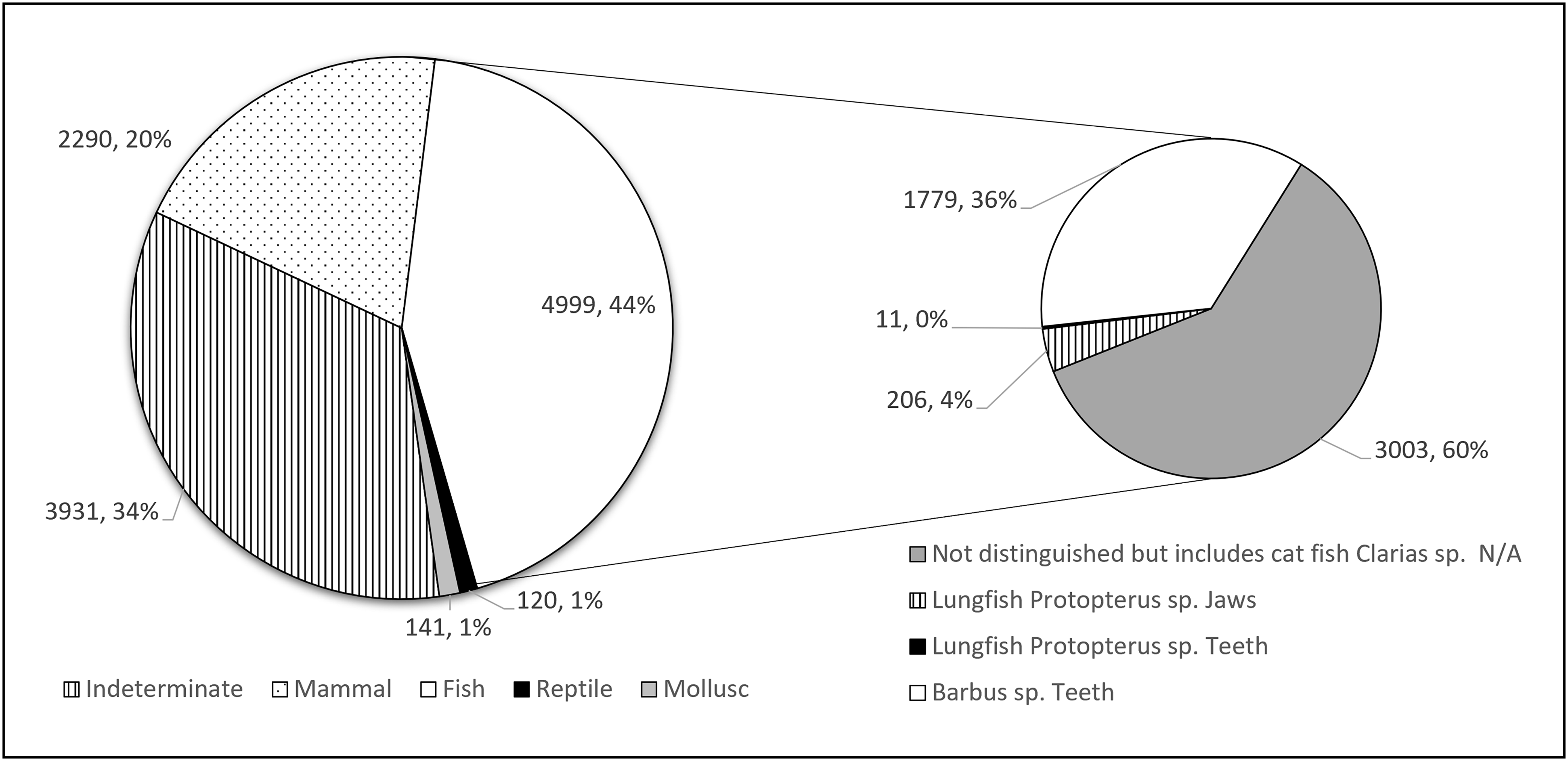
Breakdown of mammals by species based on horn cores and teeth (after Bishop Reference Bishop1969; graph: L. Basell).

To date, our attempts to relocate the faunal assemblages in Africa and at the Natural History Museum (NHM), London, have been unsuccessful, though several avenues are still being pursued. Posnansky’s archive indicated 2925 bones were ‘sent to Dr W.W. Bishop, Glasgow University’, but Posnansky was sure that Bishop sent these on to the NHM. There, fossils exist from a site known as ‘Nyakasura’, collected by Wayland in the 1930s on the ‘Kajera River’, but further investigation is needed to ascertain whether this is Nyabusora. The date of collection is too early for the bones sent to Bishop. NHM archives also contain a 1954 report by Wayland indicating ‘All specimens […] have been sent to the Geological Survey Dept., Dodoma, Tanganyika’ (Brewer pers. comm. 2015). This corresponds with a letter sent from Bishop to Posnanksy in 1968 stating that ‘The Tanzania Commissioner for Geological Survey kindly made available specimens collected from Nyabusora by Wayland and Spurr in 1954’ (Posnansky, unpublished archive) and Wayland’s published account (Reference Wayland1954, 4, 19). The location of the 1959 and 1961 bones therefore remains unresolved.
Archival research also identified elephant teeth recovered from a now obscured exposure of fluvial gravels at Kikagati (Figure 1), exposed during the construction of a hydroelectric dam upstream of Nyabusora. This spectacular ∼18 m section of clearly bedded and relatively fine-grained ‘basal’ fluvial sands and gravels of the 100’/30.5 m terrace, which was resting on ‘“fossil” granite cascades’, must have taken considerable time to accumulate (O’Brien Reference O’Brien1939). As elephant teeth were reported as having come from the base of the fluvial deposits resting on bedrock, Basell sought to relocate them. The basal fluvial deposits indicated a westerly flow direction and therefore pre-date the reversal of the Kagera. Following discussions with Adrian Lister and Juha Saarinen, the teeth have been relocated in the stores of the NHM London (Figures S4.1–2). Direct examination of these suggests they are Elephas recki shungurensis, a species bridging the Pliocene and Early Pleistocene, whose dated record currently spans 3.2–2.3 Ma (Hopwood Reference Hopwood1939; Cooke & Coryndon Reference Cooke, Coryndon, Leakey and Savage1970; Maglio Reference Maglio1973; Sanders Reference Sanders2023; Saarinen & Lister Reference Saarinen and Lister2023; Lister & Saarinen pers comm. 2025). The implications of this discovery are explored in the discussion below.
2014 Research and site re-location
Between July and August 2014, Basell drove a small research team from Kenya through Tanzania, Rwanda, and Uganda to visit the Geological Survey in Dodoma and conduct survey along the Kagera. The visit to the Geological Survey of Tanzania (GST) in Dodoma aimed a) to locate unpublished documentation relating to Stone Age sites within the Kagera catchment (particularly Spurr’s (Reference Spurr1955) report cited by Wayland and Bishop) and b) to determine whether any faunal material reportedly sent there remained extant and accessible (Bishop Reference Bishop1969). The first objective was achieved; however, no fossil material attributable to Wayland, Spurr, Bishop, or Posnansky was found. Given the GST’s relocation to new premises, these specimens were probably lost, destroyed, or transferred to one of Tanzania’s museums.
Several unpublished geological reports and maps of broader relevance were identified, including Spurr’s report, telegrams from contemporary academics, and correspondence between Spurr and Wayland. Draft versions of Spurr’s report, annotated by both researchers, were recovered and photographic records were made. Spurr’s stratigraphic records along a nine-mile stretch of the Kagera remain amongst the most detailed undertaken to date. They provide valuable insights into disagreements regarding stratigraphic interpretation and correlation of levels. Bishop (Reference Bishop1969), like Wayland, criticised Spurr’s work, expending considerable effort to clarify Spurr’s survey results, concluding that they were erroneous and his proposed climatic–stratigraphic correlations unsubstantiated (Bishop pers. comm. to Posnansky).
Survey along the Tanzanian portion of the Kagera sought to relocate the excavations and establish the potential for renewed investigation. Examination of satellite imagery indicated the dramatic expansion of sugar cane plantations and it was unclear whether the old road had been re-routed. This would have hindered relocation, since sites were recorded by distances along roads (ie, Bishop (Reference Bishop1969) refers to the site as ‘Mile 8 ½ K.P. – N Road’, so, 8 ½ miles (13.27 km) along the road from Kagera Port towards Nsongezi). Our survey established the road was still extant, the land south of the road remained uncultivated. By matching hill gully shapes with a print of Figure 4, and after several days’ survey with local collaborators, we identified the precise location, as none of the trenches had been backfilled. Supplementary S3 shows images of the site in 2014 (Figures S3.1–2). Abundant bone fragments and lithics were found near the old trenches, alongside extensive iron pan layers seen in erosion surfaces (eg, Figures S3.3–4). Bone fragments and lithics were observed at multiple locations in the wider vicinity alongside recent (probably Iron Age) archaeological sites. No material was collected, as this was a reconnaissance trip, but GPS readings were taken.
Broader regional survey on both sides of the Kagera established that superb sections through the fluvio-lacustrine deposits suitable for palaeoenvironmental analyses are still extant and identified several new archaeological sites. The impact of road construction and industrial-scale extensions to the sugar cane plantations in both areas is significant. Plantation extension involves savannah clearance, then extensive burning, before heavy machinery prepares the land for cultivation. Such activities are rapidly destroying large areas of high archaeological potential with no mitigation. Once the sugar cane has been planted, survey is impractical (eg, Figure S3.5).
Nyabusora interpretation
Lithic interpretation
The lithics were made from grey quartzites and quartz probably sourced from nearby hilltops or downslope deposits. A tabular dark grey quartzite dominated, though river cobbles or slabs may also have been used. Lithics from both sites were dominated by debitage in fresh condition, suggesting knapping occurred very close to Sites A and B. Posnansky thought this would be on the uphill side, though the depth of overburden precluded further excavation. Cortex recognition was challenging given the tabular form of the quartzite. The low frequency of cortical flakes, combined with the dominance of small flakes (0–5 cm), suggests that the assemblage represents the later stages of the chaîne opératoire, associated with tool refinement or maintenance. The majority of unmodified flakes are miscellaneous trimming flakes, and the very low proportions of retouched or ‘utilised’ flakes and cores suggest most of the unmodified flakes are waste products from production or modification of the LCTs.
In relation to the number of LCTs (33) and cores/polyhedrons (81), the debitage quantities are low. In a knapping experiment, Mark Newcomer (Reference Newcomer1971) generated 51 larger flakes, and >4,600 small flakes and chips (all >1 mm), producing a flint handaxe of 230 g. The Nyabusora bifaces are quartzite, so not as refined as Newcomer’s, but some of the smaller examples are comparable in final size (eg, A61206/65 = 170 g); others are significantly bigger (eg, ovate A61202/1 = 1.02 kg and pick A61216/17 = 2.32 kg) (Table 1). All excavated deposits from the fossil-bearing depression were sieved, ensuring the recovery of small flakes, though not necessarily microdebitage. Flakes were retrieved by hand from all other excavated areas.
Assuming (for heuristic purposes) a conservative estimate of 50 flakes per LCT would result in a total of 1683. This does not include small flakes and chips, or flakes generated from cores. Site A yielded ∼1000 fragments and Site B ∼1350. The debitage appears too sparse to reflect the full production of the 33 LCTS (all Site A) and flakes generated from 81 cores/polyhedrons (both sites). The reasons for this may include partial excavation of the knapping area, raw material differences, transcription inconsistencies, taphonomic factors (reducing numbers) or distance from a primary knapping area (spatial variability), trampling (potentially increasing debitage counts, though see Herzlinger et al. Reference Herzlinger, Pinsky and Goren-Inbar2015), and human agency (eg, flake removal or later stage chaîne opératoire representation). Based on a combination of sedimentology, restricted vertical artefact distribution during excavation, and fresh artefact condition (which contrasts with the fauna), we suggest the lithic assemblage is in a proximal context (Brown et al. Reference Brown, Basell, Toms, Bennett, Hosfield and Scrivener2010). It represents the later stages of the chaîne opératoire. The lack of spalls and microdebitage is probably the combined result of taphonomy and excavation methodology. Further excavation would be required to verify this.
Flakes were largely unmodified, though five flakes from 1961 showed signs of ‘utilisation’. The assemblage incorporates debitage and tools <50 mm. The small tool component includes >40 scrapers alongside a few notched pieces, points, and possible tanged pieces which unfortunately were not illustrated (Figure S2.3). There is no clear evidence of Levallois or blade production at Nyabusora. Levallois, while rare at Sangoan sites, is for example known from Simbi in Kenya and Cole’s ‘Sangoan-like’ assemblages from the mbuga silts and clays of Isimila (McBrearty Reference McBrearty1992; Kleindienst et al. Reference Kleindienst, Blackwell and Skinner2024). Levallois is more common in Fauresmith (southern African equivalent to the Sangoan) and Lupemban (post-Sangoan) assemblages (Clark Reference Clark2001; Clark & Brown Reference Clark and Brown2001; Herries Reference Herries2011; Wilkins et al. Reference Wilkins, Schoville, Brown and Chazan2012; Taylor Reference Taylor2022). Points and scrapers are also known in Acheulean assemblages (Gowlett et al. Reference Gowlett, Brink, Herries, Hoare, Rucina, Wojtczak, Al Najjar, Jagher, Elsuede and Wegmuller2017), and variation in tanged Aterian tools in north Africa supports a hypothesis that such tools were hafted knives or scrapers (Iovita Reference Iovita2011).
Most LCTs at Nyabusora are heavy and crudely worked, though the assemblage also includes finely-made handaxes (large and small), core axes, picks, and a bifacial point. Posnansky observed strong similarities to the handaxes from Isimila and Olorgesaille. He argues this is not a purely Acheulean assemblage, noting ‘early Sangoan elements’ and comparing the assemblage with the Nsongezi M-N horizon and Sangoan levels at Kalambo Falls (Bishop Reference Bishop1961, 29). Categorisation followed Clark’s (Reference Clark2001) techno-morphological definitions to facilitate comparison with Kalambo Falls. How far these categories reflect hominin choices or analytical frameworks is debated (Lioubine & Guédé Reference Lioubine and Guédé2000; Taylor Reference Taylor2022). However, based on average length/width (L/W) and width/thickness (W/T) ratios, the LCTs from Nyabusora are broadly comparable to Kalambo Falls (Figure 15).
Site A Nyabusora a) LCT categories; b) Form of Site A LCTs from Nyabusora (NY, where dimensions known) in comparison to average ratios of major tool categories from Kalambo Falls (after Sheppard & Kleindienst Reference Sheppard and Kleindienst1996).
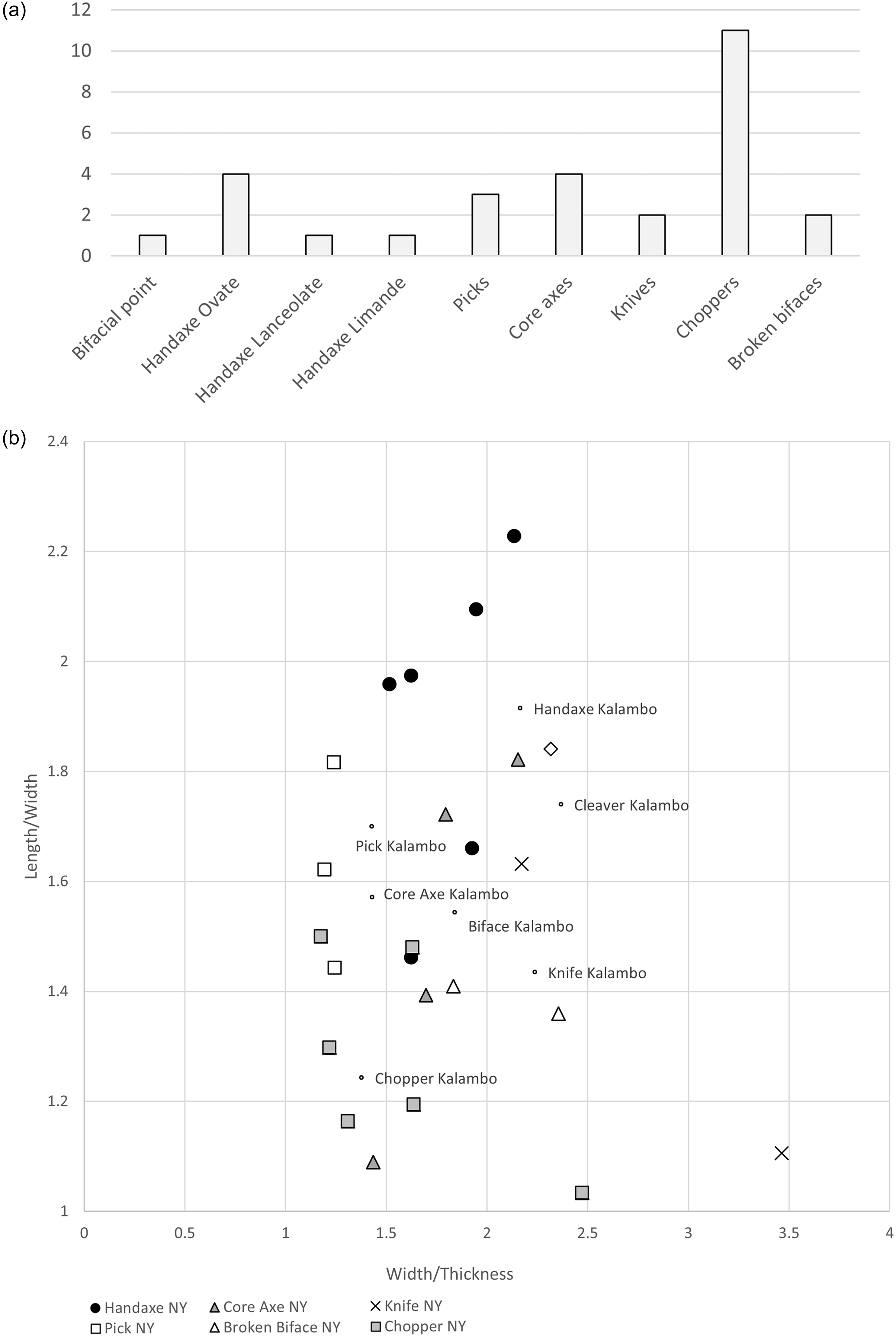
LCT metrics are often used to infer cognitive abilities and skill levels (eg, McPherron Reference McPherron, Nowell and Davidson2000; Moore & Perston Reference Moore and Perston2016), though newer recording techniques are reshaping interpretations of identifying lithic skill (Herzlinger et al. Reference Herzlinger, Wynn and Goren-Inbar2017; Muller et al. Reference Muller, Shipton and Clarkson2022; Reference Muller, Sharon and Grosman2025). Despite limited metrics, comparison of Nyabusora with other African LCTs remains informative (McNabb Reference McNabb2021) (Figure 15). The Nyabusora handaxes align with other African assemblages in L/W ratios and elongation (McPherron Reference McPherron, Nowell and Davidson2000, figs 2–3), (Figures S2.8–9), generally exhibiting large, elongated forms consistent with later Acheulean shaping strategies. The small handaxe fits within African Acheulean variability (Gowlett et al. Reference Gowlett, Brink, Herries, Hoare, Rucina, Wojtczak, Al Najjar, Jagher, Elsuede and Wegmuller2017). Functional explanations for Nyabusora’s large elongate forms include a deliberate emphasis on symmetry and edge extension, a solution to ensuring the handaxe remains lightweight and manageable, and/or a consequence of the raw material blank type (Crompton & Gowlett Reference Crompton and Gowlett1993; Jones Reference Jones, Leakey and Roe1994; Muller et al. Reference Muller, Sharon and Grosman2025). Quartzite requires significantly higher forces to initiate flake removal than silcrete or quartz, which can make thinning challenging (Schmidt et al. Reference Schmidt, Pappas, Porraz, Berthold and Nickel2024). However, this did not prevent thinning of the Nyabusora examples for which data are available, and the use of large blanks and metamorphic raw materials for biface production is common in the Acheulean of eastern Africa (Key et al. Reference Key, Proffitt and de la Torre2020; Favreau Reference Favreau2023; Wilson et al. Reference Wilson, Caruana, Bradley, Muir, Blackwood and Herries2024).
Picks show lower W/T ratios, indicating thicker, more robust forms for heavy-duty tasks. Their L/W ratios resemble core axes, but core axes differ by having a W/T ratio comparable to handaxes. This suggests a different functionality that combines mass for durability with sufficient edge preparation for cutting or shaping activities. Since elongated forms are more likely to suffer end shock, flex or vibrate, and snap in two when struck (Jones Reference Jones, Leakey and Roe1994; Whittaker Reference Whittaker1994), it would be interesting to explore whether quartzite permits greater elongation than other raw materials due to its mechanical fracture properties. Choppers generally conform to expectations for expedient core tools. The higher W/T ratios may be a function of raw material forms. A single point has an L/W ratio exceeding 1.8, placing it at the upper end of the handaxe elongation range. Its W/T ratio of 2.3 surpasses both handaxes and core axes. This outlier may represent an early example of hafted projectile technology or a specialised cutting tool.
Stratigraphy
The stratigraphy at Nyabusora was recorded by Wayland (Reference Wayland1954), Spurr (Reference Spurr1955), and Bishop (Reference Bishop1969). Only Wayland’s and Bishop’s interpretations were published. Spurr’s report contains excellent stratigraphic logs and consideration of Kabua or Kabuer Hill. In 2014 we also noted this significant geomorphological feature, which must once have been an island within Lake Victoria-Nyanza (Figure S3.5). Archival work on the historic correspondence between Spurr and Wayland, and Bishop’s comments on Spurr’s work, highlight significant issues with his levels. Resolving height discrepancies was beyond the scope of our 2014 survey, but relocation of Posnansky and Bishop’s trench A indicates the elevation as 1179 m (halfway between Bishop and Spurr’s bone bed levels; see Supplementary S3 for details). The sequence was confirmed as a series of silts, sands, clays, and diatomites, which remain extant (Figure S3.6). Accurate high-specification ground-based geomatic survey of the relative heights of different features and deposits at Nyabusora, and between geoarchaeological sites along the Kagera, is essential in future research.
Bishop’s skilled survey and interpretations of the sequence at Nyabusora and its relationship to the region’s wider fluvio-lacustrine geomorphology remains the clearest explanation of the site’s stratigraphy. As a working hypothesis it provides an excellent starting point for future work. Historical accounts suggest large, coeval artefact horizons across the catchment (ie, correlation between Nsongezi and Nyabusora, which are ∼40km apart). This is problematic. Even at sites like Olorgesailie, famous for their large spreads of artefacts over ∼12km2, distributions are often patchy, and historically excavators only sampled small areas of ∼15 m and multiple different horizons (eg, Isaac & Isaac Reference Isaac and Isaac1977; Potts et al. Reference Potts, Behrensmeyer, Deino, Ditchfield and Clark1999). Understanding the relative ages, stratigraphic sequences, levels, geomorphological and tectonic relationships between artefact horizons at different locations within the Kagera catchment will require a combined landscape strategy of high-specification, ground-based geomatic survey, geochronological dating, and palaeoenvironmental analysis. Proof of concept sampling is scheduled for 2025.
For now, the interpretation is that at various intervals, the shallow lake waters advanced up the Kagera River channel, fluctuating in response to seasonal variation and rainfall intensity. Bishop’s map (Figure 2) serves as a valuable baseline for hypothesis testing, providing a reference point for comparison with fieldwork and scientific investigation. Diatomaceous deposits suggest periods of still or low-energy conditions related to relatively stable water columns within the fluvio-lacustrine sedimentary sequence. These could be lake highstands or lower energy phases. Fluvial input into the Kagera Valley originated from both flanks, with episodic slope runoff contributing to the development of cross-bedded sedimentary structures observed in some stratigraphic units.
Fauna and fire
Based on the combined available evidence, our interpretation is that at times when the lake extended towards the junction of the Orichinga with the Kagera River, hominins were active at Nyabusora. As the lake receded, shallow ponds allowed fishing by hand in the muddy, shallow water. This draw-down effect would have occurred repeatedly. Posnansky, Bishop, and Basell all considered it likely that sites similar to the shallow pond at Nyabusora exist elsewhere in the vicinity.
Fires may have been used to dry or cook fish and game, though evidence remains equivocal. The comminuted and blackened bones led Posnansky and Bishop to interpret the assemblage as food waste resulting from human activity. They described the deposit as a midden, noting the presence of molluscs alongside a diverse range of terrestrial species (Bishop Reference Bishop1969, 94) (Figures 13–14). Basell allows for this interpretation but notes the blackening may result from manganese staining. We emphasise the need for further sedimentological, chemical, and taphonomic analysis before attributing the remains to hominin activity.
Lungfish (Protopterus annectens) are an intriguing species in this context. Although there is no direct archaeological evidence confirming their exploitation at Nyabusora, their association with stone tools suggests the possibility. These omnivorous fish thrive in stagnant waters, endure droughts, and potentially provided dry-season nutrition (Otero Reference Otero2011) (Supplementary S4). Clarias, an air-breathing, predatory catfish, can live out of water for extended periods, and possesses the ability to ‘walk’, often moving at night (Graham Reference Graham1997). Barbus, which was also recovered, remains commercially significant in the region today. It is an omnivore inhabiting a wide range of freshwater habitats from lakeshores to fast-flowing rivers (Mwanja & Mkumbo Reference Mwanja and Mkumbo2010). While more work is required to establish the precise relationship between the archaeological artefacts and the faunal assemblages, these remains offer excellent potential for clarifying the region’s long-term palaeoenvironmental sequence. Pleistocene fish remains are very rare, but the restricted species representation is similar to a Pleistocene assemblage reported from the Ruburu River, a tributary of the Kagera upstream of Nyabusora in Tanzania (Stewart et al. Reference Stewart, Kovalchuk, Goskova and Pogodina2019).
Wider relevance and future research
This research has significant implications for understanding Quaternary landscape evolution and palaeoenvironmental change in the western Lake Victoria-Nyanza Basin. The stratigraphic data from Nyabusora indicate a different depositional environment from the fluvial setting of Rubirizi (Basell & Brown Reference Basell and Brown2012) and from the complex exposures at Nsongezi which include reworked deposits (Basell pers. obs.). Disagreements among researchers stem from oversimplified correlations between discontinuous exposures; the unavailability of chronometric dating and reliance on artefact typology; differing depositional interpretations; levelling errors; and comparisons with poorly resolved or distant sites lacking chronological control (eg, Nzongezi).
Though Bishop made significant efforts to overcome these problems, the issues are reminiscent of those at similar fluvio-lacustrine landscapes with significant artefact spreads, such as Olorgesaille and Isimila (Potts et al. Reference Potts, Behrensmeyer, Deino, Ditchfield and Clark1999; Kleindienst et al. Reference Kleindienst, Blackwell and Skinner2024). At Nyabusora the sequence indicates fluctuating conditions potentially incorporating former high stands of Lake Victoria-Nyanza (Figure 2). Based on sediment depth and deposition rate, the Victoria-Nyanza Basin is estimated to have formed in the mid-Pleistocene around 400 ka (Johnson et al. Reference Johnson, Kelts and Odada2000). Seismic surveys of Lake Victoria-Nyanza in the 1990s indicated lacustrine sediments up to 60 m thick, exhibiting desiccation periods. Three buried erosion surfaces were identified, the most recent lying beneath ∼9 m of sediment (Johnson et al. Reference Johnson, Scholz, Talbot, Kelts, Ricketts, Ngobi, Beuning, Ssemmanda and Mcgill1996; Reference Johnson, Kelts and Odada2000; Scholz et al. Reference Scholz, Johnson, Cattaneo, Malinga, Shana and Lehman1998; Stager et al. Reference Stager, Mayewski and Meeker2002; Stager & Johnson Reference Stager and Johnson2008).
Bathymetric surveys also showed topographic variability beneath the lacustrine sediments. These have been interpreted as palaeochannels and may be headwater valleys of the Katonga and Kagera rivers eroded in the bedrock surface, representing pre-lake drainage pathways (Temple Reference Temple1966; Bishop & Trendall Reference Bishop and Trendall1967). High-resolution echo sounding detected a submerged valley near the mouth of the Kagera, but this did not continue across the lake and may well be a feature produced by internal drainage eroded into lake sediment during the last desiccation event (Scholz et al. Reference Scholz, Rosendahl, Versfelt and Rach1990; Bradley Reference Bradley2012).
Recent research has confirmed repeated drying of Lake Victoria-Nyanza, notably between 94 ka and 36 ka, creating C4 grassland ecosystems and resource-rich zones that facilitated human movement into and across the basin (Tryon et al. Reference Tryon and Reiners2016; Beverly et al. Reference Beverly, Peppe, Driese, Blegen, Faith, Tryon and Stinchcomb2017; Reference Beverly, White, Peppe, Faith, Blegen and Tryon2020; Blegen et al. Reference Blegen, Faith and Peppe2021). Christian Tyron et al. (Reference Tryon and Reiners2016) argue this environmental instability shaped human evolution, because shifting lake levels alternately isolated and reconnected populations, promoting regional genetic and cultural diversity. The extent to which regional climatic variability like this influenced broader patterns of hominin migration within and out of Africa remains uncertain.
Nyabusora holds considerable potential to enhance our understanding of palaeoenvironmental change in the western Lake Victoria-Nyanza Basin, to assess whether similar ecological shifts occurred in this region, and to evaluate their impact on hominin populations. This potential stems from its diverse sedimentary sequence (amenable to luminescence methods, tephra, and possibly radiocarbon dating, as well as numerous multiproxy palaeoenvironmental and geoarchaeological analysis techniques) and the associated faunal and archaeological remains. The presence of diatomites provides a key opportunity for palaeoenvironmental comparison with similar lacustrine deposits retrieved from sediment cores within Lake Victoria-Nyanza and across eastern Africa (eg, Stager et al. Reference Stager and Johnson2000; Reference Stager, Cumming and Meeker2003; Reference Stager, Ryves, Cumming, Meeker and Beer2005). Bone preservation is particularly exciting, as it offers more scope for nutritional niche modelling and understanding hominins’ role in these landscapes (Brown et al. Reference Brown, Basell, Robinson and Burge2013; Reference Brown, Basell and Farbstein2017).
The propagation of the western branch of the East African Rift System (EARS) led to the formation of the Lake Tanganyika and Malawi Basins. This process was accompanied by extension and rifting that is thought to have caused the reversal of the rivers Kafu, Katonga, and Kagera. Initiation of the EARS may have begun as early as ∼25 Ma to as recently as 12–10 Ma and a south-west trending drainage network is indicated for the Miocene (Nyblade & Brazier Reference Nyblade and Brazier2002; Roberts et al. Reference Roberts, Stevens, O’Connor, Dirks, Gottfried, Clyde, Armstrong, Kemp and Hemming2012; Hinderer et al. Reference Hinderer, Schneider and Stutenbecker2024). A study of the Katonga Valley supported historic interpretations that river reversals have occurred, but when and under what conditions the interfluve deposits and terrace sand and gravels were deposited is less clear (Bradley Reference Bradley2012). Although the exact timing of the Kagera’s reversal is still unknown, our relocation and identification of elephant teeth originally recovered from Kikagati at the base of the Kagera’s fluvial deposits offers the first chronological anchor for its fluvial sequences. This is critical in interpreting the archaeological sites, landscape dynamics, and hominin behaviour in the western Lake Victoria-Nyanza Basin.
Bishop and Trendall (Reference Bishop and Trendall1967) considered the lowest 3 m of coarse sediment at Nsongezi to have been deposited when the Kagera flowed westward, and thought the Kikagati deposits from which the elephant molars came were comparable to the basal deposits at Nsongezi. They suggested the overlying ∼15 m of mainly sand should be interpreted as post-reversal deposits. The rediscovery of the elephant teeth, species attribution, and associated chronological control therefore provide a terminus post quem of 3.2–2.3 Ma years for the Kagera flowing westwards. This is also pertinent to the wider regional geomorphology including the Kafu and Katonga (Bradley Reference Bradley2012). The dates are consistent with the proposed mid-Pleistocene age of ∼400 ka for the reversal of the Kagera, but suggest this could have occurred significantly earlier. The deposits at Kikagati are no longer accessible, but newly identified exposures along the Kagera River offer promising alternatives for future dating efforts to clarify the timing and nature of this major hydrological transformation.
Despite the age of the excavation and analysis, and current lack of dates, Nyabusora also offers insights into hominin behaviour. Bishop and Posnansky considered that hominins were drawn to pools of evaporating water for fishing, possibly hunting, and for use as watering holes. They linked the drying water bodies to lower levels in Lake Victoria-Nyanza but found insufficient evidence to determine if this reflected long-term climate, seasonal variation, or both.
Some of the heavy LCTs may have been used to dig for lungfish. More research is required to prove the nature of the faunal accumulation and its relationship to the archaeology, but all these ideas could be tested via renewed investigation of the site. Evidence for hominin exploitation of aquatic resources is known from 1.95 Ma, and their exploitation may have supported hominin populations during periods of aridity (Braun et al. Reference Braun, Harris, Levin, McCoy, Herries, Bamford and Kibunjia2010; Archer et al. Reference Archer, Braun, Harris, McCoy and Richmond2014). Aquatic resources offer substantial advantages, including high nutritional returns for relatively low energy investment, reduced technological demands for acquisition, diminished interspecific competition for carcasses, and lower predation risks compared to terrestrial food sources (Broadhurst et al. Reference Broadhurst, Wang, Crawford, Cunnane, Parkington and Schmidt1998; Cunnane & Stewart Reference Cunnane and Stewart2014; Joordens et al. Reference Joordens, Kuipers, Wanink and Muskiet2014; Will et al. Reference Will, Mackay and Phillips2016).
The age of Nyabusora is unknown, but the lithic assemblage made on abundant, locally available raw materials offers some indication. Beginning around ∼300 ka, LCTs such as handaxes were largely abandoned across much of Africa in favour of prepared core technologies (PCT) and hafted points (McBrearty & Brooks Reference McBreaty and Brooks2000; Barham et al. Reference Barham, Tooth, Duller, Plater and Turner2015; Brooks et al. Reference Brooks and Clark2018; Potts et al. Reference Potts and Renaut2018; Reference Potts and Uno2020; Timbrell Reference Timbrell2024). This transition marks the onset of what is conventionally termed the ‘Middle Stone Age’ (MSA), a widely debated but nonetheless useful term (Basell & Spinapolice Reference Basell and Spinapolice2024). Other novelties including pigment use, perforated shells, and a broadening of the dietary niche become common (Basell Reference Basell, Mitchell and Lane2013; Timbrell Reference Timbrell2024).
Nyabusora has a small tool component, but these are primarily scrapers generated from ad hoc discoidal and multi-platform cores rather than complex PCT such as Levallois. Although some elements may have been hafted, this is not a classic MSA assemblage dominated by PCT and multiple points, and LCTs remain common. As such it fits within the range of variability seen in eastern Africa during the later Middle Pleistocene. It aligns more closely with the raw material and technological preferences of Acheulean hominins than the earliest evidence for the MSA, which appears at Olorgesailie in Kenya between 320–305 ka, and is associated with long-distance material transport and new adaptive behaviours to large-scale changes in climate, fauna, and landscapes (Brooks et al. Reference Brooks and Clark2018; Deino et al. Reference Deino, Behrensmeyer, Brooks, Yellen, Sharp and Potts2018; Potts et al. Reference Potts and Renaut2018; Favreau Reference Favreau2023). Other sites, like the Kapthurin Formation, indicate a transition prior to 285 ka; and within a single depositional basin there are interstratified sites with Acheulian, Sangoan, Fauresmith, and MSA artefacts (Tryon & McBrearty Reference Tryon and McBrearty2002). Although the ESA–MSA technological shift is broadly associated with the emergence of early Homo sapiens morphology (Grün Reference Grün2016; Hublin et al. Reference Hublin and Gunz2017; Richter et al. Reference Richter, Grün and Joannes-Boyau2017), it remains likely that multiple hominin species co-existed in Africa at this time. There are many possible functional, social, or symbolic explanations for the array of techno-typological categories and wider patterns of technological experimentation represented at the ESA–MSA transition, after chronological and taphonomic explanations have been considered (Wurz et al. Reference Wurz, Van Peer, Deacon, Le Roux and Gardner2005; Basell Reference Basell2008; Reference Basell, Mitchell and Lane2013; Timbrell Reference Timbrell2024).
Posnansky always considered the Nyabusora lithics as ‘early Sangoan’, noting similarities to Isimila and Olorgesaille. The similarity of Nyabusora’s geomorphic context to these sites may in part explain the assemblage composition. The analysis presented here shows that the LCTs include both finely worked handaxes alongside the classic ‘heavy-duty’ picks and core axes typically associated with the Sangoan. The Sangoan is a poorly understood lithic industry associated with the ESA–MSA transition (see reviews in Basell Reference Basell2010; Reference Basell, Mitchell and Lane2013; Herries Reference Herries2011; Taylor Reference Taylor2022). It has defied neat classification due to its technological variability, lack of systematic prepared core methods, and emphasis on heavy-duty tools such as core axes and bifacial picks. Once argued to be limited to central Africa it has been reported from multiple locations in sub-Saharan Africa (eg, Davies Reference Davies1976; Lioubine & Guédé Reference Lioubine and Guédé2000; Tryon et al. Reference Tryon and McBrearty2002; Allsworth-Jones Reference Allsworth-Jones2010; Spinapolice et al. Reference Spinapolice, Zerboni, Meyer and Usai2018; Douze et al. Reference Douze, Lespez, Rasse, Tribolo, Garnier, Lebrun, Mercier, Ndiaye, Chevrier and Huyescom2021; Cancellieri Reference Cancellieri and di Lernia2022; Taylor Reference Taylor2022; Rosas et al. Reference Rosas, García-Tabernero, Fidalgo, Fero Meñe, Ebana Ebana, Ornia, Fernández-Martínez, Sánchez-Moral and Morales2025). We retain the term here, as a means of recognising the pre-understandings and assumptions researchers bring to interpretation and how these form part of the evolving conceptual scaffolding of archaeological enquiry (Basell & Spinapolice Reference Basell and Spinapolice2024). The term serves as a heuristic link across interpretive generations, in this case respecting the classificatory framework of the original excavators, while recognising that with improved dating and new analytical methods the term may cease to be useful.
Recent efforts have recast the Sangoan within a more nuanced framework of regional technological adaptations, challenging earlier typologically rooted models. By re-evaluating the Sangoan, Sangoan-Lupemban, and Sangoan ‘variants’ through updated stratigraphy, technological analysis, and paleoenvironmental reconstructions, scholars have sought to situate it within broader narratives of human behavioural plasticity and the emergence of MSA variability in sub-Saharan Africa (Tryon et al. Reference Tryon and McBrearty2002; Spinapolice et al. Reference Spinapolice, Zerboni, Meyer and Usai2018; Ssemulende et al. Reference Ssemulende, Kyazike and Lejju2021; Taylor Reference Taylor2022; Solano-Megías et al. Reference Solano-Megías, Maíllo-Fernández and Mabulla2024). Reliable palaeoenvironmental data directly associated with Sangoan assemblages are rare, and despite a range of approaches from use wear to distribution modelling, early associations of the Sangoan with wooded environments (a contrast to the Acheulean, considered as a savannah adaptation) remain inconclusive (Taylor Reference Taylor2022). Recent research demonstrates woodworking does not exert strong selective pressures on handaxe variability in the Acheulean (Gürbüz & Lycett Reference Gürbüz and Lycett2023), so the characteristic form of Sangoan bifaces is unlikely to relate to this. Further work is required to ascertain whether the flake components of Sangoan assemblages were used in woodworking (Gürbüz & Lycett Reference Gürbüz and Lycett2021 ).
Chronological control is also poor, but available dates span Marine Isotope Stages 8 to 6, and cluster between 500–160 ka BP (Lioubine & Guédé Reference Lioubine and Guédé2000; van Peer et al. Reference van Peer, Rots and Vroomans2004; Reference van Peer, Fullagar, Stokes, Bailey, Moeyersons, Steenhoudt, Geerts, Vanderbeken, De Dapper and Geus2003; Herries Reference Herries2011; Barham Reference Barham2012; Barham et al. Reference Barham, Tooth, Duller, Plater and Turner2015; Duller et al. Reference Duller, Tooth, Barham and Tsukamoto2015). At Isimila, chronology also remains challenging but the refined LCTs in the upper Lislamagasi Member are thought to correlate with Kalambo Falls and date to around 400–500 ka BP, while the lower Lukingi Member is dated by faunal correlation and ESR to between 500–900 ka BP. ‘Sangoan-like’ artefacts are known from the mbuga silts and clays which overlie the Lislamagasi Member (Kleindienst et al. Reference Kleindienst, Blackwell and Skinner2024).
The infrequency of small tools in Sangoan assemblages has prompted debate over their hafting suitability and whether the Sangoan represents a functional variant of the late Acheulean rather than a distinct MSA technocomplex, particularly given the presence of scrapers, points, and small handaxes in some Acheulean assemblages (Gowlett et al. Reference Gowlett, Brink, Herries, Hoare, Rucina, Wojtczak, Al Najjar, Jagher, Elsuede and Wegmuller2017). At some sites, the apparent lack of small tools may result from selective artefact retrieval or fluvio-lacustrine depositional contexts. This factor was carefully evaluated in the analysis of Kalambo Falls, which exhibits a small tool component bearing some MSA characteristics (Sheppard & Kleindienst Reference Sheppard and Kleindienst1996; Clark Reference Clark2001). Alternatively there may be social reasons for size variation. Within a group, individuals of any age or sex, including both adults and children, could have participated in tool production (cf. Gero Reference Gero, Gero and Conkey1991). Although very large LCTs may have posed practical challenges for smaller children to produce or use, diminutive bifaces suggest that children may have been actively involved in lithic manufacture. This possibility opens compelling avenues for considering how knowledge and skills were transmitted within groups.
In conclusion, Nyabusora’s value does not lie in its ESA/MSA attribution and the lithics cannot currently be associated with any specific hominin. It is important because it is an extremely rare example of a potentially Middle Pleistocene site that preserves faunal remains in direct association with lithics in a fine-grained sedimentary sequence which can be directly linked to palaeoenvironmental fluctuations. The site was well excavated for the time, allowing the retrieval and analysis of debitage as well as larger lithics. Importantly, Pleistocene fish remains (rarely found in the Lake Victoria-Nyanza region) could offer insights into its hydrological and geological remodelling as well as its biogeography (Greenwood Reference Greenwood1951; Stewart et al. Reference Stewart, Kovalchuk, Goskova and Pogodina2019).
The variability of forms and production methods in the lithic assemblage reflect a technologically flexible and task-specific approach, indicative of hominins who were balancing expediency with standardisation. Only lithic artefacts were retrieved, but it is extremely likely the Nyabusora hominins would have used a suite of additional organic tools which have not preserved. These lithics reveal complex technological behaviours demonstrating procedural complexity, including hierarchical planning, symmetry, refined motor control, and spatial reasoning (eg, Stout et al. Reference Stout, Toth, Schick and Chaminade2008; Reference Stout, Chaminade, Apel, Shafti and Faisal2021; Coolidge & Wynn Reference Coolidge and Wynn2020). Producing such an assemblage on quartzite requires situational knowledge, material-specific skill, and the ability to respond to its particular properties. Whether this material dialogue goes as far as haptive attentive unity requires further research (Malafouris & Koukouti Reference Malafouris and Koukouti2022). Variety of form and production methods suggests functional specialisation, which remains to be determined. It seems unlikely that the more refined artefacts served purely functional purposes (cf. Assaf & Romagnoli Reference Assaf and Romagnoli2020) and Nyabusora could reflect diversification of relatively conservative ESA traditions (Gowlett Reference Gowlett2015).
With new analytical methods now at our disposal, Nyabusora offers a rare opportunity to understand how hominins were living, and to clarify the age and palaeolandscape context of the Sangoan. Reinvestigation of the site offers enormous potential for clarifying this poorly understood region and period of hominin evolution.
Supplementary material
To view supplementary material for this article, please visit https://doi.org/10.1017/ppr.2025.10074
Acknowledgements
Thank you to two anonymous reviewers and the editors for their informed, constructive, and supportive comments. Thanks are due to the following men who worked with Posnansky during the 1961 excavations: Patrick Bulenzi (Uganda museum), John Muzoora (British Institute in East Africa), Joshua Muthama (then a student at University College Makerere), and an English student, David Seddon. The porters and labourers during the 1961 excavations were: Daniel Karibara of Masha Village, Charles Bazarirabusha, Costante Karyamarwaki and Charles Konya of Isingiro Village, Edward Kawa of Kamuri Village, Edward Batondana of Kagarama Village, E. Bahsaija of Bungura Village, and George Kyabahwa of Kamuri Village. Additionally, individuals named Michael and Susannah were clearly helping with the running of the camp, though unfortunately their surnames were not recorded. Posnanksy and Bishops’ research was funded by Uganda Museum. Basell would like to thank her 2014 core team: Charles Kinyera-Okeny (National Museums of Uganda), Samuel Derbyshire (University of Oxford), and David Bell (Queen’s University Belfast) for their support and assistance. She would also like to thank Hamada Yusufu, Bunazi Village Chairman, for his guidance and project support, and Hamada Sadiki for providing daily official support in the field. John Polojustus, John Godfrey, and Joseph Kabwana Kakwaya were invaluable in helping to relocate the site of Nyabusora due to their local knowledge of the landscape. Reginald Lyimo and Gaton Koshuma, Geological Survey of Tanzania, were extremely helpful in finding unpublished archive material in Dodoma. Mujuni Desdevy Nyamwihura (Edgar), who had surveyed the Nyabusora area in 2012 for GST, was incredibly generous with his contacts, which helped enormously with logistics given the limited time we had in the field. Thanks to Pamela Smith and Amara Thornton for their help in tracking down the full name of Judith Newcomer. Thanks also to Adrian Lister and Juha Saarinen for their time, knowledge, and excitement in re-discovering the Kikagati elephant teeth.
Basell’s trip to LA to work with Posnansky on the archive material and subsequently to attend the SAAs in Texas was supported by grants from the Quaternary Research Association and Queen’s University Belfast. The 2014 field season was supported by Queen’s University Belfast. Completion of this publication was made possible by a British Academy Mid-Career grant to Basell in 2024.


 Open access

