


Introduction
Cholesterol is associated with atherosclerosis, being the main component of the atheromatosis plaque. It is found in animal tissues at high concentrations, as in the liver, where it is synthesised and stored in free and esterified forms. The maintenance of its regular level in blood is highly important physiologically (Franco, Reference Franco2001).
Several studies have demonstrated associations between the consumption of saturated fat, the cholesterol level and coronary disorders (Ciorlia, Reference Ciorlia1997). However, diets alone have frequently been insufficient and the association of hypolipidemic drugs has been necessary to reduce the endogenous synthesis of cholesterol or improve the efficiency of its removal from plasma (Lima, Reference Lima2001).
The current trend is to relate atherosclerosis and other risk factors to the LDL-cholesterol subtype (low-density cholesterol), which is especially determined by genetics and is easily oxidised. Above all, it is necessary to transform LDL-cholesterol into HDL-cholesterol (high-density cholesterol, large molecule), using foods with fibres and vitamin B3, the purpose, being to transform LDL to a less oxidative molecule (Puppin, 2004).
Lima et al. (Reference Lima, Oliveira, Oliveira, Nagem, Pinto, Stringheta, Tinoco and Silva2001) studied the effects of bixin and norbixin on rabbits. Bixin was more efficient in lowering of cholesterol and maintenance of more elevated HDL-cholesterol levels. Quercetin had an effect in triacylglycerols reduction. They also pointed out that the association of bixin and quercetin was more efficient regarding HDL-cholesterol and triacylglycerols, and norbixin, regarding cholesterol and HDL-cholesterol. These results are promising, showing that in future these substances could be used as medicine in the treatment or prevention of coronary disorders.
Informal culture treats annatto as a powerful cholesterol-lowering agent and it is also widely used as a coloring agent both in cooking and as a pigment for the poultry industry.
Brazil is one the largest world producers of annatto, and 70% of the grain produced is used as domestic colorant, 20% is used in the production of dye and 10% is exported. Brazilian production of fresh annatto is very small and sometimes cannot supply the national market (Batista, 1994). This situation is growing worse due to the current trend of replacing artificial by natural colorants.
Martins et al. (Reference Martins, Cândido, Silva, Silva, Lema and Lima2004), in studies with 1-day-old broilers for the reduction of cholesterol in chickens for slaughtering, reported that the addition of annatto at the rate of 20 mg per bird per day (collecting material on days 7, 21, 35 and 42) did not change performance or pigmentation of the carcass, however, its use associated with sorghum and maize diets decreased levels of cholesterol and triglycerides in the birds.
Lima et al. (Reference Lima, Oliveira, Oliveira, Nagem, Pinto, Stringheta, Tinoco and Silva2001) concluded that the substances present in annatto have a great pharmacological action in lipid metabolism of hyperlipidemic rabbits without causing acute toxicity.
Araya et al. (Reference Araya, Murillo, Vargas and Delgado1977) concluded that the use of whole annatto flour in the feed of layer hens is possible as a colouring source for egg yolks, but the use of annatto shells or waste from the extraction of annatto pigments was not suitable due to low content of pigments and high concentrations of crude fibre.
Franco et al. (Reference Franco, Silva, Cazé Filho, Barreiro Neto, São José, Rebouças and Fontinélli2002) report that investigations on the toxicity of annatto carried out in Holland with rats, mice and pigs determined that this pigment is not toxic and can be safely used to produce butter, margarine, cheese and other products. A temporary daily intake of 1.25 mg/kg body mass for annatto extracts has been allowed by FAO/OMS since 1970.
Aviculture has expanded due to great technological and genetic advances. It has also been developed to meet the needs of consumers, but sometimes it is blocked by legal conditions, in which there are, for instance, restrictions on use of artificial pigments (Brazilian Ministry of Agriculture, Cattle Breeding and Supply, 2005). In Italy, for instance, with the prohibition of the use of artificial colouring in foods, the pigment bixin, extracted of the annatto, it has been added to the diet of laying hens, to add coloration to the yolk of the egg and to color pasta (Damasceno, Reference Damasceno1988).
The consumption of eggs in 2005, in Brazil, was of 128.8 eggs per head (Brazilian Union of Aviculture, 2006), well below the 200 units per head per year recommended by the World Health Organisation. Japan has consumption per capita of 430 eggs per year, Mexico 330 units, the European Union 270 units and USA 254 units (Agropauta, 2006).
The egg yolk has includes a significant amount of cholesterol. Franco (Reference Franco2001) presents values of 15.0 mg cholesterol for 1 g yolk and Mendonça et al. (Reference Mendonça, Watanabe, Mori, Santos and Almeida1999) found a value of 12.35 mg cholesterol per g. Puppin (2004) mentions that a whole egg has between 213 to 220 mg cholesterol. There is a recommendation of the American Heart Association to limit the daily intake of cholesterol to 300 mg.
Schonohr et al. (Reference Schonohr, Thomsen and Riis Hansen1994) evaluated 24 adults, who added two eggs per day to their regular diets for 6 weeks. At the end of the period, their cholesterol level had increased 4%. The levels of HDL, also increased 10%, which is highly desirable.
The iron content of eggs varies from 2.41 to 3.20 mg per 100 g (Englert, Reference Englert1998; Franco, Reference Franco2001; Germano, Reference Germano2002). Besides being considered as a source of iron, they are also a good source of significant quality protein and fat. They also have significant values in terms of other important components, such as total fat (40.95%), monounsaturated (15.35%) and polyunsaturated (5.80%) fatty acids, carbohydrates (4.95%), amino acids as methionine (1.48%), tryptophan (0.58%) and, especially, lysine (3.40%) (Figueiredo, Reference Figueiredo2002). Lipid in eggs consists of one-third of oleic acid (ω-9), besides being a good source of calcium, phosphate and coenzyme Q-10 (Vieira, Reference Vieira2000).
Martini (Reference Martini2002) concluded that vitamin A influences iron dialysis. The whole uncooked egg has 530 μg of equivalent retinol per 100 g of the food, whereas the crude yolk alone has 816 μg of equivalent retinol per 100 g food (Franco, Reference Franco2001).
The beneficial effects of some carotenoids are partly due to their conversion to vitamin A, and because they act as antioxidants, protecting against free radicals (Bianchi and Antunes, Reference Bianchi and Antunes1999). Free radicals are damaging and can lead to several medical problems, such as inflammation in tissues after traumas and chronic conditions, such as coronary disorders, cataracts, self-immune disorders and cancer. High levels of dietetic carotenoids have been associated with decreases in the risk of several types of cancer (Steinmetz and Potter, Reference Steinmetz and Potter1996).
The whole uncooked egg has contents of iron which range from 2.41 to 3.20 mg per 100 g sample (Englert, Reference Englert1998; Franco, Reference Franco2001; Germano, Reference Germano2002) and raw yolk has 5.87 mg per 100 g (Franco, Reference Franco2001).
The iron in the egg is nonheme, which has absorption of 0 to 10%, depending on chemical factors, such as oxidation state, solubility, pH of the environment and, also, diet components (Bianchi et al., Reference Bianchi, Silva and Oliveira1992; Cotran et al., Reference Cotran, Kumar and Robbins1996; Germano, Reference Germano2002; Martini, Reference Martini2002).
Consumer demand for food products of superior health quality has renewed interest in modifying the lipid composition of poultry meat and eggs. Efforts have been made to reduce the cholesterol content of poultry products but have met little success (Hargis and Van Elswyk, Reference Hargis and Van Elswyk1993). In the context of the current idea of healthier and more natural and nutritionally complete food, the object of this work was to evaluate the effects of annatto (Bixa orellana L.) addition to the diet of layer hens on eggs, in order to study the possible interference in the content of cholesterol, amount of alpha and beta carotene in yolks and amount of total and dialysable iron, in relation to the week of laying and the concentration of annatto added to the diet of layer hens.
Material and methods
The work was carried out at the ‘Luiz de Queiroz’ College of Agriculture, ESALQ, University of São Paulo, USP at the Sertãozinho Campus, in the poultry sector of the Genetics Department, where the poultry farm is located. One hundred and twenty-five Hy-Line brown layers at laying age (about 20 weeks of age) were used. During the first 8 weeks, the hens were fed with growing-layers feed. Between 50 and 70 g were supplied daily, according to the consumption recommendations for the breed. After the 30th week, the animals were fed with feed for layers in production. The birds were housed in individual pens of galvanised steel, with 40 cm × 80 cm per bird and were given free access to water. The daily feed intake was 80 to 120 g per layer, according to recommendations for consumption for the breed. They were fed daily with a commercial balanced feed containing: limestone (CaCO3), soya crumb, bran, crushed integral maize (61.98%), vegetable oil, protenose, vitamin mineral pre-mix, amino acid, whole (fresh) annatto and maize starch at the concentrations of 0.5 (5 g annatto per kg feed) for T2; 1.0 (10 g annatto per kg feed) for T3; 1.5 (15 g annatto per kg feed) for T4 and 2.0% (20 g annatto per kg feed) for T5. The control group (T1) received only commercial adequately balanced rations in order to reach its objective. The feed was completely supplied in the morning, at about 0700 h in order to standardise laying. Eggs were collected soon after hens were fed, without restriction of feed. Annatto began to be supplied at the beginning of the 20th week and sample collection started in the 23rd week. The animals were divided in five replicates with five birds per replicate. The egg collection was carried out in the 23rd, 25th, 27th, 29th and 30th week.
Sample preparation
Two hundred and twenty-five eggs were used. In each week, three eggs were randomly collected for 3 days from each of the treatments described above. They were broken and the analyses were carried out on the yolk, in accordance to the following methods. The samples were processed on the day of collection, without storage.
Cholesterol
The whole cholesterol on the yolk was quantitatively determined by the colorimetric method proposed by Boach et al. (Reference Boach, Rhee, Cross and Ono1988). The eggs were broken and 1 g sample taken from two yolks from each treatment and each period was used. From there, total lipids extraction was carried out by the method of Folch et al. (Reference Folch, Lees and Stanley1975), with proportion of 10 g yolk for 200 ml chloroform. An aliquot of 3 ml of the total lipid extract was taken. The lipid residue was saponified at 80°C in a hot water bath with agitation for 15 min with 10 ml KOH 12% in ethanol 90%, which was prepared each day. After removal from the hot water bath, 5 ml distilled water was added to the mixture, the solution was cooled and the cholesterol was quantified using colour reagent glacial acetic acid FeSO4-H2SO4. Absorbance at 490 nm was measured, compared with white. In order to build the standard curve, 0 to 200 μg cholesterol was purified and added to the colour development steps, being the concentration a result from the cholesterol the final coloration of the test tubes from 0 to 40 μg (Zapata et al., Reference Zapata, Nogueira, Seabra, Barros and Borges2001).
Vitamin A
Determinations of β and α carotene were based in the procedures of Rodriguez et al. (Reference Rodriguez, Raymundo, Lee, Simpson and Chichester1976). This procedure involves extraction, followed by saponification and column chromatography for the separation of pigments followed by reading on a Beckman spectrophotometer model DU 640. Results were expressed in mg β and α carotene per 100 g sample.
Iron
Iron was determined by the method described by Sarruge and Haag (Reference Sarruge and Haag1974). Concentrated nitric acid was used on the samples, which rested for 1 to 2 h. Then, the samples were placed in a digesting block at 160°C (approx. 15 min). After obtaining the desired temperature, concentrated perchloric acid was added and the temperature was gradually raised to 250°C (for approx. 15 min). After cooling and dilution of the material in deionised water the absorbance at 249.3 nm was recorded on an atomic-absorption spectrophotometer.
In vitro iron dialysis
The analysis of iron dialysis was carried out according the method proposed by Whittaker et al. (Reference Whittaker, Fox and Forbes1989). The yolks were homogenised in deionised water. HCl (6 mol/l) was added until the pH reached 2. Afterwards, HCl (0.01 mol/l) was added until the volume reached 100 ml. The digestion was carried out with the addition of an HCl-pepsine solution and incubation at 37°C for 2 h. The titratable acidity was measured, plus the pancreatine-bile solution, titration was carried out with KOH (0.5 mol/l) until the pH reached 7.5. After the analysis of the volume of the titratable KOH, the same volume of NaHCO3 (0.5 mol/l) was diluted. Dialysis was carried out placing what is digested in dialysis bags. The volume of NaHCO3 (0.5 mol/l) was added three times, so that the digested material was submerged. The containers were covered and agitated for 30 min at 37°C plus bile-pancreatine suspension, followed by incubation for 2 h. The dialysable content was completed at 25 ml with deionised water and 5 ml were pipette to the centrifuge tube plus the precipitating protein solution. The supernatant was added of cromogenic solution and vigorously mixed. Ten minutes later, reading was carried out at 533 ηm on a Beckman DU640 spectrophotometer. The amount of dialysed iron was obtained through the use of a previously prepared standard deviation.
Statistical analysis
The experimental outline used was carried out in complete randomised blocks formed by five animals. Five treatments with five replicates were carried out. The results were submitted to variance analysis with the F test, with significance at the 5% level. The statistical analysis of the data was carried out by the application of the Tukey's test. These analyses were carried out with SAS software (Statistical Analysis Systems Institute, 1996).
Results and discussion
The values obtained are presented in Tables 1 to 3.
Mean values of cholesterol in the yolk (mg/g) of eggs from each treatment
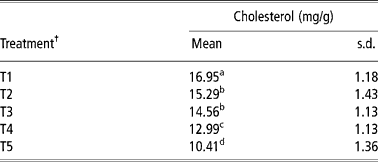
a,b,c,d Means with the same letter do not differ significantly according to Tukey's test (P ≤ 0.05).
† T1 – control, T2 – 0.5% of annatto, T3 – 1.0% of annatto, T4 – 1.5% of annatto, T5 – 2.0% of annatto.
Mean values of β and α carotene, retinol equivalent (μg/g) and IU of vitamin A in the eggs of each treatment
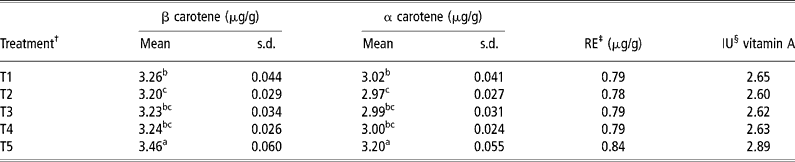
a,b,c Means with the same letter in the columns do not differ significantly according to Tukey's test (P ≤ 0.05).
† T1 – control, T2 – 0.5% of annatto, T3 – 1.0% of annatto, T4 – 1.5% of annatto, T5 – 2.0% of annatto.
‡ RE – retinol equivalent.
§ IU – International Unit.
Mean values of total iron (mg/kg) and dialysable iron (%) of the eggs in each treatment
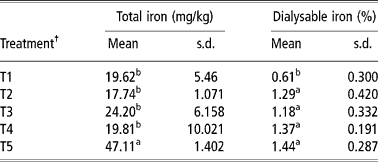
a,b Means with the same letter in the columns do not differ significantly according to Tukey's test (P ≤ 0.05).
† T1 – control, T2 – 0.5% of annatto, T3 – 1.0% of annatto, T4 – 1.5% of annatto, T5 – 2.0% of annatto.
Cholesterol
The efficiency of decrease in cholesterol with addition of annatto (P ≤ 0.05) was verified. With the increase of annatto in the feed at the doses used in the experiment, the cholesterol content in the yolks decreased. All treatments (T 2 to T5) differed from the control (T1). Among the treatments, only T2 and T3 were not different from each other (P>0.05).
Franco (Reference Franco2001) presented a value of 15.0 mg cholesterol per g yolk, Mendonça et al. (Reference Mendonça, Watanabe, Mori, Santos and Almeida1999) found the value of 12.35 mg cholesterol per g yolk and Mourthé and Martins (Reference Mourthé and Martins2002) who analysed eggs with and without the addition of omega-3 gave results varying from 16.55 to 18.54 mg/g yolk. Treatments T3, T4, and T5 (1.0%, 1.5% and 2.0% of annatto respectively) presented lower results when compared with this literature.
Vitamin A
The values of vitamin A (α and β carotene) were expressed in μg/g samples and converted into its equivalent in retinol (RE μg/g), according to the National Academy of Science/National Council Research (1980), where 6 μg/g of β carotene and 12 μg of α carotene equal 1 μg of equivalent retinol (RE), which, in turn, equals 3.33 IU of vitamin A.
Table 2 shows the content of β and α carotene of the samples, which is the equivalent retinol (RE) value in μg/g of sample (sum of carotenoids) and the value of vitamin A (sum of carotenoids transformed into retinol) in IU.
The values found for β carotene in treatment T1 are in accordance with Machado (Reference Machado2005), who found values of 1.0537 μg/g for the whole egg, that is, 3.1611 μg/g for the yolk. The whole egg is three times heavier than the yolk (Barbosa Filho, Reference Barbosa Filho2004) and albumen does not have any vitamin activity. The other treatments did not present any significant difference (P>0,05), except for the treatment with 0.5% of annatto (T2), which showed a decrease, and the treatment with 2.0% annatto (T5), which presented a significant difference (P ≤ 0.05), proving the efficiency of the treatment for this carotenoid.
Regarding the retinol (RE) equivalent, Fonseca (Reference Fonseca1985) presented similar values for the whole egg (1.575 μg/g). He also presents a value for the yolk (1.755 μg/g) and is close to the values obtained, which remained between 0.78 to 0.84 μg/g. On the other hand, the values found by Franco (Reference Franco2001) disagree with the values found (Table 2), 5.30 μg/g for the whole egg and 8.16 μg/g for the yolk. Although close to the values found in the literature, the treatment with 2.0% of annatto presented a significant difference in comparison with the other treatments (P ≤ 0.05).
As to the IU of vitamin A, the results found of 2.62 to 2.64 IU are in accordance with the results showed by Oliveira et al. (2001), who found values of 2.60 and 2.64 IU for the whole egg and the yolk, respectively, not presenting a significant difference (P>0.05). The treatment with 2.0% of annatto (T5) differed significantly (P ≤ 0.05) from the other treatments, having a value of 2.81 IU, which was close to that found by Franco (Reference Franco2001), of 3.23 IU. Anderson et al. (Reference Anderson, Dibble, Turkki, Mitchell and Rynbergen1988) and Torres and Machado (Reference Torres and Machado2001) disagreed with these values, obtaining values of 11.8 and 6.46 μg/g respectively.
Iron and dialysable iron
According to the results shown in Table 3, the values obtained were similar to those found in the literature, which were 17.74 to 24.20 mg/kg sample. Anderson et al. (Reference Anderson, Dibble, Turkki, Mitchell and Rynbergen1988) and Torres and Machado (Reference Torres and Machado2001) found values of 7.2 to 15.5 mg/kg sample respectively, considering that they used the whole egg. The values presented by Franco (Reference Franco2001) were higher, 31.0 mg/kg for the whole egg and 58.7 mg/kg yolk of egg, being close to the values found for T5 (2.0% annatto), which was 47.12 mg/kg.
Treatment T1, presented a value of about 0.62%, but the other treatments (T2, T3, T4, T5) presented statistically significant higher values between 1.2 and 1.4%.
The interesting aspect is that the treatment with 2.0% of annatto (T5) presented significantly higher values for iron and dialysable iron (P ≤ 0.05), probably, due to the amount of protein in the egg and the increase of β carotene, as seen in Tables 2 and 3.
Conclusion
According to the conditions in which the experiment was carried out, the following conclusions may be reached.
The treatment with 2.0% of annatto in the diet is more efficient in decreasing the level of cholesterol and increasing in the content of α and β carotene and iron availability. The treatment with 1.5% also had promising results. Therefore, for economic reasons, this is also an interesting option.
The presence of annatto in the feed increased the carotene level, becoming an important and cheap way of supplying the necessary amount of vitamin A, besides significantly increasing the iron availability.
However, the use of annatto in the feed of layers is desirable, since it makes eggs with lower cholesterol without other types of prejudicial effects, making the final product more attractive. Besides, reducing the level of cholesterol, carotene and iron availability are increased.



