

Hostname: page-component-89b8bd64d-n8gtw Total loading time: 0 Render date: 2026-05-10T16:10:19.844Z Has data issue: false hasContentIssue false

Gravity-driven coatings on curved substrates: a differential geometry approach

Published online by Cambridge University Press:  03 October 2022

Pier Giuseppe Ledda*
Affiliation:
Laboratory of Fluid Mechanics and Instabilities, École Polytechnique Fédérale de Lausanne, CH-1015 Lausanne, Switzerland Dipartimento di Ingegneria Civile, Ambientale e Architettura, University of Cagliari, 09123 Cagliari, Italy
M. Pezzulla
Affiliation:
Slender Structures Lab, Department of Mechanical and Production Engineering, Århus University, Inge Lehmanns Gade 10, 8000 Århus C, Denmark
E. Jambon-Puillet
Affiliation:
Department of Chemical and Biological Engineering, Princeton University, Princeton, NJ 08540, USA
P.-T. Brun
Affiliation:
Department of Chemical and Biological Engineering, Princeton University, Princeton, NJ 08540, USA
F. Gallaire
Affiliation:
Laboratory of Fluid Mechanics and Instabilities, École Polytechnique Fédérale de Lausanne, CH-1015 Lausanne, Switzerland
*
Email address for correspondence: pier.ledda@epfl.ch

Abstract

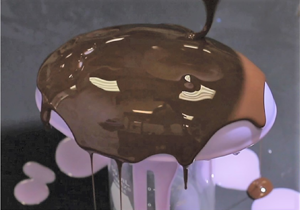
Drainage and spreading processes in thin liquid films have received considerable attention in the past decades. Yet, our understanding of three-dimensional cases remains sparse, with only a few studies focusing on flat and axisymmetric substrates. Here, we exploit differential geometry to understand the drainage and spreading of thin films on curved substrates, under the assumption of negligible surface tension and hydrostatic gravity effects. We develop a solution for the drainage on a local maximum of a generic substrate. We then investigate the role of geometry in defining the spatial thickness distribution via an asymptotic expansion in the vicinity of the maximum. Spheroids with a much larger (respectively smaller) height than the equatorial radius are characterized by an increasing (respectively decreasing) coating thickness when moving away from the pole. These thickness variations result from a competition between the variations of the substrate's slope and mean curvature. The coating of a torus presents larger thicknesses and a faster spreading on the inner region than on the outer region, owing to the different curvatures in these two regions. In the case of an ellipsoid with three different axes, spatial modulations in the drainage solution are observed as a consequence of a faster drainage along the short principal axis, faithfully reproduced by a three-dimensional asymptotic solution. Leveraging the conservation of mass, an analytical solution for the average spreading front is obtained. The solutions are in agreement with numerical simulations and experimental measurements obtained from the coating of a curing polymer on diverse substrates.

Information

Type
JFM Papers
Copyright
© The Author(s), 2022. Published by Cambridge University Press

Access options

Get access to the full version of this content by using one of the access options below. (Log in options will check for institutional or personal access. Content may require purchase if you do not have access.)

Article purchase

Temporarily unavailable

Ledda et al. Supplementary Movie 1

Description of the experimental procedure

Download Ledda et al. Supplementary Movie 1(Video)
Video 6.1 MB
Supplementary material: PDF

Ledda et al. supplementary material

Ledda et al. supplementary material 2

Download Ledda et al. supplementary material(PDF)
PDF 2.2 MB