The majority of fast foods are energy-dense and low in micronutrients(Reference Stender, Dyerberg and Astrup1). Both the supply of and the demand for fast food have increased in recent decades, and more frequent fast-food consumption has been shown to be a consistent risk factor for obesity and other adverse health conditions(Reference Jeffery and French2–Reference Pereira, Kartashov and Ebbeling4).
A known determinant of fast-food use is individual- and area-level socio-economic disadvantage, i.e. individuals with lower income or who are from socio-economically disadvantaged areas tend to purchase and consume more fast food(Reference Thornton, Crawford and Ball5–Reference Thornton, Bentley and Kavanagh7). While this may partly be attributable to the fact that such foods are less expensive than healthier alternatives (or at least perceived to be), other factors must also be involved as well since people living in disadvantaged neighbourhoods tend to consume more fast food, independent of their individual socio-economic position(Reference Thornton, Crawford and Ball5). The food environments in socio-economically disadvantaged areas are often said to be more supportive of unhealthy choices(Reference Fraser, Edwards and Cade8). For example, a greater abundance of fast-food stores in disadvantaged areas is one plausible contributor to increased fast-food use as the environment supports more opportunities for purchasing such products(Reference Macdonald, Cummins and Macintyre9, Reference Pearce, Blakely and Witten10). Prior studies have confirmed that those with easier access to fast-food restaurants consume more fast food(Reference Thornton, Bentley and Kavanagh11–Reference Li, Harmer and Cardinal13), particularly if these residents have low income(Reference Boone-Heinonen, Gordon-Larsen and Kiefe14). This also supports the assertion that a greater convenience and lower time cost are key determinants of fast-food use(Reference Dave, An and Jeffery15–Reference Rydell, Harnack and Oakes18).
Conceptual models of health behaviours posit that behaviours are influenced by an individual's ability to make healthy behaviour choices, his/her motivation to do so and environmental opportunities(Reference Rothschild19, Reference Brug20). Thus, where people have the same environmental opportunities, individual differences in health behaviours remain due to variations in ability and motivation. These factors can operate at multiple levels (e.g. individual, household, social) and many of these have already been linked to healthier eating. For example, an individual's enjoyment of cooking and his/her cooking skills are inversely associated with fast-food use(Reference Dave, An and Jeffery15–Reference van der Horst, Brunner and Siegrist17, Reference Dunn, Mohr and Wilson21) but positively associated with fruit and vegetable intakes(Reference Crawford, Ball and Mishra22). Members of a household and other social connections can positively influence the motivation to eat and provide healthy foods if they directly encourage and model healthy eating(Reference Dunn, Mohr and Wilson23, Reference Ball, Jeffery and Abbott24), while having regular family meals has been shown to facilitate healthier eating(Reference Neumark-Sztainer, Hannan and Story25). Outside the home, other built environment factors such as the presence of healthy food stores may discourage the purchasing of fast food through the provision of healthier alternatives, while perceptions of local food environments also play a role(Reference Lucan and Mitra26). What remains largely unknown is to what extent such factors are important to a healthier diet in an environment that is supportive of frequent fast-food consumption.
In the present study we report on factors related to ability, motivation and environmental opportunities that may explain the variability in fast-food consumption. We limit our analysis to women living in socio-economically disadvantaged neighbourhoods with a high number of fast-food stores. Understanding additional barriers to infrequent fast-food consumption in an environment that already supports higher use may provide important intervention alternatives for behavioural change that may be easier to implement than changing the built environment (e.g. reducing the number of fast-food restaurants in an area).
Methods
The Resilience for Eating and Activity Despite Inequality study
The current paper examines data collected in 2007–2008 as part of the baseline data collection within the Resilience for Eating and Activity Despite Inequality (READI) study(Reference Ball, Jeffery and Abbott24). Forty urban and forty rural suburbs were randomly selected from the most disadvantaged tertile of suburbs within Victoria, Australia. Suburb disadvantage was defined by the 2001 Socio-Economic Index for Areas (SEIFA) Index of Relative Disadvantage, which is calculated from numerous area-level variables including (but not limited to) the proportion of low-income households in the area, the proportion of people who do not speak English well and the proportion of people with no post-school qualifications(27). READI survey measures were validated where possible, all measures were pilot-tested and 1-week test–retest reliability was established.
The Australian electoral roll (registration on the electoral roll is compulsory for all Australian citizens) was used to randomly identify 150 women aged 18–45 years from the eighty areas (n 11 940; some included areas had <150 eligible women). Respondents replied to a postal invitation to complete a questionnaire and after excluding those who failed to meet eligibility criteria (e.g. respondents who moved from the sampled neighbourhood prior to completing the survey, were not the intended participant, withdrew their data after completing the survey, or were <18 or >46 years old), there were 4349 eligible participants (39 % of those who were delivered a survey). Analyses in the present study were further restricted to women who lived in urban areas (n 2015; 46·5 % of sample) because the environmental exposures and how these influence consumption vary greatly between urban and rural neighbourhoods.
Fast-food restaurant exposure
Ten fast-food chains were used in our measure of fast-food restaurant exposure, each of which has more than 100 outlets in Australia: Dominos Pizza, Eagle Boys Pizza, KFC, Hungry Jacks, Nandos, Pizza Haven, Pizza Hut, McDonalds, Red Rooster and Subway. Using the geographic information system ArcGIS 9·3 (ESRI, Redlands, CA, USA), we undertook a count of fast-food restaurants within a 3-km road network distance(Reference Thornton, Pearce and Kavanagh28) from each individual's household location. Three kilometres was chosen because this distance corresponds with prior evidence that the majority of food shopping is undertaken within this distance from home(Reference Hillier, Cannuscio and Karpyn29, Reference Cairns30). The median number of fast-food restaurants within 3 km of where individuals lived in the present study was six. Respondents were considered to have high exposure if they had access to six or more fast-food restaurants within 3 km (n 1019; 50·6 % of the urban sample).
Fast-food consumption
Fast-food consumption was derived using two questions: ‘In the past month, how often have you had the following: (a) fast food (e.g. McDonalds, KFC) and (b) pizza?’ Response categories were: (i) never or less than once/month; (ii) 1–3 times/month; (iii) once/week; (iv) 2–4 times/week; (v) 5–6 times/week; (vi) once/d; (vii) 2–3 times/d; (viii) 4–5 times/d; (ix) ≥6 times/d. Response categories were converted to weekly equivalents, with never or less than once/month considered as 0·25/week and 1–3 times/month considered as 0·5/week. As the fast-food restaurant exposure measure included both fast-food outlets and pizza outlets, consumption of these two items was combined. The final consumption variable was coded as: (i) infrequent (consumed fast food/pizza <1 time/week); (ii) frequent (consumed fast food/pizza ≥1 time/week).
Independent variables
Five variables related to motivation and ability were examined. At the individual level, two factors were examined: (i) ‘How confident are you that you could shop regularly for healthy nutritious foods over the next year?’ and (ii) ‘How confident are you that you could prepare/cook healthy nutritious foods over the next year?’ (response categories for both: 5-point Likert scale ranging from ‘not at all confident’ to ‘extremely confident’; collapsed for analysis as a result of data distribution to ‘not at all/slightly confident’, ‘moderately confident’ and ‘very/extremely confident’). At the household level, we explored: (i) ‘How often do you usually eat dinner with your family?’ (response categories: ‘rarely/never’, ‘<1 time/week’, ‘1–3 times/week’, ‘4–6 times/week’, ‘every day’ and ‘not applicable’; collapsed for analysis to ‘≤3 times/week’, ‘4–6 times/week’ and ‘every day’); and (ii) family support for healthy eating based on how often (during the past year) members of their family: (a) ate healthy low-fat foods with them; (b) encouraged them to eat healthy low-fat foods; and (c) discouraged them from eating unhealthy foods (response categories for each: 5-point Likert scale from ‘never’ to ‘very often’ plus a ‘not applicable’ option which was re-coded to ‘1’ (never) after confirming that this response indicated respondents had no immediate family and so did not receive support from family; scores were summed (Cronbach's α = 0·75) and coded as ‘low’ (sum of scores = 3–6), ‘mid’ (7–10) and ‘high’ (11–15)). The social-level factor explored was: (i) ‘Lots of women I know eat fast food’ (response categories: 5-point Likert scale from ‘strongly disagree’ to ‘strongly agree’; collapsed for analysis to ‘disagree’, ‘neutral’ and ‘agree’).
The environmental factors explored were both real and perceived. These were assessed to determine whether access to healthier alternatives was protective against fast-food consumption. To assess whether supermarkets and greengrocers were easily accessible, we used ArcGIS 9·3 to determine the proximity(Reference Thornton, Pearce and Kavanagh28) to these stores along a network path. A tertile measure was created for these to reflect if the closest store was within 0·8 km, between 0·8 and 1·6 km or further than 1·6 km. Perceptions were based on the following three questions(Reference Mujahid, Diez Roux and Morenoff31): (i) ‘A large selection of fruit and vegetables is available in my neighbourhood’; (ii) ‘The fresh fruit and vegetables in my neighbourhood are of high quality’; and (iii) ‘A large selection of low-fat products is available in my neighbourhood’ (response categories for each: 5-point Likert scale from ‘strongly disagree’ to ‘strongly agree’; collapsed for analysis to ‘do not agree’ and ‘agree’).
Covariates
The following covariates were considered potential confounders and controlled for in analysis: age of respondent, country of birth (coded as Australia; overseas), marital status (married/de facto; previously married; never married), number of children under the age of 18 years living in the household (none; one; two; three or more), education (low (= did not complete Year 12); medium (= completed Year 12 (high school), trade certificate or diploma); high ( = completed tertiary education)) and employment status (working full-time; working part-time; not currently in paid employment). Selection of key covariates was informed by prior work conducted within Melbourne-based studies(Reference Thornton, Bentley and Kavanagh7, Reference Thornton, Crawford and Ball32).
Statistical analysis
Analysis was undertaken on complete case data with a final sample of 932 participants from socio-economic disadvantaged urban areas with access to six or more fast-food restaurants (eighty-seven participants were dropped for missing values). Descriptive and multilevel analyses were undertaken using the statistical software package Stata 11·2. As respondents were clustered within suburbs, multilevel logistic regression was undertaken using the user-written GLLAMM function which allows for maximum likelihood estimation of multilevel models(Reference Rabe-Hesketh, Skrondal and Pickles33). Results from the multilevel analysis were presented as odds ratios with 95 % confidence intervals which estimate the odds of infrequent fast-food consumption compared with those who consume at least weekly. For the independent variables explored, higher numbers of participants were more often in the response category that reflected ‘healthier’ behaviours. As a result, these were used as the reference category for analysis. Therefore a statistically significant odds ratio below one indicates that if a woman is not in the optimal response category then the likelihood of her having low fast-food consumption is reduced. Thus this indicates that, when statistically significant, these factors are acting as barriers to avoiding fast-food consumption. In Model 1, all independent variables are analysed separately adjusted for confounders. For Model 2, we analysed all significant factors from Model 1 together to determine the relative contribution of these on fast-food consumption.
Results
Sample characteristics are presented in Table 1. The mean age of the women in the sample was 33·3 (sd 7·6) years. The majority of the study sample was born in Australia, married, living in households without children and had completed high school and/or further education. About half of the sample (49 %) was working full-time.
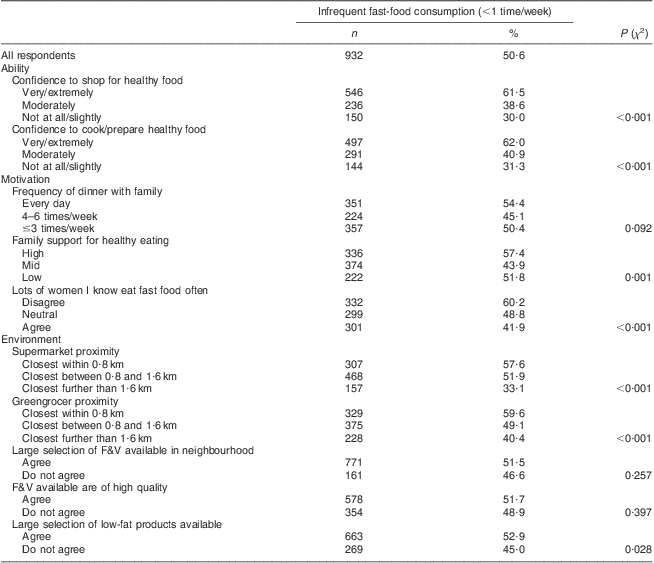
Characteristics of the study respondents: women (n 932) from socio-economically disadvantaged areas in metropolitan Melbourne, Australia, 2007–2008

Table 2 shows that half of the sample consumed fast food less than once weekly (51 %). A higher percentage of infrequent consumers were found among those with the highest confidence in their ability to shop for (62 %) or cook/prepare healthy food (62 %). The majority of those who ate dinner with their family every day (54 %) or had high family support for healthy eating (57 %) ate fast food on an infrequent basis, as did those who disagreed they knew lots of other women who eat fast food regularly (60 %). Only one-third (33 %) of those who had their nearest supermarket further than 1·6 km away ate fast food infrequently compared with over half of those having their nearest supermarket within this distance. A higher percentage of respondents within 0·8 km of their nearest greengrocer were infrequent fast-food consumers (60 %) compared with those with the nearest greengrocer within 0·8–1·6 km (49 %) and further than 1·6 km (40 %). A slightly higher percentage of those with positive perceptions about their local food environment ate fast food infrequently compared with frequently.
Ability, motivation and environmental factors by frequency of fast-food consumption among women (n 932) from socio-economically disadvantaged areas in metropolitan Melbourne, Australia, 2007–2008

F&V, fruits and vegetables.
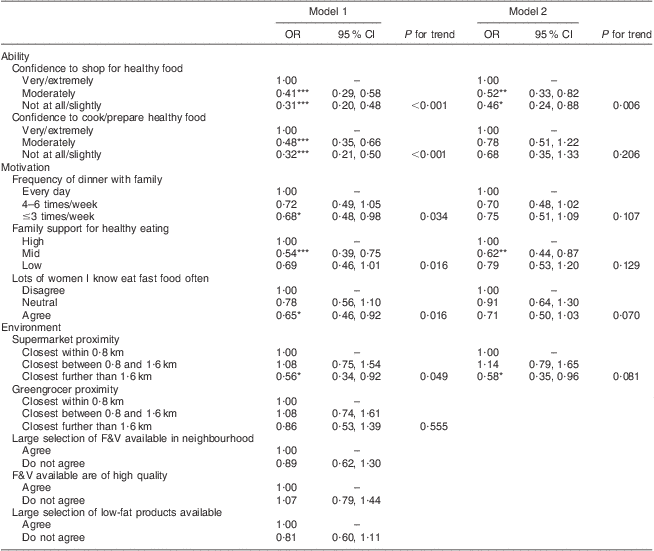
When modelled independent of each other (Model 1), each of the individual, household and social factors was associated with infrequent fast-food consumption as was the proximity to the nearest supermarket (Table 3). Barriers to infrequent fast-food consumption were identified among those with a lower confidence to shop for healthy foods, a lower confidence to cook/prepare healthy foods, who ate dinner with their family ≤3 times/week, with lower levels of family support for healthy eating behaviours and who knew other women who ate fast food often. With regard to environmental factors, those who lived further than 1·6 km from their nearest supermarket were less likely to be infrequent fast-food consumers than those living within 0·8 km. No statistically significant associations were found for the other environmental factors.
Multilevel logistic regression results: associations between explanatory factors and infrequent fast-food consumption among women (n 932) from socio-economically disadvantaged areas in metropolitan Melbourne, Australia, 2007–2008
Model 1, each predictor modelled separately; Model 2, each significant predictor modelled together; F&V, fruits and vegetables.
Reference group: those who consume frequently.
*P ≤ 0·05, **P ≤ 0·01, ***P ≤ 0·001.
In Model 2 each of the statistically significant factors was analysed simultaneously (Table 3). Compared with women with the highest confidence in their ability to shop for healthy food, those with moderate (OR = 0·52; 95 % CI 0·33, 0·82) or the lowest confidence (OR 0·46; 95 % CI 0·24, 0·88) had a significantly lower odds of being an infrequent fast-food consumer. Likewise, having a mid level of family support for healthy eating was a significant barrier to consuming fast-food infrequently (OR = 0·62; 95 % CI 0·44, 0·87) compared with those with the highest support, although no significant association was found among those with the lowest family support. Finally, compared with women within 0·8 km of their nearest supermarket, those living further than 1·6 km away remained significantly less likely to consume fast food on an infrequent basis (OR = 0·58; 95 % CI 0·35, 0·96).
As confidence in shopping may be influenced by the other environmental factors explored (real and perceived), interaction terms were run for these (results not shown). A significant interaction was found between shopping confidence and perception of fruit and vegetable quality. Consequently, we explored confidence to shop for healthy food stratified by perceived quality of fruits and vegetables. Among those women who did not agree fruits and vegetables were of high quality, the likelihood of infrequent fast-food consumption was further reduced for those with the lowest confidence in their shopping ability (OR = 0·34; 95 % CI 0·12, 0·97; results not shown).
Discussion
A number of multilevel conceptual frameworks exist related to health behaviours and more specifically eating behaviours. The present study focused on three factors that are included in most of these models: ability to make healthy choices, motivation and environmental opportunities(Reference Rothschild19, Reference Brug20). Our study explored the extent to which additional barriers related to ability, motivation and the environment further contributed to the likelihood of avoiding infrequent fast-food consumption when the environment already supports the purchasing and consumption of this product through high levels of fast-food restaurant access. Factors identified among women as barriers to healthy food choices included having a lower confidence in their ability to either shop for or cook healthy foods, a lower motivation to eat healthily through having less frequent family meals, less family support for healthier eating, knowing other women who often ate fast food regularly and reduced environmental opportunities to access alternative foods through reduced supermarket access. Relative to other explanatory factors, a low confidence in shopping ability acted as the strongest barrier to avoiding fast-food consumption and this was further strengthened when we assessed only women who also perceived locally available fruits and vegetables were not of good quality. It is important to note that each of these results was not accounted for by demographic and socio-economic differences as these were adjusted for in analyses.
The impact of environment on health indicators such as obesity has become a strong focus of recent research(Reference Morland and Evenson34, Reference Giskes, van Lenthe and Avendano-Pabon35) and has led to common use of the term ‘obesogenic’ environments. We limited our analysis to areas with a single obesogenic environmental factor: a high number of fast-food outlets. Consequently, this environment is conducive to higher fast-food consumption through providing increased opportunities and we were therefore able to identify additional factors that further discouraged the avoidance of fast food. As the built environment in established areas is difficult to change, the present study provides key insights into other potential avenues for intervention at the community level that may be easier to implement, although we do acknowledge the complexities associated with nutrition-related interventions(Reference Gedrich36).
While we recognise an individual's ability to engage in healthy behaviours can be dictated by a myriad of factors, in the current study we assessed skills related to shopping for and the preparation of healthy foods. Confidence in ability to shop for healthy foods remained significant relative to all other factors, suggesting this may be a key avenue to promotion of healthier eating. The skills required for healthy shopping are underappreciated, as not everyone has the nutritional knowledge or ability to understand food labels(Reference Fitzgerald, Damio and Segura-Perez37, Reference Ball, Crawford and Mishra38). Furthermore, financial and time pressures may lead to food purchasers choosing less healthy alternatives, even when shopping in a supermarkets, as they believe these are cheaper options and quicker to prepare(Reference Welch, McNaughton and Hunter16, Reference Inglis, Ball and Crawford39). By promoting healthier shopping practices, interventions may be able to make substantial changes to the eating practices of both the individual and other family members when the majority of the food supplied to them is purchased by a main household food shopper. Two such interventions are currently underway in Australia, the ‘SHOP Smart 4 Health’ (SHOP Smart) study and the ‘Supermarket Healthy Eating for Life’ (SHELF) study(Reference Ball, McNaughton and Mhurchu40), that aim to improve the healthiness of food purchases made in supermarkets through a skill-building approach (SHELF also includes a price reduction component). While confidence in ability to cook and prepare healthy meals was also significant, results were attenuated to null when modelled with other factors suggesting that this may be less important relative to shopping. Previously, van der Horst and colleagues reported lower cooking skills among males(Reference van der Horst, Brunner and Siegrist17). Given our sample consisted of women aged with a mean age of 33 years, this provides a plausible explanation as to why we found shopping skills to be more important than cooking skills.
As we believed that shopping confidence may be influenced by other features of the food environment, we tested interaction effects on these. Only perceived fruit and vegetable quality was significant and stratified analysis on this variable revealed that the likelihood of being an infrequent fast-food consumer was further reduced among those with the lowest shopping skills when they also believed fruits and vegetables available were not of good quality. We have no objective measure of quality in our study; nevertheless, it raises an important point that boosting confidence to shop for healthy foods may be challenging in certain environments.
Motivation to eat healthier can act through an individual's determination but is also likely to be largely influenced by family members and social contacts. In the present study, we looked at three factors that likely relate to motivation at the family and social levels. At the family level, we investigated frequency of eating dinner with the family as this has previously been linked to healthier eating(Reference Neumark-Sztainer, Hannan and Story25). We conceptualised that individuals who eat dinner more regularly with their family may be more motivated to prepare healthier meals (or have healthier meals supplied for them) than those who eat alone or at different times to other family members, as this latter situation may result in family members seeking a more convenient and potentially less healthy alternative. For households with children, a greater confidence and interest in cooking skills taught through school-based classes(Reference Caraher, Dixon and Lang41) may translate into a greater frequency of family meals if the children become more interested in and assist with meal preparation. Further, this may also create higher family support for healthy eating, a factor we found to be important in limiting fast-food consumption and is in congruence with past evidence(Reference Dunn, Mohr and Wilson23). Outside the home, knowing other women who eat fast food often was associated with lower odds of consuming fast food infrequently independent of confounders but not of the other explanatory variables. Being in a social situation where others are eating fast food is a known contributor to fast-food use(Reference Ball, Jeffery and Abbott24) as it could lower the motivation to avoid this option. Thus, motivational interventions may need to be targeted beyond the individual and at a larger organisational or community level.
Both objective and perceived environmental factors were tested to assess their relationship with fast-food consumption in the sample. Prior studies demonstrate that health outcomes can be improved through access to healthier foods, even when unhealthy options are present(Reference Morland and Evenson34, Reference Rundle, Neckerman and Freeman42). Our descriptive findings suggested that living close to either a supermarket or greengrocer may encourage lower rates of fast-food consumption; however, this relationship held true only for supermarket access in the analytical models adjusted for demographic and socio-economic covariates. Although not equivocal, there is a growing evidence base to suggest supermarket access encourages healthier diet-related behaviours(Reference Morland, Wing and Diez Roux43, Reference Moore, Diez Roux and Nettleton44). Our present study further supports this by demonstrating that a greater geographic proximity to the nearest supermarket may act as a barrier to being an infrequent fast-food consumer when the environment contains large numbers of fast-food outlets. No differences were detected for the environmental perception variables. While prior work indicates that perception can influence dietary behaviours(Reference Inglis, Ball and Crawford45), in the present instance the findings support the notion that building skills in food shopping or improving physical access to supermarkets may be a more effective way to improve dietary behaviours than changing perceptions.
By including only women in socio-economically disadvantaged neighbourhoods with access to a high number of fast-food outlets we have reduced the variability in the unhealthy food stores women are exposed to, allowing us to better focus on ability, motivational and other food environment aspects associated with fast-food consumption frequency. This provides novel information on potentially important avenues to promote dietary change in socio-economically disadvantaged populations. We do however acknowledge weaknesses in our study. First, while examples of fast food were provided, there may be some mismatch between the types of fast food individuals reported consuming and the stores used to define fast-food exposure. Further, statements around ‘healthy eating’ and ‘low-fat foods’ were not defined, which may have led to some inconsistencies in reporting. Second, while we have limited our sample to those with high exposure to fast food in their local neighbourhood, fast food can be bought in many other areas including near work and social locations. Future research is needed to collect data that will provide more detailed information on the role of the local food environment in food purchasing decisions relative to other places visited throughout the day. Third, our sample is limited to women and the factors influencing a male's decision to consume fast food are likely to vary. However, despite social changes women remain the most likely person to purchase and prepare food for households(Reference Coveney46) and are therefore important to study given the influence they exert on the diet of other household members, particularly children. Finally, we acknowledge that the response rate (39 %) may reduce the generalisability of our findings. However, this issue is not as problematic in our study of associations in a specific sub-population as it may be in a study that was attempting to establish population prevalence.
Conclusions
Many food environments in socio-economically disadvantaged areas support increased fast-food consumption through the greater presence of fast-food restaurants. A skill-based approach targeted at women's ability to shop for healthy foods presents a potentially effective strategy to reduce the consumption of unhealthy fast-food products, as does providing support for those with restricted supermarket access. Further research is required to assess differences in individual-level explanatory factors when environmental exposures vary.
Acknowledgements
Sources of funding: The READI study was funded by the Australian National Health and Medical Research Council (ID 374241) and approved by the Deakin University Human Research Ethics Committee (approval number EC 91-2006; June 2006). L.E.T. was supported by an Alfred Deakin Postdoctoral Research Fellowship. R.W.J. was supported by the University of Minnesota Obesity Prevention Center and the National Institute of Diabetes and Digestive and Kidney Diseases (grant DK50456). D.A.C. was supported by a VicHealth Senior Research Fellowship. Conflicts of interest: No conflicts of interests are declared. Authors’ contributions: L.E.T. conceptualised the study design, undertook the analysis, and wrote the first draft of this paper. R.W.J. and D.A.C. contributed to the study design and redrafting of the paper. Each author read and approved the final version of this manuscript. Acknowledgements: The authors are grateful to Michelle Jackson for managing the READI fieldwork and to Rebecca Roberts for her assistance with the geographic information mapping work.