




Introduction
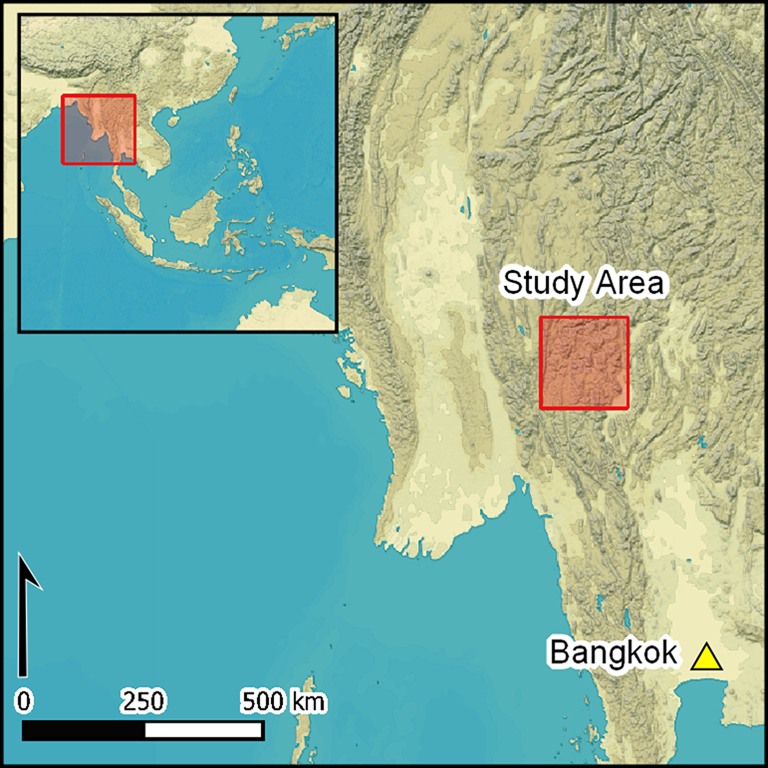
The highland regions of Mainland Southeast Asia are home to some of the earliest and longest records of hunter-gatherer activity. Recent studies from southern China indicate that hunter-gatherers had arrived in this region by at least 50 000–45 000 years ago (Ji et al. Reference Ji2016). The incoming foragers used a lithic technocomplex (reduction sequence) known as the ‘Hoabinhian’ (characterised by unifacially flaked river-cobble stone tools, or ‘sumatraliths’; Reynolds Reference Reynolds and Barnes1990), and continued to occupy the region until approximately 3000 years ago (Forestier et al. Reference Forestier, Zeitoun, Winayalai and Métais2013). Although the ‘Hoabinhian’ spans 40 000 years of hunter-gatherer activity throughout Southeast Asia, we lack fundamental details on variation in the foraging adaptations of its makers in both time and space (White Reference White and Enfield2011). Re-examination of ‘Hoabinhian’ chronologies in sub-regions, such as highland north-west Thailand, provides one way to increase our understanding of these adaptations, especially since many current chronologies rely on data from older fieldwork and dating programmes.
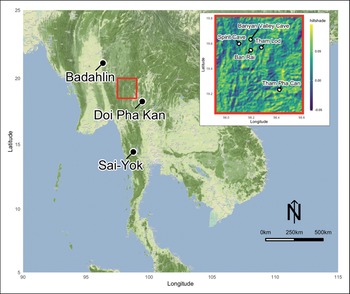
Archaeological excavations in 1966 and 1971 at Spirit Cave in Mae Hong Son Province, north-west Thailand (Figure 1), produced several of the first Pleistocene–Holocene transition radiocarbon determinations for the region (Gorman Reference Gorman1969, Reference Gorman1970, Reference Gorman1971a). Radiocarbon dates from early excavations at the nearby Myanmar site of Badahlin Cave (or Padah-Lin), among others, also indicated hunter-gatherer activity during the transition (Thaw Reference Thaw1971). These radiocarbon records, all derived from caves and associated with the ‘Hoabinhian’ technocomplex, were influential in establishing a chronology for the complex (Reynolds Reference Reynolds and Barnes1990). In addition, hunter-gatherer sites with sumatralith stone tool assemblages that lacked associated radiocarbon dates, such as Sai-Yok Rockshelter in western Thailand (van Heekeren & Knuth Reference van Heekeren and Knuth1967), now included some probable temporal resolution. In the early 2000s, archaeologists obtained new radiocarbon and luminescence ages from sites in north-west Thailand that provided further temporal context for hunter-gatherer activities (Treerayapiwat Reference Treerayapiwat2005; Shoocongdej Reference Shoocongdej, Bacus, Glover and Pigott2006; Marwick Reference Marwick2008). Radiocarbon- and luminescence-based chronologies from Tham Lod and Ban Rai rockshelters suggested forager occupations extending into the Late Pleistocene—over 30 000 years ago at Tham Lod—but only a sporadic Holocene occupation. More recent analyses show a similar trend: luminescence ages from Badahlin Cave in Myanmar indicate human occupation in the Pleistocene, and radiocarbon measurements from Doi Pha Kan in Thailand date to the Terminal Pleistocene (Imdirakphol et al. Reference Imdirakphol2017; Schaarschmidt et al. Reference Schaarschmidt2019). Evidence for Holocene foragers in north-west Thailand is less well-established.
Map of key sites discussed in the text (map tiles by Stamen Design, under CC BY 3.0; data by OpenStreetMap, under ODbL).
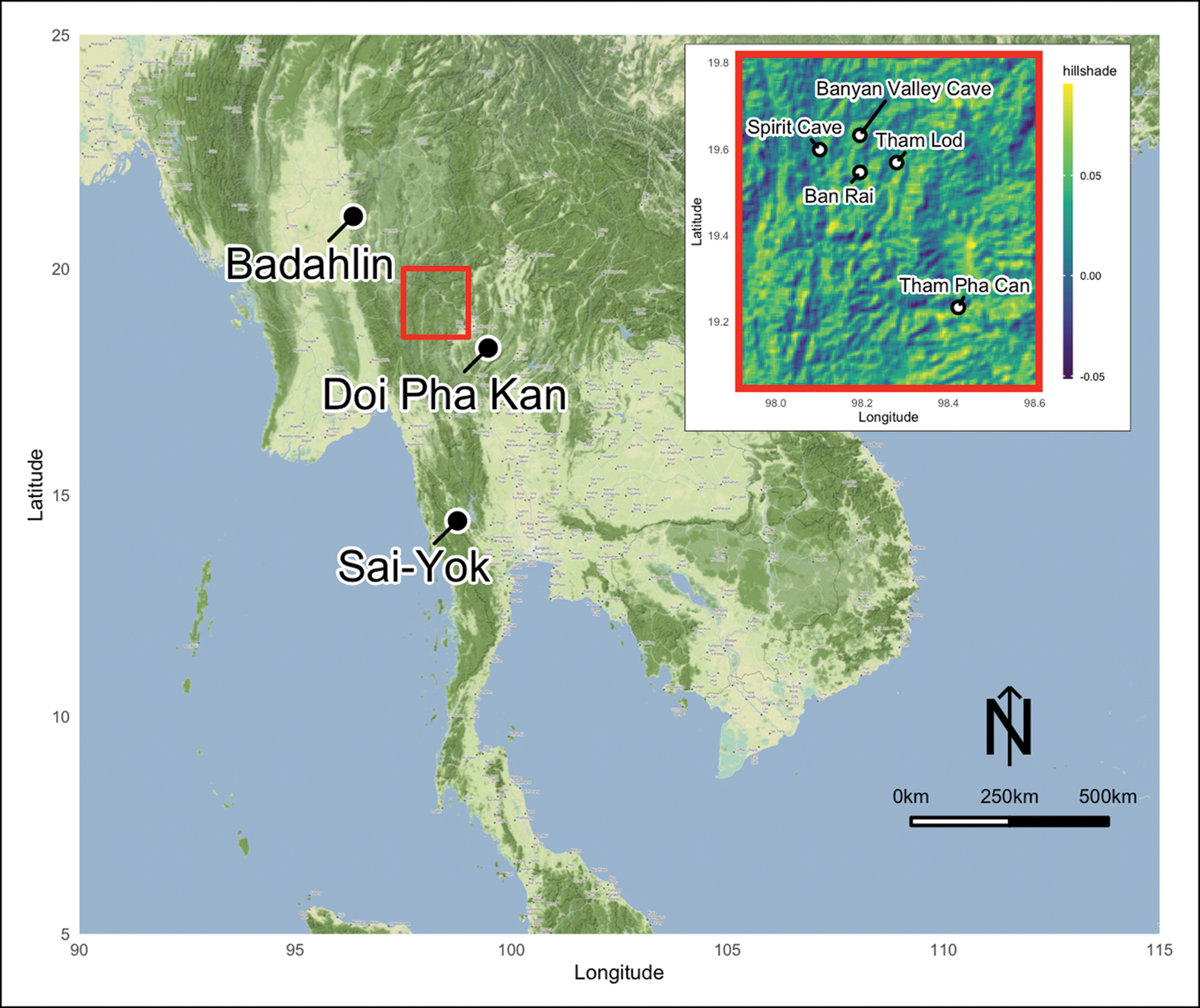
Here we re-examine the chronologies of three sites in north-west Thailand: Spirit Cave (Tham Phi Man), Steep Cliff Cave (Tham Pha Chan) and Banyan Valley Cave (Tham Pung Hung). We present new dates to investigate whether hunter-gatherers occupied this region of Mainland Southeast Asia primarily during the Terminal Pleistocene and Early Holocene, or whether there is also a longer-term Holocene record. Accurately dating these sites is crucial for contextualising their hunter-gatherer occupation and for further refining our understanding of forager adaptations in Mainland Southeast Asia.
Spirit Cave, Steep Cliff Cave and Banyan Valley Cave
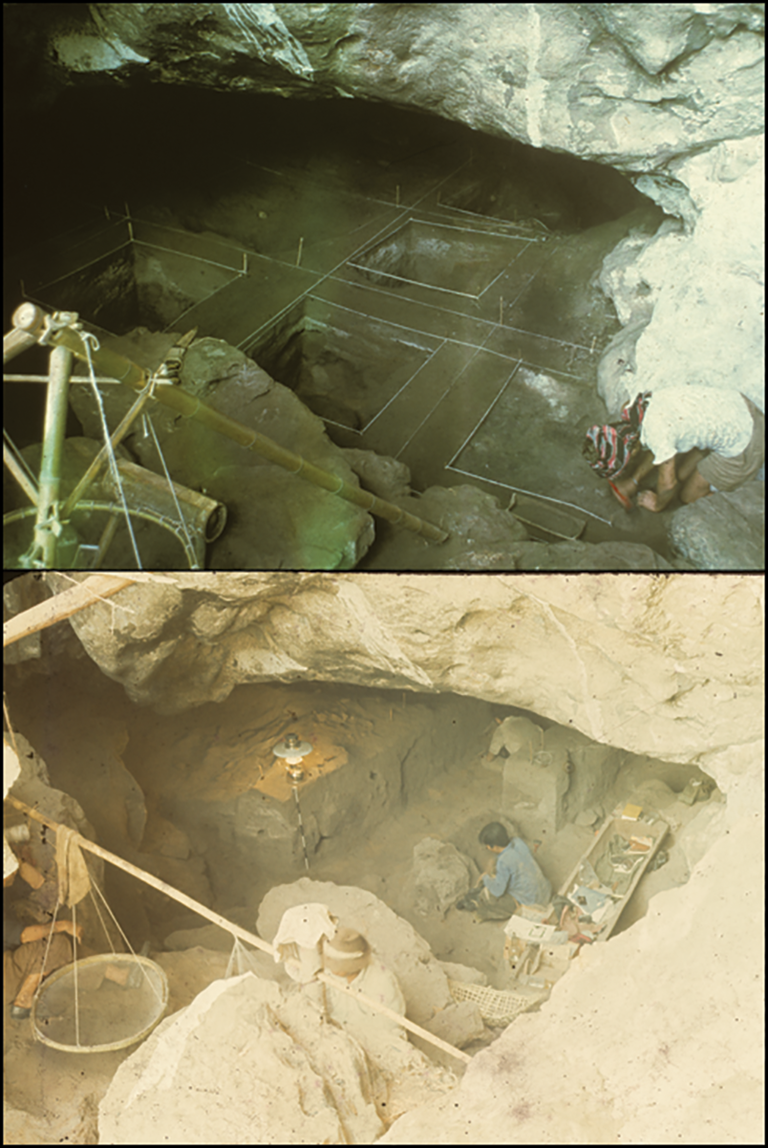
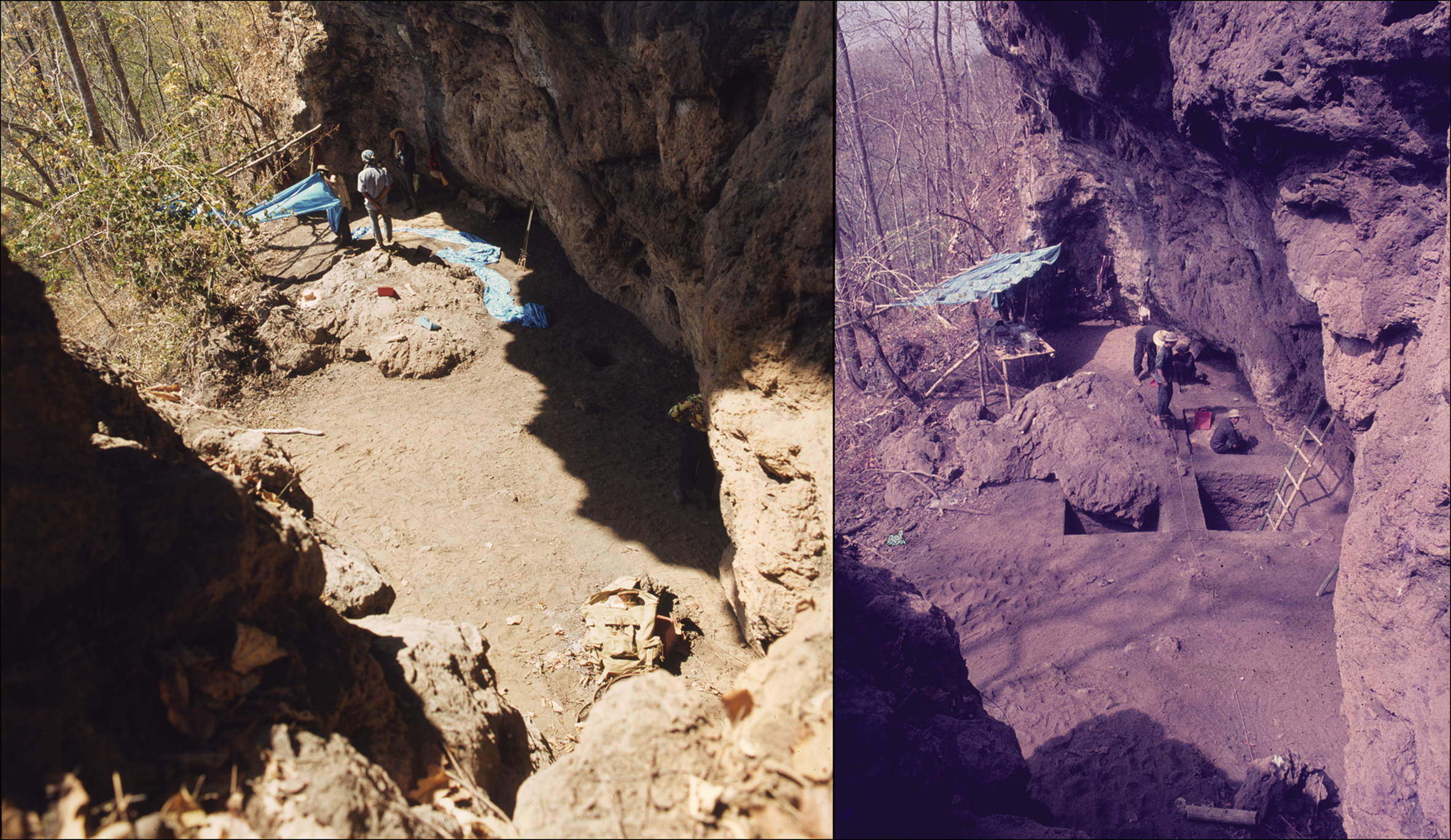
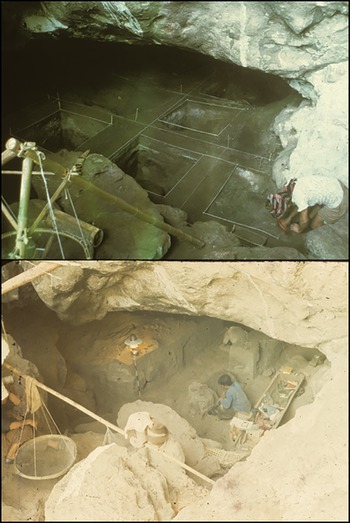
Chester Gorman excavated the sites of Spirit Cave, Steep Cliff Cave and Banyan Valley Cave in the 1960s and 1970s (Gorman Reference Gorman1963–1964, Reference Gorman1966, Reference Gorman1970, Reference Gorman1971a, Reference Gorman1971b, Reference Gorman1972, Reference Gorman1973). Spirit Cave, a small, shallow site, was excavated in 1966 and 1971 (Figure 2 and fig. S1 in Conrad et al. Reference Conrad2020a—an external research compendium). Excavation of eight units in the middle cave chamber revealed five stratigraphic layers (~1m deep in total; see Conrad Reference Conrad2018). Fourteen charcoal specimens collected in 1966 were submitted for radiocarbon analysis (Table 1). Conventional radiocarbon ages suggested hunter-gatherer occupation between 11 346±560 and 7397±320 BP. In the early 2000s, however, researchers dated organic resin coatings from two ceramic sherds recovered from surface deposits, or Layer 1, at Spirit Cave (Lampert et al. Reference Lampert2003, Reference Lampert2004). These assays returned relatively late Holocene ages (Table 1). In short, Gorman's original date for sherds at the site (FSU-317: 7397±320 BP) suggested an Early Holocene appearance of ceramics in Mainland Southeast Asia, but the resin coating analysis suggested that ceramics probably dated to a much later period. White (Reference White2004) subsequently contested this new interpretation on stratigraphic grounds.
Excavations at Spirit Cave (courtesy of the Institute for Southeast Asian Archaeology).
Original ages from the study sites (for numbered references, see compendium material in Conrad et al. Reference Conrad2020a). Dates calibrated (at 95.4% confidence) using OxCal v4.4.2 and the IntCal20 atmospheric curve (Bronk Ramsey Reference Bronk Ramsey2020; Reimer et al. Reference Reimer2020).
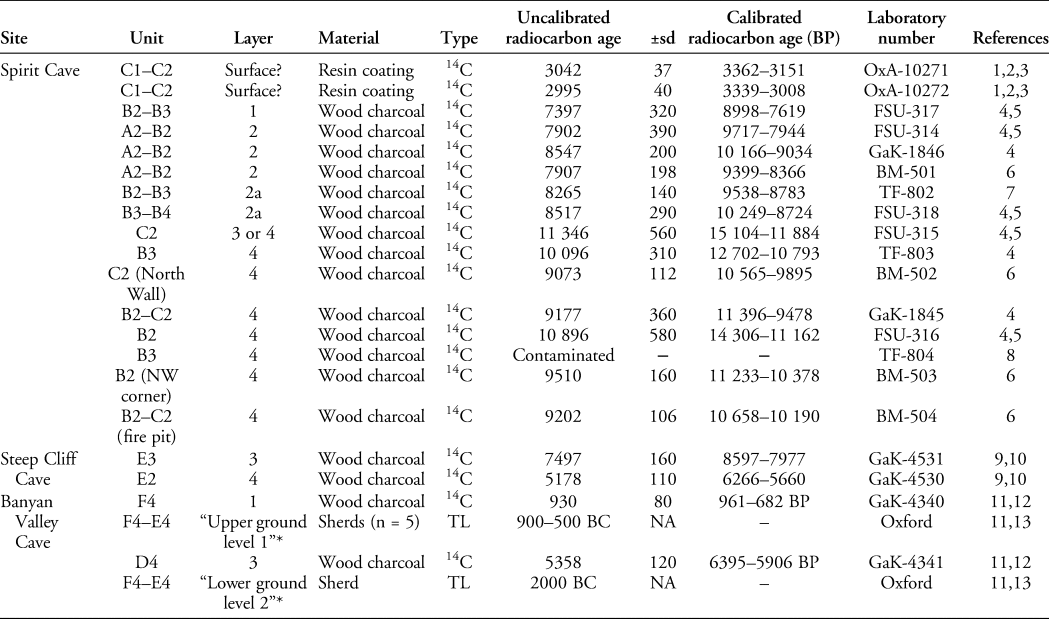
* Layer notes for Banyan Valley Cave thermoluminescence samples taken from archived correspondence between C. Gorman and M.J. Aitken (University of Oxford) are on file at the Institute for Southeast Asian Archaeology.
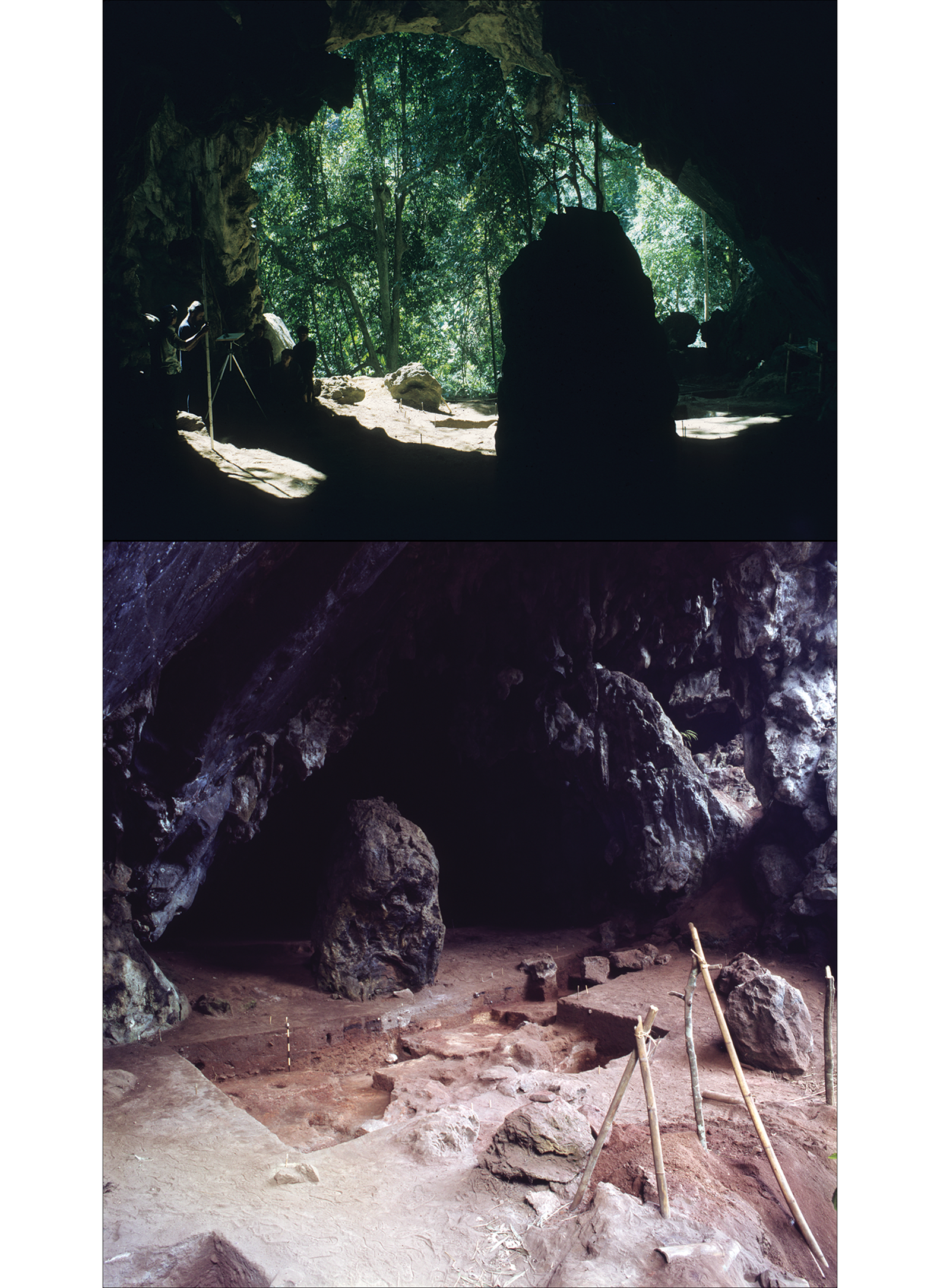
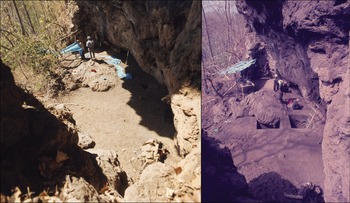
In early 1973, excavations took place at Steep Cliff Cave. Seven excavation units in this shallow rockshelter revealed a deep (~2m in total), fine-grained, loosely compacted sedimentary deposit. Although no stratigraphic profile drawings have been found in the site archive, surviving site descriptions (Gorman Reference Gorman1973) and photographs (see Conrad Reference Conrad2018; Figure 3 and Conrad et al. Reference Conrad2020a: fig. S2) suggest that five loosely differentiated stratigraphic layers were present. Radiocarbon analysis of two charcoal specimens returned Early to Mid-Holocene ages, but in reverse stratigraphic order (Table 1): the older date of 7497±160 BP comes from a layer (Layer 3) that lies higher in the stratigraphy than the younger date of 5178±110 BP (from Layer 4). Gorman never published his final interpretation of this site (see White & Gorman Reference White, Gorman and Paz2004).
Excavations at Steep Cliff Cave (courtesy of the Institute for Southeast Asian Archaeology).
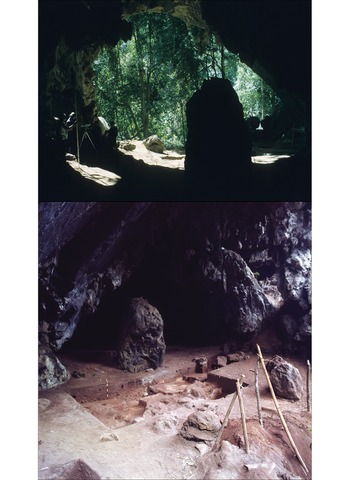
Banyan Valley Cave, a large, deep cave, was excavated in 1972 (Gorman Reference Gorman1972; Figure 4 and Conrad et al. Reference Conrad2020a: fig S3). Eleven excavation units revealed a relatively shallow deposit (~1m deep in total), with an internally complex stratigraphy and four identified layers. At Banyan Valley Cave, Gorman radiocarbon-dated two charcoal samples and obtained six thermoluminescence measurements on ceramic sherds (Table 1). These ages were internally consistent, with no evidence of stratigraphic mixing, and indicated a Mid- to Late Holocene hunter-gatherer occupation between 5358±120 and 930±80 BP. A single sherd from Layer 3 returned a date of c. 2000 BC, while a group of five sherds from higher stratigraphic contexts (probably Layers 1–3) yielded approximate ages between 900 and 500 BC. Rice (Oryza sp.) spikelets recovered from upper layers at the site—which potentially represented hunter-gatherer exploitation of wild forms of rice (Yen Reference Yen, Allen, Golson and Jones1977, Reference Yen1982)—would thus appear to date to the Late Holocene, given the dates indicated for Layers 1–3. Re-analysis of a sample of faunal remains and records from Banyan Valley Cave indicate that Gorman excavated at least seven layers (Conrad Reference Conrad2018). It is therefore possible that evidence for an older hunter-gatherer occupation exists at this site. Gorman never fully published the Banyan Valley Cave excavation (see Reynolds Reference Reynolds1992).
Excavations at Banyan Valley Cave (courtesy of the Institute for Southeast Asian Archaeology).
Approach and methods
We obtained 27 new radiocarbon determinations and four luminescence measurements in order to investigate the hunter-gatherer occupation of north-west Thailand. Samples were selected from curated legacy collections housed at the Penn Museum and the University of Otago. All stratigraphic and contextual information originate from Gorman's published records and unpublished field notes, the latter archived at the Institute for Southeast Asian Archaeology (ISEAA), Penn Museum.
We submitted four freshwater crab (Indochinamon sp.) dactyls from Spirit Cave to the University of Waikato Radiocarbon Dating Laboratory for AMS radiocarbon dating. Twenty-two additional radiocarbon samples, including plant charcoal, human and non-human mammalian bone apatite (structural carbonate), freshwater pearl mussel (Margaritifera laosensis) and rice spikelets (Oryza sativa) from Steep Cliff Cave and Banyan Valley Cave were analysed at the University of Georgia Center for Applied Isotope Studies (for background and methods, see the associated research compendium in Conrad et al. Reference Conrad2020a).
Our analysis includes a discussion of radiocarbon offsets in freshwater crab and mussel samples, given their predisposition to assimilate ancient calcium carbonate from dissolving limestone (Zhou et al. Reference Zhou1999; Ascough et al. Reference Ascough, Cook and Dugmore2005; Philippsen Reference Philippsen2013; Bulbeck Reference Bulbeck2014; see also Conrad et al. Reference Conrad2020b). We calculated the freshwater reservoir correction (Culleton Reference Culleton2006) between M. laosensis, Indochinamon sp. and paired charcoal and bone apatite samples (e.g. Marwick et al. Reference Marwick2017). The reservoir correction is the difference between samples and their pairs by layer (see Stuiver et al. Reference Stuiver, Pearson and Braziunas1986).
Radiocarbon determinations for the figures were analysed and calibrated using the Bchron package in R (Parnell Reference Parnell2014; see Conrad et al. Reference Conrad2020a). All radiocarbon dates are standardised to the Libby 5568-year half-life (Godwin Reference Godwin1962; Stuiver & Polach Reference Stuiver and Polach1977), including all legacy dates. Calibrated age ranges (at 95.4% confidence) provided in the tables were obtained using OxCal v4.4.2 and the IntCal20 atmospheric curve (Bronk Ramsey Reference Bronk Ramsey2020; Reimer et al. Reference Reimer2020).
Finally, four ceramic specimens—two from Steep Cliff Cave and two from Banyan Valley Cave—were analysed by the Luminescence Dating Laboratory at the University of Washington for optically stimulated luminescence (OSL), thermoluminescence (TL) and infrared stimulated luminescence (IRSL) dating (see Conrad et al. Reference Conrad2020a).
Results
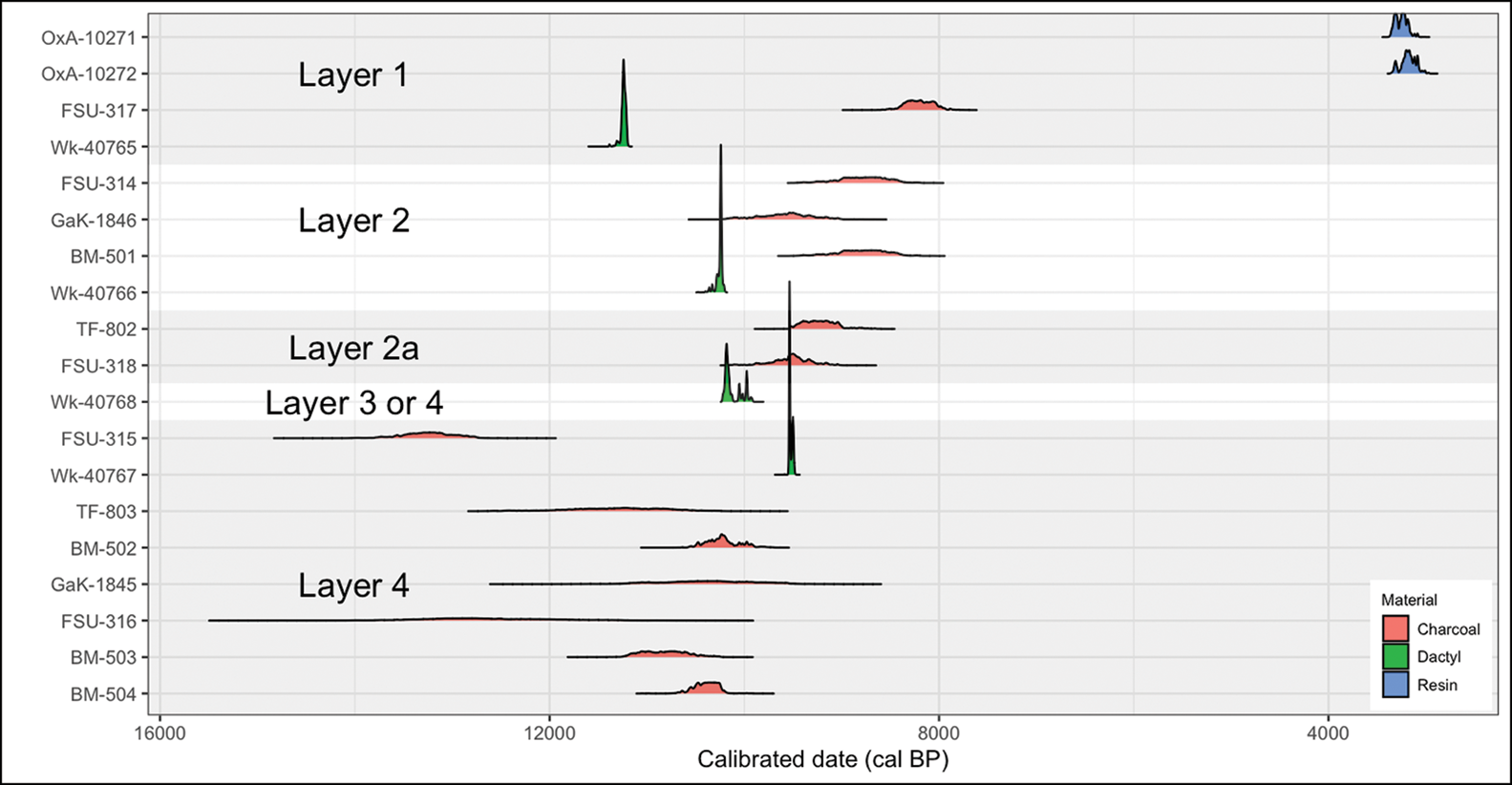
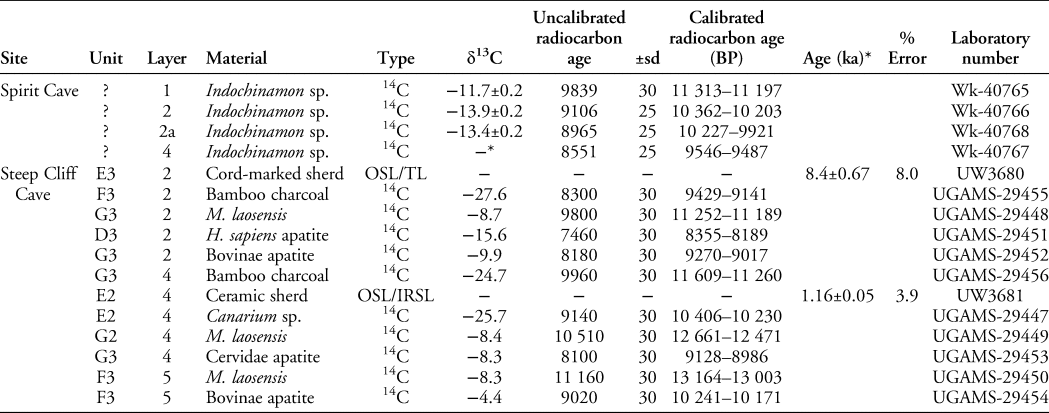
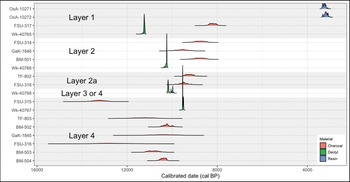
Radiocarbon determinations on freshwater crab from Spirit Cave's Layers 1, 2, 2a and 4 all date to the Early Holocene (Table 2; Figure 5). These ages, however, are in reverse stratigraphic order: the oldest sample, at 9839±30 BP, derives from Layer 1, while the youngest, at 8551±25 BP, derives from Layer 4. On average, freshwater crab dactyls are 970 years older than their paired charcoal samples, but the importance of this offset is diminished, given that the charcoal ages from Spirit Cave are in correct stratigraphic order and provide a clear chronological baseline.
Calibrated radiocarbon age distributions from Spirit Cave. Age ranges were calibrated (at 95.4% confidence) using the Bchron package in R (Parnell Reference Parnell2014; see Conrad et al. Reference Conrad2020a) and the IntCal20 atmospheric curve (Bronk Ramsey Reference Bronk Ramsey2020; Reimer et al. Reference Reimer2020).
New ages from Spirit Cave and Steep Cliff Cave. Calibrated ages are corrected for reservoir offsets. Dates calibrated (at 95.4% confidence) using OxCal v4.4.2 and the IntCal20 atmospheric curve (Bronk Ramsey Reference Bronk Ramsey2020; Reimer et al. Reference Reimer2020).
* See compendium material in Conrad et al. (Reference Conrad2020a).
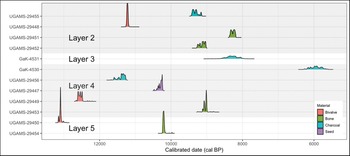
Excluding Gorman's original dates, our new radiocarbon ages for Steep Cliff Cave are bracketed between 11 160±30 and 7460±30 BP (Table 2; Figure 6). Analysis of radiocarbon reservoir offsets in M. laosensis suggests that these dates are, on average, 1704 years older than their paired bone apatite and charcoal samples. Accounting for this offset, the earliest date at Steep Cliff Cave is 9960±30 BP. A direct bone apatite radiocarbon determination on a human bone specimen provides the youngest date for our new radiocarbon analysis at 7460±30 BP. One charcoal radiocarbon date of 5178±110 BP obtained by Gorman is also recorded for Steep Cliff Cave. Two new luminescence dates on ceramic sherds return ages of 6390±670 BC and AD 860±50, respectively.
Calibrated radiocarbon age distributions from Steep Cliff Cave. Age ranges were calibrated (at 95.4% confidence) using the Bchron package in R (Parnell Reference Parnell2014; see Conrad et al. Reference Conrad2020a) and the IntCal20 atmospheric curve (Bronk Ramsey Reference Bronk Ramsey2020; Reimer et al. Reference Reimer2020).

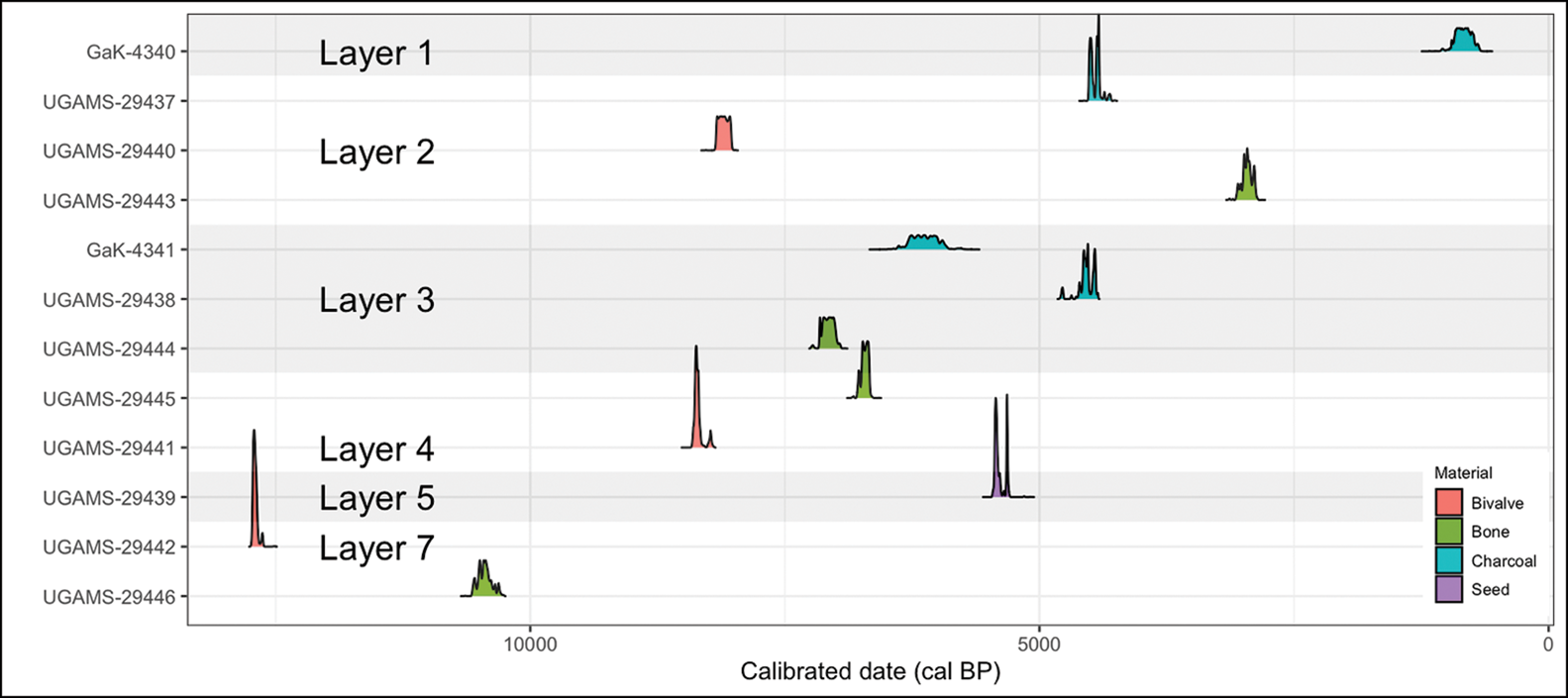
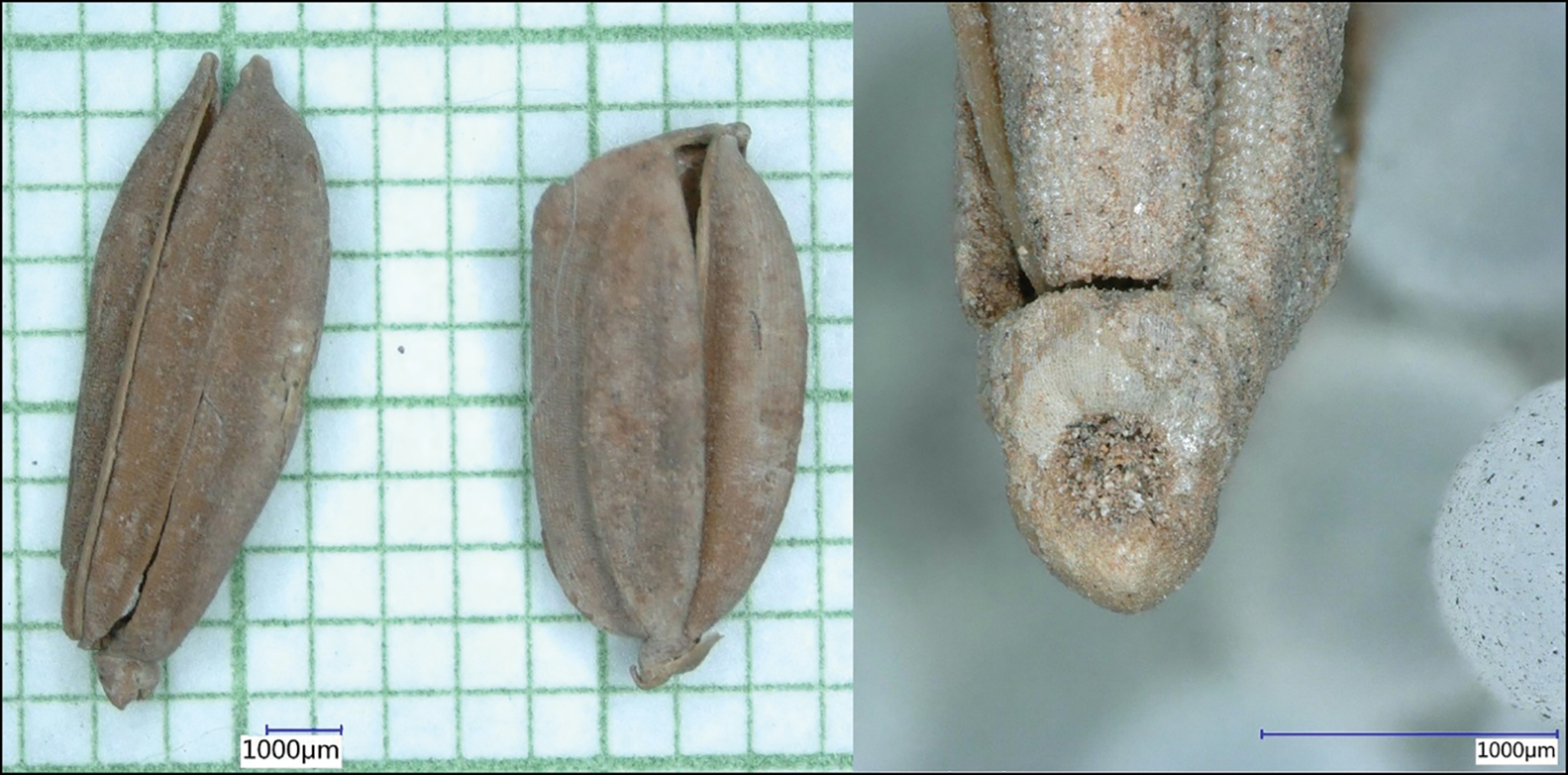
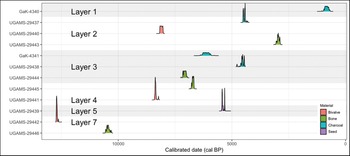
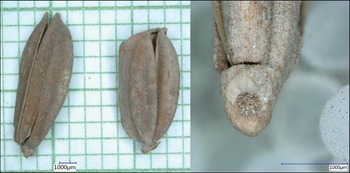
Our 13 radiocarbon determinations from Banyan Valley Cave range between 10 680±30 and 2850±25 BP. When radiocarbon offsets are considered, the earliest date for this site is 9270±30 BP (Table 3; Figure 7). On average, M. laosensis shells are 2612 years older than their paired bone apatite and charcoal dates. A direct apatite radiocarbon determination on a human bone specimen from Layer 3 returned a date of 6180±30 BP. All three rice spikelet samples, from excavation unit C8, yielded dates between 280±20 and 220±20 BP. The rice was re-examined before dating, following current spikelet base identification criteria (e.g. Fuller et al. Reference Fuller2009), and was identified as domesticated rice, as it lacks the awn which is present in all wild rice and the earliest cultivars (Figure 8). Two luminescence dates on a ceramic sherd and ceramic pellet (or bullet, used as a projectile in a pellet bow) provide ages of 2350±230 BC and AD 450±220, respectively.
Calibrated radiocarbon age distributions, excluding rice determinations, from Banyan Valley Cave. Age ranges were calibrated (at 95.4% confidence) using the Bchron package in R (Parnell Reference Parnell2014; see Conrad et al. Reference Conrad2020a) and the IntCal20 atmospheric curve (Bronk Ramsey Reference Bronk Ramsey2020; Reimer et al. Reference Reimer2020).
Banyan Valley Cave rice spikelets: left) two examples of spikelets. Note the lack of awns (indicating a domesticated variety) and the broad width, also suggesting a domesticated length:width ratio; right) close-up of a spikelet base, demonstrating the torn, domesticated morphology (photographs by C.C. Castillo).
New ages from Banyan Valley Cave. Calibrated ages are corrected for reservoir offsets. Dates calibrated (at 95.4% confidence) using OxCal v4.4.2 and the IntCal20 atmospheric curve (Bronk Ramsey Reference Bronk Ramsey2020; Reimer et al. Reference Reimer2020).

* See compendium material in Conrad et al. (Reference Conrad2020a).
Discussion
Radiocarbon and luminescence ages obtained from Spirit Cave, Steep Cliff Cave and Banyan Valley Cave help us build an important new chronological framework for understanding the lifeways of hunter-gatherers in highland Mainland Southeast Asia during the Terminal Pleistocene and Holocene.
Of the sites examined, Spirit Cave is the most controversial. While the original sequence was initially accepted by the academic community (Flannery Reference Flannery1973), ages obtained from organic resins on ceramic sherds in the early 2000s cast doubt on the accuracy of parts of the temporal sequence. Lampert et al. (Reference Lampert2003) argued that because the radiocarbon dates from ceramic resins yielded Late Holocene ages, most of the ceramics from Spirit Cave did not, therefore, date to the Early Holocene, and thus the ceramic chronology for the site was inaccurate. This argument was quickly challenged, as field notes and site records indicate that the dated sherds were probably recovered from surface contexts, and were therefore unrelated to the original hunter-gatherer occupation and the initial appearance of ceramics in deeper layers (White Reference White2004; see also Lampert et al. Reference Lampert2004).
Our new radiocarbon analyses of freshwater crab dactyls are compatible with an occupation of Spirit Cave during the Pleistocene–Holocene transition, but not without some caveats. While our results broadly match Gorman's (Reference Gorman1970) original sequence, they are in reverse stratigraphic order. This indicates either that the deposits at Spirit Cave are disturbed or otherwise mixed, or that the provenance information for these dactyl specimens is inaccurate. Deposits at Spirit Cave are shallow, and there is evidence for prehistoric anthropogenic digging of pits into underlying layers (Gorman Reference Gorman1970, Reference Gorman1971b). Mixing of the deposits is therefore plausible (see also Treerayapiwat Reference Treerayapiwat2005). Moreover, the curation and storage of the archaeological assemblage from Spirit Cave is relatively poor (Conrad et al. Reference Conrad, Higham, Eda and Marwick2016; Conrad Reference Conrad2018), possibly resulting in the freshwater crab dactyls being mislabelled, or information relating to their provenance being misassigned.
Whatever the explanation, our dates clearly support a hunter-gatherer occupation of Spirit Cave dating to the Pleistocene–Holocene transition. We also contend that the ceramic resin dates are analytically accurate, but are representative of much later Holocene re-use of this site by agricultural societies (i.e. the Log Coffin Culture, c. 350 BC–AD 1000; see Grave Reference Grave1995). While we were unable to locate, and therefore directly date by OSL/TL/IRSL, the specific ceramic sherds from Spirit Cave that provided the basis for Gorman's original interpretation, we note that Gorman did observe ceramics on the surface of Layer 2:
Except for where animal disturbance was evident potsherds were limited in the site to the interface of layers one and two. The surface of layer two was closely examined in all of the eleven squares excavated and the same compacted conditions were found to prevail: concentrations of very fragmented pottery were impressed horizontally into this surface just as if the sherds had been broken in situ and walked upon for some time. This surface was the living floor circa 6800–5600 BC and all of the pottery evidently came into the site at this time. (Gorman Reference Gormann.d.)
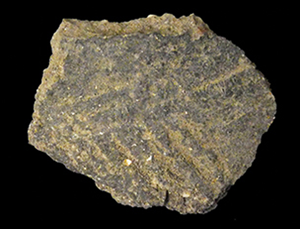
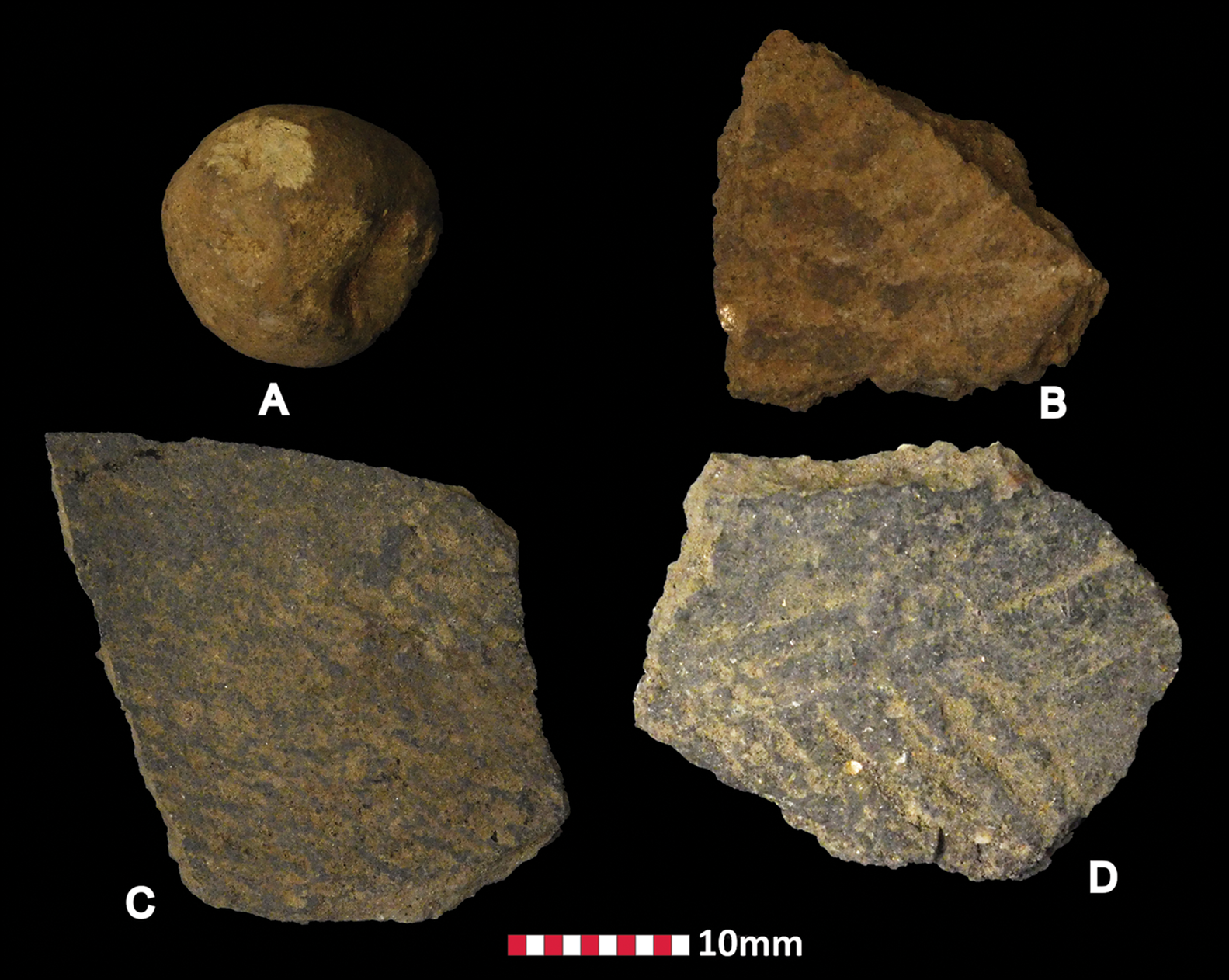
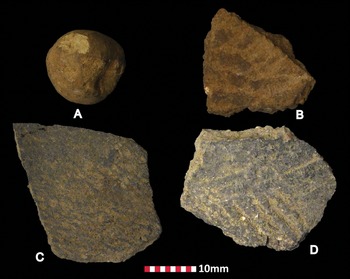
This record is significant, as we obtained a single luminescence date of 6390±670 BC on a cord-marked ceramic sherd from Steep Cliff Cave (Figure 9)—a date which is within Gorman's original interpretation for the presence of the earliest pottery at Spirit Cave. Cord-marked sherds may represent the earliest form of ceramics to appear in Mainland Southeast Asia (Rispoli Reference Rispoli2007). Given that it was not possible to re-examine the Spirit Cave specimens, and given the other dates for ceramics obtained in our study (a sherd from Steep Cliff dating to AD 860±50—over 7000 years later—and a sherd from Banyan Valley Cave dating to 2350±230 BC), further research is required to resolve the question of ‘Hoabinhian’ ceramic use and manufacture throughout Mainland Southeast Asia.
Dated ceramics: A–B) Banyan Valley Cave; C–D) Steep Cliff Cave. The oldest sherd (D) from Steep Cliff Cave dates to 6390±670 BC (photographs by C. Conrad).
The dates from the Steep Cliff Cave sequence provide additional evidence of hunter-gatherer occupation in north-west Thailand during the Early Holocene. Steep Cliff Cave appears to have a shorter occupation sequence than Spirit Cave. This is further supported by the Steep Cliff Cave faunal assemblage, which suggests that the site was only used as a hunting mass-kill location, where foragers drove large mammals off the cliff face above the cave and butchered them on the rockshelter floor (Conrad Reference Conrad2018). This is an unusual hunting behaviour for Mainland Southeast Asia and suggests that the use of Steep Cliff Cave may have involved a component of forager scheduling (e.g. the seasonal exploitation of animals; Shoocongdej Reference Shoocongdej2000). Steep Cliff Cave's faunal assemblage is dominated by large ungulates, whose bones are burnt and cut-marked.
Our dates suggest a resolution of the issues concerning the chronology of Steep Cliff Cave. Gorman's charcoal radiocarbon determinations for this site, obtained from units E3 and E2 in the north-east, where dispersed human remains also occurred (Conrad Reference Conrad2018), were in reverse stratigraphic order. In our study, an apatite date on human bone from unit D32 (immediately adjacent to the source of Gorman's radiocarbon samples) provided the youngest date for the site's occupation (7460±30 BP). This bone may therefore indicate the presence of an intrusive human burial. Burials dug into earlier hunter-gatherer deposits in cave and rockshelter sites in Mainland Southeast Asia are often associated with later Holocene groups (Anderson Reference Anderson2005; Shoocongdej Reference Shoocongdej, Bacus, Glover and Pigott2006; Bulbeck Reference Bulbeck2014; Lloyd-Smith Reference Lloyd-Smith, Boyle, Rabett and Hunt2014; Lewis et al. Reference Lewis, White, Bouasisengpaseuth and Tan2015). The relatively early age of this burial may suggest that this is not the case at Steep Cliff Cave (see also Zeitoun et al. Reference Zeitoun2013), but it is nonetheless apparent that these deposits have been disturbed.
The dates for Banyan Valley Cave suggest that hunter-gatherers occupied the cave during the same Early Holocene period as the foragers at Spirit Cave and Steep Cliff Cave; but they did so sporadically and continued to return to Banyan Valley Cave long after Spirit Cave and Steep Cliff Cave went out of use. The human remains from Banyan Valley Cave date to the Early to Mid-Holocene (6180±30 BP), and therefore do not represent a later, intrusive burial. Anthropogenic deposits with artefacts post-dating these remains suggest that hunter-gatherers continued to occupy the site until the very recent past (Conrad Reference Conrad2018).
Rice spikelet dates and the luminescence-dated clay pellet from Banyan Valley Cave, which was probably used for hunting arboreal taxa, also suggest Late Holocene and historic-era occupation of north-west Thailand cave sites by agricultural populations or hunter-gatherer groups. Banyan Valley Cave thus provides evidence of both hunter-gatherer adaptations during the Holocene and occupation during the transition to agriculture in Mainland Southeast Asia.
Conclusions
New radiocarbon and luminescence dates for Spirit Cave, Steep Cliff Cave and Banyan Valley Cave lead us to revise our understanding of human occupation in north-west Thailand in the Terminal Pleistocene and Holocene. Our results support the original chronology proposed for Spirit Cave, including possible early ‘Hoabinhian’ ceramics; an Early Holocene chronology for Steep Cliff Cave, with evidence of hunter-gatherer scheduling and burial activities; and a Holocene chronology for Banyan Valley Cave, with evidence of sporadic use of the site, including historic-era activity. Our results do not provide evidence for early agriculture, but highlight the importance of north-west Thailand as a centre of Pleistocene–Holocene hunter-gatherer activity in Mainland Southeast Asia. Resilient hunter-gatherer populations continued to exploit this highland region throughout periods of environmental change during the Pleistocene–Holocene transition and the process of Neolithisation thereafter. Our analyses support the need for further research into the processes of past forager-farmer relationships during this critical era in Mainland Southeast Asian prehistory.
Acknowledgements
Our thanks go to Lawrence Straus and Sherry Nelson for providing guidance and support during this research. It could not have been undertaken without the generous support of the Penn Museum, including Marie-Claude Boileau, Anne Brancati, Stephen Lang and Lynn Grant, who assisted with the loan of specimens and on-site examinations, and the review of destructive sampling requests through the Scientific Testing Committee. Thanks also to Alex Cherkinsky, Chester F. Gorman III, Alan Hogg, Vincent Jenkins, Erin McClymont, James McDonald, Dave Phillips, Karen Price, Paula Reimer and Meghan Truckey. A special thanks to Douglas Yen for sharing his perspective on the rice spikelets. We are extremely grateful to the Fine Arts Department, Thailand, and former Director-General Mr Anandha Chuchoti, for supporting this research project. Finally, we thank the two anonymous reviewers for providing invaluable reviews of this manuscript.
Funding statement
This research was funded by a Quaternary Research Association 14CHRONO Centre Radiocarbon Dating Award and a National Science Foundation Doctoral Dissertation Improvement Grant (1724202) to C.C. and E.L.J.




 Open access

