





1. Introduction
Over the past twenty years, there has been sustained discussion about how best to integrate employability skills (also known as ‘career readiness’ in the US; Detgen et al. Reference Detgen, Fernandez, McMahon, Johnson and Dailey2021) in higher educational contexts, a discussion motivated by a need to address concerns among students about how well a university degree prepares them for the world of work and the extent to which their investment of time, money, and effort might translate into paid employment opportunities once they graduate (Scott & Willison Reference Scott and Willison2021, Cheng et al. Reference Cheng, Adekola, Albia and Cai2022).
While the literature on this topic offers general guidance related to employability (see, for example, Oliver Reference Oliver2015, Römgens et al. Reference Römgens, Scoupe and Beausaert2020), decisions about how to operationalize these recommendations, with a specific focus on curriculum content, are often left to individual departments. For instance, in their review of employability provisions in British universities, Scott and Willison (Reference Scott and Willison2021:1121) note that ‘[w]hile the resources [we outline] are useful in supporting institutions to develop their thinking about embedding employability into their programme, a review of the literature indicates there is an apparent lack of specific practical resources which have been developed for in-class use’. This article is intended as one means of addressing this gap for the field of linguistics.
More broadly, employability connects to the concept of impact, defined in UK research contexts as ‘the effect on, change or benefit to the economy, society, culture, public policy or services, health, the environment or quality of life, beyond academia’ (United Kingdom Research and Innovation (UKRI) 2021). Impact has since come to be a key component of research in the UK, where academics are encouraged (or even required, in the case of funding bids) to integrate into their projects an articulation of the wider social good that will be achieved through their research activities outside the confines of the university setting (Rapple Reference Rapple2019). As such, the pursuit of impact relies on partnership building with nonacademic stakeholders, including third-sector organizations, businesses, and local communities, where novel applications for academic research can be developed.
Impact has, consequently, been vigorously integrated into a range of (socio)linguistic research in the UK (Lawson & Sayers Reference Lawson and Sayers2016, McIntyre & Price Reference McIntyre and Price2018), and, although less formalized, it has been a key component in American sociolinguistic scholarship (see Lawson & Sayers Reference Lawson and Sayers2016 for an overview). For instance, Charity Hudley et al. (Reference Charity Hudley, Mallinson and Bucholtz2020:e224) invoke a similar discourse of impact in their work on racial justice in linguistics, noting that:
[i]n order to increase the impact of our research, linguists must also consider more seriously how to engage scholars and educators working within the language sciences and humanities, as well as representatives of governmental and nongovernmental organizations whose work intersects with linguistic issues—and most importantly, how to engage communities and language users.
Their point is important in relation to widening participation and collaborative research practice, both of which form part of what Charity Hudley (Reference Charity Hudley, García, Flores and Spotti2016) calls the ‘fourth wave of sociolinguistics’.
Yet how linguistics students might develop the skills and confidence to work with nonacademic stakeholders and to become agents of change themselves has been less considered in existing literature. Gawne and Cabraal (Reference Gawne and Cabraal2023) partly engage with this question by exploring some of the skills that linguistics graduates describe as being relevant in the career paths they have gone on to pursue, while Trester (Reference Trester2017, Reference Trester2022) introduces frameworks for integrating linguistics skills within the workplace (see also Battershill & Kuperman Reference Battershill and Kuperman2023).
While it would be fair to say that linguistics is, in many cases, a socially engaged discipline, most undergraduate curricula concentrate on the formalized dimensions of linguistic study, including phonetics, phonology, grammar, variation and change, semantics, and linguistic history, but not necessarily on, for example, partnership building with external stakeholders or reflecting on how students’ degrees might inform their employability prospects. This is perhaps a surprising omission in taught content, given the extent to which (socio)linguistics has contributed to a range of social concerns over the years (see the collected chapters in McIntyre & Price Reference McIntyre and Price2018, Price & McIntyre Reference Price and McIntyre2023). Unfortunately, the first time most linguists are required to consider the impact and application of their research is as part of a funding bid, tenure review, or promotion application, since it is very often not a feature of undergraduate or postgraduate education. As such, ‘impact’ can feel like a box-ticking exercise, bolted on to satisfy institutional or funder requirements, with consequences for the kinds of impact pursued being more superficial than socially transformative.
Using the concept of impact as a framing device, this article presents a discussion of a series of pedagogical developments concerned with embedding employability skills in undergraduate and postgraduate linguistics programs. The first relates to the development of Applied Sociolinguistics, an undergraduate linguistics moduleFootnote 1 taught at Birmingham City University, England (BCU hereafter), while the second details a range of stand-alone interventions and activities at undergraduate and graduate levels, as well as formalized internship programs. While our focus in this article is on UK and US contexts, motivated by our own career trajectories in these countries, our discussion has implications for linguistics training beyond these spaces. For instance, recent policy interventions in Italy have highlighted the increasing importance of embedding employability in universities (Rostan & Stan Reference Rostan and Stan2017), while similar discussions are happening in Spain (Cordón-Lagares et al. Reference Cordón-Lagares, García-Ordaz and García-del-Hoyo2022), France (Alis et al. Reference Alis, Baslé, Mouline, Carlot, Filoque, Osborn and Welsh2015), Australia (Gill Reference Gill2018, Jackson Reference Jackson2018), New Zealand (Universities New Zealand 2015, 2021), and elsewhere (Calvo & Chouc Reference Calvo and Chouc2010). Consequently, our article offers a training trajectory that could be embedded in curricula in international institutions, from a stand-alone module with impact at its heart through to bespoke activities that can be integrated into a range of sessions, with particular relevance to linguistics programs of all stripes.
To our knowledge, this article represents the first attempt to formalize the integration of employability skills (vis-à-vis impact) within linguistics departments and curricula (although see Gawne & Cabraal Reference Gawne and Cabraal2023 for a consideration of language in relation to workplace skills, and Gawne & McCulloch Reference Gawne and McCulloch2023 for a resource set that includes lesson plans). In writing this article, we hope to advance discussions about how best to prepare linguistics students for post-university life, especially in light of the structural problems underpinning academia and increasing job precarity (University and Colleges Union 2022). Only a small proportion of undergraduate linguistics students go on to postgraduate study, and fewer still go on to secure tenure-track positions in their chosen subfield; research (Charity Hudley et al. Reference Charity Hudley, Mallinson and Bucholtz2020, Calhoun et al. Reference Calhoun, Clemons, Peltier, Martin and Hudley2026) has documented additional barriers faced by Black and Minority Ethnic students.
If linguistics is to equip students to be career-ready after graduation, university educators should consider how best to serve the majority of students who do not pursue academic careers in linguistics. In other words, how can a more explicit focus on partnership building, together with opportunities to apply their knowledge of language, help linguistics students articulate the value of their degree to prospective employers and collaborators? This agenda becomes even more pressing given that many of the analytical and problem-solving skills cultivated by the study of linguistics have been identified by the National Association of Colleges and Employers as being sought by employers to address the challenges of contemporary work (National Association of Colleges and Employers (NACE) 2024).
In tackling these issues, we demonstrate that the pursuit of impact in linguistics programs can be integrated to serve several important aims, including the development of employability skills and improving graduate employability outcomes, while contributing to broader issues of social inclusion and justice (see also Charity Hudley et al. Reference Charity Hudley, Mallinson and Bucholtz2024b).
Although the discussion presented here will be of most relevance to faculty (regardless of geographical location), by virtue of this group having the most power to implement the interventions and curriculum developments we suggest, the article will also be useful to linguists at all career stages, including current undergraduate and postgraduate students, early career researchers, and those working outside of academia, especially in terms of informing thinking around career trajectory and professional development. Importantly, the article reframes how we think about the intersection between the social good linguistics represents and the wider context of capitalism and employability. In doing so, it advocates for a holistic approach to addressing these issues in a meaningful way that both responds to the ever-changing landscape of preparing students for post-university life and charts a path through which the discipline of linguistics can be part of this preparation.
We recognize, however, that not all academic staff will have the relevant training or expertise to guide students in these domains. This article represents a starting point for those readers who want to learn how to embed impact and employability in their teaching, either through a self-contained module (where institutional frameworks allow) or through stand-alone pedagogical activities (requiring different levels of preparation) that can be integrated across different linguistics modules or courses. During our discussion, we also identify relevant resources that help support readers’ development in this sphere. Taking all of this together, we hope that the article encourages readers to consider what meaningful engagement with impact and employability could look like from wherever they are.
2. Overview
In the next section, we set out the two primary contexts underpinning our discussion: impact and employability, examining how these notions have been utilized to frame undergraduate curriculum provision. Following this, we turn to the design and implementation of Applied Sociolinguistics, a final-year module taught at BCU. This module has at its center a focus on collaborative research, where students work with a partner to investigate an issue related to language use (see the Appendix for an overview). This discussion concentrates on the aims and objectives of the module, its underlying pedagogical philosophy, and some practical considerations for implementation. We then examine the integration of career readiness into program design, drawing on ongoing work within a new linguistics department at Boise State University to embed career readiness from program inception. More specifically, we discuss interventions ranging from individual classroom activities to university-level collaborations aimed at expanding workplace engagement, demonstrating how employability can be embedded both structurally and interventionally as integral components of learning within linguistics curricula. Pulling these threads together, we finally consider the implications of this work, as well as how we might help students understand and reframe their orientation to employability.
3. Preliminaries
Before turning to our substantive discussion, we briefly outline how this collaboration emerged. In 2015, Anna Marie was invited to deliver a series of workshops in Birmingham, UK, exploring the themes of her (then in progress) book Bringing linguistics to work (Trester Reference Trester2017). These workshops prompted wide-ranging conversations about employability and its place within linguistics curricula. At the time, Robert had recently completed an edited volume focused on impact (Lawson & Sayers Reference Lawson and Sayers2016), while Anna Marie had transitioned from academia into the nonprofit sector, gaining a new perspective on both impact and employability. The event provided an opportunity for us to connect around shared interests, leading to ongoing correspondence, reciprocal classroom visits (virtually), and sustained engagement with one another’s work.
In 2019, Robert invited Anna Marie to the University of Jyväskylä, Finland, to co-facilitate a professional-development workshop for Ph.D. students. At the outset of this event, we asked students what they hoped to gain from the day. It became clear that questions of professional identity, precarity, and academic labor were central to students’ concerns. Although we initially planned to develop these discussions into a joint article, the COVID-19 pandemic and a series of significant personal and professional transitions delayed that work. By 2024, Anna Marie had returned to academia as a career-readiness coordinator, a role that complemented her earlier experience supporting graduate students and sharpened the comparative lens developed here, while Robert had been teaching his Applied Sociolinguistics module for several years at his home institution of BCU. This article thus emerges from a sustained dialogue spanning workshops, teaching practice, and institutional contexts over the past decade.
4. Impact: a ‘way in’ to thinking about employability
As noted in the introduction, impact is now a formally embedded part of evaluating British research effectiveness through a system known as the ‘Research Excellence Framework’ (REF hereafter). Held every seven years, REF aims to ‘provide accountability for public investment in research and produce evidence of the benefits of this investment; to provide benchmarking information and establish reputational yardsticks; and to inform the selective allocation of funding for research’ (REF 2026). This is achieved through a number of metrics, including research outputs, research environment and culture, and impact, the latter of which was intended to capture the broader application of academic research beyond the confines of the university setting (see UKRI 2021 for examples of impact case studies from a range of UK universities). The introduction of the impact metric was partly to satisfy growing calls among politicians and the public for universities to justify how taxpayer funds were being spent and partly to articulate more explicitly the value of academic research to a wider audience (see Lawson & Sayers Reference Lawson and Sayers2016 for a history of the impact agenda in the UK).
Across the arts and humanities sector, the introduction of impact has not been straightforward, particularly because, as Belfiore (Reference Belfiore2015:100) notes, the ‘ultimate outcome of [such] research is not immediately visible in the shape of illnesses cured, vaccines created, tsunamis and natural disasters averted, or new inventions brought to market’ (although see Pedersen et al. Reference Pedersen, Grønvad and Hvidtfeldt2020 for a discussion of impact across social sciences and humanities subjects). In the decade since impact was established as an REF metric, it has been variously critiqued, rejected, and challenged in arts and humanities subjects, resisting attempts to reduce the value of scholarly inquiry solely to an instrumentalized financial or economic dimension (Belfiore Reference Belfiore2015, Benneworth Reference Benneworth2015). In this process, impact work in the humanities has pivoted away from an exclusively economic case to make strides in informing public policy, supporting community engagement and well-being, and raising awareness on issues of multilingualism, local culture, the effect of COVID-19 on the cultural industries, and more (see, for example, the collected case studies in Holmes-Henderson & Sewell Reference Holmes-Henderson and Sewell2024).
Despite these efforts, however, there has been animated debate concerning the ‘worth’ of arts and humanities subjects, often condensed to a form of ‘utilitarian logic’ (Belfiore Reference Belfiore2015:97). For instance, in mid-2023, Rishi Sunak (the former British Prime Minister and then Leader of the Conservative Party) vowed to ‘crack down on rip-off university courses’Footnote 2 (see Bulaitis Reference Bulaitis2023 for an overview), highlighting career destination and graduate salary as the primary means through which to judge the efficacy of degree programs. Even if one were to overlook the fact that such a move would limit uptake of arts and humanities degrees among students from less advantaged backgrounds (i.e. the ones who stand to gain the most from going to university), with potential ramifications on social mobility and personal growth (Morrison Reference Morrison2023), it is clear that concentrating student enrollment on STEM degreesFootnote 3 (science, technology, engineering, and mathematics) closes off opportunities for participation in community engagement, cultural debates, and exploration of social issues, from both historical and contemporary perspectives. With arts sector workplace engagement alarmingly low, especially in the aftermath of COVID-19 (Wamsley et al. Reference Wamsley, Gilmore, O’Brien and Torreggiani2022), Sunak’s statement further undermined the social and cultural contributions made by arts and humanities students and scholars in civic life.
Although discussions of impact are principally aimed at research-active staff within universities, we argue that centering impact in undergraduate linguistics curricula can foster a view of students as agents of social change, emphasizing how they can leverage their knowledge beyond academia (both during their degrees and after graduation). Thus, impact is not only a goal in its own right, but also a mechanism through which disciplinary knowledge can have wider social or economic effects. In a powerful call to action, Charity Hudley (Reference Charity Hudley2023:222) argues that ‘[i]t is time to move away from simply advancing linguistic scholarship and make the intellectual leap toward research that has articulated immediate tangible benefits for marginalized communities and communities of color’ (our emphasis). Applied linguistics has a long history of this approach, while disciplines like computational linguistics (Bender & Hanna Reference Bender and Hanna2025), corpus linguistics (McEnery & Brookes Reference McEnery and Brookes2024), forensic linguistics (Frazer Reference Frazer2024), and queer linguistics (Jones Reference Jones2023) have increasingly worked to relate research findings to tangible changes in practice and policy. In their recent volumes Decolonizing linguistics (Charity Hudley et al. Reference Charity Hudley, Mallinson and Bucholtz2024a) and Inclusion in linguistics (Charity Hudley et al. Reference Charity Hudley, Mallinson and Bucholtz2024b), Charity Hudley and colleagues also share powerful examples of advancing social change within our field.
As important as this call to social action is, though, it has yet to settle at the heart of the discipline. Moreover, impact (as a component of social action) cannot be uncritically integrated into an undergraduate curriculum, especially given how enmeshed it is within specific cultural contexts. As such, questions remain about how best to frame impact in a way that speaks directly to students’ interests, needs, and concerns. We argue that relating impact to employability is one approach of anchoring curriculum content in a way that is meaningful for students, particularly in terms of future job prospects and the desire among many (if not all) students to secure gainful employment upon graduation, in addition to being able to make a valuable contribution to the world through their work (see also Althorpe Reference Althorpe2024). Importantly, this approach can also strengthen students’ engagement with their studies, offering authentic opportunities to connect their learning with real-world issues and to develop skills such as communication, collaboration, and problem solving that are valued both within and beyond the university.
We acknowledge, however, that framing employability and impact in this way risks aligning with a more instrumentalized, market-driven view of higher education, one that might be perceived as running counter to the social justice angle promoted across the discipline (and elsewhere in this article). Nonetheless, we resist this characterization for the following reasons. First, employability ranks high among students’ priorities (regardless of degree focus), often influencing, or even determining, choice of degree (Jackson Reference Jackson2013, Behle Reference Behle2020, Jackson & Tomlinson Reference Jackson and Tomlinson2022, Gawne & Cabraal Reference Gawne and Cabraal2023:e38). Furthermore, work will be—for many—one of the main ways that they give back to their communities, and students will explicitly look for skills to bring to societal challenges as part of their criteria for continuing a course of study. If we can integrate employability into undergraduate linguistics curricula in a way that aligns with the pursuit of impact and the notion of doing good, while simultaneously developing students’ awareness of how they can leverage their degree beyond academia, equipping them with a sense of choicefulness and honing an ethical and moral compass around work decisions, this stands to benefit everyone involved.
5. Universities and the employability agenda
First, let us define what we mean by ‘employability’.Footnote 4 Rather than a comprehensive evaluation of different employability frameworks, our discussion here is necessarily selective, with an aim to briefly operationalize this term by exploring how it has been used in the literature. In one of the earliest discussions of employability in the higher education sector, Hillage and Pollard (Reference Hillage and Pollard1998:2) define it as ‘being capable of getting and keeping fulfilling work’ and the ‘capability to move self-sufficiently within the labour market to realise potential through sustainable employment’. Harvey (Reference Harvey2001:98) offers a similar conceptualization, noting that employability is the ‘propensity of students to obtain a job’, while Yorke (Reference Yorke2006:8) emphasizes skills-based attributes, defining employability as ‘a set of achievements—skills, understandings and personal attributes—that makes graduates more likely to gain employment and be successful in their chosen occupations, which benefits themselves, the workforce, the community and the economy’. Building on this formulation, Oliver (Reference Oliver2015:59) adapts Yorke’s definition to argue that ‘employability means that students and graduates can discern, acquire, adapt and continually enhance the skills, understandings and personal attributes that make them more likely to find and create meaningful paid and unpaid work that benefits themselves, the workforce, the community and the economy’.
In more recent work, Daubney (Reference Daubney2022:94) argues that the term ‘employability’ is often used to ‘describe the outcome of a transition from study to work, in other words the process of becoming employable’. This framing also relates to ‘future proofing’ students from the changeable conditions of the labor market, especially pertinent in the context of increasing automation and the growth of artificial intelligence (AI) technologies and associated fields (see also Curry et al. Reference Curry, McEnery and Brookes2025 for a discussion of AI in applied linguistics). As Römgens et al. (Reference Römgens, Scoupe and Beausaert2020:2588) presciently point out, ‘[h]igher education institutions need to prepare students for jobs that do not exist yet, for using technologies that have yet to be invented, and for solving problems that nobody has yet thought of’.
The set of skills that fall under the umbrella of ‘employability’ are multifaceted, and there have been multiple attempts to capture their composition. For example, Kornelakis and Petrakaki (Reference Kornelakis and Petrakaki2020) discuss the Qualifications and Curriculum Authority employability framework, which sets out skills related to information technology, numeracy, communication, problem solving, team working, and an ability to improve one’s own learning and performance. We can extend this list to include interpersonal skills, resilience, self-awareness, active learning, career management, enterprise, and cooperation (Fallows & Steven Reference Fallows and Steven2000, Mason et al. Reference Mason, Williams and Cranmer2009, Gill Reference Gill2018). In the United States, the NACE’s eight competencies add skills in critical thinking and equity and inclusionFootnote 5 (NACE 2024).
Universities are often positioned as the sector responsible for creating ‘work-ready’ graduates, either through specialist provision via specific employability-related modules (Yorke & Knight Reference Yorke and Knight2006) or through a more holistic ‘whole university experience’ allied to the world of work (Rae Reference Rae2007). Kornelakis and Petrakaki (Reference Kornelakis and Petrakaki2020:290) suggest that ‘[e]mployability skills may be developed through a variety of student learning opportunities and activities which are part of the higher education experience—for example, self-study, participation in lectures, attending specialized career-advising workshops or participating in work-integrated learning programmes’.
Nevertheless, the extent to which universities should take on this responsibility is contested. For example, drawing on views solicited from staff at one ‘case university’, Daubney (Reference Daubney2022:94) reports that many academic staff viewed the embedding of employability within university curricula as the responsibility of careers service departments, while also expressing concern that such a focus would come at the expense of disciplinary content and threaten curricular integrity. Daubney (Reference Daubney2022:97–98) consequently proposes the concept of ‘extracted employability’, or the ‘means of identifying elements that have innate employability value in a program, subject or discipline’, to answer the question of how an academic program develops knowledge, attributes, skills, and experience in its students. Daubney goes on to argue that an extracted employability framing can help academics identify how employability is already innate to existing curriculum provision, without needing to add new course or module content.
In more recent commentary, Hora (Reference Hora2023) suggests that we should not focus overly on skills to the exclusion of understanding how they function in context. In his words, ‘the first step in improving career-readiness efforts is to replace any frameworks or tools that perpetuate generic, normative views of soft skills with a more accurate view of skills as contextualized, culturally shaped modes of reasoning, interaction and behavior’ (Hora Reference Hora2023), an undertaking that sociolinguistic scholars seem to be particularly well positioned to lead, as we show in the following discussion.
Indeed, just about anything and everything that ‘gets done’ in the workplace is accomplished through language, so in some ways, nothing is more fundamentally transferable than linguistics. Thinking about linguistics curricula, then, how do we move from the general scope of employability skills to specific strategies that help students develop these skills and the ability to critically reflect on their own mastery and acquisition of these skills? Moreover, how do we support students in articulating their contextualized understandings of their skills? Ultimately, we argue that the concept of impact introduced in the first part of this discussion is one way to operationalize thinking about employability, including identifying, deploying, and reflecting on the transferable skills that demonstrate (and comprise) employability. Thus, the rest of this article considers to what extent these concepts can be integrated into curricula to serve broader social concerns. We begin by analyzing the structural integration of impact and employability in Applied Sociolinguistics, an undergraduate module taught at BCU.
6. Undergraduate provision: Applied Sociolinguistics
From 2016–2017, BCU undertook a review of curriculum content aimed at strengthening its commitment to practice-based education, research, and knowledge exchange. Departments were required to update their teaching provision in light of this objective, aligning their degree offering to better serve the next generation of students, including a more explicit focus on employability-related content. This process, known as ‘Transforming the Curriculum’ (TtC hereafter), was supported by a range of workshops, guidance documents, and internal reviews, with a planned launch date of September 2019 for revalidated degrees.
Given the nonvocational nature of the subject, academic staff in the School of EnglishFootnote 6 discussed how best to translate TtC requirements into a meaningful formulation for prospective students while also adhering to disciplinary benchmarks (see Lawson & Wood Reference Lawson and Wood2019 for details). For example, while the TtC strategy called for employment-enhancement activities to be embedded across the curricula, supplemented by ‘added value’ activities, this integration had to make sense within the specific subject context, rather than being simply shoehorned into the curriculum. The solution was two-fold. The first was to introduce a stand-alone ‘Work Placement’ module in the second year of all English undergraduate degree programs. In this module, students are tasked with securing an external placement totaling seventy hours over the course of a semester, with the assessment strategy giving students the opportunity to reflect on the development of their employability skills. There was, however, no requirement for students to apply their knowledge of English Studies during the placement, so while the module was useful from an employability perspective, it was arguably less so from an English Studies one.
The second, more linguistics-specific, solution was the introduction of a new final-year module titled ‘Applied Sociolinguistics’. This module was informed by work presented in Lawson & Sayers Reference Lawson and Sayers2016, resulting in a module grounded in existing research directions in sociolinguistics with impact at its core. As it is a final-year module, students have some prior knowledge of a range of linguistic frameworks and approaches, including phonetics, grammar, sociolinguistics, corpus linguistics, pragmatics, politeness theory, and stylistics, alongside familiarity with quantitative and qualitative methods. A typical module enrollment is around ten to fifteen students, which is a relatively small cohort to manage. Over twelve weeks, students are introduced to research impact, action-based research, building collaborative partnerships, research ethics, linguistic methodologies, and different approaches to the analysis of textual and spoken data (see the Appendix for an overview of module content). To augment the taught component of the module, external speakers are also invited to talk about their experience of working at the intersection of linguistics and ‘industry’ (broadly defined). In the past seven years, this has included scholars, entrepreneurs, and practitioners from Australia, Spain, Switzerland, the UK, and the US, covering businesses, consultancies, charity organizations, universities, and museums, highlighting new ways of bringing together linguistic expertise in novel contexts (see also Scott et al. Reference Scott, Connell, Thomson and Willison2019:704–5).
For the assessment, students are required to build a research collaboration with an internal or external partner to investigate an issue related to language use within the organization and then to submit a report for the partner outlining the research-informed recommendations that help address the problem identified. Importantly, this project is developed collaboratively with the partner, speaking to a broader agenda of ‘accompaniment research’ (Bucholtz et al. Reference Bucholtz, Casillas and Lee2016), as well as positioning universities and their students as agents of change (Sara & Jones Reference Sara and Jones2018). As such, the projects students pursue are very much driven by a bottom-up approach, with partners guiding and co-developing the kinds of questions and problems tackled over the course of the collaboration. This form of real-world and problem-based pedagogy represents a key connection between impact as a form of social good and employability as a form of student development.
In the first year of the module (2019), responsibility for sourcing university partners was deliberately centralized to manage expectations and evaluate which forms of collaboration were most viable. In subsequent years, students have been supported in establishing their own partnerships, drawing from their local community, personal networks, employment contacts, and friends and family connections. Since its introduction, students taking the module have developed collaborations with a range of organizations in Birmingham and the West Midlands region, including internal university departments (such as the School of Jewellery, the Widening Participation Team, the library, and the Careers Team), while partnerships beyond the university have included local businesses, museums, restaurants, coffee shops, bars, councils, art galleries, and care providers.
In many ways, the module moves the description and analysis of linguistic phenomena into the realm of concrete application of this knowledge to make a difference to civic society. This has included helping museums better understand the impact of their health and safety signage in relation to COVID-19 guidance; identifying imbalances in match day reports of women’s football coverage; developing glossaries and other student-facing resources for the university library; training back- and front-of-house staff in a local restaurant on idiom use and its effect on comprehension among L2 speakers of English; and informing teaching approaches in an outdoor pursuits school (immersive, experiential, outdoor learning experiences), among a range of other projects over the years.
Furthermore, given the diversity of student backgrounds at BCU (approximately 50% of students are Black, Asian, or Minority Ethnic), the module creates opportunities for students to pursue projects that speak directly to Nartey’s (Reference Nartey2023) call to ‘imagine our research as a transformative tool to advance diversity, equity and social justice’. In fact, we would go even further than this to argue that we can also imagine our teaching as a transformative tool to achieve these aims. By linking socially informed teaching and research more explicitly, it is possible to develop innovative approaches that position students more explicitly as agents of change, leveraging their knowledge to address problems of inclusion, diversity, and equality within their own personal contexts.
Not only do students’ projects sit squarely within the ‘impact agenda’, giving them the opportunity to contribute to their local communities and beyond by applying their knowledge of how language works, but they also help students develop their employability skills, including professionalism, motivation, initiative, communication, reliability, problem solving, emotional intelligence, teamwork, self-management, and more. The experience also helps them to story these skills by having a ready example when talking to a prospective employer. This value is something students recognize in their module evaluations. For example, reflecting on her project with Wolverhampton Art Gallery, one student reported that ‘[t]he opportunity to collaborate with the gallery [was] a formative experience. Working with everybody involved in this partnership, especially young people from Wolverhampton, has been an exciting challenge for me as a third-year student and it has allowed me to further my knowledge and understanding of professional relationships’. Similarly, another student described the module as a ‘great [one] which helps with career progression’.
As such, the module speaks to the point raised by Pegg et al. (Reference Pegg, Waldock, Hendy-Isaac and Lawton2012:4), who note that:
the challenge for Higher Education Institutions is to address [engaging students as partners in learning] through enhancing the quality of pedagogical approaches: the context of delivery, curricula construction and recognition of the impact that co-curricular and extra-curricular activities have in encouraging students to become confident learners and individuals capable of making a full contribution to society.
More specifically within linguistics, the module responds to Gawne and Cabraal’s call (Reference Gawne and Cabraal2023:e39) for educators to ‘clearly articulate the skills that linguistics training can offer students and the potential career pathways available to someone with a linguistics degree’.
We are not aware of comparable modules within other linguistics programs, in the UK or internationally, that structurally embeds employability within a linguistics curriculum. The closest equivalents include a module taught at the University of Leeds, where students collaborate with a local museum as the primary partner, a module titled ‘Applying Linguistics in the Real World’ taught at Queen Mary University of London, and internship pathways developed by Abdesalam Soudi at the University of Pittsburgh. The program of liberatory linguistics, as pioneered by Anne Charity Hudley and Christine Mallinson (see Charity Hudley Reference Charity Hudley2023:214), similarly foregrounds partnerships and impact, although primarily within primary and secondary education contexts. While all of these examples provide important applied opportunities, they operate within more defined partnership or placement frameworks than the structurally embedded model described here.
Nevertheless, extending such approaches to a curriculum-level model represents a distinct set of practical and institutional challenges. First is that the introduction of new undergraduate modules is often constrained by university processes (and often a concomitant lack of flexibility in these processes). For example, new degree programs in the UK are typically approved on a five-year basis (Lawson & Wood Reference Lawson and Wood2019:14), meaning that introducing new modules outside of that timetable is usually impossible. Even in cases where modules can be introduced during a curriculum redesign, these still need to be approved by university and faculty panels and resourced properly based on student demand (low or no student demand usually means that a module will not be approved). This restraint is potentially less of an issue in university systems where academics have more flexibility to design and implement new offerings, although new modules and courses must still be aligned with students’ learning needs.
Second, while university modules are usually taught by academic staff who have expertise in that topic area, it would be fair to say that staff teaching on any given linguistics degree program may well have limited experience in partnership building, even in their own area of research, and may lack institutional support for professional development. As such, this could be a barrier to developing module content, where staff do not have the knowledge to train students on impact, collaborative research projects, and embedding meaningful interventions. This is not an insurmountable problem, but it does rely on academic staff being willing to engage with different assessment methods and pedagogical approaches (such as the resources and activities suggested throughout this article).
The third problem relates to difficulties in partnership building, specifically in articulating to prospective partners not only the value of the collaboration, but also how and why language issues within the organization might be amenable to linguistic attention. Convincing partners that there is something in their organization worth studying from a linguistic perspective is regularly cited as an issue by students, partly due to students’ lack of confidence in their own problem-solving/identifying abilities and partly due to partners’ occasional (albeit misplaced) skepticism that linguistics is a ‘useful’ discipline. Having a set of ready-made examples to cite goes a long way toward resolving anxieties during preliminary discussions with prospective partners.
The fourth issue is the extent to which decisions about implementing the intervention rest with the partner organization. Once the assessment is submitted, there is no follow-up on whether the recommendations were adopted nor any monitoring of how effective the recommendations were. This is partly a consequence of the partnerships being time-limited collaborations for the purposes of student assessment. Ultimately, however, systems could be put in place to facilitate oversight of the proposed interventions, with a view to establishing longer-term and more robust collaborations with partners.
The final problems concern (i) the scalability of the module and (ii) the availability of partner opportunities, problems that become more pronounced in the context of larger student cohorts. The amount of staff time required to teach, guide, and advise students is substantial, while regular check-ins are needed to ensure that students make progress and avoid stressful ‘crunch times’ in terms of assessment deadlines. Moreover, there will undoubtedly be occasions where staff need to address partner concerns or, in extreme cases, to intervene in situations where the partner is not responding to student queries or emails. For larger cohorts, there is a higher chance that some students will struggle to secure a partner collaboration. Having ‘reserve projects’ (developed through the module leader’s own networks) can be a useful strategy to address this issue and to ensure that, in a worst-case scenario, students can still engage with the module’s aims and objectives.
To conclude this section, the module aligns with Benneworth’s (Reference Benneworth2015:48) argument for a ‘more positive set of conversations [which seek] to proactively reframe ideas of impacts, societal benefit and cultural value in terms of humanities’ own beliefs and practices’. In many ways, the module sets out a more inclusive conceptualization of what counts as impact and, importantly, broadens the scope of who can ‘do’ impact-related work (Ashwin Reference Ashwin2016). It also helps refine the frameworks students have about employability and the broader applicability of what they learn over the course of their degree, helping them better articulate these skills to prospective employers. In doing so, the module is an example of how productive collaborative research can be, opening up new directions for knowledge generation and making a difference in the world through linguistic inquiry.
7. Integrating employability across the curriculum
We now consider how employability might be integrated within both undergraduate and postgraduate training. This section draws primarily, though not exclusively, on experience in the US, and from activities created to give students opportunities to reflect on the broader impact and application of their research, skills, and training. Such activities are especially well suited to a linguistic pedagogy, given the centrality of synthesis and pattern finding to both method and analysis.
In developing curricula, ideas, and activities, in collaboration with faculty members, that relate to career exploration and education, this section contributes to Scott and Willison’s (Reference Scott and Willison2021:1121) call for practical in-class resources. Inspired by the Modern Language Association’s Report on English majors’ career preparation and outcomes (2024:1) and their recognition that ‘even the smallest step towards career preparation activities within a department is a step in the right direction’, this section shares a range of interventions around employability within linguistics, including practical activities and examples ranging from the easily implementable (e.g. topics for a ‘water cooler’ conversation) to more comprehensive and complex (e.g. changes to curricula), and looking for ways for these activities to be as student-led as possible.
7.1. Small-scale interventions
Beginning with smaller-scale (and more easily implementable) interventions, a moment of reflection can be something small and relatively low effort within the framework of an existing activity, an existing lesson, or an existing course. It can look like a question during an advising session or a feature on an alum’s career story on a departmental website. For example, during an advising session with a student the faculty member knows is working (in an internship, as a volunteer, in community-based learning, or as part of some other capacity), a backward-design-type question could be asked: ‘Are there any things that you find yourself doing as part of that work which you learned (or could have learned) in studying linguistics?’. Such a question can yield valuable information for faculty as they build curricula and deepen their own understanding of the world(s) of work, but it also signals openness, curiosity, and a willingness to learn from students’ experiences.
The value of such an intervention is illustrated by Anna Marie’s account of working full time at an investment bank during her linguistics master’s degree. Although some faculty expressed curiosity about this work, their questions often carried an undertone of ‘othering’, and potential connections between academic training and professional practice therefore remained underexplored. It was only later, through conversations with Deborah Schiffrin during the development of a professionally oriented master’s program at Georgetown University, that these links began to be articulated more explicitly. Small moments of reflection of this kind can contribute to a much-needed shift away from treating the tenure-track model as the primary goal. That endpoint is becoming increasingly unattainable, and treating it as the sole hallmark of career success does students a disservice by leaving them underprepared for other paths.
Another example of a smaller-scale intervention involves having students name the skills and competencies they are developing in their taught sessions. This is facilitated by the fact that many, if not most, learning outcomes built into existing courses, lectures, and assessments already align with employability and career-readiness frameworks. It would be hard to think of a lesson in linguistics that doesn’t cultivate critical thinking, described by NACE (2024:3) as the ability to ‘make decisions and solve problems using sound, inclusive reasoning and judgment’ or being able to ‘accurately summarize and interpret data with an awareness of personal biases that may impact outcomes’. Within the framework of an existing lesson, instructors can call out skills as they are being practiced, name them, describe how they are being developed, and invite reflection about where and how such skills might be applied. Neuroscientific research demonstrates how central affirming feedback like this can be in a learning context—it can go a long way toward sparking connections between the work done ‘inside’ the academy and that which occurs ‘outside’ (E. Trester Reference Trester2019).
Alternatively, this process can be structured so that peers are the ones making the connection. For example, in one activity from a community college cultural anthropology course, students were introduced to a list of career competencies at the outset of the semester.Footnote 7 During the semester, students rotated through preassigned roles to facilitate peer-led discussions following presentations and activities. A designated ‘career competency’ role required one student to draw a link from the classroom event to a specific competency from the distributed list and to provide a detailed justification for that connection. Through classroom visits and ongoing dialogue, it became evident that this practice not only resulted in the shared ability to recognize and verbalize transferable skills, but it also normalized evidence-based reasoning as a social and habitual part of participation, thereby cultivating forms of employability aligned with those discussed in the literature above.
7.2. Medium-scale interventions
Medium-scale interventions require more planning but can involve integrating existing resources in a more considered manner. These could also be done by instructors or could be student-led, as outlined in this description. An initial idea could be to simply add an activity or set reading to an existing course. This could include, for example, a video or podcast created by Linguistics Career Launch (LCL) (2026a,b). This content comes largely from two summer series of courses, talks, and events designed for linguists to learn about work outside of academia, one held in 2021 and the second in 2024. Their YouTube channel features many career panels arranged around worlds of work, including Speech Language Pathology, Human Language Technology, Entrepreneurship, Government, the Nonprofit world, Applied Research, Educational Technology, and many other areas. These resources could be viewed inside or outside of class, or even assigned as a ‘jigsaw’ activity, where each student chooses something to watch and comes to class prepared to share what they learned with their classmates. Building on this, students could then write a reflective piece (e.g. journal entry or discussion thread post) based on their selection. Or, instead of writing up a summary, students could use the model to reach out to a professional linguist to conduct their own informational interview or design a career panel.
Structured in this way, this activity gives students the freedom to choose a panel topic that interests them and to learn from their classmates. As a result, students become aware not only of the career paths they might be interested in pursuing, but also of other applications of their skills they may not otherwise have identified. At the time of our writing this article, the LCL organizers were developing resource guides for greater usability of their materials—for example, searchable tagged keywords—which is good news for student and faculty users of this resource.
In a similar vein, students could derive a taxonomy of worlds of work, job titles, or descriptions of duties and responsibilities. Creating taxonomies is something that linguists are trained to do, whether we realize it or not, as part of our foundational training. We are trained in organizational systems and ‘buckets and bins’ (how taxonomist Anthony Koth describes what he does at Indeed.com creating organizational systems to describe jobs). The acronym BRIGHTEN (Trester Reference Trester2023) is a taxonomy designed to capture the worlds of work where linguists have found meaningful use of their skillset: business, research, government, healthcare communications, technology, education, and nonprofits. Similarly, Gawne and Cabraal (Reference Gawne and Cabraal2023) have developed resources based on eighty interviews with people who have studied linguistics and have gone on to a range of careers (see also Gawne & McCulloch Reference Gawne and McCulloch2023, Gawne Reference Gawne2024). Drawing from Gawne and Cabraal’s data set (available online; see references) or another, from a set compiled by a department or an alumni office, or from their own research into alums from their institution, students could choose a taxonomy or create their own by shaping it to reflect professional expressions of the linguistic skills and training they find compelling and meaningful in their own research.
Collaborative learning can also be facilitated through shared digital documents, where classmates contribute collective insights from their ongoing career research. As part of a course that was offered alongside the 2024 Linguistics Career Launch, for example, students curated a collective list of keywords from jobs, tasks, duties, and responsibilities they saw represented during the month-long event. Reviewing this list in class generated questions, ideas, and discussion points that supported the explicit identification of employability skills in linguistics.
Building on the idea of bridging gaps between linguistics and other disciplines, faculty and students can also reach out to their university career center, which will have pre-prepared workshops on topics like résumés and cover letters, informational interviewing, job interviews, or using LinkedIn. Faculty can work with career center colleagues to co-design these workshops in order to integrate professional development using linguistic insight. For example, in the ‘Employing Linguistics’ module at Boise State University, a lesson was developed in collaboration with a career services colleague to explore the use of large language models (LLMs) in drafting cover letters. This involved generating a data set using job descriptions and résumés that were uploaded to ChatGPT, analyzing the data, and noting use of narrative, deixis, address terms and terms of reference, framing cues, variation in tense, and other linguistic features. In-class discussion then focused on revising AI-generated drafts to produce more effective and persuasive cover letters. Involving a career services colleague introduced cross-disciplinary expertise and labor-market insight, while also highlighting how linguistically informed approaches to genre, audience, and stance can extend conventional advising frameworks. The collaboration thus operated as a site of mutual knowledge exchange.
Alumni departments can also assist in organizing events and often have space to host career panels featuring alumni who have gone on to work in contexts beyond academia. Events like these could be combined with ways for attendees to more actively engage with participants, for example, structured networking before or after the panel, or asking professional participants to bring case studies that attendees could work with in small groups before, during, or after.
Other hands-on learning experiences include role playing through a ‘closed fishbowl’ approach, in which a small group engages in a simulated task while peers observe and later reflect. Using this model, students might enact a job interview in a group role-play. The casting, however, need not be limited to interviewer and interviewee; students can also be invited to introduce additional roles if they identify other valuable perspectives. This could, for example, include a student playing the part of a professional linguist who has been asked to analyze this interaction, paying attention to certain linguistic features (features can be assigned: for example, use of hedges, use of negation, referring expressions). Or someone could take the taxonomy, keywords, or NACE list of professional competencies (mentioned previously), listening for which ones get brought up (or not), how they were referenced, and what could have been done better (by either interviewer or interviewee). Insight is often found when a student takes a risk to play a part like that of a touchy colleague, an insecure boss, or even the person leaving the job. Because linguists listen for what is not said in addition to what is, asking someone to listen for the ‘noisy nots’ (things that could have been said, but were not) can also be instructional.
The more that students can get into the mindset of people ‘within’ an institution, the more they can understand reactions such as professional jealousy or defensiveness when an applicant begins to identify organizational blind spots or problems. Conversely, in the role of interviewer, students can experience the value of feeling appreciated and supported when a candidate has done their homework or appears to have taken the organization’s concerns seriously. The person playing the role can even experience a sense of relief when they recognize that a candidate’s preparation will enable them to make a good hiring decision. Ultimately, we are all human, which means we all bring feelings and vulnerabilities and insecurities to work. To the extent that an interviewee can remember that their interviewers are also likely to be nervous and put themselves in the shoes of their interlocutors enough to know what might reassure them, they will have an advantage not only in the interview, but on the job once they secure it.
All learning is social (E. Trester Reference Trester2019), and just about everything our students are going to be asked to do as part of their careers will require the ability to work with others, so why not harness the power of social learning and provide an opportunity to cultivate employability competencies simultaneously? The above-mentioned fishbowl and other interactive activities develop a range of communication, listening, and feedback skills and abilities, including being able to ‘communicate in a clear and organized manner so that others can effectively understand’ and to ‘listen carefully to others, taking time to understand and ask appropriate questions without interrupting’ (NACE 2024:3). Having the opportunity to experience communication differently as either interviewer or interviewee, different again from how they experience communication when they get to critically analyze their peers’ performance while in the hot seat, also builds in role distance, crucial for ‘accept[ing] feedback without becoming angry or defensive and use it to strengthen future performance’ (NACE 2024:3). The beauty of this activity is that it is low risk and informal, which can be helpful for practicing this more difficult competency.
7.3. Larger-scale interventions
All of this brings us to more substantial interventions, involving significant investments of time and effort, but which stand to yield rich results through experiential learning. One strand of this work involves developing internship opportunities, a process that relies heavily on relationship building and linguistically cultivated listening practices. In conversations with employers, attending closely to their organizational needs and challenges enables the identification of viable opportunities. Similarly, discussions with students about the kinds of problems they enjoy solving surfaces transferable skills, interests, and professional aspirations.
Internship coordination thus becomes a process of mapping points of overlap between organizational needs (in terms of tasks, duties, and responsibilities) and the skills, experiences, and ambitions of prospective applicants. Abdesalam Soudi, Program Director for the Linguistic InternshipFootnote 8 at the University of Pittsburgh, describes similar work on LinkedIn, saying: ‘[t]he main goals are to connect what we do in linguistics to the community and industry, and prepare our students for new careers where linguistics plays an important role’. His students have worked at organizations including M*Modal, Voci Technologies, and Semantic Compaction Systems, as well as in research labs at Carnegie Mellon University. Similarly, students at Boise State University have interned with nonprofits, including a state office for refugees, in businesses like a recreational vehicle (RV) manufacturer, a museum of Basque language and culture, and a wine commission.
Another intervention would be organizing longer career-readiness events. As just one example, the University of Groningen hosted a day-long event in February 2024 called ‘Practical Connections’, which was focused on the real-world applications of academic studies in language, linguistics, and communication. Over the course of the event, faculty and alumni shared examples of research and advocacy work addressing real-world problems and social challenges in contexts ranging from sustainability, political speechwriting, public health, consulting, and conducting city council business. This was followed by a practical session where participants (mainly students) worked on example problems brought by these professional speechwriters, language and communications strategists, and community organizers. In a context where it was safe to try things out, ask questions, and make mistakes, participants could experience doing some of the tasks they would be called upon to do if they actually had this job. Working in a group meant that students could also compare their approach with that of their peers, which illuminates something about how they think and work—essential information for any job candidate, since this is precisely the kind of detail needed for cover letters, networking events, and interviews.
8. Broader implications
All told, these ideas for interventions represent an orientation to careers and employability that brings the analytical skills and research orientation cultivated by our students to the challenge of designing meaningful careers where they get to use as much of their research and analytical training in their work tasks as possible. Building on our earlier discussion of skills (see Section 5), here we move on to explore four remaining themes that build out from dimensions of employability described in the literature review: choicefulness, professional self-presentation, dancing with capitalism, and, finally, job crafting (see Table 1).
Dimensions of employability as connected to themes explored in this article.

Table 1. Long description
The table is titled Employability and consists of six columns. The first column, titled Dimensions, contains the row header Themes explored in this piece. The subsequent five columns list the dimensions and their corresponding themes as follows. Assets corresponds to Skills. Deployment corresponds to Choicefulness. Presentation corresponds to Professional self-presentation. Circumstances corresponds to Dancing with capitalism. Perspective corresponds to Job crafting.
First is a sense of choicefulness—we want students to know that they have choices and to know why they are making the choices that they are making. Sometimes a student can spend months researching a potential job or world of work only to decide that this is not the way they want to go. But this is not lost effort; this is powerful self-knowledge. Even staying exactly where you are can be a powerful choice when you know why you are making it (and not another choice).
And our pedagogy needs to be critical; we otherwise do our students a disservice, beginning with how we set them up to engage with market capitalism. We see an important opportunity here to cue up the career conversation, even if it is a simple nod to the connection between the learning objective in an activity and a skill that might be utilized to solve a workplace challenge. This connection signals a continuity: students will continue to use their brain and the ethical sensitivities we have carefully honed over the course of their studies when they leave university. This matters because, for many students, career conversations may be the first time the subject of exchanging labor for wages as part of a market system has come up, which can (and often does) trigger resentment and a desire to disengage from the topic of employment. It can seem like a false duality that it is only upon ‘leaving’ academia that one participates in the inhuman(e) forces of the labor market, while ‘staying’ means living a life of the mind, unsullied by having to confront all the ways that the capitalist system shapes decision making and drives outcomes.
This is, of course, a false dichotomy, because academia itself participates in capitalism and is, in turn, shaped by forces that run counter to the aspirational purposes for which our institutions were designed (see, for example, Riebe’s Reference Riebe2024 discussion of academic capitalism). But to invisibilize how these forces operate in one set of institutions, while focusing only on how they work ‘over there’ in the ‘business world’, is disempowering and underpins, at least in part, the imposter syndrome (also referred to as ‘imposter phenomenon’) that so often arises when students ‘try on’ new ways of presenting themselves professionally.
Our collaboration has taught us to use this awareness of role distance. Rather than dismissing students’ sense of alienation, we can cue an orientation to career reflection through a lens of systems change and draw on the uniquely powerful training (cultivated by linguistics) in thinking and seeing how embedded systems interpolate (phonetics, phonology, morphology, syntax, semantics, pragmatics, etc.). Systems thinking can thus be brought to help our students see their own positionality in the systems that structure employment and to identify those most in need of radical change, and also to see that these systems (including capitalism itself) were designed by people and therefore can and must be changed by people working together. For one thing, most of us do not have the choice to opt out. At present, most of us must participate in capitalistic systems to survive, but because these systems are not functioning as they should, we cannot and should not yield our critical minds. We must be able to imagine how things could be different, to think like citizens with agency, voice, and choice, and to recognize that we are responsible for changing the aspects of our social systems that do not serve the people for whom they were created. Crucially, when students are equipped with choicefulness, they are empowered to say ‘no’ to opportunities that do not align with their values, both while on the job hunt and during activities that they may be called upon to do during the job itself.
We suggest that one way to think about this is the concept of ‘dancing with capitalism’. We have agency, we have efficacy, and we have purpose and great potential. We want to express our gifts, and there are other forces pushing and pulling us around. To invoke the dance metaphor, someone else chose the music, and if we are not paying attention, capitalism is leading the dance. As educators, we can equip our students with this dual need for critical awareness and a sense of responsibility for change. When we engage broad awareness of the systems that shape the realities of work, our students can feel their autonomy and agency. The real challenge we want to prepare them for is not simply getting the job but sustaining themselves within it; thus, maintaining clarity of focus, purpose, and commitment to the values cultivated by linguistics—including being in community and sharing responsibility for it—is paramount.
This leads then to the theme of job crafting, a concept from the organizational development (OD) literature. OD researchers have contributed decades of analysis about how workers use their agency and voice to change the conditions and terms of their employment (see, for example, Lee & Lee Reference Lee and Lee2018, Tims et al. Reference Tims, Twemlow and Fong2022). This could begin with an employee working with their manager to find ways to do more of the things they enjoy and fewer things they do not, but it can also be extended to policy change, within organizations and beyond. Just as we encourage our students to be active participants in professional associations and meetings while they are in university, we can again signal continuity by advising that they should be active in the professional associations and meetings that structure whatever world of work they will be joining. What are their associations advocating for? What kinds of changes are needed? Who is leading the call? How can these efforts be supported?
Ultimately, we are talking about the time and energy that any of us has to give this world. For many of us, our work is going to be one of the major ways (if not the major way) we impact our communities, and we want to find work that aligns with our sense of purpose and meaning. Linguists bring powerful skills, and we can choose where to apply them to the challenges we see as being most in need of solving. Understood this way, then, conversations about employability are conversations about reaching one’s full potential. They are about human flourishing. If we take this stance, we can help (both from the inside and the outside) address the operative barriers that work against a sense of belonging at work. To start small, we can find something actionable, something that we can change as individuals and in community—for example, recognizing discriminatory hiring practices and assumptions made by those who have historically been in power about who can do what, or what ‘confidence’ looks and sounds like.
The more we can show how these social constructions, which tend to get filtered through one perspective, are subjective, the more we can teach our students to see both how things are currently set up and, crucially, how things can be different. When systems are invisible, every choice, behavior, and decision further reifies existing power structures, which stagnates the potential for any kind of change. This is why we need linguists on both sides of the table. We need linguists pointing out dangerous assumptions before they exclude the most qualified candidate for the job. We need linguists on hiring committees, in human resources, on boards of directors, and in the C-suite—or just being the voice at the table asking ‘why?’ when something is touted as ‘the way we have always done things’.
Linguistics is also excellent and systematic training to be equipped to deal with change. As researchers and analysts, we take change as a given and as a starting point (variationist sociolinguistics or historical linguistics are just two ready examples). There is no question that our societies and communities are in need of change. Our systems and policies and procedures need reshaping too. And they have been designed by people, so we need to call people in to redesign them. Just like any pedagogical puzzle, we can scaffold and frame the problem, breaking down the steps to equip our students to first see the problems so that they can then get out there and address them. We hope that this initial step of operationalizing impact will enable more visibility about the issues that shape the experience of work, and how by empowering our students we cultivate pathways for the next generation to create change that benefits us all.
9. Conclusions
Over the course of this article, we have discussed the importance of scaffolding career readiness in a university linguistics curriculum in order to support students through the process of reconciling their own sense of purpose and a call to be of service in their work life with the powerful training we give them as analysts and researchers. We have offered some guidance for creating grounded, rather than abstract, career education and training for our students, remembering our role as educators in shaping our students’ sense of engagement with their communities and the world. Similarly, we can choose to help them hear and interpret the structural forces calling for impact as calling us to explore connections to broader conversations around sustainability, decolonization, decarbonization, and equality, diversity, and inclusion initiatives. These discussions become even more important in the context of the cost-of-living crisis, increased tuition fees, crippling student loan debt, and indeed the current voices in the US calling for a stop to dialogue about diversity, equity, and inclusion. We must not be silenced.
Given that our students are the next generation of scholars, activists, and educators, we stand to effect major change if we can catalyze momentum and stay focused on our calling. We do not have to accept that a focus on employability represents wholesale acquiescence to the demands of capitalism, and we can ask questions about the perspective linguists can offer about reframing and reconceptualizing who is responsible for change and how that change might be achieved. We know that higher education can—and must—broaden horizons, provide rich experiences, and transform lives in ways that go beyond mechanistic and instrumentalized approaches, but only when we stop drawing lines as a discipline by saying ‘this’ over here is linguistics and ‘that’ over there is not. ‘Out there’ is where you have to engage with the forces of capitalism, but ‘in here’ we do not have to. We need to keep pointing out the connections that enable students to see the straight line between the structured interrogation and questioning of assumptions cultivated in the classroom and the moments in their working lives years later when they are confronted with ‘wicked problems’ (Rittel & Weber Reference Rittel and Webber1973)Footnote 9 and are in the position to stop reenacting the violence of the status quo.
However, having the energy, vision, and sense of efficacy to meet those challenges is predicated upon our graduates having not already been demoralized and worn down before getting to that metaphorical table. Too often, after students graduate in our discipline, the opportunity to build up the human spirit is missed, in favor of passively allowing graduates to internalize a sense of shame when they do not follow the narrow tenure-track career path that is typically storied as ‘success’. This must stop.
We acknowledge that our contributions here are just one small step, and it is clear that more remains to be done, not least in convincing colleagues, students, administrators, and other stakeholders that tackling the broader scope of careers within linguistics is an important and worthwhile endeavor. Nevertheless, it is our hope that our discussion informs debate about impact, employability, capitalism, and value and goes some way toward ‘balancing the utilitarian case for higher education and the value-driven arguments about personal and social development’ (Patten Reference Patten2024), in addition to reframing conversations about many kinds of work as important places for addressing issues of social inclusion and justice.
Data availability statement
This study did not involve the novel creation, generation, or analysis of primary research materials. All relevant literature is cited in the References.
Acknowledgments
We are grateful to Aston University and the University of Jyväskylä for bringing us together for this collaboration and to the audiences at the ‘Linguistics Beyond Academia’ public lecture and the Ph.D. Bootcamp for their valuable feedback and for being the impetus for this article. We also thank Erika Darics, Michal Temkin-Martinez, and Eugene Trester for their insightful comments at various stages of the project, and the anonymous referees who provided detailed feedback on early versions of our article. Finally, we’d like to thank the outgoing Editor, John Beavers, for his constructive guidance on the manuscript, and the incoming Editor, Shelome Antonette Gooden, for supporting us through the final stages of the editing process. [Full editorial history: Received 28 June 2024; revision invited 15 May 2025; revision received 18 August 2025; accepted pending revisions 28 January 2026; revision received 11 April 2026; accepted 15 April 2026.]
Competing interests
The authors declare no competing interests.
Ethics statement
Ethical approval was not required.
Appendix: Applied Sociolinguistics module description
A1. Module overview
This module explores how sociolinguistic research can contribute to improving human well-being, where you will learn to critically evaluate the role sociolinguistics plays in addressing linguistic and social inequalities. You will work with an external partner and investigate the application of sociolinguistic research to the solution of practical, educational and social problems of all types. You will learn how evidence-led sociolinguistic research can be applied in a variety of settings, including healthcare, law, tourism, the workplace, and other non-academic contexts. The module will develop your skills in leveraging sociolinguistic research to produce demonstrable changes in practice and teach you to how to engage a variety of external stakeholders and end users in your research.
Module learning outcomes.

Table A1. Long description
The table consists of a header row and four numbered rows.
* The header spans both columns and is titled Learning Outcomes.
* Row 1: The first column contains the number 1. The second column states, Identify a language-related problem in society in collaboration with an external partner.
* Row 2: The first column contains the number 2. The second column states, Use your knowledge of sociolinguistic research to deliver a balanced, logical and coherent research project which addresses this problem, based on a critical evaluation and integration of relevant literature.
* Row 3: The first column contains the number 3. The second column states, Critically discuss the ways in which sociolinguistic research, concepts and terminology can be applied in different contexts and the role sociolinguistic research plays in wider society.
* Row 4: The first column contains the number 4. The second column states, Communicate clearly, fluently and effectively and present arguments in a professional and engaging manner.
Module assessment information.

Table A2. Long description
The table consists of four columns: Assessment title, Core task, Submission details, and percentage.
Row 1: Assessment title is Presentation. The core task is a ten-minute pre-recorded presentation about an ongoing research project. Submission details specify a 10-minute recorded presentation. The weighting is 30 percent.
Row 2: Assessment title is Report portfolio. This is divided into two parts with a total weighting of 70 percent.
- Report 1 (70 percent of the portfolio weighting) focuses on academic content, including research context, stakeholder collaboration, problem identification, sociolinguistic research roles, data analysis, outcomes, and a reflective section on skills and career. Submission details specify 3500 words.
- Report 2 (30 percent of the portfolio weighting) focuses on recommendations for the partner or client based on study results. Submission details specify 1500 words.
Module teaching schedule.

Table A3. Long description
The table is titled Weekly schedule and consists of three columns: Week, Topic, and Overview.
* Week 1: Introduction to applied sociolinguistics. Overview covers the history of the field, social value, and the impact agenda in British H E.
* Week 2: Building non-academic partnerships. Overview focuses on collaboration skills, professionalism, ethics, and engaging with local businesses or charities.
* Week 3: Corpus Linguistics. Overview introduces computer-aided analysis of large textual data, including frequency analysis and keywords.
* Week 4: Conversational Analysis. Overview discusses unpacking speech and text to understand rapport and disagreement in meetings.
* Week 5: open parenthesis Critical close parenthesis Discourse Analysis. Overview examines ideology, inequalities, and discrimination in marketing and emails.
* Week 6: Assessment preparation. Overview covers review of requirements and previous student work.
* Week 7: Impact in institutions. Overview looks at case studies in the police force, law courts, and workplaces.
* Week 8: Impact in education. Overview discusses linguistic diversity and Standard English in primary, secondary, and tertiary education.
* Week 9: Impact in language policy. Overview explores governmental organizations, legislation, and the context of Brexit.
* Week 10: Impact in health care. Overview examines communication between healthcare providers and patients to improve safety and satisfaction.
* Week 11: Dissemination, outreach and promotion. Overview covers self-publishing, social media use, and professional consultancy skills.
* Week 12: Assessment tutorials. Overview provides time for final questions with the module tutor before the break.
Module reading list.

Table A4. Long description
The table is titled Module reading and is divided into two primary sections.
1. Core section:
- Lawson, Robert, and Sayers, Dave (eds.) 2016. Sociolinguistic research: Application and impact. Abingdon: Routledge.
2. Additional section:
- Belfiore, Eleonora, and Anna Upchurch (eds.). 2013. Humanities in the Twenty-First Century: Beyond Utility and Markets. Basingstoke: Palgrave Macmillan.
- Cook, Guy. 2011. British applied linguistics: Impacts of and impacts on. In The Impact of Applied Linguistics: Proceedings of the 44th Annual Meeting of the British Association for Applied Linguistics, ed. by Jo Angouri, Michael Daller and Jeanine Treffers-Daller, 35–58.
- Corrigan, Karen P., and Adam Mearns (eds.). 2016. Creating and Digitizing Language Corpora, Volume 3: Corpora for Public Engagement. Basingstoke: Palgrave-Macmillan.
- Kiesling, Scott. 2011. Linguistic Variation and Change. Edinburgh: Edinburgh University Press.
- Pettigrew, Andrew M. 2011. Scholarship with impact. British Journal of Management 22 (3): 347–354.
- McIntyre, Dan and Hazel Price (eds.). 2018. Applying Linguistics: Language and the Impact Agenda. Abingdon: Routledge.
- McIntyre, Dan and Hazel Price (eds.). 2023. Communicating Linguistics: Language, Community and Public Engagement. Abingdon: Routledge.
- Schilling, Natalie. 2013. Sociolinguistic Fieldwork. Cambridge: Cambridge University Press.
- Wolfram, Walt. 2013. Community commitment and responsibility. In Handbook of Language Variation and Change, ed. by J.K. Chambers and Natalie Schilling. Oxford: Wiley-Blackwell, 557–576.
- Wolfram, Walt, Jeffery Reaser, and Charlotte Vaughn. 2008. Operationalizing linguistic gratuity: From principle to practice. Language and Linguistic Compass 2 (6): 1109–1134.
- Various authors. 2013. Part IV: Sociolinguistics, the professions and the public interest. In Oxford Handbook of Sociolinguistics, ed. by Robert Bayley, Richard Cameron, and Ceil Lucas. Oxford: Oxford University Press, 701–832.



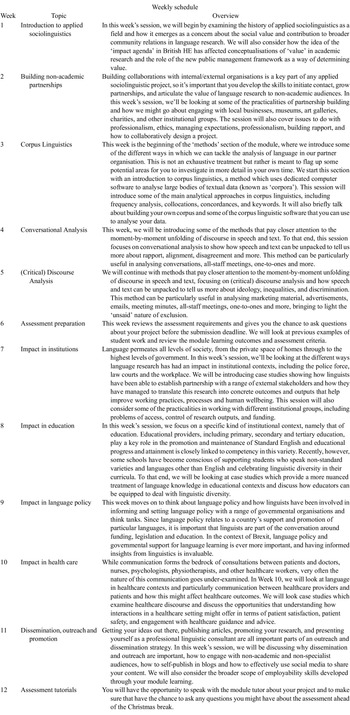
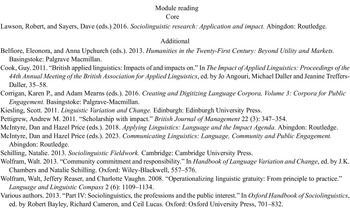

 Open access

