


The attempt to explain the timing and location of the British Industrial Revolution has attracted many controversies among economic historians (Mokyr Reference Mitch and Mokyr1999; Allen Reference Allen2009). The issue of British leadership over Continental countries has been of special interest and has focused on institutions, resources, colonial advantage, and culture.Footnote 1 Among the numerous explanations, the role of human capital and its relationship with technological change has received growing attention in the last decade, much due to developments in economic growth models. The role of human capital in many recent growth models is a central one (e.g., Galor Reference Galor2011; Glaeser et al. Reference Glaeser Edward, La Porta and Lopez-de-Silanes2004). These models usually assume the existence of a dynamic relationship between technological change and human capital in which human capital both advances technological change and results from it because of an increase in the demand of employers for skilled workers, needed to implement and maintain the new technologies. In the current study we focus on the supply side of human capital and its response to changes in demand in the British Industrial Revolution.
For technological progress to take place, a corresponding increase in the supply of skilled practitioners is required to keep pace with the demand for highly trained workers (Ryoo and Rosen Reference Ryoo and Rosen2004). What we show in this article is that Britain's system of apprenticeship, which was the formal system for acquiring skill, was highly flexible and effective, allowing mobility between skills and did not seem to create significant institutional barriers to most of the manufacturing trades. Given Britain's reputation for the mechanical skills of its workmen during the eighteenth century and their important role in Britain's industrialization, our results suggest that this feature was/may have been one of its most significant sources of advantage in becoming “the cradle of the Industrial Revolution,” as pointed out by Jane Humphries (Reference Humphries, David and Thomas2003) and Morgan Kelly, Joel Mokyr, and Cormac Ó Gráda Reference Kelly, Mokyr and Ó Gráda2014). Our findings also support the argument made in (Mokyr Reference Mokyr and Helpman2008) that the institutional advantage that provided the British economy with an edge for the Industrial Revolution was the agility in which its economic institutions adapted to changes in the environment.
The supply responsiveness in markets for human capital is not a minor matter even in modern economies. Concerns regarding the capability of markets in supplying the U.S. economy with the necessary skilled personnel have been expressed since the 1950s, when a shortage of scientists and engineers was said to have occurred in the United States. More recently, in the 1990s, many policy makers were alarmed by the decline in the engineering share of college freshman enrollment (which was as high as 10 percent in the early 1980s but has declined steadily since then to 7.4 percent in 1999). Jaewoo Ryoo and Sherwin Rosen Reference Ryoo and Rosen2004) addressed these concerns by examining the engineering labor market, showing that it responds strongly to economic forces. They found a high elasticity of supply of engineering students to economic prospects and a rapid response to changing conditions.
In this article we show that the supply of apprentices in eighteenth-century England was highly responsive as well. We use annual information from the Stamp Tax registers on apprentices in England between 1710–1805 to examine the response of the tuition fees paid by the families of apprentices to changes in the annual number of apprentices in different trades and find that its standard supply elasticity was high in the sense that the tuition increased only slightly (0.15–0.2 percent) in response to a percentage increase in the number of apprentices and that tuitions rose in the short run while returning to their equilibrium level in the long run.Footnote 2 This implies that the apprenticeship system could absorb the significant demand shocks in the market for apprenticeship in this period, as was the case with many of the highly skilled mechanical trades, and supply the skilled workers required to accommodate technological changes.Footnote 3 Furthermore, we find that this elasticity was stable throughout the century and that it was characteristic of the system as a whole and not particular to specific trades. Our findings complement those of Tim Leunig, Chris Minns, and Patrick Wallis Reference Leunig, Minns and Wallis2011) who conclude that at least in London the market for apprenticeships was fluid, open, accessible, and flexible.
Although our finding of elastic supply of the production of skills is not by itself a demonstration of British technical advantage, and alternative interpretations could be suggested, including an elastic supply of labor but at a low level of skill, it is consistent with other evidence that suggests that Britain's supply of skills was not just elastic but existed at a high level. Contemporary observers, British as well as foreign, commented on the high quality of English workmen (Mokyr Reference Mokyr2009, pp. 106–8). Moreover, from the middle of the eighteenth century to the middle of the nineteenth English and Scottish mechanics and skilled craftsmen were eagerly sought after by Continental governments and industrialists, to install, maintain, and operate the complex equipment used in mechanized manufacturing (Kelly, Mokyr, and Ó Gráda Reference Kelly, Mokyr and Ó Gráda2014). The mercantilist tendency to “protect” what was seen as a mobile source of comparative advantage is reflected in the notorious laws prohibiting the migration of skilled artisans (the first one dated from 1695). We argue that Britain's high level of skills was made possible because its apprenticeship system easily adapted to changes in the composition of demand for skills, and, as we show here, was not characterized by significant entry barriers to most of the manufacturing trades.
Two different methods are employed in our analysis. We first employ a two stage instrumental variable procedure to estimate a static market system. Since the tuition and the number of apprentices are observed in equilibrium and are simultaneously determined, the elasticities cannot be consistently estimated using ordinary least squares (OLS). To overcome this problem, we make use of the fact that short-run fluctuations in aggregate death rates were largely driven by the changes in the death rates of young children to instrument for changes in the demand side in the market for apprentice positions. We also use the population of children aged 15 to 24 as an additional instrumental variable.
Since the system is in fact a dynamic one and the capability of masters to respond to rising demand for apprentice positions clearly increased, we move from estimating a Marshallian short-run to a long-run response. We therefore also employ a Vector Autoregression framework (VAR) to test the short-run and long-run response of both the number of apprentices and the tuition to technological changes in the aggregate level, as well as in specific occupational categories. The VAR analysis has the additional advantage of allowing us to examine the effect of technological shocks accounting for the dynamic interaction between the variables since it involves jointly regressing all variables on their own lags. This analysis shows that both quantities and tuitions responded in a hump-shaped manner to technological shocks, increasing in response to the shock and gradually returning to their initial level in the long run. The implied elasticities of tuition, computed as the ratio of the tuition response to the quantity response show that the elasticity of prices was sufficiently low so as to allow for quantities to rise considerably following the technology shock. It is important to note that given that more than 90 percent of the masters in the data had only one apprentice over their lifetime, this responsiveness seems to have been primarily at the extensive margin (more masters taking up apprentices) rather than at the intensive margin (more apprentices per master); however this remains to be tested in further research.Footnote 4
There are several studies that examine the role of human capital in context of the Industrial Revolution since the seminal work of David Mitch Reference Mitch and Mokyr1999, 2004) and Lars G. Sandberg (Reference Sandberg1979) showed the relative unimportance of traditionally measured human capital (i.e., formal schooling and literacy).Footnote 5 The main conclusions that may be drawn from these studies are, (1) that the system of apprenticeship, which was once regarded as a tool used by craft guilds to exclude competition, was responsive to market forces, contributed to innovations and to labor mobility (Epstein Reference Epstein1998; Humphries Reference Humphries, David and Thomas2003, 2010; Justman and van der Beek Reference Justman and Van der Beek2014; Mokyr Reference Mokyr2009; Wallis Reference Wallis2008) and (2) studies show that there was a significant increase in the number of highly skilled mechanical apprentices during the eighteenth century, a category of occupations shown to be the relevant one for technological change (Mokyr Reference Mokyr2009; Meisenzahl and Mokyr Reference Meisenzahl, Mokyr, Lerner and Stern2011; van der Beek 2014; Feldman and van der Beek Reference Feldman and van der Beek2016). This article sheds light on the remaining question, which is whether the system of apprenticeship was “effective” and finds it to be indeed responsive to shocks, with the prices (i.e., tuition fees) paid for the apprenticeship gradually returning to their initial level in the long run.
THE FLEXIBILITY OF BRITISH APPRENTICESHIP
The important economic contribution of apprenticeship to innovation and to labor mobility has been highlighted over the last two decades (Epstein Reference Epstein1998; Mokyr Reference Mokyr2009; Humphries Reference Humphries, David and Thomas2003, 2010; Wallis Reference Wallis2008; Van Zanden Reference Van Zanden2009, Ch. 5). Another literature has focused on many of the more detailed aspects of apprenticeship, emphasizing its importance in the intergenerational transmission of knowledge that was primarily tacit in nature (De Munck Reference De Munck2010, 2011; Davids Reference Davids, De Munck, Kaplan and Soly2007; Epstein Reference Berlin, Epstein and Prak2013).
The institution of apprenticeship was, of course, not particular to Britain. However, there is reason to believe that it developed into a more flexible and responsive system there than elsewhere. By the eighteenth century Britain had access to a work force of highly skilled artisans that dwarfed anything that other European countries could amass. What happened on the Continent is more complex. Clearly in many areas guilds established the rules of apprenticeship and supervised the actual training (Crowston Reference Crowston, De Munck, Kaplan and Soly2007, p. 46). Yet the contract was notarized (by royal edict of 1691) and as Steven L. Kaplan (Reference Kaplan1993, p. 437) has pointed out, it involved not just the master and the pupil but also the community (i.e., the guild), the government (at various levels), and the potential customers. Nicole Pellegrin-Postel's (Reference Pellegrin-Postel1987, pp. 269–70, 275, 284) detailed analysis of the notarial apprenticeship contracts in the Haut-Poitou area shows that in many cases some of the provisions of the contracts were ignored and that there was a great deal of variability in the duration and other terms of the contract. At the same time there was very little geographical mobility among the apprentice population and it was common for apprentices to choose a trade that was close to that of their father.
The evidence that eighteenth-century French guilds stood in the way of technical progress has been increasingly questioned, and their power to monopolize production was much weakened by the existence of guild-free regions such as the famous Faubourg Saint-Antoine near Paris. Although the guilds survived Turgot's famous but ill-fated attempt to suppress them in 1776, their recovery was slow and gradual (Fitzsimmons Reference Fitzsimmons2010, pp. 14–15). All the same, despite cracks and weaknesses, (Fitzsimmons Reference Fitzsimmons2010, p. 10) concludes that they were still a permanent fixture in French society and that as late as 1750 there was little to indicate their imminent demise. In most places guilds created a relatively rigid institutional framework of rules that stood in contrast to the more agile British system (Ogilvie Reference Ogilvie2014).Footnote 6 Robert Darnton's (1984, pp. 114–15) famous observation about mid-eighteenth-century Montpellier—that it was no Manchester, that it produced the same goods on the same scale, and that its journeymen and masters went about their business pretty much in the same way as they had two hundred years earlier—may not be true for the more advanced regions of France. But it is perhaps telling that when the Englishman John Holker was asked by the French government to set up a textile factory in Normandy in 1752, he had to depend on 20 English artisans and mechanics, who were allocated among French workers such that their skills could be disseminated in the most effective fashion among the local workers (Henderson Reference Henderson1954, p. 16; John R. Harris Reference Harris1998, p. 60). With the demise of the French guilds after the revolution, the institutions of apprenticeship in France fell on hard times and attempts to restore it in the nineteenth century “were strangely out of step with economic reality” (Lequin Reference Lequin, Kaplan and Koepp1986, p. 463). This stood in contrast with Britain, where, despite the abolition of the Statute of Artificers in 1814, apprenticeship was alive and well in the nineteenth century (Elbaum Reference Elbaum1989).Footnote 7
Three elements were responsible for the flexibility in Britain that allowed it to “produce” large amounts of artisanal human capital. First, by the eighteenth century the guilds in Britain had been weakened and their regulatory powers were limited and further undermined during the civil wars (Epstein Reference Epstein1998, pp. 686–98; Berlin Reference Berlin, Epstein and Prak2008). Of course London and the “old towns” still had guilds (or companies, as they were known), but precisely because so much of the country was guild-free, it became almost impossible to use the guild system to regulate and limit entry into any occupation and maintain exclusionary rents.Footnote 8 The London guilds simply no longer had the power to regulate key occupations, including the flows of new workers into them.Footnote 9 Second, the strictures of the Statute of Artificers were not strictly enforced so that the length of contract became a decision variable. (Humphries Reference Humphries2010, pp. 268–69) recognizes this flexibility and notes that the contracts could be customized and adapted to particular cases. Finally, eighteenth-century Britain experienced a flourishing of a high degree of social capital, meriting the moniker of an “associational society” (Clark Reference Clark2000). This social capital supported a reputational mechanism that kept both apprentice and master from engaging in excessive opportunistic behavior (Mokyr Reference Mokyr and Helpman2008). The decision to pick a particular master was often driven by family interests made by the family as a whole, and the fairly low incidence of young lads being apprenticed to their own fathers suggests a high level of trust between the two parties, which reduced, but did not entirely eliminate, uncertainty and the chance for opportunistic behavior on either side, (Humphries Reference Humphries2010, pp. 270–71).
What was unique in England was that the institution of apprenticeship was regulated by the central government yet these regulations may well have worked in England's favor. The Statute of Artificers (1563) added formal legal regulation of apprenticeship to the customs and rules of the guilds extending the guild practices of the City of London and other corporate towns to urban England, including the seven-year term of service. The Statute did, however, contain some interesting deviations from guild regulations. For example, a legally completed apprenticeship gave a young man the right to practice his trade without distinction of place, that is, he was not required to work and trade in the same place where the term of apprenticeship had been served. According to (Humphries Reference Humphries, David and Thomas2003, p. 96), “this aspect of the Statute, which distinguished it from continental legislation, perhaps recognized that industrial skills had ceased to be a prerogative of the town craftsman and become a characteristic of the intermingled agricultural-industrial life of the countryside.” By making it possible to hire workers outside their city of residence, the Act effectively left masters at liberty to employ as many apprentices as their work demanded (Dunlop Reference Dunlop1911, p. 207; Epstein Reference Epstein1998, p. 689).
The question is whether the clauses of the Statute were indeed enforced, and if so, which of the clauses. Various studies have shown the enforcement of the Statute of Artificers to be incomplete. According to Ron Harris Reference Harris2004, p. 208), incomplete enforcement was a result of the lack of updating and maintenance of the regulations by parliament and as a result “The Statute of Artificers and its offspring became increasingly detached from reality as time went on. This was not a problem of enforcement. Parliament needed to invest time and effort in drafting the regulation in a manner that would be sufficiently detailed and would address the complexities and variety of contexts of real life. It took maintenance work to keep the regulation current. The British parliament often did not do this.” O. Jocelyn Dunlop Reference Dunlop1911, p. 201) has pointed to the lack of enforcement “machinery” claiming that no officers were especially appointed for the enforcement of the Act and that it was beyond the powers of the common informers.Footnote 10 Notwithstanding the Act, men who had not been regularly apprenticed, but had been merely taught by their fathers, claimed and received admittance to the guilds; the custom of patrimony was preserved everywhere, and it was ranked with apprenticeship as entitling a man to the freedom of his trade association in the ordinances of the guilds. Moreover, Wallis (Reference Wallis2008) has shown that the legal stricture to serve for seven years was rarely observed and that workers left when they felt that the gains from staying longer were less than the opportunity costs. To summarize then, while the Statute of Artificers at first blush may seem a source of rigidity, its practical enforcement on the ground was sufficiently flexible to allow a relatively rapid adaptation to changing economic circumstances.
Apprenticeship was thus a formal method of vocational training in crafts and trade that originated in the guild system of medieval times. Ideally, a master or mistress agreed to train a child in a trade for a specific term of years and in most cases to board and house the child. In return the master was paid an agreed premium and the child committed to serve faithfully and keep the secrets of the trade.Footnote 11 The premium paid, served more than one purpose. In part, it was to ensure the master against an early departure of the apprentice. But in part it reflected the quality of the training and the cost to the master, as well as its scarcity value (Minns and Wallis Reference Minns and Wallis2013, p. 340). The demand side, they show, did not just reflect the increased productivity that apprenticeship conveyed, but also exclusionary rents (Minns and Wallis Reference Minns and Wallis2013, p. 348). “Training premiums,” they write, “were used to address the core tensions in securing pre-industrial training contracts.” This view is consistent with our notion that it is the observed equilibrium price (tuition) in a market in which the masters are the supply side and the apprentices are the demand.
Another important advantage of the British apprenticeship system was its reputational mechanisms that kept both apprentice and master from engaging in excessive opportunistic behavior. Apprenticeship contracts by definition were poorly specified, and much was left open to the discretion of the participants. What made this a self-enforcing contract, in which opportunistic behavior was kept at a minimum, was above all the reputation of both participants, even though they were both operating in the shadow of the law and that legal recourse was possible even if it was highly undesirable and expensive (Humphries Reference Humphries2004; Mokyr Reference Mokyr2009). The knowledge transmitted between master and apprentice was largely tacit in the sense that the learning took place through observation, absorption, and imitation rather than through direct and full instruction. As Bert De Munck, Steven L. Kaplan, and Hugo Soly (Reference Crowston, De Munck, Kaplan and Soly2007, pp. 14–15) put it, apprentices on the shop floor had to “steal with their eyes.” Didactic skills were probably of secondary importance and yet the existence of considerable fees that British masters charged for their services suggests that there were incentives for them to build reputations by exerting efforts and spending resources to better instruct their apprentices.Footnote 12
The fee paid to masters was thus dependent on the master's reputation and this placed limits on the degree of opportunism that masters could engage in (Epstein Reference Berlin, Epstein and Prak2013, p. 29). The voluntary termination of so many apprenticeships can be interpreted to mean that at some point the marginal value of the flows between apprentice and master were more or less equal for both and beyond that, neither had much to gain from its continuation. The exact time at which the marginal costs began to exceed the marginal benefits would differ for master and apprentice, and so there was room for negotiation. But precisely because of the self-enforcing institutions of the associational society that made cooperation possible, such differences rarely led to outright conflicts.
In other ways, too, the system was well-designed. In principle, the indenture contract guaranteed that the apprentice would make up the difference between the cost of training and the fee by working as a journeyman or servant to his master after the training was complete. In practice, Wallis (Reference Wallis2008) has shown that the traditional view, that the cost to the master and the benefit to the apprentice were heavily concentrated in the first years, may not be the way the institution actually worked by the eighteenth century. He argues persuasively that the flows of costs and benefits to both parties were spaced fairly evenly over the period of the apprenticeship. This is not to say that they were equal: a fee was paid up-front because there was a difference between the present value of the net costs and benefits of both master and apprentice, and this fee can be interpreted as the netprice of the service delivered in a well-functioning market. But it does imply that the fact that many apprenticeships terminated before the legally mandated seven years is evidence for a flexible and mutually advantageous transaction between master and apprentice.
To sum up: the British apprenticeship system worked, and it worked so well that long after the abolition of the Statute in 1814, the institution remained the central mechanism through which Britain trained its skilled craftsmen (Elbaum Reference Elbaum1989; Elbaum and Singh Reference Elbaum and Singh1995). It seems highly plausible that Britain's advantage in highly skilled craftsmen was in large part derived from a more effective training system.
THEORETICAL FRAMEWORK
In what follows, we lay out a deterministic, dynamic partial equilibrium model that can establish a valuable conceptual framework upon which to build the discussion and interpretation of our empirical results in the next section. Notwithstanding the model's simplicity, it will prove instrumental in facilitating our understanding of what we mean by efficiency in the apprenticeship market and the implications this efficiency can have on equilibrium outcomes. We begin the presentation of our model with the supply side of the apprenticeship market, followed by an explanation of its demand side, and we close it by defining and discussing the market equilibrium of the model.
Supply Side
To keep things as simple as possible, we assume there is a representative master. Let us assume the master maximizes the present value of his infinite stream of future profits. The master's revenues are generated by selling apprenticeship contracts, yt
, produced with capital input, kt
, using the production technology yt
= f(kt). It is assumed that f is continuously differentiable, strictly increasing, strictly concave, and obeys the Inada conditions, f(0)=0, 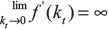 and,
and, 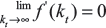 . We abstract here from any other activities the master may be undertaking and focus on his activities as an instructor.
The price of an apprenticeship contract is denoted by pt ; this price is essentially the tuition paid for undertaking the apprenticeship. The master's cost C, is the total cost of investment, which we assume is a function of gross investment, [kt+1 – (1 – δ)kt ], where 0 < δ < 1 is the capital depreciation rate. Adding variable labor to this model would not change the main takeaway of this section but would complicate the exposition; hence, we abstract from this aspect in our model. We make the standard assumption that C is strictly increasing, strictly convex, and differentiable, with C(0) = 0. These capital costs are incurred because much of the training costs consisted of materials and equipment. Sven Steffens Reference Steffens2001, pp. 124–25), for example, notes that in Belgium little actual direct instruction was done; the apprentice simply was allowed to try and imitate what the master and more advanced apprentices were doing. In the process, he was likely to waste raw materials and fuel, and may have used up equipment and tools. He also occupied space that had an opportunity costs. Moreover, the master and his apprentice had to establish a rapport, and at first an inexperienced apprentice may have disrupted the normal productive activities in the shop. Note that assuming adjustment costs essentially introduces a capacity constraint on the master and is necessary for facilitating a formal dynamic framework in which the master gradually responds to shocks before moving to new steady state rather than instantaneously reaching it. We can now turn to write the maximization problem facing the master:

where

0 < β < 1 is the master's subjective discount factor. Note that since kt is a state variable that is predetermined with respect to period t,k0 is not a choice variable in the master's maximization problem. It is useful to write down the Bellman equation corresponding to the master's problem:
![\[
\begin{array}
V(k_t,p_t)= {\max \atop {k_{t+1}}}[p_tf(k_t)-c(k_{t+1}-(1-\delta)k_t)+\beta V(k_{t+1,}p_{t+1})]
\end{array}
\](https://static.cambridge.org/binary/version/id/urn:cambridge.org:id:binary:20170301095213664-0848:S0022050717000043:S0022050717000043_eqn2.gif?pub-status=live)
where

It is straightforward to apply to our setting standard dynamic programming techniques and obtain the following standard results: (1) uniqueness of the solution; (2) continuity of V(k,p) and the optimal policy function kt+1 = g(kt , pt ); and (3) V is increasing in k and the optimal level of next period's capital is increasing in the level of the current period's capital.Footnote 13 Combining the first order condition and envelope condition of Equation 2, we can obtain the following Euler equation characterizing the solution to the master's problem:

Equation (3) essentially equates the marginal cost (LHS) and marginal revenue (RHS) of using an additional unit of capital. The master's supply of apprenticeship contracts is implicitly determined by this equation and can be shown to be increasing in the price of the contract.Footnote 14 We can therefore conclude that the solution to the master's dynamic maximization problem generates an upward sloping supply curve.
Given the dynamic nature of the master's problem, it is of interest to ascertain whether there exists a unique and globally stable steady state level of capital. Towards this end, let us write Equation (3) in steady state form in which  , and,

Given the strict concavity of f and strict convexity of C, and the Inada conditions imposed on f, it is straightforward to show that there is a unique and globally stable steady state level of capital. The reason for this is that under these assumptions the term,  takes on a value for a unique value of
  and this unique steady state is independent of the initial value of capital. Furthermore, it is apparent from Equation (4) that the steady state capital stock is increasing in the steady state price level
  .Footnote
15
This result and the previous one on the upward slope of the supply curve give us an indication of what will take place following a permanent rise in demand: initially, given that capital is predetermined, capital will not change, but in the subsequent period capital will rise and will continue to gradually rise thereafter until reaching the higher steady state. Importantly, given the capacity constraint facing the master, this new steady state will be characterized by a price level that is lower than that which prevails in the short run. What this means is the apprenticeship supply follows a classical Marshallian pattern: a demand shock drives up the price in the short run, but as adjustment occurs the supply curve becomes more elastic and the adjustment takes place in the quantity space.
.Footnote
15
This result and the previous one on the upward slope of the supply curve give us an indication of what will take place following a permanent rise in demand: initially, given that capital is predetermined, capital will not change, but in the subsequent period capital will rise and will continue to gradually rise thereafter until reaching the higher steady state. Importantly, given the capacity constraint facing the master, this new steady state will be characterized by a price level that is lower than that which prevails in the short run. What this means is the apprenticeship supply follows a classical Marshallian pattern: a demand shock drives up the price in the short run, but as adjustment occurs the supply curve becomes more elastic and the adjustment takes place in the quantity space.
Demand Side
Prospective apprentices, indexed by i are assumed to derive economic value from undertaking the apprenticeship, which we denote by vi,t .Footnote 16 This variable represents the additional utility gained by the acquisition of a skilled trade. This utility could be seen as the present value of the expected markup in income over the wage of an unskilled worker, the higher social status of a skilled artisan, and possibly the pride and satisfaction of producing more sophisticated goods. This additional utility is explicitly defined as:

where, 0 < β < 1 is the prospective apprentice's subjective discount factor, which we assume for simplicity to be equal to that of the master's, and wi,t is the expected payoff at period t from undertaking the apprenticeship. One reason for the assumed heterogeneity in vi,t across different apprentices is that different prospective apprentices are likely to possess different levels of talents. Given that the decision taken by the prospective apprentice is a binary one, we define a binary variable xi,t that takes the value of one if the apprenticeship is decided to be pursued and zero if it is forgone by the prospective apprentice. Moreover, since the cost of taking part in the apprenticeship is pt , the apprentice's net payoff function is vi,t – pt if the apprenticeship is pursued and zero if it is foregone.Footnote 17 Therefore, we can describe the solution to the prospective apprentice's problem simply as follows:

Equilibrium
For the purpose of defining the market equilibrium, let us first assume there is a total number of N masters each offering yt
contracts so that the total number of offered apprenticeships is Nyt
.Footnote
18
Market equilibrium will take place when aggregate supply of apprenticeships equals the aggregate demand for apprenticeships, that is,  . For a sufficiently large number of prospective apprentices as well as a sufficiently large level of heterogeneity as manifested in the variation in vi
,
. For a sufficiently large number of prospective apprentices as well as a sufficiently large level of heterogeneity as manifested in the variation in vi
,  , would be a standard downward-sloping demand curve; the simple reason for this is that, under these conditions, raising the tuition level would drive at least one prospective apprentice out of the market.
Note that in this setting shifts in the aggregate demand for apprenticeships are caused by variation in the value of vi,t . The main potential economic demand shifter is technological changes in the relevant sector; for example, technological improvements raise the expected earnings from the specific trade thus raising demand. It is important to stress that the actual diffusion of the innovation (which may take years) is less relevant than the knowledge of the new technique has arrived. Informed people will anticipate its diffusion and thus adjust their demand for apprenticeship accordingly. Another possible demand shifter is health; for instance, deterioration in the health of prospective apprentices is likely to reduce their expected earnings (and a shortening of the period in which they have higher earnings) and as a result cause a decrease in the demand for apprenticeships.
The equilibrium of this Marshallian model is conveniently depicted by Figure 1.Footnote 19 Let us assume the initial position of the market is some steady state (point A). Technological change will normally cause the demand curve for skills to shift to the right.Footnote 20 Since there is no change initially in the level of apprenticeship contracts given that capital is predetermined (that is, capacity is constrained), we will move to point B.
The Dynamics of the Apprenticeship Market Following a Demand Shock

In the following period the new equilibrium will be to the right of the initial one reflecting both a higher tuition level as well as a higher quantity of apprenticeships, putting the market equilibrium at point C. Subsequently the number of apprenticeship contracts will gradually rise along the new demand curve until reaching the new steady state of point E. The figure demonstrates our notion of efficiency in the context of this shift in demand and movement along the supply curve. A bigger increase in the long-term quantity of apprenticeships was highly important for economic growth. An elastic supply of skills meant not only that the total national “stock” of skilled labor could increase, but that its composition could change relatively rapidly, adapting the distribution of skills to the needs of the changing economy.
Empirical Analysis
The Dataset
The data used in this article come from registers kept by the Board of Stamps of moneys received as stamp duty on apprentices' indentures all over Great Britain, introduced in 1710 and abolished in 1804.Footnote 21 The registers consist of: “City” registers (October 1711 to January 1811), with daily entries of the indentures upon which duty was paid in London, and “Country” registers (May 1710 to September 1808) with entries of the indentures upon which duty had been paid to district collectors and which were then sent in condensed batches to be stamped and entered in London. Each entry in the registers contains information on the name of the apprentice, the name of the master to whom he was indentured, the master's trade and place of residence, and the value of the premium paid to the master for taking on the apprentice (i.e., tuitions).Footnote 22
Our dataset consists of all apprenticeship entries from 1710 through 1805 (464,408 entries).Footnote 23 Masters' trades were classified into 78 broadly defined trades after adjusting for minor variations in the spelling of identical occupations of masters in the data, and distinguished by whether the entry is from London or not, in order to account for London's apprenticeship unobserved characteristics.Footnote 24 After we restrict trades to have at least 500 entries over the entire period and years to have at least 1,000 entries for both “City” and “Country” (to more accurately capture population means) and after collapsing the data to the occupational - London/Country - year level, we remain with an unbalanced panel of 12, 429 observations.Footnote 25
Our main variables of interest are the average annual tuitions and the number of apprentice contracts in each occupational category. To account for other potential determinants of tuitions we combine this dataset with other variables, including, the Consumer Price Index (CPI), the wages of unskilled day laborers and the number of war recruits.Footnote 26 These variables are all constant between occupational groups and only vary between years. They are mainly used to capture relevant changes over time when a year fixed effect cannot be included in the regression.
Finally, our VAR analysis requires a series that captures technological change to identify a technology shock as the VAR innovation in this series. In the absence of standard measures such as annual changes in Total Factor Productivity (TFP) or Research & Development (R&D) outlays, we use two alternative measures: the number of inventions relevant to the textile sector, and the total number of patents in England, weighted by their importance. The number of inventions relevant for the textile industry, was constructed by Trevor Griffiths, Philip A. Hunt, and Patrick K. O'(Brien Reference Griffiths, Hunt and O'Brien1992), who took into account all the known inventions that had a potential application to textiles, both patented and not. The number of inventions relevant to textile began to grow during the 1730s and 1740s in tandem with the rise in cotton manufacturing, reflecting the intense development activity that was taking place in this sector. Interestingly, the weighted number of patents shows a similar increase during these same years, reflecting the rise in the importance of inventions. These series therefore allow us to capture the effect of the increase in the intensity of development activity. Because of the very proximate nature of any series of inventive activity, it should be emphasized that they are used only in our VAR estimates; the regressions we estimate do not rely on these series. The fact that we get very similar results for both estimation techniques suggests that our findings are robust to objections to the series for inventions.
Since the Griffiths, Hunt, and O' (Brien Reference Griffiths, Hunt and O'Brien1992) series exists in increments of five years (e.g., 1710, 1715, 1720, etc.) we fill in the intervening years. As in Naomi E. Feldman and Karine Van der Beek (Reference Feldman and van der Beek2016), we take the number of inventions in year t and assume that one-fifth of this number is created each year. Then, we calculate the three-year moving average of inventions. None of the results we present are particularly sensitive to this specification. The second variable that we use is the annual number of patents weighted by the Woodcroft's Reference Index (an index constructed by Nuvolari and Tartari 2011) that aims at capturing the significance of a patent by the number of citations it has in the contemporary technical literature. While this series of patents, weighted by their importance, does not fully correct the biases in the patent series, it does allow, to a large extent, to correct some of the downward bias in the number of patents by giving larger weights to the more significant inventions. In addition, it allows us to capture the effect of inventions in general and not only of those relevant for the textile industry. As the VAR analysis shows, the analysis is not sensitive to the use of proxy for technological change and presents similar qualitative results.
Descriptive Statistics
Summary statistics for the number of apprentices and the tuitions in our various occupations are displayed in Appendix Table 1a. As the table shows the average number of new apprentices in every occupation per year were 36.7 and the tuition 27.1 pounds. The number of new apprentices was obviously larger in more common occupations, including for example, house carpenters (174.2), tailors (173.4), shoe-makers (284), bakers (82.6), butchers (95.5), and weavers (99.5) and the tuition was higher in certain occupations with various barriers to entry such as lawyers (108.5 pounds), surgeons (70.7 pounds), merchants (75.4 pounds), and brewers (77 pounds).
Feldman and van der Beek (Reference Feldman and van der Beek2016) have shown that the number of new apprenticeships increased in response to inventions in the years 1710–1772, with the strongest increase being in among carpenters and machine making occupations, which were most strongly affected by technological changes.Footnote 27 What we are interested in in this article, is the response of tuitions. Figure 2–Figure 3 illustrate the number of new apprenticeships and the level of nominal and real tuitions relative to their level in the years 1710–1720 (in average) in various occupations, grouped by larger occupational categories. The figures indicate that apprenticeship tuition levels remained stable in the long run. Tuitions responded moderately to changes in the annual number of new apprenticeships in the short run but always returned to their equilibrium level.Footnote 28 This feature, which will be shown to be statistically significant in the econometric analysis, suggests a high level of elasticity of the supply side of the apprenticeships system in this period, and was characteristic of almost all the occupations. Figure 2 depicts the changes in the aggregate number of new apprenticeships. As the figure shows, there were no major shocks to the number of apprenticeships at this level as the main changes were in the occupational distribution of apprenticeships rather than on their total number.
Aggregate number of new apprentices and tuition levels: 1710–1805

As can also be observed in Figure 2, there are some serious drops in the number of entries in the registers, in both series (“City” and “Country”), in the years 1726–1740, and more moderate falls in the years 1745–1751. These falls in the number of entries seem to be partly due to register losses but since they become more frequent in years of high death rates which were mainly caused by bad harvests and smallpox outbreaks as identified by E. A. Wrigley and R. S. (Schofield Reference Wrigley and Schofield1981, p. 162), they may also represent a real decrease in the number of apprenticeship contracts.Footnote 29 Since the exact reason for these strong declines in the number of entries is unknown, we concentrated on controlling for the possible effects they may have on our results, dropping years with small numbers of entries and controlling for changes in the composition of entries from “City” and “Country” registers, as will be explained in what follows. We also examine the effect of the drops on our results by estimating our model in periods that are not characterized by such drops in the number of entries (1750–1805) and obtain very similar estimates for the elasticity of supply of apprenticeship.Footnote 30 In addition, we include a variable that measures the ratio of entries from London relative to Country to capture possible effects of changes in the composition of entries that are not constant over time due to drops in the number of entries in one of the series. We also use annual death rates and the log of the population of the 15–24 year olds (the relevant age for apprenticeships) to instrument for the number of apprentices given the simultaneous relationship between this variable and tuitions, as we will be discussing more extensively in the next section.Footnote 31
Number of new apprentices and tuition levels by occupation: 1710–1805

Figure 3 displays the same variables in various occupational groups. It is clear from this figure that both in occupations in which the number of new apprenticeships remains almost unchanged and in those in which they increased significantly as in machine making, carpenters, building, and leather production, real tuitions seem to have responded moderately and remain unchanged in the long-run. The number of new apprenticeships in machine making, carpenters, building, and leather production occupations increased by 50–150 percent in the mid-eighteenth century and yet real tuitions remain stable in the long run. The only case in which we observe a significant and ongoing increase in real tuitions is in the services sector, which includes a very heterogeneous group of occupations including physicians and lawyers, occupations that were changing quite drastically in the eighteenth century.
In the case of apprenticeship in the machine making occupations, the number of new apprenticeships increased by more than 200 percent in the 1750s while tuitions increased by less than 20 percent and returned to their initial level. Similarly, the number of apprenticeships to carpenters and joiners increased by nearly the same percent while tuitions increased by about 30 percent until the 1760s when real tuitions declined and returned to their initial level in the end of the period. In the case of the building trades and the leather products trades, again, the number of apprenticeships increased by 150–200 percent, tuitions responded moderately and real tuitions soon returned to their initial level. In all these cases there was a long-run increase in nominal tuitions.
These figures reflect very clearly the high level of flexibility of the supply in this market and its capacity of absorbing strong changes in demand for skill acquisition. In the next section, we provide more formal econometric evidence for this claim.
Instrumental Variables (IV) Regression Analysis
We now turn to the analysis of the elasticity of the tuition payments with respect to the number of apprenticeships:

where each observation represents an occupation i (in London/Country) in year t.Footnote 32 Our dependent variable of interest is the logarithm of the tuition of occupation i in year t, ln(tuitioni,t ). The lagged value of this variable is included on the right-hand side to capture the persistence in tuitions.Footnote 33 The X matrix contains a set of covariates: CPI, the logarithm of unskilled wages (the wages of day laborers) and the logarithm of the number of war recruits, the percent of observations from London, and a linear time trend.Footnote 34 All the covariates in X vary only over time.Footnote 35 The parameter γi denotes a full set of London_occupational effects, which capture common shocks to tuitions of all occupations, and, ∊i is an error term, capturing all other omitted factors. Our main variable of interest, ln(apprenticesi,t ), is the number of new apprentices in occupation i in year t. The parameter β1 therefore, measures the elasticity of tuition with respect to the number of apprentices and the reciprocal of the standard elasticity of supply. However, β1 cannot be consistently estimated using OLS since, as is typical when studying demand and supply, prices and quantities are mutually determined and observed in equilibrium. We therefore use an Instrumental Variable approach.Footnote 36
In what follows, we propose death rates and the size of youth population (in logarithm) as instruments for the number of new apprentices. Apprentices were usually bound at the age of 14 and their number was affected by changes in the size of their cohort. One of the important factors that affected the size of cohorts in eighteenth century England was outbreaks of smallpox, which mostly affected children in the ages of 0–10.
According to Romola Davenport, Leonard Schwarz, and Jeremy Boulton (2011) smallpox was the single most lethal cause of death in the eighteenth century, accounting for 6–10 percent of all burials. More importantly, although the knowledge of the geography of smallpox epidemics and mortality in eighteenth century England remains extremely fragmentary, smallpox was a childhood disease. For example, in London in 1752–1766 almost 80 percent of the deaths from smallpox were amongst children between the ages of 0 and 10 (about 70 percent amongst children between 0 and 4), and in 1775–1799, 94.2 percent (about 85 percent between 0 and 4).Footnote 37 In Kilmarnock, Scotland, 94 percent of smallpox victims between 1728 and 1763 were aged under seven, and in Manchester only one adult (aged over 10) was recorded as dying, of 589 smallpox victims in the period 1769–1774.Footnote 38 Changes in death rates can therefore be assumed to have had a stronger effect on the demand for apprenticeships (availability of children and willingness to send them to cities where smallpox hit harder) than on the supply of apprenticeships (supply of masters). Figure 4 illustrates the correlation between the number of apprentices and death rates, mainly when we look at the five year lag which was chosen to capture the high death rates from smallpox of children aged 0–10, about five years before becoming apprentices. As the first stage Angrist-Pischke F statistics of weak identification in our regressions show, these IVs are strongly correlated with the number of new apprentices.
Death Rates and the Number of New Apprenticeships

Note that since our instruments and all the covariates in X vary only over time and not over occupation, we cannot add time fixed effects to regressions where these covariates are included.Footnote 39 Nevertheless, as the results in columns (2) and (3) of Table 1a show, the covariates manage to capture most of the variation over time and are as good as using year fixed effects. As previously mentioned we control for changes in the composition of entries from “City” and “Country” registers in the analysis by adding the ratio of observations from “City” (Percent_London).
OLS and IV estimates of the elasticity of tuitions with respect to the number of apprentices

Significant at 10 percent level.
Significant at 5 percent level.
Significant at 1 percent level.
Notes:
Dependent variable in second stage is the logarithm of tuitions. Columns (2)–(4) report the results of OLS regressions with fixed effects on the London-occupation level, with standard errors clustered at the year and occupation level. Columns (5)–(7) report IV regression results. The regression in column (7) does not control for the changes in the composition of the observation (the variable Percent_London) nor are the years with low numbers of observations dropped. F-statistic for excluded instruments gives the Angrist-Pischke statistic. The null hypothesis is rejected at the 1 percent level in all cases. See Appendix Table 1b for variable definitions. Standard errors in parentheses.
Column (1) in Table 1a presents the pooled OLS relationship between tuitions and the number of new apprentices. The elasticity of tuitions with respect to the number of new apprentices is statistically significant at the 1-percent level (all the standard errors are robust for arbitrary heteroscedasticity and clustering of the standard errors at the year and occupational level). The estimated elasticity increases when we add the London_occupation fixed effects. The estimate of β1 in column (2) is 0.08 with a standard error of 0.008. If causal, this estimate would imply that a percentage increase in the number of apprentices increased tuitions by 0.08 percentage points. Column (3) is identical to column (2) except for the year fixed effects which are replaced by the set of time varying covariates in X. The estimate of β 1 is very similar (0.088), suggesting that our covariates capture most of the annual common shocks to tuitions. The effects of the control variables on the tuitions are all as expected with an elasticity of 0.1 of tuitions with respect to prices. The coefficient estimate of the labor's nominal wages is not statistically significant due to the high degree of colinearity between wages and prices. It becomes significant at the 1-percent level once prices are dropped. The results remain practically unchanged when the lagged dependent variable is omitted as presented in column (4).
Since the number of apprentices is simultaneously determined and therefore endogenous, the estimates of β 1 in columns (1)–(4) are not consistent. Columns (5) and (6) present the two-stage least-squares estimate of β 1 which is now consistently estimated and is, as expected in cases of simultaneity, higher at the level of 0.2 in the dynamic setting in column (5) and 0.19 when we drop the lagged dependent variable in column (6). The results in column (7) are obtained after including all the years in the data without restricting for the annual number of entries and after dropping the variable Percent_London that we use to control for possible effects of the sharp declines in the number of entries in the data. The resulting estimate of β 1 in this case is much lower (0.047) and not significant. Panel B presents the first stage results for the regressions in columns (5)–(7). Our instrumental variables are shown to be highly correlated with the number of apprentices and, as the Angrist-Pischke F-statistic shows, the null hypothesis that the equation is weakly identified is rejected.Footnote 40
Table 1b presents our robustness checks to the two-stage least-squares estimates obtained in Table 1a. To test whether the results are mainly representative of apprenticeship in London, we run separate regressions for London and Country. The results in columns (1) and (2) show that tuitions in London responded more strongly to changes in the number of apprentices (a 0.39 estimated elasticity for London vs. 0.16 in the Country), yet, elasticities are still small and significantly lower than unity. This is an interesting result which may be interpreted as reflecting the stronger presence of guilds in London. Moreover, it may be reflecting London's concentration of apprenticeships to occupations with strong guilds (e.g., pewteres and goldsmiths) and with high entry costs (e.g., high setting up costs, prestiege), such as rich merchants and attorneys.
The elasticity of tuitions with respect to the number of apprentices: robustness checks

Significant at 10 percent level.
Significant at 5 percent level.
Significant at 1 percent level.
Notes:
Dependent variable in the second stage is the logarithm of tuitions. All regressions are IV 2SLS regressions with fixed effects on the London-occupation level, with standard errors clustered at the year and occupation level. The specification of the regressions is the same as in coumn (6) of Table 1a but uses only observations from London (column (1)), only observations from the Country (column (2)), only observations from the years after 1750 (column (3)), columns (4)–(5) break the results of the two sub-periods: 1710–1770 (column (4)) and 1770–1805 (column (5)). In column (6), we omit the years of the Napoleonic wars (from 1792) and the column (7), we omit the occupational group machines. F-statistic for excluded instruments gives the Angrist-Pischke statistic. The null hypothesis is rejected at the 1 percent level in all cases. See Appendix Table 1a for variable definitions. Standard errors in parentheses.
The regression in column (3) tests whether the estimates depend on the strong variation in the number of apprentices during the first half of the century, in which there are strong falls in the number of entries, by dropping the years 1710–1750 and shows this not to be the case. Columns (4)–(5) test for structural change examining whether the estimated elasticity changes throughout the period and present a moderate increase in the response of tuitions during the later part of the century, with an estimated elasticity of 0.16 between 1730 and 1770 and 0.24 between 1770 and 1805. The results of an estimation excluding the years of the Napoleonic wars between France and Britain are presented in column (6) and column (7) presents the estimation excluding occupations related to machine making (the occupational group machines in Appendix Table 1). In both cases the estimated elasticity of tuitions with respect to the number of apprentices is low and significant (0.12 and 0.2, respectively).
To test whether the estimated elasticities that we obtain vary across occupational groups we re-estimated our baseline regression from column (6) of Table 1a with the addition of an interaction term between the number of apprentices and a dummy variable representing the occupational category. The interaction of our two instruments with the same dummy variable was used to instrument for the additional endogenous variable. Table 2 presents the two-stage least-squares estimates for the elasticity of the tuition in the 13 occupational groups which include machinery, carpenters, building, shipbuilding, clothing, leather, wood, yarn, metal, victualing, services, trade, and other trades.Footnote 41 It is interesting to note that in almost all occupational categories we find no significance of the interaction term, implying that there is no significant difference in the elasticities between the different groups. The estimated elasticity in the leather and wood categories came out significantly different than the average, however this should be interpreted with caution as the probability of obtaining sigificant results for 2 out of 13 by chance is high and there is no apriori reason to expect different results in these two groups.Footnote 42 This does not mean however that there were no differences in elasticities within groups, between the occupations composing them.
The elasticity of tuitions with respect to the number of apprentices: various occupational groups

Significant at 10 percent level.
Significant at 5 percent level.
Significant at 1 percent level.
Notes:
Dependent variable in the second stage is the logarithm of tuitions. All regressions are IV 2SLS regressions with fixed-effects on the London-occupation level, with standard errors clustered at the year and occupation level. The specification of the regressions is the same as in column (6) of Table 1a with the addition of an interaction of our variable of interest, log(apprentices) with an occupational group (containing a number of occupations specified in Appendix Table 1b). F-statistic for excluded instruments gives the Angrist-Pischke statistic. The null hypothesis is rejected at the 1 percent level in all cases.
The regression analysis presented in this section leads us to two important conclusions. The first is that the supply of apprenticeships in eighteenth century England was highly elastic. The system of apprenticeship could absorb important changes in the demand, as was the case with machinery workers and carpenters, without a strong response of the tuition. Our second conclusion is that this capacity was representative of the system as a whole and did not vary significantly between trades, while demand for apprenticeship did vary with the nature of final demand and the shocks to technology.
IDENTIFYING DEMAND SHOCKS USING A VAR
We now employ a VAR to test the short-run and long-run response of both the number of apprentices and the tuition to technological changes, for which we use the innovation in the textile technology series.Footnote 43 We perform the analysis in the aggregate level, as well as in specific occupational groups. The results are summarized in Table 3. The table shows the sectoral responses of the quantities and prices of apprenticeships to a one unit increase in textile technological innovations (that is, one more significant invention in the textile industry) from VARs that examine the impact of these innovations on sectoral apprenticeship quantity and tuition series.Footnote 44
The response horizon reported in column 1 of the table is the number of years following the shock at which each peak quantity response is obtained; this is the horizon which corresponds to the reported quantity and tuition responses (columns 2 and 3, respectively). The table shows that the number of apprenticeships responded significantly to inventions in most occupational sectors, mainly in the sectors relevant to the inventions in this period, including, metalwork and leather that were directly required for machine construction, in yarn and clothing, in which production increased and in building (including carpenters), due to increase in construction. It can be seen that machinery demonstrated the largest quantity responses (65 percent). This is not surprising as this sector includes occupations that are highly skilled and directly relevant to the machinery production and maintenance and are therefore expected to be in demand when technological change take place.Footnote 45 .
Sectoral Responses and Implied Supply Elasticities Induced by a One Unit Increase in Textile Technological Innovations

Significant at 10 percent level.
Significant at 5 percent level.
Significant at 1 percent level.
Source: See text.
Notes:
The table shows the sectoral responses of the quantities and prices of apprenticeships to a one unit increase in textile technological innovations from VARs that include the textile technological innovations series along with sectoral apprenticeship quantity and tuition series. The response horizon reported in the first column is the number of years following the shock at which each peak quantity response is obtained; this is the horizon which corresponds to the reported quantity and tuition responses (columns 2 and 3, respectively). The fourth column reports the implied price elasticities, computed as the ratio of the tuition response to the quantity response.
Statistical significance results are based on Hall (Reference Hall1992) confidence bands generated from a residual based bootstrap procedure repeated 2,000 times.
Moreover, the evidence for the sectors for which there are statistically significant responses is consistent with our interpretation of the technology shocks as demand shocks: tuition levels rise considerably following all shocks, indicating that there is a strong shift in demand for apprenticeships that pushes prices up along with quantities. For example, tuitions in the metalwork, building trades, and clothing and upholstery rise by 15.6, 7.2, and 16.2 percent, respectively.
The fourth column of the table reports the implied price elasticities, computed as the ratio of the tuition response to the quantity response. By and large, we can see that the elasticity of prices was sufficiently low so as to allow for quantities to rise considerable following the technology shock. These results are broadly consistent with those presented in Table 1a and it is encouraging that despite the very different methodologies employed the order of magnitude of the estimated (inverse) supply elasticity of 0.2 reported in column 5 of Table 1a, is quite similar to the sectoral elasticities obtained by the VAR analysis and reported in column 4 of Table 3. Note that the elasticities computed in column 4 of Table 3 are not the same parameter as those estimated in Table 1a; the latter are the marginal elasticities, whereas the former can be viewed as the accumulated elasticities over a particular number of years. Notwithstanding this difference, it is encouraging that these two types of estimated elasticities are broadly similar. Both point to a highly elastic supply curve of skills, and thus indicate a high degree of adaptability of the economy to technological shocks.
We now examine the dynamics of tuition and apprenticeship quantities following the technology shocks. Towards this end, we also present the estimated impulse responses for the aggregate apprenticeship quantity and tuition series (Figure 5) as well as for the instrument and machines sector and the carpenters and joiners sector (Figure 6 and Figure 7). We focus on these two sectors for conciseness reasons but also because these two sectors seem to be most sensitive to technology shocks exhibiting the largest quantity responses.
Note that the aggregate VAR is different from the sectoral VARs only in that aggregate quantity and price series are used instead of sectoral ones. Figure 5 depicts the estimated impulse responses of the textile technological innovations series and the aggregate apprenticeship quantity and tuition series to a positive one standard deviation unanticipated technology shock, along with the 5th and 95th percentile confidence bands. Turning first to the aggregate apprenticeship quantity series, it is evident that the impact response is overall statistically insignificant, after which the quantity rises in a hump-shaped manner peaking at 8.2 percent after four years. Following the technology shock, the number of inventions rises significantly on impact by 0.26 inventions, after which it exhibits a hump-shaped response that peaks after one year at 0.55 inventions. Moreover, the impact response of the aggregate tuition series is at first insignificant, but becomes significant after three years and peaks after 6 years reaching 2.7 percent.
Impulse Responses to a One Standard Deviation Technology Shock (Solid Lines): Overall Aggregate Economy

Figure 6 depicts the estimated impulse responses of the textile technological innovations series and the instrument and machinery apprenticeship quantity and tuition series to a positive one standard deviation unanticipated technology shock, along with the 5th and 95th percentile confidence bands. The number of inventions significantly rises in a hump-shaped manner peaking after four years at 0.55 inventions. The responses of the quantity and tuition series, however, are considerably stronger than those of the aggregate series. In particular, the quantity of apprenticeships rises by 10.6 percent on impact, after which it continues to increase peaking at 16.9 percent four years following the shock. The response is both and statistically and economically significant. The tuition series also exhibits a similar hump-shaped response, although it is smaller relative to the quantity series and only becomes significant after four years. The tuition peak response takes place after six years reaching 1.5 percent. Overall, it is apparent that the instruments and machinery apprenticeship market reacts in a significant manner to the technology shock.
Impulse Responses To A One Standard Deviation Technology Shock (Solid Lines): Instruments And Machinery Sector

Figure 7 depicts the estimated impulse responses of the textile technological innovations series and the carpenters apprenticeship quantity and tuition series to a positive one standard deviation unanticipated technology shock, along with the 5th and 95th percentile confidence bands. The responses of all variables are generally similar to those in Figure 6, although the tuition response is much stronger than the tuition response in the instruments and machinery sector, indicating a higher sensitivity of the level of tuition in the carpenters apprenticeship market relative to the instruments and machinery apprenticeship market. Moreover, the quantity response is both statistically significant as well as economically significant (the peak response of carpenters' apprenticeships is 15.1 percent and takes place after one year).
Impulse Responses To a One Standard Deviation Technology Shock (Solid Lines): Carpenters and Joiners

Sectoral Responses and Implied Supply Elasticities Induced by a One Unit Increase in Patents

Significant at 10 percent level.
Significant at 5 percent level.
Significant at 1 percent level.
Sources: See text
The table shows the sectoral responses of the quantities and prices of apprenticeships to a one unit increase in the patent series from VARs that include the textile technological innovations series along with sectoral apprenticeship quantity and tuition series. The response horizon reported in the first column is the number of years following the shock at which each peak quantity and tuition responses (columns 2 and 3, respectively). The fourth column reports the implied price elasticities, computed as the ratio of the tuition response to the quantity response.
Statistical significance results are based on Hall (Reference Hall1992) confidence bands generated from a residual based bootstrap procedure repeated 2000 times.
Results from Using Patent Data
As a robustness check, we have also conducted the analysis described in the previous section for the case in which technology is measured by the annual number of patents weighted by the Woodcroft's Reference Indexthat aims at capturing the significance of a patent by the number of citations it has in the contemporary technical literature. The results are summarized in Table 4. The table shows the sectoral responses of the quantities and prices of apprenticeships to a one unit increase in the patent serie from VARs that examine the impact of these patents on sectoral apprenticeship quantity and tuition series.
Overall, it is clear that the main conclusions from the previous sections are confirmed also when we consider the alternative patent series. Price elasticities continue to be low and generally quite similar in quantitative terms to those from Table 3. The sectors for which sigificant response are obtained are nearly identical to those from the baseline case, with the exception that now the yarn and cloth sector also exhibits siginificant responses. In sum, these results confirm that our baseline conclusions are not driven by the choice of the technology series measure.
Conclusion
As many scholars have recently recognized, the skills and high-quality craftsmanship that the British apprenticeship system provided the country with one of the main advantages that explain the early onset of the Industrial Revolution in Britain (Humphries Reference Humphries, David and Thomas2003; Kelly, Mokyr, and Ó Gráda Reference Kelly, Mokyr and Ó Gráda2014). It has been widely recognized that this was made possible by a relatively free and flexible market for skills, in which young lads were matched to masters (Leunig, Minns, and Wallis Reference Leunig, Minns and Wallis2011). But not all markets are created the same. The characteristics of the British economy that were responsible for the allocation of resources toward the production of this human capital have been widely regarded as consisting of three elements. One was the weakness of the guilds in Britain, which made for flexible and adaptable markets for human capital. Our findings are consistent with the hypothesis that Britain's training system was far more effective and flexible than any other European economy, although an exact comparison is not possible in the absence of comparable datasets for other economies. A second was the reliance of self-enforcing, private-order institutions that made sure that the contract between master and apprentice was enforced (Mokyr Reference Mokyr and Helpman2008). A third was that this market was cleared by a set of prices, namely the premiums paid by the apprentices or their parents.
Yet none of these would have mattered much had it not been that the supply of human capital was reasonably elastic in the medium and long run, with adjustment happening both at the intensive and extensive margins. In this article, we use data on both the number of apprentices and the premiums paid by their parents or guardians to estimate the dynamic supply-responsiveness in this market in the presence of the increasingly powerful technology shocks administered to it as the Industrial Revolution proceeded apace. Using both an instrumental variables methods to estimate the market for apprenticeship and a dynamic VAR system to identify the long-run reponse functions, we find evidence of an elastic supply response to shocks, which suggests that these responses were indeed regulated by market prices, lending support to the market-based view of this institution.
The finding has significant implications for our understanding of the British Industrial Revolution. While many of the inventions took place in Britain, the technological advances were European, with a large number of significant inventions made by non-British inventors. Why, then, was Britain first? One of the areas where Britain's advantage seems most pronounced is in its ability to “scale-up” from models and blueprints into actual production, to install, operate, and maintain complicated mechanical devices, and to introduce continuous adaptations and minor improvements that were critical to their economic success. These characteristics did not require much science or even originality, but they needed people who were good with their hands and had been taught how to use them. It is that resource that the apprenticeship institution in Britain supplied better than anywhere else.
Appendix
Summary Statistics by occupations

 does not raise
  implies that the LHS of Equation (4) does not increase, whereas its RHS does rise, thus leading to a contradiction.



