



The school environment plays an important role in promoting healthy eating behaviours to children( Reference Biggs, Farrell and Lawrence 1 – Reference Nathan, Wolfenden and Butler 3 ). This role is multifaceted and includes aspects such as food provision and promotion through canteens, fundraising activities that involve a food component, policies relating to the types of foods that can be provided as classroom rewards, the modelling of healthy food consumption by teachers and facilitating the consumption of fruit and vegetables during class time( Reference Nathan, Wolfenden and Butler 3 – Reference Pettigrew, Donovan and Jalleh 9 ). The present study focused on the latter activity because little is currently known about the potential for in-class food consumption programmes to produce positive dietary outcomes( Reference Nathan, Wolfenden and Butler 3 ). Of specific interest in the present study was whether schools can constitute appropriate and effective locations for efforts to increase children’s intake of vegetables. This issue is of considerable importance given the small proportions of children meeting dietary recommendations for vegetable consumption and the critical importance of vegetables for good health( 10 – 12 ).
Background
In a number of countries, school-based interventions focusing on both fruit and vegetables have been shown to have positive effects on children’s overall consumption of these foods( Reference Biggs, Farrell and Lawrence 1 , Reference Blanchette and Brug 8 , Reference de Sa and Lock 13 – Reference Schwartz, Henderson and Read 19 ). These initiatives have taken several different forms including classroom-based programmes (e.g. integrated curriculum, goal setting), school-wide activities (e.g. posters, taste testing, social events, vegetable gardens), changes to school canteen policies and teacher and/or parent education and training programmes. Programmes involving the dedication of class time to children’s consumption of fruit and vegetables appear to be rare, but existing interventions such as the Fresh Fruit and Vegetable Program (FFVP) in the USA and Crunch&Sip in Australia have been shown to have positive effects on children’s consumption and to be considered highly worthwhile by relevant stakeholders( 20 , Reference Wiese, Jolley and Johns 21 ). The Crunch&Sip programme, the focus of the present study, has been running for over a decade in Australia. It was first introduced by the Western Australian (WA) Department of Health as a state-wide initiative in March 2005 and has since been extended to some other parts of the country( 22 ). The primary objective of Crunch&Sip is to increase the fruit, vegetable and water consumption of primary-school children by allocating time during class for their consumption( Reference Biggs, Farrell and Lawrence 1 ).
The Crunch&Sip programme as currently implemented in WA and New South Wales recommends that upon certification as a Crunch&Sip school: (i) schools have at least 80 % of classes implementing Crunch&Sip breaks; (ii) at least 70 % of students participate in these breaks; (iii) there is communication with parents about the programme; and (iv) schools have a written Crunch&Sip policy( Reference Biggs, Farrell and Lawrence 1 , 22 ). Once a school has met these recommendations and is certified for the programme, there are no official ongoing monitoring processes to ensure these standards are maintained. However, a previous study in New South Wales( Reference Nathan, Wolfenden and Butler 3 ) showed that a considerably higher percentage of schools engage in organised fruit and vegetable breaks during class time than is currently certified for the Crunch&Sip programme.
The successful implementation of health promotion programmes such as Crunch&Sip requires relevant barriers to be overcome and appropriate motivators and facilitators to be leveraged( Reference Biggs, Farrell and Lawrence 1 , Reference Nathan, Wolfenden and Butler 3 ). The main focus of school-based nutrition intervention research to date has been the identification of barriers, with less attention given to motivators and facilitators. In Knai et al.’s systematic review of fifteen studies addressing school-based fruit and vegetable programmes (not including Crunch&Sip), the main school-related barriers identified were nutrition education not being viewed as a priority in an already crowded school curriculum and programmes being too demanding or not well supported due to poor coordination and communication between school staff and parents( Reference Knai, Pomerleau and Lock 15 ). For the FFVP, the major barriers identified were a lack of storage space for the fruit and vegetables and the price of produce( 20 ). For the Crunch&Sip programme, the barriers identified by school principals in New South Wales were identical to those reported by Knai et al. as being relevant to school-based nutrition interventions in general, with the addition of the following issues specific to Crunch&Sip: availability and/or cost of fruit and vegetables; lack of teacher training; classrooms becoming untidy with food preparation; and disruption to classroom routine( Reference Knai, Pomerleau and Lock 15 ).
A further potential barrier that is likely to impact on a variation of Crunch&Sip focusing primarily on vegetable consumption is children’s innate preference for sweet rather than bitter foods( Reference Wardle and Cooke 23 ), which may result in greater student resistance than has been experienced in programme implementation to date. Glasson et al. recommended that interventions should target fruit consumption and vegetable consumption in children separately because the major barriers identified by parents and carers for each differed considerably in their study( Reference Glasson, Chapman and James 24 ). For vegetables, the major barriers were children’s food preferences and lack of time, while for fruit the major barrier was cost. Thus, understanding and overcoming the barriers specific to vegetable-focused nutrition interventions are likely to be crucial in developing and implementing effective programmes.
Where motivators and facilitators have been identified in the literature relating to school-based nutrition interventions in general, the most commonly mentioned factors include: support from parents; children’s willingness/motivation to eat healthy food; and better availability and lower pricing of healthy foods, particularly in school canteens( Reference Shepherd, Harden and Rees 25 ). In their study with school principals, Nathan et al.( Reference Nathan, Wolfenden and Butler 3 ) did not specifically examine motivators for implementing Crunch&Sip, but they did assess the potential effectiveness of a range of strategies designed to facilitate programme implementation. Their results showed that communication with parents and teacher training were associated with the programme being implemented to recommended levels. As per implementation science recommendations( Reference Carroll, Patterson and Wood 26 ), further work examining other relevant motivators and facilitators has the potential to provide additional insights into the strategies that could be used to assist schools successfully introduce and sustain nutrition interventions designed to increase vegetable intake.
Children spend a large proportion of their waking hours in the school environment and teachers fulfil the role of primary caregiver during this time( Reference Mita, Li and Goodell 27 ). To date, little attention has been given to the influence of teachers as dietary role models for their students, although existing studies suggest they play an important role. For example, a study comparing the effects of a traditional teacher-delivered healthy eating education programme with the effects of teacher role modelling found that only the children in the teacher role modelling condition displayed sustained improvements in fruit consumption (vegetable consumption was not examined)( Reference Perikkou, Gavrieli and Kougioufa 28 ). Thus, teachers’ attitudes and behaviours may be especially important in efforts to address current large deficits in children’s vegetable intake.
The present study
The Australian Dietary Guidelines provide age-specific recommendations for most food groups( 29 ). For fruit, the daily guideline is 1·5 servings for children aged 4–8 years and 2 servings for older children, where a serving is ~150 g. For vegetables, the daily guideline is 4·5 servings for children aged 4–8 years and 5 servings for children aged 9–11 years, with a serving being ~75 g. In WA, while the large majority (89 %) of children aged 4–11 years meet the recommended servings of fruit per day, only 17 % consume the recommended servings of vegetables per day( 30 ). There is therefore a need for new approaches to promote vegetable consumption to address this imbalance. As outlined above, schools are likely to constitute an important location for such interventions and teachers may play a particularly critical role. As such, the Crunch&Sip programme that involves teachers directly facilitating healthy food consumption within the classroom represents a unique opportunity to increase children’s vegetable intake. However, it is unknown whether schools would be receptive to this approach, especially as education about vegetables is not currently specified in the education curriculum. To address this knowledge gap, the present study aimed to: (i) investigate school representatives’ attitudes towards a modified Crunch&Sip programme that specifically encourages vegetable consumption; and (ii) identify relevant barriers, motivators and facilitators. The results can assist schools and policy makers in their efforts to develop and implement school-based nutrition programmes that seek to improve children’s vegetable intake levels.
Methods
The project received ethics clearance from the Curtin University Human Research Ethics Committee. An initial formative qualitative phase was undertaken to explore the attitudes of school staff to a proposed change to a vegetable focus for Crunch&Sip in WA primary schools. The second phase involved a state-wide survey that examined the generalisability of the qualitative findings, particularly in relation to relevant barriers, motivators and facilitators.
Qualitative phase
Four focus group discussions were conducted in September 2015 with school staff in WA, three of which were held in metropolitan Perth and one in Kalgoorlie. Participants were recruited via emails to Crunch&Sip coordinators in schools, newsletters emailed to participating Crunch&Sip schools, information posted on the Crunch&Sip website and telephone calls to schools. Potential participants were advised they would be remunerated $AU 80 for attendance. Three of the focus groups were comprised only of classroom teachers, with the fourth including a range of school representatives (e.g. health and physical education specialist teachers, a special needs education assistant and a deputy principal). Focus group duration ranged from 74 to 84 min with a mean length of 78 min. Group sizes ranged from six to twelve participants, with a mean group size of nine participants. In total, thirty-seven participants attended the focus groups, almost all of whom were female (n 34).
The focus group discussions were semi-structured. As per the funnel interviewing approach( Reference Gorden 31 ), broad, open-ended questions were used to permit free-ranging discussion of issues relevant to Crunch&Sip in general, then moving on to the specific topic of encouraging vegetable consumption in Crunch&Sip breaks. During the course of the focus groups, participants were encouraged to discuss: (i) the nature of any fruit and vegetable breaks currently being implemented in their schools; (ii) the potential for increasing the role of vegetables in these breaks; and (iii) strategies that could be used to achieve this change in focus. This approach to questioning facilitated the provision of detailed accounts of current in-class practices, the spontaneous discussion of the strengths and weaknesses of these practices and the observation of immediate reactions to the potential modification of the Crunch&Sip programme to feature a specific focus on vegetables.
All focus group sessions were digitally audio-recorded and the recordings were subsequently transcribed. The transcripts were imported into NVivo 10 for coding and analysis. Due to the inductive nature of the coding process that involved an emergent approach of developing new codes to reflect the content of the data( Reference Huberman and Miles 32 ), a single coder undertook the coding process. The resulting coding hierarchy was progressively reviewed by another coder who had participated in data collection and was highly familiar with the data.
Quantitative phase
Survey respondents were recruited via a mail-out to all 960 WA schools with students of primary school age in October and November 2015. Each school was sent six paper copies of the survey for relevant staff members to complete. A covering letter explained that the survey was intended for all or any Year 2 and Year 5 teachers within each school (who represent the midpoints of lower and upper primary phases of learning)( 33 ), as well as health teachers, Crunch&Sip coordinators and senior administrators. Respondents were also given the option of completing an online version of the survey (with identical questions to the paper questionnaire) via a provided link.
Based on the focus group outcomes and the information needs of the organisation administering the Crunch&Sip programme, the questionnaire items related to: attitudes towards fruit and vegetable breaks in general (5-point scale: 1=‘strongly disagree’ to 5=‘strongly agree’); whether the school implements these breaks (response options: ‘yes’, ‘no’, ‘unsure’); the proportion of classes in the school participating in the breaks (response options: 0 % to 100 % in 10 % increments); attitudes towards introducing a vegetable focus during these breaks (5-point scale: 1=‘not at all supportive’ to 5=‘very supportive’); and perceived barriers, motivators and facilitators for a vegetable focus (open-ended items). Various school demographics were included, such as type of school (primary, secondary, co-educational, single-sex, etc.) and school location. The latter included metropolitan, regional and rural/remote categories, with respondents selecting which they felt best represented their school’s geographical location. In Australia, regional locations are generally those with populations between 1000 and 99 999 people, while rural/remote locations are those with fewer than 1000 people( 34 ). In addition, the following respondent demographics were collected: gender, role within their school and grade(s) taught.
Differences in responses according to demographic characteristics were investigated using Pearson χ 2 tests (categorical variables) or independent-sample t tests and one-way ANOVA (continuous variables). Analyses were conducted using the statistical software package IBM SPSS Statistics Version 22. A P value of less than 0·05 was considered to be statistically significant.
Results
Qualitative phase
During the focus groups, the participants expressed strong support for the Crunch&Sip programme in general. There was a consensus that children should be consuming more fruit and vegetables and that Crunch&Sip breaks were a useful means of achieving this outcome. The Crunch&Sip programme was perceived to increase children’s overall consumption of fruit and vegetables rather than merely shifting the timing of this consumption:
‘I think that Crunch&Sip time, especially for the boys, it really gets them to sit down and then have it and they eat every single day … If they didn’t have that time allotted to it they just do it, they wouldn’t eat it.’
Despite the combined focus of Crunch&Sip on fruit and vegetables, the participants reported that most foods consumed during Crunch&Sip breaks were varieties of fruit. However, the participants indicated a high level of willingness to comply with a vegetable focus for Crunch&Sip to address this imbalance and felt that such an approach would be feasible with the right level of preparation:
Facilitator: ‘What do you think the take-up rate would be? So if you actually said to your classes, “Right, tomorrow you can only bring veggies”, would compliance be high or low?’
Participant 1: ‘Yes high.’
Participant 2: ‘If you continued with it.’
Participant 3: ‘I think probably more than a day’s notice for parents, but yes.’
Several strategies were nominated as being potentially effective for introducing a vegetable focus during Crunch&Sip breaks. These included teacher modelling of vegetable consumption, communication with parents about the desirability of sending vegetables in for their children to eat during Crunch&Sip and the integration of information about vegetables within the curriculum.
In terms of modelling, participants were very aware of the importance of teachers’ food choices in influencing their students’ nutrition-related attitudes and behaviours. Some noted that they had already observed this to be the case in the context of vegetable consumption in their own classrooms:
‘I was modelling – I was having vegetables. So then the kids would go home and go, “Can I have celery sticks because Mrs X has celery sticks and she says they’re really yummy”. Then one kid brings it in and the others go, “Oh, I might do that too”.’
In addition, parents were recognised to be an important group to include in strategies to increase the representation of vegetables during Crunch&Sip breaks because of their role in sourcing and supplying the food items brought to school. The focus group participants suggested two pathways via which parents could be engaged: (i) directly through information being provided to parents in the form of newsletter items, leaflets or information sessions; and (ii) indirectly by encouraging children’s requests and food selection behaviours. It was noted that an important aspect of interactions with parents would be to assure them that vegetables are an inexpensive alternative:
‘Have a Crunch&Sip education session with the kids, and then open it up to the parents as well once a term. I think it would just solve a lot of questions.’
‘I said [to my class] “Don’t even ask your Mum, actually just go and get the bag of carrots, they’re like a dollar … Go and get, and then say to Mum, ‘This is only a dollar’ and just ask to put it in the trolley”.’
Inclusion of information about vegetables in the curriculum was considered to be highly feasible. The participants suggested how this could be operationalised across multiple subject areas and the use of specific syllabus materials:
Participant 1: ‘They used to have these Crunch&Sip class charts where you could write all the kids’ names and then it would have the weeks at the top and then you put stickers and whatever on it. You could do that for like a veggie day … So how many in that class got veggies and then they get x amount of points for their faction.’
Participant 2: ‘You could even tie it in with maths and do your graphing and how many carrots were brought in today, how many snow peas, how many whatever, and try to encourage it that way. So let’s see if the veggie graph can beat the fruit graph or something.’
Participant 3: ‘You might incorporate into the maths and English, things like that.’
Quantitative phase
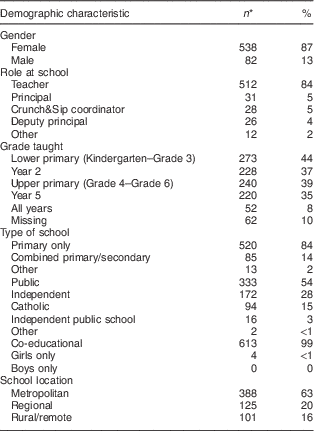
The demographic characteristics of the survey respondents are shown in Table 1. In total, 620 respondents completed the survey, 500 (81 %) of whom responded via the hard copy surveys and 120 (19 %) responded online. Most (n 512, 83 %) were classroom teachers, with the remainder holding other positions within their schools. More than half of the respondents (60 %) reported that their school was a certified Crunch&Sip school. The reported proportion of classrooms involved in fruit and vegetable breaks during class time was 83 % for certified Crunch&Sip schools, 63 % for schools where the respondents were unsure of their schools’ Crunch&Sip status and 32 % for non-certified schools.
Demographic characteristics of survey participants: staff from Western Australian schools with students of primary school age, October–November 2015
* Not all values add up to the total sample of 620 due to missing data.
Overall attitudes towards Crunch&Sip
Consistent with the focus group findings, the survey results indicated that school staff had very positive attitudes towards fruit and vegetable breaks during class time as a school-based intervention to improve children’s diets. When participants were asked about the appropriateness of schools implementing fruit and vegetable breaks during class time, 77 % of respondents gave a rating in the ‘agree’ range (i.e. a rating of 4 or 5; mean=4·2, sd=1·1). Less than 10 % disagreed with the implementation of these breaks. There were no significant differences according to demographic characteristics in the level of support reported.
Attitudes towards a vegetable focus
Similarly, the quantitative results reflected those of the qualitative phase in terms of respondents’ support for a vegetable focus for the Crunch&Sip programme. Sixty-six per cent of respondents provided a rating in the ‘supportive’ range (i.e. a rating of 4 or 5; mean=4·0, sd=1·1). In contrast, when asked to rate the level of anticipated parental support, only 41 % provided a rating in the ‘supportive’ range (mean=3·4, sd=1·0). There were no significant differences according to demographic characteristics for both measures. In terms of the specific vegetables school staff thought were most appropriate for Crunch&Sip breaks, the most commonly cited were carrots (87 %), celery (71 %), cucumber (42 %) and capsicum (39 %).
Motivations for a vegetable focus
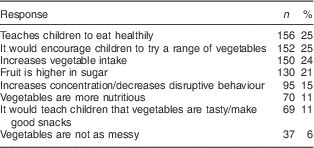
An open-ended item gave respondents the opportunity to nominate any potential advantages for a vegetable focus for fruit and vegetable breaks. The most common responses related to teaching children how to eat healthily, encouraging children to eat a range of vegetables and increasing children’s vegetable intake, with each being mentioned by about one-quarter of the sample (see Table 2). There were several significant differences according to the demographic characteristics of respondents. Staff from metropolitan schools were more likely than staff from rural schools (27 % v. 17 %, P=0·045) to mention that a vegetable focus would teach children to eat healthily. Staff from regional schools were more likely than staff from metropolitan (18 % v. 11 %, P=0·037) and rural (18 % v. 7 %, P=0·017) schools to mention that vegetables are more nutritious than fruit. Staff from regional schools were also more likely to believe that vegetables are not as messy as fruit compared with their metropolitan counterparts (11 % v. 5 %, P=0·027). Finally, upper primary teachers were more likely than lower primary teachers to mention that a vegetable focus would teach children to eat healthily (30 % v. 22 %, P=0·038).
Survey participant responses for main advantages of a vegetable focus in Crunch&Sip, Western Australia, October–November 2015 (n 620)
Barriers to implementing a vegetable focus
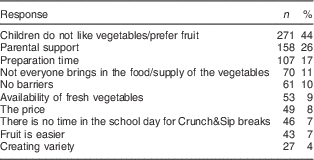
A further open-ended question related to perceived barriers to a vegetable focus for fruit and vegetable breaks (see Table 3). By far the most commonly mentioned barrier was children’s distaste for vegetables (44 %), followed by a perceived lack of parental support (26 %). There were several significant differences according to the demographic characteristics of respondents. Rural school respondents were less likely to mention low anticipated parental support than staff from metropolitan (14 % v. 28 %, P=0·003) and regional schools (14 % v. 26 %, P=0·029). Staff from metropolitan schools were more likely to nominate the longer preparation time required for vegetables as a barrier than those from rural schools (21 % v. 7 %, P<0·001). Staff from rural schools were more likely than those from metropolitan and regional schools to mention that the limited availability of fresh vegetables would be problematic (26 % v. 5 %, P<0·001; 26 % v. 6 %, P<0·001, respectively). Finally, respondents who taught upper primary students were more likely than their lower primary counterparts to mention insufficient time during class for Crunch&Sip breaks (11 % v. 6 %, P=0·026).
Survey participant responses for perceived barriers to a vegetable focus for Crunch&Sip, Western Australia, October–November 2015 (n 620)
Facilitators of a vegetable focus
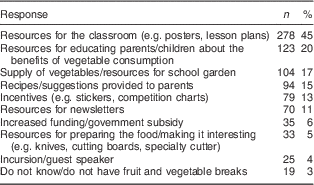
Finally, school staff were asked to nominate resources they would find useful if implementing a new vegetable-focused version of Crunch&Sip. The most frequently mentioned were classroom resources such as posters and lesson plans (45 %) and educational resources to provide to parents and children (20 %; see Table 4). There were some differences according to demographic characteristics, with regional school respondents more likely to mention that resources to educate parents/children about the benefits of vegetables would be useful compared with their metropolitan (28 % v. 19 %, P=0·024) and rural counterparts (28 % v. 15 %, P=0·018). Respondents from rural schools were more likely than those from metropolitan schools to mention that increased funding or a government subsidy would be helpful (11 % v. 4 %, P=0·003), while those teaching upper primary students were more likely than those teaching lower primary students to mention that the supply of vegetables from external sources or resources for the school garden would be useful (22 % v. 13 %, P=0·008).
Survey participant responses for perceived useful resources for adopting a vegetable focus for Crunch&Sip, Western Australia, October–November 2015 (n 620)
Discussion
Despite increases in children’s fruit intake over recent years, their vegetable consumption still falls well short of recommended guidelines( 10 – 12 ). While it is understood that the school environment plays a critical role in promoting healthy eating behaviours in children( Reference Biggs, Farrell and Lawrence 1 , Reference Nathan, Wolfenden and Butler 3 , Reference de Sa and Lock 13 – Reference French and Stables 16 ), there is a lack of information regarding whether school-based nutrition programmes such as Crunch&Sip can assist in addressing the substantial deficit in children’s vegetable consumption. In addition, while school staff have an important role in ensuring the success of such programmes through their interactions with both children and parents, there is a lack of information relating to their perspectives on these issues. Thus, the aims of the present study were to examine the receptivity of school staff to a vegetable focus for the Crunch&Sip programme and to explore the associated motivators, barriers and facilitators that could be the focus of future efforts to modify the programme.
In combination, the qualitative and quantitative data indicate that WA school staff would strongly support a vegetable focus for Crunch&Sip. In terms of motivations, there was a consensus that the modified programme would lead to children consuming more vegetables, which may, in turn, improve their overall diets. These findings support previous research that school staff are highly supportive of programmes that aim to improve children’s nutrition( Reference Pettigrew, Pescud and Donovan 35 , Reference Middleton, Keegan and Henderson 36 ). Some school staff participating in the present study reported that they were already employing their own strategies to address children’s inadequate vegetable consumption. These results bode well for governments and other organisations seeking to implement vegetable-focused programmes in schools.
In terms of potential barriers to promoting in-class vegetable consumption, school staff were primarily concerned about anticipated resistance from the other people involved in the process (i.e. children and parents) rather than the school-based factors that have been identified previously in relation to other kinds of school-based nutrition initiatives( Reference Knai, Pomerleau and Lock 15 ). School staff considered the greatest barrier to be children’s aversion to the taste of vegetables. This proposition is not unreasonable given evidence that children innately prefer sweet foods over bitter foods( Reference Wardle and Cooke 23 , Reference Birch 37 ). This bias is hypothesised to be an adaptive advantage as the presence of sugar, as found in fruit, indicates useful energy, whereas the bitter taste of vegetables may signal the presence of harmful pathogens to be avoided( Reference Wardle and Cooke 23 ). However, previous research has shown that children’s taste preferences can be shifted with frequent and repeated exposure to vegetables( Reference Anzman-Frasca, Savage and Marini 38 – Reference Wardle, Herrera and Cooke 40 ), which could be potentially achieved through regular Crunch&Sip breaks. In terms of parents as a perceived barrier, school staff reported that parents may be reluctant to comply with a vegetable focus due to the cost of vegetables and the preparation time required (e.g. peeling vegetables). This finding corresponds with previous research identifying parental support as a crucial factor in the success or otherwise of school-based nutrition programmes( Reference Nathan, Wolfenden and Butler 3 , Reference de Sa and Lock 13 , Reference Knai, Pomerleau and Lock 15 , Reference Shepherd, Harden and Rees 25 ). There were also some important differences according to the geographical location of the school. Staff from rural/remote schools were particularly concerned about limited availability of fresh vegetables for their students. This finding corresponds with previous research reporting that individuals living in rural communities in Australia are more likely to be disadvantaged in their ability to access healthy foods( Reference Burns, Gibbon and Boak 41 ).
School staff were readily able to suggest strategies to overcome these barriers in both the qualitative and quantitative phases of the study. This is an important result as previous research has shown that a significant barrier to nutrition programme implementation in schools is an already crowded curriculum that prevents nutrition education being viewed as a priority( Reference Knai, Pomerleau and Lock 15 ). The ability and willingness of the study participants to identify potential implementation strategies suggest that they are likely to be receptive to resource packages that would enable them to integrate a vegetable focus into a constrained school curriculum.
The first strategy nominated in the present study was the role modelling of vegetable consumption in class by teachers. Such an approach is consistent with previous research demonstrating that teachers’ food consumption can significantly influence children’s food intake( Reference Potter, Schneider and Coyel 6 , Reference Perikkou, Gavrieli and Kougioufa 28 ) and that children are more likely to eat new foods if people around them are eating them( Reference Addessi, Galloway and Visalberghi 42 ). Second, the study participants stressed the importance of educating parents about the importance of vegetable consumption and the minimal costs and preparation time involved. They noted that this could be done directly via face-to-face or written communications and/or indirectly via their children. This finding corresponds with the results of other school-based nutrition programme studies that have demonstrated the importance of clear communication between school staff and parents( Reference Nathan, Wolfenden and Butler 3 , Reference Knai, Pomerleau and Lock 15 ). Finally, it was proposed that the topic of vegetables could be integrated within the educational curriculum, thus increasing children’s knowledge of vegetables and potentially increasing their willingness to consume them outside Crunch&Sip breaks and the school environment.
Of note is that although school staff in the current study anticipated lower levels of support from parents compared with their own levels of support, this may be unfounded. Previous research has shown that parents were actually very supportive of healthy food reforms in school canteen settings, which contradicted the predictions made by school staff( Reference Pettigrew, Pescud and Donovan 35 ). Thus, the attitudes of parents towards a vegetable-focused programme warrant further investigation to assess actual levels of support. School staff may feel more confident in introducing such changes if they are assured that the majority of parents are likely to be cooperative and supportive. Future research could also investigate whether participation in a vegetable-focused Crunch&Sip programme leads to an overall increase in children’s vegetable consumption or whether children consume fewer vegetables in the home environment as a result of greater intake at school.
There are two main limitations of the present study that can be addressed in future research. First, in compliance with the anonymity condition of the ethics approval for the present study, identifying information relating to the staff and their schools was not captured. This prevented determination of the number of schools represented in the data, thereby precluding response rate calculation and assessment of the representativeness of the sample. Second, studying only the perspectives of WA school staff may have resulted in region-specific outcomes. Further work is needed to assess the potential receptiveness of school staff in other geographical locations. Assessing the perspectives of parents and children is another potentially fruitful area of future research. Strengths of the present study include the multi-method approach and the wide range of school types represented in the sample, which included metropolitan, regional and rural schools.
Conclusion
The considerable deficits in children’s vegetable intake globally compromise their future health and well-being. The results of the present study suggest that school staff in Australia are likely to be highly supportive of in-class nutrition programmes that are specifically focused on vegetable consumption to help address these deficits. Strategies likely to facilitate the successful introduction of such programmes include providing educational resources for parents and children and encouraging staff to role model vegetable consumption on school premises. The Crunch&Sip programme will be modified in accordance with these findings and future research will be undertaken to assess the efficacy of the adopted strategies. Although the present study was conducted within an Australian context, the results provide useful information that may be relevant in other countries where schools are tasked with improving children’s diets.
Acknowledgements
Acknowledgements: The authors thank Gael Myers, Cancer Council Western Australia, for her helpful comments on the manuscript. Financial support: Cancer Council Western Australia receives funding from the Western Australian Health Promotion Foundation (Healthway) to conduct the Crunch&Sip programme. Conflict of interest: None. Authorship: S.P., S.W., I.S.P. and S.B. conceptualised the study. S.W. managed participant recruitment and data collection. G.S. and N.B. performed the data analysis. G.S. and S.P. prepared the manuscript. All authors contributed to and approved the manuscript. Ethical standards disclosure: This study was conducted according to the guidelines laid down in the Declaration of Helsinki and all procedures involving human subjects/patients were approved by the Curtin University Human Research Ethics Committee (approval number PH-CL 16-2013). Written and verbal informed consent was obtained from all subjects/patients. Verbal consent was witnessed and formally recorded.



