

Introduction
Belgium is characterised by a low rate of employment amongst people aged 55–64 years compared to the European Union (EU) as a whole (44 and 51.7%, respectively in 2015; 50.5% for men and 39.3% for women in Belgium compared to 58.9% and 45.2% in the EU), although this rate has been increasing steadily for the past several years (from 30% in 2004). This significant increase results not only from the development of policies favouring the retention of older workers, but also from two other factors affecting the labour market: a general increase in the rate of participation amongst women and an increase in educational levels.Footnote 1
According to the Eurostat indicator, the mean duration of working life in the EU-28 was 32.7 years for a woman and 37.8 years for a man in 2014. The corresponding figures for Belgium were 30.4 and 34.7 years. From 2000 to 2014, the mean duration of working life in Belgium increased for both men and women, but to a greater extent for women: by four years compared to 0.9 years for men. The Belgian employment sector is also characterised by a high proportion of part-time work at all stages of professional life (including at end of career) and particularly for women. One in two women aged more than 50 years currently works part-time, compared to 13.3 per cent of men in the same age group.
This low employment rate is notably due to the culture of early retirement that has taken root in the Belgian employment sector over several decades. Indeed, since the mid-1970s, the reorganisation of employers’ production capacity has depended heavily on early retirement policies. Such policies remain very important in the way the end of a professional career is regarded amongst employees as well as amongst trade unions and management (Bredgaard and Tros, Reference Bredgaard and Tros2006; Claes, Reference Claes2012; Desmette and Vendramin, Reference Desmette, Vendramin, Alcover, Topa, Parry, Fraccaroli and Depolo2014).
Nevertheless, if on the one hand, seniors are increasingly obliged to remain in the job market, on the other hand, they can encounter real difficulties in doing so. These difficulties include collective redundancies focused on seniors, indirect discrimination in the workplace, difficulties in returning to the workforce and lack of training towards the end of working life (Burnay, Reference Burnay2011). Older workers are thus put in a paradoxical situation, accentuated by an end of career that is increasingly punctuated by health problems (de Zwart et al., Reference de Zwart, Broersen, Frings-Dresen and van Dijk1997; Jolivet and Volkoff, Reference Jolivet and Volkoff2016), notably related to a harshening of working conditions (Carayon and Zijlstra, Reference Carayon and Zijlstra1999; Askenazy et al., Reference Askenazy, Carron, de Coninck and Gollac2007). It is in this difficult context, where the older worker is caught between strategies of inclusion and of exclusion, that our research is situated.
Although the situation of working for a temporary employment agency at the end of a career is still relatively rare, but growing, it illustrates the difficulty that older workers have in responding to policies that extend the working life. Moreover, temporary employment also reveals significant normative transformations concerning the organisation of work. By temporary work, we indicate situations where an individual is employed by an agency to work temporarily in a business or industry. This definition of temporary work has two characteristics: a contract of employment that is limited in time and a form of employment that is legitimised within society. In Belgium, only approved temporary employment agencies can supply workers to businesses and industries. The use of temporary employment among young workers is also legitimised in the wider objective of eventually achieving stable and long-term employment contracts.
The sector of temporary employment agencies in Belgium has been growing steadily for more than 20 years (with the exception of a significant decrease during the 2008 financial crisis), and it accounts for a growing part of the Belgian economy. According to the annual reports of Federgon (the federation of human resources service providers), more than 580,000 people – approximately one in eight economically active people in Belgium – did at least one day of work for a temporary employment agency in 2015, for a total of 197 million hours worked (Federgon, 2018). Sixty per cent of employees in the sector are men and 40 per cent are women (Conseil supérieur de l'emploi, 2015). In terms of income, the volume of activity in the sector more than doubled between 1998 and 2012 (Valenduc, Reference Valenduc2012).
If working for temporary employment agencies is seen primarily as a path to integration into the workforce for young people, it also concerns increasing numbers of seniors, in proportions that are increasing. In 2003, 7.8 per cent of workers in the sector were aged 45 years and above. Ten years later, in 2013, the figure had reached 15 per cent (Forem, 2013). In 2017, 19 per cent of temporary workers were over the age of 45 (Federgon, 2018): 45 per cent of them had a very low level of qualification, but approximately 20 per cent had a very strong educational background, and approximately 25 per cent had held a permanent position before turning to temporary work. This significant increase, coupled with the toughening of policies concerning end-of-career employment, means that examining senior temporary work is essential to understand the present professional realities of older workers in Belgium.
The objective of the research presented in this paper is to understand the experiences of these temporary workers in a theoretical lifecourse perspective. The research question can be formulated as follows: How can the experiences and practices of end-of-career temporary work in this population be understood? The main hypothesis is: the reduction of political frameworks for early retirement generates pressure on older workers that can only be resolved by recourse to precarious work. More precisely, recourse to temporary work may be associated with a precarious job that cannot be transformed into a permanent contract: a choice of last resort resulting from an increasingly rigorous labour market and new legislative constraints aimed at seniors.
Theoretical framework
Few scientific studies have addressed the relationship between the end of working life and precarious contracts. Indeed, several recent studies have investigated the differences between stable and precarious contracts, notably in terms of employee involvement in different managerial contexts (Chambel et al., Reference Chambel, Castanheira and Sobral2016) or in terms of workplace wellbeing or job satisfaction (Dawson et al., Reference Dawson, Veliziotis and Hopkins2017), but the dimension of age has not been considered in their analyses. This may be due to the small percentage of older workers in precarious employment: in the EU, only 7 per cent of workers between 50 and 65 years old lack a stable contract (Desmette and Vendramin, Reference Desmette, Vendramin, Alcover, Topa, Parry, Fraccaroli and Depolo2014).
On the contrary, the majority of research concerning the end of working life focuses on keeping older workers in the job market, with a view to increasing employment rates. It is in this context that the particular questions of health (Bound et al., Reference Bound, Schoenbaum, Stinebrickner and Waidmann1999; Kim and Moen, Reference Kim and Moen2002; Lindeboom and Kerkhofs, Reference Lindeboom and Kerkhofs2009; Coe and Zamarro, Reference Coe and Zamarro2011; Barnay, Reference Barnay2016), working conditions (Vandenbrande et al., Reference Vandenbrande, Vandekerckove, Vendramin, Valenduc, Huys, Van Hootegem, Hansez, Vanroelen, Puig-Barrachina, Bosmans and De Witte2012; Vendramin and Valenduc, Reference Vendramin, Valenduc, Vandenbrande, Vandekerckove, Vendramin, Valenduc, Huys, Van Hootegem, Hansez, Vanroelen, Puig-Barrachina, Bosmans and De Witte2012) and transitional jobs (bridge employment) (Alcover et al., Reference Alcover, Topa, Parry, Fraccaroli and Depolo2014; Beehr and Bennett, Reference Beehr and Bennett2015; Dingemans et al., Reference Dingemans, Henkens and van Solinge2016) are addressed in relation to the prolongation of working life: it is a matter of demonstrating how end-of-career work experiences are strongly influenced by professional environments characterised by poor work content, few career opportunities, difficult working conditions and little available social support. The question of professional status, and particularly that of precarious contracts, is also little-discussed.
However, the literature clearly demonstrates how older workers’ experiences are in a sense the result of the entire evolution of their professional careers (Mardon and Toupin, Reference Mardon and Toupin2007; Volkoff et al., Reference Volkoff, Wolff, Molinié, Guillemard and Mascova2017). It is thus necessary to reconstruct complete professional trajectories in order to understand end-of-career experiences. The temporal element must be taken into account, because today's older workers are formed not only by their professional and familial past, but also by the evolution of the cultural, social and economic context in which they have developed. For these reasons, end-of-career temporary work is analysed from a dual theoretical perspective: the first approach concerns the embedding of temporalities in advanced modernity, and the second concerns the ‘lifecourse’ paradigm, which is integral to an intersectional analysis.
For Rosa (2010), time has three analytical dimensions. The first refers to the structuration of daily life and the distribution of social time within a daily temporal space. This dimension is the time of articulation between co-existing temporalities, but also the routine time that defines horizons of stability. As this routine erodes, the question of the articulation and prioritisation of social time arises. The second dimension concerns the construction of lives, the partitioning of the stages of life that give time a metaphysical significance: What will we do with our lives? What are the values and social norms that guide us? The third dimension that Rosa envisions allows us to relate time to a particular historical and spatial context, to consider the social actor as embedded in a particular epoch and generation. Thus, an approach using these temporal frameworks allows us to identify the individual, social and cultural dimensions of a given question.
The lifecourse paradigm allows societal changes to be situated in both a micro- and a macro-sociological context. Moreover, the lifecourse paradigm permits a specific understanding of the relationships between changes in individual lives and those in social policies (Grenier, Reference Grenier2012): How can transition periods in a lifecourse be understood? Thus, the lifecourse can be defined as a model of stability and of long-term changes (Sapin et al., Reference Sapin, Spini and Widmer2007) that comprises a series of steps, transitions and turning points (Abbott, Reference Abbott2001; Bessin et al., Reference Bessin, Bidart and Grossetti2009); the turning points correspond to important events that reorient trajectories in a lasting manner (Negroni, Reference Negroni2005). These events, which determine the transitions and the turning points of a trajectory and which permit an understanding of changes in identity, may be of a different nature. They may be predictable and codified, or ritualised and socially constructed (e.g. coming of age, reaching legal retirement age). They may be endured by an individual caught up in global social contexts (war, economic recession) or individual ones (widowhood, loss of a parent), or they may be brought about by the individual him- or herself (job change, divorce).
The goal of the lifecourse paradigm is to identify and to understand the individual, societal and historical patterns that determine a trajectory and the interactions of these patterns. Thus, the industrial era was built on a division of the stages of life into three periods: youth (a period of formation), adulthood (a period of professional activity) and retirement (a period of rest after a lifetime of work). These three periods, with their underlying logic, have constructed our existence and structured our daily lives in an important gender dynamic, most often focused on the masculine career with women being relegated to domestic work (Sapin et al., Reference Sapin, Spini and Widmer2007). Moreover, they have defined our social policies by establishing the rights and responsibilities of citizens according to age thresholds, which are largely inspired by this division and are also based on a gendered vision of society (Vrancken and Thomsin, Reference Vrancken and Thomsin2009).
This division of lifestages into three periods, originating in the industrial era, is dominated by an ethos of work – a true dominant cultural model – centred on devotion to work, effort and work well done (Lalive d'Epinay and Garcia, Reference Lalive d'Epinay and Garcia1988). However, this cultural model has undergone substantial transformations over the past 30 years. Beginning in 1992, Zoll described the contours of a socio-cultural mutation through a vast study of work amongst young people (Zoll, Reference Zoll1992). This mutation was based on a transformation of the relationship to work, which saw the emergence of a culture of individual fulfilment and self-realisation based on the following characteristics (Lalive d'Epinay and Garcia, Reference Lalive d'Epinay and Garcia1988).
Adhesion to social norms and to a cultural model depends on multiple and interrelated factors. Thus, the over-representation of women in precarious (temporary) jobs must be interpreted not only in terms of parameters linked exclusively to the job market, but also considering the gendered social roles that women are expected to fulfil in contemporary society (De Jong et al., Reference De Jong, De Cuyper, De Witte, Silla and Bernhard-Oettel2009). Thus, women's participation in the workforce also depends on factors related to their family life. They may choose to reduce their professional involvement in order to devote themselves to raising their children, or for personal reasons. It is therefore necessary to link a lifecourse analysis with a gender perspective. Moreover, these lifecourses are also affected by important social inequalities that open or foreclose possibilities and choices, making an intersectional analysis essential. The notion of intersectionality is not new, and was initially developed in the United States of America in the context of Black feminist analyses (Crenshaw, Reference Crenshaw1988). This critical theory permits the understanding of the particular concerns of minorities whilst taking into account the overarching structures of social inequality, notably through posing the question of discrimination against minorities. More recently, a more empirical current has emerged, in France, under the impetus of Danièle Kergoat (Reference Kergoat and Dorlin2009). For Kergoat, inequalities should be analysed not in terms of a simple cumulation of disadvantages, but rather as the interaction of different relations of domination. Her work demonstrates the extent to which class and gender construct one another as part of an integrated system and this is the perspective adopted in this paper.
Methodology
The research is based on a qualitative analysis of semi-directed interviews. The main purpose is to understand the social contexts and the life experiences of the individuals interviewed, as well as the meaning they give to their actions.
Sampling method
The data collected are based on 36 semi-structured interviews conducted between March 2014 and September 2015. In general, the interviews lasted between 45 and 90 minutes. They were conducted by two researchers (master's level) under the supervision of the author in two temporary employment agencies in Wallonia (the southern, French-speaking part of Belgium):
• An agency oriented more towards a public with a low educational level, proposing temporary jobs to unskilled workers.
• An agency oriented towards a public of better-educated and more highly skilled temporary workers.
Initially, the personnel of the temporary employment agencies contacted the interviewees to obtain their agreement to participate in the study. Subsequently, the researchers contacted the interviewees directly to set up an appointment. The interviews were conducted at the agencies (but without the presence of the agency personnel) or at the interviewees’ homes. The interviews were recorded with the consent of the interviewees. All names have been modified in order to guarantee the interviewees’ anonymity.
The interview grid was tested beforehand, and was adapted according to the feedback received in order to optimise it for the working environment of this specific population. Once the interview grid was stabilised, no further changes were made; thus, the 36 interviews were conducted using the same interview grid. Interviews took the form of a conversation that covered all of the topics in the interview guide, while guaranteeing the interviewee maximal freedom of expression. Several team meetings were also organised in order to ensure a degree of consistency amongst the interviews collected and reliability of the interview guide. Each interview was transcribed in its entirety to permit the closest possible analysis of its discourse. The researchers also used an interview notebook to record remarks or observations concerning the interview situation.
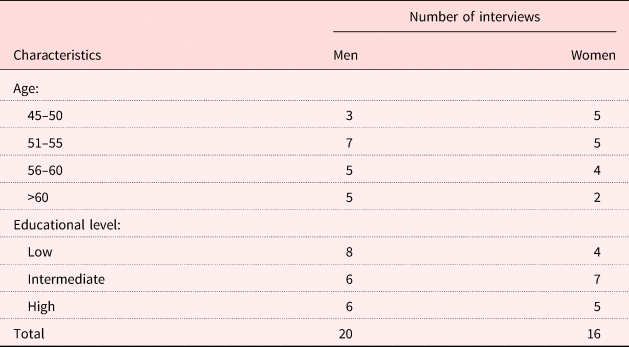
The sample was constructed based on criteria of gender and age, and it included 20 men and 16 women between 50 and 67 years of age (Table 1). The double principle of diversification of profiles and saturation of data was respected. The interview grid included the following themes:
• Socio-demographic and professional characteristics.
• Professional and family history.
• Commitment to work and meaning of work.
• Representations of temporary work.
• Construction of temporalities.
• Work–life balance.
• Age and its inscription in the lifecourse.
Socio-demographic profile of the sample
Analysis
Analysis of the data took place in three steps, first in order to construct the respective lifecourses and then to interpret the more general situation of temporary workers at end of career.
The first step consisted of diagramming, in a literal sense, the lifecourses of the respondents in order to reveal both their professional and their familial trajectories. The challenge of this first step was to reconstruct the lifecourses in such a way that both their continuity and their possible turning points could be perceived. Although each interview had its own diagram, the final number of configurations identified was small due to the similarity of some trajectories.
In a second step, these diagrams were fleshed out through analysis of the forms of temporality proposed by Rosa (Reference Rosa2010):
(1) How does the management of social time play out in daily life? Do social times compete with one another? On what kind of prioritisation of social time are these lifecourses based?
(2) What are the lifecourses that unfold? What are the turning points essential to understanding these trajectories? What is their nature? Which symbolic values do these turning points represent? On which social norms and values are they based? What is the cultural model of reference?
(3) How does age affect the construction of existential dynamics? Do temporary workers at end of career suffer from indirect forms of discrimination or from negative stereotypes? Are they caught up in social representations connected to modern society?
Finally, in a third step, the different lifecourse configurations were supplemented by the introduction of other components of the interviews: Could the different configurations be analysed from a gender perspective? What was the importance of educational level in the construction of a lifecourse? The questions of the representation of work, professional commitment and the experience of temporary work were also brought into the analysis. No particular statistical software package was selected for this investigation in order to permit flexibility in the conduct of the three steps described above.
Results
The analysis of the interviews reveals a variety of practices of end-of-career work for workers in temporary agencies and a complexity of life experiences that can be classified with the elaboration of a two-dimensional typology. The construction of these ideal types is developed by the author according to the lifecourse concept.
• On the first axis, individuals have control over their lives or they are affected by life events that they cannot control. We have qualified this dimension as whether the lifecourse is chosen or endured.
• The second axis, qualified as constancy or alternance in a lifecourse, involves the application of the concept of the turning point, i.e. determining the extent to which the lifecourse is linear or alternatively the extent to which it includes symbolically or subjectively important turning points.
The intersection of these two dimensions gives rise to a typology which permits the identification of four ideal types or configurations of the experience of end-of-career temporary work.Footnote 2 Table 2 illustrates these configurations.
Typology of the experience of end-of-career temporary work

Precarious lifecourses
The first profile identified reinforces the principal hypothesis of this research. Older temporary workers are confronted with an employment sector that is becoming increasingly harsh, and which prevents them from finding secure employment. With few qualifications, individuals in the precarious configuration have never managed to find stability in their professional lives which are made up of odd jobs, successive failures and recurrent periods of unemployment. The constancy of their lifecourses is thus paradoxically based on discontinuity. They work in arduous occupations involving considerable physical demands. Finally, these men and women, with few qualifications, have been unable to escape precariousness throughout their lives.
No, there was never a, a … Oh, it was three months at maximum, what. Maximum three months. No, no, I was never. But, well, sometimes I worked, uh, a month and a half, two months, then I was on the dole three months, then I worked two months, then, uh, it was like that. But I was never [on the dole] for years, what. (Rachid, 57 years old)
Well, no, let's say no. At 16, you haven't studied enough to be able to say that you use your diploma. Because what did I have a diploma in? I, I hung about, OK, in quotations, I hung about at school until, as long as I had to. And once attendance wasn't compulsory any more, I left, so, uh, to work. Because studying wasn't for me. (Mohamed, 61 years old)
This professional precariousness is coupled with a familial instability already present in their childhood, with complicated histories of family distress or of abandonment. The question of migration is also present, adding further complications to an already difficult life.
Yeah, that is, uh, first I started as an apprentice in a print shop … Uh, let's say that my dad died very early, we're a family of six kids, so my brother and me, because my mum was alone, uh, we quit school very early, what. Both of us, my brother and me, we're the two oldest and so we quit school very early to help … To help Mum, what. (Paul, 56 years old)
So, I was born in a very large family, 12 people, 12 children. At the age of three years, according to the information I have, because, well, inevitably the older you are the less you have correct information. At the time, my, uh, my mother didn't know how to take care of us. So we were placed. It should be said too that my mother is a girl who was young when she came to Belgium, because we're of Hungarian origin. (Svata, 51 years old)
Precariousness goes hand in hand with an uninspiring work content. MissionsFootnote 3 follow one another with no possible accumulation of experience; tasks are repetitive and unrewarding. However, financial need makes its presence felt, and there is little room for manoeuvre. For the individuals concerned, the end of their careers seems distant, and it does not constitute an important milestone in their trajectories because it still seems so far away. Caught up as they are in strategies of daily survival, the approach of retirement does not appear to provoke any particular anxiety. In contrast, their bodies are beginning to suffer, and musculoskeletal problems are becoming a reality that will constrain them in future missions.
As a temp, even if you're a good worker, it can happen just like that, eh. It happened to me. I had carpal tunnel so I had to have both hands operated on. Well, all of a sudden, when I came back, they told me ‘thank you and goodbye’, what. (Muriel, 55 years old)
The difficulty of obtaining missions is thus even greater when physical restrictions limit the possibilities.
Competition with Eastern European countries also adversely affects the job market by imposing very low wages.
Well yes, it's … I think that that law is good for the bosses, because now you have Polish temps. I can tell you about F. [fruit harvesting], where I worked, my last employer, well, they hire, er, Polish temps. You know there's a temp agency in Poland, you send a fax, you say ‘OK, I need two of them next week’ and they send you two people. And they have a lot of older Polish temps, in their fifties, because in my opinion those people, well, even if they're married, it's not a problem if they're not there every day, and so they come and work for a month, Saturday, Sunday, and they work a lot of hours and all, and then they go back to Poland for two or three weeks, then they come back. You see? Then soon it will be the Romanians, because for the Poles it's €10 an hour, for the Romanians it's €5. I'm not joking. You'll see. There you are. You don't believe it if you don't have to deal with it. (Roger, 49 years old)
For individuals in the precarious configuration, the connection to the world remains firmly rooted in the present, as projection into the future is made difficult by the precariousness of their situation and the past has not been sufficiently valorised for it to be symbolically strong. Their temporal universe is reduced to the present, and temporary work is only a means of surviving in a hostile world. More precisely, working for a temporary employment agency is perceived negatively, but as the only solution to the exigencies of life. The agency is seen as nothing more than a necessary means of entry into the workforce. Resentment, anxiety and disillusionment are focused on the employees of the agency, who are seen as bureaucrats devoid of empathy rather than as partners. The administrative aspects of working for an agency are also very burdensome for older workers, particularly as these procedures are very rigid and they add to the difficulties of professional integration.
The precarious configuration was common amongst the interviewees, and it can be seen as the symbol of a growing difficulty in achieving lasting integration into the workforce. Nevertheless, individuals in this configuration remain attached to the image of the working-class world of the past, with its codes and its values: effort, work well done, professional identity and the code of honour. Their vulnerability is therefore even harder to endure, being contrary to their moral values. However, with time the image that individuals in the precarious configuration cling to seems to fade, and be replaced by disillusionment and a lack of prospects for professional recognition. Employment loses its meaning, and does not lead to the construction of a professional identity.
Although women are present in this first configuration, men are more affected by their precarious situation, notably because of the moral constraints weighing on the symbolic figure of the man, the breadwinner: it is important for him to be able to support his family. Serge sums up this situation rather well:
It's a matter of pride! It's, look at no matter what country, finally in no matter what culture, African or other, he who doesn't work is the laughing-stock of the others. It's really a matter of pride, that is to say that when you work it's your money that you earn, you deserve it, and so you don't let yourself be pushed around in life by people who'll tell you all kinds of rot. (Serge, 60 years old)
If employment represents above all a financial resource, its absence means that alternatives must be found to assure the family's survival. In this case, this clearly means recourse to informal work that will allow bills to be paid. The interviews include many statements to this effect. A process of rationalisation results in an acceptance of the individual's situation: the few alternatives available make their situation endurable.
Disrupted lifecourses
Disrupted lifecourses are characterised by an important rupture, a turning point that reorientates the individual's life: there is a before and an after in the construction of these trajectories. The ruptures may differ in nature, but they are always symbolically important in the lifecourse.
Health problems, illness and death of a partner or other close family members constitute a first source of important changes, both for the temporary workers themselves and for the people around them. In this sense, the biographical rupture is structured around the illness or death. Temporal adjustment constitutes an important factor helping to overcome the vicissitudes of life through the exercise of a professional activity.
It was because, well, my wife had died at that time, and I had young children, so I needed a bit more flexibility in my working hours, that's why I took that. (Thomas, 52 years old)
Temporary work thus appears as a short-term solution for handling new imperatives. It may be perceived as a lifestyle choice for balancing private life and professional investment through the selection of working hours or particular missions, but sometimes it involves a major upheaval necessitating a career change.
Yes, when I had my stroke. Because, I'm telling you, it's my eyesight that was affected, and as I was a welder in the body shop, well, I couldn't weld any more. (Christian, 48 years old)
Adaptation may also be necessary for reasons of care, understood as concern for another (Gilligan, Reference Gilligan1982). Undertaking care can be based on a form of moral responsibility, or, conversely, the lack of other solutions. The absence of social policies adapted to the situation of distress reflects a failing of public policies. In Belgium, it is predominantly women who assume a caring role: in a society that is nevertheless relatively open and egalitarian, women continue to assume a greater proportion of care for others, in terms of both the education of young children and care for older people. The way in which careers are structured and the differences in salary levels between men and women indirectly encourage this gender difference.
In this sense, recourse to a temporary employment agency is experienced as a possibility of caring for a family member without losing contact completely with professional activity. Temporary work can thus constitute a solution for continuing to exercise a professional activity in a universe dominated by care for another. Other mechanisms can be put into place to the same end, notably the reduction of working hours at end of career (Burnay, Reference Burnay2013).
My mum is seriously ill, and my mother-in-law is also seriously ill. And I'm very lucky, thanks to temp work, I can take care of these two ladies who have done so much for me, for my husband, and for my children. And temp work gives me a freedom that I didn't know about when I started. (Anne, 56 years old)
A disrupted lifecourse may also result from a redundancy, notably in the framework of company reorganisation. The shock of redundancy is even greater when one's entire professional career has been constructed around the same employer. These disrupted lifecourses can have strong psychological consequences which are linked to the traditional values of work and a strong work ethic stemming from an industrial cultural model. In these cases, the recourse to a temporary employment agency does not occur until after the disruption, and temporary employment is conceived as the only possibility of professional reclassification. This is the case for Gérard, who says:
I've always been stable; I worked more than 30 years in the same company. And, well, that, well now I certainly have some responsibility for the loss of my job, because after all I was involved in the trade union and all that, I set their teeth on edge and all, and finally I had some other problems with my employer on top of that … Even so, I imagined that I'd finish my career in that company where I was, I only had about ten years to go and I'd be done, so you see. And I was hoping for a higher-level position, maybe as a foreman or something, and well, you see, they weren't open to that, and I guess it's also that that upset me. (Gérard, 51 years old)
Gérard thinks permanently about regaining a stable job and retaining a sense of belonging:
Er, exactly, that's my question. I would like to find a job and be able to say to myself, ‘Well, there it is, I'm here until I retire, if by chance I'm able to work until then, if my health permits.’ I hope to work until then and maybe even longer; well, I don't know, only time will tell. So, well, there you are… (Gérard, 51 years old)
The proximity to retirement (or to early retirement) contributes to a progressive professional disengagement. In these cases, individuals find it difficult to accept a productive system that is considered unjust. Indeed, commitment to work over many years does not suffice to protect against redundancy, and the symbolic representations of work as an integral component of one's identity is difficult to maintain. Symbolically, the professional career ends at the moment of dismissal, and temporary work is only an obligatory step before a retirement desired as soon as possible. Temporary work is seen as a kind of parenthesis. This disenchantment with the world of work is all the more striking considering the strength of the employee's attachment before the redundancy.
If these profiles differ in nature, the ideal type can be characterised by a veritable rupture in the professional, family or individual lifecourse, after which older workers must redress their career in the context of situations that they did not choose and that are beyond their control.
Boundaryless lifecourses
Boundaryless lifecourses are characterised above all by a strong professional integration and a desire to choose one's personal investments. Jobs are accepted based on the interest of their content. Temporary workers in this group are extremely well qualified, and a large majority of them are women. These temporary workers have specific skills that position them as experts on the job market, such as language skills, information technology expertise or financial skills. These skills allow the temporary workers to move easily from one mission to the next, and they are motivated by the desire to learn and the challenge of new experiences. A permanent contract is considered to hamper the progression of their professional life and as a constraint to professional development. Choice is the overriding factor and conditions of employment are imposed by the individuals concerned.
Well, first of all you can evolve much faster in a task or in a profession because finally you take the best of each experience that you have on a mission. That lets you learn and continue to progress and, uh, the diversity of missions and tasks lets us have a much broader vision of problems and solutions. And so it's a career that's less linear, but on the other hand you also have the challenge of always giving the best of yourself, because you know that every week it could end, eh? Uh, and so that, that pushes you to have that desire to go to work. You're not, ‘Oh, me, I'm gonna work for my salary.’ No, when you do temp work, you work for the pleasure. For the pleasure of meeting people, for the pleasure of seeing new companies, new things, to learn more and to, and to learn things very quickly and to advance. Because it's never the same thing twice. (Pascale, 59 years old)
Yes, absolutely. I'm a professional temp (laughs). And several times I've done long missions and they've offered me a permanent contract after, and I've refused it. Companies don't always understand, eh? ‘Aren't we good to you?’ or ‘Doesn't what you're doing interest you?’ or, um … But it's no, but I don't have, I don't feel ready, it's been years that I haven't felt ready to sign a contract, to commit myself. I want to continue to progress, I want to continue to study and to evolve. (Ingrid, 56 years old)
In these cases, it is therefore choice and job satisfaction that constitute the principal motives for recourse to a temporary employment agency. What counts is finding fulfilment in one's mission and being stimulated by the challenges that make the mission interesting. The content of the work takes precedence over other considerations. The ethos of individual fulfilment through work clearly constitutes the cultural model of reference.
The temporary employment agency thus becomes the antechamber of employment, a pleasant place to be where confidence and trust is built up between the temporary worker and the staff. Real bonds of friendship form and persist through long-term relationships, particularly when an entire professional career is built on temporary work. It is undoubtedly this expressive value that explains the strong predominance of women in this group, with men choosing other means of constructing this kind of career.
Interviewer: But that's what I wanted to ask you: did you develop a special relationship with that consultant or with the R. agency?
Chantal: Oh yes! With several of them, eh? Over time, with several. There's even one who was at my wedding, that should tell you something! (laughs) There really are some who become friends over time. Um. So it's, yes, you develop professional connections, but also friendlier ones. Finally you end up knowing each other very well. During the years you work together, you always report to the same people, um, it's the same people who call you to offer a job. Um… (Chantal, 64 years old)
For this group of temporary workers, we find here something of the stance of the Sublimes, the extremely well-qualified workers of the 19th century, slightly rebellious but above all very free and detached from the classical industrial system (Lécuyer and Poulot, Reference Lécuyer and Poulot1981). But it is in fact the concept of the boundaryless career (Arthur and Rousseau, Reference Arthur and Rousseau1996; Sullivan and Arthur, Reference Sullivan and Arthur2006) that is the most applicable to these situations. This concept refers to a career that is constructed outside the social norm of having a single job with a single employer throughout one's professional life. It is characterised by a desire for self-fulfilment through work, but without institutional attachments being determinant. Thus, the boundaryless career is constructed on multiple employers and from professional situations chosen according to the particular benefits of each organisational structure. Each new professional experience contributes to an enrichment of the skills, aptitudes and knowledge that, through their diversity, contribute to increasing the worker's employability.
For Lacroux (Reference Lacroux2009), boundaryless careers in temporary employment are based on three characteristics:
• the criterion of voluntariness (temporary work should remain a choice);
• the criterion of employability (temporary work should be a real opportunity despite advancing age); and
• the criterion of perceived precariousness (temporary work should not produce a feeling of insecurity).
These perspectives are often presented as the prerogative of young men (80% men in Lacroux's study), detached from classical organisational structures. Thus, the information technology worker often appears as the example par excellence of this new way of building a career (Zune, Reference Zune, De Nanteuil and El Akremi2005). It is thus a priori paradoxical to encounter them in the current study amongst older women at the end of their careers. Of course, the number in the sample is small, but this profile cannot be discarded because of its weak quantitative representation. Do these boundaryless workers prefigure the employment condition of the future? It is obviously too soon to say. However, we should not lose sight of the fact that they are far from the majority of the sample, and above all that they can rely on very considerable relational and cultural capital.
Opportunistic lifecourses
This typically feminine configuration is based on a form of assumed freedom, of life choices that sometimes include professional activity and sometimes exclude it. Thus, opportunistic lifecourses are constructed primarily around individual fulfilment and self-realisation, but work is finally only one form of expression amongst others in the quest for self. Satisfaction at work is primarily expressive, and this quality emphasises the relational and affective aspects of the job and the working environment.
I am not necessarily obsessed with the search for a permanent job. Let's say that what I like about temp work is that I have the opportunity, without committing myself, to know whether I'm going to like where I'm going in terms of both the work and the atmosphere. And I'd even say primarily in terms of atmosphere, because the work, if I'm in a good atmosphere and I feel good about myself, well, I'm going to, I'm going to do my job well. (Jeanine, 55 years old)
In this sense, these lifecourses are based on a fine balance between professional and private life. Employment is discontinuous but chosen, notably according to the changes within the family. Temporary workers in this group can decide to stop for a time and devote themselves to raising their children, to return to work but only part-time, to reconcile leisure activities with a job, etc. However, these choices are always framed in terms of optimising personal or familial wellbeing. Professional activity competes with other forms of symbolic investment.
Uh, no, there's really a whole, a whole period where, um, where I didn't look, eh. No, not really, so there you are. I'd say that each time there's a big space, a big hole in the, in my CV, um, well, it's mainly because at those times I was setting up new Biodanza classes. (Martine, 51 years old)
The status of the temporary worker allows this balance to be achieved. Thus, missions can follow one another at the desired rhythm and as a negotiated choice. Temporary work is not experienced as precarious, but as an opportunity to manage different symbolic investments with ease.
Well no, like that, um … No, no, no. I'm realising that for the moment it suits me to be, um, to be a temp, um. So there. It's true that last summer I had, before the holidays, I'd said to myself, ‘Well, when I get back from my holidays, um, I'll find the, the financial manager to um, you see, to ask him to give me a contract, um, to see if he might be able to give me a permanent contract.’ And then, then when I got back from my holidays, I didn't, I just didn't feel like it, and there you are. For me, it's very good to be a temp. It's very good. Above all, not working full time, that lets me adjust my schedule. So you see, I work two or three days a week and, um, I try to plan for a month, but, but you see, if next week I work Thursday instead of working Friday, it's, it's entirely possible. (Marie, 53 years old)
For individuals in the opportunistic lifecourse model, the absence of financial constraints facilitates their choice of temporary missions. Exclusively women, these temporary workers benefit from both a strong professional background, which gives them an advantage on the labour market, and a comfortable financial situation (in many cases notably provided by their spouses), which allows them not to worry about cash flows. Moreover, these women have sufficient educational capital to ensure a choice of missions, their frequency and their duration.
Temporary workers at end of career
Although many studies have been devoted to the sector of temporary employment (Faure-Guichard, Reference Faure-Guichard2000; Glaymann, Reference Glaymann2008; Galais and Moser, Reference Galais and Moser2009; Vultur, Reference Vultur, Meilland and Sarfati2016), few of them have focused on the specific population aged 45 years and above. This relative scarcity may be due to the emergence of a new phenomenon (the increase in the number of temporary workers at the end of their career is quite recent in Belgium and in France). The specificity of older workers in temporary employment is based on their relationship to past experiences and future prospects. Time is in effect constricted, in a trajectory already marked by previous experiences. The passage of time has left its mark on their possibilities, and has limited opportunities for change.
Questions of temporality also concern questions related to age. All respondents describe an increasing difficulty of their situation linked to advancing age, even when their social and cultural capital is considerable.
Paul: Yes, you see, I, that's how it is. Like, at the beginning, I didn't find [work], because I, after all, I'm, there's still a certain barrier with age, once you're 50 or older.
Interviewer: You've felt that?
Paul: Yes, yes, yes, yes. Yes, yes. Yes, yes, because there are, there are companies that, that don't want to hire [people] over 50 years because that's too expensive in terms of, um, future pensions, what. And the social contributions cost more for the boss for [people] over 50 than, that's why they came up with the ‘Activa plans’ [encouraging employers to hire long-term unemployed and older people] and everything that goes with them, eh. Precisely to, um … To compensate, what. And so, there, I did feel that … In fact, recently, I [tried] again, I replied to an offer on the internet, for a job, um, half-time, which suited me, here in Wavre, very close to home, 200 m from home, and they didn't want to accept me because I'm 54 years old. Too old. (Paul, 54 years old)
And, um … it's already very difficult, when you're middle-aged, after 50 years, they penalise us too because they think of us as very elderly people. ‘Finding work is difficult at your age, you won't be able to find work.’ And, um, I think that at that point there are a lot of people who give up, but morale counts. (Pierre Olivier, 52 years old)
I don't really feel it directly. They don't give me any clear reaction to that, employers can't decently do that, they can't discriminate, you see. But you do feel it, there's always an excuse, whatever it might be, and uh, it's always geared towards, um, ‘You see, we found someone who has a better profile than you’, there's always … sometimes they tell me, ‘You see, in terms of price [I'm] too expensive’, but there's not much of that. Employers really have prejudices about workers more than 50 years old, there's a whole list of them. (Sarah, 58 years old)
These statements were made by interviewees with different profiles, suggesting that advancing age affects different lifecourse trajectories, from the most difficult to the most carefully constructed. Thus, those with precarious lifecourses experience a deterioration of their health that further complicates their professional paths by limiting the missions they can carry out. Those with disrupted lifecourses are discouraged when they are unable to find stable contracts and increasing age further reduces their chances of doing so. Even those with boundaryless lifecourses, who seem the best prepared, see their offers of missions decreasing with age and they realise that they will need to accept less-stimulating missions, or accept a permanent job out of fear of finding themselves without a mission. Finally, those with opportunistic lifecourses disengage progressively from the labour market and retreat into the private sphere.
Table 3 illustrates how each ideal type handles its temporal constraints.
Weight of increasing age by lifecourse profile

Conclusion
In conclusion, end-of-career work through the intermediary of temporary employment agencies constitutes an interesting marker of contemporary society (see Appendix). The analysis of different experiences of this situation strongly demonstrates the extent to which professional activity remains a factor of social inclusion: it contributes to providing individuals with a means of subsistence, but it is also a source of social identity (Lazarsfeld had already emphasised this fact in his study in Marienthal in the 1920s; Lazarsfeld et al., Reference Lazarsfeld, Jahoda and Zeisel1982). Nevertheless, behind this apparent continuity, profound changes are also affecting our representations of the world. From a cultural model based on the work ethic, society is progressively shifting towards an ethos of self-fulfilment. These results are in line with recent research on the meaning of work, which clearly shows how this new ethos is gradually spreading among workers, especially for individuals with higher qualifications (Mercure and Vultur, Reference Mercure and Vultur2010; Meda and Vendramin, Reference Meda and Vendramin2017). The first signs of this social change came to light in young populations at the beginning of the 1990s (Zoll, Reference Zoll1992). However, the 25-year-olds of the early 1990s have aged, and are now aged over 50 years. In this sense, these normative transformations would therefore fall within the realm of generational patterns rather than age-related ones. Here too, levels of qualification also reveal important disparities amongst end-of-career temporary workers, in terms of both the possibilities that are offered to them and the social models to which they adhere. Moreover, women appear to adhere to this new cultural model more than men do, arguably due to the persistence of the strong gendered character of professional and family roles. The model of the male breadwinner would appear to confine men more strongly to an ethos of work stemming from the industrial era, particularly when they lack an adequate level of qualification. In this way, the results of this study show how the lifecourse perspective is particularly relevant to analyse these experiences. Indeed, the end of a career cannot be examined without a long-term perspective that includes not only work histories but also early family environment. This is especially the case for precarious lifecourses where the first few years can determine future trajectories.
This paper also demonstrates the extent to which the end of career is located at the intersection of multiple dimensions, which in turn can be exacerbated by difficult questions relating to advancing age and the accompanying individual and social consequences of ageing. Indeed, this study shows how different forms of indirect discrimination affect workers over 50 years of age and reduce their opportunities for integration into the labour market. Age discrimination affects not only unskilled but also highly skilled workers (Abrams et al., Reference Abrams, Swift and Drury2016; Harris et al., Reference Harris, Krygsman, Waschenko and Rudman2018).
Individuals at the end of career are faced with a time of taking stock and a realism which reflects their trajectories. It is also a time to draw up maps of future possibilities, based on the degree to which they wish to invest in employment, their motivation and their health, but also and above all the macro-economic constraints that are not in their control. Thus, successive policies, first of early retirement from the workforce and then of retaining seniors in employment, affect their lifecourses, leaving their marks and transforming what is possible. The lack of concern by employers for this particular population (Le Feuvre et al., Reference Le Feuvre, Kuehni, Rosende and Schoeni2014; Burnay, Reference Burnay2015) confront seniors with a paradox: staying in employment becomes more difficult, whereas exiting employment also becomes particularly complicated. What remains is making do, and a growing increase in precariousness and insecurity for a population socialised in an industrial world of full employment and the Fordist contract. If it is undeniable that these results provide a better understanding of the experience of end-of-career temporary work, the study's limitations must nevertheless be considered.
First of all, it must be recognised that it is difficult to define precisely the population of end-of-career temporary workers. Even if their number is known, few data permit the precise characterisation of these workers’ socio-demographic profiles, notably in terms of sectors of activity, educational levels or professional careers in temporary work.
Secondly, this study, based on the collection and analysis of 36 semi-structured interviews, permitted the construction of a typology of the various experiences of end-of-career temporary work through the intersection of two dimensions, making reference to the lifecourse paradigm (Elder et al., Reference Elder, Kirkpatrick, Crosnoe, Mortimer and Shanahan2003). Using this study as a starting point, it would be interesting to pursue the analysis of this typology, notably by combining results of this study with a more quantitative approach, in order to be able to quantify the prevalence of each of the profiles identified. The elaboration of a questionnaire could include not only socio-demographic variables (age, sex, educational level), but also variables derived directly from the characteristics of the different types (e.g. career profile, presence of a professional rupture, meaning of work, willingness to make a career of temporary work). Such a questionnaire could be administered to a larger sample (in terms of both the number of agencies and the number of workers concerned) in order to make the proposed typology more robust and to address the first limitation noted above.
Finally, the present study is based on a collection of data concerning only the French-speaking part of Belgium. However, statistics show that the temporary employment sector is more important in the northern (Flemish-speaking) than in the southern (French-speaking) region. The proposed quantitative study should therefore be extended to include the entire country.
Acknowledgements
This paper is based on work from COST Action IS1409 ‘Gender and health impacts of policies extending working life in western countries’, supported by COST (European Cooperation in Science and Technology).
Appendix
Summary of characteristics by configuration


 Open access

