


Both underweight and overweight/obesity represent a worldwide public health challenge( 1 ). The prevalence of obesity is increasing worldwide at an alarming rate in both developing and developed countries( Reference Popkin, Adair and Ng 2 ). Obesity was estimated to be the fifth leading cause of mortality at the global level( Reference James, Jackson-Leach and Ni Mhurchu 3 ). It is well recognized that obesity is associated with several chronic diseases, including CVD, diabetes mellitus, osteoporosis, osteoarthritis, hypertension and depressive disorders( Reference Struber 4 – Reference Lee, Shiroma and Lobelo 7 ).
In Saudi Arabia (KSA), obesity is a common health problem among all age groups( Reference El Mouzan, Foster and Al Herbish 8 , Reference Al-Nozha, Al-Mazrou and Al-Maatouq 9 ) and is even more common among adult females than males( Reference Khalaf, Berggren and Al-Hazzaa 10 – Reference Madani 12 ). A population-based study among school-aged children and adolescents showed that the prevalence of overweight and obesity including severe obesity was 23·1 % and 11·3 %, respectively( Reference El Mouzan, Foster and Al Herbish 8 ). However, data are still limited on the prevalence of underweight and overweight/obesity and associated factors among Saudi college students.
The lifestyle habits of the Saudi female population relative to nutrition and physical activity are a bit different from those of many other countries( Reference Aboul-Enein 13 ). Several gender-related factors may contribute to the high prevalence of overweight/obesity among women in KSA. The majority of KSA women are not employed( Reference bin Zaal, Musaiger and D’Souza 14 ) which could due in part to the higher number of female graduates but fewer job opportunities available after graduation( Reference Khalaf 15 ). The high prevalence of unemployment leads to increased time spent watching television and eating snacks( Reference Madani 12 ), habits known to be common during leisure time. Some in KSA might even consider overweight/obesity a sign of affluence( Reference Al-Nuaim, Al-Nakeeb and Lyons 11 , Reference Madani 12 , Reference El-Hazmi and Warsy 16 ). Another leading reason for the development of either underweight or overweight/obesity among Saudi women might be that the traditional, long, comfortable and wide clothes worn by women prevent them from noticing the gradual changes in weight( Reference Al-Nuaim, Al-Nakeeb and Lyons 11 , Reference Madani 12 , Reference El-Hazmi and Warsy 16 ). An additional lifestyle habit that differs in the KSA female population is physical activity. While women in the KSA have traditionally engaged in moderately intensive physical activity through housekeeping tasks( Reference Al-Hazzaa 17 ), their reported prevalence of moderate and vigorous physical activity (2 %) is among the lowest in the world( Reference Sisson and Katzmarzyk 18 ).
With regard to university students, studies conducted among males showed that the most common eating habits encountered were eating with family, having two meals per day including breakfast, together with frequent snacks and fried foods( Reference Al-Rethaiaa, Fahmy and Al-Shwaiyat 19 ). Most students did not consume vegetables and fruits, except dates, frequently( Reference Al-Rethaiaa, Fahmy and Al-Shwaiyat 19 ). Another recent study on Saudi Arabian children and young adults aged 10–19 years has reported a positive, significant correlation between sugar-sweetened beverage consumption and poor dietary habits( Reference Collison, Zaidi and Subhani 20 ). Moreover, research studies and reviews indicate that skipping breakfast is widespread among adolescents in the USA and Europe( Reference Rampersaud, Pereira and Girard 21 ), as well as in many Arab countries( Reference bin Zaal, Musaiger and D’Souza 14 , Reference Al-Hazzaa, Abahussain and Al-Sobayel 22 , Reference Abalkhail and Shawky 23 ). Among university female students aged 22–24 years in Riyadh, the participants skipped breakfast in 41·2 % of cases, and 98·9 % reported snacking( Reference AlQuaiz and Tayel 24 ). That study further reported that 7·6 % of the 799 participating females were underweight, while 47·9 % of them were overweight/obese( Reference AlQuaiz and Tayel 24 ).
There is a continuous increase in overweight/obesity in developing countries, although the prevalence of underweight is still high( Reference Ha, Feskens and Deurenberg 25 ) and is between 19 % and 40 % in countries such as India, Pakistan, Madagascar, Thailand and Vietnam( 26 ). Mendez et al.( Reference Mendez, Monteiro and Popkin 27 ) reported that underweight remains a concern especially among women living in rural areas of the least developed countries. There are few studies on the trends in underweight and overweight/obesity status of women in developing countries, and thus it is not known whether similar patterns have existed in the past or if these are modern occurrences( Reference Mendez, Monteiro and Popkin 27 ). In the KSA, research on underweight and undernutrition is still limited with regard to adults and to females in particular.
The health consequences related to underweight can be devastating for a society. Such health consequences could include increased mortality in response to primary viral infections because of an inability to meet the energy demands associated with the immune response to such infections( Reference Ritz and Gardner 28 ). However, over the past two decades there has been a documented increase in the influence of the media on weight-loss attempts, especially among women, in order to achieve the ‘Western image’ of an ideal body shape and weight( Reference Jones, Bennett and Olmsted 29 – Reference Musaiger, Shahbeek and Al-Mannai 31 ). The results of such weight-loss activities might lead to the development of undernutrition and underweight( Reference Keski-Rahkonen, Kaprio and Rissanen 32 ), and researchers have found that negative attitudes towards obesity and socio-cultural preferences for thinness can even induce persons who are already underweight to attempt weight control( Reference Choi, Cho and Kang 33 ). Although underweight and its underlying factors in relation to women have not been studied in depth in the KSA, women with higher educational levels in the KSA were found to be more likely to favour slimness as an ideal body shape( Reference Rasheed 34 ). In addition, studies on the occurrence of underweight among KSA society as a whole and among women in particular are scarce. We attempted to fill a gap by exploring the patterns of a healthy female population’s nutritional habits. Therefore, the present study aims to examine the dietary habits and the prevalence of underweight and overweight/obesity and associated factors among female university students in south-western KSA.
Methods
Design and participants
The study was based on a cross-sectional design. The participants were college-aged females from a university centre for female studies in south-western KSA. To reach a statistical power of 80 % based on a 95 % confidence level, an average standard deviation of fat percentage as 7·5 (from a previous study conducted on college male students in Riyadh)( Reference Al-Hazzaa, Almuzaini and Al-Refaee 35 ) and a total population of 1681 females, the sample required was about 600 students. In case some students declined participation, we included more students to reach the target sample. The sample was selected using a multistage stratified random selection procedure where 663 females were drawn equally from all four levels (freshwoman, sophomore, junior and senior levels) of university students( Reference Khalaf, Ekblom and Kowalski 36 ). Three of the participants were then removed during the data analysis because they were pregnant at the point of data collection. The Ethical Committee at King Khalid University, Abha, KSA (7/1078) approved the study and a written informed consent was obtained from each participant.
Assessment of lifestyle habits and sociodemographic characteristics
The protocol used in the study was a self-reported questionnaire including measures of socio-economic, environmental and cultural factors, along with physical activities, sedentary behaviours and dietary habits. The physical activity part of the questionnaire had been validated previously on Arab youth 15–25 years of age( Reference Al-Hazzaa, Al-Sobayel and Musaiger 37 , Reference Al-Hazzaa and Musaiger 38 ) with fair and significant validity coefficients (r=0·369, P=0·001).
The questionnaire included ten specific questions designed to determine the frequency of certain dietary habits of adolescents. The questions included how many times during a typical week the participants consumed breakfast, sugar-sweetened drinks including soft beverages, vegetables (cooked and uncooked), fruit, milk and dairy products, doughnuts and cakes, candy and chocolate, energy drinks and fast foods. The fast foods included examples from both Western and Arabic choices, such as shawarma (grilled meat or chicken in pita bread with salad). These questions covered healthy and unhealthy dietary habits. The students had a choice of answers, ranging from intake of 0 to a maximum of 7 d/week (every day). For the dietary cut-off points, we calculated the proportions of students who had a ‘healthy’ intake of breakfast, fruit, vegetables and milk (≥5 d/week) and those who had intake of the ‘unhealthy’ dietary choices on <3 d/week( Reference Al-Hazzaa and Musaiger 38 ).
Physical activity was translated into units of metabolic equivalents of task (MET), based on the compendium of physical activity( Reference Ainsworth, Haskell and Herrmann 39 ), and total activity energy expenditure was expressed as MET-minutes per week (MET-min/week) achieved by multiplying the intensity of the different activities (in MET) by the time spent on the activity (in min/week). For the activity levels, using cut-off points that were based on tertiles of total activity energy expenditure, persons were considered as low active when they achieved ≤611·56 MET-min/week, moderately active with 611·57–1389·63 MET-min/week, and high active when they achieved ≥1389·63 MET-min/week( Reference Khalaf, Ekblom and Kowalski 36 ).
In addition, anthropometric measurements were obtained including body weight (to the nearest 0·1 kg), body height (to the nearest 1 cm) and waist circumference (to the nearest 1 cm), using a calibrated medical scale (Detecto 438, Central Carolina Scale, Sanford, NC, USA), a stadiometer (Detecto 438) and an non-stretchable measuring tape, respectively. BMI was calculated as weight in kilograms divided by the square of height in metres. BMI classifications were based on WHO cut-offs: underweight (BMI≤18·49 kg/m2), normal weight (BMI=18·50–24·99 kg/m2) and overweight/obese (BMI≥25·00 kg/m2)( 40 ). All socio-economic and environment-related background information was self-reported. For example, the participants subjectively assessed the distances between their residence and parks, malls and supermarkets. The students also estimated their parents’ weight status subjectively.
Statistical analysis
Means, standard deviations and percentages were used for descriptive analysis. BMI classifications were used for comparisons between the groups and their association with predictor variables. Further, for each predictor variable, a reference category for further statistical analysis was created. The ordinal independent variables were analysed using the Kruskal–Wallis test (three-group comparisons) in the first step and, if significant, the Mann–Whitney U test (two-group comparisons) in the second step. The variables with a continuous nature such as age and screen time were analysed by the parametric one-way ANOVA. Dichotomized variables were analysed using the χ 2 test( Reference Altman 41 ). All statistical analyses were run using the statistical software package IBM Statistics SPSS version 20.
The response quantitative variable of BMI was used as dependent variable in the multiple linear regression analyses( Reference Altman 41 ). Dummy variables (dichotomized variables) were created from the independent variables on the ordinal level and were then entered into the linear regression analysis model. Independent variables with fewer than five initial observations were not included in the analysis. In the first model for multiple linear regression (backwards method), the following predictor variables were entered: age (continuous), dietary habits (dummy variables created as shown below), economic factors (dummy variables), social and behavioural factors (dummy variables) and environmental factors (dummy variables). In the dietary habits, ‘healthy’ was the reference group and was compared with ’less healthy’ and ’unhealthy’. The cut-offs for the ‘healthy’ intakes of breakfast, vegetables, fruits and milk/dairy products were ≥5 times/week and for ‘unhealthy’ intakes, 0–4 times/week. To the contrary, for sugar-sweetened drinks, fast foods, French fries/potato chips, sweets/chocolates, cake/doughnuts/biscuits and energy drinks the cut-offs for ‘healthy’ and ‘unhealthy’ intakes were 0–2 times/week and ≥3 times/week, respectively. The economic factors used in the analysis comprised parents’ occupations, household monthly income and the number of cars in the household. The social and behavioural factors were marital status; presence of obese siblings and parents; father’s and mother’s level of education; and number of sisters; as well as activity levels and total screen time (television+computer) in hours per week. Environmental factors used in the analysis were proximity to malls and to parks. The variables that were significant in the first step were entered into a new multiple linear regression model (enter method). The probability of F-to-enter was set to 0·05 and F-to-remove was 0·10.
For the dietary variables and associated factors, a logistic regression analysis (backwards conditional method) was chosen( Reference Altman 41 ). Included variables were age, marital status, father’s level of education, mother’s level of education, presence of obese parents, presence of obese siblings, number of brothers, number of sisters, parents’ occupational status, household’s monthly income measured in SAR (Saudi Arabian riyal; 1 SAR=$US 3·75), number of cars, proximity to supermarkets, proximity to malls, activity levels and BMI. For the dependent variables of overweight/obesity and underweight, the independent continuous variable of BMI was excluded. The probability of F-to-enter was set to 0·05 and F-to-remove to 0·10.
Variables with a very low initial number were merged; for example, in father’s and mother’s level of education, the PhD degree or higher was merged with the category of bachelor’s degree or higher. Another variable with low initial number and merged categories was the number of brothers, where the categories of no brothers and one brother were merged. Some categories in other variables were eliminated, like the category of not having any car in the variable of number of cars in the household. Further, α was set to 5 % for statistical significance and a Bonferroni correction was carried out in the subgroup analyses. Statistical indication, on the other hand, was identified when α was more than 5 % but less than 10 %.
Results
The total participating population had a mean age of 20·4 (sd 1·5) years. The underweight group was significantly (P=0·01) younger than the normal weight and the overweight/obese groups. The prevalence of underweight, normal weight and overweight/obesity was 19·2 %, 56·9 % and 23·8 %, respectively (Table 1). As expected, BMI differed significantly among the three groups (P<0·001). The mean waist circumference also differed significantly (P<0·001) between the groups: 62·5 cm in the underweight group, 69·5 cm in the normal weight group and 81·6 cm in the overweight/obese group (Table 1). Similarly, waist-to-height ratio (×100) differed significantly (P<0·001) between the groups: 39·2, 44·2 and 52·2 in the underweight, normal weight and overweight/obese groups, respectively.
Characteristics, social, behavioural, economic and environmental factors in relation to the WHO classification of BMI among 663 randomly selected female university students, south-western Saudi Arabia
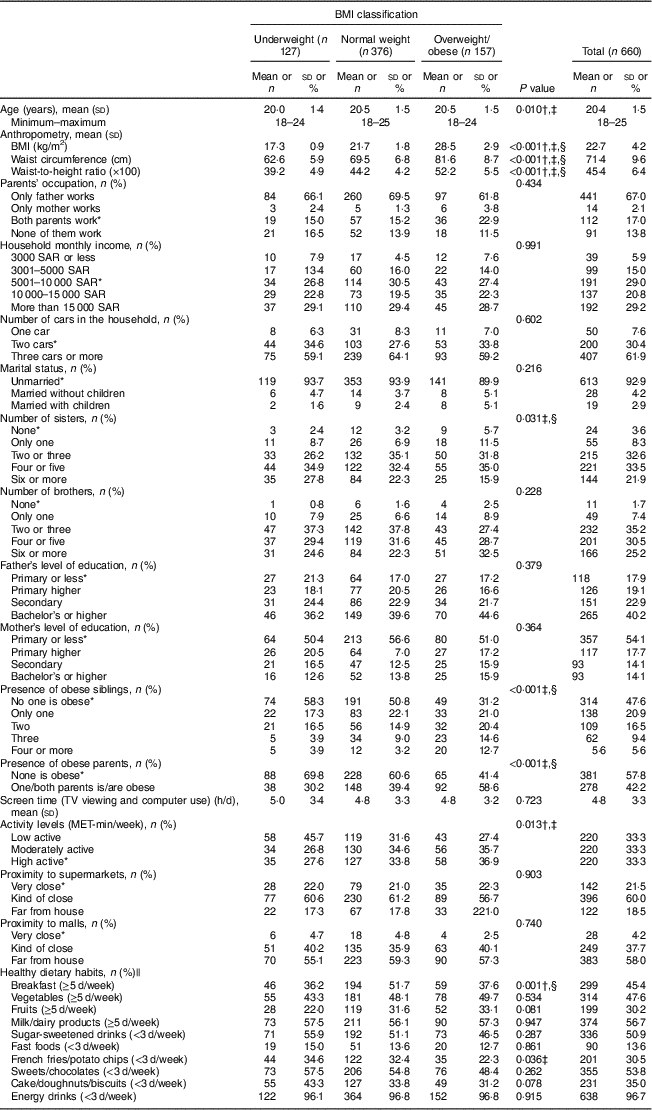
SAR, Saudi Arabian riyal; TV, television; MET, metabolic equivalents of task.
Underweight, BMI≤18·5 kg/m2; normal weight, BMI=18·50–24·99 kg/m2; overweight, BMI ≥25·00 kg/m2.
Statistical comparisons: ordinal level, Kruskal–Wallis test (three-group comparisons) and Mann–Whitney U test (two-group comparisons); continuous variables, one-way ANOVA; dichotomized variables, χ 2 test. Statistical significance at P=0·05 and statistical indication at P=0·10.
* Reference category for further statistical analysis.
† Significant difference between the underweight group and the normal weight group, after Bonferroni correction.
‡ Significant difference between the underweight group and the overweight/obese group, after Bonferroni correction.
§ Significant difference between the normal weight group and the overweight/obese group, after Bonferroni correction.
|| Healthy food intake, i.e. intake≥5 times/week of breakfast, vegetables, fruits and milk/dairy products, and intake <3 times/week of sugar-sweetened drinks, fast foods, French fries/potato chips, sweets/chocolates, cake/doughnuts/biscuits and energy drinks. Dichotomized variables.
The proportion (45·7 %) of underweight females who were classified as low active was significantly (P=0·013) higher than that found for normal weight (31·6 %) or overweight/obese females (27·4 %). Also, underweight females were the least highly active (27·6 %) of all the three groups. There were also significant differences between the groups regarding the number of sisters, number of obese siblings and presence of obese parents. Further characteristics of the studied population with regard to economic factors and social factors are described in Table 1.
In relation to healthy dietary habits, significant differences (P=0·001) were found between the groups with regard to their weekly intake of breakfast: 36·2 %, 51·7 % and 37·6 % for underweight, normal weight and overweight/obese participants, respectively. Similarly, the groups differed significantly (P=0·035) in their consumption of French fries/potato chips: 34·6 %, 32·4 % and 22·3 % for overweight, normal weight and overweight/obese groups, respectively (Table 1).
Determinants for BMI, dietary habits, overweight/obesity and underweight
The multiple linear regression model showed that 14 % of the variance in BMI could be accounted for by all predictors. Significantly associated factors were the participants’ levels of activity, their marital status, presence of obese parents and siblings, the father’s level of education and the intake of French fries/potato chips (Table 2). The lower activity levels had a negative effect on BMI; to be low active meant on average 0·90 kg/m2 higher BMI compared with a high active person. On the other hand, marital status – namely, to be married – was shown to be positively associated with higher BMI. Married students having no children had a 1·63 kg/m2 higher BMI compared with unmarried students. Similarly, married students having children had a 2·47 kg/m2 higher BMI than unmarried students, on a significant level (P=0·010). Not having sisters was found to mean on average a 2·00 kg/m2 higher BMI compared with having four or five sisters. Further, the presence of one obese parent affected the BMI, with 1·24 kg/m2 higher BMI compared with not having an obese parent (P=0·001). Likewise, the presence of two obese siblings or more was associated with BMI, which was 1·23 kg/m2 (two obese siblings), 2·74 kg/m2 (three obese siblings) and 4·07 kg/m2 (four obese siblings or more) higher in comparison to not having an obese sibling. To have a higher-educated father was also associated with 1·03 kg/m2 higher BMI compared with a primary or less-educated father (P=0·032). Among the nutritional habits, the unhealthy intake of French fries/potato chips was found to mean 0·99 kg/m2 higher BMI in comparison to healthy intake of French fries/potato chips (Table 2).
Multiple linear regression analysis: variables associated with BMI among 663 randomly selected female university students, south-western Saudi Arabia

Adjusted R 2=0·140. Model P<0·0001.
* Reference category is high active.
† Reference category is unmarried.
‡ Reference category is four or five sisters.
§ Reference category is none of the parents is obese.
|| Reference category is none of the siblings is obese.
¶ Reference category is primary education or less.
** Reference category is healthy intake (<3 times/week).
Table 3 presents the significant and statistically indicated results from the logistic regression models concerning the determinants for ‘healthy’ dietary habits. Breakfast intake was positively influenced by moderate activity level (OR=1·56 v. high activity level) and low household monthly income of 3000 SAR or less (OR=4·16 v. monthly income of 5001–10 000 SAR). The intake of vegetables was associated with parents’ occupational status, with a lower intake of vegetables if only the mother works (OR=0·18 v. if both parents work); the presence of obese siblings, with an increased intake if four siblings or more are obese (OR=3·89 v. not having any obese siblings); and household income, with decreased intake if monthly income is 10 001–15 000 SAR (OR=0·65 v. monthly income of 5001–10 000 SAR). With regard to consumption of fresh fruits, there were negative associations between the intake of fruits and the increased number of sisters. On the other hand, the presence of obese siblings as well as high activity levels increased the students’ intake of fruits. For the milk/dairy products, the age of the participants and their residency’s proximity to supermarkets were negatively associated (OR=0·85 and 0·61, respectively).
Significant determinants for healthy food habits: related odds ratio and 95 % confidence intervals among 663 randomly selected female university students, south-western Saudi Arabia

SAR=Saudi Arabian riyal.
Included variables: age, marital status, father’s level of education, mother’s level of education, presence of obese parents, presence of obese siblings, number of brothers, number of sisters, parents’ occupational status, household’s monthly income, number of cars, proximity to supermarkets, proximity to malls, activity levels and BMI.
* Reference category.
† Nagelkerke R 2=0·043; Hosmer and Lemeshow test, χ 2=14·659, P=0·066.
‡ Nagelkerke R 2=0·064; Hosmer and Lemeshow test, χ 2=1·926, P=0·983.
§ Nagelkerke R 2=0·056; Hosmer and Lemeshow test, χ 2=10·800, P=0·213.
|| Nagelkerke R 2=0·029; Hosmer and Lemeshow test, χ 2=9·840, P=0·276.
Regarding determinants of ‘unhealthy’ dietary habits (Table 4), the intake of sugar-sweetened drinks was significantly associated with the participants’ BMI (OR=0·96). Further, fast-food consumption was negatively associated with the students’ age (OR=0·80), low activity level (OR=0·66 v. high activity level) and number of cars in the household (OR=0·45 for one car v. two cars). Regarding the intake of French fries and potato chips, the correlations were with BMI (OR=0·95) and the presence of one obese parent (OR=1·47 v. no obese parent). The consumption of sweets/chocolate decreased significantly with increased BMI (OR=0·94) and if only the mother worked (OR=0·24 v. both parents worked), and increased with increased proximity to malls (OR=3·19 and 3·31 for kind of close to residence and far from residence, respectively, v. very close) and higher level of the father’s education (OR=2·03 and 2·27 for primary higher and bachelor’s or higher, respectively, v. primary or less). Similarly, the consumption of cake/doughnuts/biscuits decreased significantly with increased BMI (OR=0·96). The energy drink consumption correlated with higher level of mother’s education (OR=12·56, 8·63 and 24·28 for primary higher, secondary and bachelor’s or higher, respectively, v. primary education or less) and lower household income (OR=4·05 for monthly income of 3000 SAR or less v. 5001–10 000 SAR).
Significant determinants for unhealthy food habits: related odds ratios and 95 % confidence intervals among 663 randomly selected female university students, south-western Saudi Arabia

SAR, Saudi Arabian riyal.
Included variables: age, marital status, father’s level of education, mother’s level of education, presence of obese parents, presence of obese siblings, number of brothers, number of sisters, parents’ occupational status, household’s monthly income, number of cars, proximity to supermarkets, proximity to malls, activity levels and BMI.
* Reference category.
† Nagelkerke R 2=0·023; Hosmer and Lemeshow test, χ 2=1·731, P=0·988.
‡ Nagelkerke R 2=0·063; Hosmer and Lemeshow test, χ 2=9·383, P=0·311.
§ Nagelkerke R 2=0·039; Hosmer and Lemeshow test, χ 2=9·488, P=0·303.
|| Nagelkerke R 2=0·073; Hosmer and Lemeshow test, χ 2=8·550, P=0·382.
¶ Nagelkerke R 2=0·055; Hosmer and Lemeshow test, χ 2=8·011, P=0·432.
** Nagelkerke R 2=0·187; Hosmer and Lemeshow test, χ 2=5·690, P=0·682.
The participants’ age, presence of three obese siblings and presence of two obese parents increased the females’ underweight, while having six or more sisters and being low physically active affected the underweight negatively (Table 5). Overweight/obesity increased significantly with an increased number of brothers (OR=2·13 for two or three brothers v. none or one), an increased of number of sisters (OR=5·55 for six or more sisters v. no sister) and if none of the parents were working (OR=2·67 v. both parents work); and decreased in relation to an increased number of obese siblings (OR=0·12 for four or more v. none) and the presence of one obese parent (OR=0·47 v. no obese parent).
Significant determinants for overweight/obesity and underweight: related odds ratios and 95 % confidence intervals among 663 randomly selected female university students, south-western Saudi Arabia

SAR, Saudi Arabian riyal.
Included variables: age, marital status, father’s level of education, mother’s level of education, presence of obese parents, presence of obese siblings, number of brothers, number of sisters, parents’ occupational status, household’s monthly income, number of cars, proximity to supermarkets, proximity to malls, and activity levels.
* Reference category,
† Nagelkerke R 2=0·133; Hosmer and Lemeshow test, χ 2=11·956, P=0·153.
‡ Nagelkerke R 2=0·179; Hosmer and Lemeshow test, χ 2=10·022, P=0·263.
Discussion
The study’s main findings are: (i) underweight was almost as prevalent as overweight/obesity among female university students; (ii) marital status, parents’ level of education and social and family-related factors such as number of brothers and sisters influenced the participants’ BMI and dietary intake in both negative and positive ways; (iii) healthy intake of breakfast and French fries/potato chips differed significantly between the groups of overweight, normal weight and overweight/obese, while an unhealthy intake of French fries/potato chips was related to higher BMI; and (iv) there were negative associations between the participants’ physical activity levels and their BMI, i.e. the more physically active the participants were, the lower BMI they had.
The finding that underweight was highly prevalent among this healthy and highly educated sample of Saudi female university students is similar to results reported previously for a nearby university population in the United Arab Emirates( Reference Al-Mukhtar and Musaiger 42 ). The similarities consist of the targeted age group (18–24 years), the gender (females) and the prevalence of underweight (20 %) compared with the overweight/obesity (31·5 %) in this university population. Contrary to the findings of the present study, Al-Rethaiaa and colleagues( Reference Al-Rethaiaa, Fahmy and Al-Shwaiyat 19 ) reported only 5 % of underweight male students in a university-based population (n 357) in KSA, Qassim Province. In the current study, factors found to be significantly associated with the participants’ underweight were age, number of sisters, presence of obese siblings or parents, and the physical activity levels of the participants. Several previous studies were conducted with a special focus on overweight/obesity( Reference El-Hazmi and Warsy 16 , Reference Al-Rethaiaa, Fahmy and Al-Shwaiyat 19 , Reference El-Mouzan, Al-Salloum and Al-Herbish 43 , Reference El Mouzan, Al Herbish and Al Salloum 44 ), whereas less is known about the prevalence of underweight in healthy populations. Because the present study shows a high level of underweight students, the phenomenon should be emphasized further and targeted in future research regarding body weight and associated factors. Such studies should also focus on whether the underweight is unintentional (due to lack of appetite, economic limitations, etc.) or if it is due to eating disorders. The results of such studies could be beneficial to health-care authorities and policy makers to prevent many health conditions related to underweight such as low immunity diseases, for example, tuberculosis( Reference Podewils, Holtz and Riekstina 45 ). Infectious diseases( Reference Lindstrand, Bergström and Rosling 46 , Reference Tanaka, Kuroda and Saito 47 ) and osteoporosis( Reference Tanaka, Kuroda and Saito 47 ) are other health conditions related to underweight that can be averted.
With regard to the nutritional habits of the population, it was shown that overweight/obese students had the highest intake of unhealthy foods. A recently published study conducted on male university students (21·8 % overweight and 15·7 % obese) in KSA( Reference Al-Rethaiaa, Fahmy and Al-Shwaiyat 19 ) indicated that the students’ most common eating habits were eating with family, having two meals per day including breakfast, combined with frequent snacks and fried foods, which is consistent with the results of current study. Further, vegetables and fruits were not frequently consumed by most students( Reference Al-Rethaiaa, Fahmy and Al-Shwaiyat 19 ), a result similar to our study’s findings. Other researchers( Reference Lazzeri, Pammolli and Azzolini 48 ) identified significant correlations between low fruit and vegetable intake and irregular breakfast habits among 11–15-year-old children. Older female participants were shown to be at an especially higher risk of low fruit and vegetable intake( Reference Lazzeri, Pammolli and Azzolini 48 ). In another recent publication, it was reported among Saudi adolescents that healthy behaviours, clustered together, were significantly associated with physical activity, whereas unhealthy dietary habits tended to associate with higher screen time( Reference Al-Hazzaa, Al-Sobayel and Abahussain 49 ); this goes partly along with our findings.
Additionally, the similarities between the reported prevalence of overweight/obesity in the present study and in the study conducted on male university students( Reference Al-Rethaiaa, Fahmy and Al-Shwaiyat 19 ) may be related to one of the major environmental causes of obesity – that is, changes in diet, in terms of quantity and quality, a diet that has become more ‘Westernized’( Reference Gasbarrini and Piscaglia 50 ) brought about by international fast-food chains. Most Saudi students (63·3 %)( Reference Al-Rethaiaa, Fahmy and Al-Shwaiyat 19 ) eat irregular meals, whereas 64·6 % of Lebanese( Reference Yahia, Achkar and Abdallah 51 ) and 81·6 % of Chinese( Reference Sakamaki, Toyama and Amamoto 52 ) male university students take regular meals. The eating habits of the KSA youth population need to be improved using educational programmes aimed at promoting healthy eating habits. The modernization and affluence in KSA over the last three decades are thought to have contributed largely to the rise in the obesity epidemic. Following this, strategies to prevent obesity among female university populations in KSA should include encouragement of eating behaviour modification such as reduced intake of high-fat foods and increased consumption of fruits and vegetables. Further, national nutritional guidelines and campaigns should be developed further and integrated into all educational curriculums. Also healthier food choices should be available for university students during study days.
The influence of sisters on the study participants’ fresh fruit intake and sweets consumption might be related to the cultural and environmental effects on meal consumption; that is, of sharing the meals with family. The family meals were found to be of great importance in influencing adolescent food choices( Reference Neumark-Sztainer, Larson and Fulkerson 53 ). A recently published study in the USA( Reference Larson, Fulkerson and Story 54 ) found that frequently shared meals in young adulthood were associated with a greater intake of fruit among males and females, and with a higher intake of vegetables, milk products and some key nutrients among females. Furthermore, fruits and sweets might be consumed at social events and family gathering moments( Reference Pedersen, Grønhøj and Bech-Larsen 55 ), where sisters usually gather. A recent study showed that women more frequently make healthier dietary food choices and are more likely to consume fruits as snacks( Reference Hartmann, Siegrist and van der Horst 56 ) in comparison to men. Another possible reason for the influence of sisters, either as models for eating behaviours or as social peers, might be the nature of KSA culture, where women usually dine separately from men, especially in large gatherings( Reference Mobaraki and Söderfeldt 57 ). Thus, the most effective way to prevent an unhealthy intake of sweets and encourage healthy fruit consumption would be to increase healthy food campaigns targeting the family as a whole. As a consequence of such action, the obesity-promoting eating habits might be targeted, leading to a possibly healthier female population in the KSA.
Furthermore, the present study introduced an interesting aspect: an increased number of sisters significantly correlated with developing either overweight/obesity or underweight. This contradictory finding might be related to the earlier mentioned cultural structure of KSA society( Reference Mobaraki and Söderfeldt 57 ), which means an increased socialization of sisters in the house environment. While some studies( Reference Ochiai, Shirasawa and Ohtsu 58 ) found that a larger number of siblings decreased the odds for overweight (P for trend <0·001), other studies( Reference Brown and Roberts 59 ) tried to research the potential mechanisms explaining correlated BMI outcomes in a biologically related social network. In that study, the researchers found that time-constant factors such as genetic heritability and habits formed during childhood explain some of the overall correlation in sibling BMI( Reference Brown and Roberts 59 ). Further, they found that factors that change over time – for example, social norms or environmental factors like opportunities for exercise – significantly impact the overall correlation in BMI only for adolescent siblings, suggesting that the influence of the social network on correlations in BMI is facilitated by sharing the same household( Reference Brown and Roberts 59 ).
Although the present study offers insight into the current nutritional and weight status in a healthy, highly educated sample, a number of limitations exist. Generalizability is limited because of the selectivity of the study setting. On the other hand, strengths of the present epidemiological study could be that the participants were considered representative of the studied population, the used protocol is a reproducible and validated questionnaire, and the study’s procedures were highly standardized. Furthermore, the questionnaire is comparable to other self-reporting instruments on the whole( Reference Ainsworth, Haskell and Herrmann 39 ). The study results should, therefore, be generalizable to other female university students, not only in the KSA but also in other Arab countries. Another potential shortcoming of the present study might be the rigour with which its results can be applied to expectations of physical activity behaviour of the entire Saudi population because the study participation was limited to female university students. In addition, these students lived at a high altitude (2000–2300 m above sea level), which might make this sample population environmentally different compared with the rest of the Saudi population. Further, we assessed only the frequency of eating without accounting for portion size, which might have given additional information about the dietary habits of this population. For example, in a Swedish study, obesity was reported to be significantly associated with larger self-reported portion sizes at main meals( Reference Berg, Lappas and Wolk 60 ).
Conclusions
The coexistence of underweight and overweight/obesity in an affluent society like KSA should be a target for further research, especially among the female population. The results of the present study could be useful to health-care providers and policy makers to prevent many health conditions related to underweight such as tuberculosis, osteoporosis and infectious diseases, as well as non-communicable diseases related to overweight/obesity. The study can be an evidence-based background for planning and implementation of interventions targeting improvement of highly educated populations’ nutritional habits. Furthermore, we suggest that strategies to prevent the prevailing obesity in KSA should involve the family to encourage sustainable changes in lifestyle patterns such as increased physical activity and healthier nutritional choices and habits.
Acknowledgements
Acknowledgements: The authors would like to thank the PRO-CARE (Patient Reported Outcomes – Clinical Assessment, Research and Education) research group at Kristianstad University, Sweden, for its contribution in revising the manuscript critically. They also thank the Research Council at Kristianstad University for its support. Special thanks are extended to the following people for their critical role in acquisition of data: Dr Rania Mahmoud Abdel Ghani, Maternal and Newborn Health Nursing, Faculty of Nursing, Cairo University, Egypt; Mrs Jipi Varghese, Department of Medical Surgical Nursing, College of Nursing, King Khalid University, Saudi Arabia; and Mrs Iman Al-Hissi, Pediatric Nursing, Faculty of Nursing, Cairo University, Egypt. Financial support: The whole project was funded by the Research Council at Kristianstad University (grant number 059/09). The Research Council at Kristianstad University had no role in the design, analysis or writing of this article. Conflict of interest: None. Authorship: A.K. had the main responsibility for the data collection, analysis and interpretation as well as drafting the manuscript. A.W. contributed to the design of the study, performing the statistical analysis and drafting the manuscript. V.B.’s contribution included study design and drafting of the manuscript. Ö.E. participated in performing the statistical analysis and helped to draft the manuscript. H.M.A.-H. contributed to the conception, design and coordination of the study, and helped to draft the manuscript. All authors read and approved the final manuscript. Ethics of human subject participation: The study was reviewed and approved by the Ethical Committee at King Khalid University, Abha, KSA (7/1078).



