



Nutrition education is an intervention strategy that can be used by governments and non-government organizations (NGO) in their attempts to prevent and/or treat obesity( Reference Hawkes, Jewell and Allen 1 , Reference Zhang, Liu and Liu 2 ). The WHO( 3 ) Global Action Plan for the Prevention and Control of NCDs [non-communicable diseases] 2013–2020 recognizes the importance of this strategy in its recommendation for nation states to ‘Create health- and nutrition-promoting environments, including through nutrition education’. Similarly, the World Cancer Research Fund’s NOURISHING framework( Reference Hawkes, Jewell and Allen 1 ) and the Obesity Policy Action framework( Reference Sacks, Swinburn and Lawrence 4 ) emphasize the need to provide the levels of nutrition education necessary to enable individuals to make healthy food choices. However, nutrition education is just one dietary approach to obesity prevention that is ideally complemented with population-level strategies such as healthy eating campaigns and food labelling policies( Reference Zhang, Liu and Liu 2 ). The need for a broad range of strategies reflects the multifactorial nature of obesity and the need to adopt multiple approaches to address its complex aetiology( Reference Rutter 5 ).
Nutrition education interventions are typically targeted at disadvantaged groups, such as those of lower socio-economic status (SES)( Reference Koszewski, Sehi and Behrends 6 , Reference Rustad and Smith 7 ). This emphasis is appropriate given that low SES is associated with higher levels of overweight and obesity and resulting weight-related illnesses( 8 , 9 ). However, relatively few nutrition education programmes and interventions have been rigorously evaluated, especially in terms of their ability to improve outcomes for low-SES individuals( Reference Beauchamp, Backholer and Magliano 10 ). A notable exception is the long-running US Expanded Food and Nutrition Education Program (EFNEP). In operation since 1969, EFNEP involves the delivery of group nutrition education classes to participants with limited financial resources over six to twelve sessions that focus on food budgeting, food safety and diet quality( Reference Cullen, Smalling and Thompson 11 , Reference Rajgopal, Cox and Lambur 12 ). Over the years, various studies have demonstrated that EFNEP improves participants’ nutrition knowledge and self-reported food practices relating to food budgeting, food hygiene and meal preparation( Reference Amstutz and Dixon 13 – Reference Dollahite, Pijai and Scott-Pierce 16 ). In addition, analyses indicate that the programme is likely to be cost-effective, with results suggesting that the estimated benefits to individuals and society more than offset the costs of programme delivery( Reference Burney and Haughton 17 , Reference Dollahite, Kenkel and Thompson 18 ).
Some short-term interventions have also been evaluated. These interventions have tended to focus on food budgeting and/or general nutrition education delivered over one to six sessions( Reference Rustad and Smith 7 , Reference Anderson, Bybee and Brown 19 – Reference Havas, Anliker and Greenberg 21 ). The results of these intervention studies support the conclusion that the provision of nutrition information in group settings has the potential to improve disadvantaged adults’ food-related knowledge, attitudes, confidence and self-reported food intake. They also suggest that programmes involving a smaller number of sessions than those offered in EFNEP may be effective, but there is a lack of data relating to sustained programmes (rather than intervention studies) targeting low-SES groups that offer nutrition education over a smaller number of sessions.
FOODcents is a long-standing nutrition education programme delivered to disadvantaged groups in Western Australia. It is a community-based programme that features face-to-face information sessions that can include skills training components such as cooking classes and guided supermarket tours. The programme commenced in 1992 as a pilot project in regional (country) Western Australia and was subsequently implemented state-wide in 1995( Reference Foley and Pollard 22 ). An initial programme evaluation was undertaken about five years after the commencement of the programme to assess its ability to meet disadvantaged individuals’ nutrition education needs( Reference Foley 23 ). The evaluation results indicated that the content and delivery method of FOODcents was effective in meeting programme objectives, thereby justifying continued funding by the Western Australian Department of Health.
The purpose of the present study is to re-evaluate FOODcents to assess whether it continues to provide relevant information to lower-SES individuals and whether knowledge improvements and skills acquisition are resulting in behaviour change. A re-evaluation is needed at this time given increasing rates of obesity in Australia and the ongoing need to identify effective policy responses. Almost two-thirds (63 %) of Australian adults are now classified as overweight or obese compared with 56 % in 1995( 8 ). There is thus an urgent need for information relating to the kinds of nutrition education programmes that can favourably influence individuals’ diets to add to the limited evidence base about this form of health promotion( Reference Hawkes, Jewell and Allen 1 ). In particular, data are needed relating to the effectiveness of shorter courses relative to longer courses to assist policy makers determine optimal levels of service provision.
About FOODcents
For more than 20 years, FOODcents has been providing Western Australians with nutrition education sessions relating to improving their household food expenditure according to the healthy eating pyramid( Reference Foley, Pollard and McGuiness 24 ). This involves advising participants on how to increase their consumption of fruit, vegetables and cereals, and reduce their consumption of foods high in salt, fat and/or sugar. As in other countries, those of lower SES in Australia have higher than average intakes of unhealthy foods and lower than average intakes of fruits and vegetables( Reference Ball, Crawford and Mishra 25 – Reference Williams, Ball and Crawford 28 ). The FOODcents curriculum specifically addresses these consumption behaviours that are associated with risk of chronic disease( Reference Basu, McKee and Galea 29 , 30 ).
The FOODcents curriculum was developed according to the principles of the Precede–Proceed programme planning model( Reference Green, Glanz and Hochbaum 31 ), which highlights the need to work with target groups to identify knowledge gaps and other barriers to engaging in recommended behaviours and then develop content that addresses the gaps and barriers. Accordingly, initial formative research identified the ability to appropriately manage a limited food budget and basic cooking skills as the primary factors preventing lower-SES individuals from achieving a healthy diet. Similar issues have been identified with disadvantaged groups in other countries( Reference Huye, Connell and Crook 32 ). These knowledge and skill deficits became the core of the FOODcents curriculum( Reference Foley 23 ) and today the programme remains focused on these elements, with an added emphasis on understanding the diet–disease link and using food labelling to achieve a healthy diet.
Consistent with the recommendation for nutrition education interventions to be behaviourally focused to maximize effectiveness( Reference Contento 33 , Reference Contento, Randell and Basch 34 ), there is extensive use of in-session activities designed to actively engage participants with the course content. An example of an activity relates to the healthy food pyramid. The instructor supplies food packets (processed foods) and pictures of fresh foods (fruits and vegetables) for participants to classify. Tape is used to outline the segmented healthy eating pyramid on the floor and participants place the packets/pictures where they think they belong. Guided discussion with the group results in items being progressively moved until all items are in their correct locations.
FOODcents is delivered via a collaborative arrangement involving three NGO: the Cancer Council Western Australia, the Australian Red Cross and Foodbank WA. Although each organization has a somewhat different organizational mission, they are united in their objective to improve the health of Western Australians, especially of the disadvantaged. By working together to deliver FOODcents courses, the three NGO are able to access a broad range of client groups and cover the very large geographical area of Western Australia. Two types of courses are offered: (i) participants can elect to attend a single-session course of 1–2 h duration that primarily focuses on a specific issue (e.g. the healthy eating pyramid or food labelling); or (ii) they can enrol in a multi-session course that involves up to eight sessions and covers a broader range of nutrition topics. The content and pace of delivery are modified for the literacy needs of each group, including accommodating the presence of a translator for immigrant participants or assistants for disabled participants.
Approximately 2500 Western Australians attend a FOODcents course each year, including Indigenous and new (immigrant) Australians and those residing in temporary/sheltered housing. While the primary focus is on those with limited incomes, the programme is inclusive and any interested person can register to attend a course. However, relatively few participants are of high SES and the course content is specifically designed to cater for those with low levels of nutrition literacy. Sessions are delivered at various community-based locations throughout the metropolitan area and in major regional centres. Examples of venues include town halls, church halls, community centres and shopping centre facilities. In addition, each of the three participating NGO has meeting rooms that are used to host sessions. In the case of multiple-session courses, almost all are conducted on a weekly basis, although they can also be run on consecutive days. Both session spacing and session duration are determined by the needs and preferences of participant groups.
Method
Given the focus of the FOODcents programme on the delivery of nutrition information to disadvantaged groups, multiple instruments were developed and utilized during the evaluation process to accommodate the literacy needs of the participants as much as possible while maximizing the rigour of data collection and analysis( Reference Contento, Randell and Basch 34 ). The instruments, described below, were developed in consultation with members of the three organizations involved in programme delivery and pilot tested with ninety course participants prior to formal implementation. Only minor wording changes were required as a result of the pilot testing process. The protocol received approval from the University of Western Australia Human Ethics Committee and the evaluation was conducted over two years between June 2012 and May 2014.
Instruments
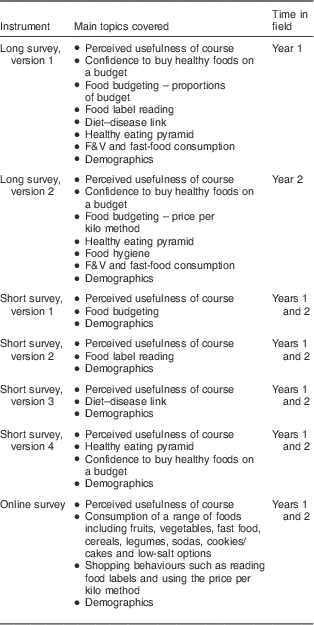
Strong evaluation design includes assessments at both pre- and post-intervention time points( Reference Contento, Randell and Basch 34 ). To achieve this, hard-copy questionnaires were administered at the commencement and conclusion of a sample of courses to assess participants’ pre- and post-session nutrition knowledge and behaviour. Given the need to keep the instruments to a length that was both manageable for participants and feasible within the time frame of course delivery, multiple versions were developed. Reflecting the flexible nature of programme delivery, seven different pre–post in-session questionnaires were developed to ensure the instruments were suitable in content and length for the different courses and participant groups. In addition, an online questionnaire was administered to those participants who provided an email address and gave permission to be contacted again at a later date. Table 1 provides a summary of the instruments and their topic coverage.
Survey instruments
F&V, fruit and vegetables.
In-session surveys
Two longer questionnaires were designed for groups comprised of more literate participants and/or those individuals attending multiple-session courses that covered a more extensive nutrition curriculum and permitted greater time for questionnaire completion. The first long questionnaire was administered over the first year of the evaluation period and the second long version was administered over the second year. Both instruments featured the same series of demographic questions and items relating to general perceptions of the FOODcents programme, but had some different items to assess nutrition knowledge. Utilizing two versions of the instrument that covered different elements of the FOODcents curriculum permitted assessment of participants’ understanding of a broader range of nutrition information over the evaluation period than could have been assessed with a single instrument. Only one version of the long questionnaires was in the field at any point in time.
In addition, four short questionnaires were developed that dealt with a smaller number of curriculum elements. These instruments focused on food budgeting, food label reading, the diet–disease link and the healthy eating pyramid, with the relevant items being the same as those in the longer instruments. The shorter instruments were better suited to the individual (single) sessions that were briefer in duration and hence covered fewer curriculum elements and allowed less time for survey administration. They were also more appropriate for participants with lower literacy levels in multi-session courses because of the reduced respondent burden( Reference Contento, Randell and Basch 34 ). In these instances, the short instruments most relevant to the curriculum covered in the multi-session courses were selected for administration. The appropriate instrument to use was determined either before the session (e.g. representatives from multicultural groups organizing sessions for their members often provided information about literacy levels at the time of course booking) or after initial in-session ice-breakers that permitted some assessment of the communication abilities of participants. For practical reasons, all members of each group received the same questionnaire, which was administered by the FOODcents instructor delivering the course.
Online post-session survey
An online follow-up survey was administered on average approximately six weeks after course attendance. This survey gathered additional data relating to participants’ subsequent use of the information covered in the course. In this survey, respondents were asked to report various nutrition-related behaviours, such as their consumption of wholemeal products, modification of recipes to make them healthier and reduction of salt intake.
Statistical analyses
Equivalent items were pooled across the instruments for analyses. Pre- to post-course changes in participants’ perceived confidence to purchase healthy foods on a budget and their dietary behaviours were assessed via paired-samples t tests. Improvement in nutrition knowledge over time was assessed via paired-samples t tests (where data were interval in nature) or Pearson χ 2 tests (where data were categorical). SES differences in improvement in nutrition knowledge and dietary behaviours were assessed via one-way ANOVA (for interval data) or Pearson χ 2 tests (for categorical data). Post hoc analyses (Fisher’s LSD (least significant difference) or adjusted standardized residuals) were conducted where relevant. A P value of <0·05 was used as the significance cut-off. Bonferroni-adjusted α levels were used to control for the family-wise error rate where relevant. As the proportion of missing values on all items administered was less than 5 %, an available-case analysis approach was used in which incomplete cases were treated list-wise and excluded from analyses( Reference Cameron and Trivedi 35 , Reference Graham 36 ). As such, all reported analyses were conducted on valid cases only. All analyses were conducted using the statistical software package IBM SPSS Statistics 22.
The measure of SES used in the present study was the Index of Relative Socio-Economic Disadvantage. This index, which includes measures of income, education and occupational status, is part of the Australian Bureau of Statistics’ Socio-Economic Indexes for Areas (SEIFA) classification( 37 ). WA-specific quintiles were used in all SES analyses.
Results
Just over half (54 %) of the FOODcents courses run over the two-year period were evaluated (n 216), which represented the majority of courses attended by participants with literacy levels that were adequate for survey completion. Only those who completed both the pre- and post-course surveys were included in the study, resulting in usable survey responses from 927 participants. Of the 431 who could be contacted by email to request participation in the online follow-up survey, 114 responded (26 % response rate for the survey, representing 12 % of the total evaluation sample). Valid data were collected from ninety-six participants.
Over the two-year evaluation period, the sessions were delivered by fifteen representatives from the three NGO. Average group size was eleven and average session duration was 1·5 h. A large majority of the sample was female (76 %), reflecting the continuing role of women as primary caregivers in Australia( 38 ). Just over half (56 %) of the survey respondents reported being parents of children under 18 years of age. In terms of relative advantage, 42 % of the survey respondents were classified as low SES according to the SEIFA rating of their suburb of residence( 37 ). A further 43 % were classified as medium SES and 15 % as high SES.
The data generated from the various data collection processes yielded information relating to participants’ perceptions of the FOODcents course and any changes in their nutrition knowledge and dietary behaviours. The following sections outline the results relating to each of these outcomes.
Course perceptions
As shown in Table 2, across the survey data obtained from both single- and multi-session courses there were very high levels of perceived usefulness, ease of understanding, anticipated implementation of concepts taught and intended positive word-of-mouth behaviours. There were no significant differences in these outcomes by participant SES.
Positive perceptions of the course by course type in an evaluation of the FOODcents adult nutrition education programme, Western Australia, June 2012–May 2014
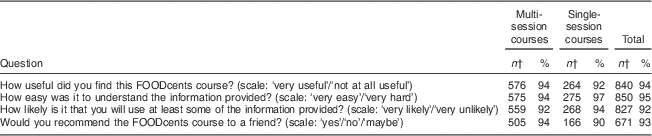
† Positive responses: ‘very useful’/‘useful’; ‘very easy’/‘easy’; ‘very likely’/‘likely’; ‘yes’.
Participants were asked to indicate their confidence in their ability to buy healthy foods within their budgets. Table 3 shows that participants’ confidence increased significantly after exposure among those attending both types of courses. There were no significant differences by course type or SES in pre- to post-course change in this variable.
Confidence to purchase healthy foods on a budgetFootnote † by course type in an evaluation of the FOODcents adult nutrition education programme, Western Australia, June 2012–May 2014

† Item wording: ‘How confident are you that you can buy healthy foods on a budget?’ (scale: 1=‘very confident’ to 5=‘very unsure’).
‡ Percentage reporting ‘confident’ or ‘very confident’.
Knowledge improvements
The assessed knowledge improvements related to participants’ ability to categorize foods by their healthiness, manage their food budgets, interpret food labels and understand the diet–disease link.
Food categorization
Within the healthy eating pyramid component of the FOODcents curriculum, participants are informed about which foods are allocated to the ‘Eat Most’, ‘Eat Some’ and ‘Eat Least’ categories of the pyramid. Changes in knowledge relating to food categorization across the six food groups represented in the healthy eating pyramid were assessed. As shown in Table 4, many of the improvements in respondents’ understanding of the pyramid groupings reached statistical significance across both course types.
Correct responses to selected knowledge items by course type in an evaluation of the FOODcents adult nutrition education programme, Western Australia, June 2012–May 2014
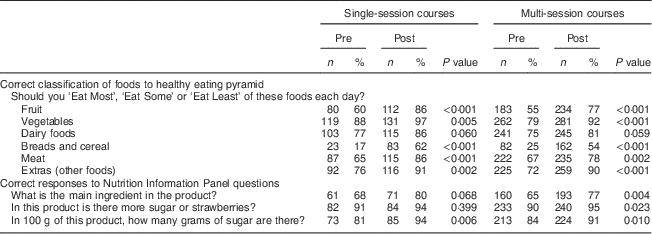
Examination of differences in knowledge change by SES revealed a significant overall difference for meat (χ 2(2)=8·91, P=0·012, Φ=0·15) and extras (χ 2(2)=7·68, P=0·022, Φ=0·14). Post hoc analyses revealed that low-SES participants were significantly more likely than mid-SES participants to improve their knowledge of the correct classification of meat (χ 2(1)=8·91, P=0·003, Φ=0·16). Low-SES participants were significantly more likely than mid-SES (χ 2(1)=4·08, P=0·043, Φ=0·11) and high-SES (χ 2(1)=6·89, P=0·009, Φ=0·22) participants to improve their knowledge of the correct classification of extras.
Budgeting
The budgeting component of the FOODcents curriculum focuses on challenging participants’ perceptions of the cost of healthy foods( Reference Foley, Pollard and McGuiness 24 ). This approach reflects the recognized assumption that healthy foods are too expensive for those on limited budgets( Reference Williams, Abbott and Thornton 39 ). The costs of foods represented in each section of the healthy eating pyramid are compared during FOODcents courses, with real-life examples used to demonstrate that ‘Eat Most’ foods are the cheapest per kilogram, followed by ‘Eat Some’ and then ‘Eat Least’.
Respondents were asked ‘For a healthy diet, which group should we spend most of our food money on?’, with response options of ‘Eat Most (breads, cereals, fruit and vegetables)’, ‘Eat Some (meat and dairy foods)’ and ‘Eat Least (extra foods)’. Respondents were also asked ‘How should different product prices be compared?’, with response options of ‘per serve’, ‘per kilogram’ and ‘per packet’. A further item asked participants to ‘Please rank these breakfast cereals by value for money, from best (1) to worst (3)’, with ‘Weet-bix’, ‘Nutri-Grain’ and ‘Rolled Oats’ presented as response options. Respondents’ ability to correctly identify the food groups on which the greatest proportion of their budgets should be spent (i.e. the ‘Eat Most’ category) improved significantly post-attendance. In the pre-session survey, 80 % made the correct allocation compared with 92 % at the end of the course (χ 2(1)=18·98, P=0·001, Φ=0·17). In addition, the ability to rank breakfast cereals by value for money improved significantly (57 % v. 79 %: χ 2(1)=33·99, P<0·001, Φ=0·23), as did respondents’ knowledge of how different product prices should be compared (i.e. price per kilo, 52 % v. 65 %: χ 2(1)=11·72, P=0·001, Φ=0·13). Analyses conducted to investigate any differences in knowledge change by SES revealed no significant differences (correct identification of ‘Eat Most’ category: χ 2(2)=1·14, P=0·566, Φ=0·07; price comparison: χ 2(2)=4·99, P=0·082, Φ=0·14; breakfast cereal ranking: χ 2(2)=3·56, P=0·168, Φ=0·12).
Food label reading
During FOODcents courses featuring a food label reading component, participants are informed that the ingredients list and Nutrition Information Panel on packaged foods are the most important predictors of a food’s healthfulness. In the relevant survey items, respondents were exposed to a nutrition information panel for a fictional product and asked to report the main ingredient, state whether the product contained more of one ingredient relative to another, and report the amount of sugar per 100 g. Pearson χ 2 analyses revealed a higher proportion of correct responses in the post-session surveys across the three knowledge areas (Table 3). All improvements reached statistical significance in the multi-session courses. There were no significant differences by SES.
Diet–disease link
Table 5 shows the quantitative results for the improvements in relevant knowledge relating to specific diseases. A five-point Likert-type scale was used to assess participants’ perceptions of the strength of the diet–disease link, with 1=‘very strong’ and 5=‘very weak’. The consistent reduction in means demonstrates greater awareness of the links between diet/obesity and the nominated diseases, with many of the improvements reaching statistical significance.
Mean changes in perceived link between diet and chronic disease by socio-economic status (SES) in an evaluation of the FOODcents adult nutrition education programme, Western Australia, June 2012–May 2014
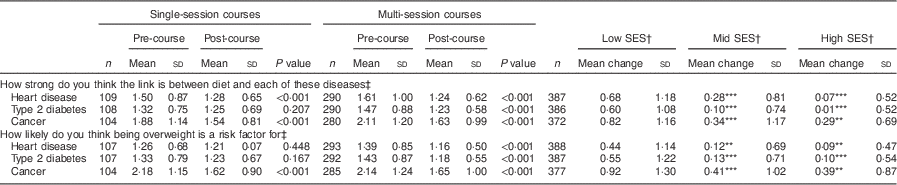
**Significantly different from low SES at P<0·01.
***Significantly different from low SES at P<0·001.
† Includes only those providing their postcode for SES categorization.
‡ Scale: 1=‘very strong’ to 5=‘not strong at all’.
Analyses conducted to examine whether the improvements in knowledge relating to the perceived link between diet/obesity and disease differed by SES found a significant difference between SES groups. Fisher’s LSD post hoc tests revealed that those in the low-SES group demonstrated significantly greater change than those in both the mid-SES and high-SES groups across all the examined variables (Table 5).
Reported behaviour change
Of particular interest was whether participants were willing and able to implement their new knowledge. Assessed behaviour changes related to the reported consumption of a range of healthy and unhealthy foods. Table 6 shows changes in fruit, vegetable and fast-food consumption reported by participants attending the multi-session courses. Equivalent data could not be collected from participants attending single-session courses because these respondents had not had an opportunity to implement new knowledge at the time of completing the post-session survey (i.e. the pre and post instruments were administered in the same session).
Mean pre- to post-course change in dietary behaviours by socio-economic status (SES; multi-session courses only) in an evaluation of the FOODcents adult nutrition education programme, Western Australia, June 2012–May 2014

*Significantly different from low SES at P<0·05.
**Significantly different from low SES at P<0·01.
† Includes only those providing their postcode for SES categorization.
‡ The lack of statistical significance is likely to be the result of the lower power due to the smaller number of high-SES respondents.
To examine whether pre- to post-course changes in dietary behaviours differed by SES, a series of one-way ANOVA was conducted (Table 6). Modest but significant differences were found, with Fisher’s LSD post hoc tests revealing that those in the low-SES group reported significantly greater change than those in the mid-SES group for servings of fruit consumed per day (P=0·032). Those in the low-SES group also reported significantly greater change than those in the mid-SES group for number of days that fast food was consumed in the previous week (P=0·006).
Table 7 shows the changes in other dietary-related behaviours reported by respondents to the online post-session survey. Small cell sizes precluded analysis by SES. Statistically significant improvements were observed for all behaviours.
Reported mean change in eating, shopping and food preparation behaviours (online follow-up survey, n 96) in an evaluation of the FOODcents adult nutrition education programme, Western Australia, June 2012–May 2014
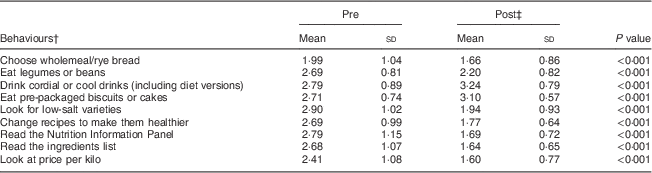
† Item wording: ‘Please tell us to what extent you did the following things before/after the course?’ (response options: 1=‘always’, 2=‘often’, 3=‘sometimes’, 4=‘never’).
‡ Approximately six weeks after course attendance.
Discussion
An overarching principle of the WHO’s Global Action Plan for the Prevention and Control of NCDs ( 3 ) is that governments should focus their disease-prevention efforts on programmes that are evidence-based. However, in the context of nutrition education there is a lack of information available relating to the types of programmes and interventions that are delivered around the world and their effectiveness( Reference Hawkes, Jewell and Allen 1 ). In particular, there is a lack of information relating to differential programme outcomes according to SES( Reference Beauchamp, Backholer and Magliano 10 ). The aim of the present study was to evaluate the ability of the FOODcents nutrition education programme to improve nutrition knowledge and facilitate behaviour change, especially among low-SES participants. The results provide information of use to policy makers in their decision making relating to the allocation of scarce resources among various forms of obesity-prevention interventions.
The FOODcents evaluation outcomes indicated significant improvements in nutrition-related knowledge among participants. After exposure to the course, participants demonstrated a greater ability to: (i) categorize foods according to the quantities that should be consumed and the proportion of the food budget that should be allocated to them; (ii) correctly interpret nutrition labels on food products; and (iii) appreciate the link between diet/obesity and a range of diseases. Improvements in the latter were especially pronounced among low-SES participants. The significantly greater improvements in knowledge relating to the classification of meat and extra foods among low-SES participants is important in the context of lower-SES Australians being more likely to consume excessive quantities of these products( Reference Mishra, Ball and Arbuckle 40 , Reference Zarnowiecki, Dollman and Parletta 41 ).
As noted by Contento et al.( Reference Contento, Randell and Basch 34 ), behaviour change is an outcome of primary importance in nutrition education interventions. The results of the present study indicate that the information and skills taught during FOODcents courses are also translated into participants’ food-related behaviours. In particular, improvements in fruit and vegetable consumption and reductions in fast-food consumption were reported, especially among low-SES participants. In addition, the results of the online survey conducted several weeks after course completion suggest that dietary changes may persist beyond the period of course attendance.
Overall, the results indicate that FOODcents is an effective nutrition education programme that may be especially advantageous in terms of its ability to cater for the needs of lower-SES individuals and therefore assist in addressing existing inequalities in nutrition knowledge( Reference Hendrie, Coveney and Cox 42 ). This outcome is important in the context of a recent review which found that nutrition education programmes are typically very limited in their ability to improve outcomes for low-SES individuals( Reference Beauchamp, Backholer and Magliano 10 ). The apparent utility of the FOODcents face-to-face method of information provision and the inclusion of a range of in-class activities specifically designed to teach relevant skills is consistent with previous research that has highlighted the importance of human interaction in conveying health-related knowledge to the disadvantaged( Reference Albright, Bruce and Howard Pitney 43 ). It is also consistent with the positive outcomes reported from the EFNEP, which uses a similar face-to-face approach and is one of the other few long-standing nutrition education programmes to be evaluated over time and to demonstrate both immediate and prolonged benefits to participants( Reference Amstutz and Dixon 13 – Reference Dollahite, Pijai and Scott-Pierce 16 ).
Of note is that FOODcents courses delivered over single sessions were found to be effective in terms of knowledge and confidence improvements. These courses were also perceived as very useful and likely to influence future behaviours. Although it was not possible to assess direct behaviour changes resulting from attendance in the single sessions, these outcomes indicate that nutrition education programmes can offer a range of course types to meet the time constraints and duration preferences of different groups of participants. Providing multiple delivery options is likely to make nutrition education programmes accessible to a broader range of potential participants and increase cost-effectiveness by permitting those whose needs can be met by shorter courses to select these options rather than the longer-duration (and therefore more costly) alternatives.
Although the improvements in knowledge identified in the present evaluation are robust due to the pre–post method of assessment, major limitations were the inability to administer the instruments to low-literacy participants and a reliance on self-report data relating to behaviour change. These are standard limitations in research examining behaviours among disadvantaged individuals that are largely enacted within the family home and hence are not readily observable. The gold standard for assessing behaviour change in this domain is the collection of biomedical data to assess dietary change and changes in body mass and physiological markers( Reference Beauchamp, Backholer and Magliano 10 ). This is an important consideration for future studies that attempt to provide concrete evidence of the efficacy of education and skills-based approaches in enhancing nutrition at the population level. Further, the effects of the course may decay over time or, alternatively, attendance may act as a catalyst that encourages incremental information gathering by participants, thereby having positive ongoing effects on their nutrition knowledge and behaviours. Future studies could include follow-up data collection episodes to assess longer-term outcomes to determine whether booster sessions are needed.
As noted above, an additional limitation was the use of course instructors to administer the in-session surveys. However, the use of an online follow-up survey prevented sole reliance on data collected by instructors. The results obtained from the different surveys were consistent, indicating that the nature of in-session survey administration did not overly contaminate the study outcomes.
Further limitations include the lack of a control group and the probability that those attending FOODcents courses are more receptive to acquiring nutrition information and implementing nutrition-related behaviour change than individuals who do not elect to attend such courses. In line with the transtheoretical model of the stages of change( Reference Prochaska and Velicer 44 ), course attendees are likely to be in the contemplation or action phases of dietary change, and hence self-select to expose themselves to FOODcents. As a result, the demonstrated increases in knowledge and reported behaviour change reflect outcomes associated with this heightened level of interest and are unlikely to be replicated among other members of the general public who are in the pre-contemplation stage. FOODcents addresses this issue through dissemination of promotional materials via three different NGO that offer assistance to a broad range of client groups that are typically characterized by financial disadvantage and/or diagnosed health problems. These groups are likely to be motivated to attend courses that can assist them to better manage their finances and/or their diets. In addition to promotion via the three NGO, a website provides information to those searching the Internet for nutrition education programmes available in Western Australia (www.foodcentsprogram.com.au). Through these avenues, the programme is actively promoted to those of greatest need who may be interested in participating.
Given that poor diet is a factor contributing to the differential in weight status between low- and high-SES individuals( Reference Gearon, Backholer and Hodge 45 ), it is important to address dietary issues as part of comprehensive efforts to reduce health inequalities. While recognizing that individual-level education and skills-based programmes need to be complemented with structural-level initiatives( Reference Zhang, Liu and Liu 2 , Reference Beauchamp, Backholer and Magliano 10 , Reference Swinburn, Sacks and Vandevijvere 46 ), programmes such as FOODcents have a role to play in reducing inequalities by providing the disadvantaged with specific food selection and preparation skills, thereby enabling them to make meaningful changes to their diets.
Acknowledgements
Acknowledgements: The authors thank Australian Red Cross Red Cross, Foodbank WA, Nicole Biagioni and Melanie Pescud for their assistance with data collection. Financial support: FOODcents is funded by the Western Australian Department of Health. Conflict of interest: The Cancer Council Western Australia is funded by the Western Australian Department of Health to deliver FOODcents. S.M. and I.S.P. are employed by the Cancer Council Western Australia. Authorship: S.P., S.M. and I.S.P. conceptualized the study design. S.M. and S.P. managed data collection. M.J. and S.P. performed the data analysis. All authors contributed to the preparation of the manuscript. Ethics of human subject participation: The protocol received approval from the University of Western Australia Human Ethics Committee.



