Researchers have determined that unhealthy dietary patterns seen in many different populations are, in part, attributable to disparities in the built environment observed in lower-income and ethnic communities. For example, disparities in the built environment have been identified in access to healthy foods by neighbourhood deprivation(Reference Cubbin, Hadden and Winkleby1), area-level wealth(Reference Reidpath, Burns and Garrard2) and ethnic composition(Reference Moore and Diez Roux3). Compared with higher-income and white communities, poorer and predominantly minority communities have significantly more small grocery stores and fewer produce markets and natural food stores(Reference Moore and Diez Roux3, Reference Dubowitz, Heron and Bird4). Small grocery stores in racial/ethnic minority neighbourhoods are far less likely to carry healthy food selections than those in predominantly white neighbourhoods (18 % v. 58 %)(Reference Horowitz, Colson and Hebert5). These disparities in access have been identified as important intervention targets, given evidence supporting the association between availability of certain food products and diet quality. A recent systematic review suggests that availability as defined by the presence or perceived presence of certain food products in a store is associated with better diet quality(Reference Caspi, Sorensen and Subramanian6). However, evidence for the association of diet quality with availability defined as the presence of certain store types in a neighbourhood is mixed, due in part to potential inaccuracies introduced with using secondary data to define store type(Reference Walker, Keane and Burke7). In addition, availability of fruits and vegetables (F&V) has not been consistently associated with consumption(Reference Gustafson, Hankins and Jilcott8). Nevertheless, given some evidence supporting the association between availability and use, as well as evidence from previous store-based interventions, one potentially viable approach to improve eating habits may be to increase the availability of F&V in small food stores.
Food environment interventions
Interventions in the food environment are defined as ‘one[s] that affect availability, access, incentives, and information about foods at the point of purchase’ (p. S109)(Reference Seymour, Yaroch and Serdula9). The ultimate goal is to make healthy foods more available through convenience and/or by reducing costs(Reference Steenhuis, van Assema and Reubsaet10). In an older review of thirty-four nutrition environment interventions, information strategies were found to be ineffective at reaching their desired outcomes, be that sales, profit or intake(Reference Holdsworth and Haslam11). This suggests that other strategies are needed to increase intake and reduce health disparities(Reference Glanz and Yaroch12). In a more recent review of small food store interventions, Gittelsohn and colleagues concluded that multi-prong approaches are the most effective methods for achieving changes(Reference Gittelsohn, Rowan and Gadhoke13). Yet despite this evidence, they also concluded that few studies assess change at the customer level. The present study sought to fill a gap in the current food environment intervention research by testing an intervention that involved increasing availability of F&V through social and physical changes to the store environment and evaluating changes in terms of the customers’ F&V intake.
Working with tiendas to promote healthy eating
In addition to our rigorous study design, the present study was conducted in a novel store setting – tiendas; one that may generalize to other small-to-medium food stores given the characteristics that they share. Tiendas are small Latino stores in US Mexican and Central American communities that serve as a gateway to new immigrants to the region(Reference Ayala, Maty and Cravey14), and among immigrants, as a small business enterprise for economic independence(Reference Johnson, Johnson-Webb and Farrell15). Tiendas in these communities are usually family-owned businesses that are larger in size than a convenience store and have one or two additional service departments, including a butcher and a prepared food section, compared with traditional convenience stores. Tiendas are an ideal channel for promoting greater intake of F&V among customers given the greater odds of repeated exposure than a supermarket intervention because shopping in tiendas is a more frequent activity compared with shopping in supermarkets(16, 17). In addition, interventions delivered in tiendas are likely to reach a large population as most individuals’ food basket includes items purchased from tiendas (16, 17). Knowing more about how to design effective interventions for this setting and these customers has the potential to change our approach to population-level health promotion.
In the present study, we tested whether a tienda-based environmental change intervention (Vida Sana: Hoy y Mañana; Healthy Life: Today and Tomorrow) would result in changes in tienda customers’ F&V intake compared with customers from control tiendas. In addition, we examined for changes in availability of F&V based on unobtrusive observations, to determine whether the intervention activities increased availability of fresh and canned F&V in the tiendas.
Methods
Study design
Tiendas in central North Carolina were randomly assigned to one of two conditions: (i) an environmental change intervention to promote store customers’ intake of F&V; compared with (ii) a delayed treatment control condition, an intervention similar to the one described here but implemented after the follow-up assessment. The target population within the stores was Latino store customers. Census data indicate that the target population is comprised of relatively young families or young adult males who have lived in the USA for fewer than 10 years(18). The majority does not have a high-school education, is of Mexican descent and is characterized as being linguistically isolated given their dominant use of the Spanish language. This population was targeted given strong and consistent evidence that more years of living in the USA is associated with less F&V consumption(Reference Ayala, Baquero and Klinger19). Changes were examined from baseline to immediate post-intervention (approximately 4 months from baseline). The San Diego State University's Institutional Review Board approved all study protocols.
Recruitment of tiendas
In a previous study, four counties were identified as having experienced a significant growth in the size of their Latino population(Reference Ayala, Laraia and Kepka20). From within these counties, forty-three tiendas were identified; store audits were conducted in thirty-seven tiendas and customer and manager interviews in thirty of these tiendas. Among the stores audited, nine tiendas were identified that met the following inclusion criteria: availability of some F&V, presence of other food services (e.g. butcher, prepared foods) and more than one employee besides the manager. We sought to work with stores with some available produce as our goal was to increase their capacity to market and sell produce. Many of the excluded stores were smaller in size, did not have many additional services or mostly offered products other than food (e.g. boots, telephone cards and video rentals), and in some cases, did not sell any produce. These nine stores were pair-matched on several characteristics (e.g. number of employees, types of products and services available) and then ordered, with those pairs located at the greatest distance from each other placed at the top of the selection list to minimize cross-contamination. The Principal Investigator and Project Manager visited each of these pair-matched tiendas to meet with the tienda managers to assess their interest in having their tienda participate. All tienda managers agreed to have their tienda participate, including being randomly assigned to treatment arm, by signing a consent form.
Intervention procedures
Intervention activities began after baseline assessments were completed with managers, employees and customers (as described in detail below) and were 4 months in duration, including 2 months for employee- and manager-directed activities followed by 2 months of a customer-directed intervention. The intervention did not subsidize wholesale food purchase. Rather, it focused on the business aspect of store management including employee training, point-of-purchase promotion and merchandising produce, all designed to promote sales of F&V. Prior to intervention implementation, all tienda managers and a majority of all employees completed a baseline interview (not presented in this paper) and then tiendas were randomly assigned to the intervention or delayed treatment control condition. The 4-month intervention involved: (i) employee and manager trainings; (ii) an 8-week food marketing campaign that included a point-of-purchase component, food demonstrations and an audio-based media campaign; and (iii) equipment to make structural changes.
Trainings
Three training sessions were developed, informed in part by our formative research, worksite studies(Reference Linnan, Weiner and Graham21) and consultation with food industry experts. Given the target population's educational levels and dominance of the Spanish language, all trainings were designed at a sixth grade level and in Spanish. The training sessions were conducted in each of the two intervention tiendas with managers and employees. Manager trainings were separate from the employee trainings; however, they were both designed to occur during three 30-min sessions and focused on how to sharpen business skills key to promoting produce sales. In the first training, managers were introduced to the intervention components, their roles and responsibilities in the intervention, and the potential benefits of participation for their tiendas, their employees and their customers. During this training, managers were introduced to basic nutrition information about F&V and then participated in a tienda walk-through during which the managers and programme staff identified the most optimal locations for the intervention activities. The second training involved presentation of an English-language video produced by the Food Marketing Institute (FMI; www.fmi.org) entitled ‘Merchandising for Profit DVD’, followed by a discussion on how to successfully market produce in their tiendas. The final training presented in-depth information on produce management, specifically how to work with produce distributors to ensure the purchase of high-quality produce, as well as methods for how to store and display produce to maximize sales and minimize waste. Food safety was an important component of this training. Although total manager training time was intended to be 90–135 min, this was exceeded in both intervention stores by approximately 200 min due to their interest in learning more about how to market F&V.
Employee trainings consisted of a slightly modified version of the first manager training; employees received more information regarding the benefits of F&V for their health and their pocketbooks/wallets. They did not participate in the walk-through. The second training included presentation of a Spanish-dubbed video produced by FMI, entitled ‘The Power of Customer Service DVD – Spanish version’, followed by an interactive discussion on suggestive selling techniques. A third training on becoming a produce specialist was initially planned but dropped because specialist training was not a priority of the managers. With support from the managers, all employee trainings occurred during the employees’ work-time and total training time was exceeded by approximately 40 min due to activities and questions/answers.
Food marketing campaign
An 8-week food marketing campaign was conducted in each intervention tienda and consisted of food demonstrations, distribution of recipe and business cards with health promotion messages, and an audio novela. Each week two project staff conducted a food demonstration using commonly prepared Latino dishes but modified to include more fruits or vegetables, or new F&V dishes to spark the interest of individuals who may be more inclined to try something new. The food demonstration was accompanied by distribution of traditional recipe cards plus health promoting cards, the size of a business card and billed as such with the tienda's name. This latter intervention approach was used because the intervention was designed to reach men as well as women. In our formative research study, several of the men interviewed expressed similar opinions to health promotion materials as one man who said: ‘[it has to] fit in my wallet if I am going to take them with me’(Reference Ayala, Laraia and Kepka20). The two tiendas also received posters, price tags, shelf tags, streamers (aka papel picado; a traditional Mexican form of art that consists of a long string of paper-cut designs, commonly used at celebrations such as birthdays), nutrient information tables for produce, and other point-of-purchase materials showcasing the fruit or vegetable promoted that week. Finally, to more fully capture the attention of customers, the campaign included the airing of an audio novela over the store public announcement system that described the journey of eight fruit and vegetable characters from Mexico and Central America to the USA. Images of these characters were included in all print material developed for the campaign. With the exception of a few posters and fewer recipe cards distributed to customers, the food marketing campaign was implemented as planned.
Structural changes
To initiate structural changes to promote the sales of F&V, each of the intervention tiendas was allocated $US 1000·00 to purchase equipment and other materials. The tiendas requested a buffet bar to display ready-to-eat F&V marketed as ‘Pronto Paks’. The bar was equipped with freezable Coldmaster® bins that, once placed in the bar, would keep the packaged F&V at a temperature approved by the Food and Drug Administration for at least 8 h. With support from project staff, tienda employees prepared Pronto Paks, priced them at $US 1·50 to $US 1·99 depending on the size of the container, and placed them in the buffet bar which itself was stationed near the principal cash register. Implementation of the structural changes was delayed due to challenges with obtaining and setting up equipment; however, ultimately they were implemented as planned.
Recruitment and retention of participants
A minimum of forty customers per tienda were recruited to serve in the evaluation cohort. Customer eligibility criteria were: at least 18 years of age; lived in the community where the tienda was located; visited the tienda at least once weekly; purchased some produce at this tienda at least weekly (to ensure exposure to the intervention); did not visit any of the other participating tiendas to minimize contamination among control participants; was not on a doctor-prescribed diet; consumed less than eight cups of F&V per day to minimize the possibility of a ceiling effect; lived in the area for at least 1 year and planned to remain in the study area for at least 6 months.
Recruitment activities were conducted in the four tiendas concurrently and took 4 weeks, approximately 14 d per store. Bilingual-bicultural research assistants approached customers coming into the tienda, explained the study objectives and asked two quick eligibility questions (age, live in community). If the customer met these two eligibility criteria, then additional questions were asked to determine study eligibility. If the customer refused to speak with the research assistant or indicated that he/she did not have time, this contact and outcome were noted on a log sheet. To achieve the goal of forty customers per tienda (160 in total) needed for statistical power with a clustered design, nearly 1460 customers were approached for participation (see Fig. 1). The cohort maintenance strategies (postcards and reminder calls) and measurement incentives ($US 10·00 at each assessment time point) helped to retain a sizeable cohort at immediate post-intervention (M2). Participant cohort retention at M2 was moderate, ranging from 55 to 76 % across the four tiendas. The majority were lost to follow-up (23 to 38 %). Differences between completers and non-completers were minimal on both demographic and outcome variables; completers v. non-completers were more likely to be married and rated the stores more favourably at baseline.
CONSORT (Consolidated Standards of Reporting Trials) figure with recruitment and cohort maintenance outcomes

Evaluation procedures
Evaluation of the intervention was assessed at the customer and tienda levels. The primary aim of the study was to increase tienda customers’ F&V intake. Additional customer changes were examined on behavioural and psychosocial variables; most scales had been used on several previous bilingual studies in which measurement equivalence was demonstrated in Spanish and English(Reference Ayala, Ornelas and Rhodes22, Reference Elder, Ayala and Slymen23). Bilingual-bicultural research assistants consented and then collected baseline data from customers during face-to-face interviews in the tiendas. Telephone interviews were used to complete the post-intervention assessment. All assessments occurred in Spanish although customers were given the option of completing it in English and required approximately 45 min to complete.
Primary aim
Fruit and vegetable intake
Our primary outcome was measured using the recently validated National Cancer Institute (NCI) Fruit and Vegetable All-Day Screener. The screener obtains an estimate of daily servings of F&V in the past month(Reference Greene, Resnicow and Thompson24, Reference Thompson, Midhune and Subar25). The instrument provided ten response options for each food item ranging from ‘never’ to ‘five or more times a day’. The screener also included portion-size estimates for most food items, which have been shown to increase the accuracy of the estimates in predicting actual F&V intake(Reference Thompson, Midhune and Subar25). Food models were used to assist with portion estimations at baseline consistent with previous research(Reference Ayala26); however, they were not used in the follow-up telephone assessment. This variation in administration between time points was consistent for both intervention and control participants. The screener yielded a final continuous score that reflected total daily servings of F&V.
Additional customer changes in behavioural and psychosocial variables
Fruit and vegetable variety
Respondents were shown a list of thirty-two fruits and forty-three vegetables and asked to report (yes or no) whether they had consumed these produce items during the past 30 d. The correlation between total F&V variety score and total intake score from the NCI Fruit and Vegetable All-Day Screener was small and only approached significance (r = 0·12, P = 0·06), suggesting that it may only be a moderately important independent dimension of overall intake.
Behavioural strategies for fibre and fat
This was a shorter version of a thirty-item scale used to assess behavioural strategies to increase fibre and decrease fat. The scale was developed for use in Latinos and has acceptable construct and predictive validity(Reference Elder, Ayala and Slymen23). The internal consistency of the ten-item fibre subscale was α = 0·72 and α = 0·66 for the nine-item fat subscale.
Psychosocial factors
Perceived barriers were measured with a twelve-item scale that assessed personal, social and environmental barriers to healthy eating (α = 0·85)(Reference Elder, Ayala and Slymen23). Higher scores indicated greater perceived barriers using response options that ranged from 1 = ‘strongly disagree’ to 5 = ‘strongly agree’. Self-efficacy for purchasing and consuming more fruits and vegetables were measured separately with six items each (e.g. ‘How sure are you that you can select fresh fruit that won't go bad before you plan to use it?’; fruits: α = 0·67; vegetables: α = 0·63). Response options ranged from 1 = ‘I'm sure I cannot’ to 5 = ‘I'm sure I can’, with higher score indicating greater self-efficacy for purchasing and consuming more F&V.
Store-level effects
To determine whether the number of F&V available increased in the intervention v. the control tiendas, weekly observations were conducted on randomly selected days and times in all four tiendas over a 13-week period: 3 weeks pre-intervention, 8 weeks during the customer-directed intervention and 2 weeks post-intervention. A blinded observer visited the tiendas and captured information on the number of F&V available using a tienda audit tool with a predetermined set of items based on formative research(Reference Emond, Madanat and Ayala27). The tool was designed to capture the presence of F&V in three forms: fresh, frozen and canned, the latter without any type of syrup. Frozen was excluded from the analyses due to limited availability in these stores. The tool yielded a final number representing the total number of fresh fruits, canned fruits, fresh vegetables and canned vegetables. Inter-rater reliability (= 0·95) on a 25 % sub-sample provided evidence of the reliability of this approach. In addition to tienda observations, inventory data were obtained from the managers to determine whether the manager purchased more F&V during this same 13-week period. The managers were asked to provide us, either weekly or monthly, hard copies of the inventory sheets that they received from all their produce distributors. This provided a measure of how much of each produce item the stores received during each week of the study.
Data analyses
All analyses were based on the intention-to-treat approach. Descriptive statistics were performed on all variables to ensure they met statistical assumptions. Primary and other customer outcomes were examined using mixed effects models. Models accounted for repeated measures from baseline to 4-months post-baseline. All available data were utilized; no data imputations were performed for missing data. Terms were included in the model to account for time between baseline and the intended 4-month post-baseline, as well as store clustering. To determine whether the intervention tiendas’ environment changed, we examined the relative change in the observed number of available fresh and canned F&V between the first and last observation.
Results
The study recruited 179 customers across the four tiendas (see Fig. 1) and 119 (66 %) were available for outcome analyses. Most of the study participants were females (66 %), young adults (mean age 32 (sd 9) years) and married or living as married (75 %). A majority (83 %) reported living with family in households of approximately four individuals. Over a third had 6 years of education or less. The majority was employed (71 %), including 36 % as labourers, and the average household monthly income was approximately $US 1500·00. Most rented their home or apartment (74 %) and nearly a quarter were on some sort of food assistance programme. All of the participants were born outside the USA, and specifically 84 % were of Mexican origin. On average respondents had lived in the USA for 8 (sd 5) years.
Primary aim and other customer changes
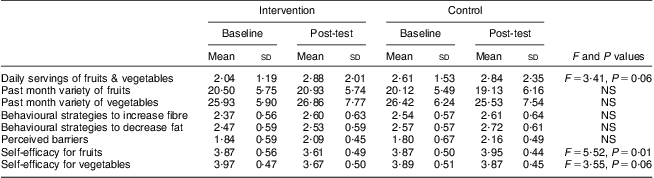
The intervention condition participants reported consuming nearly an additional daily serving of F&V as measured by the NCI F&V screener (P ≤ 0·06; see Table 1). The same was not observed among the delayed treatment condition participants. Contrary to what was expected, self-efficacy for purchasing and consuming F&V decreased in the intervention condition and increased in the delayed treatment condition (fruits: P ≤ 0·01; vegetables: P ≤ 0·06). No other significant group-by-time interactions were observed on the other outcomes including fruit variety, vegetable variety, behavioural strategies for fat, behavioural strategies for fibre and perceived barriers.
Results of mixed effects models on changes in primary and other customer outcomes; Vida Sana: Hoy y Mañana (Healthy Life: Today and Tomorrow) tienda-based environmental change intervention, central North Carolina, USA
Store-level effects
The total number of fresh and canned F&V observed in the intervention and control tiendas was examined over time. Table 2 contains the relative change (in percentage) of the four variables for each condition. There were larger increases in the availability of fresh and canned vegetables in the intervention v. the control tiendas. There were similar decreases in fresh fruits in both study conditions, and similar increases in canned fruits. These findings suggest that changes occurred at the tienda level, with important changes observed in the availability of fresh and canned vegetables.
Percentage change in availability of fresh and canned fruits and vegetables by study condition: Vida Sana: Hoy y Mañana (Healthy Life: Today and Tomorrow) tienda-based environmental change intervention, central North Carolina, USA

A second source of tienda data collected was produce distributor receipts. Weekly for 12 weeks, we requested produce distributor receipts from tienda managers/owners, with three of the four tiendas providing two to three receipts from each of one to two distributors. One of the control tiendas was unable to provide more than four distributor receipts for the entire period, suggesting that this method may not provide a reliable comparison between tiendas. No analyses were conducted with these data.
Discussion and conclusions
Disparities in access to healthy foods are evident to researchers and community residents alike, the former who recognize the influence of these disparities on eating habits(Reference Cannuscio, Weiss and Asch28). Previous research suggests that targeting increases in availability of healthy foods may be a relevant approach to improving eating habits(Reference Gittelsohn, Rowan and Gadhoke13). The present study contributed to this literature by testing a store-based intervention promoting F&V in order to increase intake among store customers. The study was conducted in tiendas, small Latino stores in US Mexican and Central American communities that serve an important role in the community(Reference Ayala, Laraia and Kepka20). Vida Sana, Hoy y Mañana, a tienda-based intervention, was moderately effective at increasing F&V intake among store customers. Daily servings of F&V increased by +0·84 among intervention customers compared with +0·23 in the control customers. This is consistent with previous research which found small positive changes as a result of an in-store intervention(Reference Wrigley, Warm and Margetts29). Considering the limitations noted below, these findings would suggest that it is possible to intervene at the environmental level in this setting and achieve changes in customers’ eating habits.
Changes were also found in self-efficacy; however, the changes were in the opposite direction to that hypothesized. The intervention customers reported decreases in self-efficacy for F&V, while control customers reported increases. Did the presence of the intervention in the tiendas evoke feelings of inadequacy in terms of ability to make dietary changes? By making F&V more ‘available’, did tienda customers feel unable to make the corresponding changes in their purchasing and eating habits? This finding requires further study, particularly given that previous evidence suggests self-efficacy may not be an appropriate construct for a Latino population(Reference Elder, Ayala and Parra-Medina30). Finally, in the present study we observed significant increases in the availability of fresh and canned vegetables. This is an important finding because it suggests that it is possible to see concurrent changes in the environment along with changes in tienda customer intake. This is consistent with other food environment interventions (e.g. Working Well Trial(Reference Biener, Glanz and McLerren31)), providing additional support for environmental change strategies.
Limitations
Several limitations are important to consider. First, F&V intake was measured via self-report. It is possible that intervention customers were biased to report greater intake of F&V given their greater visibility in the stores. Related, given the limited space available in the stores to conduct the follow-up interviews and no funding to conduct home visits, follow-up interviews were conducted by telephone. As such, a second limitation of the study is the lack of food models to assist with dietary data collection at follow-up. This may have led to over- or under-reporting; however, this source of variability was equally distributed across conditions. Third, the retention rate was moderate compared with previous studies we have completed (Secretos: 79 % at 1-year follow-up(Reference Elder, Ayala and Campbell32); Sembrando Salud: 81 % at 2-year follow-up(Reference Campbell, Ayala and Litrownik33)). Stronger efforts are needed to retain a sample recruited through food stores. Similarly, more resources are needed to recruit a sample through food stores as evidenced by the refusal rate at initial approach (ranged from 50 to 72 %; see Fig. 1). Fourth, the study was conducted only in four tiendas. The extent to which results generalize to tiendas in other communities and to other types of small food stores is not known. Fifth, our measure of self-efficacy may not have been understood well given the educational level of participants, and thus our counterintuitive findings should be interpreted with caution.
Implications for future research and practice
Those interested in working with similar small grocery and ethnic food stores, to improve the food environment or to deliver a healthy eating campaign, should consider a number of factors prior to implementation. Previous research suggests implementation of an in-store intervention must recognize that: (i) strategies be consistent with store needs; (ii) managers are motivated primarily by profit; and (iii) strategies cannot be overly complex but should fit the context(Reference Steenhuis, van Assema and Reubsaet10, Reference Glanz and Yaroch12). The first implication of the present study is that the managers appreciated customer service training for their employees. Managers in our formative research study indicated that they have few resources to invest in customer service training and yet they understand its importance(Reference Ayala, Laraia and Kepka20). Although the Spanish-dubbed video was vetted by a non-participating tienda manager, due to insufficient resources to produce one of our own, future studies should consider developing trainings that are more relevant to a small store environment. Second, selling packaged ready-to-eat F&V (Pronto Paks) was perceived the most relevant intervention strategy given tienda customer characteristics (i.e. young adult males; women with young children). However, the Pronto Paks were initially sold at a price ranging from $US 2·00 to $US 2·50, making it difficult to compete with other ready-to-eat snack options. Fortunately the price was successfully lowered after project staff calculated that the tienda would still make a profit if Pronto Paks were sold for $US 1·50 each. Third, when suggesting physical changes to the tienda environment, we initially limited our discussion with managers to items that fit the research budget. However, one tienda manager offered to contribute $500·00 of his own funds to purchase a buffet bar that was larger and fit better in his tienda. Thus, it is important to discuss a variety of possibilities and the pros and cons of each selection and to tailor the structural change to the unique needs and interests of the manager and physical layout of the tienda.
The current study was conducted in central North Carolina, a state that experienced a significant growth in the size of its Latino immigrant population. Tiendas are a product of this migration(Reference Johnson, Johnson-Webb and Farrell15) and the introduction of small ethnic food stores with the arrival of new immigrants helps shape the food environment for everyone. This is a phenomenon that has received little study despite suggestions about a reverse acculturation process that happens in communities with new immigrants(Reference Millman and Pinkston34). More research is needed on how the food environment for everyone changes with new immigrants and its implications on eating habits and health outcomes.
Acknowledgements
Sources of funding: The work was supported by the National Cancer Institute (R21 CA120929-01). Conflicts of interest: There are no conflicts of interest. Authors’ contributions: All authors were involved in the conceptualization of the study and selection of measurement and intervention activities. M.J. conducted the analyses. G.X.A. prepared a first draft of the paper with assistance from B.B. B.A.L., L.L. and M.J. edited several drafts of the paper and approved the final version.