



High dietary fat consumption, especially trans-fat and SFA, is detrimental to endothelial function( Reference Fuentes, Lopez and Sánchez 1 ) and blood cholesterol( Reference Booker and Mann 2 , Reference Van Horn, McCoin and Kris-Etherton 3 ). As is commonly accepted, the energy content and energy density of food increases with increasing levels of dietary fat. Energy density is positively associated with increased adiposity and negatively associated with weight loss and weight maintenance( Reference Pérez-Escamilla, Obbagy and Altman 4 ). Takeaway meals can often be high in total fat, SFA, energy and energy density( Reference Dunford, Webster and Barzi 5 ), and reducing consumption of these would yield important public health benefits. To measure takeaway meal intake for purposes such as population monitoring, screening participants to determine their need and eligibility for health programmes, and for evaluation of interventions, valid and reliable tools are required. To date, however, there is no comprehensive, validated instrument to assess this behaviour, particularly one that differentiates between high- and low-fat types.
There is a paucity of relevant and adequate measurement tools, despite current evidence indicating that takeaway consumption is a growing problem and the increasing number of studies investigating this behaviour. There is high variability among current studies in the definition of ‘takeaway’, and the few instruments that are available do not represent the range of takeaway foods regularly consumed. Typically, takeaway measurement has encompassed fast-food restaurants, snack bars and cafeterias( Reference Paeratakul, Ferdinand and Champagne 6 – Reference Larson, Neumark-Sztainer and Laska 14 ). A few studies, however, have included Asian- and Indian-style dishes( Reference Smith, McNaughton and Gall 15 – Reference Miura, Giskes and Turrell 18 ), sushi and sandwiches( Reference Turrell and Giskes 16 , Reference Miura, Giskes and Turrell 17 ), which are commonly consumed. Furthermore, with the exception of two studies( Reference Miura, Giskes and Turrell 17 , Reference Miura, Giskes and Turrell 18 ), measurement of healthy and unhealthy meals is infrequently differentiated. Although takeaway meals are often high in total fat and SFA, discrimination between low- and high-SFA types is necessary as there are variations within and between food product categories( Reference Dunford, Webster and Barzi 5 ). Previous studies have been inconsistent in their measurement of takeaway meals, which is likely due to the absence of a standard definition and comprehensive tools to accurately measure a wide range of takeaway meals. Previous attempts include the validation of a short question by Smith et al.( Reference Smith, McNaughton and Gall 15 ) and testing the repeatability of a FFQ by Miura et al.( Reference Miura, Giskes and Turrell 17 ). No measurement tools have been developed that achieve the gold standard (precise individual level agreement) for measuring takeaway meal intake in adults.
The present study aimed to assess the comparative validity and repeatability of newly created instruments with two 7-d estimated food records (EFR): a single question (SQ) to measure the number of high-SFA takeaway meals consumed per week and a twenty-eight-item FFQ to determine the number of total, low-SFA and high-SFA takeaway meals consumed per week.
Methods
Participants
Participants were recruited from June to August 2012 from two Australian universities and surroundings. The recruitment material advertised for participants aged 18–39 years, and volunteers were excluded if they were on a special diet for medical purposes or were studying or working in the field of human nutrition. Further details regarding recruitment methods are described elsewhere( Reference Cook, Roberts and O’Leary 19 ). The present study was approved by the University of Sydney’s Human Ethics Research Committee (HREC; approval number: 14601) and the University of Technology Sydney’s HREC (approval number: 2012-194N). Informed, written consent was obtained from all eligible study participants.
Study design
Questionnaires were administered online, and 7-d EFR were completed using hard copy diaries. Data were collected in the following order: socio-demographic and lifestyle/behavioural information (day 1), first 7-d EFR (days 1–7), second 7-d EFR (days 15–21), anthropometric measures (within days 22 and 27) and initial administration of test methods (SQ was asked before the twenty-eight-item FFQ; day 28 or 29). Test methods were repeated 6–8 d later (on day 35 or 36) as a compromise between allowing a sufficient period to reduce recall bias, while ensuring that responses were related to a similar ‘last one-month’ period. As intakes of takeaway meals can be variable depending on individual circumstances, questions regarding the amount and type of takeaway meals consumed in weeks 2 and 4 (non-EFR period) were asked at day 28 or 29.
Study instruments
For the test methods and EFR, participants were instructed to consider takeaway meals as ‘Any meal prepared outside the home that, when bought, is ready-to-eat as a meal’. A SQ and a twenty-eight-item FFQ (four breakfast items and twenty-four items of lunch and dinner meals) specific to the measurement of takeaway meals were developed (see online Supplementary File S1), and relative validity was determined by comparison with EFR (see online Supplementary File S2). The SQ asked ‘Over the LAST ONE-MONTH ONLY, on average, how many high-fat takeaway meals did you eat?’. Participants reported their intake using eight response options ranging from ‘None’ to ‘1 or more meals per day’. The FFQ asked ‘Over the LAST ONE-MONTH ONLY, on average, how often did you eat the following foods as a takeaway meal?’ and included eight response options ranging from ‘None’ to ‘5 or more meals per week’. Participants were provided with a comprehensive description, with examples, of what they should deem as ‘takeaway’, a ‘meal’ and, for the SQ, ‘high fat’. Takeaway meals are inherently difficult to classify into one mutually exclusive subcategory. For the FFQ, participants were, therefore, instructed to choose only one option that best matched the main component of each individual takeaway meal eaten, to avoid overestimation or duplication. In addition, the subcategories were ordered so that takeaway types that often overlap with each other were grouped together (to assist participants in identifying differences between them) with the most commonly consumed types stated first.
Australian recommendations for total energy from SFA and trans-fats are a combined limit of 8–10 %( 20 ), with the World Health Organization( 21 ) recommending that no more than 10 and 1 % of energy should come from SFA and trans-fats, respectively. Therefore, it was arbitrarily decided to accept 8 % as the threshold for the classification of high- v. low-SFA takeaway meals. Using this recommendation, each item of the FFQ was classified as high- or low-SFA on the basis of kJ from SFA per 1000 kJ (items with average kJ from SFA>80 kJ/1000 kJ were classified as high-SFA meals). In the FFQ, this classification resulted in eighteen high-SFA and ten low-SFA items. This classification was determined by one dietitian (A. S. C.) classifying items as ‘low-SFA’ or ‘high-SFA’ using the items’ qualitative descriptions and a second dietitian (R. M.) cross-checking classifications by averaging SFA content (kJ/1000 kJ) of relevant foods for each item using the commercially available nutrient analysis software, FoodWorks( 22 ), which includes the Australian Food and Nutrient Database (AUSNUT) and Nutrient Tables for Use in Australia (NUTTAB).
EFR were selected as the reference method for validation. Because of expected high within-person variability in takeaway consumption, a longer than usual recording time period was required. Weighing foods was considered too impractical and burdensome for participants because of the recording period length and the context of takeaway purchase and consumption. Therefore, participants completed two 7-d EFR using hard copy diaries (see online Supplementary Additional File S2). Takeaway foods purchased as a whole meal and beverages purchased as a whole meal or at the same time as a takeaway meal were recorded. Each participant received verbal and written instructions on how to complete the diaries, including when and how to record, a description with examples of ‘takeaway meals and drinks’ and further specific details of what to record, including the following: meal type, date and time of intake, a detailed description, an estimation of portion size bought and consumed and eating context over 7 consecutive d. Each diary was checked for completeness, and clarification with the participant was performed by the research dietitian, within 3 d of finishing the recording period. In particular, participants were probed for additional descriptions to make clear the main component of multiple-item meals and to substantiate descriptions of potential high-SFA ingredients.
To assess within-person variability of takeaway meal intake, the amount and type of takeaway meals consumed during the non-EFR period were assessed. Questions regarding amount included the following: ‘Was the TOTAL NUMBER of takeaway meals you ate in weeks 2 and 4 DIFFERENT to the total number of takeaway meals that you ate and recorded in weeks 1 and 3?’. If they answered ‘yes’, they were directed to a closed-ended question asking whether the number of takeaway meals eaten in weeks 2 and 4 was more or less than the number in weeks 1 and 3. Questions regarding the type of takeaway meals included the following: ‘Were the TYPES of takeaway meals you ate in weeks 2 and 4 DIFFERENT to the types of takeaway meals that you ate and recorded in weeks 1 and 3?’. If they answered ‘yes’, they were directed to an open-ended question asking how they were different.
Anthropometric measurement
Height and weight were measured in light clothing, without footwear. Tanita digital scales (model HD-327; measured to the nearest 0·1 kg) and a fixed stadiometer (measured to the nearest 0·1 cm) were used. BMI was calculated, and participants were categorised into normal weight (18·5–24·9 kg/m2), overweight (25·0–29·9 kg/m2) or obese (≥30 kg/m2) categories.
Takeaway meals
To allow for comparison between the SQ and the EFR, the categories ‘None’, ‘1 meal per month’, ‘2–3 meals per month’, ‘1 meal per week’, ‘2 meals per week’, ‘3–4 meals per week’, ‘5–6 meals per week’ and ‘1 or more meals per day’ from the SQ were coded as 0·0, 0·25, 0·625, 1·0, 2·0, 3·5, 5·5 and 7·0 high-SFA takeaway meals per week, respectively.
To calculate takeaway meals from the twenty-eight-item FFQ, individual items’ response options were standardised to ‘meals per week’: within each subgroup, the responses ‘None’, ‘1 meal per month’, ‘2 meals per month’, ‘3 meals per month’, ‘1 meal per week’, ‘2 meals per week’, ‘3–4 meals per week’ and ‘5 or more meals per week’ were re-coded to 0·0, 0·25, 0·5, 0·75, 1·0, 2·0, 3·5 and 5·0 meals per week, respectively. To obtain individuals’ intake of total takeaway meals per week using the twenty-eight-item FFQ, all twenty-eight items were totalled. To obtain high-SFA takeaway meals per week from the FFQ, only the eighteen high-SFA items were totalled (for low-SFA takeaway meals, ten low-SFA items were totalled).
EFR were coded by matching described meals (beverages were excluded) with items contained in publicly available nutrient databases, predominantly NUTTAB 2010 and commercial fast-food restaurant websites; if these were unavailable, however, then the AUSNUT 2007 was used( 23 , 24 ). Where meals contained more than one component and all components appeared in approximately equal quantities, an average of all components’ nutrient content was used to determine the meal’s overall energy and SFA content. However, where multiple components of meals appeared to be in unequal proportions, the largest component of the meal was used to determine nutrient content. For example, if a participant consumed a burger and fries and the burger represented >50 % of the takeaway meal, the burger’s nutrient content was used. Using the two values (kJ/100 g and SFA g/100 g), kJ from SFA/1000 kJ was calculated. Each takeaway meal from the EFR was classified as low- or high-SFA using 80 kJ from SFA/1000 kJ as the threshold. When adequately matched items could not be found within nutrient databases, a judgement was made through assessment of meal ingredients and preparation method. In these circumstances, the presence of characteristics including fatty meats, cream-based sauces, deep-fried cooking methods and a high amount of cheese contributed to high-SFA classification. Total, low-SFA and high-SFA takeaway meals per week using EFR were calculated by totalling the number of respective meals from 14 d of EFR and dividing it by 2. On the basis of consumption of 3 main meals/d, no implausible intakes were recorded in the EFR, and therefore all meal data were included in the analysis. All beverages recorded in the EFR were excluded from analysis.
For comparison of intake frequency among the EFR, SQ and twenty-eight-item FFQ for total, high- and low-SFA takeaway meals per week, values from each method were re-coded as ‘meals per week’ to match the eight-category scale used in the SQ.
Statistical analysis
A total of four relationships were investigated: (1) EFR (high-SFA takeaway meals) v. SQ (high-SFA takeaway meals); (2) EFR (total takeaway meals) v. twenty-eight-item FFQ (total takeaway meals); (3) EFR (high-SFA takeaway meals) v. twenty-eight-item FFQ (high-SFA takeaway meals); and (4) EFR (low-SFA takeaway meals) v. twenty-eight-item FFQ (low-SFA takeaway meals). To assess whether the test instruments could identify participants achieving recommendations (≤1 high-SFA takeaway meal per week), sensitivity and specificity analyses were conducted and negative and positive predictive values (PPV) were calculated. This threshold was chosen because of evidence demonstrating an association between the consumption of two or more takeaway meals per week and a 31 and 25 % higher prevalence of moderate abdominal obesity in men and women, respectively( Reference Smith, McNaughton and Gall 15 ). The frequency of takeaway meal intake by both methods was found to be non-normally distributed. Therefore, non-parametric methods were used to evaluate validity (using initial test methods) and repeatability. The extent to which the instruments can rank individuals according to intake was determined using Spearman’s correlation. The degree of agreement between methods was determined by calculating the median difference between methods as a ratio and by constructing Bland–Altman plots( Reference Bland and Altman 25 ): the difference between methods (test method – EFR) plotted against the average of two methods. As the difference between methods and average of methods were non-normally distributed, individual variables required transformation. Data were transformed using a natural logarithm (after adding a constant of 0·1 because of the existence of 0 values) and the difference between methods and average of methods was subsequently calculated (log e [test method+0·1]−log e [EFR+0·1]). The 95 % limits of agreement (LOA) were calculated on a logarithmic scale: mean agreement (mean of all differences)±t (n−1, 0·025)×sd of the differences( Reference Bland and Altman 26 ). A linear regression equation with lines representing its 95 % CI was added to each plot to further analyse the agreement between the two methods: y (difference)=b 1×x (average)+b 0. Values were back-transformed using the exponential, representing agreement of the test method with the EFR (average of two 7-d EFR) as a ratio. To further assess the validity and level of agreement between methods, weighted κ statistics and the percentage of those classified in a different category between assessments methods were calculated.
Test–re-test repeatability was assessed by calculating Spearman’s correlation, weighted κ, and the proportion and extent of misclassifications between initial and repeat test instruments. In all analyses (validity and repeatability), weighted κ and the proportion and extent of misclassifications were determined using three categories: ≤1·0, >1·0 but ≤4·0 and >4·0 meals/week. The degree of weighted κ agreement (between methods or repeat measures) was classified( Reference Landis and Koch 27 ).
Descriptive statistics were used to graph the frequency of takeaway meal consumption via the reference method and two test methods (using initial questionnaire responses for the SQ and the FFQ).
Statistical analyses were carried out using SPSS version 21.0 (IBM Corporation, 2012) and SAS version 9.3 (SAS Institute Inc., 2002–2010).
Results
Socio-demographic and anthropometric characteristics
A total of 109 participants completed the study. The mean age was 24·4 (sd 4·9) years, 61 % were female, 64 % had completed tertiary education (Certificate I or higher) and 66 % resided in areas that represent the highest 20 % with socio-economic advantage across Australia (as measured by the postal area-based Socio-Economic Indexes for Areas using the Index of Relative Socio-economic Advantage and Disadvantage)( 28 ). The mean BMI was 23·5 (sd 3·7) kg/m2 and 32 % were overweight or obese.
Participant sample analysed
For validation of both test methods, two participants were excluded because of failure to return the second EFR. For validation and repeatability analyses of the FFQ, two additional participants were excluded because of an incomplete initial FFQ. Another participant was excluded from the repeatability testing of the FFQ because of incomplete re-test FFQ. In addition, three participants completed the re-test questionnaire 5 or 9 d after the initial questionnaire (rather than 6–8 d), but were included as the analysis was not affected by their exclusion. For the graph of frequency of takeaway meal consumption, four participants were excluded as they did not complete all three methods.
Within-person variability of takeaway meal consumption
Approximately half (n 59) of the participants reported consuming a different number of takeaway meals in weeks 2 and 4 compared with weeks 1 and 3. Of these, twenty-eight participants reported eating more and thirty-one participants reported eating fewer takeaway meals in weeks 2 and 4. About one-third (n 36) reported eating different types of takeaway meals in weeks 2 and 4. Answers regarding how the meals differed were too varied, and therefore quantification of differences in SFA content of meals consumed, between EFR recording and non-recording periods, could not be performed.
Comparative validity of the single question and the twenty-eight-item FFQ
Fig. 1 illustrates group-level differences between the three methods regarding number of participants consuming low-SFA, high-SFA and total takeaway meals. The SQ reported more participants in the lower intake categories for high-SFA takeaway meal intake, compared with the EFR and the FFQ. Reporting of high-SFA takeaway meal intake using the FFQ and the EFR followed a similar pattern except for the highest intake category where the FFQ reported considerably more participants than the EFR. The latter difference was also seen for the reporting of low-SFA and, unsurprisingly, total takeaway meals.
Frequency of low-SFA, high-SFA and total takeaway meal intakes according to three methods: estimated food records (EFR), FFQ and single question (SQ) (n 105).  , High-SFA (SQ);
  , total (FFQ);
  , high-SFA (FFQ);
  , low-SFA (FFQ);
  , total (EFR);
  , high-SFA (EFR);
  , low-SFA (EFR). A colour version of the figure is available online.

Regarding high-SFA takeaway, the SQ and the FFQ identified participants consuming at or below the goal behaviour (≤1 high-SFA takeaway meals per week) with a sensitivity of 97 and 83 %, respectively, and identified participants not meeting recommendations with a specificity of 46 and 92 %, respectively (Table 1). Using the SQ, at least one in two people who did not meet the recommendations were not classified as such. The PPV for the SQ (41 %) was substantially lower than that for the FFQ (81 %). This suggests that nearly three in five participants identified by the SQ as meeting the recommendations did not in fact do so (three times as many as by the FFQ). The negative predictive values (NPV) were high (97 and 93 %), indicating that fewer than one in ten people classified by the test methods as not achieving recommendations would actually be meeting them.
Sensitivity, specificity, and positive and negative predictive values for goal behaviour (≤1·0 high-SFA takeaway meals per week)

EFR, estimated food records; SQ, single question.
Participants correctly identified by the test method as follows.
* Meeting the goal behaviour, in proportion to the total amount that genuinely met the goal behaviour (determined by the EFR).
† Not meeting the goal behaviour, in proportion to the total amount that genuinely did not meet the goal behaviour (determined by the EFR).
‡ Meeting the goal behaviour, in proportion to the total identified by the test method as meeting the goal behaviour (true and false positives).
§ Not meeting the goal behaviour, in proportion to the total identified by the test method as not meeting the goal behaviour (true and false negatives).
‖ 18 items were used in this calculation.
A high positive correlation between both test methods v. EFR for all four comparisons was demonstrated (r s ranging from 0·64 to 0·80, all P≤0·01; Table 2). Regarding precise agreement of group-level high-SFA takeaway, the SQ was significantly different to the EFR: the median intake was 0·53 times (95 % CI 0·44, 0·63) lower. At the group level, high-SFA takeaway measured by the FFQ was significantly different to the EFR, and the median was 1·26 times higher. The FFQ produced greater group medians: for total and low-SFA takeaway meal intakes, the FFQ was 1·65 and 3·67 times higher, respectively. The interquartile ranges and the 95 % LOA for both test methods measuring all relevant outcomes were very large, indicating that neither instrument could measure precise intake at the individual level. Figs 2–5 present the Bland–Altman plots that supplement data presented in Table 2 and include the linear regression line equation with its 95 % CI. Through visual inspection, as high-SFA (using the SQ and the FFQ) and low-SFA (using the FFQ) takeaway meal intake increases, the differences between methods remain relatively constant. However, as total takeaway meal intake increases, the difference between methods systematically increases: intake is increasingly higher by the FFQ. For this outcome, the median difference and its 95 % LOA are not useful summaries. This is confirmed by unstandardised b 1 coefficients: b 1=0·23 for the FFQ (total; P=0·008), whereas b 1 coefficients for the SQ, FFQ (high-SFA) and FFQ (low-SFA) are all close to 0, with P>0·05.
Bland–Altman plot: agreement between the estimated food records (EFR) and the single question (SQ) for high-SFA takeaway meal intake using transformed data (log
e
[x+0·1]; n 107). Horizontal lines represent the mean difference ( ) and upper and lower 95 % limits of agreement (
 ). Diagonal lines represent regression line (
 , linear regression equation attached) and its 95 % CI (
 ). A colour version of the figure is available online.

Bland–Altman plot: agreement between the estimated food records (EFR) and the FFQ for total takeaway meal intake using transformed data (log
e
[x+0·1]; n 105). Horizontal lines represent the mean difference () and upper and lower 95 % limits of agreement (). Diagonal lines represent the regression line (, linear regression equation attached) and its 95 % CI (). A colour version of the figure is available online.

Bland–Altman plot: agreement between the estimated food records (EFR) and the FFQ for high-SFA takeaway meal intake using transformed data (log
e
[x+0·1]; n 105). Horizontal lines represent the mean difference () and upper and lower 95 % limits of agreement (). Diagonal lines represent the regression line (, with linear regression equation attached) and its 95 % CI (). A colour version of the figure is available online.

Bland–Altman plot: agreement between the estimated food records (EFR) and the FFQ for low-SFA takeaway meal intake using transformed data (log
e
[x+0·1]; n 105). Horizontal lines represent the mean difference () and upper and lower 95 % limits of agreement (). Diagonal lines represent the regression line (, with linear regression equation attached) and its 95 % CI (). A colour version of the figure is available online.

Correlation, precise agreement and categorical agreement between the estimated food records (EFR) and test methods for takeaway meals per week

IQR, interquartile range; LOA, limits of agreement; SQ, single question.
* P<0·01.
** P=0·384 (SQ, high-SFA), P=0·008 (FFQ, total), P=0·297 (FFQ, high-SFA) and P=0·824 (FFQ, low-SFA).
† Exp(log e [test method+0·1]−log e [EFR+0·1]), which represents agreement of the test method as a ratio of the EFR ([test method+0·1]/[EFR+0·1]).
‡ Exp(mean [log e {test method+0·1}−log e {EFR+0·1}]), which represents median agreement of the test method as a ratio of the EFR.
§ Unstandardised coefficient obtained for the slope of average of methods regressed on difference between methods using log e -transformed data with 0 values, log e (test method+0·1)−log e (EFR+0·1)=b 1 ([log e {test method+0·1}+log e {EFR+0·1}]/2)+b 0.
‖ Participants classified one category apart.
¶ Participants classified ≥two categories apart.
†† 28 items were used in this calculation.
‡‡ 18 items were used in this calculation.
§§ 10 items were used in this calculation.
There was fair agreement (κ w =0·29), moderate agreement (κ w =0·47 and κ w =0·59) and fair agreement (κ w =0·24) for the SQ (high-SFA), FFQ (total), FFQ (high-SFA) and FFQ (low-SFA), respectively, with the EFR in classifying participants into three categories of intake (Table 2). The FFQ (for both total and high-SFA) produced better categorical-level agreement than the SQ and the FFQ (low-SFA).
Repeatability of the single question and the twenty-eight-item FFQ
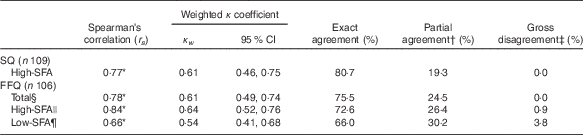
Table 3 presents the test–re-test repeatability estimates for the two methods with outcome subcategories of total, high-SFA and low-SFA takeaway meals. High positive correlations between repeated questions for all outcomes were found (r s ranged from 0·66 to 0·84, P<0·01). The agreement between frequency categories for high-SFA takeaway meals measured using the SQ and the FFQ was substantial (κ w =0·61 and κ w =0·64, respectively), the agreement for total takeaway meals using the FFQ was substantial (κ w =0·61) and the agreement for low-SFA takeaway meals using the FFQ was moderate (κ w =0·54). Exact agreement between duplicated instruments was the highest for the SQ measuring high-SFA takeaway meals. The proportion of participants classified into the same or adjacent category of intake was similar across all outcomes.
Test–re-test repeatability
SQ, single question.
* P<0·01.
† Participants classified one category apart.
‡ Participants classified ≥two categories apart.
§ 28 items were used in this calculation.
‖ 18 items were used in this calculation.
¶ 10 items were used in this calculation.
Discussion
Interpretation of findings
For the measurement of high-SFA takeaway meals, sensitivity for the SQ (and to a slightly lesser extent the FFQ), specificity for the FFQ and NPV for both methods were high. For use as a screener, high specificity and NPV are ideal for identifying those with high intakes. Therefore, for the FFQ, most people not meeting the threshold (of ≤1·0 high-SFA takeaway meals per week) will be identified, and the high NPV ensures that of those identified as consuming >1·0 high-SFA takeaway meals per week the majority of these cases are genuine. For the purpose of ranking, both methods can be used for all relevant outcomes, except for the FFQ for the measurement of low-SFA takeaway meals. Neither of the instruments, however, is appropriate for measuring the precise, absolute intake at the group or individual level. For measurement of an individual’s total and high-SFA takeaway meal consumption at a categorical level using three intake categories, the FFQ can be used. This demonstrates that when a precise intake at the individual level is not mandatory, these tools can be used with confidence. The two instruments are reliable across a 6–8-d period with correlation coefficients falling within or above the range considered common for a FFQ: 0·5–0·8 in adults( Reference Gibson 29 ) or 0·5–0·7 (with somewhat higher correlations when repeat administrations were 1 month or less apart)( Reference Cade, Thompson and Burley 30 ).
The poor agreement at the individual and the group level is disappointing; one explanation is that 14 d of EFR is insufficient to determine usual intake. This is supported by the finding that approximately half of the participants reported that they ate a different number of takeaway meals in the non-recording periods. However, at a group level, these within-person differences should be attenuated or at least be unlikely to produce such a substantial difference in intakes between methods. Furthermore, there was moderate-to-substantial repeatability, demonstrating that self-perceived intake did not vary considerably within a 6–8-d period. Another interpretation is that attention, and therefore memory, during purchasing and eating takeaway meals may be reduced, because these occasions are often unplanned or eaten while busy with other tasks. Less thought may be required, relative to foods eaten from home, because planning and preparation are usually associated with home prepared food. A third alternative is illustrated by the improved results at a categorical level with the analysis using three intake categories with a wider middle category (>1·0 but ≤4·0) and an upper category threshold of >4·0 meals per week. The substantially better agreement using these categories (compared with precise agreement as depicted by findings using the Bland–Altman method) may indicate accuracy of memory and reporting may be greater for foods consumed both rarely or very frequently compared with recall for meals consumed moderately often. Another explanation is that judgement of ‘high-SFA’ in foods remains difficult for laypeople and/or does not align with the threshold of 80 kJ from SFA/1000 kJ. However, if true, this would apply to the SQ only. Finally, the influence of social desirability bias and the number of items on misreporting might also explain the findings. Under- and over-reporting were found in the SQ and the FFQ, respectively, compared with the EFR. A difference in the number of items in the SQ and the FFQ may have contributed to this. Under-reporting in the SQ may also be a consequence of social desirability bias, as the question explicitly asked about high-fat takeaway meals and described high fat as ‘the unhealthy types of fats that are bad for your health’. Social desirability may have also affected the FFQ results, despite the instructions and items not making any overt reference to fat content. Over-reporting was much higher when measuring low-SFA compared with high-SFA takeaway meals using the FFQ (differences between the test method and the EFR were 3·67 and 1·26 times, respectively). The effects of social desirability may also have contributed to low specificity (46 %) and PPV (41 %) of the SQ. However, at the threshold of ≤1·0 meals/week, the influence of this on specificity and PPV appears to disappear, for the measurement of high-SFA takeaway meals by the FFQ.
Comparison of the results of this study with previous studies
A previous study by Smith et al.( Reference Smith, McNaughton and Gall 15 ) measured takeaway meal intake in a population of young adults and assessed the validity of a short question regarding usual intake of hot takeaway meals against a FFQ. The 127-item FFQ used assessed total diet and was not purpose-designed for takeaway meals. Responses for usual hot takeaway meal intake were validated against the frequency of intake of five FFQ items that are commonly eaten as takeaway foods (fried fish, meat pie/sausage roll/other savoury pasties, pizza, hamburger, hot chips/roast potato/potato wedges). However, these five FFQ items were not extensive or representative of the variety of takeaway options available in Australia. Furthermore, the FFQ items did not distinguish between homemade and takeaway versions of these foods. They found that, of those reporting ≥2 takeaway per week via the short question, 52·8 % reported a higher intake of takeaway-type foods from the FFQ (which is ≥17·8 % among participants reporting ≤1 takeaway per week via the short question). It is unclear what ‘higher’ intake means. However, the current specificity results suggest that our findings are similar (for the SQ) or better (for the FFQ). No further validation analyses were performed with which we could compare the current findings.
More recently, Miura et al.( Reference Miura, Giskes and Turrell 17 ) investigated the repeatability of a twenty-two-item takeaway meal FFQ over 4 weeks. The repeatability of the current FFQ is comparable with the results found for takeaway food questions in the study by Miura et al.( Reference Miura, Giskes and Turrell 17 ), where crude agreement ranged from 51·4 to 77·8 % and the linear weighted κ ranged from 0·17 to 0·71 for twenty-two individual items. For total takeaway intake, agreement was 62·9 % and the linear weighted κ was 0·71. Although inclusive of a wide range of takeaway meals and beverages, this FFQ classified takeaway items as ‘healthy’ or ‘unhealthy’ choices, leaving no differentiation within food/beverage types. A previous study by Dunford et al.( Reference Dunford, Webster and Barzi 5 ) has demonstrated that there is high nutrient content variation within takeaway food types, especially with respect to total fat and SFA. The FFQ used in the present study attempts to account for these disparities by using a comprehensive list of takeaway items, including separate items within cuisines known to have the highest potential differences in nutrient content( Reference Dunford, Webster and Barzi 5 ).
To our knowledge, there are no other studies presenting relative validity or repeatability of a takeaway meal-specific FFQ or an isolated SQ on high-fat, high-SFA or total takeaway meals, with which we can compare our results.
Study strengths and limitations
The inherent difficulties in the measurement of takeaway meal consumption is well documented in the literature because of the lack of a universal definition for what constitutes a takeaway meal( Reference Thornton, Bentley and Kavanagh 12 , Reference Smith, McNaughton and Gall 15 – Reference Miura, Giskes and Turrell 18 ). Some studies use a broad definition with generic fast foods, and healthier takeaways such as sushi included( Reference Turrell and Giskes 16 , Reference Miura, Giskes and Turrell 17 ), but other studies have restricted their definition to items from multinational fast food chains( Reference Paeratakul, Ferdinand and Champagne 6 , Reference Reidpath, Burns and Garrard 10 , Reference Thornton, Bentley and Kavanagh 12 , Reference Brindal, Wilson and Mohr 31 ). There are also many instances where takeaway foods are measured by a small number of items within a larger FFQ( Reference Jeffery, Baxter and McGuire 9 , Reference Mohr, Wilson and Dunn 11 , Reference Larson, Neumark-Sztainer and Laska 14 , Reference Gwynn, Flood and D’Este 32 , Reference Ambrosini, O’Sullivan and de Klerk 33 ). Through the use of a more specific and inclusive definition of ‘takeaway’ and a broadened list of takeaway options, this study has attempted to account for some of these quandaries.
A strength of the present study is that the EFR was designed for 2 weeks to allow for variations in consumption pattern, and the records were checked in person by a research dietitian.
A number of limitations must, however, be considered when interpreting the findings of this study. For the purpose of validation, nutrient criteria were set to discriminate between low- and high-SFA takeaway meals. It is recognised that within food items there is significant variation( Reference Dunford, Webster and Barzi 5 ), and some takeaway meals considered lower in SFA may not be healthy choices secondary to other nutrient composition such as high Na. However, the nutrient criteria set for SFA (maximum 80 kJ from SFA/1000 kJ) are reflective of current dietary recommendations for reducing the risk of chronic disease( 20 , 21 ).
The FFQ was designed using items perceived to be commonly consumed among young adults, rather than ascertaining this objectively from food records. In addition, the descriptions of ‘high-fat’ takeaway meals for the SQ were, in the main, qualitative in nature rather than a list of specific cuisines, meal categories or dishes. This difference in descriptions and examples given, between the SQ and the twenty-eight-item FFQ, may explain the differences in findings between the test methods.
Beverages were not included in the calculation of takeaway meals from the test and reference methods, and thus the analyses. We would expect this to have minimal impact on the results as the SQ and the twenty-eight-item FFQ had been designed to measure the main component of takeaway meals, and there were only a small number of instances in this sample where a beverage was the primary component of a meal recorded in the EFR.
Finally, our results may not be generalisable to populations other than young adults. However, younger adults are the most frequent consumers of takeaway meals compared with other age groups( 34 ). As the participants in the current study were highly educated, they may have been able to report their intake with more accuracy because of higher literacy, numeracy and awareness of food intake. The prevalence of overweight and obesity in this sample population (32 %) was lower than the prevalence among Australians aged 18–24 and 25–34 years (36 and 55 %, respectively)( 35 ). It has been reported that obese individuals under-report intake more frequently but not specifically in younger adults( Reference Trabulsi and Schoeller 36 ). As with any food record, it is possible that keeping the EFR might change intakes of takeaway meals and explain some of the higher consumption findings from the FFQ.
Conclusion
In summary, the current test methods cannot replace the accuracy of EFR for precise and absolute takeaway intake assessment in young adults who are highly educated. The FFQ is, however, appropriate for use in screening populations for high takeaway meal consumers. Both methods have the ability to rank individuals into categories of intake for all relevant outcomes except for low-SFA takeaway meals. To overcome current restrictions of test methods’ use, future research should consider validating a shortened version of a FFQ similar to ours, which does not explicitly ask about high-fat takeaway, with the choices of items for inclusion based on popularity from an objective method. By reducing the number of items, the extent of over-reporting may be reduced.
Acknowledgements
A. S. C. was supported by an Australian Postgraduate Award. This was funded by the Australian government, which had no role in the design, analysis or writing of this article.
A. S. C. conceived and designed the study, the brief question and the FFQ. A. S. C. and R. M. contributed to recruitment, data collection and statistical analysis. R. M. coded meals from food records. P. P., M. A.-F. and F. O’L. contributed to analysis and interpretation. All the authors read and approved the final version of the manuscript. This research was completed in partial fulfilment of a Doctorate of Philosophy by A. S. C. and a Master of Nutrition and Dietetics by R. M. at the University of Sydney.
The authors declare that there are no conflicts of interest.
Supplementary Material
For supplementary material/s referred to in this article, please visit http://dx.doi.org/doi: 10.1017/S000711451600310X



