



Food insecurity is defined as the ‘limited or uncertain availability of nutritionally adequate and safe foods, or the limited or uncertain ability to acquire acceptable foods in socially acceptable ways’( Reference Anderson 1 , Reference Wolfe, Frongillo and Valois 2 ). It has been associated with negative impacts on human development such as increased poverty and inequality( Reference Gorton, Bullen and Mhurchu 3 ) and with adverse health outcomes such as increased risk of being obese( Reference Lyons, Park and Nelson 4 , Reference Christian 5 ), having type 2 diabetes( Reference Fitzgerald, Hromi-Fiedler and Segura-Perez 6 , Reference Gucciardi, Vogt and DeMelo 7 ) and other chronic conditions( Reference Gowda, Hadley and Aiello 8 , Reference Stuff, Casey and Connell 9 ), as well as mental health problems( Reference Bansah, Holben and Basta 10 – Reference Hromi-Fiedler, Bermudez-Millan and Segura-Perez 12 ). Food insecurity has also been correlated with poor economic growth( Reference Verpoorten, Arora and Stoop 13 ). The probability of being food insecure has been reported to decline with income; therefore, negative income shocks are expected to increase the probability of being food insecure( Reference Gundersen, Kreider and Pepper 14 ). Sen( Reference Sen 15 ) argues that individuals need entitlements to food which depend, among other things, on their income; hence, there can be food insecurity even when food supplies are sufficient. This highlights the relevance of demand-side factors linked to accessibility and affordability of foods. As the 2008 global financial crisis hit national economies, some organizations reported that the macroeconomic effects of such crisis would increase food insecurity( 16 ) and would interfere with nutritional well-being, leading to a long-term erosion of nutritional strategies that allow access to food and other food security-related items( Reference Drèze and Sen 17 – Reference Christian 19 ).
Studies have also shown that financial crises worsen food insecurity among vulnerable populations( Reference Hurd and Rohwedder 20 ); the groups that are most vulnerable to experience a decline in their nutritional status during economic crisis are those who spend a large proportion of their income on food( Reference de Pee, Brinkman and Webb 21 ). As highlighted by Bloem et al.( Reference Bloem, Semba and Kraemer 18 ), populations that were already spending about two-thirds of their household income on food were forced to shift their consumption to energy-rich, but nutritionally poor foods due to the economic crisis. Hence, the financial crisis further intensified the vulnerability of low-income households with poor nutritional and health status( Reference Brinkman, de Pee and Sanogo 22 , Reference Ruel, Garrett and Hawkes 23 ).
In Mexico, the impact of the crisis manifested itself in 2009 when economic activity decreased, credit shrank, inflation increased, and consumption, production and employment declined. The overall Mexican economy shrank by 6·7 % in 2009( 24 ). We hypothesized that this phenomenon contributed to an increased prevalence of food insecurity, as food prices rose and income decreased( Reference Brinkman, de Pee and Sanogo 22 ). The social impact of the financial crisis had a larger effect among the poorest. Habib et al.( Reference Habib, Narayan and Olivieri 25 ) reported that in Mexico, the lower income quintile suffered more-than-average per capita income losses (even after controlling for net transfers) as a result of the crisis. Such concentrated financial effect on the most vulnerable groups can also be highlighted through the food insecurity statistics which show that while the number of food-insecure individuals between 2008 and 2010 has remained constant at around 50 million (approximately 45 % of all individuals), the number of severely food-insecure individuals grew from 9·8 million (8·9 %) in 2008 to 12·2 million (10·8 %) in 2010( 26 ). Food expenditures have been reported to be a flexible item in household budgets( Reference Harrison, Sharp and Manolo-LeClair 27 ) and it is likely that the financial crisis may have led to trade-offs between food and other needs with fixed costs such as gas and electricity, limiting food consumption and producing shifts towards cheaper foods and less balanced diets.
An important research question in light of such evidence is to investigate the effects of this crisis on household food security. Few studies have investigated the effects the 2008 financial crisis had on households’ food security status in middle-income nations. To our knowledge no study has specifically investigated its effect in Mexico. The present research explores the associations between food insecurity, as well as food expenditure as a percentage of income, and the financial crisis in Mexico. This analysis adds to the literature supporting that crises disproportionately impact the food security status of the most economically vulnerable households.
Methods
Data and study sample
The present study used data from the Mexican National Household Income and Expenditure Survey (ENIGH). This is a nationally representative probabilistic survey collected every other year since the 1980s by the Mexican Institute of Statistics. We used data from the 2008 and 2010 waves, which correspond to the years immediately before and after the financial crisis. In addition, 2008 was the first time when the survey included questions from the Mexican Food Security Scale (EMSA). Therefore, these waves of data provide a unique opportunity to study the effect of the financial crisis on food insecurity. The analytical sample included 29 468 households in 2008 and 27 654 in 2010.
Outcome variable: food security
Food security was measured through the EMSA, which is comprised of twelve items that measure households’ perceptions regarding having and obtaining enough food to meet dietary needs( 28 ). According to prior cut-off points defined in the literature( 28 ), households were classified as being food secure (FS), mildly food insecure (MiFI), moderately food insecure (MoFI) and severely food insecure (SFI) based on zero, one to three, four to seven and eight to twelve affirmative answers, respectively, to EMSA questions. This scale is an abbreviated version of the Latin-American and Caribbean Food Security Scale, which has been demonstrated to have excellent construct validity, face validity and psychometric properties, as well as strong convergence and criterion validity among the general population( Reference Perez-Escamilla 29 – Reference Pinheiro de Toledo Vianna, Hromi-Fiedler and Segall-Correa 31 ).
We also included a continuous proxy measure of food insecurity, defined as the proportion of a household’s disposable income spent on food. This arises from prior research suggesting that households that spend a larger proportion of their current income on food are at higher risk of food insecurity( Reference Bloem, Semba and Kraemer 18 , Reference Hurd and Rohwedder 20 , Reference de Pee, Brinkman and Webb 21 ). Household expenditures on food indicate the ability of households to purchase food; this indicator is an indirect measure of households’ vulnerability to price shocks (as those occurred during the financial crisis).
Financial crisis
We constructed a dichotomous term that equals 0 for individuals interviewed in ENIGH 2008 (pre-crisis) and equals 1 for individuals interviewed in ENIGH 2010, to account for the timing of the financial crisis.
Covariates
Covariates for regression analyses included residence status (rural; semi-rural; semi-urban; urban)( Reference Quandt and Rao 32 ), total current household income quintile( Reference Gundersen, Kreider and Pepper 14 , Reference Nord and Prell 33 , Reference Rose 34 ), household size, head of household’s educational attainment (none or some primary; primary completed or some secondary; secondary completed or some high school; high school completed or more)( Reference Olson 35 ) and head of household’s gender( Reference Hanson, Sobal and Frongillo 36 ). In addition, dummy variables were included for having at least one member of the family with social security, having at least one member enrolled into the social health insurance, receiving cash grants from Oportunidades, enrolment in a cash assistance programme for the elderly called 70 y Más( Reference Miller, Tsoka and Reichert 37 ), remittances receipt and if the household reported any agricultural self-consumption (i.e. whether the household reported consumption of a positive value of its agricultural production)( Reference Appendini and Liverman 38 ).
Statistical analysis
A pooled cross-sectional analysis of ENIGH 2008 and 2010 was conducted. First, we computed the distribution of food security levels according to household sociodemographic characteristics using χ 2 and adjusted Wald tests. Statistics were computed separately for each of the survey years. Next, we estimated a generalized ordered logistic regression (gologit2 model)( Reference Williams 39 ) to assess the impact of the financial crisis on food security status measured (experience-based measured) as an ordinal dependent variable with four levels (FS, MiFI, MoFI, SFI). This model was chosen to utilize the ordered nature of the outcome variable, after successfully testing for the model fit to proportional odds and partial lines assumptions.
In addition, an ordinary least squares (OLS) regression estimated the overall association of the financial crisis with the share of a household’s current income spent on food. To test the hypothesis that the financial crisis has a greater effect among the most vulnerable, a simultaneous quantile regression was also estimated using the same dependent variable. Employing conventional least square regression methods may produce estimates that do not necessarily capture the differences in magnitude of extremes values of the distribution of households’ income and expenditures. Given the income distribution in Mexico, this may be a relevant aspect to control for, making the use of a quantile function an appropriate statistical approach to address this issue.
To assess the association between experience-based food security measures (i.e. EMSA) and the proxy measurement of the proportion of income spent on food, we tested whether the means of the proxy variables differed significantly between levels of food insecurity. In addition, an OLS regression was estimated between the proxy variable and the food security scale.
All analyses were performed using sample weights and survey effects to account for different sampling probabilities. Statistical analyses were performed using the statistical software package STATA version 12. All P values were two-tailed and statistical significance was set at P<0·05.
Results
Table 1 displays the sample summary descriptive statistics before and after the financial crisis (2008 and 2010, respectively). According to Table 1, the share of individuals classified as food secure increased significantly between these years from approximately 57 % to 60 %. However, there was an equally significant increase among severely food-insecure households from about 8 % in 2008 to close to 10 % in 2010. Some measures of interest that may be correlated with the crisis and that showed significant changes were the decrease in the percentage of households receiving remittances from abroad, as well as the decrease in the percentage of households reporting agricultural self-consumption. Table 1 also shows a large and statistically significant increase in the percentage of households enrolled into social health insurance, which is explained by the expansion of the Seguro Popular programme between 2008 and 2010. Table 1 shows a significant difference among income quintiles between 2008 and 2010; however, these differences result from using expansion factors and survey corrections.
Characteristics of the sample households before (2008) and after (2010) the financial crisis; pooled cross-sectional data from the Mexican National Household Income and Expenditure Survey (ENIGH) 2008 and 2010

FS, food secure; MiFI, mildly food insecure; MoFI, moderately food insecure; SFI, severely food insecure; HH, household.
Food security statistics 2010 differ slightly from other sources, since there is an over-sampled version of ENIGH 2010 (MCS-ENIGH, n 35 146) focused on portraying a more precise picture of income and sociodemographic variables; however, this alternative version does not collect data on expenditure which is key to our analysis. Ranges for income quintiles differ between 2008 and 2010 due to sampling differences. For 2008 ranges were: quintile 1, $MX 0–4214; quintile 2, $MX 4215–6709; quintile 3, $MX 6710–10 101; quintile 4, $MX 10 102–16 535; quintile 5, $MX 16 536–1 441 294. For 2010 ranges were: quintile 1, $MX 0–3645; quintile 2, $MX 3646–5838; quintile 3, $MX 5839–8707; quintile 4, $MX 8708–13 660; quintile 5, $MX 13 661–319 489 (all values expressed in real Mexican pesos ($MX), 2010). In 2008 there were five outliers with incomes higher than expected. This biases the upper limit of quintile 5. The results of further statistical analyses did not differ including or excluding these observations.
Table 2 displays the sample’s characteristics by food security levels, which were assessed separately for each year. Food-secure households were more likely to be urban (75·6 % in 2008 and 71·5 % in 2010), to be in the higher income quintile (close to 30 % for both years), to be headed by a male (about 76 % in both years) and a more educated head of household (approximately 30 % with high-school completed or more), more likely to be affiliated to social security (64·3 % in 2008 and 62·9 % in 2010), less likely to be beneficiaries of public programmes such as the social health insurance, Oportunidades and 70 y Más, and less likely to receive remittances or rely on agricultural self-consumption, compared with food-insecure households. By contrast, a larger percentage of food-insecure households were rural and in the lower two income quintiles. In addition, they were more likely to be headed by females and adults with incomplete primary education or no schooling, and showed lower levels of affiliation to social security. All these characteristics worsened as food insecurity level increased from mild to severe. However, this was not the case in affiliation to other public programmes, which showed different patterns across years and types of programme, and may be explained by modifications in eligibility criteria and by the impact of the crisis itself. But in all cases the share of food-insecure households affiliated to public programmes was larger compared with food-secure households. In 2008, mildly and moderately food-insecure households were more likely to receive remittances (7·5 and 7·4 % respectively); however, in 2010, severely food-insecure households received the largest percentage (5·6 %). Mildly and moderately food-insecure households in both years relied more on agricultural self-consumption.
Characteristics of the sample households by food security level; pooled cross-sectional data from the Mexican National Household Income and Expenditure Survey (ENIGH) 2008 and 2010
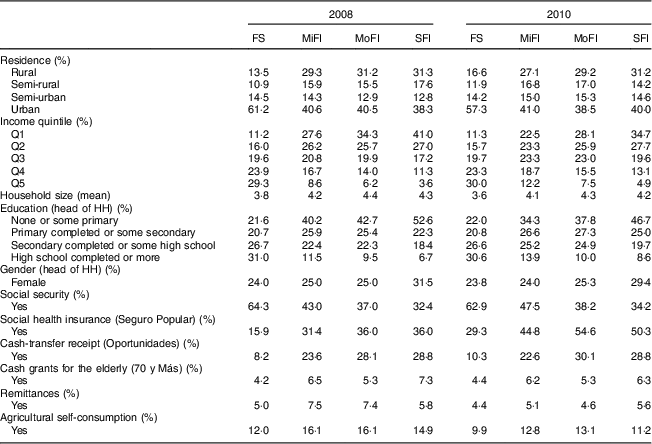
FS, food secure; MiFI, mildly food insecure; MoFI, moderately food insecure; SFI, severely food insecure; HH, household.
Differences in sample characteristics by food security status were assessed separately for each year. All differences were statistically significant at P<0·05, assessed by a χ 2 test.
For 2008 ranges for income quintiles were: quintile 1, $MX 0–4214; quintile 2, $MX 4215–6709; quintile 3, $MX 6710–10 101; quintile 4, $MX 10 102–16 535; quintile 5, $MX 16 536–1 441 294. For 2010 ranges were: quintile 1, $MX 0–3645; quintile 2, $MX 3646–5838; quintile 3, $MX 5839–8707; quintile 4, $MX 8708–13 660; quintile 5, $MX 13 661–319 489 (all values expressed in real Mexican pesos ($MX), 2010).
Table 3 displays the ordered logistic regression results. Model 1 presents the analysis comparing food-secure with all food-insecure households (including MiFI, MFS and SFI). The year variable suggests that having greater household food security prior to the crisis was associated with maintained food security status after the crisis (OR=1·12), proposing that they tend to be better protected against negative economic shocks. Model 2 indicates that when comparing food-secure and mildly food-insecure households (i.e. MiFI are those households mainly reporting an anxiety about not being able to buy sufficient and nutritious foods) with moderately and severely food-insecure households, the year variable was associated with a lower likelihood of being food secure and mildly food insecure (OR=0·81), suggesting the crisis worsened food insecurity experience among vulnerable households. Model 3 compares food-secure, mildly and moderately food-insecure households (i.e. MoFI are those experiencing modifications in the quality and quantity of the diet) with severely food-insecure households (i.e. SFI are households that actually experience insufficiency of foods even among children). Here, the year variable estimate was larger (OR=0·74), suggesting that the financial crisis was associated with a decreased likelihood of being food secure, mildly and moderately food insecure compared with being severely food insecure (the worse level of food insecurity).
Ordered logistic regression on food security status; pooled cross-sectional data from the Mexican National Household Income and Expenditure Survey (ENIGH) 2008 and 2010

FS, food secure; MiFI, mildly food insecure; MoFI, moderately food insecure; SFI, severely food insecure; HH, household.
For 2008 ranges for income quintiles were: quintile 1, $MX 0–4214; quintile 2, $MX 4215–6709; quintile 3, $MX 6710–10 101; quintile 4, $MX 10 102–16 535; quintile 5, $MX 16 536–1 441 294. For 2010 ranges were: quintile 1, $MX 0–3645; quintile 2, $MX 3646–5838; quintile 3, $MX 5839–8707; quintile 4, $MX 8708–13 660; quintile 5, $MX 13 661–319 489 (all values expressed in real Mexican pesos ($MX), 2010).
Model 1 compares how the financial crisis affected food-secure households compared with all food-insecure ones (mildly, moderately and severely food insecure). Model 2 examines the differential effect of the crisis between food-secure and mildly food-insecure households compared with moderately and severely food-insecure ones. Model 3 assesses the effect of the financial crisis between food-secure, mildly and moderately food-insecure households compared with severely food-insecure ones.
*Statistically significant at P<0·05.
The OLS model (Table 4) suggests that the financial crisis significantly increased the proportion of total disposable income spent on food (coefficient of 0·02). This may imply that the crisis increased the vulnerability of households; households that spend a larger share of their current income on food are at higher risk of vulnerability from price shocks and are regarded as more prone to food insecurity( Reference Bloem, Semba and Kraemer 18 , Reference Hurd and Rohwedder 20 , Reference de Pee, Brinkman and Webb 21 ). To assess if the financial crisis was associated with a larger impact among the proportion of income spent on food among already vulnerable households, a quantile regression was estimated (Table 4). The results suggest important differences at different points in the proportion of current income spent on food. At the lower end of the distribution where the proportion of income spent on food was smaller (i.e. suggesting less vulnerability), the year variable was significant with a coefficient of 0·013. This implies that the onset of the crisis increased the proportion of income spent on food. However, as quantiles increased (i.e. suggesting a larger proportion of income assigned to food and, therefore, increased vulnerability), the year coefficient increased and continued to be statistically significant. The largest coefficient was estimated for quantile 80 (coefficient of 0·022), suggesting that, as expected, groups spending a larger percentage of their income on food suffered from a larger impact of the financial crisis; and specifically, that the crisis led these households to spend an even larger proportion of their income on food.
Ordinary least squares (OLS) and quantile regression on the share of total household current income spend on food; pooled cross-sectional data from the Mexican National Household Income and Expenditure Survey (ENIGH) 2008 and 2010

HH, household.
*Statistically significant at P<0·05.
The association between experience-based food security measures (i.e. EMSA) and the proxy measurement of the proportion of income spent on food showed consistent findings.
Discussion
Our study identifies a positive and significant association between the timing of the 2008 financial crisis and the prevalence of food insecurity in Mexican households. Moreover, as the severity of self-reported food insecurity increased, the effect of the crisis was found to be larger. Our analysis suggests that such effect can be explained considerably by an increased share of current income spent on food, especially among those who were already spending a higher percentage of their income on food. The analysis confirms what prior studies found regarding a disproportionately large effect on food insecurity status derived from income shocks among the most vulnerable groups( Reference Hurd and Rohwedder 20 ). From a methodological standpoint, it was relevant to find results in the same direction using different statistical methods and variables, which adds robustness to the findings.
There are different ways of measuring food insecurity; experience-based food security scales (like EMSA) and household income and expenditure data (like ENIGH) are among the commonly acknowledged options. Traditionally, household income and expenditure data are used to measure energy consumed on average per household member per day( Reference Pérez-Escamilla and Segall-Corrêa 40 ); we took a different stand and measured the share of income spent on food, as we believe that the sensitivity of food expenditures to income shocks among vulnerable groups makes this an appropriate and relevant proxy measure. This measure still faces some disadvantages similar to those of the energy consumed measure; namely, that the amount of food bought is not necessarily consumed( Reference Pérez-Escamilla and Segall-Corrêa 40 ). However, all food insecurity measures have limitations; for example, experience-based scales have difficulties setting the cut-off points to determine different levels of food insecurity and may be biased by the time frame selected. Despite all these measurement issues it is important to highlight that we found very similar results using different food insecurity approaches and statistical methods. Such convergence in results derived from food expenditure data and the experience-based EMSA provides compelling evidence of the validity and utility of food security scales. From a policy perspective, this is a relevant finding as food security scales, such as EMSA, may provide significant insights in measuring food poverty and highlight the importance of systematically collecting food security data.
Most empirical research using experience–perception food insecurity scales dichotomize the dependent variable (i.e. food-secure v. food-insecure households)( Reference Billimek and Sorkin 41 ), which in turn results in the loss of the ability to keep food insecurity as an ordinal measure. We believe that it is important to utilize the granularity of such measures and our analysis confirms that being severely and moderately food insecure is very different from being mildly food insecure. Future studies using experience–perception food insecurity scales might benefit from such analytical approach.
Our findings contribute to the emerging literature on food security measurement and governance from two perspectives. First, prior studies highlight that a key step for understanding how to improve food security governance is to measure if and how economic shocks affect food insecurity( Reference Pérez-Escamilla 42 ). Our study assesses, through alternative food insecurity indicators, the effect of the crisis on Mexican households. Second, the findings highlight the relevance of measuring food insecurity directly and strongly suggest that experience-based scales coincide with food expenditure measures. In turn, such findings may help justify the relevance of including experience-based scales in national surveys as key indicators for tracking food security.
The study suggests an interesting approach of the effect of social programmes in protecting households from food insecurity. Interestingly, households receiving cash transfers from Oportunidades and enrolled in the social health insurance (i.e. Seguro Popular) were not protected against food insecurity during the crisis. This probably results from the sample bias produced by the eligibility criteria of the programmes themselves, which are focalized among vulnerable groups. However, the programme that provides cash grants to the elderly population (i.e. 70 y Más) did protect households against food insecurity. These findings are in line with other empirical studies of public cash transfers( Reference Case and Menendez 43 ). Nevertheless, it should also be highlighted that between 2008 and 2010, 70 y Más expanded, potentially overstating its net effect. Such mixed-bag results in terms of how social programmes affected food security during financial crisis may not arise from measurement issues of experience-based food security scales, as both proxy indicators of food insecurity led to similar results. Instead they may result from the fact that such programmes have other goals besides nutrition assistance. In the case of the USA, the expansion of benefit levels for the Supplemental Nutrition Assistance Program (SNAP) driven by the 2008 financial crisis has been reported to have led to significant improvements in food spending and food security (measured by experience-based scales) among the most vulnerable, underlining the relevance of food insecurity measures as impact indicators of government interventions( Reference Nord and Prell 33 ).
Receiving remittances and agricultural self-consumption protected households against food insecurity during the crisis. However, it should be stressed that a limitation of the study is that the magnitude of these variables was not accounted for, as they were coded as dummy variables. The pooled cross-sectional nature of the study also limited the assessment of remittances, as it is likely that households experienced reductions in remittances as a result of the Great Recession in the USA during the same time period.
The cross-sectional nature of data does not allow for association of causality to be drawn. In our analysis, the use of pooled cross-sectional data did not allow us to follow the same households over time. In addition, we specified the financial crisis as a dichotomous variable that equalled 0 for individuals interviewed in ENIGH 2008 and equalled 1 for ENIGH 2010, while controlling for other relevant covariates. It is possible that other unknown factors could have affected food security levels among households during the same study period. However, our results are found to be robust to different specifications.
Conclusions
The results suggest that the most vulnerable households before the financial crisis suffered from a larger effect in terms of food insecurity, which may lead to deepening health and social disparities. We find no evidence that public programmes intended to minimize the impact on the poor from adverse economic shocks (i.e. conditional cash transfers and social health insurance) mitigated the pervasive impact of the economic crisis on food security status except the cash-transfer programme to the elderly. Thus, measures to mitigate the impact of the crisis among vulnerable groups should be carefully addressed in Mexico. Equally, the nutrition and health impacts of cash transfers to the elderly should be further studied to correctly inform social policy. From a methodological perspective, it is important to highlight that the findings were consistent using both a measure of food security based on self-reported experience, as well as one based on expenditure on food.
Acknowledgements
Acknowledgments: The authors would like to express their gratitude to Luis Ortiz-Blas for his guidance in managing ENIGH data. Financial support: This material is based upon work supported by a grant from the University of California Institute for Mexico and the United States (UC MEXUS) and the Consejo Nacional de Ciencia y Tecnología de México (CONACYT). UC MEXUS and CONACYT had no role in the design, analysis or writing of this article. Conflict of interest: None. Authorship: M.V.-C. planned the study, wrote the paper and supervised the statistical modelling and data analysis. S.S.-O. coded and managed the data, contributed to the statistical modelling and carried out data analysis. A.B.-S. contributed to planning the study and editing of the paper. S.S. contributed to data analysis. A.V.-B. contributed to the statistical modelling and analysis. Ethics of human subject participation: This research was reviewed and approved by the Comité de Ética en la Investigación (CEI), Universidad Iberoamericana (March 2012).



