


An estimated 6·8 million young people in the USA aged 10–17 years struggle to find enough food to eat( 1). Growing evidence indicates that food-insecure youths not only have poor nutrition and reduced levels of physical activity, but also impaired cognitive development and increased risk for mood, anxiety and behaviour disorders( Reference Fram and Lorrene Ritchie2, Reference McLaughlin3). A recent qualitative study of food insecurity among young people aged 13–18 years by the Urban Institute in partnership with Feeding America identified food insecurity as a significant problem affecting young people across ten diverse US communities( Reference Popkin, Scott and Galvez4, Reference Waxman, Popkin and Galves5). The study showed that youths actively engaged in various strategies to mitigate food insecurity, including going hungry to feed younger siblings and seeking formal employment. Young people who felt unable to address the problem engaged in criminal behaviour, such as shoplifting, selling drugs and trading sex for money. Some youths even mentioned intentionally going to jail or failing school in order to improve food access. Somewhat surprisingly, the study also showed that it was not necessarily those who were the most disadvantaged who engaged in high-risk behaviours: adolescents who either had housing subsidies or had more stable housing were more likely to trade sex for money( Reference Popkin, Scott and Galvez4, Reference Waxman, Popkin and Galves5).
In Baltimore City, although there are no food insecurity data specific to adolescents, the most recent Feeding America survey found that among low-income families, an alarming 41·6 % of households had some level of food insecurity( 6). Another report in Baltimore found that one in four residents in Baltimore City lived in a food desert( Reference Biel, Buzogany and Huang7). A food desert is defined as an area where residents lack a grocery store within 0·4 km (0·25 mile), the median income is below 185 % of the federal poverty line, greater than 30 % of the population has no vehicle access and the Healthy Food Availability Index (HFAI) score is low( Reference Biel, Buzogany and Huang7). While these data demonstrate that food insecurity is a prominent problem in Baltimore, they do not identify the extent to which certain subgroups of the population, such as adolescents, may be at increased risk for food insecurity. Food insecurity among adolescents is particularly concerning, as adolescence is a critical developmental stage( Reference Eicher-Miller and Zhao8). The onset of puberty involves hormonal changes that stimulate structural and functional shifts in the adolescent brain( Reference Dahl and Suleiman9). During this period of immense change, proper nutrition and energy intake is particularly important( Reference Das, Salam and Thornburg10). The cumulative effect of experiencing food insecurity presents negative physiological, social and physical outcomes for adolescents. Indeed, studies have found evidence for a potential neurological link between food insecurity and the onset of mental disorders among adolescents( Reference McLaughlin3, Reference Macht11– Reference McLaughlin, Kubsansky and Dunn13). Other studies conducted among children have found that those raised in persistently food-insecure households are more likely to have lower levels of self-control, higher levels of early delinquency and greater impulsivity, possibly as a result of neurological pathways between food insecurity and mental health( Reference Jackson, Newsome and Vaughn14, Reference Vaughn, Salas-Wright and Naeger15).
To increase our understanding about food insecurity among adolescents, we conducted a qualitative study in Baltimore City in the spring of 2018 among adolescents between the ages of 14 and 19 years to: (i) explore how adolescents experience and cope with food insecurity; and (ii) identify potential community-based approaches or interventions for addressing food insecurity suggested by young people themselves. While the study conducted by the Urban Institute and Feeding America included only adolescents receiving food assistance and asked them about their experience with these programmes( Reference Popkin, Scott and Galvez4, Reference Waxman, Popkin and Galves5), in the present study we recruited adolescents from the general population in six selected neighbourhoods in Baltimore to understand adolescents’ experience of food insecurity more broadly, including their ideas about what sorts of programmes would be most appealing and effective. Each selected neighbourhood bordered a food desert but varied in geography to ensure that neighbourhoods were evenly distributed throughout the city. Data used to select the neighbourhoods were collected by the Johns Hopkins Center for a Livable Future, which has mapped food deserts, along with other socio-ecomic indicators, across neighbourhoods in Baltimore City.
Methods
Overview
Using a peer research methodology( Reference Lushey and Munro16), young people from Baltimore City, USA, were trained in qualitative research to help recruit participants and collect the data. Specifically, four African-American young people between the ages of 17 and 25 years from Baltimore participated in a three-day training in focus group methodology, interviewing techniques and human subjects protection. Each youth who completed the training was added as a co-investigator to the research protocol and received a certificate in human subjects protection. A graduate student and a youth director supervised the youth researchers and were present for all focus groups conducted at each of the six neighbourhood sites.
Sampling and recruitment
A total of eight focus groups were conducted across six neighbourhoods of Baltimore City: three all-male, three all-female and two mixed-gender groups (see Table 1 for more details on selected neighbourhoods). To select the youths for the focus groups, we used a purposive sampling frame. Youths who lived in each of the selected neighbourhoods and were between 14 and 19 years old were eligible to participate. In each neighbourhood, the centre director at the community recreation centre was informed about the purpose of the study and asked to assist in recruitment by displaying materials about the study at the centre. Other than providing basketball courts, only one of these recreation centres offered programming to adolescents in our selected age range.
Description of the selected neighbourhoods in Baltimore City, USA, spring 2018

HFAI, Healthy Food Availability Index.
* Neighbourhoods were combined as both were part of the same community statistical area. Data shown are drawn from community statistical areas, which are larger than the selected neighbourhood.
Data collection
Written consent was obtained from all youths aged 18 years or over; for youths under the age of 18 years, signed parental permission forms and signed child assent forms were obtained before data collection. To gather sociodemographic characteristics and personal data on food insecurity, all consented youths (n 53) completed a brief questionnaire. Focus group discussions were then conducted by a youth researcher accompanied by a youth notetaker matched to the sex of the focus group participants, all of which were supervised by the graduate student and youth director. Per the permission of the centre director, all of the focus groups were held at the community recreation centre. Focus groups lasted between 60 and 90 min and were digitally recorded. Questions focused on how adolescents in the neighbourhood experience and cope with food insecurity, strategies used to get money for food, common sources of food and recommendations for how food insecurity might be alleviated for youths in the neighbourhood. All research protocols were approved by the research team’s institutional review board.
Data analysis
Questionnaire data
Data on sociodemographic characteristics, food security status and household food preparation were gathered from all youth participants using the self-administered online Qualtrics platorm (Qualtrics, Provo, UT, USA). To measure food insecurity, we used a nine-item scale from the Self-Administered Food Security Survey Module( Reference Connell, Nord and Lofton17), which has been validated for children over the age of 12 years with a reference frame of the past 30 d. Responses of ‘a lot’ and ‘sometimes’ are scored as affirmative. The final score is the sum of affirmative answers. The raw scores were then grouped into four categories, with 0 indicating high food security, 1 marginal food security, 2–5 low food security and 6–9 indicating very low food security. For bivariate analysis, we dichotomized raw scores of 0–1 as food secure and scores of ≥2 as food insecure( Reference Connell, Nord and Lofton17).
Focus group data
All recordings were transcribed verbatim and uploaded into Atlas.ti version 8 (Scientific Software Development GmbH, Berlin, Germany). Recordings and transcriptions were then compared to ensure transcriptions accurately captured the discussions. To analyse the focus group data, an inductive thematic analysis approach was used, in which the principal investigator and the graduate research assistant each read through the transcripts multiple times to identify emerging themes( Reference Braun and Clarke18, Reference Guest, MacQueen and Namey19). Using line-by-line coding, an initial set of codes were developed. The research team met to distinguish the initial codes and made decisions to re-read and recode all the transcripts. Qualitative techniques such as member checking and memo writing were used to confirm emerging themes and to capture reflectivity in the analytic process( Reference Creswell20, Reference Lincoln and Guba21). Coding concluded when all the data were assigned to a code and saturation was achieved( Reference Denzin22). To compare codes across neighbourhoods, and between boys and girls, matrices of the key codes were created. Patterns were identified by colour coding quotations and analysed to determine the extent to which neighbourhood and gender played a role in the findings.
Results
Participant characteristics
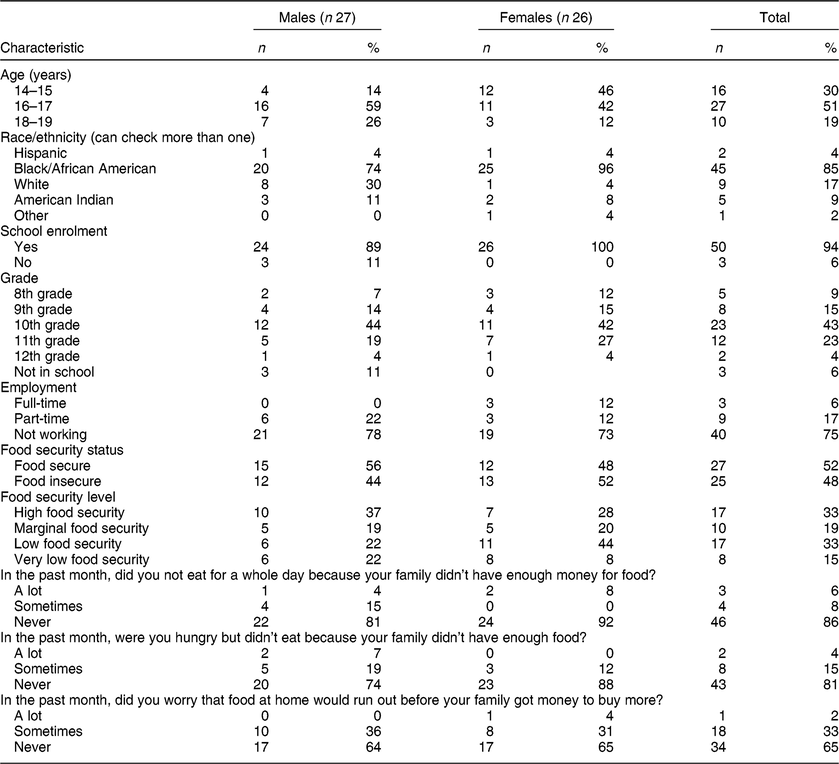
Among boys, the majority (nearly 60 %) were between the ages of 16 and 17 years; for girls, 46 % were between 14 and 15 years, 42 % between 16 and 17 years (see Table 2). Most youth participants were Black (74 % among boys and 96 % among girls), which is representative of the city’s demographics. All girls were enrolled in school, whereas among boys, three were not in school. Among those who were enrolled in school, most were in the 10th grade (44 % among boys and 42 % among girls). Nearly eighty per cent (78 %) of boys and 73 % of girls were not employed. Food insecurity was fairly common among our sample. Almost half of youths (48 %) were food insecure, with a third of youths in the high level of food insecurity (33 %). Approximately 13 % also reported not eating for a whole day because their family did not have enough money for food. There was no statistically significant difference in food security status by gender or school attendance.
Characteristics of the sample of adolescents (n 53) aged 14–19 years from six neighbourhoods of Baltimore City, USA, spring 2018
Food accessibility and insecurity
When asked where youths most often obtain their food when hungry, the majority of participants across focus groups mentioned fast-food outlets and corner stores. One participant reported that the corner store was particularly important for youths and represented more than just a place to purchase food, but was a cornerstone of their community:
‘Like when we were kids it was like literally the only place and every kid would hang out there. Yeah. Like that would be the main store for like snacks … Yeah man, it was kind of a spot. To be honest the corner store was a gem in our neighbourhood, you know what I mean? Everybody link up there.’
(Boy, Violetsville)While in some neighbourhoods, youths reported having access to local grocery stores, they also described these sources as mainly offering ‘bad’ foods, which were fried, high in sodium and unhealthy. Several youths noted the obvious disparity between the quality of food offered in suburban county areas compared with inner-city Baltimore:
‘I will say like they also have like a Target up on Mondawmin and like that … I’ll say that even the products that they got at the Target they weren’t like Target quality, like if you go out on Towsen like they had better fruit selection, better food selection in general and I just didn’t think that is so fair.
(Girl, Oliver)Notably, school was mentioned as a place, and in some cases the only place, to get food among youths in two neighbourhoods. Yet, in three neighbourhoods, the majority of youths described school food as ‘distasteful’, ‘dry’, ‘jail food’ and ‘having bad odours’. In fact, several youths said they bought food at the corner stores to avoid school lunch, frequently spending $US 10–20 per day on food.
Coping with food insecurity
Focus group participants were asked about what adolescents typically do if they are hungry and there is no food at their house. This led to a discussion about the types of behaviours adolescents engage in to get money to pay for food. Across every neighbourhood, adolescents described that it was quite common for adolescent girls to prostitute for money, which was called ‘trickin’. In Greenmount East, one female participant mentioned that males and transgender women also prostitute for money. In Easterwood and Oliver, both male and female participants said that girls frequently sought money from older men, sometimes as young as 8th grade when their bodies begin to mature:
‘If like you having money problems or whatever, you probably get yourself a sugar daddy and you might not, you probably have to do stuff with him in order for him to give you the money and all that.’
(Girl, Easterwood)While girls prostitute, boys sell drugs or steal to get money for food. In four of the six neighbourhood sites, youths stated that boys often sold drugs or ‘trapped’ for money, expressing that boys will do anything to get money for food:
‘Close to probably 18, 19 going up. And they must sell drugs or dope just to get food on the table for their family. Just do anything mostly just to get fed.’
(Girl, Easterwood)Male participants also mentioned how younger boys are mentored and recruited by older men to hustle in the streets, including gambling. Across the neighbourhoods, youths reported boys shoplifting. Only one site mentioned girls stealing as well. In Violetsville, male participants described how youths go into stores to steal:
‘You are walking into a store and you see somebody like follow behind you and they hurry up and swipe something off the shelf, put it in their pocket or whatever and then they hurry up and walk out.’
Other activities that were frequently mentioned by youth participants included begging for money outside convenience stores, cleaning car windows and, as a last resort, asking a trusted friend for food.
When asked why youths engage in negative activities to get money for food, participants shared four main reasons. One male participant reported that many youths simply do not consider the consequences, as they typically act on impulse. Several participants across neighbourhoods described family conflict at home, such as drug-abusing parents, mental illness, unemployed parents and lack of parental monitoring, as reasons for adolescents to take on adult responsibilities:
‘You know some people really go through stuff at home where they got to take care four, five, six brothers and sisters or their mother is strung out and they don’t have that parent to go home to, to have home-cooked meals or to clothe them or to bathe their brothers and sisters to get them to school. So it is like well school, I can’t focus on school right now, I got to get the money, I got to pay the bills, I got to eat.’
(Girl, Park Heights)In Easterwood and Greenmount East, youths mentioned the lack of available jobs for adolescents and young adults, which heightened their need for fast money to take care of responsibilities. Specifically, they reported that boys were subjected to peer pressure and the desire to fit in, which caused them to follow peers who engaged in negative behaviours.
While the majority of strategies to get food were negative, in three neighbourhoods there were a few youths who mentioned positive strategies, such as working part-time jobs or doing odd jobs or selling food items:
‘They buy their own food with the little money that they have, and they will go and sell it for a higher price … Like say they go to the corner store and they get like four bags of chips and if you go to the corner store a bag of chips is like a dollar, and they will go to school and sell it for like $3, a little bit more than what the usual price is.’
(Girl, Oliver)Several youths mentioned that to help get money for food, adolescents started working as early as 13 years old as a way to start caring for themselves.
Recommendations for addressing food insecurity
When asked about what could be done to address food insecurity, several recommendations were discussed. Overwhelmingly, not having enough food was associated with tremendous stigma and embarrassment. In three neighbourhood sites, youths stated that most adolescents never report that they are ‘hungry’ due to fear of judgement and bullying. Participants in other neighbourhoods confirmed that youths simply do not want to pick up free food, unless it is framed as an opportunity to get money:
‘I think mostly people are embarrassed if they don’t have a lot of food they don’t talk or don’t even try, like don’t even go to these little donations because they are embarrassed, they don’t expect people to understand, they expect people to judge them and all that.’
(Girl, Easterwood)While a few youths expressed the importance of ensuring that healthy food options are more accessible through food drives, most agreed that any initiative needs to provide other services in addition to food assistance. In Violetville, one male participant suggested that teaching people how to maintain a community garden would help youths and adults to develop new skills and provide healthy food options for everyone. At three neighbourhood sites, girls mentioned developing job training and employment programmes to help people to become financially stable. Beyond summer employment, one female participant stated that job opportunities should be available year-round for adolescents and that they could train youths in translatable skills for future employment:
Interviewer: ‘But she was saying that jobs that would be beneficial to you that …’
Respondent: ‘That can help me like throughout the rest of my life. Not just something that just going to benefit me just for this time period in my life. That is going to help me get another job.’
(Girl, Greenmount East)The majority of youths stated that community recreation centres were the best places where young people could be engaged in safe and fun activities. They also mentioned that the centres should be open every day, including Sundays, to provide consistency and awareness of the programmes being offered. Youths stated that the planned activities would provide opportunities to feed youths who might be hungry without bringing attention to the stigma of needing donated food. One female participant described a programme in her community:
‘Like how during the school year like the rec has VRI days and that is where you just come to the rec from 6–11 on Fridays and 6–12 on Saturdays to get young people off the street and then give them food. But some kids just came for the food but no one really realized but I realized.’
(Girl, Oliver)Discussion
The present study illustrates that food insecurity may be a widespread problem among adolescents in Baltimore City, USA. Although half of our sample was classified as food insecure, everyone in the focus groups was aware of adolescents their age and even younger who had to engage in risky behaviours to get money for food. Among girls, prostituting was the most commonly mentioned behaviour, whereas for boys, it was selling drugs or stealing to get money for food. Notably, adolescents mentioned that there was tremendous stigma and embarrassment associated with hunger, and because of this, adolescents often chose to engage in such behaviours to avoid being shamed or bullied for receiving food assistance. To address food insecurity, adolescents agreed that food insecurity has to be viewed within a broader set of economic challenges and suggested that food assistance be combined with other services, such as job training, and provided at safe places where youths already congregate. They also perceived that the current feeding programmes, such as those available in schools, only offered foods that were poor in quality, which youths referred to as ‘jail food’.
These findings support similar results from the larger study among adolescents conducted by the Urban Institute and Feeding America( Reference Popkin, Scott and Galvez4, Reference Waxman, Popkin and Galves5). On a broader level, these studies suggest that food insecurity is a hidden problem underlying a range of risk behaviours among adolescents in disadvantaged neighbourhoods. Studies conducted among younger children support this claim, as they have shown that food insecurity is independently related to lower impulse control, higher involvement in interpersonal violence, greater delinquency and lower self-control( Reference McLaughlin, Kubsansky and Dunn13– Reference Vaughn, Salas-Wright and Naeger15). In our study, while adolescents claimed it was ‘easier’ for them to engage in risky behaviours to get money for food, it may also be that adolescents who live in food-insecure households have lower levels of impulse control as a result of their food insecurity and are therefore more likely to engage in such behaviours.
In 2012, McLaughlin conducted a study among 6483 adolescent–parent pairs as part of the National Comorbidity Survey Replication Adolescent Supplement( Reference McLaughlin3). The author found that after controlling for other socio-economic measures (parental education, household income, relative deprivation, community-level inequality and subjective social status), food-insecure adolescents were significantly more likely to have a mood, anxiety, behaviour or substance disorder compared with adolescents who were not food insecure. The author suggested that the mechanism linking food insecurity to adolescent mental health may be neurologically based: that low caloric intake of food might increase cortisol secretion and perceived stress, which in turn increases risk for mental health problems( Reference McLaughlin3). What is still unclear, however, is the extent to which engagement in risky behaviours, such as prostitution, drug trade and shoplifting, may be biologically driven at least in part by food insecurity. Other studies among adolescents have shown a link between food insecurity and other social challenges, such as health-care access, homelessness and substance use – all of which can also independently influence health-related behaviours and outcomes among adolescents( Reference Whitbeck, Chen and Johnson23, Reference Baer, Scherer and Fleegler24). Further research among adolescents is needed to better understand the mechanisms that underlie the associations between food insecurity and health behaviours.
We also have very limited knowledge about the prevalence of food insecurity among US adolescents, especially persistent and severe food insecurity. The annual US Department of Agriculture report on household food insecurity does not provide a breakdown for children beyond the age of 6 years, and while other national surveys such as the National Health and Nutrition Examination Study collect child food insecurity data, the data are collected at the household level rather than at the individual level. A recent study by Moffit and Ribar analysed food insecurity among parents and children from selected low-income households across Boston, Chicago and San Antonio( Reference Moffitt and Ribar25). The authors used three different age categories among children for assessing food insecurity: 0–5 years, 6–11 years and 12–18 years. The authors found that food insecurity was higher among older children (the adolescents) and suggested that a version of the ‘child protection hypothesis’ might be at play in these low-income households. This hypothesis suggests that when resources are low, parents sacrifice food to provide for their children. In the Moffit and Ribar study, parents may be protecting the youngest children over their older, adolescent children( Reference Moffitt and Ribar25).
Our findings, together with the growing body of literature on food insecurity among adolescents, point to the strong need to support programmes that specifically address the food needs of adolescents. While some evaluations have been conducted that have highlighted the benefits of receiving the Supplemental Nutrition Assistance Program in increasing household food security( Reference Mabli and Ohis26, 27), very little has been done to determine how food security among adolescents can be increased. In both our study and the Urban Institute/Feeding America study, young people stressed that food insecurity needed to be addressed more broadly, with several youths mentioning the need to combine services with job training. Indeed, according to a study that utilized data from the Current Population Survey, which included a food security supplement, researchers found that teenage employment was associated with a 11–22 % reduction in household food insecurity( Reference Hamersma and Kim28). These findings point to a potentially new direction that moves away from food-related public assistance programmes, which adolescents found stigmatizing, to policies and programmes that encourage employment among adolescents. While the benefits of youth employment have been debated by some scholars( Reference Ploeger29, Reference Wright, Cullen and Williams30), there is growing evidence to show that employment may be especially beneficial for youths not considering four-year college degrees( Reference Greene and Staff31, Reference Entwisle, Alexander and Olson32). In our study, many adolescents also mentioned the value of using a community recreation centre for offering services and programmes for young people. Not only does a recreation centre offer safety, but if used consistently throughout the year, it would allow young people to participate in activities and programmes that would get them off the streets and promote engagement in their communities.
The present study has certain limitations. First, these findings are based on primarily African-American youth participants across only six disadvantaged neighbourhoods in Baltimore City; therefore we cannot generalize the findings to adolescents across all of Baltimore City, nor to adolescents in other geographic locations. Additionally, the requirement that adolescents younger than 18 years needed to have signed parental permission forms to participate in the study may have reduced participation by more disadvantaged youths (i.e. those living in single-family homes, foster care or being raised by grandparents). Also, recruiting through the community recreation centres had the potential to bias youth participants towards seeing recreation centres as places to receive services. However, other than providing basketball courts, only one community recreation centre provided any type of programme for the age group of the participants. Despite these limitations, the present study has several key strengths. Using a peer research methodology allowed us to reduce the power differential that is frequently in place between a researcher and a participant, as youth researchers were either the same age or slightly older than the research participants. Second, we conducted the focus groups at community recreation centres, which provided a safe and convenient location for the youth participants and may have contributed to creating an overall positive atmosphere for the group discussions.
Conclusions
Addressing food insecurity among adolescents in disadvantaged neighbourhoods should be a high priority for researchers, practitioners and policy makers. Current feeding programmes for children are not addressing the needs of adolescents and, consequently, are placing adolescents at risk for severe long-term consequences. In any strategy that is implemented, the voices of adolescents need to be incorporated; our findings highlight that adolescents are very much aware of the issues that affect them and how these issues can best be addressed to reduce stigma.
Acknowledgements
Acknowledgements: The authors would like to thank Joni Holifield, Jerome Waters, Sydney Hill and Craig Minor for their help in the design and implementation of the study. Financial support: This work was funded by a grant (no number) from the Bloomberg American Health Initiative. The funder had no role in the design, implementation or writing of this article. Conflict of interest: None. Authorship: K.M. designed and supervised all aspects of the study, including the writing of the manuscript; A.O. assisted in the study design, collected data, coded qualitative data and assisted in the writing of the manuscript; S.G. assisted in the survey design and analysis of food insecurity data; T.M. assisted in the study design and writing of the manuscript. Ethics of human subject participation: This study was conducted according to the guidelines laid down in the Declaration of Helsinki and all procedures involving human subjects were approved by the Johns Hopkins Bloomberg School of Public Health Institutional Review Board. Written informed consent was obtained from all subjects above the age of 18 years, and for those under the age of 18 years, parental permission and adolescent assent were obtained.



