

The integration of archaeometric and laboratory techniques into archaeological research has grown significantly in recent decades, becoming essential for interpreting ecosystem evolution, population mobility, paleoclimate, diet, and species domestication (Bernáldez-Sánchez et al. Reference Bernáldez-Sánchez, García-Viñas, Sanguino, Villalón and Leonard2024; Cubas et al. Reference Cubas, Becher, Chiang, Dekker, di Muro, Doliente and Craig2023; Díaz-del-Río et al. Reference Díaz-del-Río, Uriarte, Becerra, Pérez-Villa, Vicent and Díaz-Zorita2022; Domínguez-Castillo et al. Reference Domínguez-Castillo, Jiménez-Hidalgo, López-Gámez, Rodríguez-Hortal, García, Gallardo-Abárzuza and Higueras-Milena2023; Lodwick and Rowan Reference Lodwick and Rowan2022; Martín-Chivelet et al. Reference Martín-Chivelet, Belén Muñoz-García, Edwards, Turrero and Ortega2011; Rottoli and Castiglioni Reference Rottoli and Castiglioni2011; Taylor et al. Reference Taylor, Librado, Hunska Tašunke Icu, Arterberry, Luta Wiη and Nujipi2023). The increasing number of publications (Liritzis et al. Reference Liritzis, Laskaris, Vafiadou, Karapanagiotis, Volonakis, Papageorgopoulou and Bratitsi2020), conferences, and research projects applying these methodologies demonstrates their importance in understanding the economic, anthropological, and social dimensions of past societies (Mora González Reference Mora González2011; Rottoli and Castiglioni Reference Rottoli and Castiglioni2011).
However, several studies have recorded the limited application of specialized analyses of flora, fauna, and other organic remains within certain geographic contexts (Bernáldez-Sánchez et al. Reference Bernáldez-Sánchez, García-Viñas, Sanguino, Villalón and Leonard2024; Díaz-del-Río et al. Reference Díaz-del-Río, Uriarte, Becerra, Pérez-Villa, Vicent and Díaz-Zorita2022; Montes Moya Reference Montes Moya2023; Rottoli and Castiglioni Reference Rottoli and Castiglioni2011). In Andalusia (southern Spain), several bibliometric reviews indicate a restricted use of scientific techniques in archaeology—particularly zooarchaeology—as evidenced by the Anuarios Arqueológicos de Andalucía through 2014 (Bernáldez-Sánchez and Bernáldez-Sánchez Reference Bernáldez-Sánchez, María, Navareño, Mateos and Lavado1998; García-Viñas and Bernáldez-Sánchez Reference García-Diez and Zapata2013; García-Viñas et al. Reference García-Viñas, Ocaña, Gamero and Bernáldez-Sánchez2014). This pattern aligns with training and application gaps documented in other European and North American regions (Brami et al. Reference Brami, Emra, Muller, Preda-Bălănică, Irvine, Milić, Malagó, Meheux and Fernández-Götz2023; Colaninno and Sturdevant Reference Colaninno Carol and Sturdevant2024; Ward et al. Reference Ward, Barke, Shoocongdej, Wangthongchaicharoen, Miszkiewicz, King and Halcrow2023), suggesting systemic barriers to methodological application that transcend regional boundaries.
We designed a study to identify the extent to which archaeologists in Andalusia use these analytical techniques and to assess their perceived utility across different professional contexts. Understanding these knowledge patterns is essential for developing effective training, particularly given that the profession increasingly relies on interdisciplinary collaboration between field archaeologists and laboratory specialists. We have employed survey methodology, widely used in sociological research and increasingly applied in this field to evaluate archaeological professional development. In Europe, the project “Discovering the Archaeologists of Europe” studied professional archaeology throughout 12 countries (Aitchison et al. Reference Aitchison, Alphas, Ameels, Bentz, Borș, Cella and Cleary2014), generating a dataset about labor markets, the impact of the 2008 economic crisis, and training gaps (Aitchison Reference Aitchison, Jameson and Eogan2013; Brami et al. Reference Brami, Emra, Muller, Preda-Bălănică, Irvine, Milić, Malagó, Meheux and Fernández-Götz2023; Cleary et al. Reference Cleary, Flolik, Krekovič and Prokopiou2019; Knobloch Reference Knobloch2019; Lawler Reference Lawler2014; Möller Reference Möller2014). Other studies have evaluated the public perception of archaeology, such as a survey conducted among 200 experts across 22 European countries (Huvila and COST-ARKWORK Network Reference Huvila2022)—or the project NEARCH—which carried out the first large-scale, simultaneous survey across nine European countries to assess public perceptions of archaeology (Kajda et al. Reference Kajda, Marx, Wright, Richards, Marciniak, Rossenbach and Pawleta2018). Researchers have also applied not only survey methodologies to assess job precarity among early career archaeologists (Brami et al. Reference Brami, Emra, Muller, Preda-Bălănică, Irvine, Milić, Malagó, Meheux and Fernández-Götz2023) but specialist training processes (Colaninno and Sturdevant Reference Colaninno Carol and Sturdevant2024; Ward et al. Reference Ward, Barke, Shoocongdej, Wangthongchaicharoen, Miszkiewicz, King and Halcrow2023) and professional development in specific contexts, such as Portugal (Oosterbeek and Almeida Reference Oosterbeek and Nelson2023) and the United States (Wilshusen et al. Reference Wilshusen, Heilen, Catts, de Dufour and Jones2016).
In Spain, studies characterizing the state of archaeology have been traditionally focused on heritage management (Ballart Reference Ballart Hernández2010; Querol Reference Querol Fernández2010; Querol and Martínez Diaz Reference Querol and Díaz1996), although without conducting systematic surveys. However, researchers have previously used questionnaires to analyze archaeology as an economic activity (Parga-Dans and Varela-Pousa Reference Parga-Dans and Varela-Pousa2011), as well as professional development (Moya Reference Moya Maleno2010) and public perceptions of cultural heritage (Águila García and Sánchez Rodríguez Reference Águila García and Sánchez Rodríguez2010; González-Campos-Baeza Reference González-Campos-Baeza2017; Ibáñez Alfonso Reference Ibañez Alfonso2014; Morate Martín Reference Morate Martín2012). Questionnaires have also been used to assess cultural habits nationally (Ministerio de Cultura y Deportes 2022), regionally (Fontal Merillas et al. Reference Fontal Merillas, Martínez Rodríguez and Cepeda Ortega2020), and within urban regeneration projects (Nebot-Gómez de Salazar et al. Reference Nebot-Gomez de Salazar, Chamizo-Nieto, Conejo-Arrabal and Rosa-Jiménez2023).
Based on these precedents, we developed a questionnaire to evaluate the knowledge of Andalusian archaeologists concerning specific disciplines and analytical techniques, as well as their perceived usefulness. Our results provide enough empirical evidence to design targeted training activities and knowledge-transfer initiatives (González-Campos-Baeza et al. Reference González-Campos-Baeza, David Villalón, María del, Esteban, José L. and Bernáldez-Sánchez2022, Reference González-Campos-Baeza, Villalón Torres, García-Viñas, Ramos Soldado, Gómez-Morón, Alzaga-García, Bernáldez-Sánchez, del Pino Espejo and Leonard2023). Beyond the Andalusian sphere, our findings present transferable insights into the structural barriers that prevent the routine integration of scientific methods into archaeological practice—a challenge the discipline faces globally.
Methodology
Scope and Ethical Approval
We have focused this research on Andalusia, where our team regularly conducts fieldwork and holds a comprehensive understanding of standard archaeological procedures. This familiarity enabled us to develop an accurate initial framework to design the survey. For this initiative, we obtained the approval of the Ethics Committee of Pablo de Olavide University before beginning data collection.
Survey Design and Data Collection
We created a self-administered online questionnaire based on an evaluative framework (del Pino et al. Reference del Pino, Triguero and Torre2017:42) consisting of closed-ended questions structured into the following categories:
• Sociodemographic information: age, gender, education level, and professional development (public administration, private sector, or academia).
• Knowledge and usage of analytical techniques. We assessed 13 techniques across botanical, faunal, biomolecular, physicochemical, and geochemical analyses. We apply the term “experimental techniques” to refer to archaeometric and laboratory analytical methods (i.e., “applied sciences”), not experimental archaeology sensu stricto. For knowledge assessment, we provided five response options: “No knowledge,” “Some,” “Above average,” “Considerable,” or “Specialist.” For the assessment of their perceived usefulness, the responses were described as “None,” “Moderate,” “Considerable,” and “Essential.”
• Training background: sources and extent of technical training.
• Protocol standardization: perceptions regarding the need for standardized methodologies when applying these techniques.
We divided the target population into age categories spanning from the beginning of university education (18 years old) to retirement (65 years old), further classified by gender, education level, and professional context. Such stratification allowed us to identify how demographic and professional factors correlate with technical knowledge and methodological engagement.
The questionnaire responses to the questions regarding knowledge and usage have allowed us to identify which techniques were the most commonly used and well known. In addition, this enabled us to identify the objectives for which these techniques have been applied, the necessity for protocols for their use, and the way the results of the academic research are usually disseminated among the general public.
Statistical Analysis
Due to the categorical nature of our variables, we decided to apply a quantitative analytical approach (Ugalde and Balbastre Reference Ugalde and Balbastre2013). Consequently, we used the Kruskal-Wallis test for independent samples, which are considered appropriate for analyzing ordinal categorical variables (López-Roldán and Fachelli Reference López-Roldán and Fachelli2015), and therefore also included descriptive statistics to provide an overview of the dataset. Moreover, we stratified the population into groups according to age, educational background, profession, and research group affiliation, allowing us to identify patterns and trends within the dataset obtained. Additionally, we used contingency tables to facilitate analysis of the relationship between different categorical variables, thereby observing how frequency distributions vary across predefined criteria (Rivadeneira Pacheco et al. Reference Rivadeneira Pacheco, Argüello and de la Hoz Suárez2020). We conducted all such analyses using IBM SPSS Statistics version 14.0.
Sampling Considerations and Limitations
Our survey received 159 responses from approximately 600 archaeologists registered in different Andalusian professional associations, yielding a response rate of 26.5%. This rate substantially exceeds typical online survey response rates (15%–20%), providing an adequate statistical accuracy for our analyses. However, we acknowledge certain potential self-selection bias: archaeologists already interested in or knowledgeable about analytical techniques may have been more likely to respond. This could mean our results reflect a “best-case scenario,” in which actual knowledge gaps may be potentially wider than observed here. Additionally, our sample addresses mostly registered professionals; therefore, there may be an underrepresentation of archaeologists working informally or in nontraditional contexts.
Results
Sample Characteristics
According to our results based on gender distribution, 52.2% of respondents were men, and 47.2% were women; the remainder chose not to disclose their gender. The predominant age group (85.5%) comprised active professionals and university staff (25–65 years old), whereas students (18–25 years old) accounted for 14.5% of respondents.
Concerning professional profiles, university affiliates constituted the largest group (33.3%), followed by self-employed professionals (25.5%) and public administration staff (21.4%). Among academics, 34.6% held bachelor’s degrees, 27.7% held master’s degrees, and 37.7% held doctorate degrees. It is noteworthy that approximately half of the respondents (54.1%) belonged to research teams and had acquired knowledge about analytical techniques through university education (56.7%) or research group participation (43.9%). However, 26.1% reported having received no formal training in these techniques whatsoever.
Overall Knowledge and Perceived Utility Patterns
The survey results indicate a relatively low level of knowledge regarding most of these disciplines and techniques, with over 70% of respondents claiming either unfamiliarity or only a superficial understanding of each technique (Figure 1). Radiocarbon dating (14C) was the only technique widely known, with 54.1% of participants indicating “Above average,” “Considerable,” or “Specialist” degrees of knowledge, likely related to its extensive use and prominence in the field. Zooarchaeology, pollen analysis, and thermoluminescence were the next most familiar techniques to the respondents, given that only 8.2%, 14.5%, and 15.1% of respondents replied “No knowledge,” respectively.
Knowledge levels of surveyed techniques across all respondents. Radiocarbon dating (1⁴C) is the only technique for which over half of respondents report considerable or advanced understanding. More than 70% indicate either no knowledge or only superficial familiarity with most other techniques. Response categories: “No knowledge,” “Some,” “Above average,” “Considerable,” and “Specialist.”

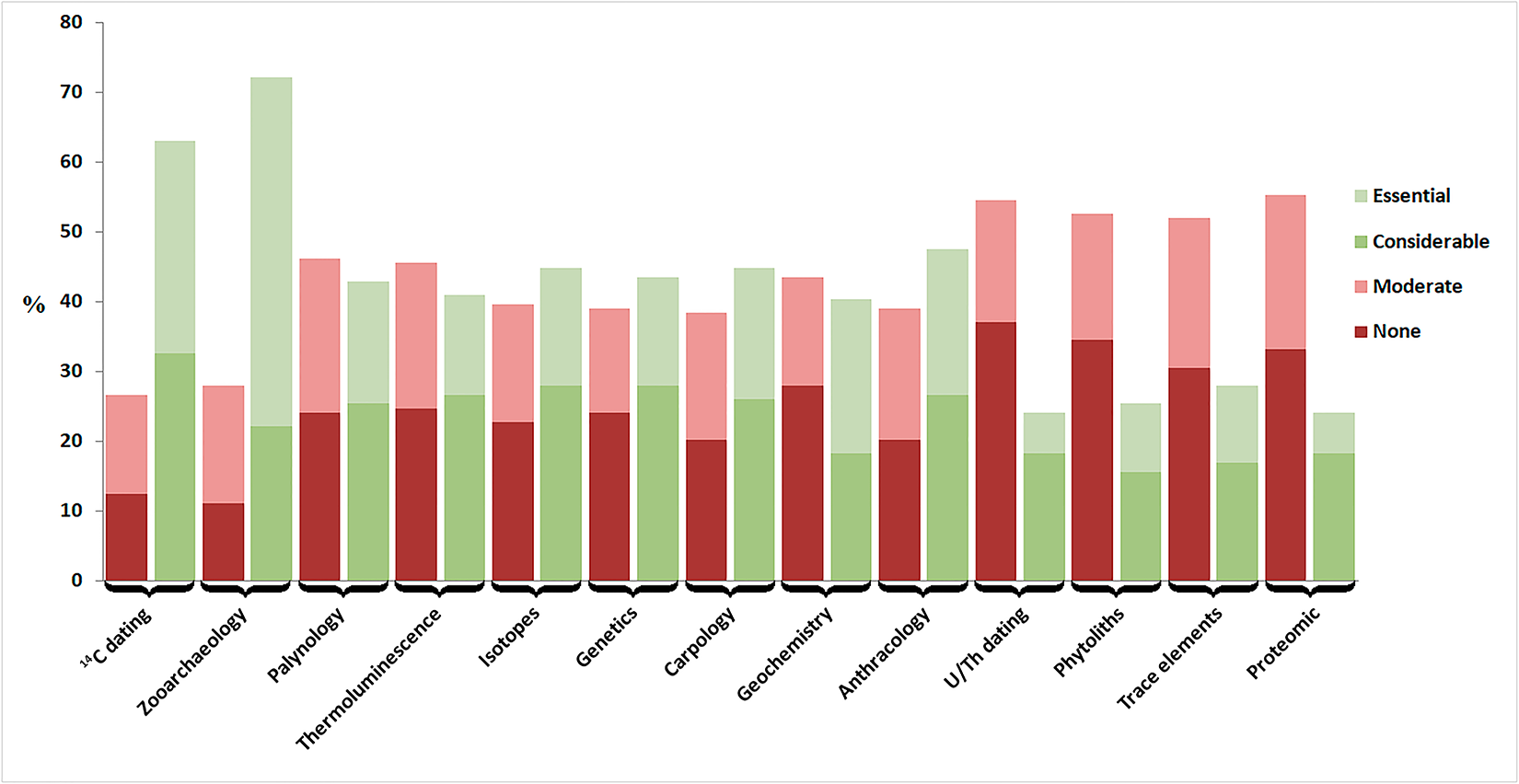
Regarding perceived usefulness, most respondents considered these techniques valuable, given that “None” was selected in response to the question of perceived usefulness in less than 37% of responses across all techniques (Figure 2). Zooarchaeology ranked as the most widely applied (50% considered it “Essential”), followed by radiocarbon dating (30.5%).
Perceived usefulness of surveyed techniques across all respondents. Zooarchaeology ranks as most widely considered useful, followed by radiocarbon dating. Response categories: “None,” “Moderate,” “Considerable,” and “Essential.”

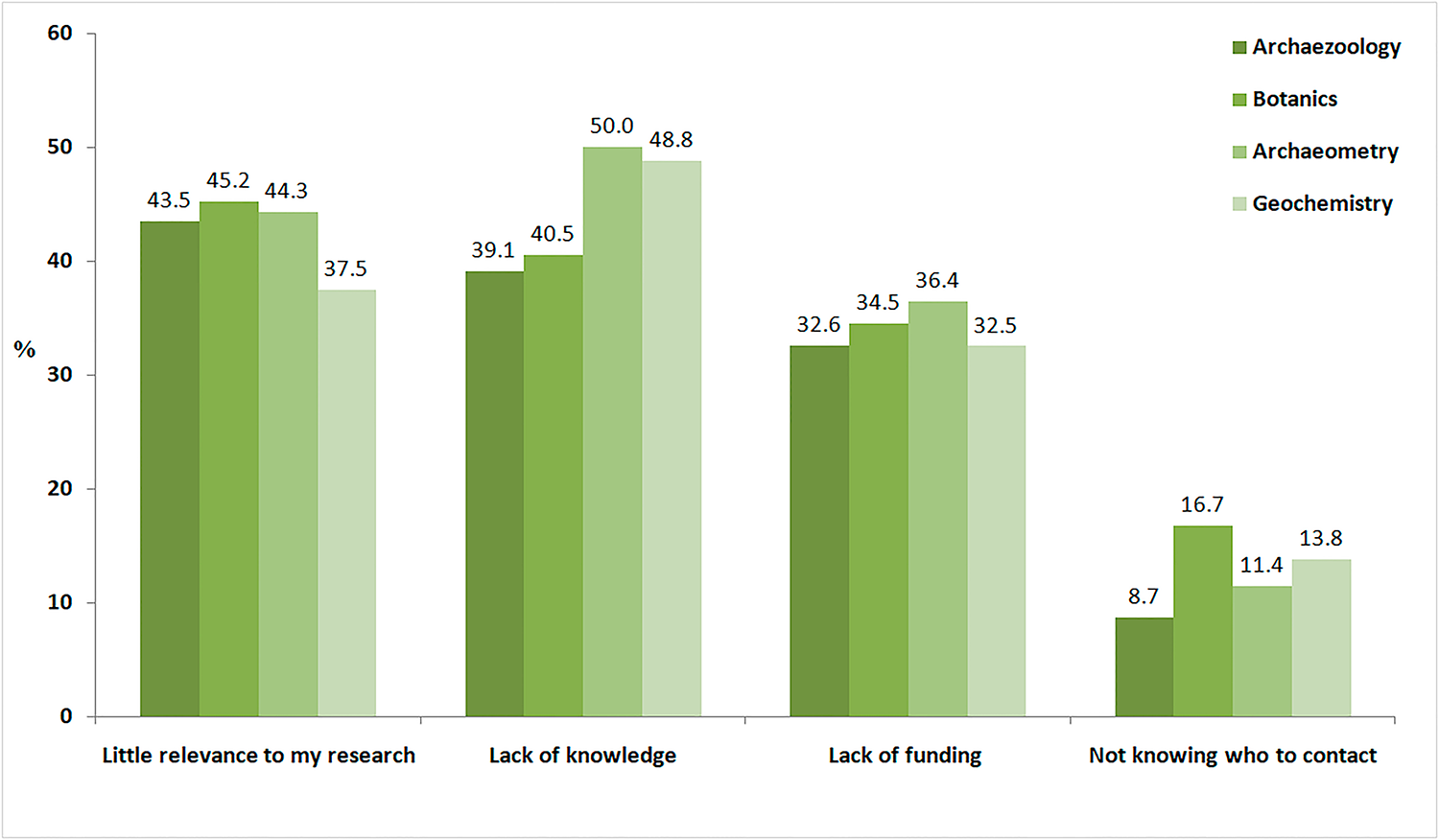
Respondents cited lack of knowledge as the main cause for not applying some of these techniques (50% of “No knowledge” responses in the case of archaeometric analyses), followed by a limited perceived relevance to their research. Funding constraints did not constitute a significant hindrance despite being commonly cited in other studies (Figure 3). These results highlight the need for enhanced training rather than a focus on increasing laboratory access. Although specialized laboratories remain scarce, most professionals usually know where such analyses can be conducted. However, laboratories specializing in botanical analysis remain the least known (only 16.7% of respondents were aware of their locations).
Barriers to technique application reported by respondents. Lack of knowledge (>50% for archaeometric techniques) and perceived limited relevance constitute primary reasons for nonapplication. Funding constraints, commonly cited in other studies, do not emerge as a major barrier in this dataset.

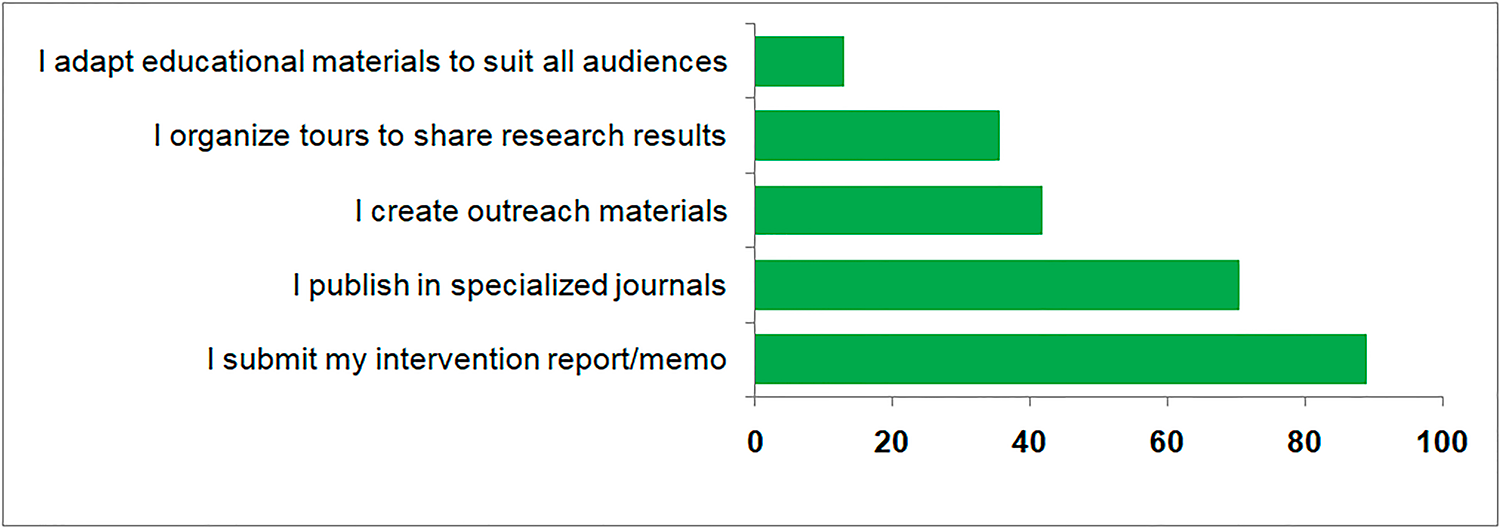
Regarding outcome dissemination (Figure 4), respondents stated that they most commonly share results through reports or technical documents (89.1%), as well as specialized publications (70.5%). However, dissemination beyond academic circles remains limited (41.9%), and accessibility for people with disabilities remains severely constrained (13.2%).
Knowledge dissemination methods reported by respondents. Researchers primarily share results through technical reports (89.1%) and specialized publications (70.5%), with limited outreach beyond academic circles (41.9%) and minimal accessibility adaptations for people with disabilities (13.2%).

Variation According to Population Groups
We analyzed survey results according to age, education, profession, and research group affiliation using Kruskal-Wallis tests for independent samples. According to such tests, results displaying significance levels below 0.05 indicate that at least one analyzed group shows significant differences (Supplementary Material 1).
Age-Based Patterns
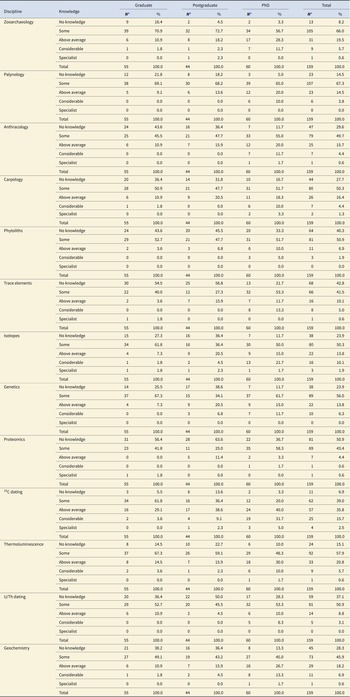
Age showed little significant relation to knowledge and usefulness regarding most techniques, except for anthracology. There was also a significant relationship between age and knowledge of geochemical analysis, as well as between age and the perceived usefulness of zooarchaeology, palynology, carpology, isotope analysis, and radiocarbon dating. This outcome was expected, given that age is not necessarily related to the knowledge of various disciplines and techniques. However, when significant differences were found, respondents over 56 years old consistently demonstrated higher knowledge levels (Table 1), likely due to their accumulated professional experience rather than cohort-specific training.
Degree of Knowledge of the Various Disciplines and Analytical Techniques Described According to the Academic Education Received.

Note: Values show percentage of respondents in each knowledge category.
a N = number of replies.
Education-Based Patterns
In contrast to age, educational level strongly correlated with technical knowledge. We identified significant differences among undergraduate degree holders, postgraduates, and PhD holders in nearly all techniques and disciplines, with the exception of phytolith analysis. Regarding perceived usefulness, significant differences were observed across all disciplines, with the exceptions of phytoliths, genetics, proteomics, thermoluminescence, and U/Th dating. Knowledge and perceived utility increased proportionally along education levels (Table 1; Supplementary Material 2), with PhD holders consistently having reported the highest values.
Research Group Affiliation
A higher level of knowledge and perceived usefulness was found among respondents belonging to a research group, with the exception of the knowledge and usefulness of U/Th dating and the usefulness of phytolith analysis. This pattern aligns with educational findings, given that PhD holders, who demonstrate the highest knowledge levels, are most likely to belong to research groups.
Professional Category Patterns
Finally, the professional category displayed significant differences regarding knowledge in almost all techniques except palynology, phytoliths, and thermoluminescence. Likewise, differences in their perceived usefulness were only absent in the cases of phytoliths and thermoluminescence, which did not present significant differences among the selected population groups.
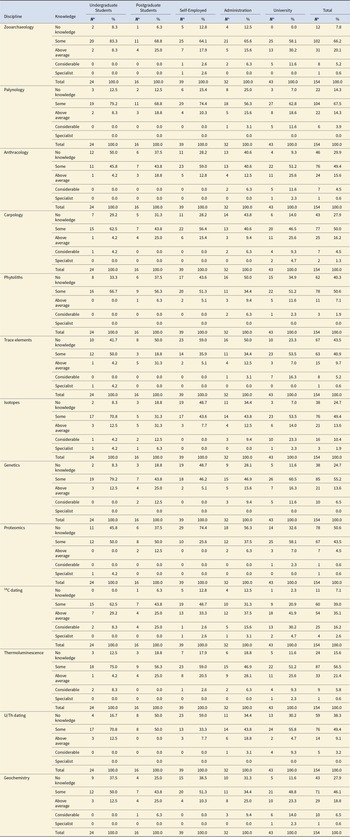
It is notable that self-employed professionals, who conduct much of Andalusia’s archaeological fieldwork, consistently reported the highest percentages of “No knowledge” responses. Concerning radiocarbon dating and zooarchaeology (the most well-known methods in general), 12.82% of self-employed respondents chose this option; this percentage was 74.36% for proteomics and 58.97% for trace elements and U/Th dating (Table 2). Similarly, public administration employees showed particularly high “No knowledge” responses for phytolith analysis (50%), carpology (43.8%), and palynology (25%).
Degree of Knowledge of the Various Disciplines and Analytical Techniques Described According to Profession.

Note: Values show percentage of respondents in each knowledge category.
a N = number of replies.
Conversely, university-affiliated respondents demonstrated the highest knowledge levels across all techniques, although this group also presented substantial gaps: 34.9%, 32.6%, and 30.2% replied “No knowledge” for phytoliths, proteomics, and U/Th dating, respectively (Supplementary Material 3).
Current students (undergraduate and postgraduate) showed a distinctive pattern: whereas more than 50% of respondents replied that they had “Some” knowledge for most techniques—indicating a broad exposure—”Considerable” responses remained below 12%, except for radiocarbon dating (25%). This suggests that university programs nowadays provide general insight of several of these techniques, although with limited depth.
Discussion
Knowledge Gaps as the Primary Barrier
Our survey aimed to assess the knowledge and perceived usefulness of various laboratory and archaeometric techniques among archaeologists in southern Spain. This analysis confirmed our initial hypotheses, revealing widespread knowledge gaps regarding most analytical techniques (González-Campos-Baeza et al. Reference González-Campos-Baeza, David Villalón, María del, Esteban, José L. and Bernáldez-Sánchez2022, Reference González-Campos-Baeza, Villalón Torres, García-Viñas, Ramos Soldado, Gómez-Morón, Alzaga-García, Bernáldez-Sánchez, del Pino Espejo and Leonard2023, Reference González-Campos-Baeza, David Villalón, José del, Esteban and Sánchez2024). Critically, we have identified training deficiencies—rather than funding constraints—as the primary hindrance to the integration of these techniques into common archaeological work. This finding challenges conventional assumptions about resource limitations and has important implications regarding how the profession stands to address methodological gaps.
It is noteworthy that, with the exception of radiocarbon dating, approximately 70% of respondents reported being either unfamiliar with or having only a superficial knowledge of most of these analytical techniques (Figure 1). The patterns we have observed can be clearly related to educational background (Supplementary Material 1), suggesting that a systematic curricular integration directly translates into field knowledge, which should inform future training reform efforts.
In contrast, the percentage of respondents unfamiliar with 14C dating and faunal analysis was below 10%. These two techniques were also widely regarded as the most useful, with 60%–80% of respondents rating them as highly applicable (“Essential” or “Considerable”) to their research (Figure 2). These results are consistent with those reported by García-Viñas et alia (Reference García-Viñas, Ocaña, Gamero and Bernáldez-Sánchez2014:93), a work that quantified the use of faunal, floral, and 14C dating studies in recent prehistoric sites in Andalusia based on the information published in Anuarios Arqueológicos de Andalucía between 1985 and 2004. According to this study, zooarchaeology and 14C dating were employed in 18.4% and 18.7% of the sites, respectively, followed by palynology (13.6%) and anthracology and carpology (approximately 8%). These results further validate the findings from this survey, which provide valuable insight into the increasing use of the analysis of organic remains and experimental techniques within Andalusian archaeology over the past decades.
As previously mentioned, these results were analyzed in more depth by categorizing respondents into population groups according to four characteristics. The findings obtained indicated that age did not seem to significantly influence either the knowledge or applicability of most of the techniques and disciplines examined. However, significant differences were observed according to the other three traits (Supplementary Material 1).
Dating Techniques
Our results indicate that radiocarbon dating (14C) is the most widely known of all techniques, with only 6.9% of respondents reporting complete unfamiliarity with it (“No knowledge”), and 54.1% demonstrating “Above average,” “Considerable,” or “Specialist” knowledge (Figure 1; Table 1). This is most likely due to both its established international prominence (Santos Arévalo et al. Reference Santos Arévalo, Gómez Martínez and Galván Moreno2023) and regular inclusion in Andalusian university programs.
However, significant variations exist among educational backgrounds. Doctorate holders show a particularly advanced understanding, given that 31.7% reported in-depth knowledge compared to 9.1% of postgraduates and 3.6% of undergraduates. This underscores the impact of formal academic training on achieving expertise, though it also reveals that even basic undergraduate programs now provide functional radiocarbon literacy—a major advance from previous history degree curricula.
Despite the relatively low number of “No knowledge” responses (15.1%), thermoluminescence (TL) presents a paradox: 20.8% of respondents reported “Above average” knowledge of it—one of the highest percentages after 1⁴C—yet approximately 45.5% considered it barely useful (Figure 2; Table 1; Supplementary Material 2). This discordance likely implies several factors: (1) TL’s prominence in programs addressing dating techniques due to its historical importance, (2) the existence of limited specialized laboratories in Spain (Sanjurjo Sánchez et al. Reference Sanjurjo Sánchez, Fernández Mosquera and Bello2008), (3) higher uncertainties traditionally associated with this method compared to 1⁴C (Cervera Reference Cervera2010), and (4) its limited relevance to many respondents’ specific research interests.
Significantly, statistical analysis revealed no significant differences regarding perceived usefulness across educational levels, suggesting that TL’s limited application reflects genuine methodological constraints rather than knowledge gaps. This constitutes a case where familiarity does not translate into utility, a pattern opposite to that of most techniques we have examined.
Finally, Uranium-Thorium (U/Th) dating presents the inverse pattern, given that approximately 40% of respondents were completely unfamiliar with it, and around 50% indicated only a basic knowledge (Figure 1). Consequently, 37% considered this technique of no use for their research (Figure 2). This unfamiliarity cannot be associated with recent development, considering U/Th dating has been available since the 1990s. In Spain, it has been applied mainly for dating carbonate crusts overlying cave paintings (Bednarik Reference Bednarik2022; Ochoa Fraile Reference Ochoa Fraile2011), a highly specialized application that limits its perceived relevance to most archaeological contexts. Statistical analysis revealed no significant differences between educational groups, suggesting that U/Th dating remains peripheral even within advanced training.
Zooarchaeology
Zooarchaeology constitutes the second-best-known analytical method among respondents, with only 8.2% reporting “No knowledge” (Figure 1). However, whereas 1⁴C dating received responses of “No knowledge” from 6.9% of respondents, 66% of respondents claimed only “Some” knowledge of zooarchaeology, which is nearly double the proportion of respondents claiming “Some” knowledge of 1⁴C dating (Table 1). We consider this a “passing familiarity,” given that most archaeologists have regular access to faunal studies in scientific literature, although without developing any practical competence with it. Only when we have examined “Considerable” and “Specialist” responses has the knowledge gap become apparent: these categories decreased by 15 and 10 percentage points, respectively, compared to 1⁴C dating.
This higher knowledge of zooarchaeology, beyond its curricular inclusion, is possibly related to the abundance of faunal remains in archaeological sites, which, along with pottery, constitute the most common finds. These studies in Spain increased during the 1970s, becoming firmly established in Andalusia during the 1980s (Morales Muñiz Reference Morales Muñiz2002; Riquelme Cantal Reference Riquelme Cantal2011), although earlier notable works were conducted previously (Boessneck Reference Boessneck1968; Martín Roldán Reference Martín Roldán1959, Reference Martín Roldán1962). This four-decade history contrasts with that of many biomolecular techniques, introduced only in the past 15–20 years.
Similar to 1⁴C dating, significant educational differences exist with regard to zooarchaeology, with knowledge of this technique increasing proportionally along the degree of training level. However, despite being considered among the most known and useful techniques, zooarchaeology shows a troubling discordance: more than 50% of respondents considered it highly applicable (Figure 2), yet recent bibliometric analyses document limited actual application in Andalusian archaeology (Bernáldez-Sánchez and Bernáldez-Sánchez Reference Bernáldez-Sánchez, María, Navareño, Mateos and Lavado1998; García-Viñas and Bernáldez-Sánchez Reference García-Viñas and Bernáldez-Sánchez2013; García-Viñas et al. Reference García-Viñas, Ocaña, Gamero and Bernáldez-Sánchez2014). This gap between perceived value and practical application suggests barriers beyond knowledge, which might be uncertainties regarding sampling strategies, cost concerns, or a lack of established collaborative networks with specialists.
Archaeobotany
In the case of palynology, the relatively low percentage of “No knowledge” responses (14.5%; Figure 1) could be the result of its status as the main method for studying vegetation evolution, Quaternary climate, and recent human activity (García-Mozo et al. Reference García-Mozo, López-Orozco and Galán Soldevilla2023). The development of this field in Spanish archaeology began during the 1970s and became established by the 1980s (Díaz-Andreu and Portillo Reference Diaz-Andreu and Portillo2021; López-Sáez et al. Reference López-Sáez, Pérez-Díaz, Rodríguez-Ramírez, Blanco-González, Villarías-Robles, Luelmo-Lautenschlaeger and Jiménez-Moreno2018)—a timeline similar to that of zooarchaeology, which may explain their comparable levels of recognition. Approximately 43% of surveyed archaeologists considered it particularly applicable (Figure 2), and statistical analysis shows significant differences among educational groups concerning both knowledge and perceived applicability, with values increasing between more highly trained respondents (Table 1; Supplementary Material 2).
The macrobotanical techniques—anthracology and carpology—present higher percentages of absence of knowledge: 29.6% and 27.7%, respectively, reported “No knowledge” (Figure 1). This is particularly noteworthy given that their introduction to Spain is similar to that of palynology, because both emerged in the 1970s and were fully developed during the 1980s (Peña-Chocarro and Pérez-Jordá Reference Peña-Chocarro and Pérez-Jordá2018; Rodríguez-Ariza Reference Rodríguez-Ariza2011, 2023). Consequently, time cannot explain the 15-percentage-point gap between palynology and these macrobotanical techniques.
However, knowledge levels equalize when examining respondents that reported “Considerable” (approximately 4%) or “Above average” (approximately 15%) knowledge. Likewise, all three botanical disciplines show a similar perceived applicability (Figure 2). The educational analysis displays an expected pattern: graduates present the lowest knowledge and perceived utility, followed by postgraduates and PhD holders (Table 1).
In addition, information and training gaps persist among archaeologists regarding these analyses (Montes Moya Reference Montes Moya2023; Peña-Chocarro and Pérez-Jordá Reference Peña-Chocarro and Pérez-Jordá2018). This leads to a loss of knowledge crucial for understanding the relationship of past societies with their environment, a problem related to the insufficient integration of these techniques into standard practice rather than to its accessibility.
Finally, phytolith analysis stands out as the only botanical technique with no significant differences based on education regarding either knowledge or utility. Approximately 40.3% of respondents reported complete unfamiliarity with it (Figure 1), with consistent responses across graduates, postgraduates, and doctors. This universal unfamiliarity persists despite phytolith analysis being well established since the mid-twentieth century. Therefore, the knowledge gap cannot be explained by it being a recent development. The technique’s absence from curricula seems systematic rather than degree-level specific, suggesting that it has never been successfully integrated into mainstream archaeological training in Andalusia, despite its potential for recovering evidence for plan use from contexts where macrobotanical remains are often not preserved.
Biomolecular Techniques
Genetics stands out among biomolecular techniques as the most familiar, with only approximately 23.9% respondents reporting “No knowledge” (Figure 1), a percentage similar to that of isotope studies. This is most probably related to aDNA’s prominence in understanding human evolution and population movements—topics of particular interest to archaeology and also to anthropology. In this regard, media coverage of ancient DNA breakthroughs (Neanderthal genomes, Denisovans, population migrations, etc.) has raised general awareness of genetics even among archaeologists who may never even conduct such analyses themselves. Statistical analysis shows significant differences across educational groups, with PhD holders displaying the highest knowledge. However, even among this most-trained group, knowledge of genetics remains moderate compared to other techniques such as radiocarbon dating or zooarchaeology.
Regarding the different types of biomolecular analysis, proteomics constitutes the least-known technique of those surveyed, being completely unknown for 50.9% of respondents (“No knowledge”)—a percentage 10 points higher than phytoliths, trace elements, and U/Th dating (Figure 1). This illustrates proteomics’ recent rise as archaeologically viable, whose application has increased during the first decade of the twenty-first century driven by mass spectrometry advancements (Hendy Reference Hendy2021). However, its close relation to zooarchaeology has not yet been translated into widespread archaeological awareness. Although significant differences have been observed according to educational levels, with doctorate holders showing the highest knowledge, even 36.7% of PhD holders reported having no knowledge (Table 1). The perceived utility of proteomics is correspondingly low across all educational groups, with no significant differences found between them—a pattern suggesting that this field remains peripheral even within advanced research contexts.
Archaeometric Techniques
Approximately 23.9% of respondents chose “No knowledge” regarding stable isotope methods (Figure 1), similar to the results for ancient DNA. This is probably due to their shared applications: both techniques are mainly used to address human population mobility, paleodiet, and geographic origins—overall, anthropologically focused questions pivotal to archaeological interests. Although we expected isotope analysis, with its longer history of archaeological application, to exhibit higher recognition, ancient DNA’s recent media prominence appears to have equalized the awareness levels of both techniques. Statistical analysis shows significant differences among educational groups for both knowledge and perceived utility of stable isotopes.
Lack of knowledge with respect to trace element and geochemical analyses is concerning. Approximately 43% of participants gave “No knowledge” responses for trace elements, and around 30% for geochemical analysis (Figure 1). The higher percentage of lack of knowledge in the case of trace elements stands out in particular, given that these analyses are also used to address diet and human mobility, essential topics to isotope studies, which was much more widely known among respondents.
Significantly, 30.5% of respondents considered trace-element analyses completely useless to their research (Figure 2), a result among the highest “None” utility ratings observed. This may reflect archaeometry’s relatively slower development in Spain. Indeed, the first scientific meeting on archaeometry occurred in Madrid in 1994 (Martín de la Cruz Reference Martín de la Cruz2011), considerably later compared to the establishment of bioarchaeological methods (1970s–1980s). Given that trace element studies are particularly experimental and usually require sophisticated equipment, they remain at the archaeology’s methodological frontier rather than a part of standard practice (García Heras Reference García Heras2003).
This statistical analysis shows significant differences among educational groups for both trace elements and geochemical analysis, with doctorate holders presenting the highest knowledge, although unfamiliarity remains substantial even in this group (Table 1).
Professional Disparities
The data we have obtained reveal troubling disparities correlated with professional categories, according to which self-employed archaeologists, who conduct the majority of archaeological interventions in Andalusia, display the lowest knowledge levels across all techniques. Even in the cases of radiocarbon dating and zooarchaeology, the two most well-known methods, 12.8% of self-employed respondents reported a complete lack of knowledge (“No knowledge”), compared to only 2.3% (1⁴C) and 0.0% (zooarchaeology) among university staff (Table 2). These gaps widen dramatically among less common techniques: 74.4% of self-employed professionals have never come across proteomics compared to 32.6% of academics.
This pattern reflects the precarious nature of rescue archaeology documented in broader European studies (Brami et al. Reference Brami, Emra, Muller, Preda-Bălănică, Irvine, Milić, Malagó, Meheux and Fernández-Götz2023). Self-employed archaeologists constantly face time and financial constraints that limit access to the necessary resources for acquiring new skills, which limits further opportunities for professional growth and the development of advanced technical competencies. Yet, these same professionals make crucial field decisions daily, including whether to collect samples for specialized analyses, which determine whether the information from archaeological sites is investigated to its full potential.
The consequences of this affect the archaeological record directly. When fieldwork directors and government inspectors lack awareness of available analytical techniques, they are not adequately informed to make accurate sampling decisions. Consequently, archaeobotanical remains are usually not collected, faunal assemblages are inadequately recorded, and opportunities for biomolecular analysis are ultimately lost forever. These are not merely missed research opportunities; they constitute an irreversible destruction of information.
On the other hand, professionals working in public administration had the highest percentages of “No knowledge” responses for phytolith analysis (50%), carpology (43.8%), and palynology (25%; Table 2), despite palynology being the third most widely recognized technique overall (Figure 1). Specifically, there is an approximate 10-percentage-point gap between public administration employees and other professionals.
Significantly, despite the fact that 49.7% of respondents overall indicated “Some” degree of knowledge in the case of anthracology (Figure 1), 50% of undergraduate students replied “No knowledge,” making this the group with the lowest level of awareness regarding this subject. However, the data obtained also indicate that undergraduate students had at least some knowledge regarding most of the other techniques (Table 2). These results suggest that current university training programs include subjects addressing methodologies, applications, and uses of these techniques at different levels of education, providing a general overview of these methods. However, the depth of this training seems to be limited, because less than 12% of undergraduate students reported “Considerable” or higher knowledge in all techniques except for 14C dating.
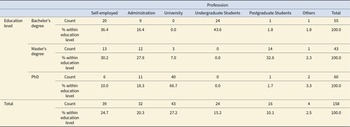
As expected, these results improve when we analyze the responses of postgraduate respondents, more than 18% of whom reported “Considerable” knowledge of most techniques. U/Th dating constitutes the only exception. Moreover, their knowledge levels exceed those of other professionals, except for academic staff, as expected. Academic staff members constitute the professional group with the highest percentage of knowledge across all the techniques and analyses included in the survey, a finding that likely reflects the high proportion of PhD holders (66.7%) in this category (Table 3). Nevertheless, their responses indicate relatively high percentages of “No knowledge” for several techniques, including phytolith analysis, proteomics, trace elements, and U/Th dating: 34.9%, 32.6%, 23.3%, and 30.2%, respectively. These four techniques were among the most unknown (“No knowledge”) overall (Figure 1) and the most unfamiliar to undergraduate and postgraduate students.
Contingency Table According to Academic Education Received and Profession.

Note: 68.3% of the respondents who are employed at the university hold a doctorate, which explains the high knowledge levels observed in this professional group.
Regarding the perceived usefulness of these experimental techniques and analyses, self-employed professionals provided the highest percentage of “None” responses for all techniques, except for U/Th dating, whereas academic staff reported the highest percentage (53.8%). In all cases, the percentage of “None” responses was above 34%, except for zooarchaeology (18.4%) and 14C dating (23.7%).
Professionals working in public administration had higher percentages of “Considerable” responses with respect to the usefulness of these techniques. Conversely, scholars, whether undergraduates or postgraduate and doctoral students, had the highest percentages of “Essential” responses regarding perceived usefulness in all cases (Supplementary Material 3). Notably, zooarchaeology (72.1%) and 14C dating (62.9%) are considered the most useful, presenting a 35-point difference compared to the rest of the techniques, which contrasts with the results obtained by García-Viñas et alia (Reference García-Viñas, Ocaña, Gamero and Bernáldez-Sánchez2014). However, our experience suggests that 14C dating is more frequently used than faunal analyses.
Looking to the Future
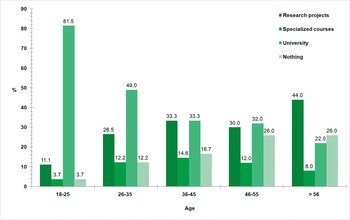
According to respondents, training in these techniques was most commonly obtained through university education or involvement in research projects (Figure 5). The results obtained in this survey suggest that the profession must increase training in these disciplines within basic education programs to improve the understanding of the various techniques described, given that nonacademic professionals require the most information in this regard. Furthermore, when asked about the source of their training in analytical techniques applied to organic remains, it is noteworthy that 26.1% reported having received no formal training at all.
Sources of training in analytical techniques by age group. The proportion of individuals reporting academic training decreases with age, whereas the proportion of individuals with no formal training or who acquired experience only through conducting research increases. This pattern reflects the recent integration of these techniques into formal curricula, particularly following the establishment of specialized archaeology degree programs starting in 2013–2014.

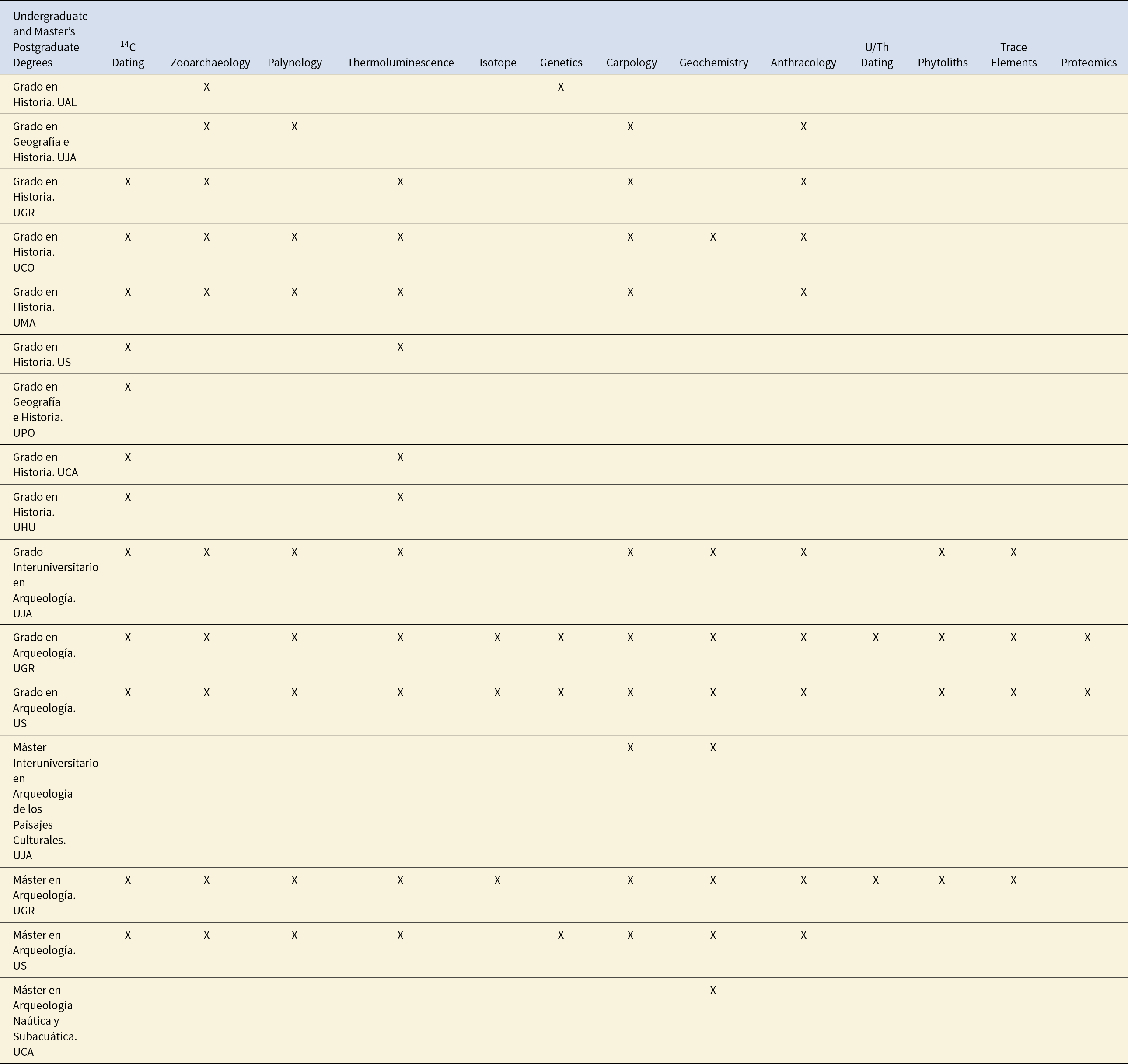
Currently, training in scientific methods applied to archaeology in Andalusian undergraduate and postgraduate programs shows significant diversity. According to our analysis of the course syllabi for the 2024–2025 academic year, some programs stand out for their comprehensive coverage of scientific disciplines. We highlight that the information provided in these course syllabi varies in terms of detail; whereas some universities offer thorough documentation on the scientific methods included in their training, others provide only general information. In certain instances, we have identified the inclusion of a specific technique by its explicit mention in official documents; in other cases, we inferred its presence from broader descriptions. This variability in the documentation may influence the perception of the depth and breadth of the training offered by each institution (Table 4). A comparative analysis between the undergraduate programs in history and archaeology reveals significant differences concerning methodological training. For example, the introduction of specialized degrees in archaeology at the universities of Jaén, Granada, and Seville addresses the increasing demand for enhanced specialized academic training. These programs provide a deep approach to the methodologies, techniques, and issues inherent to archaeological research. In contrast, although history degrees at all Andalusian universities include at least one course focused on archaeological methodology, the teaching of scientific techniques remains limited within these courses. In this context, methods for absolute dating—such as radiocarbon 14C and thermoluminescence—are typically the most commonly included, whereas other essential techniques receive less attention or are directly excluded. Within the scope of master’s programs, the universities of Granada and Seville offer similar courses addressing most of the techniques analyzed. However, proteomic analysis constitutes an exception, because it is only taught in the bachelor’s degree program in archaeology at the University of Granada. We attribute this disparity to the recent establishment of bachelor’s programs, which may have easily integrated current methodological frameworks, whereas master’s programs may present a more traditional approach due to their longer existence. The evolution of archaeological education in Andalusia reflects the sector’s adaptation to new scientific and professional demands. Since the introduction of the bachelor’s degree in archaeology in the 2013–2014 academic year, an increasing number of students have accessed specialized training directly. Our data show that among the 41 individuals who reported no training in these techniques, only 17.1% were under 35 years old. This indicates genuine progress: the next generation of field archaeologists will at least possess a conceptual familiarity with diverse analytical options, even if practical expertise remains limited.
Comparative Chart of the Surveyed Experimental Techniques Included in the Undergraduate and Master’s Programs of the Different Andalusian Universities.

Notes: Abbreviations: Universidad de Almería (UAL), Universidad de Jaén (UJA), Universidad de Granada (UGR), Universidad de Córdoba (UCO), Universidad de Málaga (UMA), Universidad de Cádiz (UCA), Universidad de Sevilla (US), Universidad Pablo de Olavide (UPO), and Universidad de Huelva (UHU); detail level in course syllabi varies considerably across institutions; some universities provide thorough documentation, whereas others offer more general information. In certain cases, we identified technique inclusion through explicit mention; in others, we inferred presence from broader descriptions.
However, we must temper optimism with realism. Current students show a characteristic pattern: broad but shallow knowledge. More than 50% report better than “Some” knowledge for most techniques but fall below 12% in “Considerable” knowledge, with the exception of radiocarbon dating. This indicates that university programs successfully survey the methodological landscape but provide insufficient depth for practical application. Graduating students can identify when conducting certain analyses might be relevant, but they often lack the competence to properly evaluate specialist reports or design sampling strategies.
Furthermore, we cannot assume that generational replacement will permanently solve the observed knowledge gaps. Archaeological science evolves continuously: proteomics, negligibly represented even in current curricula (Table 4), exemplify how new techniques emerge faster than educational systems are able to incorporate them. Today’s students will face the same obsolescence challenge in 20 years unless we establish mechanisms for continuous professional development. Regarding the barriers to implementation, respondents cited lack of knowledge and perceived inapplicability as the primary reasons for foregoing certain analyses (Figure 3). This suggests that budget constraints are not the sole factor. Nevertheless, as observed in the European sphere (Brami et al. Reference Brami, Emra, Muller, Preda-Bălănică, Irvine, Milić, Malagó, Meheux and Fernández-Götz2023), precarity limits access to specialized laboratories. We advocate for the establishment of interinstitutional collaborative networks and sustained funding to strengthen experimental research. Finally, because self-employed archaeologists are responsible for the majority of urban excavations, we emphasize the necessity of establishing standardized protocols and methodologies for these analyses, as acknowledged by 95%–98% of respondents. The absence of a systematic sampling strategy hinders the application of statistical methodologies and the production of reliable data (Rottoli and Castiglioni Reference Rottoli and Castiglioni2011). We suggest that future undergraduate and postgraduate programs address the practical utility and limitations of these methods in detail, ensuring that new graduates own both the theoretical knowledge and the practical competence required for modern professional practice.
The Imperative of Continuing Professional Development
Our findings demonstrate that early university training, although necessary, is insufficient for effectively achieving the acceptance of these methodologies across archaeological careers. It is necessary to establish mechanisms for systematic continuing professional development (CPD), specifically targeting analytical technique literacy.
Several factors make CPD essential rather than optional. First, methodological development outpaces curricular updating. Proteomics arose as a viable archaeological tool only during the first decade of the twenty-first century following mass spectrometry advances (Hendy Reference Hendy2021). Ancient DNA analysis has been revolutionized by next-generation sequencing in the past 15 years. Stable isotope techniques continually expand to new elements and applications. Archaeologists who received training before such developments, including many current mid-career professionals who will keep practicing for another 20–30 years, had no exposure to them via formal education. Without CPD, this cohort would remain permanently excluded from methodological advances.
Second, self-employed and public-sector archaeologists lack the access to CPD available to academics. University staff constantly learn about new techniques through research seminars, conferences, and collaborative projects, whereas rescue and urban archaeologists lack equivalent resources unless these are provided by specific initiatives.
Finally, it is clear that passive knowledge transfer through literature is insufficient. The high percentages of “Some” but low “Considerable” responses across most techniques indicate that archaeologists acquire a superficial awareness of such through reading but not actual applicable competence. Effective CPD must be active and practical—not based merely on explaining what proteomic analysis is, but also detailing how proteomic data can answer specific archaeological questions, the sampling strategies that enable proteomic analysis, and how to critically evaluate the conclusions obtained from proteomic studies.
Implementing effective CPD involves facing both logistical and cultural obstacles. Self-employed archaeologists usually work under time pressure and harsh conditions, which makes multiday workshops difficult to attend. Online asynchronous modules offer accessibility but lack in-person aspects essential for achieving practical confidence and skill. Costs present another challenge, although we have found that it is knowledge rather than funding that limits the application of these techniques, which suggests that training investments may be more attainable than commonly assumed.
Perhaps most critically, CPD requires a cultural shift: assuming that staying current with methodological updating constitutes a professional obligation, not an optional enhancement. This could be applied above all to administrative staff, given that they could provide support to independent professionals in matters of archaeometry; for example, 26% of respondents reported having received no training in these analytical techniques at all, which are acquired otherwise among older cohorts (Figure 5), and thus will therefore remain excluded from methodological advances without deliberate support. Creating accessible, practice-oriented CPD infrastructure therefore emerges as a prerequisite for effectively integrating scientific methods into routine archaeological practice, as opposed to keeping them as an academic specialty.
Transferable Insights: Beyond the Andalusian Context
Although our study has focused on Andalusia, the patterns we have identified mirror structural inequalities observed in archaeological practice throughout Europe and North America (Brami et al. Reference Brami, Emra, Muller, Preda-Bălănică, Irvine, Milić, Malagó, Meheux and Fernández-Götz2023; Colaninno and Sturdevant Reference Colaninno Carol and Sturdevant2024; Ward et al. Reference Ward, Barke, Shoocongdej, Wangthongchaicharoen, Miszkiewicz, King and Halcrow2023), which suggests that our findings have transferable implications.
The training-practice gap described, in which archaeologists acknowledge the values of these techniques but lack the proper knowledge to apply them, seems to constitute a widespread challenge rather than a regional peculiarity. Similarly, the exclusion of urban archaeologists from continuing-education opportunities, and its consequent impacts on the quality of the archaeological record, has been recorded across multiple national contexts. Therefore, our suggestions regarding CPD infrastructure, standardized protocols, and interinstitutional collaboration address concerns that are also genuinely applicable beyond southern Spain.
One pattern that is particularly relevant internationally is the difference between technique development, curricular integration, and field application. Proteomics, in particular, exemplifies this: despite having emerged as archaeologically viable in the early 2000s (Hendy Reference Hendy2021), it is currently included in only one Andalusian undergraduate program, and in no master’s programs two decades later (Table 4). This 15- to 20-year implementation lag is likely characteristic in other regions as well, suggesting systemic issues with the way academic archaeology responds to methodological innovation.
Our finding that knowledge deficits rather than funding constitute the main barrier to the adoption of these techniques may surprise researchers from contexts where laboratory access is genuinely limited. However, even in resource-rich environments, knowledge gaps can bottleneck the use of these techniques. Archaeologists have to understand enough about a technique to assess when it might address their research questions before they can decide to seek funding or laboratory partnerships to apply it. In this sense, training precedes infrastructure as a limiting factor.
The generational transition we have recorded, which displays how younger cohorts enter the field owning broader (if shallower) methodological awareness, may also happen in regions that have recently updated archaeology curricula so that they incorporate more interdisciplinary, science-integrated approaches. This opens a window of opportunity: as these cohorts advance in their careers over the next decade, they may be more receptive to CPD and more likely to integrate analytical techniques into standard practice. However, this can only be accomplished if we establish the CPD infrastructure and collaborative frameworks needed to turn baseline awareness into practical competence.
Conclusions
Our assessment of 13 laboratory and archaeometric techniques among Andalusian archaeologists reveals that training deficiencies, rather than funding constraints, constitute the main barrier to technique assimilation. This finding leads us to reconsider how the profession should address the integration of innovative methodologies: the bottleneck is not in laboratory budget; it is in the technical literacy of the professionals.
Critical disparities exist according to professional category. Self-employed archaeologists, who conduct most of the fieldwork in Andalusia, displayed the lowest knowledge levels. Their systematic exclusion from methodological advances means that critical field decisions might be taken without full awareness of the analytical potential, leading to an irreversible loss of archaeological information. Although we have observed a promising generational transition, with an improved baseline awareness among younger cohorts, this knowledge remains “broad but shallow” overall. However, without systematic support, even these future professionals will face methodological obsolescence within two decades.
The results we have obtained suggest that public administration may be the best positioned to lead CPD infrastructure development. Government institutions already regulate archaeological practice and hold legal responsibility regarding heritage protection, providing both institutional capacity for multistakeholder coordination and professional mandate to ensure that field directors have the necessary technical competencies. The integration of CPD into existing regulatory frameworks that ensure methodological standards should be applied consistently across all fields of work rather than solely depending on the different resources at the disposal of each professional. However, implementing such infrastructure faces significant hindrances: as previously stated, self-employed archaeologists work regularly under time pressure, which makes workshop attendance difficult. These professionals generally have a high workload and insufficient time. Therefore, the responsibility for the correct application of archaeometry should lie with the administration. This would enable it to cover the costs of the analyses, in addition to providing professional archaeologists with guidelines to ensure that samples are taken correctly.
In summary, integrating scientific methods into archaeology is not a technical challenge; it is an educational and institutional one. We already own the analytical capabilities; what we lack are suitable training systems and collaborative frameworks to make these capabilities accessible to all professionals. Developing such systems should definitely be our priority for the next decade.
Acknowledgments
The authors would like to thank all the professional archaeologists in Andalusia who participated in the survey for their time and valuable insights. We are also grateful to the anonymous reviewers for their constructive comments and suggestions, which significantly improved the quality of this manuscript. Permits were not required for this research. We obtained the approval of the Ethics Committee of Pablo de Olavide University before initiating data collection.
Funding Statement
This work was supported by the Junta de Andalucía through the project Avances e Innovaciones en Métodos, Técnicas y Análisis Experimentales Aplicados al Patrimonio Arqueológico Orgánico: Paleobiología, Genética y Arqueometría en Medios Terrestre y Marino (PY18-2100).
Data Availability Statement
We confirm that all digital data obtained through the survey are available in open access at https://zenodo.org/records/15688558.
Competing Interests
The authors declare none.
Supplementary Material.
The supplementary material for this article can be found at https://doi.org/10.1017/aap.2026.10157.
Supplementary Material 1. Kruskal-Wallis test results (table).
Supplementary Material 2. Perceived usefulness of techniques by educational background (table).
Supplementary Material 3. Perceived usefulness of techniques by professional category (table).



 Open access

