





Adolescence is an important developmental period, characterised by the establishment of behavioural habits such as following healthy dietary patterns, which can affect children’s physical, mental and cognitive health, both immediately and later in life(Reference Serra-Majem and Ortiz-Andrellucchi1).
The Mediterranean diet (MD) describes a diet that is low in saturated fat and characterised by a high consumption of plant-based foods (fruits, vegetables, whole grains, nuts and seeds), olive oil as main source of fat, low-moderate amounts of dairy products (cheese and yoghurt), fish and poultry and a low consumption of red meat and wine(Reference Willett, Sacks and Trichopoulou2). At the same time, it also refers to cooking methods and a lifestyle that includes physical activity (PA) engagement, sufficient rest and socialisation during meals(Reference Jiménez-Boraita, Arriscado-Alsina and Gargallo-Ibort3). In the last few years, the MD has been associated with significant improvements regarding disease in children, such as irritable bowel syndrome(Reference Al-Biltagi, El Amrousy and El Ashry4) and inflammatory bowel diseases(Reference Strisciuglio, Cenni and Serra5). Further, it helps support the establishment and maintenance of healthy gut microbiota and a mature immune system, which can aid in the prevention of common inflammatory and recurrent diseases that are common at this stage(Reference Calatayud-Sáez6). Further, the consumption of fruit, vegetables and pulses is positively associated with general health-related quality of life, while the consumption of fast-food, pasta or rice, baked food or pastries and sweets is negatively associated with this outcome(Reference Juton, Berruezo and Rajmil7). Likewise, following a traditional MD helps maintain a healthy body weight in children and adolescents(Reference Lassale, Fitó and Morales-Suárez-Varela8). In addition, greater MD adherence is associated with a lower risk of suffering from mental illness, especially those with a depressive symptomology(Reference Muros, Knox, Preedy and Watson9). Further, study outcomes highlight that health promotion interventions based on PA and sound nutrition involving children benefit, not only physical and mental health but also cognitive health(Reference Masini, Sanmarchi and Kawalec10) and academic performance (AP)(Reference Hayek, Schneider and Tueni11). Inverse correlations have been found between MD adherence and BMI and fat percentage in children(Reference Mistretta, Marventano and Antoci12). In this regard, a quality diet such as an MD is important for the prevention of obesity, particularly for those individuals with a strong genetic predisposition towards obesity(Reference Ding, Ellervik and Huang13). Further, optimal MD adherence is associated with greater cardiorespiratory fitness and PA engagement in children aged between 6 and 13 years(Reference López-Gil, Brazo-Sayavera and García-Hermoso14), whilst poor MD adherence (lower consumption of fruit, vegetables, legumes and higher consumption of fast food, sweets) is associated with higher screen time(Reference Pasos15).
Despite all of the health benefits of an MD, according to the latest Pasos study(Reference Pasos15), more than 12 % of the Spanish population aged eight to 16 years have low MD adherence. Moreover, the group of individuals achieving high MD adherence has decreased by 4·4 % in just three years (from 2019 to 2022). Differences also vary depending on the life stage of individuals, with the percentage of adolescents with low MD adherence being 4·9 % higher than it is in children.
For decades, studies have highlighted socio-economic factors as major determinants of MD adherence(Reference Bonaccio, Bes-Rastrollo and de Gaetano16). Having a high socio-economic status (SES) is a determinant for higher spending on the daily diet and greater diet quality, associating it with healthy eating in Spanish children and young people(Reference Schröder, Gomez and Ribas-Barba17). This link was maintained during COVID confinement, with low SES children being more negatively affected(Reference Villodres, García-Pérez and Corpas18).
To the best of our knowledge, at the time of writing, only a handful of studies have been conducted in Spain to examine the variables underlying changes in MD adherence, with not a single study having been conducted with a sample of high SES children.
In order to gain a better understanding of MD adherence during adolescence, it is important to explore additional factors aside from SES. Thus, the aim of the present study was to examine the association of BMI, fat percentage, PA, maximal oxygen consumption, screen time and AP with MD adherence in a sample of high SES children from Granada, Spain.
Materials and methods
Participants
A non-experimental, descriptive, cross-sectional and correlational study was carried out.
Two hundred and sixty-nine adolescents were initially recruited to the study. Of the initial sample, twenty-five participants were excluded for not meeting the criteria of having a high SES. For this reason, 244 students formed the final sample. The sample was made up of 116 girls (47·50 %) and 128 boys (52·50 %), with an age average of 11·3 ± 0·62 years. The Spanish translation of the most recent version of the family affluence scale (FAS III) was used to evaluate SES. All participants came from one of two state schools or three mixed-funding schools in Granada, Spain.
Non-random sampling was employed, with participants being selected according to convenience from easy to access schools. All students participated voluntarily, with the prior consent of their parents or legal guardians. Participating schools authorised the study.
Instruments
The latest updated version of the KIDMED test adapted into Spanish was used to evaluate MD adherence(Reference Serra-Majem, Ribas and Ngo19,Reference Altavilla, Comeche-Guijarro and Comino20) . This test is comprised of sixteen dichotomous items (yes/no) that measure MD adherence in children and adolescents. Twelve of these items are positively framed, with positive responses being attributed a score of +1. In contrast, four of the items are negatively framed, with positive responses being scored –1. Negative responses are attributed a score of 0. The highest possible score is 12, and the lowest possible score is –4. Children’s diets were then classified, based on their overall KIDMED score, as optimal quality (≥8), in need of improvement (4–7) or poor quality (≤3).
Height and weight were measured following the protocols established by the International Society for the Advancement of Kinanthropometry(Reference Stewart, Marfell-Jones and Olds21).
A Holtain height measuring device (Holtain Ltd.) with an accuracy of one millimetre was used to evaluate height. Body composition was measured using a segmental body composition analyser (Tanita BC-645N, Tanita corp). This analyser consists of eight electrodes that are placed on metal platforms and lined up with the feet and hands of the individual being measure. From this, weight, BMI and body fat percentage are measured. Age and sex standardised classifications for healthy weight, overweight and obese were calculated, according to international cut-points defined by Cole et al. (Reference Cole, Bellizzi and Flegal22) for boys and girls aged between 2 and 18 years.
A Spanish version of the PA questionnaire for children that has been cross-culturally adapted and validated in children aged between 8 and 14 years was used to evaluate PA engagement(Reference Crocker, Bailey and Faulkner23,Reference Manchola-González, Bagur-Calafat and Girabent-Farrés24) . This self-report tool consists of ten items designed to measure moderate and vigorous PA engagement over a period of 7 days. A final PA score is calculated from the mean scores given in response to the nine first items, which are scored from one to five. The tenth item provides a validity check as respondents report whether they have experienced any personal impediment to carrying out their usual PA during the 7 days considered by the questionnaire. None of the participants stated that this was the case.
Maximal oxygen uptake (VO2max) was estimated using the 20 meter incremental-maximum effort shuttle run field test, employing the equation proposed by Léger et al. (Reference Léger, Mercier and Gadoury25). To complete this test, participants must run back and forth between two lines placed 20 m apart. Participants start at an initial velocity of 8·5 km/h and increase their speed by 0·5 km/h/min. When participants can no longer reach the line within the time provided on two consecutive occasions or can no longer maintain the physical effort required to continue, they stop and finish test.
An ad hoc and bespoke questionnaire was developed to collect the socio-demographic data of sex and date of birth. Screen time was also evaluated. Two items were added to examine the number of hours spent daily on screen-based leisure activities (watching television, playing video games, using a mobile phone, using a computer, etc.) on weekdays and weekends. An overall summary score was calculated from the mean number of hours reported over the 7 days examined (week and weekend days).
AP was evaluated according to academic records. Schools provided recorded grades for nine different subjects: Natural Sciences, Social Sciences, Spanish Language and Literature, Mathematics, English, Religion/Values, Art Education, Physical Education and French. Grades for these subjects pertained to the first term of the school year in which the research was carried out (2021–2022). Previous studies have also used these indicators to assess AP(Reference Ardoy, Fernández-Rodríguez and Jiménez-Pavón26).
The Spanish translation of the most recent version of the family affluence scale (FAS III) was used to evaluate SES(Reference Currie, Elton and Todd27,Reference Hobza, Hamrik and Bucksch28) . This scale consists of six items that are designed to evaluate family purchasing power based on material goods. Three items were scored between 0 and three, one item was scored between 0 and two and all remaining items were scored between 0 and one. The sum of individual scores was used to evaluate total SES. The highest possible score is 13, and the lowest possible score is 0(Reference Moreno-Maldonado, Moreno and Rivera29). SES was classified as low (0–2), medium (3–5) or high (≥6).
Procedure
Two information packs were prepared to obtain informed consent. The first was addressed to the directors of the educational centres and the second to the parents or legal guardians of participating students. These packs included information on all of the characteristics and conditions of the study.
Participants were instructed on the correct completion of questionnaires and tests. All tests were conducted during school time. A research assistant was also on hand to provide guidance on the completion of questionnaires and to conduct physical testing.
Data collection was carried out during the months of April and May 2022.
Statistical analysis
Data were analysed using IBM SPSS 25·0 statistical software. Quantitative variables are presented as means and standard deviations. Normality of collected data was tested using the Kolmogorov–Smirnov test. After verifying that data followed a normal distribution, Student t-tests for two group comparisons and ANOVA and Tukey post hoc test for three group comparisons were performed. Effect size was reported using Cohen’s d and interpreted as small (d = 0·2), moderate (d = 0·5) or large (d = 0·8)(Reference Cohen30). Pearson correlations were performed. Significance was set at 0·05.
A multilinear regression model was developed using backwards elimination. Analysis included the variables of age, BMI, maximal oxygen consumption, fat percentage, AP, PA engagement and screen time. All participants were of high SES. For this reason, this variable was not included as a predictor. The model met the assumptions required for multiple regression in terms of linearity, homoscedasticity, normality, independence and non-multicollinearity.
Results
Descriptive characteristics of the study sample are presented in Table 1. Boys reported significantly higher PA engagement (M = 3·64, s d = 0·90 v. M = 3·32, s d = 0·82; t = 2·928; P = 0·004; d = 0·372) and VO2max than girls (M = 41·76 ml/kg/min, s d = 6·34 v. M = 37·75 ml/kg/min, sd = 5·77; t = 5·152; P < 0·001; d = 0·661). Girls had a significantly higher fat percentage (M = 28·30 %, s d = 6·01 v. M = 24·41 %, s d = 7·00; t = –4·626; P < 0·001; d = 0·596) and achieved higher academic grades (M = 8·18, s d = 1·61 v. M = 7·80, s d = 1·19; t = –2·474; P = 0·014; d = 0·268) than boys. No significant differences were found with regard to age, BMI, screen time, SES and MD adherence.
Sample characteristics according to sex

M, mean, SD, standard deviation; PA, physical activity; VO2max, maximal oxygen consumption; ST, screen time; AP, academic performance; SES, socio-economic status; MD, Mediterranean diet.
Table 2 presents the descriptive characteristics of the sample according to MD adherence. Analysis according to MD adherence revealed significant differences regarding PA, VO2max, screen time, AP and SES. Students with optimal MD adherence reported higher PA engagement than students who needed improved MD adherence (M = 3·80, s d = 0·80 v. M = 3·43, s d = 0·85; F (2241) = 16·643; P = 0·004; d = 0·448) and students with poor quality MD adherence (M = 3·80, s d = 0·80 v. M = 2·81, s d = 0·82; F (2241) = 16·643; P < 0·001; d = 1·222). Further, students with optimal MD adherence reported higher VO2max than students with poor MD adherence (M = 40·47 ml/kg/min, s d = 5·88 v. M = 36·94, s d = 4·74 ml/kg/min; F (2241) = 3·719; P = 0·024; d = 0·661). Students needing improved MD adherence also reported higher VO2max than students with poor MD adherence (M = 40·12 ml/kg/min, s d = 6·92 v. M = 36·94, s d = 4·74 ml/kg/min; F (2241) = 3·719; P = 0·037; d = 0·536). Likewise, students with optimal MD adherence or students needing improved MD adherence reported higher AP than students with poor MD adherence (M = 8·26, s d = 1·11 v. M = 7·01, s d = 1·37; F (2241) = 13·539; P < 0·001; d = 1·002; and M = 8·02, s d = 1·08 v. M = 7·01, s d = 1·37; F (2241) = 13·539; P < 0·001; d = 0·819). In addition, students with optimal MD adherence also reported less screen time than students with poor MD adherence (M = 1·69, s d = 1·19 v. M = 3·10, s d = 1·65; F (2241) = 13·597; P < 0·001; d = 0·980) and students needing improved MD adherence (M = 1·69, s d = 1·19 v. M = 2·53, s d = 1·61; F (2241) = 13·597; P < 0·001; d = 0·593). Finally, students with optimal MD adherence reported higher SES than students with poor MD adherence (M = 8·91, s d = 1·35 v. M = 7·93, s d = 1·62; F (2241) = 6·252; P = 0·002, d = 0·657).
Sample characteristics according to MD adherence

M, mean; SD, standard deviation; PA, physical activity; VO2max, maximal oxygen consumption; ST, screen time; AP, academic performance; SES, socio-economic status; MD, Mediterranean diet.
Table 3 presents the correlation coefficients relating MD adherence with age, BMI, fat percentage, PA engagement, VO2max, screen time, AP and SES. MD adherence was positively associated with PA engagement (r = 0·329; P < 0·001), AP (r = 0·262; P < 0·001) and SES (r = 0·209; P < 0·001), with the latter two correlations being particularly strong in the case of girls (r = 0·378; P < 0·001 and r = 0·259; P = 0·005, respectively). Further, MD adherence was positively associated with VO2max (r = 0·249; P < 0·001) in girls. Finally, MD adherence was inversely associated with screen time (r = –0·287; P < 0·001).
Correlation coefficients pertaining to MD adherence

PA, physical activity; VO2max, maximal oxygen consumption; ST, screen time; AP, academic performance; SES, socio-economic status; MD, Mediterranean diet.
* P < 0·01.
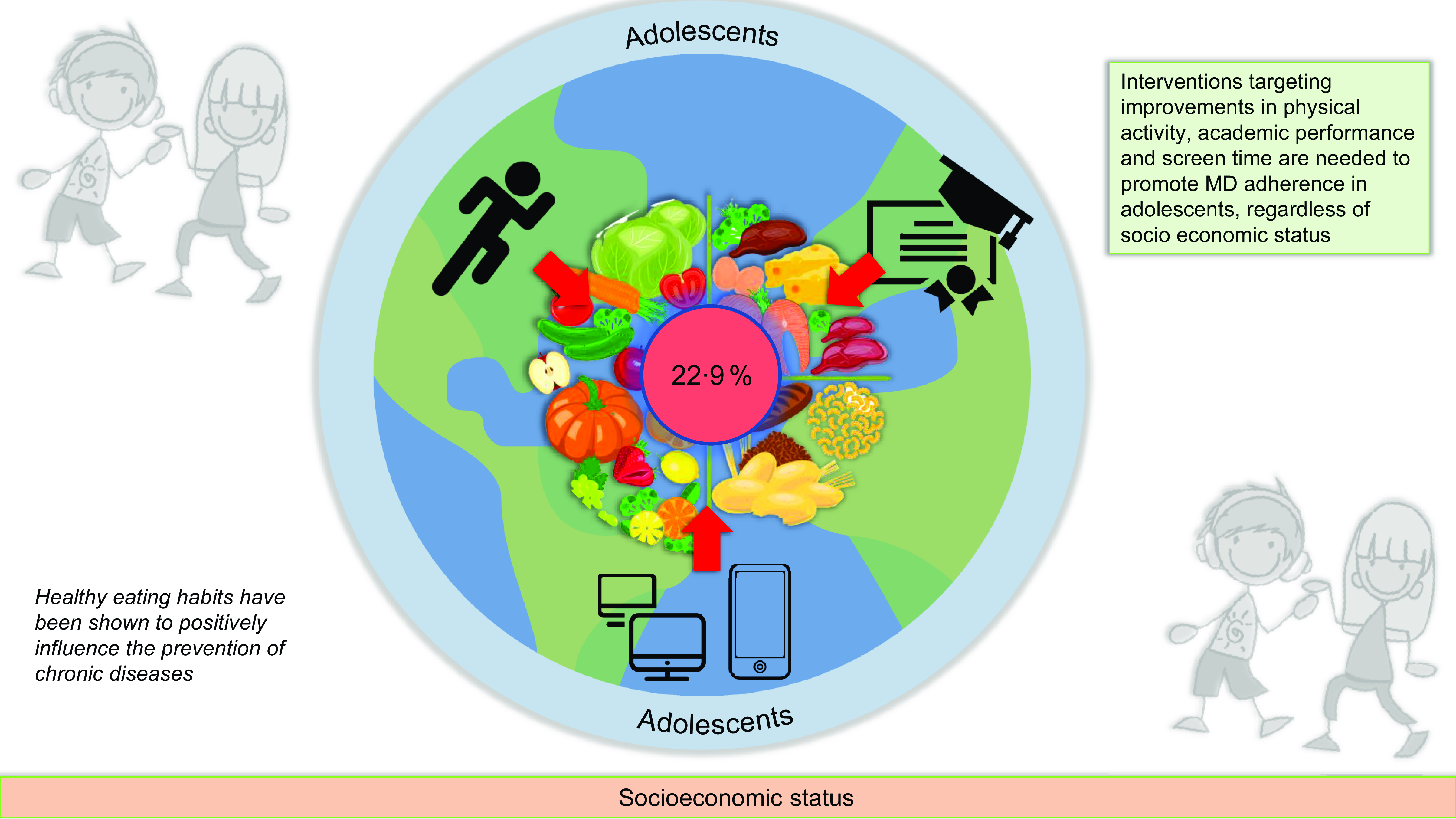
Table 4 presents the multiple regression model developed using backward elimination. Better AP, higher PA engagement and lower screen time were found to be predictive factors of MD adherence. These variables explained 22·9 % of the variance found in data describing adolescent MD adherence.
Predictors of MD adherence

MD: Mediterranean diet.
Discussion
To the authors’ knowledge, this is the first study to analyse the association of BMI, fat percentage, PA, maximal oxygen consumption, screen time and AP with MD adherence in a sample of high SES children from Granada, Spain. The main finding of the present study was that PA engagement, screen time and AP are reasonably good predictors of MD adherence in this group of children (together accounting for 22·9 % of variance in gathered data).
SES has long been recognised as a predictor of MD adherence(Reference Iaccarino-Idelson, Scalfi and Valerio31) and is still deemed to be highly important(Reference Mendonça, Gregório and Salvador32–Reference Cano-Ibáñez, Gea and Ruiz-Canela34). Studies agree that the higher the SES, the greater the MD adherence, regardless of age. Even though all participants in the present study had a high SES, this influence was still seen in the present outcomes, lending further weight to the above statement. In the present research, a positive correlation was observed between MD adherence and SES, especially in the case of girls. This may be due to changes in statistical variability, which is higher in girls than in boys.
However, after controlling for SES, a number of other predictors, such as PA engagement, screen time and AP, were also found to have a potential effect on MD adherence. Participants with higher MD adherence engaged in more PA. Other studies have reported similar outcomes in Chilean children aged between 10 and 11 years. In this case, children reporting higher consumptions of fruit, vegetables, fish, nuts, pulses, pasta or rice and olive oil also reported greater PA engagement(Reference Muros, Cofre-Bolados and Arriscado35). Recent research argues that MD and PA are better understood when considered together, rather than separately, in the context of the prevention of disease and premature mortality. In addition, the inclusion of both helps to target interventions more effectively(Reference Hershey, Martínez-González and Álvarez-Álvarez36). In the same way, participants with higher MD adherence spent the fewest hours in front of a screen. Warnberg et al. (Reference Wärnberg, Pérez-Farinós and Benavente-Marín37) reported that a greater amount of screen time was associated with lower MD adherence, specifically, lower consumption of fruits, vegetables, fish, legumes and nuts and greater consumption of fast foods, sweets and candies. For decades, television viewing has been related to the consumption of energy-dense snacks and drinks, and fast foods, and higher total energy intake and energy intake from fat in children(Reference Pearson and Biddle38).
With regard to that discussed earlier, most research on the issue shows that MD adherence is directly associated with PA engagement and inversely associated with sedentary behavior. In contrast, outcomes pertaining to other examined variables are inconsistent(Reference Iaccarino-Idelson, Scalfi and Valerio31). Certain research suggests that children who partake in nutritious meals are more prone to engage in physical activities and less inclined to lead sedentary lifestyles, in contrast to their peers who consume less wholesome meals. These findings suggest that, during childhood, healthy lifestyle behaviours are intimately interrelated. In addition, these aforementioned factors have also been observed to have a significant impact on academic and behavioural issues at school(Reference Shi, Tubb and Fingers39).
Another interesting finding was that participants with higher MD adherence also tended to perform better academically. Esteban-Cornejo et al. (Reference Esteban-Cornejo, Izquierdo-Gomez and Gómez-Martínez40) concluded that MD adherence may have a beneficial influence on the AP of young people, with the benefits of MD adherence on AP potentially being more evident with more strict MD adherence. In addition, the MD is rich in polyphenols, which have been shown to be associated with cognitive improvement in children(Reference Whyte, Lamport and Schafer41). In line with this, a positive correlation was observed between MD adherence and AP, especially in girls. Similar findings have been reported in Chilean children by Zapata-Lamana et al. (Reference Zapata-Lamana, Ibarra-Mora and Henriquez-Beltrán42) who observed that girls performed better academically than boys. Despite the fact that the present study found no significant difference regarding screen time as a function of sex, these authors concluded that boys tended to spend more of their free time in front of a screen. Further, this outcome was directly associated with achieving lower grades, having a poorer memory, being slower at solving mathematical problems and finding it more difficult to maintain attention during class or when performing complex tasks.
In addition, students in the present study who were classified as having optimal adherence to an MD diet also had higher VO2max scores. This is in line with findings reported by Jiménez-Boraita et al. (Reference Jiménez-Boraita, Arriscado-Alsina and Gargallo-Ibort3) who observed that children with high MD adherence achieved significantly higher values in relation to VO2max. These authors concluded that this finding may have been due to PA engagement, with numerous studies having already revealed an association between PA engagement and subsequent physical condition.
Limitations and future perspectives
Conclusions from the present research should be interpreted in light of a number of limitations. One limitation of the present study is its cross-sectional design, which inhibits the investigation of causal relationships. Furthermore, the use of self-report to assess a number of the examined variables increases the possibility of measurement error. This being said, as both the PA questionnaire for children and KIDMED have previously demonstrated high validity and reliability in similar populations, this limitation is expected to have little impact on the conclusions reached here. Another limitation pertains to the fact that the sample was not a randomised sample. Nonetheless, a sufficiently large number of participants with a high SES were recruited from the two participating state schools and the three participating mixed funding schools. Despite these limitations, to the authors’ knowledge, the present study is the first study to analyse the association of BMI, fat percentage, PA engagement, maximal oxygen consumption, screen time and AP with MD adherence in a sample of high SES children from Granada.
In terms of future perspectives, it would be valuable to design an intervention capable of examining the effects of educational materials on PA engagement, AP and screen time in children, regardless of SES. Schools should be the main setting for such interventions. Schools are ideal for creating healthy habits in both students and their families. In this way, healthy habits learned at school will also be implemented at home and continue over time.
Conclusion
The present study suggests that PA, AP and screen time are important components to consider, alongside SES, when targeting improvements in MD adherence in children. Further, students with optimal MD adherence reported higher PA engagement, VO2max and AP and less screen time than students with poor MD adherence. Engaging in healthy habits such as regular PA is associated with less sedentary behaviour and better academic outcomes. Likewise, such habits are associated with following a better diet. It is, therefore, concluded that interventions targeting improvements in PA, AP and screen time are needed to promote MD adherence in children, regardless of SES.
Acknowledgements
The authors would like to thank all college students for their participation in this study.
Financial support
This work was supported by the Spanish ‘Ministerio de Universidades’ under predoctoral Grant ‘Formación de Profesorado Universitario’ to Gracia Cristina Villodres (FPU20/02739). Funding for open acces charge: University of Granada.
Conflict of interest
There are no conflicts of interest.
Authorship
G. C. V.: Participated in the design of the study, contributed towards development of the research protocol, collected data, drafted the initial manuscript and approved the final submitted manuscript.
F. S. P.: Participated in data collection and approved the final submitted manuscript.
J. J. M.: Participated in the design of the study, contributed towards development of the research protocol, collected data, performed data analysis, supervised drafting of the manuscript and approved the final submitted manuscript.
Ethics of human subject participation
This study was conducted according to the guidelines laid down in the Declaration of Helsinki and all procedures involving research study participants were approved by the Ethics Committee of the University of Granada, Spain (2796/CEIH/2022). Written informed consent was obtained from all participants.


 Open access

