


The present paper considers the rebirth of policy interest in sustainable diets. This used to be considered a concern only or mainly of the developed world, but no longer. International interest has spread(Reference Gonzalez Fischer and Garnett1–Reference Reynolds, Buckley and Weinstein5). The paper explores what the notion of sustainable diets means in policy, drawing out themes which have emerged as engagement has grown. It notes the strong role of climate change on the one hand and the costs of the nutrition transition, on the other. At its simplest, the term sustainable diet is often taken to mean nutrition + climate change reduction, but the science suggests the need for a more complex or multi-criteria approach(Reference Johnston, Fanzo and Cogill6, Reference Mason and Lang7). The paper considers policy developments in a number of countries which have been particularly policy active, asking what lessons can be learned from how they have addressed this complexity. It concludes that a number of clear categories of policy approach, style and engagement have emerged. The paper ends with a consideration of the UK as an example of a state where scientific interest in and support for sustainable diets has at times been high, and where policy engagement was initially strong but where it then experienced a decline in governmental sponsorship. This was due firstly to acceptance that national dietary patterns would have to change for health, environmental and security reasons, only for policy development to weaken following a change of government in 2010; it has weakened further since the 2016 referendum vote to leave the European Union (EU) from which the UK derives 31 % of its food(8). This rise and fall of policy engagement could be viewed simply as an example of politics, of little interest to nutrition sciences or its translation into public policy. In fact, it illustrates how international political stability and support are preconditions for policy-makers being able to address complex and interdisciplinary evidence such as has emerged in the discourse about sustainable diets. The paper suggests that such disruptions to rational policy-making, while deep in the present case of the UK and its Food Brexit(Reference Lang, Millstone and Marsden9) are not unknown. Nutrition scientists therefore have an important role in promoting: (1) how dietary improvement links with wider issues of sustainability, (2) why this matters to the general public and (3) offering new goals to what is required from food supply linking health, environment and economy. A particular opportunity lies in promoting evidence-based sustainable dietary guidelines, an approach to sustainable diets on which there is now considerable international policy experience, discussed here.
Policy-makers have become increasingly more aware that dietary change is necessary to help meet the 2015 United Nations (UN) Sustainable Development Goals (SDG) and the Paris Climate Change Accord. Pressure to respond has grown from civil society and industry(Reference Gladek, Fraser and Roemers10, 11). There has been much attention to the particular issue of meat and dairy within diets, particularly in the nutrition transition, as developing nations’ incomes rise. Meat and dairy have been a particularly ‘hot’ issue, with strong evidence about animals’ contribution to climate change, water use and feed use. In 2006, the Food and Agriculture Organisation (FAO) published a sober account of livestock's role in ecosystems stress, later also arguing that efficiencies could reduce these(Reference Gerber, Steinfeld and Henderson12, Reference Steinfeld, Gerber and Wassenaar13). In 2016, China was reported as being committed to levelling off its meat consumption, but it is unclear what leverage this report had, although the government is committed to preventing dietary ill health(14). International comparisons have explored consumers’ willingness to change(Reference Bailey, Froggatt and Wellesley15, Reference Wellesley, Happer and Froggatt16). Studies of whether meat's impact varies by method of rearing have been summarised(Reference Garnett, Godde and Muller17, Reference Ripple, Smith and Haberl18), and reinforce the health advice for high levels to be reduced(Reference Popkin19, Reference McMichael, Powles and Butler20).
The notion of sustainable diet and emerging policy engagement
The term sustainable diets has crept into policy discourse over the past two decades, but its scientific origins are usually credited to Gussow and Clancy's 1986 proposal for dietary guidelines for sustainability(Reference Gussow and Clancy21). For them, sustainability was a composite term, in which nutrition and environment should be aligned, in keeping with sustainable development thinking proposed at that time and summarised in the UN Brundtland Report a year later(Reference Brundtland22). Academic interest in the topic blossomed(Reference Gussow23), particularly in the 2000s, and today an expanding literature has been summarised(Reference Mason and Lang7, Reference Garnett24–Reference Jones, Hoey and Blesh27).
Although the scientific literature is usually presented as beginning in the late twentieth century, its origins are older. Arguably, the first serious treatise was by Thomas Malthus in his 1798 Essay on the Principle of Population as it affects the future of society (Reference Malthus28). Malthus’ long title (it is actually even longer) was an early recognition that the relationship between human physiological needs, planetary capacity, agricultural potential and population growth is societally determined; choices need to be made; for Malthus a key issue was to control fertility and food supply. His views varied on the latter(Reference Malthus29), but he was clear that what is now called sustainability is a social construct, subject to policy decisions, not just a technical or a nutrition–environmental one. He laid the grounds for what today is termed a multi-criteria approach to diet, that no one factor dominates policy; policy has to juggle competing data. This approach was captured again nearly two centuries later, when Moore Lappé wrote the mass selling Diet for the Small Planet, published in 1971(Reference Lappé30). For her, dietary change was needed to protect the environment conceived as a biosphere rather than to tackle climate change, the most cited rationale today; but Moore Lappé’s appeal was unashamedly to society, calling for cultural change and involvement. That argument has been reinforced by data suggesting that industrialisation and human activity have lastingly altered the planet, taking it and human subjects into a new Anthropocene age. Human activity has lastingly altered climate, environment and resource capacity(31, Reference Rockström, Stordalen and Horton32). In the past decade, reviews of evidence from diverse sciences, some initiated after the financial shock of the 2007–2009 oil and commodity price spike, urged policy-makers to re-orient both food supply and consumption patterns to address these new circumstances(33–35). Sustainable diets thus became a rallying cry for policy changes in production and consumption.
The first formal intergovernmental policy attempt to address sustainable diets was a 2010 scientific conference hosted in Rome by the UN FAO and Bioversity International, a member of the UN affiliated Consultative Group on International Agricultural Research charged to protect plant biodiversity and responsible for the 1992 Convention on Biodiversity(36). The 2010 conference debated, created and promulgated a broad definition for sustainable diets:(37)
‘Sustainable Diets are those diets with low environmental impacts which contribute to food and nutrition security and to healthy life for present and future generations. Sustainable diets are protective and respectful of biodiversity and ecosystems, culturally acceptable, accessible, economically fair and affordable; nutritionally adequate, safe and healthy; while optimizing natural and human resources.’
The reasons for this multi-criteria approach was reviewed at the event, and it has grown considerably since. The challenge for policy-makers was how to address complexity of data emerging from diverse sciences, all pointing to the need to transform diets for reasons other than, as well as in addition to, nutrition. Could diets be modelled which would improve consumption patterns measured against different criteria? Or would the policy terrain be confused by ‘policy cacophony’(Reference Lang and Rayner38), where different interpretations, scientific concerns and foci compete for policy attention, rather than provide a coherent message? The 2010 Rome sustainable diet conference concluded that coherent messages were essential and possible. There is an expansive literature on how dietary patterns now threaten the stability of climate(Reference McMichael, Powles and Butler20, Reference Garnett39), biodiversity maintenance(40, Reference Johns and Eyzaguirre41), water use(Reference Hoekstra and Mekonnen42–Reference Hoekstra, Chapagain and Aldaya44), soil health(Reference Glatzel, Conway and Alpert45, Reference Amundson, Berhe and Hopmans46) and land use(Reference De Ruiter, Macdiarmid, Matthews, Niewöhner, Bruns and Hostert P47, Reference Bringezu and Pengue48) and these environmental concerns are accompanied by economic factors such as supply chain dynamics, affecting monetary distribution along the chain, access to food and consumer prices. There are also concerns such as demographic pressures on food supply(49), and social determinants such as the (in)equitable distribution of food within and between countries(Reference Hawkes, Blouin and Henson50), the impact of trade rules and power(Reference Ercsey-Ravasz, Toroczkai and Lakner51), and cultural factors such as choice patterns, religious preferences and ethics(Reference Mason and Lang7).
As these interdisciplinary data mounted, sustainable diets could no longer be viewed simply as an issue of nutrients + carbon, signifiers for public health and climate change, vital though both are. Noting this breadth of factors was what led the FAO-Bioversity conference to articulate the broad definition cited earlier. What was clear even in 2010 and is clearer still today is how the notion of a ‘good’ diet is no longer the preserve of public health nutrition. It could be argued, in high-income countries, that following nutrition advice would reduce consumers’ environmental impact(Reference Reddy, Lang and Dibb52, Reference Scarborough, Allender and Clarke53), but whether this applied to economies experiencing undernutrition was less clear. Policy-makers informally argued that sustainable diets might be an issue, which was intrinsically complex, thus best addressed incrementally or in parts; and some argued that diet should be left as a matter for health, and that sustainability is the responsibility of supply chain management. Industry studies countered this by proposing that the consumer engagement was essential, and that clear frameworks were necessary to create new level playing fields(54, Reference Arnold and Pickard55).
It is not surprising therefore that attempts to translate sustainable diets into formal policy have been patchy and at times messy. The EU, for instance, has limited policy competence on public health, which is subject to member state autonomy. The EU has some health involvement such as in nutrition labelling and health education. Consumers receive no advice to make dietary choice more sustainable. They receive clear advice to buy more energy-efficient electric goods but not food. This is perplexing since the EU offered in 1992 to lead international development of sustainable consumption and production policy at the UN Conference on Environment and Development (the Rio conference)(56). EU policy frameworks have strengthened member state actions on food's infrastructure such as water management and chemical residues(57, 58) and kitchen equipment, but not the food itself! Awareness of this policy gap grew following the commodity and banking crisis of 2007–2008 when world food and oil prices rose rapidly and Western leaders realised their own food systems had some instability, and price volatility(59). The EU began to develop a Sustainable Food Communiqué in consultation with industry, science and consumers, arguing that this would deliver a new sustainable consumption and production framework of benefit to supply chains and public alike(60, 61). A sustainable consumption and production roundtable was created. Meat reduction was specifically mentioned in commission thinking, acknowledging its high greenhouse gas emissions. Drafted, agreed and about to be published, the Sustainable Food Communiqué was withdrawn unexpectedly in 2014 when a new commission was formed. The emerging EU multi-criteria approach was abandoned; instead a narrower ‘circular economy’ perspective was adopted(62). Useful though this is for resource management, it sees food almost entirely as a material and biological entity, suggesting a duo- rather than multi-criteria challenge. Cultural or consumer advice was not to be given.
Internationally, a different policy trajectory may be traced. UN institutions have been prime sources of data suggesting the need for a multi-criteria approach. The UN Environment Programme has linked environmental and social aspects(Reference Bringezu and Pengue48, 63, Reference Nellemann and MacDevette64), and the FAO has considered specific issues such as livestock production(Reference Gerber, Steinfeld and Henderson65, Reference Steinfeld, Gerber and Wassenaar66). Taking the World Health Organisation's concerns about the state of nutrition as read, and noting the 2010 Rome sustainable diet conference, policy observers expected the 2014 World Health Organisation-FAO second International Conference on Nutrition to take a lead on sustainable diets from a multi-criteria perspective. The second International Conference on Nutrition was an opportunity to link the UN family's joint concerns. Despite strong support for this position at scientific preparatory conferences(67), it did not(Reference Brinsden and Lang68). Sustainable diets were specifically raised as a matter for the UN Decade of Nutrition Action, however(69). This ‘toe in the door’ for sustainable diets followed from international realisation that food and diet would be central in two forthcoming UN agreements: first, the 2015 agreement on seventeen SDG with 169 targets, an estimated seventy of which require food action (see Table 1); and secondly, the 2015 Paris Climate Change Accord. If Paris committed governments to re-engineer economies to keep climate change below 2°, the SDG pointed to how food must help deliver this. The SDG also targeted other criteria for a good food system: waste reduction, equitable distribution and other social criteria. There had been fears that the Paris climate talks might collapse into indecision as had its predecessor, the 2009 UN Framework Convention on Climate conference at Copenhagen(70). Tough lobbying in favour of binding agreements by big food industries almost certainly made the difference. Sustainable diets were back up the policy agenda as a solution to commitments rather than as overcomplex problems which defied resolution. As the FAO noted in a summary of the SDG ‘consumers must be encouraged to shift to nutritious and safe diets with a lower environmental footprint’(71).
The United Nations Sustainable Development Goals (SDG) pointing to sustainable diets
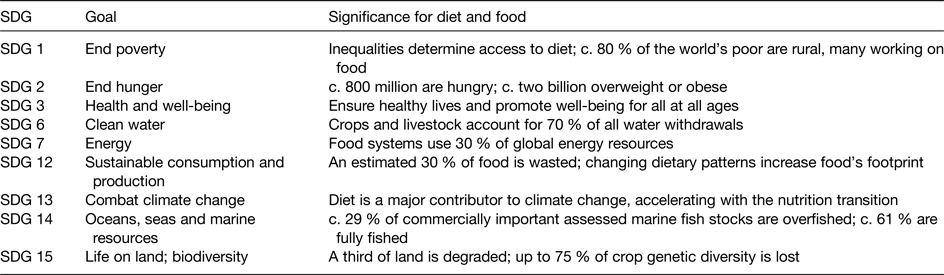
Source: adapted from FAO 2016(71).
National attempts to address food system sustainability
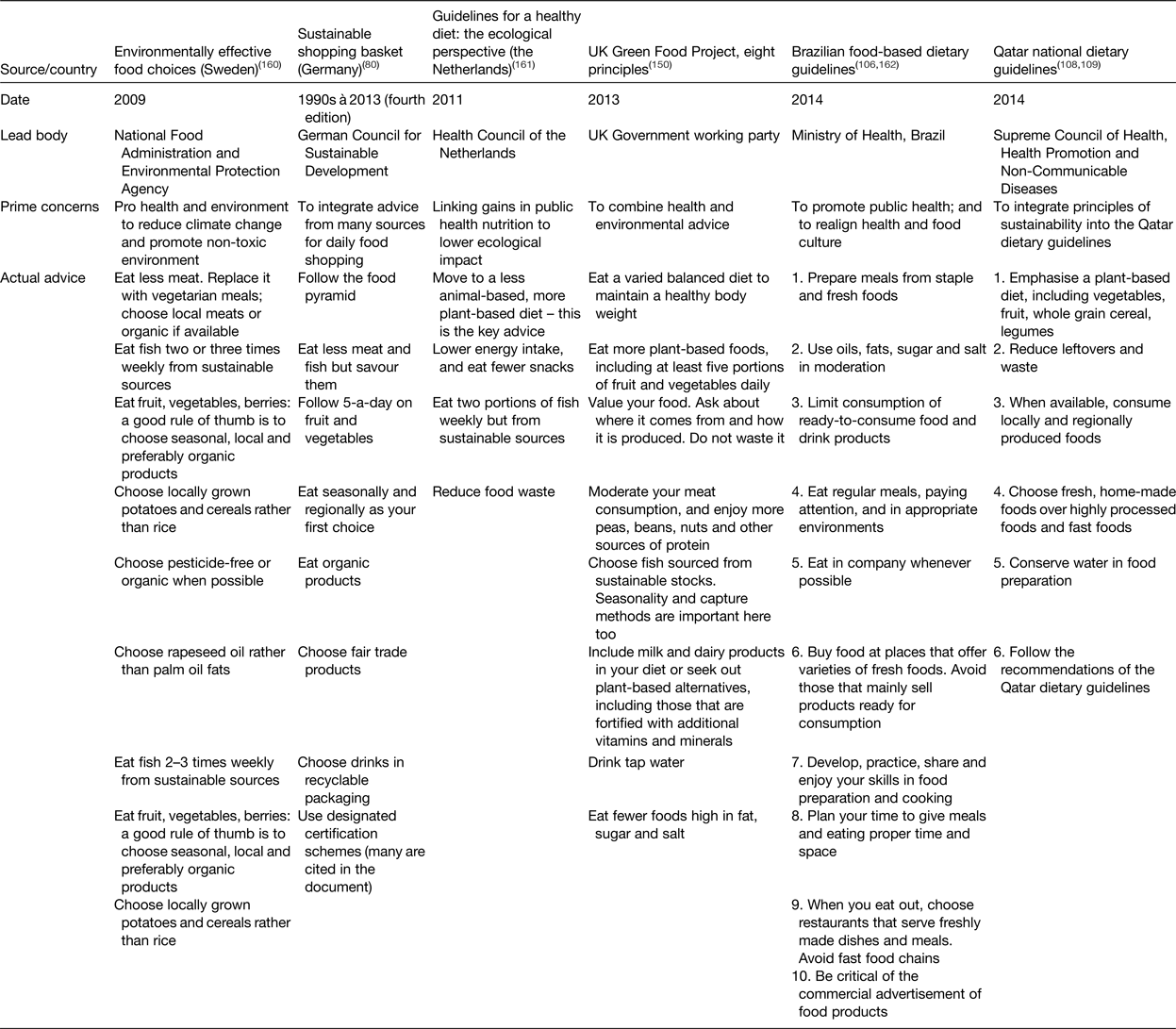
A number of countries have engaged with sustainable diets. These have been summarised elsewhere(Reference Gonzalez Fischer and Garnett1, Reference Mason and Lang7). Sweden was the first nation state to publish official sustainable dietary guidelines in 2009, an outcome of collaboration by its National Food Administration and Environmental Protection Agency(72). Sweden was asked to withdraw them by the European Food Safety Authority, after concerns were expressed about the guidelines favouring local and seasonal foods, and suggesting consumers reduce meat consumption. Six years later, the Swedish Prime Minister himself launched a version of sustainable diet advice, couched this time in cultural terms, on which the European Food Safety Authority could hardly pronounce(73).
The Netherlands, meanwhile, took a different, slower and more incremental route to sustainable diets. In 2008, using the EU favoured sustainable consumption and production policy language, the Ministry of Agriculture published a general food policy document(74). This was then followed by a 2011 Health Council report on the ecological necessity for dietary guidelines(75), and 5 years later, the national nutrition centre producing them(76). These were consolidated by the public health research body(77).
Germany has taken an altogether different approach. It has provided advice direct to consumers via the Rat für Nachhaltige Entwicklung, its Council for Sustainable Development, rather than one of the larger ministries. Rat für Nachhaltige Entwicklung has steadily expanded and made more specific its sustainable diet advice with each new edition of its Sustainable Shopping Basket – A guide to better shopping (78–80). As the title implies, this is home-oriented advice, appealing to already environmentally conscious consumers, rather than population-level dietary restructuring such as Sweden first sought.
The UK initially took the more systemic approach of Sweden (version 1) and the Netherlands. From the 1990s, the UK had more than a decade of costly and disruptive food politics, beginning with the bovine spongiform encephalopathy ‘mad cow’ scandals(Reference van Zwanenberg and Millstone81) followed by equally costly foot and mouth disease eradication and swine vesicular programmes(82). When the oil and food price spike hit in 2007–2008, coinciding with a change of prime minister, a national food system review was conducted, at the request of the new prime minister, the former treasury minister. This Cabinet Office Food Matters review in 2008 proposed a change of national direction(83), after a data review(84), which in turn led to new national food security targets(85, 86) and a new national food policy strategy, Food 2030, by 2010(87). Food 2030 specifically committed the government to promote sustainable diets. A project to integrate consumer advice had been initiated(88). This systemic approach to put sustainable diets at the heart of a new link between ecological public health advice for consumers and food supply chain resilience was widely accepted as an important reconfiguration of food policy. It stopped overnight, however, with a change of government at the 2010 election. Under food industry pressure, a Green Food Project was set up by the Department for Environment, Food and Rural Affairs which drew up principles for sustainable diets(89, 90); but it was downplayed by the Department for Environment, Food and Rural Affairs and only finally published at ‘arms-length’ by the Government Global Food Security champion a few years later. The role of scientists in promoting the case for sustainable diets cannot be underestimated. Public Health England's nutrition scientists requested environmental advice from the Carbon Trust(91), and the 2016 national dietary advice, the Eatwell Guide, recommended consumers cut back on red and processed meat for both health and climate reasons(92). An advance for the UK, though this was, it was a return to dual criteria formulation of sustainable diets as nutrients + carbon.
France conducted its Agrimonde global assessment of the coming food-related sustainability crisis, and the INRA-CIRAD review of sustainable food systems (2009–2011)(Reference Paillard, Treyer and Dorin93). Other studies pointed to the need for more integrated approaches(Reference Masset, Soler and Vieux94, Reference Masset, Vieux and Verger95). Perhaps reflecting its ‘corporatist’ governmental ethos, the French state has worked more systematically across food's sustainability challenges. In a Food Sustainability Index conducted by the Economist Intelligence Unit in 2016 (being repeated in 2017), France was judged top as a country tackling food and sustainability, from nutrition to food waste(96). It has been made illegal for supermarkets to throw away food approaching its sell-by date.
Australia is another Organisation for Economic Co-operation and Development country with experience of debate about sustainable diet. It is a country with serious stress anticipated from climate change, and with fragile ecosystems. Like France, it conducted an assessment of how it fitted into the emerging global food sustainability challenge following the 2008 oil and financial crisis(97). The 2010 PMSEIC report suggested that major challenges were imminent(33). The nutrition scientists charged to revise Australia's dietary guidelines, mindful of this context, set out to introduce environmental considerations into the new guidelines, only to meet fierce resistance from meat and export trade interests. When finally published, the Australian guidelines’ environmental considerations were relegated to the appendix(98). A debate ensued about the lessons learned(Reference Lawrence, Friel and Wingrove99, Reference Friel, Barosh and Lawrence100), with officials defending the guidelines as solely food-based dietary guidelines on the grounds that if Australians ate healthily, their diet's environmental impact would reduce, too(Reference Dixon and Isaacs101).
Perhaps the clearest and best documented resistance to broadening dietary advice to include other criteria than just nutrition has been the US revision process in 2013–2015 for the 2015 Dietary Guidelines for Americans (102). The US conducts a legally binding, long-established five annually revision. The Obama administration included in the 2013 Dietary Guidelines Advisory Committee for the first time a scientist charged to address environmental aspects of diet(Reference Merrigan, Griffin and Wilde103). The expert Dietary Guidelines Advisory Committee produced one of the largest reports ever into diet's impacts on human and environmental health(104), submitted by law to two Secretaries of State, for health and agriculture. It was greeted with derision by the latter who accused it of a kind of dietary nannying which even his young grandson did not need. Despite overwhelming and unprecedented online public support in the public consultation period, extended to give industry more time to comment, the views that the guidelines should be restricted to nutrition alone prevailed. They were published late but without the sustainability element. US Dietary Guidelines Advisory Committee members subsequently updated the evidence base which had led them to recommend a multi-criteria approach, showing the case for sustainable dietary guidelines had strengthened not weakened(Reference Nelson, Hamm and Hu105).
Brazil provides yet another interesting policy trajectory. Its 2014 dietary guidelines are only the second ever published(106). The scientific committee revising the guidelines decided to retain the nutrition focus and to consider environmental implications as how ‘the environment shaped the nutrition’, as the chair informed the present authors. Like the USA, it conducted an exhaustive public consultation, but not after formulating advice, rather while doing so. It concluded that the best method for winning consumer engagement would be by putting socio-cultural messages to the fore rather than environmental aspects of sustainability. The dietary guidelines were thus launched and promulgated almost entirely with cultural appeal. It led on strong ‘everyday’ messages, summarised by the chair as aiming for ‘food literacy’, summarised as: ‘base your diet on a variety of minimally processed plant foods and their culinary preparations, and avoid ready-to-consume ultra-processed food and drink products’. Brazilian guidelines were presented as dietary packages or patterns rather than as demonising or celebrating particular nutrients. This approach was greeted with considerable enthusiasm politically, and has been retained by a subsequent government and minister, at a tumultuous time for the country. It thus jumped the policy hurdle that a strong policy is one which can survive changes of government to become normalised(Reference Rutter, Marshall and Sims107).
Our final example of national experience of sustainable diet policy development is Qatar. Some were surprised when in 2014 this Gulf state produced clear multi-criteria sustainable dietary guidelines(108, 109). It is the first newly developed country to articulate them which is interesting for a number of policy reasons. First, the state was already clear that its population was at risk from climate change, despite being in an oil-producing region. Secondly, like others in the Middle East, it has a serious problem of diet-related non-communicable diseases, notably type 2 diabetes(110). Without much public consultation, due to the state's political structures, the guidelines were formulated with strong input from nutrition scientists convinced of the need to prevent further complications from the nutrition transition and a desire for Qatar to take a regional lead on progressive ecological public health grounds(Reference Seed111). This example raises interesting policy questions about whether different approaches emerged across the political spectrum, from democracy to more authoritarian policy régimes(Reference Mason and Lang7).
Examples of how some of the afore-mentioned national sustainable diet advice has been summarised are in Table 2.
Six examples of government sustainable dietary advice
Source: authors.
Other sector interests in sustainable diets
Thus far, we have considered state actions at the global and national level, but there is growing interest in what the local state, specifically cities or city regions can do.
City mayors and councils have become more troubled about how their constituencies will be affected by climate change, and forty world cities combined to launch a platform of commitments to audit and reduce their greenhouse gas emissions(112). Necessarily, this brought them to food as a major source of emissions. City-level action has become one of the most vibrant areas of policy formation on sustainable food since the 2000s, coinciding with the patchy performance at national level summarised earlier. Preparing for the 2015 World Expo, Milan City Mayor and Council decided to build a food focus worldwide. The Milan Urban Food Policy Pact was signed by 100 Mayors for World Food Day in October 2015(Reference Pact113). There are now 144 signatories. The pact included commitment to support sustainable diets. So popular has this been that it has now permeated even bigger and longer established international alliances of local authorities such as the International Council for Local Environmental Initiatives(Reference Declaration114). This local dimension has been summarised elsewhere(Reference Mason and Lang7), and is almost certainly a result of the effectiveness of appealing to cultural identity rather than nutrition.
Food Industry initiatives
If at times, national states have been reluctant to support policy development for sustainable diets, and have apparently bowed to particular commercial pressures, there has also been a growth of some action by food industries. Particular emphasis has been given to primary production, out of recognition that environmental pressures are likely to destabilise commodity production on which processing industries depend. In 2002, the Sustainable Agriculture Initiative was launched by some of the largest global food companies(115). In 2010, the World Economic Forum produced a roadmap for agriculture(11). Working again with McKinsey & Company, the World Economic Forum emulated the EU backing for circular economy thinking on food(11, 116). Individual companies, too, have made product- and line-specific changes, using conventional business methods such as reformulation, ingredient substitution and size reduction. These have been accompanied by a much less noticed huge investment in social aspects of sustainability such as backing for ethical trade, worker standards and community involvement(Reference Sharpe, Barling and Lang117, Reference Sharpe118). In 2017, twenty-five food company members of the World Business Council for Sustainable Development launched the Food Reform for Sustainability and Health programme to begin transformation of the global food system with a particular focus on dietary change(119). Sceptics might be wary of commercial interests or even superficiality or brand protection but such initiatives suggest rising commercial willingness to entertain social and environmental commitments, something governments too often say business does not want or would be constrained by.
The distinctions in policy approaches which emerge from commerce are a preparedness to act ‘below the radar’ using choice architecture mechanisms such as behavioural economics (nudge), and programmes which act more directly by altering products and setting company-wide key performance indicators. Marks and Spencer in the UK, for instance, has steadily ratcheted up its performance against its plan A indicators(120). PepsiCo has experimented with carbon reduction for its products under its 50-in-5 programme(121). Some companies act overtly, others covertly; in this sense, they emulate governments. Barilla, the world's largest pasta manufacturer, for instance, has backed a nutrition centre committed to sustainable diets, producing a much cited double-pyramid approach(122); and catering and the foodservice industries have become major players in winning consumer support for sustainable choices such as on fish consumption(Reference Fearnley-Whittingstall123). While the role of celebrity chefs has been high profile(124), some structurally more interesting and practical initiatives have been developed, notably that by Harvard School of Public Health's Menus of Change collaboration with the Culinary Institute of America(125). There are also strands of policy response to the sustainability challenge which see the answers as lying in technology. These include laboratory-based meat(Reference Singer126), nanotechnology(Reference Berger127), industrial production of insects(128, Reference van Huis, Van Itterbeeck and Klunder129), robotics(Reference Holloway, Wilkinson and Butler130) and new generations of synthetic biology, genetic and nutrigenomics(Reference German, Zivkovic and Dallas131). These mostly orient policy solutions as coming from pre-consumer change, i.e. choice-editing rather than aiming to alter consumer culture a priori, or as personalisation rather than population-oriented dietary change(Reference Gunn and Mont132, 133).
Civil society
The role of civil society organisations (CSO) in pressurising for policy change has strengthened in recent years. The largest conservation CSO in the world is the World Wildlife Fund (WWF), which since 2009 has been pioneering sustainable dietary guidelines and modelling(134).This began in the UK, at the time of UK governmental engagement, but then was trialled in three other European countries. It is now a key global WWF strategy. Its review of the environmental science, conducted with the Zoological Society of London, convinced WWF that changing diets is essential to protect biodiversity(135, 136). More than others, it has promoted embedded water in diets as a key issue, too(137–139). Arguably, WWF now has a clearer evidence-based and multi-criteria diet approach than almost all governments(Reference Gladek, Fraser and Roemers10).
CSO action on sustainable diets is extensive worldwide. In the USA, after the rejection of the Dietary Guidelines Advisory Committee advice, a large coalition has maintained existence, mostly online. In the UK, a formal Eating Better coalition was formed in 2013, with over forty supporting organisations including the British Dietetic Association. It campaigns to reduce meat consumption and encourage consumers to switch from daily meat to more occasional but higher quality (and probably pricier)(140, 141). There are also more policy-oriented campaigns such as the square meal coalition of eight CSO seeking sustainable diets as part of a food systems shift(142).
Lessons from the different policy approaches to sustainable diet
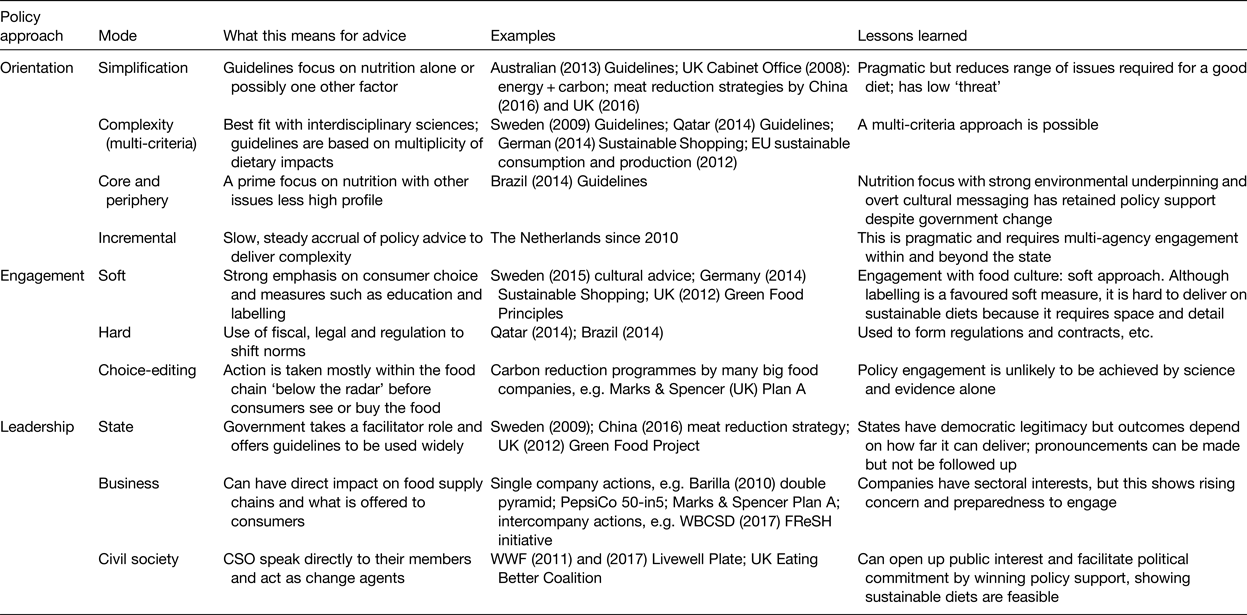
A number of distinctions have emerged from this overview. First, the approach to sustainable diets can range from soft to hard, the former putting responsibility on consumers, the latter looking to structure choice. The Nuffield Council on Bio-Ethics proposed a ladder of policy engagement and effectiveness, with soft measures such as labelling and education nearest the ground, i.e. most normal but less likely to generate lasting change, and hard measures such as fiscal or legal changes being toughest to win in policy terms but being most effective in the long term(143). Another important distinction is between approaches to sustainable diets which see the challenge as overtly multi-criteria, or as dualistic, as complex or simple. A third feature is that, however strong the science, the policy-making process is subject to political exigencies. Evidence-based sustainable dietary guidelines might be created but meet entrenched economic interests. Yet another is that guidelines can be produced which are overt or covert in how they address non-nutritional factors; and policy-makers have varied in whether they see diet as a specific interest or aim at sustainability more broadly, and whether to offer advice at a general or more specific level, such as through dietary guidelines. With such variation, is it possible to categorise the different policy approaches and styles with regard to sustainable diets? We now consider some policy lessons so far.
Contemporary sustainable diet discourse is divided over whether the issues can best be addressed by simplification or by recognising complexity. Whereas, for Gussow and Clancy in 1986, the key focus was nutrition + environment, for the UK Cabinet Office in 2008, it was energy + carbon; and for the European Science Foundation and nitrogen scientists, concerned about the disrupted nitrogen cycle, it was nutrients + nitrogen(144). These sought policy attention by simplifying to two core factors. This may be pragmatic but it narrows the complexity in the real food system, and downplays the range of criteria, which evidence suggests need to inform the reformulation of what is meant by a ‘good’ diet. The UK Government Sustainable Development Commission in 2011 proposed a six-headed grid for sustainability and food matters: food as quality, as health, as socio-cultural, as environment, as economics and as governance. This grid offered a policy mechanism through which complexity could be addressed pragmatically(Reference Mason and Lang7, 145).
A second insight, noting the fraught attempts to formalise sustainable diets in national nutrition committees (such as Australia and USA), is for policy proponents of sustainable diets to consider accepting that guidelines should focus on nutrition but can also incorporate and ‘sell’ dietary change as an advantage to other criteria. This has been a factor in the success of Brazilian guidelines and German soft advice. It was the argument given by Australian officials as to why they did not need sustainable diet guidelines but only diet guidelines. Policy tension between being overt about diet's multi-criteria nature or being covert is likely to continue. It is subject to democratic processes and power.
A third lesson is that the move to achieve policy engagement on sustainable diets is unlikely to be gained by science and evidence alone. The policy terrain is already full of arguments and food system actors jostling for influence. Here lies an advantage of accepting that sustainable diets are complex. Instead of arguing for primacy of one issue over another, or horse-trading over trade-offs (nutrition wins, but climate loses), the multi-criteria acceptance of complexity allows for, and positively encourages, the development of dietary change alliances. This accepts that different disciplines can all produce relevant evidence on diet advisability.
A fourth lesson relates to the role of the state. Despite initial championing by civil society in the 1970s, sustainable diets has tended to be an issue led or fixed by the state at national or global level. The Milan Pact proposed that city regions should take up this role, too. There are good reasons for this. Usually, only the state has democratic legitimacy, the convening power, access to existing institutions or the arbitrating role for consumers at local level. The state ultimately can facilitate food frameworks, arbitrating between interests. The alternative is to consign the sustainable diets issue to market forces, and to give primacy to the private sector, or the consumer–producer nexus. The disadvantage here is that companies’ sectoral interests then become the arbiter of what is to be addressed. Almost all consumer studies point to inequality between food companies and consumers, it should be noted. Food companies, while wanting room to create their own market signals, also do not want sustainability to be market signifier; many food companies looking long term want sustainability to be a binding framework.
A fifth lesson is that dietary guidelines are highly sensitive policy matters. One might expect otherwise; why should there be resistance to adding sustainability to national or international dietary guidelines? Yet there has been. The counter-argument is that, while the issue might have been fractious in the past, clear sustainable dietary guidelines are now needed to deliver the UN SDG. This has been called the SDG2 strategy, sustainable dietary guidelines for the UN SDG(Reference Lang146). This requires long-term support and political commitment within policy communities. Scientists can and do participate in this process, alongside social movements, e.g. through the global Food Climate Research Network. If nutrition scientists and their organisations favour clear sustainable dietary guidelines, they almost certainly will be strengthened by collaborating with other professions. Such interdisciplinary and interprofessional collaboration has emerged, for instance through the Food Climate Research Network and the Federation of European Nutrition Societies in the EU(147, 148). Policy ‘lock-ins’ to unsustainable dietary patterns might exist (and be strong), but people working together are more likely to unlock them.
Table 3 provides a summary of some policy lessons, discussed earlier. It proposes a typology by approach, engagement and leadership, with examples cited in the present paper.
Preliminary lessons from different policy approaches to sustainable diets
CSO, civil society organisations; WWF.
Source: authors.
Resistance to sustainable diets: does Brexiting Britain fit this pattern?
Recent history has shown how the notion of sustainable diet can meet resistance, despite strong scientific evidence, as in Australia or the USA. The idea and policy development continues nonetheless, as with Sweden. We end the present paper with a reflection on the UK. The UK was among the most engaged countries in the modern wave of interest, from 2007. It conducted serious state-wide reviews in 2007–2008, discussed earlier, then formulated a systems-wide approach to food sustainability, with considerable consultation about food security and the shape of the UK food system, lasting 2 years. This was an expert-oriented process rather than reaching out to the public as was the Brazilian process. It led to cross-government commitments to sustainable diets within a national food security strategy in 2010, and support from industry(149). Then, following national elections, this wide-ranging food system policy was dropped, only for an advisory process to develop Green Food principles in 2012(89, 90), in turn sidelined and published later only due to the championing by a leading scientific advisor in 2015(Reference Garnett and Strong150). In 2016, the UK then voted to leave the EU, putting its entire legal and regulatory system including policy processes into some uncertainty.(Reference Lang, Millstone and Marsden9) At that moment, Public Health England (not the rest of the UK) produced advice to reduce red and processed meat, partly for climate change reasons(151). This serpentine history now awaits a new phase when and if the UK enters a radical restructuring of its entire food system in a Food Brexit. Some food actors want this(Reference Paterson152–Reference Rickard154). Others are wary of serious disruption(Reference Lang, Millstone and Marsden9, 155, 156).
Could Brexit mean a chance to move (rapidly) to more sustainable diets, or will these other issues triumph? In theory, a transition to a more sustainable food system including diet is conceivable, but politically difficult when both main political parties are divided on Brexit, and not, so far, engaged with food as part of that. The UK is divided internally. Scotland voted to remain in the EU, Wales marginally not and Northern Ireland is anxious about Brexit heralding a return to hard borders with the Irish Republic. Food crosses borders ceaselessly. The food economy is significant in the devolved administrations. Issues such as access to migrant EU labour in the food trades matter throughout the UK.
The present UK government is committed to a more deregulated market-led approach to commerce; it sees little role for sustainable diets other than as a consumer choice. Yet the UK hosts strong and ‘noisy’ CSO champions for sustainable diets. They argue that for sustainable diets to become a potent policy rallying point would require massive public support; they are now working to win reluctant politicians to take this seriously. Animal welfare groups, for example, are well organised and wealthy, increasingly agreeing with conservation bodies on the case for SDG2. The UK has thus entered an interesting phase in food policy generally and on dietary change in particular. Most commentators believe that a post-Brexit food policy will be judged a success if it achieves ever cheaper food, but might quality and sustainability cut across this historical policy given? Time will tell.
Unless there is a reversal, Brexit is likely to take the UK further from EU discourse on sustainable food systems, including sustainable diets. This is ironic, given the EU is witnessing signs of renewed intent to realign policies with the broad challenges facing the food system. The European Economic and Social Committee, for instance, is pressurising the commission for an integrated food policy(157, 158). The European Public Health movement has urged sustainable diets as the core goal for EU food thinking(Reference Birt, Buzeti and Giuseppe Grosso25). The food industries are concerned about lack of policy frameworks to reorient Europe's supply chains. There are early moves to reform the common agricultural policy long term into a common food policy.
If the UK does leave the EU, it will face an international food system, single membership of the World Trade Organisation, the application of Codex Alimentarius Commission standards, requiring negotiation with 160 + other member states, rather than with twenty-seven neighbours in the EU. We see tensions with erstwhile food neighbours and suppliers as likely, at a time when its own food institutions have been weakened by fiscal cuts. International collaboration has meant the UK has become reliant on intergovernmental institutions, with an estimated thirty or more underpinning UK food safety, standards, inspections, prices, availability, information and welfare(Reference Lang, Millstone and Marsden9). Probably the most significant food effect of a Brexit is already being felt in the marginalisation of the UK from the urgent international task of making food consumption and production more sustainable.
The pursuit of sustainable diets requires careful, coordinated, collaborative actions across sectors and between different levels of governance. Brexit is a distraction and may be a destabilisation, as some proponents intended. A Food Brexit would mean the UK leaving the EU from which it receives at least 31 % of its food supply(159).This might be a risky food policy, and might unleash renewed public pressure to transform UK food, with public health to the fore! There are vibrant alliances across civil society, the professions and business. With the government in some internal disarray about what kind of Brexit to pursue, these extra-Parliamentary interests are currently in a fevered bout of activity and information exchange.
The UK is not alone among affluent nations in failing yet to address how to deliver healthy diets from sustainable food systems, and how to reorient food culture around the normalisation of sustainable diets. This would require active policy engagement from the nutrition professions. A Food Brexit could simply reassert cheapness as the prime value over others, with price triumphing over the values of health, social justice, animal welfare, land use and the biosphere. The evidence for a transition to sustainable diets, however, continues to grow.
Conclusions
The present paper has reviewed the dynamic state of policy development on sustainable diets. The issue could have been lost in wider policy considerations, as might now be happening within the UK, yet support for sustainable diets has also gathered clear and remarkably vibrant support. With global policy frameworks such as the SDG and Paris Accord requiring diet and food systems action, the issue looks unlikely to decline in priority. The notion of sustainable diet has grown in sophistication and indicators. Policy experience is now sufficient to be able to compare and contrast modes of engagement. Dirigiste, top–down approaches may propose multi-criteria but whether these are actually adopted remains to be seen.
Financial Support
None.
Conflicts of Interest
None.
Authorship
Both authors shared responsibility for all aspects of preparation of this paper.



