

This is the final stage of producing an IPCC assessment report on climate change – the last chance to shape its writing, and in its most significant form. The summary for policymakers (SPM) presents in sentences, bullets, boxes and figures the findings that are most relevant for social and political decision-making from the underlying assessment report. They are the most circulated IPCC products, bringing the key messages to the surface, ready for dissemination and effect. Here sentences and figures travel into minister’s speeches, media coverage, government, UN and NGO reports, where they shape negotiation of and policymaking on climate change domestically and internationally (Hermansen et al. Reference Hermansen, Lahn, Sundqvist and Øye2021). It is therefore in the approval session that the extent of political struggle over climate change in the IPCC is most visible.
The attempt to shape the writing of climate change began with the election of the bureau and importantly, with the approval of the outline, which as documented in Chapter 5, brings to light government attempts to delimit how climate change is written in the next assessment. The nomination of authors and the government review of both the full report (Chapter 6) and the emerging SPM are also important avenues for influencing the construction of climate change. However, once the final draft SPM is delivered to member governments, often a day or even just an hour before the WG approval session opens, the last opportunity to contain, control or elevate the meaning and implications of climate change, as written by the IPCC, begins. These are the stakes in the approval of this document.
Despite this document’s importance, in relation to other aspects of the assessment process, the IPCC’s ‘line-by-line approval’ is relatively under studied. As scholars have gained access to and observed these intergovernmental sessions, they have identified the amalgamation of scientific and political activities (Shaw Reference Shaw2000, Reference Shaw2005; Petersen Reference Petersen2006) and conceptualised these as forms of consensus building (De Pryck Reference De Pryck2021, Reference De Pryck, De Pryck and Hulme2022), uncertainty management (Fogel Reference Fogel2005), and simultaneously, both an attempt to create a single climate story for political action (Livingston, Lövbrand and Olsson Reference Livingston, Lövbrand and Olsson2018) and as a method for pluralising it (Kouw and Petersen Reference Kouw and Petersen2018). However, to grasp fully what is at stake in this practice of approving the key climate messages, it is critical to situate the IPCC within the international field of climate action and to bring its relation to the United Nations Framework Convention on Climate Change (UNFCCC) into focus (Hughes Reference Hughes2015). This makes it possible to identify the stakes in the practice of approval, the forces that the politics of climate action generates and their imprint on the final SPM product.
In describing the order of relations in the panel (Chapters 4 and 5) and the scientific assessment (Chapter 6), I have chartered the dominance of the global north in the IPCC’s practice of writing. In this chapter, in and through recounting the politics of approval, I illuminate how the imprint of these asymmetries on the naming of climate change are challenged. At the outset, describing the drafting and reviewing of the SPM and taking a closer look at participation in approval sessions, the order looks much as it did from the outset, although the emergent scientific strength of some countries is apparent in the authorship of the AR6. When the final draft passes from the hands of the co-chairs to the delegates, the approval of the key messages becomes the site for developing countries to contest the framing of climate change that the global north’s scientific dominance writes. I use the struggle over country categorisation, which reached its height during the approval of WGIII’s contribution to the AR5, to describe the strategies available to the co-chairs, delegates and authors to influence proceedings. This amounts to a politics of approval that can overflow the meeting, as authors, co-chairs and delegates carry their wins and carefully crafted sentence or frustrations and lost text for reuse in their broader participation in the science and politics of writing climate change.
7.1 The Stakes in the Practice of Approval
The idea of producing a ‘policy document’ to summarise the scientific results of the full report is said to have been a WGI proposal accepted by the IPCC bureau at its first session in February 1989 (IPCC 1989 in Agrawala Reference Agrawala1998b: 633). There had been an intention to generate some form of policy document from the outset. Initially, it was envisioned that the bureau would integrate the three WG reports of the first assessment report (FAR) into ‘a single assessment statement which will include an executive summary, designed to facilitate the requirements of political analysts’ (IPCC 1988: 6). The first version of this was produced by WGI for the FAR and followed a comparable route to the pathway now embedded and described in Section 7.2.Footnote 1 The text was subject to approval at a three-day meeting attended by the authors, other invited experts, delegates from 35 countries, environmental NGOs and representatives from oil and coal industries (Leggett Reference Leggett1999). The meeting has been described as collegial and the criteria used for the document’s approval scientific (Lunde Reference Lunde1991: 82; Houghton Reference Houghton2002). WGII and WGIII were also requested to produce a policy document. At this stage in the IPCC’s development, the assessment practice had not been standardised across the three WGs (see Sections 4.6 and 6.3). Whereas WGI could rely on scientific conventions to structure the order and conduct of its assessment activities, the varied professional and disciplinary composition of WGII and III meant those involved did not have a shared habitus or related conventions to order the conduct of proceedings. This, along with the political nature of the content, meant that producing an assessment and summary of the impacts (WGII) and response strategies (WGIII) was a more troubled process (Hecht and Tirpak Reference Hecht and Tirpak1995: 385–86; Skodvin Reference Skodvin2000a: 119–23; Bolin Reference Bolin2007: 63–66).
With the completion of the three WG reports of the FAR, the IPCC chair, Bert Bolin, prepared a synthesis report to highlight the key findings from across the assessments for approval by member governments (IPCC 1990c; Bolin Reference Bolin2007: 67). The chair’s document did not make it through the plenary, however, and it seems that it was only possible to reach closure ‘by cobbling together’ lengthy extracts from the WGI SPM ‘and a few of the less contentious conclusions from the politically sensitive WGII and WGIII reports’ (Zillman Reference Zillman2007: 879). The proceedings of this session were characterised by political dynamics that have become a recognised feature of climate negotiations.
Having started in a very civilised fashion with songs about the future from children’s choirs and an address from the prime minister of Sweden, the meeting finally came very close to breakdown. It finished at four o’clock in the morning, one day late, with most of the delegates having abandoned their chairs in the conference hall to gather on the front podium and shout at each other. (Brenton Reference Brenton1994: 183)
It is clear from this account that emerging national positions on the issue of climate change shaped government attitudes towards the drafted text (Hecht and Tirpak Reference Hecht and Tirpak1995: 386–87). For instance, the American delegation wanted the uncertainty of the science emphasised (Lunde Reference Lunde1991: 82; Leggett Reference Leggett1999), the former USSR wanted caveats added and possible benefits to agriculture highlighted (Lunde Reference Lunde1991: 96; Hecht and Tirpak Reference Hecht and Tirpak1995; Leggett Reference Leggett1999: 15–16), the Brazilian delegation arrived with a new study that contested the report’s depiction of the contribution of tropical deforestation (Lunde Reference Lunde1991: 97) and other developing country delegations refused to join a consensus document (Brenton Reference Brenton1994: 182–83; Zillman Reference Zillman2007: 879).
Observer status to IPCC meetings also gave access to lobbyists from fossil fuel industries and environmental NGOs. At this stage, the role of non-governmental actors was ‘loosely defined’, and they were permitted to intervene and make suggestions for the wording of the text (Leggett Reference Leggett1999: 3). As a result, these actors also became part of the struggle as they attempted to insert their interests into the policy document. This participation was restrained during the approval of the SAR, when the co-chair of WGI requested observer organisations to leave the floor to governments (Lunde Reference Lunde1991: 77–78; Leggett Reference Leggett1999: 229–30). The tensions that arose during the approval and finalisation of the FAR have become a permanent feature of the line-by-line approval of IPCC documents, and to the observer, contiguous to UNFCCC negotiations (Hughes and Vadrot Reference Hughes, Vadrot, Hughes and Vadrot2023). To understand why the approval has become a recognisable site of struggle in the climate field, it is necessary to bring the IPCC’s relation to the UNFCCC into focus and to examine the role that the IPCC’s assessment practice and its knowledge products have on climate negotiations.
In a study of the Special Report on Land Use, Land-Use Change and Forestry (LULUCF) (IPCC 2000), Fogel begins to unpack how the IPCC can and has been used as a site for ‘legitimating and refining’ political outcomes negotiated within the UNFCCC (Fogel Reference Fogel2005: 206). The LULUCF special report was requested by SBSTA in June 1998 to assess the state of scientific and technical understanding on carbon sequestration in response to controversial policies agreed in the Kyoto Protocol (IPCC 2000). Through observational research of both the UNFCCC negotiations and the IPCC approval (Fogel Reference Fogel2005: 193), Fogel’s study reveals how the special report provided the scientific basis and method for operationalising policies and decisions that were crafted in the Kyoto Protocol ‘for political and economic reasons’ (Fogel Reference Fogel2005: 206). The effect of using the IPCC assessment practice for this purpose is to bring or extend UNFCCC negotiations into IPCC approval sessions, and Fogel’s article documents the extent of political manoeuvring and bargaining over the LULUCF report’s key findings.
While Fogel’s article identifies how the IPCC’s assessment practice can serve to legitimate negotiated decisions, a study by Lahn and Sundqvist reveals the potential for IPCC knowledge products to inform and shape the negotiation of decisions (Lahn and Sundqvist Reference Lahn and Sundqvist2017). The authors of the study follow a figure, the so-called Bali Box, from WGIII’s contribution to the AR4 into negotiations towards the development of a post-Kyoto framework at COP 13 in Bali. The figure provided a proposal to a key sticking point – a quantified distribution for equitably sharing the burden of emission reductions between developed (Annex 1) and developing countries (non-Annex 1) (Gupta, Tirpak, Burger Reference Gupta, Tirpak, Burger, Metz, Davidson, Bosch, Dave and Meyer2007: 776). Although the approach offered in the Bali Box was ultimately rejected, its travel from the assessment into the negotiations and role in shaping discussions demonstrate how IPCC assessment products feed into and tangibly shape collective decision-making in the UNFCCC.
Since these initial studies, the evidence for the IPCC’s role in producing, modifying and legitimating objects of negotiation has grown,Footnote 2 with the Special Report on 1.5 offering the clearest example of this. Through the UNFCCC’s invitation and the production and dissemination of the report, the 1.5 temperature goal, which was not a significant object of scientific interest before the Paris Agreement (Livingston and Rummukainen Reference Livingston and Rummukainen2020), became a legitimated target of study in the scientific community and negotiation in the collective response (Tschakert Reference Tschakert2015; Livingston and Rummukainen Reference Livingston and Rummukainen2020; Beek et al. Reference van Beek, Oomen, Hajer, Pelzer and van Vuuren2022). These studies make apparent that the origin of constituent objects of negotiation and agreement formation – such as the 1.5 temperature goal – do not follow a linear pathway from the scientific community to the IPCC to UNFCCC negotiations (Figure 7.1). Instead, objects pass between the IPCC and UNFCCC with the actors (delegates, bureau members and authors) and the products (reports) and outcomes (decisions) they produce (Figure 7.1). These objects may appear to originate from authors and the broader scientific community, as with the Bali Box, or from parties and negotiations, as in the LULUCF and 1.5 special reports, but are most likely some combination of the two.Footnote 3 In this respect, central objects of climate science and politics are continually taking shape as they are assessed and approved in the IPCC and negotiated in the UNFCCC and/or in reverse, in a process that has been described as ‘mutual validation between these worlds’ (Van der Sluijis et al. 1998: 315). It is this – the stakes of making (or un-making) the scientific basis of collective action – that makes the politics of the approval session appear as the continuation of UNFCCC negotiations.
Top: linear model of how science influences political decision-making; bottom: observed circulation of actors and objects in IPCC practice of producing assessments and UNFCCC sites and processes of negotiation.

Despite their resemblance, however, the IPCC’s approval practice is not a carbon copy of UNFCCC negotiations. There are three important factors that differentiate the practice of approval: (1) the SPM text and the assessment report that underlies it; (2) the authors; (3) the WG co-chairs that oversee the report’s production and chair its approval. The SPM is not a negotiated text in the way that a UNFCCC decision is; it has its basis in the underlying report, which has its basis in the published and peer-reviewed scientific literature. This means that there is a line of sight to its creation and an anchor (real, crafted or perceived) in the scientific community. As described in relation to the authors role in the practice of approval (Section 7.3.3), this constrains what can and cannot be revised and how it is re-phrased and re-written, although this does not always prevent sentences from becoming vaguer, more ambiguous or deleted altogether. The authors of the SPM are the designated judges of this as they present and represent the science – establish the anchor – and accept whether proposed revisions are in line with the underlying report (interview 5.08.2010).Footnote 4
The chairs sit between these two communities – the authors and the member governments – deeply invested in both attempting to guard the report’s key messages and reaching a government-approved SPM document. This is no small feat. The pressure on the approval process has grown as the global struggle over climate change has intensified and as member governments increasingly recognise and strategically use the IPCC as a site of negotiation, bringing UNFCCC negotiations into the IPCC’s practice of approval. The significance of the IPCC as a site in and of climate agreement-making is likely to continue to increase as a result of the Paris Agreement, which effectively tasked the IPCC with providing the ‘best available science’ to evaluate the agreement’s implementation (UNFCCC 2015). Before exploring how the dynamics between the authors, co-chairs and member governments shape the practice of approval, I describe the activities and politics of preparing an SPM.
7.2 The Order of Drafting and Reviewing
The codification of the line-by-line approval of the SPM emerged through subsequent iterations of IPCC rules and procedures. In the principles governing IPCC work that were agreed after the FAR, consensus was specified for the conduct of the meeting: ‘the IPCC Plenary and Working Groups shall use all best endeavours to reach consensus’, and in cases where this is not possible, ‘differing views shall be explained, and, upon request, recorded’ (IPCC 1991: 8). Further codification of these rules followed through periodic review, with a subsequent iteration stating that ‘Reports approved by the Working Groups and accepted by the Panel will principally be the three Executive Summaries and the three Summaries for Policymakers…. The Summaries should be subject to review by both experts and governments and to final line-by-line approval at a Plenary meeting of the appropriate Working Group’ (IPCC 1993, appendix G, italics added). This codified the practice of approval, introducing a review of the emerging draft that would enable governments to comment on the report’s key findings and to prepare for the session.
The incremental development and learning required in realising this approval in practice, however, was evident when the WGI co-chair, Sir John Houghton, arrived at the approval session for the FAR with a 40-page document. Despite protests from colleagues that an SPM of that size would never make it through, the proceedings got underway and became mired in controversy, as delegates took to contesting every line and in some instances every word (interview 9.11.2010). Eventually, these 40-pages became the first ever technical summary, and the executive summary to the report was converted into the SPM (Leggett Reference Leggett1999: 227; Skodvin Reference Skodvin2000a: 215). The history of the emergence of the SPM, the pathway for its construction and the codification of rules for conducting the plenary approval session indicate the scale of the task that the IPCC set itself in aiming to produce a policy document that required both a practice for achieving it and a shared value in realising a collective knowledge base for negotiating climate action.
Although there is a clear pathway for producing an SPM, it is not fixed. As with the assessment reports, there are institutionalised procedures that have to be followed: a page limit, a government review and an order and timeline for re-drafting. The particulars of the process – the selection of the drafting team and the message to be conveyed – are dependent on the assessment round as directed by the co-chairs and as situated in the political context at the time. It is the WG co-chairs that have overall responsibility for preparing the SPM (IPCC 2013), and formally, the process for selecting the core writing team is a decision of the WG bureau (IPCC 2005: 2). In practice, the drafting team is assembled through discussion and feedback from the TSU, wider bureau and chapter team authors (interview 20.01.2011).
The convention is to have two representatives from each chapter, either both chapter CLAs or a CLA and a lead author. For those assembling this drafting team, either at the level of co-chair or within the chapter teams, there are practical concerns and anticipation for the final destination and potential contestations to be considered. During the intergovernmental session, authors present and explain the scientific findings that underpin the report’s key messages, and therefore the WG co-chairs need a drafting team that can facilitate the SPM’s travel through member government’s line-by-line scrutiny. From the perspective of co-chairs and the TSU, authors need to have demonstrated the capacity to deliver and to have displayed attributes, such as the ‘ability to summarise and think clearly’ as required in the final approval (interview 14.07.2010). Confident language skills become an important consideration, as a ‘shift’ in the way the science is spoken is necessary for presenting it to member governments (interview 7.07.2010c).
For authors, drafting the SPM will be an additional workload to the already pressing demands of IPCC authorship, and they need to volunteer themselves for this intensive role. There is, however, prestige in being a member of the core writing team. The authors are aware that in most cases the only people reading the entire chapter are reviewers, peers and students in the field (interview 7.07.2010c). Being part of the SPM writing team, on the other hand, provides authors with the opportunity to work on a widely read document that is influential in social and political constructions of climate change, for which they are prominently credited at the front of the document. These authors will work closely with those managing the assessment process, will be invited to additional drafting meetings, will participate in the approval session (Schneider Reference Schneider2009; Stavins Reference Stavins2014; Broome Reference Broome, Brister and Frodeman2020) and may become key actors in the report’s dissemination at the national and international level (interview 26.06.2023). This includes being invited to present the key findings at UNFCCC mandated events, expert dialogues and official and unofficial side events.
The writing of the SPM remains in the hands of a relatively small group of countries. Across all three WGs, 60% of the drafting authors for the AR5 and AR6 came from 14 countries, as shown in Figure 7.2. Of this, three countries made up over one third or 34% of the authors: the US (14%), Germany (10%) and the UK (10%). All of the top 14 countries, except the Netherlands, had a co-chair in the assessment or a member on the bureau, and government support for authorship is also a factor.Footnote 5
Top 14 countries by number of SPM drafting authors from WGI, WGII and WGIII in the AR5 and AR6.

The emerging SPM undergoes an expert and government review, and the comments are discussed and responded to by the drafting team during the fourth lead author’s meeting (IPCC 2006c). Once redrafted, the SPM is sent out for a final government review before being finalised for approval. The government review is identified as an opportunity to improve the document, to make sure that the content covers the most policy relevant issues, without being policy prescriptive, and that the language is appropriate for a policymaker audience and consistent throughout the report. Many of the comments submitted are about the general presentation and structure of the summary, the use of technical language and inconsistencies in terms and parameters. The reference point for these comments is frequently the SPM of the previous assessment, with the current product checked against the clarity and conclusions of the previous text. Carried through these comments is the distinct view of government actors and their interests in climate politics (see Table 7.1). Many of the government reviewers providing input have first-hand experience of UNFCCC negotiations, extending into participation in negotiation of the decisions and agreements reached over time as reviewed in the assessment, and are therefore quick to identify author’s misunderstandings or mis-formulated descriptions of the process (IPCC 2014a). These comments often reveal the national position on the text and signal to the co-chairs and the authors the topics, phrases and words that will excite the most debate during the approval.
| Annex I country positionsFootnote * | Non-Annex I country positions |
|---|---|
| The SPM largely neglects changes in the balance of developed/developing world emissions shares – for instance, entirely omitting the (recurrent) Chapter 7 headline that Asian coal consumption has substantially driven escalating global emissions, since at least 2001 (see, e.g., p. 11, l. 7–16 and p. 14, l. 21–28) (IPCC 2014a: 125). | We request to delete this phrase: “and because the Kyoto Protocol does not directly regulate the emissions of non-Annex I countries, which have grown rapidly over the past decade” (IPCC 2014a: 117). |
| Chapter 3, P. 12, LINES 16–22: The statement that, “developed countries bear much of the causal responsibility for climate change because of their historical emissions” is biased and factually incorrect, given that developing country cumulative emissions during 1850–2010 make up 48% of global GHG emissions (with developed country emissions accounting for the remaining 52%) (den Elzen et al. Reference den Elzen, Höhne, Brouns, Winkler and Ott2007 Climatic Change). Another way of making a similar point would be to say that countries’ historic emissions help determine their causal responsibility for climate change, without making the developed vs. developing country distinction (IPCC 2014a: 23). | The Government of China … The SPM should present the overall picture of historical status in flows and stocks of greenhouse gases (GHGs) emissions and their drivers in a balanced and comprehensive manner. However, the SPM fails to provide the conclusions and information on stocks of global GHGs emissions and per capita emissions, but just highlights global GHGs flows of recent years in a selective manner. For example, Section 2 of the SPM merely emphasizes near-term emission status from 2000 to 2010 which is highly sensitive to its starting and ending years, but neglects more important long-term emission trends. In addition, the SPM only analyzes total accumulative amount of CO2 without considering the population factor. It is suggested to reflect global GHGs emissions of different time spans in a more comprehensive and balanced manner in the SPM that includes flows and stocks, total and per capita emissions, emission increases in absolute and relative terms, and global aggregation and regional distribution, in particular the information on historical per capita accumulative emissions in the RC5 region set (IPCC 2014a: 1). |
| Since the statement covers 1750 through 2010, the authors should note the much altered (and still changing) composition of the major-emitting country group – the developing world having overtaken historically higher developed country emissions, and the “small number of countries account[ing] for a large share of global CO2 emissions” (IPCC 2014a: 26). | General comments introduction: It is important to emphasize the issue that climate change is contingent upon the fulfillment of committments of developed country Parties based on the historical responsibility and the principle of Common but Differentiated Responsibilities, and ensuring financial, technological and capacity building for the necessary climate adaptation (IPCC 2014a: 123). |
| Regarding the statement “… how to account for such factors as historical responsibilities for emissions …”, suggest also adding “and anticipated future contributions to emissions” in order to account for both forward and backward-looking perspectives in this list of examples of factors associated with ethical questions (IPCC 2014: 135). | The assumption that “all countries of the world begin mitigation immediately” is policy-prescriptive in that it suggest that developed countries and developing countries mitigate in an undifferentiated manner. If most studies indeed make this political assumption, then qualifying language is needed to make clear that matter of CBDR&RC in the future climate regime is still open in negotiations, and that the literature reflects differing views on this (IPCC 2014a: 49). |
| The use of such broad regional groupings (e.g., “developing”, “developed”, annex 1, non-annex 1) does not provide useful information to policy makers. It would be informative to provide information on major economies to avoid making sweeping generalisations and loss of detail (IPCC 2014a: 17). | The overall objective of reducing greenhouse gases and timeframe thereof must be based on historical responsibility and the full implementation of the Convention (IPCC 2014a: 110). |
| The statement regarding per capita emissions being “markedly higher” in the Annex I group is not consistent with Figure 1.8(c), which shows that many non- Annex I nations (including South Africa, Brazil, China, Saudi Arabia, Indonesia, etc.) have per capita emissions on par with Annex I countries. As a result, the second part of this sentence needs to be deleted (IPCC 2014a: 21). | This statement lack comprehensive historical assessment and provides insight to an extremely short period of time. A comparison with corresponding historical trend such as emission patterns of past major economies is required for policy makers to grasp the broad analysis (IPCC 2014a: 12). |
| I think that, in a globalized world, “countries” may not be the best, or at least the only, basis of concluding who is more responsible for emissions etc. (For example, rich and poor people; regions within and between countries; or multinational companies could be used as groups.) I suggest to at least mention that the current use of countries as categories are but one possible approaches, and other categorizations might be useful to identify mitigation policies and measures. (IPCC 2014: 26) | Protocol does not directly regulate the emissions of non-Annex I countries, which have grown rapidly ~ Protocol does not directly regulate the emissions of THE GROUP OF the non-Annex I countries, which have grown rapidly (the very rapid growth is valid for a part of the non-Annex I countries, therefore the rapid growth is valid only for the group, but not for all non-Annex I countries) (IPCC 2014a: 16). |
| It would be helpful to define which countries fall in the income-level categories used in the SPM (e.g high income, upper middle income, lower middle income, and low income). It would be useful to have this within the SPM itself or through a link to the definition in the appendix/glossary. The definition should include the ability to view the specific countries listed in each category in addition to the income brackets (IPCC 2014a: 124). | This paragraph must include the concept of the historical responsibilities of developed countries to climate change (IPCC 2014a: 127). |
* I identify comments in this section as aligning with developed country positions as observed in IPCC approvals (WGII and WGIII for AR6) and UNFCCC Global Stocktake events (COP 27 and SB 58).
Assessment of countries into developed and developing categories and discussions of historical versus present and future emissions are central issues of struggle because of their bearing on responsibility for emission reductions in the UNFCCC. In the Kyoto Protocol, guided by the principle of common but differentiated responsibilities or CBDR, Annex I or developed countries took the lead on quantified emission reductions. However, the principle of CBDR and the differentiation between developed and developing country responsibilities for emissions reductions that it underpins were open to reinterpretation in the development of a post-Kyoto framework (Rajamani Reference Rajamani2016). The IPCC was and is situated centrally in this struggle as assessor of the knowledge base and methodologies for evaluating and categorising countries and GHG emission reductions. This was evident in Lahn and Sundqvist’s (Reference Lahn and Sundqvist2017) account of the struggle over the Bali Box from the AR4 (see Section 7.1). The stakes were even higher in the AR5, which was being prepared and approved alongside the negotiations, in which country grouping was ‘perhaps the single most contentious issue’ because of its linkage to national commitments under the new agreement (Dubash, Fleurbaey and Kartha Reference Dubash, Fleurbaey and Kartha2014 36). Its concern to member governments was evident in the approval of the assessment outline, as described in Section 5.4. While many developed countries wanted these categories subject to assessment, the larger emitters resisted any attempt to open this categorisation to analysis through the identification and specification of chapter headings and bullets in the report outline (Section 5.4).
This struggle continued across government review comments of the final draft SPM, as demonstrated in Table 7.1. Although, in most cases the country name has been removed from the collated comments (IPCC 2014a), it is possible to identify the distinct views and perspectives of developed versus developing countries in the comments (see Table 7.1). In general, developed countries stress the lack of clarity in authors’ categorisations and request present and future emissions to be emphasised over past, while developing countries stress the need to distinguish historical emissions and highlight to authors the differentiated commitments of developing countries.
In most instances, the governments participating in the review and submitting the most detailed comments are the same countries that make up the majority of the authorship of the reports. In the AR4, for example, which had the highest number of developing country reviewers at 15% of the total number of countries submitting comments (IPCC 2016b), the ten countries providing the most commentary on the first draft of WGI’s SPM were the US, Canada, UK, Germany, Australia, Norway, Austria, France, Japan and China.Footnote 6 Nine of these countries (excluding Austria) accounted for 78% of the authorship of the SPM, and of the forty countries contributing to the full WGI report, these ten countries constituted 86% of the CLAs, 68% of the lead authors and 62% of the Review Editors, with the US and the UK combined accounting for over one third of the authorship of the WGI assessment report and the writing team of the SPM (see Table 7.2). As Figure 7.2 identifies, these same countries continue to dominate the authorship of the SPMs in the AR5 and AR6, although Brazil, India and South Africa have emerged as important contributors.Footnote 7
| Coordinating lead authors (22) | Lead authors (106) | Review editors (24) | SPM drafting authors (33) | |
|---|---|---|---|---|
| US | 7 | 25 | 4 | 12 |
| UK | 3 | 12 | 3 | 7 |
| Total | 22 (45%) | 106 (35%) | 24 (29%) | 33 (38%) |
The government review also serves as an important constituent of a national delegation’s preparations for the approval session (Zillman Reference Zillman2008: 33). The plenary approval proceedings and interventions by governments bury deep into the text of the SPM, the knowledge that underpins it and the IPCC rules by which it is compiled. Those that participate in approval proceedings with the objective to strengthen, weaken or ‘improve’ the text must arrive prepared with arguments supported by material contained within the assessment or on the grounds of the rules of procedure for compiling the assessment. This is no small task; there are three WG reports each with more than 1,000 pages of text that is condensed into a 30-page summary. The content of these documents has relevance for and bearing on work across government departments. Member governments resourced and invested in the IPCC process ensure that the appropriate expertise has been canvassed from within and outside of government to review this material and inform a national position on the text.
Those delegations arriving at the approval session without the support of a national review process are less well armed to suggest revisions that align the text with national needs and the international negotiating position. Without technical expertise to either inform government’s preparations prior and/or within the national delegation, member governments cannot contribute to or take an informed position on technical issues, which confines a government’s interventions to general comments. In an IPCC survey of national focal points, 31.6% of developing and economies in transition (EIT) country respondents did not carry out a government review of any of the TAR or AR4 products, compared to 12.5% of developed countries surveyed, and the actual figure for developing countries is probably far lower than the 19 developing and EIT county respondents (IPCC 2009o).Footnote 8
Once the drafting team receive the final collated government review comments, they have roughly two weeks to re-draft. This is done most intensively once they arrive at the approval venue, a few days before the session’s opening, where co-chairs also prepare the team for the session. The process of selecting and crafting the chapter’s key findings and conveying the overall message of the WG’s assessment into this 30-page summary has its own tensions and divisions. At this stage, attachments to favourite sentences become apparent (Broome Reference Broome2014), and disagreements arise over the presentation of the issue and the message it conveys (Schneider Reference Schneider2009: 166–68), energy that must be carefully channelled into the approval ahead. This is the moment for co-chairs and authors to let go of the text that they have spent weeks and months crafting so that it may pass into the hands of the waiting delegates as smoothly as possible.
7.3 The Politics of Approval
The approval session is the final destination of an SPM, bringing together those that oversee and author an assessment with those that approve how its key findings are presented to the world waiting beyond. This identifies the three main sets of actors or characters in the politics of the approval: the co-chairs, the delegates and the authors. Until this moment in the IPCC’s practice of writing, the political activities of member governments and the scientific conventions of the authors that govern their respective contributions have remained largely separate. The practice of approval, however, brings scientific practices for constructing knowledge of climate change in direct contact with and subject to the political interests of member governments. Bureau members and authors combine their authority with the practices of plenary to limit governments’ incursions into the text, and it is through the interplay of member governments, co-chairs and authors’ ways of conducting their respective roles that the final document is written. The aim of this section is to explore the unique forms of authority and strategies that each set of actors have to structure the proceedings and influence this final component of writing climate change. To do this, I take each actor in turn, beginning with the co-chairs.
7.3.1 The Co-chairs
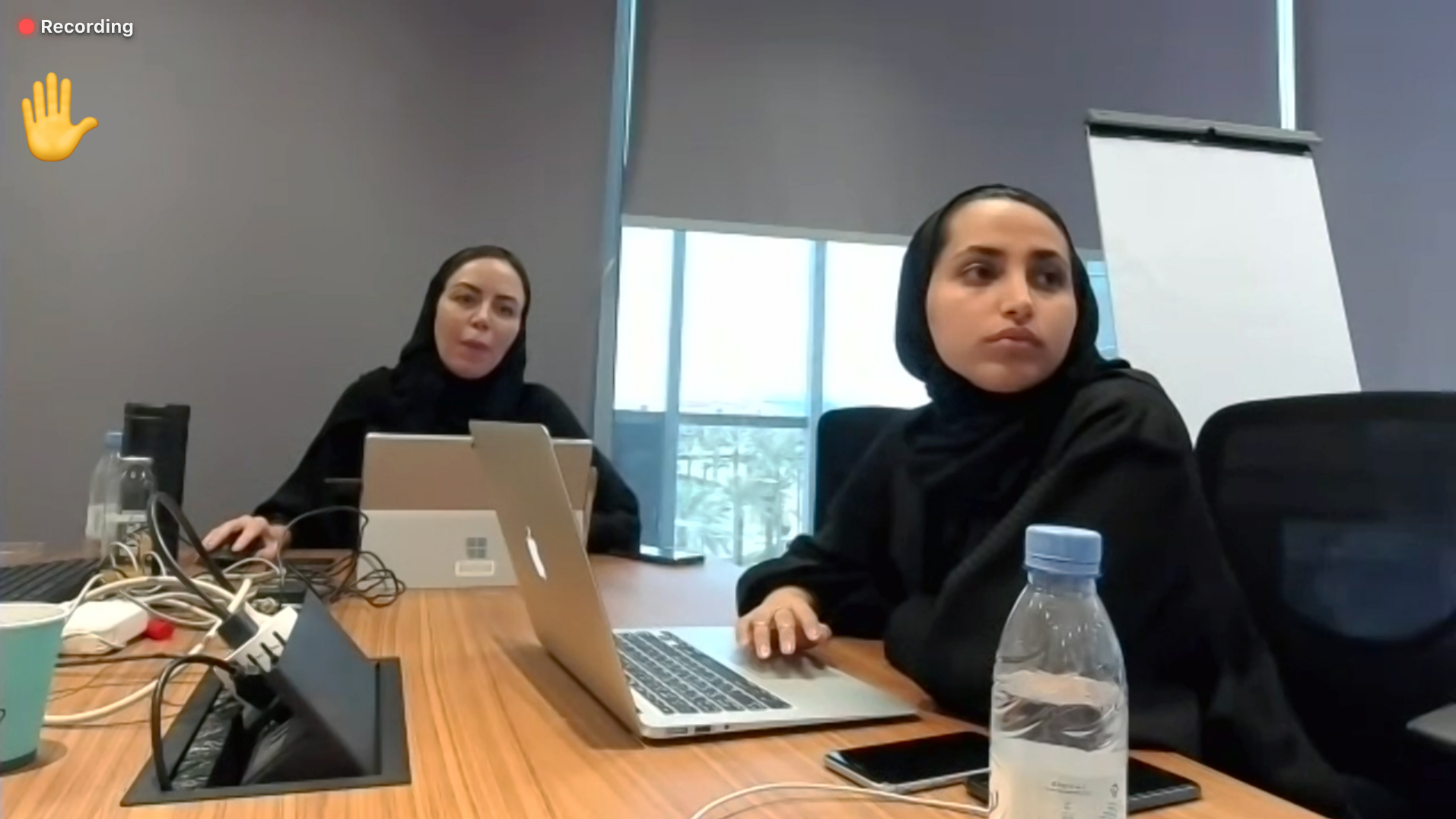
The WG approval sessions are organised by the IPCC secretariat and, apart from when the COVID pandemic moved them online, are roughly a 5-day meeting hosted in various cities around the world on government invitation. The sessions are predominantly chaired by the WG co-chairs with support from the wider bureau, and historically, it has been the convention for the developing country co-chair to open the session and for the developed country co-chair to assume the majority of the session’s chairing. The seating arrangements at these sessions are the same as for the regular plenary, with national delegations in alphabetical order followed by observer organisations and lead authors at the back of the hall, see Figure 7.3. On the podium or dais at the front of the room sit the WG co-chairs, the authors presenting the section’s key messages and TSU and secretariat staff providing the technical and legal support for the process. For the AR6, the approvals of the WG reports were held virtually as in Figures 7.3 and 7.4, with the meeting scheduled over a two-week period.
The arrangement of the plenary approval session for WGIII’s contribution to the AR5 in 2014. The text is projected at the front of the room, and the co-chairs, section authors, TSU and secretariat staff are seated on the podium. Delegates below are seated in alphabetical order with observer organisations behind.

A screenshot of the virtual approval of WGIII’s contribution to the AR6.

Scholars frequently use metaphors of theatre to describe the conduct of intergovernmental meetings (Death Reference Death2011; Campbell et al. Reference Campbell, Hagerman and Gray2014; Craggs and Mahony Reference Mahony2014; Hughes and Vadrot Reference Hughes and Vadrot2019) and staging for the audience-dependent presentation of scientific knowledge and assessment processes (Hilgartner Reference Hilgartner2000; Gustafsson Reference Gustafsson2019; Schenuit Reference Schenuit2023). In terms of describing and analysing the practice of approval, choreography is useful for highlighting the preparation and planning undertaken by co-chairs, TSU and the wider bureau for these meetings.
Chairing is a central element of the approval practice. Interviews and discussions indicate that within the organisation, chairing is viewed as an art form and is an admired skill (interview 1.07.2010). While it is a skill largely acquired through observation, shared evaluation of past performances and practice (interview 5.08.2010), there are also institutional attempts to ease initiation into this role. Anticipation for the potential controversy of the SR1.5, for example, led the secretariat to host a training session with previous chairs (interview 26.02.2019). Co-chairs have also organised their own informal sessions with delegates to gain a government’s perspective. This is critical and points to the importance of distinguishing between the role of chair, author and delegate in the practice of approval, as despite this being a shared undertaking, the distinct interests and activities of each of these actors give rise to different and even conflicting understanding and perceptions of the purpose and outcome of this final stage in the IPCC’s practice of writing.
Scheduling is a second key element for the choreography of the meeting. The SPM is over 30 pages long, arranged into headline statements with paragraphs and figures that elaborate and support these, as well as signposts to the relevant sections of the underlying report. The co-chairs have to decide how to stage the presentation of these sections; this may follow chronological order, or a decision may be taken to front load potentially controversial elements to give delegates sufficient time to reach agreement (interview 26.02.2019). Alongside the timing of the content is selecting the ‘right person’ to chair the section. While developed country co-chairs continue to undertake the majority of chairing, no single individual can chair a meeting that will eventually run across day and night. Consideration needs to be given to where conflict lies, and which chair or bureau member may be best positioned to mediate it (interviews 5.08.2010; 9.11.2010; 26.02.2019). This carefully planned meeting choreography is captured in the podium document, which provides a shared script of the meeting for the bureau and TSU. Once underway, maintaining communication between the bureau, TSU and authors is critical and methods of whispering and passing bits of paper have now been replaced with slack (interviews 9.11.2010; 26.02.2019), a messaging app that allows for rapid sharing and collaboration.
With the backstage scripted and the front stage prepped, the approval session opens with the assigned chair introducing the SPM and detailing amendments made to the final draft in response to government comments. The timing of the release of this document is another carefully choreographed element (interview 26.02.2019). Releasing the final SPM too far ahead of the session gives governments time to bury deeper into the text and develop strong, well-informed positions. Released too late, and the start of the session can be mired by complaints over insufficient time to examine the revised text, which can induce ill-feeling that carries over into proceedings. With the SPM text projected overhead and the first section highlighted in yellow, attention shifts to the delegates waiting below. While chairs may have control over the preparation of the text and choreography of the meeting, once the session is open, the text moves into the hands of member governments.
The passing of the text from the chairs to delegates reveals the different perspectives. Co-chairs have spent months crafting every sentence and are acutely aware of authors investment in the document that is now projected on the screen. It is therefore unsurprising that co-chairs and authors share a view of success that sees the text pass through the approval as unscathed as possible. However, becoming possessive of the text and the activities of its passage can alienate the plenary participants, including other WG bureau members, as each awaits their turn in proceedings (interviews 26.07.2010; 9.11.2010). Therefore, effective chairing requires letting go of the text and using other resources and strategies to shape the meeting dynamics and their imprint on the SPM. Time, in the sense of setting and attempting to maintain the pace of the session is a key resource in this regard. An experienced chair knows that delegates want the opportunity to say their piece, may even relish a sense of urgency and plays on time accordingly (interviews 26.07.2010; 9.11.2010).
Experienced chairs speak about taking it slowly in the beginning and earning the trust of delegates by listening and responding to their concerns, then cashing in on this trust later once everyone is invested in the process and sensitised to the time constraints and joint endeavour of getting words, sentences and paragraphs approved.Footnote 9 Having only four to five days to approve the text, urgency is easily created, and it is not uncommon for discussion to stay circling the first paragraphs at the end of the second day or for difficult portions of the text to be pushed back until later in the proceedings. However, delaying the approval of contentious issues until later in the week can backfire. This happened in the case of the WGII plenary approval of the AR4, see Figure 7.5, where the all-night session that most approval plenaries experience ran over into an extra day and was generally regarded as ill managed and ‘laborious’ (Gutiérrez, Kulovesi and Muñoz 2007: 1), with some participants claiming it was ‘one of the worst meetings they had ever attended’ (Gutiérrez et al. 2007: 14), signalling the pressure and expectations that chairing is subject to.Footnote 10
The state of progress on day three of the WGII approval session of the AR4.

7.3.2 The Delegates
While bureau members are elected for the assessment cycle and their continuation in this role is dependent on re-election, the national delegate remains as long as the government invests in IPCC participation, and they hold their post in the relevant government department. Since the approval of the FAR in 1990, and according to the participant lists available, on average 111 member governments have attended the approval of the final SPM of an assessment cycle, the synthesis report, with an average of 2.5 delegates per country. While the total number of delegates has increased since the FAR (see Figure 7.6), the total number of member governments has remained relatively steady, with the highest number (129) participating for the approval of the AR4, and only 42 countries have attended the approval of every synthesis report in Figure 7.6. Developing country participation has plateaued in IPCC meetings. According to the IPCC’s own figures, on average 75 developing countries attended the four plenary meetings that took place between 2014 and 2016 compared to an average of 134 attending UNFCCC COPs during the same period (IPCC 2016b).

The average delegation size masks significant variation. Out of 177 countries that attended at least one approval session captured in Figure 7.6, the majority (104 countries or 59%) were represented by a single delegate. Figure 7.7 identifies the 31 countries with an average delegation size greater than 2, which is indicative of the small number of countries most active in the meeting. At least two delegates are required to participate in simultaneous contact groups and/or huddles and to sustain a presence during the all-night sessions in the final stages of the approval. One experienced delegate suggested, you don’t need more than three or four, ‘maybe five … as long as you have got a range of expertise in the team’ (interview 26.07.2010). The larger delegations identified often include cross-departmental expertise as well as specialist knowledge in the assessment under approval from within and outside government, and some listed participants may not be directly contributing to the delegation. Bureau members are included in the delegation counts and nearly all countries in Figure 7.7 have or have had a bureau member in one of the six assessment cycles, which accounts for some countries listed.

Delegation size does not necessarily correlate with level of participation in the meeting.
Using the Earth Negotiations Bulletin (ENB) summaries as a measure of member government’s engagement in the approval of WGI, II and III’s contribution to the AR6, 29 member governments, plus the EU, are mentioned more than 20 times in total across these approval sessions (see Figure 7.8) (Bansard, Eni-ibukun and Davenport Reference Bansard, Eni-ibukun and Davenport2021; Eni-ibukun et al. Reference Eni-ibukun, Davenport, Gutiérrez and Mead2022; Templeton et al. Reference Templeton, Davenport, Guitiérrez and Hansen2022). While Japan has on average the largest delegation, with 15 members, it intervened significantly less in the approval of the AR6 than India, whose delegation across synthesis approval sessions has averaged 2.8 and was 6 in the AR6 synthesis approval. Combined, Figures 7.7 and 7.8 provide a more precise sense of which member governments actively participate in the practice of approval. These figures suggest that out of the 100 or so member governments present at approval sessions, roughly 30 countries could be identified as core participants in approving the key findings of a report. Even across this core group, participation is uneven, with the EU and its member countries (24%), India (15%), Saudi Arabia (11%) and the US (9%) accounting for over half (59%) of the interventions recorded.
Graph of the 30-member governments mentioned more than 20 times, as recorded in ENB summaries for the approval of WGI (Bansard, Eni-ibukun and Davenport Reference Bansard, Eni-ibukun and Davenport2021) WGII (Eni-ibukun et al. Reference Eni-ibukun, Davenport, Gutiérrez and Mead2022) and WGIII’s (Templeton et al. Reference Templeton, Davenport, Guitiérrez and Hansen2022) contribution to the AR6.

While the size of the delegation does not necessarily positively correlate with the number of interventions a member government makes, a delegation of two or more is essential for participation across contact groups and huddles. Contact groups and huddles are used to move polarised discussions out of the plenary and facilitate discussion of technical content between the authors and concerned parties. While contact groups are generally scheduled and chaired by a developed and developing country chair, huddles are chaired by a bureau member and may place on the side or even in the corridors. From observation of approval sessions, there is some coordination across UNFCCC negotiation blocks (De Pryck Reference De Pryck2021). This enables smaller delegations with a shared position on climate change, such as AOSIS countries, to broaden their reach across the different sites of the approval, to echo and support interventions and to ensure that these shared interests are reflected in the emphasis and formulation of key findings.
As necessary as human resources are for active participation, delegation size and the number of interventions do not equate with symbolic power to shape the text. For this, it is necessary to identify the forms of authority that shape relations and distinguish the actors and delegations that have the greatest influence in and over the practice of approval. As described in Chapter 4, knowledge of the process, both in terms of IPCC processes and procedures and of the assessment’s progression, are central forms of cultural capital, distinguishing delegates and ordering relations in the panel’s practice of writing climate change. These forms of capital are accumulated and embodied within long-standing delegates to the IPCC and are further enriched where a member government hosts the co-chair and TSU. This is most readily observed when we return to the approval in progress.
With the first paragraph projected on the screen, the delegates’ role begins. This general introduction to the text is greeted by a wave of country flags. In depth knowledge is not required to intervene in a discussion on the scope of the introduction, which means nearly all delegations have an opinion on this constituent of the document or procedural issues to raise, and for some member governments this may be their main intervention in the meeting. Consequently, reaching a consensus on these three or four sentences can take up precious hours of the allotted time by running into a second morning or afternoon session. This highlights a number of important features of delegations, the properties of individual delegates and the tactics available to member governments to sculpt the SPM document and imprint their interests on the text.
Although nearly all central figures in the IPCC’s establishment and/or early years have retired, there have been long-standing members of the panel that were influential in the formalisation of the IPCC’s practice of writing. These delegates have sometimes fulfilled different actor roles, for example as bureau member or head of a TSU, or accompanied the national bureau member to meetings and served as the main point of contact between the government, chair and TSU. The time and financial commitment these member governments have made to the IPCC, such as through hosting meetings, chairing organisational working groups and funding a TSU is rewarded fourfold. First, through recognition of both the member government and delegate’s support to the organisation (cultural capital); second, by the knowledge of the process that being a long-standing member and hosting a TSU enables (cultural capital); third, by the social connections that these activities foster (social capital); and fourth, the informal channels these relations create to additional know-how and perspectives on the process (cultural capital).
It is the combined cultural capital, in the form of knowledge of the process, and social capital, being known by and for, which enables some delegates to play a more active role in the proceedings, intervening more frequently with comments that are given greater consideration by the co-chairs and are influential over the thinking of other panel members. Due to their experience, these delegates may not be given detailed instructions from their government, which allows greater flexibility in how they play their role during proceedings. In some cases, the delegate’s or delegation’s participation is constructive to the process, enabling these actors to detect the direction in which particular disagreements are heading and intervene with suggestions that have successfully resolved similar issues in the past. At the same time, these delegates are also better able to phrase political interventions in knowledge of the process to assert their interests, which are more likely to be effective because of their symbolic power.Footnote 11
Delegates and delegations become recognised and associated with these roles. The previous head of the British delegation, David Warrilow, see Figure 7.9, was well known amongst the panel, the secretariat, bureau and TSU members. As the British focal point, Warrilow attended plenary and bureau sessions from 1995 until his retirement in 2016. He also acted as a lead negotiator for the EU on the scientific issues covered in the UNFCCC. David was perceived by bureau members as a delegate that knows the science (and politics), and overtime he distinguished himself within the panel as a constructive member of the IPCC’s practice of writing, regularly intervening in approval proceedings to offer advice on improving the wording, order and flow of the section under discussion. As a result, David’s opinion was sought on all matters of IPCC business inside and outside of plenary sessions. He often headed task groups to gather background and opinion to inform panel decision-making, was commonly requested to chair contact groups during plenary and WG approval sessions and was often at the front of efforts to broker deals between dissenting parties.Footnote 12
David Warrilow co-chairing a contact group at the 24th plenary session of the IPCC in Montreal, 2005.

In other instances, a delegate’s notoriety can signal their obstruction to the process. The Saudi Arabian delegation is comprised of a highly skilled team of delegates. In early assessments, the approval delegation was generally headed by Dr Mohammad Al Sabban. Mohammad Al Sabban, see Figure 7.10, was also the chief negotiator to the UNFCCC process from 1990 to 2012 and senior economic advisor to the Minister of Petroleum and Mineral Resources (now the Ministry of Environment) from 1997. He also distinguished himself as a member of the panel, albeit through a different mode of engagement than David Warrilow. The Saudi Arabian approach, led by Mohammed Al Sabban, was more commonly associated with hindering the approval proceedings. Regarded in the UNFCCC negotiating process as one of the key players and usually cast in the role of villain (Depledge Reference Depledge2008; Harris Reference Harris2009), he gained notoriety in the IPCC for his performance during the approval session of WGI’s contribution to the SAR in Madrid, in 1995 (Houghton Reference Houghton2008). At this approval session, notes were passed between the Saudi Delegation and the head of the Global Climate Coalition, Don Pearlman, with repeated objections that delayed the approval of the text (Leggett Reference Leggett1999: 224–30; Schneider Reference Schneider2009). This reveals that while time is a tool that the co-chairs attempt to command, it is also an instrument for delegates to play.
Left: The Saudi delegation led by Mohammad Al Sabban at climate change talks in Bonn 2010.

Delegations can attempt to delay proceedings by continually intervening, by raising issues with the text and by re-opening previously approved sections (Skodvin Reference Skodvin2000a: 162–65). This is a tactic that the Saudi delegation has been associated with both in IPCC and UNFCCC proceedings (Depledge Reference Depledge2008). In the approval of WGI’s contribution to the SAR, the Saudi Arabian delegation made life difficult for the chair and authors by repeatedly objecting to text (Leggett Reference Leggett1999; Houghton Reference Houghton2008; Schneider Reference Schneider2009). They also missed the huddle where delegates worked closely with the authors to craft agreeable language (Chemnick Reference Chemnick2018). This enables a delegation to re-open debate when the proposed text is returned to the plenary on the basis they did not participate in discussions and further delay the progression of the meeting. However, tactics like these have to be used sparingly or they result in lasting bad feeling that can impact a member government’s symbolic power and hamper their ability to manoeuvre effectively.
As US government wikileaks reveal, there was some recognition within the Saudi Arabian government that Dr Al Sabban may have lost his capacity to read the changing mood that took place with the negotiation of the Copenhagen Accord at COP 14 in 2009, and to adapt the countries position accordingly (Guardian 2010d).Footnote 13 During the AR6, there was a change in the membership of the Saudi delegation, with the all-male team replaced by a younger, female-strong delegation led by Dr Malak Al Nory (see Figure 7.10). In light of the comments captured in the Wikileak (see footnote 14), this change of guard appears as a well-orchestrated move to regain and retain the national position as a symbolically powerful and effective writer in and of the IPCC’s practice of approval, which is vital to achieving their overall negotiating aims in the UNFCCC.
As this account of a symbolically powerful member government in the IPCC’s practice of approval makes apparent, the motivation for accumulating symbolic power and the role adopted in proceedings is in large part driven by the national position on climate change as negotiated within the UNFCCC, although that is not the only motivation. This results in a degree of regularity and even predictability to the approval proceedings, which extends beyond the routines and conventions of doing an IPCC approval plenary into the timing and content of delegates’ interventions. The Saudi Arabian delegation provides the clearest illustration of this, but it is not alone in this role. Since the approval of the FAR in 1990, Saudi Arabia’s interventions have focused on the confidence levels assigned to the scientific findings and preventing carbon dioxide from being distinguished from other greenhouse gases (Leggett Reference Leggett1999: 17), which initiates intervention every time relevant terms appear in the text. The content of Saudi Arabian interventions continued to question the certainty of scientific claims in the AR4, with four interventions recorded in the ENB summary of the WGI and WGII approval session of Saudi Arabia objecting to the certainty language employed (Gutiérrez, Kulovesi and Muñoz 2007; Gutiérrez, Muñoz and Johnson 2007). In one case, China and Saudi Arabia proposed reducing or qualifying the probability that anthropogenic greenhouse gas increase has very likely caused most of the observed increase in global temperature by removing the adverb ‘very’ or adding the term ‘increasingly’ very likely (Gutiérrez, Muñoz and Johnson 2007: 5).
In the AR6 cycle, Saudi Arabia moved its focus on to dampening the emphasis on emission reductions and fossil fuel phase out. In the approval of WGIII’s contribution to the AR6, there are seven recorded instances of Saudi Arabia intervening to add the word ‘unabated’ to sentences referencing CO2 and GHG emissions reductions, in one instance calling for retaining language ‘on avoiding unabated fossil fuel emissions rather than “displacing” fossil fuels’ (Templeton, et al. Reference Templeton, Davenport, Guitiérrez and Hansen2022: 19). This indicates that while a country may accept that some battles are lost, for those parties with deep interests, be those economic or physical survival, the energy of the struggle remains, and attention is shifted to shaping new objects and concepts that have the potential to significantly shape the negotiating process. Saudi Arabia is an easy target for analysis in this regard because its interests in fossil fuels are deep, but so are those other countries, which can leave the objections and the cultural capital expenditure to the Saudi Arabian delegation.
While the UK and Saudi Arabia have been active participants since the IPCC’s establishment, some actors have deepened their involvement in the panel and participation in the practice of approval over time. In the written accounts of the FAR and SAR, there are few references to interventions by China. However, by the AR4, China sends one of the largest delegations with an average of 15 delegates and begins to play a core role in approval proceedings (Gutiérrez, Kulovesi and Muñoz 2007; Gutiérrez, Muñoz and Johnson 2007; Schneider Reference Schneider2009: 180–97). In the AR6 and according to ENB recorded interventions, China was the eighth most frequent intervener, making up 3% of total interventions during the WG approval sessions (see Figure 7.8). Caribbean member states also emerged as core participants during the approval of the AR6. Combined Saint Lucia, Saint Kitts and Nevis and Trinidad and Tobago are mentioned 165 times across the ENB summaries for the WG approval sessions, which is equal to 6% of the total interventions (see Figure 7.8). St Kitts and Nevis did not appear on a synthesis report approval participant list until the AR6, when it arrived with a delegation of four (with three registered participants from Climate AnalyticsFootnote 14). More research is required to understand a country’s changing level of involvement. However, as context, it is important to note Caribbean member states activism in having the 2°C temperature goal re-evaluated from COP15 at Copenhagen, on the basis that it undermined the survival of their communities (Tschakert Reference Tschakert2015: 2). These calls initiated a process of structured expert dialogues to assess the adequacy of the long-term goal and eventually led to the invitation for a special report on the impacts of 1.5 in the Paris Agreement (Tschakert Reference Tschakert2015). In the approval sessions, these states frequently intervened to support the authors and on issues related to the 1.5 temperature goal, impacts, emissions reductions, barriers to adaptation, loss and damage and urgency (Bansard, Eni-ibukun and Davenport Reference Bansard, Eni-ibukun and Davenport2021; Eni-ibukun et al. Reference Eni-ibukun, Davenport, Gutiérrez and Mead2022; Templeton et al. Reference Templeton, Davenport, Guitiérrez and Hansen2022).
However, it is not only state interests that explain member governments changing participation over assessments. It can, for example, be the result of individual delegates investing themselves in the process and gaining confidence and ease in its navigation, particularly as their awareness of the potential for IPCC products to impact climate negotiations increases over time and is conveyed back to the government. Having someone within government elected to the bureau can serve to increase national interest and investment. This can be particularly important in the case of developing countries, who may use the additional funding to socialise another member of the government department into proceedings and thereby strengthen the government’s capacity and expertise (interview on 29/03/2023).
Turning from the order of relations in the practice of approval to their effects on the text, in most instances, the contents of government interventions result in the substitution of words or re-ordering of sentences, which may even lead to improved clarity and communication of complex science. Of course, as the examples above indicate, adding additional terms or words each time a particular concept appears can also make the meaning of a sentence less clear, such as adding ‘unabated’ or ‘other greenhouse gases’ in front of every appearance of fossil fuels, carbon dioxide and emissions in the text. Requests by governments for clarity or to include additional findings and sentences from the underlying report can also greatly increase the length of the assessment, which on average increased by 17–53% in the AR4 and AR5 (Mach et al. Reference Mach, Freeman, Mastrandrea and Field2016). WGIII’s SPM for the AR6 grew by two thirds through the approval process from 31 pages to 53 (IPCC 2022), making it the largest ever summary document. Size matters in the communication of climate change; succinct key messages and powerful visuals facilitate travel; and it appears that in this instance some member governments may have sought to impede the travel of climate mitigation knowledge.
Despite the fact that the SPM always increases in length, deletion is another strategy of delegates in the practice of approval. Continuous intervention and objection – particularly once the pressure of time is bearing down on the proceedings – can succeed in getting sentences, boxes, figures and, in some instances, entire sections removed from the document. Even when time is allotted, if text has the potential to influence UNFCCC, negotiations it may be insufficient. This brings us back to country categorisation in the AR5. Zooming in on member government’s comments on the final draft in box 7.1, it became apparent that while the Annex I, or developed countries, sought to have country categorisation re-evaluated along the lines of income, some developing countries with growing economies and GHG emissions sought to maintain the differentiation of the Kyoto Protocol. Although the contact group met over the course of three days, it failed to reach agreement, which led to the deletion of four figures and all relevant paragraphs from the final report (Gutiérrez et al. Reference Gutiérrez, Kosolapova, Luomi and Mead2014: 8). The countries opposed to income categories cited their concerns that ‘policymakers would draw on the SPM for the UNFCCC negotiations on a new climate agreement’ (Gutiérrez et al. Reference Gutiérrez, Kosolapova, Luomi and Mead2014, 8). This serves to highlight that there are some issues on which parties are so divided and the relevant objects of this division so heavily weighted by their potential effect on the negotiating process, even if a chair deploys all strategies available to them, ultimately the need to produce an approved text within the allotted time, or within a reasonable time beyond that, will result in deletion.
7.3.3 The Authors
This brings us to the authors. What strategies are available for authors to prevent the incursion of member governments into the key findings of the assessment? For authors, observing the proceedings from the back of the hall, this plenary-specific way of approving the text is, for most, a new experience that has been described as ‘exceptionally frustrating’ (Stavins Reference Stavins2014), slow, awkward and time-consuming (IAC 2010b: 38, 84, 112). Government interventions are often regarded as political, time wasting, and delegates enjoying the sound of their own voice. However, authors are also susceptible to being swept up in the unfolding theatre, with dramatic accounts of scientists storming out, refusing to alter the text, and more mundane anecdotes of keeping themselves amused by taking bets on the length of time between Saudi interventions (Schneider Reference Schneider2009: 138).Footnote 15 To some extent this reflects the role of authors in the proceedings and the intrusion of government delegates into the authors’ sphere of influence over the science and key findings of the assessment in the SPM, which at times only leaves room for symbolic gestures.
Author awareness of the significance of this stage in the IPCC’s practice of writing has grown over assessment cycles through author’s published accounts (Schneider Reference Schneider2009; Broome Reference Broome2014; Stavins Reference Stavins2014) and the sensitivity towards the political context instilled by the bureau through the drafting cycle. This anticipation of the struggle results in careful selection of key messages and preparation to defend them (O’Reilly Reference O’Reilly, De Pryck and Hulme2022: 167). However, just as the chairs must let the text, and to some extent the proceedings, pass into the hands of the delegates, so too must the authors. Attempts to maintain control over the wording or refusing to see the knowledge from the perspective of governments as policy prescriptive and/or culturally situated can and has hampered the approval of the SPM, in one infamous instance even necessitating an additional session.Footnote 16
The role of lead authors is to ensure that any suggested revisions to the text are consistent with the content of the underlying chapter and the literature informing it. Thus, when a new paragraph of the SPM is opened for approval, the authors responsible for that section take their place on the podium alongside the chair (see Figure 7.4), provide a short overview of revisions made and identify the evidence base in the underlying report. In opening the section for comments, the chair will remind delegates to keep their interventions brief and to offer concrete suggestions. Delegates’ interventions identify concerns with the text and request further explanation and clarification. The majority of the ensuing discussions centre on clarifying the terms and concepts employed by the authors and translating them into a language that is comprehensible to the SPM’s audience. As time passes and the next government is identified on the list, the chair persistently presses for concrete proposals. It is the role of the authors to indicate whether the proposal fits with or distorts the meaning of the chapter content and the literature that underpins it. The author’s authority in these proceedings rests upon their in-depth knowledge of the subject area and their capacity to rule whether proposed changes are consistent with the content of the full report. However, this scientific authority does not operate unchallenged. The right of authors to rule over the text becomes a constituent of the struggle within and between delegates seeking to uphold their interests through the practice of approval.
In cases where disagreements over text appear unresolvable, a contact group or huddle is formed, depending on the type of issue and the number of interested parties. This practice, which outside of translator’s working hours proceeds in English, enables governments objecting to a particular word, sentence or section to work alongside the authors in a more intimate setting and broker text that can then be taken back to plenary for approval, a process that can be completed in a matter of minutes or run into days. During these sessions delegates can question the authors on the meaning of scientific terms and phrases, which necessitates authors translate technical understanding into a language communicable to a wider audience. Many of the delegates present will be UNFCCC negotiators, and this process enables them to establish the political content of a concept and its potential to bear on the negotiating process (interview 5.10.2010). As one author notes, it is within these contact groups ‘behind closed doors in small groups’, that motivations for delegate’s interventions were made explicit and ‘representatives worked to suppress text that might jeopardize their negotiating stances in international negotiations’ (Stavins Reference Stavins2014).Footnote 17 Authors may step outside of the room to discuss and redraft between themselves, refer back to the underlying literature and contact members of the wider chapter team before they offer or agree a suggestion. In the most controversial sections, new proposals are greeted with an additional round of comments, with delegates sending a photo of the wording back to government (Broome Reference Broome2014: 12) or phoning a minister for further instructions (interview 4.10.2010). Through this back and forth, approvable language is crafted that neutralises political content, renders it opaque or removes it altogether.Footnote 18
As highlighted, however, there is no guarantee that this text will be accepted by the plenary, and while in some cases a few minor adjustments are all that is required, on other occasions authors have found themselves embroiled in the same disagreements that initiated the contact group in the first place. As described in relation to Saudi Arabian interventions during the SAR, delegations may use their absence in the discussion as a reason to reject the revisions.Footnote 19 In the face of these tactics, authors have little at their disposal to constrain government behaviour and must contain their frustration, as author outbursts are not well received by delegates. When Mohammad Al-Saban raised a series of objections to text that had been agreed upon in the contact group, the lead author, Ben Santer, lost his temper and responded that the issues could have been discussed in the contact group had a member of the delegation been present. Al-Sabban replied that it was his job, as author, ‘to serve the governments of the world, not to have an independent opinion’ (Chemnick Reference Chemnick2018). In this instance, Saudi Arabia became an isolated figure and faced with being the only country identified in a footnote, withdrew its objection to the sentence.
There are instances, however, where issues are so politically charged that no common ground can be found, as observed in returning to the country grouping example in the AR5. Despite three days to work together in a contact group, all relevant figures and content on categorising countries in relation to income and GHG emissions were deleted from the SPM, including any reference to relevant content in the underlying assessment (Gutiérrez et al. Reference Gutiérrez, Kosolapova, Luomi and Mead2014). In situations like this, and as tensions mount, both authors and delegates may resort to threats (Broome Reference Broome, Brister and Frodeman2020), such as the threat of walking out, resigning from the author list, recording dissent in a footnote or making the content public. This is what happened as a result of lost content on country groupings and international cooperation in the AR5. The authors involved published all deleted figures, an account of the event and its implications for the future of the IPCC in a commentary in the journal Science (Edenhofer and Minx Reference Edenhofer and Minx2014; Victor, Gerlagh, Baiocchi Reference Victor, Gerlagh and Baiocchi2014; Wible Reference Wible2014). The drafting author of deleted content on international cooperation wrote his grievance in a letter to the bureau, which he later published on his personal blog along with the deleted section (Stavins Reference Stavins2014). In the end, these are largely symbolic actions, more impactful on the scientific field than member governments, who excluded this content as the basis of collective action in deleting it from the SPM. However, the example serves to highlight that to understand what the practice of writing produces in an assessment – what is or is not contained in the final SPM – attention needs to be given to the choreography of the meeting, the dynamic between chairs, delegates and authors and the presence of particular characters. More critically, the analysis must be situated within the negotiating context of the UNFCCC and governments positions on climate change within the negotiations, as this generates the forces structuring the practice of approval and the content that results.
7.4 Summing Up
I opened this book with the story of four countries – the US, Saudi Arabia, Russia and Kuwait – refusing to welcome the IPCC Special Report on 1.5 at COP 24 in 2018. As the account of authors publishing deleted content in Science also indicates, the practice of approval does not contain the struggles it initiates. These forces originate from and overflow back into the broader field of global climate activity, where the interests in climate science and politics are constituted and which ultimately drive actor roles and the strategies they deploy in the practice of approval. Not all participants are happy with the final product and its potential consequences, hence Saudi Arabia’s attempt to distance itself from and dampen the reception of the SR1.5 and the authors’ decision to publicise deleted content. Recounting these stories as part of the politics of approval identifies the IPCC as a central site in climate agreement-making. As member governments have grasped the impact of IPCC knowledge on UNFCCC negotiations through its provision of objects and methods for determining the distribution of collective responsibilities, they have deepened their involvement in the practice of writing and brought the negotiations into the approval. The chapter documents the forms of authority and strategies that co-chairs and authors have to channel and contain these forces through, for example, the choreography of the meeting, the knowledge of authors and cultivating an attitude of openness to its collective re-writing. However, as evidenced through delegations own delaying tactics, all forms of authority and strategies become available sources and resources in member governments’ attempts to re-write the meaning of climate change.
It is the interplay between these different actor roles and strategies, as situated within the broader context of climate politics, that are constitutive of the politics of approval and its imprint on the SPM. As in all aspects of the IPCC’s practice of writing, the capacity to participate in the approval session, adopt these roles and deploy these strategies to shape the text is not equally distributed and is ultimately dependent on a member government’s interests and economic resources to invest. Governments invested in the IPCC and its practice of writing climate change undertake an extensive review of IPCC materials, particularly the SPM, which prompts the most discussion amongst drafting teams and ensuing revisions in the re-drafted policy document. It is the same governments that arrive at the plenary prepared through the expertise enlisted for the review and as contained within the delegation. This relationship is strongest when a country chairs a WG and hosts the TSU, which is a significant economic investment in the IPCC process. These countries tend to have the highest number of authors in the SPM writing team and the greatest knowledge of the assessment process in practice, which enables informed position-taking on the text. While recognition of these governments’ contributions can complement these forms of symbolic power – making authors and chairs more amenable to their comments – it can also constrain a government’s capacity to diverge too far from the science that national authors wrote.
Other delegations adopt roles that do not impose restraints on their capacity to bend the practice of writing to their interests, which brings Saudi Arabia into view. However, it is in documenting the deepened involvement of developing countries in the practice of approval that is revealing of both how order imprints through the practice of writing and how the order of relations within the IPCC and the world beyond – the global distribution of economic, cultural and social resources – is changing. This is documented in this chapter through the emergence of new countries as contributing to the drafting of the SPM and in changing relations of participation in the approval. It is also evident in the struggle over content that attempted to regroup countries based on income and GHG emissions, which caused some of the greatest struggle and deletion in an SPM. This highlights the extent to which social order matters in the IPCC – both as a reflection of the broader distribution of global resources and as a distribution of power to write the future order, including the basis by which resources are valued and distributed – in the naming of climate change. While the economic stakes of climate change define the interests of all actors in the IPCC, for some, climate change is ultimately and urgently an issue of survival. Those countries that do not have the capacity to significantly shape the content through authorship of the scientific assessment, such as Caribbean member states, must leave their mark on the writing of climate change in the politics of approval.


 Open access