


From the Kremlin to South African trade unions, the strategic calculations of political organizations sometimes require that their members engage in violent action. To ensure that the type, target, and frequency of violence further their strategic objectives, these organizations employ a command structure to train combatants and govern their battlefield behavior.Footnote 1 Viewing combatants as agents who produce optimal levels of violence that further an organization's strategic goals has deepened our understanding of the dynamics of war.Footnote 2 The evident effort by political organizations to harness combatant violence toward their strategic objectives makes this a reasonable assumption.Footnote 3 States task their officer corps with the “management of violence” to ensure that the type, target, and frequency of violence are optimized for strategic ends.Footnote 4 Nonstate groups similarly manage their production of violence.Footnote 5 Even if some combatants deviate on the margins, political organizations generally direct their actions to fulfill their strategic interests. Idiosyncratic individual behaviors disappear into the error term, and violence “attributed to an organization” is usually interpreted as “ordered (at some level of command) and strategic.”Footnote 6 The payoff for understanding international relations by treating states as unitary rational actors has long been evident and has also paid dividends in the burgeoning field of substate conflict.
Some explanations of organized political violence rely more on this assumption than others. Rational choice models of political violence assume that individual idiosyncrasies or the passing emotional states of critical decision makers are peripheral to the outcome. However, when describing knife-edge equilibria, theories of strategic interaction are especially sensitive to individual outlier behavior that is out of step with institutional strategy. Proponents recognize that acts “in non-iterative situations by individual decision makers (such as in crisis situations)” are not well explained with rational choice models.Footnote 7 But individuals need not occupy a high office for their internal motivations to influence conflict outcomes. If particular intrinsic motivations systematically shape the judgments and behaviors of enough conflict participants, they will affect organized violence for as long as combatants are able and willing to fight each other.
The assumption that violent organizations can generally solve, or at least manage, the principal–agent problem has always been understood as a bet.Footnote 8 Even in the abstract economic world of widget production, a well- and long-understood risk is that the conflict between “intrinsic motivation and extrinsic incentives” does not inherently resolve in favor of the latter in determining a worker's actions.Footnote 9 The generation of violence is fundamentally different from the production of widgets since it requires more than managing the material incentives of front-line workers: the “fear of killing and fear of dying represent psychological hurdles not easily overcome.”Footnote 10
In the field of social psychology, most accumulated findings question the prudence of assuming that human behavior aligns neatly with the organizational incentive structures meant to shape that behavior. The tension between the two has become the subject of an emerging “behavioral IR” discussion, which seeks to integrate “new behavioral findings at the individual level [with] collective decision making.”Footnote 11 This discussion contributes to a growing body of work within political science that strives to establish how, and to what degree, individual-level motivations influence violent political processes between organizations, including states.Footnote 12
The assumption that individuals enact organizational preferences has long been a necessity arising from the empirical limitations of exploring individual-level motivations. As McDoom puts it, “scholars lack microlevel data … forcing them to make inferences from highly aggregated phenomena.”Footnote 13 However, recent conflicts have generated more and better data, some of which fills the scholarly need for disaggregated data. The public release of fine-grained conflict data recorded during the recent Afghanistan and Iraq wars has been particularly influential in shaping our understanding of insurgent warfare.Footnote 14
The literature's emphasis on imputing strategic organizational motivations also stems from the difficulty of uncovering “with an acceptable level of accuracy the individual motives behind violent acts.”Footnote 15 In “summarizing an observed pattern rather than an intention,” the literature drifts from observed action to assumed intent.Footnote 16 This has been a serious obstacle to inferences concerning the interaction of organizations and individuals in observational studies of conflict.
We propose that the reliable effect of ambient temperature on human levels of aggression can be used to distinguish patterns of violence motivated by organizational strategy from acts more influenced by individual combatants. In this article we present evidence that (1) in recent US-led counterinsurgent conflicts, ambient temperature affected how and when individual insurgents initiated attacks, and (2) individual-level aggression (measured through the endorsement of violence by combat-aged males) was one mechanism driving the relationship. Our research design relies on one feature of these wars: insurgents produced a variety of violent acts with varying levels of organizational control, which makes it possible to distinguish the relative contributions of strategic and embodied motivations in the production of overall violence.
In this context, high temperatures increase the amount of the kinds of violence over which individuals have ample discretion, but not the kinds that require more organizational control. The statistical tests reveal that ambient temperature positively affected the production of the least organizationally constrained violence during conflict and the likelihood that surveyed Iraqi males would express support for violence against multinational forces. The effect of temperature on violence is positive but diminishes at particularly high temperatures. The relationships between temperature and these two outcomes have very similar estimated functional forms. The magnitude of the estimated effects is substantial. The results are robust to a variety of alternative specifications and tests, and they are replicated in country-wide analyses for both Afghanistan and Iraq.
Taken together, these test results demonstrate that temperature has identifiable effects on individual combatants and triggers meaningful changes in key wartime outcomes. This builds toward an understanding of the conditions under which embodied motivations will be nonnegligible. The more autonomous individual combatants are, the more embodied motivations will influence the contours of combat.
These findings are based on internal US Department of Defense records of Iraq and Afghanistan insurgent violence against local government, American, and other international forces. First, we use the complete Afghanistan War data set of insurgent violence released by Shaver and Wright.Footnote 17 Second, although partial versions have previously been available, the Iraq War data set covering the entire war period is included with the replication file for this article. Our third main data source is a monthly survey conducted by an Iraqi firm, which we used to measure endorsement of violence throughout the conflict (Al Mustakilla research group-IIACSS). Some 175,000 Baghdad residents responded to the survey, which was previously processed by Klor, Shapiro, and Shaver.
Embodied Motives for Violence
Balcells and Stanton locate explanations for violence “at five different levels of analysis: international, domestic, subnational, organizational, and individual.”Footnote 18 What differentiates the last of these levels is that individuals are biologically embodied, activating a range of possible physiological, cognitive, and psychological motivations for violent behavior that are not activated at the other four levels.
Much current substate conflict research treats individual combatants and civilians as strategic actors, presuming that their actions reflect the pursuit of calculated political and military strategies—and that individual-level motivation is successfully minimized to conform to organizational demands. For instance, Bueno de Mesquita conceptualizes an insurgent's choice of target as a rational response to the organization's environment and requirements.Footnote 19 The findings of numerous empirical studies are consistent with these assumptions.Footnote 20 Kalyvas and Balcells have established strategic and political motivations for violence against noncombatants in civil war settings.Footnote 21 Explaining the choice to relegate psychological variables to the error term, Kalyvas argues that political and nonpolitical violence are separate phenomena, partly because individuals “involved in the production of political violence appear to lack the kind of ‘extreme’ personality features that tend to correlate with expressive violence.”Footnote 22
Paying specific attention to emotion in the study of violent political conflict, embodied individual-level effects have been invoked to explain errors and deviations from ostensibly correct or rational actions. Mercer proposes instead that all human acts arise from a combination of emotional and cognitive sources.Footnote 23 McDermott argues that affective and strategic determinates are not zero-sum but are psychologically and neurologically “intimately intertwined and interconnected processes.”Footnote 24 Some political scientists have undertaken empirical research that accounts for psychological biases, with a focus on implications for the long-standing scholarly assumption that the behavior of combatants is basically rational.Footnote 25
Another integrative approach acknowledges the combination of both embodied motivations and strategy to produce the general preference structures within which human agents seek to maximize their rewards. For instance, Posen and Kalyvas argue that emotion-based grievances can motivate strategic behavior, such as when individuals join groups for emotional reasons and then use violence to pursue the group's strategic goals.Footnote 26
Embodied motivations are diverse in their sources and effects. Renshon and Lerner distinguish between integral and incidental emotional drivers.Footnote 27 Unlike integral emotions, the latter are “normatively unrelated to the decision at hand [but] affect decision-making in critical and often unappreciated ways.”Footnote 28 Incidental emotions influence an individual's behavior nonconsciously and are beyond the “control” of rational calculation.Footnote 29 Emotions that are integral to an experience are especially difficult to isolate from nonemotional motivations. However, incidental emotions provoke behavior exogenously, making them empirically distinguishable from other determinates of behavior, such as organizational constraints and integral emotions.
Embodied, aggressive motivations for violence can be perfectly aligned with an organization's institutional strategy. For instance, self-sacrificing heroism is an emotional motivation for violence that has strategic institutional value. But what happens when the two are misaligned? For an individual combatant with the means and opportunity to commit it, what is the relative contribution of the organizational strategy and embodied motivation to an observed act of violence? Analysis of a variable that reliably influences the propensity for violence among individual combatants without affecting their organization's strategy or tactics can provide an answer. That variable is ambient temperature.
Ambient Temperature and Embodied Aggression
Ambient temperature reliably influences the willingness of humans to behave aggressively and violently. Decades of observational and laboratory evidence demonstrate a reliable, statistically significant, and substantively large causal effect. In laboratory settings, warm temperatures produce increases in verbally reported hostile attitudes, impaired cognitive performance, and the experience of negative emotional states.Footnote 30 The effect of temperature on behavior is immediate.Footnote 31 Vrij, Van Der Steen, and Koppelaar found that at higher temperatures police officers discharged more bullets in a shooting simulator;Footnote 32 DeWall and Bushman found that individual subjects had aggressive thoughts;Footnote 33 and Gockel, Van Der Steen, and Koppelaar concluded that subjects were more likely to judge a murderer's motive as an emotional impulse.Footnote 34
Crime records confirm the human tendency to behave more violently at higher temperatures, leaving “little doubt or controversy about the existence of a heat-violence relation in real-world data.”Footnote 35 Psychologists, criminologists, sociologists, and other scholars have investigated this phenomenon.Footnote 36 Anderson, Bushman, and Groom found that temperature is positively correlated with “serious and deadly assault even after time series, linear year, poverty, and population age effects were statistically controlled.”Footnote 37 The effect is anything but minor, with one study finding that “ambient temperature explained 10 percent of variance in the violent crime rate in Finland.”Footnote 38 Property crime, which is unrelated to ephemeral changes in embodied aggressive tendencies, shows no such covariation with temperature. From hedonic states (measured by sentiment analysis of social media) to suicide rates, general well-being has also been shown to be a partial function of temperature.Footnote 39 Climate change predictions have reinvigorated the study of the relationship between temperature, social aggression, and violence.Footnote 40
Despite extensive multidisciplinary research, the precise mechanism through which temperature shapes the propensity to engage in violence is not yet known.Footnote 41 It is likely that a combination of emotional, cognitive, and physiological factors combine inside the human body in response to ambient temperature, creating a direct and immediate effect.Footnote 42 Given the current state of knowledge, it is most accurate to refer to the effects (plural) of temperature on violence.
The temperature ranges most predictive of aggression and violence depend on measurement strategies and context. Many studies have located the effect at warmer temperatures. Gamble and Hess identify the association with peak violence at a daily mean of 80°F.Footnote 43 Others have reported increased violence at more moderate temperatures. Cohn and Rotton adopted a three-hour temperature interval that mapped rates of assault to the approximate actual temperature at which they occurred and estimated that assaults were most likely to occur around 75°F.Footnote 44 Uncertainty also persists over the functional form of the relationship. Gamble and Hess concluded that “daily mean ambient temperature is related in a curvilinear fashion to daily rates of violent crime,” while others have found a linear rise in violence.Footnote 45
In addition to the multiple mechanisms at work, the variation in temperature ranges most associated with aggression and violence is likely the result of (a) differences in how closely the temperature is linked to the violent act in time and space, (b) how temperature scores are aggregated, (c) whether they are measured at their mean or maximum, and (d) which temperature treatments were chosen in laboratory settings. Despite this uncertainty regarding the mechanism, scholars can be sufficiently confident of the pervasive and reliable relationship between temperature and violence to isolate individual-level motivations for violence from organizational determinants.
We rely on the short-term relationship between temperature and individual-level violence for our testing strategy. Temperature and violence also interact in other important ways. For example, temperature can shape the conscious behavior of combatants in a myriad of ways, from equipment failure to combatant death in extremes of cold or heat. These short-term effects are separate from the long-term, compounding effects of the relationship between temperature and organized violence, including through climate change.Footnote 46 We further address these long-term effects in the discussion.
Linking Individual-Level Violence with Temperature
Research from several human behavior disciplines provides overwhelming evidence that violence intensity is exogenously influenced by ambient temperature. The effects of temperature on violence are pervasive, predictable, and nontrivial in magnitude. This makes ambient temperature a purely incidental individual-level motivation for violence distinguishable from strategic behavior in observational conflict data. Also, among individual-level causes of violence, temperature offers methodological and empirical advantages. First, combatants are invariably exposed to fluctuating temperatures because wars are fought outdoors—even if electric cooling and communication technologies place some combatants in different temperatures. Second, reverse causality is impossible, so it cannot undermine statistical tests. Third, temperature has been precisely recorded in many conflicts. Fourth, temperature varies significantly over time.
We generate testable propositions for leveraging temperature effects to demonstrate individual deviation from organizational violence strategies. This is done by differentiating between attack types whose initiation is under the control of individual combatants, usually those using small arms, and those that are organizationally coordinated, such as car bombs. Temperature should influence the former but not the latter. Thus our research design isolates an incidental effect exerted exogenously on individual combatants’ bodies. As an effect independent of organizational constraints, ambient temperature points to the conditions under which individual-level motivations contribute to conflict outcomes jointly with the strategic calculations of the organization in which combatants are embedded.
To be useful in distinguishing individual- from organization-level influences, the magnitude of the effects of temperature on the production of violence should be modest. First, an abundance of drivers and inhibitors of violence act on organizations and individuals. Second, the relationship's general curvilinearity means that temperature is just as implicated in inhibition as it is in production. Third, and most important, the effects depend on being undetectable by either organizations or individuals, which keeps them below the threshold of conscious management.Footnote 47
Fine-grained, voluminous, and georeferenced data on combatant behavior and civilian attitudes generated throughout the US-led counterinsurgent wars in Afghanistan and Iraq make it possible to measure the effect of a reliable source of individual-level motivation. We exploit several characteristics central to how insurgents fought, together with variation in specific characteristics from these conflicts across distinct contexts and with different units of analysis. This limits the possibility that any single unobserved variable influenced the results.
If embodied motivations shape conflict, we should find evidence consistent with hypotheses regarding these two dependent variables: attack frequency and civilian support for violence.
Attack frequency
We verify the presence of a relationship between ambient temperature and insurgent violence consistent with individual-level motivations in two ways. First we test for a relationship between temperature and attack types. Only attack types over which individual insurgent combatants had discretion are expected to vary with temperature. The second set relates to the timing of the attack. We test alternative explanations because attack frequency outcomes might correlate with temperature for reasons unrelated to individual combatant motivations.
Civilian support for violence
If individual, embodied aggression is a mechanism that connects the temperature–violence relationship, expressions of hostility should vary with ambient temperature in patterns similar to combatant behavior. We assess this proposition by connecting the endorsement of violence in civilian surveys and temperature. This second set of tests allows us to evaluate whether a temperature–aggression relationship manifests attitudinally in a conflict setting by measuring ambient temperature and attitudes toward violence among combat-age males in Baghdad during the recent Iraq War. An advantage of using survey responses is that the strategic-choice considerations that we would expect to influence an insurgent's judgment of a particular attack's costs and benefits do not affect public opinion poll answers. Survey respondents were asked only to consider violent acts as an abstraction, providing a direct measure of how temperature affected the civilian endorsement of violence.
Attack Frequency
Detailed information collected by US forces during the recent Afghanistan and Iraq wars provides an opportunity to test our hypotheses. Covariation between daily insurgent violence and temperature is evaluated to determine whether insurgents launched more attacks on hotter or cooler days, allowing us to estimate the functional form of the relationship.
The events recorded in the databases reflect the actions of insurgencies in a highly asymmetric contest with counterinsurgent forces. This makes it a hard case for demonstrating the limits of organizational control over combatants because counterinsurgents with air power, heavily armored vehicles, and precise artillery should force insurgent organizations to act with caution and battlefield discipline.Footnote 48
Organizational Constraints
Insurgents should not be influenced by temperature in operations directed by senior combatants with predetermined targets and dates. Attack types that leave decisions—such as when and how intensely to engage enemy targets—to individual fighters should vary with temperature. We check whether attacks over which individual combatants exercise significant discretion vary with temperature while those subject to organizational constraints do not by exploiting variation in daily temperature and insurgent attacks that employ specific weapons. These weapons can be divided into two general classes.
The first class consists of highly mobile weaponry, which is subject to the fewest organizational constraints. Insurgents enjoy significant discretion in discharging these weapons since they are designed to be fired by a single individual. This class includes small arms such as pistols and automatic rifles. These can be rapidly and repeatedly directed against both stationary and mobile targets.Footnote 49
The second class consists of organizationally constrained weapons. Unlike mobile weaponry, many of these are single-use and reserved for highly planned operations in which the attack's location and timing are determined in advance by senior combatants. They include vehicle-borne improvised explosive devices (IEDs), suicide vests, and other weapons whose use was more strictly governed by the insurgent organizations. While an individual combatant ultimately exercises responsibility for the detonation, this discretion is likely to exist within narrow temporal and geographic bounds proscribed by operational planning.Footnote 50
If temperature influences insurgent violence by affecting only individual combatants, the frequency with which organizationally constrained attack types are used should not vary with temperature.
H1 The frequency of organizationally unconstrained attacks has a positive relationship with temperature.
Attack Frequency by Timing
Skeptics of the embodied temperature–aggression mechanism have advanced the “routine activity theory” as an alternative explanation of the widely observed temperature–violence correlation.Footnote 51 This theory emphasizes the influence of temperature on many aspects of social behavior, including the likelihood of interpersonal contact.Footnote 52
If this alternative to our embodied explanation is correct, violence is merely a function of increased interactions between potential perpetrators and their targets. Applied to the insurgency setting, evidence for this competing explanation should be observed in insurgent attack patterns on moving targets. Troops adhering to a population-centric counterinsurgency doctrine seek contact with civilians. If civilians are more likely to gather in public places during particular temperature ranges, counterinsurgents leave their bases and become more vulnerable to attack. In the Iraq and Afghanistan cases, the employment of IEDs against counterinsurgent forces can therefore be used to test whether temperature was correlated with roadside attacks on moving targets.
H2 The frequency of attacks on moving targets has a positive relationship with temperature.
Confirmation of this competing hypothesis reveals only the presence of a target-movement effect. Evidence in its favor does not invalidate the embodied-aggression effect we are aiming to identify. However, we can isolate the effect of individual-level aggression by restricting the test to nighttime attacks in and around Baghdad.
These are unlikely to correlate with temperature, for three reasons. First, a nighttime curfew was in effect for the city during the entire study period. Civilians found in violation risked their lives.Footnote 53 Because civilian movement was constrained, nighttime counterinsurgent patrols are unlikely to have varied with civilian movement. Second, supply convoys travel at night. This accounts for much of the counterinsurgents’ nighttime activities, and they did not vary their activities with temperature. Rather, the military directed convoys to “create irregular patterns.”Footnote 54
Following the target-movement explanation, nighttime attacks would not vary with temperature because patrol movement was effectively held constant, or intentionally randomized. If individual-level motivations contributed to patterns of attack, we should observe variation in the use of the least organizationally constrained weapons in response to temperature variation. Confirming evidence of this hypothesis strongly supports our embodied aggression theory.
H3 At night, only the frequency of organizationally unconstrained attacks has a positive relationship with temperature.
Support for Violence
Individuals with the potential to produce violence should express levels of aggression that vary with their exposure to ambient temperature. Borrowing from the psychological research, this hypothesis should hold as long as combatants were unaware of the temperature's effect on their emotional state.Footnote 55
H4 Endorsement of violence has a positive relationship with temperature.
Data Sources
We introduce our primary data sets here, beginning with the source for our measurements of insurgent violence, followed by the survey data to assess hostile attitudes, and concluding with temperature and other meteorological variables. Descriptive statistics appear in Appendix A.1.
Attack Frequency and Insurgent Fatalities
Three sources provided insurgent violence data. Throughout the Afghanistan and Iraq wars, international forces and their local partners maintained records of “significant activities” (SIGACTs). These included attacks experienced or observed by international or local governmental forces. Our statistical tests used two distinct Iraq War SIGACT data sets and one comprehensive SIGACT data set covering the Afghanistan War.
The three data sets share many characteristics. All of them identify the precise location of each attack. They also contain the date and general category of attack, including “direct fire,” “indirect fire,” and “improvised explosive device.” The data sets differ in some key respects. For the Iraq War, a limited set of SIGACT data for February 2004 to February 2009 was originally obtained and released by Berman, Felter, and Shapiro (Release I).Footnote 56 This release included details of the specific weapon types used in attacks.Footnote 57
In 2014, the US Department of Defense released additional Iraq War SIGACTs (Release II). This second release covered from December 2003 to the end of December 2011, when American forces completed their withdrawal from Iraq. This was the first public release of this collection, which contained 253,286 observations. These data lack specific attack-type descriptions. However, they include several variables absent from the first data set, including the actual time of insurgent attacks.
Shaver and Wright obtained and prepared the Afghanistan data.Footnote 58 Like the Iraq SIGACTs (Release II), these data include a time stamp for each attack and its general category, rather than the specific weapon type.
Insurgent violence was widespread in Baghdad, Basra, and the fourteen most violent Afghan districts selected for testing during the day-level study period. The two Iraqi cities experienced a combined total of 55,851 major insurgent attacks, including 21,862 direct fire and 21,767 IED attacks. The Afghanistan districts experienced 44,172 direct fire and 11,927 IED attacks. Of the 44,284 combat-age male survey respondents who responded to all relevant questions in our analysis, nearly 60 percent expressed support for violence against international forces.
Iraqi Civilian Attitudes
The Independent Institute for Administration and Civil Society Studies (IIACSS), an Iraqi firm under US military contract, surveyed civilian attitudes throughout the conflict. This initiative solicited responses from approximately 175,000 Baghdad residents across the city's ten neighborhoods (mahalas). The neighborhoods were divided into the 467 blocks that are depicted in Figure 1 alongside incidents of insurgent violence. The firm collected information on respondents’ views and demographics, including attitudes toward violence directed against international forces. Klor, Shapiro, and Shaver first introduced these data.Footnote 59
Insurgent attacks in Baghdad City, overlaid on IIACSS survey blocks, (with latitude-longitude coordinates displayed). (Shaver Reference Shaver2016)

Meteorological Variables
The US National Climatic Data Center provides day-level time-series data sets. These include ambient temperature and various meteorological covariates, such as visibility, wind speed, precipitation, dew point, and cloud cover, collected by weather stations. We matched station data to the cities and districts in the study.Footnote 60
Empirical Testing
We conduct two general sets of statistical tests relating ambient temperature to the frequency of insurgent violence and the hostility of civilian attitudes.
Temperature and Attack Frequency
Temperature Response
To assess the relationship between temperature and the intensity of insurgent violence, we take two broad approaches. These will be described before detailing the specific statistical tests we carry out. We first test the following set of models, in which the temperature-response function f(T i,t) represents a series of regression specifications consisting of linear and higher-order polynomial terms.Footnote 61
 $$Y_{t, i} = f( T_{i, t}) + \sum\limits_{\,j = 1}^{m^\ast } {( \alpha _jT_{t-j, i} + {\boldsymbol \beta }^{\rm \top }_j {\boldsymbol D}_j) } + {\bf \varrho }^{\rm \top }{\boldsymbol V} + \upsilon _v + \nu _i + e_{t, i}$$
 For each set of model specifications in f(T i,t), we calculate mean predicted values from the full set of predicted values ( $\widehat{{Y_i}}$) to identify the temperature at which political violence was most likely to occur. All models use the daily maximum temperature, although results are consistent if we instead use the median or the mean.Footnote 62
To account for the possible influence of previous temperature levels or previous levels of insurgent violence by type on our outcome measures, we augment the model with vectors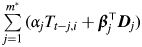 $\sum\limits_{j = 1}^{m^\ast } {( \alpha _jT_{t-j, i} + {\boldsymbol \beta }^{\rm \top }_j {\boldsymbol D}_j) } $, following standard time-series measures.Footnote 63 Both time fixed effects (υv) and unit fixed effects (ν i) further supplement the models.Footnote 64 Finally, V is a vector of time- and unit-varying contemporaneous controls, including other types of violence. As we discuss later, these vary across models but always include vectors of meteorological controls.
Temperature Deviation from Seasonal Expectation
Our second approach measures daily temperature deviations from their expected seasonal value (ΔT i,t). Given possible diminishing or decreasing returns to outcome measures at high temperatures, we interact this term with a high-temperature threshold indicator variable (γ) to allow deviations to assume positive or negative values, conditional on where they fell on the observed temperature spectrum: D = 1[T i,t > γ].
 $$Y_{t, i} = \beta \Delta T_{i, t} + \xi {\rm D}\ast \Delta T_{i, t} + \zeta {\rm D} + \mathop \sum \limits_{m^\ast }^{\,j = 1} ( \alpha _jT_{t-j, i} + {\boldsymbol \beta }^{\rm \top }j{\boldsymbol D}_j) + {\bf \varrho }^{\rm \top }{\boldsymbol V} + \upsilon _v + \nu _i + e_{t, i}$$
We use local polynomial regression to estimate and remove the general trend for all unit time series. We then calculate ΔT i,t by taking the difference between the expected value of temperature (the polynomial fit)Footnote 65 and the observed value, T i,t. Appendix Figure A7 provides examples of this approach. Given that γ must be supplied to the model, we generate results allowing γ to vary over a range of daily maximum temperature values (Γ = [75°F, 105°F]).Footnote 66
By studying random temperature deviations from seasonal expectations, this latter approach allows us to identify the day-to-day impact of temperature changes on insurgent violence. Given that naturally occurring short-term temperature variation is exogenous and largely unpredictable, our estimates capture the effect of plausibly randomized treatment exposure.Footnote 67 A second benefit is that we can identify more precisely the range of temperatures across which effects on violence and aggression manifested as γ increased.
Model Specifics
Across both the temperature response and deviation models, we analyze distinct violent outcomes. We compare the association between temperature and both the least and the most organizationally constrained attacks. If temperature affects insurgent violence by influencing combatants’ aggressive impulses, there should be little or no effect of temperature on organizationally constrained attacks. Because any temperature–violence association could be the result of the behavior of the targets instead of the initiating combatants,Footnote 68 we also study the relationship between temperature and roadside bomb (IED) attacks. In both Afghanistan and Iraq, IEDs were used for the nearly exclusive purpose of targeting vehicles. Thus they offer a strong test of whether attack patterns varied with temperature as a function of military movement. We replicate this analysis using more general attack data from the Afghanistan War.
As an additional check, we associate temperature with direct fire and roadside bomb attacks during Baghdad's nighttime curfew. Civilian travel during this period was effectively fixed, and military movement was more likely to be randomized than during the day. This ensures that target movement does not influence the study results.
We carry out all tests using ordinary least squares regression and calculated heteroscedasticity-consistent standard errors.Footnote 69 Because Y t,i is a count variable, we also test the relationship using quasi-Poisson regression. We use results from these tests to calculate the magnitude of estimated effects. For the temperature-response models, we calculate mean expected counts of insurgent violence for the range of annual average temperatures observed in the study data, holding covariates at their observed values.Footnote 70 We generate uncertainty estimates at the 95 percent significance level with quasi-Bayesian Monte Carlo simulations. For the temperature-deviation models, we calculate the difference between the expected count of violent attacks given a one-standard-deviation temperature deviation increase (ΔT i,t ≈ 4 °F) and the expected count in the absence of a temperature deviation (ΔT i,t = 0 °F). For comparability purposes, we then calculate the percentage change that quantity represented relative to mean-level violence, which we denote as ρ.
Our core results are generated using a daily city panel data set for Iraq and a daily province data set for Afghanistan. The Iraq panel is constructed from two independent time series for the Iraqi cities of Baghdad and Basra.Footnote 71 The cities were selected due to the availability of the greatest number of relevant controls. Together, they capture approximately 42 percent of recorded insurgent attacks during Operation Iraqi Freedom. The Afghanistan panel is constructed from data for the country's fourteen most violent districts, which jointly account for approximately 43 percent of violence documented by the US Department of Defense during Operation Enduring Freedom.Footnote 72 Our entire set of controls is described in Appendix A.3.
For the nighttime-curfew test, we assess whether the hypothesized temperature–direct fire relationship manifested during the curfew period in Baghdad when civilian movements that might otherwise have affected insurgent targeting were effectively held constant. For this purpose, we use the time stamps available in Release II of the SIGACTs data set to create a nightly time series of our variables and replicate the tests described earlier.Footnote 73
Temperature and Aggressive Civilian Attitudes
The final tests associate temperature and the expressed aggression of Iraqi males surveyed throughout the war. If changes in perpetrator aggression drive changes in the effects of temperature on violence, a corresponding relationship between ambient temperature and this variable should also be observed. The IIACSS survey data provide an opportunity to test whether respondents were more likely to support violent attacks on American forces at elevated ambient temperatures.
Following the same testing strategy described earlier, we generate temperature response and deviation results with the survey respondent as our unit of analysis. Seeking to assess the effect of temperature on aggressive ideation in individuals most representative of combatants, we subset the survey data to male respondents of fighting age. The outcome measure Y i is a binary indicator reflecting whether each respondent i affirmatively answered the question “Do you support attacks against: Multi-National Forces?”Footnote 74 Because the outcome is dichotomous, we generate estimates with linear probability models and logistic regression.
We include a vector of individual respondent controls, including reported income (weighted by household size), education level, age, number of hours worked per week, and household size. Differences between electricity demand and supply were likely to have been greatest at higher temperatures. Given unmet electricity demands during such periods, anger with the international occupying forces may have driven a relationship between temperature and attitudes toward the use of violence against these forces. We therefore control directly for perceptions of electricity supply.Footnote 75 Neighborhood fixed effects control for time-invariant characteristics specific to each neighborhood. Similarly, by absorbing across-time variation, month-of-response indicators reduce potential bias by deriving estimates of interest based on within-month data variation.Footnote 76
Estimates of magnitude are similarly calculated for this analysis. To determine temperature-response functions, we generate the predicted probabilities of support for violence across the range of temperatures observed in the study period.Footnote 77 For temperature deviations, ρ represents the difference in predicted probability of support caused by a one-standard-deviation increase in temperature deviation. This quantity is divided by mean support for violence.
A second test verifies the results. Survey respondents were interviewed in their homes. For most respondents, the absence of electricity throughout the Iraq War ensured that daily measures of ambient temperature closely approximated actual temperatures to which individuals were exposed during interviews. However, wealthier citizens were more likely to have access to private generators and fuel to power fans or air conditioners. If including wealthy respondents in the original sample attenuates the results because they were not subject to the ambient-temperature treatment, we expect intensified results after excluding those who reported the highest income levels.
Attack Frequency Results
Across these distinct conflicts with somewhat varying climates, the estimates show the strong positive effect of increased daily maximum temperatures on insurgent production of organizationally unconstrained violence. Consistent with existing research and H1, both response and deviation results provide evidence of diminishing and possibly decreasing returns of violence to temperature at the highest levels. Confirming H2, this relationship holds at night. These results indicate that temperature works through the embodied motivations of individual combatants. Contrary to the expectations of H2, this relationship does not hold for roadside attacks. This shows that the violence–temperature link is not explained by changes in the movement of targets.
Figure 2 illustrates the estimated relationship between temperature and attack frequency. The plot on the left displays the overall relationship in the two conflicts, which shows the expected relationship between ambient temperature and attack types whose initiation was organizationally unconstrained. The panels on the right disaggregate attacks into different types for each conflict, as derived from count model results. The results collectively indicate that across these distinct conflicts with somewhat varying climates, political violence involving significant individual discretion showed significant positive returns to ambient temperature. The effect existed at most temperatures, potentially diminishing or decreasing at high levels. In contrast, the results show no clear relationship between temperature and the detonation of weapons typically directed against military targets, suggesting that neither organizationally constrained violence nor target movement was responsible for the observed temperature–violence relationship.
Effects of temperature on violent attacks.

Figures 3 and 4 display temperature-deviation results for Iraq and Afghanistan, respectively. The left plot in each figure illustrates the expected relationship between temperature and attack types under individual combatant control. Figure 3's middle plot shows the absence of such a relationship for attacks that are centrally controlled by the insurgent command structure. The right plot indicates that the relationship also does not hold for roadside bombs, which Hypothesis 2 would expect. The results shown on the right in Figure 4 confirm this.
Estimated daily changes in insurgent violence by type in Baghdad and Basra following random temperature fluctuations (ΔT i,t) in °F. Changes in the least constrained violence, most constrained violence, sequentially. and IED attacks are plotted. Estimated changes in violence following a one-standard-deviation increase in temperature deviation (about 4°F), expressed as a percentage of the mean for each respective violence type, are displayed on the upper x-axes. Confidence intervals are shown with solid and dashed lines for 90% and 95% confidence, respectively. Point estimates and confidence intervals in gray denote alternative specifications carried out as robustness checks. OLS results appear in Appendix A.12.

Replication of Figure 3 for Afghanistan.

Thus the effect of ambient temperature on insurgent violence is substantively significant. We see significant increases in the number of least constrained attacks—nearly double in Iraq and more than double in Afghanistan—as temperatures moved from the coolest levels into and above 90°F. This is shown in the right-hand set of figures depicting expected attack counts involving least constrained attacks in Iraq and direct fire in Afghanistan across different count model specifications.Footnote 78
Temperature-deviation results show similarly substantial changes. At its maximum, ρ (the estimated percentage increase in least constrained violence following a σ increase in ΔT i,t, relative to mean violence, which appears along the upper x-axis of Figures 3 and 4) exceeds 7 percent and 3 percent for the Iraq and Afghanistan results, respectively.Footnote 79 As the left-hand plots of Figures 3 and 4 labeled “Unconstrained” and “Direct Fire” show, positive and statistically significant increases in violence are associated with positive temperature deviations. This is especially true when the temperature-threshold indicator is set to below 100°F. Increases in the threshold temperature can be observed moving from left to right across the bottom x-axis. In fact, the strongest returns to violence tend to take place when deviations occur across relatively low starting temperatures.
Nighttime results conducted as an analysis of violence patterns when civilian movements were kept fixed by the imposition of a curfew are consistent. Direct fire attacks are estimated to increase substantially with nighttime temperature, while roadside bomb attacks do not share a statistically significant association (see Appendix Figure A8). These results confirm Hypothesis 3 and are expected only if violence initiated by individual combatants is responsive to ambient temperature.
The differences in temperature response and deviation results highlight a key feature of our findings: immediate, day-to-day effects are relatively modest and likely shrouded by the noise of wartime activities. However, they are cumulatively significant. If these immediate effects were particularly large, this phenomenon would presumably be detected by combatants. Such a discovery would lead organizations that produce political violence to engage in efforts to mitigate them—as they do in other instances in which the actions of agents are likely to deviate from their principals’ directives.Footnote 80
In contrast, the evidence does not support Hypothesis 2. The patterns reported are not reflected in the relationship between maximum daily temperature and the most organizationally constrained insurgent violence and roadside bomb attacks, respectively. This is direct evidence that the observed relationships between temperature and small arms and temperature and direct fire attacks were not driven by target movement. In the temperature-response results, these variables either revealed no meaningful change with temperature and/or were statistically insignificant. Specifically, see the results for “Most Constrained” attacks and “IED Attacks” in Figure 2, which depict expected attack counts across different count model specifications. As the maximum daily ambient temperature increases, levels of constrained violence display little to no estimated increase, while levels of IED attacks show different, inconsistent changes across model specifications.
In the temperature-deviation results, roadside bomb attacks were generally uncorrelated with temperature fluctuations. In Figures 3 and 4, this can seen in the plots labeled “IED.” In both figures, temperature deviations are consistently associated with statistically insignificant changes in the number of these attacks, regardless of the range of temperatures that we consider. Constrained violence was also generally uncorrelated with fluctuations, particularly along the lower temperature ranges that we observe associating strongly with changes in least constrained violence. However, we were unable to rule out increases in constrained violence when temperature deviations occurred at the highest temperatures (see the middle plot labeled “Constrained” in Figure 3). In any case, these patterns were effectively the opposite of what we observed in patterns of least constrained attacks.
The results are highly stable:
• They are consistent across ordinary least squares and generalized linear models (see Appendix A.12).
• They are replicated in country-wide analyses (see Appendix A.6).
• The patterns that we uncovered were consistent when we substituted maximum daily temperatures with mean and, separately, median daily temperatures (see Appendix A.7 and A.8).
• For temperature responses, OLS-based results were robust to using inverse hyperbolic sine transformations of the dependent variables.
• For the temperature deviations, the results were robust to a variety of alternative, more parsimonious specifications. In addition to plotting estimates from our primary model specifications, we included estimates from a variety of alternative specifications (gray), as shown in Figures 2 to 6 and throughout the appendices.Footnote 81
• The results obtained using binned regression and generalized additive models are consistent with our primary findings (see Appendix A.9).
• The results are consistent, and the substantive significance of the temperature-deviation results is strengthened, when the lowest and highest temperatures are excluded from our samples.
Results for Hostile Attitudes
In Iraq, there was a positive association between maximum daily temperature and support for the use of violence against international forces (Figures 5 and 6). Consistent with the previously reported results, attack support diminished as temperatures reached their highest levels. As expected by H4, this relationship depends on income level, which serves as a proxy for whether respondents were able to regulate their dwelling's temperature.
Predicted probability of expressed support for violent attacks on multinational forces by combat-age Iraqi males as a function of mean daily temperature (°F), with 95% confidence intervals. Results with neighborhood fixed effects (in left plot) are plotted against results with survey block fixed effects in light gray. The distribution of daily mean temperatures observed across the surveys is plotted at the bottom.

Estimated daily changes in expressed support for violence against multinational forces among combat-age males living in Baghdad following random fluctuations in temperature (ΔT i,t). ρ gives the estimated change in support for violence following a one-standard-deviation increase in temperature deviation (about 4°F), expressed as percentage of mean support and displayed on the upper x-axis. Linear probability model results appear in Appendix A.12.

The results are substantively significant. Moving from days with maximum temperatures of around 60°F into those over 100°F, the predicted probability of an Iraqi male expressing support for violence against multinational forces increased by tens of percentage points in the full sample results (Figure 5, left). The increase was larger when respondents most likely to have access to cooling technologies were excluded (Figure 5, top).
Figure 6, which displays the temperature-deviation results, shows that, at its maximum, ρ indicates a more than 5 percent increase in the probability of respondents expressing support for violence following a σ temperature spike, relative to mean levels of support for violence. Consistent with the other deviation results, we find that increases in support for violence are more pronounced when the temperature threshold indicator is set to values below 95°F. This can be seen by looking at the magnitude and statistical significance of plotted coefficients moving from the lowest threshold values on the left of the x-axis to the highest values on the right.
When all combat-age male respondents were included, the statistical and substantive magnitudes attenuated. The results are more pronounced when those most likely to have access to air-conditioning units or fans are excluded—that is, the top-earning quarter of respondents. The effect of temperature disappeared entirely in an analysis of only these top income earners (Figure 5, right). The upper-right plot in Figure 5 represents predicted probabilities of support among respondent groups in which high-income earners are excluded. Each group corresponds to a different income threshold used to show that the results are robust to different high-income thresholds. The bottom-right plot represents the same relationship for high-income earners, again with different thresholds used to show robustness to the income threshold used.
Robustness Checks
Country-Wide Analyses
We replicate the results using complete district-day panel data sets for both countries with alternative maximum daily temperature data and daily precipitation in millimeters. These data allow us to replicate our empirical analyses across all Afghan and Iraqi districts over almost all years of both conflicts. This approach lacks some of the controls included in our primary specifications. However, the consistency of its results serves to externalize our core findings. This analysis is described in full in Appendix A.6.
Binned Regression and Generalized Additive Models
We conduct two additional sets of tests that provide flexible estimates of the temperature–violence/aggression relationship as indicated by the underlying data. Specifically, we estimate the relationship between our key outcomes of interest—least constrained violence and civilian support for violence—using binned regression and, separately, generalized additive models. For the former, we regress indicator variables for all temperatures in 3°F increments, omitting the first bin to serve as the baseline. For the generalized additive models, we calculate 95 percent Bayesian credible intervals.Footnote 82
Other Meteorological Variables
We also present the estimated relationships between other meteorological variables (precipitation, wind speed, maximum wind speed, dew point, and visibility) and least constrained violence. No other meteorological variable consistently correlates in the same way as temperature with this violence measure (Appendix A.10).
Alternative Specifications
We replicate results using various alternative and more parsimonious specifications throughout our analyses, typically presented in gray (e.g., lines, point estimates, or error bars) alongside the primary results. As we demonstrate, results are very stable across settings and specifications.
Concluding Discussion
Elevated ambient temperatures induce more aggressive human behavior within the scope of vehicles, homes, bars, and streets. Insurgent commanders in Iraq and Afghanistan did not prevent this effect from impacting their combatants’ battlefield operations against US and other international forces. Here we situate the implications of these findings for the study of organized violence, the microfoundations of the temperature–violence link, and future conflicts in a changing climate.
Embodied Motivations in Conflict Settings
To illustrate how these embodied individual-level effects compare with other drivers of aggression and violence, we apply additional analyses of the Iraq War. First, we compare our day-level results with variations in violence based on the day of the week, following research by Reese, Ruby, and Pape, who demonstrated that insurgents in Iraq and Afghanistan avoided violence on religious days, and during Friday congregational prayers.Footnote 83 We find that Fridays typically had approximately two fewer attacks than other days (Figure A19). This is similar to the estimated effect of moving from the coldest maximum daily temperatures to maximums of 20 or 30°F warmer.
We further analyze how respondents in the survey data differed in their support for violence against multinational forces as a function of their perceptions of security conditions, family safety, government effectiveness, and the availability of electricity and jobs.Footnote 84 Respondents who negatively evaluated these conditions are roughly 15 percentage points more likely to endorse the use of violence against government forces (Figure A20). This is similar to moving from the coldest maximum daily temperatures experienced in Baghdad during the study period to those 20°F warmer.
Temperature is not the sole individual-level contributor to acts of violence and is responsible for a relatively small incidence of wartime violence on its own. However, the magnitude of its effect challenges the view that “individual motivations alone are unlikely to result in large-scale violence over a long period.”Footnote 85 Our findings indicate that other, more powerful stimuli acting on individuals that are far more integral to conflict than ambient temperature shape the type and frequency of political violence. These effects remain difficult to measure in observational settings.
Contemporary conflict research now has some tools to balance this emphasis. Instead of assuming that any observed violence results from political strategy, the conditions under which violence manifests can be better understood if we see the combination of organization- and individual-level motivations as creating or preventing violent outcomes. Consequently, we do not argue for discarding the analytical leverage of organizational rationality models. Instead, we have used observational data to demonstrate how this approach can be synthesized with psychological theories to better explain patterns of violence in conflict, especially with regard to combat conditions in which individual fighters have a significant measure of autonomy.
Ranges of Aggression
Previous empirical examinations suggest that rising temperature leads individuals to commit more violence—up to a point. Beyond this inflection point, the relationship reverses and higher temperatures inhibit violence. Studies have found a broad range of inflection points, from slightly above room temperature to scorching heat. We find that the effects linking temperature and violence operate as much at moderately warm temperatures as they do in more extreme heat. Changes at cooler temperatures were more influential in producing the observed pattern of violence and expressed aggression than suggested by the usual focus on heat. Our findings suggest that the effects of moderate warming in relatively cool environments are significant and that sociological, psychological, and criminological investigations into the link between temperature and violence may have missed them in the search for the effects of heat.
The context in which an individual combatant's body is affected by temperature is also a probable contributor. The temperature recorded by a thermometer was different from what was subjectively experienced by affected combatants, who were often in motion and carrying heavy equipment.Footnote 86 Movement-induced thermal stress is a well-established physiological factor. This may partially explain why the range of temperatures in this study was on the lower end, especially when compared to laboratory studies in which the action on an aggressive stimulus involves little physical effort.
Future work should seek out even higher-resolution spatiotemporal measures to better investigate these psychological and physiological mechanisms. As an exploratory exercise, we used hour-level data from weather stations and direct fire attack time stamps from the respective SIGACTs data sets to study temporally proximate changes in temperature and violence. We replicate our temperature-response models, adopting the hour as the unit of analysis. Our Iraq panel consisted of time-series data for the areas of Baghdad, Basra, and Mosul. The panel for Afghanistan included Kabul and Kandahar. Rather than incorporating lag vectors over the preceding week, we include lags for each of the preceding twenty-four hours.Footnote 87 Finally, we replace weekly fixed effects with unique date and separate time-of-day fixed effects. The results are ambiguous. For the Iraq panel, results are consistent with daily analyses: a strong, positive relationship at which violence levels peaked around 88°F. But for the Afghanistan panel, the association is generally negative. The manner in which the effects of temperature manifest to ultimately produce the day-level patterns that we observed remains open to further inquiry.
Effects of Long-Term Temperature Changes
The broad range of temperatures over which violence and aggression manifest expands our knowledge of the effects of climate on social phenomena. The results speak to a relationship that is more complicated and persistent than one in which “people get uncomfortably hot, [and] their tempers, irritability, and likelihood of physical aggression and violence increase.”Footnote 88 With the exception of the highest temperatures, we find that escalations in aggression and violence predictably follow increases in temperatures regardless of the level at which they started.
The deviation results and associated estimates of magnitude (ρ) depict this clearly. Positive deviations in temperature are typically associated with the greatest returns to violence and aggression when γ falls between 75 and 90°F (that is, when the effects of temperature deviations are estimated based on shocks occurring in [min(T i,t), 75–90°F]).Footnote 89 In other words, the phenomenon is driven as much or more by temperature increases during relatively cool periods as by increases when temperatures are already relatively high. Sociological, psychological, and criminological investigations into the temperature–violence link appear to have overlooked these effects.
Previous studies on short-term embodied motivations for violence provide microfoundational evidence for the observed long-term link between climate and violence. Incorporating the results of sixty prior studies, Hsiang, Burke, and Miguel found that “for each 1 standard deviation (1σ) change in climate toward warmer temperatures or more extreme rainfall, median estimates indicate that the frequency of interpersonal violence rises 4 percent and the frequency of intergroup conflict rises 14 percent.”Footnote 90 Such research frequently assumes that the effect works through the economic consequences of temperature, especially agriculture. The empirical finding that substate violence retains its association with temperature in nonagricultural areas suggests that past conflict research may have focused too narrowly on long-term, large-scale mechanisms.Footnote 91
Our findings suggest that an observed temperature–conflict correlation in nonagricultural parts of the world partly reflects aggregate and emergent patterns of individual-level drivers of violence. Such a correlation could be incorporated into future models predicting the economic, political, and social effects of a changing climate. This means that not only those parts of the world that currently have warm climates will become more prone to individual-level human aggression; temperate climates are also at risk.
Two other trends boost the salience of individual-level drivers of violence. The first is the seeming erosion of effective control that institutions have over individual behavior. The second trend is technological advances that place the potential for lethality into the hands of more individuals. In combination, the means and motives for individual violence may increase simultaneously and congruently with a greater potential for damage. If both of these trends manifest, scholars of conflict must calibrate their toolkit in order to measure the relative importance of strategic and embodied motives in drawing inferences about organized violence.
Data Availability Statement
Replication files for this article may be found at <https://doi.org/10.7910/DVN/JRYGFP>.
Supplementary Material
Supplementary material for this article is available at <https://doi.org/10.1017/S0020818323000024>.
Acknowledgments
We are especially grateful to James Fearon, Robert Keohane, and Jacob Shapiro for their engaged commentary on this project. In addition, we wish to thank Craig Anderson, Eli Berman, Lisa Blaydes, David Carter, Fotini Christia, Joe Felter, Aaron Friedberg, Jeffry Frieden, Richard Friman, Micha Germann, Todd Hall, Stephen Herzog, Solomon Hsiang, Connor Huff, Lindsay Hundley, Kosuke Imai, Stathis Kalyvas, Dacher Keltner, David Laitin, Jennifer Lerner, Steven Liao, Rebecca Littman, James Long, Iris Malone, Jonathan Mercer, Edward Miguel, Asfandyar Mir, Roger Petersen, Thomas Scherer, Kenneth Schultz, Wangyal Shawa, Yuki Shiraito, Gabriel Tenorio, and participants in the Harvard Government Department International Relations Research Workshop, the MIT Security Studies Working Group, the University of California, Berkeley, Development Lunch, the Yale University Program on Order, Conflict, and Violence, the 2014 annual meeting of the American Political Science Association, the Princeton University International Relations seminar, the Princeton-Stanford Empirical Studies of Conflict 2014 Annual Research Conference, and the International Studies Association 2013 ISSS–ISAC Joint Annual Conference for comments on this project. We are also very grateful to Political Violence Lab research interns Justin Kramer, Jared Solomon, Judy Blancaflor, Zainab Khan, Darwin Lopez, Elias Rodarte, and Jacob Saude for their excellent research assistance. The authors are responsible for all errors.


 Open access

