



Obesity has reached epidemic prevalence worldwide, and therefore represents a major public health challenge( 1 ). In France, although recent data described stable rates between 2006 and 2015( Reference Verdot, Torres and Salanave 2 ), the prevalence of overweight and obesity remain important (49·0 % and 17·2 % of the French adults, respectively). Therefore, it is important to identify potential levers to reduce the incidence of overweight on health.
The nutritional quality of the diet has been shown to be a predictor of a healthy weight status( Reference Drenowatz, Shook and Hand 3 – Reference Leech, Worsley and Timperio 6 ). Besides the intrinsic quality of foods, elements of eating patterns, such as the daily number of eating occasions or meal duration, have been suggested to act as potential modulators of food choices and intake( Reference Leech, Worsley and Timperio 6 , Reference Nicklas, Baranowski and Cullen 7 ) with a possible impact on body weight status( Reference Ma, Bertone and Stanek 8 ). However, such elements remain poorly investigated and generally evaluated separately.
In France, the so-called ‘French Eating Model’ is characterised by structured meals and conviviality( Reference Holdsworth 9 – Reference Mathé, Tavoularis and Pilorin 11 ). More precisely, three meals are generally eaten per day, at set times, and snacking remains relatively low. Main meals (lunch and dinner) include three courses – starter, main course and dessert – and are taken seated at a table. In addition, meals are pleasurable moments shared with other people and therefore last a relatively long time. This pattern contrasts with data from other countries where the three-meal pattern is less frequent( Reference Pettinger, Holdsworth and Gerber 12 ), more snacking is reported( Reference Pettinger, Holdsworth and Gerber 12 , Reference Rozin 13 ), meals are less synchronised( 14 ) and last for a relatively short duration( Reference Warde, Cheng and Olsen 15 ). In addition, although French individuals value the social experience of eating, people from other countries, and in particular Americans, focus more largely on the health effects of eating( Reference Rozin 13 , Reference Rozin, Fischler and Imada 16 ).
Over the past decades, some authors have described a simplification or de-structuration of the traditional eating model in France( Reference Hébel and Recours 17 – Reference Poulain 19 ), thus raising the issue of the maintenance of such practices nowadays. One recent study conducted on a representative sample of the adult population living in Paris area has shown that the three-meal pattern is still dominant, although other meal patterns co-exist( Reference Riou, Lefevre and Parizot 20 , Reference Lhuissier, Tichit and Caillavet 21 ). However, no recent study has evaluated the components of the French Eating Model (e.g. pleasure, time spent on meal) through the entire French territory.
The maintenance of this model is important as it is believed to have beneficial effects on health. It has been proposed as an explanation for the ‘French paradox’ (i.e. low cardiovascular mortality despite a high intake of dietary fats)( Reference Holdsworth 9 , Reference Rozin 13 ), and the relatively low frequency of obesity in France( Reference Tavoularis and Mathé 22 ). However, there is limited evidence to support this assumption. A recent study emphasised that the French Eating Model was associated with adherence to nutritional guidelines for fruit and vegetable, as well as dairy product consumption( Reference Riou, Lefevre and Parizot 20 ), but no study has addressed weight status. However, a number of studies have informed about components of the French Eating Model. According to a recent review, a greater number of daily eating occasions (including meals and snacking occasions) is consistently associated with higher energy intake( Reference Leech, Worsley and Timperio 6 ). However, results on weight status are contrasted. Cross-sectional studies report that the daily number of eating occasions is positively related to BMI, waist circumference( Reference Murakami and Livingstone 23 ), overweight and obesity( Reference Murakami and Livingstone 24 ), whereas a review examining experimental works found no significant effect of the daily number of eating occasions on weight status( Reference Raynor, Goff and Poole 25 ). A recent review on snacking concluded that no consensus can be established on the basis of the current knowledge( Reference Bellisle 26 ). Besides, beneficial effects of regular times of food intake have been reported on metabolism( Reference Farshchi, Taylor and Macdonald 27 , Reference Farshchi, Taylor and Macdonald 28 ) and weight status( Reference Garaulet and Gomez-Abellan 29 ). In addition, more time spent eating has been associated with a lower BMI( Reference Zick, Stevens and Bryant 30 ). However, longer meal duration may be owing to the presence of other people( Reference Feunekes, de and van Staveren 31 ), which is associated with increased food intake( Reference de Castro 32 , Reference de Castro 33 ) particularly when these persons are friends or family( Reference de Castro 34 , Reference Hetherington, Anderson and Norton 35 ), and therefore could potentially result in a higher BMI. Meal duration can also be influenced by environmental parameters and in particular television viewing, which is also likely to influence food intake( Reference Hetherington, Anderson and Norton 35 – Reference Blass, Anderson and Kirkorian 37 ). Finally, there is a paucity of evidence regarding the associations between other components of the French Eating Model such as the pleasure experienced or the number of courses eaten during the meal, and weight status.
The aims of this study were therefore to assess adherence in 2014 to the French Eating Model and its components in a sample of adults of the general French population and to evaluate the associations with weight status.
Methods
Study population
The NutriNet-Santé study (https://info.etude-nutrinet-sante.fr) is an ongoing web-based prospective observational cohort study launched in France in May 2009 with a scheduled follow-up of 10 years. It aims to investigate the relationship between nutrition and chronic disease risk, as well as the determinants of dietary behaviour and nutritional status. The study was implemented in the French general population (internet-using adult volunteers, aged ≥18 years). The rationale, design and methodology of the study have been fully described elsewhere( Reference Hercberg, Castetbon and Czernichow 38 ). In brief, to be included into the study, participants have to complete a baseline set of self-administered, web-based questionnaires assessing dietary intake, physical activity, anthropometric characteristics, lifestyle, socio-economic conditions and health status. As part of the follow-up, participants are asked to complete the same set of questionnaires each year. Moreover, each month, all participants are invited by e-mail to fill in optional questionnaires related to dietary intake, determinants of eating behaviours and nutritional and health status. This study is conducted in accordance with the Declaration of Helsinki, and all procedures were approved by the Institutional Review Board of the French Institute for Health and Medical Research (IRB no. 0000388FWA00005831) and the Commission Nationale de l’Informatique et des Libertés (nos 908450 and 909216). All participants provided informed consent with an electronic signature. This study is registered in EudraCT (no. 2013-000929-31).
Data collection
Eating behaviour questionnaire
Adherence to the French Eating Model was assessed by means of an optional questionnaire evaluating eating behaviour, launched in the NutriNet-Santé cohort study in April 2014. The questionnaire was administered once to participants and was available during a period of six months.
Although potential benefits have been attributed to the French Eating Model, there is, to our knowledge, no clear definition for it. On the basis of the data in the literature( Reference Holdsworth 9 – Reference Mathé, Tavoularis and Pilorin 11 ) and the expertise of scientists specialised in eating behaviour, we defined the French Eating Model according to its two main characteristics: structured meals and conviviality. Therefore, eight components were taken into account: (1) number of meals eaten per day other than snacking (i.e. breakfast, lunch, afternoon snack break, dinner) (one, two, three, four); (2) snacking frequency (every day, at least 3 times/d; every day, 1–2 times/d; 4–6/week; 1–3/week; <1/week; never); (3) meal time of lunch and dinner (different 1-h slots were proposed depending on the meal, lunch: 11.00–12.00, 12.00–13.00, 13.00–14.00, 14.00–15.00 hours; dinner: 17.00–18.00, 18.00–19.00, 19.00–20.00, 20.00–21.00, 21.00–22.00 hours, as well as the following modalities: another time, irregular times, skipping meal (individuals who reported meal skipping were exempted to respond to the next questions regarding the corresponding meal)); (4) meal duration (<5 min, 5–15 min, 15–30 min, 30–45 min, 45–60 min, >60 min); (5) number of courses per meal (one, two, three, four); (6) position during the meal (seated at table, seated but not at table, standing); (7) presence of other people during meal (family, friends, colleagues, alone); and (8) the pleasure experienced (meal is a pleasurable moment, meal is a moment like others, meal is an unpleasant moment). Apart from the components on the number of meals and snacking frequency, all questions were asked for three different contexts: weekday lunch, weekday dinner and weekend lunch. For each context, participants had to report their habitual practices.
Details on computation of the French Eating Model score are presented in Table 1. In brief, for each of these components, points were attributed to the participant’s answer reflecting adherence to the French Eating Model (no adherence=0, partial adherence=0·5, total adherence=1) based on the literature( Reference Holdsworth 9 – Reference Mathé, Tavoularis and Pilorin 11 ) and the expertise of researchers in the fields of nutrition and epidemiology. Practices in total adherence with the French Eating Model were as follows: having three meals per day, having snacking episodes less than once a week, eating at regular times – that is, between 12.00 and 14.00 hours for lunch and between 19.00 and 21.00 hours for dinner – spending at least 30 min on meals, having three or four courses per meal, having meals seated at a table, having meals with others and considering meals as a pleasurable moment. For components assessed in three different contexts (meal time, meal duration, number of courses per meal, position during meal, presence of guests, pleasure experienced), a score was calculated as the sum of the points weighted according to the context (i.e. a coefficient of 5 was affected to weekday lunch and dinner, and a coefficient of 2 was affected to weekend lunch). Each of the eight components ranged from 0 to 1. The global score of adherence to the French Eating Model was then computed as the sum of the eight components and ranged from 0 to 8 (the higher the score, the higher the adherence to the model).
Score computation evaluating adherence to the eight components of the French Eating Model
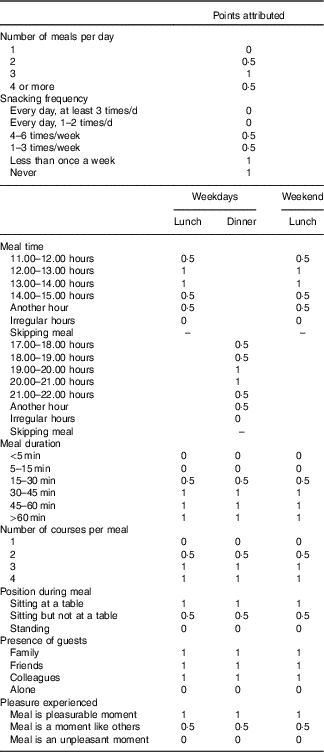
Individuals who reported usually skipping at least two meals among the three contexts evaluated were excluded from the analyses as they had missing data, which made it difficult to estimate a level of adherence to the French Eating Model. Individuals who reported skipping one meal only were included in the analysis but were given zero points for the corresponding context.
Anthropometric data
Height and weight were assessed by using an anthropometric questionnaire, which was self-administered online, at baseline and each year thereafter( Reference Lassale, Peneau and Touvier 39 , Reference Touvier, Mejean and Kesse-Guyot 40 ). For each participant, the closest available data to the eating behaviour questionnaire were used for the analysis. BMI (in kg/m2) was calculated as the ratio of weight to height squared. Participants were classified in one of the three following categories: normal weight (18·5 kg/m2<BMI<25 kg/m2), overweight excluding obesity (25 kg/m2≤BMI<30 kg/m2) and obesity (BMI≥30 kg/m2) defined according to WHO reference values( 1 ).
Socio-demographic and economic characteristics
At baseline and annually thereafter, participants in the NutriNet-Santé study are asked to provide socio-demographic data, including sex, age (18–29, 30–49, 50–64, ≥65 years), area of residence (Paris area, Parisian basin, center-east area, east area, Mediterranean area, north area, western area, south-western area) and city size (recoded as follows: rural commune, urban commune of <20 000 inhabitants, urban commune of 20 000–200 000 inhabitants and urban commune of more than 200 000 inhabitants), educational level (up to secondary, some college or university degree), presence of children in the household (yes, no), familial status (alone, in couple), history of dieting to lose weight during the past year (no, yes) and monthly income (<1200€, 1200–1799€, 1800–2699€ and ≥2700€ per consumption unit (CU)). Monthly household income was calculated per ‘CU’, where one CU is attributed for the first adult in the household, 0·5 CU for other individuals aged 14 years or older and 0·3 CU for children under 14 years, according to national statistics methodology and guidelines( 41 ). Physical activity level (low, moderate, high) was assessed using a short form of the French version of the International Physical Activity Questionnaire( Reference Hagstromer, Oja and Sjostrom 42 ). The weekly energy expenditure expressed in metabolic equivalent task minutes per week was estimated, and 3 scores of physical activity were constituted (i.e. low (<30 min/d), moderate (30–59 min/d) and high (≥60 min/d)) according to the French guidelines for physical activity( Reference Hercberg, Chat-Yung and Chaulia 43 ). For each participant, the closest available data to the eating behaviour questionnaire were used for the analysis.
Statistical analysis
A total of 54 197 participants from the NutriNet-Santé study completed the eating behaviour questionnaire. Among them, we excluded 1 454 pregnant women, twenty other individuals who had missing data for height or weight, 210 individuals who reported skipping at least two of the meals assessed in the study, 2939 individuals who had missing data required for the weighting procedure and 2355 because they were underweight (BMI<18·5 kg/m2). Thus, our final sample comprised 47 219 individuals.
Included and excluded participants were compared using χ 2 tests and Student’s t tests, as appropriate. Normal weight, overweight and obese participants were compared using Mantel–Haenszel tests. Eating behaviour was described in the three different contexts (i.e. weekday lunch and dinner, and weekend dinner). Global score of adherence to the French Eating Model was assessed across different socio-demographic and lifestyle characteristics, and compared using linear contrast tests. All descriptive data were weighted according to the French population socio-demographic distribution. Weighting was calculated separately for each sex using an iterative proportional fitting procedure and the 2009 national Census data on age, educational level, area of residence and whether or not the household included any children( 44 ). Multinomial logistic regression model was used to evaluate the association between a one-point increase of the global score of adherence to the French Eating Model (ranging from 0 to 8) and overweight and obesity. Secondary analyses were performed to assess the associations between a one-point increase of the different components of the French Eating Model (ranging from 0 to 1) and overweight and obesity. All models were adjusted for sex( Reference Riou, Lefevre and Parizot 20 ), age( Reference Riou, Lefevre and Parizot 20 ), educational level( Reference Riou, Lefevre and Parizot 20 ), monthly income( Reference Riou, Lefevre and Parizot 20 ), city size, presence of children in the household( Reference Riou, Lefevre and Parizot 20 ), familial situation( Reference Riou, Lefevre and Parizot 20 ), history of dieting to lose weight( Reference Fuglestad, Jeffery and Sherwood 45 ) and physical activity level( Reference Wareham, van Sluijs and Ekelund 46 ). To avoid collinearity, the presence of children in the household and the familial situation were removed from the model based on the presence of guest’s component. Potential interaction effect of the context (weekday v. weekend) was also assessed.
As participants who reported skipping meals had zero points to the corresponding context, sensitivity analyses were performed in individuals who did not report skipping any meal.
Missing covariate data (i.e. monthly income per CU, history of dieting to lose weight and physical activity level) were imputed using the multiple imputation method. All tests of significance were two-sided, and a P value <0·05 was considered significant. Statistical analyses were performed using SAS software (version 9.4; SAS Institute Inc.).
Results
Compared with excluded individuals, included individuals were more often men, were older, had lower educational level, had higher monthly income, were less physically active, were less likely to have children living in the household, were more likely to live in a larger city, to have a history of a diet to lose weight and to be overweight or obese (all P<0·0001). No significant differences were observed for familial situation.
In our sample, 26·9 % of the participants were overweight and 12·8 % obese. Characteristics of the sample according to weight status are presented in Table 2. Both overweight and obese individuals were older, had lower educational level, lower income, lived more often with a partner, in smaller cities and had more often a history of dieting to lose weight compared with normal-weight individuals. Overweight participants were more often men, whereas obese participants were more often women compared with normal-weight individuals. Finally, obese participants included a higher percentage of individuals living without children and were less physically active compared with the other groups.
Individual characteristics of 47 219 individuals according to weight status categories; data weighted according to French Census (NutriNet-Santé study, 2014)
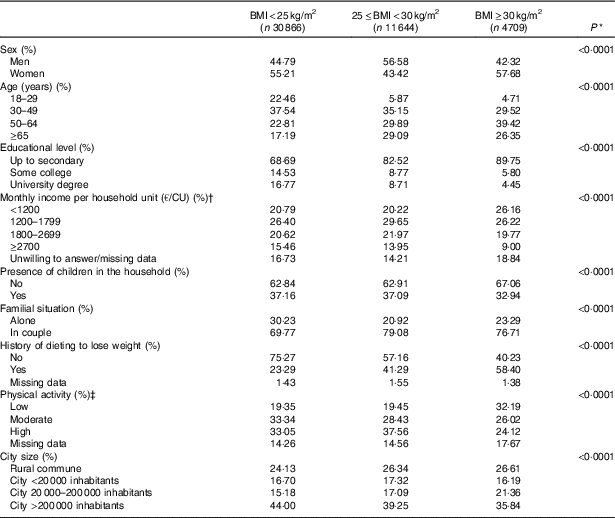
CU, consumer units.
* On the basis of Mantel–Haenszel tests (categorical variables).
† Monthly income was calculated per household CU. One CU is attributed for the first adult in the household, 0·5 for other persons aged 14 years or older and 0·3 for children under 14 years.
‡ Physical activity level (low, moderate, high) was assessed using a short form of the French version of the International Physical Activity Questionnaire.
Eating behaviour of the participants during weekdays (lunch and dinner) and weekends (lunch) is described in Table 3. Overall, most of the participants reported consuming three meals a day (about 70 %), and snacking (about 85 %). Weekday meals are relatively synchronised, with about two-thirds of the participants having their lunch between 12.00 and 13.00 hours and almost 60 % having their dinners between 19.00 and 20.00 hours during weekdays. During weekends, almost 90 % of the individuals reported having their lunch between 12.00 and 14.00 hours. More than half of the participants spent 15–30 min on weekday meals, whereas this proportion was close to 40 % on weekends. In comparison with weekday meals, weekend meals lasted longer. Regardless of the context, around half of the participants reported having two courses per meal, whereas the traditional three-course pattern was more frequent during the weekend lunch. Overall, about 90 % of the individuals had their meals seated at a table. Meals were mainly shared with others and in particular family (and colleagues during week lunch specifically). Finally, meals were mostly considered pleasurable moments, and particularly weekend lunch (for about 80 % of the individuals).
Eating behaviour of 47 219 individuals according to the context; data weighted according to French Census (NutriNet-Santé study, 2014)
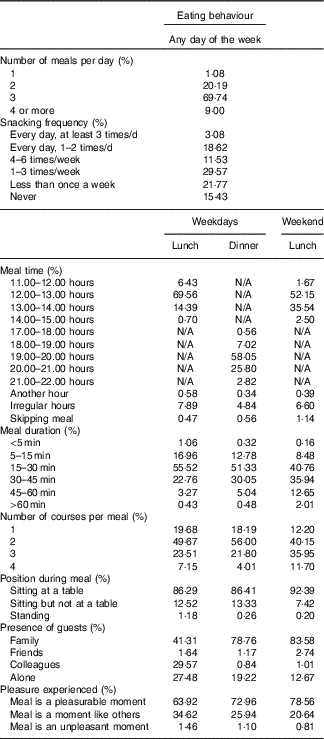
N/A, not applicable.
The global score of adherence to the French Eating Model across subgroups is presented in Table 4. In the whole sample, the global score was 6·05 (sd 1·00), indicating good adherence to the French Eating model (ranging from 0 to 8). Overall, individuals showing higher scores (corresponding to a higher adherence to the model) were more often men, were older, had a higher educational level, had a higher income, had more often children living in the household, lived more often with a partner, had less history of diet were more physically active and lived more often in a rural commune.
Global score of adherence to the French Eating Model across subgroups of individuals (n 47 219; NutriNet-Santé study, 2014)
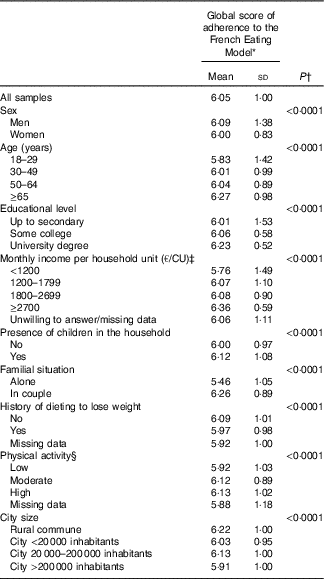
CU, consumer units.
* Ranging from 0 to 8. The higher the score, the higher the adherence to the French Eating Model.
† On the basis of or linear contrast tests.
‡ Monthly income was calculated per household CU. One CU is attributed for the first adult in the household, 0·5 for other persons aged 14 years or older and 0·3 for children under 14 years.
§ Physical activity level (low, moderate, high) was assessed using a short form of the French version of the International Physical Activity Questionnaire.
The associations between the score of adherence to the French Eating Model, its components and overweight and obesity are presented in Table 5. A one-point increase in the global score (corresponding to an improved adherence to the French Eating model) was associated with lower odds of being overweight and obese. In addition, greater adherence to the following components of the French Eating Model was associated with lower odds of being overweight or obese: number of meals per day, snacking frequency, meal time, meal duration and pleasure experienced. A greater adherence to the presence of guests’ component was associated with greater odds of being overweight only. No association was found for the number of courses per meal and position during meal components. Sensitivity analyses in individuals who did not report skipping any meal showed similar results. Finally, no significant interaction of the context (weekday v. weekend) was observed.
Multinomial logistic regression analysis showing the association between adherence to the French Eating Model, its components and overweight/obesity in 47 219 individuals (NutriNet-Santé study, 2014) (Odds ratios and 95 % confidence intervals)
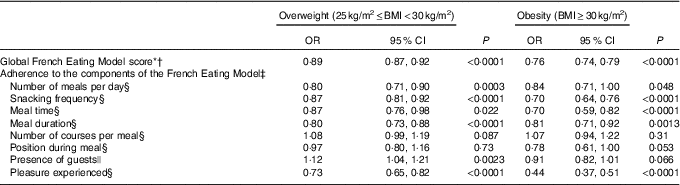
* The global score evaluating overall adherence to the French Eating Model included eight components relative to meal structure and conviviality and ranged from 0 to 8. Results correspond to the odds of being overweight or obese for an increase of one point of the global French Eating Model score.
† Adjusted for sex, age, educational level, monthly income, presence of children, familial situation, city size, physical activity, history of dieting to lose weight.
‡ Adherence to each component of the French Eating Model was calculated as the weighted mean of points (ranging from 0 to 1) obtained for the three contexts assessed in the study (i.e. weekday lunch/dinner and weekend lunch).
§ Adjusted for sex, age, educational level, monthly income, presence of children, familial situation, city size, physical activity, history of dieting to lose weight and other components of the French Eating Model.
|| Adjusted for sex, age, educational level, monthly income, city size, physical activity, history of dieting to lose weight and other components of the French Eating Model.
Discussion
The present findings indicate that the French Eating Model is still dominant in French adults in 2014, although some divergences appear for a number of components including less time devoted to meals and a prevailing two-course meal pattern. Our data showed that individuals having greater adherence to the French Eating Model were less likely to be overweight or obese. In addition, individuals reporting greater adherence to components of the French Eating Model, such as number of meals per day, snacking frequency, meal time, meal duration and pleasure experienced, were less likely to be overweight or obese, whereas those showing a greater adherence to the presence of guests’ component were more likely to be overweight.
In accordance with previous data( Reference Mathé, Tavoularis and Pilorin 11 , Reference Riou, Lefevre and Parizot 20 , Reference Lhuissier, Tichit and Caillavet 21 , 47 – Reference Escalon, Bossard and Beck 49 ), we found that the three-meal-a-day pattern is still the prevailing pattern in France and that people generally had their meals at set times. However, in our sample many individuals had only two meals a day (i.e. 20 %) in agreement with data of a previous study focusing on the Paris area( Reference Lhuissier, Tichit and Caillavet 21 ). Our results are also consistent with the French national surveys showing a simplification of the meal structure towards two courses( Reference Mathé, Tavoularis and Pilorin 11 , Reference Escalon, Bossard and Beck 49 ). Most of the individuals in our study had their meals seated at a table. To our knowledge, no study in the literature has focused on this characteristic. The time spent on lunch and dinner meals reported in our sample (15–30 min for most of the participants) diverges from the French Eating Model, which is typically characterised by a long time spent on main meals( Reference Holdsworth 9 ), and from results of a previous French study showing that the average time spent on meals was 2h22 min per d (stable since 1986)( Reference De Saint Pol and Ricroch 48 ). Divergences might be owing to the additional time spent on breakfast and snacking in the latter study. Regarding commensality, our results highlighted that most meals were taken with family, and in particular weekday dinners and weekend lunch. Fewer individuals reported having their meals alone (weekday lunch: 27·5 %, weekend lunch: 12·7 %). By contrast, in another study including younger individuals (21·5 % were aged 18–29 years v. 5·0 % in our sample), meals were as much taken alone as with family( Reference Riou, Lefevre and Parizot 20 ). Finally, our data emphasise that meals were mainly considered pleasurable moments. In agreement, eating was viewed by French individuals as ‘a necessary thing to live’ but also as ‘a tasting pleasure’ and ‘a good time to share with others’, suggesting the importance of shared enjoyment( Reference Escalon, Bossard and Beck 49 ). The greater importance attached to the pleasure experienced from food, compared with other countries( Reference Rozin 13 , Reference Rozin, Fischler and Imada 16 ), might be one of the reasons for the relative maintenance of the French Eating Model. In addition, the importance attached to conviviality and commensality during meals may explain why meals remain more synchronised compared with other countries( 14 ).
Our results showed that a greater adherence to the French Eating Model was associated with lower odds of being overweight or obese. Although beneficial effects of the French Eating Model on health have been previously suggested by some authors( Reference Holdsworth 9 , Reference Rozin 13 , Reference Tavoularis and Mathé 22 ), to our knowledge, no study has examined the association with health, and particularly weight status. However, some studies have assessed the associations between specific components of the French Eating Model and overweight. Our results suggested the potential benefit of the three-meal pattern for overweight or obesity, whereas, in the literature, more eating episodes were associated with a lower weight status. More specifically, individuals having fewer than three meals were more likely to be obese( Reference De Saint Pol and Ricroch 48 ), whereas those having four or more eating episodes (main meals and snacking) were less likely to be overweight( Reference Ma, Bertone and Stanek 8 ). However, no association between the number of meal and weight status was observed in another study( Reference Lhuissier, Tichit and Caillavet 21 ). Few or no snacking was associated with lower weight status in agreement with the literature( Reference Murakami and Livingstone 23 , Reference Murakami and Livingstone 24 ), whereas a review focusing on experimental works found no significant association( Reference Raynor, Goff and Poole 25 ). Differences in the definition of snacking might have led to these discrepancies( Reference Bellisle 26 , Reference Drummond, Crombie and Kirk 50 ). In our sample, individuals who more frequently ate at set times were less likely to be overweight. In agreement, regular eating times have been suggested to exert a positive impact on weight status( Reference Garaulet and Gomez-Abellan 29 , Reference Ekmekcioglu and Touitou 51 ), owing to a beneficial influence on metabolism and, in particular, dietary thermogenesis, insulin sensitivity and fasting lipid profiles( Reference Farshchi, Taylor and Macdonald 27 , Reference Farshchi, Taylor and Macdonald 28 ). We also observed that spending more time on a meal (more than 30 min) was associated with lower weight status, in agreement with previous data( Reference Zick, Stevens and Bryant 30 ). Longer meals might encourage slower eating rates that have been associated with lower energy intake in comparison with a faster eating rate( Reference Robinson, Almiron-Roig and Rutters 52 ), thus potentially preventing weight gain. In contrast, spending more than 3 h/d for eating (including meals and snacking) has been associated with greater obesity( Reference De Saint Pol and Ricroch 48 ), possibly owing to the time spent on snacking. In our sample, individuals who considered meals as pleasurable moments were less likely to be overweight or obese, contrasting with other data showing that pleasure from food can lead to non-homoeostatic consumption and consequently to weight gain( Reference Blundell and Finlayson 53 – Reference Mela 55 ). However, pleasure of eating might also be related to Epicurean pleasure, which has been suggested as an ally of eating moderation( Reference Cornil and Chandon 56 ), thus potentially explaining our result. Sharing meals with others (family, friends or colleagues) was associated with higher odds of being overweight, which is in agreement with previous findings indicating the social facilitation of food intake( Reference de Castro 32 – Reference de Castro 34 ). Several hypotheses have been advanced to justify this effect, such as the impact of meal duration( Reference de Castro 33 , Reference Pliner, Bell, Hirsch and Kinchla 57 ), the difficulty to estimate the amount of foods consumed owing to other guests drawing the attention away from food( Reference Hetherington, Anderson and Norton 35 , Reference Bellisle and Dalix 58 ), the fact that shared meals included more foods( Reference Herman 59 ) and the adjustment of food consumption by comparison with others( Reference Herman 59 ). However, it must be noted that no significant association with obesity was observed. Finally, number of courses per meal and position during meal were not associated with weight status. To our knowledge, there are no data in the literature addressing these issues.
A major strength of our study was the global evaluation of the French Eating Model taking into account 8 components (i.e. number of meals per day, snacking frequency, meal time, meal duration, number of courses, position (standing, sitting), presence of others and experienced pleasure), whereas previous data in the literature had mostly focused on specific components of this model. Another important point was the large sample size that provides high statistical power and gives access to a wide range of socio-demographic and lifestyle profiles. In addition, we used a weighting scheme to be able to apply these results to the general French population. Despite this strength, caution is needed when generalising our results as participants are volunteers in a nutrition-focused cohort and are therefore more likely to be interested in nutritional and health issues.
The main limitation of this study is the cross-sectional design that does not allow causal links to be demonstrated. Because of the lack of consensual definition of the French Eating Model, the definition used in the present study was based on the literature and expertise of researchers and might therefore be questionable. In addition, all specific meal contexts were not assessed (breakfasts and weekend dinners). Anthropometric data were self-reported by the participants, which may have led to misclassification of the body adiposity status. Nonetheless, a prior validation study of the NutriNet-Santé study demonstrated a good validity of self-reported anthropometric data( Reference Lassale, Peneau and Touvier 39 ) compared with measured data, with 93 % correct data, suggesting that misclassification should have been limited.
In conclusion, our results emphasise that the French Eating Model is still prevailing in France in 2014, even if some characteristics tend to diverge, such as shorter and simpler meals. In addition, individuals complying with this model are less likely to be overweight or obese. Some characteristics of the model appeared to have an important role in this association, by exhibiting a negative association with overweight and obesity (i.e. having three meals a day, having few snacking episodes, eating at set times, taking time when eating and considering meals as moments of pleasure), whereas other characteristics exhibited a positive association with overweight (i.e. eating with others). Although these results should be supported by prospective studies, these data suggest that public health campaigns should integrate messages relative to eating behaviour, in addition to existing guidelines mainly focusing on food choices.
Acknowledgements
The authors thank all scientists, dietitians, technicians and assistants who helped to carry out the NutriNet-Santé study. The authors especially thank the computer scientists Younes Esseddik, Yasmina Chelghoum, Mohand Ait Oufella, Paul Flanzy and Thi Hong Van Duong; the statisticians Veronique Gourlet, Charlie Menard, Fabien Szabo, Nathalie Arnault, Laurent Bourhis and Stephen Besseau; and the dietitians. The authors are grateful to volunteers from the NutriNet-Santé study.
The NutriNet-Santé Study is supported by the French Ministry of Health (DGS), the French Institute for Public Health Surveillance (InVS), the French National Institute for Health and Medical Research, the Medical Research Foundation (FRM), the French National Institute for Agricultural Research, the National Conservatory for Arts and Crafts (CNAM), the National Institute for Prevention and Health Education and the University of Paris 13.
P. D. conducted the literature review and drafted the manuscript and performed analyses; C. M., B. A., F. B., S. H. and S. P. were involved in the interpretation of results and critically reviewed the manuscript; and S. H. and S. P. were responsible for the development of the design and the protocol of the study. All authors read and approved the final manuscript.
The authors declare that there are no conflicts of interest.



