





In 2017, there were 462 million people with type 2 diabetes (T2D), corresponding to 6·3 % of the global population, and this is estimated to increase to over 7 % by 2030(Reference Khan, Hashim and King1). Whilst genetic factors are strongly involved in susceptibility to this disease(Reference Prasad and Groop2), a healthy diet and regular physical activity are important in preventing the disease(3). The same is true of obesity(3), which is a major cause of T2D.
Some dietary oils, such as marine fish oils(Reference Wu, Micha and Imamura4,Reference Yanai, Hamasaki and Katsuyama5) and olive oil-based diets(Reference Pérez-Martínez, García-Ríos and Delgado-Lista6), have been associated with protection against metabolic disorders(Reference Forouhi, Krauss and Taubes7). NEFA are known to exert biological effects by acting as precursors of various oxidised messenger molecules and by acting directly on both intracellular and cell surface receptors. Their established biological activities suggest that NEFA may be the active ingredients responsible for dietary health benefits(Reference Ulven and Christiansen8).
The free fatty acid receptors FFAR1 (GPR40) and FFAR4 (GPR120) are G protein-coupled 7-transmembrane receptors that are activated by medium- to long-chain NEFA and have been proposed as therapeutic targets for the treatment of T2D and obesity(Reference Watterson, Hudson and Ulven9,Reference Kimura, Ichimura and Ohue-Kitano10) . FFAR1 is highly expressed in pancreatic β-cells and enhances glucose-stimulated insulin secretion in response to various medium- and long-chain NEFA(Reference Itoh, Kawamata and Harada11–Reference Del Guerra, Bugliani and D’Aleo13). The receptor has been clinically validated as a target for the treatment of T2D by a phase 2 and 3 clinical study that investigated the synthetic agonist TAK-875(Reference Burant, Viswanathan and Marcinak14). FFAR1 expression in enteroendocrine cells has been associated with the release of glucose- and the appetite-regulating hormones glucagon-like peptide-1 (GLP-1), glucose-dependent insulinotropic polypeptide and cholecystokinin(Reference Edfalk, Steneberg and Edlund15–Reference Luo, Swaminath and Brown17).
FFAR4 is expressed in intestinal enteroendocrine cells, where activation is reported to increase secretion of GLP-1, although this is controversial(Reference Secor, Fligor and Tsikis18), and to inhibit secretion of the orexigenic hormone ghrelin(Reference Hirasawa, Tsumaya and Awaji19–Reference Paulsen, Larsen and Hansen22). FFAR4 is also expressed in the pancreas, adipose tissue, macrophages and the brain and has been associated with the protection of islets, improvement of insulin sensitivity and the mediation of anti-inflammatory and appetite-lowering effects(Reference Oh, Talukdar and Bae23–Reference Dragano, Solon and Ramalho28).
Pine nut oil (PNO) supplementation has been found to alleviate the obesity caused by a high-fat diet in rats(Reference Bhandari and Agnihotr29). When delivered to the small intestine by delayed-release capsules, hydrolysed PNO (hPNO) enhances insulin sensitivity and acutely improves glucose tolerance in humans(Reference Sørensen, Kaspersen and Ekberg30,Reference Sørensen, Korfitzen and Kaspersen31) . Delayed-release PNO and pinolenic acid also reduce appetite, possibly by augmenting GLP-1 release and attenuating ghrelin secretion in the late postprandial state(Reference Baker, Miles and Calder32,Reference Pasman, Heimerikx and Rubingh33) . In addition, PNO and pinolenic acid increase plasma levels of the appetite-suppressing gut hormones GLP-1 and cholecystokinin in obese, post-menopausal women(Reference Baker, Miles and Calder32,Reference Pasman, Heimerikx and Rubingh33) .
Pinolenic acid, a major component (about 20 %) of PNO, acutely improves glucose tolerance via agonism of both free fatty acid receptors FFAR1 and FFAR4(Reference Christiansen, Watterson and Stocker34). A lack of FFAR4 in mice or dysfunctional FFAR4 in humans has been linked to an increased risk of obesity(Reference Ichimura, Hirasawa and Poulain-Godefroy35), whilst chronic dosing of a non-acidic sulphonamide FFAR4 agonist to high-fat diet-induced obese mice resulted in a mild improvement in obesity and a substantial improvement in insulin sensitivity(Reference Azevedo, Watterson and Wargent36).
To investigate the involvement of these receptors in the activity of PNO and pinolenic acid, the present study examined the effect of chronically administered hPNO on high-fat diet-induced obesity and insulin resistance in wild-type and FFAR1 and FFAR4 knockout mice.
Materials and methods
All procedures were conducted in accordance with the UK Government Animals (Scientific Procedures) Act 1986 and approved by the University of Buckingham Ethical Review Board (Bu16004). Male wild-type mice were obtained from Charles Rivers. Mice were received at 5 weeks of age. FFAR1-/- and FFAR4-/- mice on a C57BL/6J background (Taconic Biosciences) were maintained in-house and were crossed to the Bl6 background over more than eight generations.
The mice were housed in cages of three such that there were seven cages for each genotype and treatment, except that there were only enough mice for two cages of control FFAR4-/- mice (see online Supplementary Table 1 for number of animals per group). These numbers did not change throughout the dosing period. Mice were housed at 22°C with lights on at 08.00 h, lights off at 20.00 h and fed on standard laboratory chow (Beekay Feed; B&K Universal Ltd) until 6 weeks of age and then transferred to a high-fat diet (60 % by metabolisable energy; D12492, Research Diets) for 3 months. The diets conform with AIN93 regarding vitamin, mineral and protein content.
Mice were then dosed 250 mg/kg hPNO or vehicle (10 % dimethyl sulfoxide (DMSO), 10 % Cremophor®, 80 % mannitol solution (5 % mannitolaq) by oral gavage twice a day (1 h after lights on, and 1 h before lights out for 25 d). hPNO was produced by the treatment of PNO (The Siberian Pines Company) with aqueous NaOH as described previously(Reference Sørensen, Korfitzen and Kaspersen31). The fatty acid composition of hPNO was 20·2 % pinolenic acid, 46·7 % linoleic acid, 23·0 % oleic acid, 4·1 % palmitic acid, 2·3 % stearic acid, 1·1 % eicosenoic acid, 1·0 % eicosatrienoic acid, 0·6 % eicosadienoic acid and 0·5 % α-linolenic acid, as determined by methyl ester formation and analysis by GC(Reference Christiansen, Watterson and Stocker34). 250 mg hPNO was initially dissolved in 1 ml DMSO, followed by 1 ml Cremophor®, and finally 8 ml of 5 % mannitolaq. The hPNO solution or vehicle was made fresh before each dose and used within 30 min. The dose volume was 10 ml/kg. Body weight was measured on days 0 (before the first dose), 7, 14, 21 and 24 (day of termination).
Day 0 body weights were not significantly different between genotypes and treatment groups (online Supplementary Table 1). Energy expenditure was measured on day 7 by open-circuit indirect calorimetry with mice in their home cages(Reference Arch, Hislop and Wang37–Reference Wargent, Ahmad and Lu39). An oral glucose tolerance test was performed on day 21. After fasting for 5 h, mice were dosed with glucose (3 g/kg, body weight PO by gavage). Blood samples were collected from the tail at –30, 0, +30, +60, +120 and +180 min, relative to glucose dosing. Blood glucose was measured using a glucose oxidase reagent kit (Gluc-PAP, GL2623; Randox). Plasma insulin was measured by ELISA (Ultra-Sensitive Mouse Insulin ELISA kit, catalog no. 90080; Crystal Chem). Body fat and lean content were measured on day 23 using a Minispec LF90II Nuclear Magnetic Resonance (Bruker Corporation). Mice were culled by concussion followed by cervical dislocation 5 h after the morning dose on day 24, and a terminal blood sample was collected for plasma leptin (catalog no. 90030; Chrystal Chem) and adiponectin (catalog no. MRP300; R&D Systems) ELISA measurements.
Body fat and lean content were measured at termination using a Minispec LF90II Nuclear Magnetic Resonance (Bruker Corporation).
Only differences between hPNO- and vehicle-treated mice were tested for significance to avoid the complications of interpreting multiple comparisons(Reference West and Dupras40). The statistical significance of any differences between vehicle-treated animals and drug-treated animals was determined using Prism 10·0 (GraphPad Software Inc.) by two-way ANOVA (genotype; treatment with hPNO) followed by Sidak’s post-tests. Statistical significance is shown as: *P < 0·05, **P < 0·01; ***P < 0·001; ****P < 0·0001.
Results
Energy balance
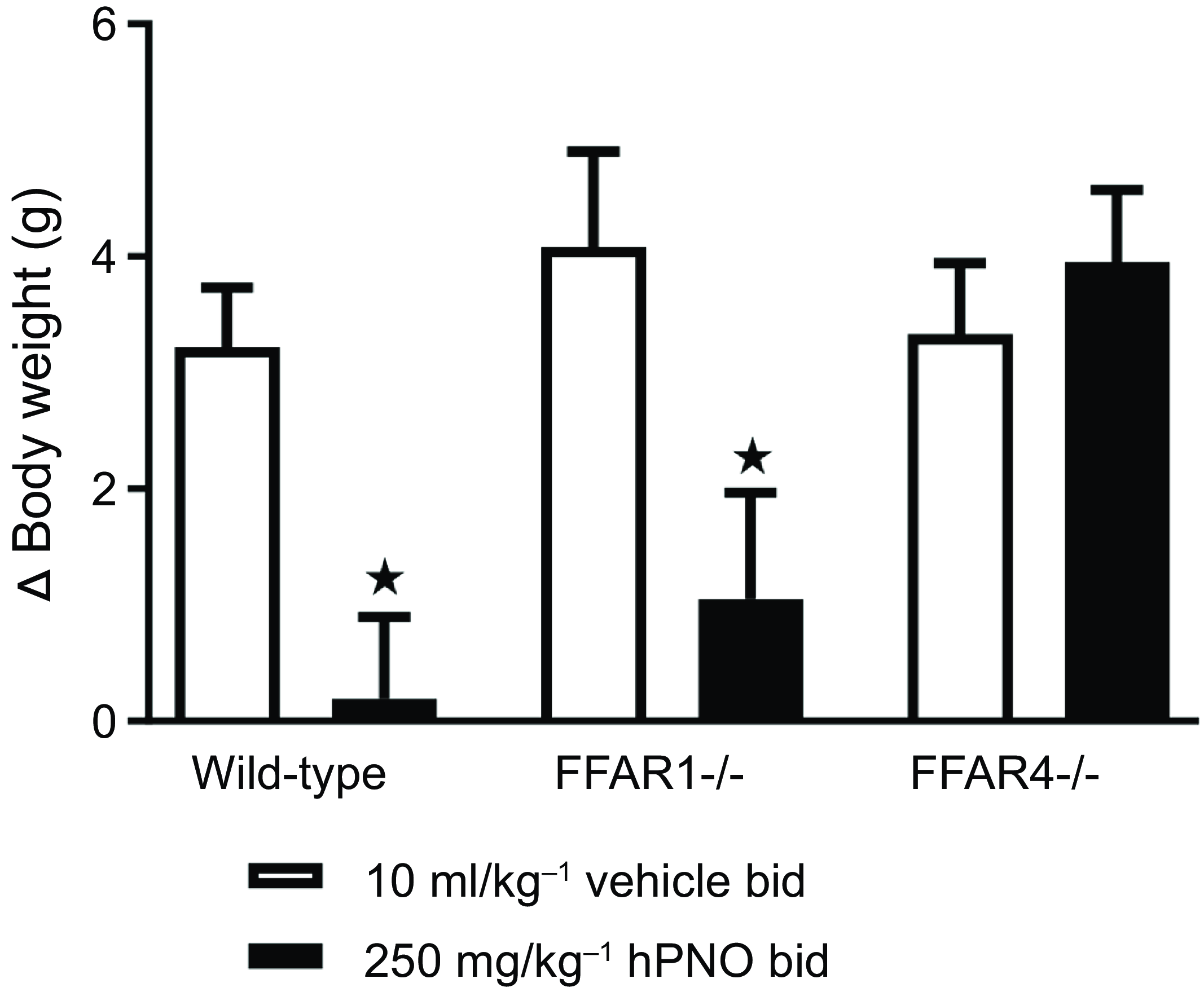
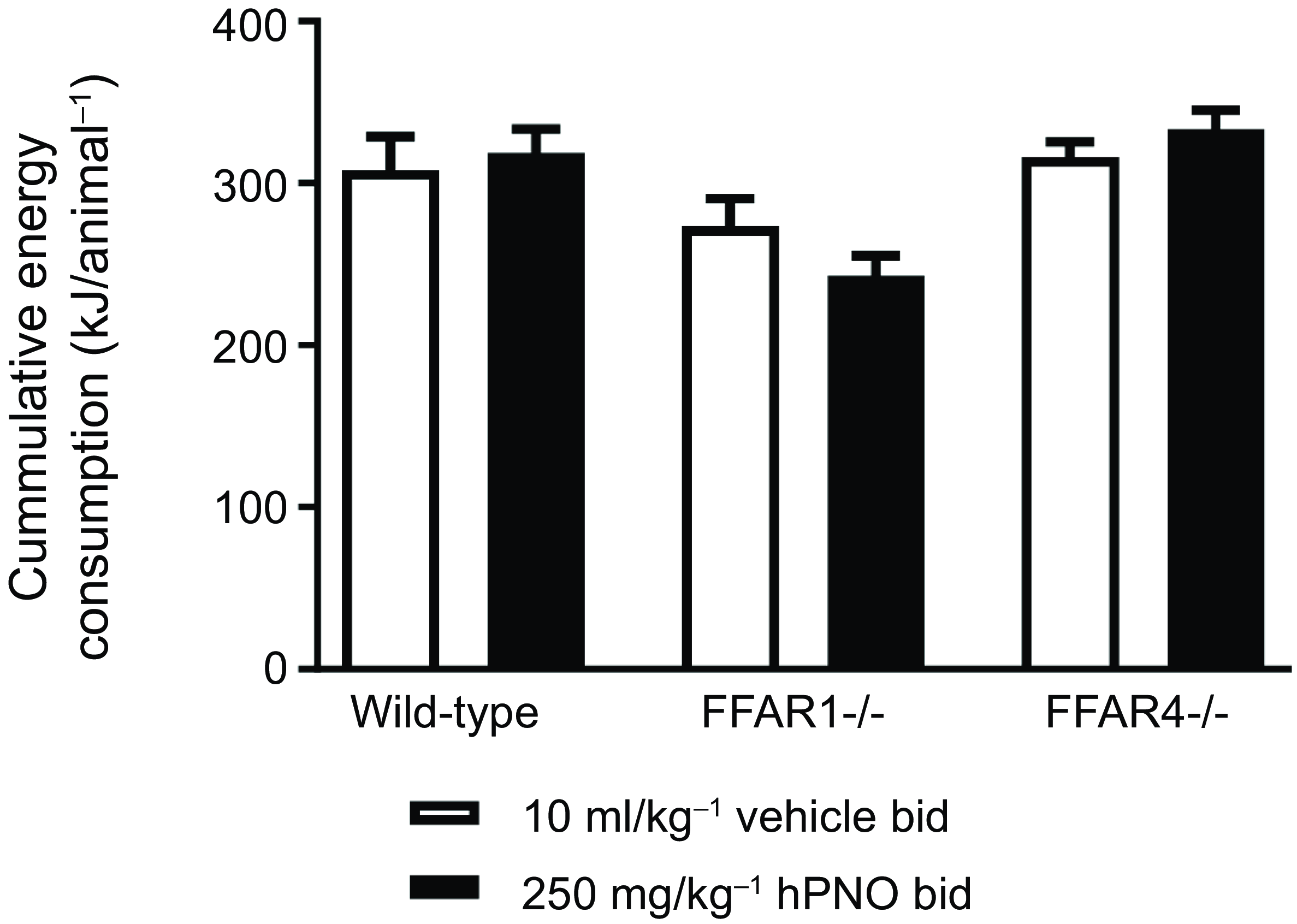
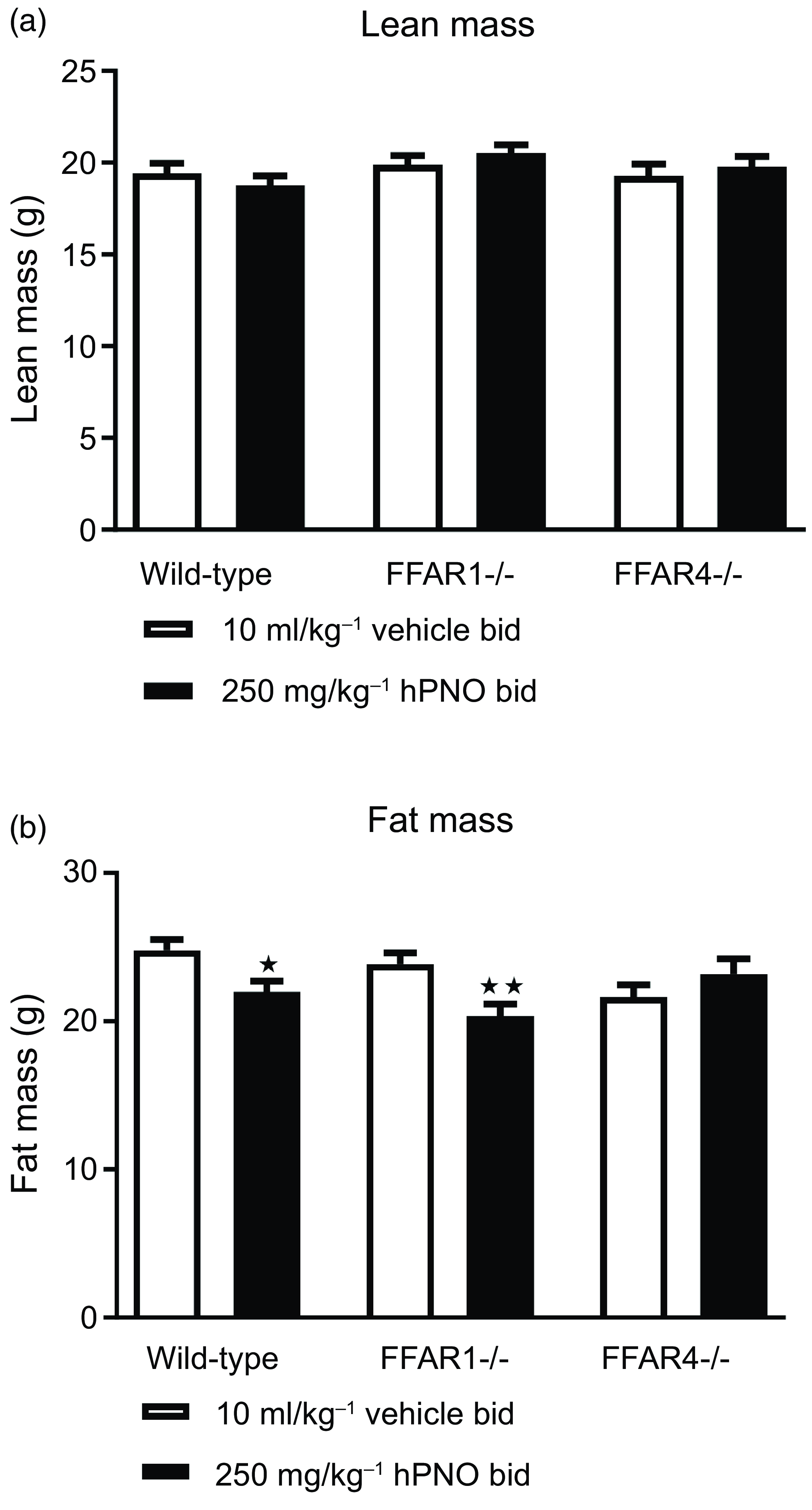
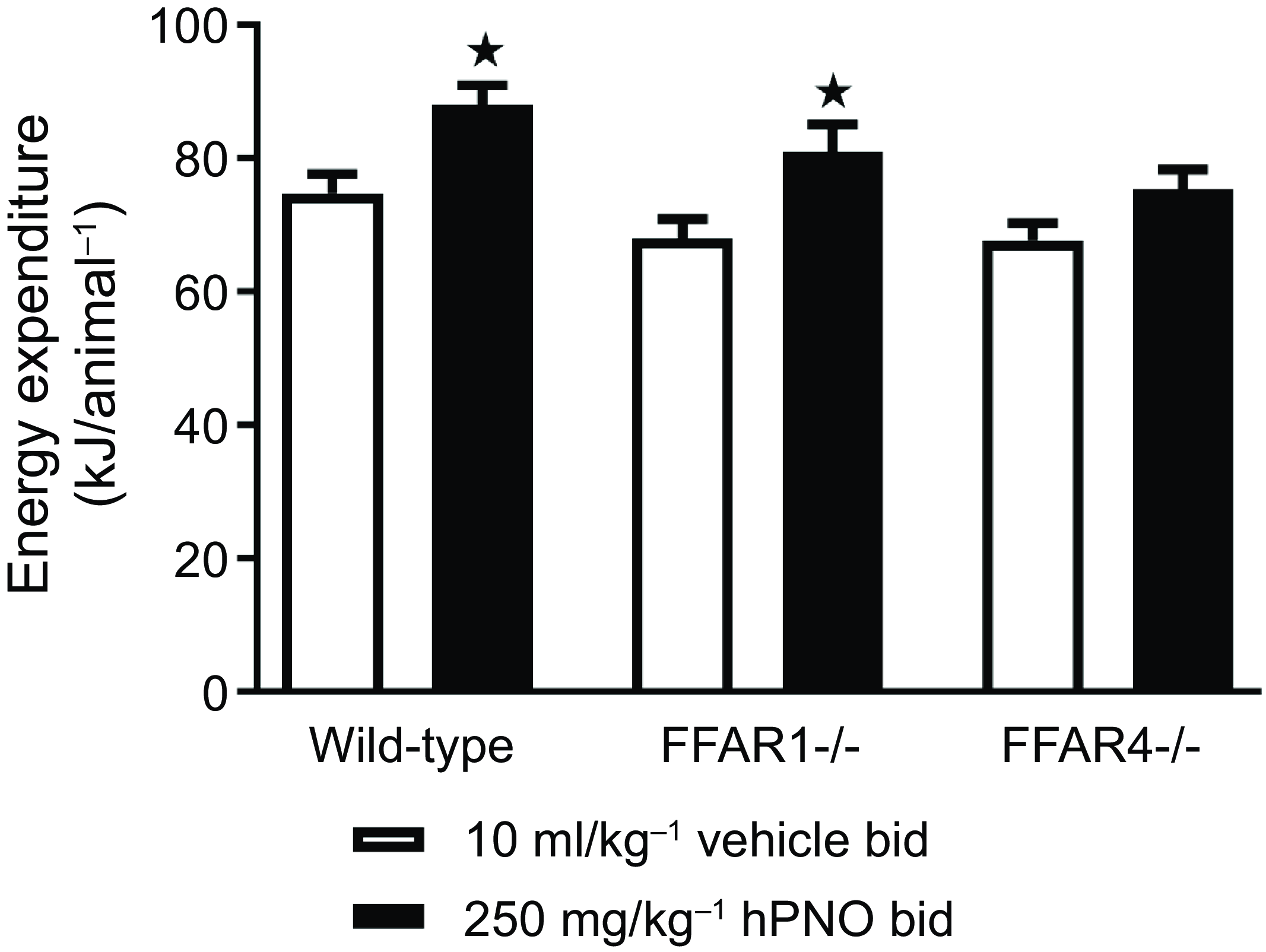
Two-way ANOVA followed by Sidak’s multiple comparison test showed that hPNO significantly reduced body weight change in wild-type (P < 0·05) and FFAR1-/- (P < 0·05) mice, but not FFAR4-/- mice over the 24 d dosing regimen (Fig. 1). However, energy intake was not affected by hPNO in any of the genotypes (Fig. 2). Likewise, hPNO significantly reduced fat mass in wild-type (P < 0·05) and FFAR1-/- (P < 0·01) mice but not FFAR4 knockout mice, whereas no difference in lean mass was observed between the groups (Fig. 3). hPNO also caused a significant increase in energy expenditure in the wild-type (P < 0·05) and FFAR1-/- (P < 0·05) mice but did not have a significant effect on FFAR4 knockout mice (Fig. 4).
Body weight change of wild-type, FFAR1-/- and FFAR4-/- mice on high-fat diet during 24 d of treatment with 250 mg/kg hPNO bid. Two-way ANOVA followed by Sidak’s multiple comparison test showed no statistically significant effect of hPNO or genotype, or interaction between treatment and genotype. Results are means of 21 values (19 for FFAR4-/- control dose) ± sem. ★ P < 0·05 for differences between mice given vehicle and PNO. FFAR, free fatty acid receptor; PNO, pine nut oil; hPNO, hydrolysed PNO.
Cumulative energy intake of wild-type, FFAR1-/- and FFAR4-/- mice on high-fat diet during 24 d of treatment with 250 mg/kg hPNO bid. Two-way ANOVA followed by Sidak’s multiple comparison test showed no significant effect of hPNO. Results are means of 7 values ± sem. FFAR, free fatty acid receptor; hPNO, hydrolysed pine nut oil.
Body composition ((a) lean mass and (b) fat mass) in wild-type, FFAR1-/- and FFAR4-/- mice on high-fat diet after 23 d of treatment with 250 mg/kg hPNO bid. Results are means of 21 values (19 for FFAR4 knockout control dose) ± sem. ★ P < 0·05, ★★ P < 0·01 for differences between mice given vehicle and PNO. FFAR, free fatty acid receptor; hPNO, hydrolysed pine nut oil.
Total 24-h energy expenditure on day 7. Results are means of 7 values ± sem. ★ P < 0·05 for differences between mice given vehicle and PNO. PNO, pine nut oil.
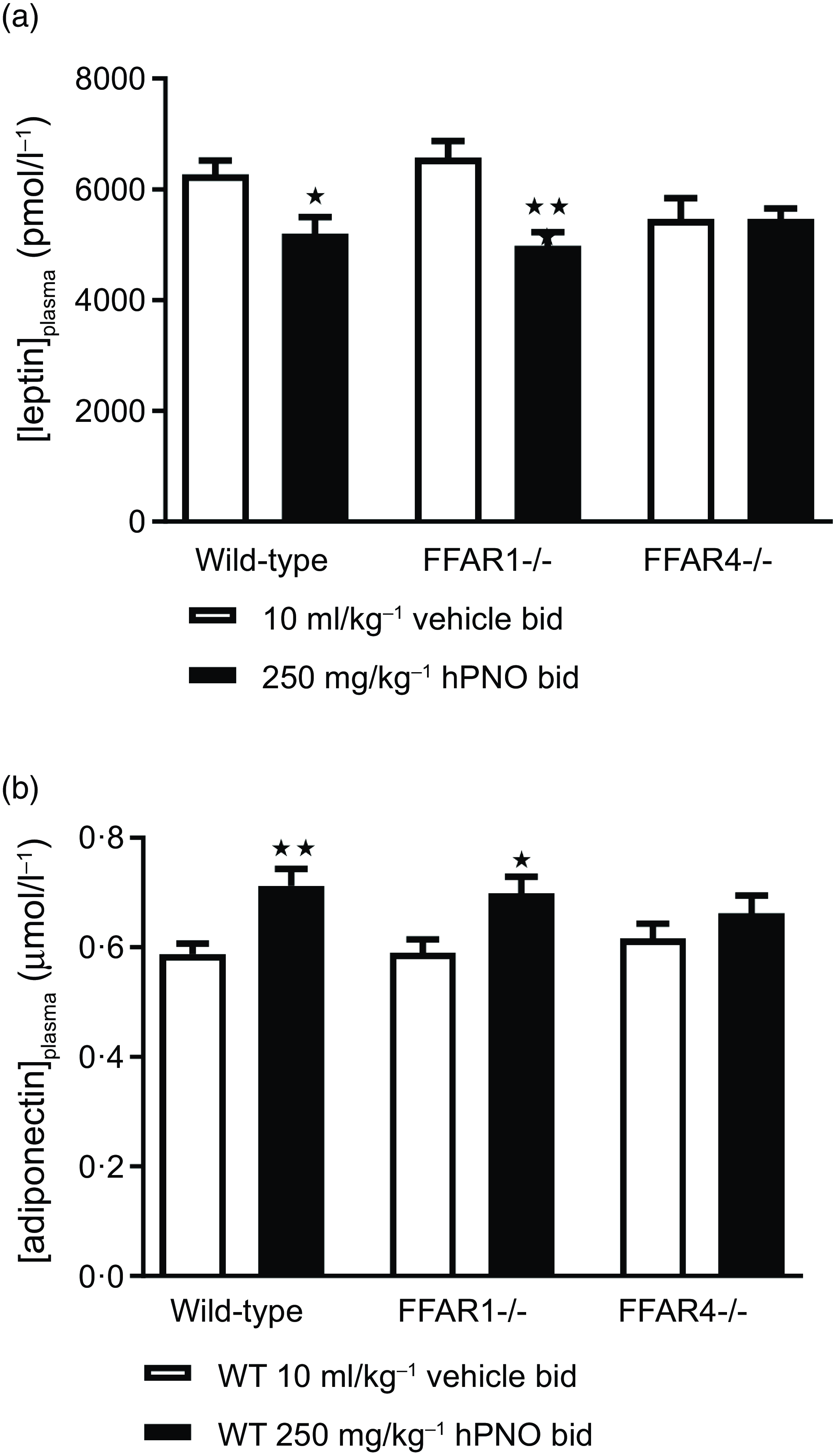
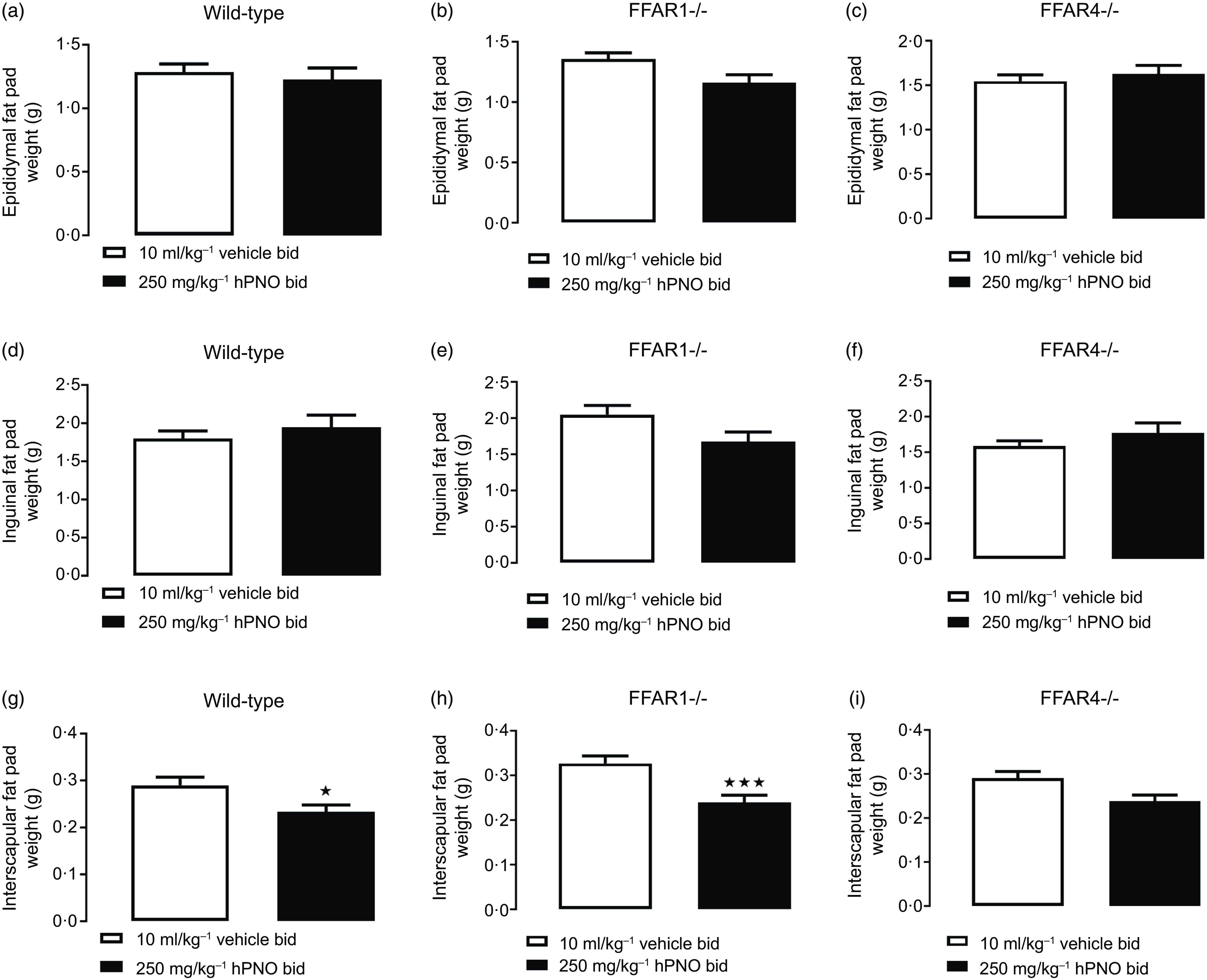
Consistent with the effect on body fat content, hPNO significantly reduced plasma leptin levels in wild-type (P < 0·05) and FFAR1 knockout (P < 0·001) mice, though not in FFAR4-/- mice (Fig. 5(a)). In addition, hPNO significantly increased plasma adiponectin in wild-type (P < 0·01) and FFAR1 knockout (P < 0·05), but not FFAR4 knockout mice (Fig. 5(b)). Also, in concordance with the whole-body fat measurement, hPNO significantly decreased interscapular fat pad mass in wild-type (P < 0·05) and FFAR1-/- (P < 0·001) mice but did not have a significant effect on FFAR4-/- mice (Fig. 6). However, neither the epididymal nor the inguinal fat pad masses were significantly affected.
Plasma leptin (a) and adiponectin (b) in wild-type, FFAR1 knockout and FFAR4 knockout mice on high-fat diet after 24 d of treatment with 250 mg/kg hPNO bid. Results are means of 21 values (19 for FFAR4-/- control dose) ± sem. ★ P < 0·05, ★★ P < 0·01, ★★★ P < 0·001 for differences between mice given vehicle and PNO. PNO, pine nut oil; hPNO, hydrolysed PNO.
Epididymal (a)–(c), inguinal (d)–(f) and interscapular (g)–(i) fat pad weights in wild-type, FFAR1-/- and FFAR4-/- mice on high-fat diet after 24 d of treatment with 250 mg/kg hPNO bid. Results are means of 21 values (19 for FFAR4-/- control dose) ± sem. ★ P < 0·05, ★★ P < 0·01, ★★★ P < 0·001 for differences between mice given vehicle and PNO. FFAR, free fatty acid receptor; PNO, pine nut oil; hPNO, hydrolysed PNO.
Glucose homoeostasis
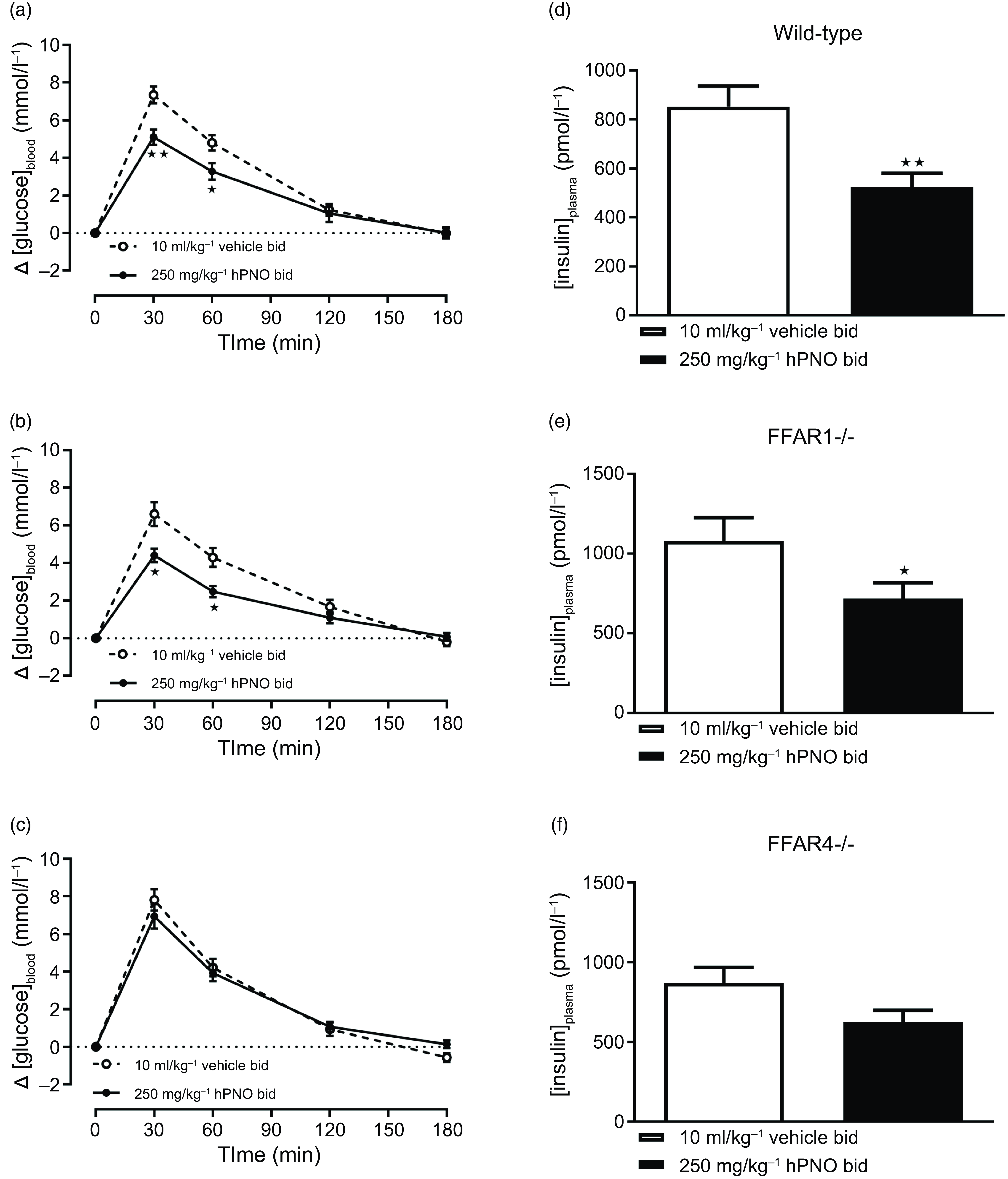
hPNO improved glucose tolerance overall in wild-type (P < 0·05, Fig. 7(a)) and FFAR1-/- (P < 0·01, Fig. 7(b)) mice and specifically at 30 and 60 minutes post-glucose load. hPNO did not affect glucose tolerance in FFAR4-/- mice either overall or at any time point (Fig. 7(c)). Fasting plasma insulin was significantly lowered by hPNO in wild-type (P < 0·01) and FFAR1-/- (P < 0·05) mice (Fig. 7(d) and (e)). There was no significant effect of hPNO in FFAR4-/- mice (P = 0·24, Fig. 7(f)).
Change in blood glucose levels during an oral glucose tolerance test in wild-type (a), FFAR1-/- (b) and FFAR4-/- (c) mice on high-fat diet after 21 d of treatment with 250 mg/kg hPNO bid. Fasting plasma insulin levels (after 5 h fast) in wild-type (D), FFAR1-/- (E) and FFAR4-/- (f) mice on high-fat diet after 21 d of treatment with 250 mg/kg hPNO bid. Results are means of 21 values (19 for FFAR4-/- control dose) ± sem. ★ P < 0·05, ★★ P < 0·01 for differences between mice given vehicle and PNO. FFAR, free fatty acid receptor; PNO, pine nut oil; hPNO, hydrolysed PNO.
Discussion
Several studies, primarily in rodents and cells, suggest that PNO and pinolenic acid reduce appetite and have potential benefits in human health(Reference Baker, Miles and Calder32,Reference Pasman, Heimerikx and Rubingh33) . Recent clinical studies support this suggestion in finding that hPNO (3 or 6 g) acutely promotes GLP-1 release and reduces appetite in humans(Reference Sørensen, Kaspersen and Ekberg30,Reference Sørensen, Korfitzen and Kaspersen31) , although no effect on glucose tolerance or insulin sensitivity was found in these studies. Pinolenic acid, a major component (about 20 %) of PNO, is a dual agonist of the free fatty acid receptors FFAR1 and FFAR4 that improves glucose tolerance acutely(Reference Christiansen, Hansen and Urban41). FFAR1 activation improves glucose tolerance by increasing insulin secretion by the pancreatic β-cells(Reference Nolan, Madiraju and Delghingaro-Augusto42). FFAR4 signalling occurs through the Gαq/11 and Gαi/o pathways and the non-canonical β-arrestin pathway(Reference Im43,Reference Hilgendorf, Johnson and Mezger44) , with the activation of Gαq/11 found to increase the translocation of glucose transporter type-4 to cell membranes in adipocytes and increase glucose uptake, whereas β-arrestin 2 mediates anti-inflammatory effects(Reference Oh, Talukdar and Bae23). A lack of FFAR4 in mice or dysfunctional FFAR4 in humans has been linked to an increased risk of obesity(Reference Ichimura, Hirasawa and Poulain-Godefroy35). To investigate the involvement of these receptors in the activity of pinolenic acid and PNO, this study examined the activity of hPNO on high-fat diet-induced obesity and insulin resistance in wild-type, FFAR1-/- and FFAR4-/- mice.
The daily dose of hPNO used in the present study was 250 mg/kg orally twice daily. This is equivalent to a total dose of 2·8 g daily in a human weighing 70 kg if doses are comparable on a body surface area(Reference Nair and Jacob45). This study shows that daily dosing with hPNO for 21 d (without the acute dose prior to the glucose tolerance test) improved insulin resistance and glucose tolerance in a high-fat diet-induced model of obesity and diabetes. hPNO has a high energy content, but the present study shows that the beneficial effects on insulin sensitivity, glucose tolerance and energy expenditure are obtained with dose levels that do not add significantly to overall energy intake or adiposity.
The effect of hPNO on glucose tolerance and insulin sensitivity was dependent on the presence of the FFAR4 receptor. This is consistent with previous publications which show that whilst chronic FFAR4 activation improves glucose tolerance by enhancing insulin sensitivity(Reference Azevedo, Watterson and Wargent36,Reference Satapati, Qian and Wu46) , FFAR1 activation instead improves glucose tolerance by enhancing glucose-induced insulin secretion(Reference Christiansen, Watterson and Stocker34,Reference Hamid, Vissing and Holst47) . FFAR1 activation retains insulin secretagogue activity even after chronic high-fat feeding(Reference Kebede, Alquier and Latour48) or chronic dosing with a specific FFAR1 agonist(Reference Christiansen, Hansen and Urban41), so FFAR1-mediated effects cannot be excluded in the present study. However, hPNO was not given immediately prior to glucose tolerance tests or plasma insulin measurements, and the effects of hPNO on glucose tolerance and insulin sensitivity were the same in FFAR1-/- and wild-type mice. Moreover, others have shown that the combined deletion of FFAR1 and FFAR4 minimally impacts glucose homoeostasis in mice compared with the deletion of FFAR4 alone(Reference Croze, Guillaume and Ethier49).
In this study, administration of hPNO for 24 d reduced body weight gain, whole-body fat content and interscapular fat pad mass of mice on a high-fat diet via FFAR4 without affecting energy intake. Energy expenditure was also increased by hPNO in wild-type but not FFAR4-/- mice, suggesting that FFAR4 plays a major role. Other receptors may contribute to the effects of PNO on insulin sensitivity and glucose tolerance, but the present study suggests that FFAR4 plays a major role.
Adiponectin increases energy expenditure(Reference Vasseur, Leprêtre and Lacquemant50) and, as the effect of hPNO on plasma adiponectin was similar to that on energy expenditure in this study, increased adiponectin levels may have been the causative factor. However, it has been shown that n-3 PUFA can increase circulating adiponectin in mice independently of FFAR4, although these effects were not shown to be directly associated with an effect on energy expenditure(Reference Pærregaard, Agerholm and Serup51). In contrast, the main effect of hPNO in this study was found to depend on FFAR4.
Conclusions
In conclusion, hPNO is effective in reducing high-fat diet-induced obesity, insulin resistance and glucose intolerance. These effects are dependent on the presence of FFAR4. PNO or pinolenic acid could have a place in a dietary or nutraceutical approach directed at impeding the development of T2D.
Acknowledgements
None.
This study was supported by the Innovation Fund Denmark (grant no. 0603-00452B).
E. T. W. was responsible for data curation (lead), formal analysis (lead), investigation (lead), methodology (lead) and writing the original draft (lead). M. A. K. was responsible for formal analysis (supporting), investigation (supporting) and writing review and editing (supporting). M. H. K. was responsible for methodology (supporting) and resources (supporting). E. R. U. was responsible for methodology (supporting), resources (supporting) and writing review and editing (equal). J. R. S. A. was responsible for resources (supporting), writing the original draft (supporting) and writing review and editing (equal). T. U. was responsible for conceptualisation (equal), funding acquisition (lead), project administration (equal) and writing review and editing (equal). C. J. S. was responsible for data curation (supporting), funding acquisition (supporting), methodology (supporting), project administration (equal), resources (equal), supervision (lead), validation (equal), visualisation (equal) and writing review and editing (equal).
The authors declare none.
Supplementary material
For supplementary material/s referred to in this article, please visit https://doi.org/10.1017/S0007114524000965


 Open access

