

Introduction
Parkinson’s disease (PD) is the second most common neurodegenerative disease worldwide (Nussbaum and Ellis, Reference Nussbaum and Ellis2003) with an estimated increase of patients in the future due to demographic change (Bach et al., Reference Bach, Ziegler, Deuschl, Dodel and Doblhammer-Reiter2011). In advanced stages of PD most patients are in need of help because both motor and non-motor symptoms (Higginson et al., Reference Higginson2012) as well as frequent adjustments of treatment create high levels of distress for the patients and result in loss of autonomy (Klietz et al., Reference Klietz2018).
The concept of caregiver burden can be explained as a multidimensional construct that summarizes the adverse effects of giving care for a person on functioning of the caregiver (Zarit et al., Reference Zarit, Todd and Zarit1986). Caregiver burden can affect the caregiver in multiple dimensions (e.g. financial, emotional, social, spiritual and physical) (Zarit et al., Reference Zarit, Todd and Zarit1986). Factors influencing caregiver burden in PD are recently reviewed by Mosley et al. (Reference Mosley, Moodie and Dissanayaka2017). Briefly, patient factors as motor impairment and non-motor symptoms like cognitive impairment, psychosis, depression, anxiety, impulse control disorders and sleep are associated with caregiver burden (Martinez-Martin et al., Reference Martinez-Martin2015a; Mosley et al., Reference Mosley, Moodie and Dissanayaka2017; Santos-García and de la Fuente-Fernández, Reference Santos-García and de la Fuente-Fernández2014; Torny et al., Reference Torny, Videaud, Chatainier, Tarrade, Meissner and Couratier2018; Vatter et al., Reference Vatter, McDonald, Stanmore, Clare and Leroi2018). Caregiver factors interacting with burden in a caregiving situation were psychiatric symptoms of the caregiver, coping and adaption to the caregiving situation and finally social support (Mosley et al., Reference Mosley, Moodie and Dissanayaka2017). Early identification and treatment of caregiver burden is crucial to help the caregiver avoid burnout.
To this date there is little known about the caregiving situation of advanced PD patients in Germany and the degree of burden to which their caregivers are exposed (Schmotz et al., Reference Schmotz, Richinger and Lorenzl2017). Caregiver burden and burnout represent a limit to the health care of PD patients at home (Bruno et al., Reference Bruno, Mancini, Ghoche, Arshinoff and Miyasaki2016) and may also be considered relevant under health economic aspects because indirect costs rise with caregivers’ increasing lack of time for their regular work (Arno et al., Reference Arno, Levine and Memmott1999; Huse et al., Reference Huse, Schulman, Orsini, Castelli-Haley, Kennedy and Lenhart2005; Martinez-Martin et al., Reference Martinez-Martin2019).
Hence, understanding the determinants of caregiver burden associated with advanced PD is of critical importance for patients, caregivers, and society. An adequate understanding of caregiver burden necessitates that this construct can be accurately assessed. Multiple measures of caregiver burden have been developed, the most widespread and accepted is the caregiver burden inventory (CBI) (Grün et al., Reference Grün, Pieri, Vaillant and Diederich2016; Hagell et al., Reference Hagell, Alvariza, Westergren and Årestedt2017; Jones et al., Reference Jones2017; Martinez-Martin et al., Reference Martinez-Martin, Arroyo, Rojo-Abuin, Rodriguez-Blazquez, Frades and de Pedro Cuesta2008, Reference Martinez-Martin2015; Mosley et al., Reference Mosley, Moodie and Dissanayaka2017; Schmotz et al., Reference Schmotz, Richinger and Lorenzl2017; Trapp et al., Reference Trapp, Ertl, Gonzalez-Arredondo, Rodriguez-Agudelo and Arango-Lasprilla2018; Zarit et al., Reference Zarit, Reever and Bach-Peterson1980). However, the CBI is not specific to PD; that is, many issues that might particularly affect caregivers of patients with PD are not reflected by the items of the inventory. For this reason, the Parkinson’s disease caregiver burden questionnaire (PDCB) was developed as a PD-specific measure of caregiver burden. In an Australian sample of caregivers of patients with PD, Zhong and colleagues found this scale to have adequate reliability and validity (as indicated by a strong correlation with the CBI) (Reference Zhong, Evans, Peppard and Velakoulis2013).
Here, we examine whether the PDCB retains these favorable psychometric properties in a German sample of caregivers of more advanced patients with PD. In comparison to Zhong and colleagues, we included a larger number of possible correlates of caregiver burden in our study which allowed us to generate new insights into the validity of the PDCB.
Methods
Participants
We obtained approval from the local Ethics Committee of Hannover Medical School (No. 3123-2016 and No. 3178-2016), and patients as well as their caregivers gave written informed consent. Our sample included 29 local caregivers and 38 caregivers of advanced PD patients in other regions of Germany. Thus, we collected data from a total of 67 caregivers of advanced PD patients. Two of them did not complete the PDCB, which renders a final sample of N = 65. Caregivers of patients with idiopathic PD were recruited from (1) our movement disorder outpatient clinic, (2) our neurological wards and (3) German Parkinson’s disease support groups. The study questionnaire was handed to local caregivers and mailed to non-local caregivers. Inclusion criteria for advanced PD patients were defined as Hoehn and Yahr stage III to V and disease duration of at least 5 years. Patients suffering from atypical Parkinsonism were excluded from this study. We only included the primary caregiver of the advanced PD patients. Professional caregivers e.g. nurses in a professional caregiving background were excluded from this study.
Measures
Caregivers were asked to complete a newly developed German version of the Parkinson’s disease caregiver burden questionnaire (PDCB). The original items published by Zhong et al. (Reference Zhong, Evans, Peppard and Velakoulis2013) were translated into German and back-translated to English by two independent professional translators. Comparisons between all the original, translated and back-translated items by the translators and two of the authors (MK & FW) did not reveal any meaningful differences. Finally, an expert group of six experienced neurologists and movement disorder specialists at Hannover Medical School (including MK, LP & FW) confirmed the validity of the translated PDCB items. The PDCB contains 20 items that can be answered on a five-point Likert scale ranging from 0 to 4. Participants can thus reach a maximum of 80 points on this questionnaire. In addition, respondents are asked to rate their global burden as a caregiver on a scale from 0 to 100. The total PDCB score is obtained by dividing this global burden rating by 5 and adding it to the PDCB questionnaire sum score. It can range from 0 to 100 with higher scores indicating higher caregiver burden.
PDCB scores were validated against caregivers’ scores on the caregiver burden inventory (CBI), a more established, but also more general (i.e., not PD-specific) tool for the assessment of caregiver burden (Zarit et al., Reference Zarit, Reever and Bach-Peterson1980). The CBI consists of 22 items that we have had translated for the purpose of the current study according to the same procedure described above. Respondents can score a maximum of 88 points on the CBI. Scores below 20 points are taken to indicate the absence of burden, 21–40 points indicating mild, 41–60 points indicating moderate, and 61–88 points indicating severe burden (Zarit et al., Reference Zarit, Reever and Bach-Peterson1980).
In addition, caregivers completed the short form 36 health survey (SF-36) (Ware and Sherbourne, Reference Ware and Sherbourne1992). The SF-36 assesses health-related quality of life across eight dimensions. Subscale scores were percentage-transformed so that a score of 0 would indicate maximum impairment and a score of 100 would indicate the absence of any reported impairment. As subscale scores were highly correlated (α = .84), we calculated an average score across the eight scales to analyze the relationship between PDCB scores and overall health-related quality of life in a more parsimonious way.
Based on prior research on the relationship between disease severity and caregiver burden (Martinez-Martin et al., Reference Martinez-Martin, Arroyo, Rojo-Abuin, Rodriguez-Blazquez, Frades and de Pedro Cuesta2008, 2014; Morley et al., Reference Morley2012), we reasoned that PDCB scores should be higher in caregivers of patients who are more severely affected by PD. To obtain a rough indicator of patients’ PD-related impairment, caregivers were provided with a copy of the Parkinson’s disease quality of life questionnaire 39 (PDQ-39) to be completed by the respective patient (Peto et al., Reference Peto, Jenkinson, Fitzpatrick and Greenhall1995). This scale assesses patients’ functioning and well-being across eight domains. By averaging percentage-transformed scores across these eight subscales, one can obtain a global indicator of PD-related impairment in quality of life, the Parkinson’s disease summary index (PDSI) (Jenkinson et al., Reference Jenkinson, Fitzpatrick, Peto, Greenhall and Hyman1997). Higher PDSI scores indicate worse quality of life. Caregivers of patients with possible cognitive impairment were asked to assist patients in completing the PDQ-39 to ensure correct results and avoid anosognosia.
Caregivers were also asked to provide general information about their background and demographics. Among others, they reported patients’ disease duration as well as the daily amount of time they dedicated to giving care to the patient. Based on prior research, we expected these variables to be positively related to scores on the PDCB (Huse et al., Reference Huse, Schulman, Orsini, Castelli-Haley, Kennedy and Lenhart2005; Martinez-Martin et al., Reference Martinez-Martin, Arroyo, Rojo-Abuin, Rodriguez-Blazquez, Frades and de Pedro Cuesta2008; Rodríguez-Violante et al., Reference Rodríguez-Violante, Camacho-Ordoñez, Cervantes-Arriaga, González-Latapí and Velázquez-Osuna2015; Schmotz et al., Reference Schmotz, Richinger and Lorenzl2017).
To explore further possible correlates of caregiver burden, we asked caregivers to complete Beck´s depression inventory (BDI) (Beck et al., Reference Beck, Ward, Mendelson, Mock and Erbaugh1961) as a measure of depressive symptoms as well as a short version of the Big Five Inventory (BFI-10) (Rammstedt and John, Reference Rammstedt and John2007), assessing the five personality dimensions extraversion, agreeableness, conscientiousness, neuroticism, and openness.
Analyses
Following Zhong and colleagues (Reference Zhong, Evans, Peppard and Velakoulis2013), we analyzed the descriptive distribution of caregivers’ responses to the 20 PDCB items, the reliability of the PDCB questionnaire score (Cronbach’s α), and the item-total correlations. We also computed the correlation between the PDCB questionnaire score and the PDCB global burden rating to test whether combining them into a total score is sensible and whether the global burden rating might qualify as brief measure of caregiver burden.
To examine the validity of the German version of the PDCB in advanced patients with PD, Spearman correlations were computed for the relationships of total PDCB scores with CBI sum scores, average SF-36 scores, PDSI scores, disease duration, and caregiving time. Non-parametric correlation coefficients were used to obtain results that are comparable to the ones reported by Zhong and colleagues (Reference Zhong, Evans, Peppard and Velakoulis2013). All correlations were expected to be positive, with the exception of the correlation with SF-36 scores (where higher scores indicate better functioning), which was expected to be negative. For these correlational analyses, the level of significance was set to .05/5 = .01 to adjust for the number of examined correlations. Regarding the remaining study variables (BFI-10 and BDI scores, demographic data), relationships with the PDCB were analyzed in an exploratory manner. Analyses were carried out using SPSS 25.0 (IBM, Armonk, NY) and Graphpad Prism 5.00 (San Diego, California, USA).
Results
Patient characteristics
On average, PD patients were 74.8 years old (SD 5.7, min 58, max 88). Mean disease duration was 16.3 years (SD 6.7, min 5, max 34). Patients scored an average of 82.9 points on the PDQ-39 and the associated average PDSI score was 49.2 (SD 12.7, min 22.4, max 83.6). All PD patient characteristics are summarized in Table 1.
Patient and caregiver characteristics (n = 65)

Abbreviations: PD = Parkinson’s disease; PDSI = Parkinson’s disease summary index; PDCB = Parkinson’s disease caregiver burden inventory; CBI = caregiver burden inventory; SF-36 = short form 36 health survey; BDI = Beck depression inventory; SD = standard deviation.
Caregiver characteristics
Mean age of recruited PD caregivers was 70.9 years (SD 9.1, min 45, max 86), 70.8% of the caregivers were female, and 91% were spouses of the related PD patient. On average, caregivers were 3.9 years younger than their corresponding patients (SD 8.5, range: 43 yrs younger to 7 yrs older). Caregivers reported to spend an average of 7.1 hours a day (SD 6.7h) with caregiving activities. Note, however, that many caregivers expressed having difficulties in determining the amount of daily caregiving time and 12 caregivers did not provide an answer to this question. Mean PDCB scores were 30.0 (SD 11.3, min 9, max 60) for the 20 questionnaire items, 49.2 (SD 26.2, min 0, max 100) for the global burden rating, and 39.8 (SD 14.9, min 9, max 80) for the aggregated total score. Caregivers scored an average of 34.4 (SD 14.6, min 8, max 68) on the CBI and an average of 56.2 (SD 20.6, min 18.4, max 91.4) on the SF-36. All these aggregate scores are close to the midpoint of the respective scales. On the BDI, caregivers scored an average of 12.9 points (SD 6.0, min 2, max 28). All caregiver characteristics are summarized in Table 1.
Reliability of the Parkinson’s disease caregiver burden questionnaire (PDCB)
Cronbach’s α of the 20 items contributing to the PDCB questionnaire score was .80. All items were positively related to the total score, but some of these item-total correlations must be considered to be rather low (Table 2). Especially item 10 was only weakly correlated with the PDCB questionnaire score and removing this item would result in a slight increase in reliability. The PDCB questionnaire score was correlated with the PDCB global burden rating, r = .55, p < .001. Based on this result, we considered aggregating the two measures into a PDCB total score (as proposed by Zhong et al.) to be appropriate. Distribution characteristics of the PDCB total score are displayed in Figure 1. This total score was used for the following correlation analyses.
Distribution characteristics of the Parkinson’s disease caregiver burden inventory (PDCB) total score. M = mean, SD = standard deviation, IQR = interquartile range, SE = standard error.

Item characteristics of the German version of the Parkinson’s disease caregiver burden questionnaire (PDCB)
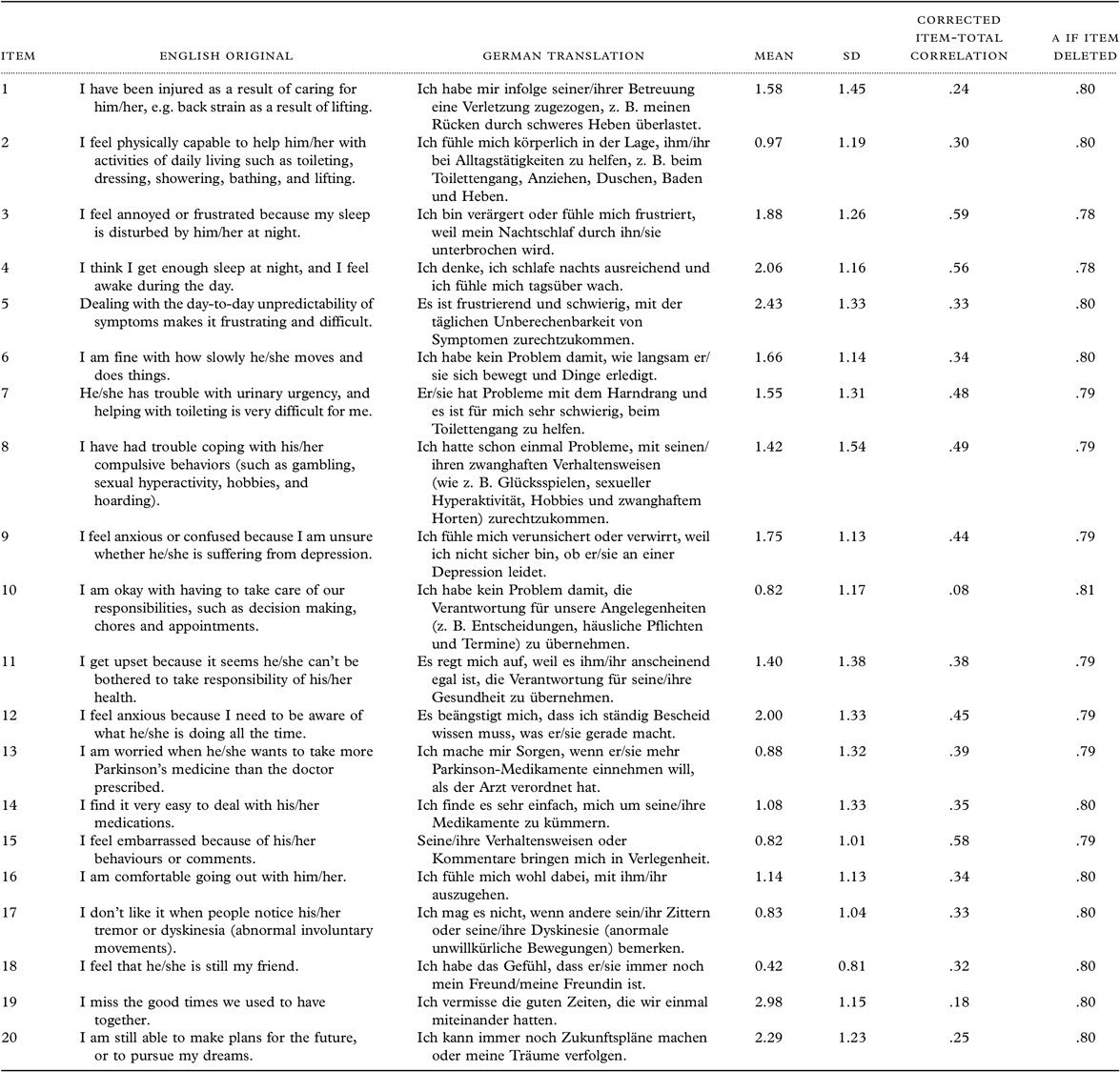
Note. Scores of inverted items have been recoded. Higher values indicate higher caregiver burden.
Validity of the Parkinson’s disease caregiver burden questionnaire (PDCB)
Table 3 displays the correlations between PDCB total scores and those variables that we expected to be related to them. It can be seen that the correlations with CBI sum scores (r = .71, p < .001), average SF-36 scores (r = −.40, p = .001), and caregiving hours per day (r = .36, p = .008) were significant at the corrected significance level of .01.
Spearman correlations between total PDCB scores and validation measures

Note. Correlations of interest for hypothesis testing are highlighted in bold. The number of cases available for these correlations are displayed next to them (n). The remaining correlations were not compared against a significance threshold. CBI = caregiver burden inventory, PDCB = Parkinson’s disease caregiver burden inventory, PDQ-39 = Parkinson’s disease quality of life questionnaire 39; PDSI = Parkinson’s disease summary index, SF-36 = short form 36 health survey.
* significant at p < .05.
** significant at the corrected p < .01.
In addition, PDCB scores increased with increasing PDSI scores (r = .30), but the associated p-value (p = .015) did not fall below the corrected significance level. PDCB scores were not related to disease duration (r = −.09, p = .500).
Exploratory analyses
Total PDCB scores were negatively related to caregivers’ age (r = −.33, p = .009) and positively related to the age difference between patient and caregiver (r = .31, p = .011). Female caregivers reported higher PDCB scores (M = 42.8, SD = 14.7) than male caregivers (M = 32.4, SD = 13.0, t = 2.68, p = .009). Higher PDCB scores were related to higher BDI scores (r = .48, p < .001), higher neuroticism scores (r = .34, p = .006), lower conscientiousness scores (r = −.28, p = .029), and lower agreeableness scores (r = −.30, p = .019) on the BFI-10. No substantial correlations were found with extraversion (r = .09, p = .484) and openness (r = −.09, p = .476).
Discussion
In the present study, we evaluated the psychometric characteristics of the PDCB in a sample of caregivers of advanced patients with PD in Germany. We found the scale to be reliable and to relate to an established measure of caregiver burden (i.e., the CBI). In addition, PDCB scores were correlated to variables that are conceptually associated with the burden experienced by caregivers (e.g., their health-related quality of life and the amount of time that they spend giving care). These results indicate that the PDCB retains large parts of its psychometric quality when being translated into German and being administered to caregivers of patients in a more advanced state of PD.
Comparison with the original version of scale
In comparison to the study by Zhong and colleagues, we examined caregivers of patients who were in a substantially more advanced stage of the disease. Patients were five years older and the average disease duration was more than twice as long in our study. Nonetheless, the internal consistency of the PDCB was similar across studies (α = .80 vs. α = .86). Likewise, we found a strong correlation between PDCB and CBI scores (r = .71), which had also been reported by Zhong and colleagues (r = .77 - .80). As in our study, Zhong and colleagues found the PDCB questionnaire score to be correlated with the PDCB global burden rating, but the size of this correlation was substantially larger in their sample (r = .84) than in ours (r = .55). The difference between these correlation coefficients is significant (z = 3.12, p = .002, http://vassarstats.net/rdiff.html), and might indicate that the global burden rating is less representative of the PDCB questionnaire in German caregivers of advanced PD patients than in Australian caregivers of less advanced patients.
Similarly to Zhong and colleagues, we found the item-total correlations involving the first two PDCB items (referring to caregivers’ physical condition) not to be very strong. Moreover, we identified a few additional items that might be problematic to use in a German population and/or in caregivers of advanced patients with PD. Further research involving caregivers of patients in diverse stages of the disease is required to determine whether this is due to our translation or whether these items are not sensitive indicators of caregiver burden in the target population. In the long run, it might prove beneficial to delete or replace the items in question. Yet, given the good reliability of the scale in our study, we see no reason to discourage the use of the German version of the PDCB in advanced patients with PD.
New evidence for the validity of the Parkinson’s disease caregiver burden questionnaire (PDCB)
In addition to the replication of the PDCB-CBI link reported by Zhong and colleagues, our study revealed a substantial correlation between the PDCB and the SF-36. This correlation is likely reflective of the fact that both scales aim to assess how impaired respondents feel in their daily functioning. In contrast to the SF-36, the PDCB is more specific with regard to the source and nature of this impairment. Hence, it is not surprising that the correlation is smaller than, for example, the correlation between PDCB and CBI (where impairment is assessed at comparable levels of specificity).
The amount of time that individuals spend giving care to patients with PD can be conceived of as a predictor or component of experienced caregiver burden and, thus, a valid measure of caregiver burden should correlate with the daily number of caregiving hours. Our study shows, for the first time, that the PDCB fulfills this criterion. This finding is comparable to the results present in prior research using alternative measures of caregiver burden (Corallo et al., Reference Corallo, De Cola, Lo Buono, Di Lorenzo, Bramanti and Marino2017; Grün et al., Reference Grün, Pieri, Vaillant and Diederich2016; Martinez-Martin et al., Reference Martinez-Martin2015; Morley et al., Reference Morley2012; Sanyal et al., Reference Sanyal, Das, Ghosh, Banerjee, Bhaskar and Rao2015; Zhong et al., Reference Zhong, Peppard, Velakoulis and Evans2016). Similarly, one could expect that caregiver burden increases with increasing disease duration (Martinez-Martin et al., Reference Martinez-Martin, Rodriguez-Blazquez and Forjaz2012). However, we did not find a corresponding correlation between PDCB scores and disease duration in our study. In advanced patients with PD, disease duration might not be a very good indicator of disease-related impairment anymore. In our sample, all patients were at an advanced Hoehn and Yahr stage, but the number of years that had passed until they reached that stadium varied substantially (Klietz et al., Reference Klietz2018). Hence, disease duration and disease severity (or disease-related impairment) might have been partially decoupled in our sample. Consistent with this notion, the correlation between disease duration and PDSI scores was only medium in size in our study. Alternatively, it is possible that increasing disease duration is not only associated with increasing disease severity, but also with improving coping skills on the part of the caregiver. These skills might help caregivers to compensate the disease-duration-related increase in caregiving demands. Finally, we observed that caregivers of patients who rated their disease to decrease quality of life on the PDQ-39 tended to report more caregiver burden on the PDCB (although this correlation did not reach the corrected level of significance). This finding can be taken as tentative evidence for a link between disease-related impairment and PDCB scores. However, it should be noted that this indicator of disease-related impairment relied exclusively on self-reports and might have even been affected by the personal judgement of the caregiver that helped completing the scale.
Exploratory findings
The correlations we presented between PDCB scores, demographics, and personality traits might be of interest to future studies or meta-analytic research on the predictors of caregiver burden. The correlations of the PDCB with neuroticism and conscientiousness in our study seem comparable to those obtained by Tew and colleagues (Reference Tew, Naismith, Pereira and Lewis2013) who used the same personality assessment, but a different measure of caregiver burden. These authors did not find the correlation between caregiver burden and agreeableness that we observed in our study. Further research is required to evaluate the reliability and relevance of these associations.
Clinical significance
Our results suggest that the PDCB can play a useful role in the assessment of burden in caregivers of patients with advanced PD. The scale can provide valuable information for general physicians, neurologists, and movement disorder specialists to identify caregivers in need for support. Early support and tailored interventions may prevent a drastic decline of caregivers’ health-related quality of life. Caregiver functioning and disability can be viewed as a complex interaction between individual and contextual factors. To decrease caregiver burden it is important to find the optimal treatment for PD patients’ motor and non-motor symptoms with a focus on dementia, depression, and anxiety (Martinez-Martin et al., Reference Martinez-Martin2015; Morley et al., Reference Morley2012). In addition, implementation of outpatient care, daytime care, or even palliative care might be helpful to reduce caregiving time per day and caregiver burden. Finally, psychotherapy and behavioral interventions could be used to equip caregivers with the skills necessary to cope with the caregiving situation (Lyons et al., Reference Lyons, Stewart, Archbold, Carter and Perrin2004). Validated assessment tools such as the PDCB should be used to evaluate the isolated and combined effectiveness of these components in alleviating caregiver burden.
Limitations
In comparison to other studies on caregiver burden in PD, the size of our sample might seem rather small. It should be noted that the size of our sample was larger than the one in the study by Zhong and colleagues who examined very similar research questions. Moreover, given the size of the correlations between PDCB scores and validation measures that could have been expected based on the results by Zhong and colleagues, our sample size has likely been sufficient to allow for adequately powered tests of these correlations. Nevertheless, larger replication studies are required to obtain more stable estimates of the size of these correlations and to be able to detect more subtle relationships between PDCB scores and possible determinants of caregiver burden. In addition, future longitudinal studies are required to examine further psychometric characteristics (including test-retest reliability and predictive validity) of the PDCB.
Conclusion
The German version of the PDCB appears to be an adequate measure of caregiver burden in caregivers of advanced patients with PD. Given the rather modest correlation with the questionnaire part of the scale, we cannot unconditionally recommend using the PDCB global burden rating as a stand-alone measure. Future studies might focus on the development and evaluation of a brief version of the scale, which can then be used for the assessment of caregiver burden in the clinical routine.
Conflict of interest
The authors have no conflict of interest to report.
Funding
This study was supported by a Grant of Hilde-Ulrichs foundation Frankfurt am Main, Germany to MK. FL received funding from the FWO and European Union’s Horizon 2020 research and innovation programme under the Marie Skłodowska-Curie grant agreement No 665501.
Description of author’s roles
MK, LR and FW designed the study with assistance of FL; MK, LR, LP and AT carried out the study. FL performed the statistical analysis. FL, MK, LR, DD and FW analyzed the data and wrote the manuscript. AT, DD and LP revised it critically for important intellectual content.
Acknowledgments
We thank N. Ziegler and H. Gorzolla for excellent assistance. Thanks to all the patients and their caregivers to participate in our study.
Authors’ note
The sponsors had no influence on the carrying out of the study or the writing of the manuscript.


 Open access

