


Introduction
The literature is abuzz with arguments for and against the linguistic and executive control differences between monolingual and bilingual speakers (Gollan, Montoya, Fennema-Notestine & Morris, Reference Gollan, Montoya, Fennema-Notestine and Morris2005; Ivanova & Costa, Reference Ivanova and Costa2008; Luo, Luk & Bialystok, Reference Luo, Luk and Bialystok2010; Paap, Myuz, Anders, Bockelman, Mikulinsky & Sawi, Reference Paap, Myuz, Anders, Bockelman, Mikulinsky and Sawi2017; Prior & MacWhinney, Reference Prior and MacWhinney2010). Previous studies have shown bilingual disadvantages in various linguistic tasks such as picture naming (Gollan et al., Reference Gollan, Montoya, Fennema-Notestine and Morris2005), verbal fluency (Rosselli, Ardila, Araujo, Weekes, Caracciolo, Padilla & Ostrosky-Solí, Reference Rosselli, Ardila, Araujo, Weekes, Caracciolo, Padilla and Ostrosky-Solí2000), word identification through noise (Rogers, Lister, Febo, Besing & Abrams, Reference Rogers, Lister, Febo, Besing and Abrams2006). According to the weaker link hypothesis, the reason for bilingual disadvantage in the linguistic domain is the lesser usage of each language of a bilingual speaker resulting in weaker links between the two languages (Michael & Gollan, Reference Michael and Gollan2005). A sensorimotor account (Hernandez & Li, Reference Hernandez and Li2007) attributes the bilingual disadvantage to the delay in age of acquisition of the second language. Further, bilinguals face greater lexical competition compared to monolinguals as both languages are active during language processing (Costa & Caramazza, Reference Costa and Caramazza1999) and the poorer performance in the linguistic domain can be attributed to this increased lexical competition (Inhibitory control model, Green, Reference Green1998).
In contrast to the disadvantages of being bilingual in the verbal domain, effect of bilingualism on executive control mechanism is hotly debated. Researchers have shown advantages (Bialystok, Craik, Klein & Viswanathan, Reference Bialystok, Craik, Klein and Viswanathan2004; Prior & MacWhinney, Reference Prior and MacWhinney2010) as well as no differences across various executive control tasks (Kousaie & Phillips, Reference Kousaie and Phillips2012; Paap & Greenberg, Reference Paap and Greenberg2013; Paap et al., Reference Paap, Myuz, Anders, Bockelman, Mikulinsky and Sawi2017). For example, studies have reported bilingual advantage on inhibitory control tasks (e.g., Simon task in Bialystok et al., Reference Bialystok, Craik, Klein and Viswanathan2004; Flanker task in Emmorey, Luk, Pyers & Bialystok, Reference Emmorey, Luk, Pyers and Bialystok2008), no difference or similar performance between bilinguals and monolinguals has also been noted (e.g., Stroop in Kousaie & Phillips, Reference Kousaie and Phillips2012; Flanker task and Simon task in Paap & Greenberg, Reference Paap and Greenberg2013; Paap & Sawi, Reference Paap and Sawi2014). Similarly, on mental set shifting measure using colour-shape task switching paradigm have reported divergent findings ranging from advantage for bilinguals (Prior & Gollan, Reference Prior and Gollan2011; Prior & MacWhinney, Reference Prior and MacWhinney2010) to no differences between the two groups (Paap & Greenberg, Reference Paap and Greenberg2013; Paap & Sawi, Reference Paap and Sawi2014; Paap et al., Reference Paap, Myuz, Anders, Bockelman, Mikulinsky and Sawi2017). As could be seen from the literature, it is still unresolved whether bilinguals would show specific advantages on certain domains of executive control as the difference between the groups depends on cultural differences, small sample size, inappropriate statistical analysis, and the tasks used (Paap, Johnson & Sawi, Reference Paap, Johnson and Sawi2014).
A prevalent approach in the literature has been to use separate measures of language production and executive control mechanisms; linguistic tasks tapping into language production, and non-linguistic tasks tapping into executive control processes. A better approach to inform the debate on – disadvantage or advantage – amongst language and executive control processes for bilingual and monolingual speakers would be to use a task (e.g., verbal fluency task) that simultaneously draw upon both these processes. With the exception of a handful of studies, the role of executive control during language production amongst bilinguals and monolinguals has not been explored (e.g., Bialystok, Craik & Luk, Reference Bialystok, Craik and Luk2008; Friesen, Luo, Luk & Bialystok, Reference Friesen, Luo, Luk and Bialystok2015).
Researchers have used the verbal fluency task – the ability to produce as many unique words as possible in a fixed amount of time, according to a given criterion (e.g., semantic or category; letter or phonemic) – to inform the debate of linguistic and executive control differences between monolingual and bilingual speakers (Luo et al., Reference Luo, Luk and Bialystok2010; Paap et al., Reference Paap, Myuz, Anders, Bockelman, Mikulinsky and Sawi2017; Sandoval, Gollan, Ferreira & Salmon, Reference Sandoval, Gollan, Ferreira and Salmon2010). Performance in the semantic fluency condition resembles to our day to day language activities: for example, in a semantic fluency task, participants are asked to generate items belonging to the category of clothing, and participants try to remember the items from their wardrobes. Therefore, participants can revisit the existing links in their mental lexicon related to a concept while generating novel words in the semantic fluency condition (Friesen et al., Reference Friesen, Luo, Luk and Bialystok2015). However, letter fluency condition becomes more challenging as it requires producing words starting with a letter or phoneme, which is not commonly practiced in our everyday life. Successful performance in the letter fluency condition requires coming up with strategies and suppression of the activation of related semantic concepts (e.g., Friesen et al., Reference Friesen, Luo, Luk and Bialystok2015; Luo et al., Reference Luo, Luk and Bialystok2010). Thus, the respective contributions of linguistic and executive components are differential for semantic and letter fluency conditions: higher demands are placed on executive control mechanisms in letter fluency, while a greater emphasis is placed on linguistic abilities in semantic fluency (Delis, Kaplan & Kramer, Reference Delis, Kaplan and Kramer2001; Luo et al., Reference Luo, Luk and Bialystok2010; Paap et al., Reference Paap, Myuz, Anders, Bockelman, Mikulinsky and Sawi2017; Sandoval et al., Reference Sandoval, Gollan, Ferreira and Salmon2010; Shao, Janse, Visser & Meyer, Reference Shao, Janse, Visser and Meyer2014).
Verbal fluency research comparing bilingual and monolingual performance have shown mixed results (Bialystok et al., Reference Bialystok, Craik and Luk2008; Luo et al., Reference Luo, Luk and Bialystok2010; Paap et al., Reference Paap, Myuz, Anders, Bockelman, Mikulinsky and Sawi2017; Sandoval et al., Reference Sandoval, Gollan, Ferreira and Salmon2010). In semantic fluency, monolinguals generate a larger number of correct responses than bilinguals (Gollan, Montoya & Werner, Reference Gollan, Montoya and Werner2002; Rosselli et al., Reference Rosselli, Ardila, Araujo, Weekes, Caracciolo, Padilla and Ostrosky-Solí2000; Sandoval et al., Reference Sandoval, Gollan, Ferreira and Salmon2010). However, this bilingual disadvantage disappears when the groups are matched on receptive vocabulary (Bialystok et al., Reference Bialystok, Craik and Luk2008; Luo et al., Reference Luo, Luk and Bialystok2010). For letter fluency, findings have been wide ranging from fewer to equivalent to greater number of correct responses by bilinguals (Bialystok et al., Reference Bialystok, Craik and Luk2008; Kormi-Nouri, Moradi, Moradi, Akbari-Zardkhaneh & Zahedian, Reference Kormi-Nouri, Moradi, Moradi, Akbari-Zardkhaneh and Zahedian2012; Rosselli et al., Reference Rosselli, Ardila, Araujo, Weekes, Caracciolo, Padilla and Ostrosky-Solí2000; Luo et al., Reference Luo, Luk and Bialystok2010; Paap et al., Reference Paap, Myuz, Anders, Bockelman, Mikulinsky and Sawi2017; Sandoval et al., Reference Sandoval, Gollan, Ferreira and Salmon2010). Luo et al. (Reference Luo, Luk and Bialystok2010) found that vocabulary matched bilinguals outperform monolinguals on letter fluency, proposing that it is suggestive of better executive control in bilinguals. However, Paap et al. (Reference Paap, Myuz, Anders, Bockelman, Mikulinsky and Sawi2017) were unable to replicate these results. They strongly argued that “relatively better performance by a group on letter fluency compared to category fluency cannot be taken as evidence that the group has superior executive functions. Rather such a claim must be backed up by an independent and direct test of EF ability” (Paap et al., Reference Paap, Myuz, Anders, Bockelman, Mikulinsky and Sawi2017, p.108). Importantly, studies exploring the relationship of independent measures of executive control and verbal fluency performance (at least in monolinguals) did not find a stronger relationship between executive control measures and the performance in letter fluency compared to semantic fluency task (Shao et al., Reference Shao, Janse, Visser and Meyer2014). With a limited number of empirical studies and difficulties with replication, it remains an open question whether bilinguals and monolinguals: (1) perform differently in semantic and letter fluency tasks; (2) whether their performance differences would be mediated by specific aspects of executive control abilities.
Moving beyond the number of correct responses, we used a wide range of variables to characterize verbal fluency performance, such as time-course, clustering, and switching analyses for both semantic and letter fluency (Luo et al., Reference Luo, Luk and Bialystok2010; Troyer, Moscovitch & Winocur, Reference Troyer, Moscovitch and Winocur1997). Table 1 provides description of the variables and the components of verbal fluency they are assumed to index. To our knowledge, this is the first study that systemically compares healthy bilinguals and monolinguals on this full range of measures. In addition, we included independent measures of executive processes (i.e., inhibition, shifting and memory) to compare performance differences between bilinguals and monolinguals and their relationship to verbal fluency performance. This allows us to establish if bilinguals will evidence exaggerated differences on the verbal fluency parameters that depend more on the executive component of the task and if bilinguals' better performance in letter fluency found in some studies can be attributed to differences in executive control.
Description of the verbal fluency variables and their relative contribution to the linguistic and executive control components
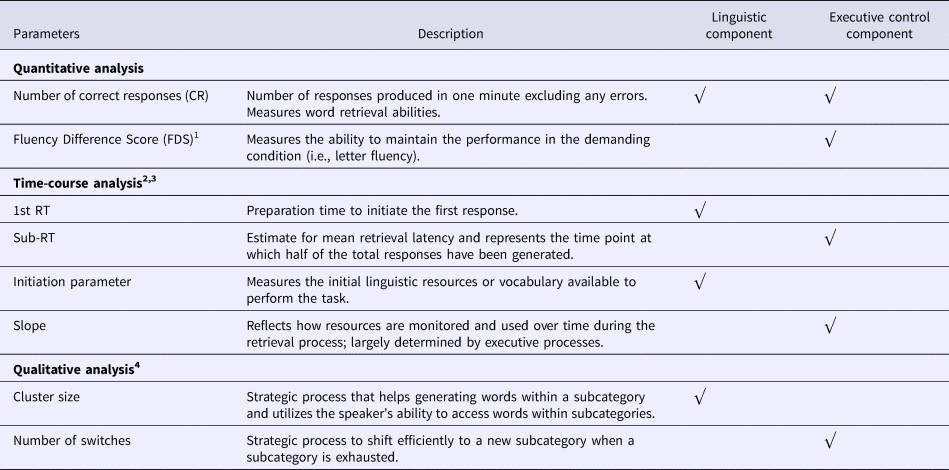
1Friesen et al., Reference Friesen, Luo, Luk and Bialystok2015; 2Luo et al., Reference Luo, Luk and Bialystok2010; 3Sandoval et al., Reference Sandoval, Gollan, Ferreira and Salmon2010; 4Troyer et al., Reference Troyer, Moscovitch and Winocur1997.
As the verbal fluency task places a premium on rapid search and retrieval, temporal measures of performance, such as time-course analysis (i.e., production time of each word as a function of its position in the sequence), provide insights into the linguistic and executive control strategies (e.g., Crowe, Reference Crowe1998; Luo et al., Reference Luo, Luk and Bialystok2010; Sandoval et al., Reference Sandoval, Gollan, Ferreira and Salmon2010). In time-course analysis, the number of words generated over the 60 second time interval is grouped into 5-second time bins, with declining response rate presented by plotting the number of words produced as a function of time. Four parameters are generated from this graph: First-Response Time (1st-RT), Subsequent-Response Time (Sub-RT); initiation parameter; and slope (see Table 1 for the definition of these measures). Luo et al. (Reference Luo, Luk and Bialystok2010) compared semantic and letter fluency performance for a group of young monolinguals and two groups of young bilinguals (high-vocabulary bilinguals who were matched with monolinguals; low-vocabulary bilinguals). In letter fluency, the high-vocabulary bilinguals produced a profile of larger number of correct responses, a longer Sub-RT, and a flatter slope than the monolinguals. Similar results have been obtained by Friesen et al. (Reference Friesen, Luo, Luk and Bialystok2015), who found no difference between bilinguals and monolinguals on the semantic fluency condition, but a greater number of correct responses on the letter fluency by the bilinguals.
In contrast, studies have shown that bilinguals produced longer Sub-RT along with fewer number of correct responses compared to monolinguals in letter fluency (Sandoval et al., Reference Sandoval, Gollan, Ferreira and Salmon2010). These authors argued that the bilingual disadvantage results from cross-linguistic interference which slows down their word retrieval process, as denoted by longer Sub-RT. It has been argued that as vocabulary-matched bilinguals produced a greater number of correct responses compared to monolinguals, it is unlikely that the retrieval-slowing hypothesis can explain the bilingual advantage (Friesen et al., Reference Friesen, Luo, Luk and Bialystok2015; Luo et al., Reference Luo, Luk and Bialystok2010). Instead, they suggest that bilinguals' better performance in the letter fluency in conjunction with the longer Sub-RT is a result of bilinguals' superior executive control abilities, which is proposed to be a by-product of constant cross-linguistic interference faced by bilinguals (Abutalebi & Green, Reference Abutalebi and Green2008; Friesen et al., Reference Friesen, Luo, Luk and Bialystok2015; Luo et al., Reference Luo, Luk and Bialystok2010).
The Fluency Difference Score (FDS) has been suggested to further capture the role of executive control in fluency task (Friesen et al., Reference Friesen, Luo, Luk and Bialystok2015). The FDS is calculated as the difference in the number of correct responses between the semantic and letter fluency conditions as a proportion of correct responses in the semantic fluency condition. Therefore, individuals who can maintain better performance in the difficult letter fluency condition would show a smaller FDS score; this is indicative of better executive control abilities (Friesen et al., Reference Friesen, Luo, Luk and Bialystok2015).
The production of words during verbal fluency performance is not evenly distributed over time but tends to be produced in “spurts” or temporal clusters, with a short time interval between words in a cluster and a longer pause between clusters (Gruenewald & Lockhead, Reference Gruenewald and Lockhead1980; Troyer et al., Reference Troyer, Moscovitch and Winocur1997). On semantic fluency tasks, the words that comprise these temporal clusters tend to be semantically related (e.g., first name farm animals, then switch to pets, then to birds); on letter fluency tasks, the words tend to be phonologically related (e.g., words that start with same first two letters, then switch to words that rhyme, then to words that have the same ending). This response pattern has led to the suggestion that performance involves two processes: a search for subcategories which corresponds to a pause between clusters followed by an output mechanism to produce as many words as possible from the subcategories (Gruenewald & Lockhead, Reference Gruenewald and Lockhead1980; Tröster, Fields, Testa, Paul, Blanco, Hames, Salmon & Beatty, Reference Tröster, Fields, Testa, Paul, Blanco, Hames, Salmon and Beatty1998). The metrics of switching and clustering have been suggested to quantify the above two processes (Troyer et al., Reference Troyer, Moscovitch and Winocur1997). Specifically, clustering involves accessing and using the word store and cluster size is a measure of the ability to access words within the subcategory. Switching involves search processes and is a measure of the ability to shift efficiently from one subcategory to another; reduced switching has been attributed to executive function difficulty to shift between subcategories (Troyer, Moscovitch, Winocur, Alexander & Stuss, Reference Troyer, Moscovitch, Winocur, Alexander and Stuss1998). Both clustering and switching abilities contribute to the total number of correct responses; however, in category fluency, clustering accounts for more of the variance for number of correct responses, whilst in letter fluency, switching accounts for more of the variance for number of correct responses (Troyer et al., Reference Troyer, Moscovitch and Winocur1997). Thus, clustering and switching analyses provide another well-established mean to further inform the linguistic and executive debate for bilinguals vs. monolinguals.
To the best of our knowledge, no research has reported the relationship of independent executive control measures to bilingual vs. monolingual performance difference on verbal fluency. Only one study with healthy monolingual adults investigated the 60-seconds verbal fluency performance with measures of executive control (Shao et al., Reference Shao, Janse, Visser and Meyer2014). Shao et al. had assessed older Dutch speakers on both semantic and letter fluency conditions and related their performance with the measures of executive control (i.e., updating of working memory, operation span; inhibitory control, stop-signal task). Results revealed that only working memory ability predicted the number of correct responses in both fluency conditions. Shao et al. noted that “there was no evidence that executive control had a stronger effect on performance in the letter than in the category fluency task” (Shao et al., Reference Shao, Janse, Visser and Meyer2014, p. 8). The authors cautioned that the inhibitory control task (i.e., stop-signal task) used in their study may not have represented the inhibitory control required for the verbal fluency task. The stop-signal task measures how fast an individual can stop a planned response, whereas, in verbal fluency, participants need to suppress the activation of competitor lexical items (selective inhibition) to produce the target word.
For the present study, we adopted the framework developed by Miyake and his colleagues (Miyake, Friedman, Emerson, Witzki, Howerter & Wager, Reference Miyake, Friedman, Emerson, Witzki, Howerter and Wager2000; Miyake & Friedman, Reference Miyake and Friedman2012) to measure the three executive control components. This framework proposes that the three executive control components share a common executive functioning factor, which is the ability to actively maintain task-related goals while controlling the lower level processing using the task-related information (Miyake & Friedman, Reference Miyake and Friedman2012). Specifically, this is what we measured: inhibitory control (ability to inhibit the automatic, dominant, or prepotent responses when required), mental set-shifting (ability to shift between different tasks, rules, or mental representations), and working memory (constant updating and manipulation of relevant incoming information while replacing old irrelevant information). We used the Stroop task to measure selective inhibition (Scott & Wilshire, Reference Scott and Wilshire2010), the colour-shape switch task to measure the mental-set shifting ability (Prior & MacWhinney, Reference Prior and MacWhinney2010), and the backward digit span test to measure working memory (Wechsler, Reference Wechsler1997).
Research in bilingualism has identified various factors, such as language combination of bilinguals and their language proficiency, which can confound the results. Studies including bilinguals with a range of different language combinations lead the individual variability and can result in a wider range of performance that could be attributed to typological, structural, and cultural differences amongst the languages (Eng, Vonk, Salzberger & Yoo, Reference Eng, Vonk, Salzberger and Yoo2018; Marian, Reference Marian, Altarriba and Heredia2008). Inclusion of bilinguals with the same language combination allows controlling for within-group performance variation due to differences in the second language they speak. Language proficiency of bilinguals has also been shown to be also a significant contributor for verbal fluency performance (Bialystok et al., Reference Bialystok, Craik and Luk2008; Gollan et al., Reference Gollan, Montoya and Werner2002; Luo et al., Reference Luo, Luk and Bialystok2010). When bilinguals are matched with monolinguals in terms of language proficiency, they either outperform (Luo et al., Reference Luo, Luk and Bialystok2010) or perform at par with the monolinguals (Bialystok et al., Reference Bialystok, Craik and Luk2008; Paap et al., Reference Paap, Myuz, Anders, Bockelman, Mikulinsky and Sawi2017). In contrast, low proficient bilinguals perform poorly (Gollan et al., Reference Gollan, Montoya and Werner2002) compared to the monolinguals. Therefore, it is crucial to match the bilinguals to the monolinguals in terms of language proficiency. In the present research, we have included a homogenous group of bilinguals in terms of language combination and proficiency, which we hope would decrease the within-group variability and findings could be attributed to the processes that are tested.
The current study
We compared the difference in verbal fluency performance in two groups of young healthy participants: 25 Bengali–English bilinguals and 25 English monolinguals. The groups were matched on receptive vocabulary, years of education, and non-verbal intelligence. We collected semantic (animals, fruits, vegetables) and letter (F, A, S) fluency data for 60 seconds in English. We provided detailed characterization of our bilingual participants on relevant variables for bilingualism: language history and acquisition patterns, usage patterns, proficiency, dominance, and switching habits. Our bilingual participants formed a relatively homogenous group of balanced bilinguals in terms of language of instruction during education, self-rated language proficiency, and language dominance. All bilingual participants were born in the Bengali speaking region in India and acquired Bengali as their first language. However, they currently lived in the UK and they used English more frequently than Bengali in their everyday life.
We quantified the verbal fluency performance in terms of quantitative (number of correct responses; FDS); time-course (1st-RT; Sub-RT; initiation parameter; slope); and qualitative (cluster size; number of switches). Executive control processes were measured using the Stroop (measured selective inhibition), the colour-shape switch task (measured shifting between mental sets), and the backward digital span (measured working memory) tasks.
We formulated our hypothesis from the theoretical accounts (weaker link hypothesis, inhibitory control model) described earlier. Bilingual participants in the present study were matched in vocabulary with the monolingual group. Further, our bilingual participants used English in their day-to-day life more often than Bengali. We predicted that controlling for these factors (vocabulary and usage), bilinguals would be able to perform at par with the monolinguals if bilinguals can resolve their increased cross-linguistic competition. Moreover, they might be able to perform better in linguistic conditions that require higher executive control processing (e.g., letter fluency condition). The research aims, and predictions, were as follows:
1. To determine differences in verbal fluency performance (quantitative, time course, and qualitative analysis) between bilingual and monolingual participants.
As the groups were matched on vocabulary, we predicted bilinguals would perform similarly to monolinguals on the semantic fluency condition, but potentially produce a larger number of words than monolinguals in the letter fluency condition. In similar vein, we did not expect differences in cluster size. If bilinguals were to show superior executive control, we would expect bilinguals to demonstrate smaller FDS, more number of switches and longer Sub-RT, and flatter slope in letter fluency compared to monolinguals.
2. To determine measures of executive control (inhibitory control, mental set shifting, and working memory) that mediate verbal fluency performance difference between the groups. We expected that if bilinguals were to show an advantage in the letter fluency condition, then executive control measures would have a stronger correlation with performance measures that relate to the executive control abilities (i.e., FDS, slope, number of switches).
Methods
Participants
Twenty-five Bengali–English bilingual healthy adults (M = 32.84, SD = 4.78) and 25 English monolingual healthy adults (M = 30.4, SD = 8.2) participated in this study. Participants reported themselves to be right-handed, with normal or corrected vision, no history of hearing impairment, and no history of any neurological illness.
All participants were residing in the Berkshire county of the United Kingdom. Demographic details (age, gender, and years of education) and scores on nonverbal IQ from the Raven's standard progressive matrices plus version (SPM Plus, Raven, Reference Raven2008) are presented in Table 2. Participants were also assessed on two standardised tests of receptive vocabulary: the Oxford Placement Test (Oxford University Press and Cambridge ESOL, 2001) and the British Picture Vocabulary Scale III (BPVS-III; Dunn, Reference Dunn2009). The groups did not differ on age, gender distribution (bilinguals: 11 females and 14 males; monolinguals: 12 males, 13 females; p = .78), years of education, non-verbal IQ and receptive vocabulary (see Table 2). Bilingual participants were recruited from the local Bengali community (e.g., Bengali Cultural Society of Reading). Bilinguals were immigrants who have lived in the UK, ranging from 1 year to 15 years (M = 7.48, SD = 3.58). They spoke Bengali and English fluently, had minimal or no knowledge of any other language. Monolingual participants were recruited from the university student population, who received course credit for participation and local community. Monolingual participants used only English in their day-to-day life and were functionally fluent only in English. Participants provided written consent and their participation was voluntary. The University of Reading Research Ethics Committee approved all the experimental procedures.
Mean (M), standard deviations (SD), and statistical results of the demographic variables, Raven's SPM-plus and vocabulary tests
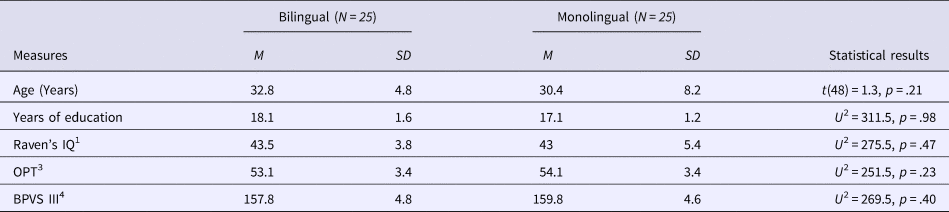
1 – Raven's Standard Progressive Matrices Intelligence Quotients (Raven, Reference Raven2008), maximum score possible 60, greater score indicates higher non-verbal intelligence; 2 – Mann-Whitney U test; 3 – Oxford Quick Placement Test (2001), maximum possible score was 60, higher score indicates higher receptive vocabulary; 4 – British Picture Vocabulary Scale, Third Edition (Dunn & Dunn, Reference Dunn2009), maximum possible score was 164, higher score indicates higher receptive vocabulary.
Measures of bilingualism
Bilinguals were assessed using various measures to characterize their bilingualism. We adapted and modified the questionnaire developed by Muñoz, Marquardt & Copeland (Reference Muñoz, Marquardt and Copeland1999). This questionnaire assessed language acquisition history, instruction of language during education, self-rated language proficiency (in speaking, comprehension, reading and writing), and the current language usage pattern. Language dominance was measured using the language dominance questionnaire (Dunn & Tree, Reference Dunn and Tree2009) and language switching habits were assessed using a language switching questionnaire (Rodriguez-Fornells, Krämer, Lorenzo-Seva, Festman & Münte, Reference Rodriguez-Fornells, Krämer, Lorenzo-Seva, Festman and Münte2012). All the questionnaires are provided as Supplementary Material (Appendix S1, Supplementary Materials).
There was no significant difference amongst bilinguals' Bengali and English on the language of instruction during education, subjective language proficiency ratings (speaking, comprehension, reading, and writing abilities) and language dominance. This indicated a balanced bilingualism on these domains. However, during childhood, bilinguals had significantly greater Bengali exposure during acquisition (M = 14.3, SD = 2.6) than English (M = 2.5, SD = 2.3). Current usage of language was predominantly English; they were more prone to switch from Bengali to English than the reverse during day-to-day communication.
Verbal fluency measures
Trials and procedures
Participants completed two verbal fluency conditions − semantic and letter – in English. They were asked to produce as many words as possible in 60 seconds. In the semantic condition, participants produced words in three categories − animal, fruits and vegetables, and clothing items. In the letter condition, participants were asked to produce words that start with letters F, A, and S. The restrictions for the letter conditions were to produce unique words that are not proper names or not numbers (e.g., Singapore, seven), and to not produce variants of the same words (e.g., shop, shopper, shopping). The order of the fluency conditions was randomized across participants; however, the trials were blocked by condition. Each participant was tested individually in a quiet room. After providing the instruction, the participant started a trial only when the tester said “start”. This ensured that there was a definitive starting point for each trial. Responses were recorded with a digital voice recorder and later analysed for the following variables.
Data coding and analysis
All responses (including repetition and errors) were transcribed verbatim. Each correct response was time-stamped using PRAAT (Boersma & Weenink, Reference Boersma and Weenink2015). The time-stamping enabled us to index the onset of a response from the onset of the trial (i.e., “start”), which allowed us to calculate the variables in time-course analysis. We measured the following variables for each trial:
1. Number of correct responses (CR): the number of responses produced in one-minute excluding errors. In semantic condition, errors were repetition of same words, words that were not from the target category (e.g., cat as a response for clothing category), and cross-linguistic intrusions. In letter condition, errors were repetition of same words, words that began with a different letter (e.g., pig as a response for letter F), proper names (e.g., France as a response to letter F), same word but with inflectional or derivational suffixes (e.g., fast, faster, fastest were counted as single CR), and cross-linguistic intrusions.
2. Fluency Difference Score (FDS): the differences in the number of correct responses between semantic and letter fluency conditions as a proportion of correct responses in the semantic fluency condition.
 $$ \eqalign{FDS = \left( {CR \; semantic \; fluency} - {CR \; letter \; fluency} \right) \cr \qquad \quad / CR\; semantic\; fluency\; $$
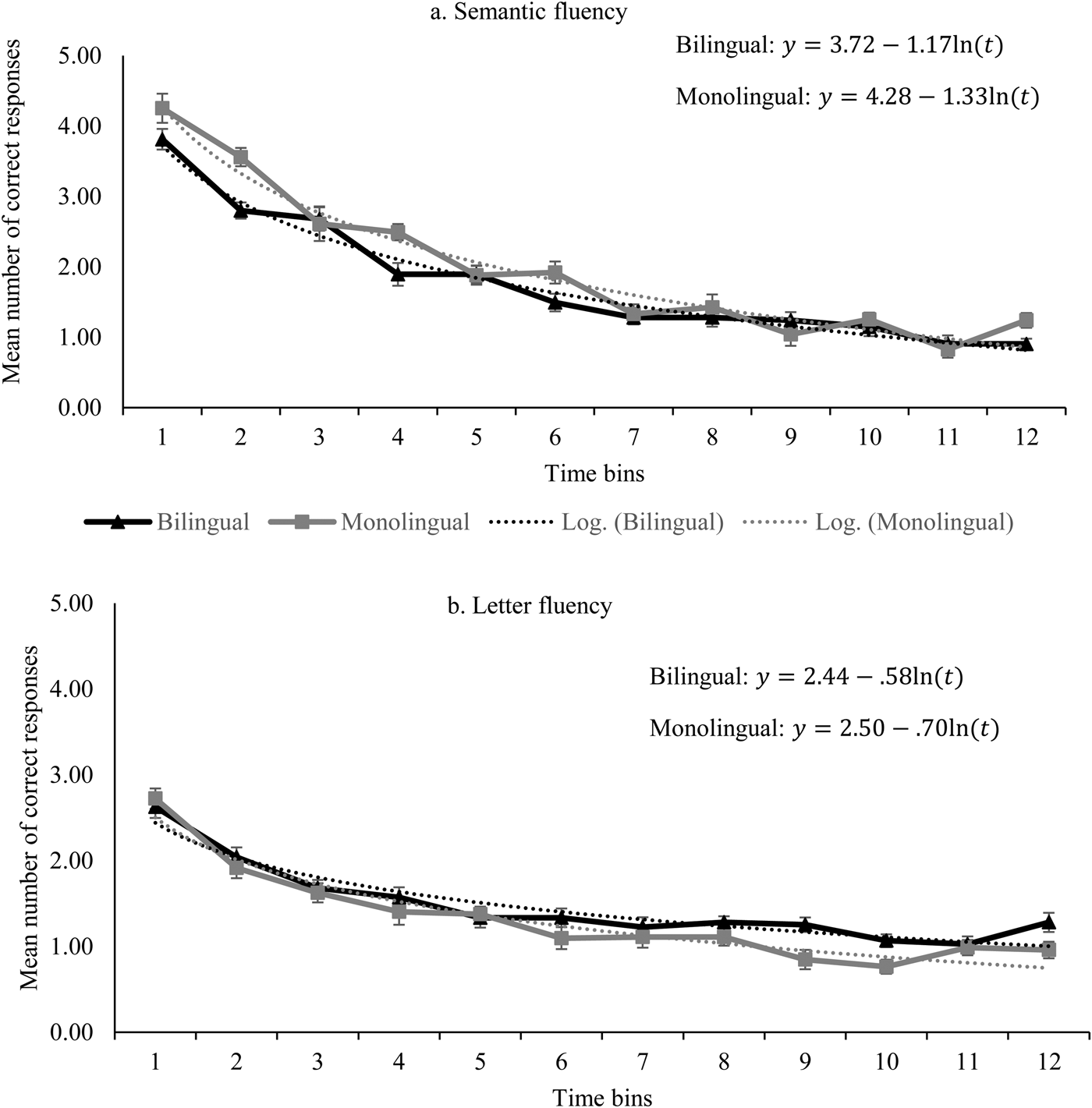
3. Time-course analysis: four variables − 1st RT; Sub-RT; initiation parameter; and slope − were computed based on the timing of the responses (Luo et al., Reference Luo, Luk and Bialystok2010). Based on the time tag, CRs were grouped into 5 sec bins over each 60 sec trial, resulting in 12 bins. The group means of CR in each of the twelve bins were calculated for each semantic and letter fluency trial. The means of CRs for each trial were plotted using a line graph (x variable, bins; y-variable, mean CR). This graph was then fitted with a logarithmic function. An example of a logarithmic function is y = 4.39–1.41 In(t), where y is the estimated value of the function at different points of time(t). Two central measures derived from this plot were: initiation parameter and slope.

First-RT (1st-RT) is the time interval from the beginning of the trial to the onset of first response. The first response usually takes longer than the subsequent responses and this delay in first response has been linked to the task preparation (Rohrer, Wixted, Salmon & Butters, Reference Rohrer, Wixted, Salmon and Butters1995).
Subsequent-RT (Sub-RT) is the average value of the time intervals from the onset of first response to the onset of each subsequent response. Thus, Sub-RT provides a good estimate for mean retrieval latency and represents the time point at which half of the total responses have been generated (Sandoval et al., Reference Sandoval, Gollan, Ferreira and Salmon2010). A longer mean Sub-RT indicates that performance extends later into the time course, but interpretation of this variable depends on the total number of correct responses (Luo et al., Reference Luo, Luk and Bialystok2010). If one group produces more correct responses than another group and has longer mean Sub-RT, then the interpretation is that the group has superior control (and equivalent or better vocabulary) and could continue generating responses longer. If one group produces fewer or equivalent correct responses but has longer mean Sub-RT, then the interpretation is that the control is more effortful as it took longer to generate the same or a fewer number of items. In contrast, a shorter mean Sub-RT would indicate a faster declining rate of retrieval because a large proportion of the responses were produced early during the trial.
Initiation parameter is the starting point of the logarithmic function that is the value of y when t = 1 or In(t) = 0 (e.g., initiation parameter for the above mentioned logarithmic function isy = 4.39 – 1.41 In(1) = 4.39 – 0 = 4.39). The initiation parameter indicates the initial linguistic resources or breadth of lexical items available for the initial burst when the trial begins and is largely determined by vocabulary knowledge.
Slope of the plot is determined by the shape of the curve and refers to the rate of the retrieval output as a function of the change in time over 60 seconds. The slope for the above example would be 1.41. It reflects how the linguistic resources are monitored and used over time and is largely determined by executive control. Flatter slope indicates that participants were able to maintain their performance across the response period despite greater lexical interference (e.g., avoiding repetition, searching for words from the already exhausted vocabulary source) towards the end of the trial, reflecting better executive control.
4. Clustering and switching analyses: We closely followed the methods used by Troyer et al.’s (Reference Troyer, Moscovitch and Winocur1997). Repetitions were included for the clustering and the switching analyses. Semantic fluency clustering was defined as successively produced words that shared a semantic subcategory. Letter fluency clustering was defined as successively generated words which fulfil any one of the following criteria (Troyer et al., Reference Troyer, Moscovitch and Winocur1997): words that begin with the same first two letters (stop and stone); words that differ only by a vowel sound regardless of the actual spelling (son and sun); words that rhyme (stool and school); or words that are homonyms (foot: anatomical part of body, and foot: unit of measure). Two variables were generated after clustering the responses: cluster size and number of switches.
Cluster size was calculated beginning with the second word in each cluster. A single word was given a cluster size of zero (e.g., crocodile), two words cluster was given a cluster size of one (e.g., bear, fox belong to North American animal cluster and cluster size of one), three words cluster was given a cluster size of two (e.g., rhinoceros, hippopotamus, deer belong to African animal cluster and cluster size of two) and so on. Mean cluster size for a trial was calculated by adding the size of each cluster and dividing the total score by the number of clusters.
Number of switches was the number of transitions between clusters. For example, dog, cat; snake, lizard; horse, cow, goat contain two switches – before snake and before horse. Leopard, cheetah; kangaroo, koala bear; robin, sparrow, crow; chimpanzee, orang-utan, baboon has three switches – before kangaroo, robin and chimpanzee. Similarly, in letter fluency – fragile, fraught, fray; fan, fat; fly, flower, flute contain two switches – before fan and before fly.
Executive control measures
Stroop task (Inhibitory control)
The computerized Stroop Task used in this study was adapted from Scott and Wilshire (Reference Scott and Wilshire2010). It consisted of six colours and their names: red, green, blue, yellow, orange, and purple. The task was divided into two conditions, neutral and incongruent. In the neutral condition, participants named the colour of differently coloured rectangles. A series of 50 coloured rectangles, each in one of the six colours were presented in a random order, such that two successive trials never had the same colour. In the incongruent condition, participants named the font colour of the colour words. A series of 50 colour words were shown one at a time on the screen in a random order, each of which was presented in a colour other than the word's name (e.g., red in green colour).
The procedure was the same for both conditions. Participants were instructed to name the colour or read the word as quickly and as accurately as possible. Each condition began with six practice trials. Both conditions were completed during a single session with the neutral condition first followed by the incongruent condition. The onset of each stimulus was accompanied by a beep, which allowed latency measurement. All responses were recorded with a digital voice recorder.
Analysis
Accuracy and response times were obtained. The reaction time (RT) analysis was performed after excluding self-corrected and incorrect responses. Using PRAAT, RT for each trial was measured from the onset of the beep to the onset of the naming. Outliers – that is, RTs that were 2.5 standard deviations above or below a participant's mean RT or <250 ms – were removed prior to calculation of the dependent measures. We calculated the Stroop Effect, as the difference between incongruent and neutral conditions (Bialystok et al., Reference Bialystok, Craik and Luk2008; Scott & Wilshire, Reference Scott and Wilshire2010). Calculation of Stroop Effect can yield similar results even when the interference effects are not similar. For example, for participant 1, RT of 800 ms in the incongruent condition minus a RT of 400 ms in the neutral condition will give a stroop effect of 400 msec. For participant 2, RT of 1200 ms in the incongruent condition minus a reaction time of 800 ms in the neutral condition will also give a Stroop effect of 400 ms. However, the difference score does not take into account overall slowness between the participants. This is a crucial factor in assessing Stroop interference (Green, Grogan, Crinion, Ali, Sutton & Price, Reference Green, Grogan, Crinion, Ali, Sutton and Price2010). To account for overall speed differences in responses, we calculated Percentage Stroop Ratio (%). The Percentage Stroop ratio (%) was calculated by dividing the Stroop Difference (mean incongruent – mean neutral) by the mean of neutral and incongruent trials, and then multiplied by 100. In the above example, participant 1 and 2 will have a Percentage Stroop ratio (%) of 66.67 and 40, respectively. A smaller Percentage Stroop ratio (%) indicates a better inhibitory control.
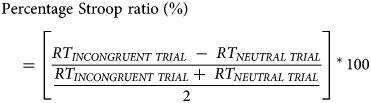 $$ \eqalign{\hbox{Percentage Stroop ratio} \; \lpar \% \rpar \cr \quad = \left[ {\displaystyle{{RT_{INCONGRUENT\; TRIAL}\; -\; RT_{NEUTRAL\; TRIAL}} \over {\displaystyle{{RT_{INCONGRUENT\; TRIAL} + \; RT_{NEUTRAL\; TRIAL}} \over 2}}}} \right] \, {^\ast}\, 100 $$
Mental-set shifting (Colour-shape switch task)
We adapted Prior and MacWhinney's (Reference Prior and MacWhinney2010) colour-shape switch task. Participants had to switch between colour judgement and shape judgement trials. Target stimuli consisted of filled red triangle, red circle, green triangle, and green circle. Participants had to judge the colour or shape of the stimuli based on a cue. There were two types of cues: colour cue (colour gradient) and shape cue (row of small black shapes). If the cue was a colour cue, participants had to judge the colour of the stimulus (red or green) and if the cue was a shape cue, participants had to judge the shape of the stimulus (circle or triangle). The target stimulus appeared at the centre of the screen, followed by the cue that remained on the screen above the target stimulus.
The task was presented via E-Prime (Psychology Software Tools, Pittsburgh, PA). Each trial started with a fixation cross for 500 ms, after which the cue appeared on the screen for 250 ms, 2.8° above the fixation cross, followed by a blank screen for about 300 ms. The targets were red or green circles (2.8°*2.8°) and red or green triangles (2.3°*2.3°). The cue and target remained on the screen until there was a response or for a maximum duration of 2000 ms. This was followed by a blank screen for about 1000 ms before the onset of the next trial. Participants were required to press the key on a computer corresponding to red/green colour or triangle/circle shape.
One half of the trials comprised switch trials, the other half non-switch trials. In the switch trial, a colour stimulus preceded the shape stimulus (colour to shape switch) or a shape preceded the colour stimulus (shape to colour switch). In the non-switch trial, a colour stimulus always preceded another colour stimulus (colour to colour) and a shape stimulus always preceded another shape stimulus (shape to shape). There were 20 practice trials followed by 3 blocks of 48 experimental trials each. There were total 72 switch trials and 72 non-switch trials. Reaction time and accuracy were measured for switch trials and non-switch trials separately. We derived three dependent variables – switch cost for reaction time (SCRT), Percentage switch cost ratio (%), and switch cost for accuracy (SCACC).
 $$ SC_{RT} = RT_{SWITCH\; TRIAL}\; -\; RT_{NON {\hbox -}SWITCH\; TRIAL} $$
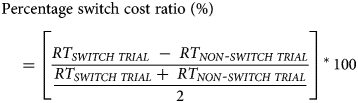 $$ \eqalign{{\rm Percentage\; switch\; cost\; ratio\;} \lpar {\rm \%} \rpar \cr \quad = \left[ {\displaystyle{{RT_{SWITCH\; TRIAL}\; -\; RT_{NON{\hbox -}SWITCH\; TRIAL}} \over {\displaystyle{{RT_{SWITCH\; TRIAL} + \; RT_{NON {\hbox -} SWITCH\; TRIAL}} \over 2}}}} \right] \, {^\ast} \, 100 $$
 $$ SC_{Accuracy} = {\rm \;} \% Accuracy_{NON{\hbox -} SWITCH\; TRIAL}\; -\; \% Accuracy_{SWITCH\; TRIAL} $$
Smaller switch cost meant participants had a smaller difference (i.e., equivalent performance) between the easier (non-switch trial) and the difficult condition (switch trial). This would suggest efficient shifting ability (Prior & MacWhinney, Reference Prior and MacWhinney2010).
Working memory (backward digit span)
The Wechsler Memory Scale (WMS 3, Wechsler, Reference Wechsler1997) was used to measure the backward recall of digit sequences. This is thought to reflect working memory performance (Wilde, Strauss & Tulsky, Reference Wilde, Strauss and Tulsky2004). Participants were verbally presented an increasingly longer series of digits from 2 to 9, and they were then asked to repeat the sequence of the digits in reverse order. The rate of presentation was one digit per second. The test ended when the participants failed on two consecutive trials at any one span size or when the maximum trial size was reached. The backward digit score was the total number of lists reported correctly in the backward digit span test.
As could be seen in Table 4, the two groups differed significantly on Percentage Stroop ratio (%), Percentage switch cost ratio (%), and switch cost accuracy. Although, bilinguals were overall slower in the Stroop task but there was no difference on the Stroop difference measure. However, when we accounted for overall speed difference, bilinguals demonstrated smaller Percentage Stroop ratio (%) which is indicative of better inhibitory control. Bilinguals also showed a smaller Percentage switch cost ratio (%) and a smaller switch cost accuracy suggestive of superior shifting ability.
Mean (M), standard deviations (SD), and statistical results of bilinguals' subjective language profile

1 – maximum possible score was 16, greater score in one language means greater immersion in that language during childhood; 2 – maximum possible score was 9, greater score in one language means greater number of years of education in that language; 3 – on a scale of one to seven (1 = no proficiency, 7 = native like proficiency), greater score in language means greater proficiency in that language; 4 – maximum possible score was 25, greater score in one language means greater use of that language in daily life; 5 – maximum possible score was 31, dominant language is the language which obtains a greater score than the other language; 6 – maximum score possible was 12, greater score in one language means greater switch from that language to the other language; 7 – adapted from Muñoz, Marquardt and Copeland, Reference Muñoz, Marquardt and Copeland1999; 8 – adapted from Dunn and Fox Tree, Reference Dunn and Tree2009; 9 – adapted from Rodriguez-Fornells et al., Reference Rodriguez-Fornells, Krämer, Lorenzo-Seva, Festman and Münte2012.
Means (M), standard deviations (SD), and statistical results of executive control measures

1 – Stroop task adapted from Scott and Wilshire, Reference Scott and Wilshire2010; 2 – Percentage Stroop ratio (%) : smaller Percentage Stroop ratio indicates better inhibitory control; 3 – Stroop difference = Incongruent trial mean RT - Neutral trial mean RT; 4 – adapted from Prior and MacWhinney, Reference Prior and MacWhinney2010; 5 – Percentage switch cost ratio (%) : smaller Percentage switch cost ratio indicates better shifting ability; 6 – Switch cost (RT) = Switch trial mean RT - Non-switch trial mean RT; 7 – Switch cost (accuracy) = Non-switch trial mean accuracy - Switch trial mean accuracy; 8 – Digit span test (Wechsler, Reference Wechsler1997); 9 – Mann-Whitney U test.
Statistical analysis
All verbal fluency measures were normally distributed. To arrive at the mean scores for each measure, the three trials were averaged in each condition; for semantic fluency, animals, fruits and vegetables, and clothing were averaged; for letter fluency F, A, and S trials were averaged. A two-way ANOVA repeated measure was used on the following measures: number of CR, 1st-RT, Sub-RT, cluster size, and number of switches. In the design, Group (Bilingual, Monolingual) was treated as a between-subject factor, and Condition (Semantic, Letter) was treated as within-subject factor. Tukey's post-hoc tests were applied for significant interaction effects at p ≤ 0.05. Independent sample t-tests were performed for FDS, initiation parameter and slope for semantic and letter fluency conditions with Group as the between-subject factor. To examine the relationship between the executive control measures and verbal fluency measures, correlations were performed separately for each group.
Results
The mean and standard deviation values for the verbal fluency variables for Group (Bilinguals and Monolingual) and Condition (Semantic and Letter) averaged across participants are presented in Table 5 (standard deviation reflects between-subject variation). The results of the statistical tests are provided in Table 5 as well. Findings from the correlation analyses between the executive control measures and verbal fluency variables for each group are presented in Table 6. Findings for Group differences are presented first, followed by the findings on the relationship of executive control measures and verbal fluency variables. The authors are happy to share anonymized item level time-stamped verbal fluency data with interested readers.
Means (M), standard deviations (SD), and statistical results of the dependent measures by group (Bilingual, Monolingual) and fluency (Semantic, Letter) conditions

1 – Number of Correct Responses; 2 – Fluency Difference Score.
Correlation coefficients amongst the executive control measures and the verbal fluency measures
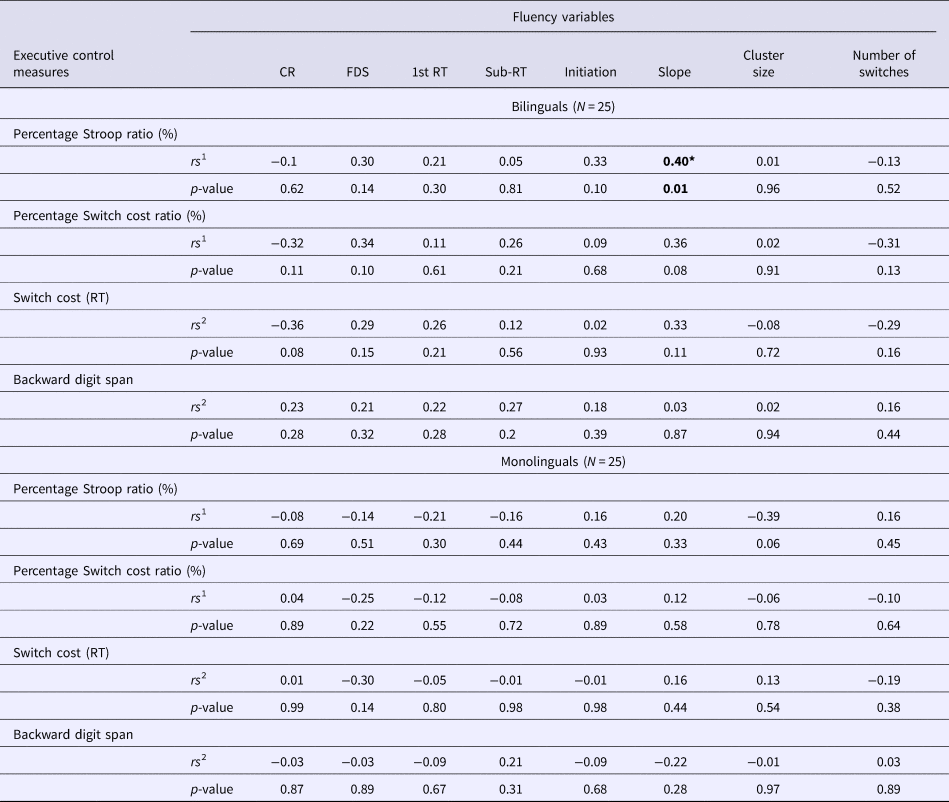
1 – Pearson's correlation coefficient; 2 – Spearman's rho; *p ≤ .05.
Group differences in verbal fluency performance
Differences between the bilinguals and monolinguals were observed either as a main effect of Group or as an interaction of Group X Condition for CR, FDS, Sub-RT, slope for letter fluency, and cluster size. There were no group differences in 1st-RT, initiation parameters for either semantic or letter fluency, slope for semantic fluency, and number of switches.
The CR showed a main effect of Condition (Semantic: M = 20.6, SD = 3.4; Letter: M = 16.8, SD = 3.5) and a significant interaction of Group X Condition (see Figure 1a). Post-hoc analysis of the interaction revealed that there was no significant difference between the groups for semantic condition (p > .05). However, bilinguals produced significantly greater number of CR in the letter fluency compared to monolinguals [t(48) = 1.98, p = .05, d = .53]. For FDS, bilinguals showed significantly smaller FDS (Bilingual: M = .12, SD = .15; Monolingual: M = .26, SD = .16; see Figure 1b). Sub-RT showed a significant main effect of Group, with bilingual demonstrating longer Sub-RT (Bilingual: M = 23.9, SD = 1.5; Monolingual: M = 22.7, SD = 1.5). Cluster size showed a main effect of Condition (Semantic: M = .7, SD = .2; Letter: M = .4, SD = .2) and an interaction of Group X Condition (see Figure 1c). Post-hoc analyses revealed that bilinguals produced significantly larger cluster than the monolinguals on the letter fluency condition [t(48) = 2.3, p = .02, d = .66], however, cluster size was comparable between the bilinguals and monolinguals on the semantic fluency condition [t(48) = −1.4, p = .17, d = .39].
Verbal fluency variables which revealed significant differences between monolinguals and bilinguals: a) Mean number of correct responses (CR) (top panel); b) Mean Fluency Difference Score (FDS) (middle panel); c) Mean cluster size. Error bars represent standard error of the means; *p ≤ .05, ***p ≤ .001.
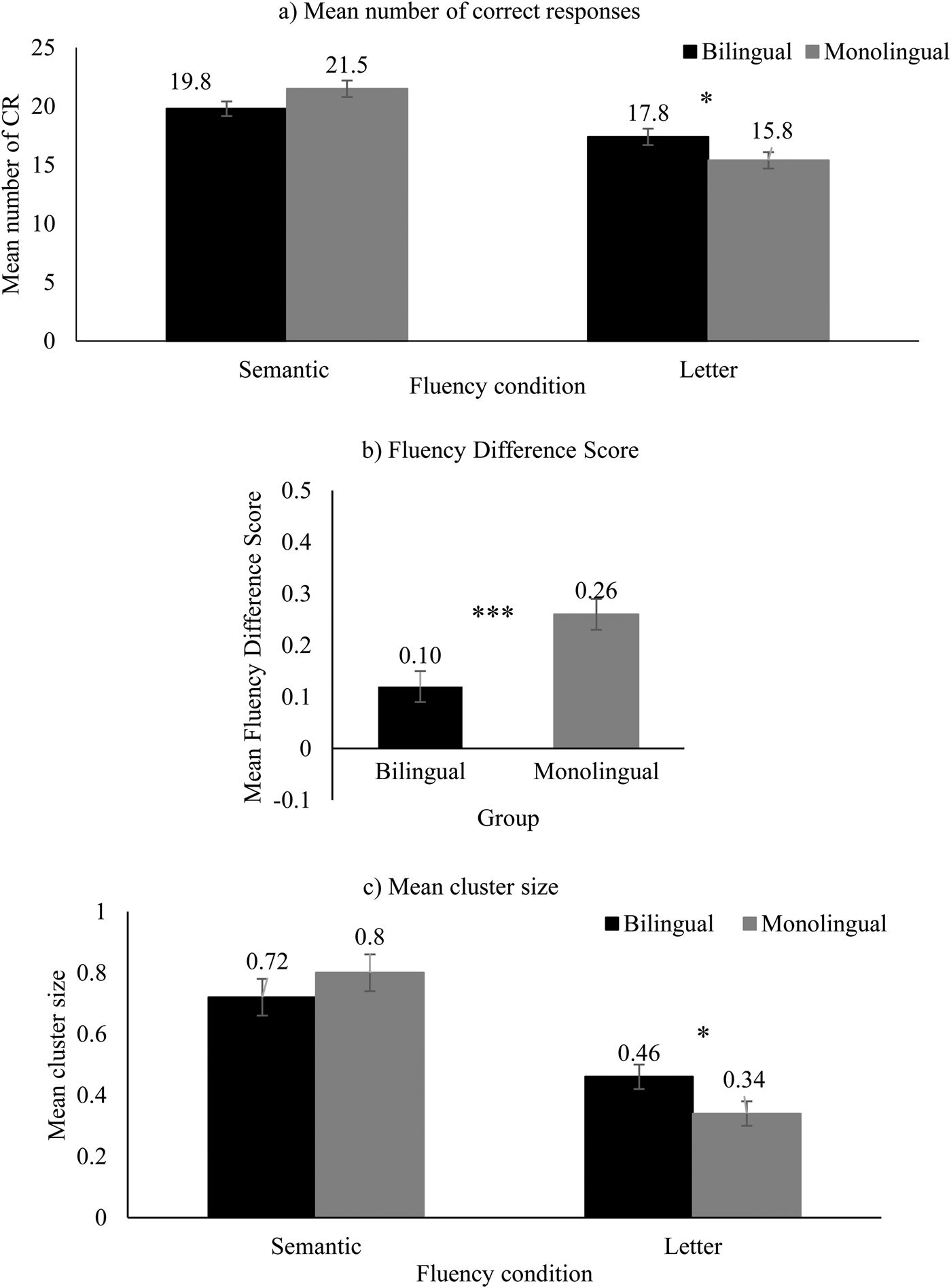
Figure 2 represents the time-course of the CR by the group for the semantic (Figure 2a) and letter fluency (Figure 2b). The only significant difference between the groups was for the slope for bilinguals in letter fluency. Bilinguals demonstrated a significantly flatter slope than the monolingual in letter fluency. This would suggest that bilinguals were able to maintain their output productivity throughout the 1-minute, especially in the difficult condition (i.e., letter fluency).
Between-group comparison of number of correct responses (CR) produced as a function of 5-sec time intervals in: a) semantic (top panel) and b) letter fluency (bottom panel). Best-fit lines are logarithmic functions. Error bars represent standard error of the means.
Verbal fluency performance and executive control measures
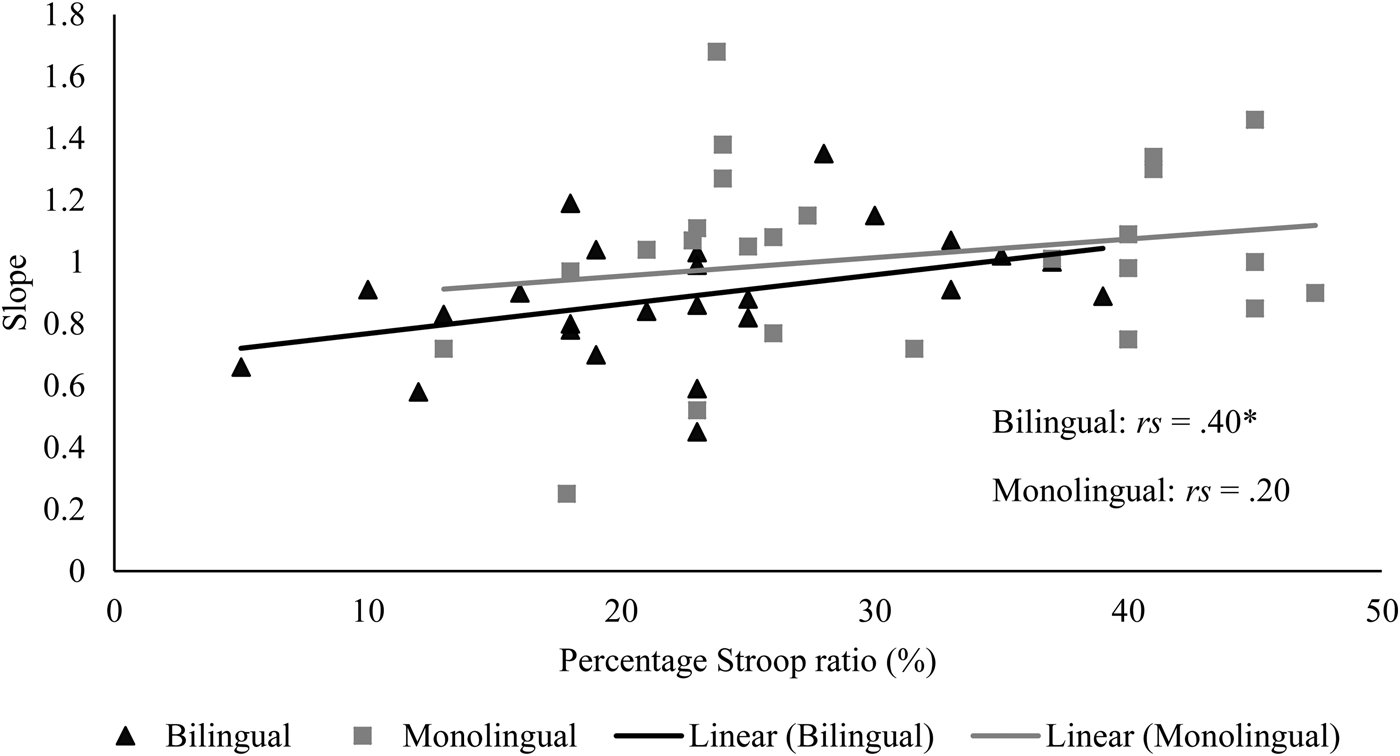
Table 6 presents the correlation coefficients amongst the verbal fluency variables and executive control measures for bilinguals and monolinguals. Bilinguals showed a significant correlation between Percentage Stroop ratio (%) and slope (positive, see Figure 3). Bilinguals with a smaller Stroop ratio illustrated a flatter slope indicating that those with better inhibitory control could maintain their performance throughout the 1-minute of the verbal fluency task. Overall bilinguals showed smaller Percentage Stroop ratio (%) compared to the monolinguals.
Correlation plots for the significant correlations between Percentage Stroop ratio (%) and slope of verbal fluency; rs represents Pearson's correlation coefficient; *p ≤ .05.
Discussion
This research set out to determine group differences in verbal fluency performance between a group of relatively homogeneous Bengali–English bilinguals with English speaking monolinguals, as well as identify the executive control measures that contribute to the performance difference between them. We used a wide range of measures − CR, FDS, 1st-RT, Sub-RT, initiation, slope, clustering and switching – to characterize the linguistic and executive control components of the participants' verbal fluency performance. These measures are thought to differentially contribute to the linguistic and executive components of verbal fluency task. In addition, we measured executive control in the domains of inhibition, switching, and working memory, and linked the verbal fluency performance to the executive measures.
To summarize the main findings, compared to monolinguals, bilinguals showed differences in both the linguistic (letter fluency: number of CR, cluster size) and executive control (FDS, Sub-RT, slope and number of switches in letter fluency) domains of the verbal fluency task as identified and indicated on Table 7. Although overall there was no significant difference between the two groups on CR, there was an interaction with the type of fluency task. Bilinguals and monolinguals performed similarly on semantic fluency; whilst bilinguals outperformed the monolinguals on letter fluency. The finding that there were no differences regarding CR between the vocabulary matched two groups is consistent with the findings observed in the literature (Bialystok et al., Reference Bialystok, Craik and Luk2008; Luo et al., Reference Luo, Luk and Bialystok2010; Paap et al., Reference Paap, Myuz, Anders, Bockelman, Mikulinsky and Sawi2017; Portocarrero, Burright & Donovick, Reference Portocarrero, Burright and Donovick2007; Rosselli et al., Reference Rosselli, Ardila, Araujo, Weekes, Caracciolo, Padilla and Ostrosky-Solí2000).
Results of the current study in the context of verbal fluency measures and to their linguistic and executive control components

1 – Correct Responses; 2 – Fluency Difference Score; Yes – significant findings, No – not significant findings.
Our findings show that bilinguals perform better than monolinguals in the letter fluency task, which is thought to be more demanding on executive control. This is shown in the following key findings: 1) bilinguals demonstrated significantly smaller FDS than monolinguals, which have claimed to reflect superior executive control; 2) bilinguals demonstrated significantly longer Sub-RT with higher mean number of correct responses in the letter fluency and a flatter slope on letter fluency, which could be attributed to superior executive control. These findings suggest that our bilinguals demonstrate superior executive control abilities which are helping them to perform better (in terms of lower FDS, flatter slope) for a difficult fluency condition (i.e., letter fluency). As discussed in the introduction, longer Sub-RT can be either due to smaller vocabulary or superior executive control abilities of bilinguals compared to monolinguals (Luo et al., Reference Luo, Luk and Bialystok2010). Luo et al. (Reference Luo, Luk and Bialystok2010) have postulated that the superior executive control would result in a slower decline in retrieval speed or longer Sub-RT for bilinguals in combination with a higher and or equal number of CR and flatter slope than monolinguals. Since our groups were matched on vocabulary and we do not find any significant difference between the two groups on the initiation parameter (which is a measure of initial linguistic resources), it would be reasonable to conclude that the bilinguals' performance would be indicative of superior executive control (Friesen et al., Reference Friesen, Luo, Luk and Bialystok2015; Luo et al., Reference Luo, Luk and Bialystok2010). Overall, equivalent performance on the vocabulary test, longer Sub-RT, and better performance on the letter fluency condition (higher CR, smaller FDS, flatter slope, and larger cluster size) for bilinguals compared to monolinguals suggest a bilingual advantage in the verbal fluency task when there is a higher demand for the controlled executive processing skills.
On the qualitative measures, we expected vocabulary-matched bilinguals to produce equal cluster size, which utilizes more of the linguistic components and a larger number of switches, which requires efficient executive control mechanism. However, we found that bilinguals produced a larger cluster size in the letter fluency condition. This could be due to a strategy to bolster their performance in letter fluency. Greater number of CR with larger cluster size in letter fluency in bilinguals could be a strategy that allowed them to sustain production in a more demanding condition. The lack of a difference in switching is surprising as a switching measure is supposed to tap into the executive control components of the verbal fluency task. We expected bilinguals to switch more compared to monolinguals. However, no difference between the groups on switching indicates bilinguals may not use switching as a strategy to facilitate their performance in the verbal fluency task.
On the executive control measures, we found bilinguals outperformed monolinguals on the inhibitory control measure (smaller Percentage Stroop ratio), and mental set-shifting measure (smaller Percentage switch cost ratio and smaller switch cost accuracy). However, both groups performed similarly on the working memory measure (backward digit span). An advantage in inhibitory control for bilingual participants is in line with the literature (Bialystok et al., Reference Bialystok, Craik, Klein and Viswanathan2004; Bialystok et al., Reference Bialystok, Craik and Luk2008; Emmorey et al., Reference Emmorey, Luk, Pyers and Bialystok2008). For the mental-set shifting task, we measured Percentage switch cost ratio (%) to account for the overall speed difference between the two group. We found bilinguals to show advantage in the mental set-shifting measure which is in line with the findings from the previous task switching measures in the literature (Prior & MacWhinney, Reference Prior and MacWhinney2010). However, we did not find any difference between the two groups on the most used dependent variable (switch cost in RT) in the task switching literature. No differences in the switch cost (RT) variable using the colour-shape switch task supports the findings by Paap and his colleagues (Paap & Greenberg, Reference Paap and Greenberg2013; Paap & Sawi, Reference Paap and Sawi2014; Paap et al., Reference Paap, Myuz, Anders, Bockelman, Mikulinsky and Sawi2017). Similarly, having no differences between the two groups on working memory measures is in line with the literature (Bialystok et al., Reference Bialystok, Craik and Luk2008; Luo et al., Reference Luo, Luk and Bialystok2010). Current findings showed that the difference between the two groups on executive control measures might depend on the type of task and the type of dependent variables derived from the task.
Previous studies have suggested the role of executive control measures, especially working memory and inhibitory control in verbal fluency (Luo et al., Reference Luo, Luk and Bialystok2010, Shao et al., Reference Shao, Janse, Visser and Meyer2014). There exists only one study that has directly correlated the executive control measures (updating of working memory and inhibitory control) with verbal fluency measures in healthy monolingual adults (Shao et al., Reference Shao, Janse, Visser and Meyer2014). This is the first study that attempted to establish relationship amongst various executive control measures with measures of verbal fluency comparing bilingual and monolingual healthy adult populations. Results of our correlation analyses showed that verbal fluency slope correlated with inhibitory control (Percentage Stroop ratio) only for the bilingual group (Blumenfeld & Marian, Reference Blumenfeld and Marian2011; Prior & Gollan, Reference Prior and Gollan2011; see Table 7 and Figure 3). These results support the notion that an executive control advantage helps bilinguals to outperform monolinguals in verbal fluency tasks, especially where executive control demands are higher.
Similar to Shao et al.’s (Reference Shao, Janse, Visser and Meyer2014) study, we did not find any correlation between working memory and verbal fluency measures; neither did we find any significant correlation between the mental-set shifting measure and verbal fluency measures. As this was the first study to attempt to establish relationship amongst various executive control and verbal fluency measures, future studies should consider investigating different kinds of tasks within specific domains of executive control to reflect the presumed processes underpinning a verbal fluency task. These lines of research will provide greater insights into the relationship between linguistic and executive control processes during word production.
In conclusion, previous studies comparing healthy monolinguals and bilinguals on verbal fluency tasks have shown mixed results ranging from bilingual advantage (Bialystok et al., Reference Bialystok, Craik and Luk2008; Luo et al., Reference Luo, Luk and Bialystok2010) to disadvantage (Gollan et al., Reference Gollan, Montoya and Werner2002; Paap et al., Reference Paap, Myuz, Anders, Bockelman, Mikulinsky and Sawi2017) to no differences (Paap et al., Reference Paap, Myuz, Anders, Bockelman, Mikulinsky and Sawi2017). However, all these studies have relied only on the number of correct responses as a dependent variable (except Luo et al., Reference Luo, Luk and Bialystok2010). For example, Paap et al. (Reference Paap, Myuz, Anders, Bockelman, Mikulinsky and Sawi2017) did not find any difference between bilinguals and monolinguals on the difficult letter fluency condition. The results were inconsistent with the notion that bilinguals' enhanced executive control abilities help them to outperform monolinguals on the more demanding letter fluency condition. Paap et al. also refuted the claim that, compared to semantic fluency, letter fluency requires greater executive control functioning and suggested trying to support this claim by independent and direct tests of executive control abilities. Similarly, Whiteside, Kealey, Semla, Luu, Rice, Basso and Roper (Reference Whiteside, Kealey, Semla, Luu, Rice, Basso and Roper2016) in an exploratory factor analysis study have argued that the contributions of linguistic processes are greater in verbal fluency compared to executive control processes. They found that the number of correct responses in the verbal fluency loaded onto the language factor and not the executive control factor.
The present study attempted to address the unresolved issues in the literature by including a wide range of variables and separate measures of executive control abilities. We found that vocabulary-matched healthy bilinguals performed similarly to monolinguals in the semantic fluency task, which is thought to have higher linguistic demands. However, bilinguals outperformed monolinguals in the difficult letter fluency task, which is assumed to have higher executive control demands. Differences between the two groups were observed only on the measures where executive control demands were higher: such as fluency difference score, Sub-RT, slope, and cluster size in the letter fluency. Independent executive control measures (Percentage Stroop ratio) correlated only for the measures (slope) that tapped into the executive control component of the verbal fluency task.
Importantly, only traditional analysis approaches (e.g., number of correct responses) would not have provided a complete picture regarding the relationship between executive control abilities and the performance in verbal fluency task. Both Paap et al. and Whiteside et al.’s study argued against the fact that the letter fluency condition requires greater executive control demands; however, their claim was based on only a number of correct responses as a measure. When a broad range of verbal fluency measures and separate executive control measures were included, we found evidence of executive control involvement in the letter fluency condition. The present study found differences between bilingual and monolingual groups mainly in conditions and measures with higher executive control demands. We found that bilinguals are not at a disadvantage on linguistics measures if they are matched with monolinguals for vocabulary. The present study highlights that, in order to explain advantage, disadvantage, and that there are no differences between bilinguals and monolinguals, it is necessary to use a range of verbal fluency measures and independent executive control measures. Therefore, as recommended by Paap et al. (Reference Paap, Myuz, Anders, Bockelman, Mikulinsky and Sawi2017), separate measures of verbal and executive control abilities are necessary to address and explain bilingual advantages and disadvantages in various measures. The extended range of verbal fluency measures used in this study have future implications for understanding the relationship between the executive control impairments and language deficits in a wide range of the clinical population (e.g., aphasia, schizophrenia, dementia, autism spectrum disorders).
Author ORCIDs
Arpita Bose, 0000-0002-0193-5292
Acknowledgements
We are indebted to all our participants for their enthusiasm and time for this research. This research was funded by the Felix Trust, UK.
Supplementary Material
Supplementary material can be found online at https://doi.org/10.1017/S1366728918001098.


 Open access

